During PAX West, Square Enix invited me to experience over 1.5 hours of the highly anticipated conclusion to the FFVII Remake Project: Final Fantasy VII Revelation. The demo plopped me into Chapter 4, which introduces the game’s brand new features: the Highwind, the FITS system, and the two new party members, Cid and Vincent. From there, I was free to explore the open world before capping it off with the introduction of the new area of Wutai. 2020’s Remake is one of my favorite games of all time, and the few hours I put into Rebirth were fantastic. Keep that adoration in mind when I say that I am relieved Revelation won’t launch until April, because there are glaring blemishes that mar the series’s strong foundation.
Right off the bat, I want to make one thing clear: I enjoyed what I have played so far. Everything that made Remake and the bits I’ve played of Rebirth masterful titles is still here: the combat is a masterclass at blending tense action with sprinkles of turn-based flair, the world is massive with tons of quirky quests and secrets, the writing and expanded narrative are still compelling, and of course the music. Good lord, the music. So far, the mechanics exclusive to this entry succeed in providing literal and metaphorical depth to combat and traversal. There are a lot of things to expand upon when gushing about Revelation, so let's immediately rip the band-aid off to expose the Chadley-shaped wound, yeah?
In Rebirth, it was revealed that the annoying little booger programmed a digital booger named MAI to analyze wildlife and monsters. Well, she’s back and loves to halt your progress in the open world. Every time I entered a new zone on the map, MAI would interrupt whatever was happening to display a checklist of activities that can be done in the surrounding area. This cutscene cannot be skipped and takes around five to ten seconds to flip through. In a vacuum, that doesn’t sound too bad, but it happens frequently enough that these seconds start to add up.
What transformed my irritated grimace into full-on, jaw-dropping bewilderment was when these occurred while gliding on my Chocobo. I was catching the winds and taking in the gorgeous sights when all of a sudden my Chocobo stopped flying and dropped like a rock. The first time this occurred, I was confused… until MAI popped up with the reason why. It was imperative for me to check out a six-page checklist for the area I just flew into. This exact scenario happened two more times. When I spoke with director Naoki Hamaguchi, he mentioned how this feature was working as intended, but that it is something they will look into. I am hoping that this will at least be optional, because the way it is currently implemented massacred my enjoyment of exploring the open world with the damage of a thousand paper cuts.
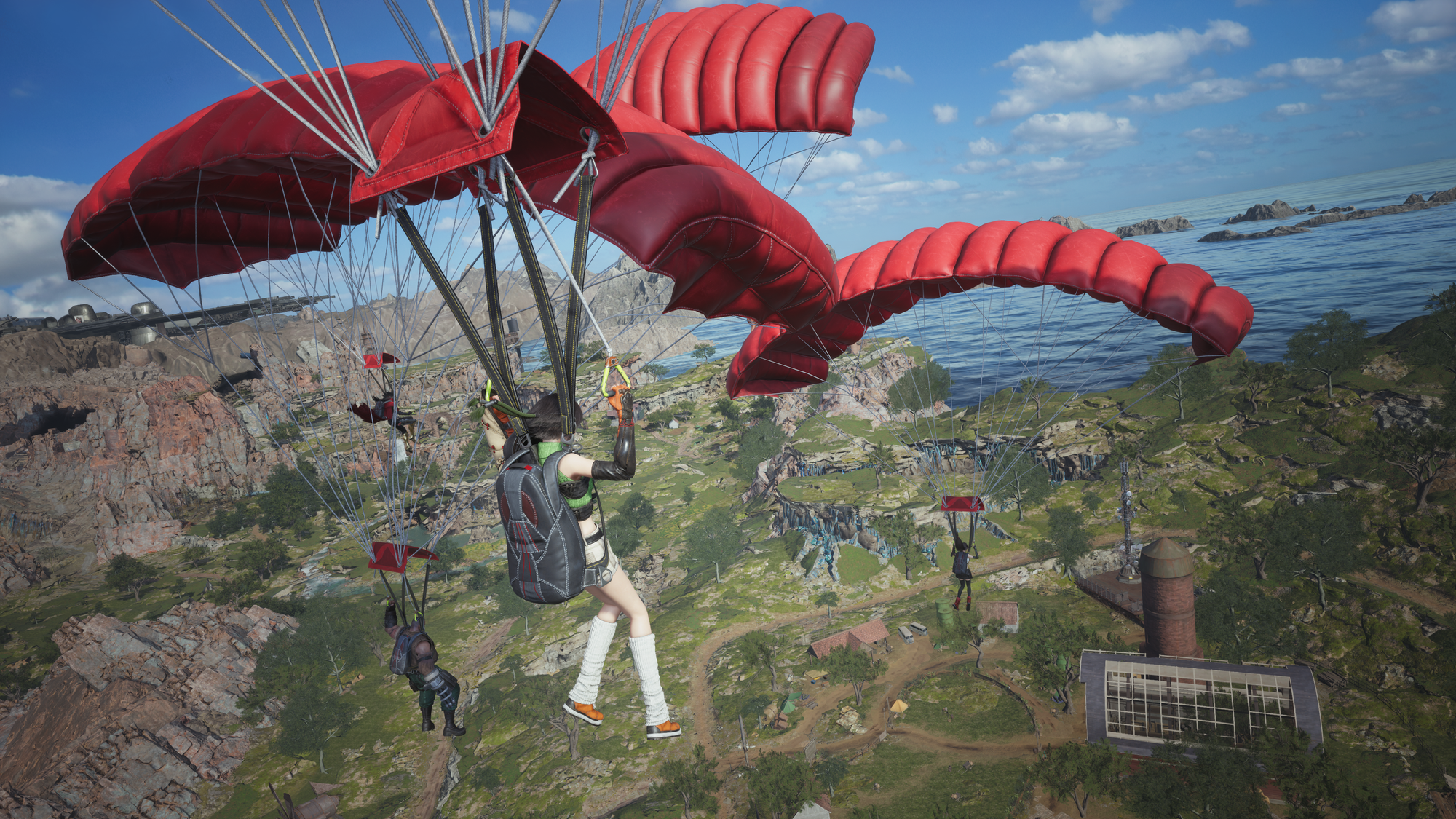
With that being said, how is exploring the world itself outside that terrible feature? As someone who has only put a few hours into Rebirth, it is fantastic barring some nitpicks. The most impressive new feature from a visual and technical front is the Highwind. The airship allows the party to rocket around the world of FFVII, gaining an aerial perspective on locations the player wishes to dive down to explore. As many others have put it when the feature was first shown off, it is like hopping off the Battle Bus in Fortnite. Diving down to the planet’s surface feels exhilarating and freeing. Numerous times while parachuting, I would alter my intended destination because something else in the distance caught my eye. It does make me wonder how this ambitious scope of the Highwind will translate to less powerful hardware such as Nintendo Switch 2 and the Steam Deck, but it is stunning on PS5 Pro.
The first thing I did was land in the new region of Mideel, get pestered by MAI, and then set off on my merry way. This jungle area addressed one gripe I had based on footage of Rebirth I have seen over the years. The sophomore entry did have a variety of color in its environments, but the harsh lighting made environments look washed out. Revelation, on the other hand, is bursting with vibrant colors in areas new and old. The lush jungles of Mideel are a showstopper, unafraid to crank up that saturation for its environments and foliage.
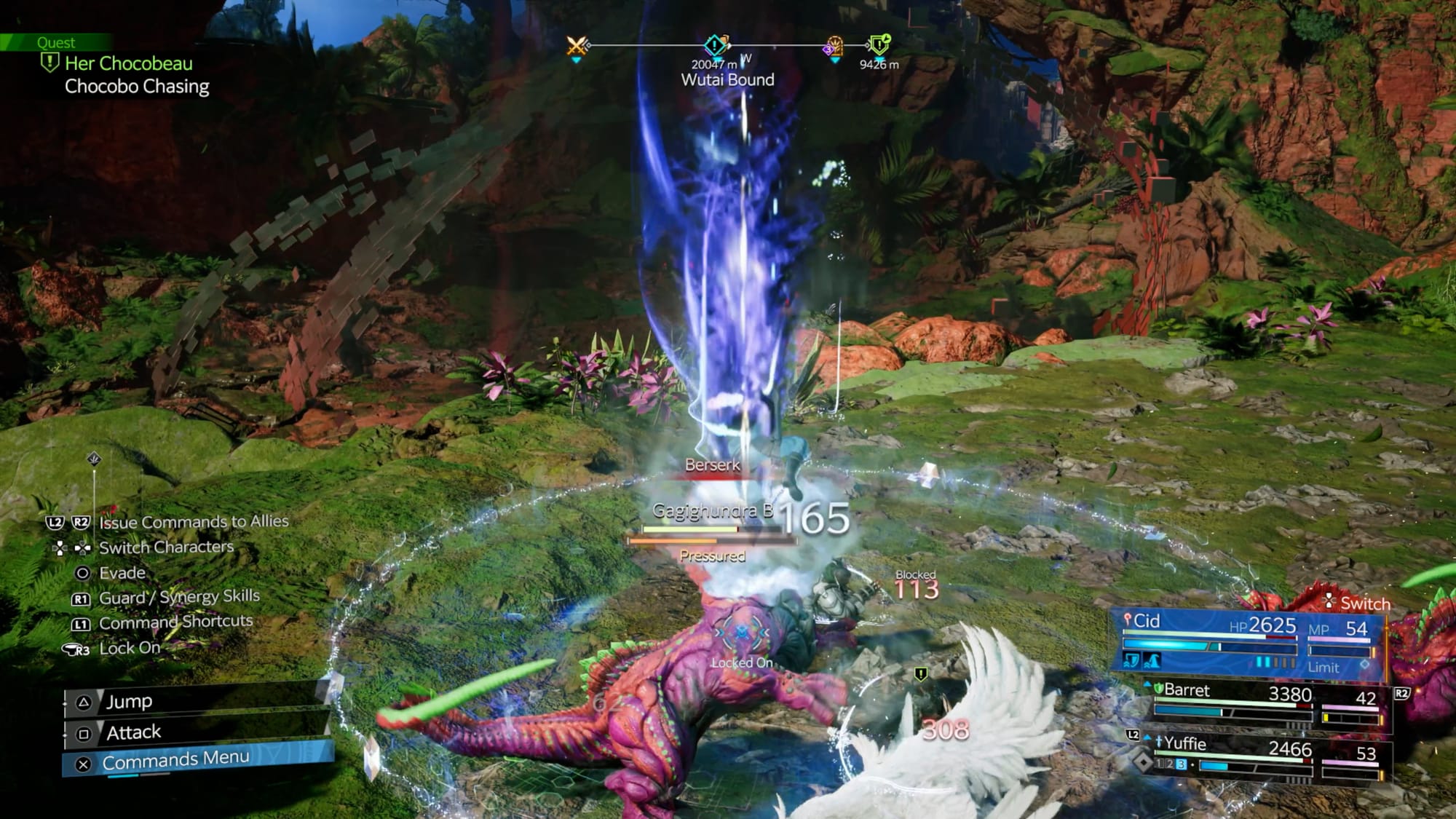
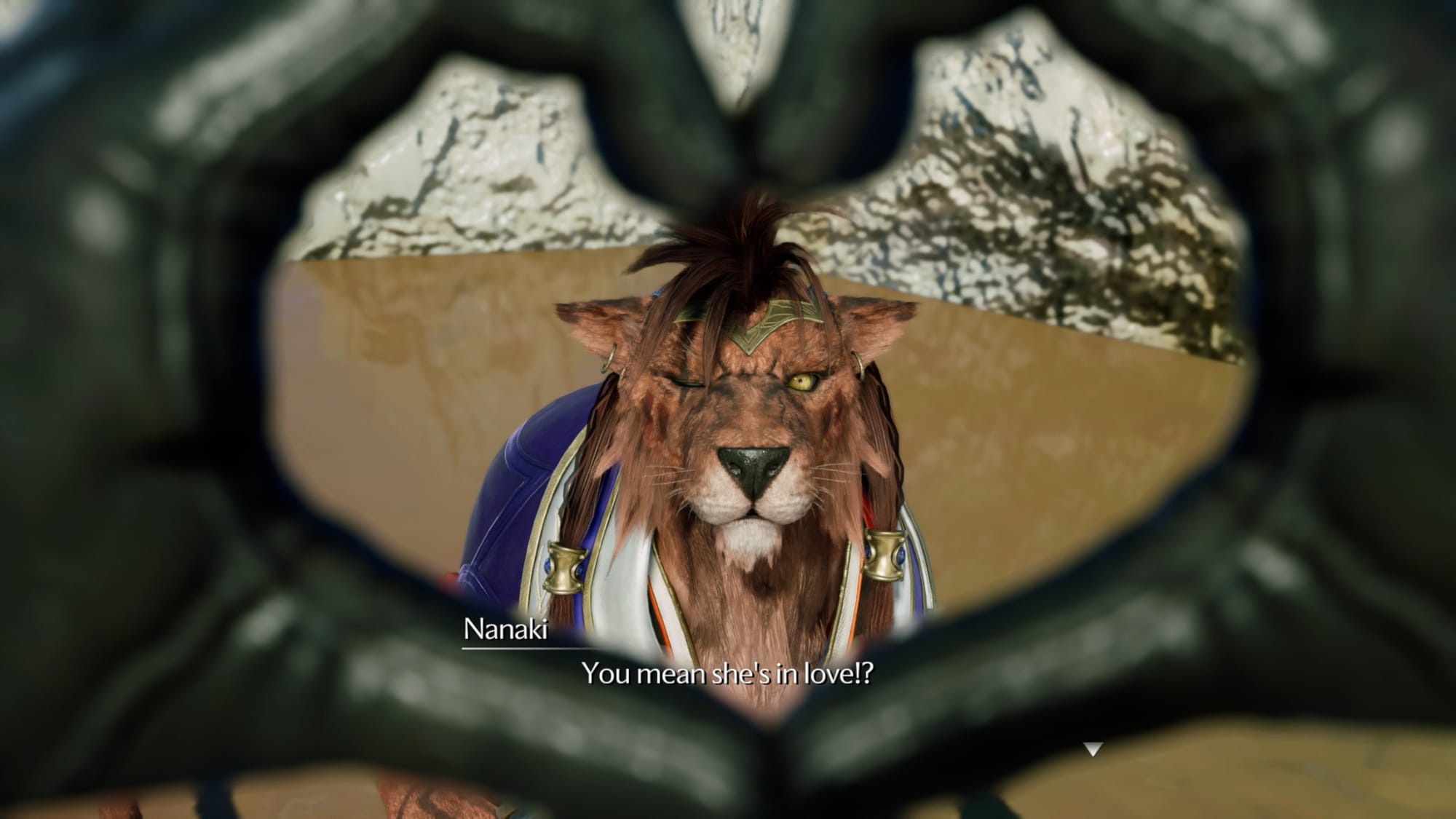
As for exploring this area, it is your average open-world fare. I would go around fighting enemies in the overworld and completing the abundance of side activities marked on the map. It does have me concerned about whether optional content will be quantity over quality, but there seems to be plenty of things to do at a surface level glance. A neat feature of the more substantial side quests is that you can choose which party member leads in completing said objective. For the quest in Mideel, Cid could take initiative to convince the target Chocobo to come home, or Nanaki could lure the giant avian with her favorite greens. It remains to be seen how drastic the alterations to the quest objectives will be overall, but at the very least it should provide for some fresh character interactions for different playthroughs.
Speaking of Chocobos, that was my primary method of travel in Mideel. Beyond having a quicker running speed compared to sprinting on foot, these feathered friends provide traversal methods that make crossing the jungle a breeze. Chocojet functions as a hover to keep airtime going. My favorite was the Air Dash. This mechanic slows down time and propels the Chocobo forward towards the direction the player selected. Well, at least until MAI decides to chime in.
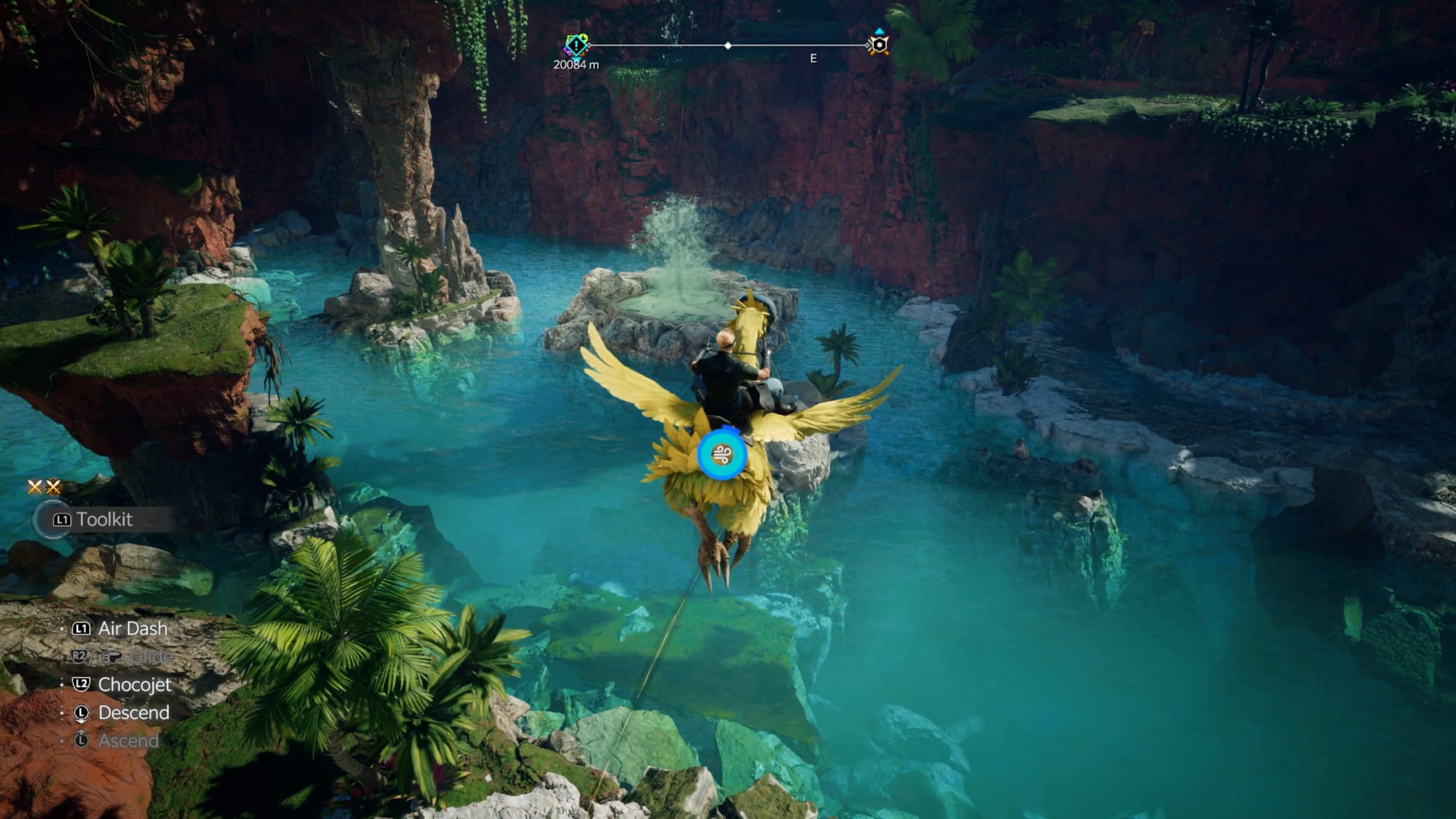
If it wasn’t apparent with the Highwind and the Chocobo traversal options, FFVII Revelation emphasizes verticality. Nowhere is this more apparent than in another new area in the game, Wutai. This ninja village is Yuffie’s hometown, and the level design reflects that. Thanks to the grapple gun, the party can zip themselves onto indicated vantage points. Scampering on the rooftops is a treat and quite literally adds an extra layer to exploration. Even though Wutai is built around these features, that’s not to say locations from Rebirth will be ignored. Hamaguchi mentioned how, beyond the new side quests, the traversal opportunities provided by the grapple, Chocobo Air Dash, and Highwind will contribute to making the older areas from Rebirth feel fresh.
With that being said, the control issues I felt in the first few hours of Rebirth persist here. FFVII Remake’s movement was designed around navigating linear spaces. Opening up the world reveals how stilted the controls feel when removed from that context. So if this is something that dampened your enjoyment of the prior entry, Revelation won’t be doing much to change your mind. Fortunately for me, the act of exploring the world was enjoyable enough to wrestle with the awkwardness of traversal.
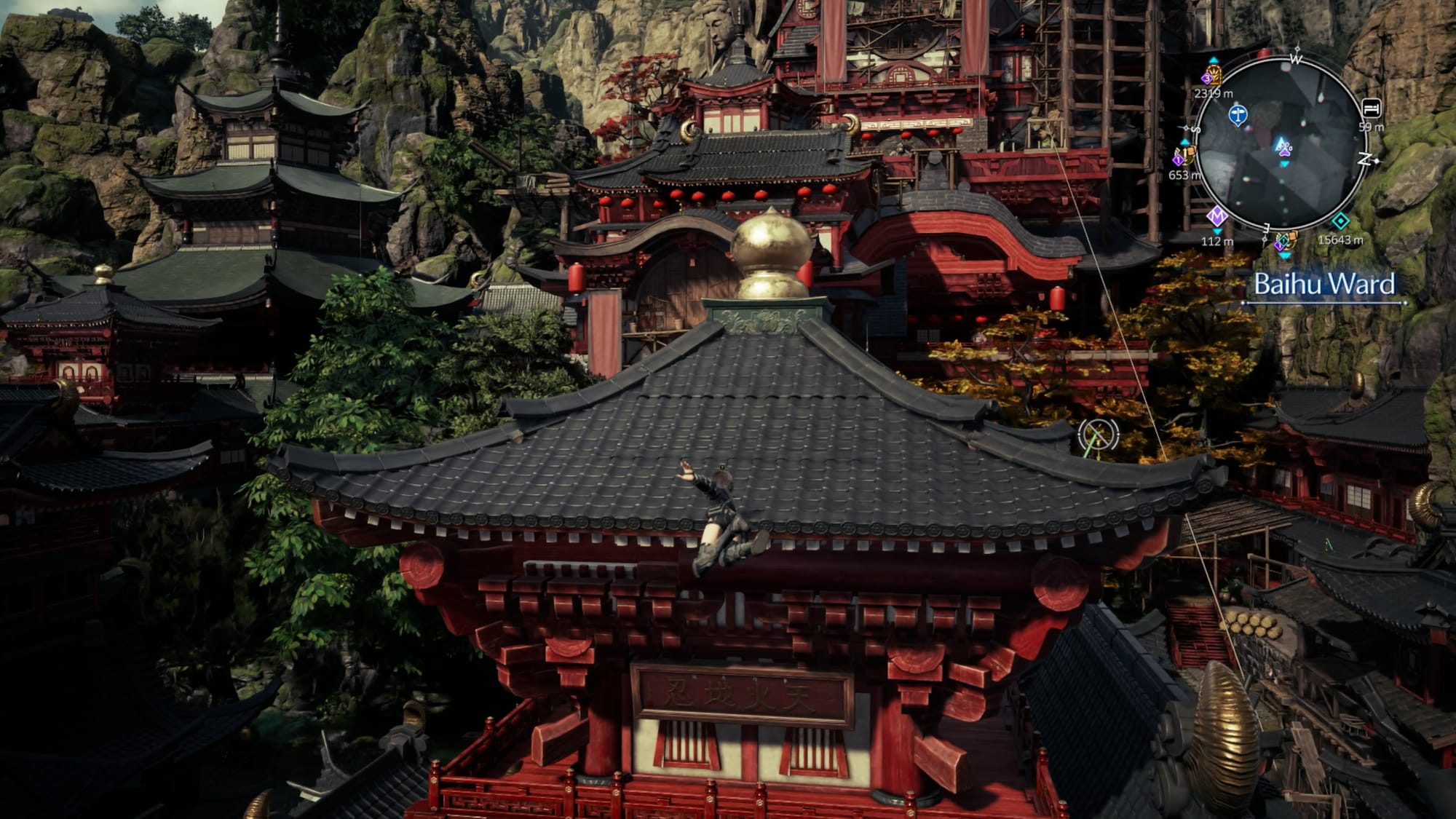
Those who have played Remake and Rebirth will feel right at home with Revelation’s battle system. Combat takes the ATB system from the turn-based original and adapts it into an action-oriented format. ATB fills over time, but taking advantage of the various real-time elements such as basic attacks, dodging, parrying, and character swapping will fill the meter faster. Once a bar is filled, characters can expend it to unleash powerful skills and spells. Knowing when, where, and who to use these commands on is where the strategic depth of combat resides. Furthermore, accessing the command menu slows down time, giving players time to assess the battlefield before selecting actions similar to a turn-based system.
While each party member has their base kits, FFVII’s iconic materia system allows players to assign characters additional abilities and passive effects. Rebirth’s Synergy Abilities return to add an extra layer of depth when formulating team compositions. Melding these customizable facets with the foundational loop of the ATB system is what makes the battle system one of my favorites. It is an action RPG where the balance between performing well during skirmishes and the personalization under the hood is flexible enough to withstand various playstyles. For example, I find team building in RPGs super overwhelming, so I focus on making the most out of the real-time combat in order to compensate for my sloppy builds. On the flip side, someone who struggles with hack-and-slash battles may find more success in focusing on creating powerful character builds.
So, with an already in-depth and established battle system, how can the development team keep fights fresh for their third outing? Well, the answer is simple, risky, but brimming with potential: give the player the ability to alter the playstyle of each character. Enter the Function-Integrated Tactical Suitwear (FITS) system. Essentially, this is Revelation’s take on the job system from the older Final Fantasy games. Beyond decking the characters out in the most immaculate fantasy drip, these provide the characters with new skills and combat roles. Despite spending the majority of my playtime using newcomers Cid and Vincent, I dabbled around with Barret and Yuffie to see how FITS would shake up the playable characters from the first game. So far, its integration feels like a natural extension of the remakes’ philosophy of blending action and RPG mechanics. Admittedly, I tend to struggle the deeper the RPG system gets. Plus, with less than two hours of playtime, it remains to be seen how well this headlining combat feature will hold up through the scope of the full game.
On a role-playing front, this new feature is self-explanatory. Each outfit has exclusive skills and abilities that allow players to personalize a unit’s combat role. Essentially, it functions similarly to materia but on a broader, preset scale. Want to play glass cannon Yuffie as a defense-focused buffer? Give her the role of a Knight. Want to expand Barret’s magic abilities? Give him the Black Mage role. FITS are utilized in conjunction with materia, so there are plenty of ways to tweak characters on a micro and macro scale.
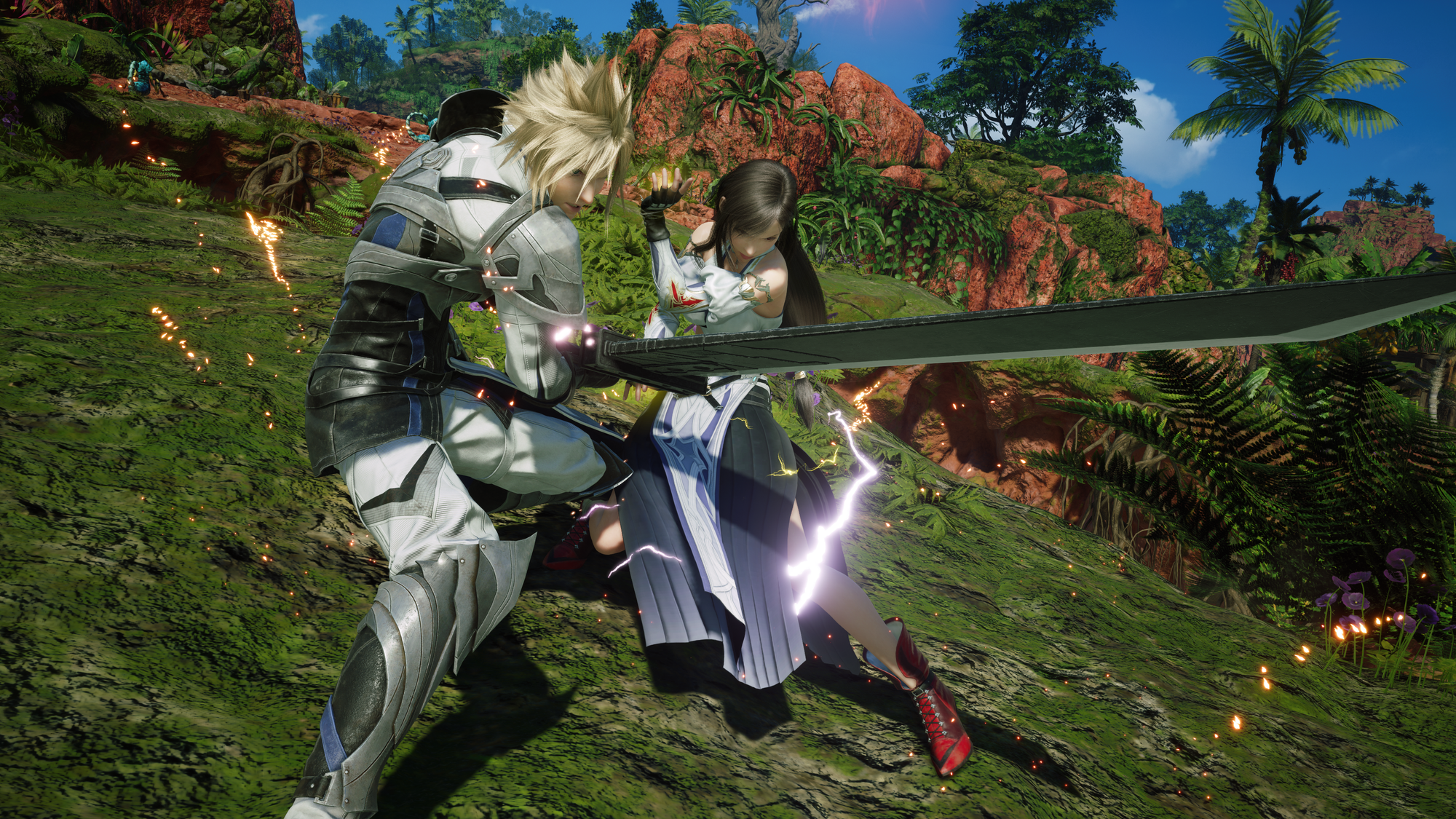
It is important to note that outside of the additional skills, FITS doesn’t heavily alter the “what” of a character’s combat repertoire. Barret isn’t going to trade his gun arm for a magic stick after all. Instead, it changes the “how” of using their kits. For instance, every character has a guard they can utilize, but units assigned with the Knight class give nearby party members damage reductions. My favorite is the Summoner suit, which allows the user to summon a, well, summon. Utilizing its boons optimally requires players to synergize their attacks with the new ally, which naturally results in different methods of approach depending on the character.
As fun as it was to dabble in the FITS feature, introducing another layer to character customization risks creating ripples that affect the battle system’s balancing. This is something battle director Teruki Endo is keenly aware of. He felt combat was perfected in Rebirth, and spent a lot of time how to add a unique spin on something familiar. While it remains to be seen if these waves will be overall positive or negative, or if the encounters are designed to take advantage of it, at the very least I respect the team’s ambitions to deepen its solid foundations even for its concluding chapter.
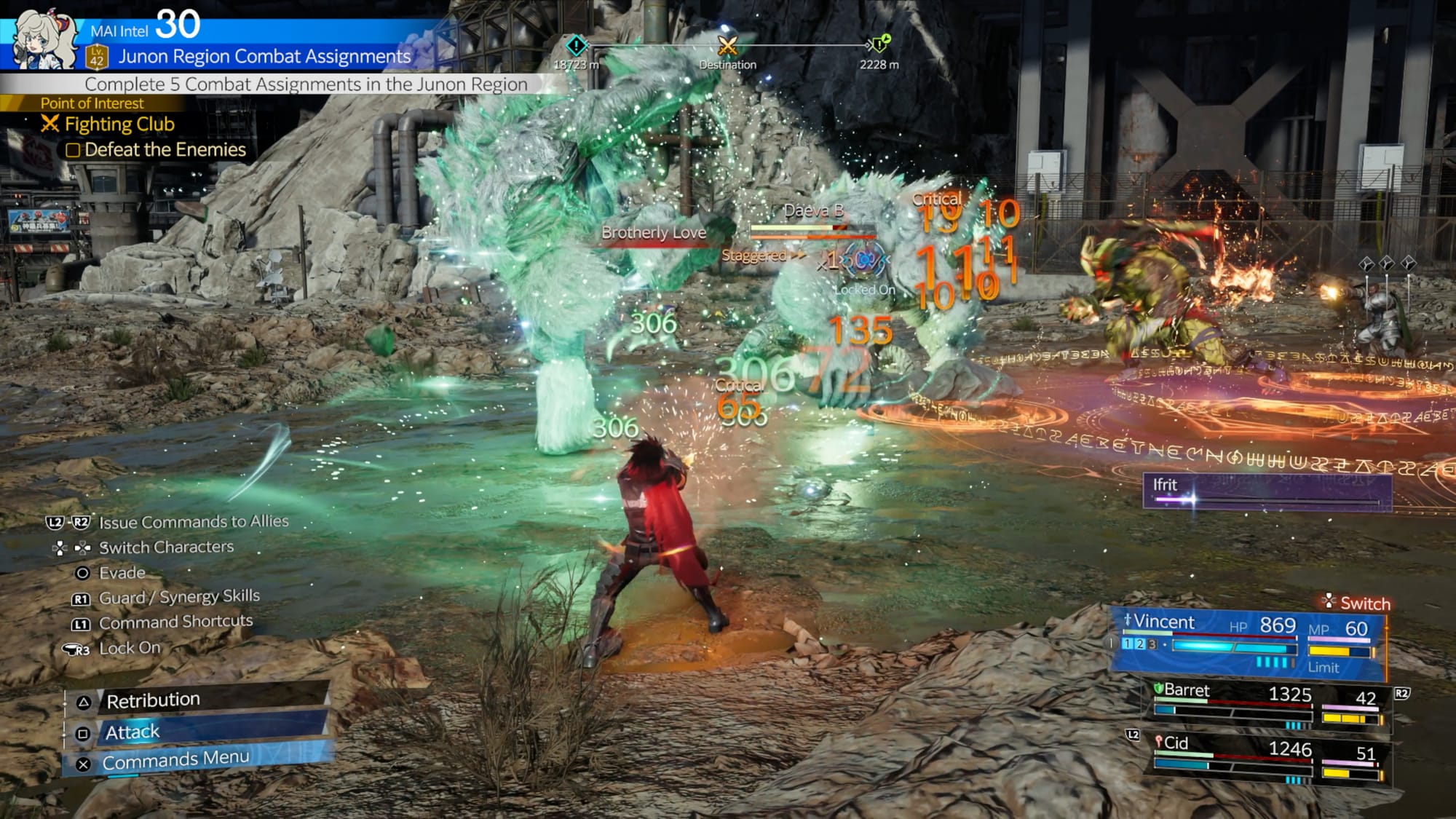
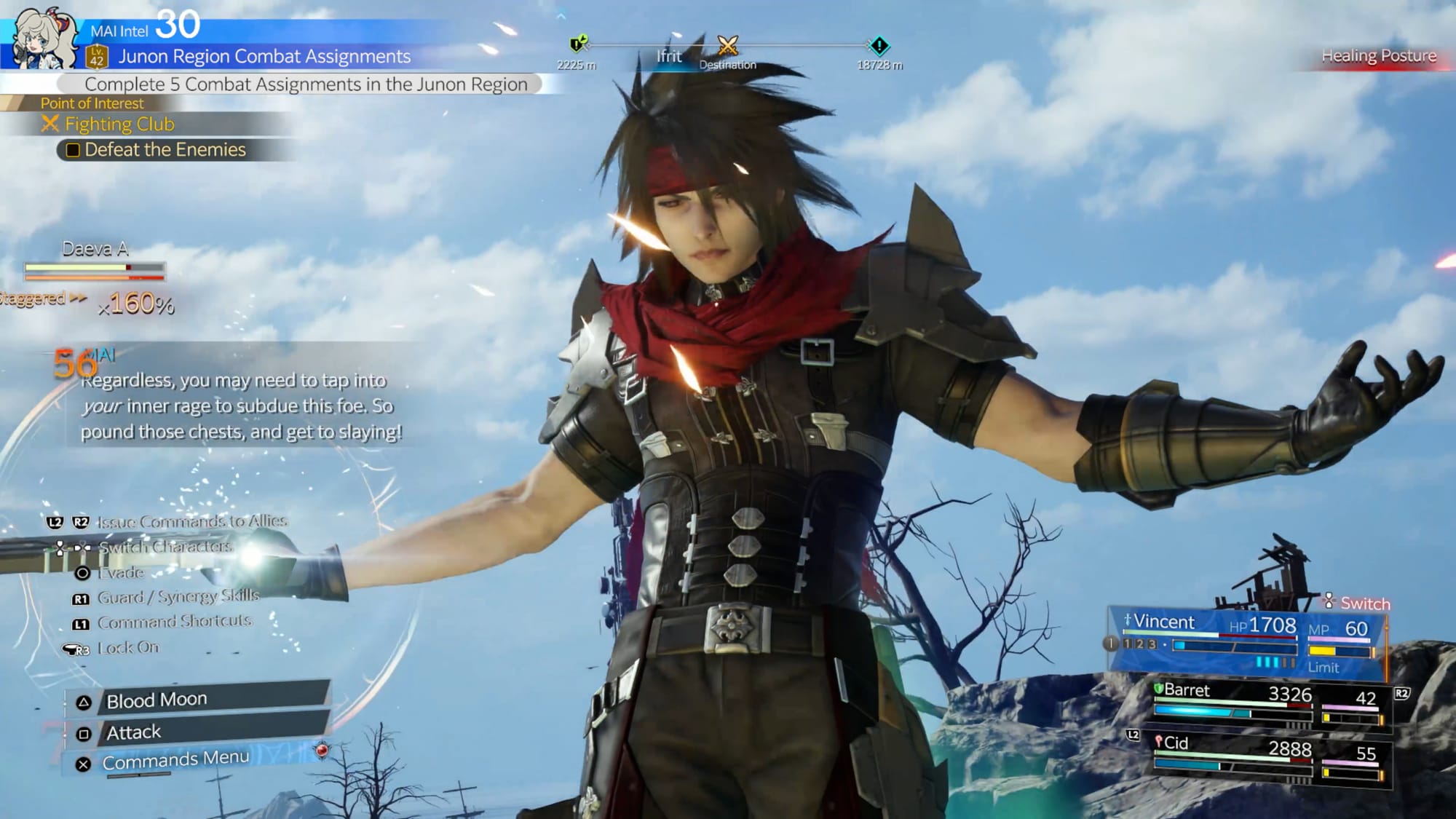
Revelation also introduces us to two playable characters: Cid and Vincent. Cid utilizes a lance and is proficient in launching foes to unleash aerial attacks. Vincent, on the other hand, is a gunslinger who can access a demon form to pile on the hurt. The main gimmick for these two party members is timing their attacks with visual indicators. Cid will flash a blue light and Vincent a red one. I adore these styles of play, as the foundations of their kits are built around keeping a keen eye both on the battlefield and yourself. Furthermore, the emphasis on timing discourages button mashing.
Unfortunately, there’s one blinding problem. The Remake trilogy loves its bombastic fights, explosions, particle effects, and damage numbers littering the screen in a gorgeous cacophony of chaos. For me, the impact on visual clarity never bothered me, as the broad strokes of visual information could easily be parsed. That’s the key phrase here: “broad strokes” of the screen. The two newcomers require looking for specific glimmers of light that get lost within the visual noise. It is manageable when there are a small number of foes in a skirmish (as shown in the provided screenshots), but the moment a few become a crowd, well, good luck. Camera and clarity are aspects every action game will struggle with at some point, something the team was well aware of when designing these two characters. Heck, FFVII Remake wasn’t safe from this, especially with its cramped level design. I just hope that a better balance is found to diminish the frequency of this issue because I want to see more of what Cid and Vincent have to offer.
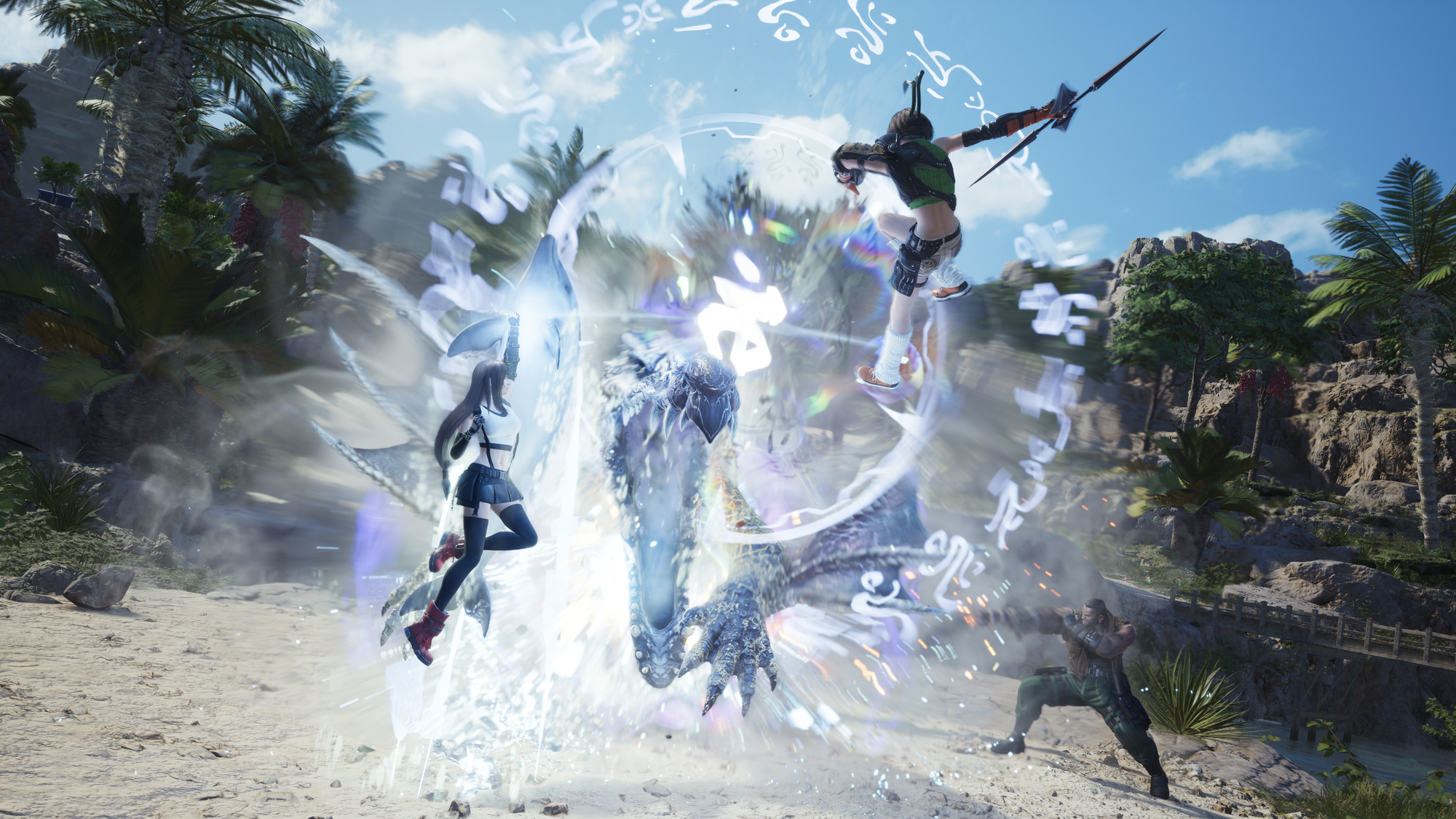
As for minor additions in combat, you can now initiate overworld battles on the backs of Chocobos. These avians have their own movesets too, but I didn’t find it super useful or fun compared to playing as the characters themselves. You can launch off the Chocobo with the grapple gun, making for a snappy transition into your lead characters. There aren’t any plans to expand the use of the grapple in battle outside of this, but it is a neat visual element nonetheless.
Last, but certainly not least, is the story and characters. Obviously no spoilers, but so far I am pleased with what I have seen so far. What I adore about Remake and the bits of Rebirth I have played is how exceptional the writing and (most) of the expanded story is. Sure, it admittedly suffers from some nasty bloat both in terms of gameplay and narrative pacing. Yet, because it strives to deepen its source material, it manages to give the original FFVII’s vapid husks-, uh I mean, characters- much-needed emotional depth. Before Remake, I pretty much didn’t care about most of the party outside of Cloud and, to a lesser extent, Tifa. Yuffie in the original was an optional character you could stumble upon as a random encounter in forest areas. Wutai is a part of the world that could be missed entirely when completing the main story. As a result, Final Fantasy VII's narrative is objectively designed to function without her and the ninja village being compelling.
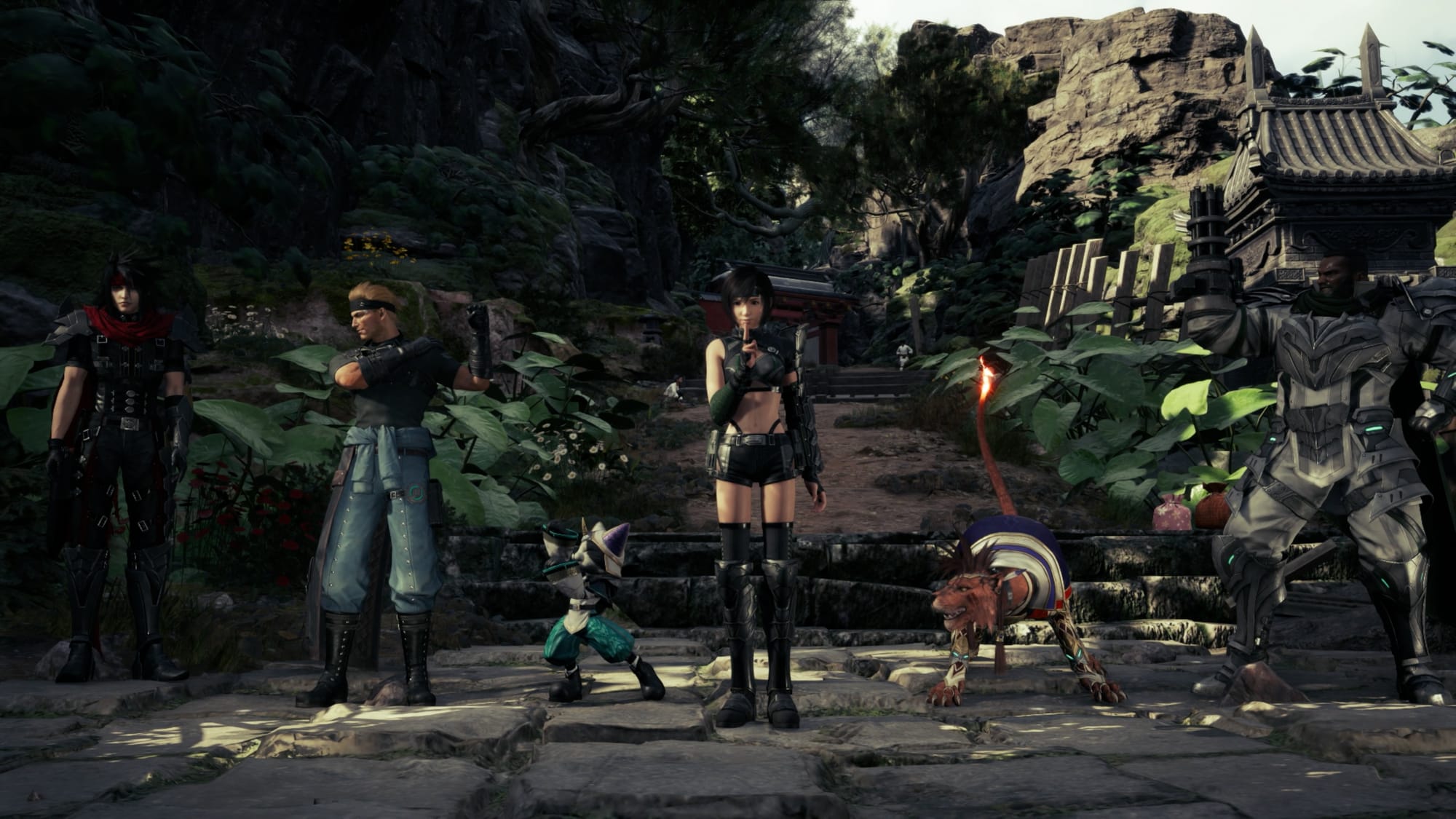
Chapter 4 putting the spotlight on the ninja and her home feels like the writing team making a proud declaration that the two will be important enough to the story of FFVII to highlight in the main campaign. Based on the context clues of where this would slot into the timeline of the original, they found a great spot to seamlessly weave these optional beats into the larger plot. We get to see Yuffie take more of a leadership role as she gives a tour of her home to the party. There are strong moments of character with how she navigates the political discourse Wutai faces against Shinra in this juncture of the story, making me invested to see what else Revelation will expand on. Additionally, this segment also serves as a grim reminder of the ramifications the events of the prior two games have towards the world at large.
Based on this demo, there is so far a lot I love about Final Fantasy VII Revelation, some nitpicks I am not too keen on, and a baffling design decision that could potentially sour the entire game for me. Still, with over half a year till the April release, I choose to remain optimistic that the team will knock it out of the park for a third time. My exasperated gripe with MAI’s interruptions is essentially a forced form of diegetic flavor text, rather than a mechanical issue. On that front, Revelation continues to deliver on the exceptional foundations of its predecessors while bringing its own bold additions to the table.
Final Fantasy VII Revelation will launch April 8, 2027 on PlayStation 5, Nintendo Switch 2, XBOX Series X|S, Steam, and Epic Games Store. In the meantime, I will be on my knees praying like Aerith that MAI and Chadley will yap a bit less in the full game.