In the prologue for Star Fox 64, there’s an Arwing floating aimlessly in the background: shrouded in twilight and seating protagonist Fox McCloud as it spins in slow, perpetual motion. It’s the final ingredient for this opener: as a Flash Gordon-esque text crawl introduces us to the tragic tale of Fox’s father, James, the narrator grimly conveys this backstory with all the gravitas of a tense war counsel. With the help of visual cards illustrating the story, it’s the Arwing that keeps our eyes on the screen; a persistent hypnosis in its constant motion, silently conveying the deep loss of a boy who lost his father far too soon.
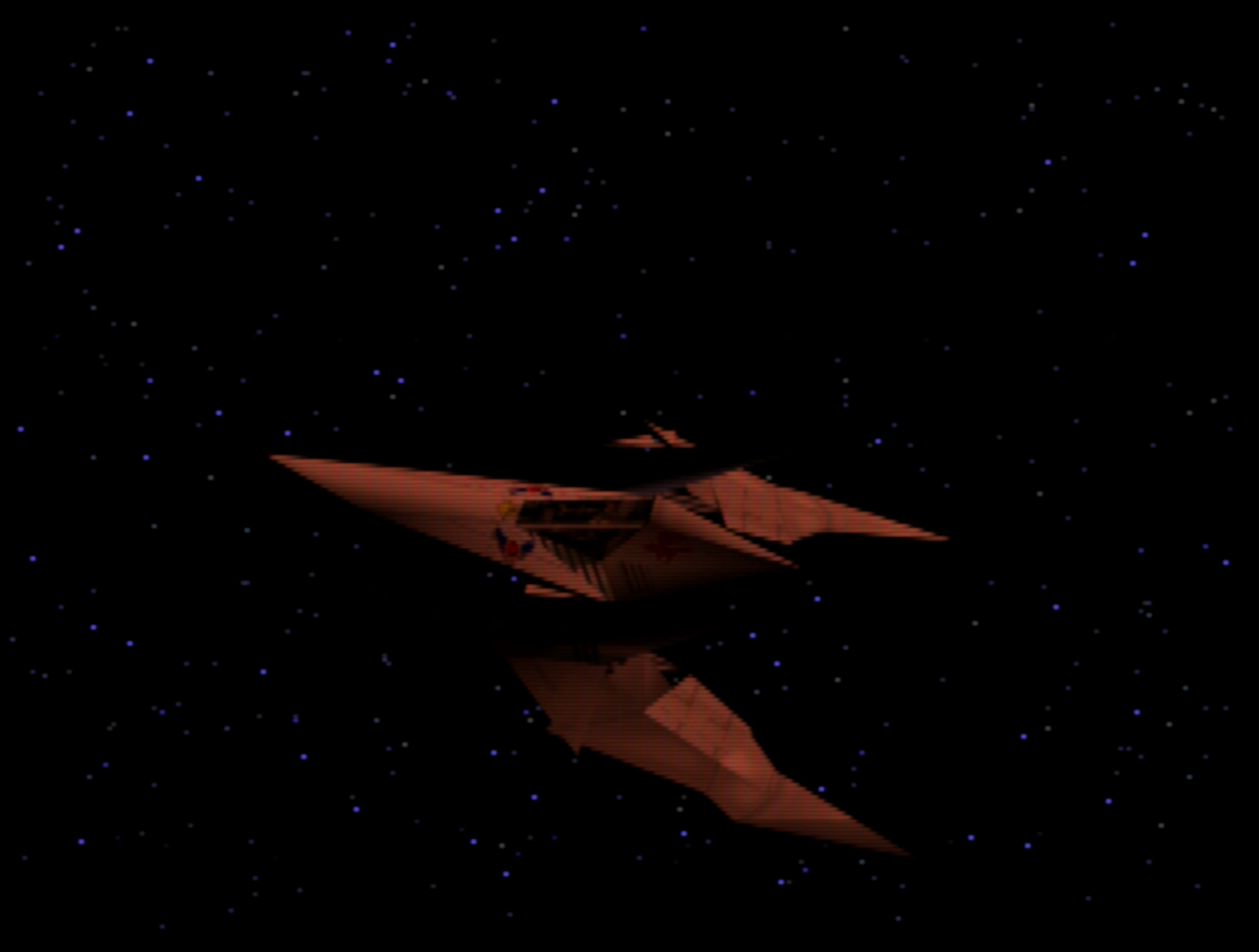
I often think back to this visual—not just because of sentimental nostalgia, but in that it feels representative of Star Fox’s decades-long rut. Many Nintendo franchises have all had their ups and downs over the years, but nothing’s ever met with consistent division or outright failures such as Star Fox. What started off with marquee titles on the Super Nintendo and Nintendo 64 quickly crash-landed in the ensuing sequels, and it’s never again achieved lift-off. For huge fans like me, who grew up with the series and treasure it as their own Nintendo-branded Star Wars, it’s often lamented that Star Fox never maintained a consistent brand, let alone ever matched or even surpassed the progenitors still loved, played, and appreciated today.
Even so, the series persists: whether it’s creator and Nintendo legend Shigeru Miyamoto pushing for his baby to finally catch on with Joe Q. Public, or Nintendo using the series as a seedbed for experimentation, Star Fox keeps swooping down from the stars time and again, desperate to prove its worth. And every time, it slinks off back to the recesses of space in disgrace, ruminating in hibernation as it plans its next assault.
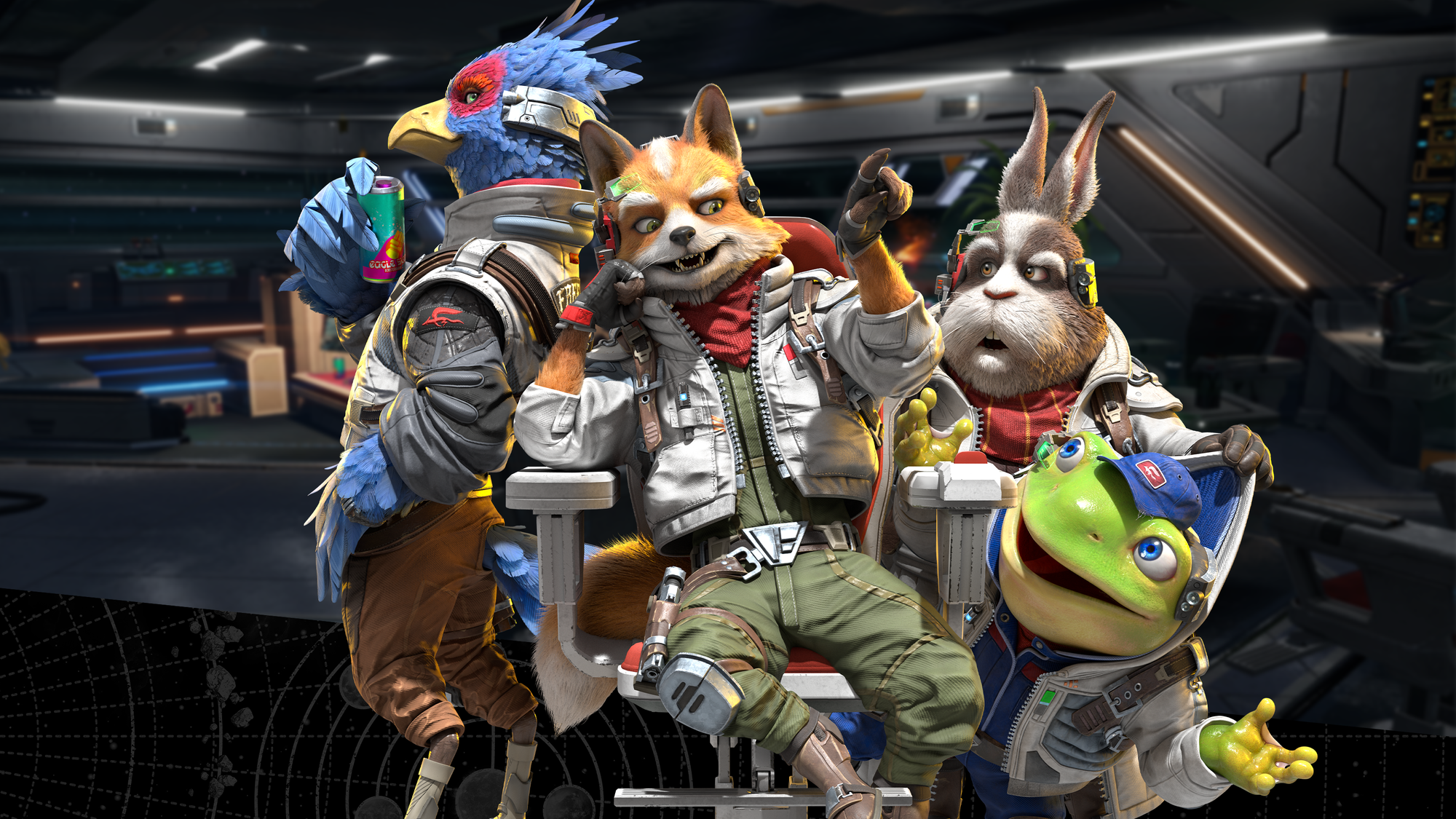
That time is now: June 25th heralds the latest reboot in Star Fox, a remake of the fan-favorite Star Fox 64. This reimagining has garnered all sorts of discourse: is this remake the right move after so many retellings of the same story? Can Star Fox succeed in an industry that’s long since left the shmup genre behind? Are those digitigrade-based designs Eldritch abominations, or brilliant subversions in catching the public eye?
Well, we’ll certainly discuss all that, but a more pressing question demands our attention: how did we get here? Was Star Fox really so mismanaged to the point we needed another remake? To answer that, a historical retrospective is necessary: for this retrospective, I’ll be analyzing all nine games—sorry, Star Fox Guard fans—and talk about their respective places in the series’ history; namely, how were they received? What was each game trying to do? What were the circumstances behind their development? Did the more divisive entries deserve their scorn, or were they really that bad? To begin, we’ll need to initiate warp-drive and travel all the way back to 1993 with the original Star Fox.
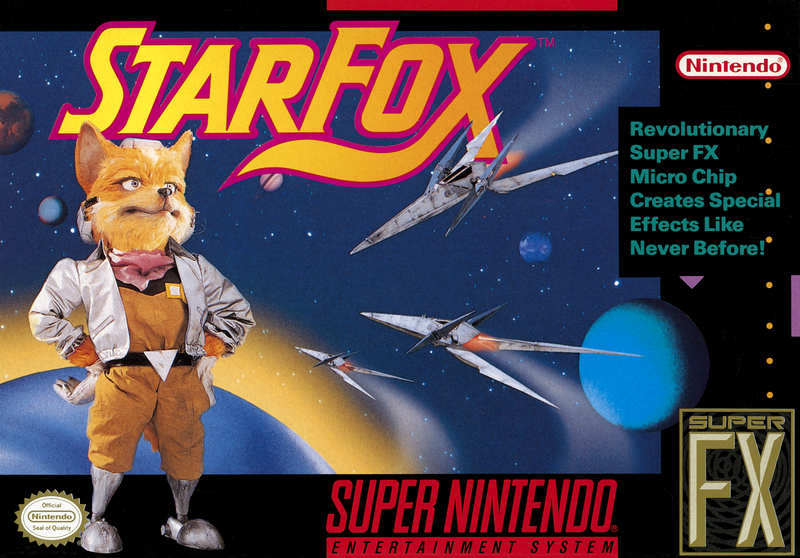
Star Fox was born as a collaboration between Nintendo and Argonaut Software—the latter a British game studio whose experimentations with Nintendo hardware caught the eye of the Japanese game giant. With a veritable dream team in director Katsuya Eguchi (Animal Crossing), producer and designer Shigeru Miyamoto (Super Mario, The Legend of Zelda), character designer Takaya Imamura (F-Zero), and Argonaut programmers Dylan Cuthbert and Giles Goddard (the fellow behind Super Mario 64’s stretchy face demo), the two studios worked together to develop Star Fox as the debut ambassador of the Super FX chip: a special processor that allowed the SNES to produce 3D polygons.
To put this into perspective: the Super Nintendo was already an impressive upgrade over the Nintendo Entertainment System, with the Mode 7 feature employing some impressive scaling tricks to craft a mind-bending illusion of 3D—as seen in games like F-Zero, Pilotwings and Super Mario Kart. It was certainly eye-catching and served as the console’s graphical hook, but it was nothing like the wizardry of Star Fox; most home consoles had never dabbled into outright 3D like they had at arcades, and players accustomed to pixels and sprites were left speechless.
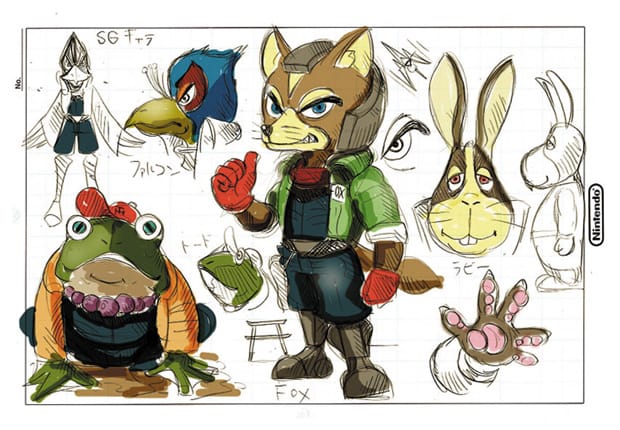
Straying from the conventional sci-fi ensembles of humans and robots, Miyamoto elected to populate Star Fox’s Lylat System with an animal-based cast. Taking a cue from Japanese iconography, Miyamoto was particularly inspired by the nearby Fushimi Inari-taisha shrine: the kitsune fox statue would provide the likeness for team leader Fox McCloud, while the iconic Senbon Torii gates set the stage for the series’ alluring obstacles (“When there’s an arch you want to go under it, right?” Miyamoto would later comment). Meanwhile, cocky hotshot Falco Lombardi and wise mentor Peppy Hare were borrowed from Japanese folklore, whereas lovable mechanic Slippy Toad was lifted from a team member’s doodlings of a frog mascot.
Of course, the visual influences weren’t limited to Japan: the game’s iconic puppets for the cover/promotional material was inspired by the UK’s Thunderbirds: a 1960’s puppet show centered around a top-secret search-and-rescue team. Miyamoto, as it happens, dreamed the show’s producers would pitch a Star Fox adaption. What a shame his wish never came true!
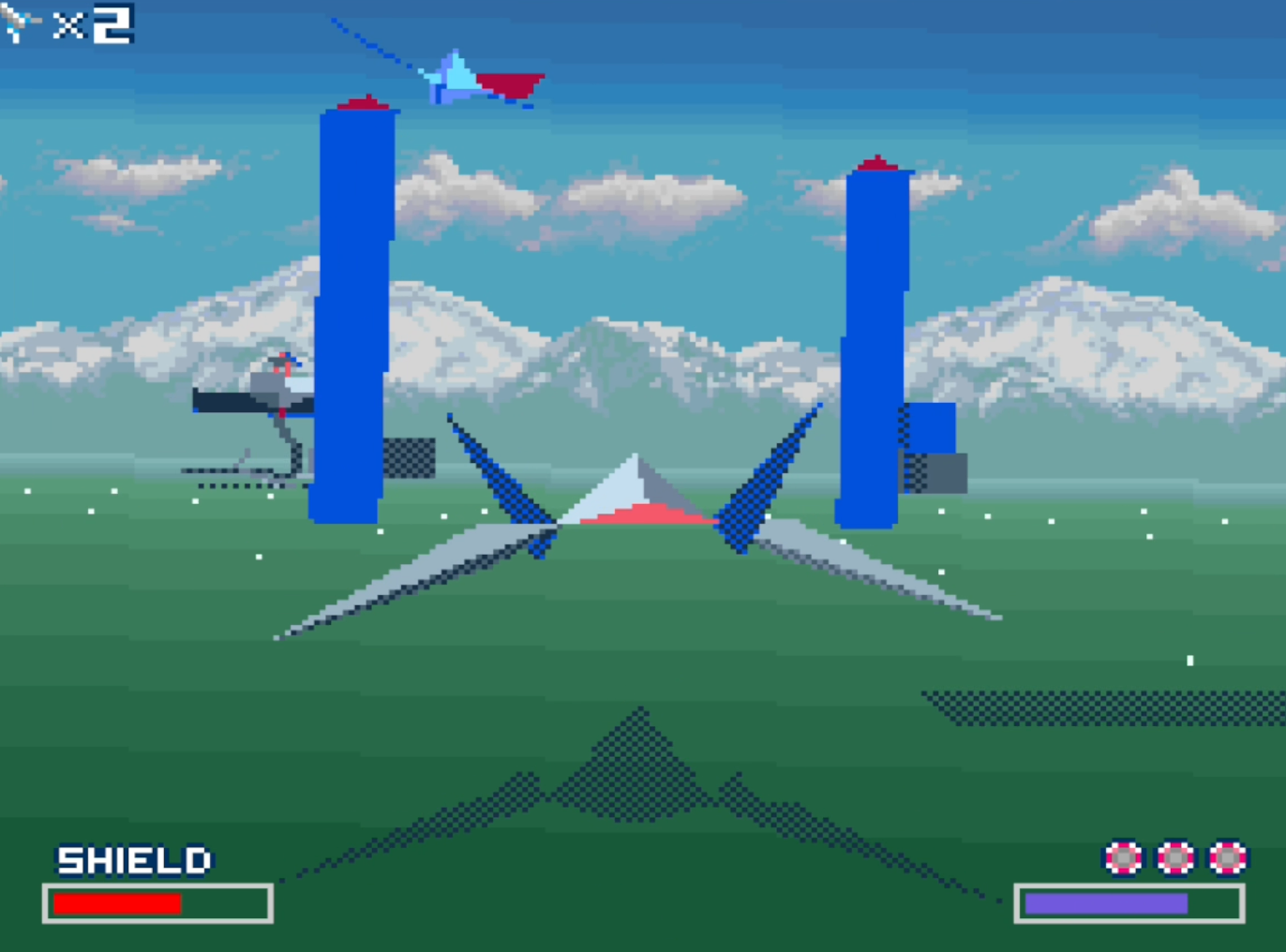
Much of Star Fox would be later defined by chasing high-scores and chaining combos, but while the original game does feature a scoring system, this one’s moreso a test of survival. You’re constantly weaving your ship—the Arwing—through abstract obstacles while dodging enemy fire, and the high difficulty keeps you on your toes. Said difficulty is reflected in the three routes: Level 1’s not so bad, but Level 3’s a genuine test of endurance that’ll challenge any gamer. It’s a seriously tough game, although not always for the right seasons: between the choppy framerate and the rudimentary polygons, it's hard to decipher what’s happening with the mess of non-descript triangles and squares flying all over the screen.
Some say this debut entry’s a hard sell for modern players, but looking past its legacy, the game still holds up: the primitive polygons craft a unique look in their abstraction and build just enough context to create some iconic setpieces—everyone remembers that cinematic climax in Space Armada where you infiltrate the giant starship and shoot down the core. Moreover, the orchestral music is one of the SNES’s finest soundtracks, emulating the grand scope of a space opera. From Corneria’s opening rock to the surging swell of the Mission Complete’s space variant theme, the score’s range never fails to energize and vindicate the player; even now, I love toying with the Arwing demo in the game’s menu just because of the music—the gentle lullaby of the game’s main theme coaxing me beyond the stars.
Point being, it all blends together to craft this nebulous moodiness that sucks you in from the word “go”. You don’t need to know the context behind anything: you can just veg out to being the star of a Star Wars-like epic, and the game had the immersion, vibes and soundscape to match. And even then, players with a Nintendo Power subscription at the time had an ongoing comic serial—featuring Fox as a former bandit with a heart of gold-—that could help fill in those blanks. Whether you were just busy mastering the game or wanted to reinterpret its lore, Star Fox was pliable. Beyond just blowing stuff up, there’s not another shooter that looks, feels, and plays like a Muppet-based epic in space with a John Williams-esque score and early computer graphics. Other space shooters had tackled the 3D look before, but the tech behind this puppet show changed the rules of the game.
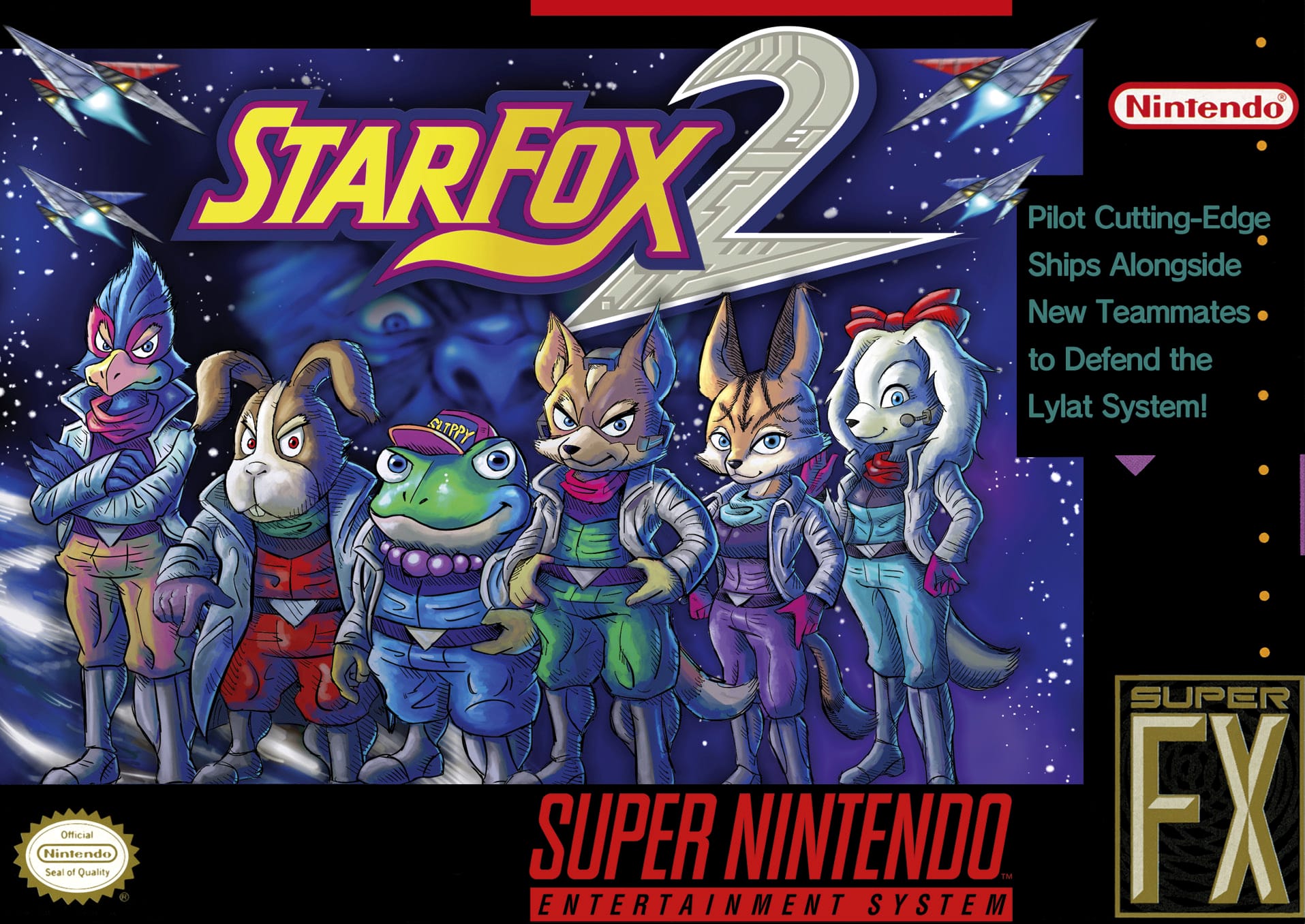
Next comes Star Fox 2…well, technically, anyway. The game was built as another technical showpiece for the SNES and meant for release in 1995, but as the industry moved to full 3D with Sony PlayStation and Sega Saturn, the game suddenly found itself antiquated, and so it was quietly shelved. Copies somehow leaked online over the years, but they weren’t the final version released many years later in 2017 via the Super NES Classic Edition. We could follow chronological order and save it for later, but as the game’s instrumental to the evolution of Star Fox, it’s best to evaluate it now.
Star Fox 2 takes on a more strategic approach where series villain Andross returns and fires missiles and battle cruisers from his secret base, and you’re tasked with liberating his captured planets in the Lylat System all the while ensuring he doesn’t strike Corneria. In other words, Star Fox 2 is an exercise in stress management—where do I go? What do I prioritize? Do I rescue this planet, or do I take out the enemy fleet? Do I trust Corneria’s satellite to take down that incoming missile, or do I risk it and go for the planet so it won’t launch any attacks? It’s a constant war of attrition where every choice counts, right down to the score timer ticking with every second.
On top of that, the planets aren’t on-rails corridors; rather, they take place in what’s called All-Range Mode: arena-based sequences where you can move the Arwing—and its ground-based transformation, the Walker—any which way in 3D space. You’re pressing switches, storming bases, and engaging in isolated dogfights with both small fry and bosses alike. It’s a gameplay model that turns up the pressure in its harder difficulties; namely, Expert Mode, where Andross is constantly launching missiles and Star Wolf is crashing your dogfights. If you’ve managed to clear this difficulty level with Corneria unscathed, let alone any save states or rewinding, a gold General Pepper medallion for you.
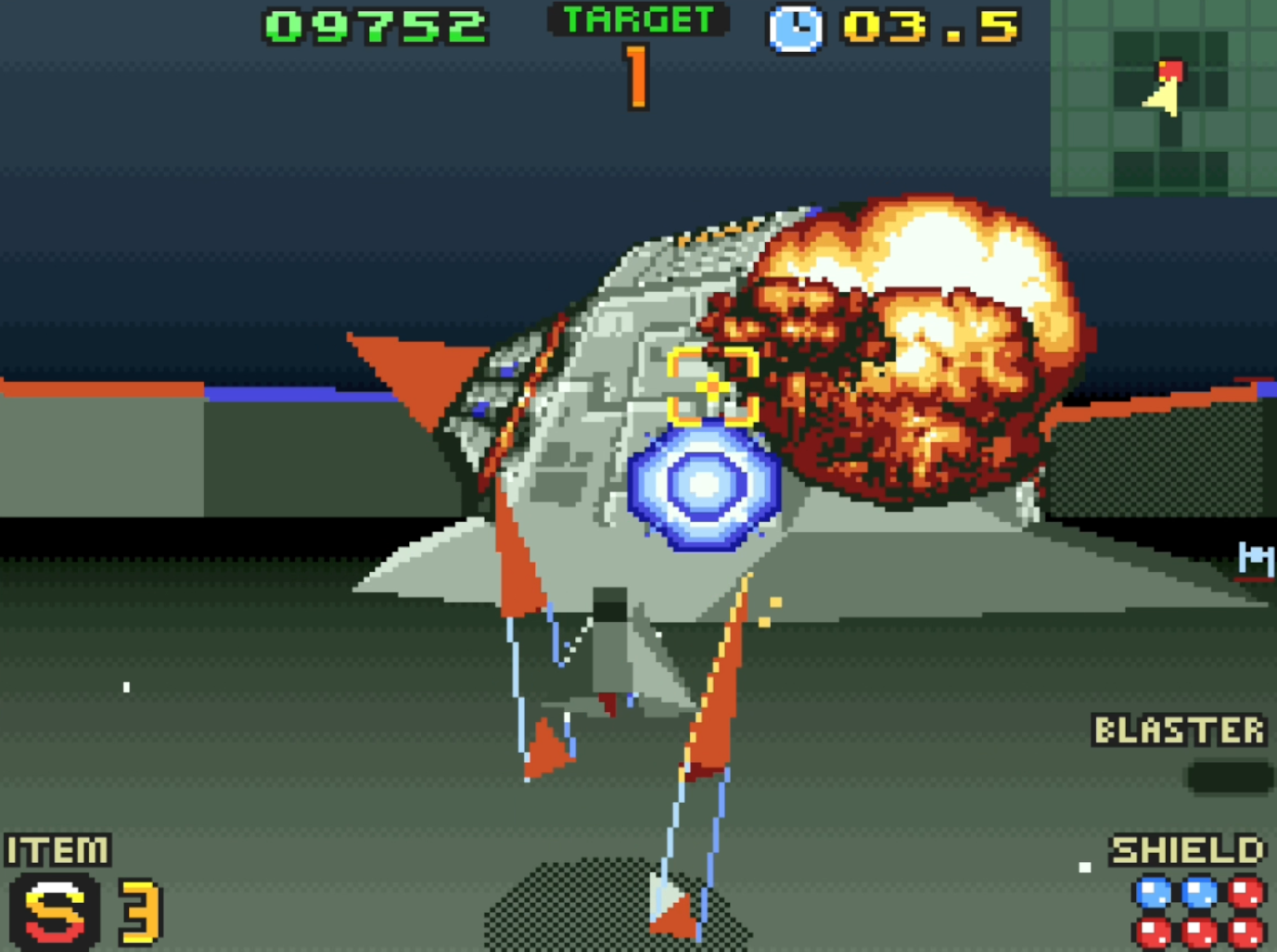
Despite the novelty of playing a forbidden grail, however, Star Fox fans seem to prefer the original. While the choice of planets vary in each playthrough, the objectives and bosses often present little variety, and while Expert Mode solves this somewhat, the arena-based levels don’t have the memorable handcrafted feel of the original’s arcade design. The finicky camera interferes in the space dogfights, so you often lose track of your opponents—a frustration compounded upon when they escape and make haste for Corneria. The game’s soundtrack uses the same instrumentation as the prior game, so the nostalgic feel’s there, but the compositions aren’t nearly as memorable. (On account of different composers, mind—Star Fox's original composer Hajime Hirasawa left Nintendo over ownership rights.)
Still, Star Fox 2 remains a shining example of how both Miyamoto and Nintendo eventually—or arguably, always—approached the series: a lab rat prime for experimentation, rather than simply rehashing the same core idea. Perhaps the advent of 3D would’ve rendered it obsolete, but I consider it a shame the game never got the chance to spread its wings, and even now it feels like an overlooked footnote in Star Fox’s legacy. There’s a genuinely good game in here.
Regardless, as a cancelled sequel, Star Fox 2 didn’t influence public opinion one way or the other, but as a proof of concept, it was invaluable to the series’ direction—namely the next game: Star Fox 64.
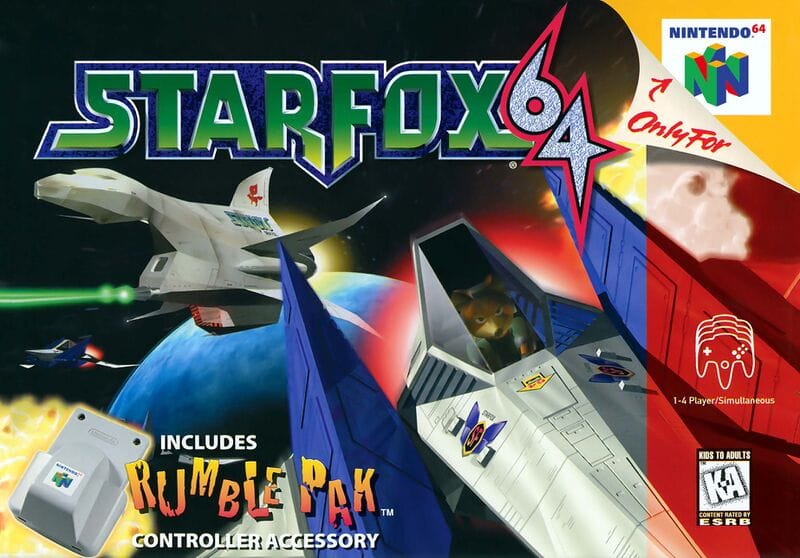
As opposed to the series’ usual design philosophy, this was a more iterative sequel. Miyamoto and Imamura’s approach to Star Fox 64 was intended to marry the gameplay concepts behind Star Fox and Star Fox 2. The latter’s cancellation was an obvious motive, but the former’s full potential couldn’t be realized on SNES due to the obvious hardware limitations. What resulted was a game using the original Star Fox’s gameplay model as a base while taking cues from Star Fox 2’s more freeform progression; in other words, you’re soaring through a traditional arcade shooter with bespoke levels and an emphasis on on-rails play, but a branching path system encouraged the player to experiment with different levels for each playthrough. Despite the familiar approach, the game took care to introduce some new features, be it new vehicles such as the ground-based Landmaster tank and the aquatic Blue Marine, voice acting for every character, and haptic feedback courtesy of the included Rumble Pak: a peripheral that immediately became an industry standard.
It was the perfect blend of ingredients for a perfect game—Star Fox 64 eventually released in 1997 to instant universal acclaim, hailed as the exact evolution you’d expect over the original. The flying is smoother and feels great to control. The scoring system keeps players poking and prodding at its depths. The innumerable routes allow for infinite replay value. The best of Star Fox 2’s concepts lived on, from All-Range Mode introducing tense all-out dogfights to the Star Wolf encounters forging an unforgettable rivalry. It’s the game where Star Fox’s conventions were firmly established, for any future sequel to be judged and compared upon.
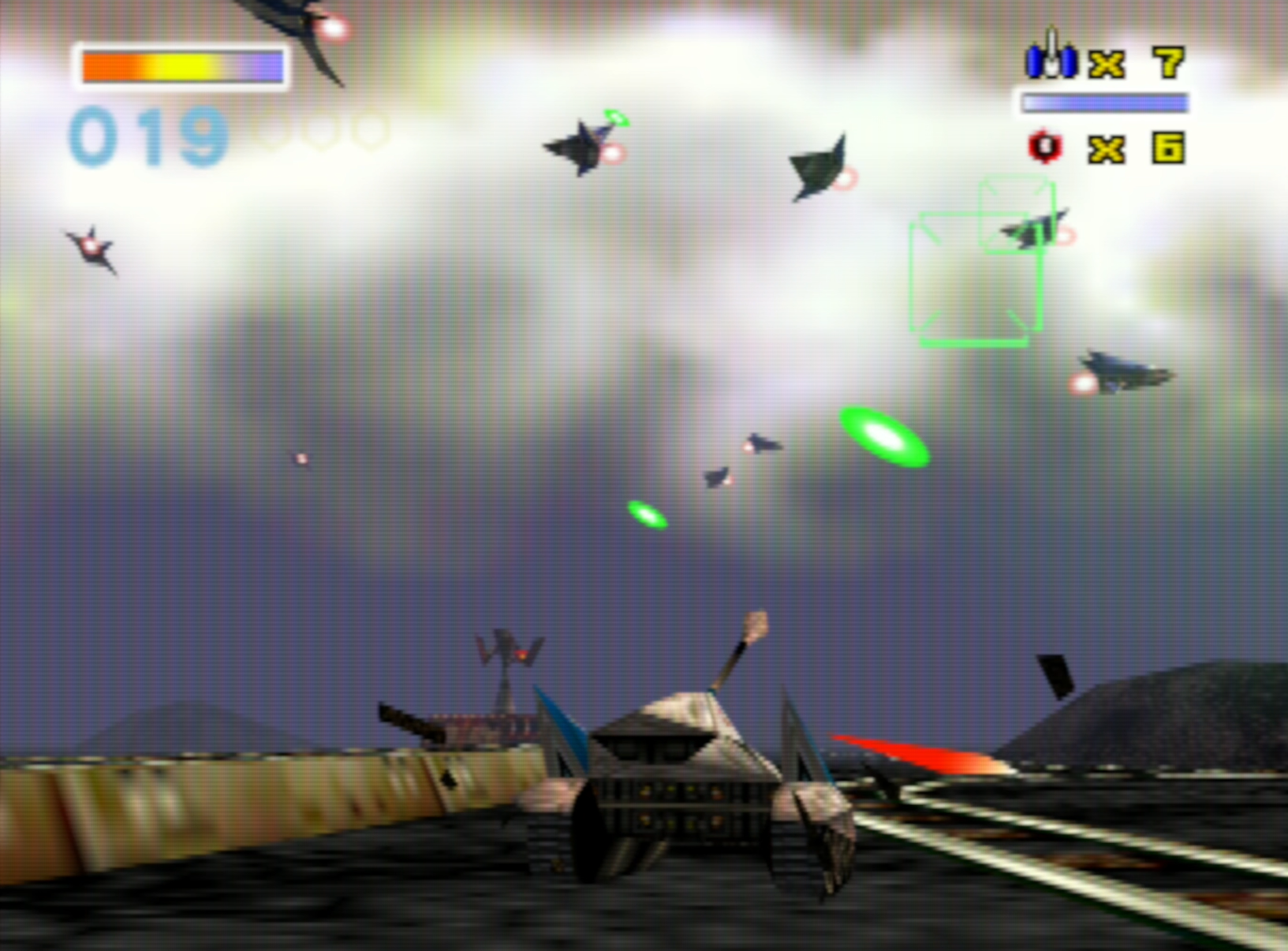
Star Fox 64 operates on a choose-your-own adventure style of progression where completing certain objectives has you embark on different routes. Using the opening Corneria level as an example, you could just fly straight ahead and take on the Granga boss, but if you save Falco and fly through the ocean sea arches, you’ll be rerouted to an alternate boss. The wimpy Granga sends you to the Meteo asteroid belt, whereas the hidden Attack Carrier sends you to the more difficult Sector Y. No two playthroughs are the same, and the game doesn’t punish you for choosing any route. Anyone can play this game however they please, yet the carrot-and-stick of reaching new levels are what hone our skills further and further.
On top of the emphasis on player choice, Star Fox 64 commits to a scoring system that keeps players coming back for more. Fledgling pilots just start out shooting whatever, but tricks gradually unveil themselves. For instance, you’ll realize that charge shots are prime for taking out enemy waves because the splash damage from the ensuing explosion will earn you bonus points for every fallen unit. But did you know that if you hold the R and Z buttons, you’ll fire what’s called a Charged Unlocked Shot, which doesn’t lock on, fires quicker, and earns you one extra point for the ensuing splash damage? It takes some serious skill to master. Earning score medals for each stage is a reward in itself, but the game always encourages you to dive even deeper—an immeasurable depth apparent in its competitive high score scene.
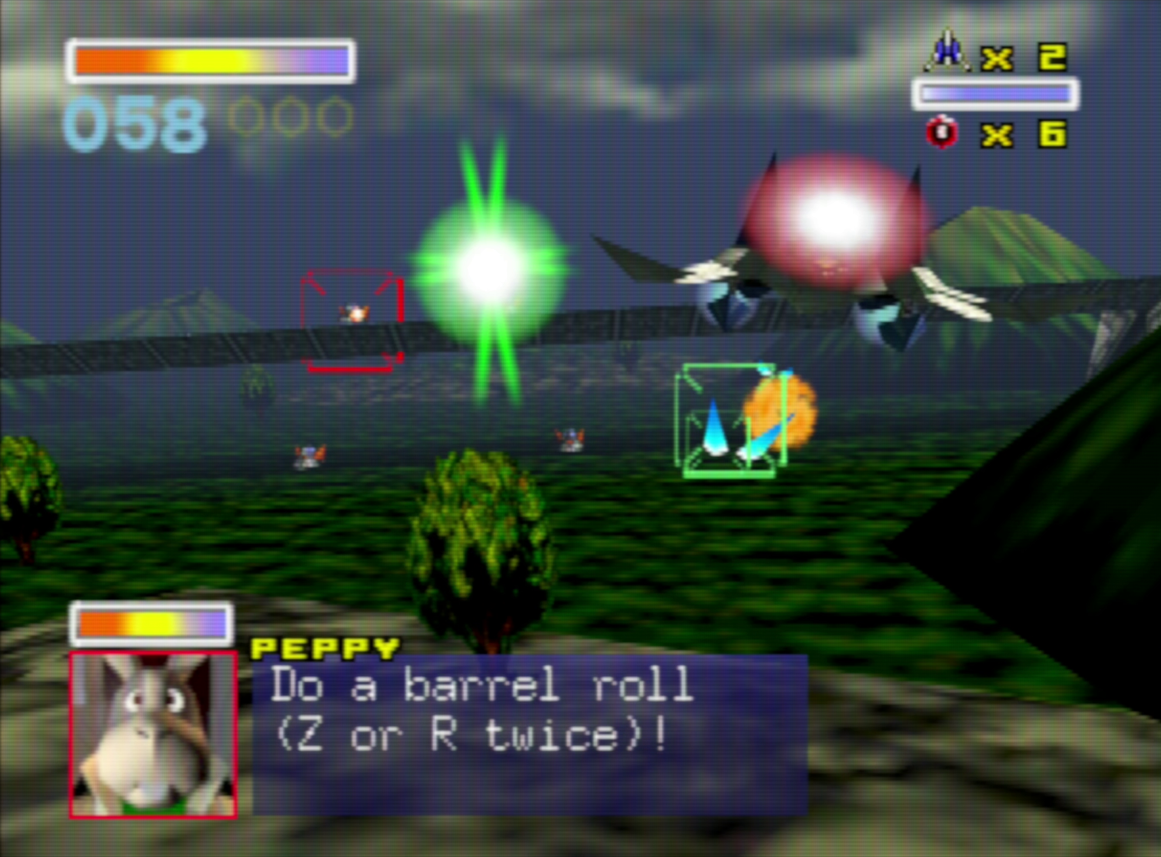
The one thing everyone remembers from Star Fox 64 is, of course, the dialogue. For nearly three decades, all its iconic lines have ricocheted in our heads and spammed message boards everywhere, and I think there’s two reasons why. The first is that, for Star Fox 64’s time, the English voice-acting is surprisingly, genuinely good. Localization was still something of a wild west in the 90’s, and be it everything from English-to-Japanese language barriers to low budgets forcing the team to grab whoever was in office, quality voice acting just wasn’t a priority in the Western gaming sphere, and it often showed. Nintendo of America was no stranger to bad voiceover themselves, but Star Fox 64’s use of local Seattle talent straddles this fine line of being campy, yet elaborate—some of it’s certainly goofy (“COCKY LITTLE FREAKS!”), but it’s never in a way that feels overtly zany or condescending, which leaves ample room for the dialogue to seat us into this authentic space opera. (“What’s taking you so long, Fox?!”, screams Peppy in the game’s rawest line.)
It’s like watching the original Star Wars trilogy: for all the corny dialogue, the cast and crew work their talents to transport you into a whole another universe. Even its more overt missteps play into this feel: for instance, I can readily admit that Slippy is a blatant miscast. An all-cast interview reveals actress Lyssa Browne was directed to channel the voice of a boy, but it’s clearly that of a woman—anyone else remember being confused as to whether Slippy was a boy or a girl? Even then, her performance wins us over in its sincerity: Slippy’s a helpless tech guy tagging along for the ride, and Browne sells it with his constant screams for help. But much as he gets himself into trouble, he’s an irreplaceable asset to the team—you could shoot Slippy down to cut down on the chatter (or simply for fun), but then you’ll be left without his handy healthbars for the ensuing boss. Even when his constant foibles chafe against the team, Slippy’s a genuinely endearing comrade that teaches the player the value of keeping your teammates alive.
The second reason is that aside from the opening narration, the story's largely confined to conversational back-and-forths, lining up crumbs of context prodding at our curiosity. What's Wolf's history with Fox? How do Fox and Bill know each other? Did romance once bloom between Katt and Falco? It’s a great example of gaming minimalism: the story may be simple, but the cast's distinct personalities, goals, and relationships immediately endear us to this world.
My favorite question involves the mystery of James McCloud: in the true ending after Andross self-destructs, Fox screams as he’s engulfed in blinding flames…until the soft voice of his father echoes through the void. Waking to the familiar sight of his father’s Arwing, Fox follows his father through the fiery maze, silently heeding his gentle words of affirmation. (“Never give up. Trust your instincts.”— a subtle cue that Peppy borrowed his catchphrases from his dearly departed friend.) At the very end, when the exit’s in reach, the flames licking at their heels, does he grant Fox one final farewell:
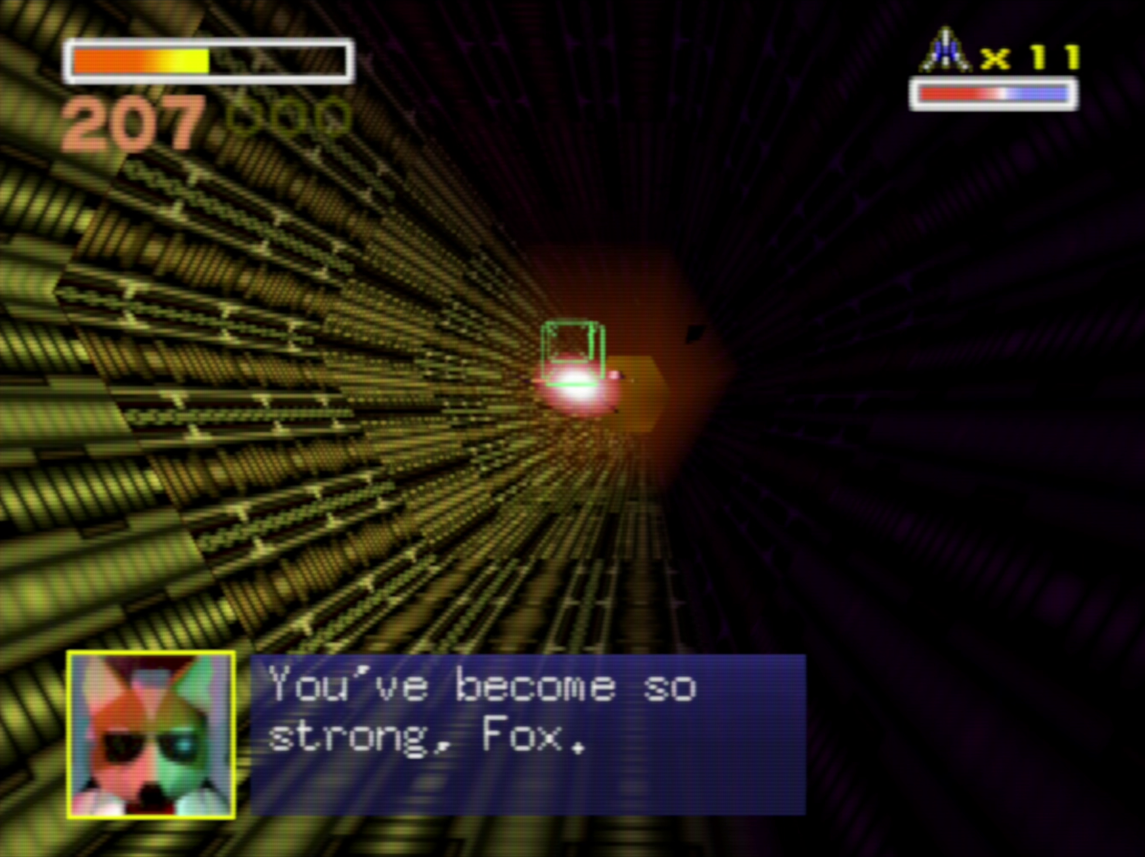
And just like that, he’s gone. Is he alive? Is he a ghost? Was Fox hallucinating? Whatever it is, we’re left gazing out like Fox, scanning the horizon for any sign of life…before silently moving on.
Star Fox 64 is timeless. Even now, it’s fascinating this hour-long experience can instill such catharsis, right down to the credits: how the cast is running against the sunset, the MIDI orchestra swelling as the Great Fox slowly rises from the background, and then they fly out and disappear into the red sun—a choir sending them off along with the name of former Nintendo president Hiroshi Yamauchi. For something so short, it’s constructed with this elaborate, intersectional framework of character, depth and design—inviting us time and again into its interactive cinema. I can’t think of anything else like it.
Its one weakness is the barebones multiplayer—a tacked-on frivolity added towards the end of development—but such a non-sequitur can’t prevent Star Fox 64 from being one of Nintendo 64’s best. The game launched Star Fox into the upper echelons of Nintendo properties, with Fox McCloud himself becoming a bona fide Nintendo mascot, right down to starring in 1999’s Super Smash Bros. The future was bright for Star Fox.

And then, things went off-rails.
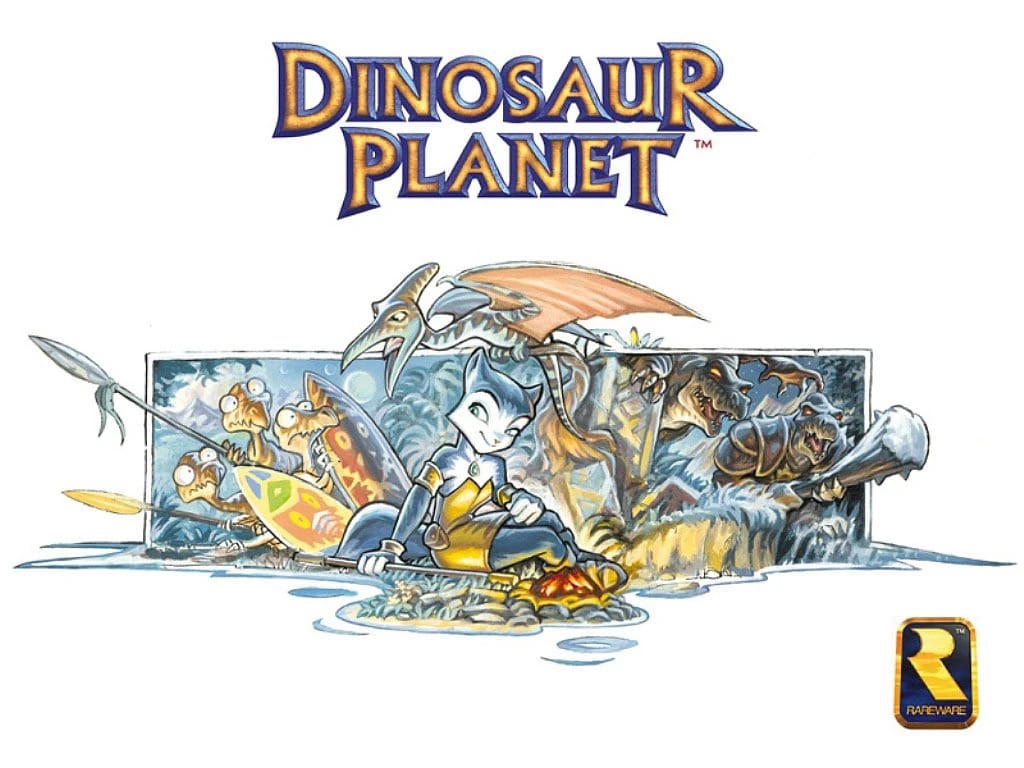
On the other side of the world in Britain, the studio Rare, famous for Donkey Kong Country and Goldeneye 007, had begun work on a new game called Dinosaur Planet. Gestating in the late 90’s for Nintendo 64, the game would eventually model itself after The Legend of Zelda games, particularly the groundbreaking The Legend of Zelda: Ocarina of Time, featuring a mystical new world filled with puzzles to solve, magic to unlock, and creatures to overcome. Originally starring Timber the Tiger from Diddy Kong Racing, the game would eventually morph into starring two different protagonists: Sabre the wolf and Krystal the fox, both of whom the player could swap between at will. Designed to be Rare’s last N64 game, development carried at a steady pace until a fateful meeting just before E3 2000.
Allegedly, a Dinosaur Planet demo constructed for the show caught Miyamoto’s attention. He’d been interested in expanding Star Fox beyond its shoot-‘em-up roots into an action-adventure title, and he couldn’t help but notice the Sabre character bore a striking resemblance to Fox McCloud. Nintendo assembled a meeting with Rare, proposing to merge the two properties into the Star Fox universe. While Rare’s developers had grown attached to the unique vision they fostered for Dinosaur Planet, they recognized the potential of borrowing Nintendo’s sci-fi franchise, and so a deal was struck to create Star Fox Adventures: Dinosaur Planet—eventually shortened to just Star Fox Adventures.
Out went Sabre, in came Fox McCloud, and down went Krystal: demoted to a damsel-in-distress stuck in a, well, crystal. While we know from the leaked prototype that progress continued for Nintendo 64, this crossover would prove a massive undertaking that wouldn’t meet the system’s expiration date, and so Star Fox Adventures was moved to GameCube.
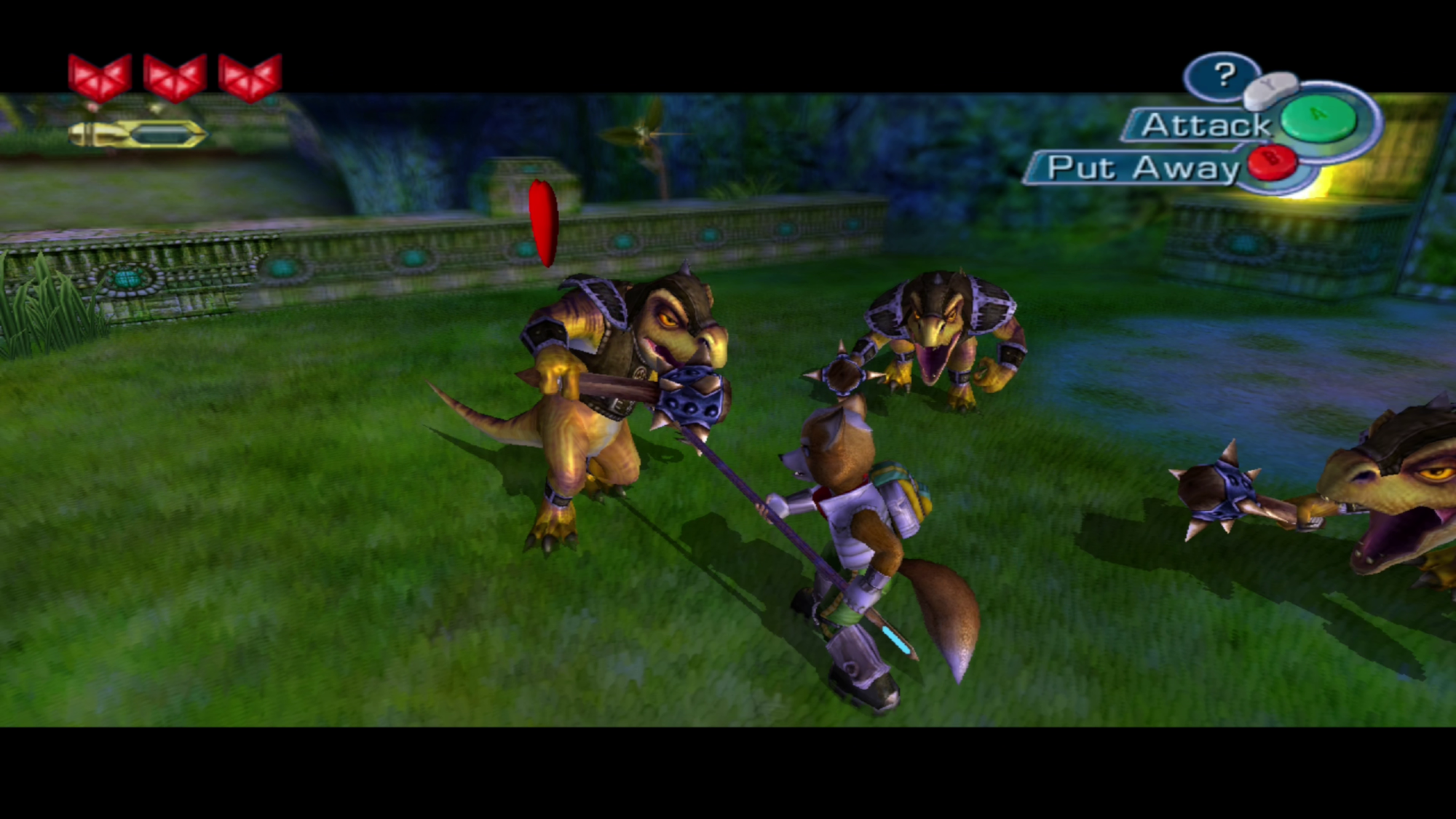
Heads turned at the game’s E3 2001 debut. Dinosaur Planet’s shift into a Star Fox venture was already a big shock, but both showgoers and fans at home couldn’t get enough of the graphics. Articles wrote poetics over everything from Fox’s lifelike fur-shading to Dinosaur Planet’s glistening waters, while Nintendo enthusiasts salivated over a Zelda-like adventure courtesy of Rare: already a studio with a storied pedigree. Any concerns over Star Fox’s shifting genres were quickly brushed aside in the fever ushering in a new generation of games.
…That is, until development issues reared their ugly head. According to Rare developer Phil Tossel, Adventures’ development was a perfect torrent of missteps: the game started off with only five programmers—a number already too small for its Zelda-inspired ambitions. The game’s shift to GameCube meant the original premise of a “no-loading world”—designed for the cartridge-based N64, which could handle that just fine—had to be completely reworked for a disc-based medium, which introduced complications. The tacked-on Star Fox motif meant they had to throw together quick n’ dirty Arwing segments, which naturally couldn’t hold a candle to a ground-up space shooter.
Did I mention the game faced constant delays—a typical Rare fixture—and the eventual ticking clock that was the 2002 Microsoft acquisition of the studio? Yeah, uh, whoopsie. No more Nintendo home console games from Rare. The game was practically rushed out the door to meet the September deadline, and what resulted was a divisive parting gift: Adventures received positive scores from the media, but players found themselves divided on Star Fox’s next-gen debut. Some fans still enjoyed the original setting, pretty graphics and Zelda-inspired gameplay, yet the game endured harsh criticism from longtime Star Fox fans—not just because it didn’t play like Star Fox, but because it was an exercise in tedium.
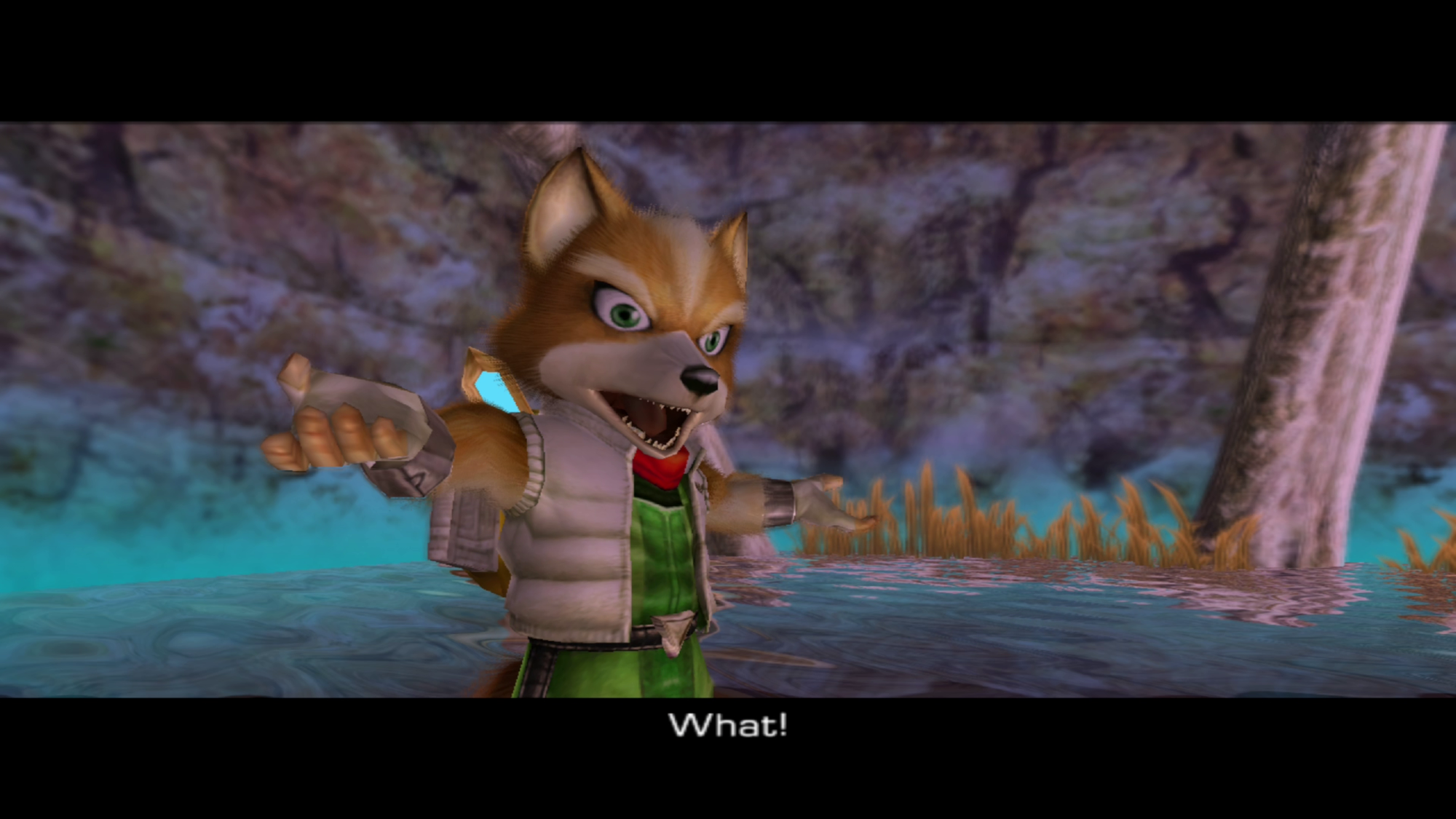
Put simply, it wasn’t fun to play.
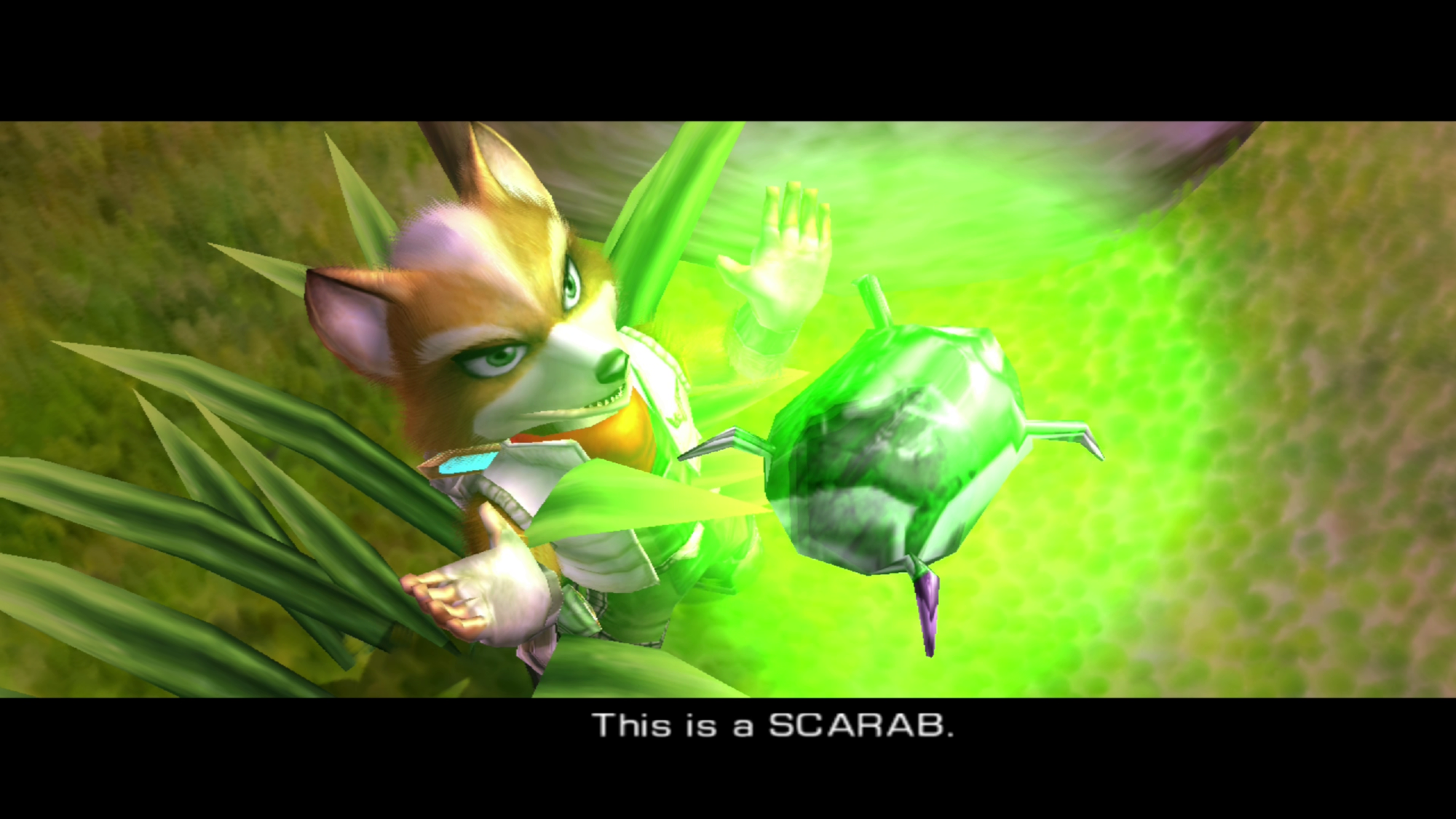
Backtracking is the name of Adventures’ game, committing to Rare’s greatest vice in collectathons. You’re tasked with retrieving McGuffins in the form of Spellstones—these mystical artifacts that keep Dinosaur Planet’s landmasses together—but first you must take down the bosses guarding each stone, then run all the way back to these Force Point Temples to return them. Moroever, you endure these sacred trials to earn Krazoa Spirits—ancient apparitions that can rescue Krystal from her magical prison—and backtrack all the way to Krazoa Palace to drop them off. While doing all this, you better be sure you’re collecting the game’s currency in Scarabs, because a) you need to pay these arbitrary tolls to progress further, and b) you’ll occasionally need to buy gifts to bribe whatever whining schmuck you come across. (“Nobody ever brings me gifts anymore!”, randomly greets a stone giant). All this, on top of constantly running around chasing mushrooms to feed your pet dinosaur, who won’t perform any necessary tricks if he goes hungry. (Man, do I hate that thing.)
This isn’t even the tip of the iceberg—Adventures’ shopping list of collectibles is as exciting as walking up and down the aisles of your local supermarket, and it all has to do with the mismatched genre. Bloated as the likes of Donkey Kong 64 and Banjo-Tooie may’ve been, their constant flood of trinkets were dependable dopamine triggers on account of being 3D platformers, where the variety of movement options and freeform approach could draw players in. This is not possible in a rigid action-adventure title like Adventures: the game is procedural to a fault, its tangled web of detours railroading you from one fetch quest to another. You must collect cogs to fix the local bridge before advancing into the dungeon. You must collect Fuel Cells to power your Arwing before exploring lands unknown. You must watch the same irritating five-second cutscene of picking up whatever new doodad crosses your way—accompanied by an overeager jingle certain to drive you mad.
Really, I could just sit here and list all of Adventures’ problems, be it how the braindead combat never challenges or evolves, how the glut of barrel-based puzzles can’t lift a finger to even Zelda’s worst, how the two-minute Arwing sections are evident of its identity crisis, or how the same problem in randomly killing off antagonist General Scales for a last-minute twist in Andross’s return is picture-proof of the game’s rushed development. But ultimately, the game just felt wrong. Fox shouldn’t be plopped into a world of swords and sorcery where he’s collecting Grubtubs and Dumbledang Pods, and General Pepper shouldn’t be briefing Fox about magical Spellstones, and sassy dinosaur sidekicks shouldn’t be accompanying a spacefaring mercenary and yelling obnoxious non-sequiturs. (“Let’s play!”)
And most importantly, Slippy shouldn’t sound like he ingests a regular diet of helium. (Warning: click only if you have an invested desire to making your ears bleed.) Chris Seavor, buddy, pal, I love you—Conker’s Bad Fur Day was my forbidden entertainment of choice growing up—but what were you even doing here?
It’s not just that Adventures was a Frankenstein of Rare’s worst habits—it’s that Dinosaur Planet was simply the wrong property to graft Star Fox onto, and it shows with how the game’s been forgotten in the mists of time. And as we look back on concept art and leaked prototypes, we can only wonder what Dinosaur Planet could’ve been had Rare been left alone. In retrospect, while the Microsoft purchase may’ve been an unforeseen happenstance, the entire venture was shockingly careless of Nintendo: I mean, you’re taking a late-stage N64 game, designed by a studio notorious for delays, and fitting it with a Star Fox skin for a whole different genre—a move that forced it into a next-gen system that wasn’t ready for a no-loading adventure game? It’s all too easy to ask: what were they thinking? However much fans championed its original premise, Adventures’ lukewarm reception rendered it Ground Zero for Star Fox’s troubles to come.
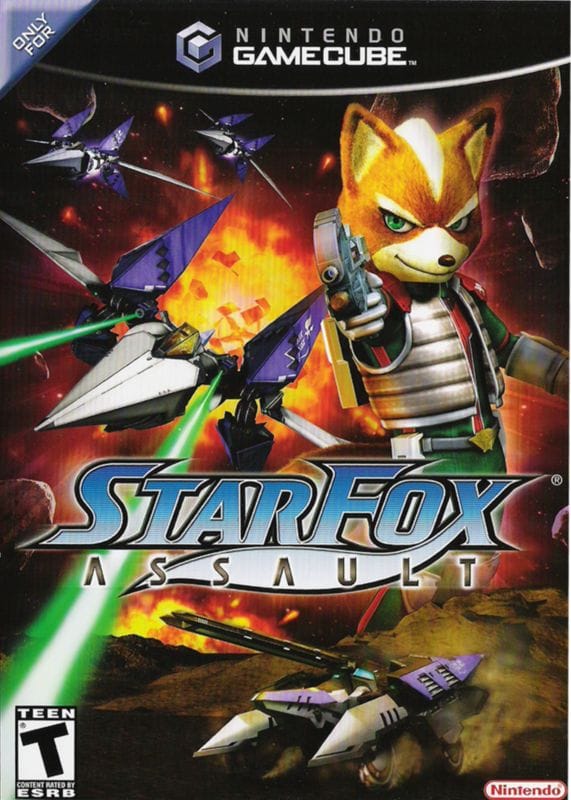
Now, it’s worth mentioning that future Star Fox games didn’t depart so radically from the series formula, but something interesting began happening: namely, almost every subsequent entry would be judged in relation to Star Fox 64, only to fail the test every time. This started with 2005’s Star Fox Assault: another GameCube title, but this time developed by Namco. This outsourced title revolved around the concept of vehicle-swapping, where the player could switch between on-foot gunplay, Landmaster tanks, and Arwing planes. On the surface, it seemed better suited for Miyamoto’s vision of an action-adventure Star Fox, and yet Assault was met with another divisive reception, with complaints centering around its linear campaign and uninspired on-foot missions. What happened?
The answer lies in misaligned priorities. Believe it or not, Assault was initially designed around its multiplayer to the point where the developers questioned the need for a single-player game at all. It wasn’t until a lackluster E3 showing in 2003 that the team at Namco realized the need for a substantial single-player experience, and so the game was pushed off into 2004, and then ’05, to accommodate. For better or worse, this explains the campaign’s lopsided balance: of the game’s ten missions, only four are Arwing shoot-‘em-ups, and most of the remaining six are just repurposed multiplayer maps for on-foot play.
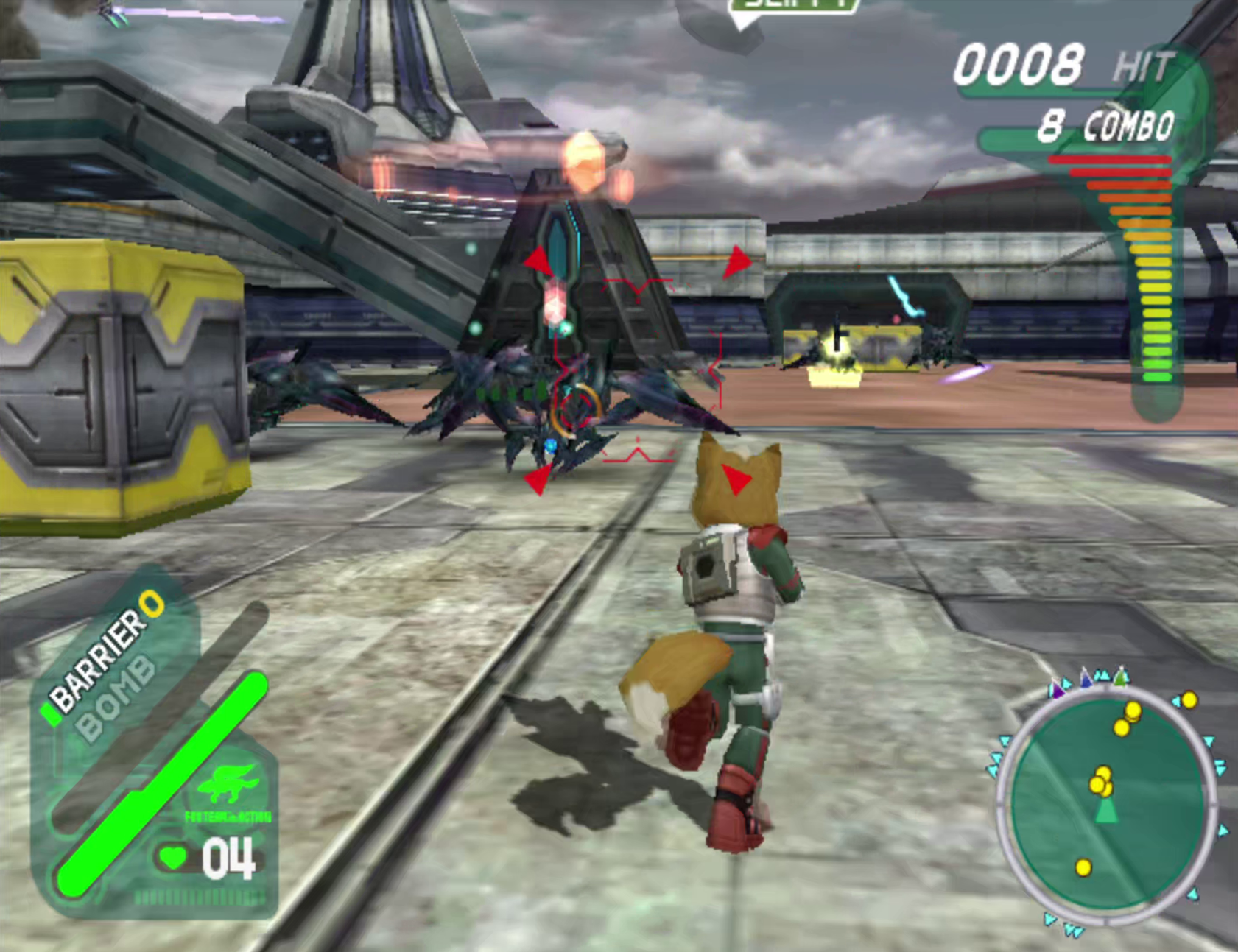
While Assault’s gameplay was designed around the volume and strategic depth of each stage, the game’s straightforward linearity meant it couldn’t match the timeless replayability of Star Fox 64, and players just didn’t feel compelled to earn all the medals—especially considering that two of the three rewards in classic Namco arcade games were cut from Western releases. The Arwing missions are more cinematic and feature tons of fireworks, but felt slower and didn’t have the same gameplay depth as 64. And while the ground missions feature an arsenal of exciting weaponry and compelling ground-to-air combat, all were variations of the same goal in destroying enemy hatchers.
Now, it’s worth reminding that Assault had a divisive reception; in other words, there were plenty of fans who defended its merits, and I do count myself among their number. The multiplayer is fantastic: its sprawling maps are veritable playgrounds, their range in vertical exercises being fertile grounds for the vehicle-swapping to come to life—exiting your sky-high Arwing’s cockpit to snipe down opponents below was a flex as thrilling as it was risky, being left vulnerable for anti-air Landmaster shots from below. With a steady stream of unlockables in stages and weapons, players were invested again and again to unlock new toys. (Who didn’t clear game after game to unlock the Wolfen?) My friends and I spent hours as kids playing this mode, and I can’t wait for it to hit Nintendo Classics for online play.
Moreover, the orchestral score is beautiful, reimagining the classic tracks of Star Fox 64 with the awe and majesty courtesy of the Tokyo Philharmonic. A continuation of the symphonies originally conducted way back on the SNES, the score single-handedly transforms Assault into an honest-to-god space opera flick. My favorite level in Sargasso Space Hideout best illustrates how the music elevates the game’s uneven quality: is the Star Wolf dogfight limp, tepid, and friction-less? Yes. Does the Star Wolf theme’s flamboyant trumpet solo emulate the fated clash of eternal rivals that it wants to be? Also yes. Ever since Assault, I’ve always wanted to see another Star Fox tackle another live orchestra—to use a cliché: it fits the series like a glove.
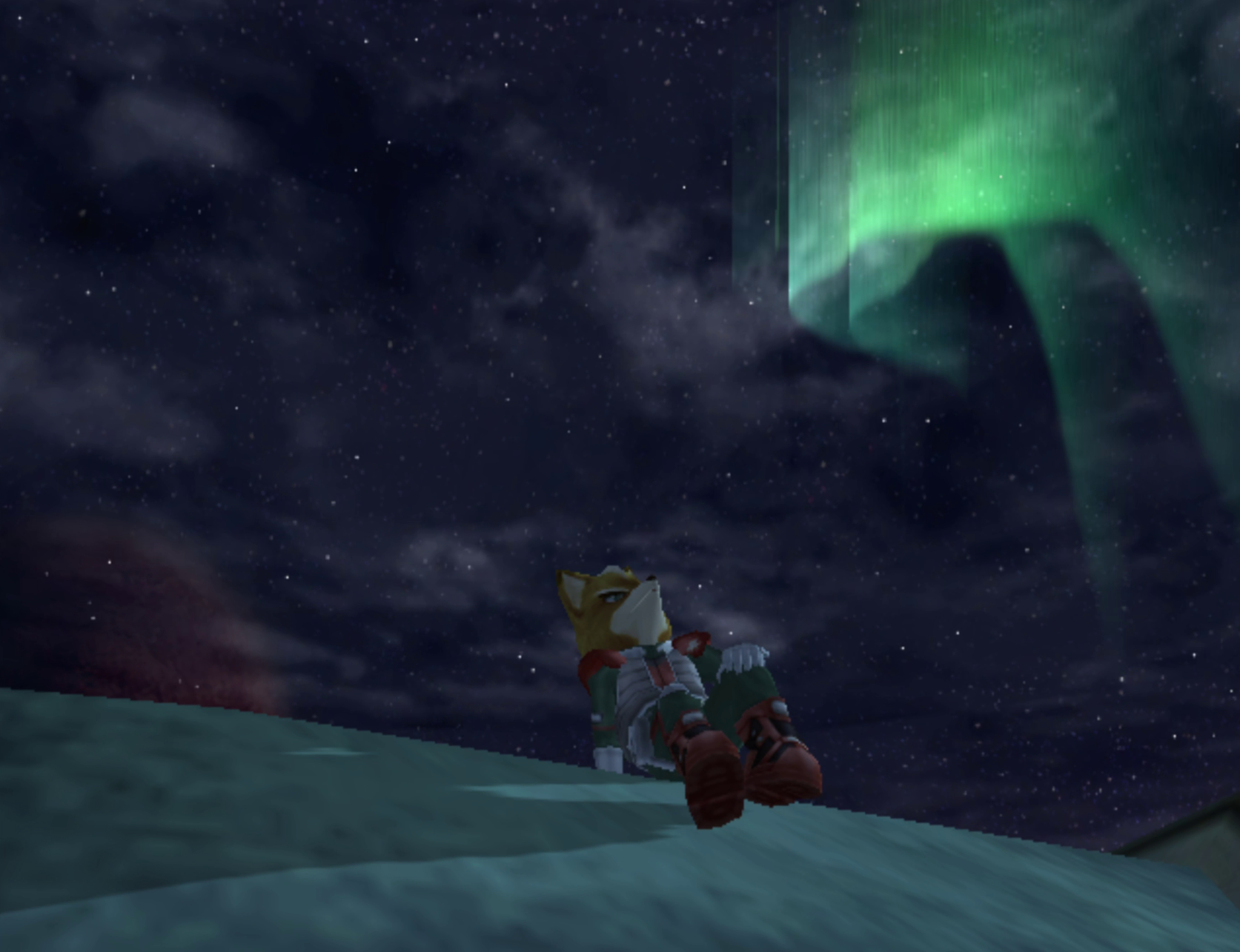
For all its confused development, Assault is the post-64 entry most confident in its identity. It’s the one entry that pushes the Star Fox story forward in a meaningful way: never repeating the same story but instead dealing with new threats, bringing back old players in new contexts, and starring Fox as a full-grown commander struggling with his responsibilities as a leader. He’s forced to team up with Star Wolf and even has a heart-to-heart with his mortal nemesis. There’s a will-they-or-won’t-they romance with Fox and Krystal. You could pick apart the storytelling or the mediocre voice acting, but it was a completely appropriate evolution for this universe.
Point is: I appreciate Assault for what does work; after all, it’s the entry that reignited my love for Star Fox. But unfortunately, players felt otherwise, and its good points weren’t enough to bring the series back to its glory days. Star Fox was left lost in space until the next year with 2006’s Star Fox Command for DS.
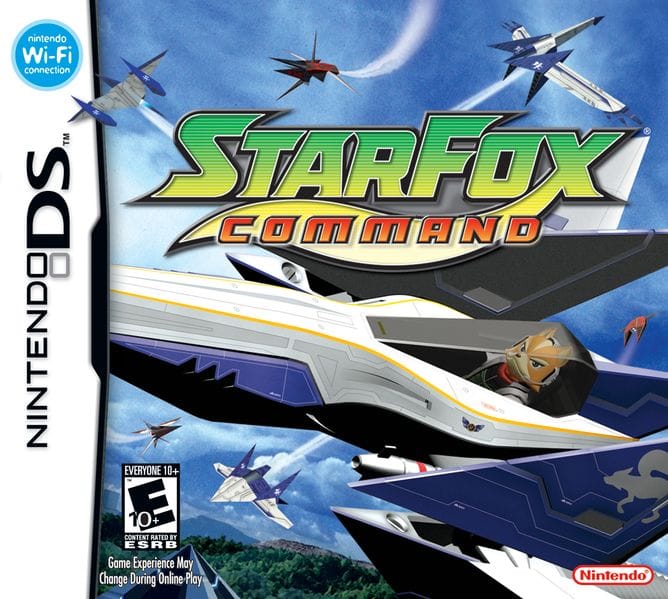
Taking cues from the unreleased Star Fox 2, this strategy-based venture would be a strictly aerial-based game, utilizing the DS touch screen to direct your aircraft towards foes on a map and ensure they don’t reach the Great Fox. Like 64, there’s different routes, but it’s framed as a choose-your-own-adventure story, where the characters you play and the twists and turns that unfold all weave and flux their way through nine possible endings. Designed by Q-Games, a studio helmed by former Star Fox programmer Dylan Cuthbert, the game again seemed primed for success…until, again, it wasn’t. The game received decent scores, but the fanbase was highly critical of this entry, and I hate to say I’m one of ‘em.
To illustrate the gameplay flaws, it’s best to compare it to Star Fox 2. While I did offer some criticism for that game earlier, that game still works because it’s constructed around a score-based framework with a ticking clock, enemy ships slowly lurching towards Corneria, and bosses eating up your valuable time. All that impacts your final score, and that no two playthroughs are ever the same maintains the player’s motivation. In comparison, Command’s more so about clearing whatever objective any one level assigns to you…which all follow the same blueprint: blow up the enemies in All-Range Mode and protect the Great Fox. Fly through the slipstream to destroy the incoming missile. Barrel roll through the floating squares and blow up the enemy saucer.
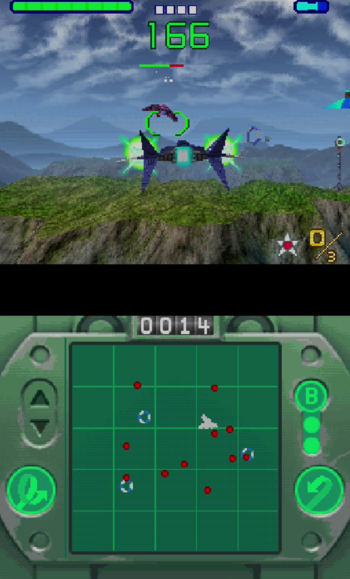
Command’s variety is but an illusion. The concepts it introduces are interesting: every character pilots their unique ship with their respective stats and abilities (Falco’s Sky Claw comes equipped with a multi-lock at the expense of low health, for instance), and the game follows another choose-your-own-adventure model where you alternate between its innumerable story paths. But as the routes are offered only as post-battle options, it’s never as involved as Star Fox 64’s objective-based design. No matter the map layout or the units provided, every level plays identically. The stress-based gameplay may still be present with guarding the Great Fox, but Command doesn’t ask you to master anything—it just wants you to clear it. Stagnation ensues.
Now, that’s not what I begrudge Command for. Really, it’s not ideal, but it still plays okay. What’s terrible is, uh, most everything else. I could elaborate upon the super-deformed cast and their ugly bobblehead design, but really, it doesn’t get any worse in how for this being a choose-your-own-adventure game, this story is terrible. I understand there’s some localization mishaps here—why Panther suddenly speaks in third-person remains a mystery—but frankly, I don’t think any touch-ups could salvage how half the script is just Fox and Krystal moaning and doping about their soap opera of a relationship. Look, I’m all for a swashbuckling space romance, but not in the context of a messy break-up—not least in one where Krystal defends known genocidal maniac Andross for no reason and dismisses Fox’s protests by taking a proverbial hacksaw to their relationship.
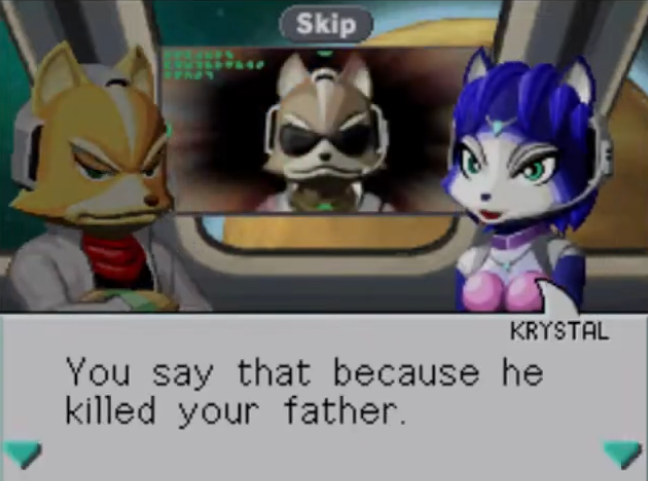
While you’re busy taking your jaws off the floor, I should mention that’s only the tip of the iceberg: Command touts nine different endings to conclude the Star Fox saga, but most of them are just uncharacteristically bleak, with the characters breaking up or getting depressed or turning into complete psychopaths. Star Fox may be no stranger to bad endings, but we want a space opera, not a soap opera! The only ending that kinda works is the one where Fox and Krystal have a kid who takes on the Star Fox mantle, right down to having Falco mirroring Peppy’s role as the world-weary mentor, but then they make the mistake of naming him Marcus. Yeah, Marcus. Marcus McCloud. Look, I’m sorry for all the Marcuses out there, but The Cool Factor™ just isn’t there.
Wrapped up with a barebones online dogfighting mode where players only played as Fox—whether it was DS limitations or balance concerns, we’re just as baffled as you are—and the game was quickly written off as a dud. For all its good intentions in experimentation, Command showed the limitations of the All-Range-Only model: the game doesn’t imprint itself on the player because you’re just doing dogfights, and without any handcrafted shmup levels to fall back upon, only the bad qualities are left remembered with a repulsive cringe. Deviation’s all well and good, but as Star Fox fans took to saying: “you shouldn’t fix what’s not broken.”
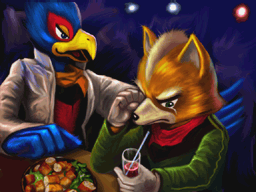
And so Star Fox disappeared into the stars for another five-year hibernation. This time, however, fans were left in a worse spot than before: whereas things previously cooled down with the fantastic Star Fox 64, now fans were left with a series of unpopular misfires—leaving players to wonder how this series could pick itself back up. Did Star Fox just need to stick to what it does best with the rail-shooter model, or was there a possible way to evolve the series even after three separate attempts?
After some time away, Nintendo decided it was finally time to look to the past.
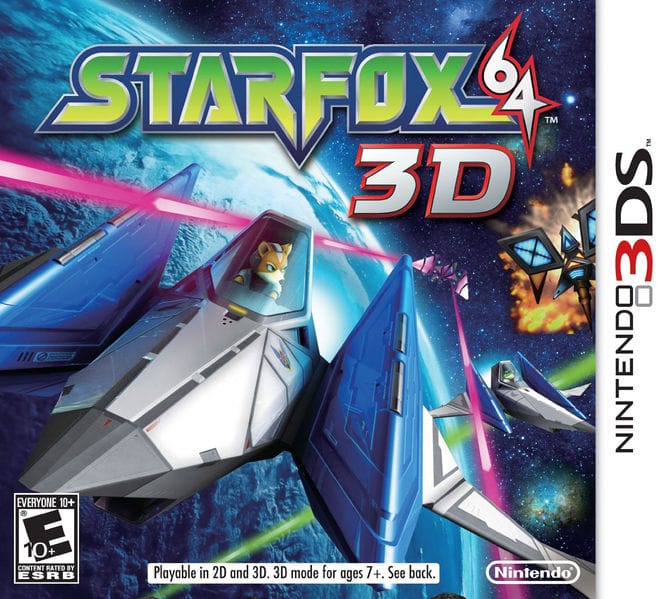
Yes, believe it or not, Star Fox 64 already had a remake before the new one! Now, here’s a fun coincidence: both Star Fox 64 3D and The Legend of Zelda: Ocarina of Time 3D—remakes of beloved Nintendo 64 classics—arrived in the 3DS’s launch year of 2011, and now their HD remakes are gracing our Switch 2s in 2026! How about them apples?
Anyhoo, with Nintendo’s experiments with 3D depth perceptions finally bearing fruit with the 3DS, what better ambassador to hook dedicated Nintendo fans on their latest gimmick than re-imagined classics? Star Fox 64 3D proved promising: lasers and ship debris would fly out of our screens, the gyroscope would serve an inventive manner of control, and the camera could…show the faces of the people playing multiplayer right next to you. Yeah, I’m gonna assume time constraints were why they couldn’t include online play. At least they had the decency to include CPUs.
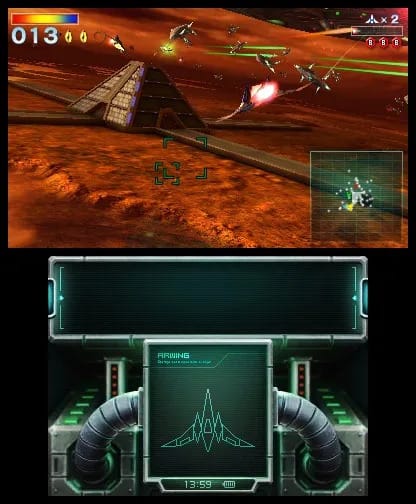
That flub aside, Star Fox 64 3D proved itself a stellar remake. The 3D is stunning and remains some of the most immersive on the entire system. All these reinterpreted levels look fantastic: what once a messy mat of muddy textures in Katina is now a full-blown landscape of ponds, mountains and ridges, and I still remember my eyes bulging at the rippling, stormy waters of Zoness. They even brought back some of the old voice actors—while the overall performance had a campier direction than the 64 original, they hadn’t lost a step.
But the remake wasn’t just a compelling piece of 3D tech. As opposed to the Nintendo 64 version, every mission was accessible straight from the main menu, meaning players didn’t have to replay the whole campaign just to experience your favorite level. Whereas the original required you to play through the story in one go, Star Fox 64 3D implements a much-needed save function so players could simply step away. (Woe be to those forced to turned off their N64s on their latest high score run.) Really, the game was just a natural fit for handheld—its hour-long length already rendered it the ideal pick-up-and-play venture, perfect for long car-rides or bedtime score runs.
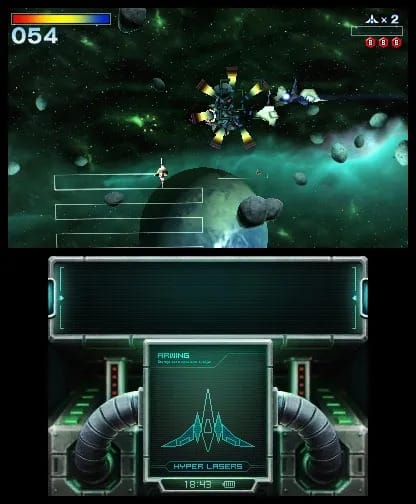
So, there you have it: a good—no, great Star Fox! And of course it would be—it’s Star Fox 64 for crying out loud! Yet while the reception was naturally positive from both critics and fans, Star Fox 64 3D only sold a fraction of Star Fox 64’s total sales. Whereas that game sold four million copies, 3D only sold a million…after eight years. Eight years! What happened?
There’s a few theories: some say the series’ damaged brand undermined the remake's sales potential, while others cite the 3DS’s rocky launch—it only just released after the infamous price cut, and it wasn’t until Super Mario 3D Land and Mario Kart 7 came to the rescue that fall that things began turning around. Moreover, Star Fox 64 3D is an incredibly faithful remake: while it boasts extensive use of the 3DS's fancy gimmicks on top of improved graphics, the core game was unchanged, and players simply might not have interested in a simple facelift.
A sensible conclusion, but ultimately the wrong one: Ocarina of Time 3D was also a carbon copy of its progenitor, and its impressive record of six million copies throws a monkey wrench into that theory. It stands to reason there was a much more sobering reason at play, one we’ll get into with the next game: Star Fox Zero.
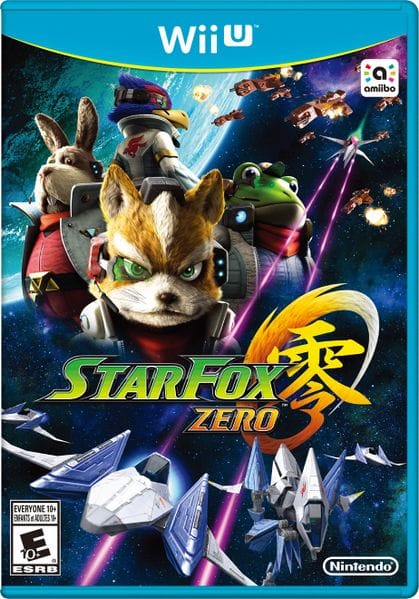
When Star Fox Zero was announced for Wii U at E3 2015, fans weren’t sure what to make of it: rebooting the series—hence the name “Zero”, as in “returning to zero”— under the guidance of famed action-game studio Platinum Games did some inspire some confidence, and the return of Star Fox 2’s Walker was a heartening surprise. But the heavy use of the GamePad was instantly criticized: the graphics took a clear hit from the dual-screen display, and on-floor impressions had mixed opinions over the controls—which ended up being Zero’s Achilles heel. Much as Nintendo took the feedback to heart and delayed the game to take further cues from Star Fox 64 like bombs and branching routes, players just couldn’t vibe with the game’s vision, and negative word of mouth sentenced the game to the bargain bin graveyard.
Now, personally speaking, I (gasp!) enjoyed Zero, and liked what it was trying to do. As it happens, Miyamoto was more heavily involved in this entry than the last few, and designed this game around the thrill of playing with model airplanes: the Arwing twists and turns with all the spectacle of a child’s imagination, circling around giant ships and navigating enemy fleets through the aid of a cinematic third-person camera. The television screen’s airshow works in tandem with the Wii U GamePad’s cockpit view, establishing a sense of peripheral vision where both perspectives work as one, each covering the other’s blind spots for situational play.
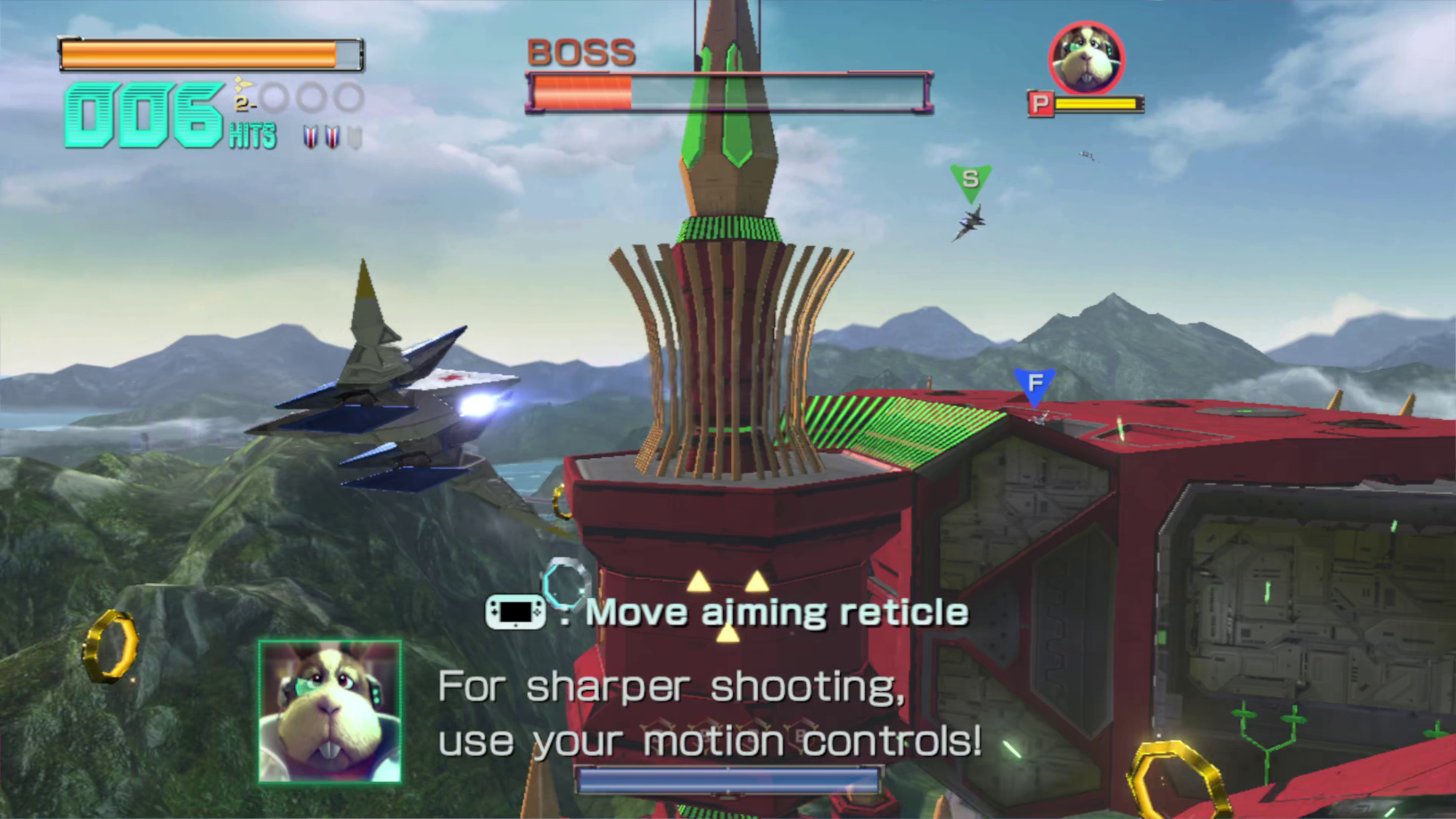
The first boss on Corneria is the perfect example: you’re fighting this giant saucer attempting to take down a vital defense tower, and the sense of scale involved glues your eyes to the screen. As I shot off one of the cannons, an unearthed hull beckoned me with its neon lights shining through the smoke. I promptly zoomed in, surprised when I turned into the Walker, and went on to destroy the ship’s core. As it turns out, it was the alternate method to clearing the boss—one I discovered on my very first playthrough! It was a compelling opening argument for Zero’s design, establishing a sense of discovery that I hadn’t realized I missed from Star Fox.
Alas, for all its ambitions, the whole set-up runs into some obvious problems. While the cinematic dogfighting might look cool, they’re a pain to navigate because you’re constantly playing catch-up with Star Wolf or circling giant foes to find their itty-bitty weakpoints. The novelty thins as the battles draw out, and you just want things to end already. Moreover, while the games brags about its controls, they’re anything but: the use of two sticks isn’t conducive for a flight simulator, and with Zero assigning numerous key mechanics onto the right stick (barrel rolling, boosting, etc.), the unconventional ergonomics routinely confuses with unintentional maneuvers and fingers instinctively reaching for the button layout. (Particularly for veterans ingrained with Star Fox 64 muscle memory, such as yours truly.)
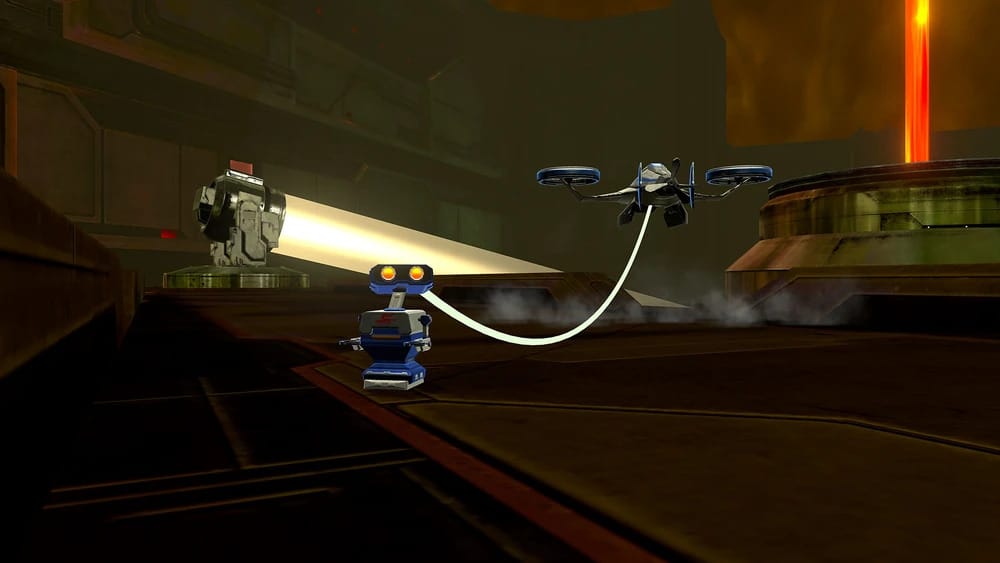
Putting it this way: when Zero plays as a straight up Star Fox game, it works; when it doesn’t, it irks. The opening Corneria level? It’s awesome! It uses all the same tricks to hook the player with some neat new gimmicks. The Gyrowing helicopter level? Not so much. It attempts to explore freeform play with all sorts of different tricks (do I shoot the robots or send a steel beam crashing down their way?) but the slow, plodding gameplay in meticulously guiding a tethered robot render it a boring non-sequitur, especially with how ugly and dark Zoness is.
Zero is a game that rides or dies by its controls and presentation, and it offers very little wiggle room for players to accommodate. Sure, you can turn off the motion controls, but you can’t alter its awkward button configuration, and the voices have to emit from the GamePad and drown out the BGM. Fans who were kinder on it might tell you the controls weren’t so bad, but they ultimately proved too big an obstacle for fans to wrap their heads around. As a Wii U GamePad showcase, it came way too late; as a Star Fox sequel, it failed to make an argument for the series, let alone differentiate itself.
However, I think there’s another reason why it fell into obscurity: redundancy. Zero utilizes the same plotlines, the same missions, the same dialogue, the same characters. It’s not saying anything new about this cast—barring its endgame attempt to illustrate the fallout between Andross and General Pepper, yet the relevant conspiracy over teleporters and alternate dimensions is underdeveloped and presents none of the thematic resonance found in the series’ coming-of-age/revenge stories prior. There’s a vision for Zero, but ultimately it’s a game stuck in Star Fox 64’s shadow: following its roadmap to a T, yet lacking that same magic on top of failing to distinguish its control scheme into something distinct and exciting.
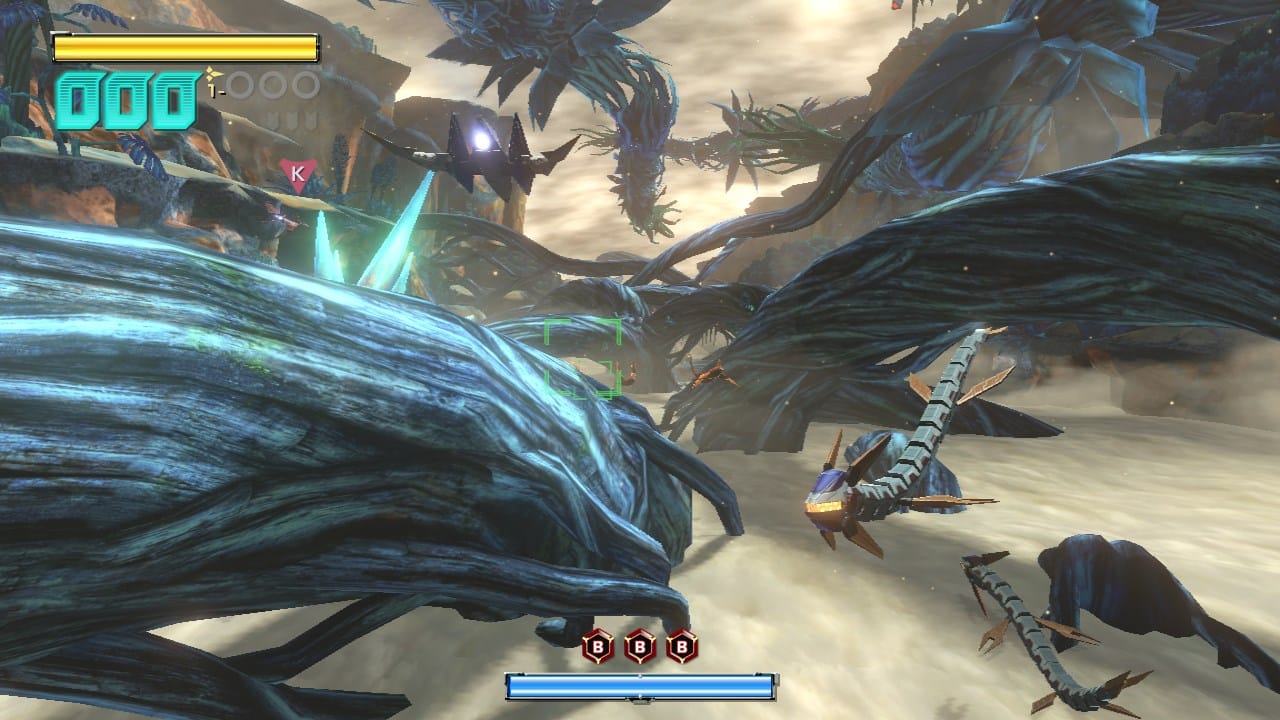
Between the accompanying spin-off Star Fox Guard and the animated Battle for Lylat short, Miyamoto’s ambitions to renew Star Fox for a modern audience were evident. Yet Zero couldn’t escape its repetition; much as the game hyped its exciting new control scheme, it just felt outdated.
And looking back, that’s likely why 64 3D didn’t catch on. Space shooters were all the rage in the age of arcades and home cartridges, where skills were encouraged and honed by coin-gobbling and limited continues; by 2016, players were spending their money on micro-transactions and losing themselves in big, wide open worlds. Hour-long space shooters were no longer in vogue. How do you begin to justify bringing back a whole genre the industry left behind?
Maybe there wasn’t a way. Maybe the series’ time had passed. Maybe there was no place in space for Star Fox.
Over the next several years, the pulse of Star Fox continued to beat. The characters remained regulars in Smash Bros.’s fighting club. The characters guest-starred in Ubisoft’s toys-to-life venture in Starlink: Battle for Atlas. Star Fox 2 finally saw its belated release on the Super Nintendo Classic Mini. But he was still lost in space. Spinning. Condemned to perpetual, aimless motion.
Would he ever escape?
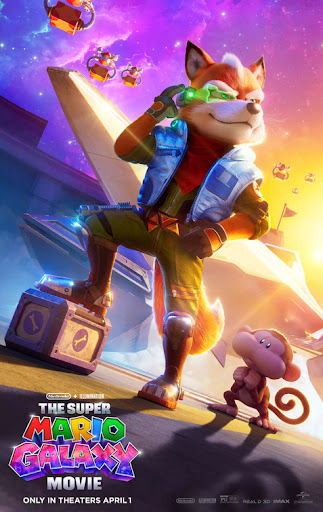
When people woke up to the news of Fox McCloud guest-starring in The Super Mario Galaxy Movie, the internet went abuzz with speculation. It wasn’t just the crossover novelty or Glenn Powell voicing the character—fans had long since recognized that Nintendo saw their films as a form of cross-promotion; in other words, hour-and-a-half advertising for their main business in video games. Miyamoto himself has elaborated on this philosophy: with the gaming ecosystem growing ever more expensive, why not expand the Nintendo brand into other mediums such as film and theme parks?
Looking at it from that angle, what if they hadn’t put in Star Fox for the heck of it? What if this cameo meant another game was coming? Rumors swirled, anticipation built, and finally: it came.
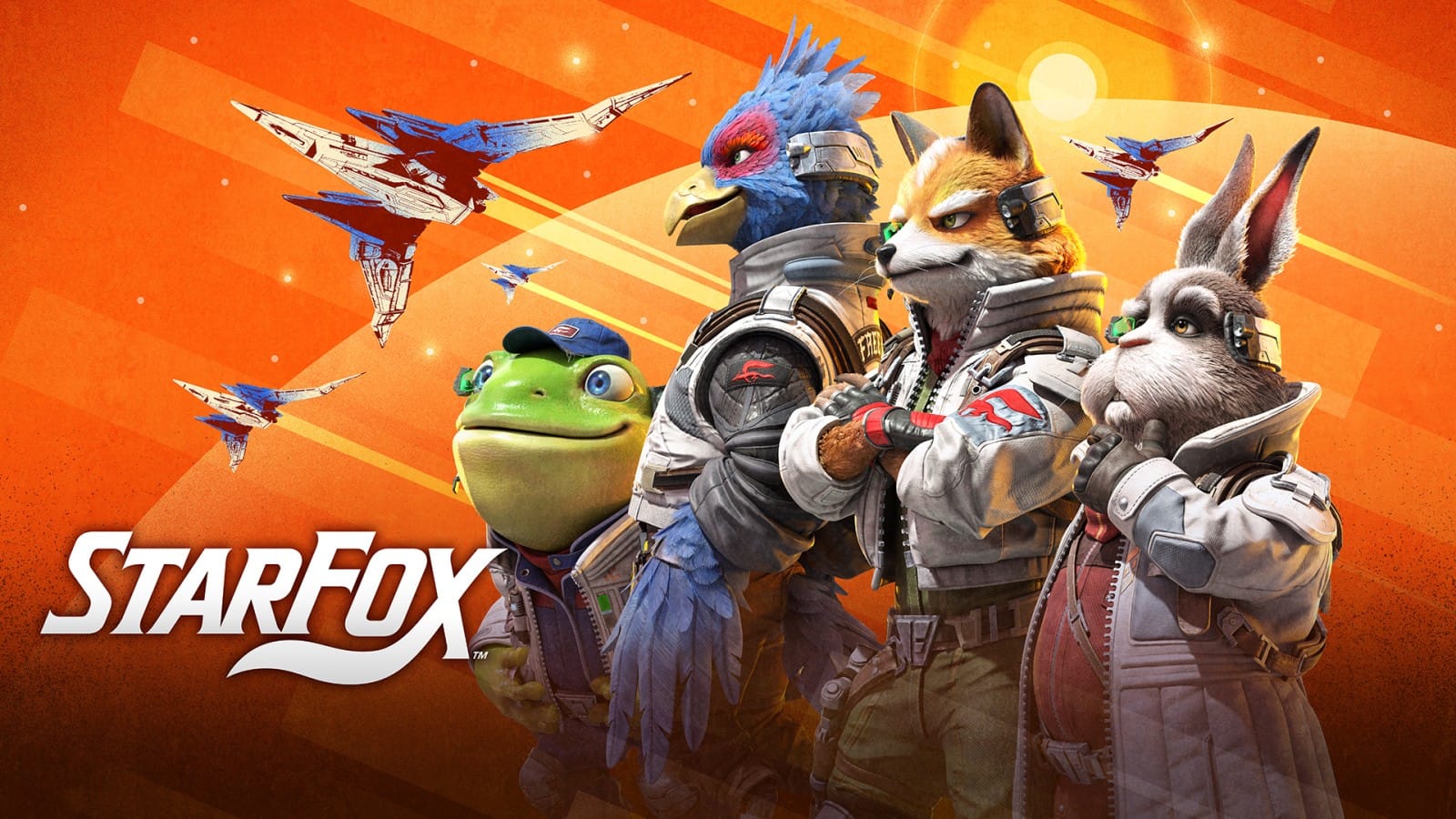
A sudden May Direct introduced us to what was simply titled Star Fox. To say this announcement caught people off-guard would be an understatement, and not just because it was announced just ten minutes in advance – no one was expecting another remake of Star Fox 64, let alone such a radical shift in art design, with the characters looking like realistic animals right down to their digitigrade feet. As familiar as the game looked, it was unlike anything the series tried prior, and it drew strong reactions across the board.
Now, the division is understandable: including the second Star Fox 64 remake, we’re now left with five games telling the same story—so there’s understandable fatigue with this direction. And again, many people wondered how you could evolve Star Fox today, so to do Star Fox 64 again could give the impression Nintendo’s out of ideas. On top of that, they’re swinging for the fences with these redesigns: they went full-steam ahead with these designs knowing full-well their look would be divisive.
And…it worked! For better or worse, people are still talking about these designs a month later. Artists either tried to quote-unquote “fix” these designs or just pay tribute with fanart. Eventually, people just got used to them, and there grew an air of positivity surrounding this game that wasn’t there for Zero. Now fans can’t wait to reacquaint themselves with these new versions of some old friends. As someone who’s grown completely optimistic about this remake, I think there’s several reasons for this.
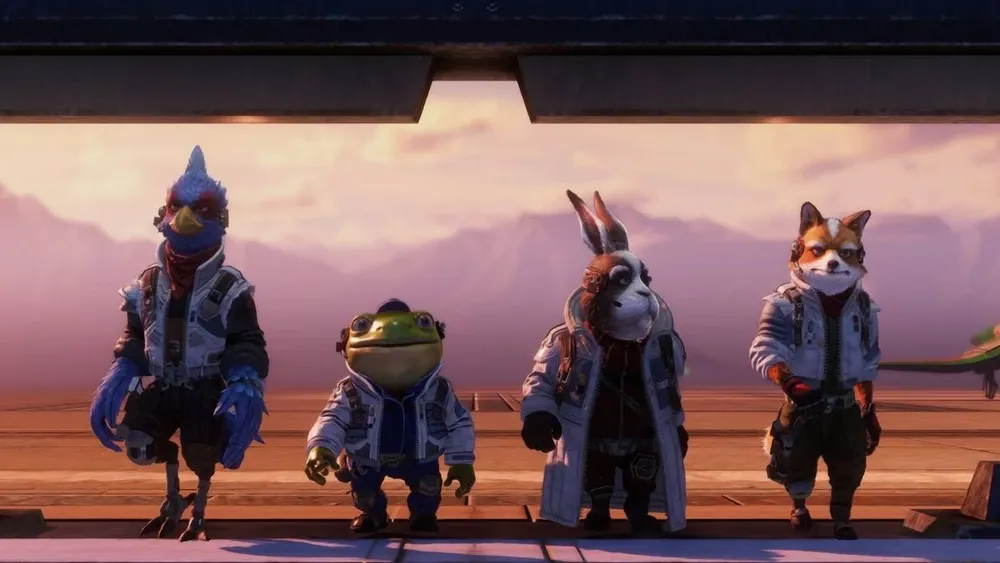
For starters, the artstyle—I’ve seen people draw comparisons to those puppets from the 1993 game, but I think of it closer to the famous “used future” look from Star Wars: it’s grimier, darker, firmly establishing a lived-in universe fluent in its visual language. Star Fox’s most radical change lies in what little we’ve seen of Katt Monroe—before, she was all pink and pretty; prim and proper. But now she’s all ratty and grungey, which informs so much more of her gang-related background than “girl vaguely interested in Falco.” The game wants us to take it more seriously, like we’re watching a movie or a TV drama moreso than the Saturday morning cartoon of the earlier games. This is the Star Fox we always imagined in our heads, weird feet aside.
Moreover, as a former Star Fox lore junkie, it's the emphasis on cinematic storytelling that's caught my attention. The back-and-forths, quippy one-liners, and crumbs of context were that game's world. And that captured us. But with the expectations courtesy of modern gaming, it's only natural this remake will beef up the game with cinematics to compensate for its short length. It's easy to say this expanded storytelling might mess with that balance, but I'm not so worried—-for one, you'll obviously be able to skip the cutscenes in future playthroughs, so it'll be back to afternoon speedruns once we've had our fill of reinterpreted lore.
And said reinterpretations and expanded context are actually...interesting! And fun! Observe how they use Slippy: his geeking out over warp technology is a direct hint to what was originally a non-sequitur of Meteo's alt path, whereas said geekiness is peppered throughout the missions—he's distracted in Corneria because he's fiddling with his Arwing sensors, whereas in Meteo he's nerding out over enemy tech. ("Persistent laser technology!") Now that's how you reinterpret Star Fox 64 today—you're saying so much with these little quips and tells!
Also, that James McCloud prologue? Showcasing the moment of Pigma's betrayal? Little details like Fox's pawprint printed next to his father's? Yes, yes! That's the exact stuff I imagined and wanted to see as a kid! You may remember that Yoshiaki Koizumi headed the Direct—while that’s likely because he’s the senior general manager of Nintendo’s EPD division, I don’t think it’s a coincidence he’s on the board of directors for Nintendo Pictures: everything from the personalized comm channels to the subtle facial cues is a level of quality and attention to detail we’ve never seen in a Nintendo game before, and paired with what may well be another stab at orchestral music in the fantastic music previews, playing Star Fox will be just like playing a cinematic film.
As for the choice of a remake, it’s worth reminding that Star Fox 64 is a known quantity. Everyone loves that game, and Nintendo’s in a better position than ever to reintroduce it. There’s no gimmicks shackling it like Zero, and there’s no busted system launches like Wii U or 3DS to hamper it—everyone has or wants a Switch 2. Moreover, the Mario Galaxy movie’s space theme was the perfect opportunity to have cross-pollination with Star Fox—kids who don’t know the character will recognize him in this new game, as will nostalgic adults who grew up with a Nintendo 64. Add in a lower price point to accommodate the shorter length, and there’s a clear vision for this remake.
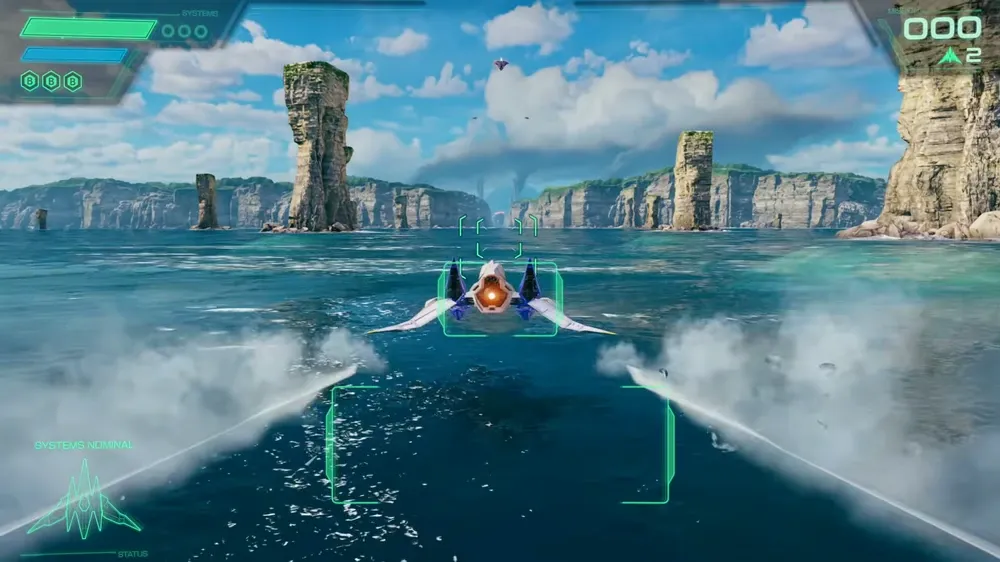
Once they get this reboot off the ground, then they can build off its launchpad with new ideas. Roguelike has been a popular suggestion: there’s all sorts of ideas and concepts you play into that genre, and you could even argue that they’ve brought back shorter games into vogue. Or they could give Assault’s ground-to-air concept and multiplayer another try. Whatever happens, it stands to reason they’ll keep a much closer eye on quality control than they had before.
Whatever the case, the general consensus has certainly come around on this remake. Merely observe the response to last week’s demo: it presents only one level in Meteo, yet Star Fox 64 superfans are busy learning its ins-and-outs to achieve one jaw-dropping score after another. Did you know you have to shoot down Slippy to spawn more enemies? Probably not, but such is the ruthless drive for the high score. It is but one facet of one preview into the final game: where every line of dialogue, every enemy placement, every exploit and change will be studied, analyzed, compared, and enjoyed.
Miyamoto once lamented the fact that he couldn’t make Fox McCloud a more popular character. Unfortunately, geniuses like him are susceptible to missteps, and Star Fox took the brunt of his bad ideas. It’d be a death knell for any other franchise, and yet, again, the series just keeps coming back. Such resilience attests to its fortune: only a company with the money, power and drive like Nintendo could afford to revitalize a dead property time and again, and in a day and age where the space shooter’s now an antiquated genre, it might be enough to say,:“I’m just glad it’s back.”
But in thinking back to Miyamoto’s wish, one stops to think: is it selfish to want just a little more? Whether Star Fox can become a guiding star today will be answered this June 25th, but surely after two decades, it’s not too much to ask for Star Fox to no longer be lost in space. And this time, he may just well be coming home to a hero’s welcome.