I think we all had the same initial reaction to the reveal of Star Fox this year: horror and disgust. Nintendo never really does realism outside of Pikmin; even Twilight Princess, the Zelda game touted as the “most realistic” is actually going for a dark, anime look similar to things like Berserk. Seeing the fuzzy, feathery, and slimy characters of Star Fox rendered in a realistic style was jarring, to say the least. Yet, slowly but surely, it grew on me. All those little details gave the characters so much more personality; Fox’s little smirk at Falco in that one cutscene tells you everything you need to know about him in a single glance. That’s not something that would easily come through if the game wasn’t committed to doing the most.
I fell in love with Star Fox all over again with this remake. I had 15 hours in it by the time I wrote my half of the review, and way more by the time it was published. I’m still popping the cart in for a run through the Lylat System despite having 64 and 64 3D readily available. Of course, it’s not just the art style and general ethos that makes this particular game so addictive, but that’s what makes me pick this version over the others. I wasn’t at all surprised to see two Narrative Designers in the game’s credits, as an ND myself it’s a role people vastly underestimate in how we can really bring a game together, making it feel more cohesive. I don’t think Nick Eliopulos and Heath Gartner would have been on this game, however, if Velan and Nintendo weren’t committed to giving this retro game the royal treatment.
When presented with the task of remaking a highly regarded, classic, banger of a game, the main question I’d ask myself is this: what can this interpretation offer that the original could not? For most games, I think the answer is to keep things more or less the same but without being held back by the technology that originally restricted it. Of course, taking that literally would mean making a completely different game, as restrictions usually make for compromises not just in visuals but in controls, design, and pretty much everything. So, this is usually interpreted on the visual side. You take what the game was trying to go for, not what it actually looked like, and fully realize it.
The problem with that, for Ocarina of Time and Star Fox especially, is that it's already been done. The 3DS remakes, in my opinion, are what the artists envisioned for those titles initially. Sure, they’re in like 480p, but since when has Nintendo really cared about resolution? The existence of these games means you can’t really draw from the source material without retreading artistic ground.
So what do you do instead? You look to the original inspirations, and follow the thread from there. Star Fox draws heavily from puppet theater, and you can see that in the original SNES game’s box art and advertising. The next logical step is to bring those puppets to life, and that’s exactly what Velan did. It takes what a child would imagine when watching a puppet show, and puts their imagination on screen. It’s not just with the visuals though, it takes all the gaps and extraneous details a kid would think up and makes them reality. It is the opposite of playing it safe and just giving the people what they already loved, and it seems to me that the risk paid off massively.
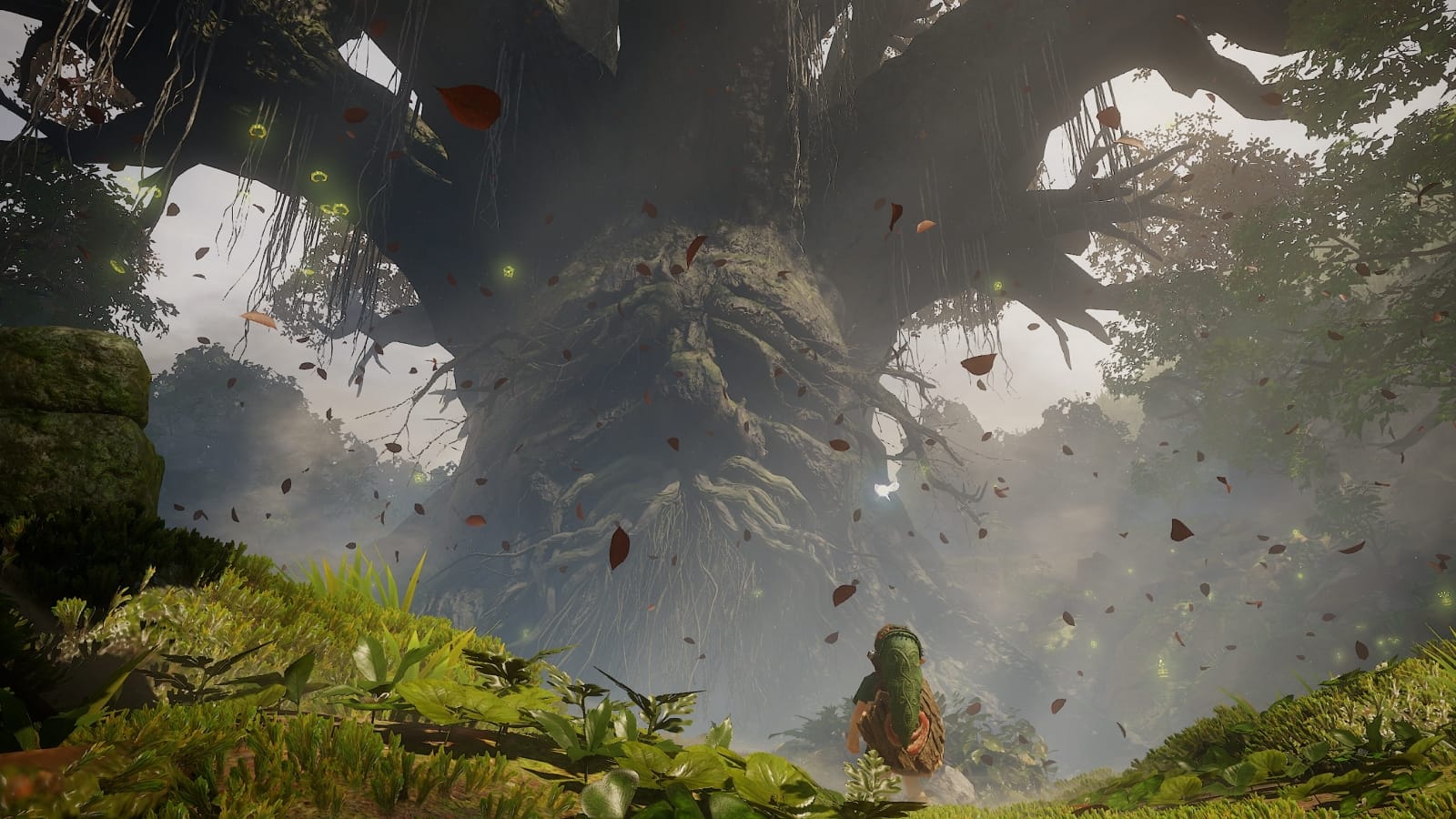
Now, Nintendo and their developer partner is doing the same thing with Ocarina of Time. There was something very uncanny about the game that I couldn’t quite place my finger on until YouTuber and artist TBSkyen pointed it out: the characters look like porcelain dolls. Once I heard that, the entire aesthetic clicked for me. This is a remake about playing with dolls.
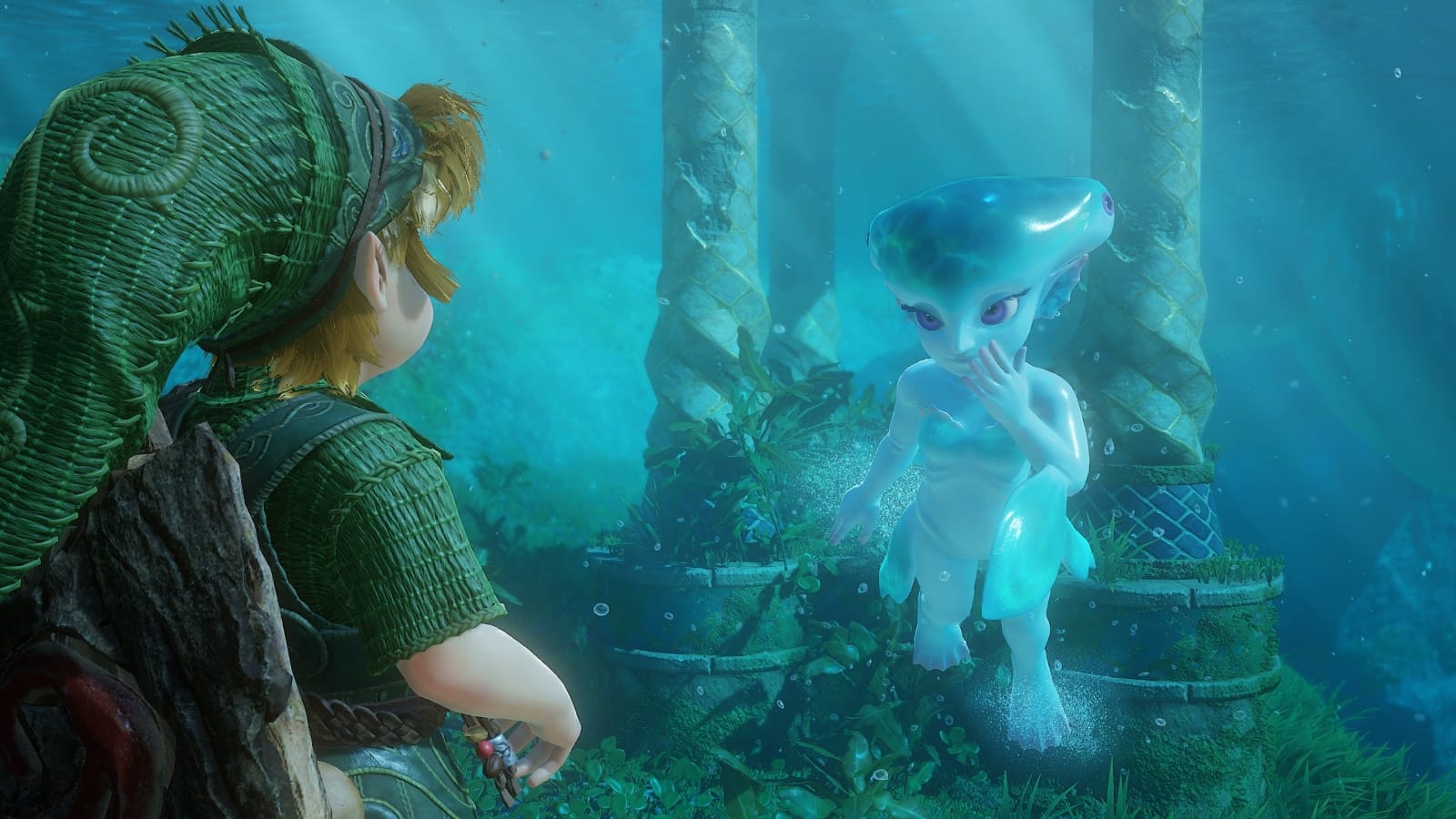
Zelda was partially inspired by Peter Pan, and I’m pretty sure we as a society all have a memory of seeing a Peter Pan porcelain doll at some point in our lives. As a child, your inclination may naturally have been to play with it, but these dolls break easily and aren’t meant for play. So, you might then imagine what the doll would get up to on its own, perhaps mixed in with other things that might spark the imagination like, I don’t know, fantasy illustrations from the 80s and 90s. The kinds of artwork you’d see in Dungeons and Dragons or on the box of a Dragon Warrior game.
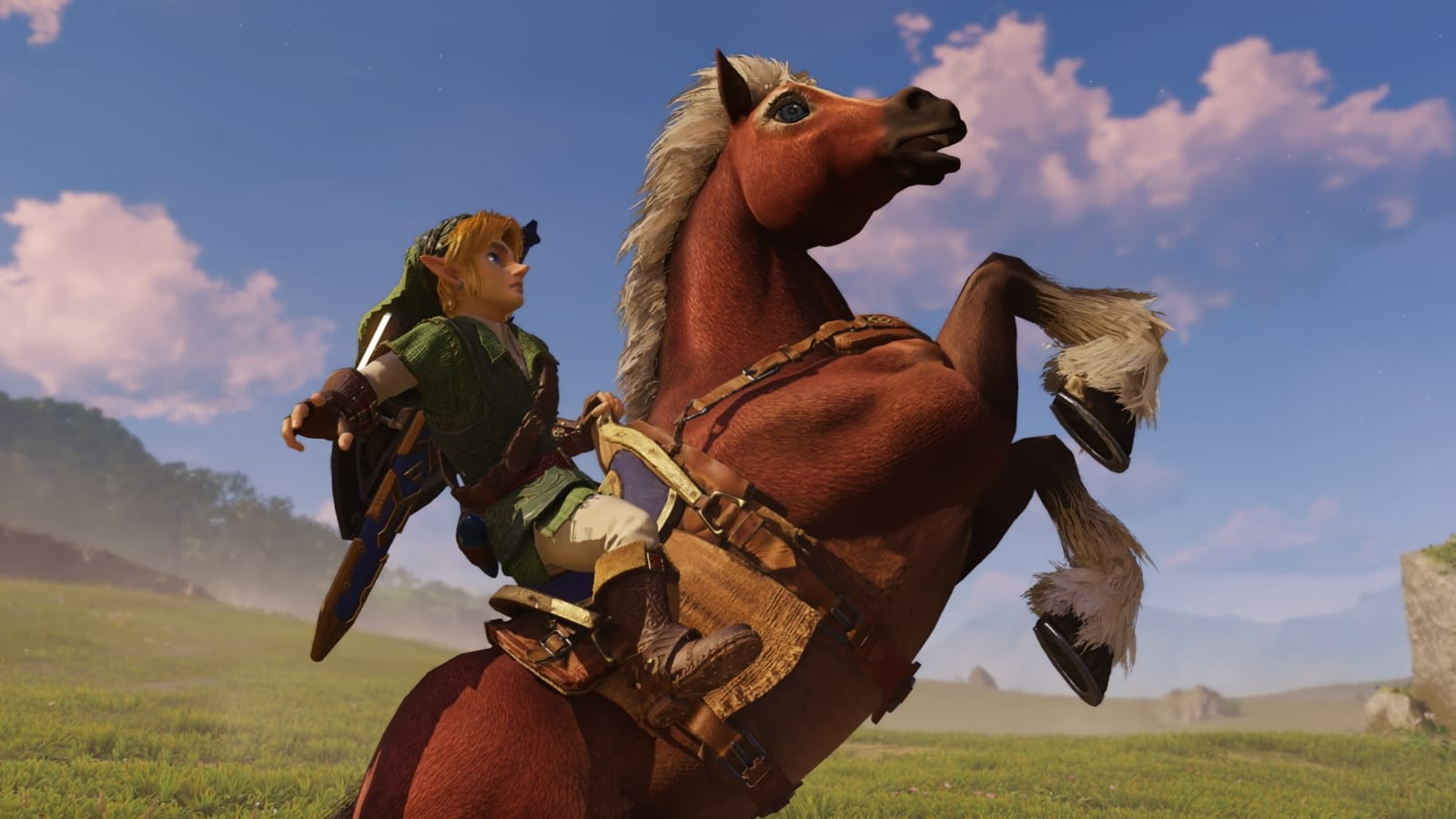
The combat especially struck me with how intense it’s trying to look. Slashes are punctuated by massive screen effects, really giving Link’s strikes some weight. It honestly feels a little too much, but that feeling applies to the game as a whole and somehow makes it feel more cohesive. The relative realism is initially drawing, but I would argue the game is going for hyper realism instead. The grass of Hyrule Field is so lush and verdant you can’t really focus on any part of it individually, taking on a dream-like quality. Nintendo throwing so many details at you that you cannot possibly parse it all, yet still keeping the game very readable by highlighting what’s important.
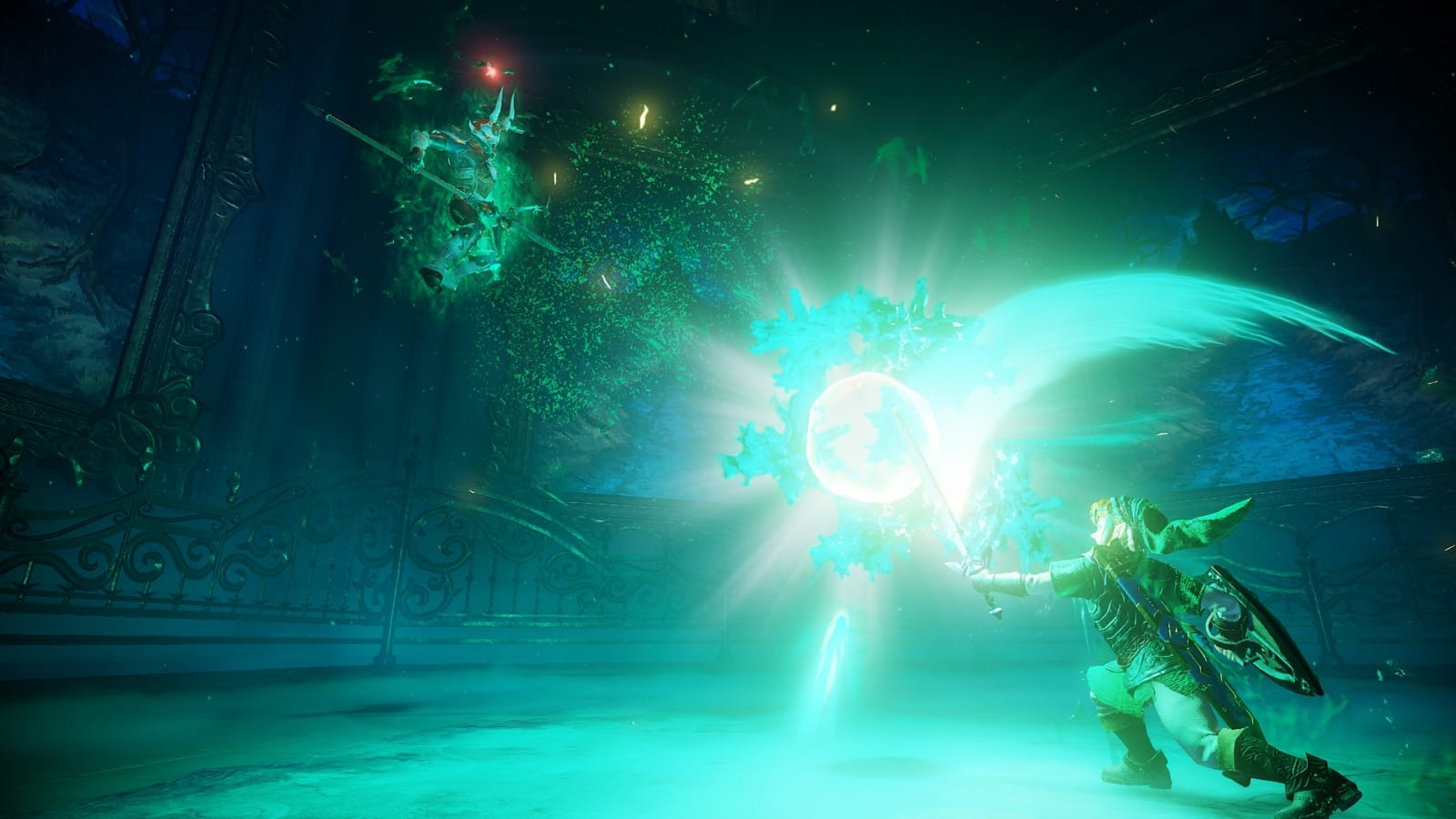
It makes the game, to me, look like what my imagination looks like. Hazy and undefined, yet infinitely detailed. Honestly, I feel like this remake might turn out like Kingdom Hearts 1, with me noticing something new on every subsequent playthrough. It’s barely recognizable as Ocarina of Time at points, and that excites me.
I love how weird Zelda looks. I love how Ganon seems like he just emerged from a block of wood. I love all the physics on Link’s hair and clothes, and how both seem just a little oversized for him (like putting clothes on a doll!). I love that you’re able to hum or whistle or play an actual ocarina to get Link to play the same song in-game. This remake is just doing everything it possibly can, full stop, while still being Ocarina of Time at its core. I cannot wait to play it this November.