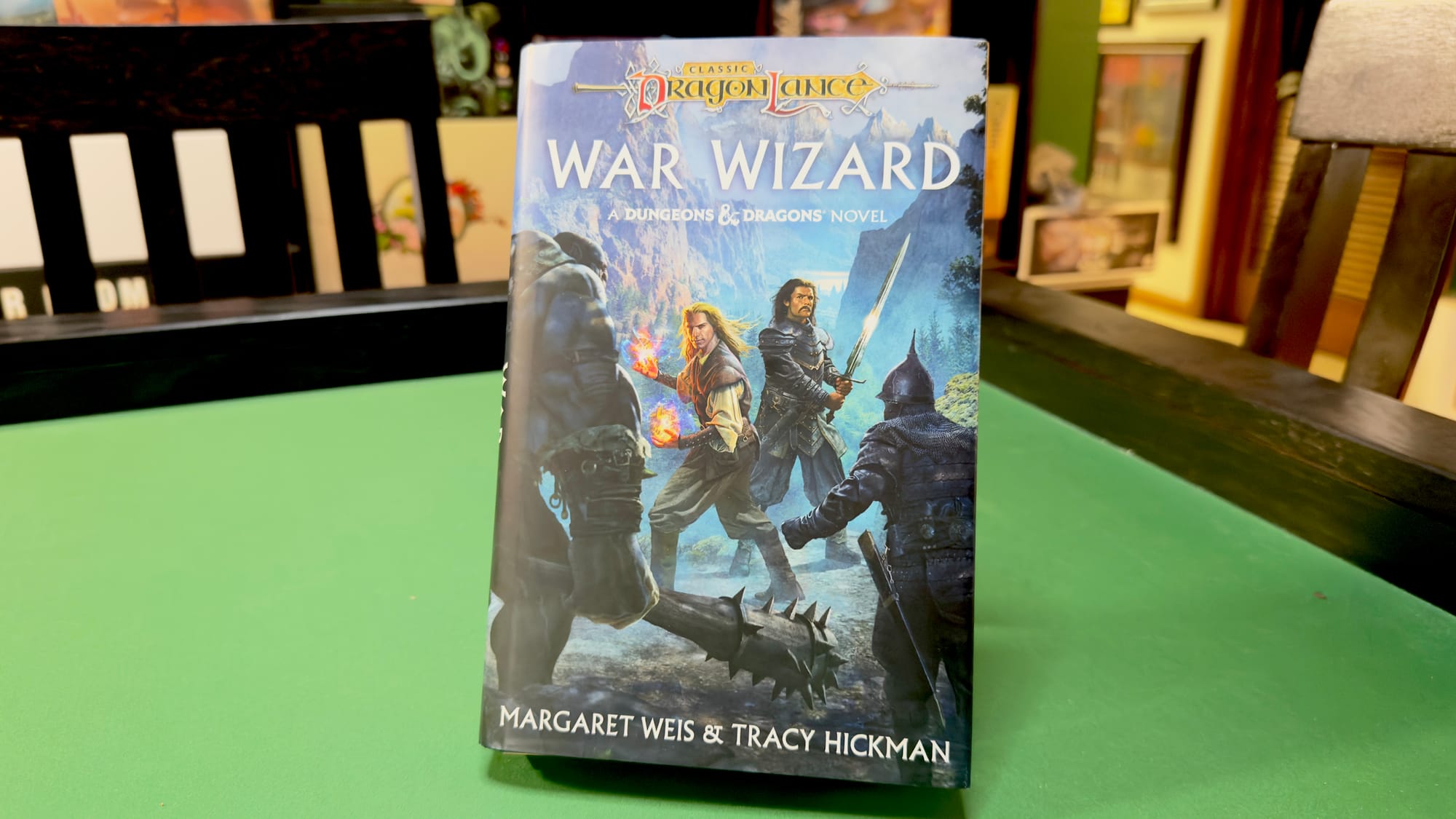
By my reckoning, it has been nearly forty years since I last visited the Inn of the Last Home. Between the first two trilogies and a smattering of the game modules, my life was very much consumed by Dragonlance between middle school and early high school. I distinctly remember my best friend Bobby Zorn thrusting the cover of Dragons of Autumn Twilight into my face, excitedly telling me about how this book was part of the story in a D&D module we both were keen on. I grabbed it from him, read the first three chapters during my next class (some kids tried to sleep in class; I read books and comics), and by 9 o’clock that evening had finished the book and looked hungrily around for more.
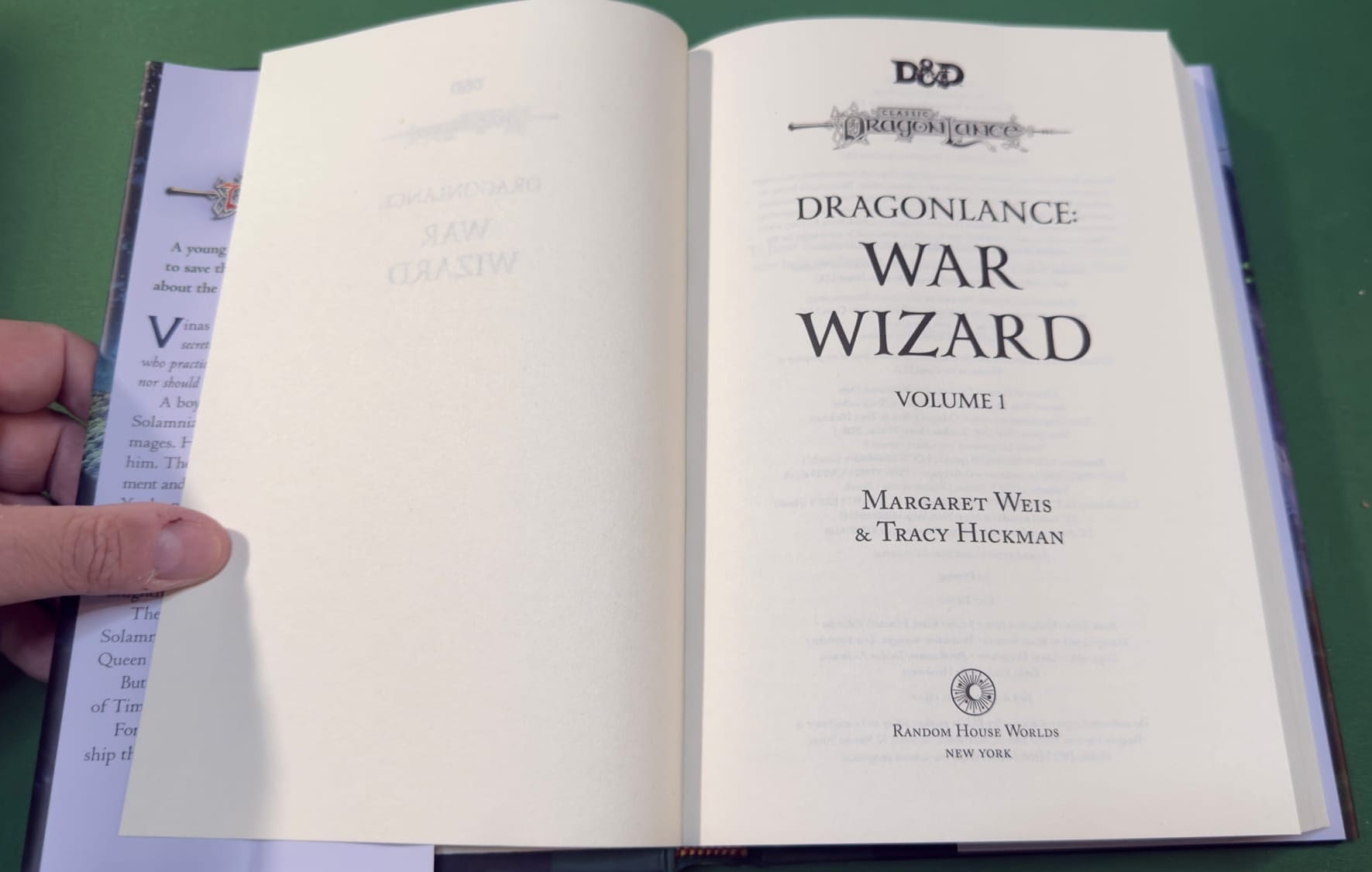
I was hooked. Now I’m in my fifties, recently bought the anniversary collections of the Dragonlance Chronicles and Dragonlance Legends (the first two trilogies) with the intent to reread them after all this time, when we got asked to review a new book, the first in a new trilogy by the original authors Margaret Weis and Tracy Hickman: War Wizard. I figured this was either divine providence or pervasive marketing, and I didn’t much care which. I was going for it. I feel I must begin with a few disclaimers, however. My love for the setting stems primarily from the first handful of modules that align with the original novel trilogy, the first two trilogies of novels, and Richard Knaack’s Legend of Huma. Everything else I have either a light association with or, more likely, none at all. I dearly love Dragonlance, but I am by no means a completist. Because this is such a beloved setting and book series, I felt it was important for me to be up front with the extent of the context informing this opinion. From what I can tell, a less than fastidious adherence to previous material will likely serve me well, as a cursory glance at the Dragonlance wiki entries for Magius and Huma did not quite match up to the new material.
The setup
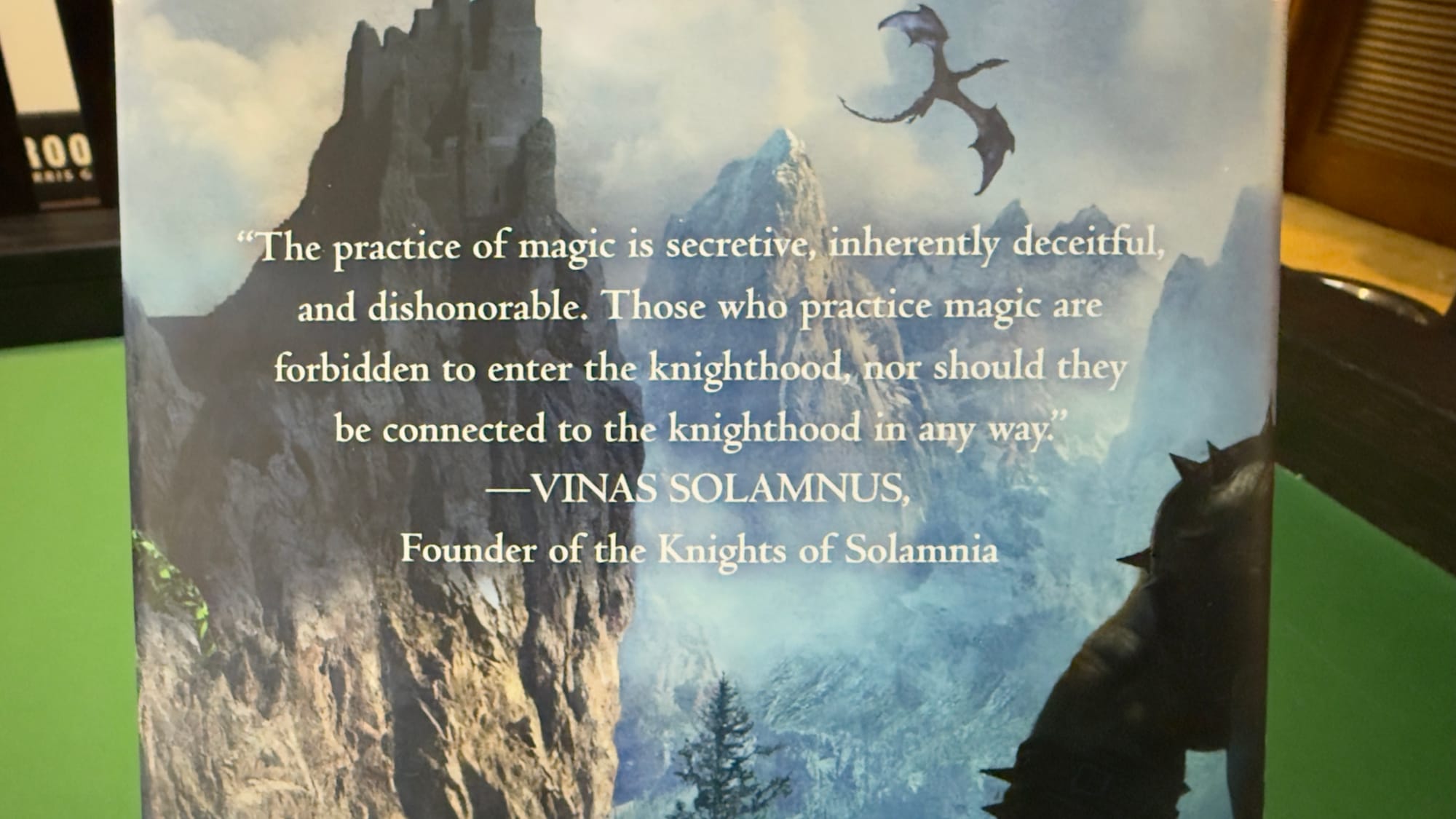
War Wizard begins the tale of Devon Ayershire, descendant of Adrian Ayershire (the first to take the name Magius), comrade-in-arms and best friend of Vinas Solamnus himself, the founder of the order of the knights of Solamnia. Like Adrian, Devon has been gifted with magic, a practice regarded with suspicion and fear by the people of Solamnia by measure and by oath. Devon, a boy who was rejected and abandoned by his mother, abused by his father, growing up in a land that vilifies and rejects his innate talents and abilities. The first book of War Wizard focuses on Devon’s childhood as the son of a lord whose house was in decline, a pitiful man who resented his son not only because his mother callously abandoned both of them while Devon was still a baby, but because of Devon’s clear affinity for magic, a scandal that his petty scrabblings for more wealth and influence may not be able to endure. When Devon discovers a long-hidden tome that details the history of Vinas Solamnus and his ancestor Adrian Ayershire, their friendship and his use of magic, he begins to embrace a much bigger destiny. Unfortunately, that destiny is at odds not only with his father, who ends up dying as a result of Devon’s wild, untrained magic gone awry, but with a society that has forgotten the role magic had generations before in its founding. Upon his father’s death, Devon is taken in by Huma’s family, forging an even stronger bond between Devon, Huma, and Huma’s sister Greta.
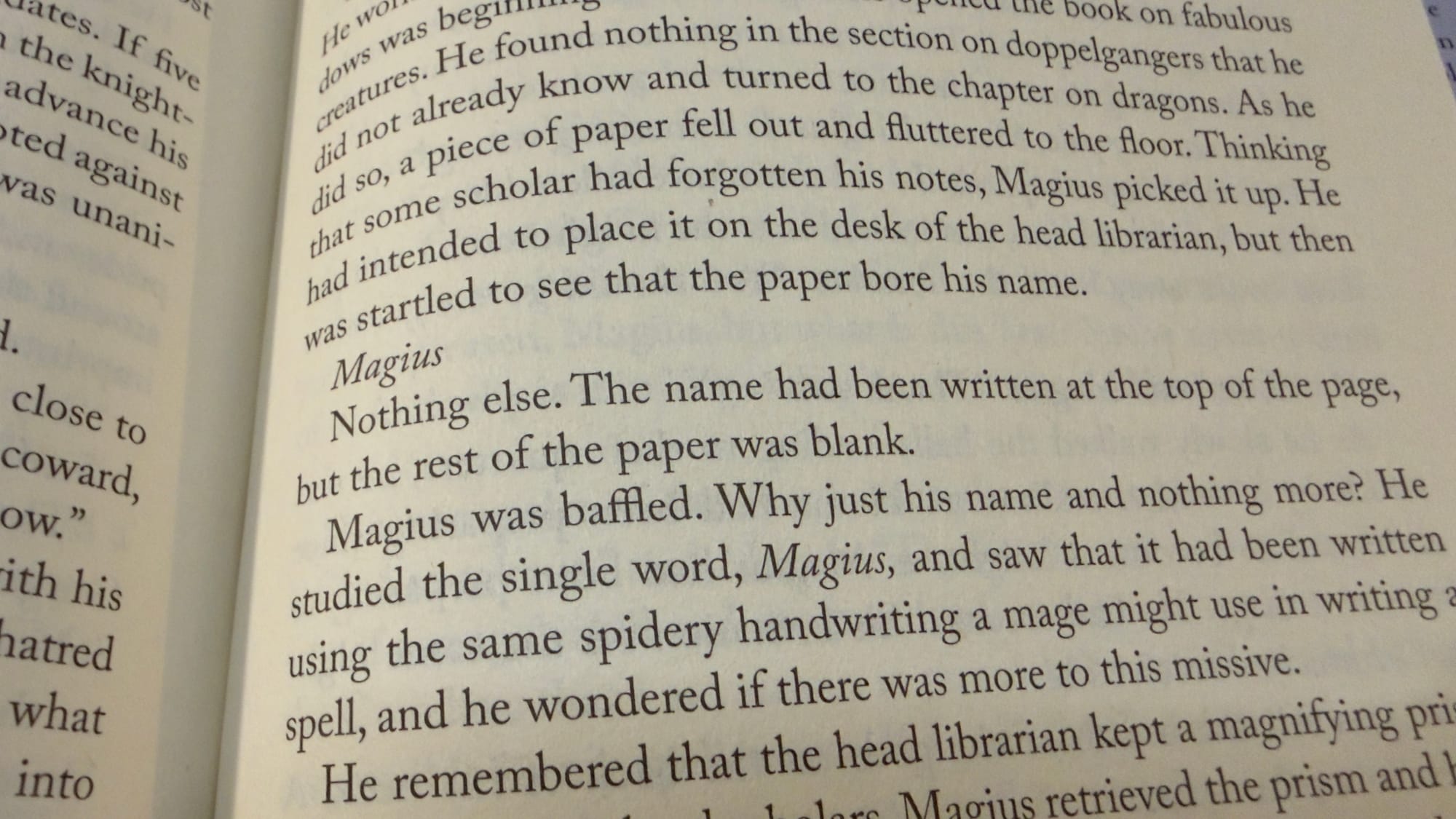
From here, the story goes on to flesh out the early years of Devon and Huma, whose relationship begins to echo that of Vinas and Adrian generations before. Where book one of War Wizard focused almost solely on Devon and his father, book two features the two stepbrothers equally, and the bond that develops is very reminiscent of Rastlin and Caramon in the original Dragonlance Chronicles, yet another echo of a protective brother looking out for his magic-wielding sibling. While I loved that first trilogy, it was the second trilogy and that brotherly bond that made them my favorite books in the whole series. That is likely why I locked in during book two and barely put the book down until I finished it. Now, I definitely get a little suspicious when a book or a movie is overtly appealing to my sense of nostalgia, but Weis and Hickman cleverly added that earlier echo of Vinus and Adrian, leaning into the trope and coming out the other side with the general idea that the fate of Krynn has been decided before by two brothers, a wizard and his protector, and very likely will be again. I really liked this and actually can’t wait to read that second trilogy again with new eyes, not to mention wondering if the authors are considering going even further back in time after they complete this trilogy. I’m sure there is fun to be had exploring the untold story of the origins of the Knights of Solamnia, I would love to see that.
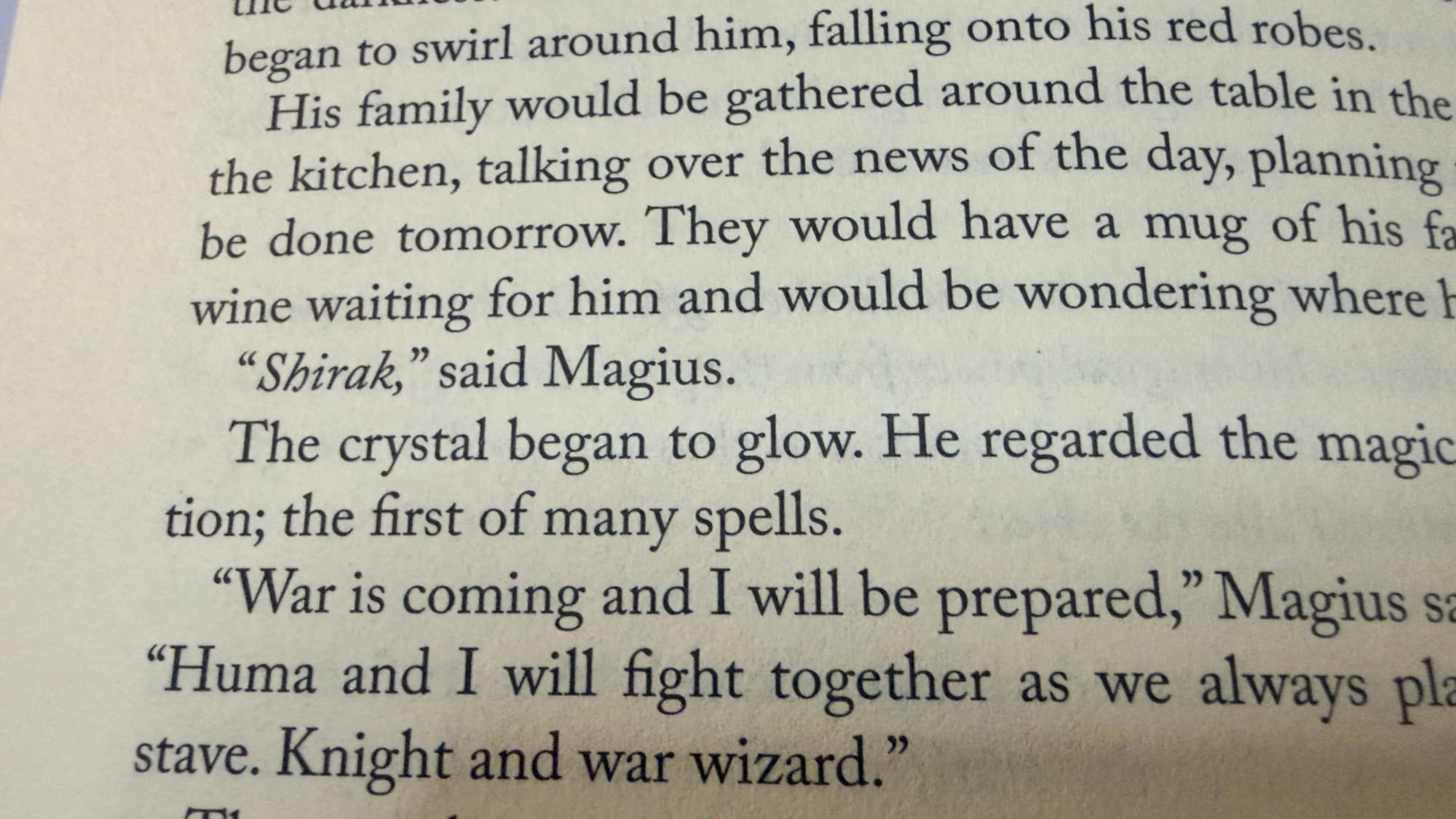
By the end of the book, Devon has taken the name Magius (like Adrian had before him), and has constructed his famous staff that lights up by the command shirak. Personal tragedy has struck, the seeds of the third dragon war that propels Huma into legend have been planted, and the reason for the title has been revealed- Magius aims to wield his magics side by side with the knights, as War Wizard.
Rewriting history
My memory of Richard Knaack’s Legend of Huma is very spotty, but if I recall Huma’s youthful years and family weren’t even mentioned. Huma’s parentage as presented in other novels or sourcebooks, however, has apparently been completely rewritten by Weis and Hickman. Huma’s father is no longer Durac of Eldor, who died a year after achieving knighthood, but is instead Sir Richard Fiegaard, a respected member of the Knight’s Council. I suspect that we’ll see more inconsistencies as the trilogy continues, though I would defer to the actual creators of Dragonlance as to which version will be considered canon.
To be honest, slavish attention to lore parceled out over four decades isn’t what draws me to a novel. These days I am looking for a good read, and while it has likewise been several years since I regularly consumed fantasy novels (I had a voracious appetite for them in my teens and early twenties), War Wizard very handily brought back that same enthusiasm in a way I haven’t experienced since I finally broke down and read every Song of Ice and Fire novel when Game of Thrones premiered on HBO. (I suspect Martin’s inability to finish that series already had me casting about a bit for some closure.) Reading this book definitely started with nostalgia for me; my appetite for Dragonlance has been rekindled over the last few years, and if it hadn’t crossed my desk, I would have likely started on rereads of the first two trilogies by now. I devoured this book, just like I did Dragons of Autumn Twilight all those years ago. Curiously, the nostalgia I felt wasn’t a direct result of the plot of the book as much as it was the style of the writing and the portrayal of the characters. This felt like a Dragonlance book, and it was refreshing to see the original authors begin an extended take on an earlier era of the lush world they created. Our media is rife with nostalgia these days, and I have read and watched several attempts by creators to revisit their best works to varying degrees of success. Heck, I even tried to read the first book of the trilogy these same authors published just a couple of years ago and it didn’t grab me like this one (though I plan to give it another shot). What could have been a potent mix of memberberries and treacle instead was a suitably epic beginning of a new era of Weis/Hickman Dragonlance. The next book can’t come soon enough, and I’m definitely wondering if this is the era their work with Joe Mangianello’s Icons imprint is going to be based in.
Dragonlance: War Wizard
Excellent
A heady mix of familiar and new, War Wizard is the best Dragonlance novel I have read in decades, and for the first time in years I am impatient for the next book. The true legend of Huma and Magius as told by Weis and Hickman may just be the best tale in the series since the original two trilogies, and while it echoes those books (particularly the Legends trilogy about Caramon and Raistlin), the nostalgia it evokes doesn’t overwhelm or cheapen what is ultimately a great new story in a beloved world.
Pros
- Evokes the original hit books without wallowing in nostalgia
- Fleshes out the early history of two of the most legendary characters in the series
- Sets the stage for the third Dragon War and the true origins of the Dragonlances.
Cons
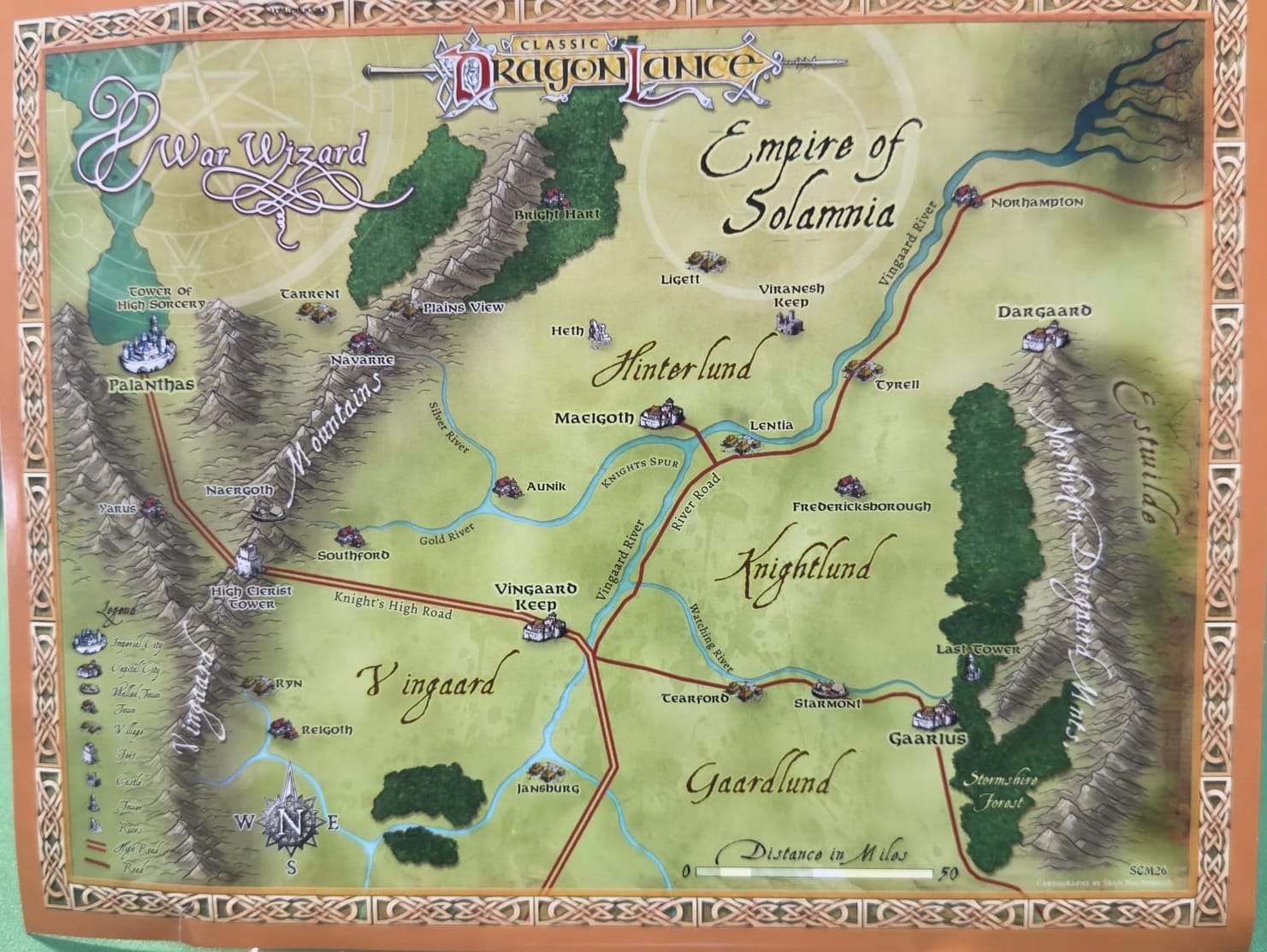
- The map for the inside cover wasn’t ready by time of printing
- Writing style may skew young for some tastes
- Having to wait a year for the next book in the series
This review is based on a retail copy provided by the publisher.
Until next year!