We’ve finally reached the point in the nostalgia cycle where games from my childhood are being remade/remastered/rereleased. In fact, Disney/Pixar Toy Story: Retro Roundup! contains the very first video game I ever owned rather than played at a friend’s house or daycare. I actually played the vast majority of games in this collection over the course of my childhood, and while some… aren’t great, quite a few of them hold up really well.
Toy Story
Developed by Traveler’s Tales, Toy Story for the Sega Genesis, Super Nintendo, and Game Boy Color (Black Pearl Software) is something of a technical marvel for the time. Like Donkey Kong Country, released just a year before, the game uses pseudo-3D visuals. For the characters, I assume they achieved this by rendering 3D models into a sprite sheet, but there are a lot of 3D elements in the backgrounds too, with shifting perspectives that I still can’t figure out. It’s pretty cool that one of my first video games can still amaze me over 30 years after its initial release.
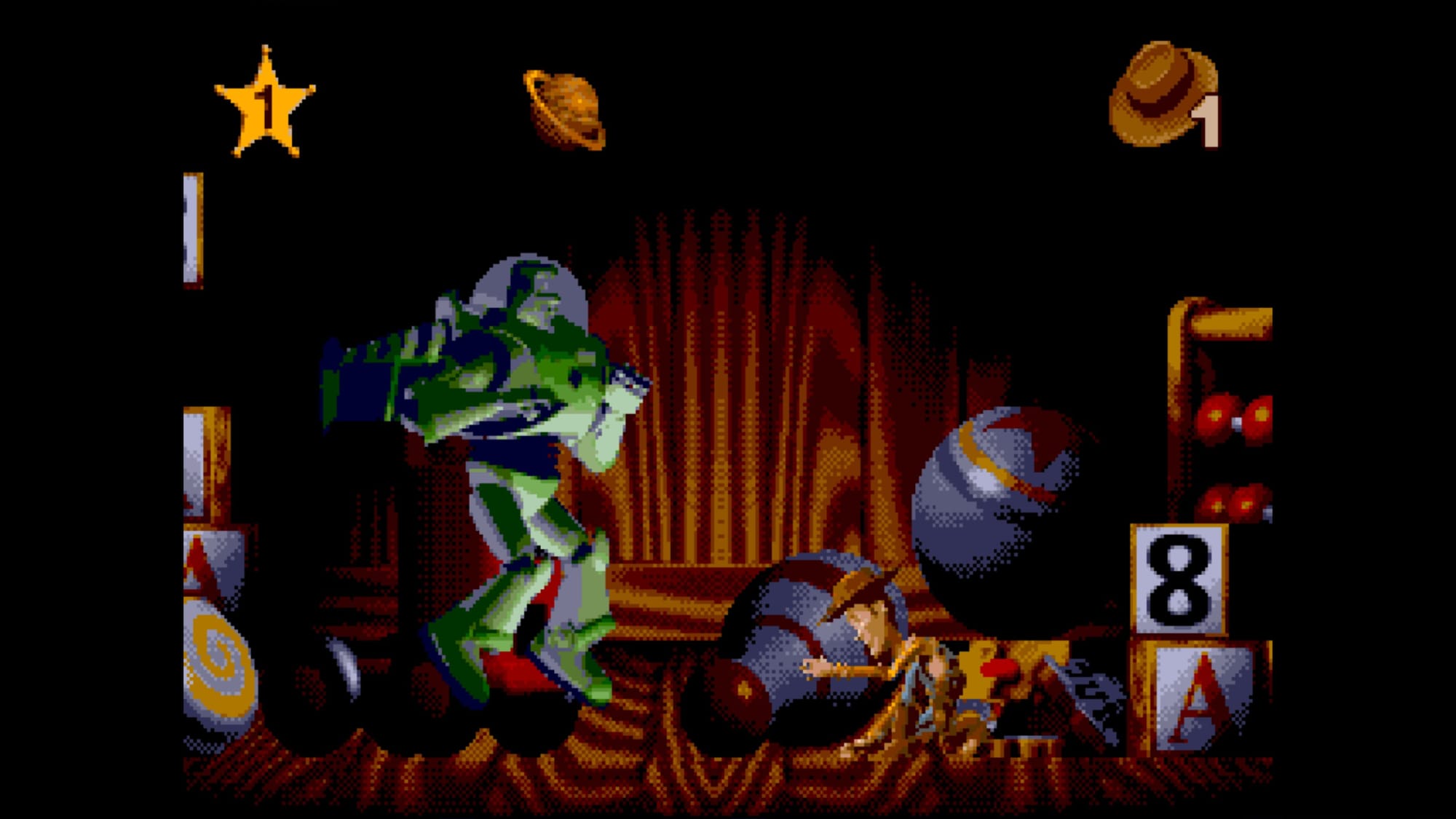
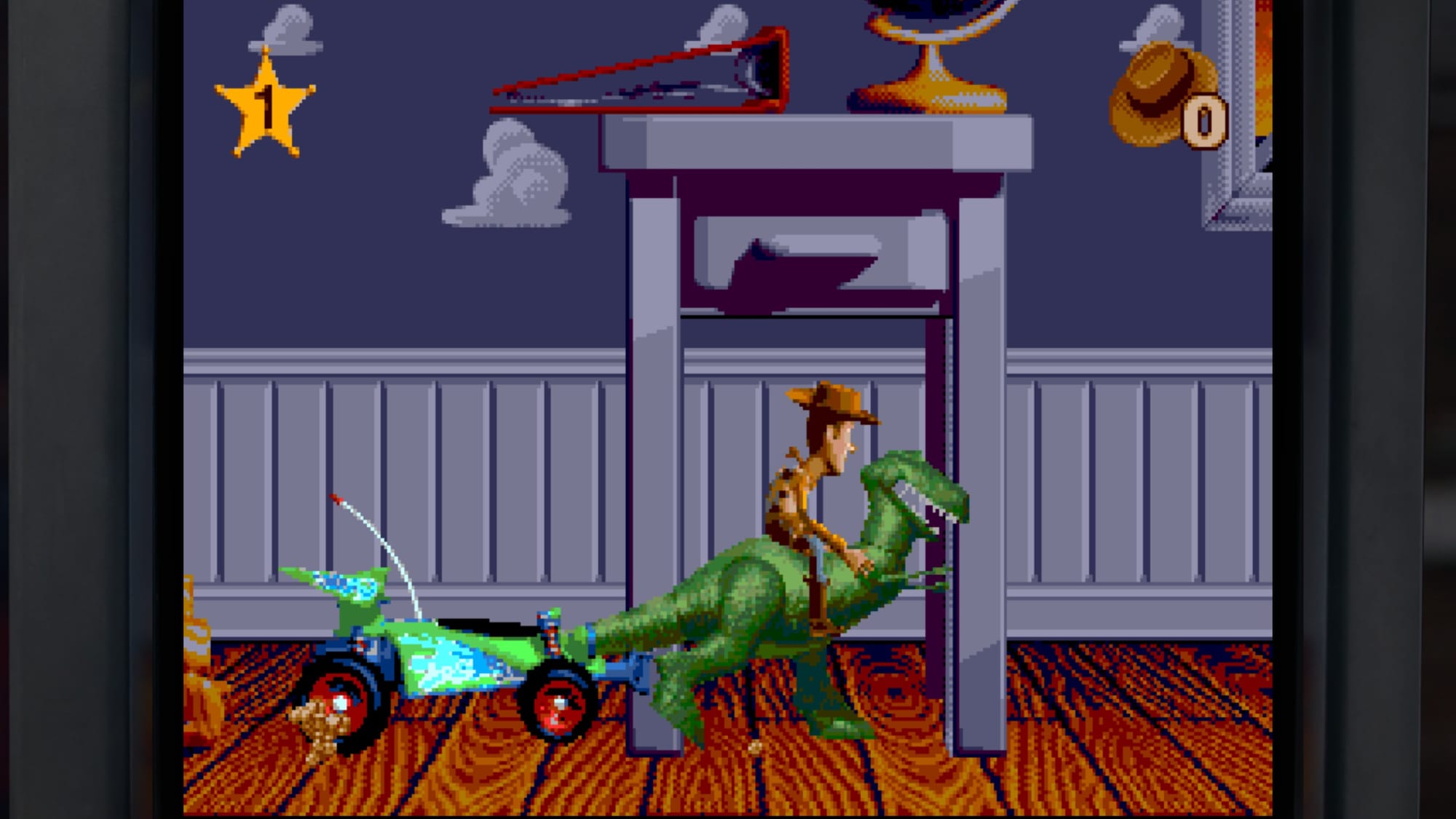
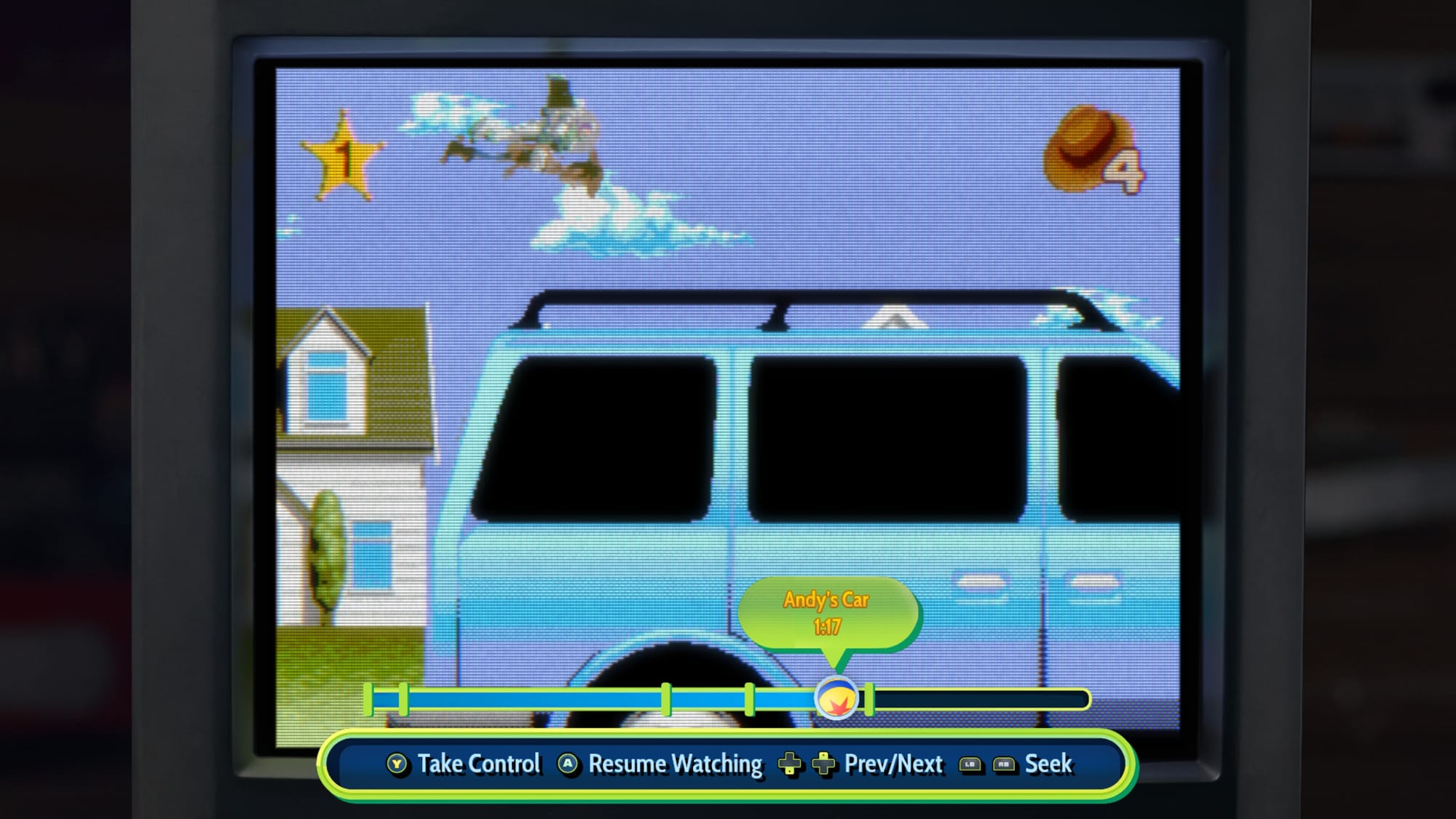
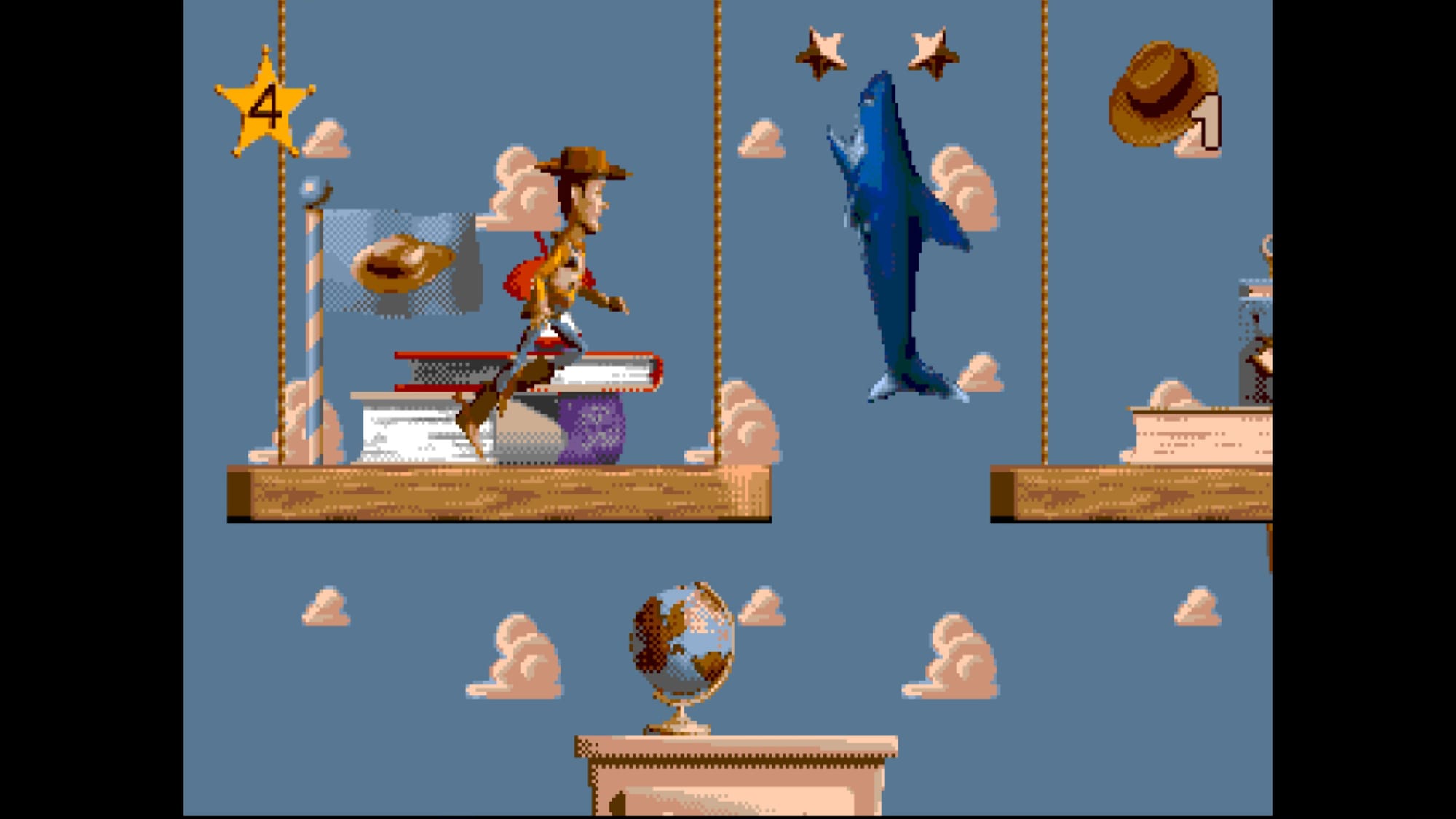
I played the Genesis version, but from what I can tell, the Super Nintendo version is virtually identical. The game puts you in the boots of Woody (don’t worry, there aren’t any snakes in there) as he runs, jumps, and wields his pull string like a lasso through the first film. This is mostly a 2D platformer, but there is a surprising variety of levels, including races with RC or a stage inspired by DOOM in which you rescue some Aliens within the claw machine at Pizza Planet.
Revisiting and finally beating this title was a lot of fun, though that’s mostly thanks to the new save system included with every game in the collection as well as the rewind feature. According to the description within the collection, the game was infamous for requiring more than one Blockbuster rental period to actually beat. You can really feel that in the occasional lack of clarity in mechanics or level design. It usually took me a life or two to figure out how to even damage a boss, and I made use of rewind almost constantly to roll back getting hit by obstacles I literally could not have perceived in time to avoid.
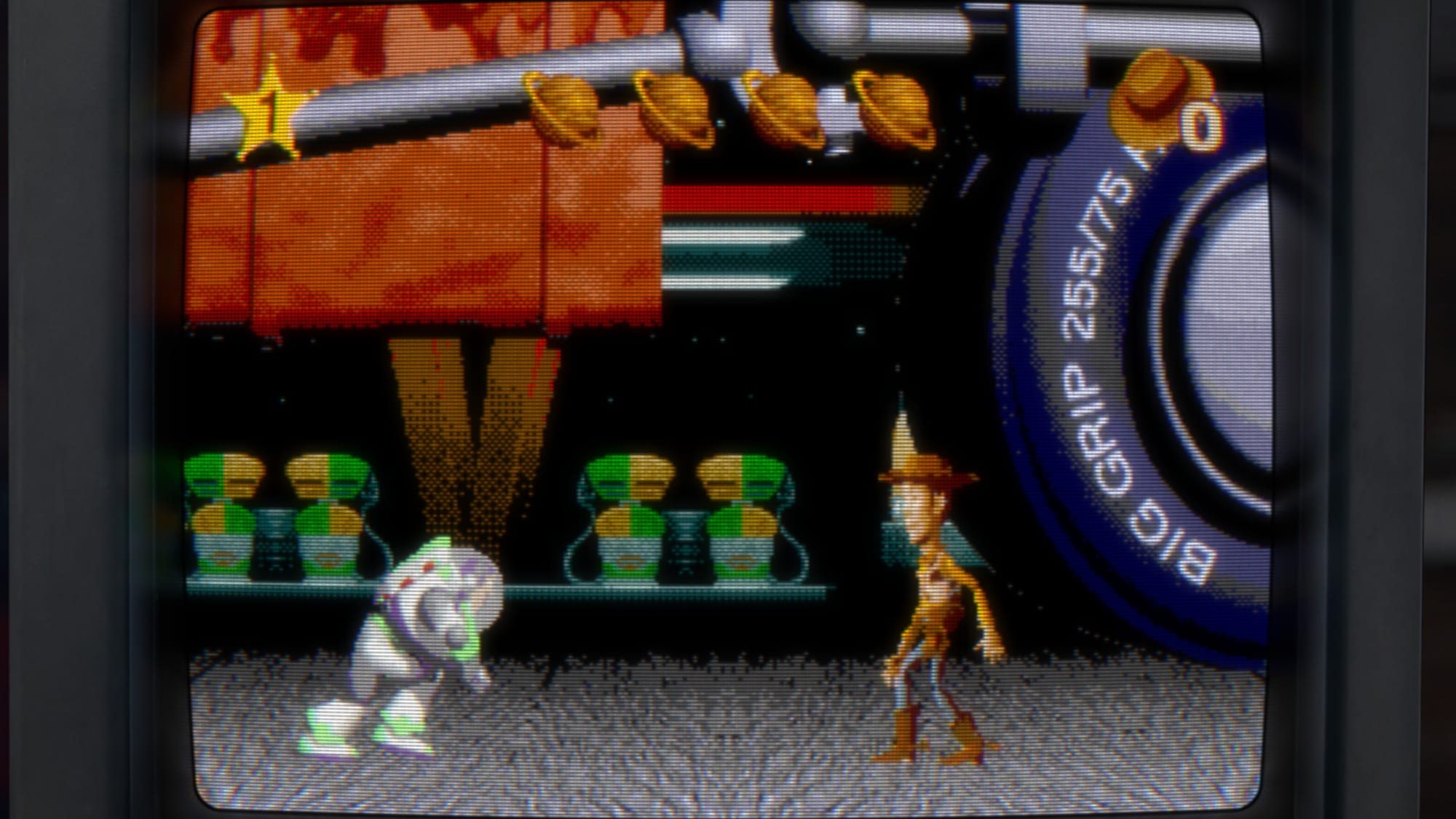
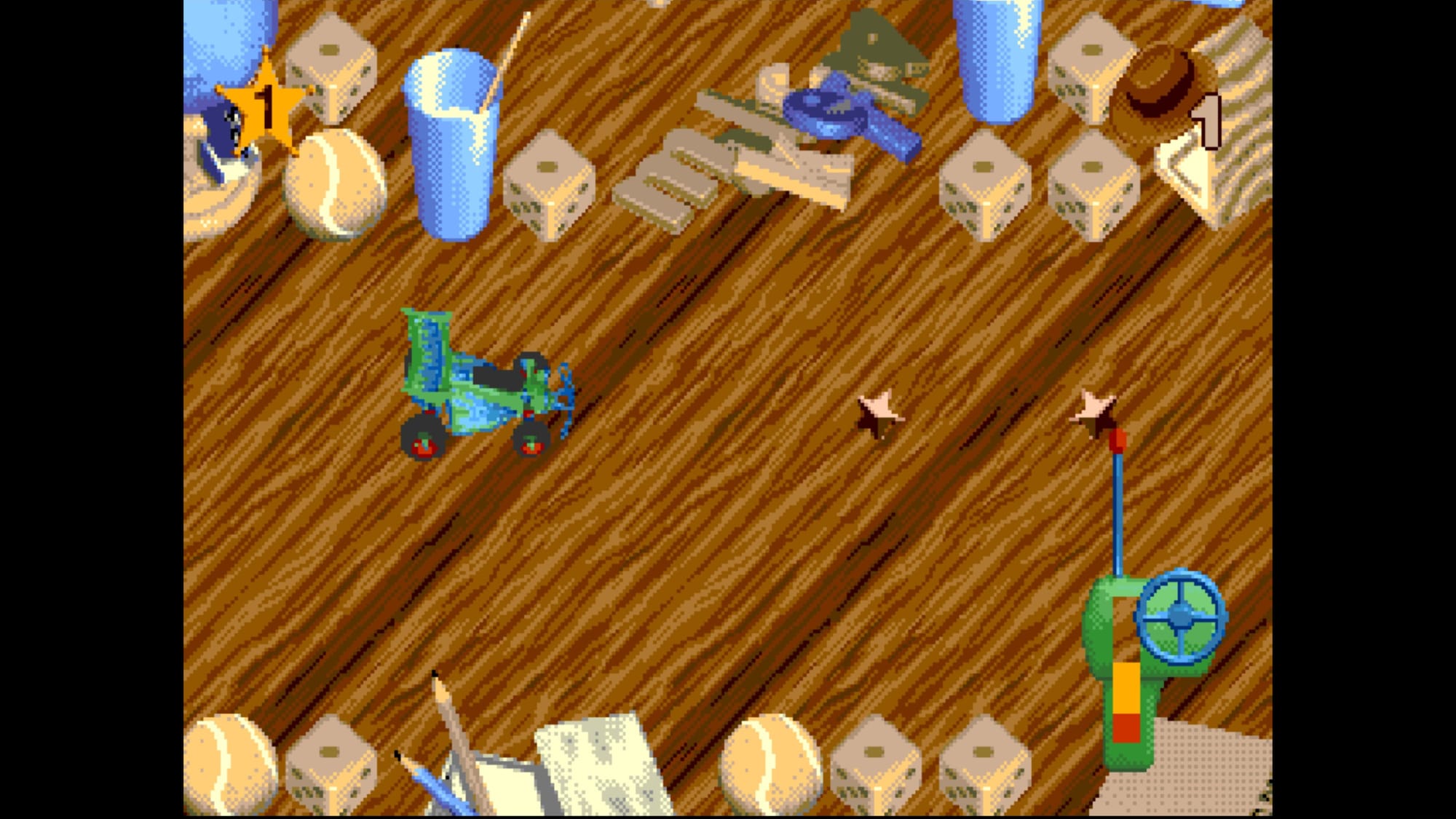
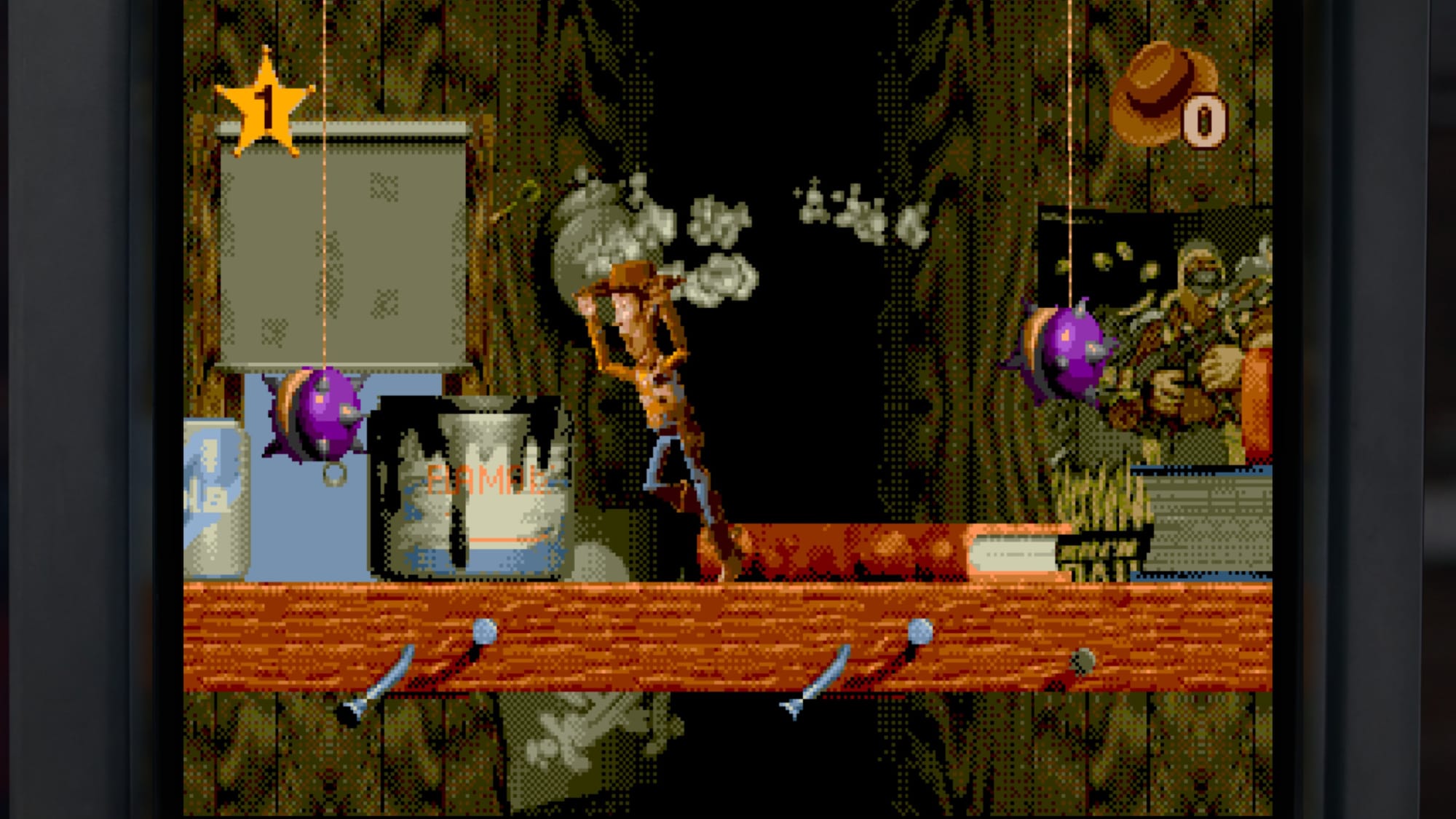
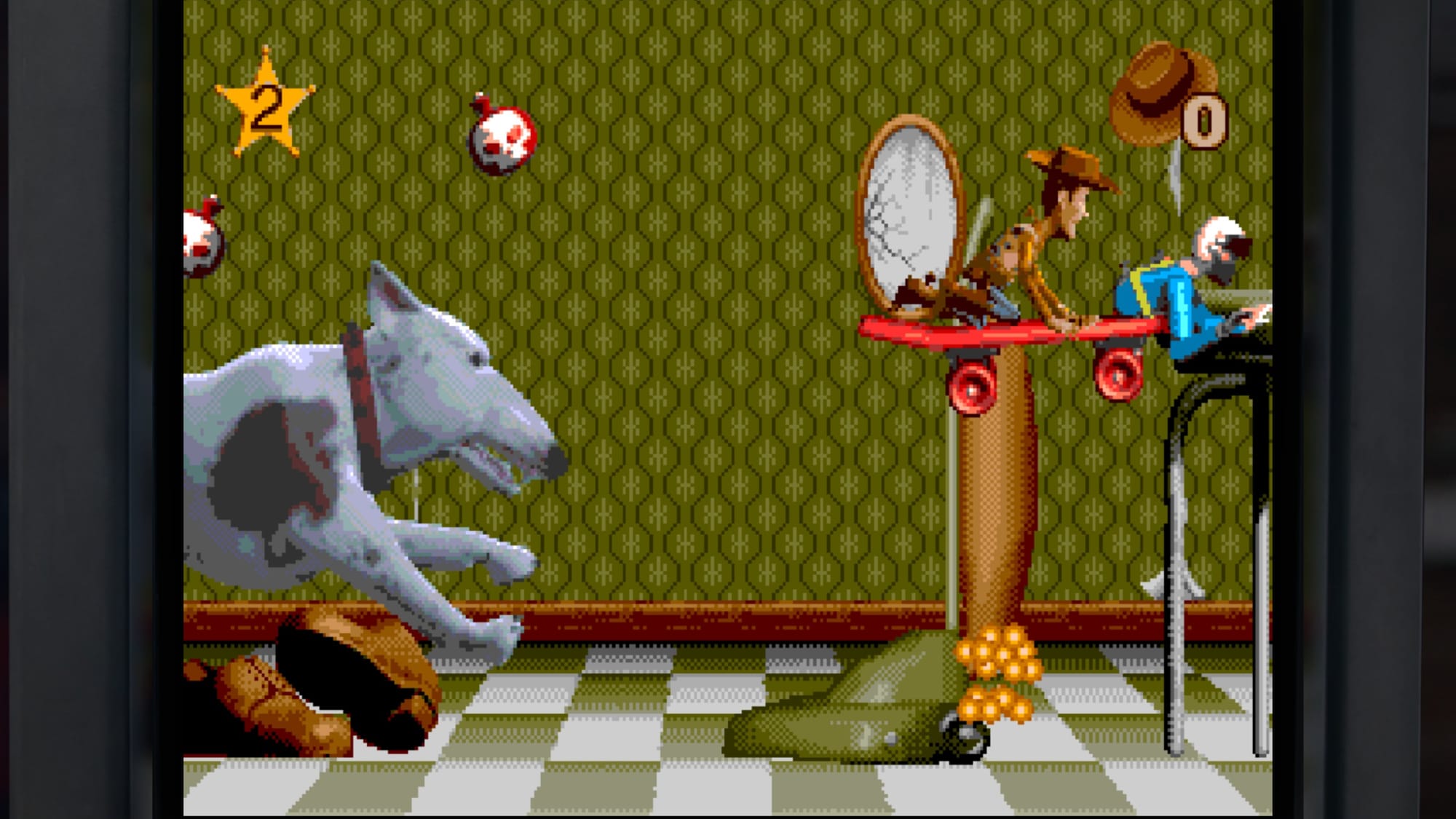
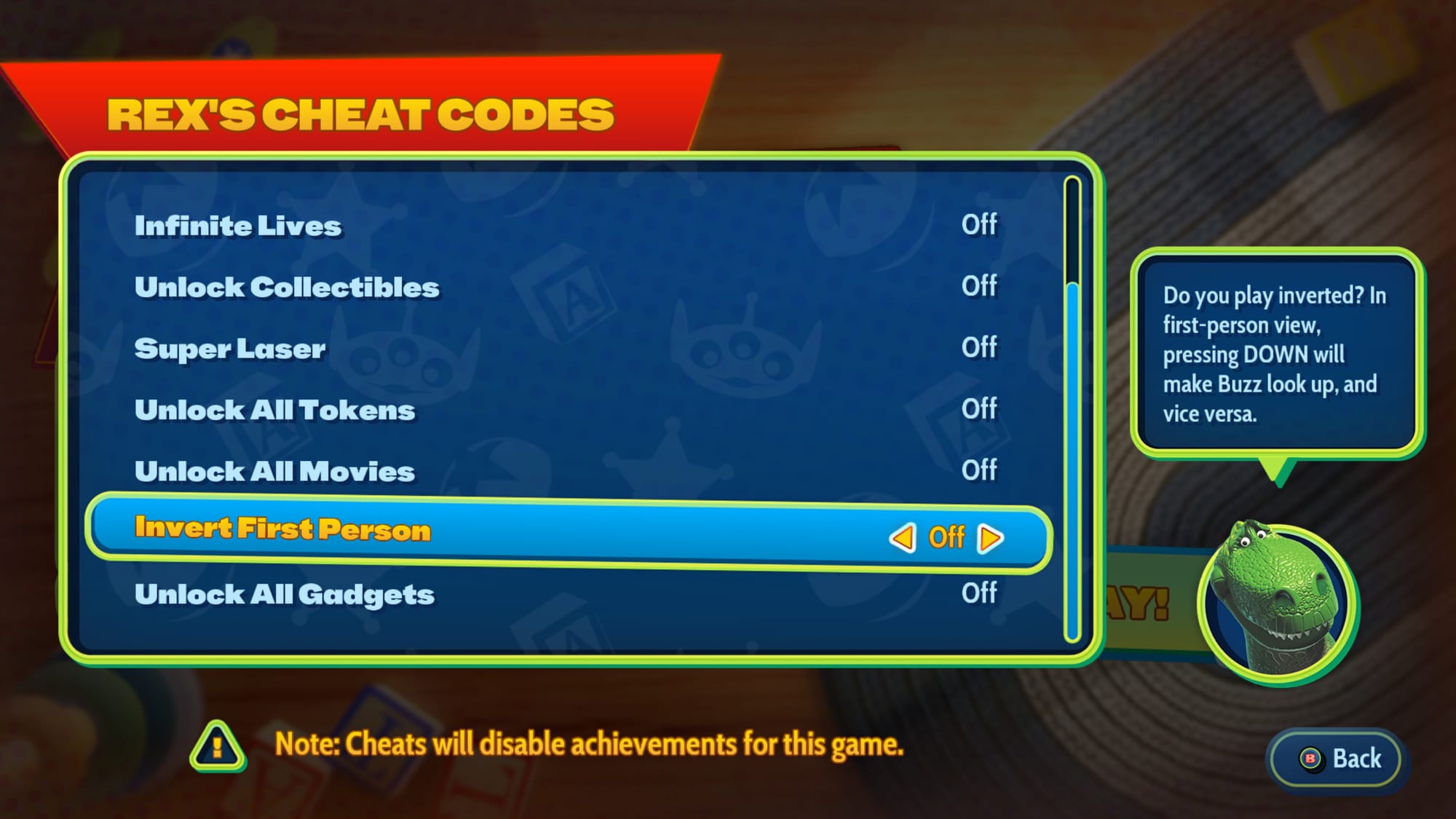
Every game in the collection also includes a variety of cheat codes straight from Rex himself. For Toy Story, this includes the ability to skip any level with a button combination, infinite lives, and full-on invincibility. These cheat codes do disable achievements, unfortunately, so if you care about those, stay away. There’s also a Practice Mode for every level, which essentially plays the game for you as a guide, allowing you to take control at any time. These also disallow achievements, but it’s a pretty cool feature and probably handy for kids to get back to wherever they were in the game before dying.
The Game Boy version appears to follow the consoles as closely as it can, though there are quite a few differences, like some characters and elements missing from the first stage, the DOOM-style level is missing entirely, and some bosses have been removed. Additionally, while the game box claims to support the Super Game Boy, there’s no color palette option for that, instead offering the pea soup original, black and white, or backlight colors. Still, it’s a pretty faithful adaptation.
A Bug’s Life
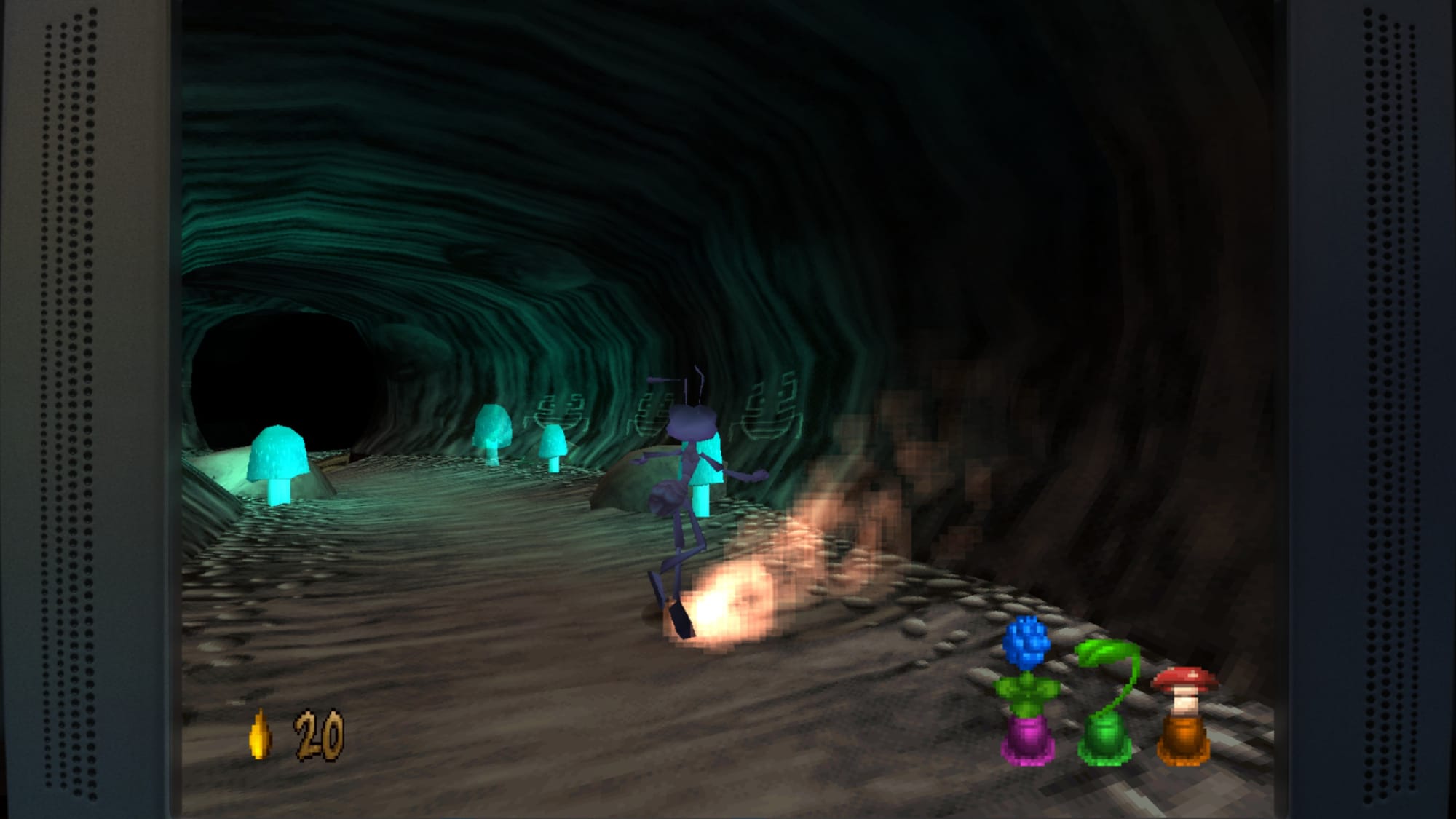
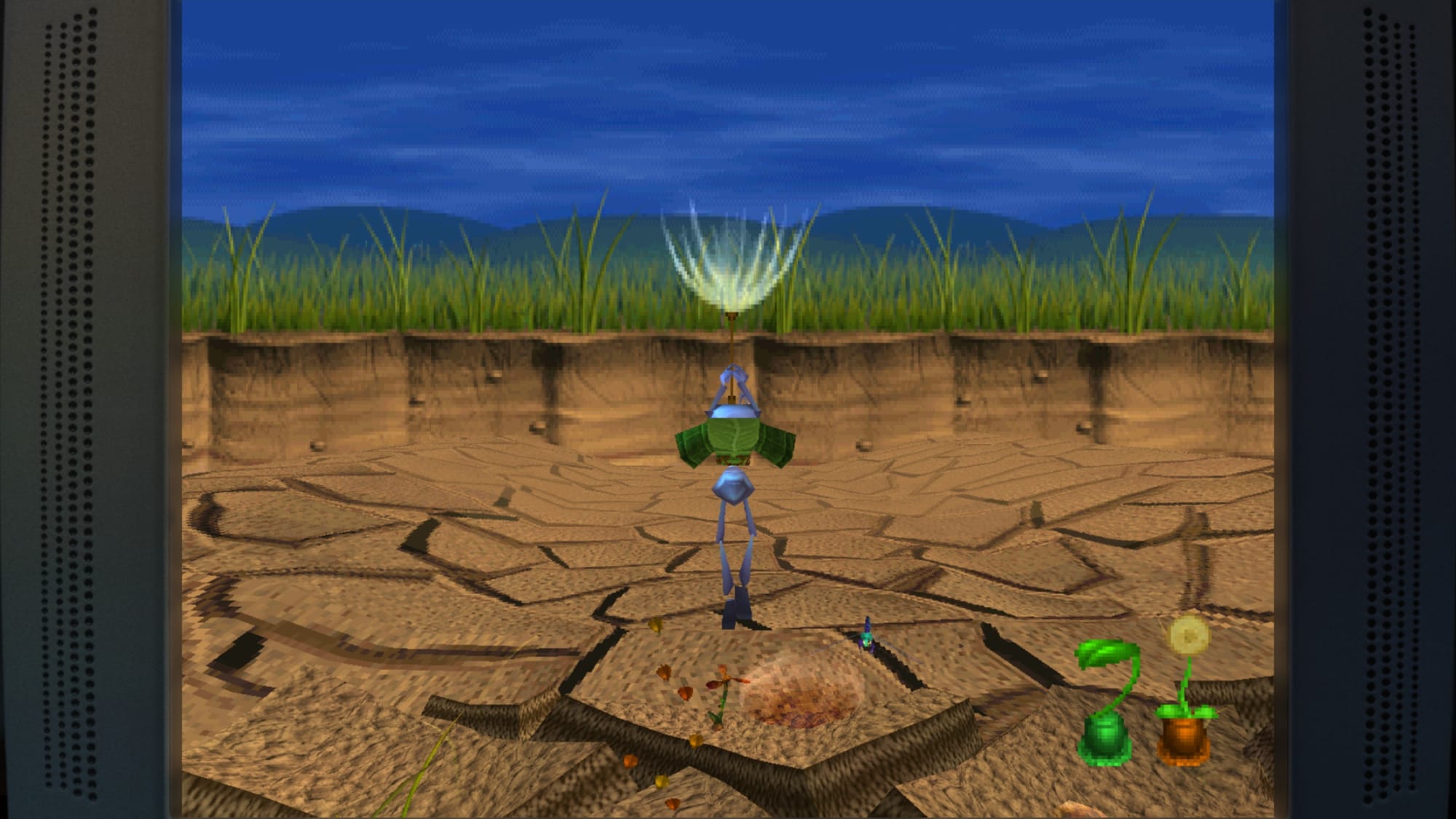
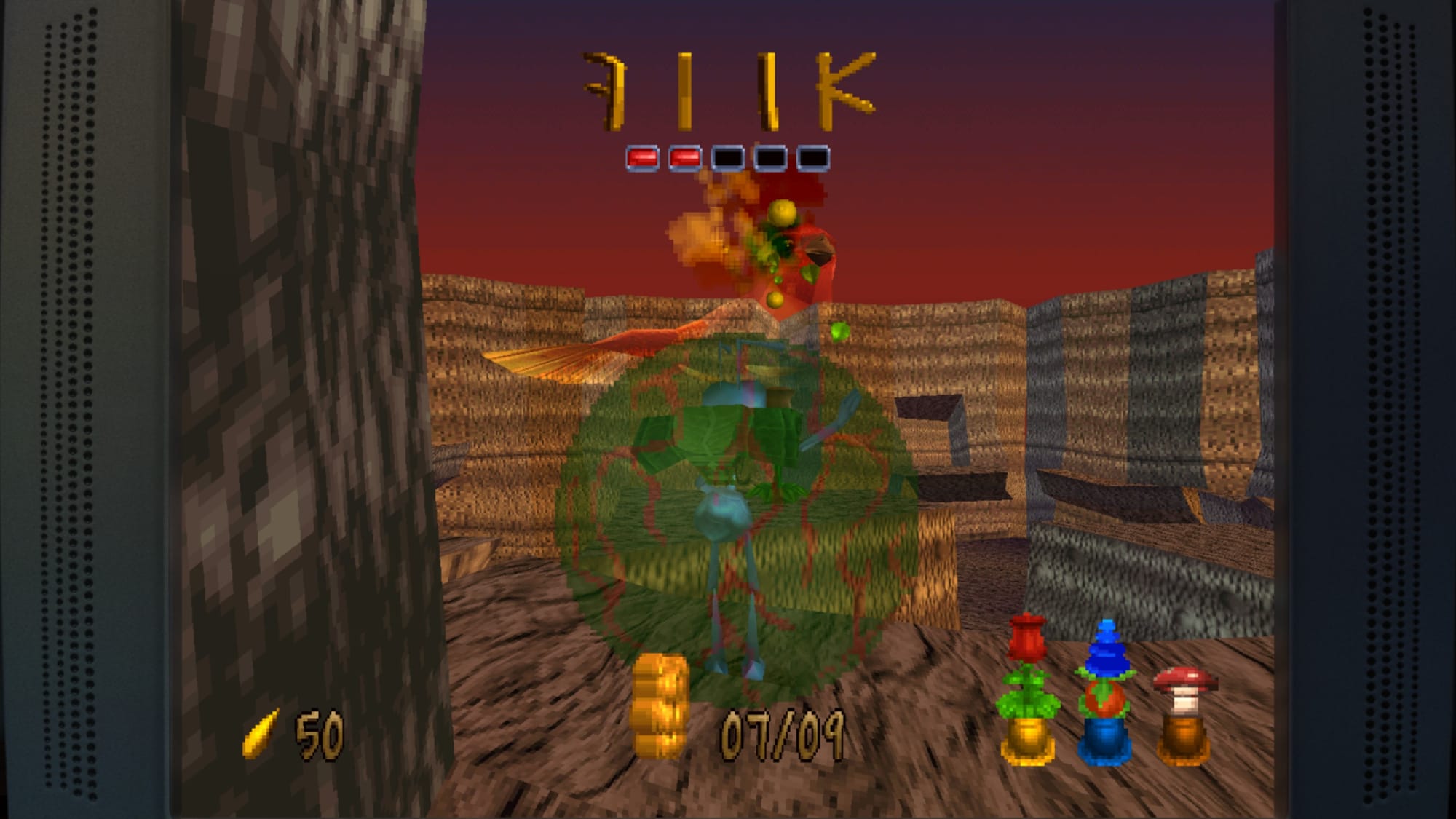
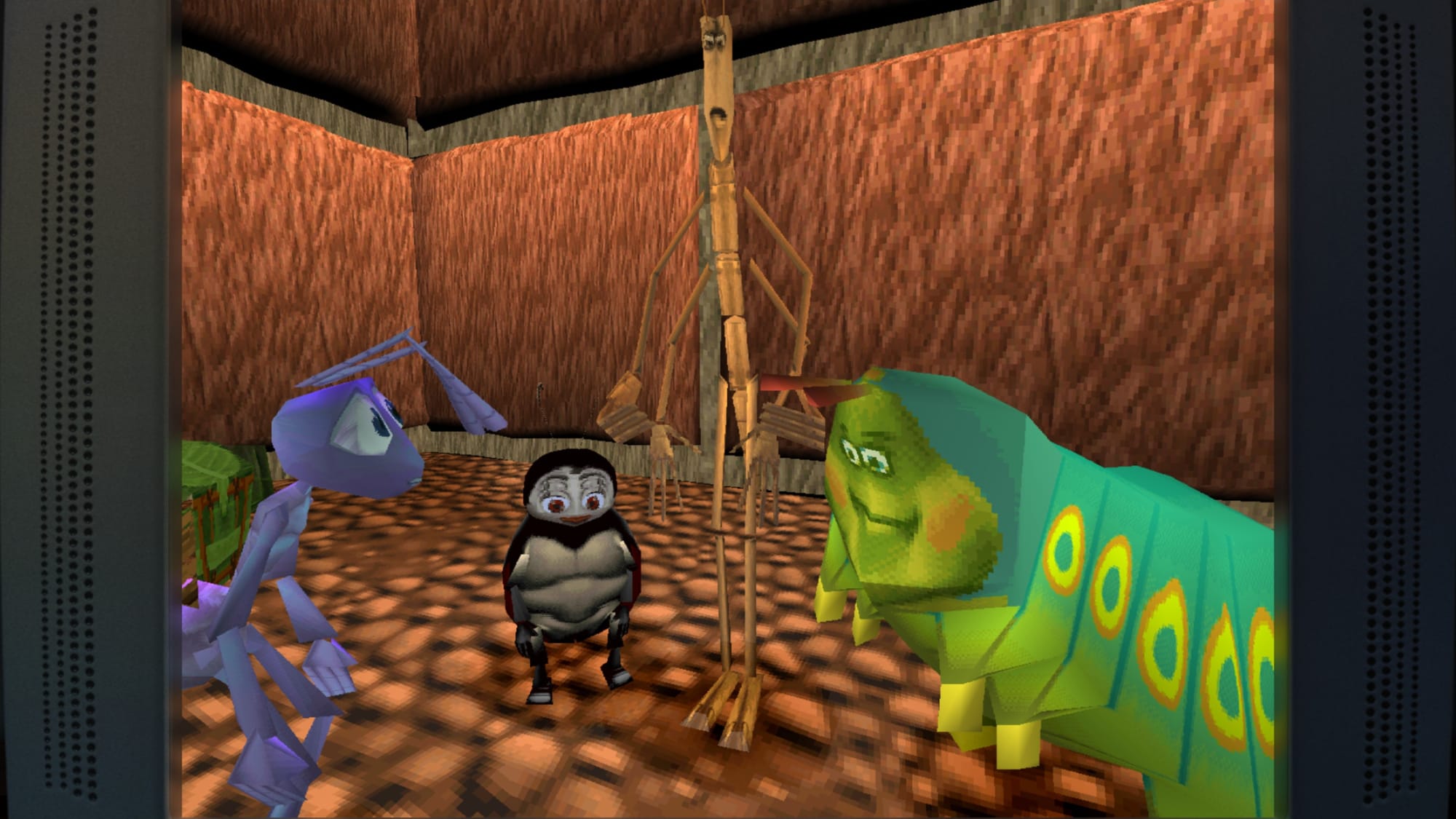
For the remainder of the collection, each title has a PlayStation version and a Game Boy Color version. A Bug’s Life on the PS1 (Traveler’s Tales) is another game I played a ton of as a kid, and I’m happy to say it holds up pretty dang well. You’re again just going through a loose adaptation of the film, but this time in a 3D puzzle platformer style. Flick has some fairly standard moves like a ground pound and berry projectile, but he can also change the color of various seeds you’ll find in each stage. Each color corresponds to a different plant, like the red bouncy mushrooms or the green saplings, and you need to use all of them in interesting ways to get through every level. For example, in the first stage you might find one of the collectible FLICK letters is too high for you to reach even with the mushroom, and you can’t quite jump onto the sapling’s leaf on your own. Well, grab another seed, then use a mushroom to hop onto the leaf and reach the letter.
This further evolves over the course of the game, especially in stages with the upgrade tokens, which will enhance each seed type. It’s impressively freeform for a licensed PS1 title and, put simply, a lot of fun. I’d love to see another game take this idea and really run with it.
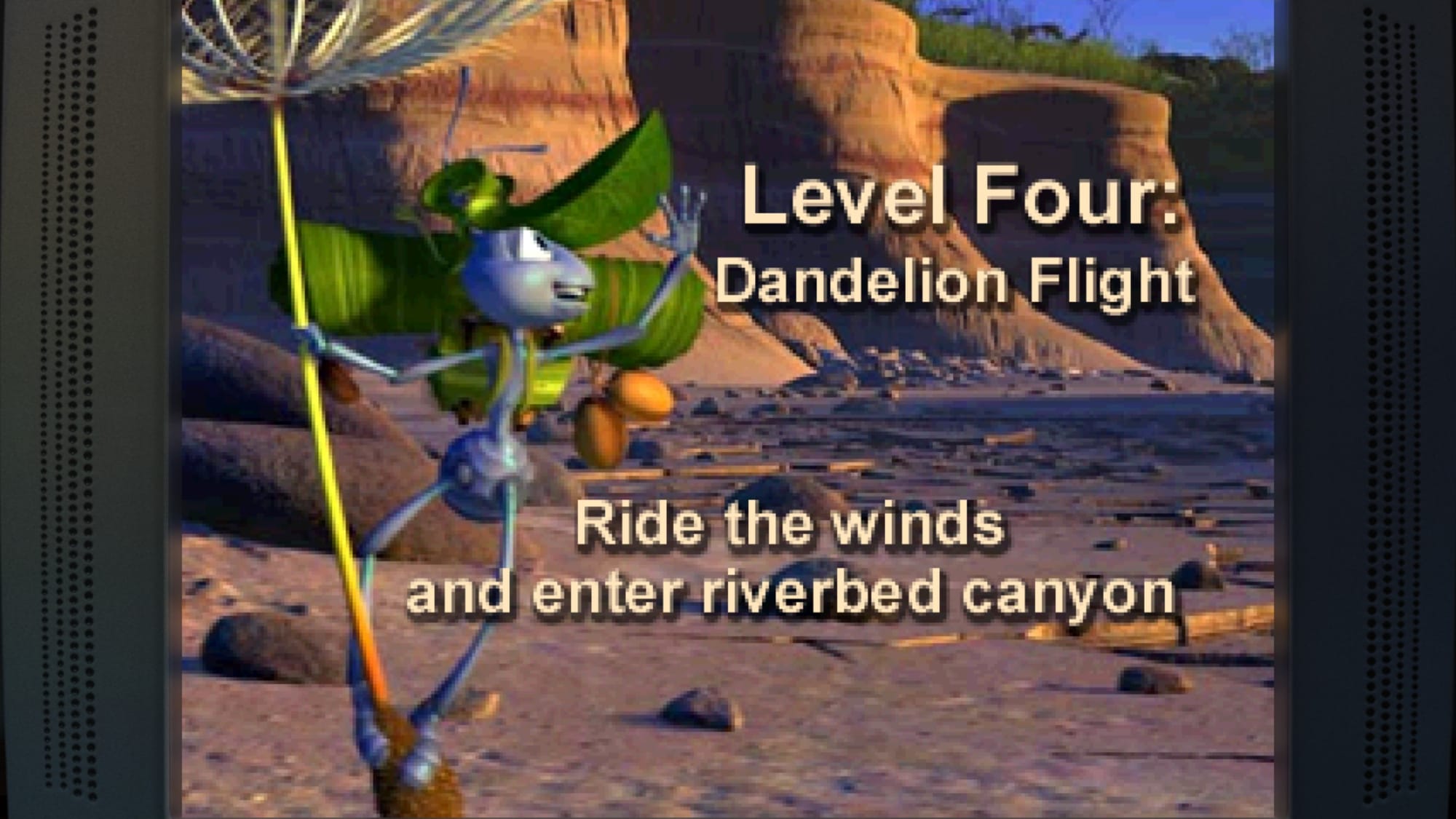
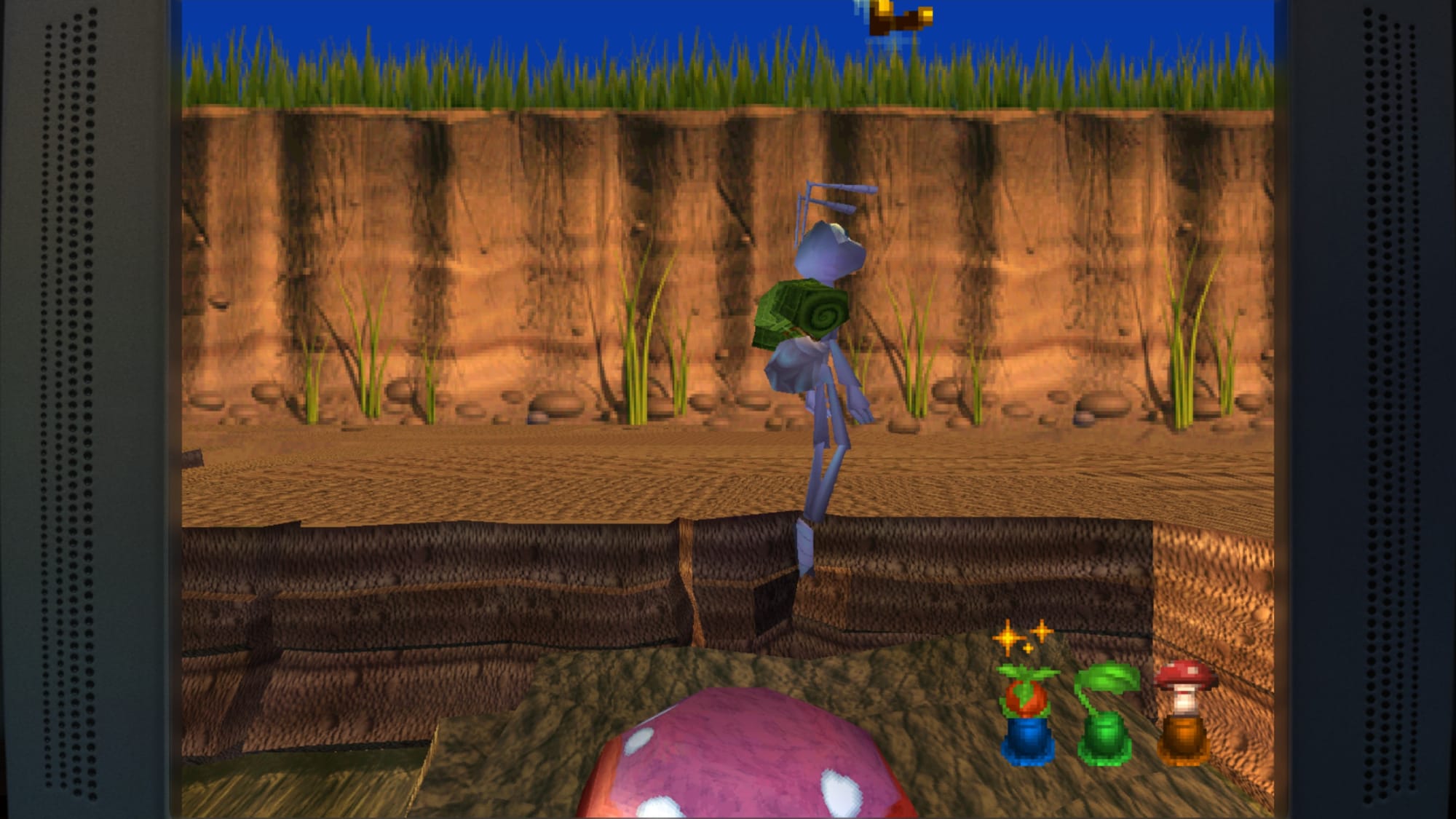
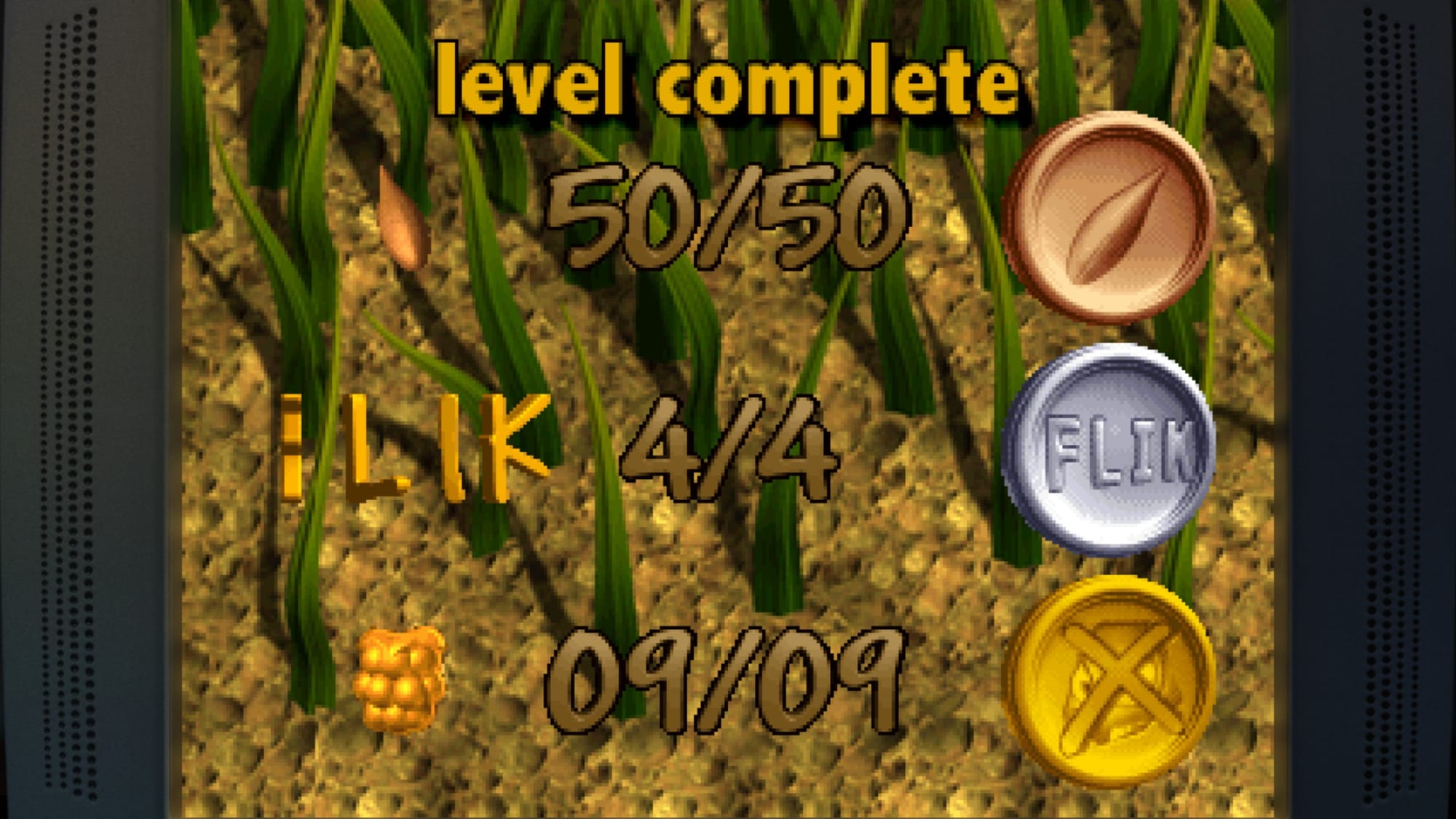
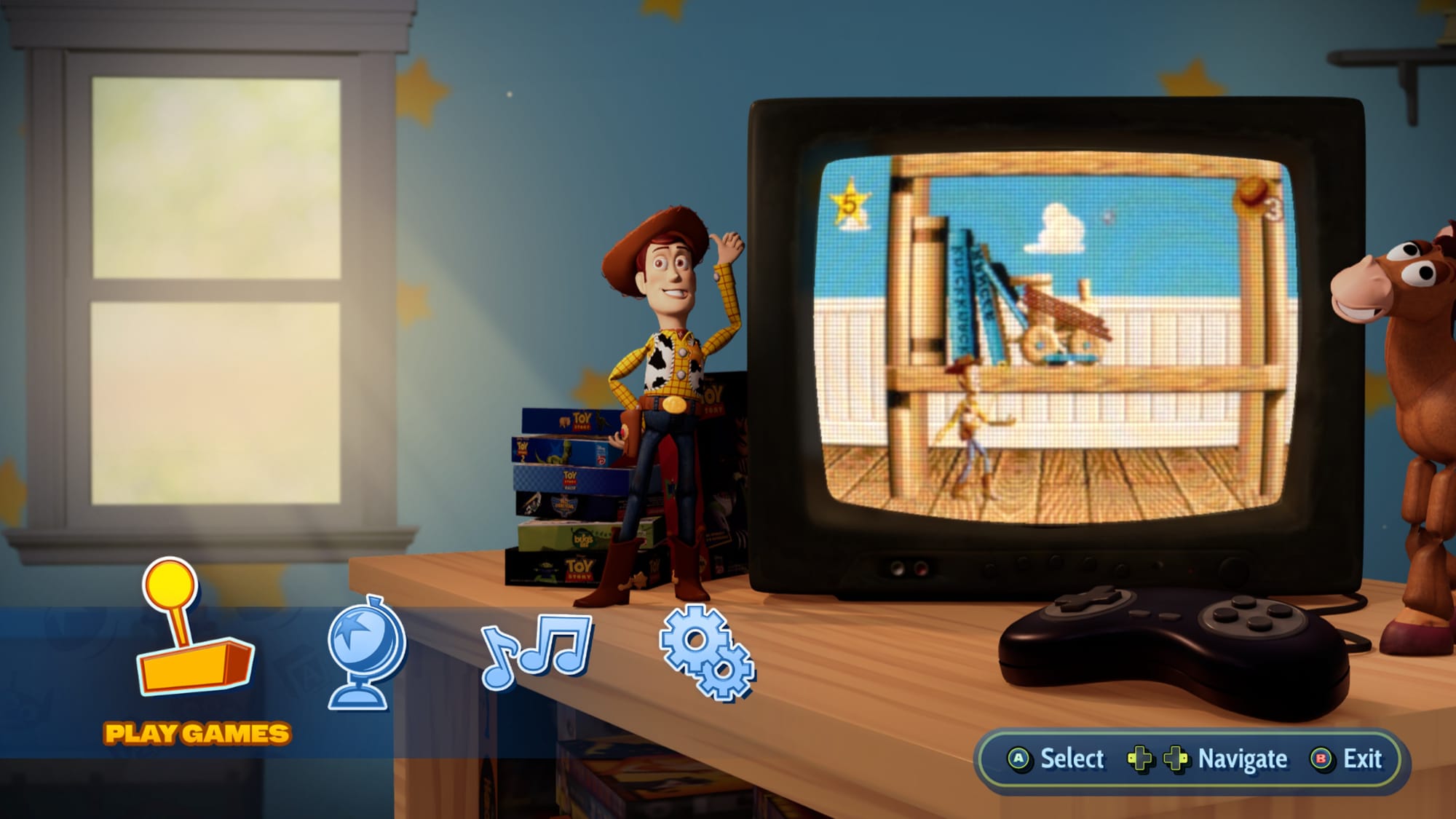
Console games in Retro Roundup! come with some nice emulation features. Just like Toy Story, you’ve got rewind, the ability to save anywhere at any time, screen sizes including original, fullscreen for the 4:3 image to fill the screen vertically, and full to stretch out the image for any torture victims who happen to be in the room, and two CRT filters (which aren’t perfect but better than most). You’ve also got borders, which normally I would turn off, but they’re exceptionally well done here. For portable titles, they’re made to represent a copyright-free Game Boy, but on console they’re all CRTs with the image slightly inset. This allows the game to “reflect” off of the border in a really cool and subtle way. On the Game Boys, the battery light will also pulse ever so slightly. It’s so much better than just slapping some art behind the game, and I appreciate the effort put into something most people likely won’t even notice.
Back to emulation features, for 3D titles you can increase the game’s internal resolution up to 4x, preserving the retro stylings while making the image a lot clearer. For my playthroughs, I kept the setting at 4x and enabled the curved CRT filter. While the filter lacks any sort of color bleeding between pixels, it doesn’t darken the screen too much, and the games look more natural with scanlines.
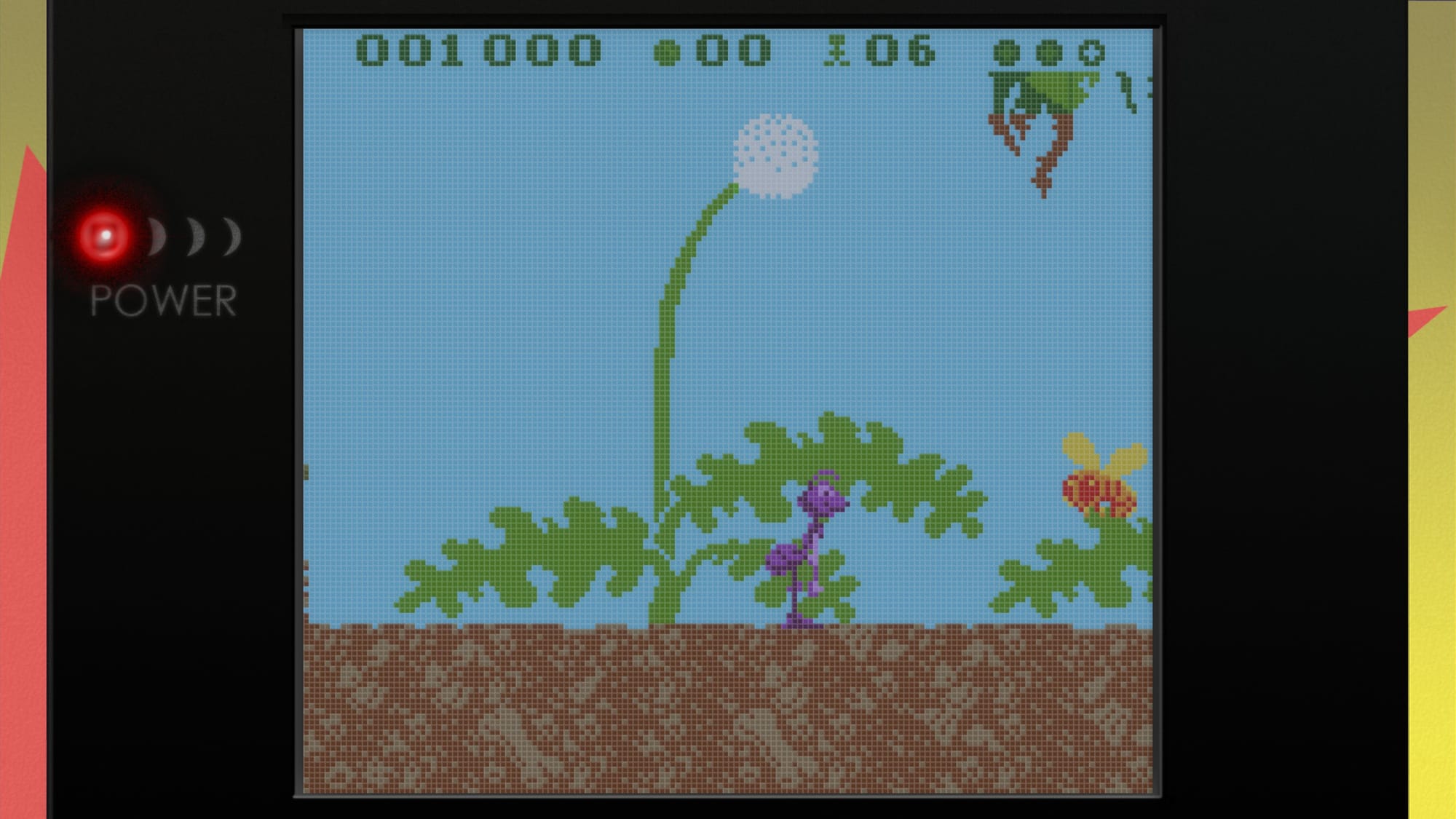
I didn’t put a lot of time into the Game Boy Color version (Tiertex Design Studios), what I did play wasn’t particularly enjoyable. It’s a 2D platformer, and it feels very janky to play. The Walking speed is too slow, but the running speed is too fast, especially with the camera lagging behind Flick. Jumping is very reminiscent of the original Castlevania as well. It’s just unpleasant.
Toy Story 2 & Toy Story 2: Buzz Lightyear to the Rescue!
Toy Story 2 on the Game Boy Color, like A Bug’s Life before it, isn’t very good. I definitely had this one as a kid, and even back then I could tell. The player in the introduction video, when selecting the game, also seems to be having a rough time figuring out what to do in the very first level and struggling with the controls. I spent a few minutes with it, mostly for nostalgia, and I wouldn’t recommend touching it outside of that context.
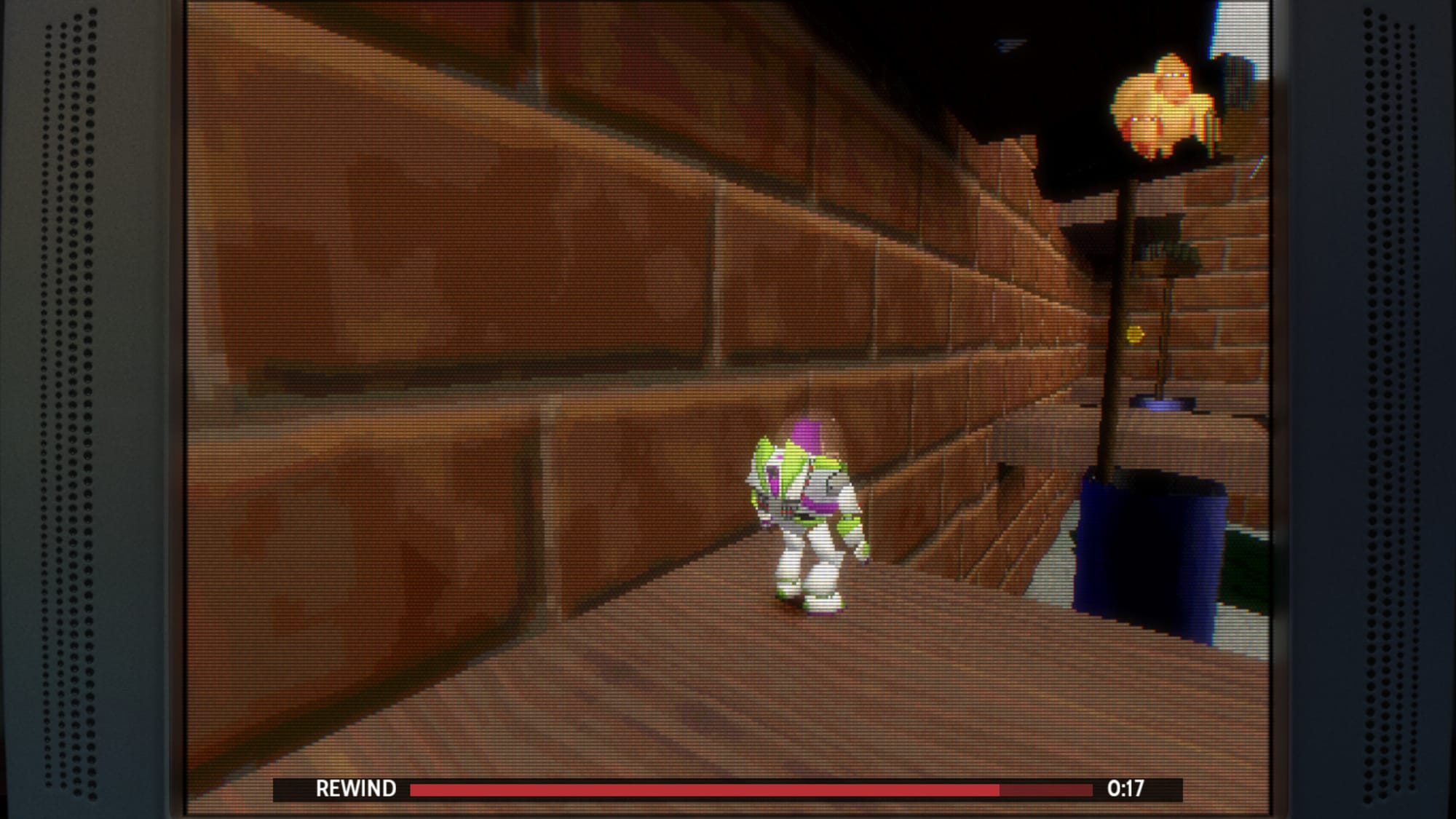
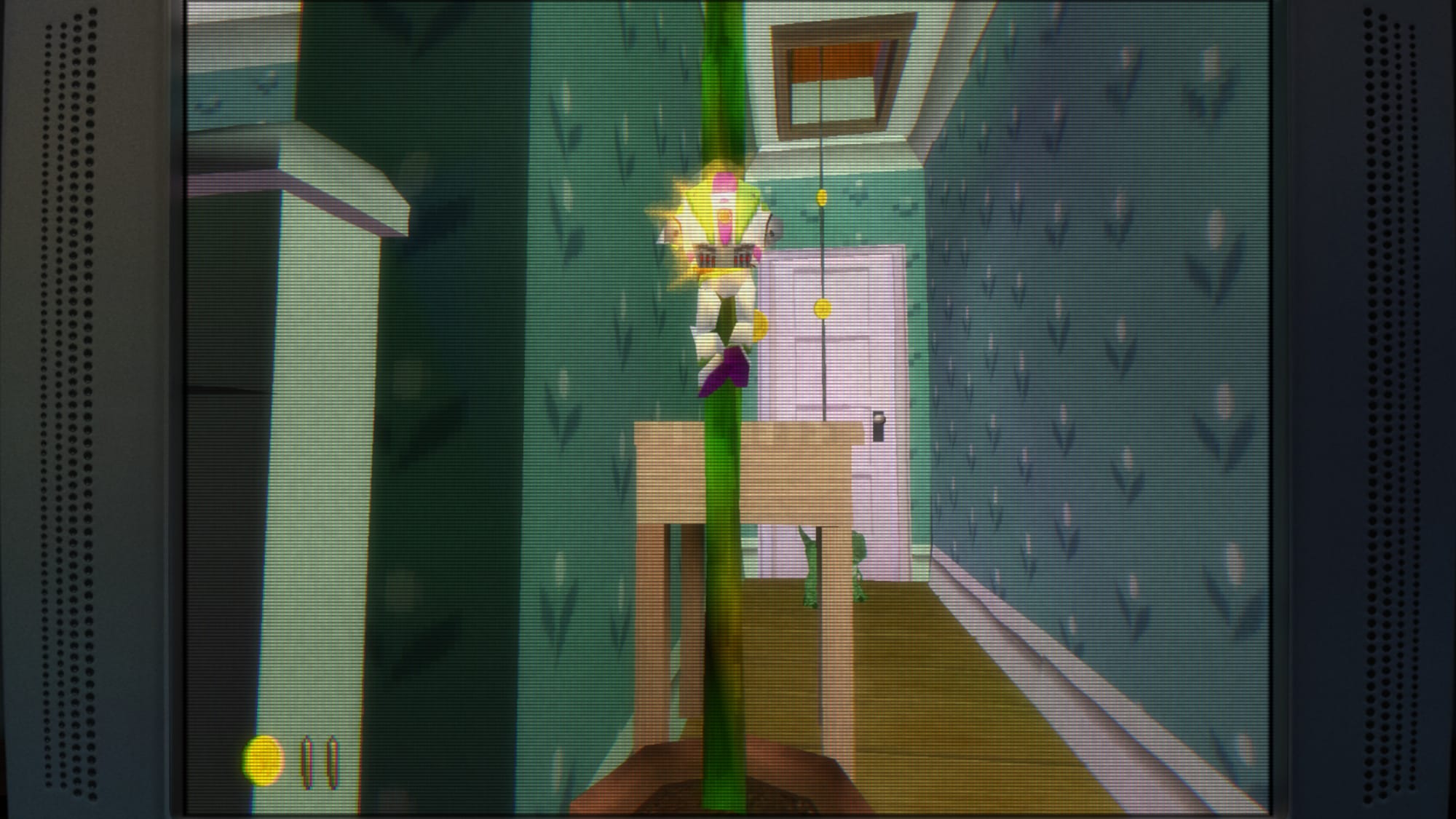
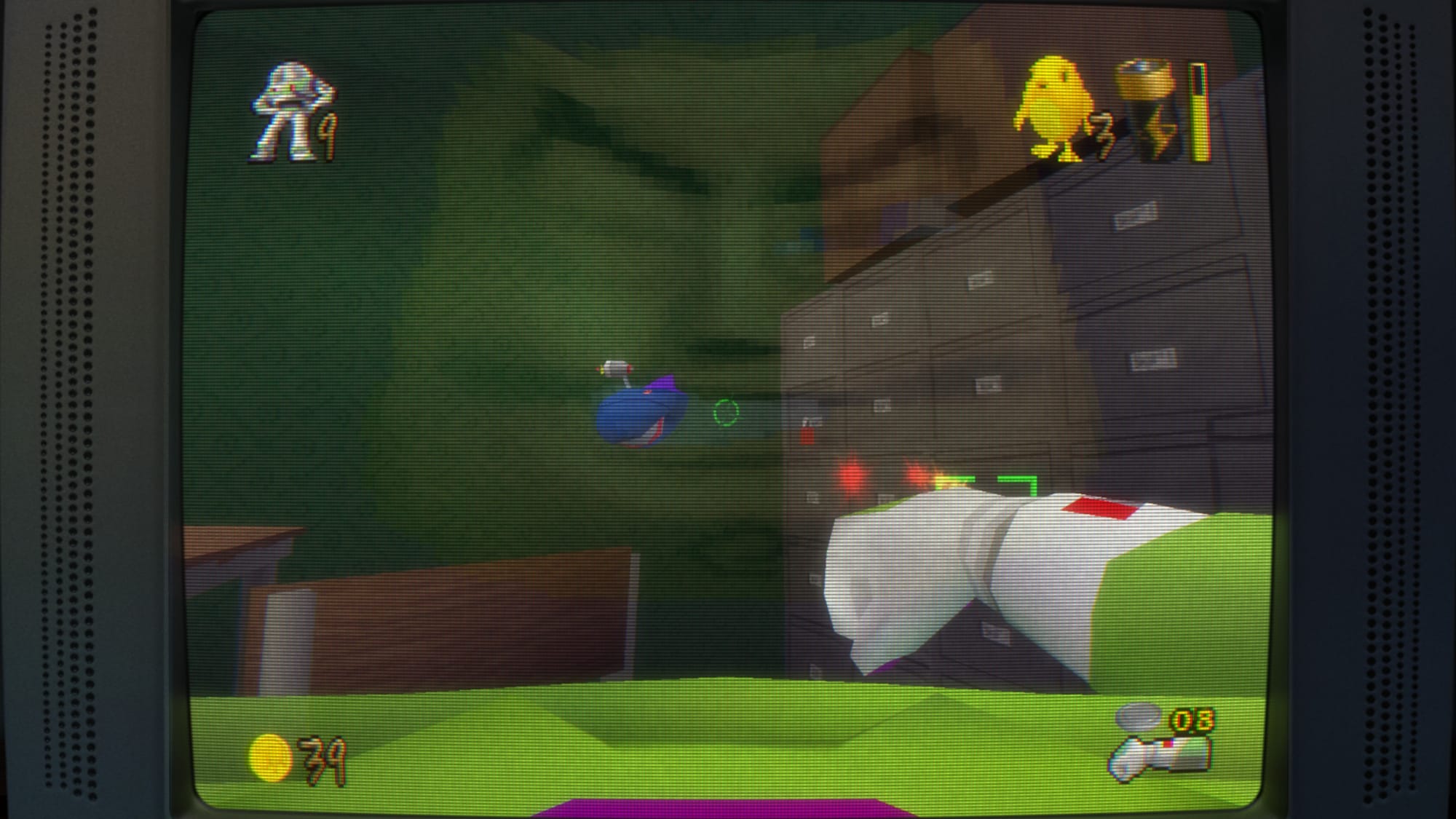
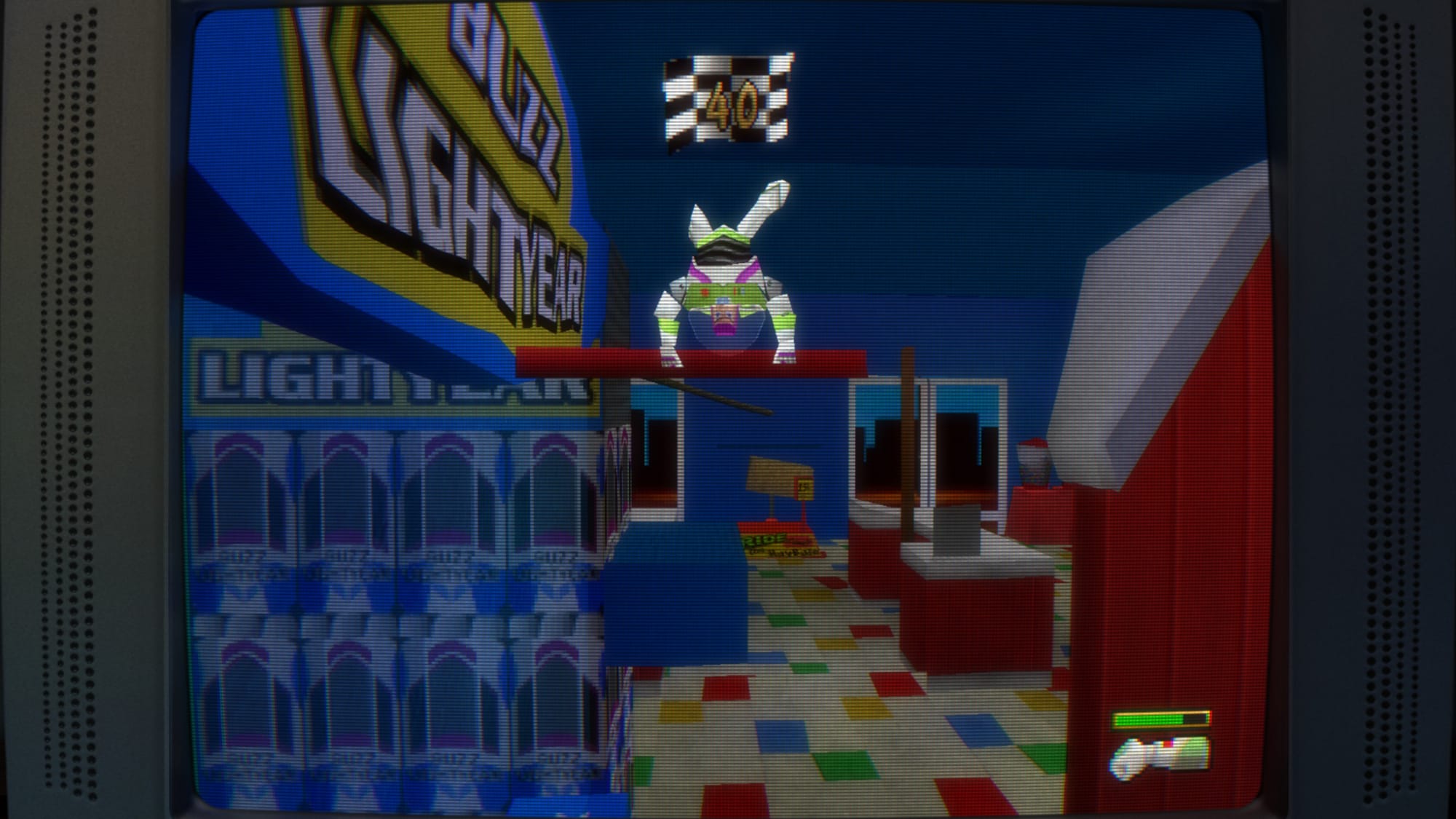
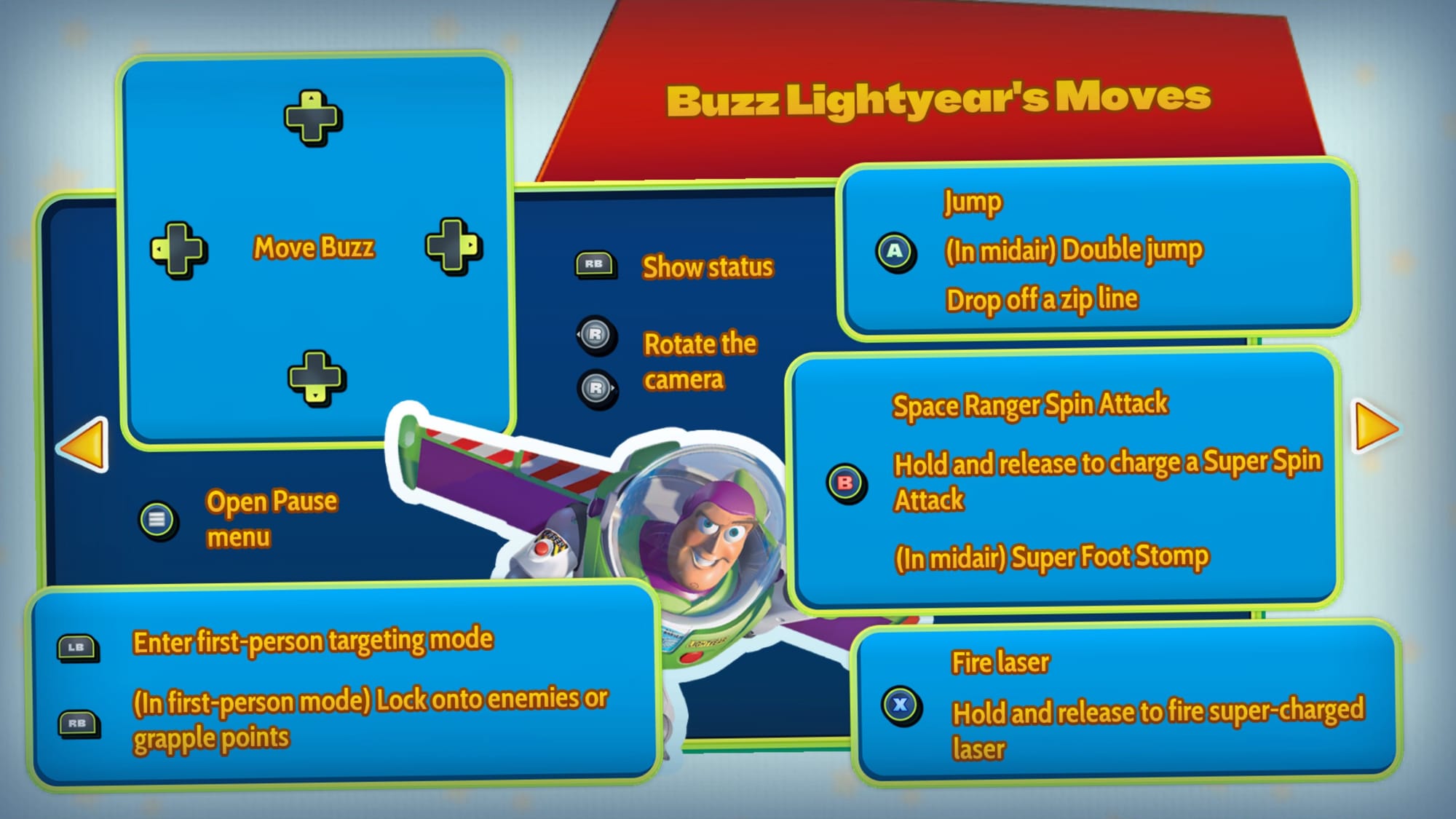
Toy Story 2: Buzz Lightyear to the Rescue!, on the other hand, is another fantastic 3D platformer. Where A Bug’s Life just had you reach the end of a stage, this game is a collectathon through and through. It often eschews the context of the film to create more interesting stages to explore, like the construction site or alleyway. It’s a title I’ve revisited a lot over the years (yes, I have it on PS5 too), so I’m not too surprised at how it holds up.
Your goal in each stage is to collect as many or as few pizza planet tokens as you want, and then move on to the next. You need a certain amount to unlock the next level, but as long as you reach that number, the game really doesn’t care how, leaving you free to pick and choose your objectives. Every level has five objectives you can complete for tokens: collect 50 coins for Ham, find 5 collectible characters scattered around, race against RC, a puzzle, and a boss fight. Some objectives you won’t be able to complete the first time around, as they require power-ups from Mr. Potato Head unlocked in later levels, encouraging you to go back to previous stages.
The game controls pretty well, though I definitely struggled with the camera, as you can’t directly control it in a meaningful way, only moving it behind Buzz or left and right while standing still. Not exactly the context I’d actually want camera control in. You can also look around while in first-person, which is often necessary to shoot things with the laser, but this is inverted. If you want to fix that, you’d have to activate a cheat code, which will disable achievements. That’s pretty frustrating, and I wish there was a separate menu for quality-of-life changes like that. Something like an “enhanced edition” mode would have been awesome too, allowing for true widescreen and modern camera control.
Buzz Lightyear of Star Command
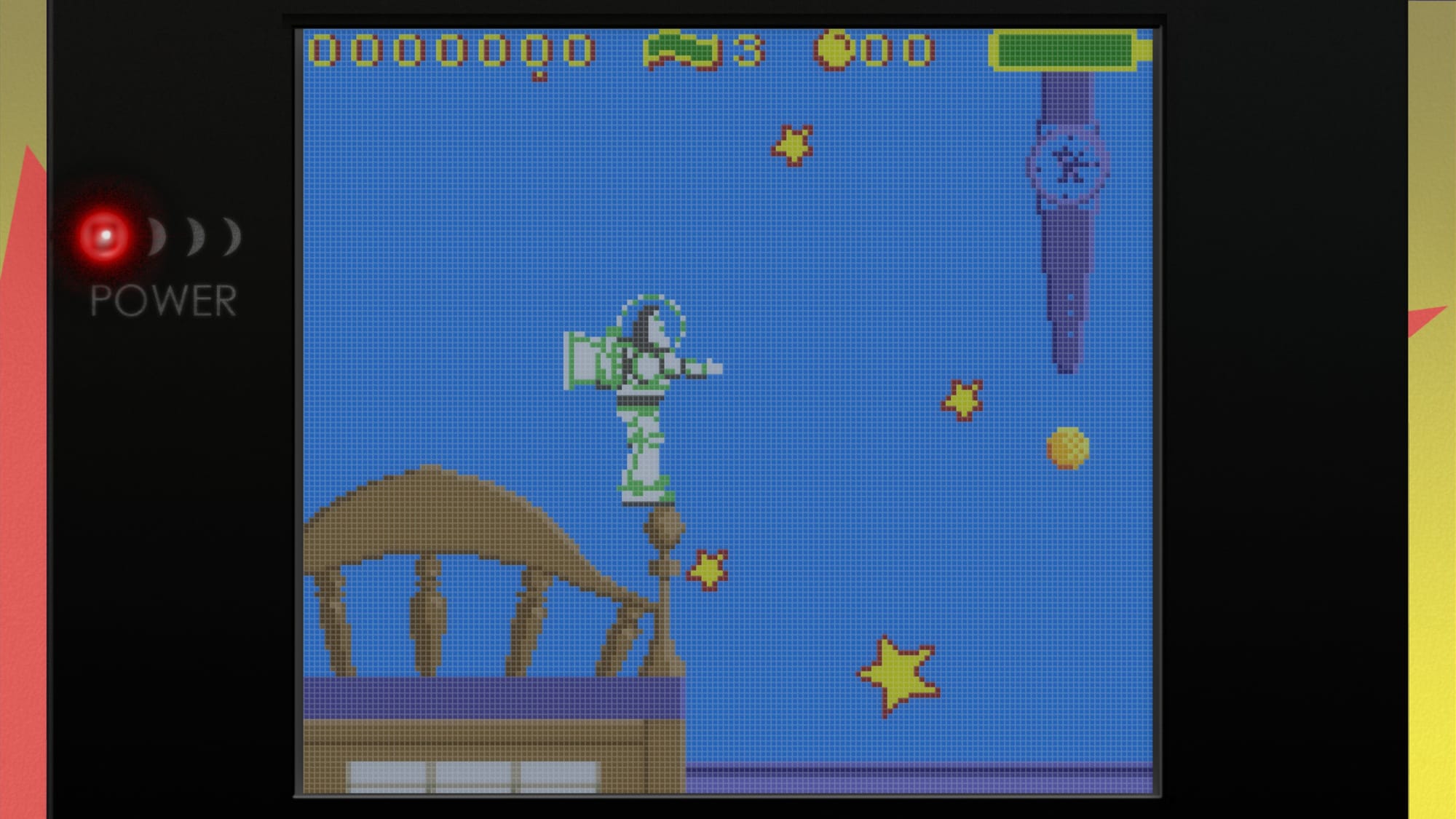
Traveler's Tales handled both the PS1 and GBC versions here, as was the case with pretty much all of these, and I actually prefer the GBC version. It’s partially due to nostalgia, as I had this one as a kid too, but also because I find the gameplay just works a bit better in 2D. Buzz Lightyear of Star Command (based on the real TV show based on the toy based on the fictional TV show) has you racing various villains from the cartoon to the end of stages, where you then fight and capture them.
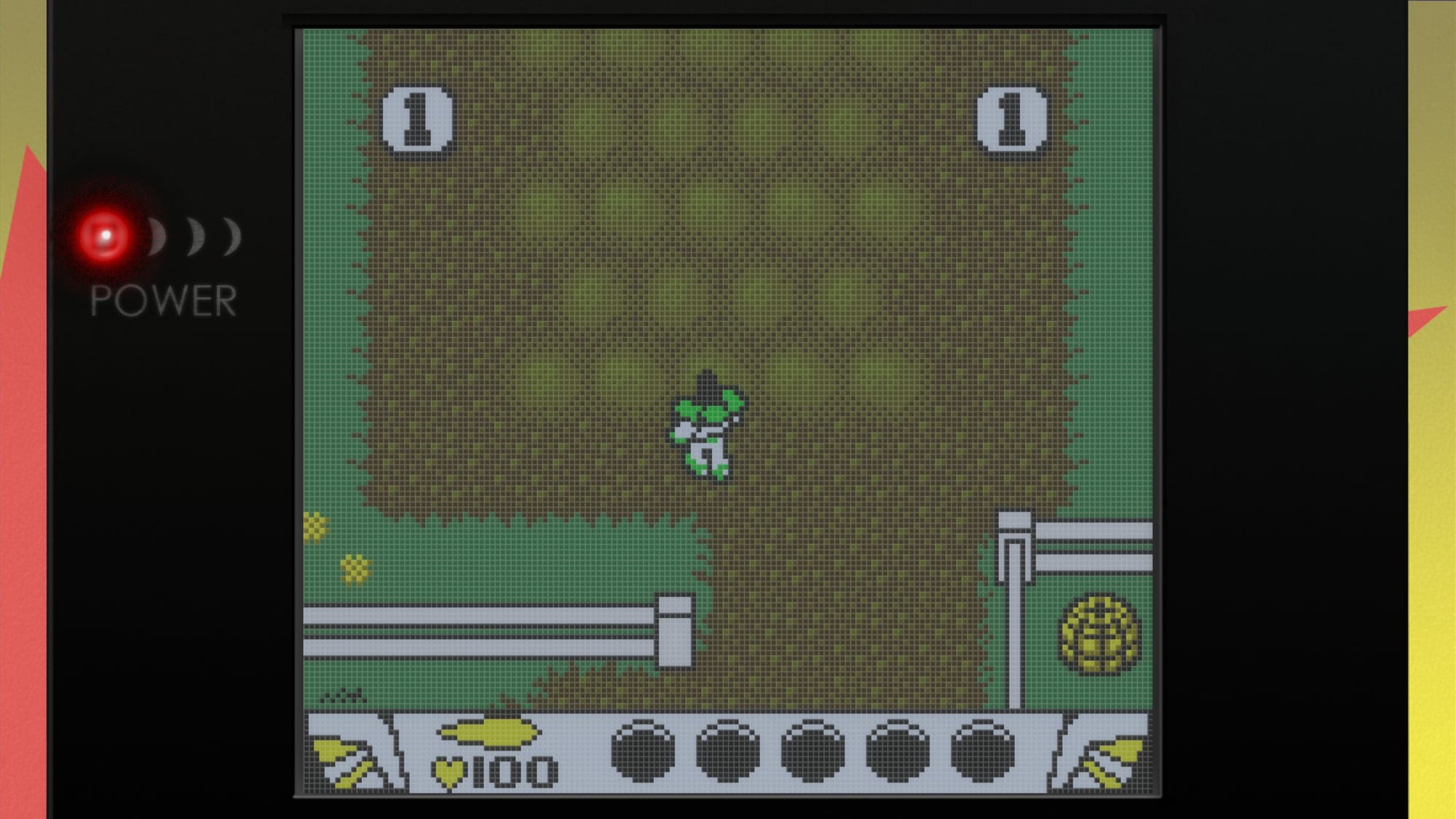
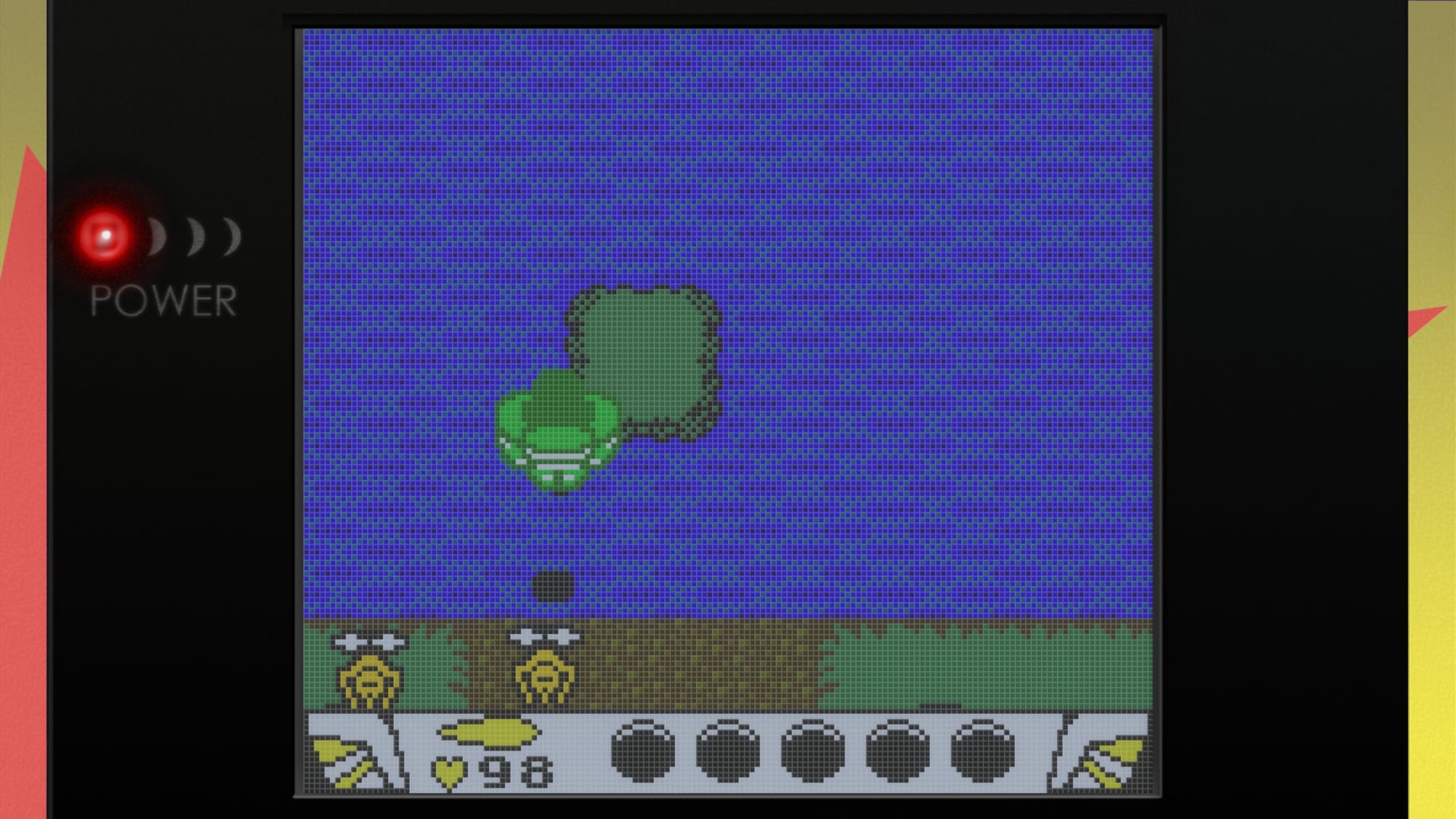
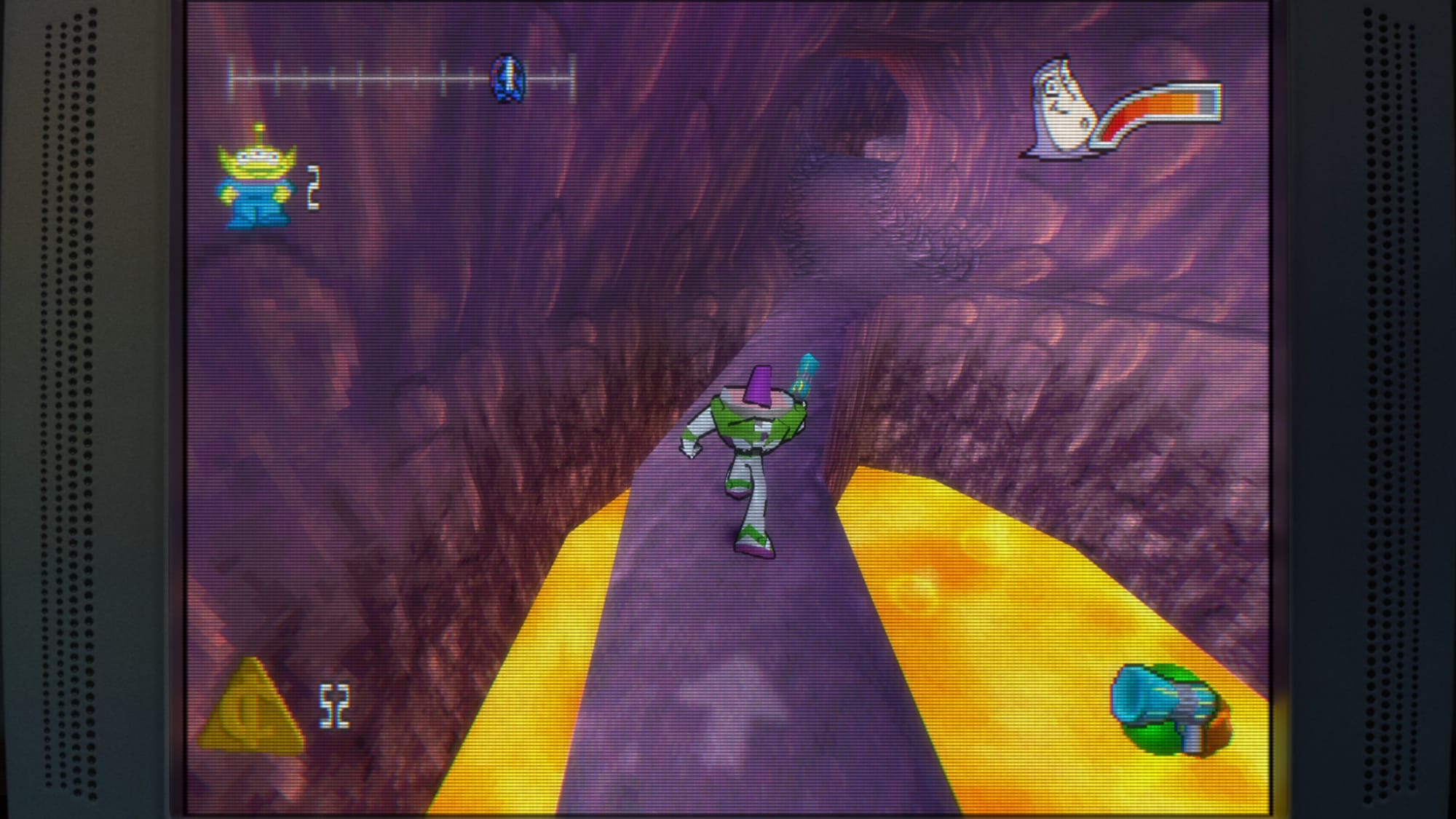
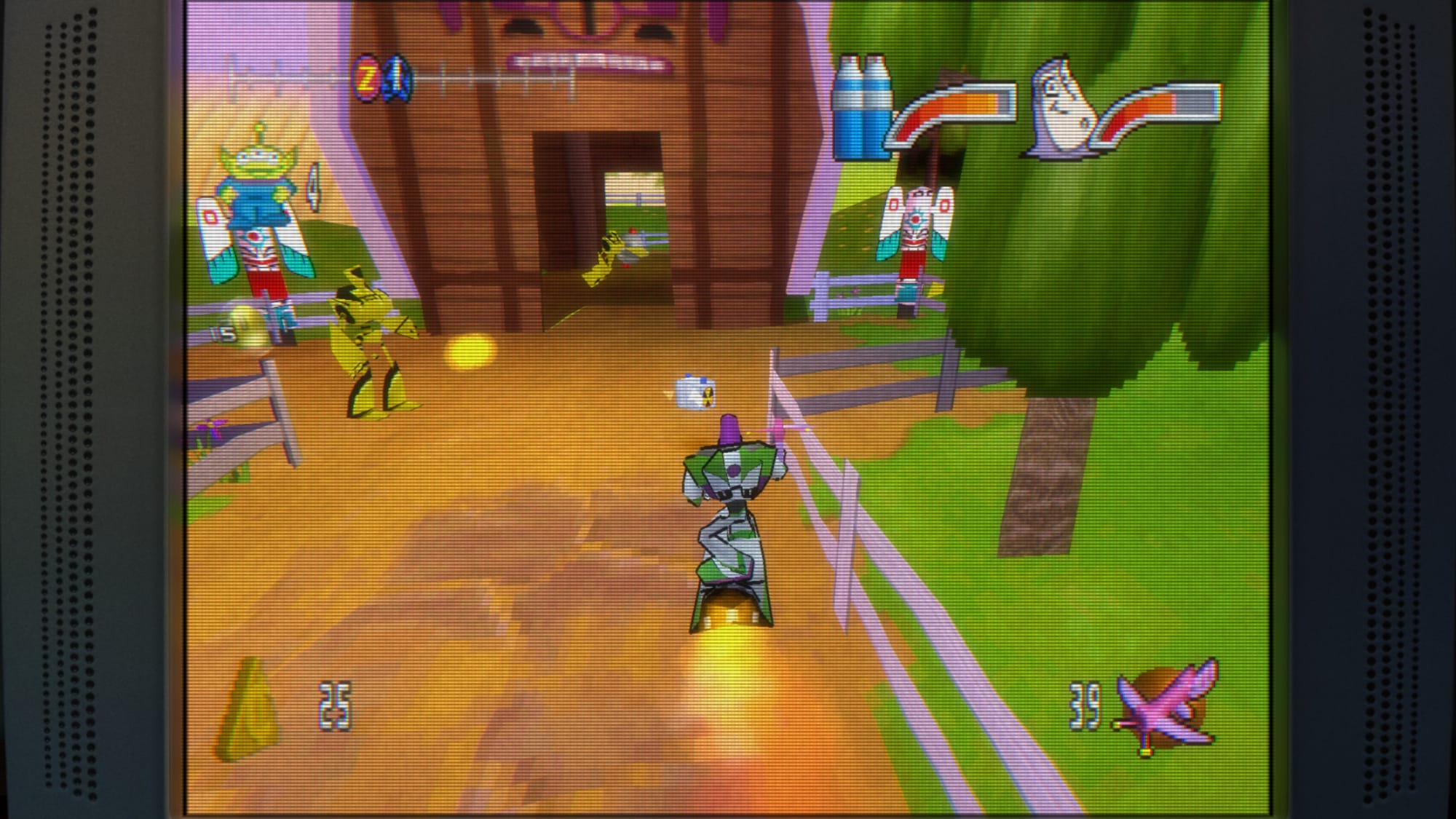
Both versions feel pretty basic, with their premises getting old by the end of the first stage, but the portable incarnation is more fittingly bite-sized. You won’t get clips of the cartoon here, and it controls poorly, but it’s easier to tell what’s going on and feels less frantic. I don’t have a ton to say about either version, so let’s move on to the last game, another childhood game…
Toy Story Racer
Traveler’s Tales created this 2001 cart racer for the PS1, with Tiertex Design Studios returning for the GBC. I played a lot of this on PS1 with my dad, but for some reason I kept deleting my save (probably to make room for another Crash or Spyro playthrough on my memory card), so I never got very far in the single-player mode. Taking this opportunity to remedy that, the solo mode presents you with a large set of challenges for each playable character: Woody, Buzz, RC, and Little Bo Peep initially. Completing challenges will award you with Army Men, which will then unlock further challenges for each character. It’s an interesting way to get you to play every character in a kart racer, rather than just picking one and sticking to them, forcing you to grapple with each of their quirks and strengths.
You won’t just be racing in these challenges either, as quite a few of them are instead focused on the battle mode of sorts, asking you to be the last toy standing. Others will be single races, knockout races with the player in last being eliminated, or a cup of four courses in a row. It’s a competent Mario Kart clone, but doesn’t have too many aspirations beyond that. You can’t drift or anything either, so you’re just holding the gas and turning the whole time. Items don’t really spice it up, with your typical shell, banana, and mushroom equivalents.
The courses also feel pretty basic, though they do have the novelty of driving around them at toy-size. There’s just not a ton going on here, but it’s still a good time even if the game isn’t terribly noteworthy. If you’re looking for a kart racer but don’t want to play Mario Kart, this is a decent alternative.
The Collection itself
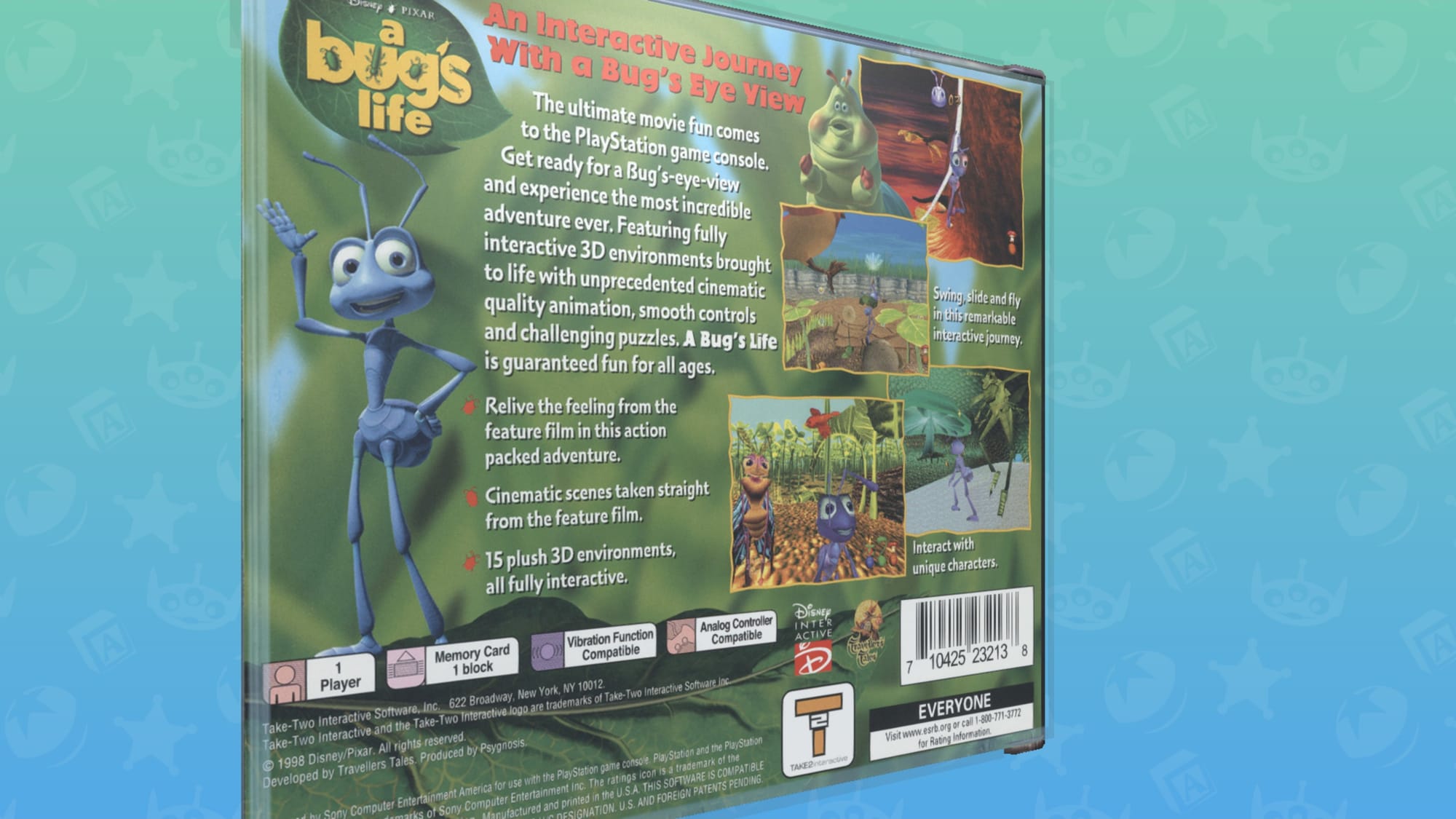
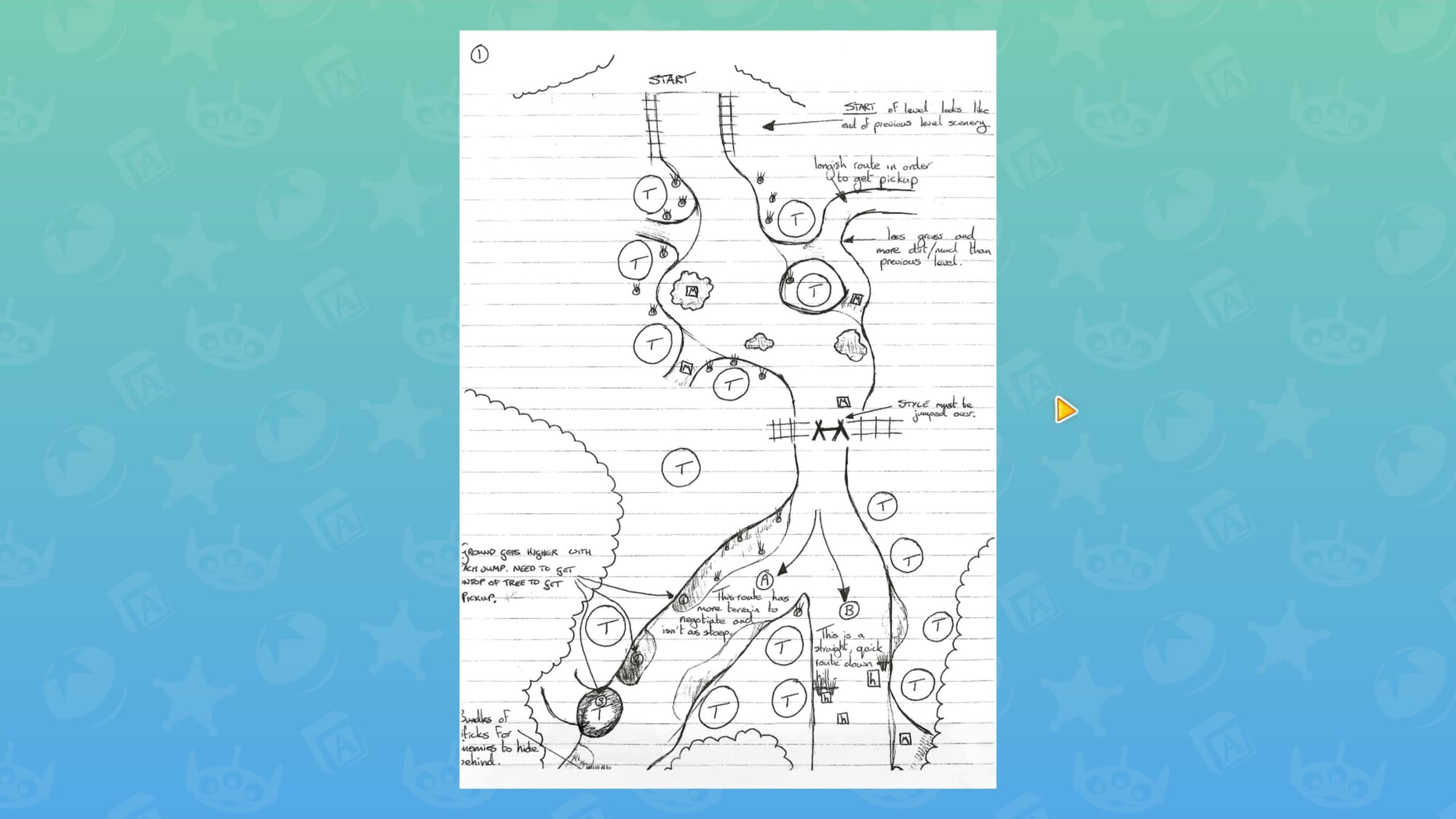
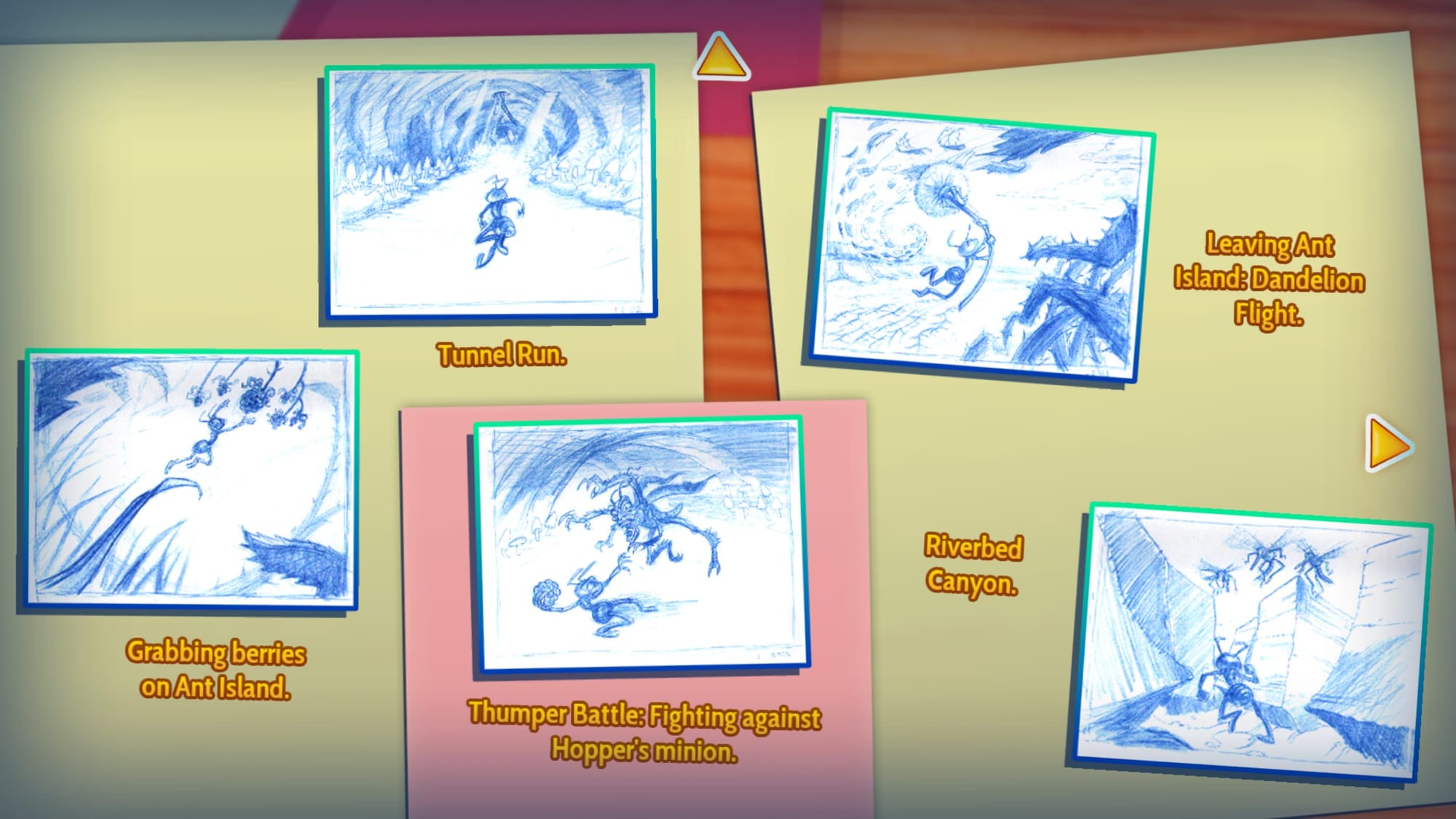
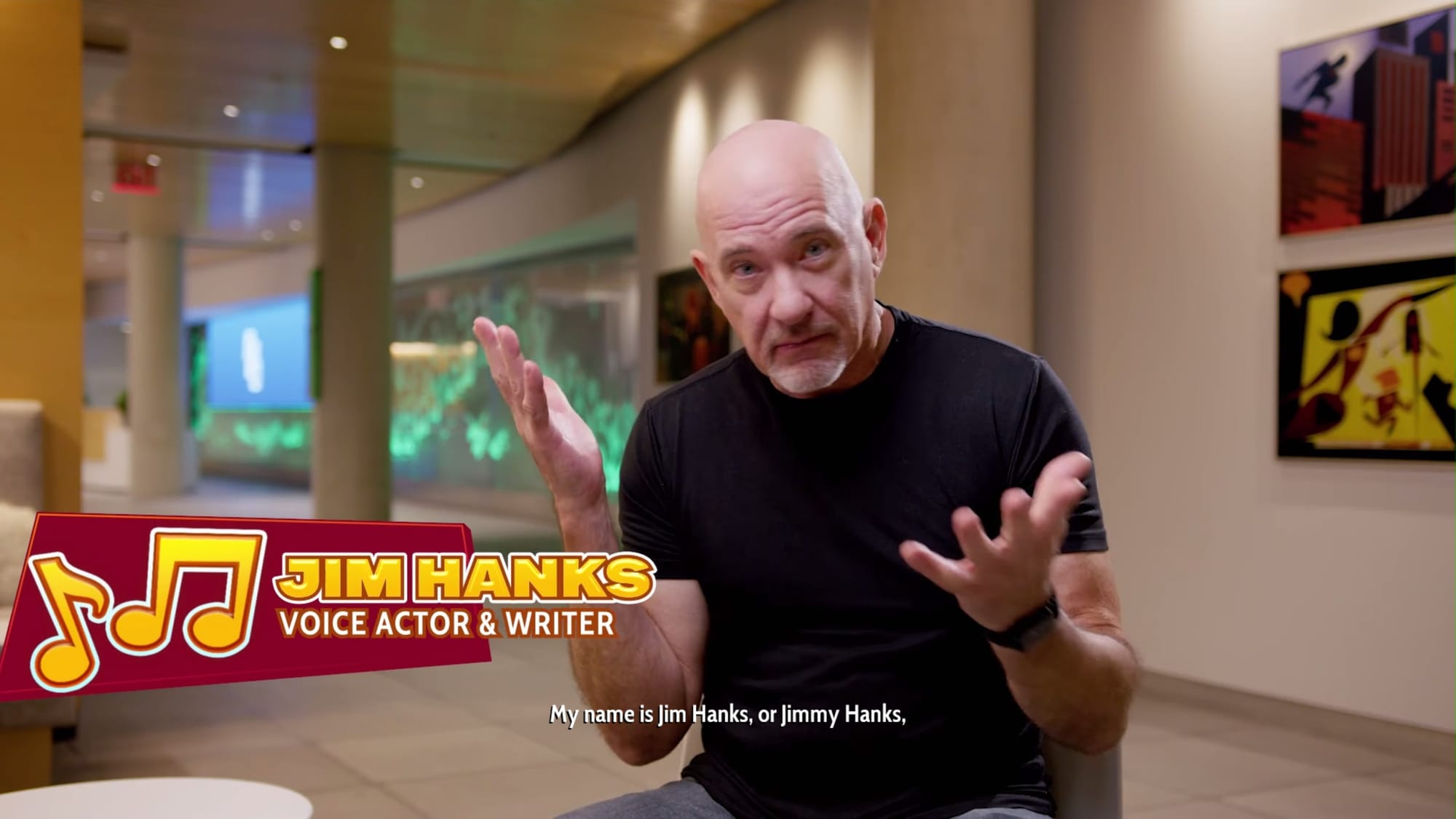
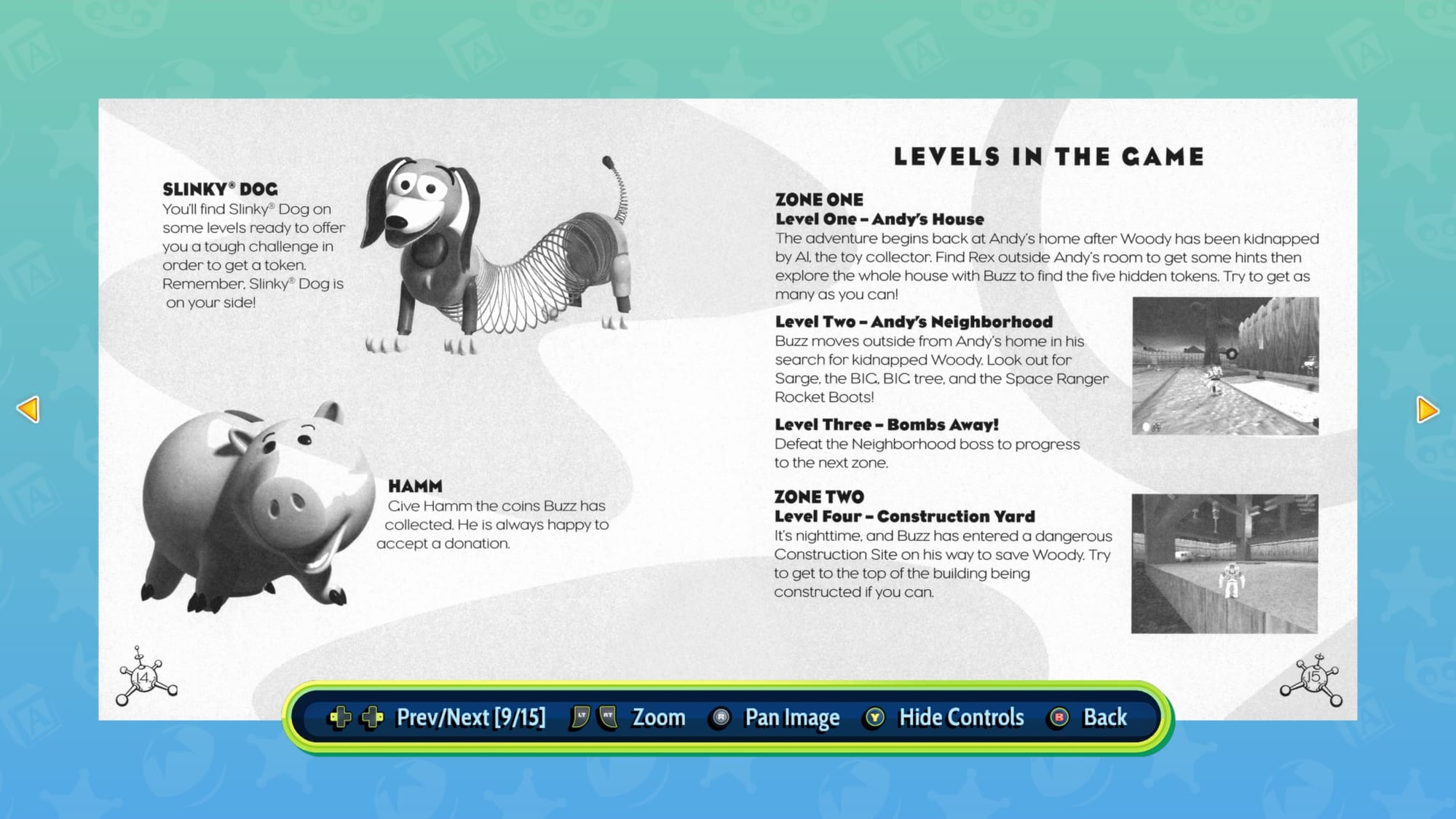
We’ve already discussed some of the bells and whistles surrounding the games, but outside of rewind and visual options, there’s a ton of extra goodies. You can view the box art for most of the games rendered in 3D, read their manuals, check out design documents like level mockups and concept art, and even watch some interviews with developers at Digital Eclipse and Traveler’s Tales or a chat with Jim Hanks, who voices Woody in pretty much everything but the films. They’re all fascinating to watch, particularly if you’re into game development or history. For example, apparently Toy Story was developed in just 7 months and had a level editor within the game itself for faster development. The videos also have a lot of fun visuals and background easter eggs, including a keyblade and some Mickey statues.
Finally, there’s the music player, where you can listen to tunes from all the games, their different versions, and even some new tracks specifically for Retro Roundup!. The soundtracks to all of these titles, even the GBC games, are phenomenal, so it’s very much worth your time to give them a listen. My favorites are, of course, A Bug’s Life (“Welcome To Ant Island”) and Toy Story 2(“Andy’s Neighborhood”) on the PS1. The former for its use of wind instruments and the latter for the incredible drums, but again they’re all great.
Disney/Pixar Toy Story: Retro Roundup!
Excellent
Disney/Pixar Toy Story: Retro Roundup! is one of the best retro collections out there. It lavishly presents each title like it's the holy grail, offering insight into every title’s development, technical achievements and failures, and offers convenient ways to play them. Even outside of nostalgia, it’s well worth digging these old games out of the toy box.
Pros
- Amazing presentation
- Tons of extras
- Quality of life features and cheats for each title
- Several fantastic games and all their different versions
Cons
- Some cheats really shouldn’t disable achievements
- A few more modern enhancements would have been nice
This review is based on an early PC copy provided by the publisher. Disney/Pixar Toy Story: Retro Roundup! comes out on October 15, 2026.