Borderlands 4 Story Pack 2 launches September 10, and it will feature an intriguing Vault Hunter named Loveless. She fits the assassin archetype that we haven't seen since Zer0 in Borderlands 2. You'll find some similarities—cloaking and melee concepts, for example—but she has her own unmistakable distinctions that players will likely enjoy.
Loveless formerly worked for Anshin, a manufacturer known for their rapid-regen shield technology and transfusion grenades. They've been around since the first Borderlands, but we've hardly gotten any details about them compared to some of the higher profile manufacturers like Dahl, Hyperion, Torgue, Atlas, and Maliwan. In my interview with Gearbox, they mentioned we will learn more about Loveless and her ties with Anshin, and her motivations as we play the game and discover the various lore books.
But my time with the development team was mostly focused around Loveless the Vault Hunter—abilities, skill trees, playstyles, etc. Loveless was birthed from trying to do something new, something players hadn't experienced before. Players have experienced an Assassin-type before, but not quite like Loveless.
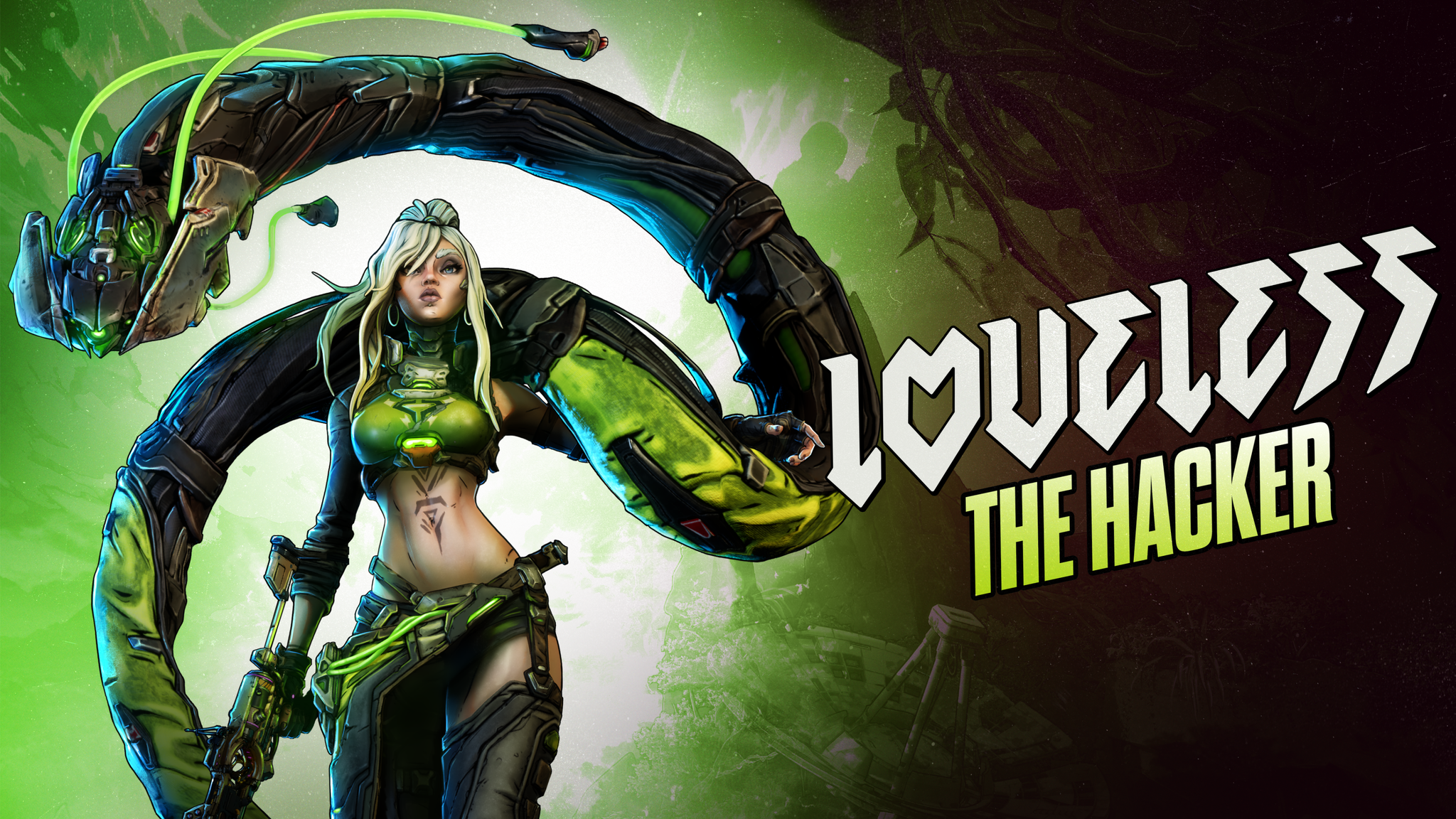
Who is Loveless?
"I always like to look at the things that we didn't do in the previous characters," says Nicholas Thurston, the character design director, "things that players haven't seen before, or find new and unique opportunities to kind of speak to something that's in the universe that we haven't really touched on before."
He continues: "Loveless is really our love letter to kind of the player who wants to find the Assassin archetype that was notably kind of missing—the going in and out of the shadows, sneaking around, being very precise, being a killer. But we also haven't really done, like, a pure hacking character before. Usually things that we do are usually very physical in nature, and we really kind of wanted to explore the higher technology of the universe and what that kind of means."
Gearbox describes her as a cyber-assassin that Anshin used to do their bidding, as a manufacturer that's stayed away from weapon manufacturing. Based on what Gearbox said—and I'm spitballing here—it sounds like Loveless was their weapon. "They're historically not a weapons manufacturer, they've always been, like, shields, and, like, random bits and bobs, and they have a very, like, Asian-inspired influence, and we kind of wanted to explore that a little bit [with Loveless]."
Loveless looks the way she does because she underwent an unauthorized cybernetic integration, fusing her neural pathways with a sentient biological virus. The team wanted to clarify this virus is an important part of her abilities, but it is not a pet like Mr. Chew is to FL4K or Bloodwing to Mordecai. This virus is an extension of Loveless. But this fusion was Loveless's idea to save the planet.
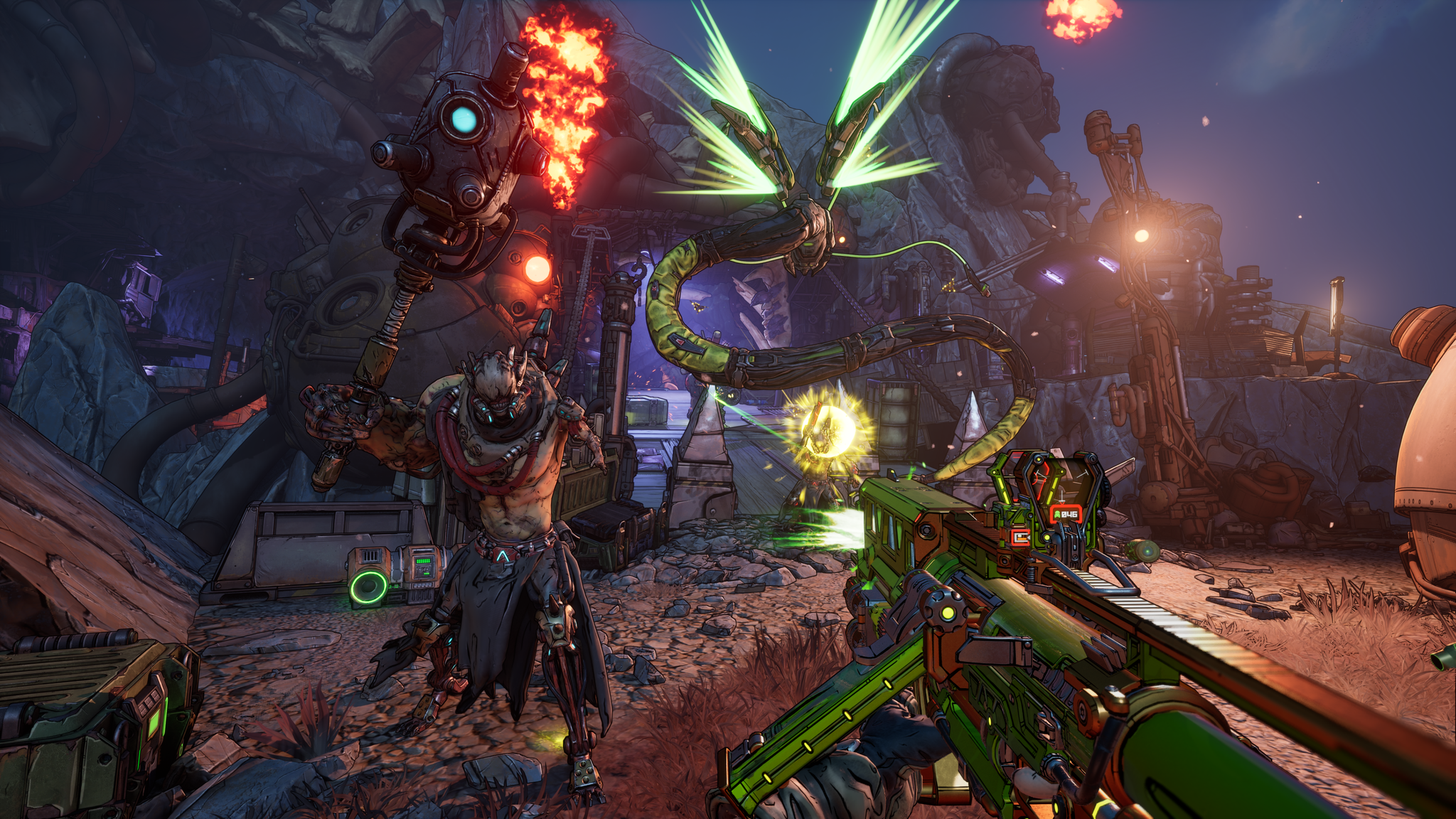
"[Anshin wanted to] kind of explore, like, bio-weaponry, and exploring, like, you know, weaponizing their technology," Thurston explains. "This, of course, did not end well, and the virus ended up, causing a lot of mayhem, and potentially even threatened the planet that it was created on. So, Loveless basically made a large sacrifice and decided to assimilate the virus into her own being, into an attempt to contain the threat."
"So the person who Loveless was is now only half the person that Loveless is now. They are now an assimilated we. A lot of the dialogue that you'll hear is Loveless saying, we think, and we posit, and stuff like that. It's very cold, very calculating, and as a result, her personality has shifted, and she feels like she's superior to everyone else. She's the one who can bring order to the chaos that she sees around her."
It's undeniable this kind of lore deepens my intrigue with who Loveless is, was, and what kind of corporation Anshin really is and what their aims are for dominance.
Loveless' Skills
Before the team delved too far into any more lore, leaving me sufficiently teased, we pivoted to Loveless' action skills and her tree. Game Designer, Ryan Bailey, guided me through the broad idea of what the team is hoping to achieve with her skills.
"We wanted to tie in as many tech or computer-related things as possible. You'll see them all throughout her various skills, but including her trait, which is RAM, it speaks to the two things that Loveless wants to do the most, which are get critical hits and apply status effects. She's very good at both of those things."
When Loveless lands critical hits or status effects, her RAM bar fills up. Once it's filled, her Melee becomes Empowered, which greatly increases her melee damage and consumes all RAM. Loveless also gains increased gun damage the more her RAM bar is filled.
I've always loved the dance between abilities that power something after use or not using to gain power somewhere else, so it's good to see Gearbox continue to explore that concept here. But what makes this interesting is that you can't be passive as RAM is lost when you haven't landed a crit or status effect after some time. Anyone who's played Borderlands long enough knows that could probably be altered with different traits on the skill tree, and likely near the endcap, she'll likely have lots of ways to increase her crit hit chance and/or status effect chance. But she has action skills that can help her with that.
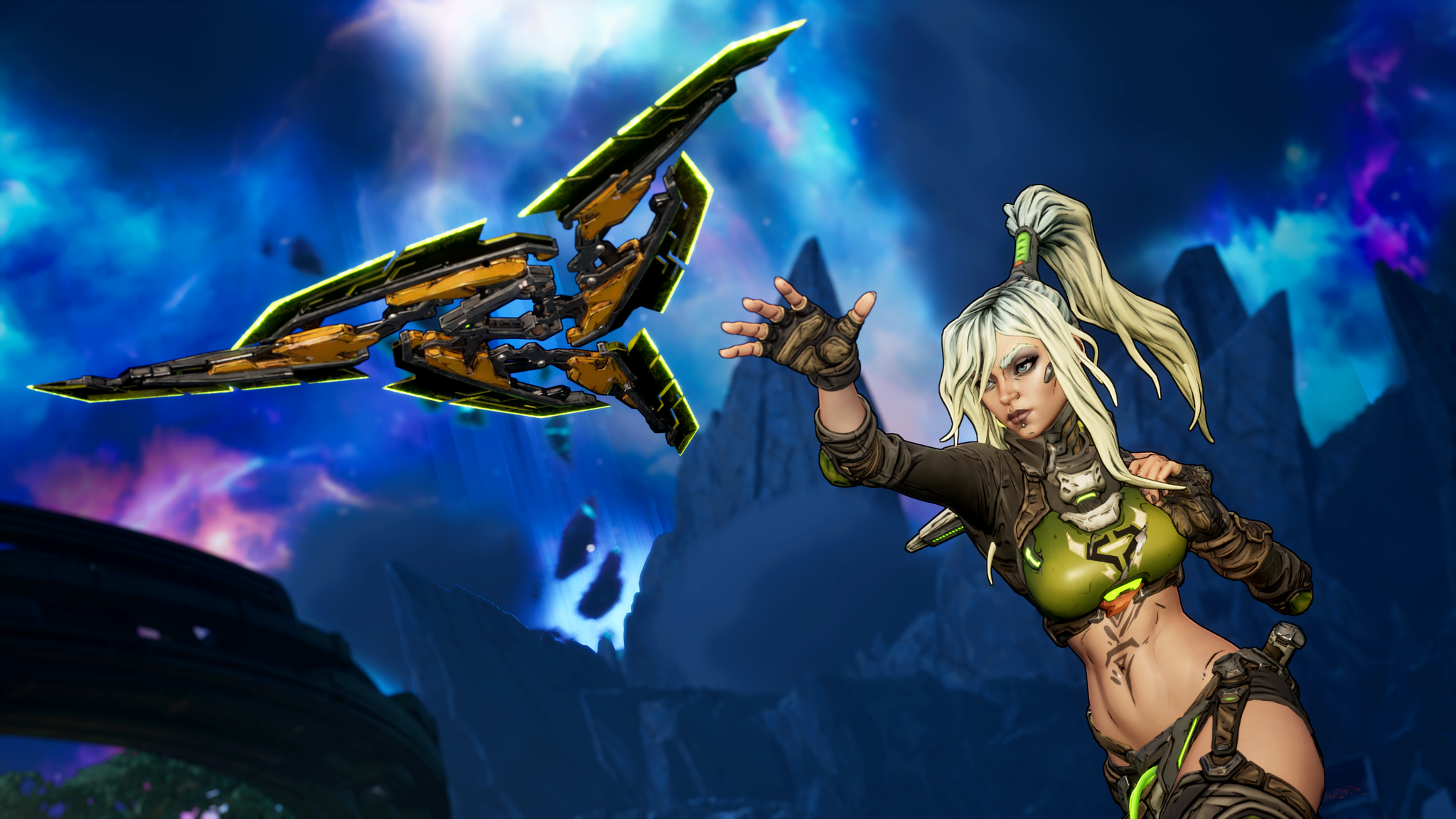
"Plague Star is kind of the one-stop shop for, like, what Loveless and her backstory really speak to," Bailey explains. "It's using a physical, ancient tool, and this oversized shuriken, to deliver a specialized virus or status effect, when it comes to gameplay terms. So, she throws this oversized shuriken, and anyone who gets hit by it is inflicted with a status effect we call Contagion. You can stack Contagion many times on enemies. And if an enemy that has Contagion dies, that will spread to nearby enemies."
It's a crowd-control player's dream ability, but it can also work well on tankier enemies because of how high it can stack. "If you can, you know, clear all the little guys when they're infected, and all of a sudden the badass at the end might have 5, 10, 15 stacks of this contagion status effect, and it can really eat away at their health really quickly," Ryan says.
He goes on to explain some of the thinking behind her next ability. "To speak more to the assassin fantasy and her optionality, you know, when it came to designing something for a hacker who isn't going to be actually sitting down at a computer at any point during the game, it felt to me like having lots of ways to accomplish the task felt very much in line with what a hacker needs to do. You know, have many ways to attack many different types of defenses, and Visual Paradox Nexus, or her VPN that she activates whenever she doesn't want other people to see her, necessarily, really speaks to that."
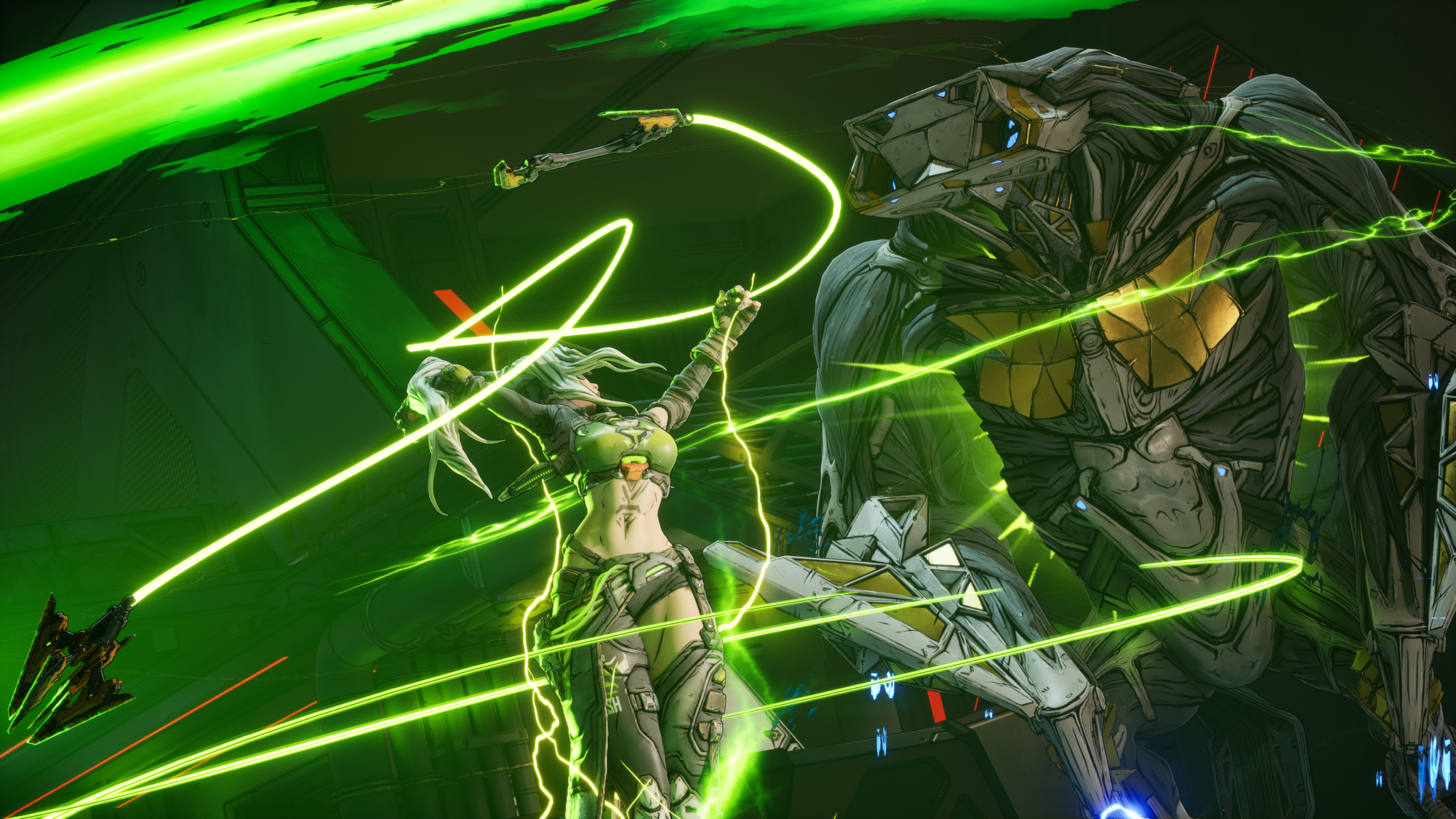
Visual Paradox Nexus grants Loveless Stealth and allows the use of her signature Kusarigama to slash enemies. "You can use her signature Kusarigama pretty frequently during this duration-based action skill, where she gets a lot of movement speed and critical damage. If she kills an enemy while VPN is active, she'll poof into a very short-duration stealth and spawn a clone of herself where the enemy was killed."
"Fighting against the Loveless while VPN is active is extremely disorienting for enemies, because she's popping in and out of vision, versions of her despawning and spawning kind of all over the place, and it really kind of brings that all-offense type of feeling, that feels really cool."
VPN is meant to be an adaptable-playstyle skill, too. It can be melee-focused using the Kusarigama and there's a skill tree path that benefits a sniper build.
Now, what about this wyrm? This virus? That, too, is an action skill. Gabriel Vezina, Senior Game Designer, specifically worked on this action skill, bringing it to life and making it work along with the Loveless character model. He wasn't able to join the conversation, unfortunately, but everyone on the call wanted to make it known that they're very excited for people to use this action skill because of his work.
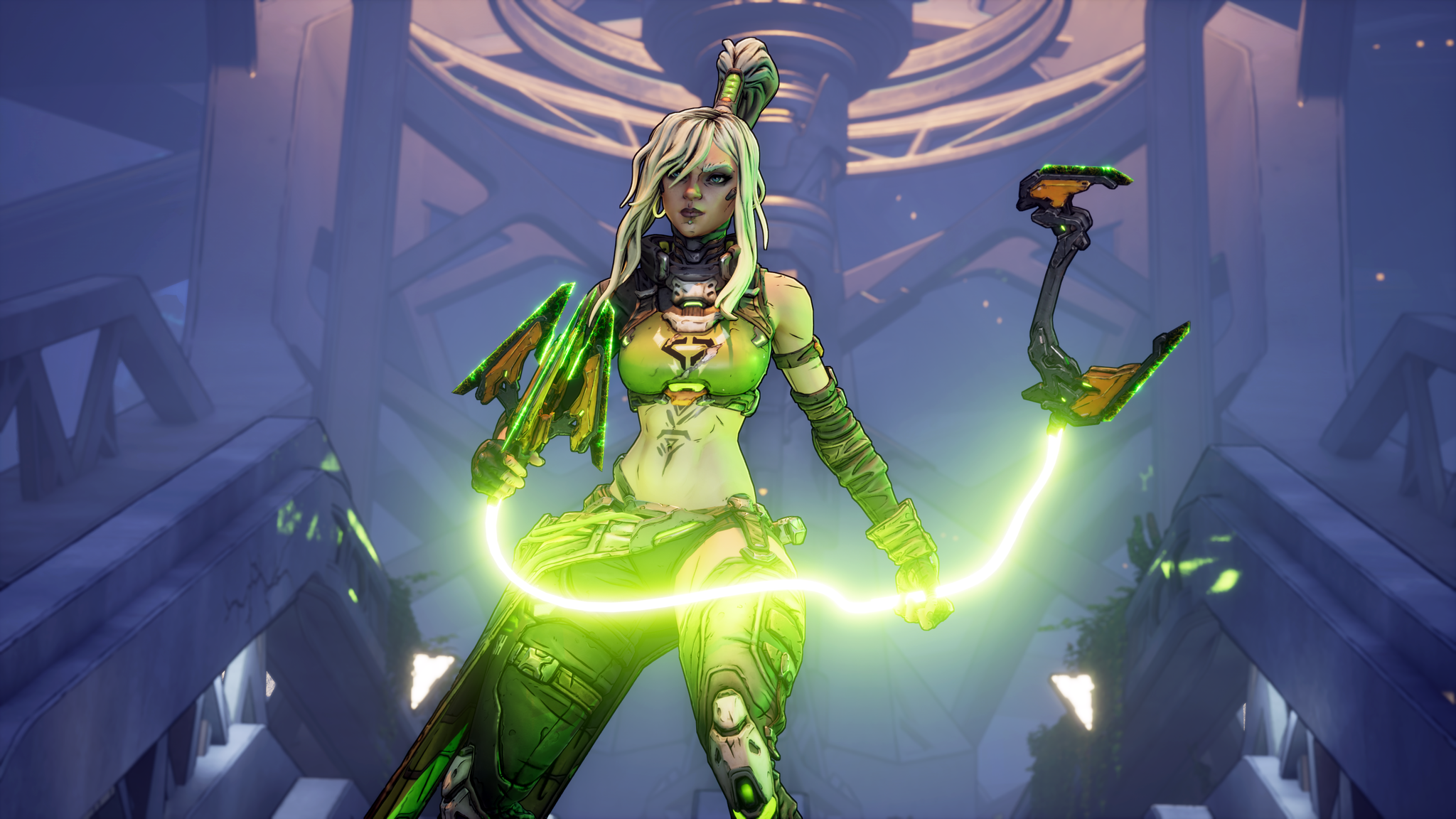
Ryan explains how to many players it will likely feel like a pet, but it's not meant to be. "The wyrm is certainly the most micromanagement-heavy pet to date. And in order to get the most out of it, you really need to be giving it multiple different commands—we call them Functions and Executables—that you tell it to do, and and you can do a lot of great things that both empower the wyrm, but also Loveless at the same time to, again, reinforce that idea that it isn't Loveless and her wyrm, they are both the same entity, just manifested in different ways."
The action skill is called Malignant Construct. The card reads "Loveless manifests a digital Wyrm that attacks her enemies for a Duration. Can be commanded to perform a devastating Breath Attack." In some ways it sounds like a typical pet kind of command-and-perform interaction, and they weren't able to expound more on the wyrm, but I'm looking forward to seeing how the Functions and Executables interactions create different dynamics.