It's the year of our lord 2026, if you haven't played a deckbuilder with a board, what are you doing with your life? There's Tyrants of the Underdark, Trains, Clank!, Arnak, and Dune: Imperium, which was so popular it got a second edition (I personally prefer the scarcity of the expansionless first edition, but that's neither here nor there). Point being, there's a glut of options if you're looking to pick one up. So if you're wondering what makes Tea Garden worth looking at, well, it does a good job of integrating the highlights from other titles, like Arnak's twelve things to do and Dune's tight resource management. But mostly, it has an immediacy that throws everything you thought you knew about the genre on its head.
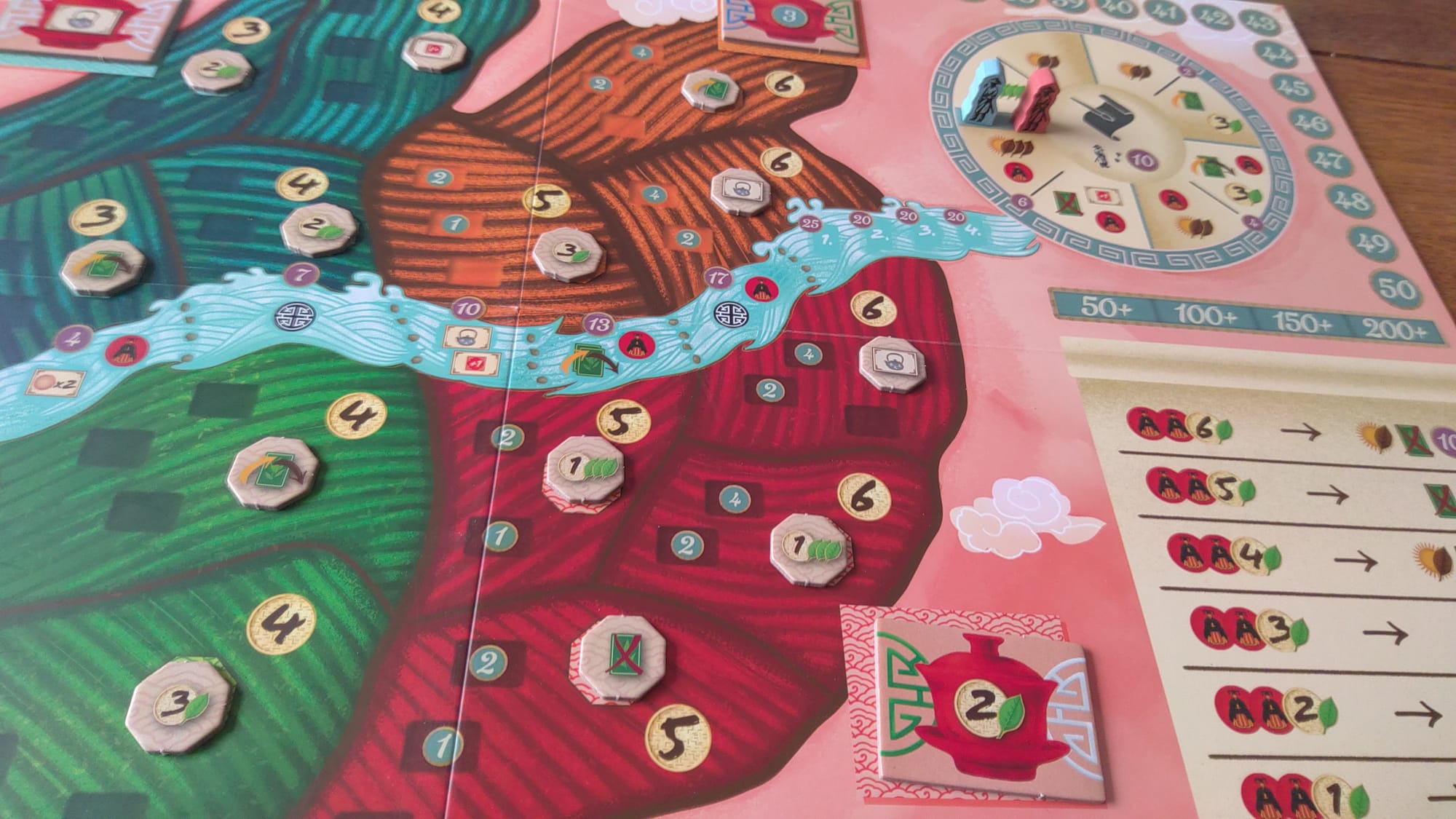
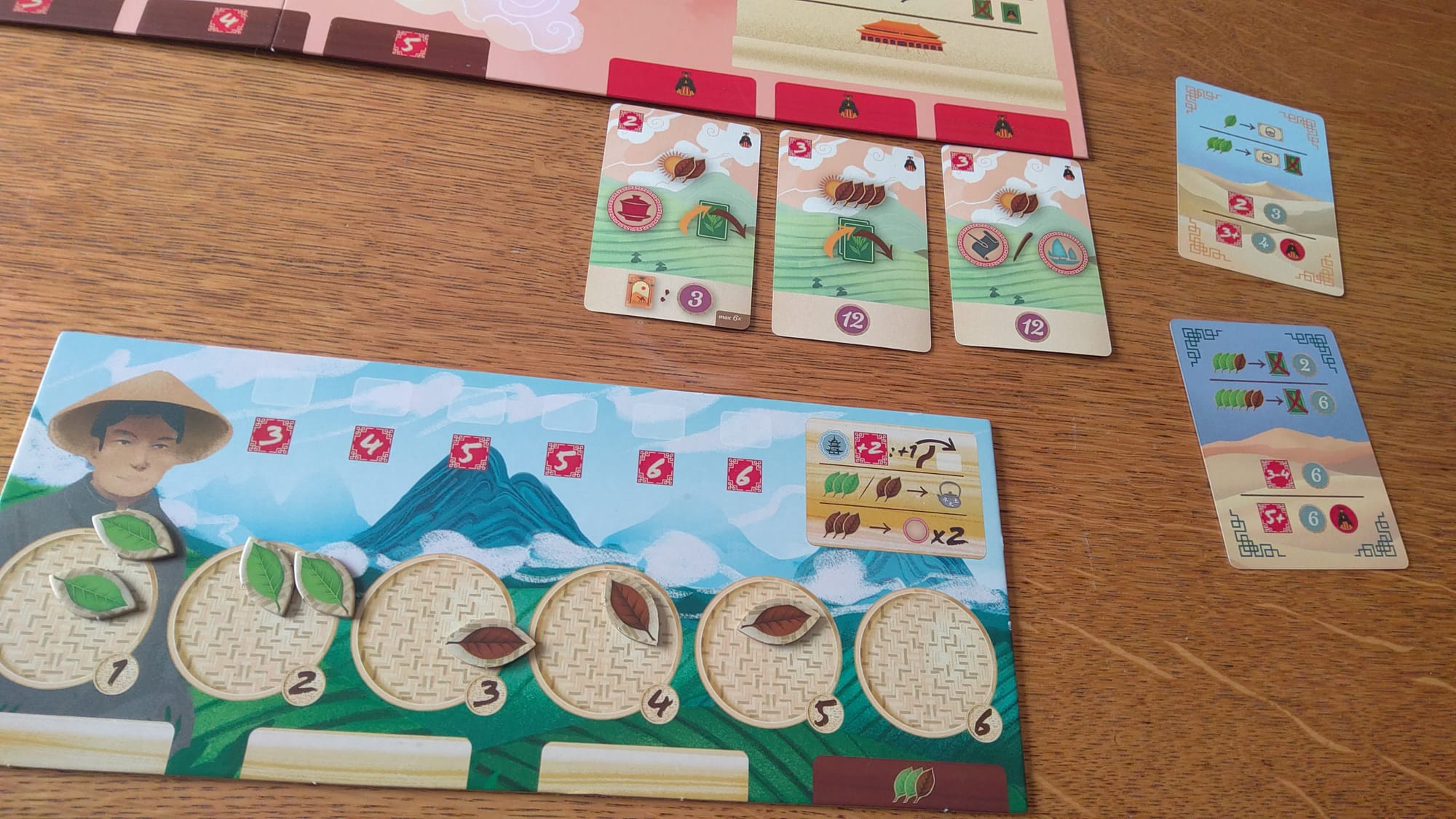
Which is funny, because a rough outline of Tea Garden doesn't sound too different from general genre fare. Get tea leaves from the gardens you build, use those leaves to buy cards from the rotating market, and use those cards to do things on the board, like build more gardens. Or buy more cards. Everything you do gives you points, so the real trick is keeping the cycle going as long and strong as you can, like having a pot of coffee constantly brewing to fuel an all-nighter. That metaphor wasn't perfect, but you get the idea. And all that would amount to a compelling enough gameplay loop to justify Tea Garden's existence, but after playing enough to actually sit and digest what the game's mechanics are actually providing, I realized that the cards are less deckbuilding mechanic components and more randomized action upgrades. Sure, you can make that argument about all the games in this subgenre to some extent, but I never got stuck looking at one of them that way like I did with this one, where it lets the game carve out an actual niche instead of just being a middling euro deckbuilder on a board. Playing it again after that reframing gave it more of a streamlined, less interactive Pfister feel that made me happy to make room for it on my shelves, and what more can we ask from a game but that it assert its right to exist in our collections?
Tea Garden
Great
Tea Garden is a beautiful ramping points-salad that hits the sweet spot between crunch and brevity.
Pros
- A little over an hour feels like the right playtime for these light-middleweight games
- I know I've played deckbuilders where purchased cards go straight to your hand before, but it feels particularly good here
Cons
- Do you like to parse which mechanics gives the best investment:reward ratio? Because the game will tell you that's more important than engaging in the mechanics you actually enjoy
- There's an awful lot of setup and tear-down for a game in this weight class
This review is based on a retail copy provided by the publisher.