I was able to play through part of a demo of First Giants at Pax Unplugged (which you can watch here) along with our Editor in Chief, Mike Dunn. I really enjoyed it then and was annoyed that I’d have to wait several months before I could get my hands on it again. But it’s finally here! First Giants has very light rules that still allow players to make meaningful decisions as they collect cards for their abilities before turning them into sets for scoring, and it’s just as good as I remember.
Rules & Components
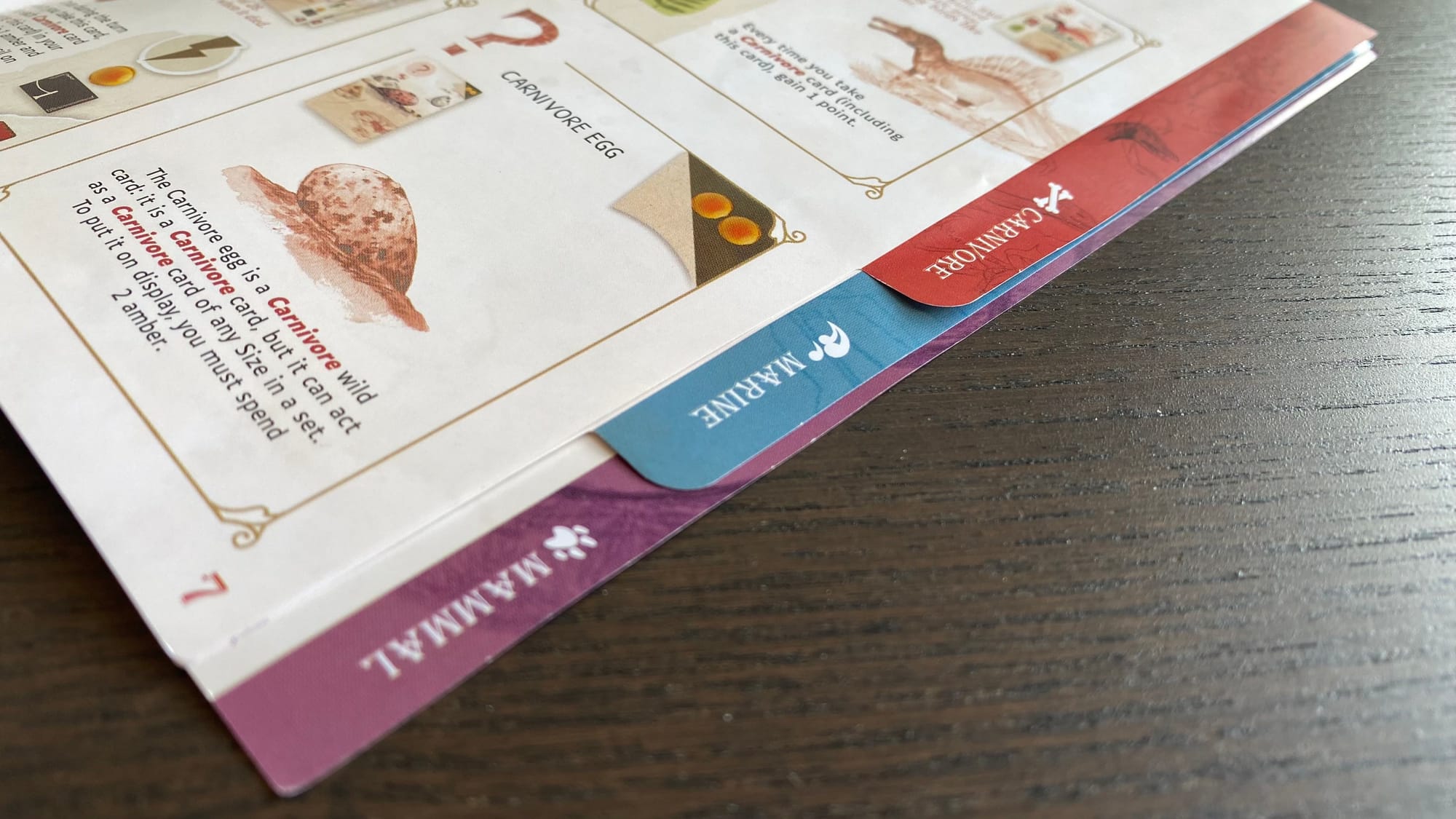
The rules are super simple and are laid out well in the rulebook. First Giants takes about a minute to teach and only slightly longer to read the rules for the first time. Part of this is because of the separate appendix detailing all the different card abilities. It even has physical tabs! I pass this to new players who aren’t quite familiar with the iconography—the icons aren’t complex, but it can be easier for players to simply look them up rather than ask about them. Plus, the appendix includes archeological facts about the fossils represented on the cards, which is always fun. While I do sorta wish that the factoids were included on the cards as flavor text, I understand that this approach means that all the text in the game is confined to the rules and the appendix, making translation for other languages much easier.
The game's components are great. There’s decently thick cardboard for the Dig Sites, player boards, and scoring components. The cards have a nice linen finish and some pretty watercolor sketches of the prehistoric beasts. The style feels like something you’d find in a field journal of someone studying the various creatures in their natural habitat. Also, unlike similarly themed games, these aren’t just dinosaurs (although I would have been perfectly fine with that, I do love my dinos). While two of the card families represent the ancestors of modern chickens, there are also families for pterosaurs, marine life, and ancient mammals.
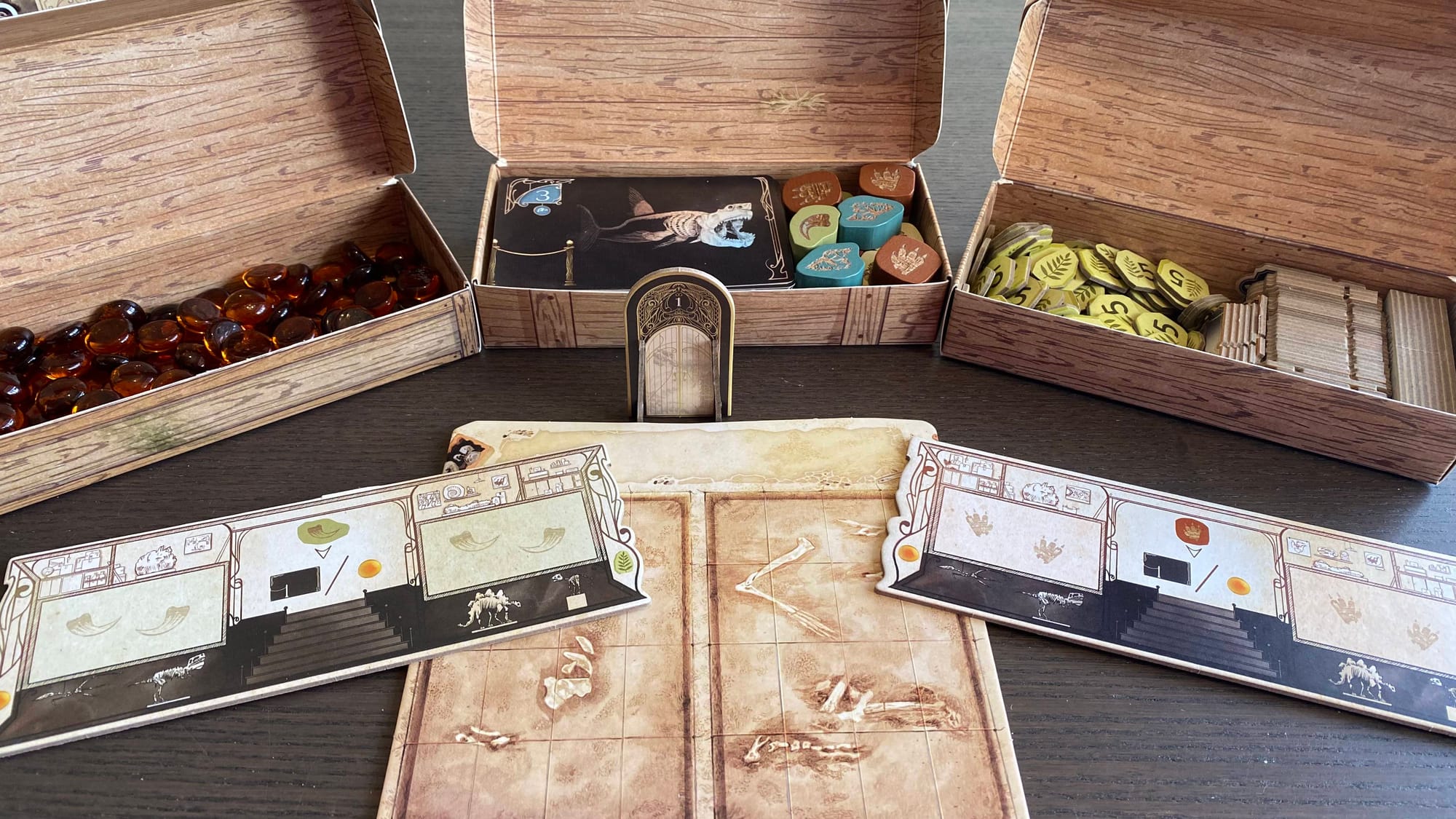
The player pieces themselves are these chunky wooden nuggets engraved with a particular fossil or print, reminiscent of a fossil in matrix. These could have easily just been generic meeples that you send to the Dig Sites, but this style of marker feels much more unique and tactile.
Gameplay
First Giants is a tight little set-collecting engine builder. Each turn, players either claim a card from a Dig Site, adding it to their Study, or they reclaim the markers they’ve got on Dig Sites to either gain amber (money) or put fossils from their Study on display for points. Claiming cards will trigger their abilities, and often recurring effects from other fossils in a player’s Study (and sometimes effects on fossils in other players’ Studies as well), and some fossils can have some pretty nice effects. Some of the blue 3’s, for example, give you money or points any time you claim a card from a family not already in your Study, making for a nice passive income. But scoring big points requires you to put sets of same-family or same-number fossils on display, losing their extra abilities. It creates this balancing act where you want to have an amber/points engine going with the cards in your Study, but you still need to display these fossils as part of the points race against other players.
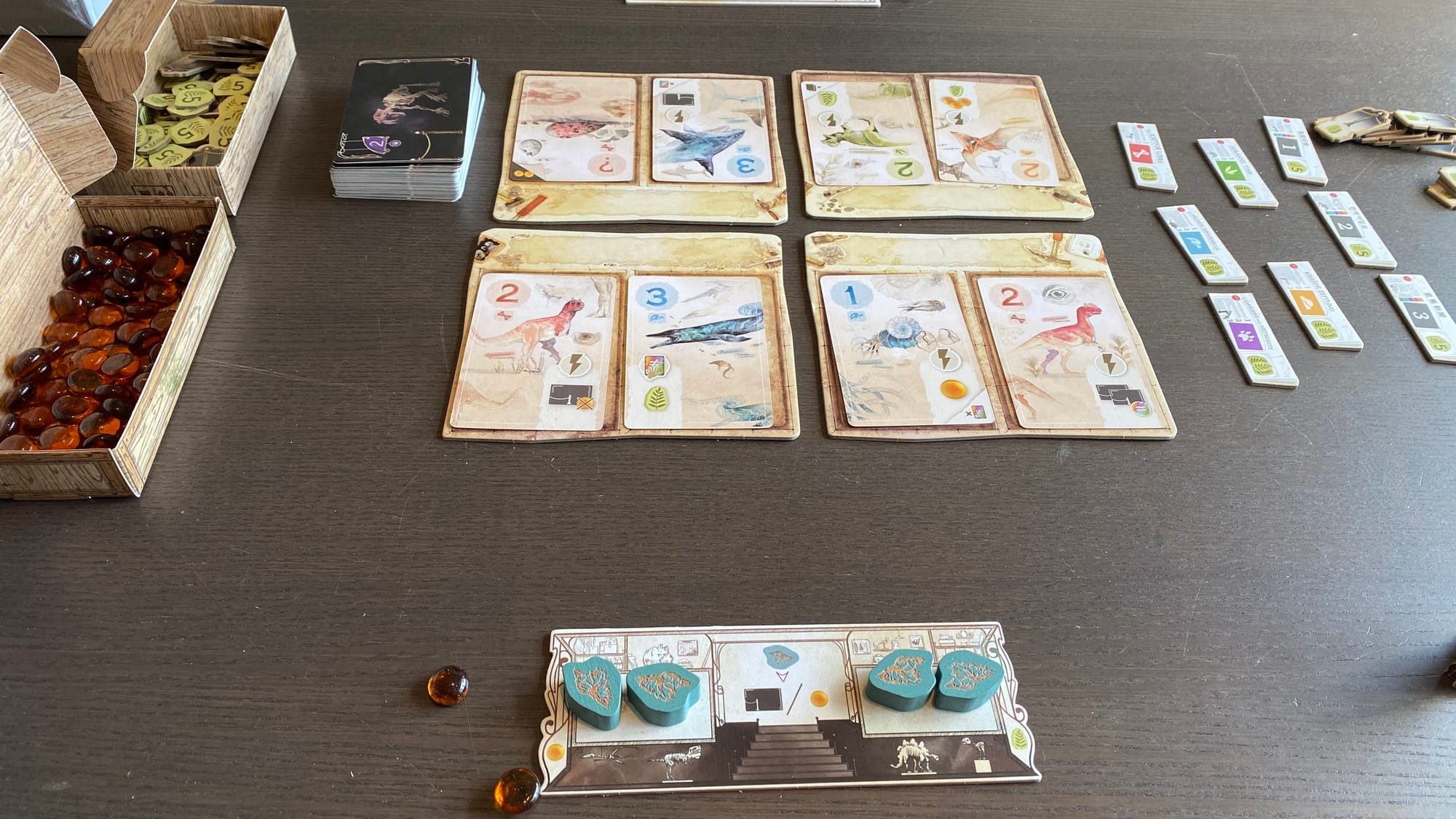
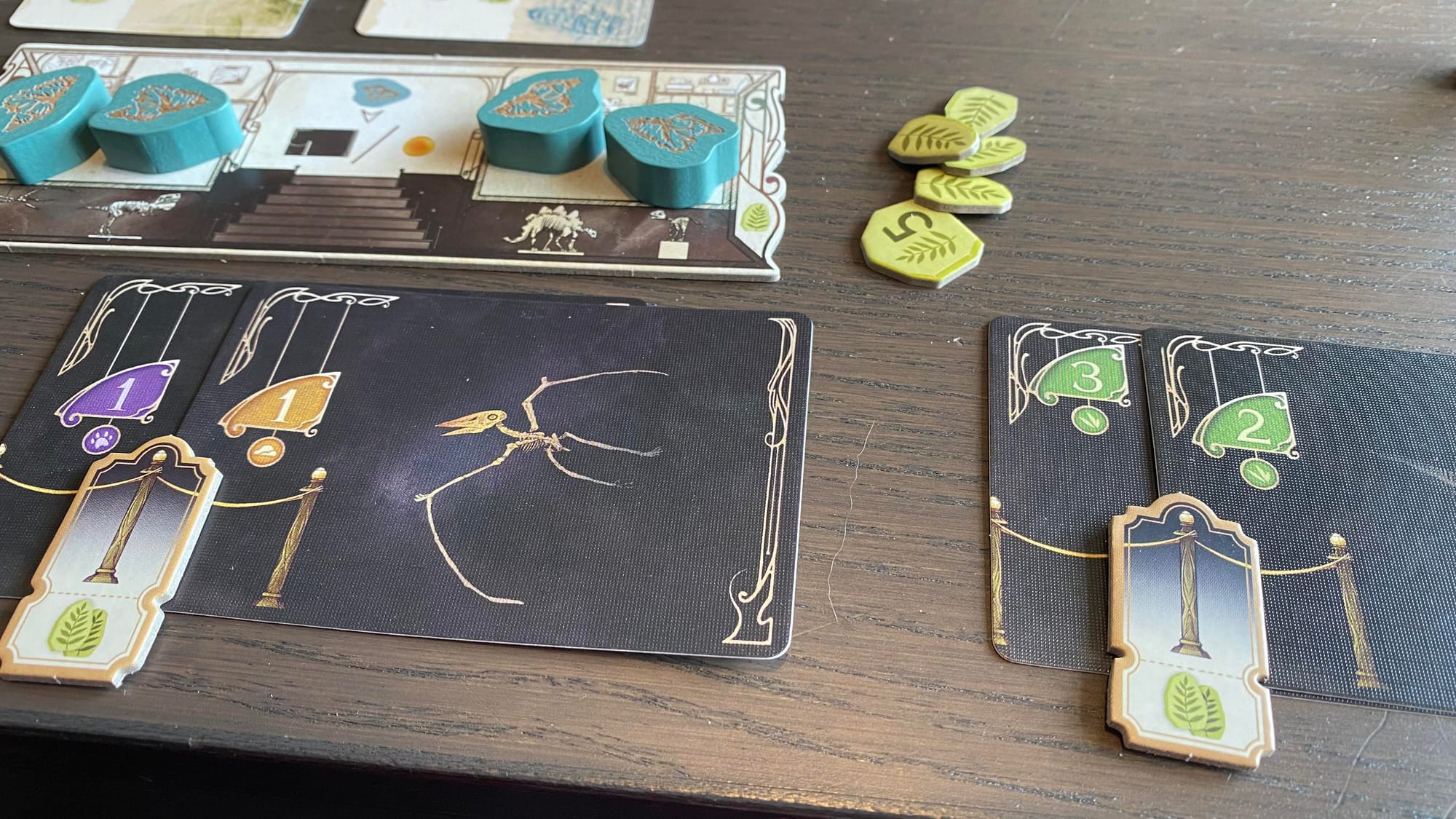
While sets will score points on their own—two points for every card after the first, which upgrades to three points once the set is complete—each unique set also has a News token worth a few points that gets awarded to the first player to start each set. However, other players can take the News tokens from you if they manage to create a larger set, so you can never get too comfortable with creating a proper engine. Combining that race with cards that can trigger abilities for your opponents, you end up with a game where it pays to pay attention to your opponent’s collection. Luckily, the card icons and scoring tokens all make it very easy to see where each opponent is at a glance.
The ability to see what the next card in the deck will be can make for some especially interesting decisions. For example, another player and I were racing each other to be the first to complete the set of 1’s. The top card of the deck was one they needed, but knowing that, I chose to place my marker at a Dig Site they were already present at—which prevents them from placing another marker there until they reclaim their markers—giving me enough time to wrap up my own collection. While another card would have been better for me at that moment, denying an opponent that set worked out better for me, and I didn’t have to rely completely on the randomness of the cards for that choice.
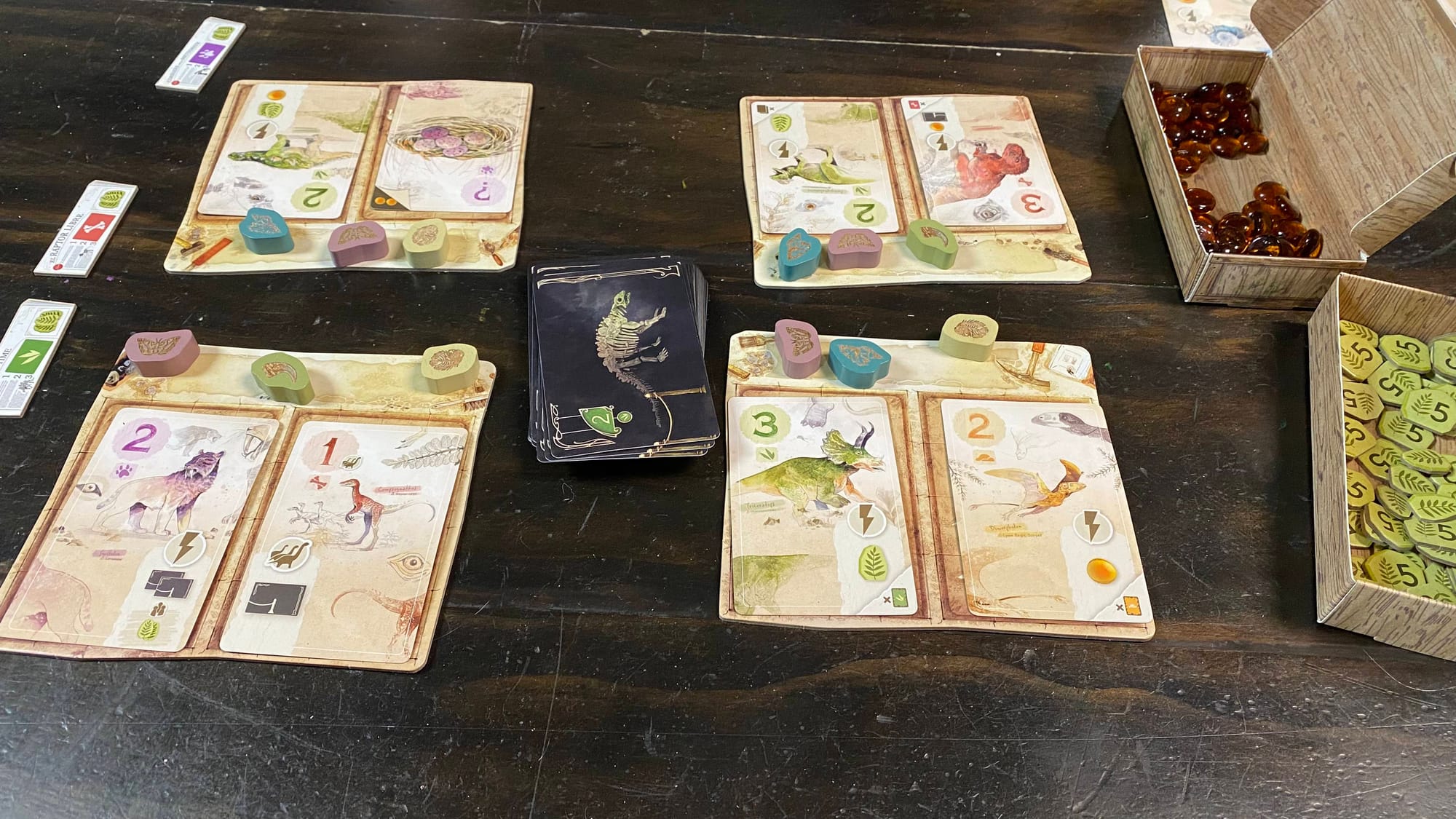
The light rules, quick play time, and interesting decisions make this a great little filler game, but I’m afraid that it won’t ever be more than a filler game. The abilities on the cards are neat and easily understood, but they aren’t nearly as interesting as those in Forest Shuffle—another light, card-based set-collection game. Abilities are limited to granting points, amber, or the ability to display fossils. Because cards lose all abilities when displayed, no cards have “fun” scoring mechanisms to experiment with. You’re not going to be discovering any cool combos in First Giants. This isn’t inherently a bad thing; the game just focuses more on timing your actions well and how you prioritize cards for their abilities vs for their sets. But it may affect the overall replayability of the game since there’s nothing to really make you prioritize one set over another.
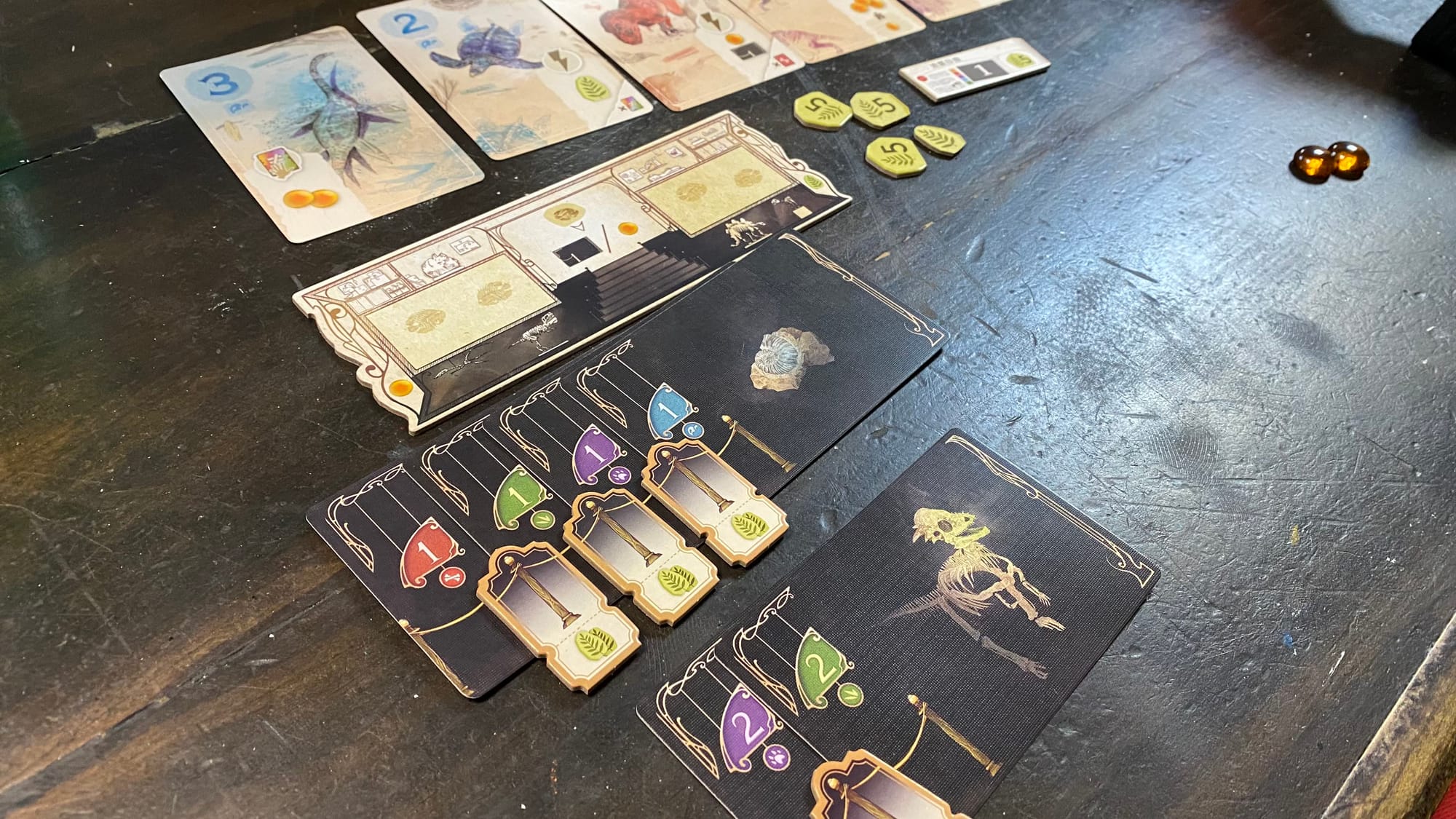
I mentioned that I liked the balancing act of when to keep a fossil for its ability vs when to display it for points. I stand by that, but most of the fossil cards simply have immediate effects that give you no reason to hold onto them for long. Yes, some cards care about what else you already have in your Study, but they’re rarely worth holding onto cards that otherwise aren’t doing anything for you. Personally, I would have rather seen a bit more conflict between the engine-building and the set-collection.
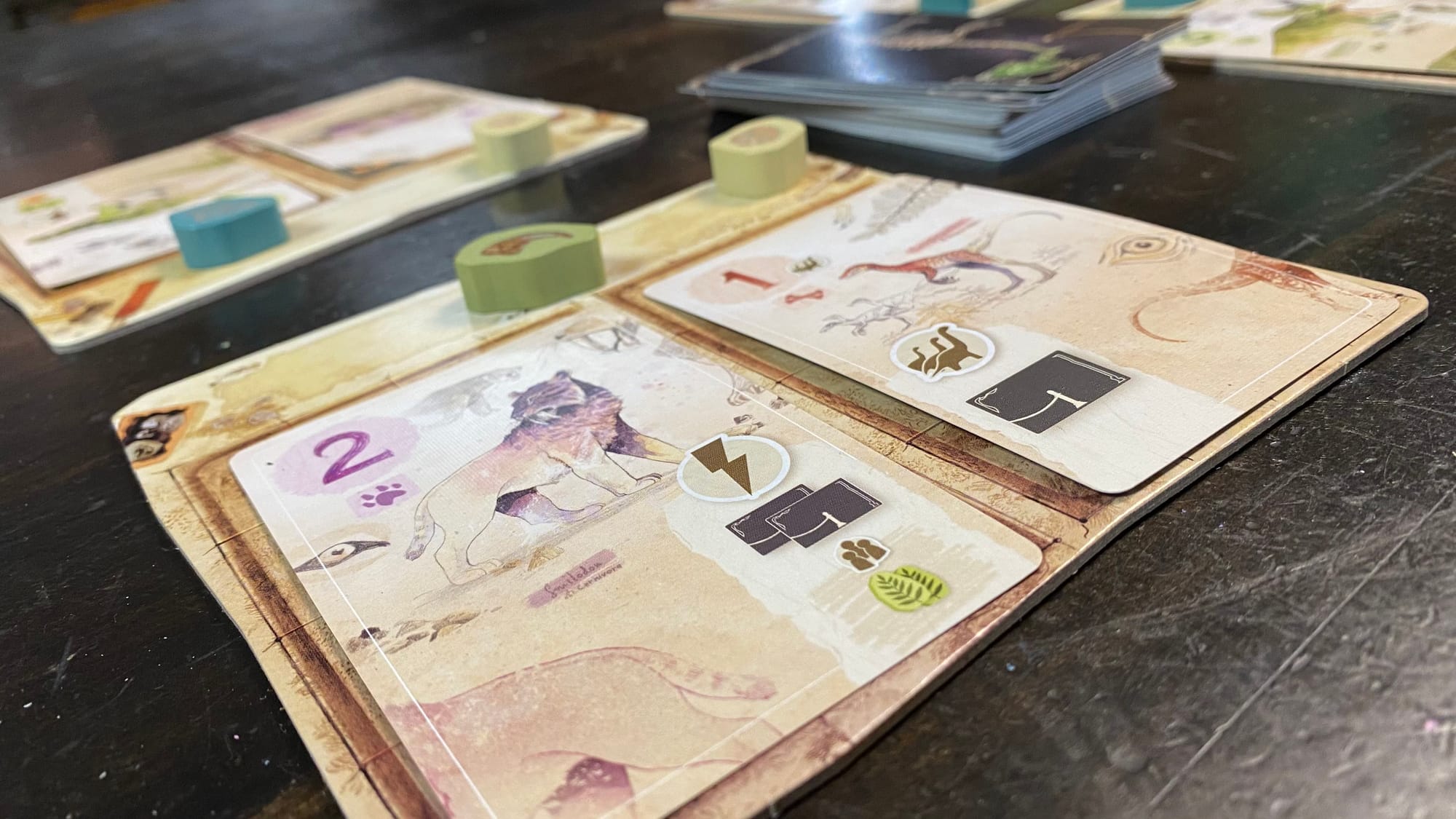
As a final note, while the game says it plays 2-5, it should really be 3-5. While technically playable at 2, there’s just no real conflict between the players unless they actively try for it. With eight different types of sets to go for, it’s far less likely that the two players will end up overlapping. First Giants definitely does better at the higher end of its player count.
First Giants
Good
First Giants offers a solid set collecting game with great presentation. The game flows incredibly well, with each turn being a simple but meaningful choice. The race to complete sets forces players to break down their little engines to maximize their points, but more often than not, this doesn’t really cost much. The game doesn’t have quite enough variety to make it worth playing over and over again, but it’s still very enjoyable nonetheless, and I’d happily play it between larger games.
Pros
- Nice art and satisfying components
- Simple rules but interesting decisions
- What you do is just as important as when you do it
- Racing for sets adds some tension to the set collecting
Cons
- Abilities might be too simple
- Mostly instant effects cause less conflict between engine and scoring
This review is based on a retail copy provided by the publisher.