Final Fantasy Resonance’s stellar presentation and challenging turn-based combat would earn a strong recommendation if it didn’t feel so disposable. Somewhere between side game and main entry, Resonance has many of the things fans have been yearning for from the series apart from clear creative direction. (Yes, I know lack of creative direction functionally is the current FF identity, but let me develop that point later).
The screenshots and combat section will feature brief spoilers for main characters and bosses.
Presentation & Narrative Design
The visuals, soundtrack, and strategic challenge all make for a genuine breath of fresh air from the dwindling Final Fantasy fanbase, but the overall experience ends up feeling superfluous due to its own lack of identity. That said, the steps this game has taken from its origin as a mobile experience are impressive, and signal great things ahead for the franchise…if Square Enix does the unthinkable and actually hires some writers to make for a memorable and impactful story. If.
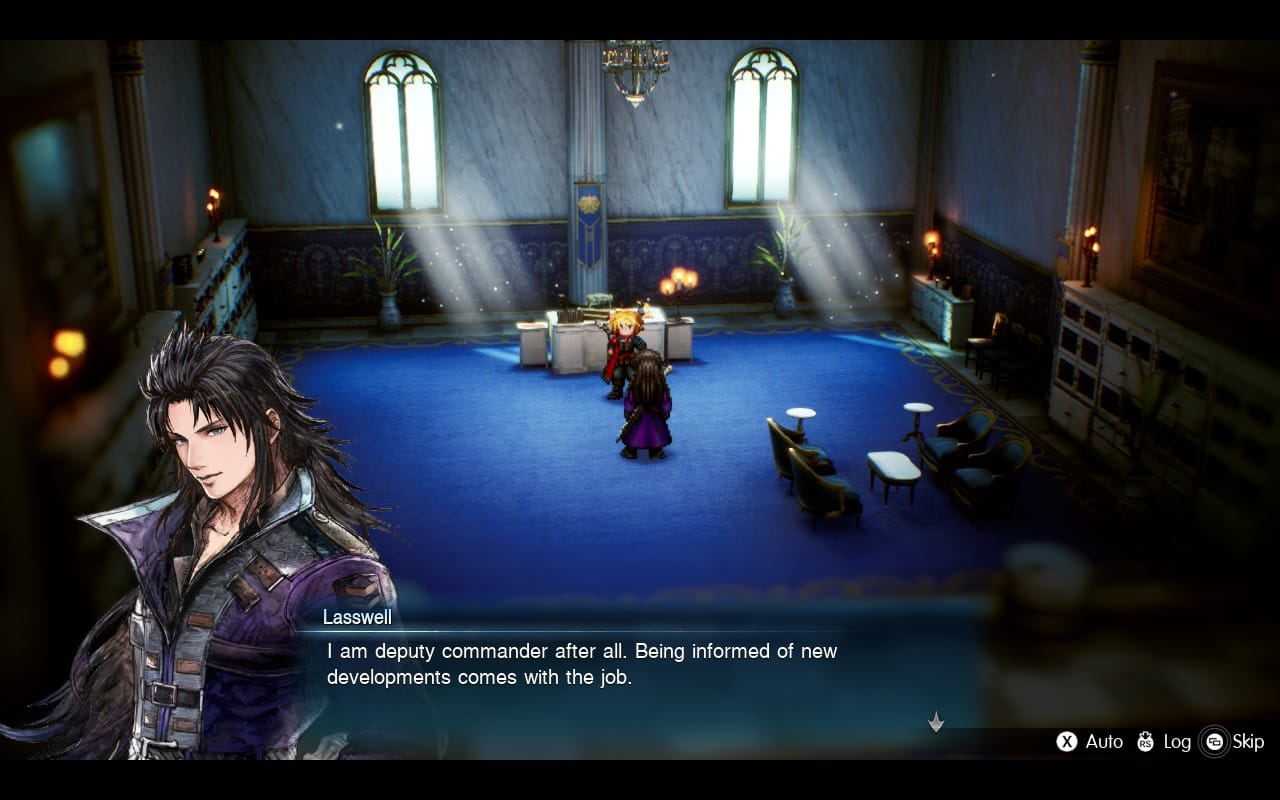
As shown in the bombastic opening, the HD-2D style has never looked better, or been matched with such careful orchestration. Dragons war over a battlefield bristling with magical effects and stunning swordplay. This is a true evolution of the abstracted pixels that made up earlier games. Characters inhabit real space within their environments, with plenty of light and sound effects that add to the atmosphere without overwhelming the senses. There’s no visual separation between battle and cutscene, with animation mixes pixelated and cgi styles. In combat and during cutscenes, the characters show off beautiful, fluid action with tons of weight behind every strike. There is some love lost in the lighting and shadow effects between these two styles, but a slightly more stylized approach could solve this easily. The score includes many staples of the series while adding its own tracks to round out the experience.
We open with a mysterious set of power players dropping clues to a plot that won’t be fully explained until later in the game. What follows is a nauseating grind that only picks up after about a third of the game has passed. The early hours are tedious for a few reasons. The battle mechanics, which later become engaging and challenging, don’t try to throw anything interesting at you for a long time. A veteran Final Fantasy fan, i.e. the primary target audience for this game, won’t die or have any reason to use their brain until a long chunk of the opening is complete.
That’s matched by the story, which is either poorly written or poorly translated, and likely a mix of both. There are, get this, a series of elemental crystals that are under threat from a mysterious force! Tasked with investigating are some absolute nothing characters, stacked up to face slightly more than nothing villains. There are six bad guys who have cryptic meetings in board rooms and you keep kicking their asses only for them to win in cutscenes and god it's just impossible to care about. You go to an area with a vaguely uninteresting problem. Meet one of these guys. Win but actually lose. Repeat. The story kicks off when someone tells you to do something you were already doing, and doesn’t become much deeper from there.
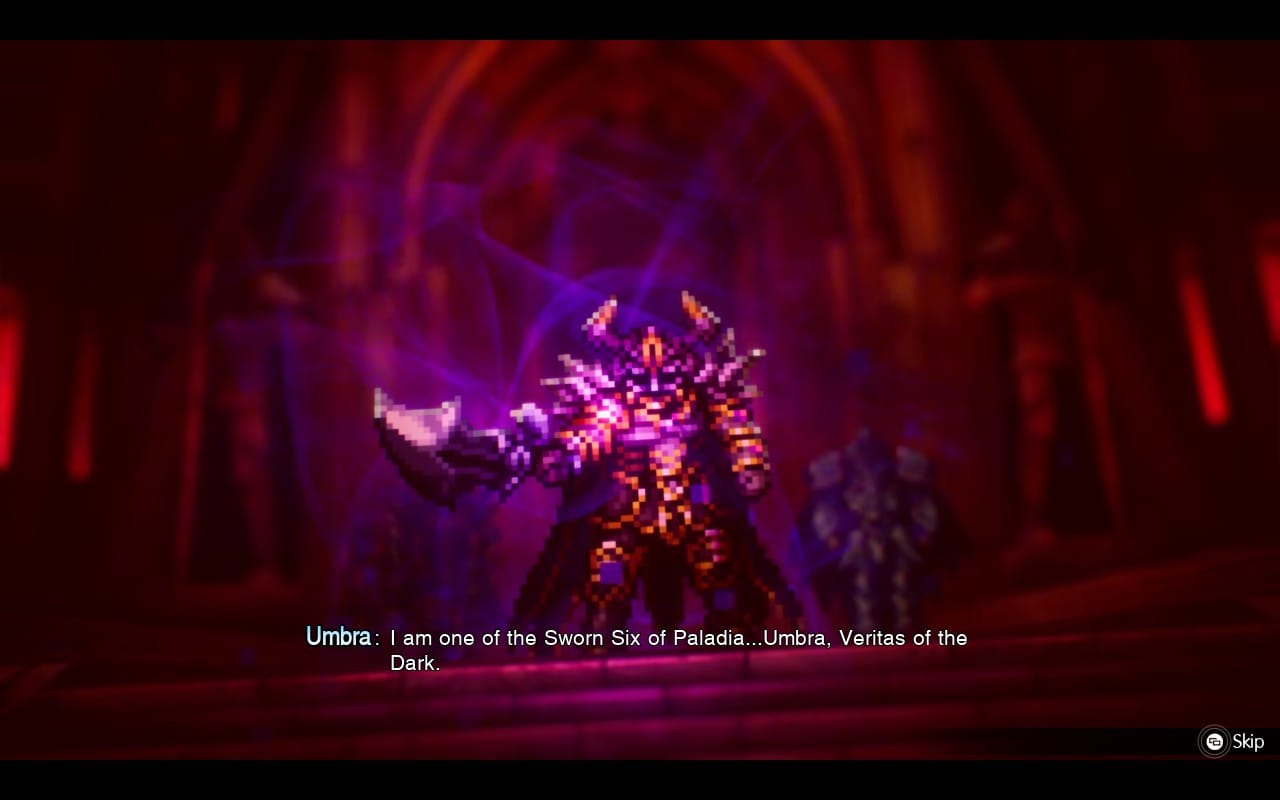
It’s not that the story is bad, per se. It doesn't have enough substance to be bad. My frustration comes from its consistent adequacy in the face of interesting ideas. Quite often the game will drop a concept or character that a more serious game would make a major focal point, but Resonance fails to capitalize on its own strengths. All of this flashy presentation has nothing to show us. It needs what Bruce Lee refers to as “emotional content.” The story doesn’t offend, but it also doesn’t pull you in or even really relate to the world.
That’s apart from the moment to moment writing and voice acting. The latter suffers from poor direction of capable actors, not that I can blame them for such a bland script. You won’t be able to switch to the Japanese voice cast for those characters, and you can’t switch from the Japanese voice cast for battle lines by legacy FF characters. You also can’t turn off the in-battle voicelines from your party, which are context dependent but EXTREMELY repetitive. It’s nice that they pay attention to your use of enemy weaknesses or debuffs, but the ungodly annoyance brought on by the many lines will force you to play much of the game on mute.
It takes a long time for the plot to get going, and when it does it's mostly in flashbacks to previous events. Those events are so interesting that they could have just been the main plot of the game. They’re certainly deep enough to support it and there's even a dedicated character who stands at town entrances with a FAQ about the plot to make sure you don't get lost. The writing is all tell, no show. "You two are awfully close. Practically brothers!" an NPC announces lazily. Some of this perfunctory presentation I put down to translation alone, where I suspect the Japanese would carry more nuance.
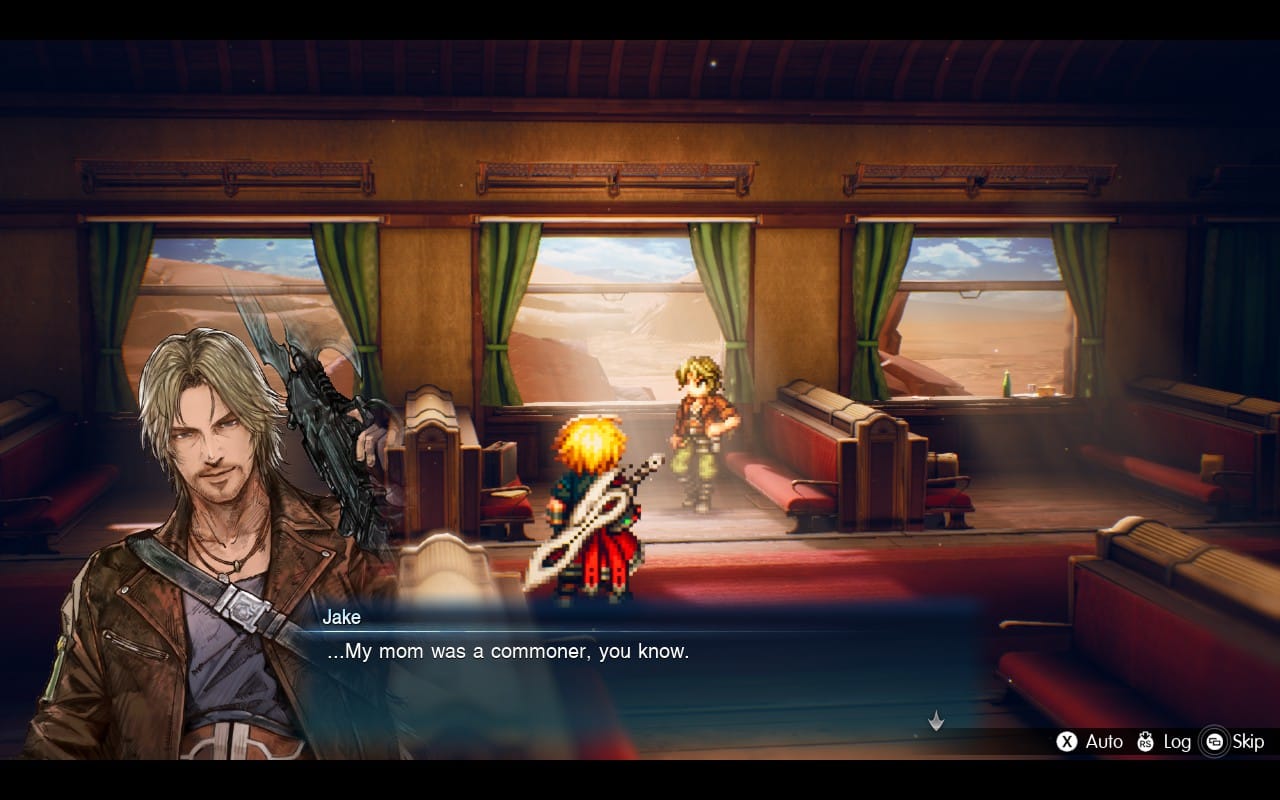
"Something must have happened here." "Yeah, that seems to be the case." The world is supposed to be at stake here. Why is the tone so absent? For sure, it’s nice that a side mobile game can get this much attention, and see such a wonderful revival. At the same time, I find myself in the place I’ve been for a good 10 years now: wishing Final Fantasy would try again. The fact is that all of this game's best story beats were from other games where they were done better, and more deliberately. This doesn’t fit in with Final Fantasy so much as it reminds me of better games that believed in themselves more.
The state of Final Fantasy
I predict a bevy of 80-90 review scores calling this a love letter to Final Fantasy, and while I won’t call them lies, I will tell you they’re letting themselves be lulled into a sense of security because of how abused the franchise has been for so long.
That statement needs some unpacking, so let me talk a bit about the state of Final Fantasy as we approach this game. Plenty of people are going to say that FF has always been about reinventing itself, but this statement is deliberately misleading about how that manifests. Final Fantasies 1-9 took many chances but ultimately had clear thematic, mechanical, philosophical, and aesthetic throughlines making them feel similar. 10 and 12 took larger leaps, but remained turn-based games with a strong focus on story and writing. (I’m not including 11 and 14 because I’ve been too employed to play two MMOs, sorry). 13 was another turn-based game with some profound narrative failures, but at least its ideas were fresh and, in the hands of an actual writer, could have been made into something great.
From there, things have devolved until the series is unrecognizeable. 15 and 16 were straight action games, with some deep flaws in their story and scenario design. The creators admitted that this was to justify the growing budgets, rather than artistic merit or fidelity to the franchise’s ethos. That budget and technology are unnecessary, as Resonance proves. Its stylized visuals can tell a great story, without the constant explosion of particle effects and lack of aesthetic design that makes modern Final Fantasy such a visual mess.
In terms of writing, the series has fallen into a spiraling pit of stupidity that it may never escape from. The narrative issues I had with 13 were solidified, even doubled down on in its sequel games. All the worst indulgences of Crisis Core and Advent Children became a focal point of the series, culminating in the abomination that is the Final Fantasy VII remake series. Now everything is infected with Kingdom Hearts mentality, where complexity overrides everything else about the plot. Look, I don’t think you’re a bad person for liking those games, and I know plenty of FF fans love them. However, people need to stop pretending that this series with completely different staff, mechanics, and visuals, in any way resembles itself.
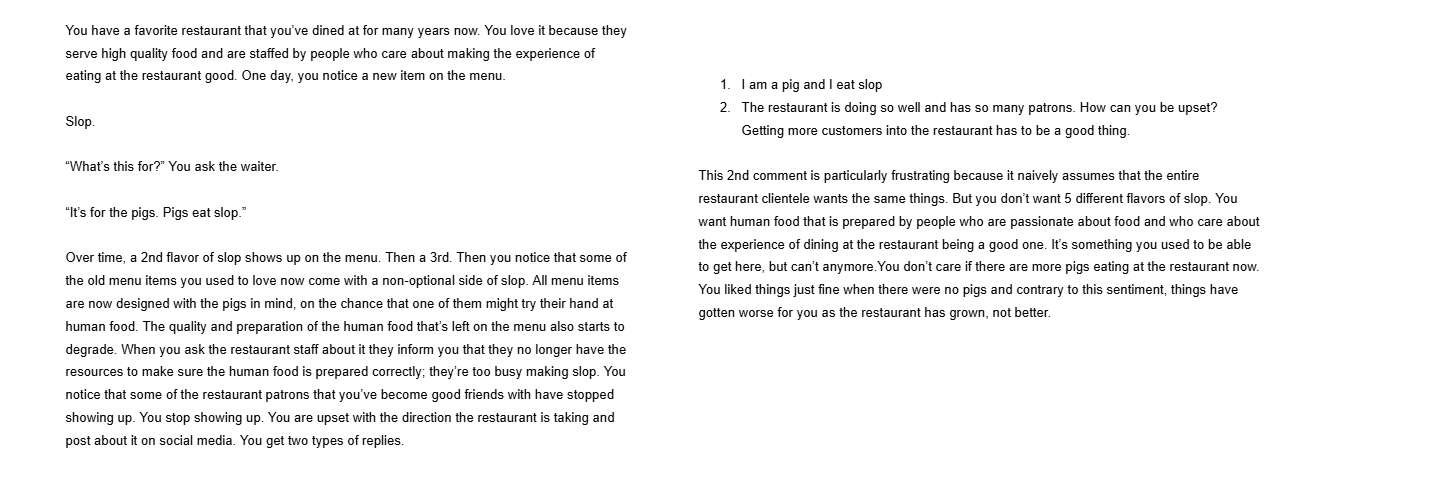
Fans of Halo, Star Trek, Magic: the Gathering, the Witcher, American democracy, along with many other examples, know exactly this kind of gaslighting: the thing you appreciate is chewed up, regurgitated, spit into the trash, and replaced, only for its owners to insist to you that it’s the same and you owe them thanks for continuing their degradation of the franchise. Your dog was dying and JJ Abrams came to my door with a rabid mongoose. Aren’t you glad he saved your dog! Don’t you love 100 hours of filler in an Ubisoft copy/paste open world full of useless bloat! Chadley! FF has fallen into this web of stupid, incomprehensible plots that are hostile to any kind of coherent theme.
FFVII’s tale of grief and environmentalism has been ground up into a stew of alternate timelines and resurrections that have nothing to do with the series’ origins. What is this even trying to say, anyway? I hear people pretending that the time ghosts have some kind of statement to make about remakes, but “people will compare a remake to the original” is the least interesting and most obvious point one could possibly make with a remake. Yeah, I know. I understand the basic concept of a remake.
If you’re this resentful of working on a remake, Tetsuya Nomura, you could just work on a new game without this baggage. Except he can’t, because every one of his plots becomes the same miasma of fighting fate and timelines that’s so full of narrative devices that no actual themes or character can survive. Somewhere along the line they saw how crisis corps and Advent children were terribly written and decided to base everything after that point on that kind of poison memberberries.
what appears to be the ethos of modern game writing
The flip side, I hear some of you already, are smaller projects like the Bravely Default or Octopath games. Resonance has much in common with these, in that its combat and presentation have wonderful promise but leave your mind the moment you beat them because their stories are so painfully anemic.
As a Final Fantasy experience, it’s the closest I’ve seen in a long time. Yet, a pile full of disconnected references is nowhere near as respectful to the legacy as an actual, turnbased Final Fantasy game. The good news here is that this technology and focus on gameplay, with an actual story written by a human being who believes in something, could make for a truly great experience, worthy of being a mainline Final Fantasy game.
Combat and Character Progression
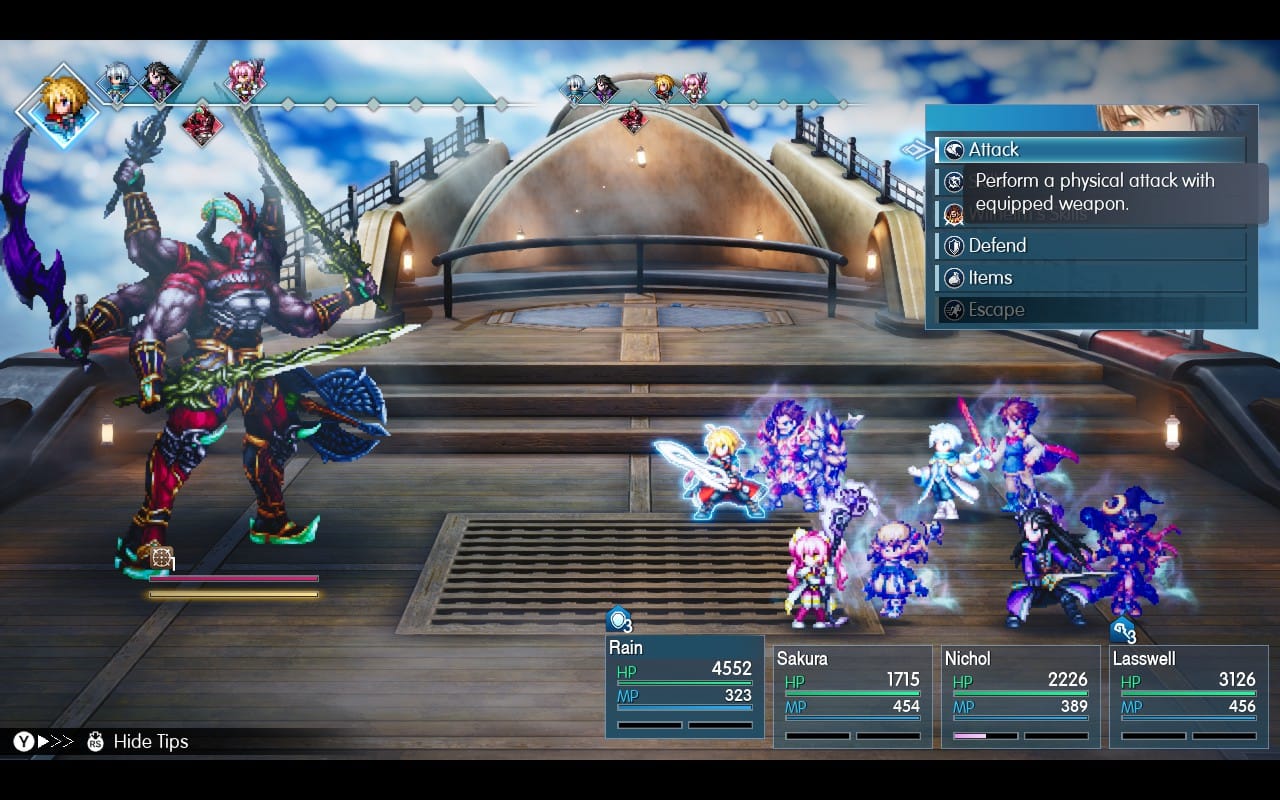
Combat is turn based with one turn per round. Enemies have elemental weaknesses, which don’t correspond to weapon type, and stagger gauges. These gauges drain as they take damage, dropping much faster if you use the right element; upon staggering, they will lose all actions that turn and take far more damage. Any character that staggers an enemy will take an extra turn at the end of the round. If all enemies are staggered, all of your active characters get to act, closing with a super-attack from their equipped Vision. Each character also has Limit Breaks they can unlock over time.
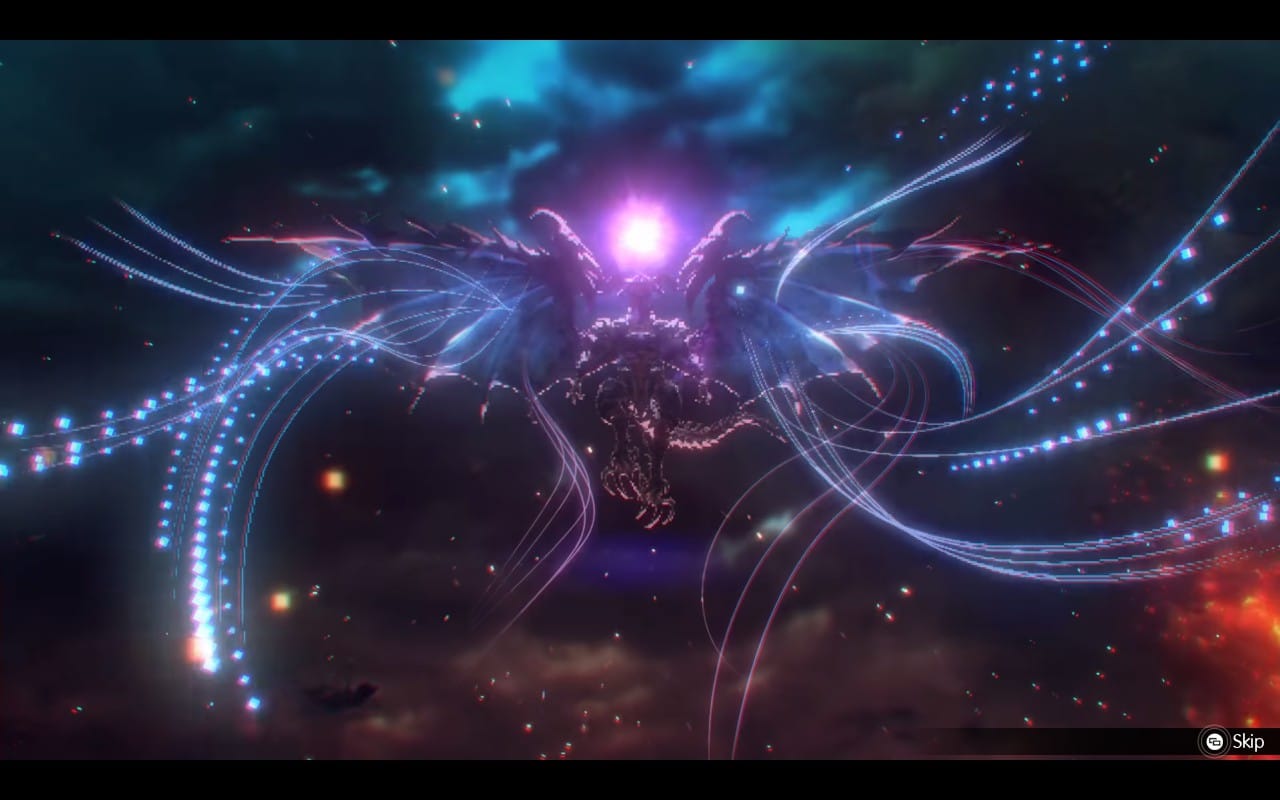
The game also features summonable Espers, which must be found and battled across the world map. Once on the field, they stick around for a few turns eating up attacks and using abilities until rounding out with a super-attack of their own. Every character has their own set of abilities, but the real meat of customization comes from the many Visions, i.e. jobs made up of main characters from mainline Final Fantasy games…along with a few less than impactful NPCs from this game. These Visions add tons of active abilities, flat stat boosts, and passive abilities to equip once you’re finished with the Vision. It’s in passing these jobs around and making the use of their MANY options that you unlock the true strategy of the game.
For a long time at the start, there’s nothing to think about here. The avalanche of abilities don’t matter because they either stagger with the right element or don’t, and you don’t have to bother thinking about the more detailed tradeoffs they might offer. It’s later in the game that things finally kick into high gear. The arena and many super-bosses offer a refreshing challenge, and force you to make the most of the many skills you’ve been accumulating.
The game’s many super-attacks are flashy and impressive wastes of time. All of them are too long, and while you can skip parts of them by pressing a button, you have to do this separately for every single one. There’s no option to turn them off by default and you’re going to see dozens of them, often the same one, in the course of a long boss fight. Moreover, the skip button only cuts down on part of the animation. It’s impressive at first but then grinds on you for the entire rest of the game.
Exploration & World Design
The game’s dungeon design is…fine? It features a nice array of environments but with no real twists or puzzles and only a tiny bit in the way of exploration. They're mostly a series of hallways in which you fight random enemies. There are some secret walls, but not many and with less than consequential rewards under most circumstances.
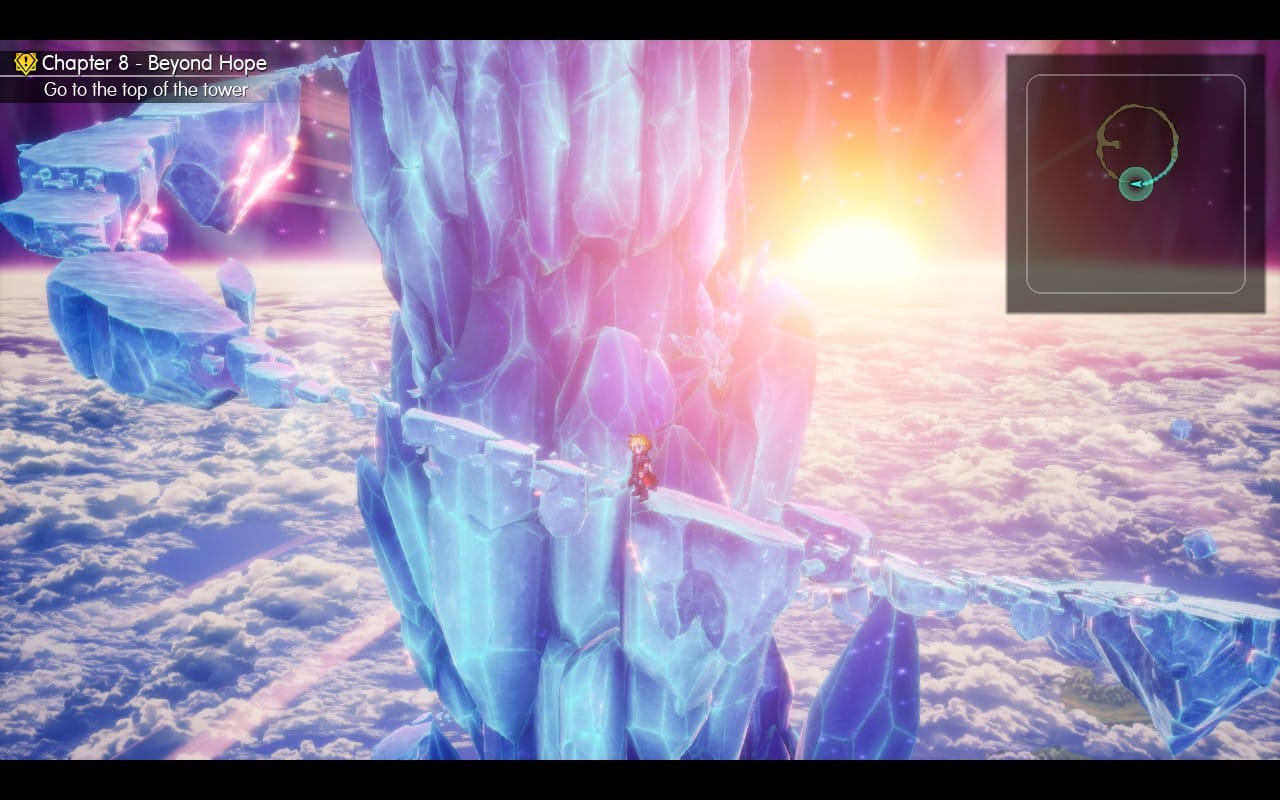
Most side quests ask you to go to one place and fight one thing, if that, then come right back. Almost all of these are marked so there's no real exploration, until later in the game. The Airship finally gives you more to look for and more to find, without explicitly spelling it all out for you. It really feels like this game was made for the endgame. Only once you unlock that part of the game do you start to feel truly engaged with the mechanics and the setting, such that this basic “medieval but we have guns and airships” world is.
Some final annoyances
I haven't found a way to check individual characters for buffs/debuffs, which is a problem because there are a ton of both. On you, that is. Most enemies have resistances so high or outright immunities that most status effects are wastes of time. There is no way to zoom in/out on the world map or in-game minimap.
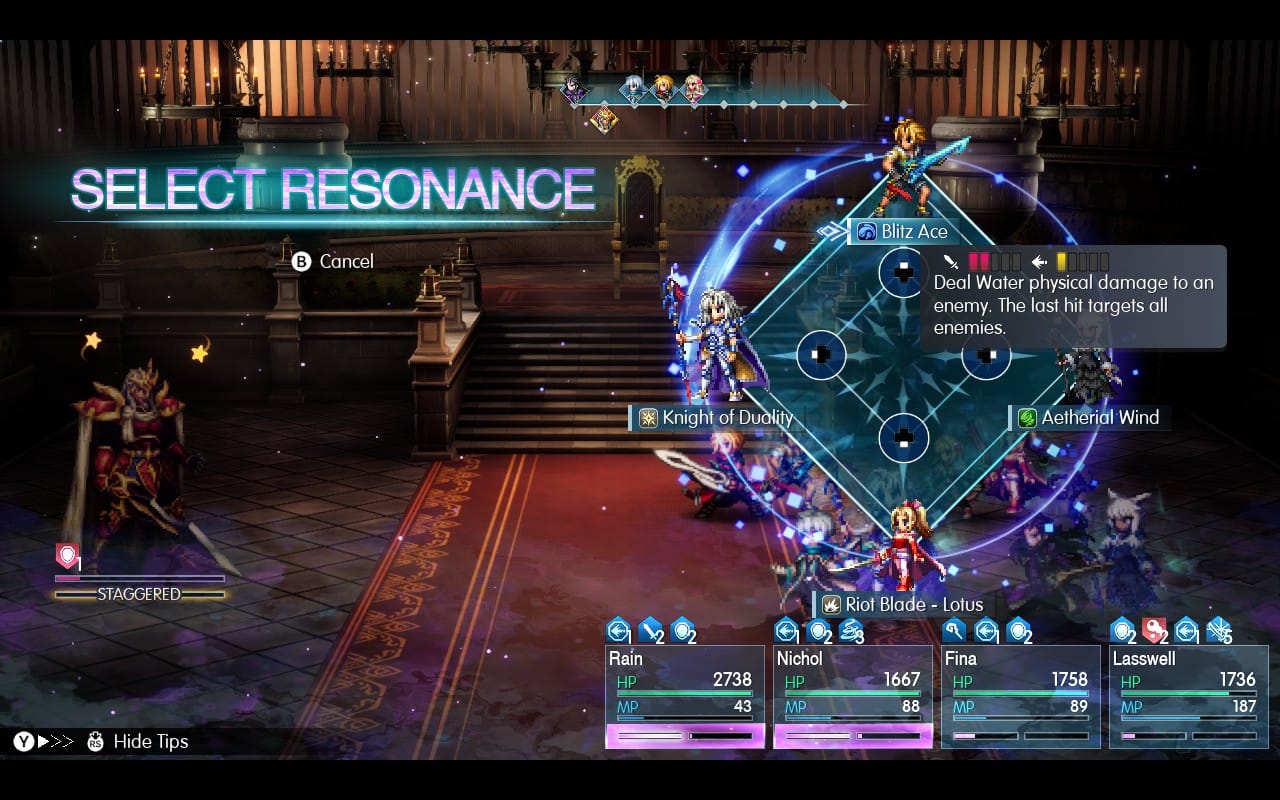
I had one game-crash, but in a playthrough of 60 hours where I did everything but a few of the final optional bosses, I don't call it a serious problem. Generally it performed great on the Steam Deck.
In the part of the game where it becomes interesting, the numbers get too high and the abilities are complex for you to easily read what’s happening on screen. I fought a later boss that healed 88888 health two turns in a row. With my own abilities flying past the screen so quickly, it was hard to tell if I was making progress.
Finally and most annoyingly, organization of abilities and items is awful. You’re going to be tripping in the dozens of items and abilities you have on hand, with no way to reorganize or sort them. As you pick more up, and you’ll accumulate tons over the course of the game, it makes managing them a pain at the most important point. The later super-bosses are interesting because they challenge you to make the most of your equipment and abilities, but the work that it takes to prepare your party is a time consuming chore because of all the menus and options you have to go through.
A quick nod to Crystal Project
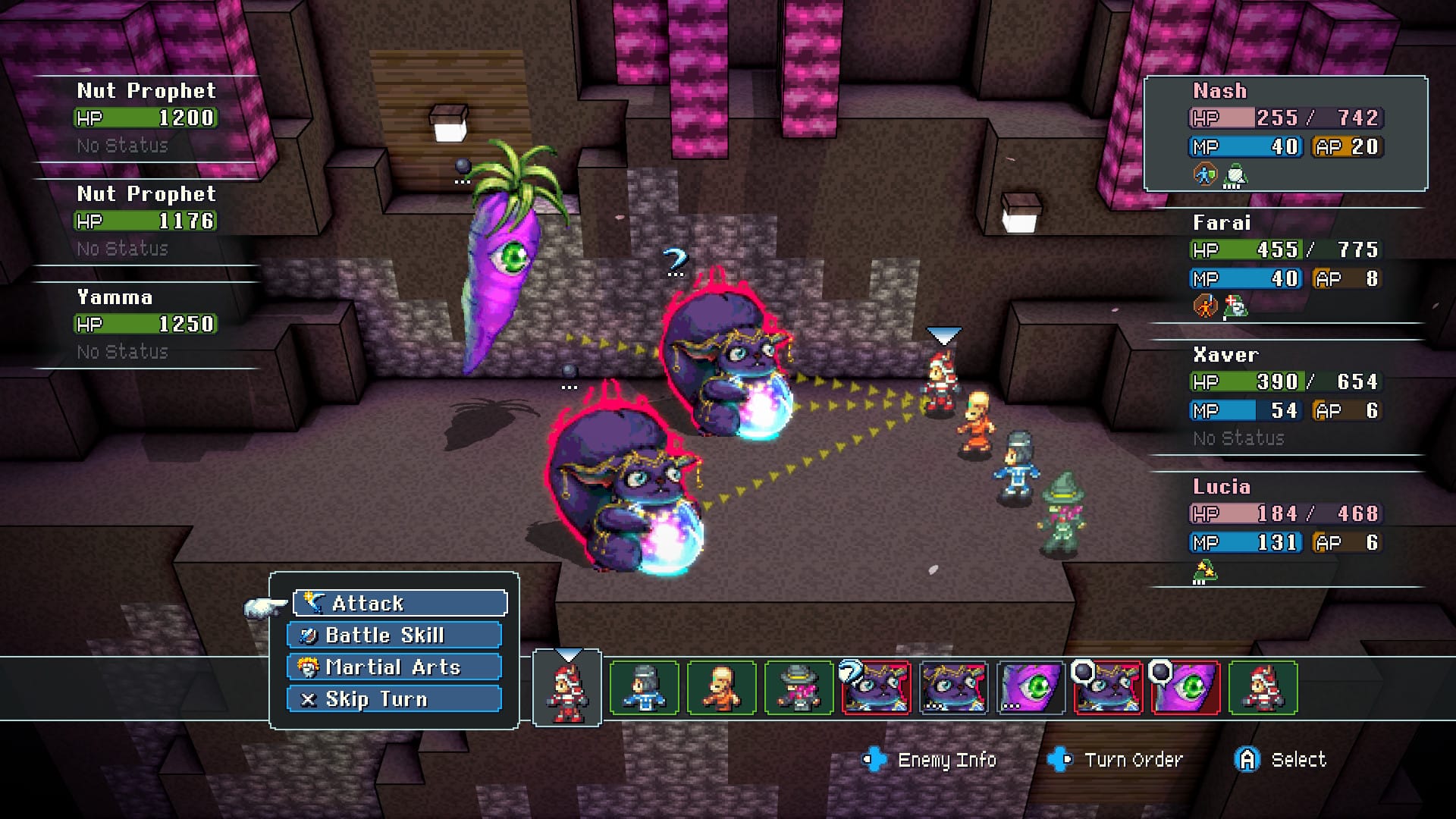
If you want a challenging turn based experience with rewarding exploration, character building, and less focus on plot, you should be playing Crystal Project until Resonance is on sale. Currently $14 but often on sale, Crystal Project shares much of the DNA of Final Fantasy, but without the corporate baggage that would otherwise ruin it. The game sets you loose in a mysterious and hostile world, not giving you direction about how to approach its many secrets and challenges. From the opening until the final, insane superbosses, the game respects your intelligence and rewards your urge for discovery. Along the way it looks great, sounds great, and presented no technical problems when I beat it a year ago.
Final Thoughts
Once I got past the annoying opening, I had an engrossing time with the parts of the game that didn’t involve its story. Its flashy effects and challenging combat scratched an itch I’ve had for a long time. Once I beat the game, its lack of meaningful story made those moments leave minimal impression, but it certainly stands on its own as a mechanical experience. Despite my many minor complaints, I hope this game does well. If Square Enix pairs this presentation and mechanics with a story worth telling, we’ll have something legendary on our hands. They won’t.
Final Fantasy Resonance
Alright
Final Fantasy Resonance is a visually stunning and mechanically engaging turn-based RPG that ultimately feels disposable due to its lack of narrative identity. While its HD-2D presentation, strategic combat, and deep job customization offer a genuine breath of fresh air for starved Final Fantasy fans, the game is held back by a tedious opening, bland writing, and a story that feels like a hollow echo of better games. It's a mechanical success but an emotional void. Definitely worth playing for the combat, but just as forgettable the moment it ends.
Pros
- Incredible visual design maximizes the pixelated aesthetic
- Deep character customization through Visions and equipment
- Some of the most rewarding super-bosses I’ve encountered in years
Cons
- The story is written by modern Square Enix
- Small but numerous quality of life problems
- A painfully tedious opening
This review is based on a retail PC copy provided by the publisher.