Currently, convenience seems to be at the centre of our culture, pushing aside the physical and ‘in the moment’ element that cultivates so much meaning in our lives. Streaming movies has provoked a decline in people going to the cinema, e-books leave people without the feel of pages between fingers, and takeaways have become more than a treat on the weekend; you’d rather order an Uber Eats instead of poking around in your kitchen cupboards to cook something. This doesn’t mean the world has come to an end, but it is a continuous sombre thought for me to ponder over. However, in Dosa Divas you are presented with the idea that the world is indeed crumbling apart as cooking has become an inconvenience, taking up time, resources, and money. Losing an important part of culture and the self is damning, and half the time, people aren’t even aware of it until it’s too late.
Sisters Samara and Amani have reunited after a decade of separation and now bear witness to their youngest sister’s decimation of cooking culture, rendering fishing towns and other places that boast bountiful harvests of local ingredients as washed up, desolate ghost towns. Their goal is to go visit their parents in Port Zest to rekindle family bonds, but as they travel through neighbouring towns, they can’t help but feed the starving villagers—victims of Lina’s cruel 16-hour workdays and supply of LinaMeals, which are just processed muck. LinaWorks is the definition of an evil corporate company as she tries to snuff out cooking once and for all. This drama is punctuated by mechanical companies known as Divas who are spirit infused robots that ‘awaken’ to a specific owner—we don’t get much more information than that though.
Core to the game is cooking, and you do a whole lot of it in Dosa Divas—sadly, to the point where I was fed up with it by the time the credits rolled. The people of Meyndish have been fed goopy instant meals by Lina’s company, which has led them to despair. It’s up to Sam and Amani to whip up dosas—a south Indian savoury crepe—and other meals for them to gorge on. Main quests will have you cook certain meals to keep villagers satisfied; you’ll find ingredients for them across the map and use them with store-bought goods—bought using scrap or raw produce—to create different dishes. Once in the cooking menu, you’ll select a dish and must engage with two mini games that determine the quantity and quality of the dish. There are about 4 or 5 mini games that you can do when cooking, like pouring batter until you reach the line, or chopping when the bar is pink. They last a few seconds each, which makes repetition not so bad. But the problem is the amount of repetition you have to engage with, as villagers will often not only ask for one or two meals but will just keep on asking. At first, I wondered why the developers made it so you could just keep making the same meals over and over for villagers, and I guess it's linked to the reputation gauge that fills when you help someone or do anything story related. However, I never found this to be a good enough reason as once you’ve achieved the first four or so ranks in reputation, the rewards afterwards are just not worth it. You begin by getting extra skill attacks and scrap, but then it's just scrap and reskins for Goddess. Overall, cooking was fun for a while but overstayed it’s welcome when there wasn’t much variety to experiment with.
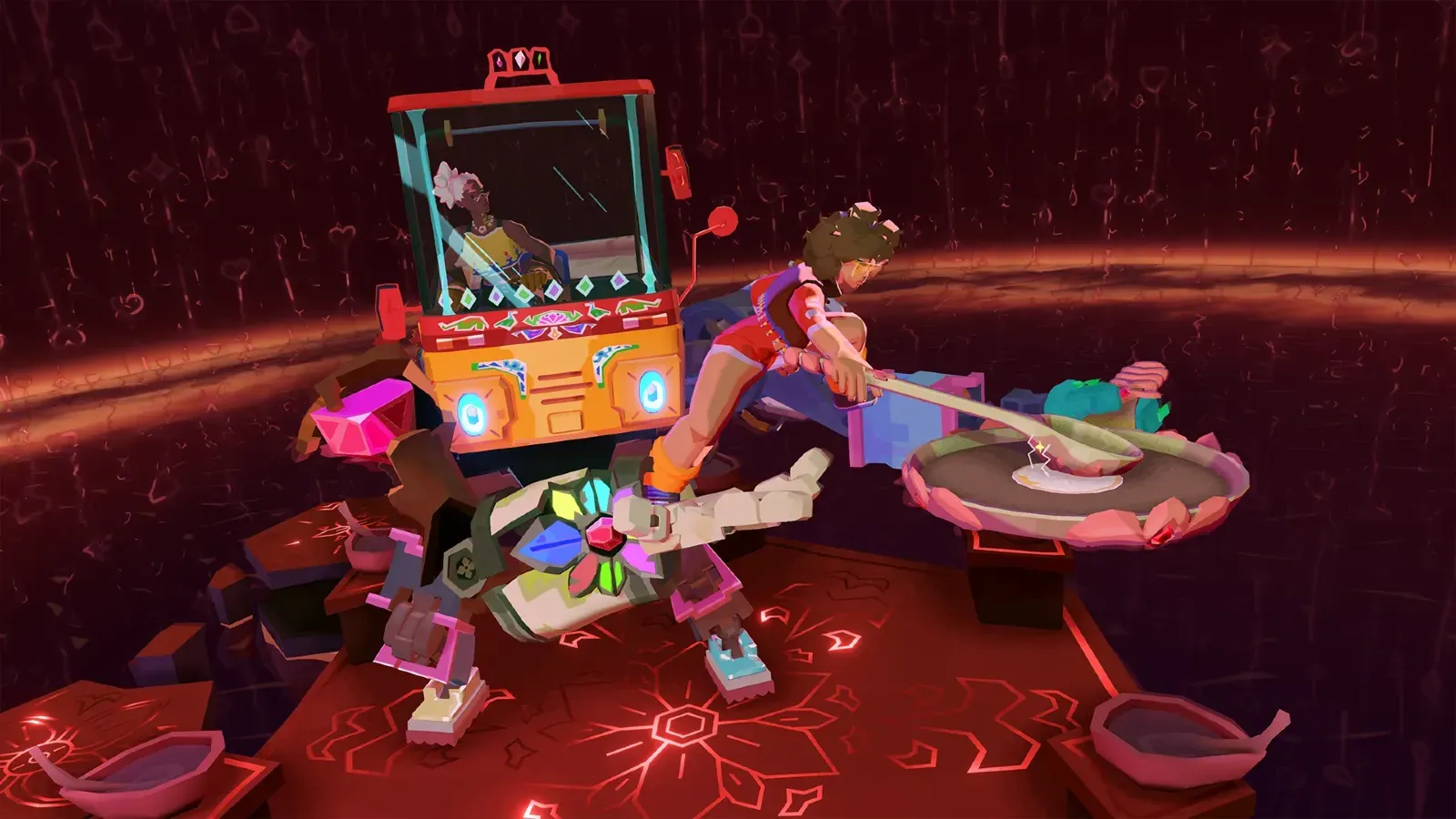
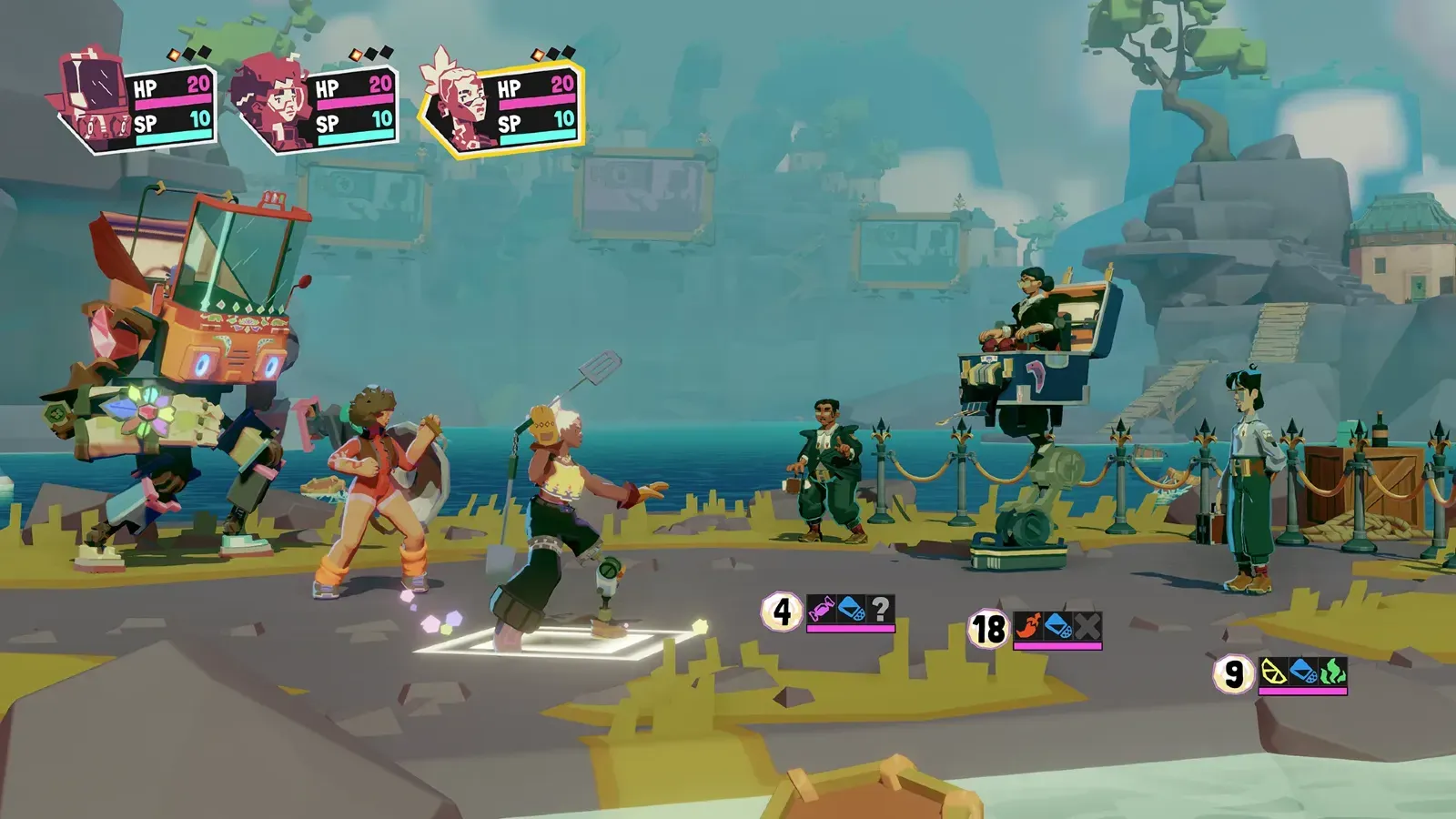
The gameplay was familiarly engaging after last year’s Clair Obscur, with turn-based combat that placed a heavy emphasis on timing button presses to negate or cause more damage. If this isn’t your thing, then this isn’t the game for you either, as if you don’t even bother to block—or are really bad at it—your team members can be wiped out in one turn. Even just attempting to do a block negates a big chunk of that damage. The turn-based combat is your typical system, but instead of elemental strengths and weaknesses, you have flavours that you target to deal big damage. It includes sour, sweet, and spicy just to name a few. There isn’t much strategy to be had here, as your team members don’t really have an affinity for just one flavour, and while you only ever have three team members, all three have attacks that cover the same ground. These flavours will be attached to your basic attacks and your skill attacks, which are flourish moves that deal higher damage. At first, I liked the unique animations of each, with Samara having a spicy wok to boomerang back and forth, and Goddess the Diva had a savoury Jojo punch that dealt multiple hits. However, this uniqueness doesn’t last very long, as when you unlock more skills, they are the same animations but for different characters; Amani has Samara’s boomerang wok but now it’s a spatula. You’ll also have access to an Ultimate attack, which requires all members of your party to be alive. This includes an all-out attack or attack buffs that are applied to the whole team. The more skills you use, the faster the Ultimate gauge fills. However, skills never felt like a more powerful, yet limited resource that you would need to choose to use when the time was right. Skill attacks use SP but, I never ever found myself running out of SP in battles due to them not costing a lot. After every battle, your team also regains all health and SP, so there was no management of the aftermath of a battle. By the second half of the game, I was just spamming skill attacks to make battles go faster The only scale of difficulty came from enemies getting tankier and being allowed to spam attacks at the start of a battle. Despite being in my element with turn based games, Dosa Divas never hit a smooth gameplay loop for me.
Despite my bad time with its gameplay, Dosa Diva’s story is raw and endearing throughout its playtime as they reminisce about the past when they worked in their family-owned restaurant. Through this, they begin to unpack a traumatic event that shook everyone involved and divided the family. I hadn’t played any other games by the developers before this, so I was surprised when the game wasn’t shy in conveying violence, death. It even has a scatter of raunchy behaviour from Samara’s ex when opening his shop. The mature feel to the game helped its themes feel more impactful with notes of comedy throughout that complimented each other. The characters in this game have suffered immense loss and tackle problems that may hit close to home for some players. Overall, I really liked the story, but sadly felt it went a bit crazy in the second stretch of the game when the Divas got more involved.
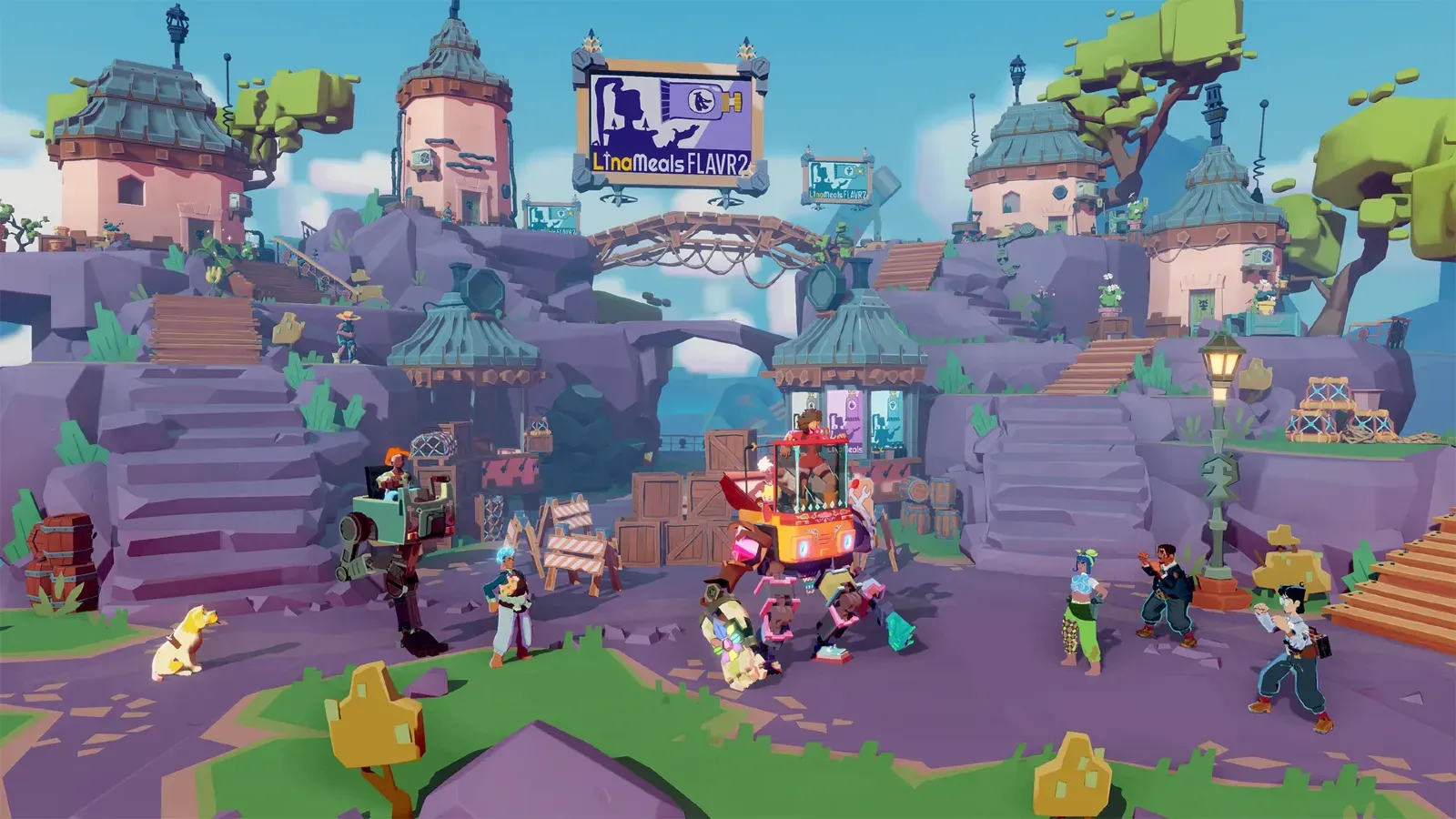
The style of Dosa Divas is wonderfully unique and beautifully rich with culture. It was a feast for my eyes with (long live!) character portraits and stellar voice acting across the board—except for the dad, I don’t know what happened there. Also, despite my slander of the mechs, I love their designs. The world itself is unique; it has a 2D feel despite being 3D and areas feel close to being side scrollers, since they're structured in tiers rather than one flat landscape. Maybe this is a nod to the landscape it was inspired by. There isn’t too much going on in each town/village and exploration is only really encouraged by looking for ingredients and fishing. Apart from that, they aren’t memorable or interesting enough for me to want to go back to them. Unfortunately, the game makes you do this, which just emphasises how bland the areas could be.
The first half of the game has you exploring different regions and reaches its climax when you finally come face to face with Lina. However, after that I felt my experience with the game was repetitive and I felt I had seen everything Dosa Divas had to offer by the 5 hour mark—with the game taking about 8–10 hours to complete. After the climax, you basically go get three key items in the same areas you have already visited, just with new drama sprinkled in. You face the same enemies, make the same food, and encounter the same characters, which was a massive let down. I don’t know whether the game would have worked better with just a 5-hour runtime and a concise end to the family drama that is at its core. Unfortunately, the involvement of Divas wasn’t interesting enough to keep me hooked; the family drama, however, was especially well done.
Dosa Divas
Alright
Dosa Divas hits all its story notes when it comes to its personal tale on family and how it can fall apart with time. Cooking as an activity to be done with others is at the game’s core, and with likeable characters and great voice acting, I felt immersed in its passion and rich culture. However, its other elements sadly didn’t taste as good as the rest of the meal, with turn-based combat that felt lacklustre, a cooking mechanic that became awfully repetitive, and a second half that fell flat. It made the game feel incomplete. Personality does all the heavy lifting here, which made the overall experience leave a lot to be desired
Pros
- Family dynamic that felt real and raw
- Rich with culture and personality
Cons
- Repetitive cooking mechanic
- Lack of strategy in its combat
- Poor second half
This review is based on a retail Nintendo Switch 2 copy provided by the publisher.