The Fox Experiment is a unique board game. The game is an interesting cross-section of mechanisms that I can imagine just don’t work for some. It’s not going to be for everyone, but for those that it does grab, I imagine they’ll fall in love with it. I am one of those people. The theme and unique mechanical nature of the game work for me despite the design’s flaws. So let’s sniff around and determine if this is a game for you.
Overview
Staring off, what is The Fox Experiment? The box and the rulebook inform us that the game is based on a 1958 experiment on Russian silver foxes. The scientists Dmitri Belyaev and Lyudmila Trut began to breed foxes to (hopefully) recreate the process that led to the domestication of dogs. They selected only the friendliest foxes to become parents for successive generations. In The Fox Experiment, you will be simulating those experiments through five rounds of play, with the person scoring the most points the winner.
The game is broken into four phases, beginning with the selection phase. During this phase, players will take turns to select one male parent, one female parent, and a position on the supply track. These can be done in any order, but you must do each one. The parents determine the subsequent trait dice you will roll for generating a pup (or pups). The traits the foxes are being bred for are their curly tails, floppy ears, friendly barks, and spots, with each trait being represented by a different die color. The supply track contains a bunch of different goodies that range from trait tokens, friendly tokens, and science cards. It will also determine your turn order placement for the next round.
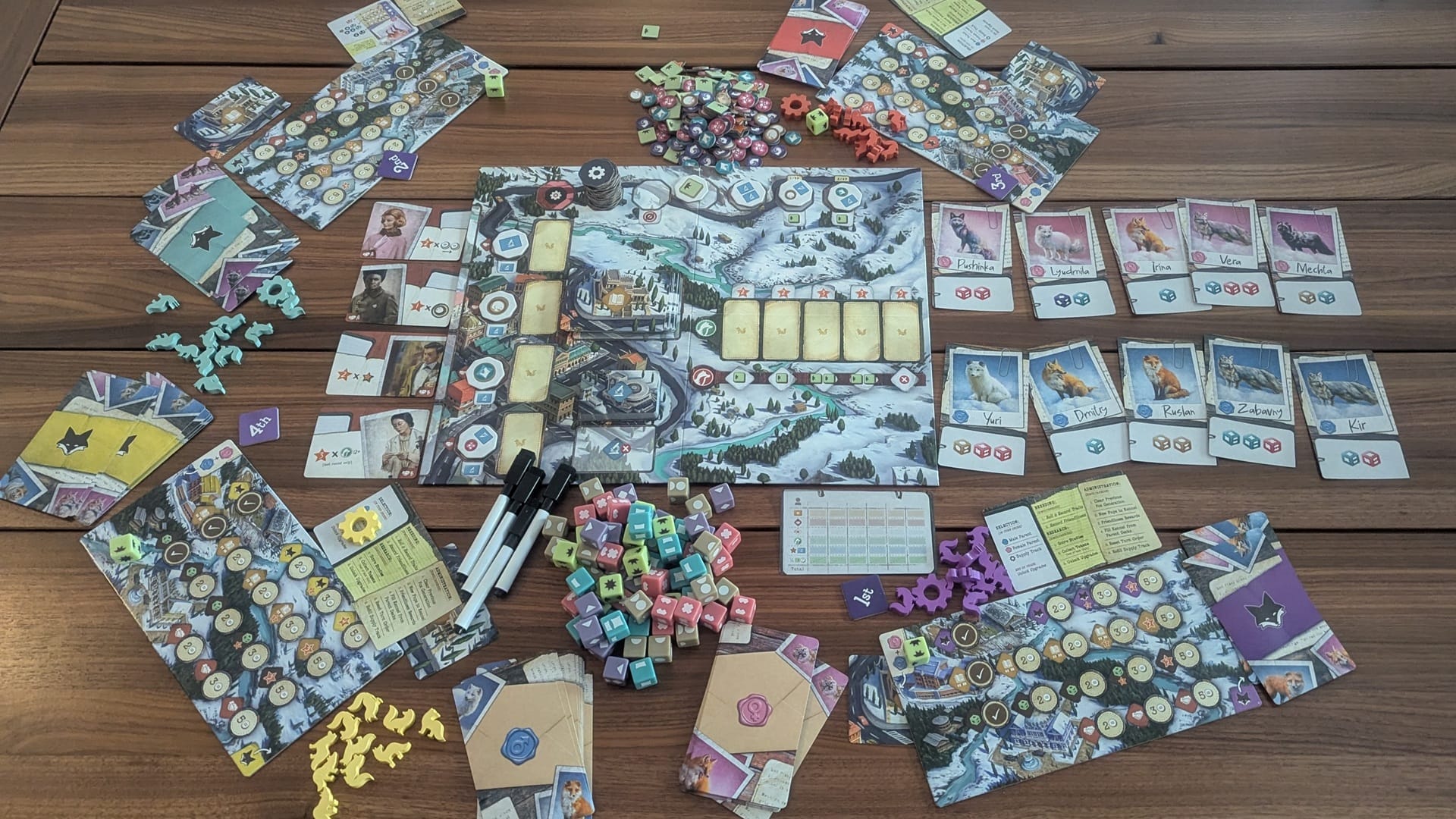
The Fox Experiment set up for four players.
The next phase is the breeding phase, where every player will simultaneously roll the trait dice from each parent. You’ll start by drawing a random blank pup card from your deck. Each player's deck is split into half male and female to randomize their gender. Then you’ll try to combine the symbols from all your dice to make the best pup possible. Once you’ve determined a pup's traits, you’ll mark it off on the black card. Each marked square means that fox will roll that many trait dice if selected next round, and each marked circle will reward you with that trait token. You’ll then count that pup's total friendliness rating by adding up every checked box and writing the total in the friendly score box. Last, and most importantly, you’ll name your new pup.
The third phase is the research phase where players can advance their individual studies. Each player starts the game with one study that will score them points at the end of the game if they’ve bred foxes that meet its requirements. Then each player will collect trait tokens for the pups they’ve just bred. These can be spent to unlock more player upgrades from your player board. These range from more friendly dice (wild dice), the ability to breed more than one pup, more studies, and patrons. Patrons provide some supplies and are special scoring conditions for a player at the end of the game.
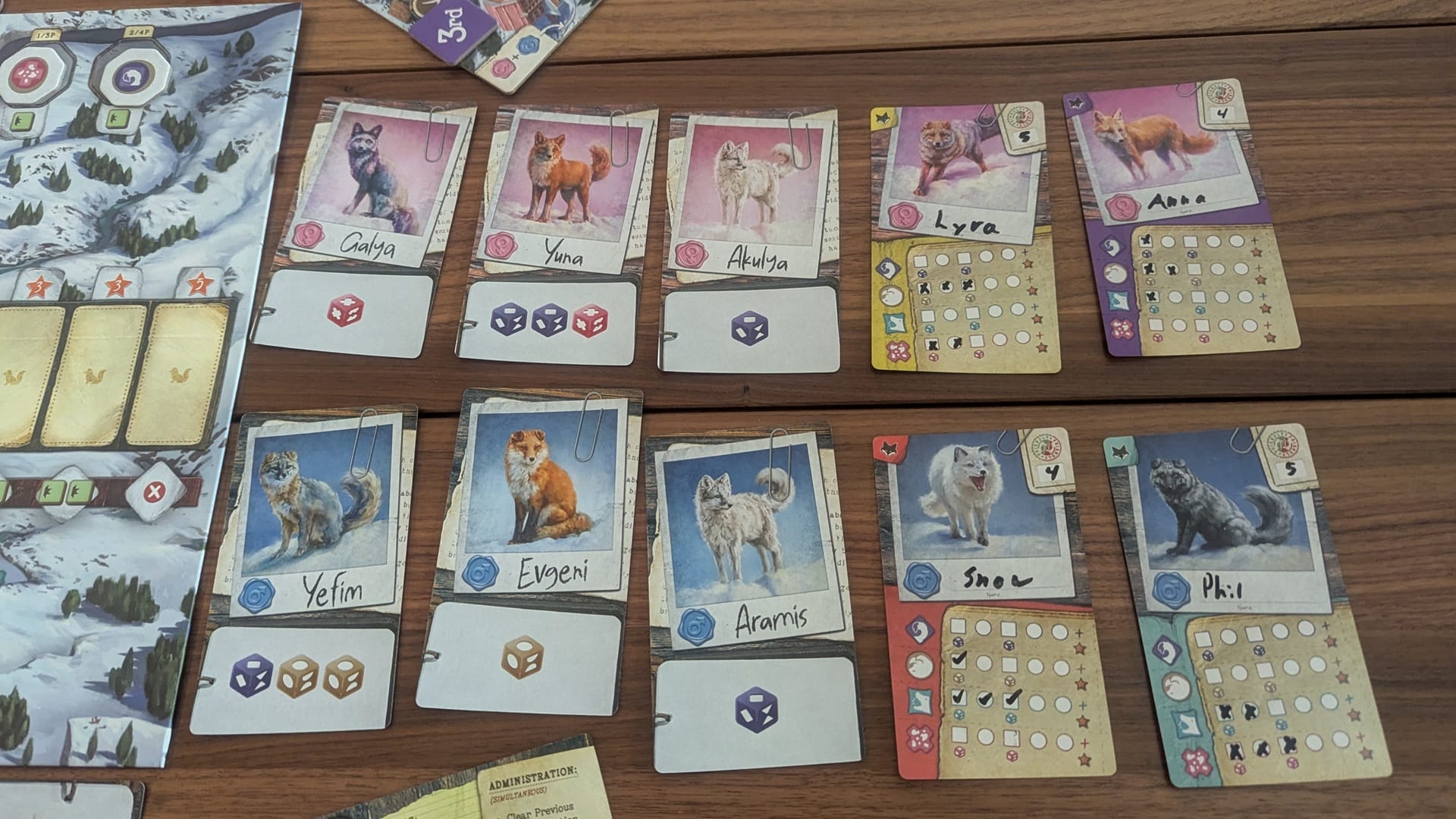
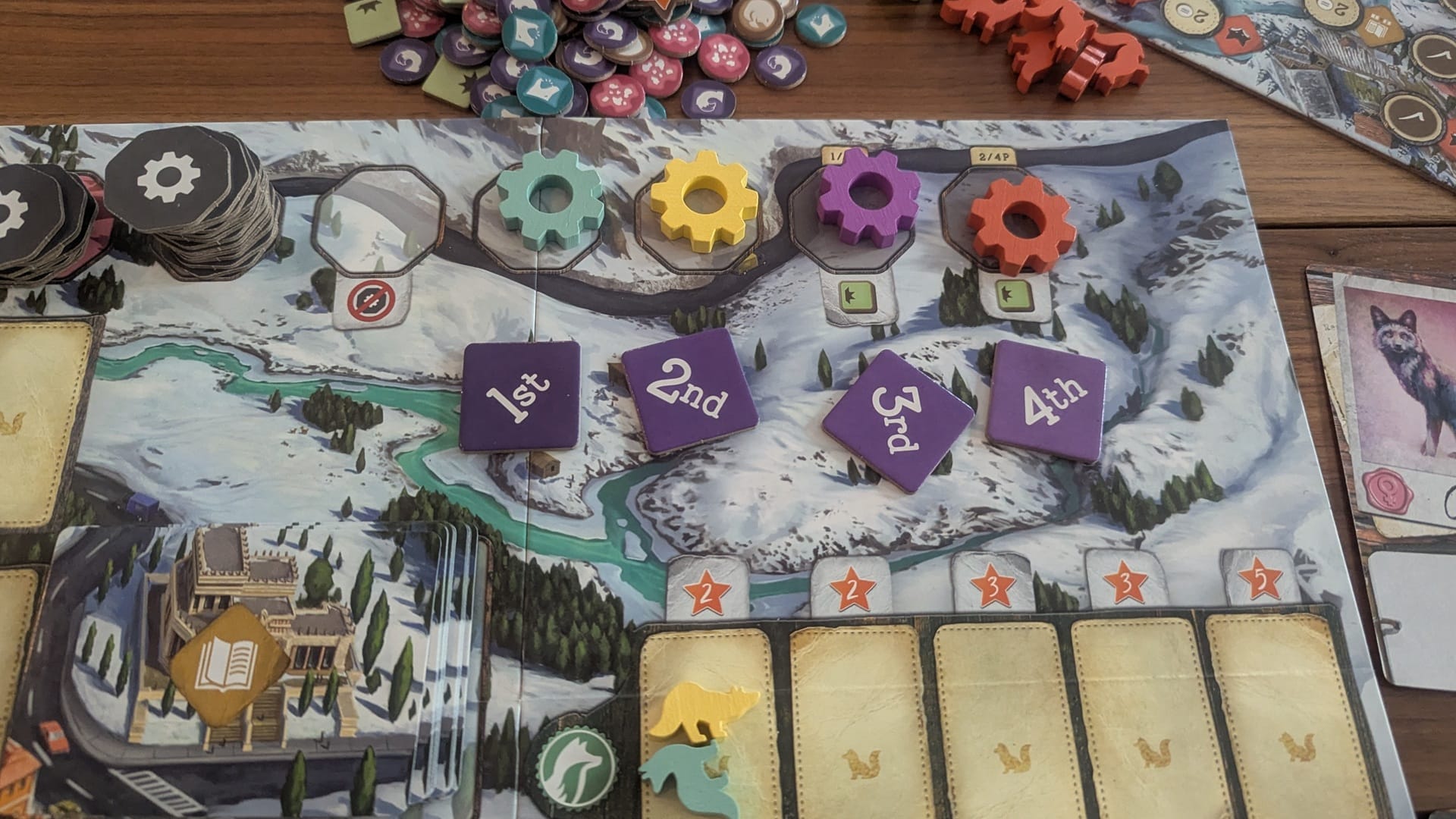
Left: Foxes after they're added back to the kennel. Right: the supply track after players have taken a token.
The last phase, administration, is mostly about setting up the game for the next round. Here you’ll clear any unchosen foxes, move the newly generated pups to the center, check which player had the most friendly fox that round, refill the fox supply if it is still missing foxes, refill the supply track, and update the player turn order.
From there, play will proceed through the five rounds with the player pups taking an ever-increasing amount of selection space. After round five, players will score by adding up points from their studies, upgrades, patrons, any leftover tokens, and whether they had the most friendly fox in a round.
Gameplay Pros
To note, I left a lot out of that rules explanation. The Fox Experiment isn’t the most intuitive game. All of the rules make sense once you know the game, but you’ll want to follow the player aids step by step on your first play. The game is a fascinating mix of designs. The selection phase is in turn order while the breeding and research phase are played simultaneously. The game is also a good mix of strategic vs. tactical play. Your starting research study gives you a long-term goal, but the dice rolls may dictate your decisions that round.
The difficult decision making in The Fox Experiment is spread out throughout each round. The selection phase becomes increasingly tense as players fight for the limited options. There are a lot of strategies to balance. Do you prioritize the foxes you want? They determine the dice you’ll roll. Are you chasing your studies? They are worth a lot of points. Do you want any of the available tokens the selection track has randomly generated this round? Science cards and trait tokens are fast ways to access upgrades. What about turn order? Do you need to go first in the next round? If not, the later turn order slots net you more of those juicy tokens. This adds a further layer of complication as you try to determine what the other players want this round. The decisions in this phase are as much about the other players as they are what the game is offering.
The breeding phase then offers completely different choices. The dice are random, so it’s possible to have bad rolls. There is mitigation through the wild dice and tokens, but sometimes it isn’t enough. Your rolls may be perfect for chasing your study, or you may have to pivot, making the best with what you have. One of the upgrades is the ability to breed more pups, and there’s a valid strategy in making as many pups as possible, hoping luck will guide you. Or you could focus on dice mitigation and attempt to craft the perfect pup each round.
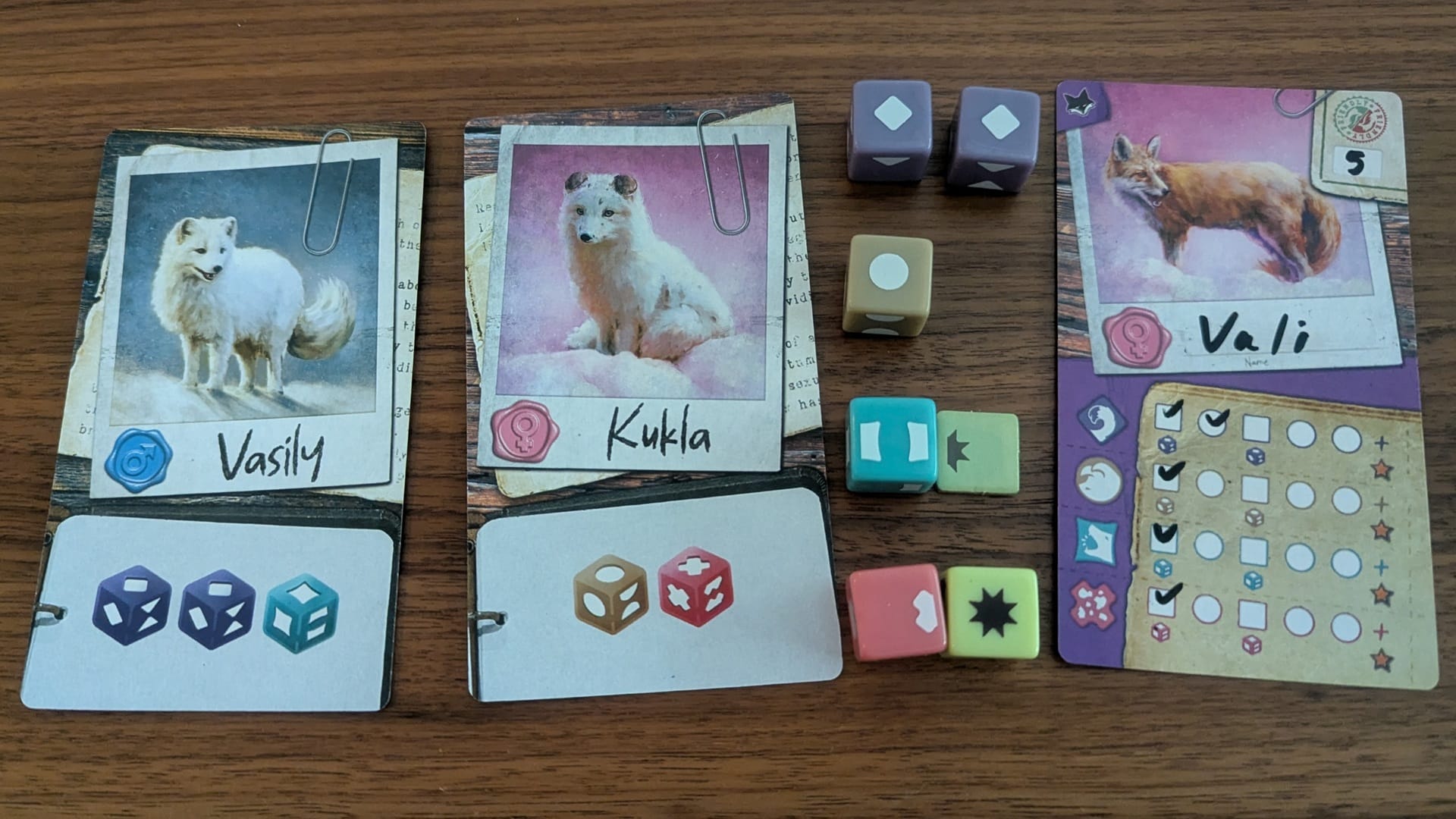
Making a fox pup.
The main use of trait tokens is to unlock the upgrades on your player board. The upgrades offered to players aren’t separate paths. You will do your best to combine them into a winning strategy. I personally love the extra wild dice as they offer a level of flexibility that makes breeding pups just a little bit easier. Has this won me many games? No, but I just love rolling dice. More studies mean more goals to chase. Patrons are the most unique as they offer some immediate supplies, but also a unique scoring condition. If you’ve been building toward a specific patron's condition, you can net a lot of points. I should mention the science cards too, as they're sprinkled throughout the game. They let you break a rule of the game or give you an immediate advantage when played, making them fun to use.
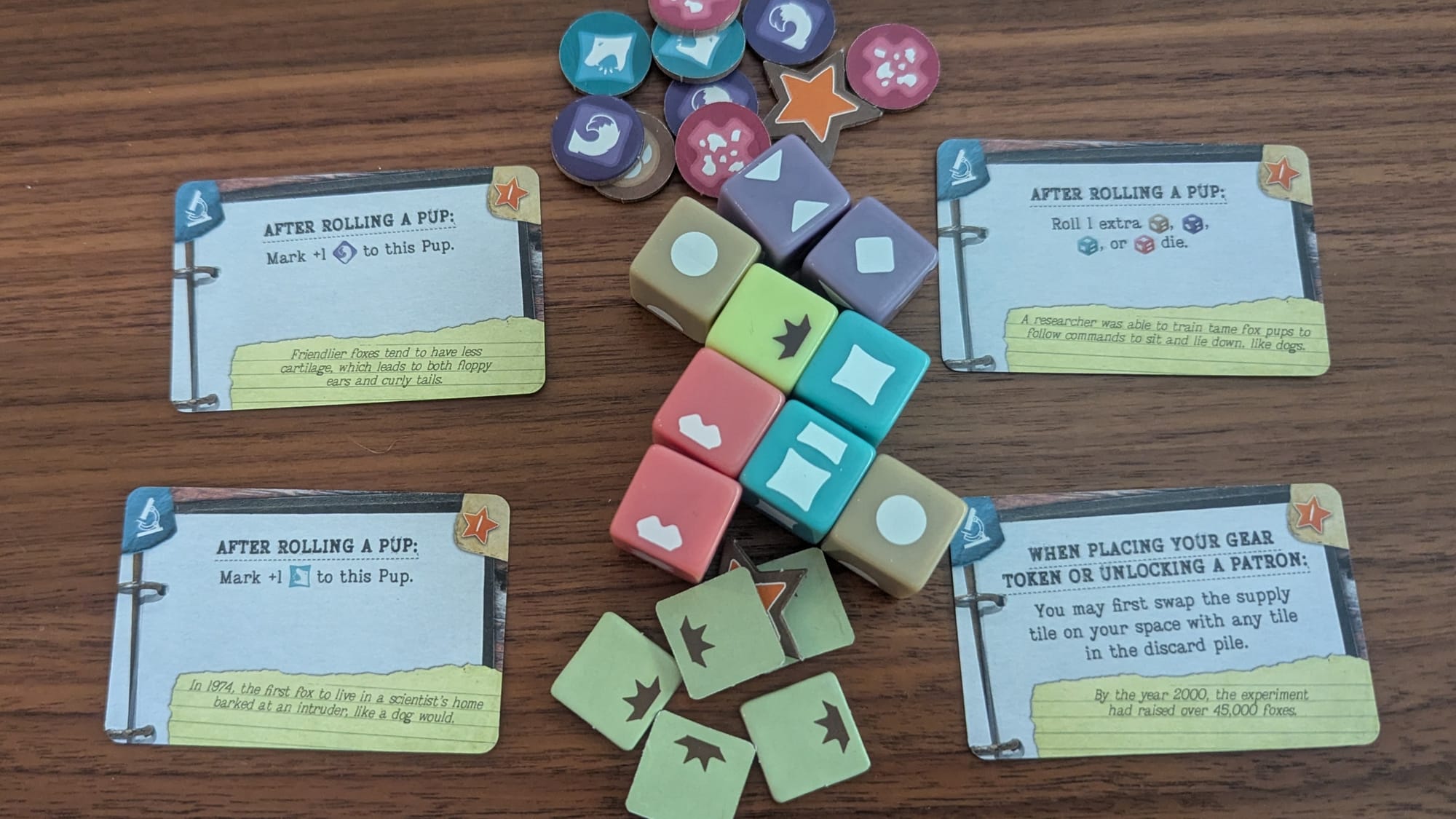
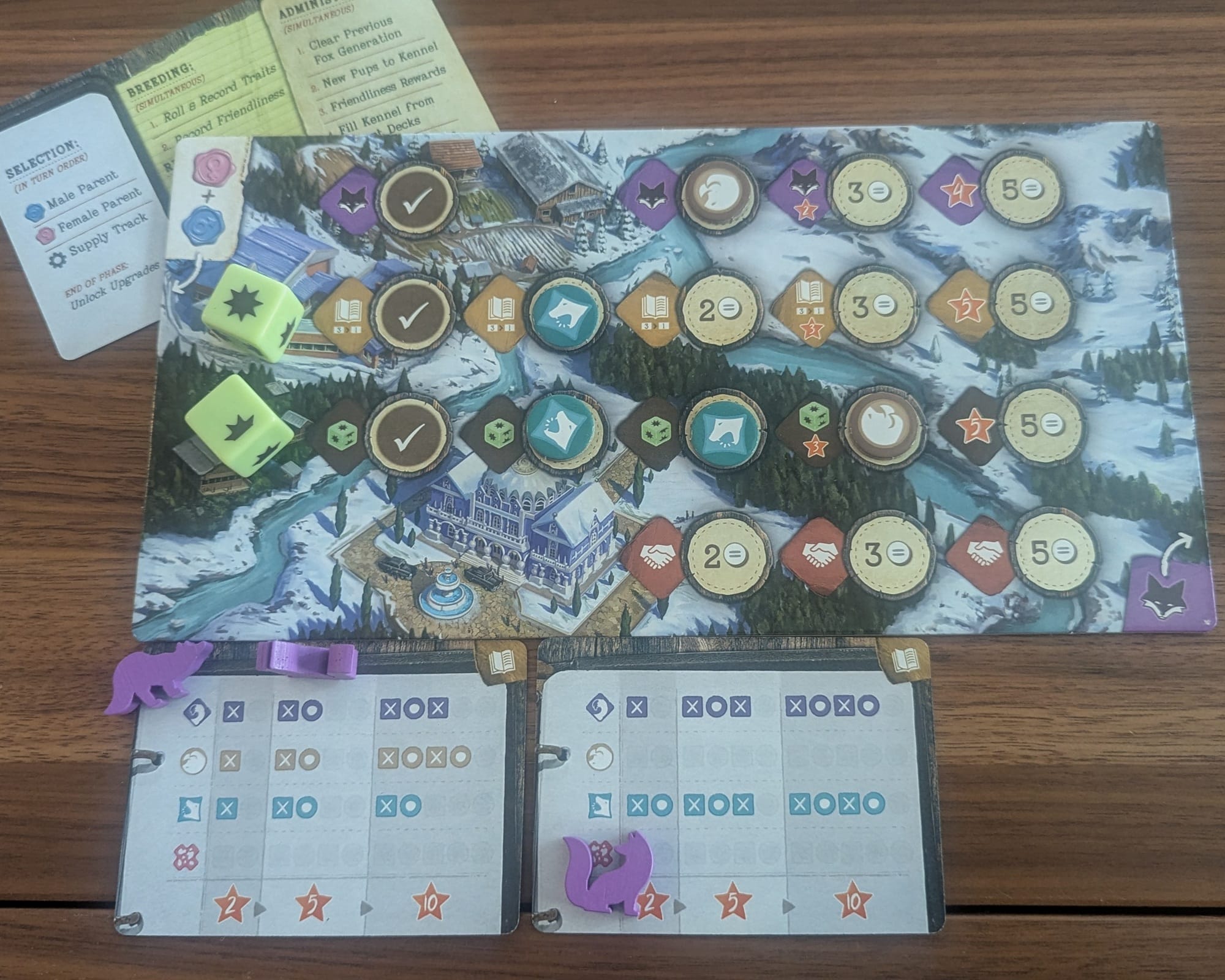
Left: Science cards. Right: The player board as it is upgraded.
All of the player interaction is front loaded in the selection phase; the rest of the game can be played simultaneously, which greatly speeds up the game. This is my favorite aspect of the game. If you’re new to the game, it can be helpful to have someone go through all the steps, but once we knew it, we found ourselves arriving at the end of each round with our pups ready for evaluation.
I find the overall experience a wonderful combination. I find that the tension in the selection phase releases into an enjoyable dice rolling mini-game. The simultaneous play makes the game itself friendly to jump into. The theme is also great, as I never knew about this history. It was interesting to learn while enjoying a great game. It’s just fun to make cute foxes, and you’ll find yourself attached as soon as you name them. The game isn’t long enough for the randomness of the dice to bother me, but I recognize that can be frustrating. I also love the upgrades the game offers. They’re only four options, but they are each fun complications for the game, with the true fun in combining them.
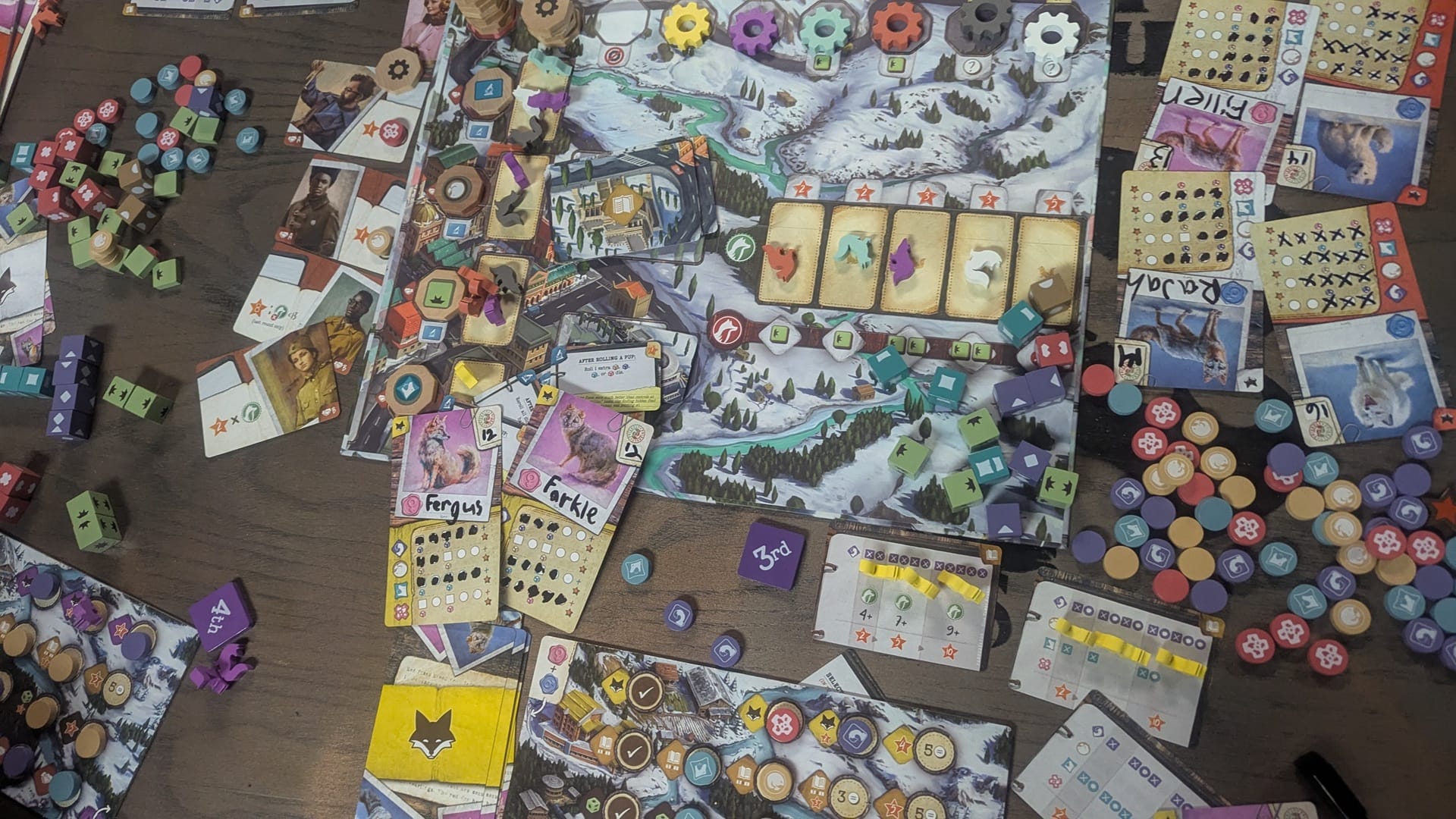
Lastly, I want to mention that there is a five/six player expansion available. Normally I am wary of expanding player counts like this, but here it works due to the simultaneous play. It does add some length to the game, but not nearly as much as other euro games I’ve experienced.
Gameplay Cons
While the simultaneous play does a lot of work to make the game quicker, the game can drag in the later rounds, especially if players are making multiple pups. The flip side of the simultaneous play is that the majority of the game can be focused on your own machinations without much player interaction. Even with the luck mitigation, it is possible to just have bad rolls while other players are rolling great. This can sour any gaming experience. Lastly, once you’ve played the game multiple times, you’ve seen everything the game has to offer. You can try different strategies, but you’ll know what the game is about.
Components
I should mention that you can find two different versions of The Fox Experiment. A normal version and a deluxe wooden edition. Having played with both versions, I’m torn between the two. I love the dice in the base version; they’re big and chunky with enough weight to them to make rolling extra satisfying. The dry erase fox cards are neat, and the final score sheet is dry erase too. I wish more games did this. The fox meeples are also wonderful, with multiple poses. I would have liked the player board to be dual-layered, as it's easy to scatter the trait tokens that mark your upgrades. Other than that, I find the rest of the base edition cardboard components good.
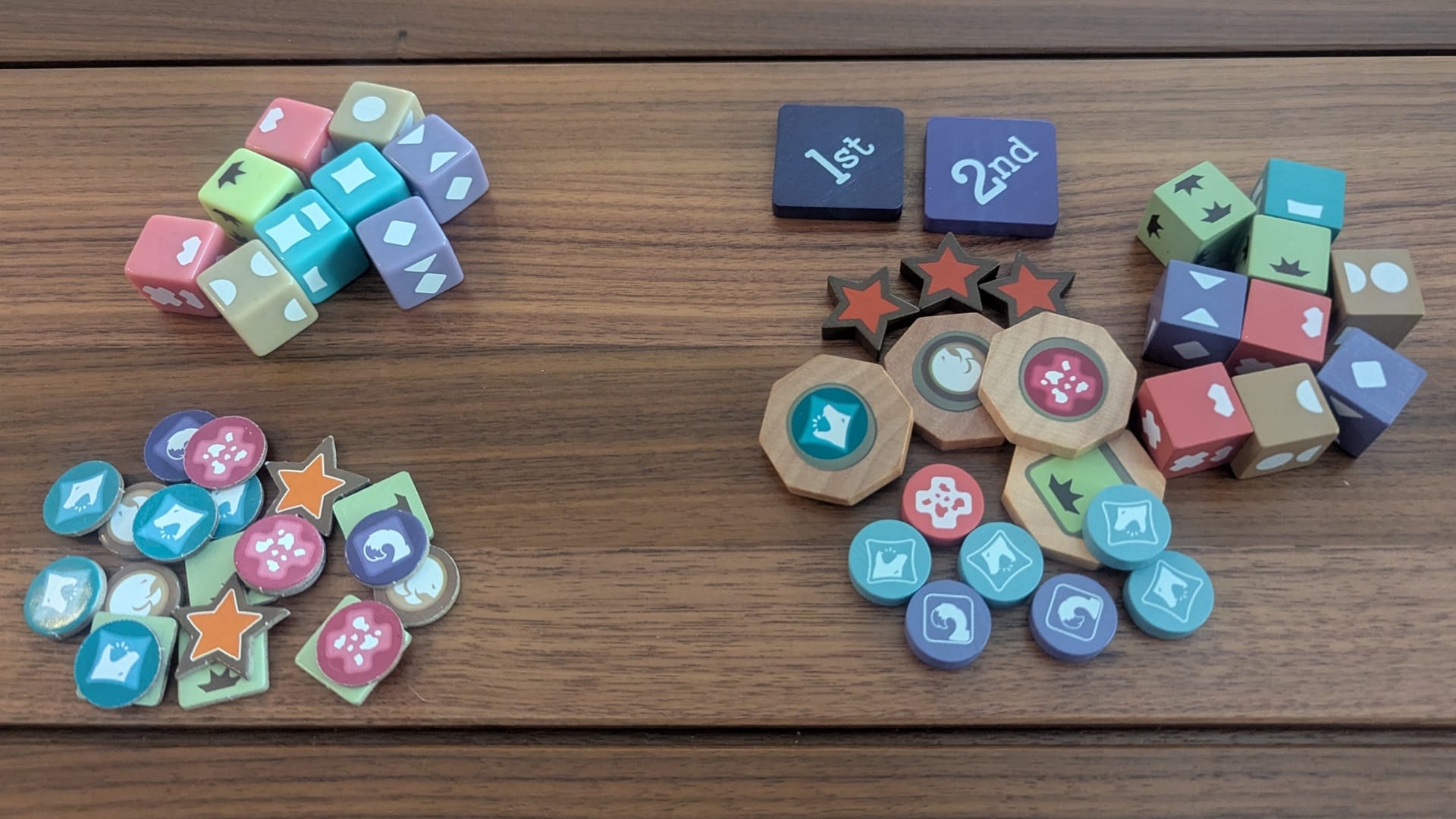
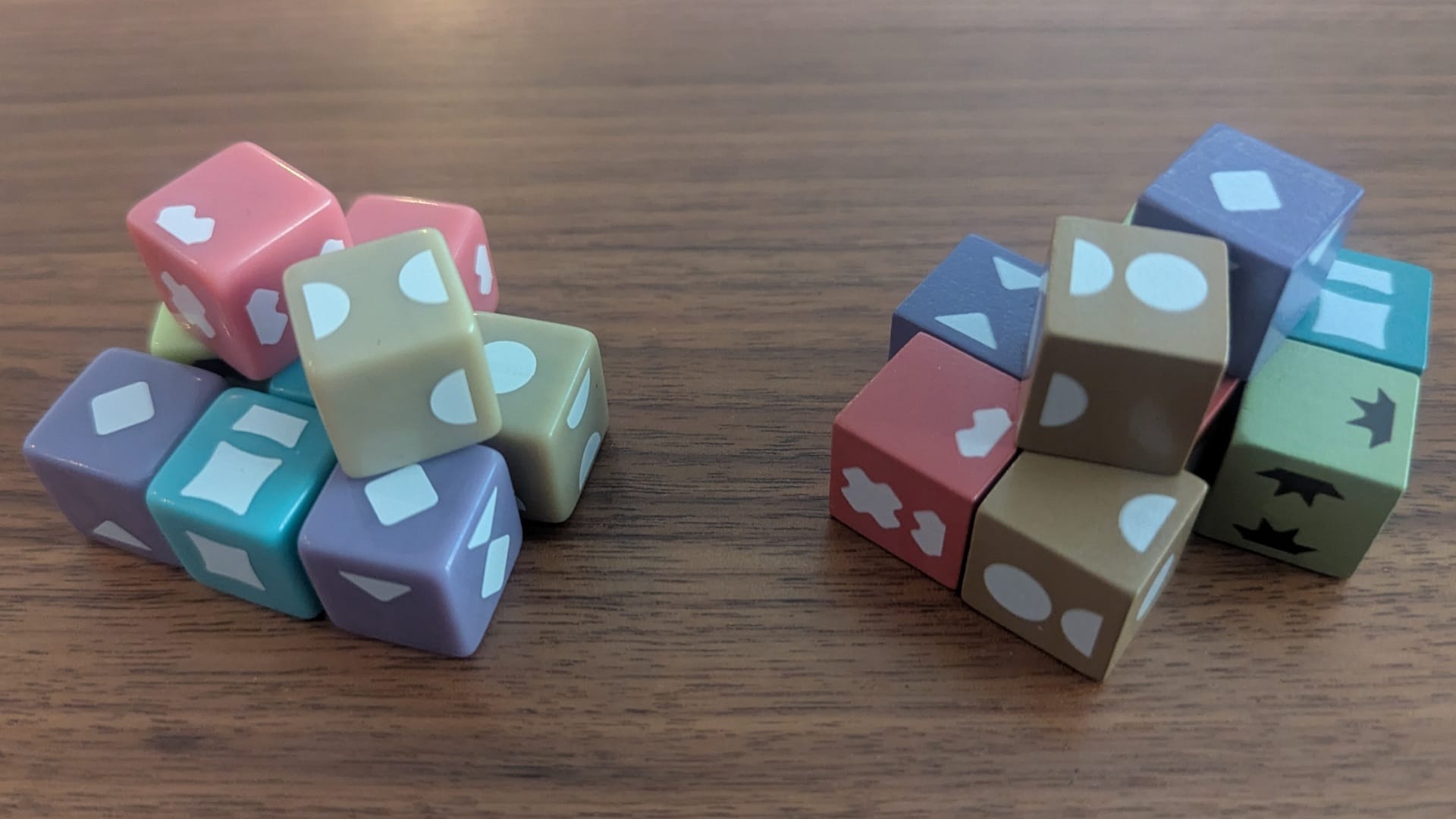
A comparison of the components.
The deluxe wooden edition is an upgrade in every way except one: the dice. The wooden components are consistent. The wood is lightweight and high quality. The tactile upgrade for the tokens is noticeable. The problem is that this also applies to the dice. They are the same size, but now lighter with a sharper edge. This combination makes the wooden dice harder to roll than the plastic ones. The loss of the heft makes them a downgrade when compared to the base edition. For me, the perfect version of The Fox Experiment has the wooden components, but the plastic dice, which is weird.
The Fox Experiment
Great
The Fox Experiment is a fun mix of mechanics. The mix of dice rolling and decision-making allows the game to be thinky without being too difficult. The historic theming further enhances an already fun game into a special mix that I’ve loved showing to players. If you’re interested in a unique game that features cute foxes, you should give The Fox Experiment a try.
Pros
- Interesting historical theming
- A good mix of mechanisms
- Simultaneous play makes the game faster
Cons
- Dice rolling can be luck dependent
- The deluxe wooden dice are a downgrade
This review is based on a retail copy provided by the publisher.