The last time I played Fellowship was shortly after it dropped last October. I didn’t dive deep into the game at all, but that’s not because I was uninterested; rather, my attention was divided at the time between various projects and work. When I got the offer to jump in to try Season 3 early, I eagerly accepted. Take note, this preview is from the perspective of someone with barely any experience in Fellowship, so I’d like to first explore the new content and then whether or not now is a good time to jump in as a new player.
Season 3: Rise of the Heskyr is themed around blood, with a new dungeon, the new faction being blood-worshipping cultists, and the new hero, Gunde, having a kit based around bleed damage. That’s a lot of red. This season also boasts a progression overhaul, new ways for players to socialize, and more endgame challenges.
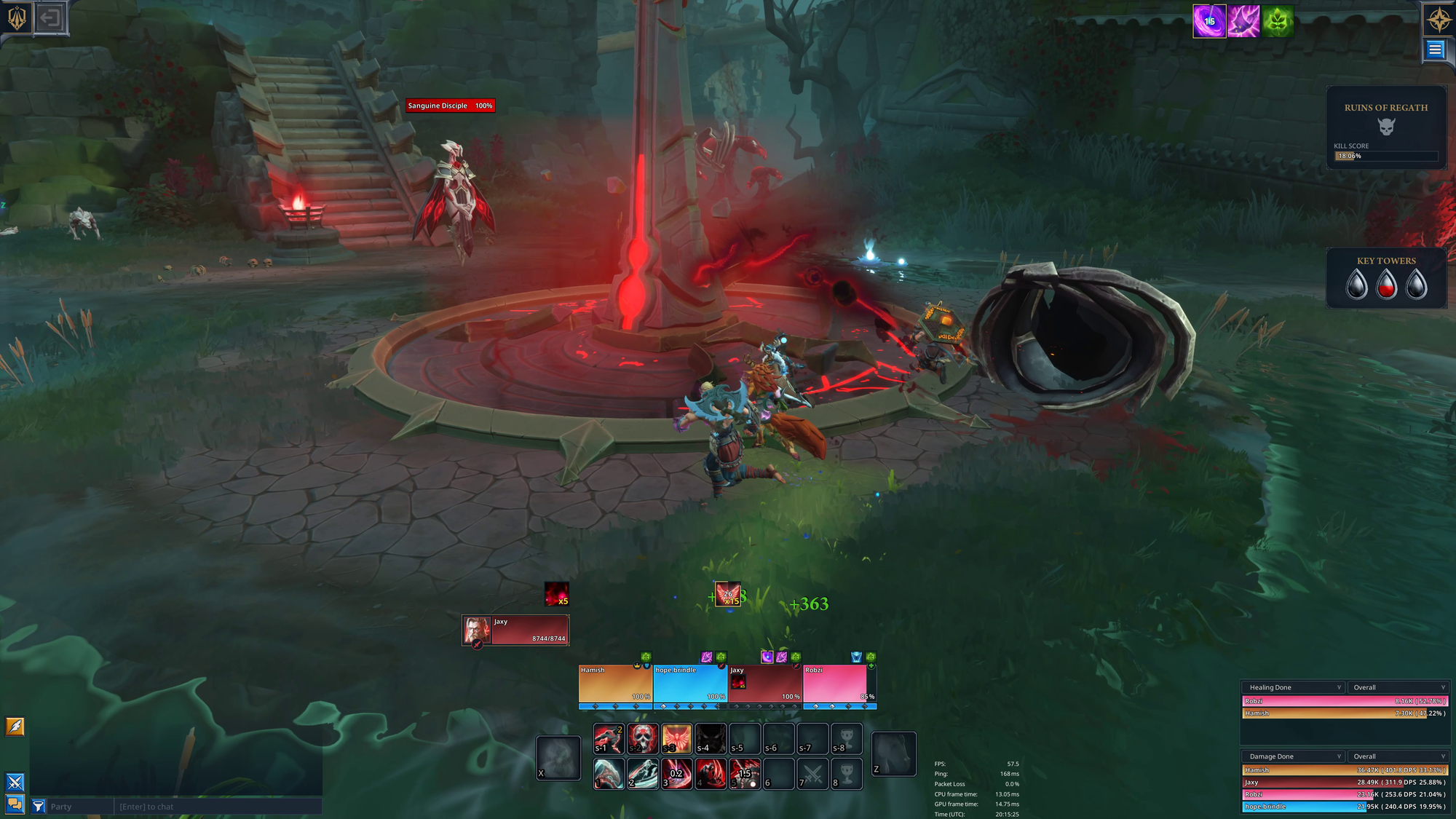
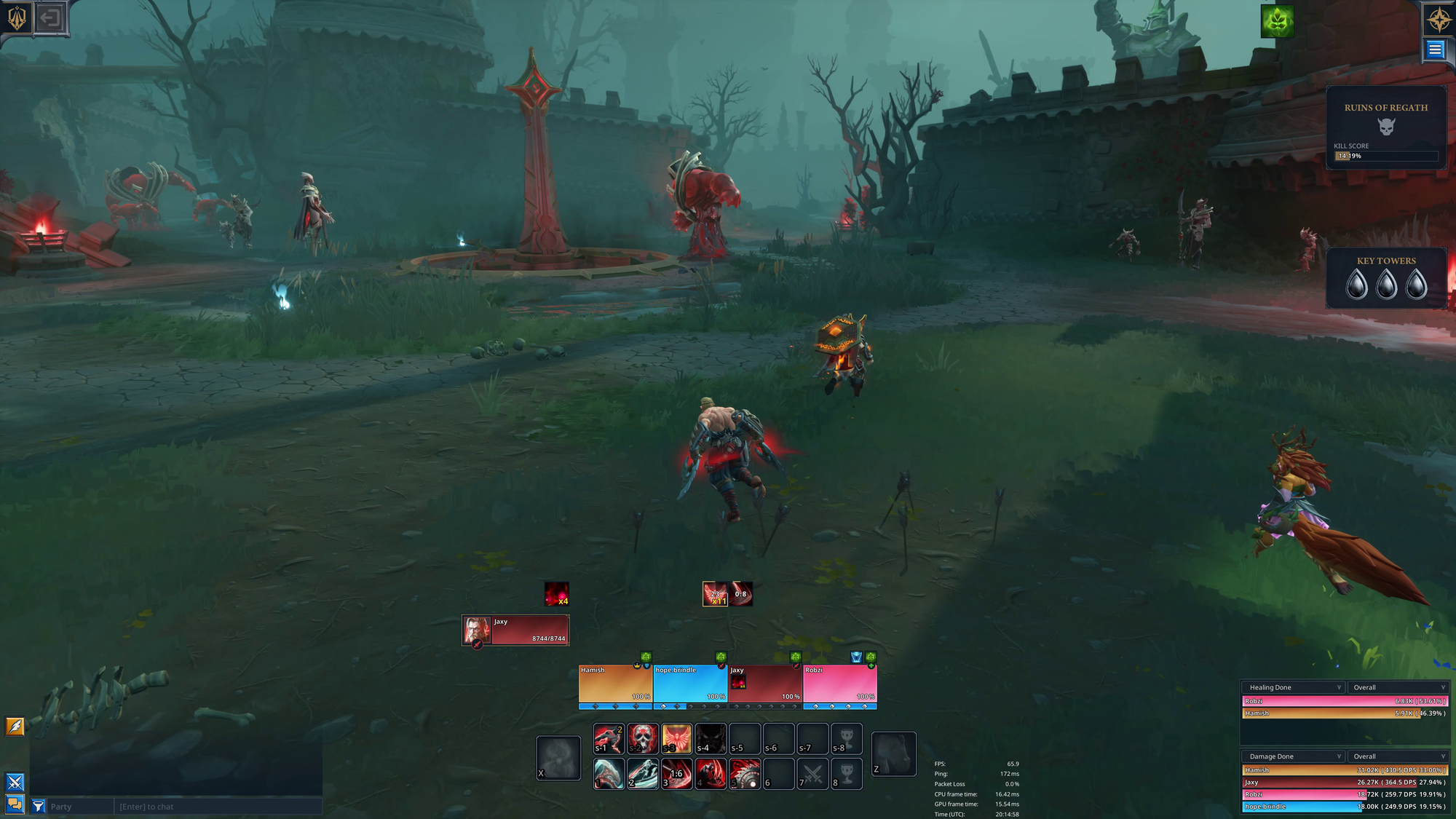
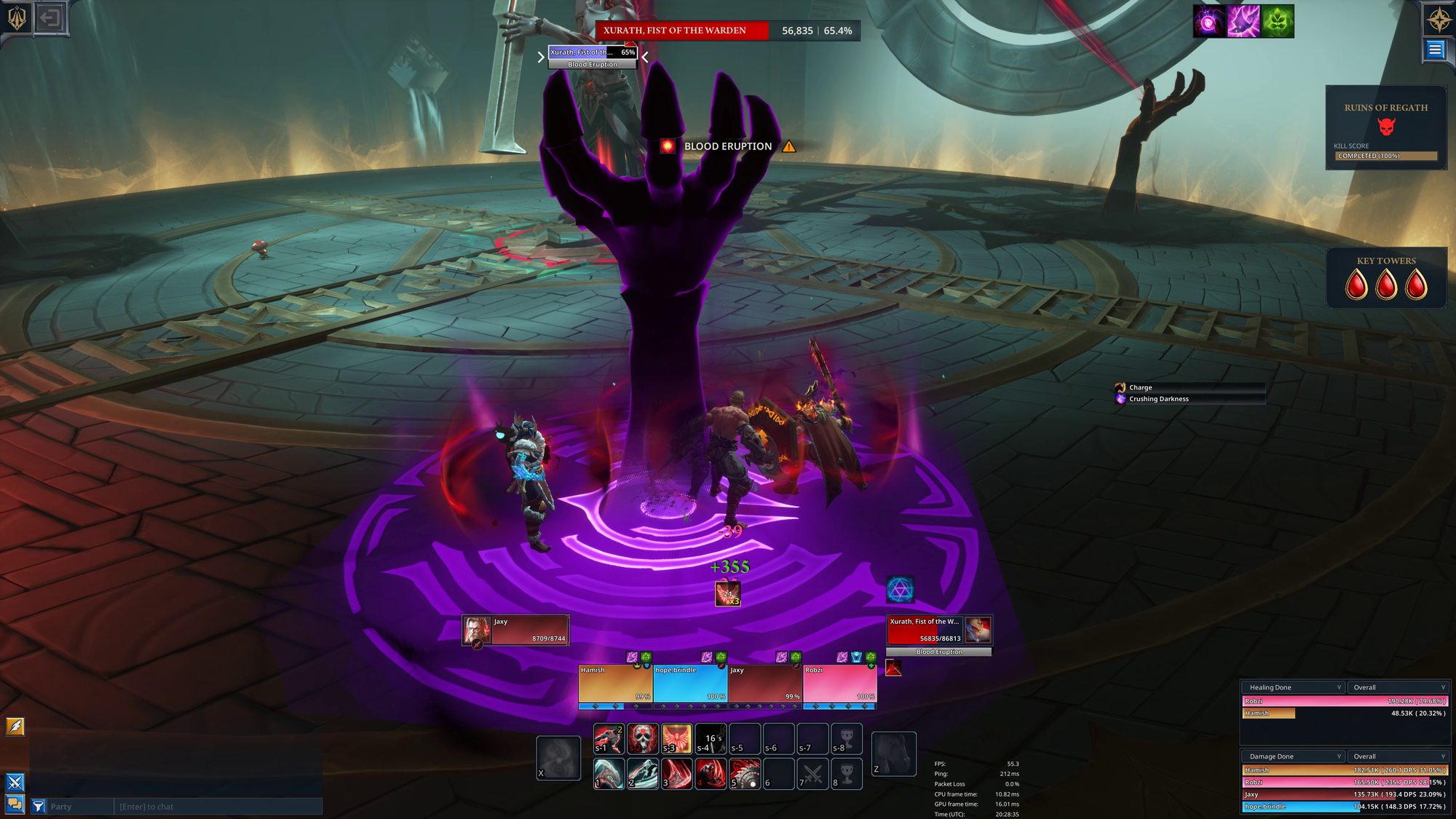
Starting off with the Heskyr content, there are two new dungeons: Ruins of Regath and Scryer’s Peak. I played through Ruins of Regath, a desolate area with a murky, slate grey and muted green color scheme, with splashes of red light emanating from crimson flames in stone sconces. The area has a backdrop of fog, and the whole visual design feels right at home for a blood-worshipping cult. The dungeon has players slaying the new Heskyr enemies and depositing their blood at various Key Towers, which are stone obelisks with lines carved into the ground around them. As your team deposits blood, the lines on the ground and a central line on the tower will fill with red, indicating completion. The blobs of blood also make a satisfying splattering noise when you’re depositing them—it’s gross in a fantastic way.
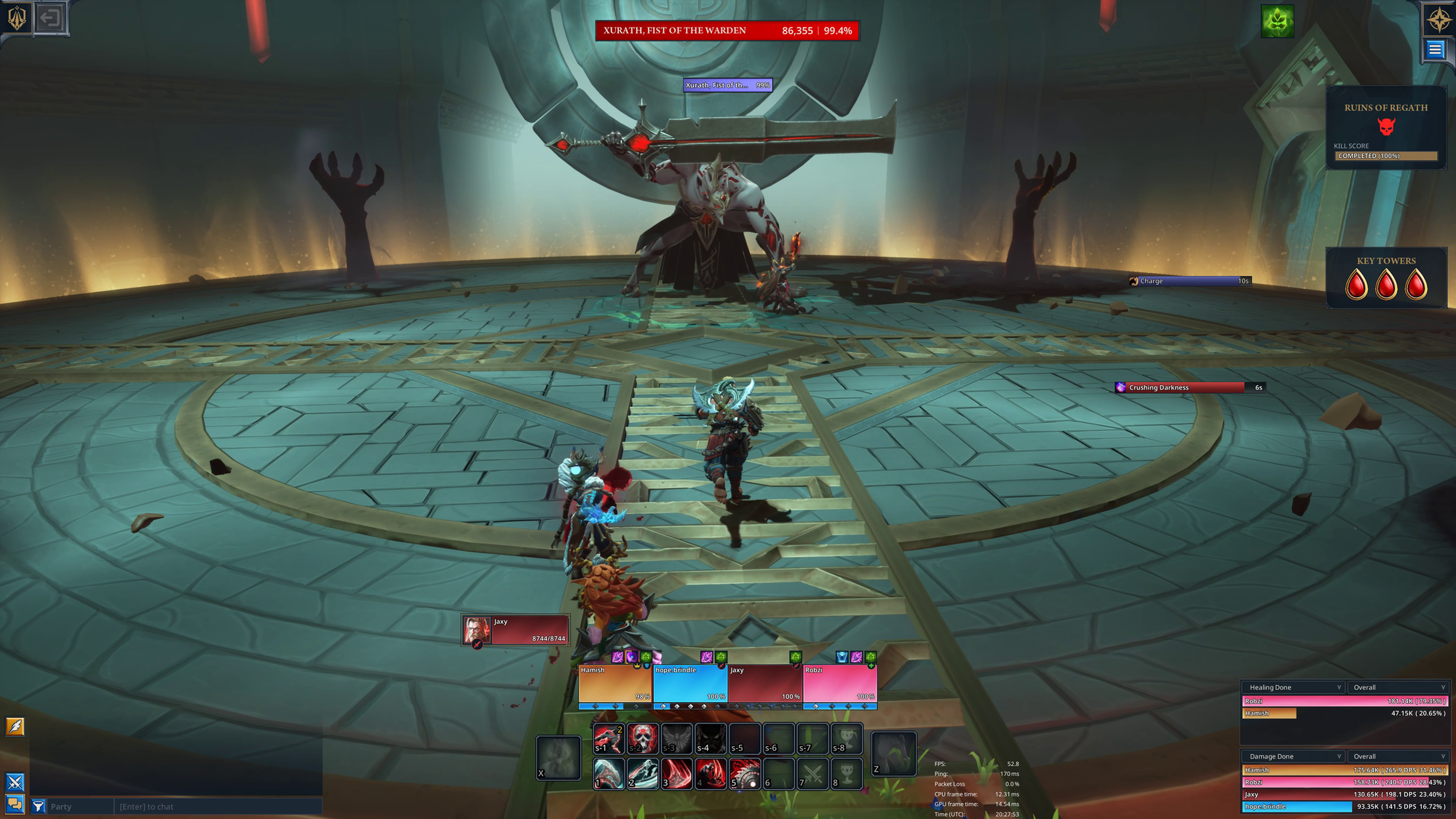
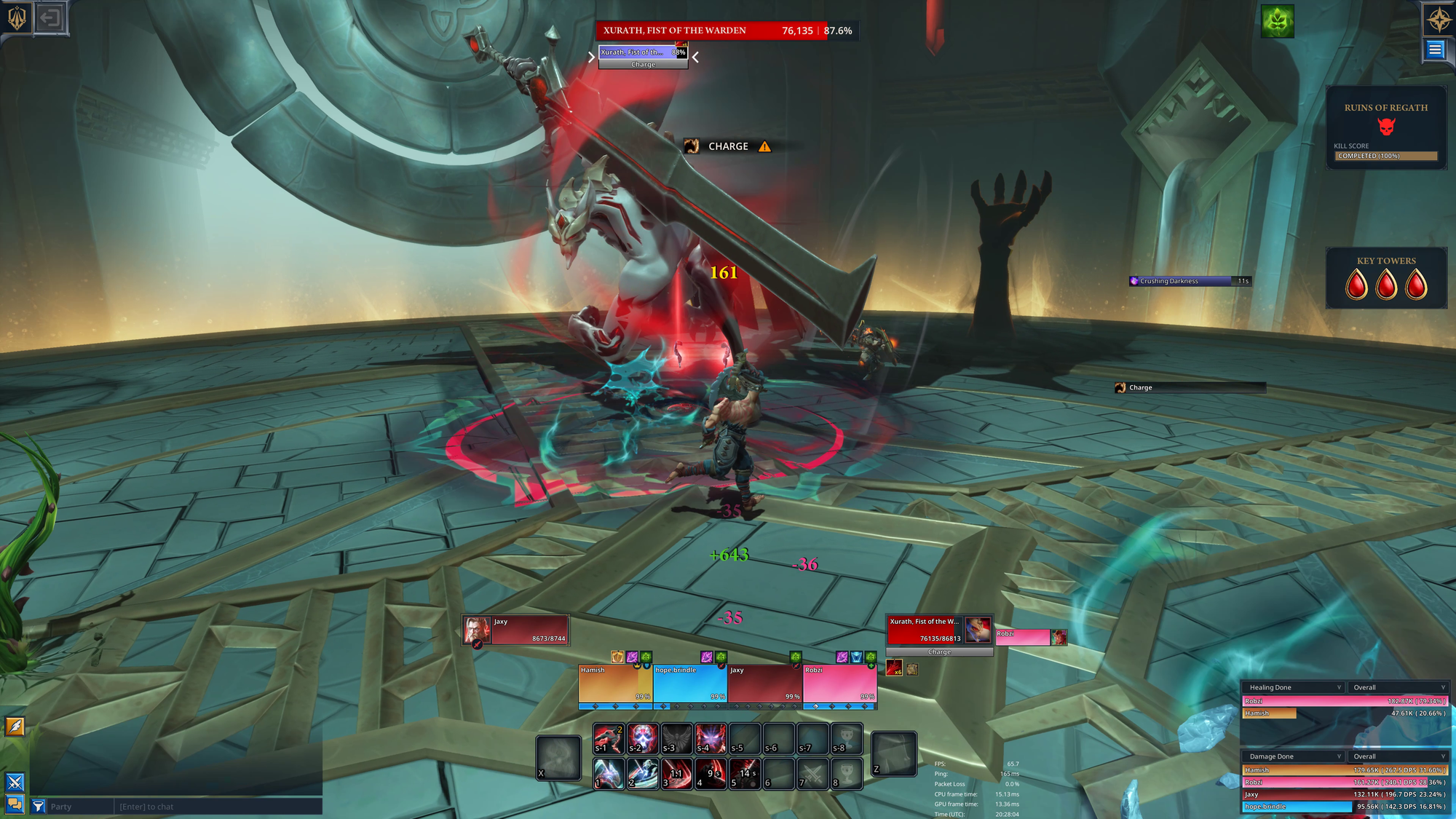
The boss of Ruins of Regath is named Xurath, Fist of the Warden. It’s a grey-skinned humanoid with deep-red blotches pulsating on its muscular, hunched, brutish frame. Its sharply angled head looks like the mix between a vampire and a dragon, and it wears an armored ribcage with spines jutting down its neck and back. He wears a dark, subdued grey-green cloth with subtle gold accents. His weapon is a large, warped, and crude sword with glowing red blotches at the pommel and guard, the latter of which runs up the length of the blade in a thin line.
Xurath’s arena is a circular platform with four large hands sticking up around the edge of the arena. When Xurath hits a certain percentage of health, it will begin casting Blood Eruption, and players need to run to one of the four hands, each glowing different colors. Xurath gets a buff depending on which hand your group chose. This even happened twice for my group, empowering Xurath’s tank slam, thus sending out damaging orbs that people have to dodge, and empowering its soaks, dealing increased damage to targets at low health. I was told that the idea behind this system is that certain team comps will prefer to give the boss different buffs. I like this mechanic; it’s a simple yet effective way to add player choice to a boss fight.
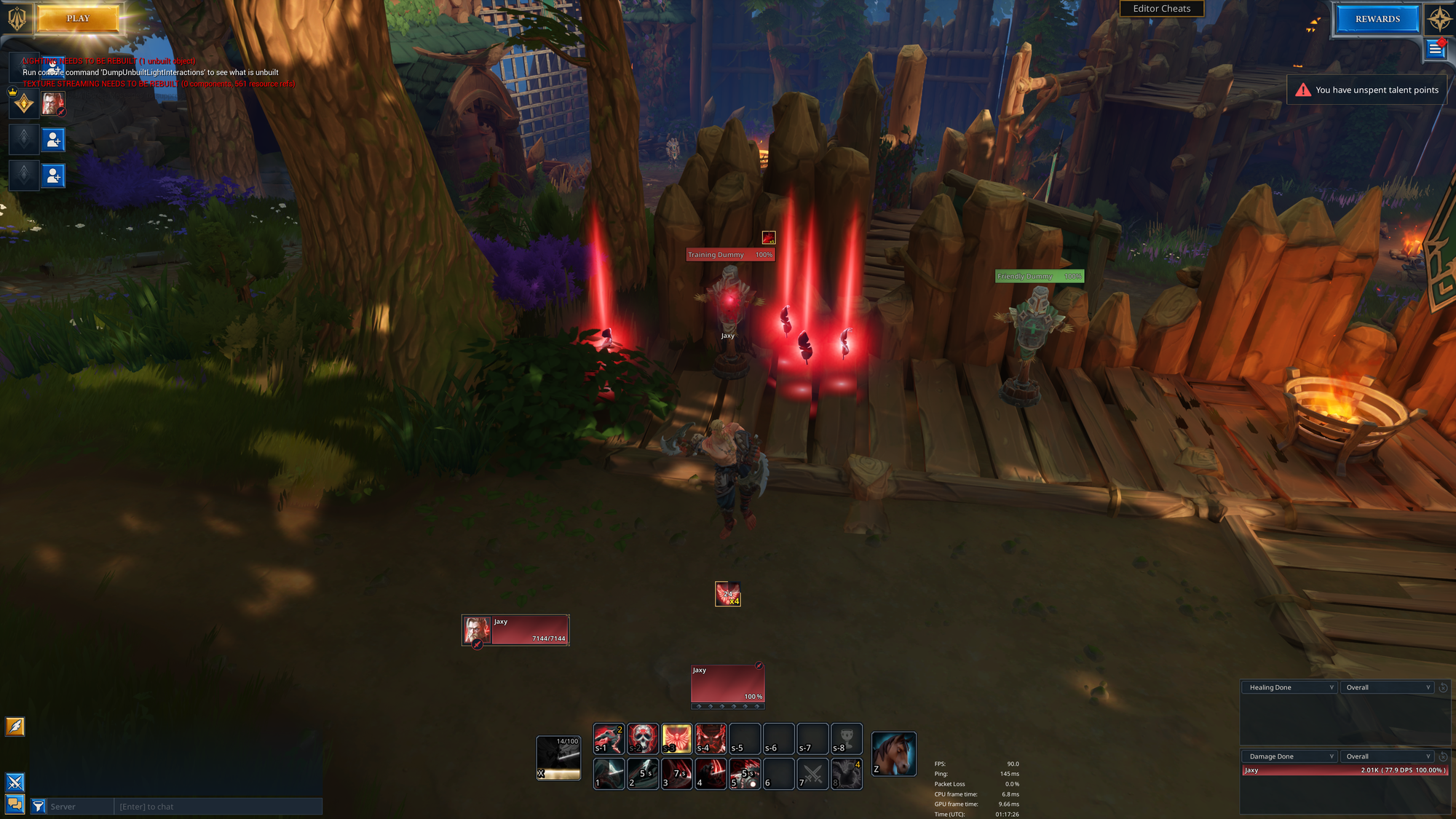
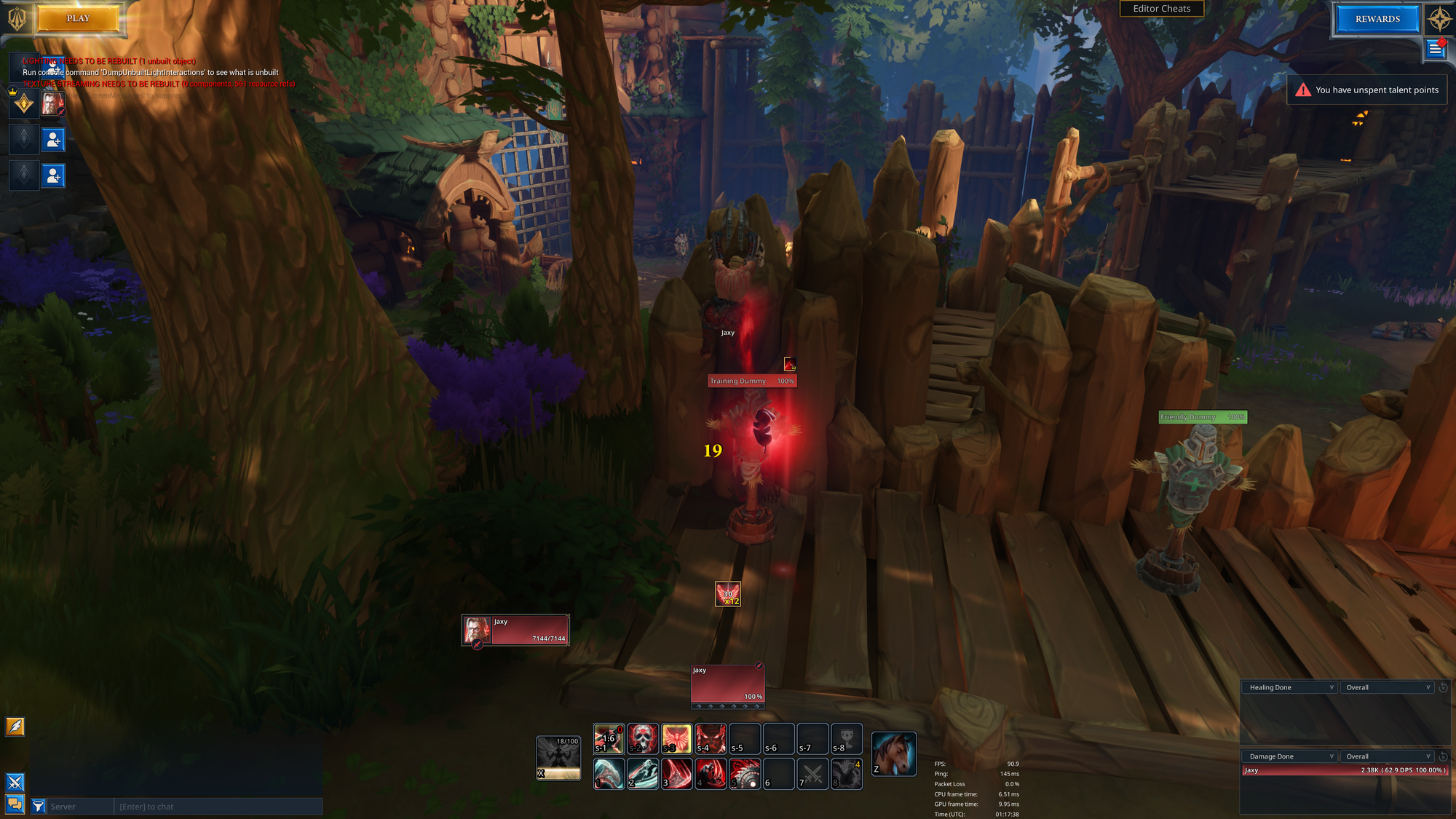
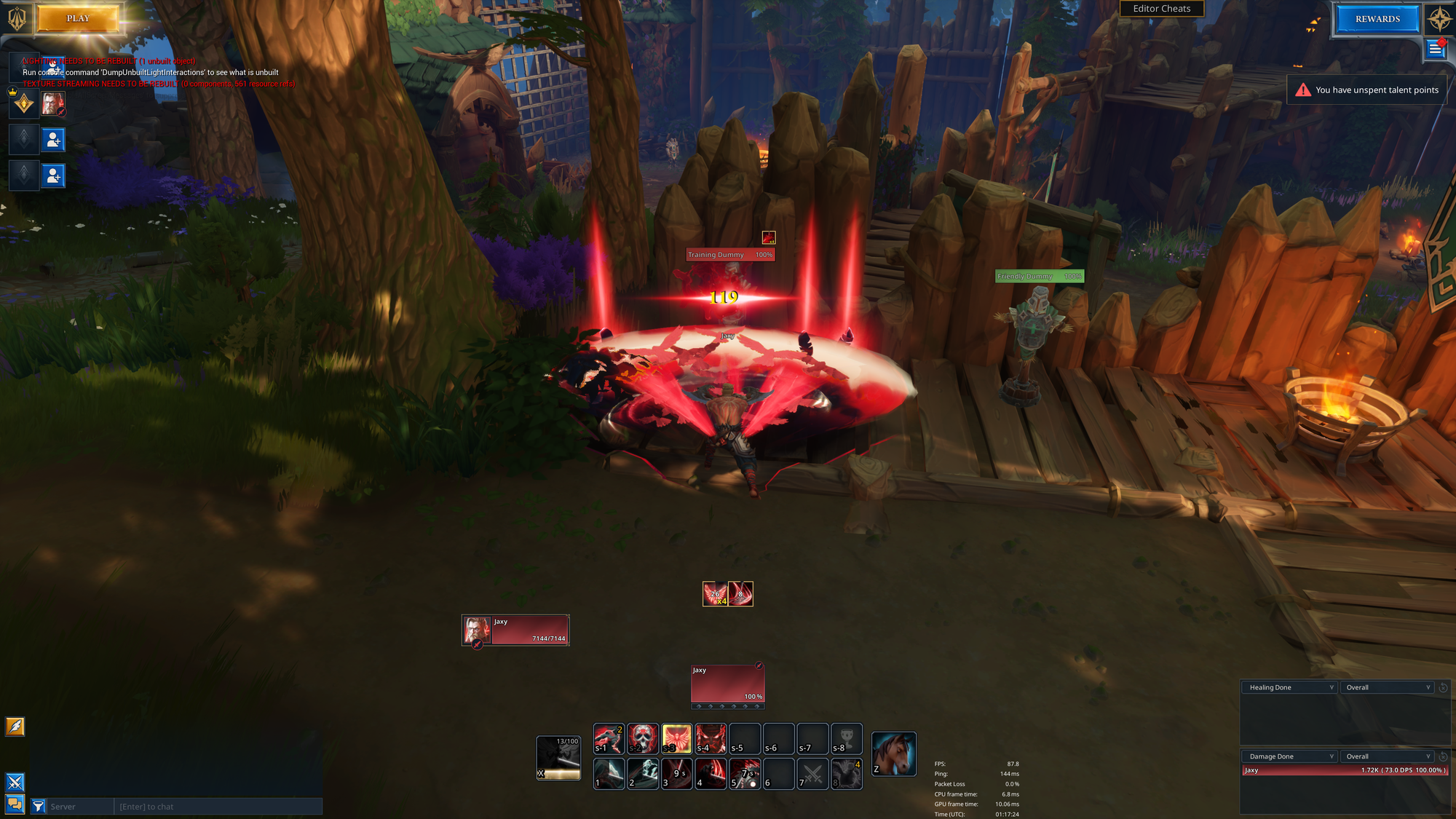
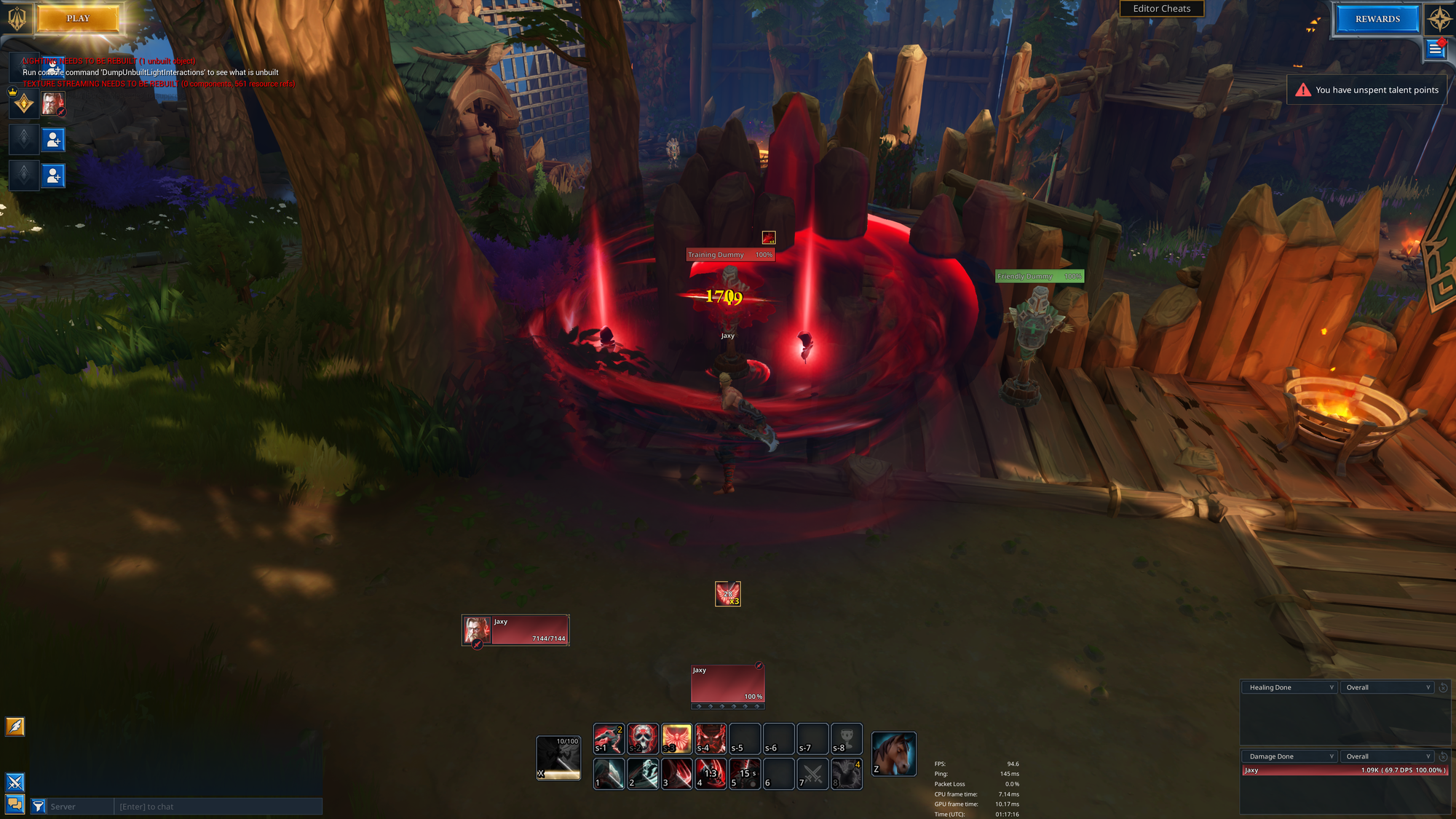
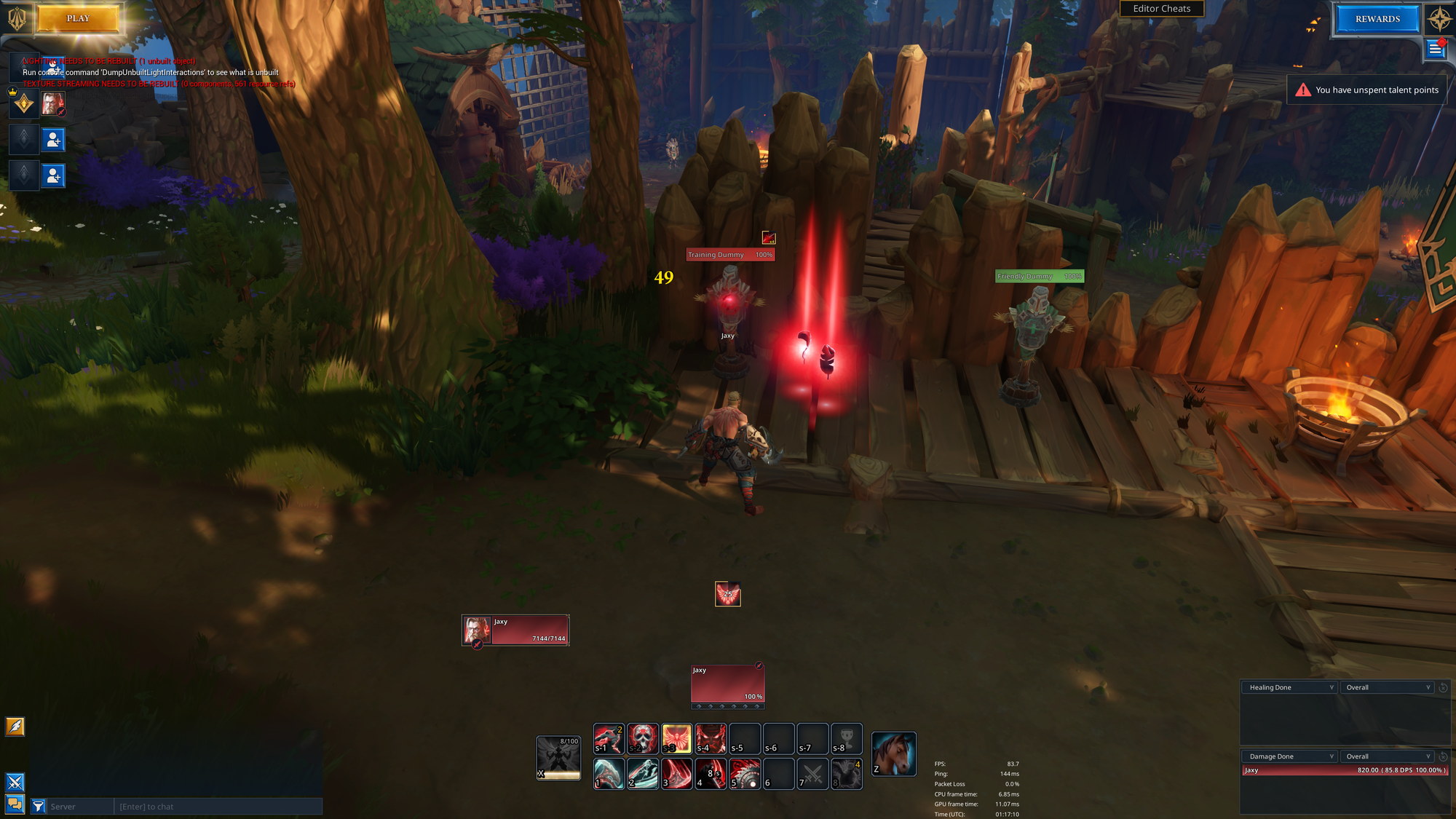
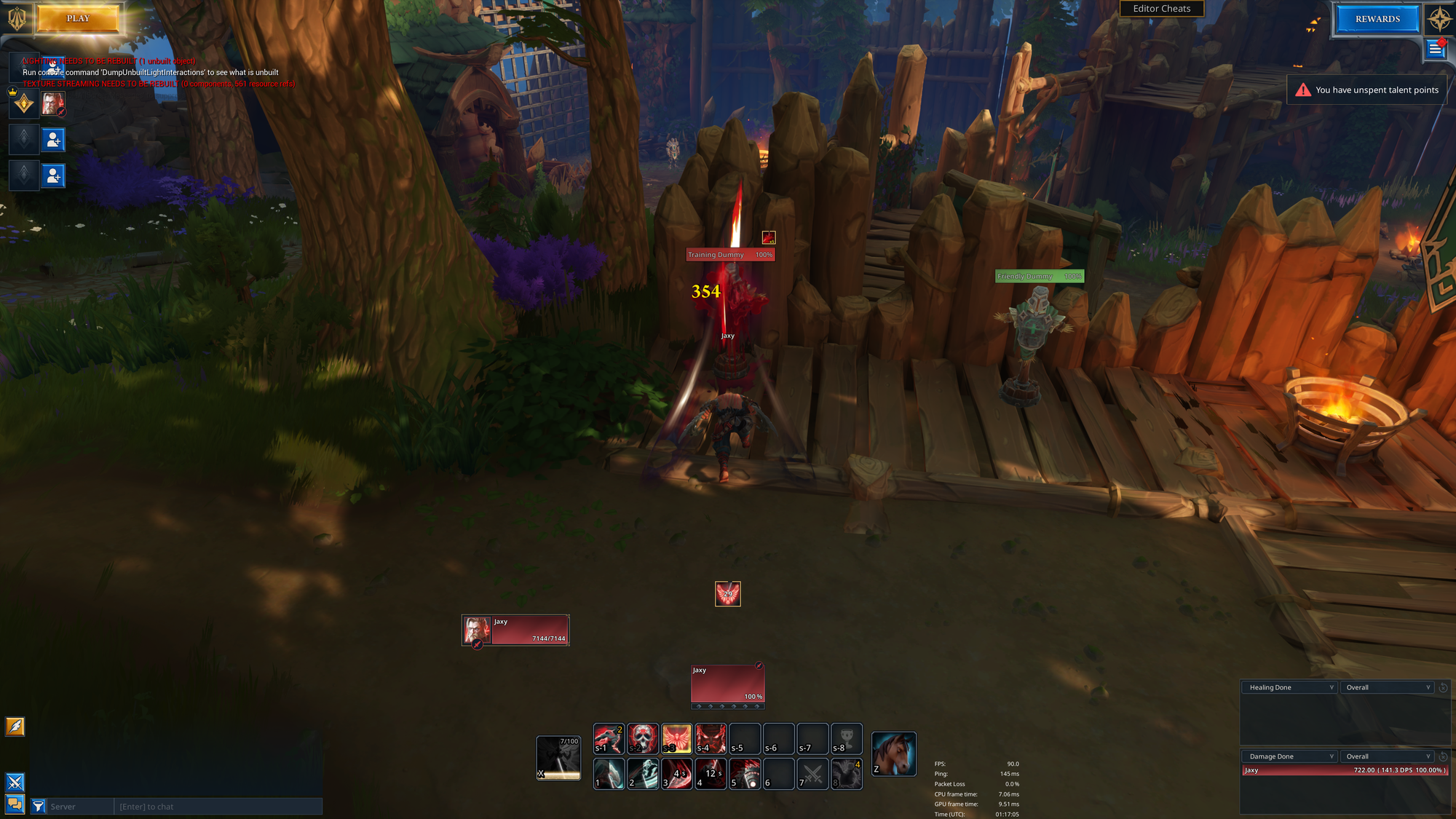
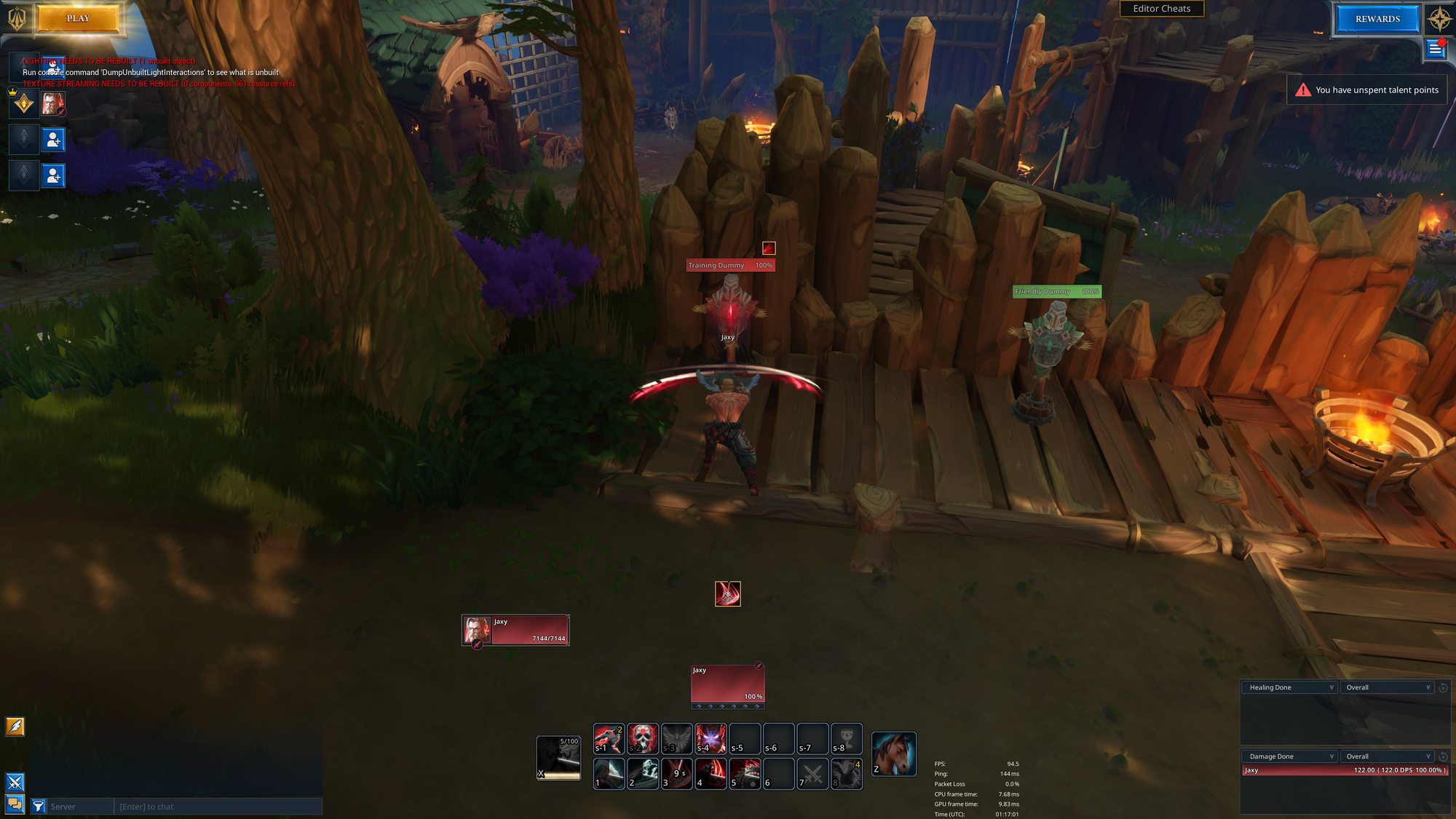
The new Hero, Gunde, has a pretty devastating kit, applying stacks of Rend to deal substantial bleed damage to enemies. I feel like oftentimes, bleed damage in games just feels like dishing out the paper cut deluxe, but that’s not the case here. Gunde dishes out a lot of damage with multiple ways to play around Rend. Here’s a list of his abilities in simple terms:
1 - Double Strike - Attack an enemy with both of your axes, single target, applies Rend. Can be used at range, with Gunde throwing his axes.
2 - Reaver's Edge - AOE slash that applies Rend.
3 - Blood Arc - Slashes enemies in a cone in front of you and gives the Serrated Edge effect, which empowers whatever ability you use next by transferring some of its damage to Rend.
4 - Heart Splitter - Single-target attack applying Rend and Exsanguinate, the latter of which deals more damage depending on how many Rend stacks are active on the target.
5 - Grim Carve - An AOE slash that can be used at range. Good for applying Rend to multiple targets.
Shift 1 - Warbound - A jump attack with two charges that applies Rend. It’s good for leaping short distances.
Shift 2 - Jawbreaker - Headbutt an enemy so hard that you stop whatever spell they’re casting.
Shift 3 - Owed in Blood - There’s a chance that a glowing red feather drops when Rend deals damage or when an enemy dies. Snagging a feather off the ground will essentially store one stack of Rend, stacking up to a max of 150. Using the ability will apply all of your built-up stacks. You can use this ability no matter how many stacks you have, so feel free to cash out at 10 stacks for a little bleed boost or let the rivers run red with a 150 stack blood nuke. Just a little side note: your feather Rend stacks have a 30-second expiration time that’s reset upon picking up another stack. Given how almost every ability applies Rend, it’s easy to keep your stacks alive and growing.
Shift 4 - Slaughter - Speeds up and boosts damage on Rend stacks at the cost of consuming said stacks. Using this after Owed in Blood is a good way to make enemies hemorrhage every last drop.
X - Bloodbound Spirit - Deals physical damage to all nearby enemies on initial cast and then every 1.5 seconds for 6 seconds; Reaver’s Edge and Heartsplitter deal 10% more damage for 20 seconds, and of course, applies Rend.
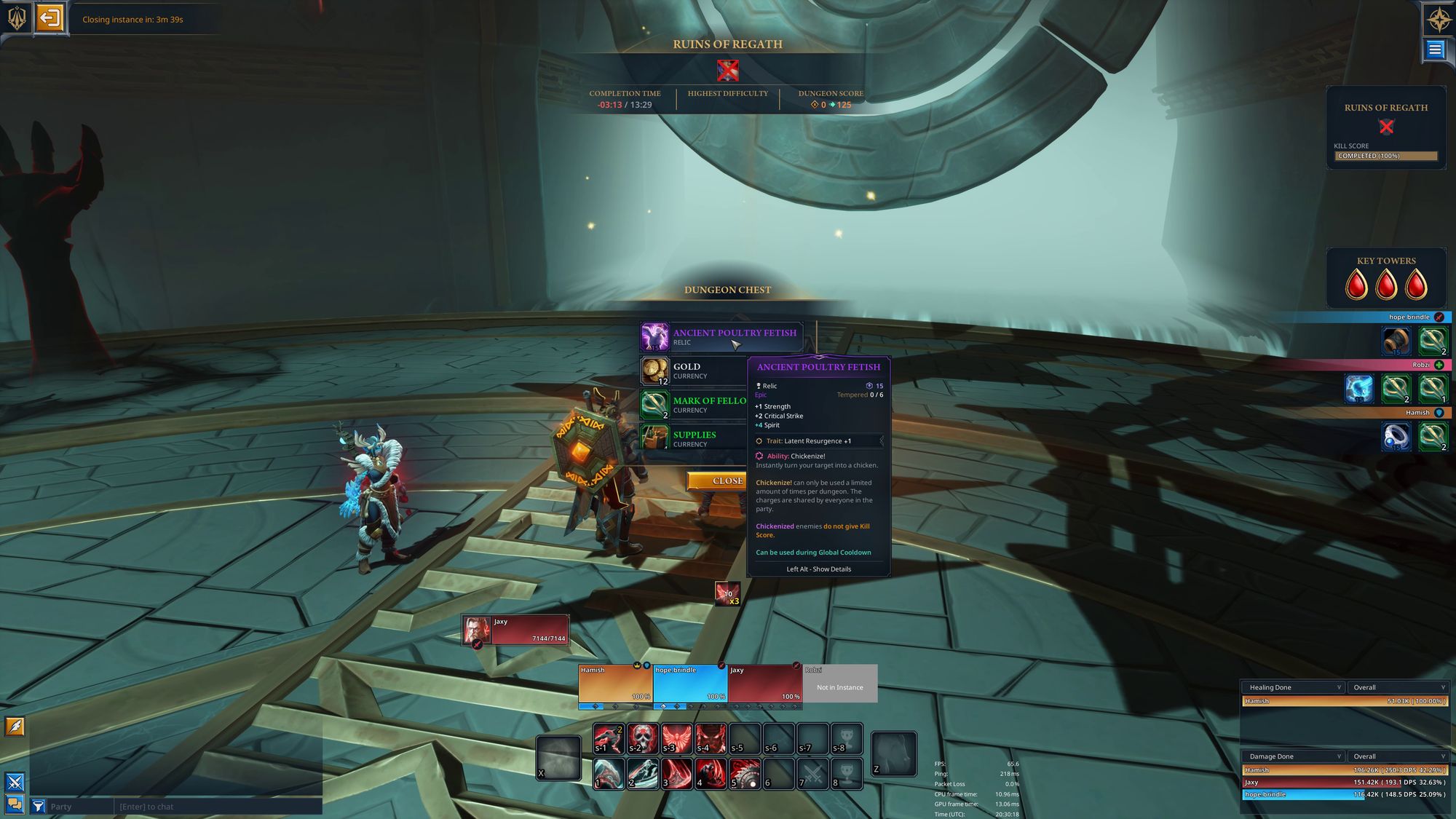
Season 3 also brings an overhaul of the itemization system. The end-of-dungeon chests now drop loot of varying rarities across multiple Leagues, adding more excitement to the closing moments of a dungeon. Despite running through Ruins of Regath on a low difficulty, I got lucky and found an Epic relic in my chest, with Epic being the third level of rarity out of six. Items have core stats and now also have a bunch of random modifiers to add variety, with rarer items having more modifiers and bonus stats. For example, the Epic relic I found has two modifiers. The first is a trait called “Latent Resurgence,” which gives a chance to grant stacks by the same name every time I’m healed. When my health drops below 50%, the stacks are consumed, and I’m healed. The relic also has an ability built in called “Chickenize,” which lets me turn enemies into chickens a limited number of times per dungeon.
The crafting system has also changed, with the addition of Souldust. There are three levels of Souldust rarity: Uncommon, Rare, and Epic. Uncommon Souldust lets you “re-roll all Modifier Slots of a single type” but does so randomly, and Rare Souldust also lets you re-roll but gives you two possible outcomes to choose from. Epic Souldust will straight up increase the rarity of your item, so if I were to upgrade that Epic relic I found, it would become Heroic. Since the item is upgrading in rarity, it will gain another modifier slot, and the system deals with this by “flooding” that new slot, which means it will duplicate whatever modifier is already on that item.
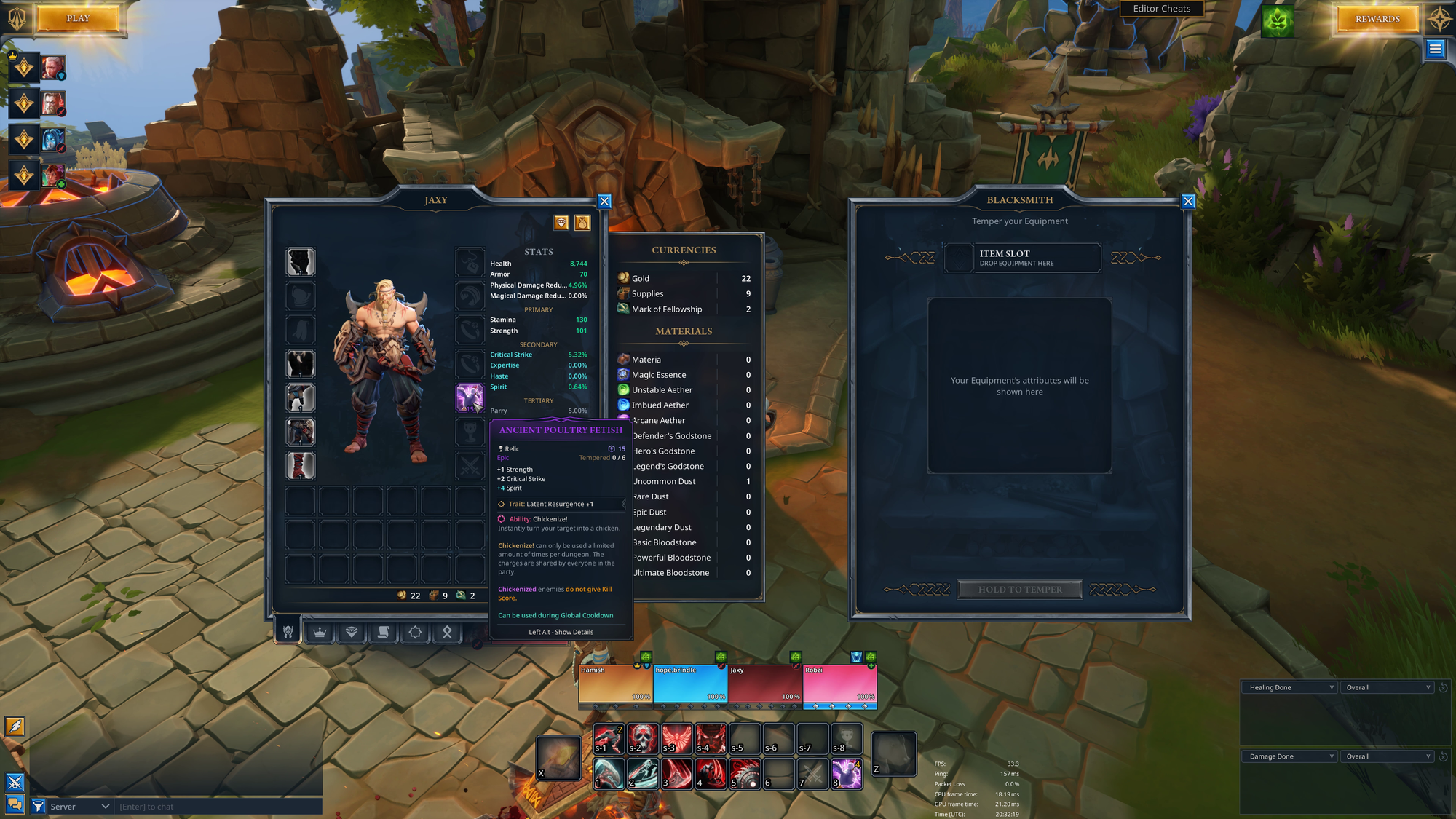
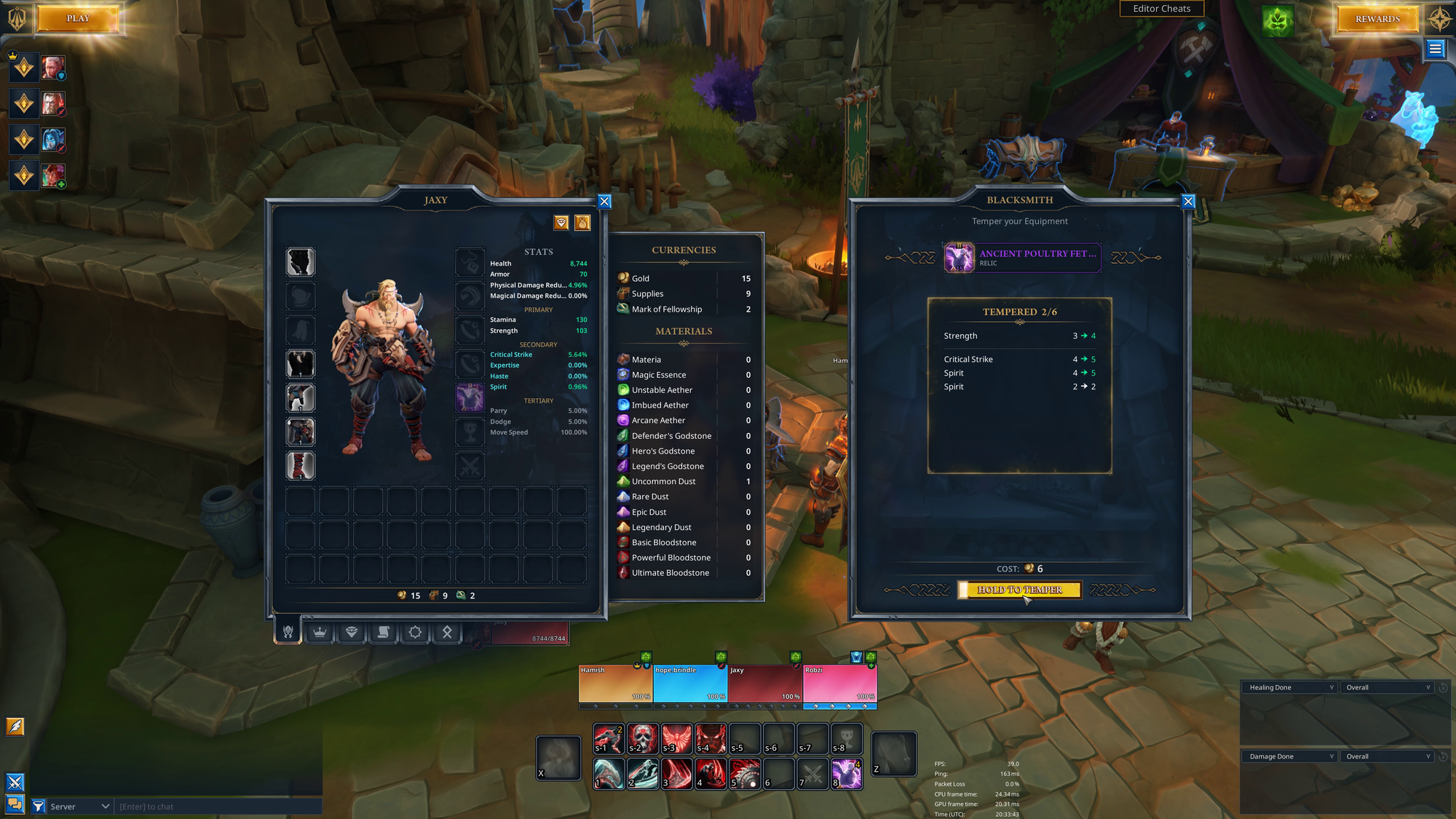
The last itemization change we’ll touch on is Tempering, which is replacing the old system for upgrading items. Essentially, you can upgrade your gear's base stat numbers, with the number of times you can Temper being tied to which League you found it in. Contender, the lowest League, allows you to Temper an item once, whereas Paragon, the League penultimate to the end, allows you to Temper up to 4 times. The final League, Eternal, allows you to Temper an item up to 8 times; the higher the item rarity, the more you can Temper it (with a baseline of 4 Tempers max for uncommon items).
One common critique I’ve seen for the game is that the queue times are too long. To remedy this, players can enter a new mode, Odd Comp, that allows any combination of DPS, Healer, and Tank. In addition, groups who stick together after completing a dungeon now get Matchmaker’s Boon, which gives players “a 25% increase to Gold and Material amounts, in addition to increased drop chances on Gems and Crafting Materials.” On the note of finding people to play with, another new development out of Season 3 is Communities. These are in-game groups that players can create and join. Communities are expected to be a sort of “soft guild system”. Communities, combined with Odd Comp, should make it easier than ever to find players and stick together.
Rise of the Heskyr also introduces Seasonal Challenges, which are basically a variety of challenges that reward the player with titles, banners, and the newly added pets. I’m not sure if the seasonal challenges will be locked upon the end of the season or if they’ll stick around, but I hope it’s the latter.


This brings us back to the question: is now a good time to hop into Fellowship? I would say absolutely. On top of the additions of Season 3, the previous seasons have taken steps to reduce friction for new players. Take the Woodland Glade, for example; players can run around in this area, fighting mobs and learning how the various Heroes work in a more insulated environment before moving on to Dungeons. Once a player has completed their first dungeon, they can stick with dungeons or go back to the Glade to complete quests, either of which will grant new abilities and talent points. The tutorial proper is also quite good for new players, as it concisely explains the basics of the game using one Hero, and it does so in a way that allows players to intuit how other Heroes would operate.
As a new player myself, I think now is an excellent time to jump into Fellowship. Between the work they’ve put into the game in the previous season and the new changes coming with Rise of the Heskyr, there’s a lot of content to dig your teeth into and less friction than ever for players, new and old, to get into dungeons. I know that once Season 3 drops, I’ll be hopping in with a few friends and grinding for loot.