Jumping across rooftops and spraying people with water in Super Mario Sunshine. Chopping up signs in The Legend of Zelda: Ocarina of Time. Dashing through the fields of Hoenn in Pokémon Ruby and Sapphire. As the developers cited by Keza MacDonald reflect on these escapades—the moment-to-moment frivolities constructing the vibes of their masterpieces—I can’t help but wonder if she peeked into my head when writing her retrospective Super Nintendo book. After all, these are all the very memories I associate with my Nintendo-obsessed childhood: little, trivial activities that define my nostalgia even more than grand adventures, unforgettable characters, or towering beasts.
No, I realized, it’s the patented Nintendo magic at work: their player-first directives carefully crafted around human intuition, be it Mario exploiting our aversion to heights or appealing to our sense of mischief. Like Shigesato Itoi’s Ask Iwata did years before, Super Nintendo peeks behind Nintendo’s curtain to observe how those magic tricks work. From Zelda surprising us with moments of “I can do that!?” to how Wii’s motion controls took over the world, it’s a comprehensive look at the company that’s entertained since its days as a hanafuda card manufacturer in 1889.
And what better guide through Nintendo history than MacDonald? Having begun her game journalist career at 16 (I’m jealous!), she’s interviewed everyone from Nintendo superfans (one so dedicated he replicated Nintendo’s century-old shop front for his personal museum) to numerous company personnel, including household names such as Shigeru Miyamoto and Masahiro Sakurai. Being one of the few journalists who’s stepped foot into Nintendo headquarters, it’s not just her fountain of knowledge and years of experience that makes Super Nintendo a riveting read—her remarkable profession ensures us we’re in the right hands, even with the occasional fumble.
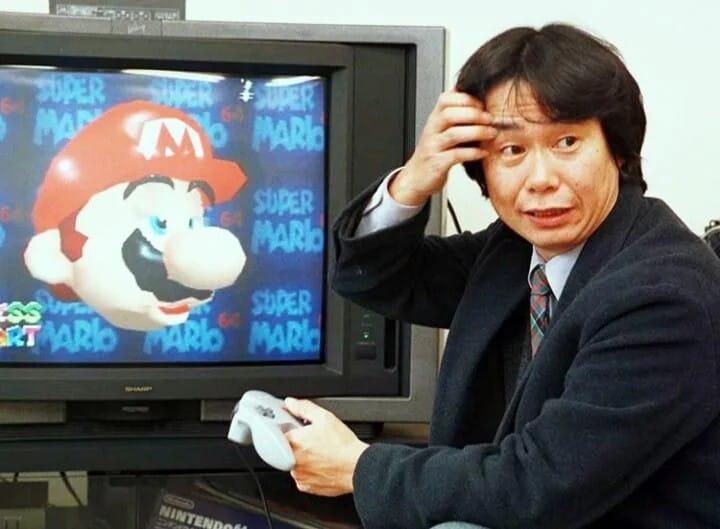
Merely observe her humanization of Nintendo’s developers: to starry-eyed fans, they are gods we worship, breathing life to divine worlds we cherish like Biblical relics; in real-life, they’re just humble creatives selling their latest idea. They sweated bullets presenting the unorthodox Wii Remote to befuddled coworkers. Luminaries such as the late Satoru Iwata struggled in defining the fabled “Zelda touch” but believed in the unity and creativity of his staff to keep it alive. And even our favorite geniuses make mistakes and raise bad ideas—can you believe Miyamoto entertained Ocarina being first-person? Yet despite all the hardships, Nintendo’s gameplay-first mantra makes industry-defining revolutions in Super Mario 64 and Zelda: Breath of the Wild look as easy as breathing.
What makes Super Nintendo interesting is that it’s not necessarily a chronological recap, preferring to use each featured game, peripheral, and toy to elaborate upon Nintendo’s inner workings. For instance, the Metroid chapter is a crash course on the company’s different teams, as well as outsourcing valuable properties to other studios. Meanwhile, Nintendo Labo—Switch’s DIY cardboard peripheral that never took off—might seem like a strange choice, but it highlights Nintendo’s legacy of experimental add-ons as well as the concept of “lateral thinking with withered technology”: a Nintendo philosophy since the days of Game Boy’s Gunpei Yokoi, leveraging outdated technology to produce innovative experiences. To cite one particular Miyamoto-ism, you could say MacDonald’s applying his method of “solving multiple problems at once.”
I only wish she applied the same philosophy to more rigid fact-checking. Super Nintendo’s one flaw is that for all its confidence in presenting the ins-and-outs of Nintendo, it’s too susceptible to factual errors. Slip-ups like mixing up Metroid’s American and Europe release dates are understandable, but others are more egregious: Samus Aran’s alleged profession as a "space pirate", for one. Animal Crossing’s Kapp’n is misspelled “Kappa”, the mythical Japanese figure he’s based on. And if there was another disappointing Wii Animal Crossing in “City Life”, I’d like to see it. It’s not enough to topple the book’s authority, but it’s stuff any observant Nintendo fan will catch. (Don’t feel bad about confusing Donkey Kong: Jungle Beat with Donkey Konga, though; my mom made the same mistake one fateful Easter.)
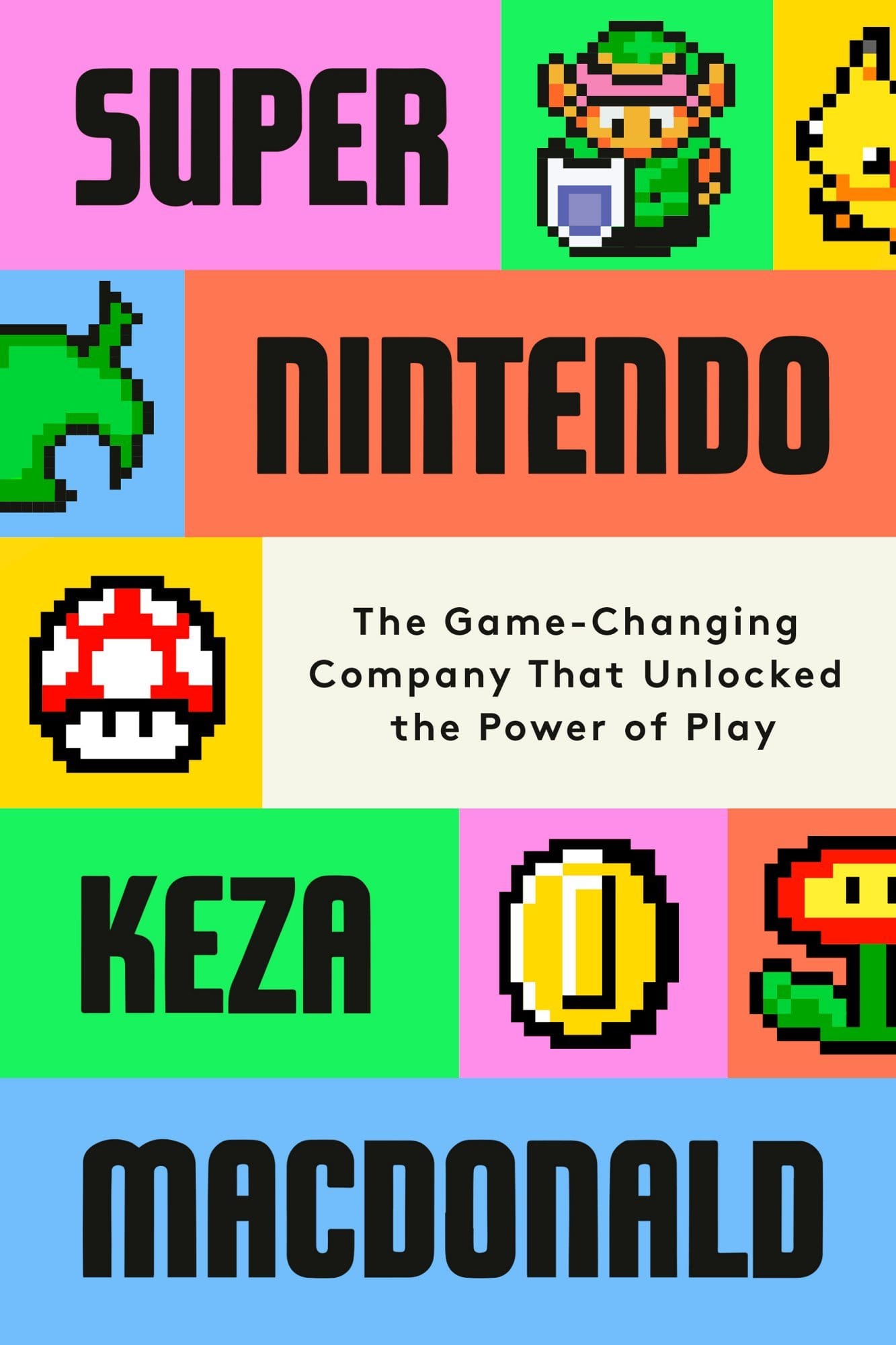
Regardless, all is forgiven with the touch of personality that gives Super Nintendo its beating heart. Much as we share her reverence, MacDonald is no corporate zealot, and is unafraid to criticize Nintendo for their more disastrous missteps (Metroid: Other M getting a much-deserved thrashing). We recoil together in Time magazine fueling the Satanic panic against Pokémon. (Boy, was that interview with creator Satoshi Tajiri unflattering!) We nod at her observation that Wii and DS heralded the advent of interconnected technology in touch control, home screens, and measuring fitness. We’re even given a list of her top fifty Nintendo games for us to judge and pick apart—I’ll leave the results for you to discover, but while her qualifications bar EarthBound from the running (boo!), anyone would agree MacDonald’s top entries are certainly well-deserved.
Perhaps more gratifying is whenever we share those little moments of childhood indulgences with MacDonald; in my case, there’s a flash of memory when she mentions Admiral: one of Animal Crossing’s many, many denizens who also dwelled in my GameCube town. A grumpy bird with a short fuse, his straitlaced demeanor rendered him prime for my older brother Michael’s torment, right down to sending abrasive hatemail and unprompted whacks on the head with a bug net. I did all this too, of course, but whereas I doled out my corporal punishments and unwelcome creative writing to everybody (not least Ozzie the koala, still squirming in his sign-erected prison to this day), Admiral was the lone target of Michael’s bullying—a virtual vice that, for a brief, beautiful moment in time, became his reason to wake up every morning, even more than girls and The Get Up Kids albums.
It’s interesting that Super Nintendo cites a viral ThisIsGame comic wherein a player discovers letters sent by his dead mother, because I realized I went through the same thing... even if wasn't quite as heartfelt. Michael would later get caught up in drugs, soon succumbing to addiction after a five-year battle. Lost and despondent in the weeks following his passing, I’d revisited my Animal Crossing town after years of neglect, reminiscing at signs of his existence. Maybe, in some way, I was searching for signs he was still with us.
I didn’t need to look far—Admiral was out for a morning walk, all too eager to show off my brother’s masterpiece in the following letter: “anthony wants to make out with u.”
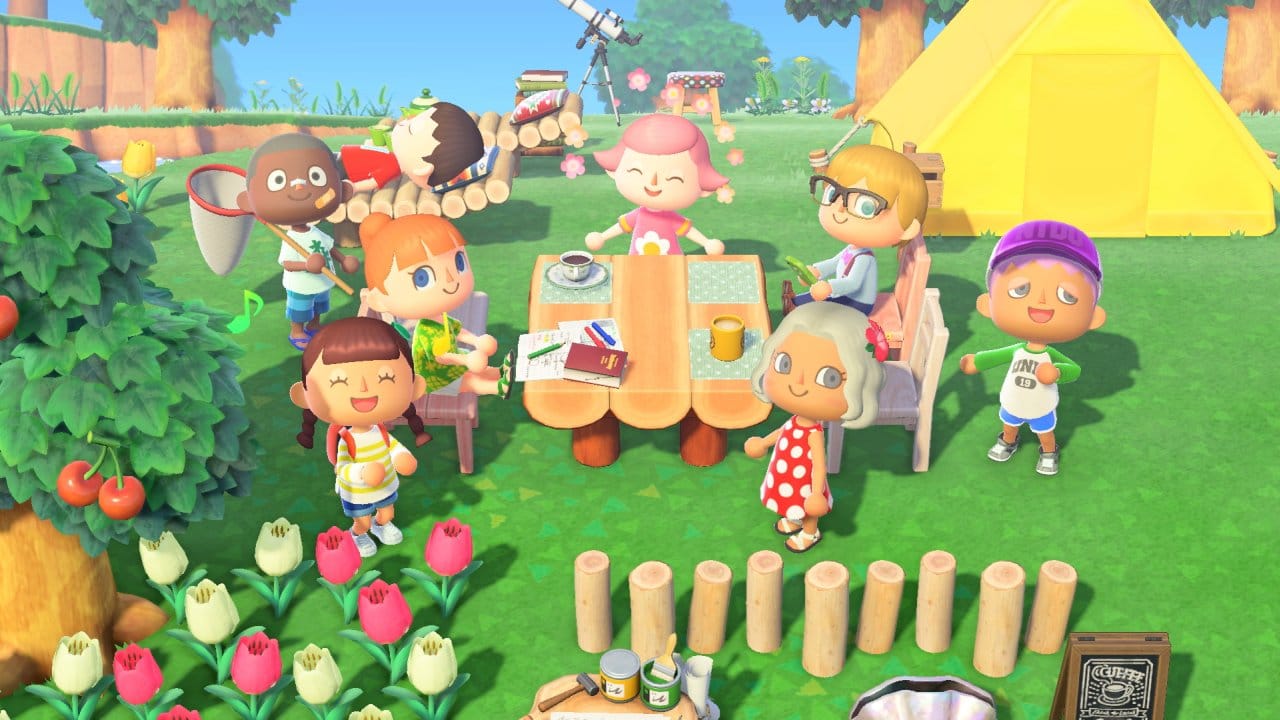
Joy and sadness. Smiles and tears. When Super Nintendo summons memories of these emotions and the responses they entailed—in this case, uncontrollable laughter—it reminds us games aren't merely tools of escapism: their most valuable aspect is how they change our lives through human connection. Pokémon’s trading and battling teaches children to reach out and forge new relationships. Wii Sports’s intuitive accessibility attracted non-gamers of all ages. The chaos of Smash Bros. transcends language barriers. What began as a niche family game in Animal Crossing evolved into a rich online community, one that ultimately “save[d] the world from loneliness” during COVID-19. Such is when the interactivity staged beyond the screen becomes palpable, fulfilling Nintendo's mission statement—and Iwata's dream—of bringing smiles to people's faces.
When the Splatoon chapter sunsets the book by highlighting Nintendo’s new creatives, I’m reminded of the recent string of retirements (namely Kensuke Tanabe and Hideki Konno) from the company. Super Nintendo is quick to point out the developer’s unusually high retention rate—undoubtedly why their games have remained industry constants for so long—yet the old guard’s gradual exit imposes a sobering reality: everyone’s getting old. As Miyamoto mentions letting go of his babies while directing his creative energy into theme parks and movie adaptations, one shudders to think when it’ll be his turn.
Yet Super Nintendo assures us we have nothing to fear, for the same people who marveled at discovering secret exits in Super Mario World are now making new games in his place, heeding Nintendo’s time-tested philosophies that still entertain the masses. From Pokémon Go bringing Pikachu to our backyard to Super Mario Maker letting us create full-length Mario games, we remain confident that Nintendo’s magic show will go on.
Super Nintendo
Excellent
In maintaining a fine balance between professional game journalist and lifelong Nintendo fan, Keza MacDonald's retrospective in Super Nintendo is compelling, honest, and passionate. For any minor slip-ups, her factory tour reveals the secret sauce behind Nintendo's vast library much as it engages our own nostalgia for the gaming empire that's touched countless lives. Required reading for any Nintendo adherent.
Pros
- Clever set-up that's carefully structured to expose Nintendo's M.O.
- Valuable insight from big-name developers
- Honest commentary from MacDonald
- Expertly mirrors our own nostalgia
Cons
- Quite a few factual errors.
This review is based on a retail copy.