The inspector stares down his glasses, across his desk, at the man before him. Bachelor of Medicine and fighter of death itself, Daniil Dankovsky. A coward, who left the Town on the Gorkhon river to die when he could have conceivably saved it. The Powers that Be were waiting for him to slip up, to shut down his precious Thanatica, but what a shame that it came at the cost of thousands of lives, lost to the vicious Sand Pest plague. The Bachelor, meanwhile, looks almost smug in his cowardice. He ran from the town, yes, but he also stayed to the bitter end. He saved lives and condemned them to death, discovered the miracles that place held and simultaneously closed his eyes to them. He has walked two streets at once, and will do so again to make lies of the inspector's truths.
The Patholgic games are unapologetic works of art. The first is so rough as to almost be unplayable, but remains thought provoking in its philosophy and use of the medium in both textual and metatextual ways. Each of the game's three protagonists had different perspectives on the game's events, with key characters to one protagonist barely being footnotes to another. Its follow up, coming 14 years after the original Russian release in 2005, is a remake of the Haruspex's campaign... kind of. It's also a direct sequel, but we're not talking about Pathologic 2 here. Pathologic 3 is a very different beast in a lot of ways, focusing less on brutal survival and theater and more on setting up all the right dominoes to fall in the way you want, as well as the unique magic of cinema.
The game begins with Daniil having already totally screwed up everything he possibly could have and is now suffering the consequences. Thankfully, through the power of wanting to "nuh uh!" the inspector so hard, the Bachelor finds that he has the ability to time travel by using a resource called Amalgam. However, since he's still being interrogated, he can only go back to days the inspector deems relevant. So, outside of the introduction, you may never go back to Day 1 of Dankovsky's time in the Steppe town unless you make certain, specific decisions. It's a very interesting way to limit your seemingly godlike powers, making for some very interesting narrative twists too.
You still have to go mostly in order through the 12 days. Daniil let everyone die through negligence by leaving on Day 4, so you need to alter events, stay in the town, and actually save some lives. Before we get into time travel, though, let's discuss the more basic mechanics. Gone are the open world and traditional survival mechanics from 1 and 2, and in their place are a segmented world you can more quickly travel through and the Apathy/Mania meter. Pathologic 1 was mostly walking from place to place and 2 wasn't terribly well optimized, so segmenting the world into districts makes sense both for convenience and performance, and also for the Bachelor's character. He's the kind of person who won't concern himself with the little details, trying to do what he needs to do as quickly and efficiently as possible—no detours.
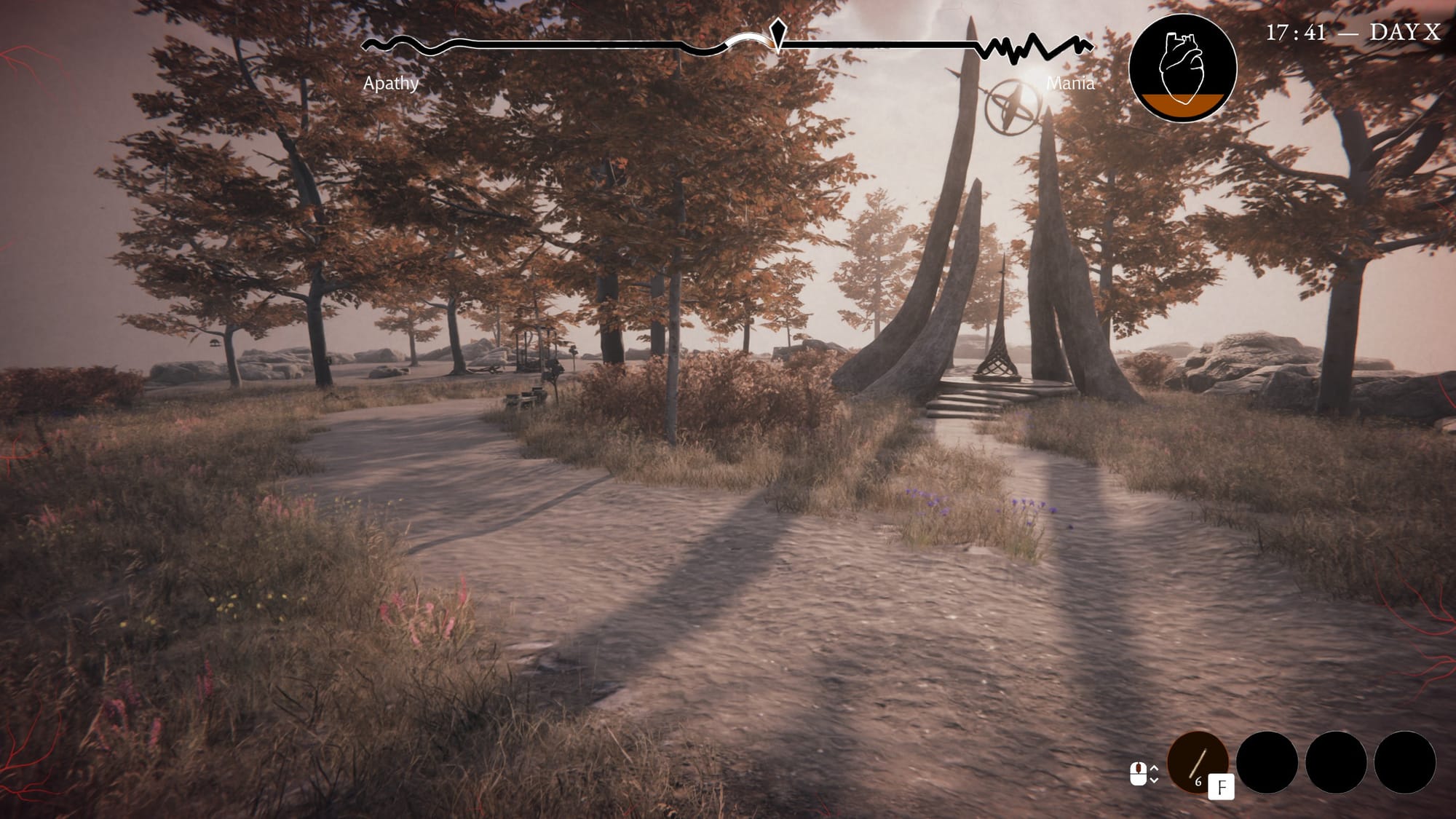
He's also a bit of a drama queen, which is where the Apathy/Mania meter comes in. Just like real life, your Apathy is always increasing due to the constant horrors that surround you at all times. As Apathy increases, Daniil will start to move slower and slower, and once it reaches a certain point, he'll take out his Debutante pistol, his extra bullet, and end things right then and there. You can think yourself down from this state by clicking the right thoughts in sequence, but only if you're quick enough. It's pretty disturbing, but you're not often in danger of your Apathy getting that high so long as you're paying at least a little attention to the meter.
On the other side of the coin is Mania, which makes Daniil run much, much faster but will constantly drain his health. Mania is pretty dang useful so long as you don't let it get out of control; there are only so many hours in a day and you never have enough to do everything you want, so moving faster is an incredible boon. You really do need to keep an eye on your health, however, as it can drain just as quickly as you move, so keep a stock of HP restoring items on hand at all times.

While the meter will tick towards Apathy every second or so, you have a variety of ways to manipulate Daniil's current mood. You can kick trash cans and push water pumps to increase Mania, play with playground equipment to increase Apathy, and take various drugs and tinctures to go in either direction. Less direct are dialogue options, though you won't know exactly which way things will swing until you've already made the choice. You also won't be able to engage in rhetoric if the meter is currently about halfway in either direction, so controlling your mood is essential. It's a bit like a hunger meter, but much more engaging and has direct, immediate effects on gameplay.
Dankovsky also needs to deal with the plague ravaging the town. Every day, certain districts will become infected and thus more dangerous to traverse. You can't actually catch the Sand Pest in this game, but encountering it will still drain your health significantly. Inside plagued districts, Daniil is hunted by the Shabnak-Adyr, a creature of Steppe legend taking the form of a ghostly, giant woman. Whether she's real or not is a matter of debate and Daniil's sanity, but she'll do some real damage if she catches you. By using the Prototype, you can temporarily stun the Shabnak and remove any plague around you, though you only have so many charges and refills can be hard to come by.
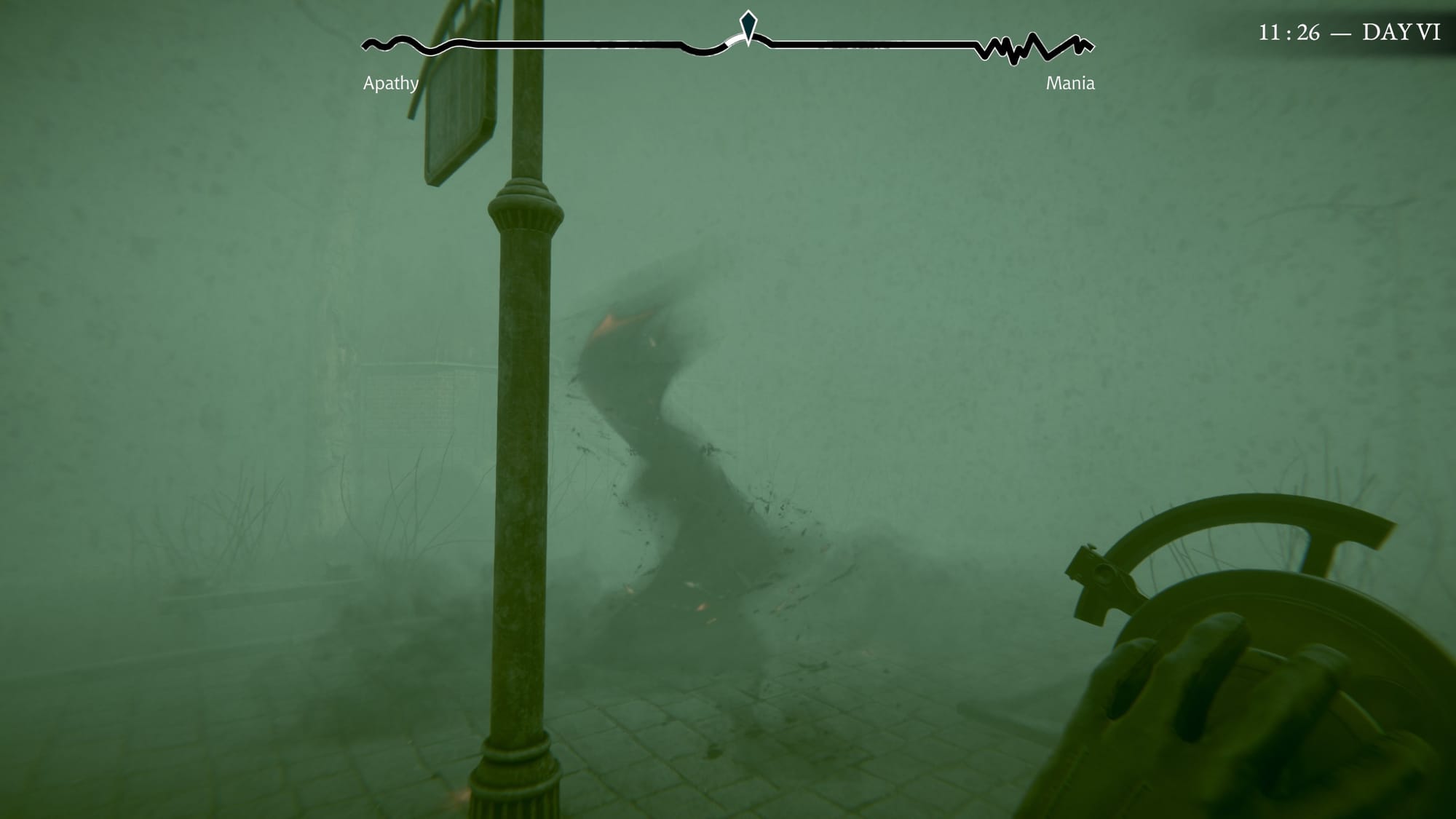
Wherever you find the Shabnak, however, you'll also find a locus of infection, a strange plant you can gather a sample of the plague from by standing near it for a certain amount of time. You can then take the sample back to Daniil's lab and use it to prepare a projectile. You only get one shot, but hitting the Shabnak with it will permanently defeat her for that day, including replays, and greatly reduce the town's overall level of infection. This will also make her more powerful on days you haven't defeated her, eventually allowing her to be accompanied by a second, illusory Shabnak. Shooting that one with the projectile will do nothing, but she can still hurt you just as much as the real one. You can only tell the difference by lighting a bonfire with your limited supply of matches, temporarily trapping the Shabnak within the flames. If the fire turns green, you've caught the fake one and know to look elsewhere in the district for the correct monstrous woman.
You'll want to defeat the Shabnak each day while also accomplishing whatever tasks are relevant in your Mind Map. Carried over from Pathologic 2, the Mind Map is a pretty elegant way of presenting a quest list or journal, showing you each day's events, what you did or failed to do, and how those events and actions affect other events and actions. Major events will connect between days, like being ostracized by the Kain family will prevent you from investigating things like Simon the immortal man's death. Certain nodes in the Mind Map will be shown on the Town Map, letting you know where to go to continue that particular plot point. It's incredibly intuitive and seamless to interact with, though on later days in the game there can be so many nodes it actually causes the framerate to drop.
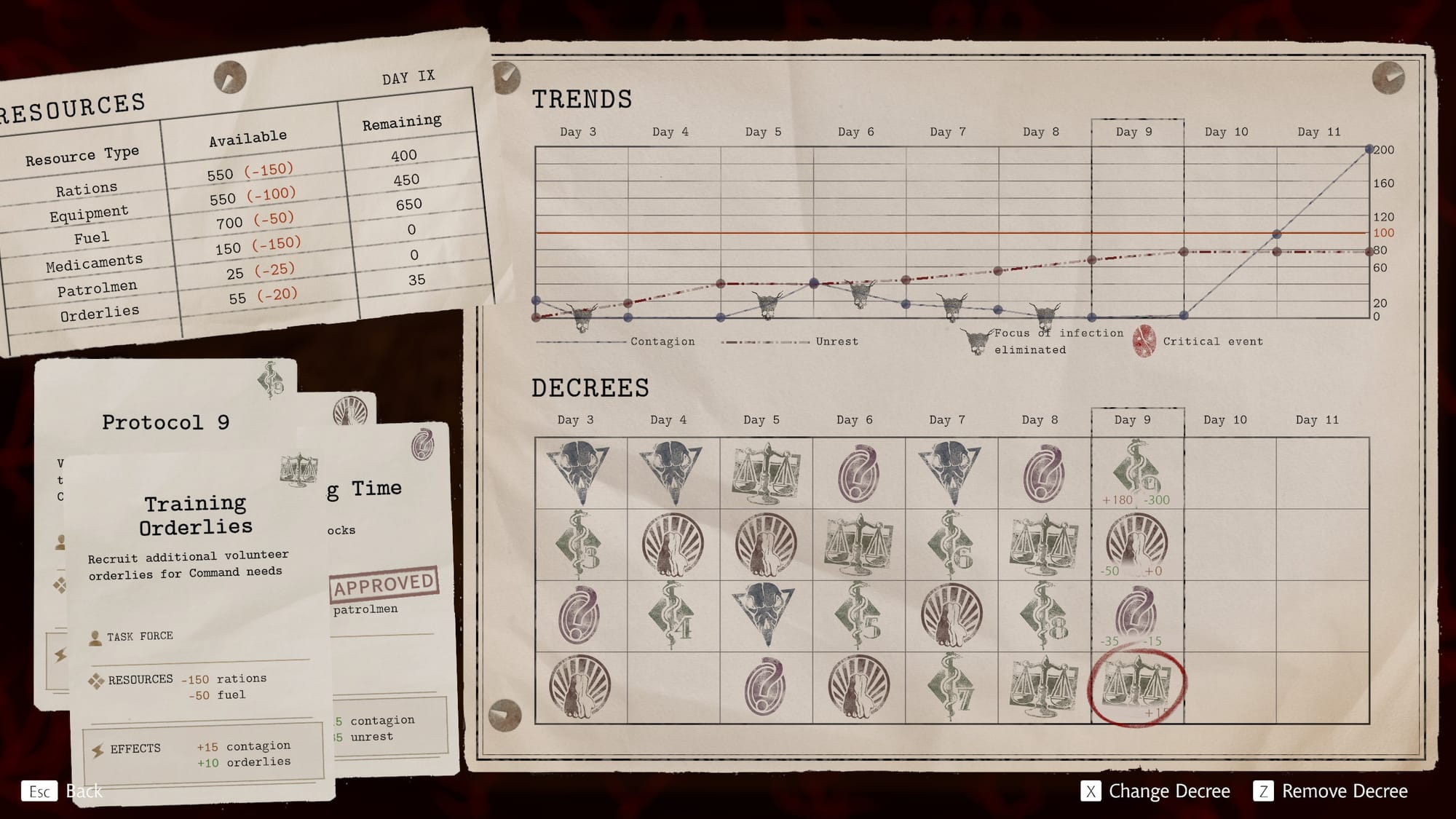
Other than survival and defeating death by finding the secret to immortality, defeating the Sand Pest is the Bachelor's primary goal. Not curing those infected, but preventing further infections as much as he can and creating a vaccine. To accomplish this, he's made head of Emergency Command and given control of the town's resources early on. You can spend these resources by issuing commands each day from a board at his temporary home in the Stillwater. You can make up to four decrees every day, which will immediately take effect, even if you change decrees made on previous or future days.
Looking at the board, you can see a graph with two lines: one representing infection rates, and the other representing the town's overall unrest. Most decrees that combat the plague are unpopular, increasing unrest, and the reverse is true for decrees that reduce unrest. Let either one get too high, and you're screwed, but so long as you take care of the Shabnak every day and distribute that day's vaccine, you don't have to worry too much about either getting out of hand.
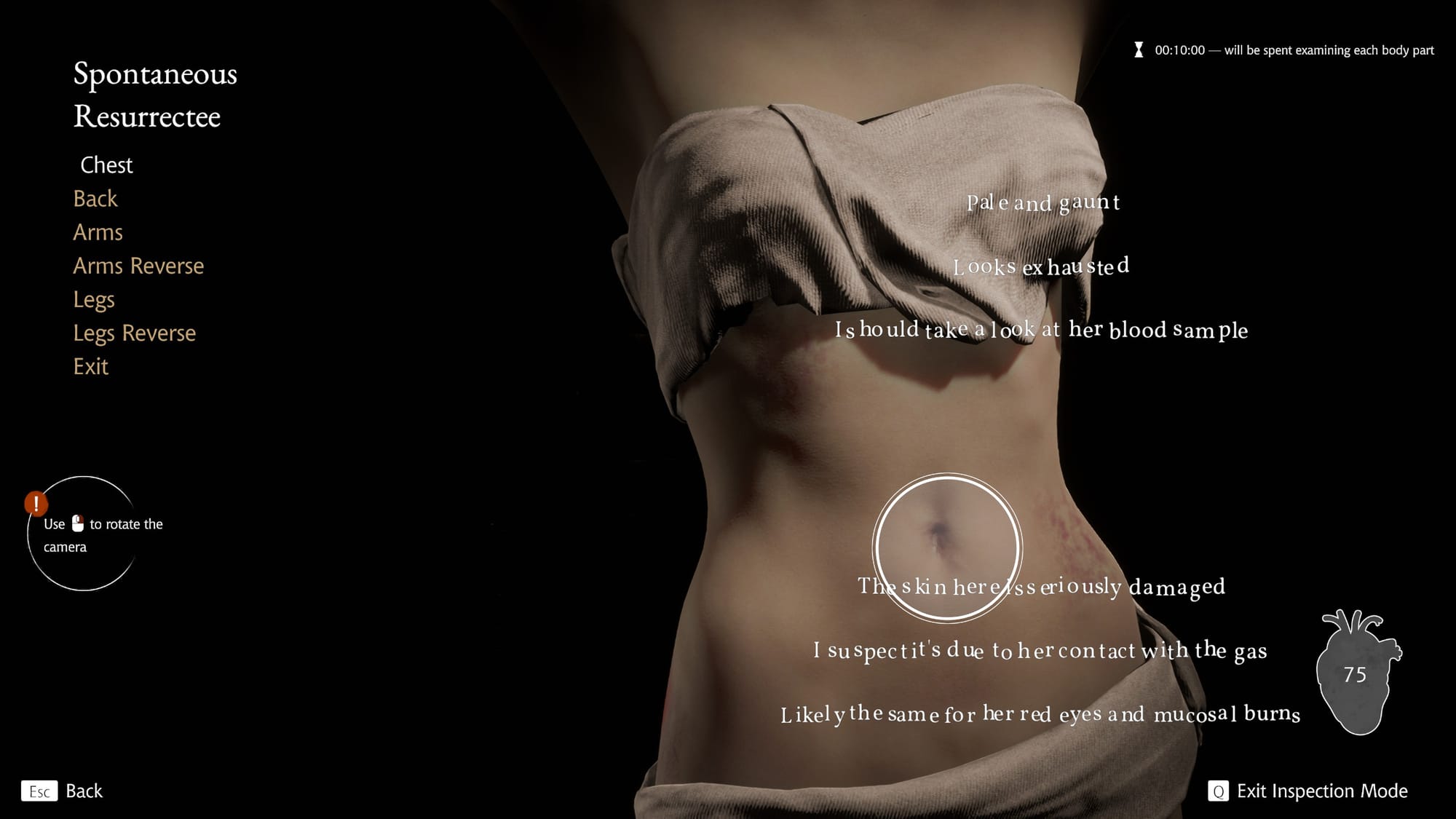
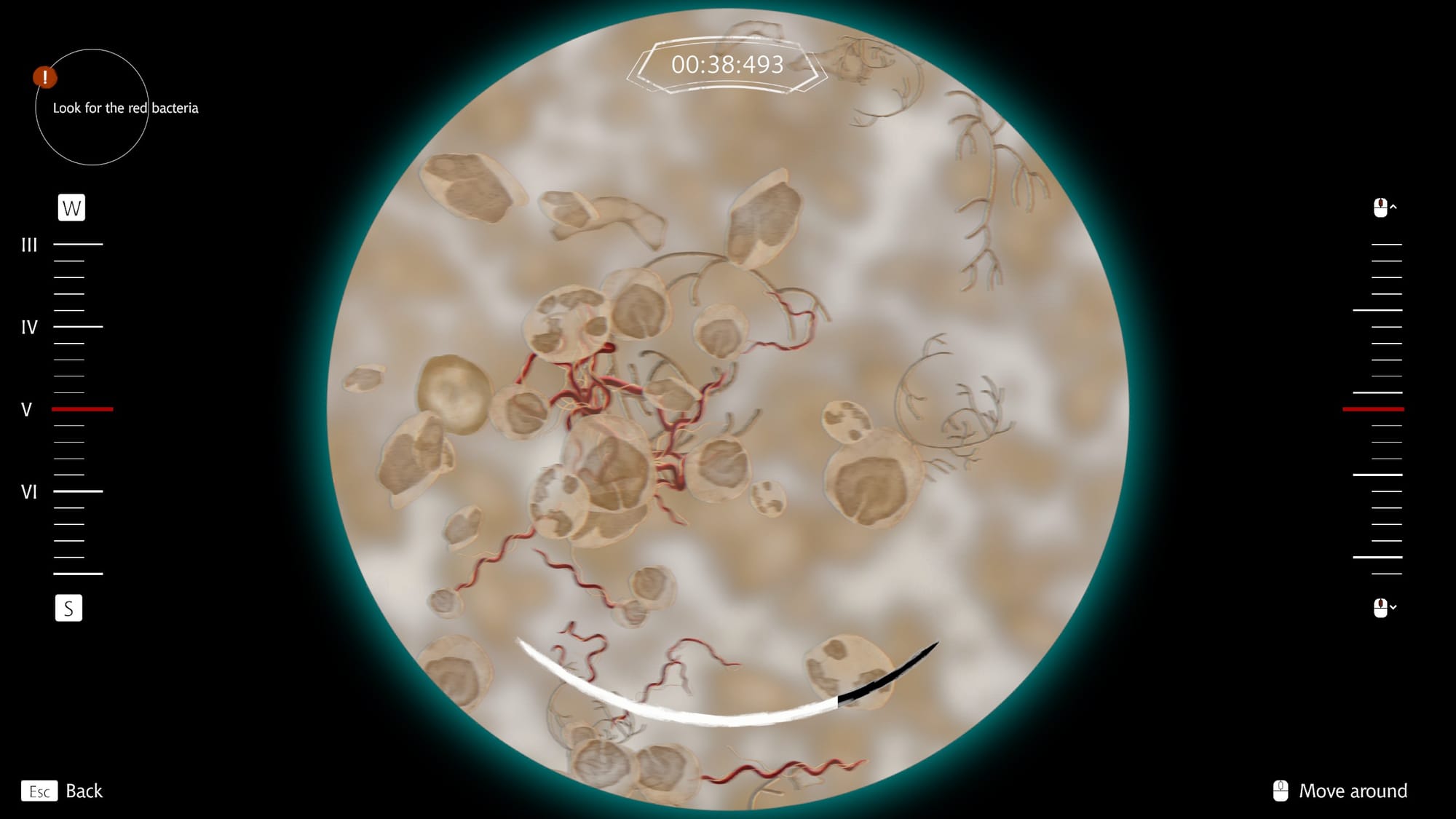
To create the vaccine each day, since the plague will adapt to whatever you create to combat it, you need to do your duty as the makeshift hospital's doctor alongside the game's true hero, your assistant Yakov Little. Well, first you need to make sure the hospital even gets established in the town's theater, but once you've done that you'll get a set of patients every day. These patients are infected with the Sand Pest and will die within a day or so, but they're also infected with another illness that's allowing them to live longer than the usual 5 hours the plague kills people in. Somehow, these illnesses are holding off the Pest, and you need to correctly diagnose each patient to then use their blood and create a vaccine for the day.
You do this like an actual doctor: by speaking with patients, examining them, and analyzing samples. You can note their symptoms in your notebook, which will then narrow down your list of illnesses until you can be certain of the diagnosis. At least, in theory. Around Day 8 I started to find it incredibly difficult to actually narrow down the diagnosis, checking off symptoms would usually result in the whole list being grayed out. Checking my conclusions against a walkthrough, I'm genuinely unsure of where you're supposed to find some of these symptoms. A few are tricky to spot, like needing to notice a patient's red eyes or cracked lips by paying attention to their portrait in dialogue, but others seemed to be based on absolutely nothing or were just not showing up for me in examination. I can appreciate that this does add some interesting realism, patients can misread their own symptoms or lie about them in real life too, but I think this particular part of the game could have been a bit more balanced in the player's favor.
That said, the game is already shockingly easy. Until the very late game, the last three days, I had no trouble keeping people alive, defeating the Shabnak, and making the timeline go the way I wanted. It's a weird feeling coming off of Pathologic 2, which delights in punishments that do not befit the crime and thus makes it feel like an absolute triumph against all odds when you come out the other side, but I also think this is intentional. In Pathologic 1, the Bachelor was essentially the easy mode campaign, "easing" you into things before tackling the more difficult Haruspex's route and... whatever the heck the Changeling had going on. Here, Daniil has access to more resources and more major players in the town than Artemy or Clara, he's also not concerned with curing people, so it makes sense that things are less oppressive for him. Unfortunately I feel like it makes the game overall less impactful than 2, where your suffering was literally a performance art for yourself, but thinking about it, I also wouldn't want Ice-Pick Lodge to just remake the same game three times with slightly different mechanics. I enjoy how wildly different 3 is from 1 and 2, and look forward to whatever they come up with for Clara in 4.
This finally brings us to what makes 3 unique: time travel. In the top left corner of your screen is your Amalgam, represented by broken mirror shards. Filled in portions of the shards show how much Amalgam you currently posses, while hollow shards show much you can still hold. Dying or traveling between days, even if it's just the next day in the normal sequence, cost Alalgam. Die with no Alalgam left and that death becomes permanent, deleting your save file, or get stuck on a day with no Amalgam left and no way to gather more and you're essentially soft locked. You can gain more Amalgam through a few ways. The easiest, though most limited, is to simply speak to your housemate and love interest, Eva Yan, at the end of every day. The first time you do this in a day, you'll receive 100 Amalgam, enough to travel to the next day, but you'll never be able to do that again on the same day. Less limited but still rare is by smashing mirrors you can find in town. Smashing a mirror will reward 30 Amalgam, but that mirror will remain broken forever, in the past, present, and future. Some can respawn after a very long period of time, but most will not. Finally, the most difficult but most plentiful way to gain Amalgam is to euthanize people suffering from the plague on the streets. You can end their suffering by injecting them with the correct amount of morphine, which is also used to increase Daniil's apathy. Administer drugs correctly to move a meter into the correct spot, shown by two lines indicating the range, and the patient will pass on without suffering, granting you what little time they had left.
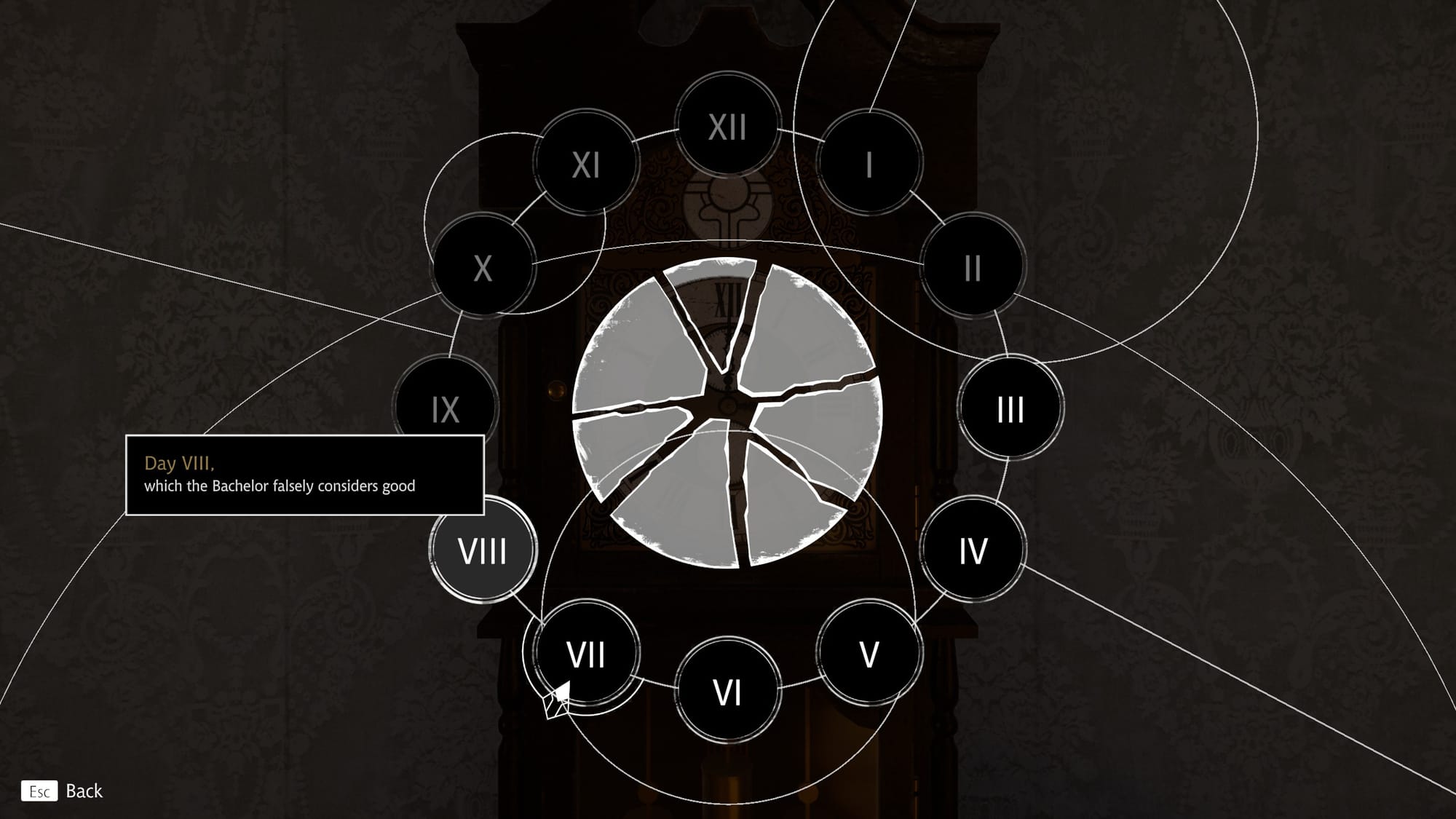
If you screw this up, the patient will die in agony. In addition to having that on your conscious, this will damage one of your shards, reducing the maximum amount of Amalgam you can hold. You can only repair these shards on select days by visiting the Cathedral. The Cathedral produces time, after all, and interacting with one of the levers within will fix one shard, though you can only do this once for each lever as well.
Interacting with any clock in town, provided you have reached the end of that day (2 AM) at least once, will allow you to time travel to any other day you've unlocked. Days further away in time from when you currently are will cost more Amalgam, so sometimes it's important to make a temporal pit stop to restock on liquid time. Simply going back to the current day will cost no Amalgam, so you can remake Groundhog Day as many times as you'd like. Starting or restarting a day will present you with that day's mind map, where you can either leave nodes as they are to keep those events the same, or shatter some and give yourself a do over. For example, without any actual spoilers, let's say Artemy is murdered on the morning of Day 5. The first time you live this day, you have no chance to prevent this, only learning about the killing late in the evening after convincing one of the Stamatin brothers to give you the blueprints to the Polyhedron. You don't want Artemy to die, but you couldn't have gotten the blueprints without his death, and you need those blueprints for a later day. Thankfully, Artemy's murder and the conversation with the Stamatin brothers are two separate nodes: you can save Artemy in the morning, while still already having had that conversation with the Stamatins in the evening. It's harder to understand on paper than in practice, but basically any major nodes you establish in a day will persist until you choose to undo them, even if you just go back and replay the same day again.
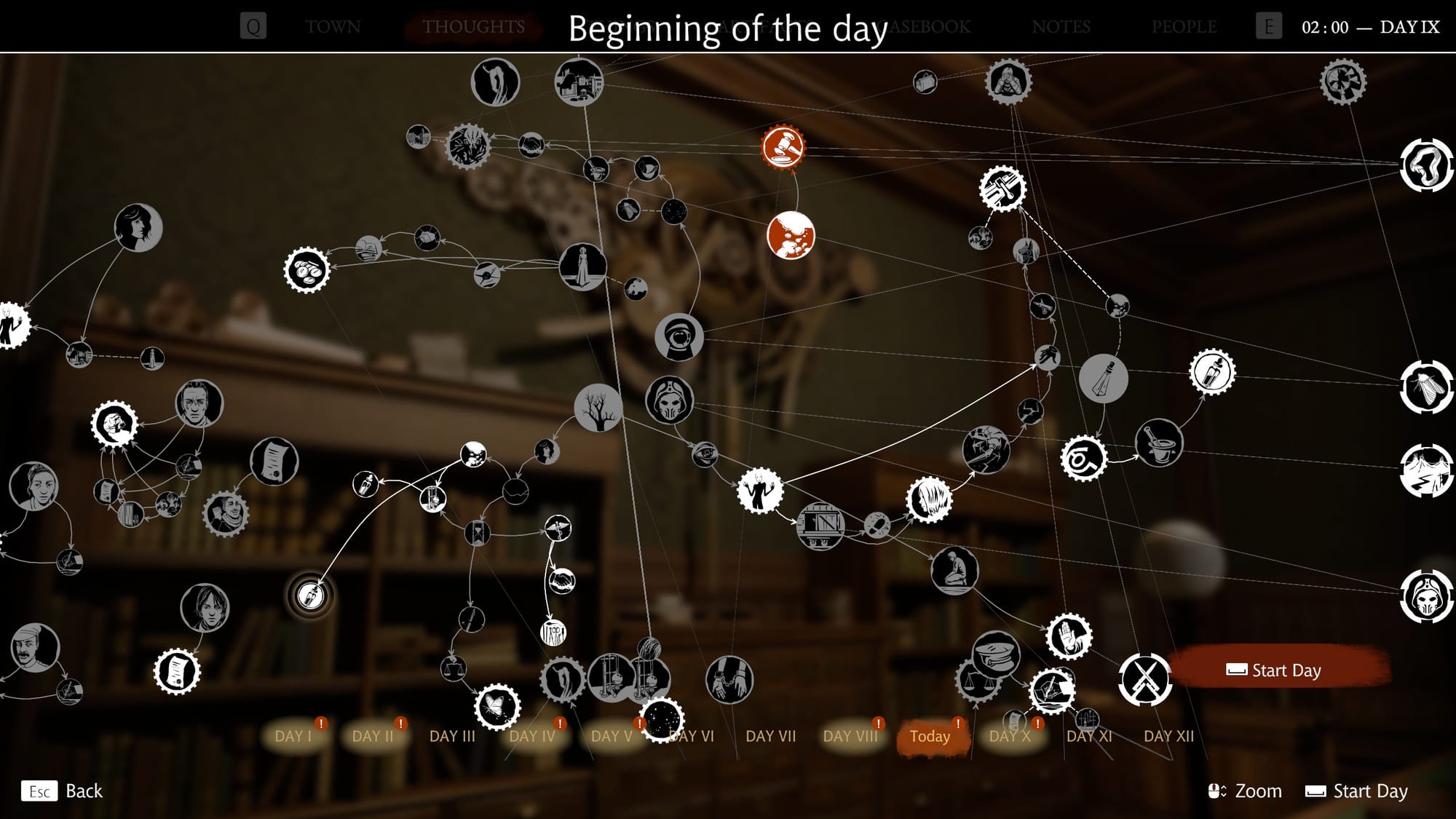
This is how you get everything you need to do in a single day done, by literally being in multiple places at once. If you find out one of your decisions had unforseen consequences later on, no worries, just go back to that day and do something different. You can't change everything (DO NOT discover the secret of Atrium Street, save yourself!!!), but for the most part the timeline is yours to control. You can even change events so that Daniil cooperates with both Artemy and Clara, finally getting all three protagonists to work together instead of sabotaging each other, purposeful or otherwise. If you're familiar with the other games in the series, there are also more surprises and changes waiting for you. 3 has the same great writing that'll make you think, both about the game and life in general, though the English translation does have far too many typos.
Pathologic 3 feels like the perfect entry point to the series... kinda. It's not as oppressive as 2 nor as unfinished and archaic as 1. It does have a lot of callbacks and expects you to be a little familiar with the overall events, but you could still play it blind and mostly understand it. It's a game normal people would play! But that's also the main issue with it. 3 sacrifices the series' abrasive nature for something that's a lot more accessible and approachable. I dare say I actually had fun playing Pathologic 3. Contending with the Shabnak each day is a blast, diagnosing patients, though flawed, feels like a puzzle, and figuring out how to bend every event in town to your will is incredibly cathartic. The overall events of the plague could feel a little random if you don't already know the story from the previous games, particularly the final day, but certain aspects of the ending come together in a way that makes the vague and randomness almost appropriate for Dankovsky. The game really comes together at the last moment, leaving you with whatever ending you earned, then setting you loose to manipulate the timeline and get all the others. After all, why settle for one outcome when you can have them all?
Pathologic 3
Excellent
Pathologic 3 takes the series in a brand new, totally unique direction fitting for the Bachelor. While the game lacks the boots-on-the-ground trials and tribulations of 2, focusing on the bigger picture, it depicts the fate of the Town on Ghorkon in a fascinating fashion. You'll have a fun time fighting the plague here, and will be thinking about this game for years to come.
Pros
- Fantastic story and characters
- Managing Apathy/Mania, the plague, and unrest is a fun balancing act
- Time travel mechanics are incredible
- Great soundtrack
Cons
- Diagnosing patients can be too much of a crapshoot
- Some plot points arrive with little fanfare
- Tons of typos
This review is based on a retail PC copy provided by the publisher.