Sony’s INZONE brand is one I’m not familiar with. Launching with an aim towards PC players, they’ve done great work, at least, that’s what the word of mouth has been. Newer products have hit their lines, and when I saw an open-back headset option, I just had to test it out. The INZONE H6 Air has a lot to offer, and while there are definitely drawbacks, I’ve enjoyed the wealth of sound it brings to the table.
Opening the box, you’ll find the INZONE H6 Air headset, the 6.5 feet auxiliary cable, an INZONE USB-C hub, the detachable cardioid microphone, and the paperwork. It’s not flashy, but it’s all you need to get the most out of the H6 Air. One thing I appreciate returning from previous Sony gear offerings are the detailed pictures showing you how to assemble or set up the device. There’s also a QR code for further instructions, which is helpful.
The most impressive feature for the H6 Air might be its fit and weight. This headset is lighter than air, weighing in at a measly 199g. That’s not even half a pound. The weight distribution is fantastic as well, with a looser fit and a skinny headband bolstered with a ski-band to keep your head comfy. The way you shift the headband’s circumference via two locks is well done; you can get the perfect fit easily. It’s also a looker; I love the aluminum build for durability, but the sleek design is simply eye-catching.
There isn’t a lot to the H6 Air’s controls, but that’s by design. Being a wired headset, not much is necessary. You have the two 3.5mm ports (one for the mic, one for the wire), a de-pressable mute button, and the volume wheel. The mute button's size is appreciated, with a textured finish that helps you find it, but its location atop the left earcup is still out of place, leading to my searching for it often.
Thankfully, the headset does all the work necessary to provide excellent audio despite the lack of controls and extra features. The H6 Air has HD driver designs not unlike Sony MDR-MV1 studio monitor headphones. These drivers provide high-quality audio with a plethora of different frequencies, including deep bass. Besides this, between working with developers for custom EQ presets, tuning the spatial sound tech to be top notch, and more, you’re getting the immersive experience Sony always offers.
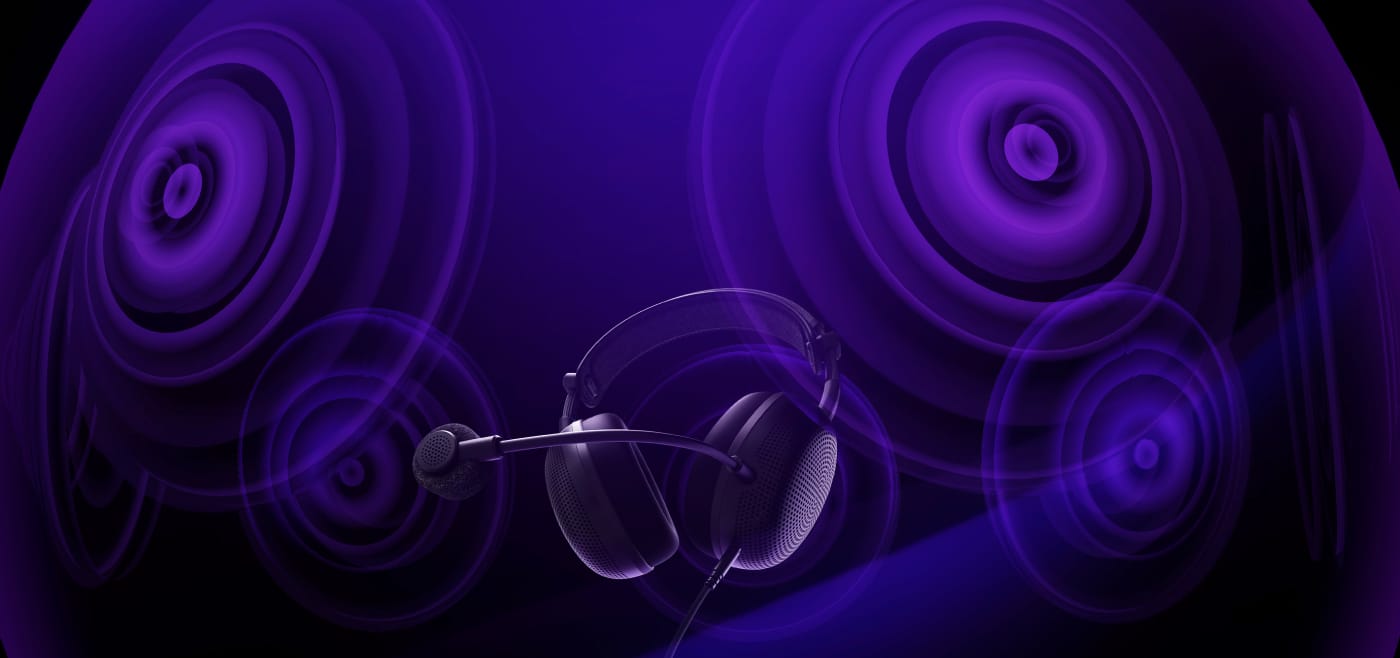
Many will flock to this headset because of its open-back design. For those unfamiliar with the build, I’m going to refer to an explanation I previously used by SoundGuys.com to assist with your understanding:
For those unfamiliar with the design, open-back headphones allow air to pass through their ear cups from the rear of the speaker driver. This means that resonances and low-frequency build-up caused by the rear enclosure aren’t a concern. Many expensive high-end headphones have open-backs because it allows them to sound more natural and clear, giving the best possible presentation of your source material. But that’s really only the case when there’s no ambient noise. Because open-back headphones can’t block outside noise at all well, you’ll hear everything going on around you.
Open-back headsets essentially provide less containment for the sound, which can lead to a fuller reception for your ears as you listen to what’s being produced. The open nature lets the audio come from the spatial direction more naturally, allowing you to experience it in a more immersive way. That’s a lot of jargon to describe what the headset is doing, but you’ll notice the difference in what you’re hearing as soon as you put the H6 Air on. I will caution anyone seeking this style of headset to beware of the lack of sound exclusion – the design permits the outside access to your ears.
Playing Saros has been an incredible audial adventure. Housemarque has already delivered outstanding sound design, but using this headset enhances what the game already does. Sony’s Tempest 3D audio is great, but using one of their headsets with it gives that extra oomph. Every bit of the Eldritch, sci-fi horror comes through, with the rush of the gameplay amplified by the woosh of the projectiles or the thump of the dash. I’m extremely impressed that a wired headset can do this: allowing me to live in the world I’m engaging with virtually.
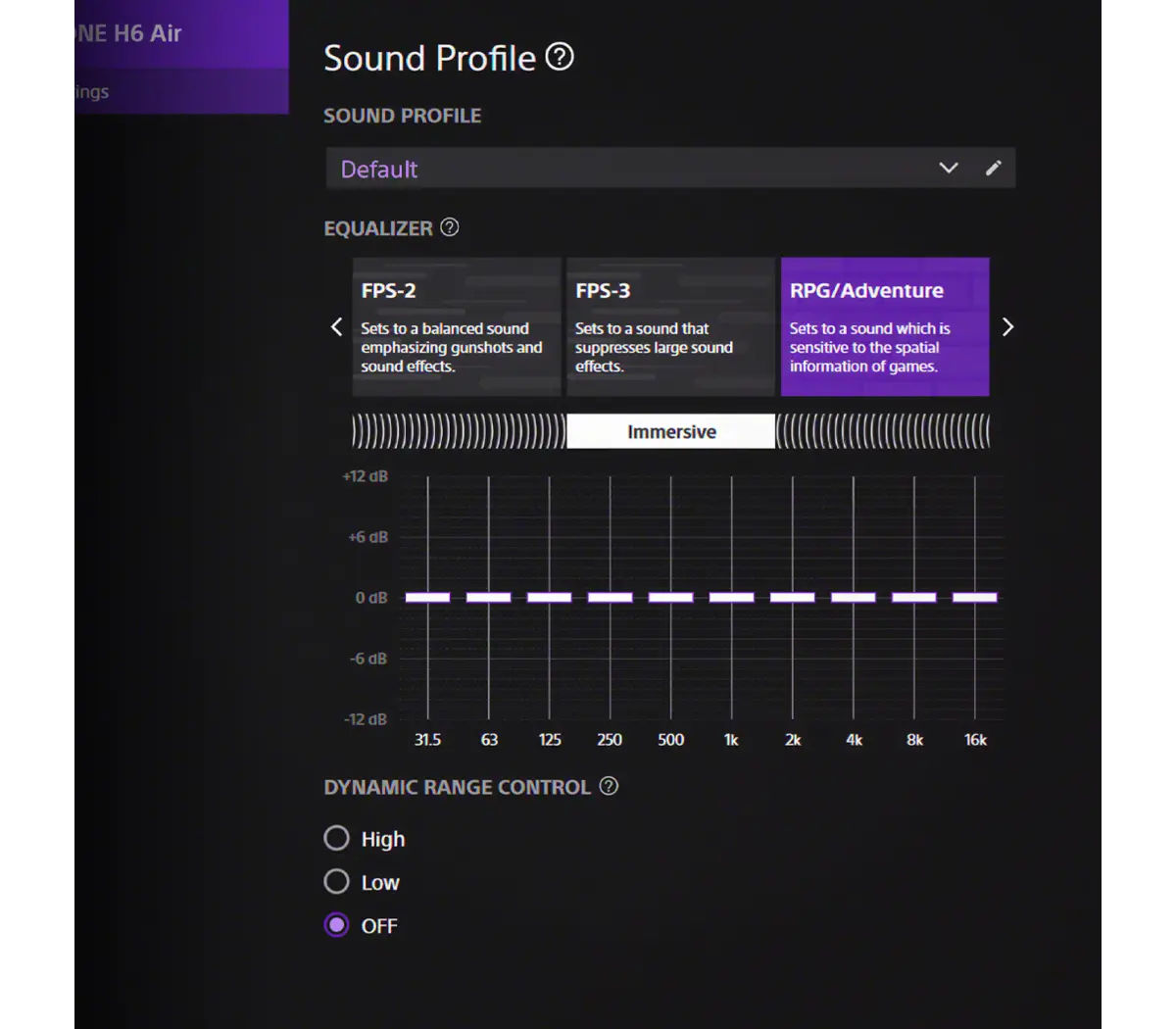
That’s just on PlayStation – the H6 Air gets an upgrade when you use the INZONE hub dongle on PC. Available on your computer is the INZONE Hub app, which powers additional capabilities for your headset. Not only is Sony’s 360 spatial sound available, but there is a contingent of EQ presets to enjoy. I was surprised to see three separate FPS settings, which allowed me to find the right one for me. Sony also has a special RPG profile designed by Sony Interactive Entertainment Japan Studio's sound engineers, which is quite awesome.
To test out that particular EQ, I booted up Fallout 4 and Sword of the Sea. I know, two very different games. Fallout 4 might be a tad dated at this point, but the spatial sound was exceptional. All of the environmental cues were legible, with the spatial sound giving me pinpoint accuracy as I fought off raiders and absconded with Nick Vallentine to his agency.
Sword of the Sea was similar to how I felt with Saros. For those who haven’t played it, Sword of the Sea is one of my favorite indie games from last year. Made by Giant Squid, with minds from the game Journey and Abzu in tow, Sword of the Sea is rooted in the immersive qualities of the senses. Even without a DualSense in hand (and this team is only second to Housemarque in their haptic understanding), the audio pulled me into a dry world awaiting my rescue. Listening to the differences between my surfing on sand and water was palpable; the H6 Air does a great job of helping you experience your games.
Even so, my time with Call of Duty reminds me why open-back headsets aren’t the best for competitive shooters. I don’t think they’re bad, and the multiple FPS EQ profiles certainly helped on PC, but there’s a depth that’s absent. The spatial sound is still A tier, but the same qualities that give immersion will cause you to miss sound cues if they’re too far from you. Contained audio may give too much detail at times, but at least you have all of them. I’ve certainly still performed well, but other headsets are better than the H6 Air in a competitive setting.
While the wired nature of the headset may push some away, after using the H6 Air, I didn’t mind it. The PlayStation 5 has you connecting to the controller, so you really aren’t that limited by wires now. Similarly, you sit directly in front of your PC, so it’s easy to be connected. I don’t prefer wired headsets, but this one isn’t restricted, at least in a technical way, by this design choice. It is a bit tough to stomach, however, with a $200 price tag.
Lastly, the microphone punches well above its weight. I appreciate the length of it, granting me the ability to move it directly in front of my mouth for optimal capture. The unidirectional microphone does a superb job of picking up only my voice, and the sidetone is another complimentary feature. My friends could tell my mic was a bit quieter than my usual streaming mic, but the quality wasn’t far off of it. Good on you Sony, this is a stellar microphone.
INZONE H6 Air wired open-back gaming headset
Great
Sony’s INZONE brand has delivered a compelling option for open-back headset fans. While it lacks a bevy of features, this blue-collar effort lifts the audio you put through it. Outstanding immersion is the name of the game, and backed by an incredibly comfortable build. For me as someone who hasn’t used an INZONE device yet, this is a sensational first impression.
Pros
- Super light and comfy
- Immersive spatial audio
- Being wired isn’t a deal breaker
- Great microphone
- Useful INZONE Hub on PC
Cons
- Not the best competitive headset
- Doesn’t block outside noise well
- A bit pricey
This review is based on a retail copy provided by the publisher.