The Nintendo Gamecube – the little purple prism that could...or couldn't. While the system's middling performance was a rough patch for The Big N, many young gamers grew up cherishing its library of games. But do they hold up today? Join Anthony on his quest to find out as he reviews every classic title offered on Switch 2's Nintendo Classics service.
“Humans are shameless creatures that carelessly ignore any misfortune which does not befall them directly. They can—and often do—turn a blind eye to all manner of wickedness so long as it does not touch them or their kin. They will bow their heads, condemning those victims for bringing calamity upon themselves, and then they will cast their eyes toward heaven in thanks while their neighbors lay dying around them.”
As Fire Emblem: Path of Radiance opens Chapter 11 with the above thesis statement, a chill runs down my spine at the relevant commentary. Picture this: a backwater port town content with its ignorance, paying no heed to their subjugation by the invading force of Daein. Sure, there’s armed men patrolling the streets, but what’s another faceless king? After all, it’s not like he’s affecting their day-to-day lives with anything so nefarious as, heaven forbid, raising taxes. And hey, better his enforcers than those evil beast-man savages from Gallia, right?
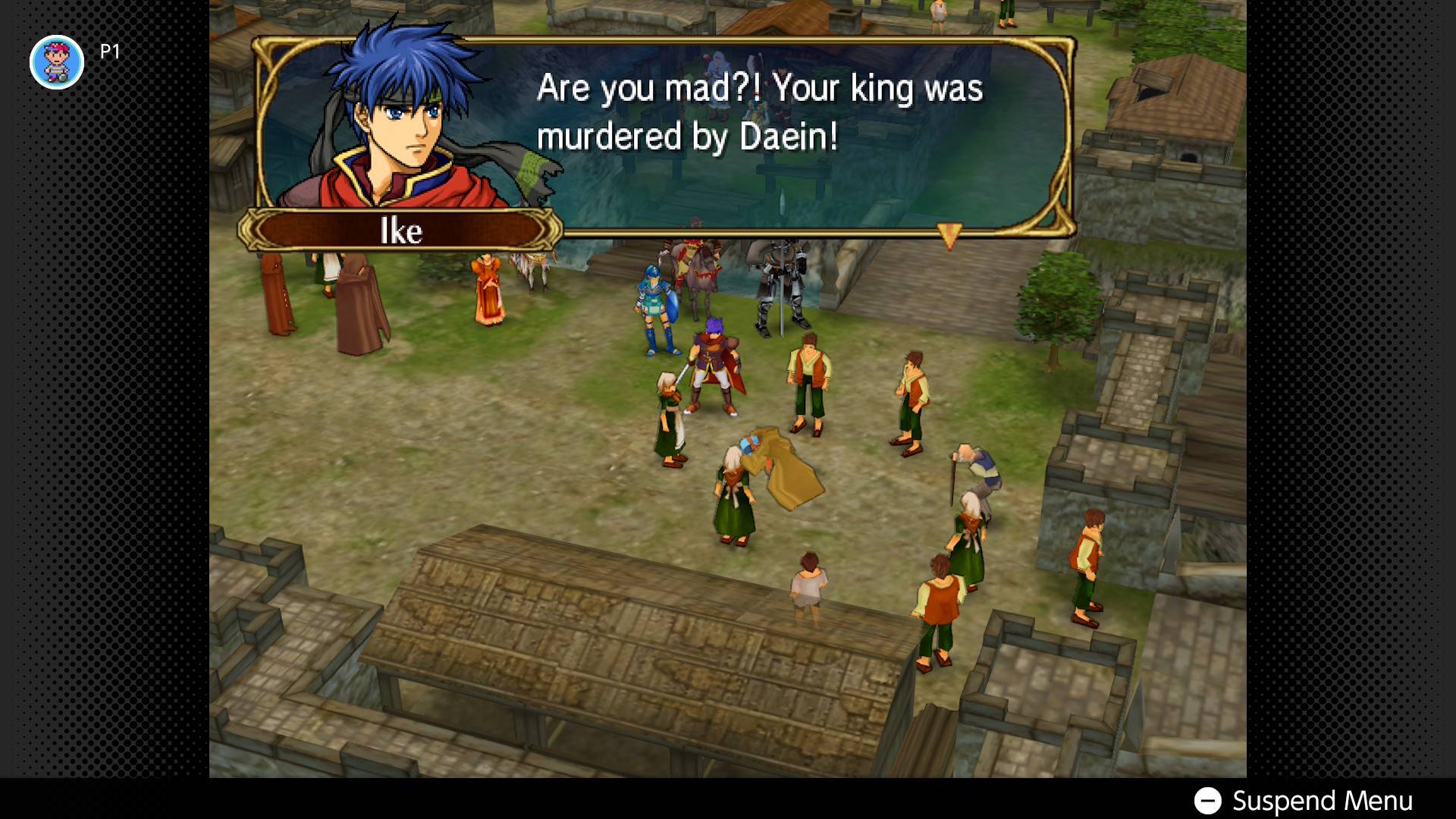
It’s a game hardly subtle with its real-world parallels, not least in the ensuing near-lynching of one such beast-man. As protagonist Ike bravely rescues his friend and publicly condemns this injustice to a population content with Daein’s rule, I’m left reaffirmed that grounded Fire Emblem is the best Fire Emblem.
Fire Emblem: Path of Radiance, the series’ first 3D game, greeted its niche audience in 2005. The GameCube had begun losing steam, what with the delay of The Legend of Zelda: Twilight Princess and Nintendo setting the stage for the so-called “Revolution”. (The Wii’s aptly-titled codename) And when I say niche, I mean niche: much as series leads Marth and Roy intrigued a curious Western population in Super Smash Bros. Melee, they weren’t enough to propel the franchise into stardom. It would be years before Fire Emblem Awakening captivated a wider audience with avatar romances and casual modes, and while Path of Radiance sold enough to earn a sequel in Wii’s Fire Emblem: Radiant Dawn, the series was soon left to chart stormy waters with low-sellers and ugly remakes.
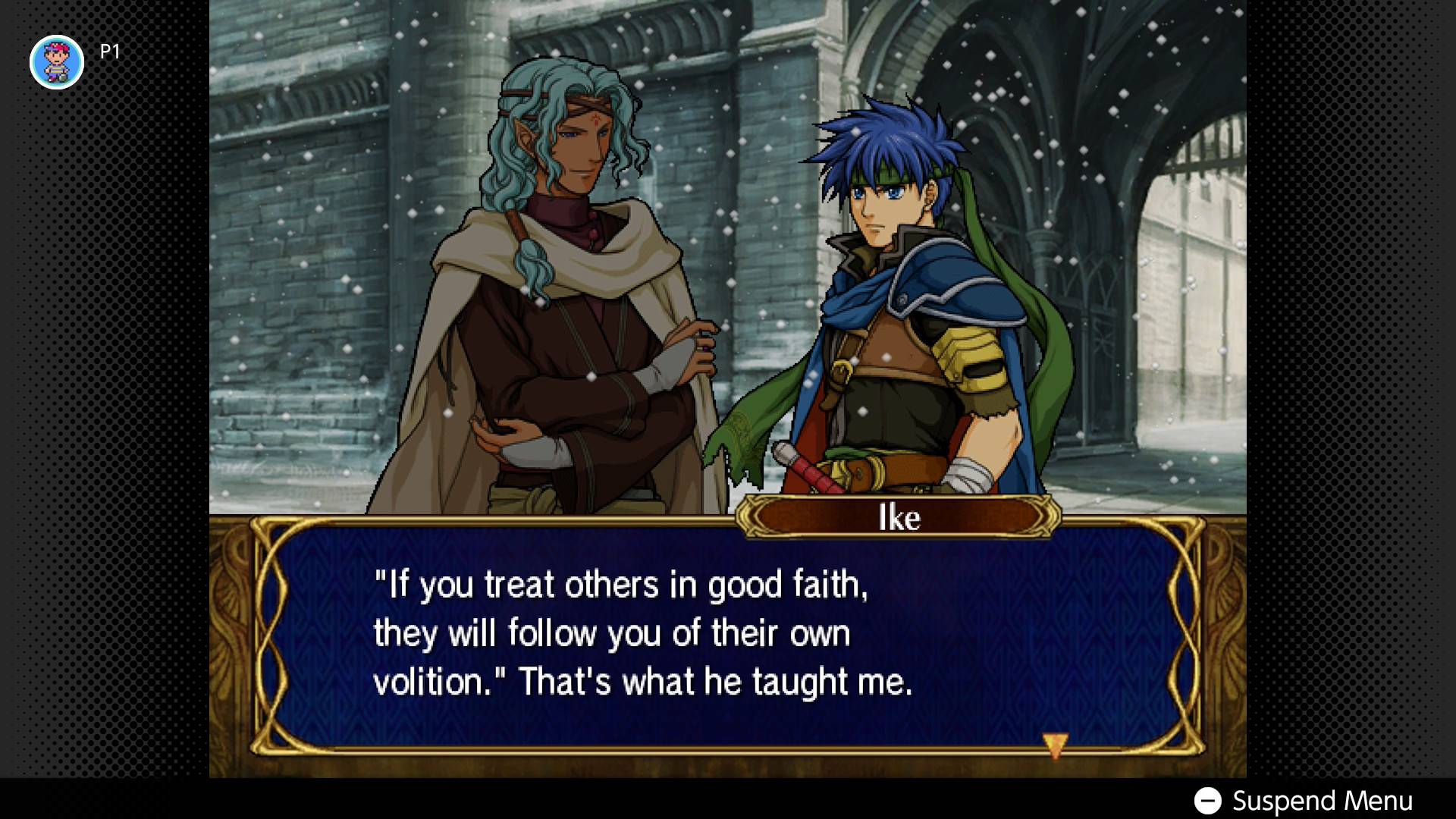
Speaking personally, Path of Radiance was my very first Fire Emblem, and I remember my induction well: it was during my homebound recovery from reconstructive foot surgery back in 2007, spending my sophomore year confined to a hospital cot doing homework and playing videos games all day. Like any other Nintendo fan, I was counting the days until Super Smash Bros. Brawl graced my Wii, and the crossover’s inclusion of Ike compelled me to borrow my friend’s copy. My instant addiction compelled multiple playthroughs, and while I’ve diligently followed the series since through its highs (Awakening and Three Houses) and lows (Shadow Dragon and Engage), Path of Radiance remains a series highpoint: its compelling blend of strategy and riveting commentary standing the test of time.
Like the rest of the series, Path of Radiance is a strategy venture testing our wits. As Ike’s ragtag band of mercenaries sets out to liberate the kingdom of Crimea, you’ll command a double-digit force (typically eleven strong) like chess pieces to clear numerous maps. All have their strengths and weaknesses: sword-wielders are nimble but fragile, while pegasus knights possess movement abound but are easily clipped by bows and axes. Combat is beholden to the Weapon Triangle: the series’ form of rock-paper-scissors, wherein sword beats axe, axe beats lance, and lance beats sword. Other weapon types follow in magic spells and beastly claws, but you’ll learn those as you go. Easy, right?
Well, aside from this being classic Fire Emblem—meaning that once a unit falls in battle, they’re gone forever. Dead as a doornail. No takebacks. Talk about pressure.
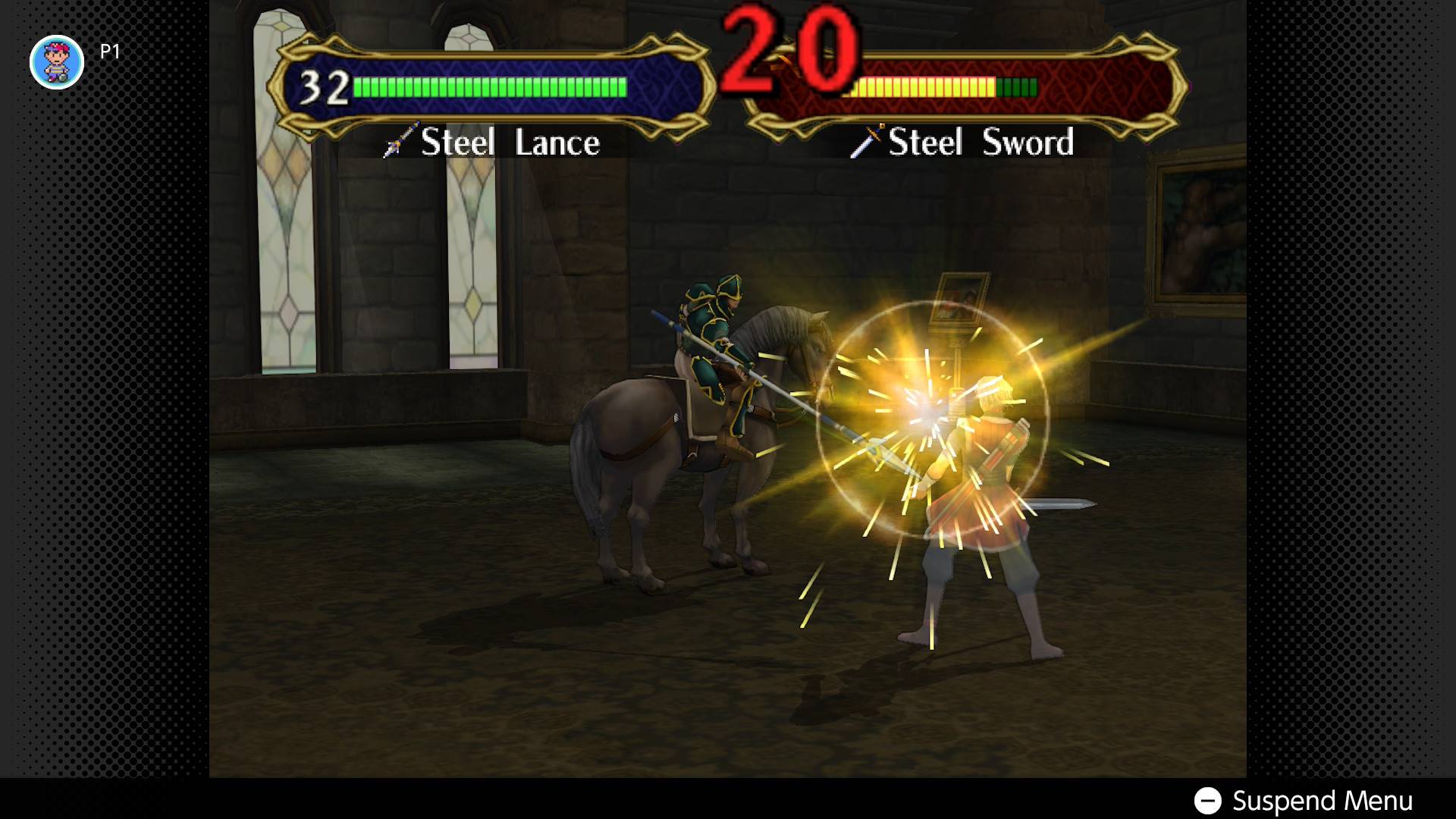
It’s a mechanic demanding meticulous strategizing, one peeling back layer after layer of depth. Weapon durability means you can’t just go charging with your strongest lance, so you’ll need to decide which weapon is best for your cavalier knight to use any one turn. Not all enemy units are onboard with Daein’s invasion; in fact, some may act upon their conscience and join your army under the right circumstances. (Careful, now: your negotiation tactics may require certain units who you might’ve benched) EXP is a precious resource, leaving us to calculate which unit should kill which enemy for maximum growth—supposing, of course, the fickle RNG gods grant your characters decent growth. (Woe be to the mage who gains Strength points, or worse, nothing at all)
All key ingredients for the addiction that is Fire Emblem: any one entry promises countless combinations with unit selection, skill assignment, support bonuses, growth rates, and what have you, compelling numerous playthroughs that’re inherently distinct—rewarding us for strategized investments and punishing us for hasty tactics. You can unlock class-specific skills to grant units reliable tricks in their arsenal (Sol and Aether are your friends), whereas the character support system grants combat-granting bonuses dependent on character placement. (Can’t forget the lore-dropping character interactions those unlock, but we’ll get to those later.)
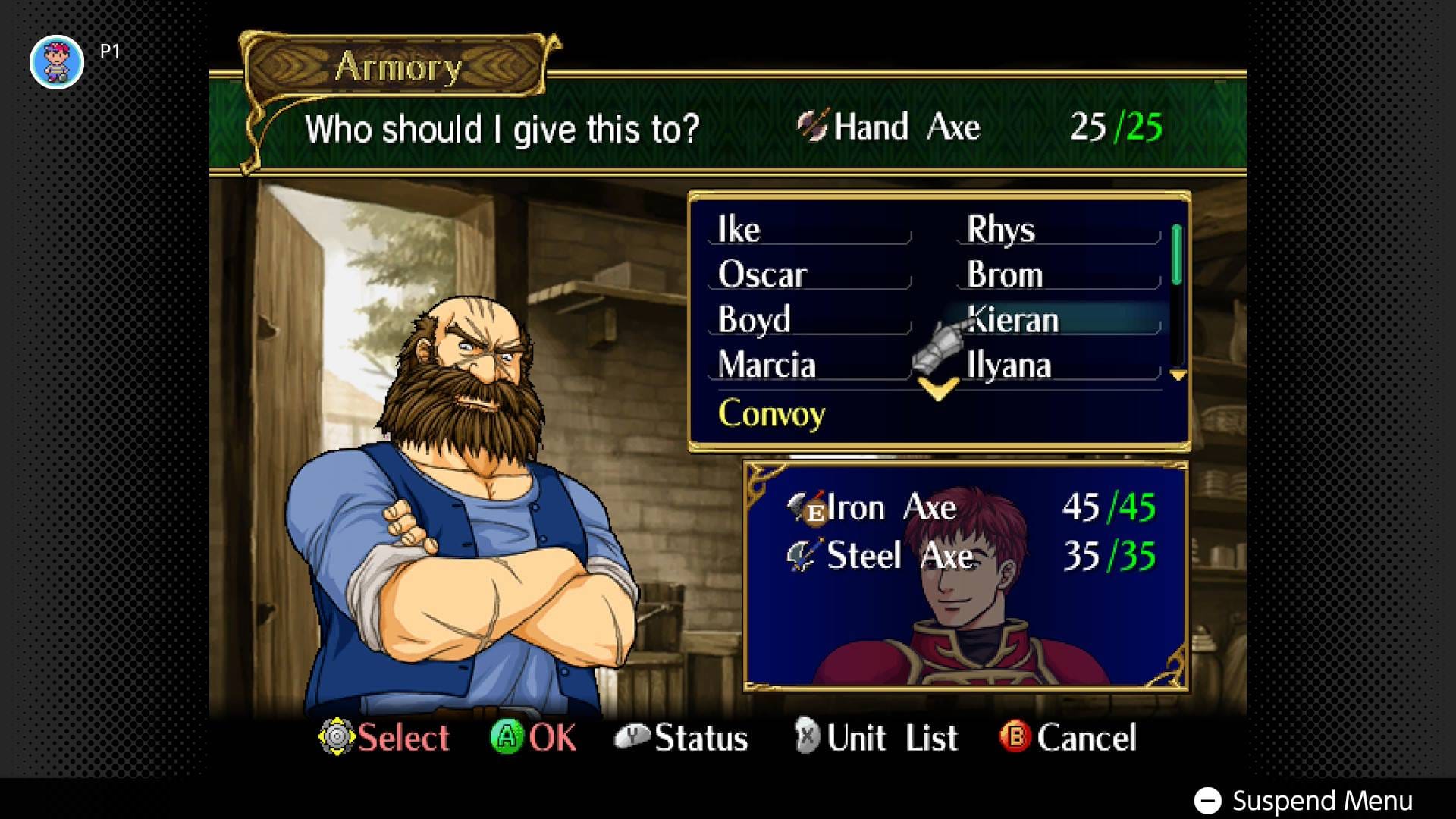
Admittedly, the game isn't great at describing all this, so it can be a little much. (Don’t know what “Biorhythm” entails? Don’t worry; I still don’t either.) But while information overload and permadeath can prove intimidating, Path of Radiance is thankfully one of the easier entries with its newcomer concessions. Bonus EXP earned from chapter performance helps any one unit catch up, so don’t fret if certain soldiers aren’t earning their keep. Meanwhile, the “Laguz” characters—beast-men that can transform into tigers, birds, and such—are killing machines offset by their gradual transformations, proving themselves reliable crutches that don’t outright break the game. And you can even visit the forge to craft custom weapons. (My favorite unit, the horseback knight Oscar, never leaves home without the legendary “Bob Lance”.) The observant tactian can make even the game’s worst characters viable under careful micromanagement, as the game gives just enough freedom to experiment.
Not that Path of Radiance isn’t afraid to get tough—the mission variety keeps players in check with everything from base defense, goal-reaching, and avoiding hapless NPCs. The map design is relatively solid by Fire Emblem standards, stealthily teaching the player optimal tactics with chokepoints (Chapter 13’s ship battle employs drawbridges, which a new armored unit can guard—a useful shield for mages/bowmen to hang out behind) as much as it tests the player’s mettle (the four-round Chapter 18 is a multi-hour clash, one that can prove a real crisis point. Use save states as necessary). Only Chapter 23’s bridge proves a bust—pitfall traps would be compelling hazards, but the lack of visual signposting renders it more a lethal guessing game than one punishing careless tactics.
But with Switch 2’s save states thrown in the mix, there’s even less trepidation at play. Purists may raise ethical concerns, but the benefits are undeniable: for instance, the late-game Black Knight duel is no longer a contest of luck, and no longer do you have to restart the whole chapter should Ike fall against his mortal nemesis. Thing is, some of these chapters can get long, and us bleeding hearts prone to resets can now undo character deaths with the press of a button, saving valuable time for those us on the clock for a review. (Sue me!) With strategy games paying no heed to input lag, Switch 2 is the definitive method to play this classic.
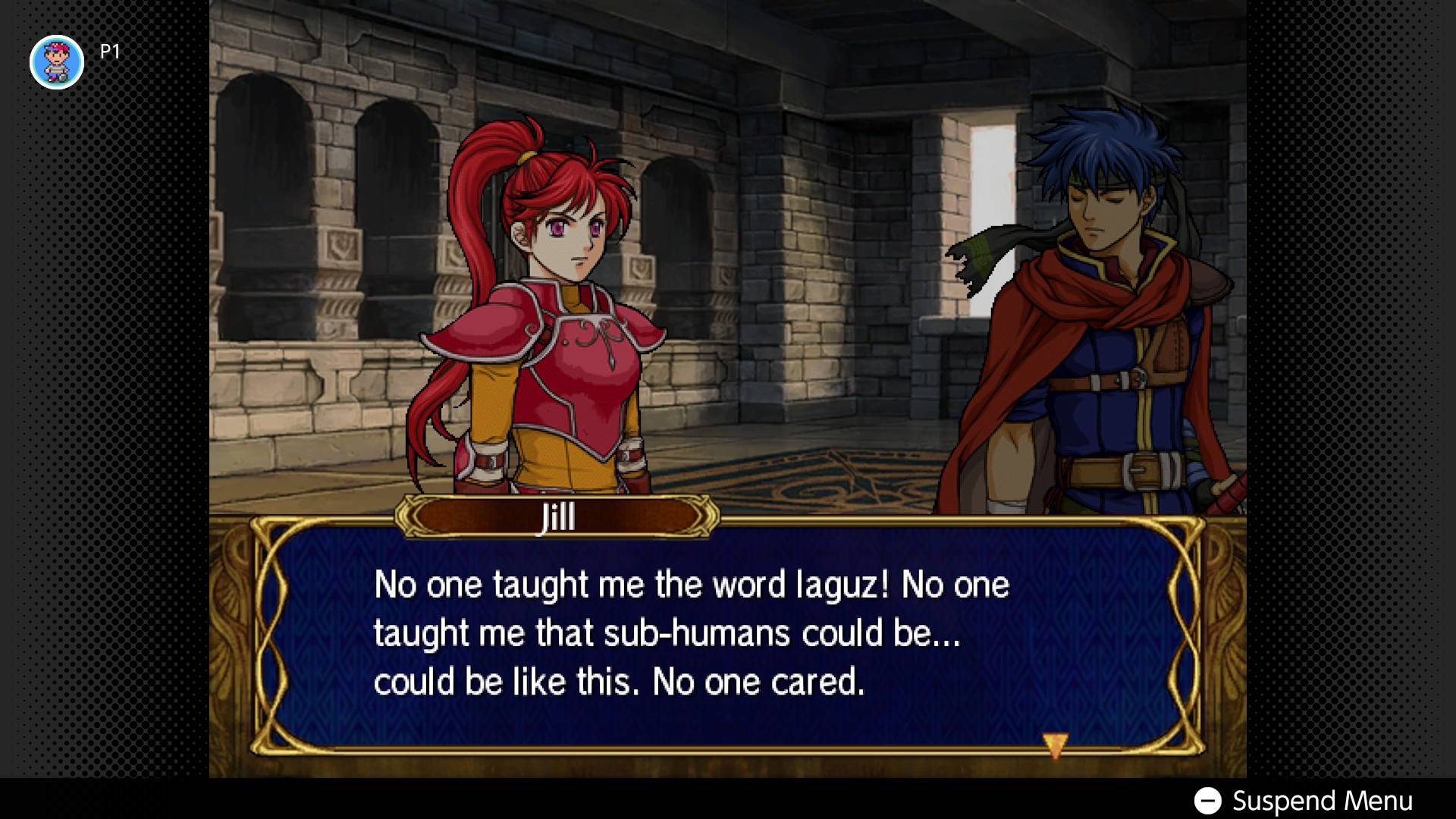
Did I mention how great the story is? Far too often does Fire Emblem undermine its political intrigue with good-and-evil binaries, and Path of Radiance will have none of that. There are no dark dragons or cackling wizards pulling the strings here: the land of Tellius is a racial apparatus, bolstered by theocracies and classism that sustain its inequality. From Laguz plundering their persecutors to human “migrants” spurned for their status even when fighting for king and country, it’s an endless cycle defining Tellius’ fragility – the perfect kindling for a power-hungry monarch to light the flames of war.
It’s not that Fire Emblem hadn’t successfully induced morality or pathos beforehand – the consequence of permadeath serves as a painful reminder of the player’s past failures, and the games have never shied from highlighting as such. Yet Path of Radiance felt immediately relevant in a way the prior fairy tales of Fire Emblem hadn’t: the minutiae of troop divisions, calculated political leverage, and backdoor conspiracies render this entry the one feeling most like an actual war—one defined with hopeless odds, with only a lost princess enlisting a small mercenary force under her banner. Its use of the fantastical in cursed medallions or Laguz beast-men is carefully interwoven into the narrative, the latter being an overt racial allegory that, from genocide to cultural stereotyping, today’s audiences would do well to apply to current goings-on.
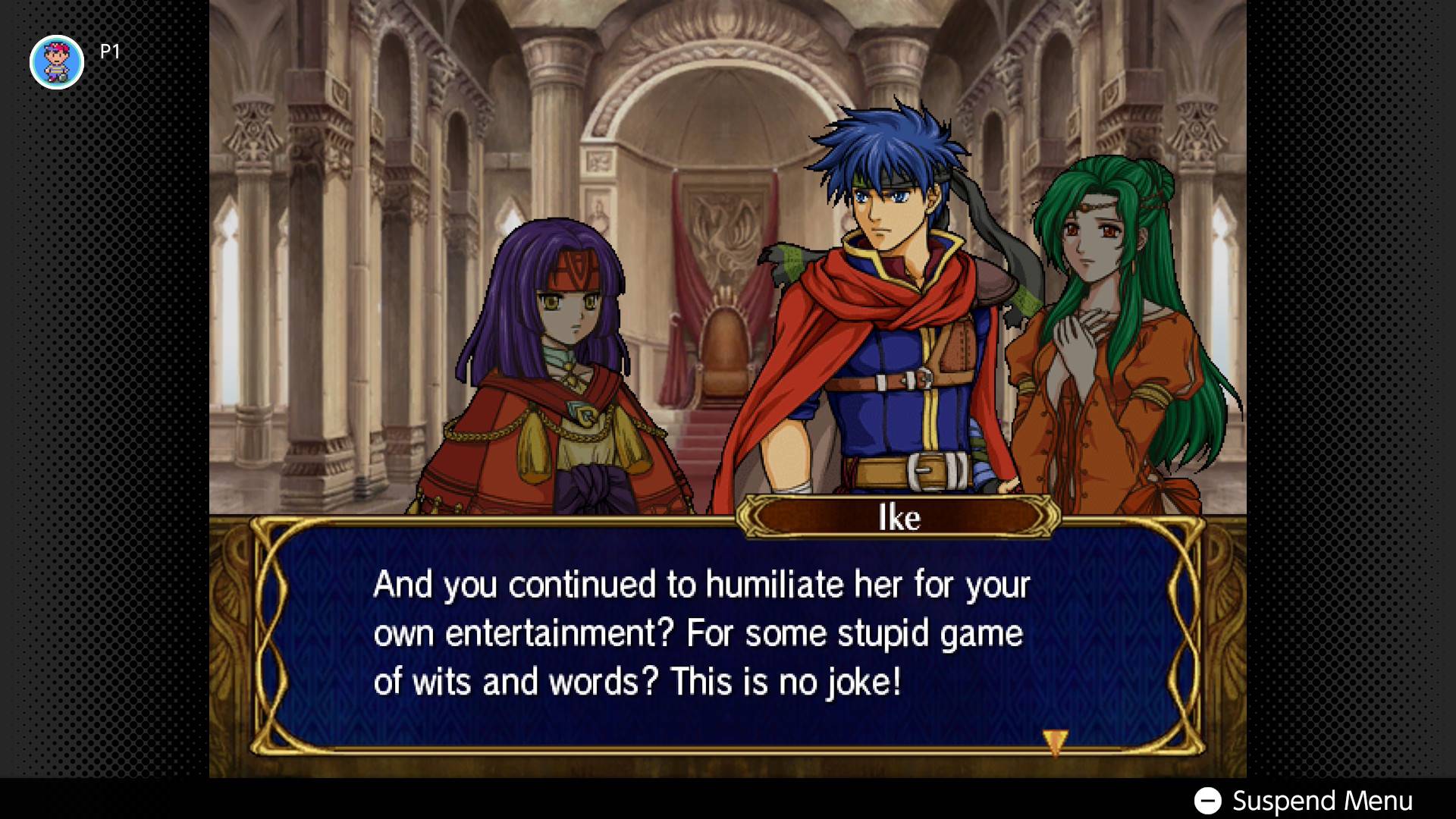
It helps that it casts great characters to act upon its stage: there's Jill Fizzart questioning the bloodthirsty racism that’s driven her military career, and Soren’s razor-sharp jadedness diagnosing the ills of Tellius society. (With, ironically, his own prejudices feeding into said cycle). Yet liberation for the marginalized means this is not a tale for the institutionalized likes of doe-eyed princes and yearning princesses, leaving us with Fire Emblem’s first non-royal protagonist in Ike. While the narrative initially spins its wheels with his coming-of-age story, his blunt naivete is our window into his radicalization: Fire Emblem newcomers mirror his self-doubt in leadership, while the politically-conscious will swoon at Ike achieving our dreams at yelling in the face of opportunistic politicians. Upholding an idealism no more complex than “this system doesn’t work, your bigotry is disgusting, and you’re going to fix this now,” his outrage and passion become our own.
Not satisfied with just the main storyline endearing us to its cast, the army base preluding every chapter is host to further dialogue of all sorts. The Info section provides enticing windows into the goings-on of a war-ravaged land, be it picking the brains of new recruits to the perspective of the embattled citizenry. Meanwhile, the unlockable support conversations between different units provide moment-to-moment humor and deep lore, compelling further playthroughs to mix and match characters of all sorts. Always keeping even the most optional characters relevant, there’s never a dull moment in the world of Tellius.
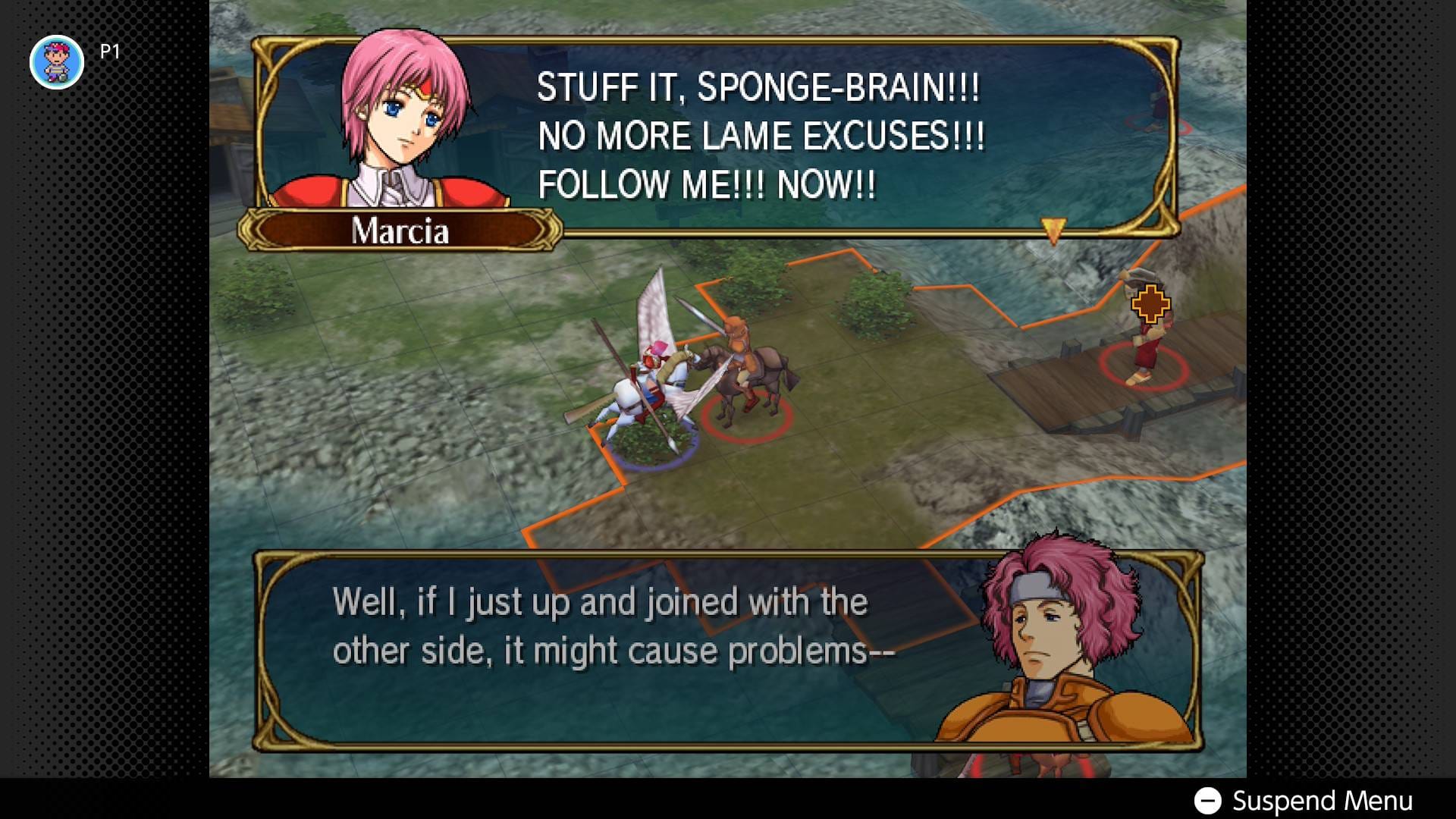
All this brought to life by a fantastic localized script. Nintendo of America’s Treehouse employs a medieval direction that, while old-fashioned at its base, flexes an expansive vocabulary in everything from Bastian’s flowery prose to Marcia’s catchphrases (“Oh, crackers!”). There’s chinks in the script’s armor—it’s not without the odd mistranslation or two, and the substitute swears aren’t ideal (much as they get clever with some of these, the typical employment of “you dastard!” does nothing but water down the narrative’s very real stakes), but the game’s themes shine through on character alone.
On the audiovisual side of things, Path of Radiance marks the first Fire Emblem soundtrack where series composer Yuka Tsujiyoko steps back, watching carefully as sound supervisor while new blood takes the reins. All perform a terrific job with the new tools at their disposal, translating warfare into song with highlights such as the rousing “With Us!” recruitment theme (still the series’ best), the inspiring call to arms in “Move Out!”, and even the series’ most haunting map theme in “Change of Scenery”. Of course, any discussion surrounding the music isn’t complete without “Life Returns”: another series first in its vocals, utilizing reverse Japanese to sing a fictionalized galdr. Appearing as both duet and solo, its beguiling tones set the stage for the narrative’s themes of resolution and forgiveness.
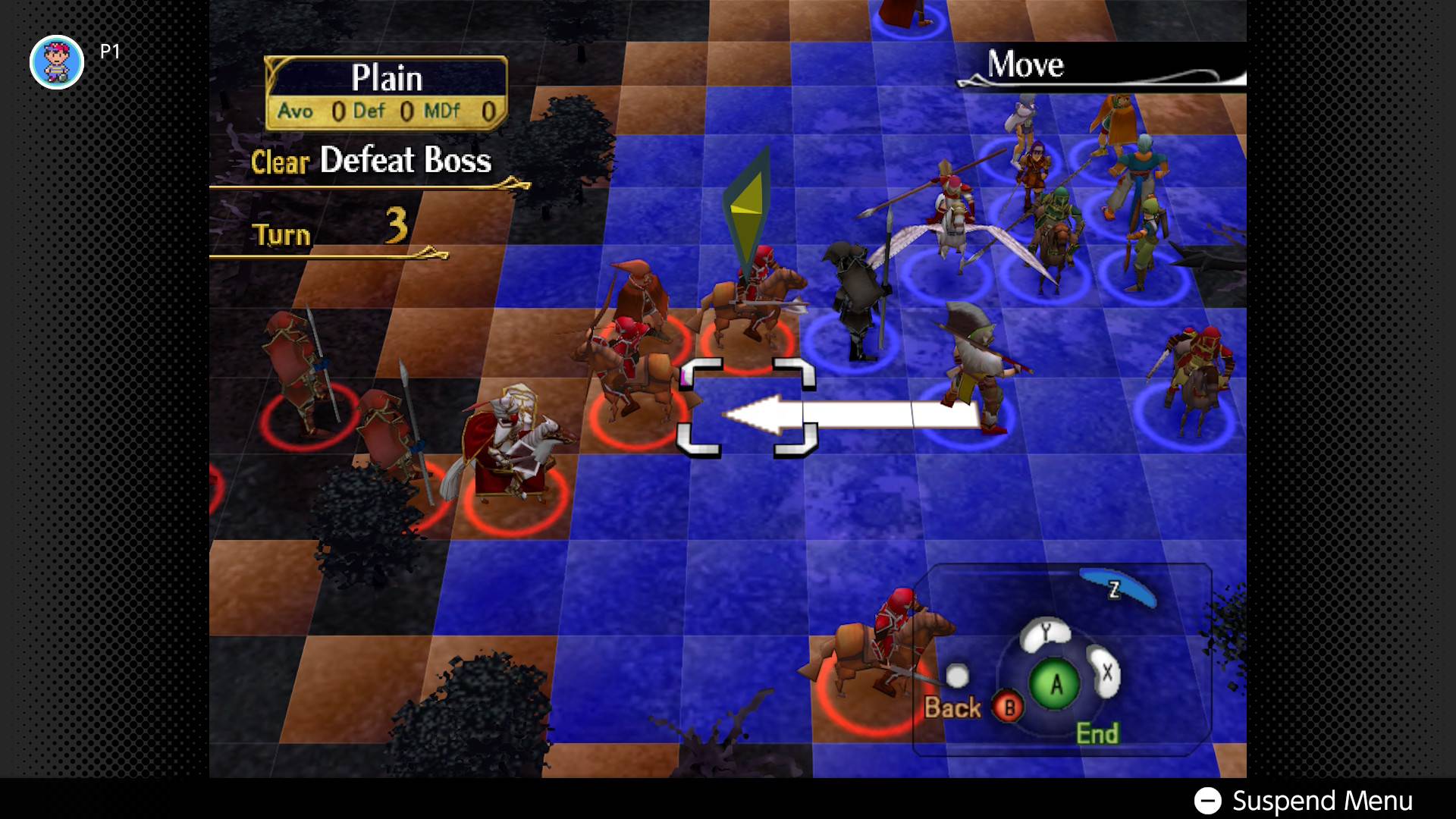
It’s a shame the graphical presentation brings down Path of Radiance’s grand ambitions. The maps’ character models are rudimentary, more akin to Nintendo 64’s blockiness than cutting-edge GameCube visuals. The attack animations' stiff displays of arthritis are a stark downgrade from the Game Boy Advance games' timeless squash-and-stretch, sending impatient players scrambling to turn them off. Certain spells chug the framerate—always wince-inducing even when we’re the ones flinging magic.
An unfortunate case of developer Intelligent Systems adapting to 3D while operating under a shoestring budget, the game’s simply never been a looker. The portrait-based dialogue may’ve been cozy comfort for those coming off the GBA games, but it’s dated presentation even by 2005 standards – a reality that the Switch 2 highlights with jagged text and pixelated countenances. Thankfully, the CRT filter scrubs out any relevant imperfections, although adherents will surely be horrified that I still played without one. (I appreciate the effort, but barring the N64 library, the part-and-parcel fuzziness is a tough adjustment. Sorry!) To atone for my indiscretion, I’ve provided the following comparison below for readers to pick their poison.
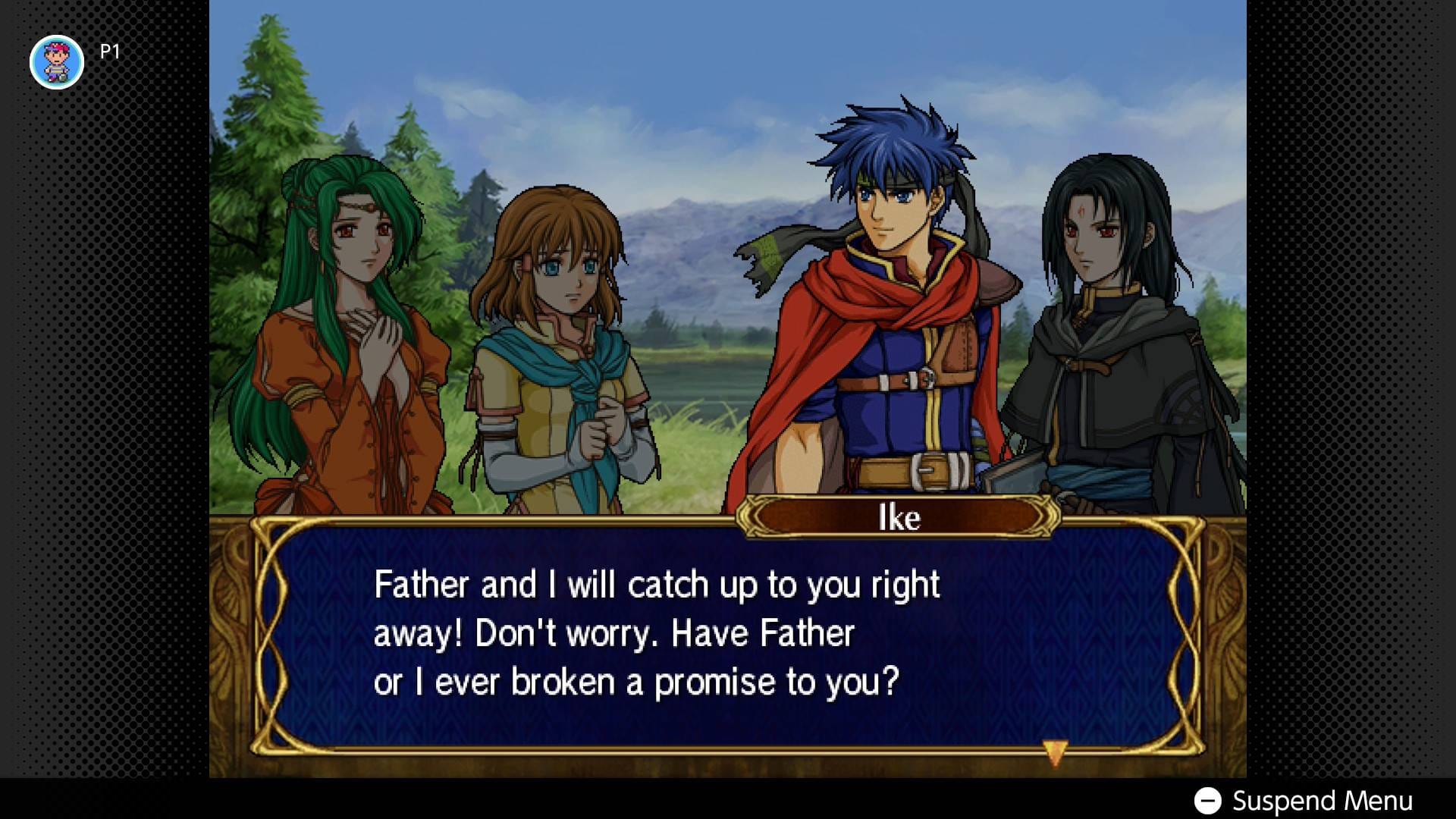
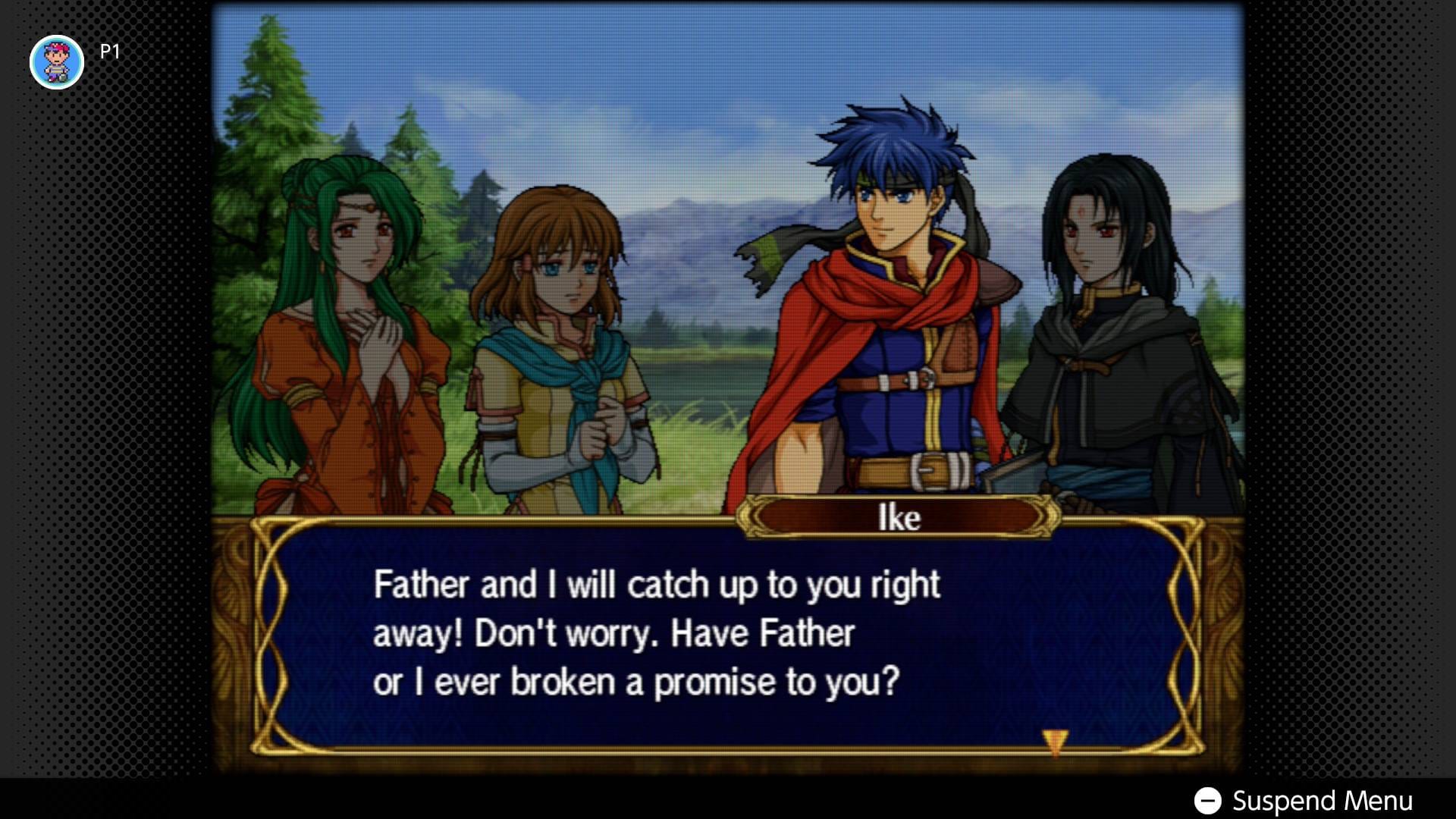
(While I’m at it, what’s up with the misaligned text? I’d initially thought it a side-effect of the default display, but nope, it’s clear as day in both options. Weird.)
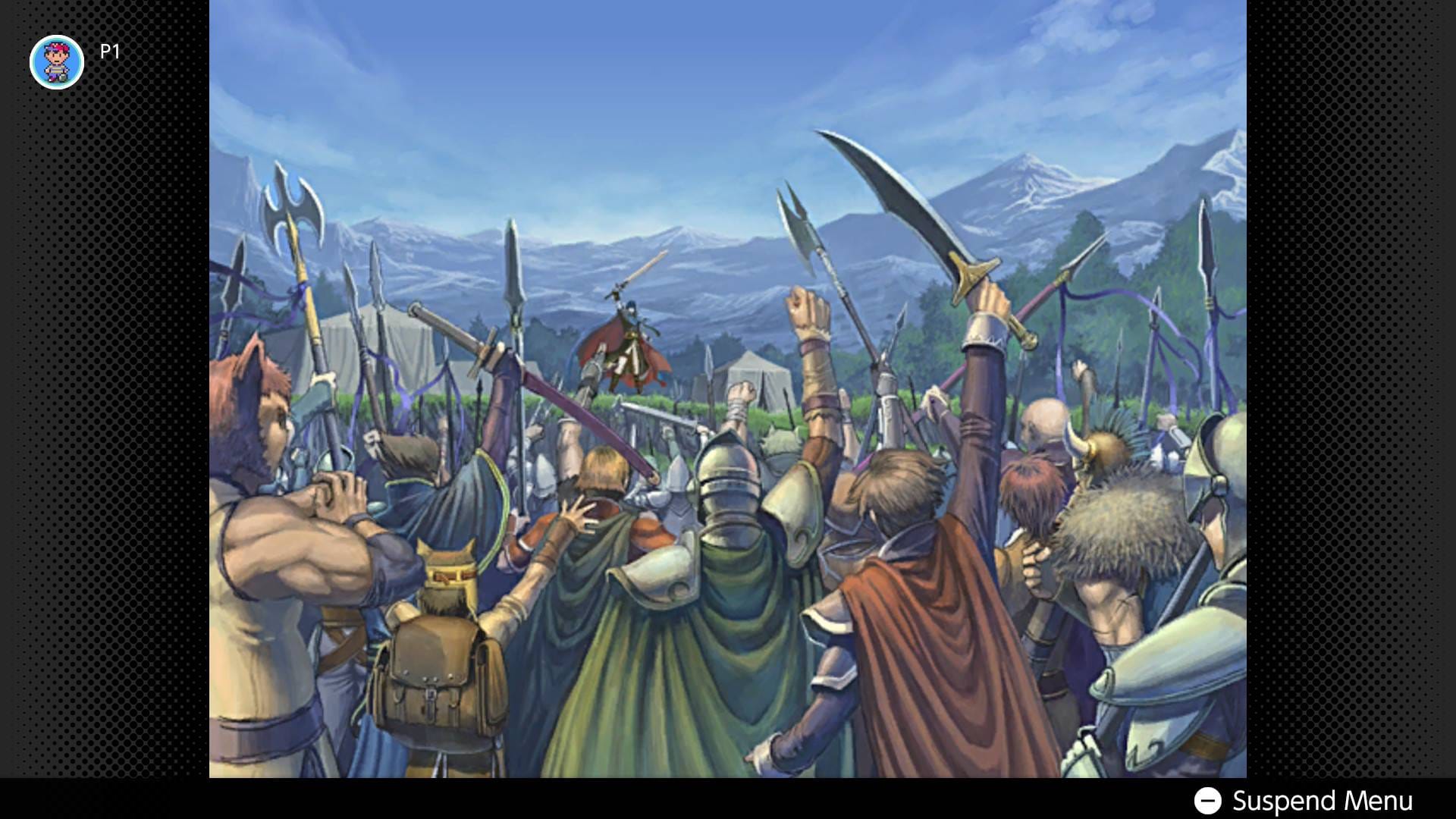
I say all this despite my huge soft spot for said portraits: it’s a classic style not without its charms, so I hate to be a downer. But much of Path of Radiance feels like it’s struggling to escape the confines of 2D. The illustrations depicting major events are gorgeous, yet their slide-show presentations feel cheap. The Production I.G.-designed cutscenes are meant to be cinematic showstoppers, but their infrequency renders them superfluous. And the voice acting…
Look, I’m gonna come out and say it: this has the worst acting in any Nintendo game ever made. Already, I can hear the objections: it’s Metroid: Other M’s chorus of Microsoft Sams, or the awkward deliveries and dialects of Zelda’s Switch duology. No, it’s this abominable relic from Nintendo's days of Seattle-based amateur hour. Every line is wooden, stilted, pronounced with limp inflection; a classic consequence of emphasizing the strict timing of a localized script rather than natural delivery. (“Ike. Look! Up. There.”) The mixing is atrocious, dialogue barely audible to the point of illegibility—a blunder compounded by the lack of subtitles. (Good luck interpreting the transatlantic phone call that is the Black Knight; no, really, you’re gonna need it.)
The line delivery. The mixing. How it ruins what's supposed to be a beautiful moment of racial reconciliation. Holy Mother of God. What makes it ten times worse is that this was *Nintendo*! You're saying gaming's biggest titan couldn't afford top-notch ENG VA? Embarrassingly sloppy.
— Anthony @ GamingTrend (MrSaturn99/Alagunder) (@anthonypsaturn.bsky.social) 2026-01-13T06:37:03.821Z
From Luigi’s Mansion to The Legend of Zelda: The Wind Waker, Nintendo’s prioritization of text-based dialogue over vocal talent was a common GameCube critique. Another sign of Nintendo being out-of-touch with a rapidly-evolving industry? Perhaps, but isn’t it more offensive that for all their money and power, their Western divisions couldn’t fork over the resources to afford actual voice direction or well-known talent? It is second-hand embarrassment courtesy of creatives punching well below their weight. Let us count our blessings that much of their output was unmarred by such cheapo penny-pinching. (A blessing in disguise, if you will—surely the blinking, silent portraits aren’t so bad when considering the alternative, yes?)
There’s other things I could harp on—the narrative’s biggest weakness lies in its overt dependence on sequel-baiting, dangling numerous plot threads for Radiant Dawn to resolve—but the point is: Path of Radiance represents a stage in Fire Emblem history where the series isn’t equipped with the tools for a breakout success. For a series veteran, it enthralls; for the curious newcomer, it takes some trepidation before clicking. The gaming audience at large? The absence of top-notch visuals and Casual Mode-esque accessibility render it, alas, a non-starter.
A crying shame, but all that’s not enough to topple Path of Radiance’s rock-solid foundation. Its contemptible missteps are few, and what’s left is a terrific strategy game with a timely message of acceptance. There’s little more comforting than a beloved tale from adolescence only growing deeper with age, and it’s an appreciation I’m certain will grow deeper time after time, replay after replay.