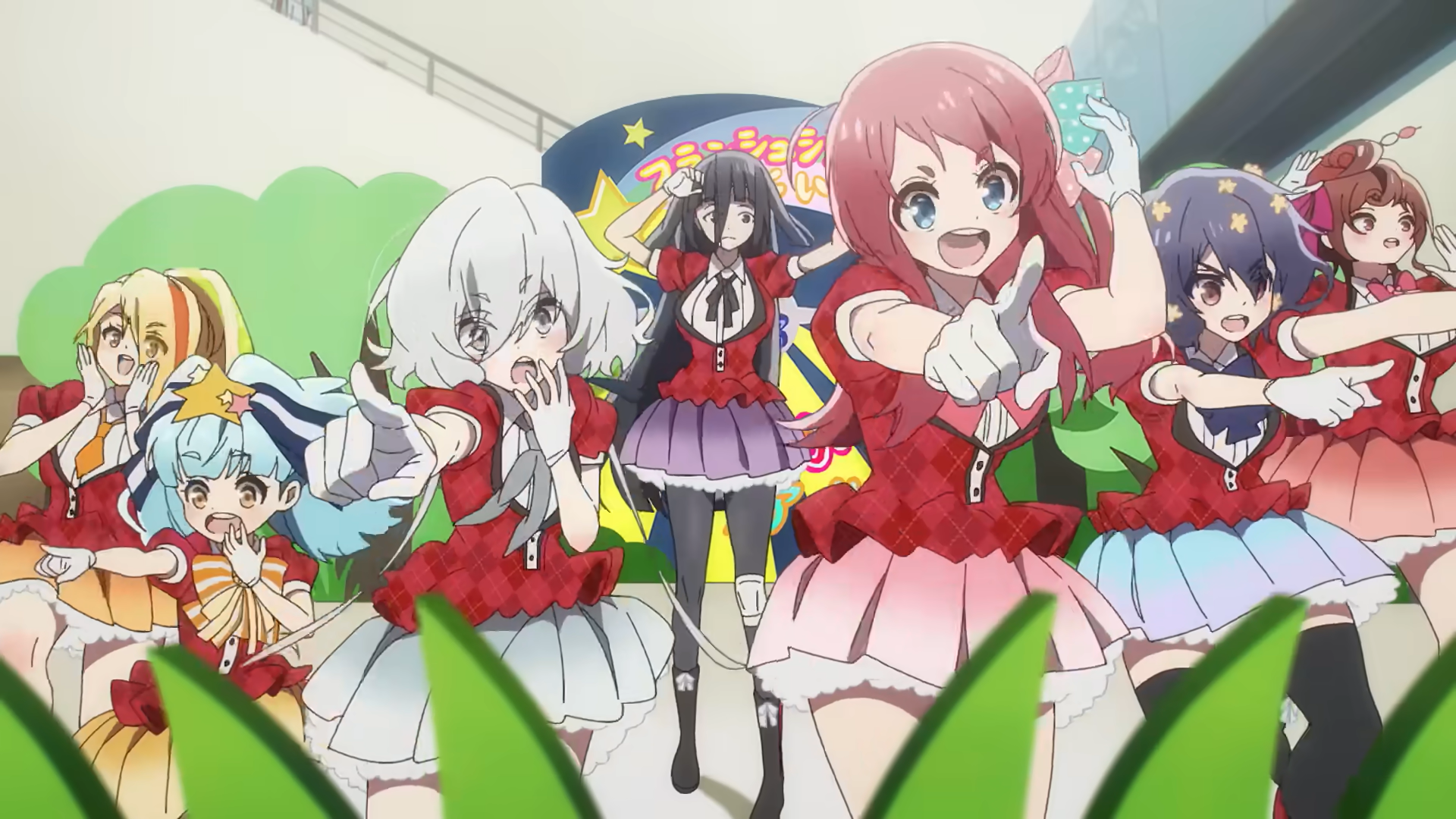
Studio MAPPA and Cygames' Zombie Land Saga was lightning in a bottle when it premiered in 2018. While I am not into idol-centric media, the series gimmick of the resurrected zombies forming a band immediately glued me to what the show had to offer. Admittedly, the idol shenanigans still aren’t my cup of tea, but the superb character writing and consistently hilarious writing allowed the series to maintain momentum beyond its shock value premise. 2021’s sophomore season was a decent, if messy, follow up, the characterization hook of zombies taking the backseat to the more generic idol tropes.
Almost five years later, the deceased band of Franchouchou returns to life with their cinematic debut to address the major cliffhanger at the end of season 2: aliens. Essentially, what if zombie idols fought aliens in an Independence Day-esque scenario?
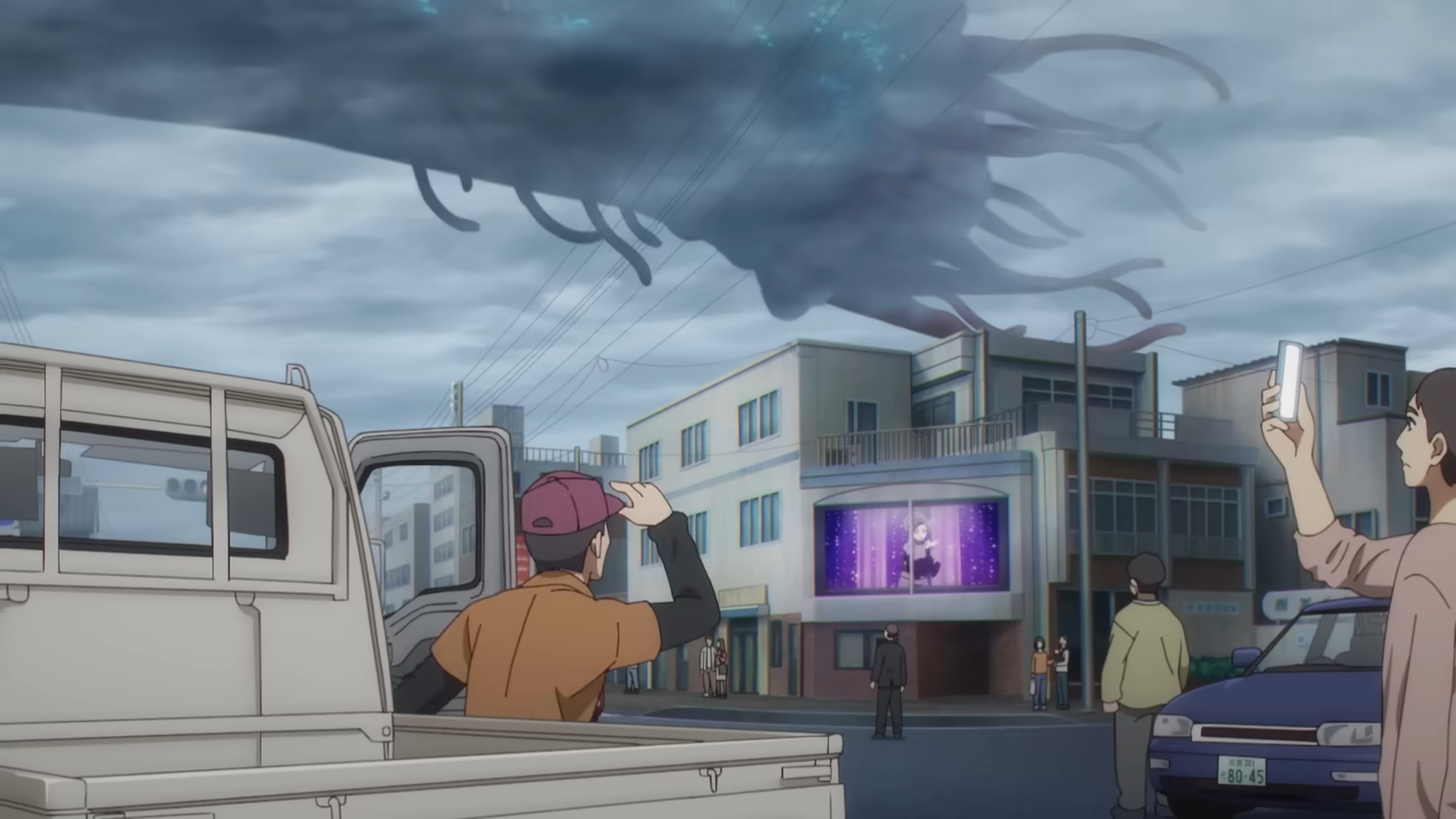
Initially, I had concerns regarding this narrative decision. With how bonkers the jokes and supernatural elements are, space beings seemed almost like a forgone direction for the franchise to rocket towards. Despite this, I felt that series creator and screenwriter Shigeru Murakoshi was jumping the gun when hard pivoting towards sci-fi spectacle. There still felt like a wealth of untapped character potential yet to be explored on Earth, via the compelling lens of zombies navigating a life they could no longer live as living dead.
With all of this pessimism in mind, I am thrilled to say that my concerns melted away every passing minute of the film's two hour runtime. Zombie Land Saga: Yumeginga Paradise daringly back flips out of the corner the series wrote itself into, transforming its established slice-of-life idol-comedy into an action-comedy disaster movie. The result is a metamorphosis that not only yields the survival of the comedic and character driven core that made the series a bolt of lighting, but utilizes the genre shift to rekindle the flame of its familiar tricks.
With that being said, there is unfortunately a slight hurdle to clear before the film begins to sparkle with greatness. Following a snappy and humorous recap of the prior seasons, the first third of Yumeginga Paradise spins its wheels with an abundance of setup. While the purpose is to re-acclimate viewers to the residents of Saga Prefecture's status quo, the constant cutting back and forth between several groups results in glacial narrative progression. This rocky structure continues to fester into the inciting incident of the initial invasion. Additionally, the cinematography skews towards the dull side, neither utilizing creative camera angles and movements to carve its own cinematic identity, nor having a variety of arresting shot composition to accentuate the emotions of each scene. Even if it slightly improves as the film progresses, this issue is the most egregious during act one.
Fortunately, the main cast’s banter and hijinks ensure that even the weakest portion of the flick is still mildly entertaining. Moreover, this phase of the screenplay establishes numerous Chekov’s guns that will later fire. Even though I would have preferred these building blocks be doled out at a steadier, less exposition filled pace, it makes for clever and hilarious payoffs later in the film.
The moment Yumeginga Paradise finally establishes its main lead, Tae Yamada, is when the film finally gains focus, pushing both feet and hands on the gas pedal and never letting go. A crucial facet that drew me into the first season was uncovering the emotional plights of each bandmate, the basis of their subsequent development through the episode and series as they navigate their second chance at life. Being the only zombie of the group who never awoke from her feral state, Yamada naturally has the most ambiguity behind her character. By usurping the role of protagonist, the long awaited awakening of Tae’s consciousness offers a fresh take on that familiar formula.
An improved narrative flow is one thing, but it all hinges on the execution of how well the new central lead is written. At its core, her arc is rooted in the tried and true "lone wolf character learns you can’t do things alone” power of friendship tropes. Purely from a character development standpoint, this isn’t groundbreaking in the slightest, even if it is handled well enough to get me invested in her emotional journey.
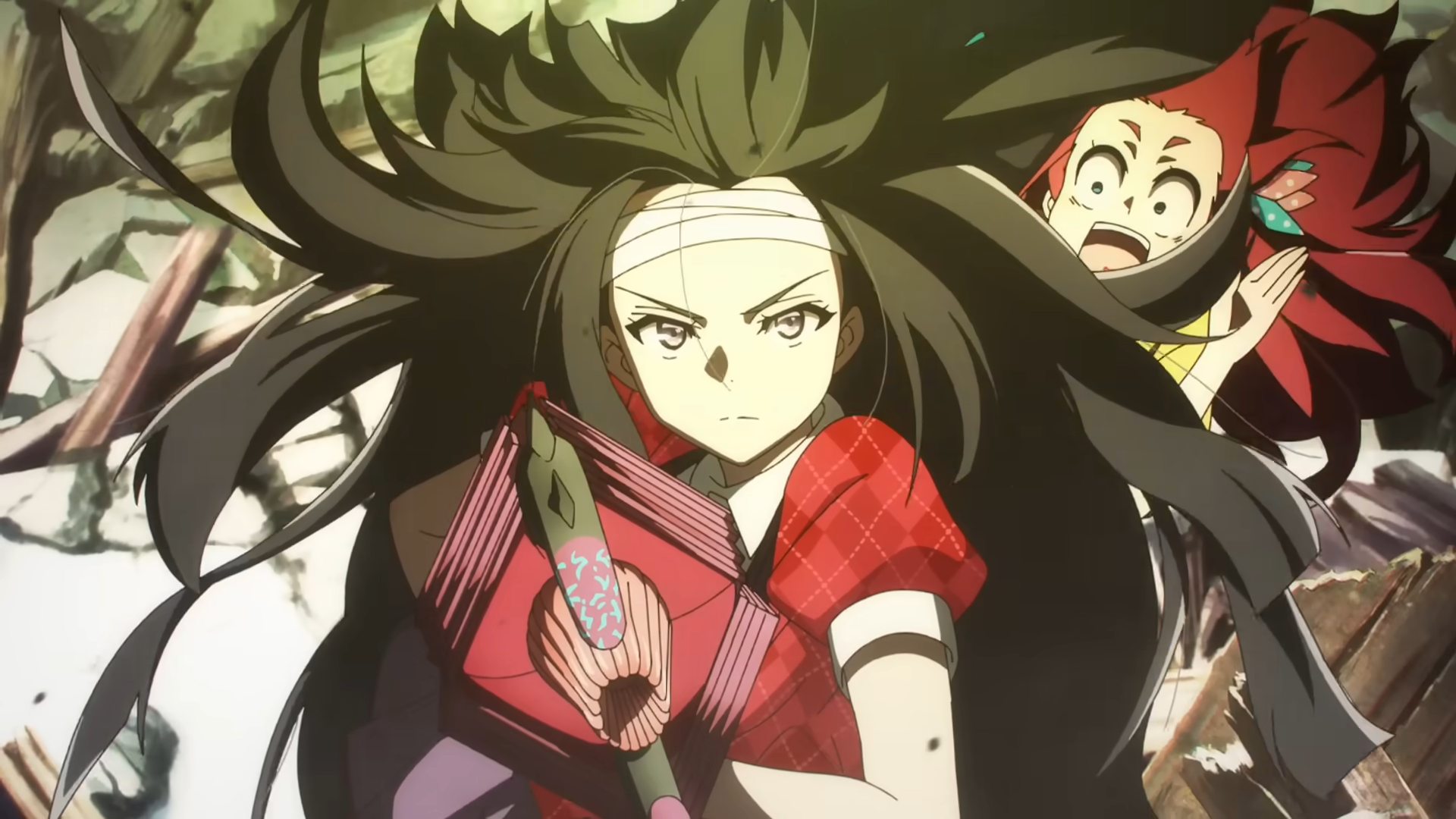
With that being said, Zombie Land Saga relishes in knowing its cast's depth leans towards simplistic cheese and takes full advantage of it. Like a zombie chomping down on a human brain, the show gleefully gobbles up that cheese with one of its core genre pillars: comedy. The series thrives off rapid firing well thought out punchlines, mixed with just the right amount of random slapstick. The unrealistic silliness ironically grounds these characters by making them more likable, the warmth of laughter stemming from their unserious demeanors, allowing the coldness of losing those smiles hit that much harder.
Screenwriter Shigeru Murakoshi continues to delicately thread this needle even when writing an alien invasion disaster plot with Franchouchou’s silver screen debut, delivering the series' best balance of its contrasting tones yet. Part of what makes this shake-up so seamless is Tae Yamada’s action hero past. While her actual backstory is still too shrouded in mystery for my liking, her stoic and serious nature is the foundation of her development and comedic potential. The main lead’s bluntness contrasts with both her past zombie mentality, and the goofiness of the main crew. Seeing her navigate the dissonance of having no memory with a found family of pop idols makes for compelling interactions as she butts heads with a crew she grows to care about.
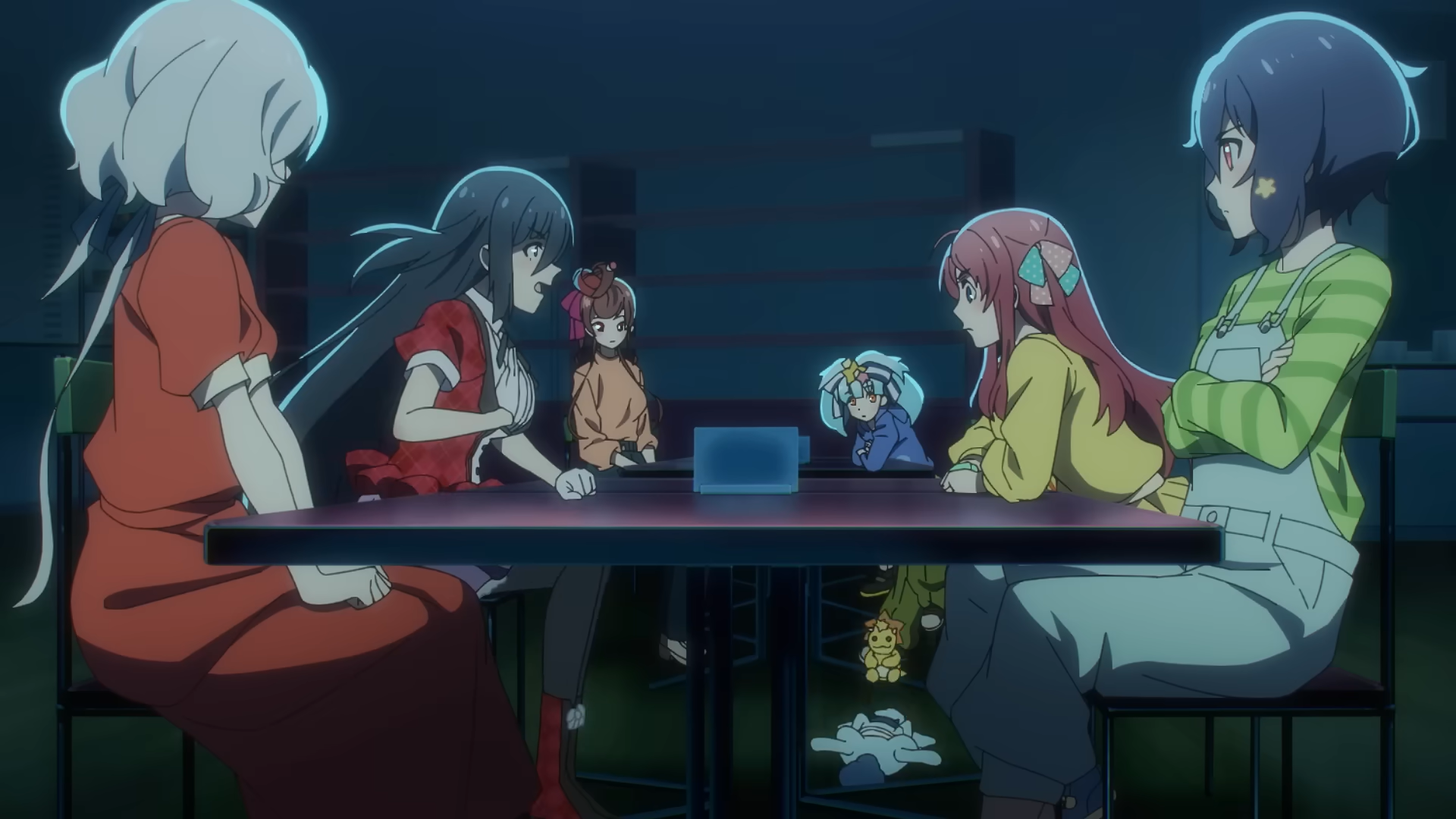
As a result, Yumeginga Paradise avoids the common pitfall of sequels sidelining previous main characters. Murakoshi’s script leverages two seasons worth of preestablished depth as the poignant bedrock for how they respond to the escalating scenarios thrown at them. Even after almost five years since we last saw Franchouchou, everyone not only feels in character, but makes decisions and interactions that reinforce how much they have evolved through the show.
Regrettably as someone who kept up weekly with the Japanese voice cast, the writing quality makes the single day, dub only theatrical release in the US sting that much more. Still, as my first exposure to the English voice cast, they each give excellent performances to bring the undead idol group to life once more. Dawn Bennett in particular steals the show with the long awaited reveal of Tae Yamada finally speaking in full sentences.
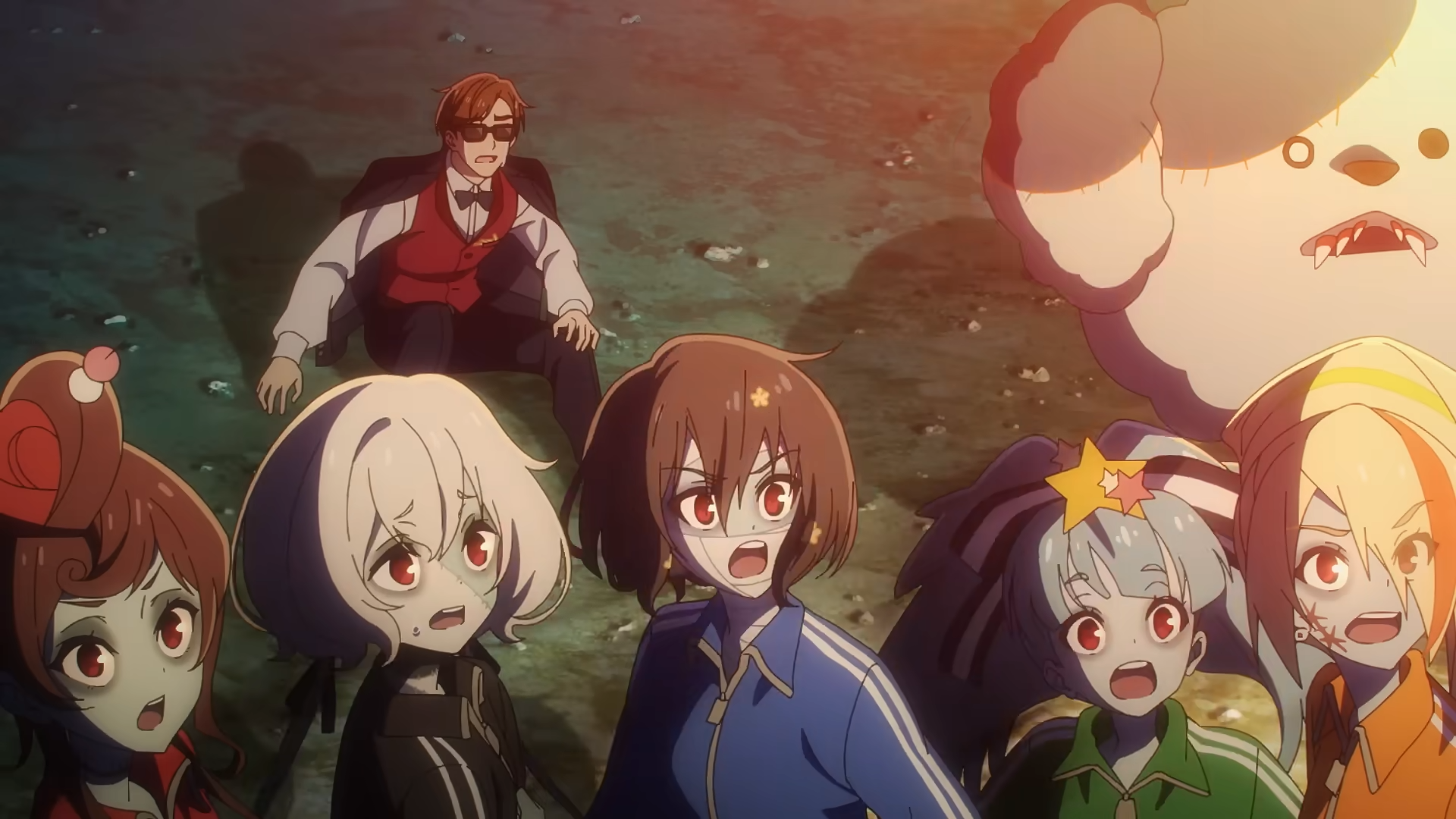
Plenty of references and returning human characters makes for a deliciously sweet Member Berry smoothie, but clever integration of certain supporting cast members makes for an effective extraction of emotional depth. Murakoshi reignites the narrative notion of the girls' undying turmoil of being seen as monsters humans fear. Underneath their flashy outfits, faces caked with make up, and electrifying concert performances, the world will see them as a bunch of green, rotting corpses if the truth comes out. It makes for a shockingly enthralling exploration about the preservation of identity, how humanity transcends beyond the color and texture of flesh.
This heartfelt dive regarding marginalized groups is nothing new for the franchise, the most iconic being a powerful trans storyline for one of the bandmates. Yet due to the film's premise emphasizing spectacle, this tender core was the last thing I expected. I am so glad that the series' thematic essence has been preserved transitioning from television to feature film.
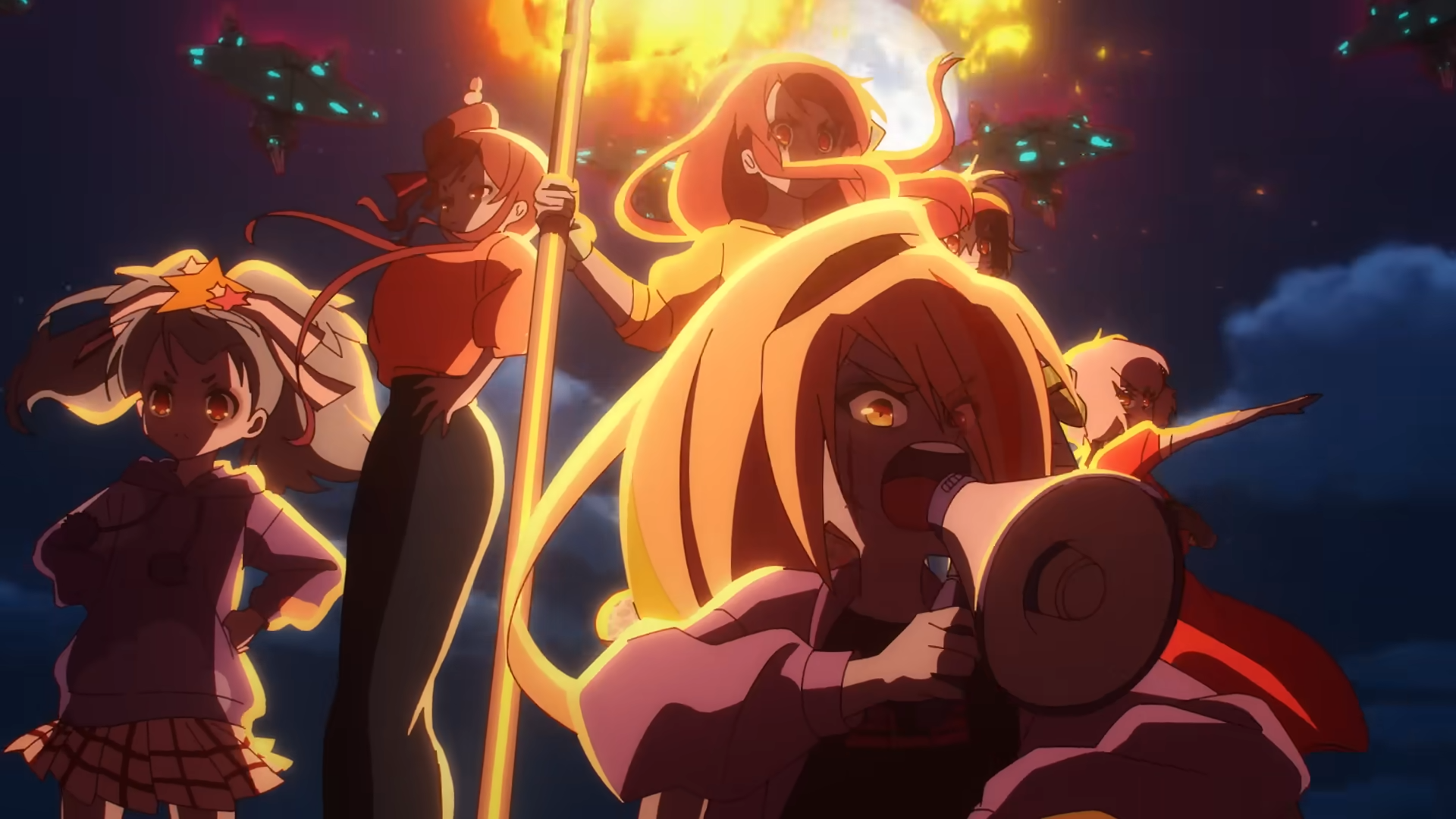
Much like tone, shifting the narrative framework into an alien invasion provides new opportunities for plot beats and metaphors to convey these familiar concepts. As mentioned before, Tae being a fighter juxtaposes nicely with the rest of Franchouchou’s contentedness with spending the rest of their immortality being pop idols. What allows these conflicts to shine is how the individual and group share two common, intertwining goals. Putting a stop to the immediate extraterrestrial threat, and the overarching goal since the first episode: the protection and preservation of the Saga Prefecture.
Previously, we have had the band clamoring for relevance within the social zeitgeist in the first season, and Saga enduring natural disasters in the second. With the movie’s integration of an “end of the world” scenario, this recurring, resonant core of the franchise is explored on a global, geopolitical scale.
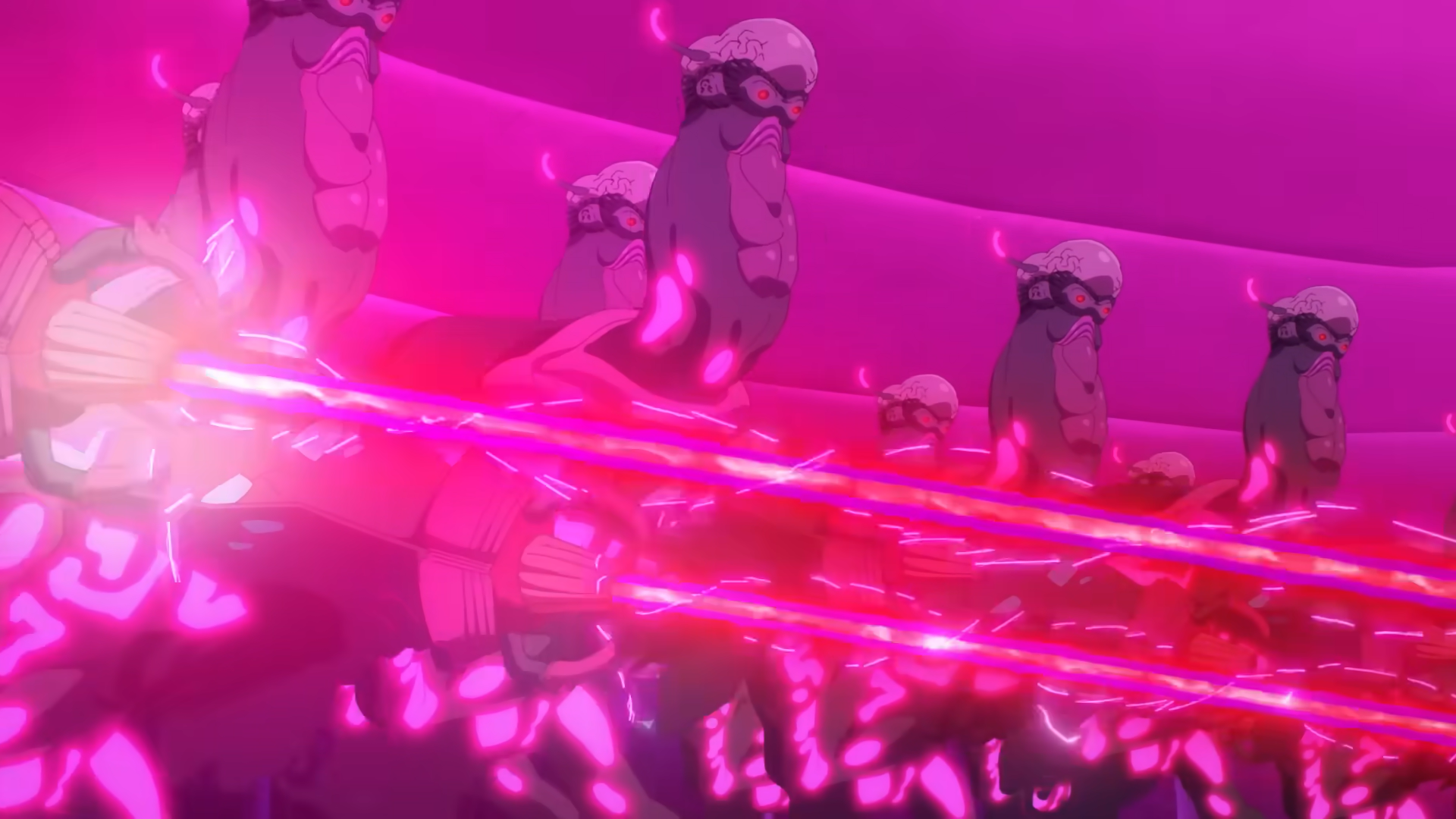
Obviously Yumeginga Paradise’s inclusion of government and politics isn’t handled with much complexity or nuance, boiling down to government suits sitting in a meeting room contemplating what to do about the extraterrestrial carnage. Comparable to the aliens themselves, who are depicted as mindless and grotesque monsters, they serve more as symbolic entities to paint the backdrop for the deeper character moments and themes. Well, and also because zombies fighting aliens have so much “rule of cool” potential for laughs and action.
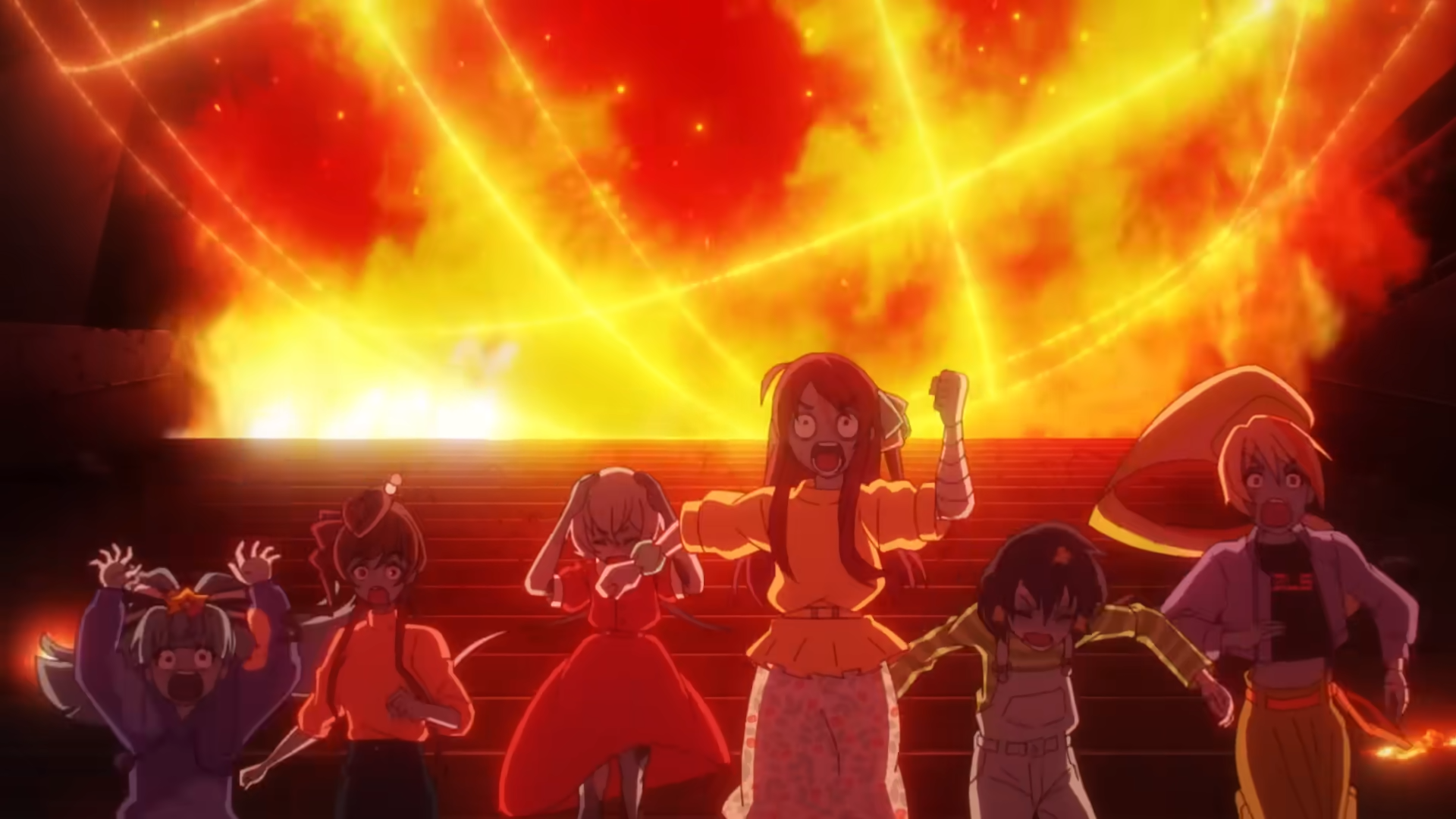
Zombie Land Saga’s feature film nails its touching moments, but doesn’t forget to have fun while doing it. As I brought up earlier, the jokes are rampant, blending gut busting visual gags and out of pocket quips that had my theater roaring with laughter. This is a movie where undead idols declare war on a spaceship by holding up a burning flag, mimicking the way the United States troops planted their flag on Iwo Jima during World War II. This is also a movie where one band member comes out as a flat-earther after getting launched into space, followed by the greatest halo jump scene in cinema since 2018's Mission Impossible: Fallout.
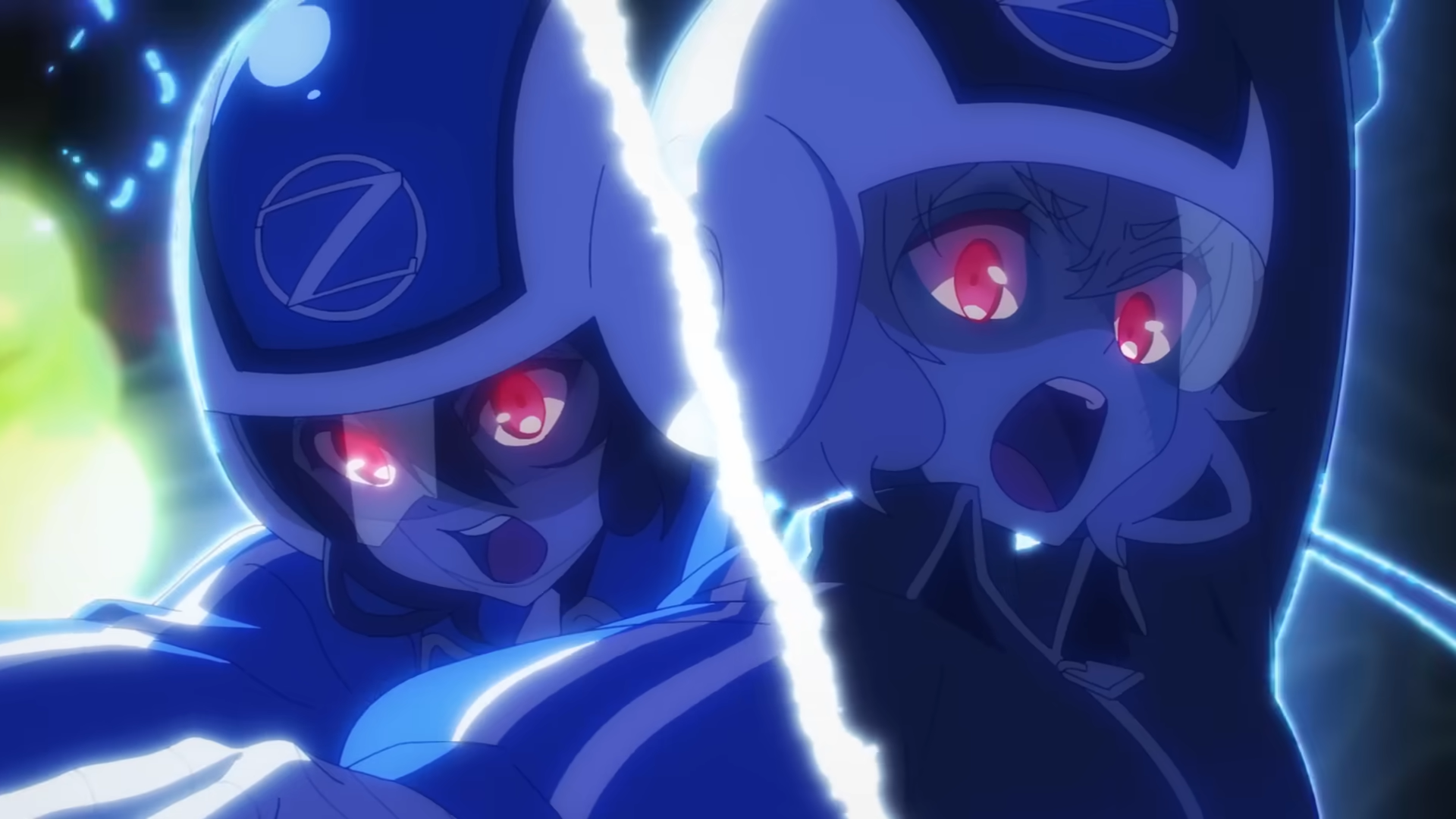
This unhinged energy retains its momentum during the fight scenes. Each scenario’s frenetic, creative spark when constructing the events and jokes keeps the movie stimulating, in spite of the visual elements of animation and aforementioned cinematography not matching the level of MAPPA’s Shonen heavy hitters. Yumegina Paradise’s final act in particular is pure madness.
Every scene tops the previous in an acid trip of insanity, delivering nonstop thrills that mix WTF spectacle and the comedy described above. From dog fights on hot air balloons, lightsaber duels, Pod Racing, mech battles, Dragon Ball energy blasts, The Last of Us-esque horror stealth sequences, martial arts with detachable zombie limbs; it is an audacious adrenaline rush of pandemonium that had me grinning ear to ear.
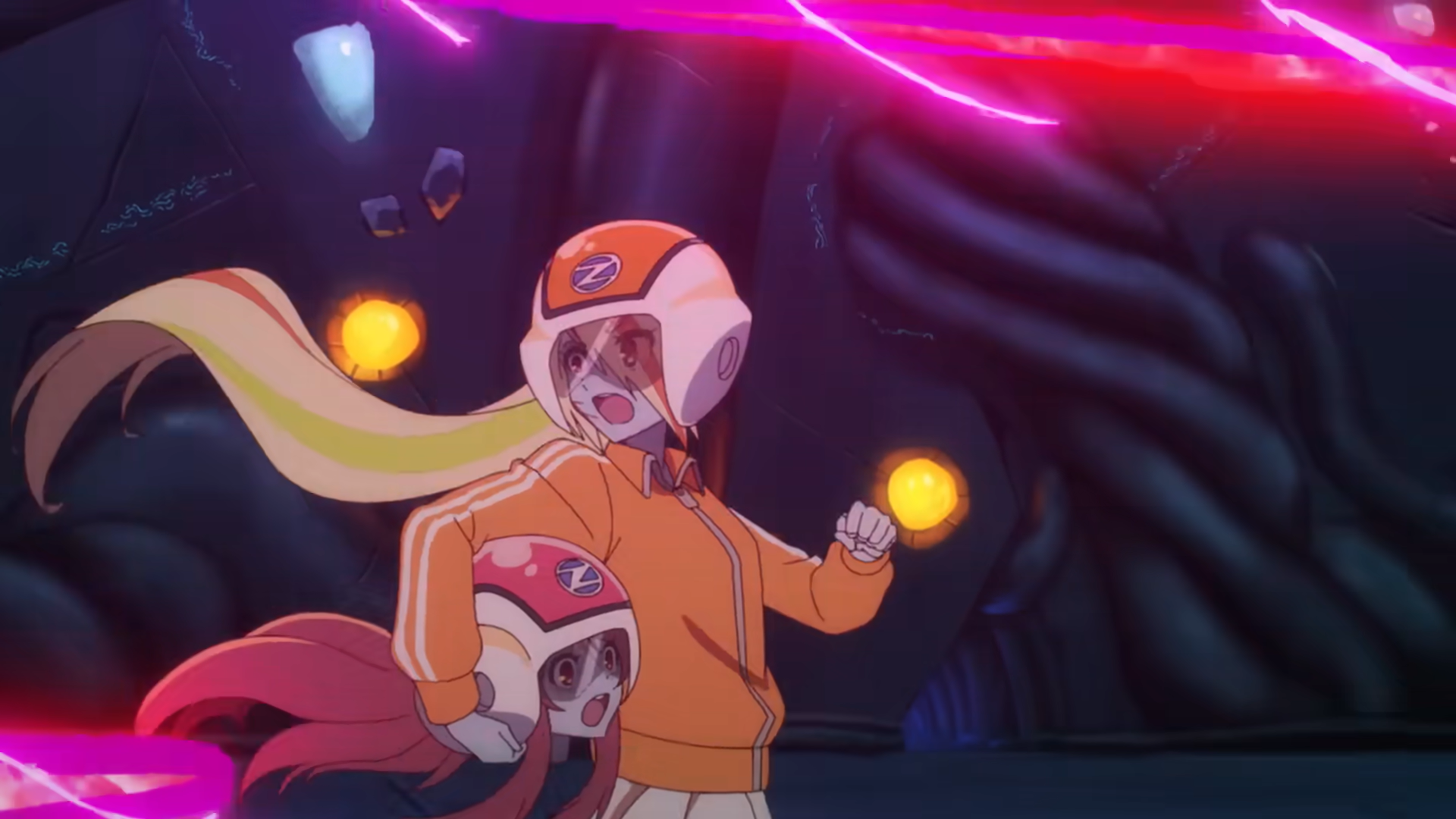
Furthermore, this is where the soundtrack from Franchouchou shines the most. Of course, it can’t be a Zombie Land Saga without musical performances. Thankfully, outside the opening and ending, the film doesn’t derail the plot by shoehorning in concerts. Instead, the vocal tracks are used during montages and battles, making these sequences exude epic triumph and celebration. That is the main way I would describe this film in relation to the rest of the series: celebratory. Beyond the contributions relevant to the narrative's message, the story and action set pieces give Zombie Land Saga a grandiose and climatic vibe. One last hurrah of the thematic, character driven conceits the show has been constructing, setting the stage towards a future tackling the franchise's overarching, lingering mysteries.
Zombie Land Saga: Yumeginga Paradise
Great
Zombie Land Saga: Yumeginga Paradise is the epitome of the phrase “deep and dumb”. Pacing issues aside, MAPPA and Cygames have delivered an outrageously heartfelt song and dance that proudly embraces identity and culture. A triumphant culmination that effortlessly morphs the series from a slice-of-life into an action packed disaster flick, all while retaining the superb character work and comedy that makes the series so special.
Pros
- Creatively bonkers comedy and action
- Near flawless genre shift
- Thematic core shines brighter than ever
- Franchouchou is delightful onscreen
- Strong soundtrack
Cons
- First third is a drag
- Cinematography feels listless