We are in the midst of a 2-player tidal wave in the tabletop industry. It seems that every day we are getting new “duel” versions of published titles already out on the market. Sometimes these duel games are better, but I often ask myself whether a new version is necessary. So when I see a game designed specifically for two players with a new theme or idea, I get intrigued.
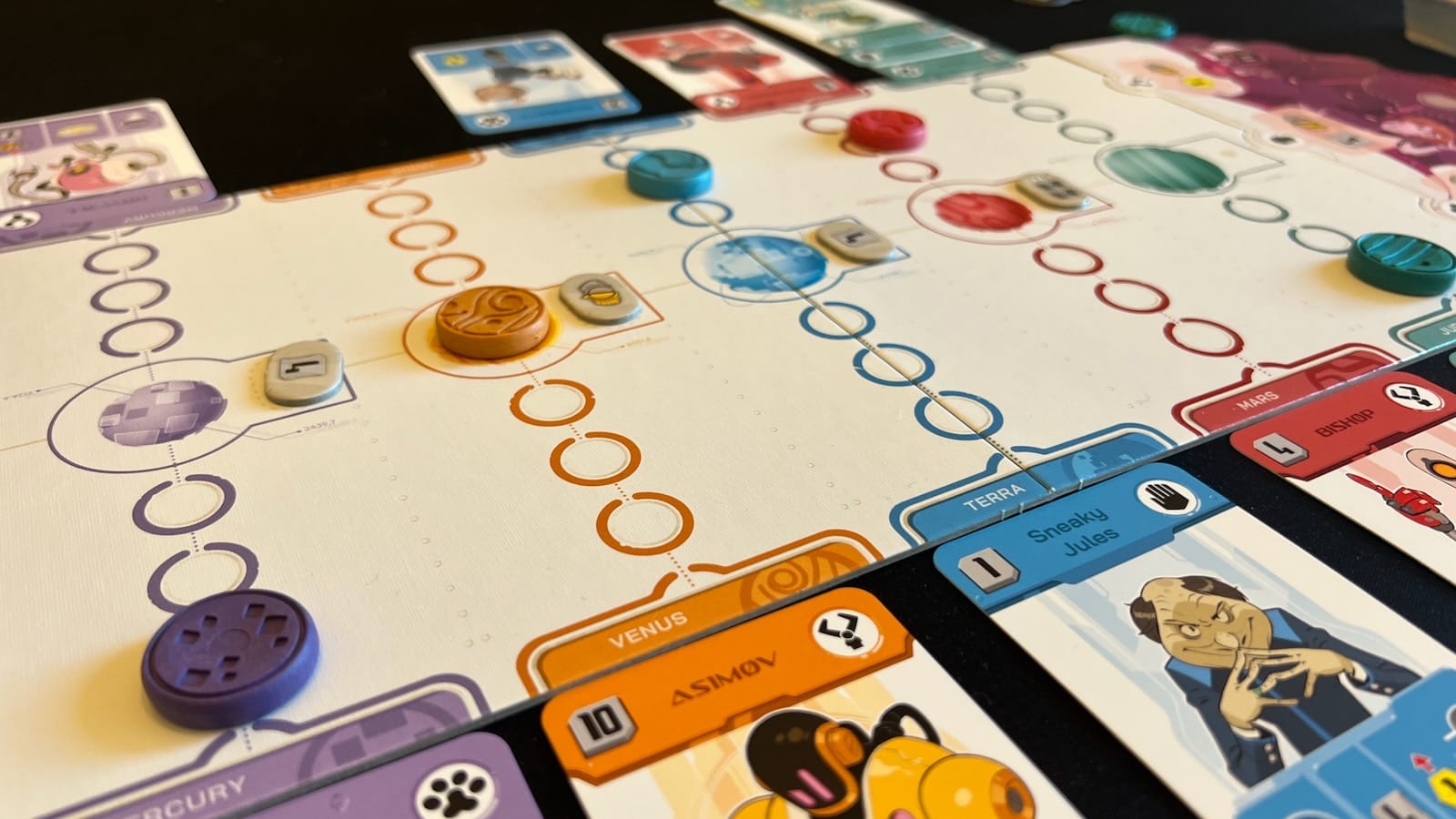
Zenith is a game for 2 or four if you want to, players from designers Grégory Grard and Mathieu Roussel, and published by PlayPunk. In the game, you will use three races of creatures to gain influence over the planets of our solar system to gain control of the senate. The first player to meet one of three victory conditions wins the game.
The game centers on a central board with three distinct zones. The first is a technology board where players can spend “Zenithium” tokens to move up tracks related to the three races in the game: Animods, Humans, and Robots. The second board shows the influence each player has on the five planets of the solar system. Players will take different actions to move the influence of planets towards their side of the board. If the token ever moves off the board, they will claim it towards victory. The final zone is the diplomacy board featuring a leader badge and three bonuses earned by currying favor with each race.
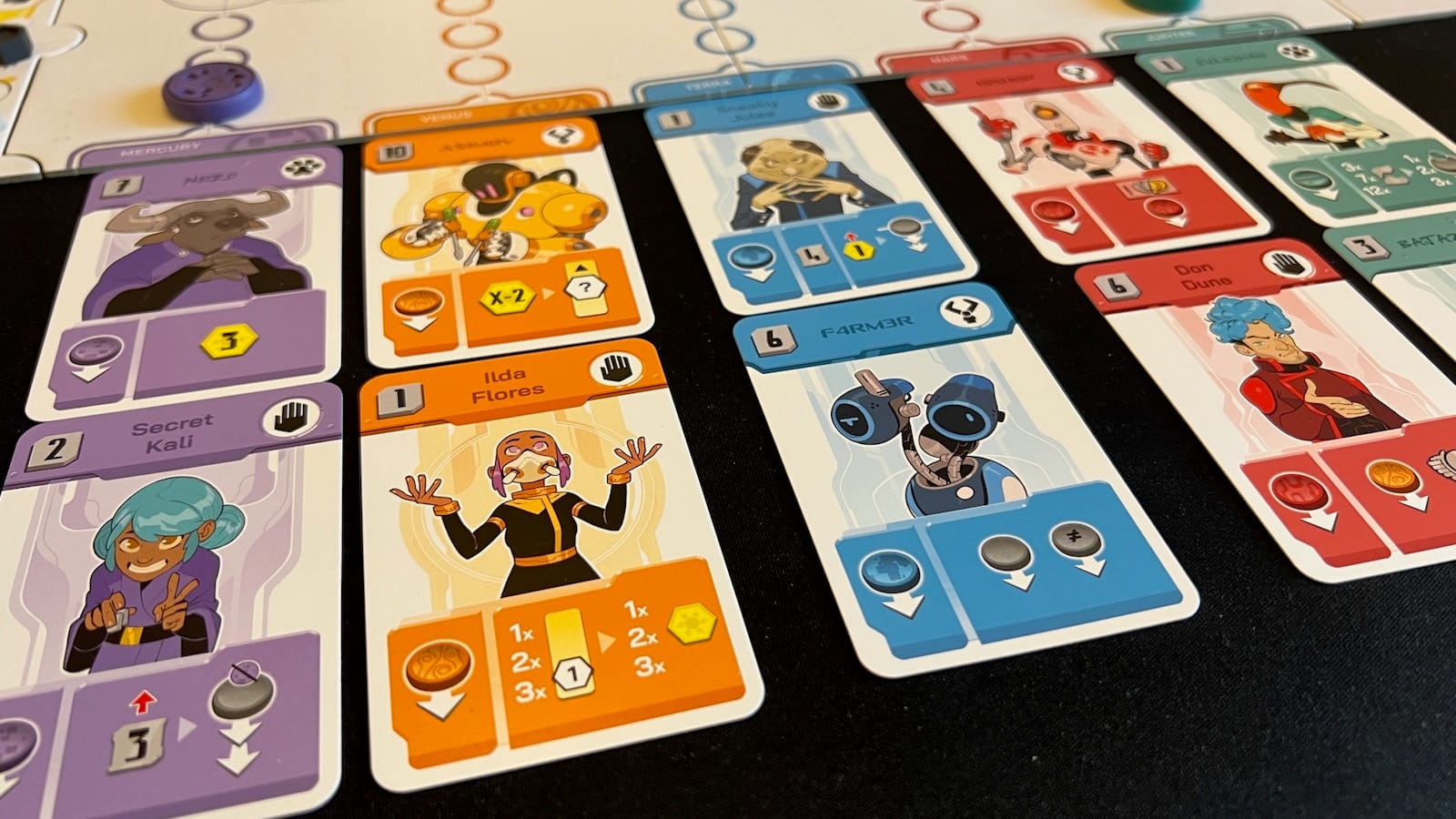
Throughout the game, players will manage a hand of cards representing the three races and the colors of the five planets. On a turn, players can take one of three actions.
The main action is playing a card on a planet. To do this, players must pay the cost of the card and then activate the effects listed on the bottom. These effects are vast but always include gaining at least one influence on the planet. Card effects include manipulation of cards on both sides of the board, gaining the leader badge, bonus tokens, zenithium tokens, money, influence, and even taking development actions.
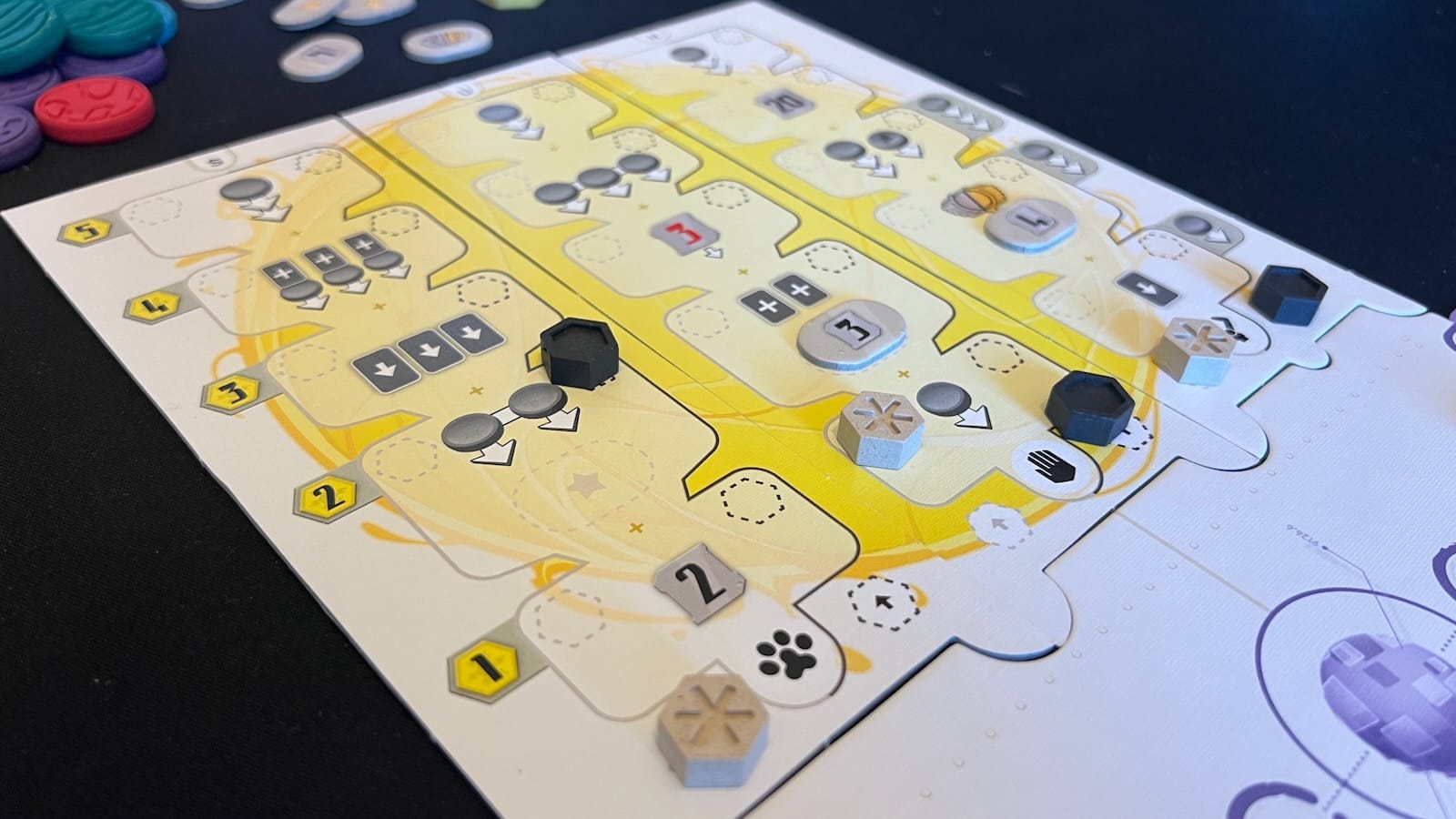
The second action available is developing technologies. Players will pay zenithium tokens and discard a card matching one of the three tracks to move their token up the track. Players will get the bonus of the new space and any previous steps they have already passed. Players will also get influence movements when they can get all three markers to the same level.
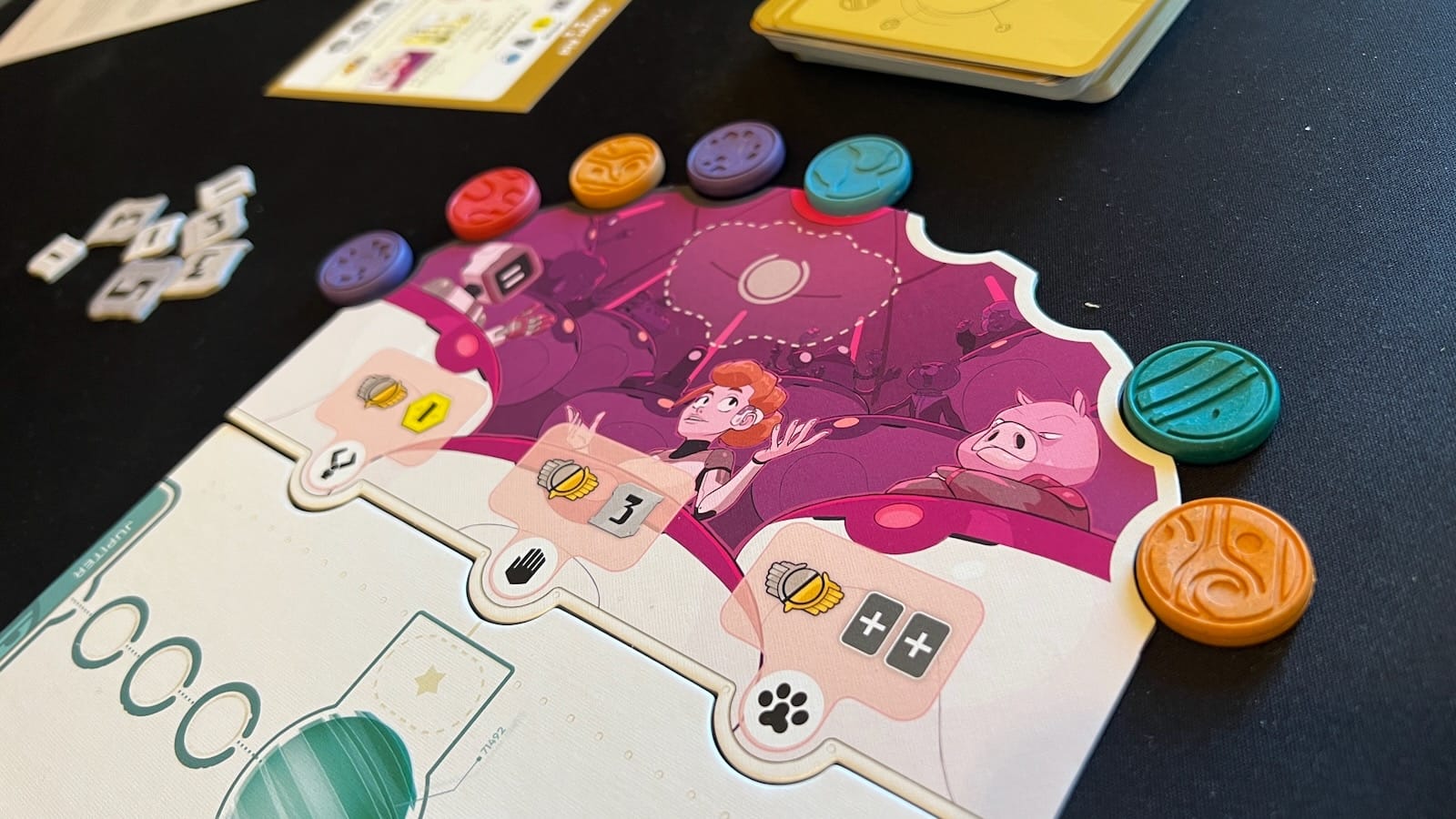
The last action is a diplomacy turn where players can discard a card of a given race to gain a benefit and claim the leader badge. The leader badge, with a silver and gold side, allows players to draw more cards at the end of a turn. Normally, at the end of a turn, players will draw until they have a hand size of four cards. By claiming the badge the first time, players can draw up to a hand size of five, and if they claim the badge when they already have it, the badge is flipped, and the size increases to six.
To win the game, players must complete one of the three victory conditions:
- The player gets three influence tokens for a single planet
- The player gets four influence tokens from four different planets
- The player gets any five influence tokens
Players will use the various actions and card abilities to influence the planets throughout the game. As soon as a player meets a victory condition, the game ends.
If you are looking for more than just a two-player game, Zenith also includes a module to play with 4 players. Basically, teams of two will face off against each other, with teams sharing money, zenithium tokens, and the effects of a leader badge. Each player will have their own hand of cards and will only be able to play on their half of the board. Each player gets to distinct planets to try and upgrade while sharing the central planet. Teams will complete their turns with each player taking individual turns, before play switches to the other team.
Overall Thoughts
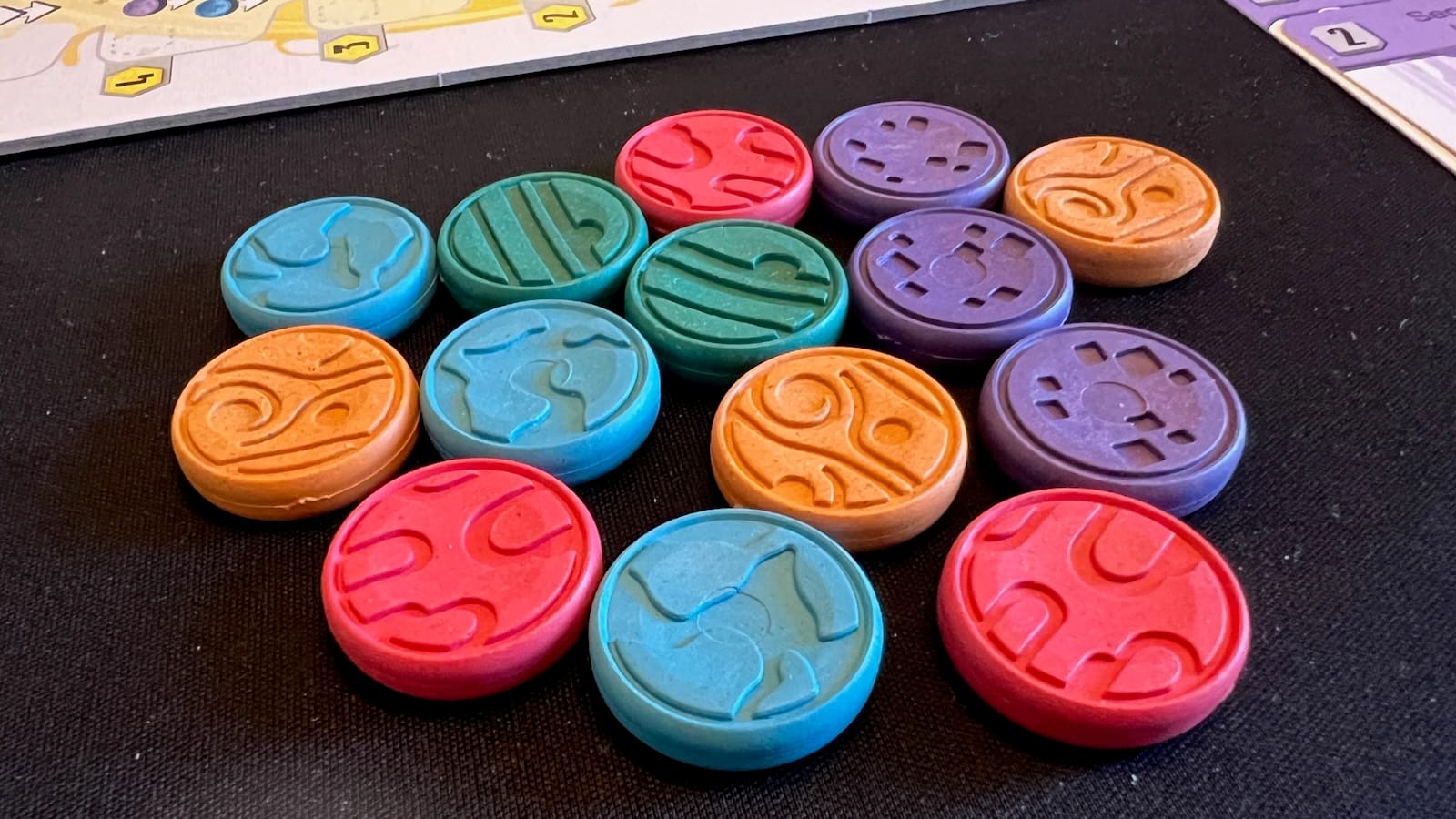
The production of this game is fantastic. The 90 cards each have a unique piece of art and are of a thick and durable quality. Many of the cards have fun tongue-in-cheek names based on historical and literary figures. The accessibility features woven throughout the game have been done with thought and care. Not only are the planets represented by different designs and colors, but the designs are tactually built into each of the influence markers. Each of the technology trackers also has a unique design with the tactile features built in. All of the technology and influence markers, as well as the zenithium tokens, are a high quality plastic that gives an upgraded feel to the game right out of the box. Another great design feature is the cardboard technology tracks. Each is double-sided, which helps lead to a randomized setup, but each track also slots into a very specific spot at the end of the influence board to help with setup. The rulebook is pretty easy to follow and includes examples of how to take each action and play each phase of the game. The game also includes a two-sided player guide and a larger two-sided effect description card with all the symbols featured throughout the game. This card is a necessary addition to the game, but I’ll expound more on that.
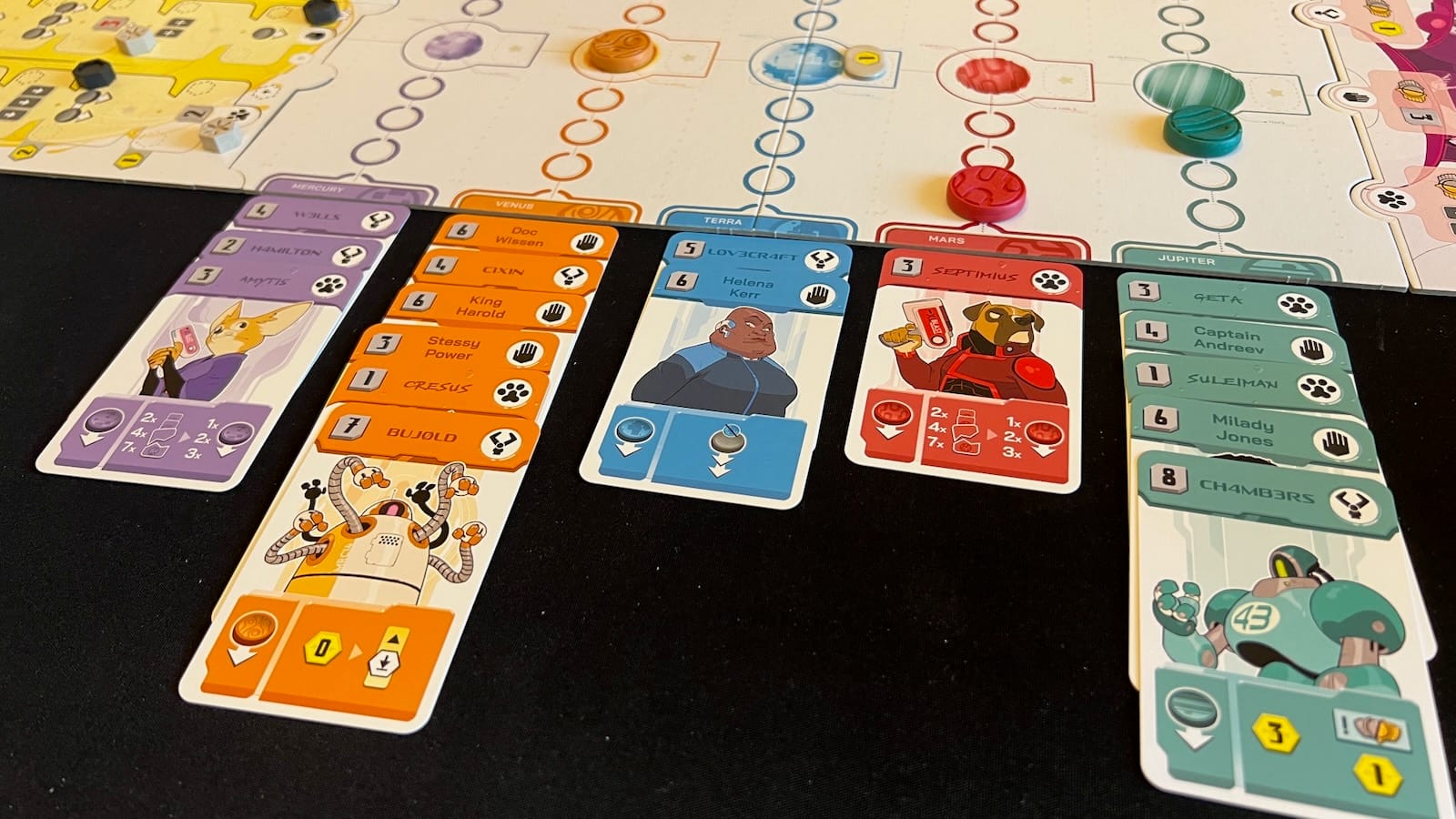
The gameplay was surprisingly fun and strategic. I have to admit, opening the box and reading the rules didn’t energize me. However, I will admit when I am wrong. As soon as we started playing the game, the triggers of the different cards and the strategic nature of how you have to balance when you play a card, and the different actions showed a depth that I was not expecting. Each card that you play on a planet makes subsequent cards cheaper to play each round. One of the triggered effects throughout the game allows you to draw cards off the top of the deck and play them on the planet without triggering the cards. This can help you get some big-ticket cards out of your hand for a little less money later in the game. The game also has some triggers that allow you to manipulate the other player’s game by stealing and trashing cards on their side of the board and even de-influencing their hold on the planet. Even taking and even ceding the leader badge has big impacts on your game, depending on the cards you have.
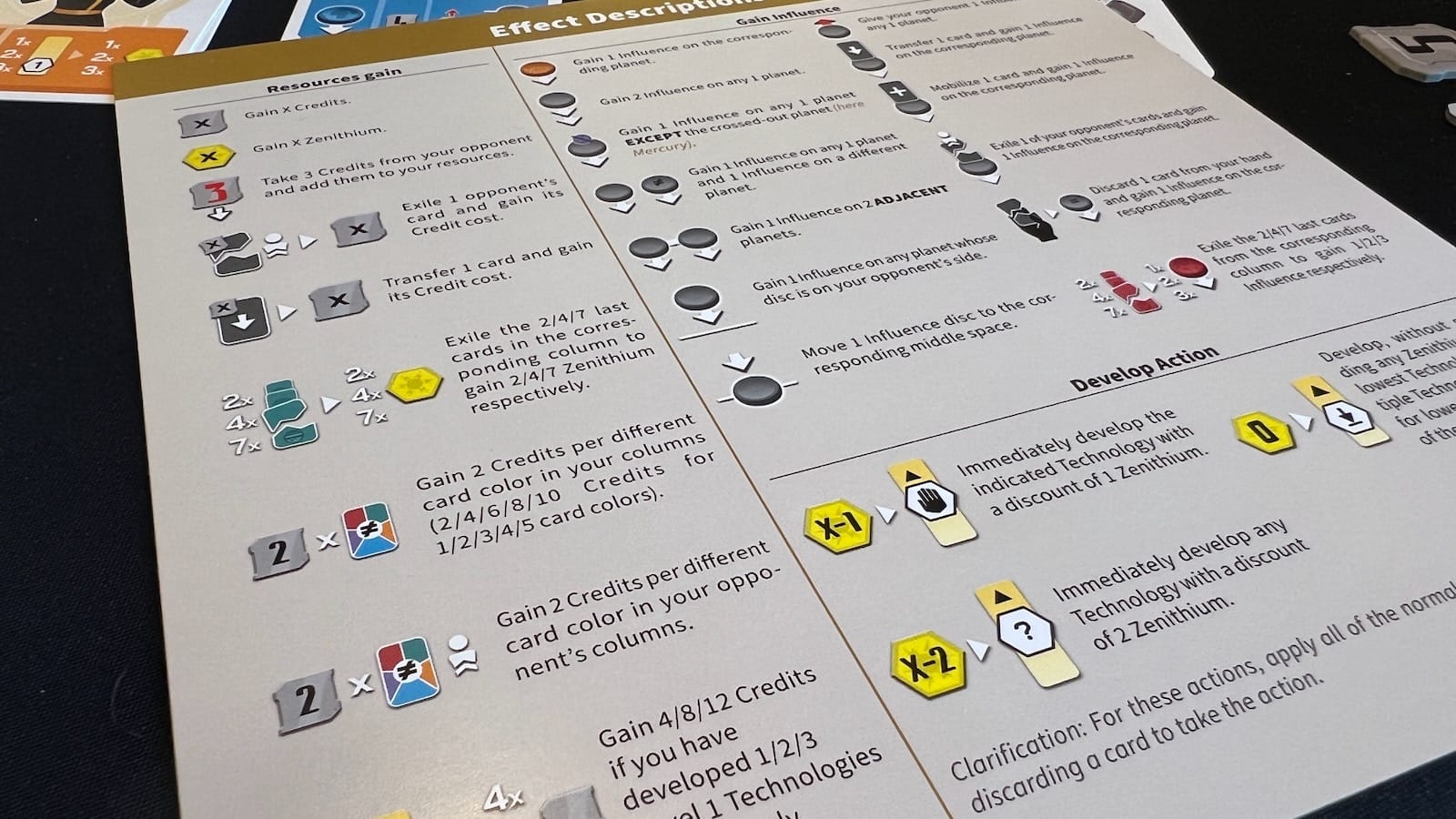
My biggest gripe of the game is the plethora of different symbols and iconography used throughout the game. In my first couple of plays, every time I got a new card, I had to go to the card effects guide to try and decipher what each symbol means. Sometimes I had to combine different lines to figure out what a specific symbol meant. I have seen other games get around this by providing a numbered guide for each card or just a little more fine-tuning of the guide. The 4-player mode also felt like it took away from the game. Like other 2-player games that add a team mode, it seems to dilute the experience and seems unnecessary.
Overall, Zenith was a surprisingly strategic and entertaining battler. With interesting cards and tech track abilities, players need to think through their game plan to take out their opponent. This is a great alternative to the derivative duel games out there on the market.
Zenith
Great
Zenith was a surprisingly strategic and entertaining battler. With interesting cards and tech track abilities, players need to think through their game plan to take out their opponent. This is a great alternative to the derivative duel games out there on the market.
Pros
- Strategic decisions and gameplay
- Beautiful production throughout the game
- Great accessibility features embedded
Cons
- 4 player mode is not worth it
- Not all iconography is clear
- Lots and lots of iconography to figure out
This review is based on a retail copy provided by the publisher.