Most board games ask you to grow crops, build empires, trade resources, or save humanity. Every now and then, though, one asks you to slow down and wrestle with something messier: the mind itself. Unconscious Mind places you in the early days of psychoanalysis, where patients share strange dreams, you sift through symbols for meaning, and any real breakthrough feels earned rather than guaranteed.
Unconscious Mind is a game for 1-4 players from creators Laskas, Yoma, Zax, and Jonny Pac supported by publishers Fantasia Games and Lucky Duck Games. Through different actions, players will research their craft, gain Insights into the human mind, explore Vienna, and treat patients to gain reputation and ultimately become the most influential psychotherapist of the day, aside from Freud.
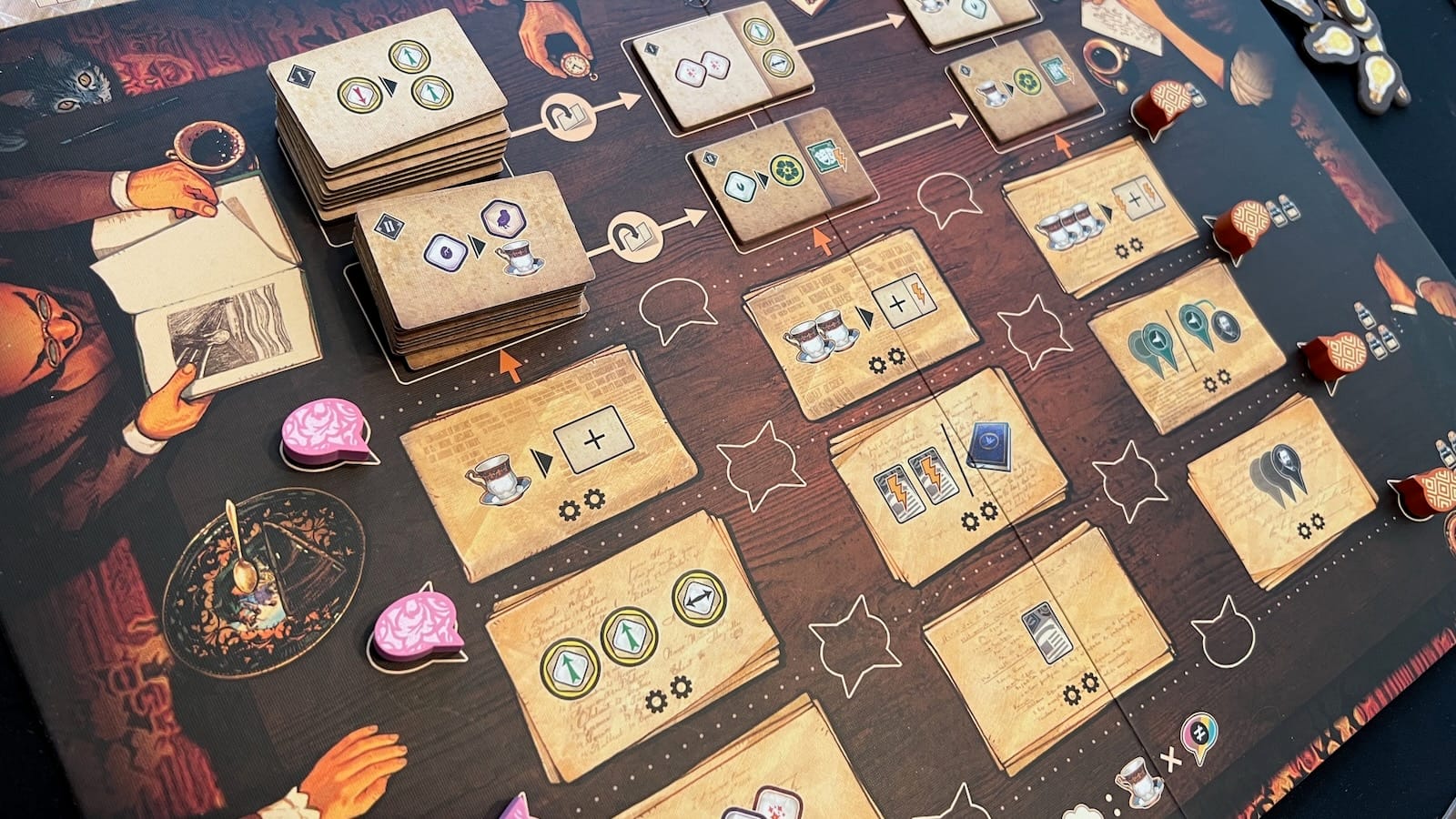
A lot of the action revolves around players placing Idea tokens, shaped in the form of thought bubbles, on a central meeting board to take one of nine different actions. Three actions allow players to research and add pages to their notebook, which give players different bonuses when triggered. Another two spaces revolve around publishing findings with one space allowing players to collect journal cards and the other space allowing players publish journal cards or collecting published works into different studies to score points. Two of the other spaces deal with gaining and upgrading Insights, which I'll touch on in a few, and the other two involve movement around the city of Vienna on another board. Depending on the row you place your Idea markers, you will move a giant inkwell around a track on your player board which will trigger bonuses built up by your notebook actions.
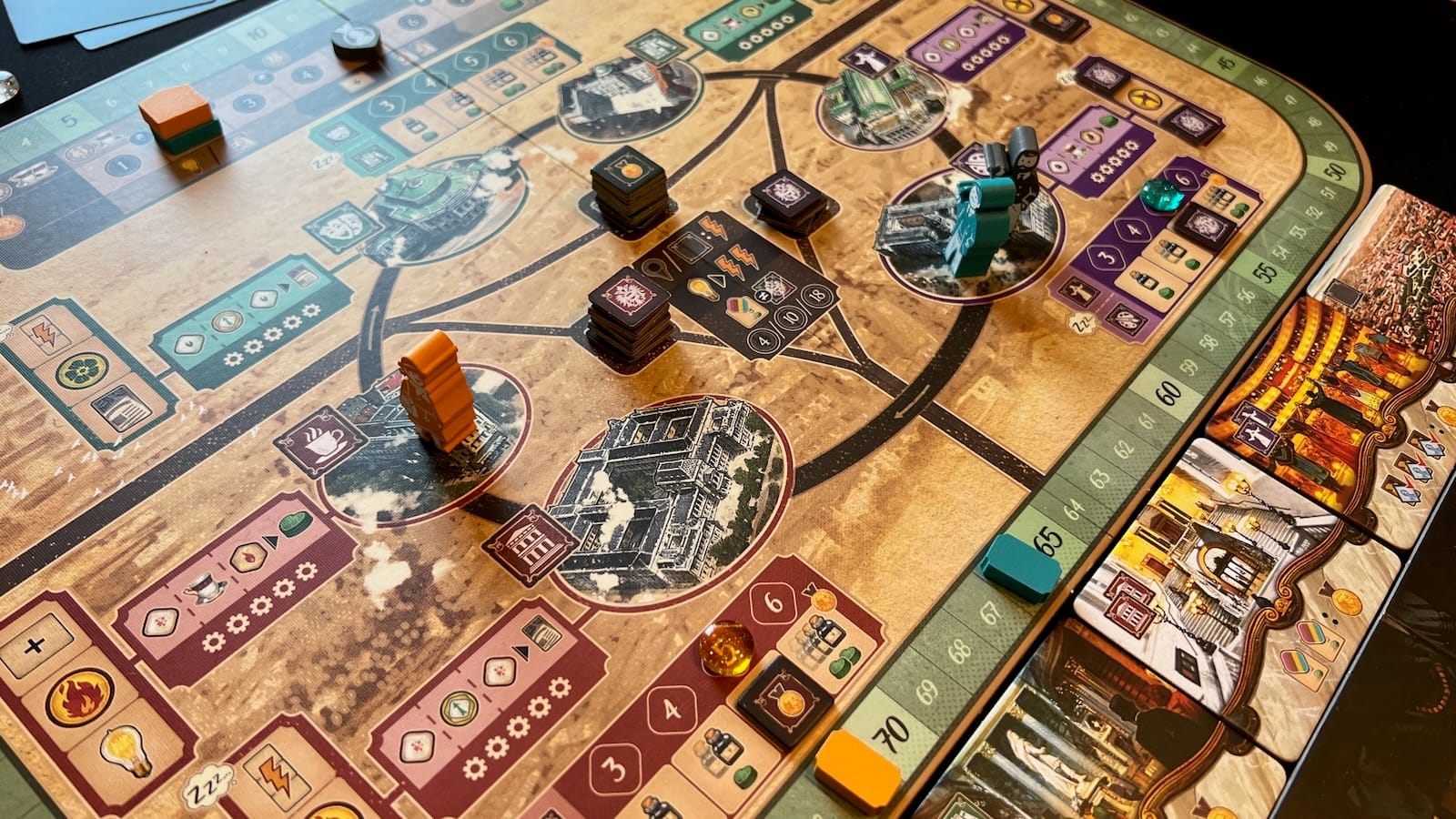
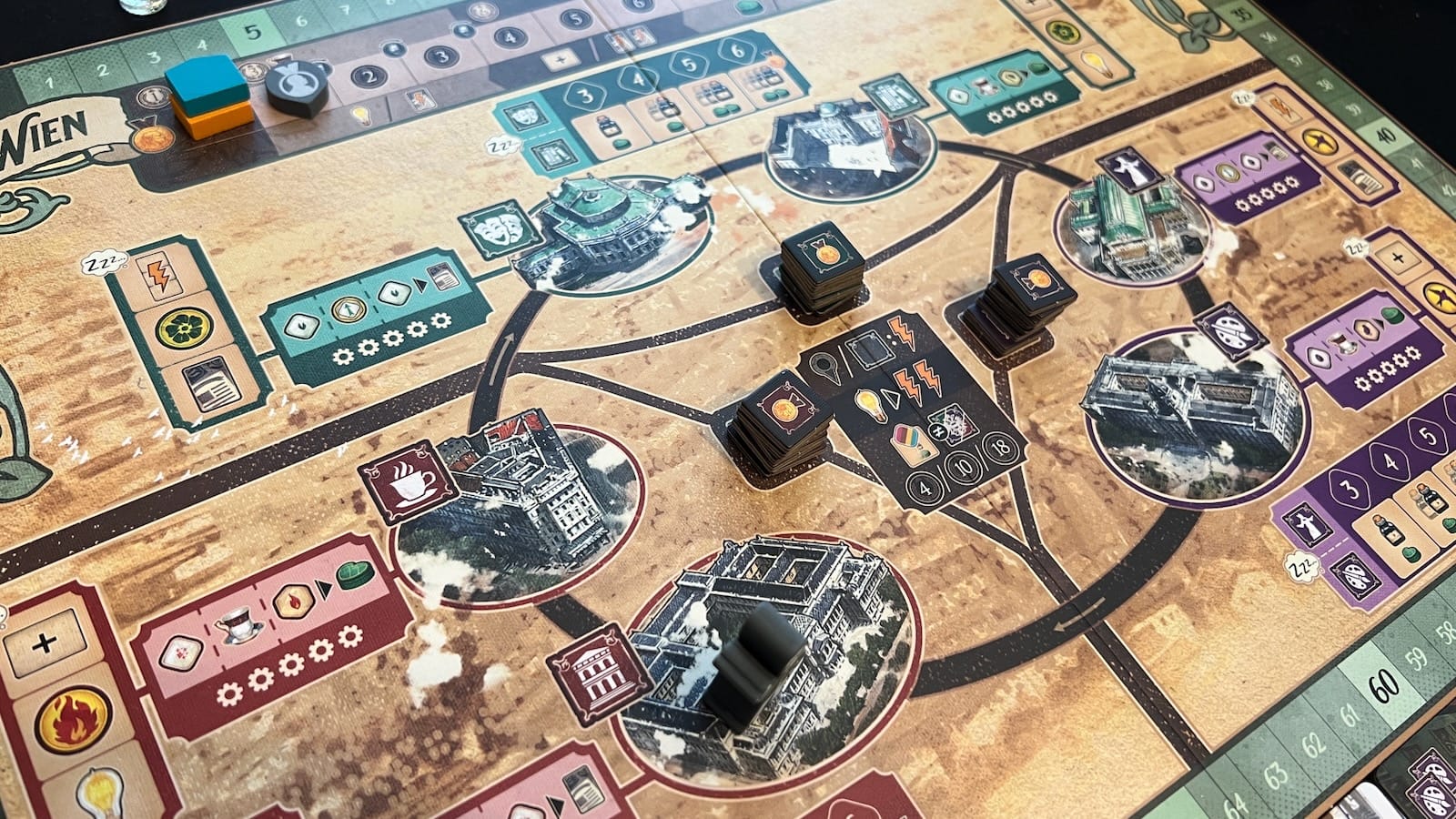
The Vienna map board allows players to visit one of six distinct districts to activate bonuses. Players can activate districts using the other player tokens already at the location or by collecting symbols matching the location through various means throughout the game. At various points throughout the game, players may want to return their idea tokens to their player board. When this happens, depending on where their player token is in Vienna, players will place a district marker on a special bonus or if they have collected enough matching symbols, a special track that gives points at the end of the game.
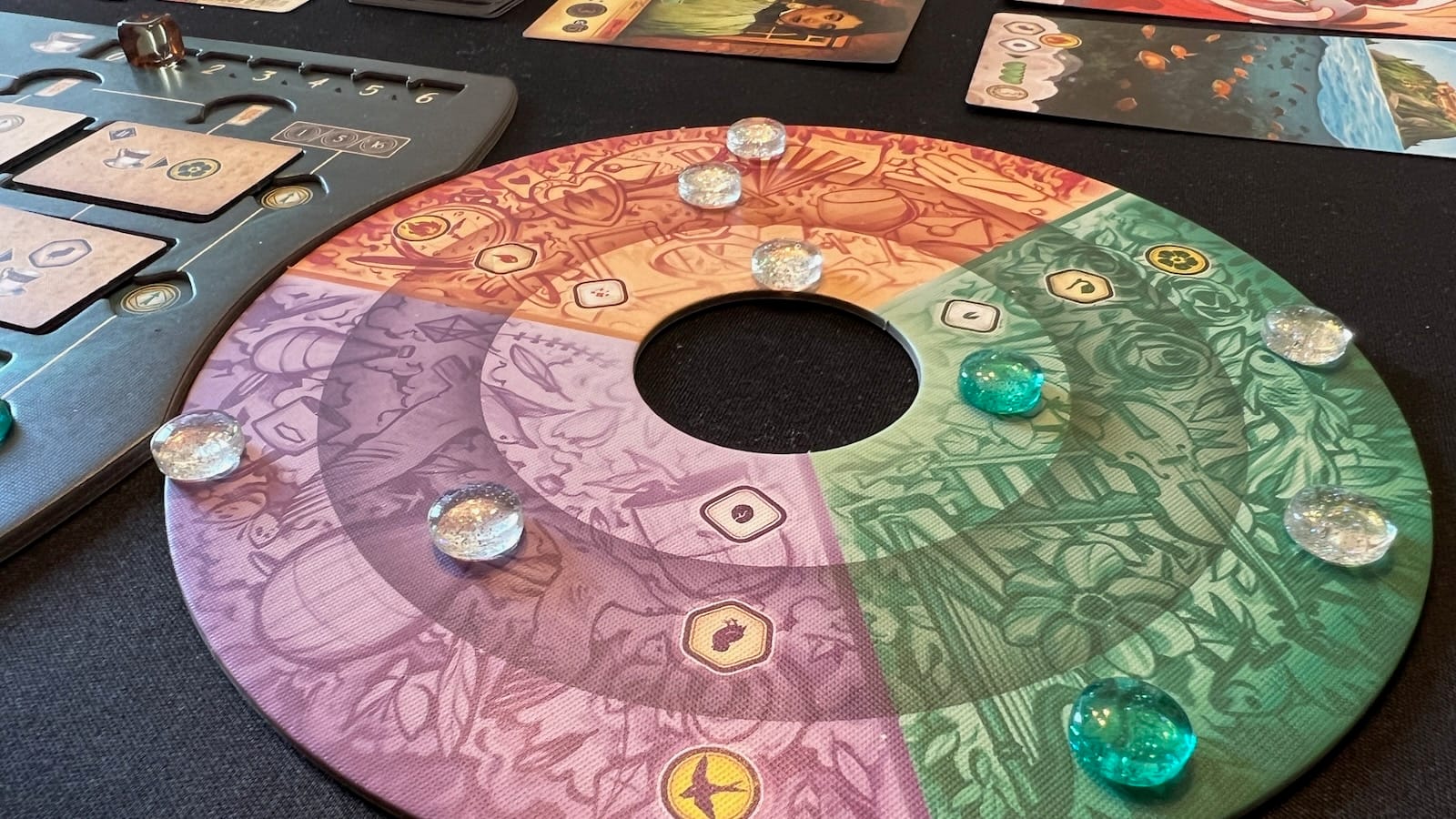
What's the point of playing a doctor if you're not helping anybody? One of the biggest facets of the game is treating patients using the various Insights you gain throughout the game. Insights come in three categories (growth, freedom, and passion)each with three different levels of power. Players will upgrade and move around small glass beads on a colored wheel to track their Insights. Players can also collect special glass beads of their player color that can be used to unlock bigger bonuses.
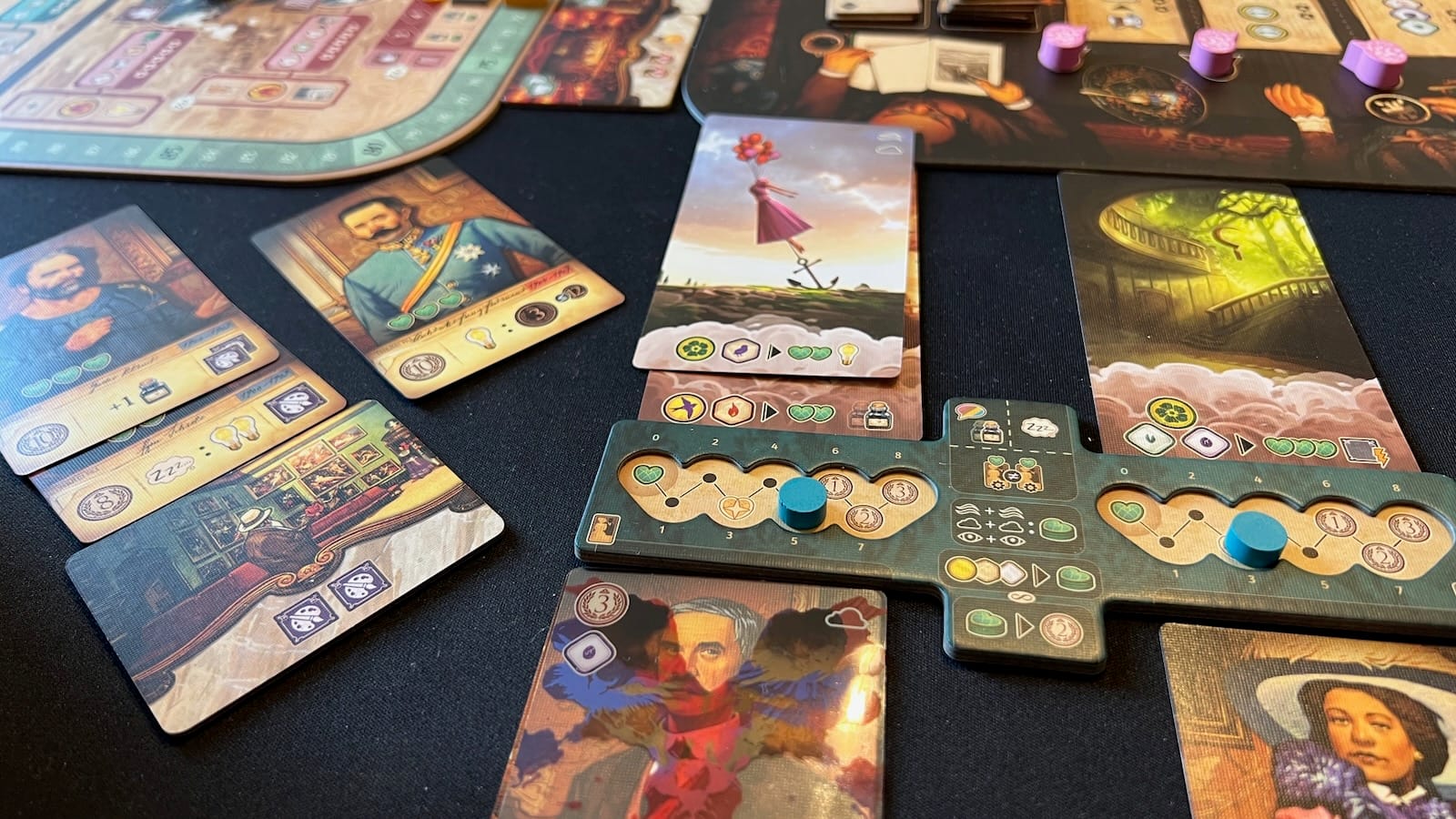
For most of the game, players will have two different patients they are treating, chosen from a common display. Each patient comes with manifest and latent dream cards and a Fear overlay that can all be treated by spending Insights. As dreams are treated, they will give different bonuses and progress the healing of the patient. If enough healing is done by treating dreams or using special Heart Shape Box bonuses, players can remove the Fear overlay and even heal the patient fully. Basic patients have special bonuses that can be triggered by other actions in the game. Case Study patients have end game scoring conditions. These patient abilities are unlocked by removing the patient's Fear and each will score points they are fully healed.
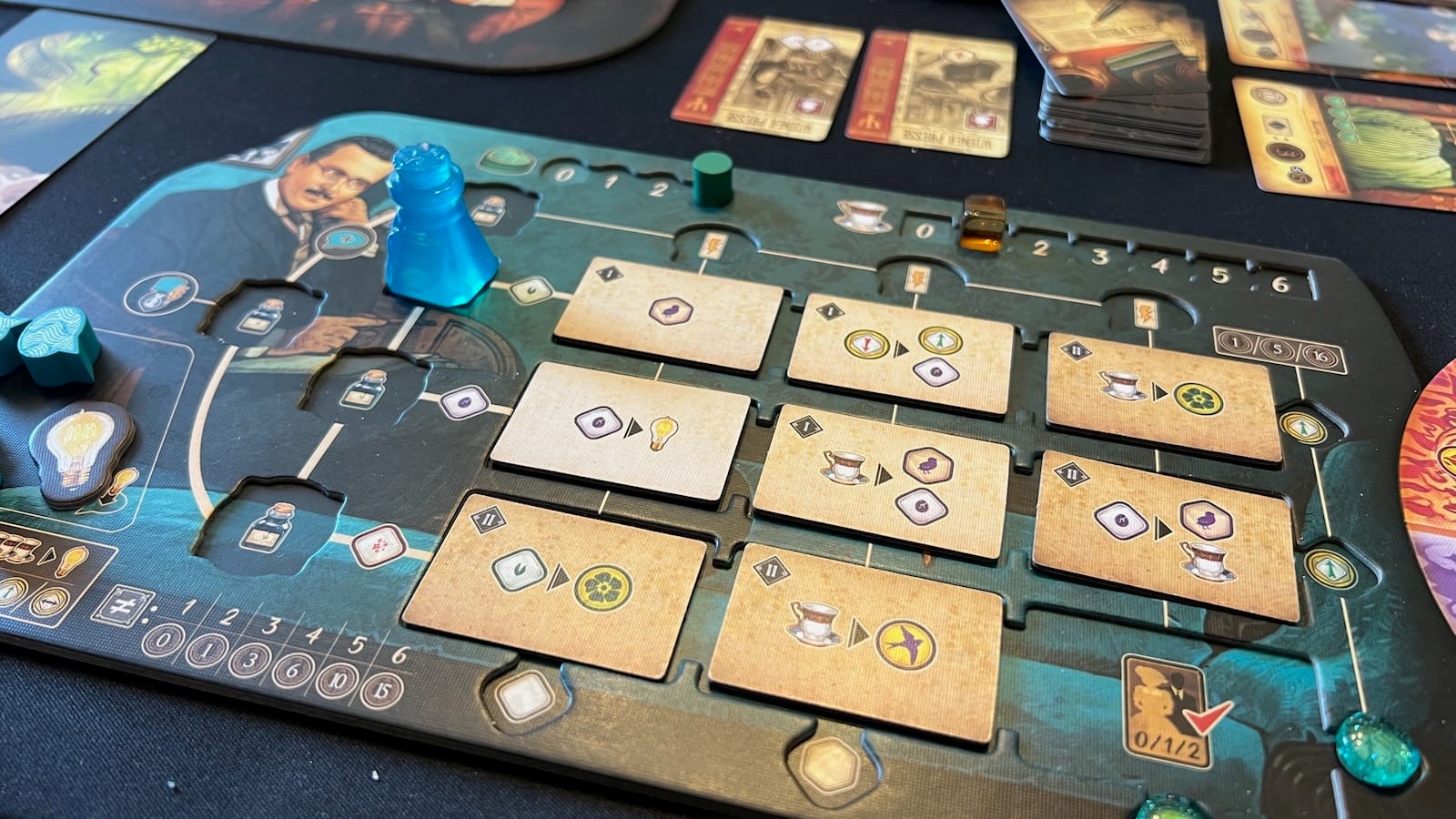
The game also includes two other essential elements: bright ideas and coffee. Bright ideas can power up actions and coffee is consumed when researching and taking free actions during a player's turn. Both resources are vital to maximize their actions in the game. Players will keep taking turns in clockwise order until the endgame is triggered. As players earn recognition throughout the game, so does Sigmund Freud. Once Freud's reputation marker reaches the end of the track, players will complete the remaining turns and final scoring is tabulated.
The game also comes with three optional modules that can help players in the game: a reporter acting as another player token in Vienna, Fireworks that help players get their colored glass tokens out cheaper, and cardboard overlays that help randomize the bonuses you can get when visiting different parts of the city. There is also a solo mode where the player must outscore "the Id." The mode comes with its own notebook tokens, overlay tiles, and cards to choose the Id's actions and determine the choices it makes throughout the game.
Overall Thoughts
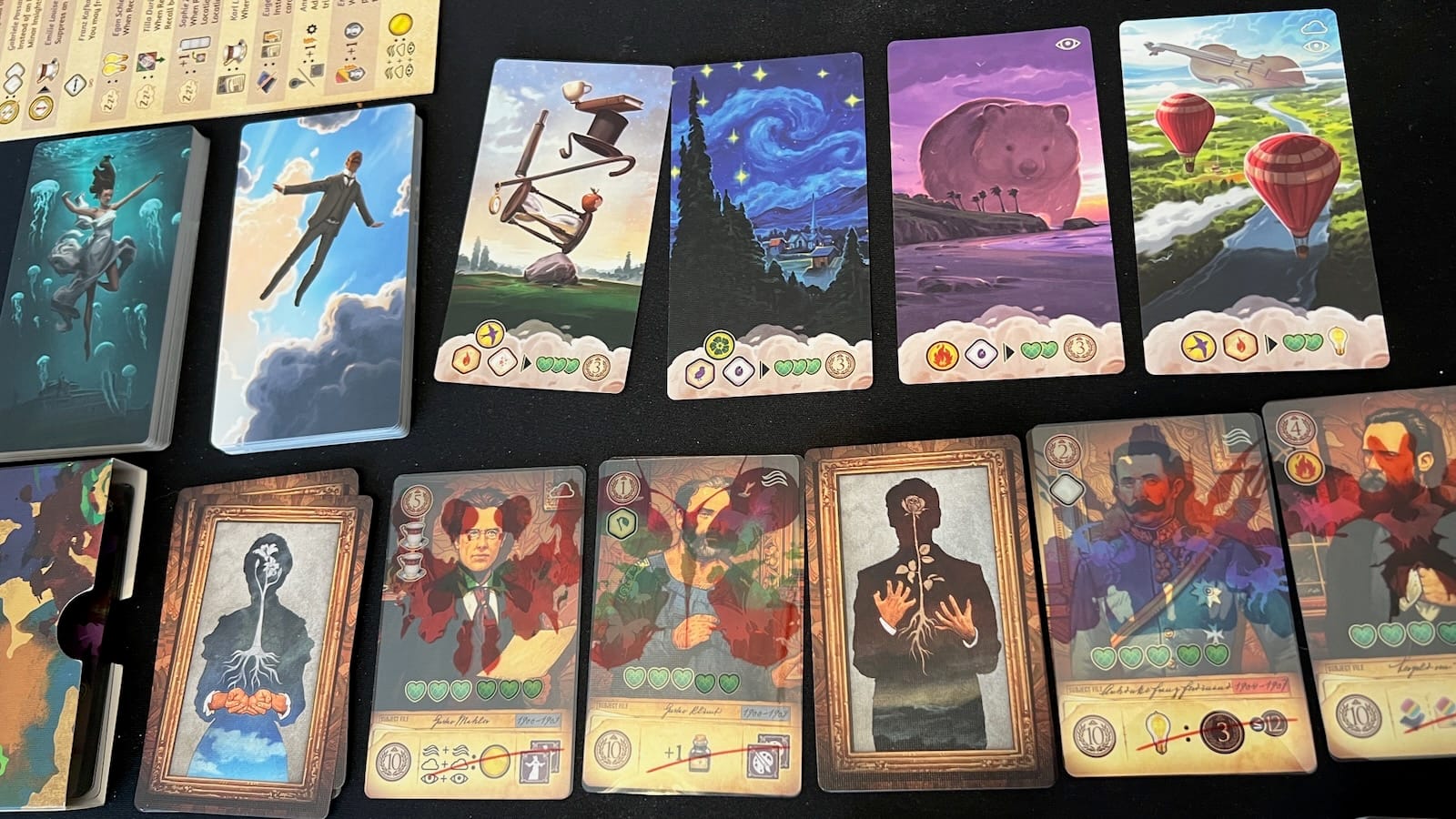
Let's start with the production. Unconscious Minds is a beautiful game. The artwork by Andrew Bosley, Vincent Dutrait, and Yoma invites you into the early 20th century. Each of the boards has small, beautiful details that add to the flavor of the game. The dream cards have shades of classic artwork twisted in ways that only dreams can. Some of the discussions around the game table were interpreting what the patient might be dealing with by looking at the combination of dream cards they collected. The rule book is fairly easy to follow and I was thankful for the many gameplay examples used throughout. The included player aids also made interpreting the many different icons used throughout the game easier and were a welcome addition. The components of the game fit nicely in the box, but you need many many bags to fit each of the components. The game did come with a nice organizer for the player pieces that fit the distinct inkwells, glass tokens, track markers, and idea thought bubble tokens nicely. The patient track boards also fit nicely into the lid. Most of the tokens were nicely produced, but an opportunity was lost making the Bright Idea tokens cardboard when everything else was made of wood and plastic. Maybe it came with the Kickstarter version? My biggest complaint about the production of the game has to be the sheer size of the game. With two main boards, player boards spread over three different sections, and multiple tableaus of cards and tiles spread out on the table, this thing takes up a lot of room. When playing with four people, we had to use the biggest table in the shop to fit everyone comfortably. When my wife and I played, it would have been difficult to add another player to our home table.
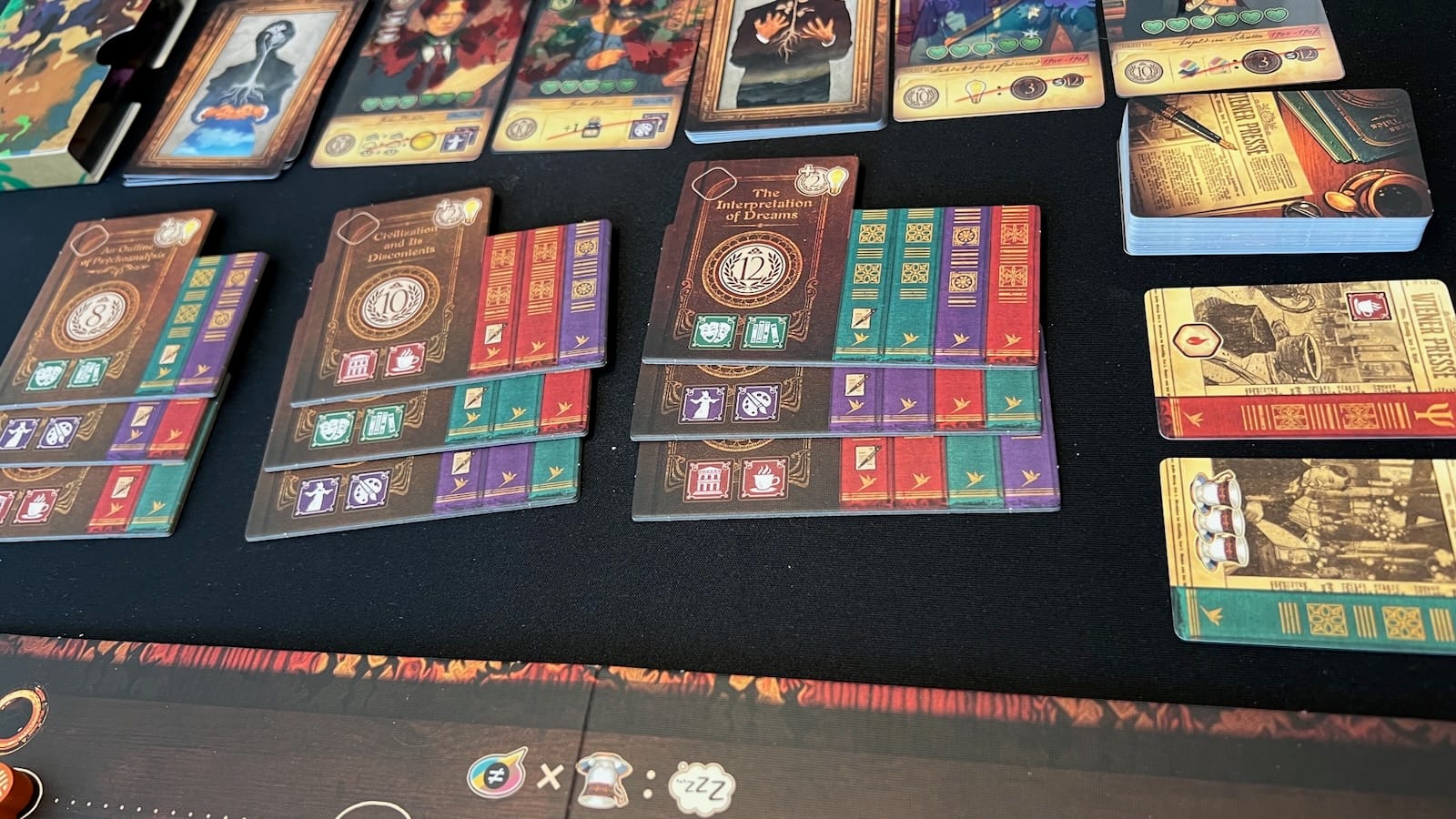
The gameplay of Unconscious Mind is not going to be for everyone, but I personally loved every minute of it. I'm not going to lie to you; there are a lot of different things you have to keep track of in the game, and it didn't click all the way for me the first time I played it. Players have to choose the right research pages and the right placement to trigger powerful combos when activated. Players need to collect different sets of icons so they can exert their influence around Vienna. You have to treat the right patients to unlock the right power ups and end game scoring to maximize your points throughout the game. For those looking for a dynamic solo experience, you will get it here, however, it adds another layer of complexity to an already complex game. It took me a couple of games to feel comfortable running the solo mode efficiently, without having to constantly look at the manual, and I am always a fan of leveled automated players vs. a "beat your own score". The players around my tables had mixed experiences. Some thought the game was too fiddly and that you had to sacrifice one aspect of the game for another. For example, the publishing aspect seemed to be an afterthought in most of the games I played, even though there were some big points up for grabs. Most people thought there was one too many systems tacked on. While I can understand their complaints, this game just clicks for me, and I love the combo-tastic turns you can develop and make work for your strategy. Depending on the options on the table, you may lean harder into one aspect to get what resources you need than another. It all depends upon your style and likes.
Unconscious Mind
Great
Unconscious Mind is a complex game with a lot of different mechanisms baked in. If you're ready to juggle five different things in your brain at once and help some patients along the way, then this game is for you.
Pros
- Thematic implementation throughout the game
- Great combo building turns
- Beautiful artwork and production
Cons
- Almost too many mechanisms
- Juggling a lot of different aspects throughout
- Make sure you have a lot of space
This review is based on a retail copy provided by the publisher.