I really wanted to like Kingdomino. The idea of draft-assembling a grid where picking up stronger tiles will put you later in the order for the next round was fascinating. But then I hit the dual problem of a scoring system I didn't love and its adoption of the ubiquitous medieval theme, so it's sat on my shelf collecting dust for the last few years. Enter Twinkle Twinkle, which wound up being exactly what I wanted from this sort of game.
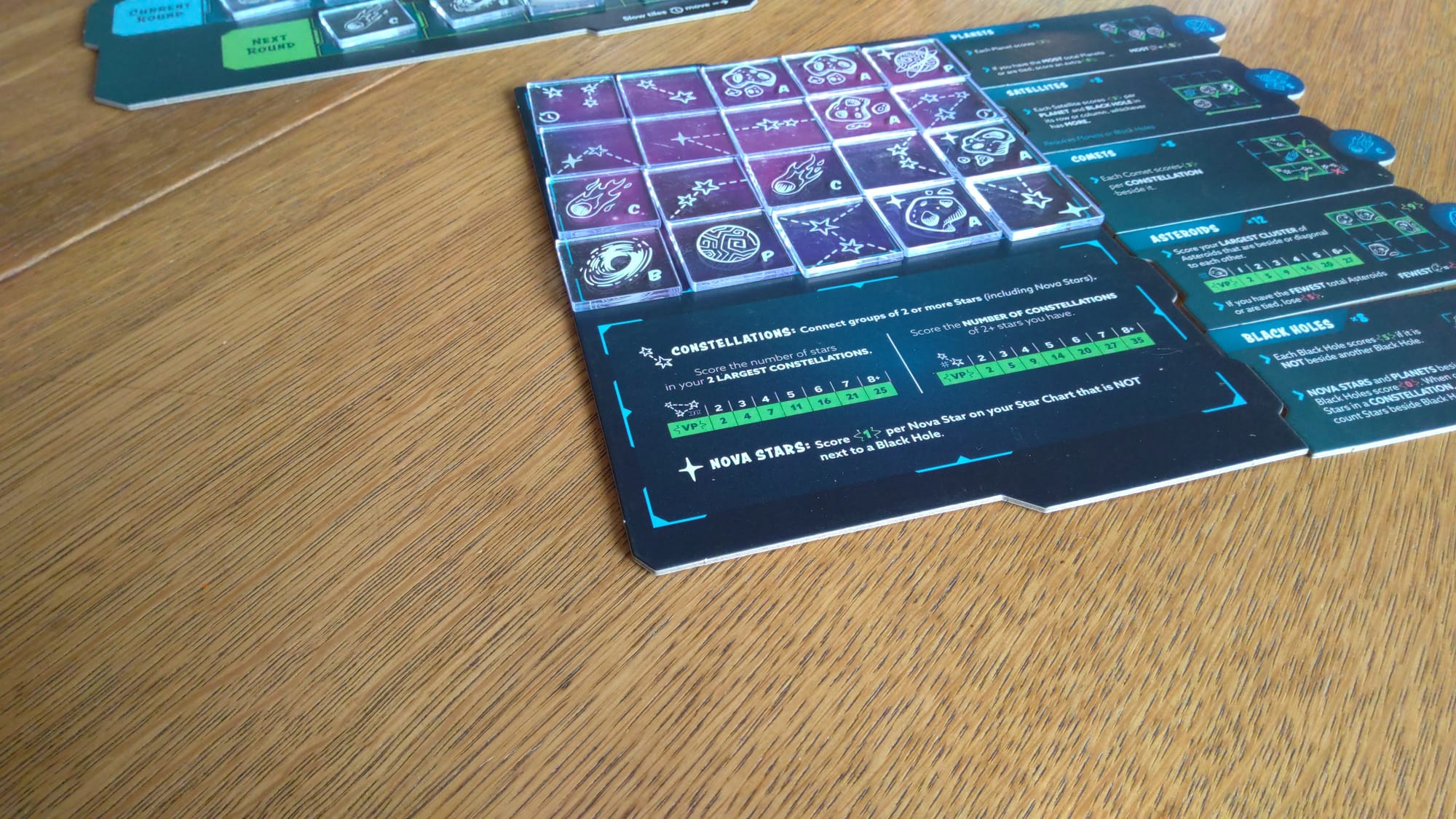
One of the first things I noticed was how building your star chart to make it aesthetically pleasing naturally led to scoring well, so the human impulse to make pretty stuff has a symbiotic relationship with how the game wants to be played. That isn't to say scoring poorly will lead to an eyesore like in other tile laying games; Twinkle Twinkle has you dropping translucent tiles on your 4x5 star chart's stellar landscape like analog photoshop layers, so at worst you’ll get something that looks like a postcard that a toddler put too many stickers on.
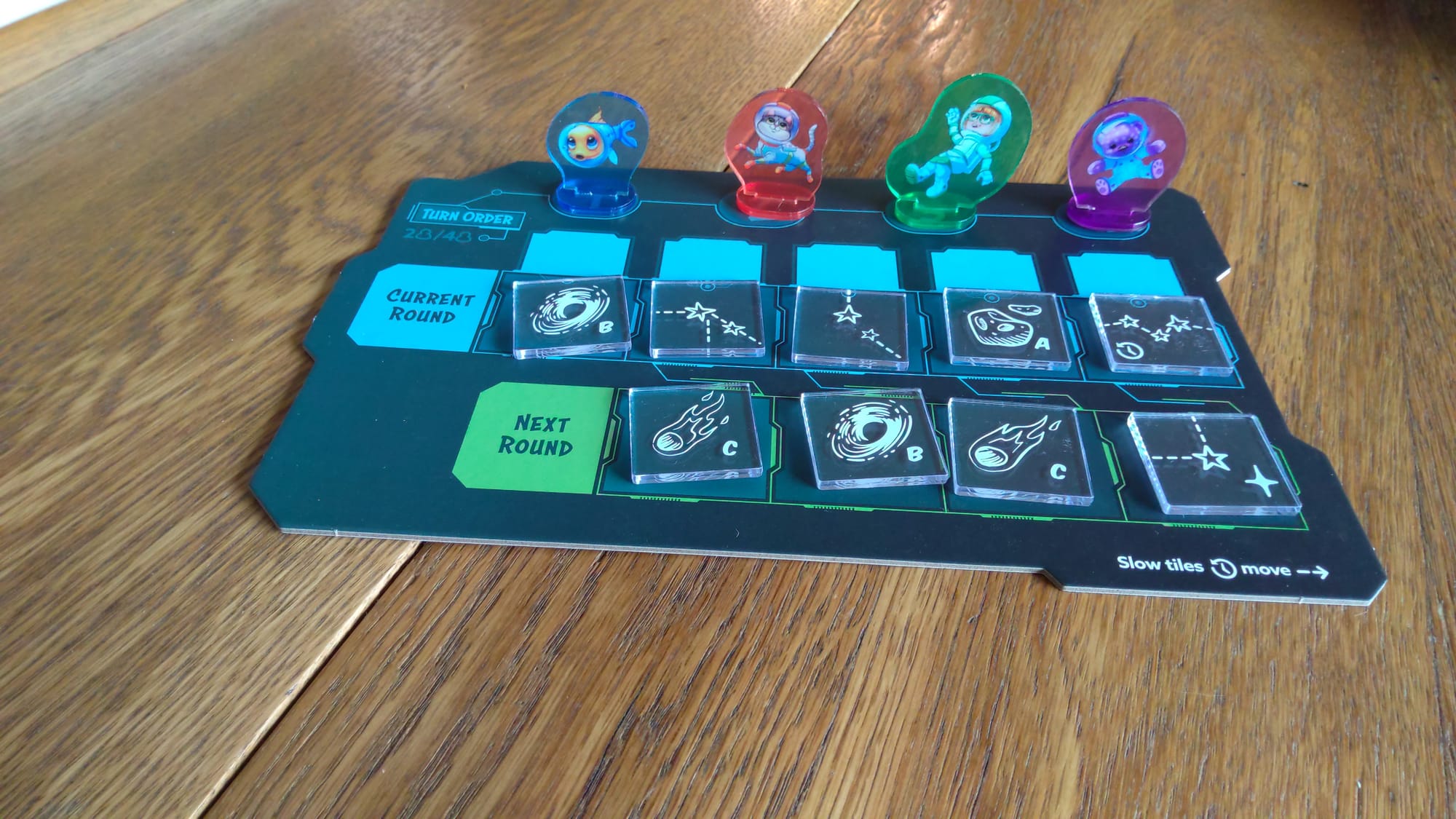
After playing enough, the thing that made Twinkle Twinkle really shine finally dawned on me. In a lot of these continuing draft order games, last pick winds up being a hole that is almost impossible to get out of, but here there's multiple mechanics in place to mitigate that. When pulling tiles between rounds to set up the next round display, some high value tiles will have a clock icon on them and get sent to the last available space, making sliding into last appealing all the more often. Similarly, the current round's offering has n+1 tiles with the leftover taking first position for next round, meaning taking first comes with the compromise of last round's reject tile.
Throw in the option to score objects in the straightforward basic mode or the more crunchy but never brain burning advanced mode, and Ammon's given us another game you can pull off the shelf and toss in front of anyone.
Twinkle Twinkle
Phenomenal
Twinkle Twinkle is beautiful, easy to pick up, and plays in a snap. It's a rare treat of a game that me and my family both enjoy.
Pros
- Gorgeous, even if you're doing poorly
- both sets of scoring criteria for the objects are interesting but easy to understand
- you've got to really mess up to get stuck picking last for multiple rounds in a row
Cons
- a tad on the expensive side for what it is
- I feel bad throwing away the dry erase scoresheet, but it and the marker just take up box space
This review is based on a retail copy provided by the publisher.
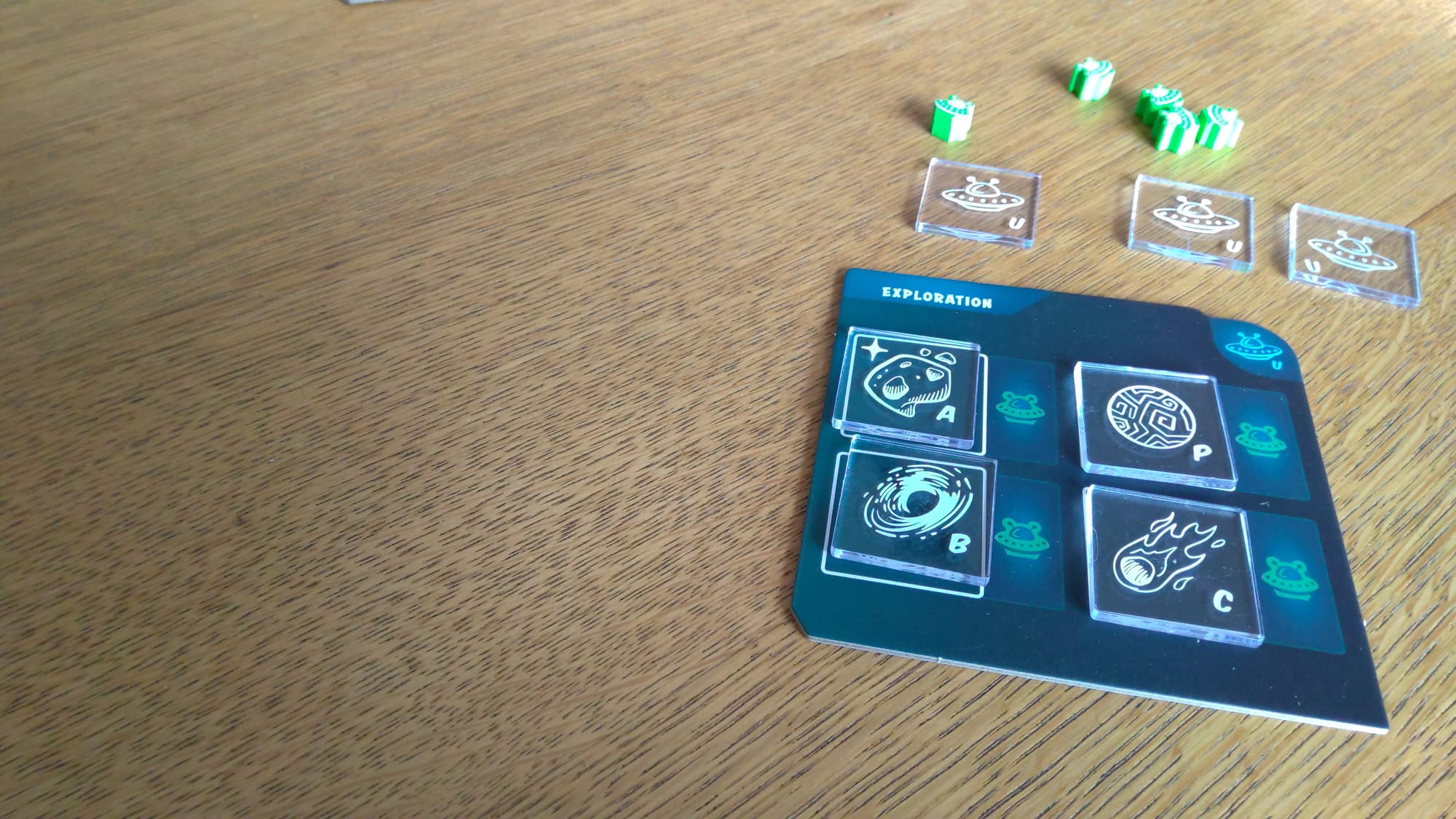
Now that those base-game plebs are gone, we can talk about the expansions, starting with the Extraterrestrials mini-expansion. I've bought more than my fair share of promos and mini-expansions, and they're almost always underwhelming, so I was steeling myself to need to get a bit mean seeing we got a copy of one. Thankfully enough, it proved to be a masterclass in how you can do a whole lot with a little. When playing with UFO objects, you'll slap one of each other object's tiles onto their accompanying board and whoever you draft one, you'll drop a token that'll make one of those other objects worth an extra point. Whoever got the most UFOs also gets an extra 8 points during scoring, so you've got this push and pull of UFOs not being worth much on their own but you'll want them to have control over which tiles get the extra points, especially if you've wound up with a lot of one object. The end result is massive strategic implications and tightened player interaction from one feature without it being overbearing, so I don't know how I could ask for more.
Extraterrestrials Mini-expansion
Phenomenal
Extraterrestrials is easily the best mini-expansion I've seen, to the extent that I think you may as well pick it up when you get your base game and hold off on How I Wonder until you need to mix things up.
Pros
- Large impact with few rules
Cons
- Since it's more than just a couple cards, it's more expensive than most mini-expansions
This review is based on a retail copy provided by the publisher.
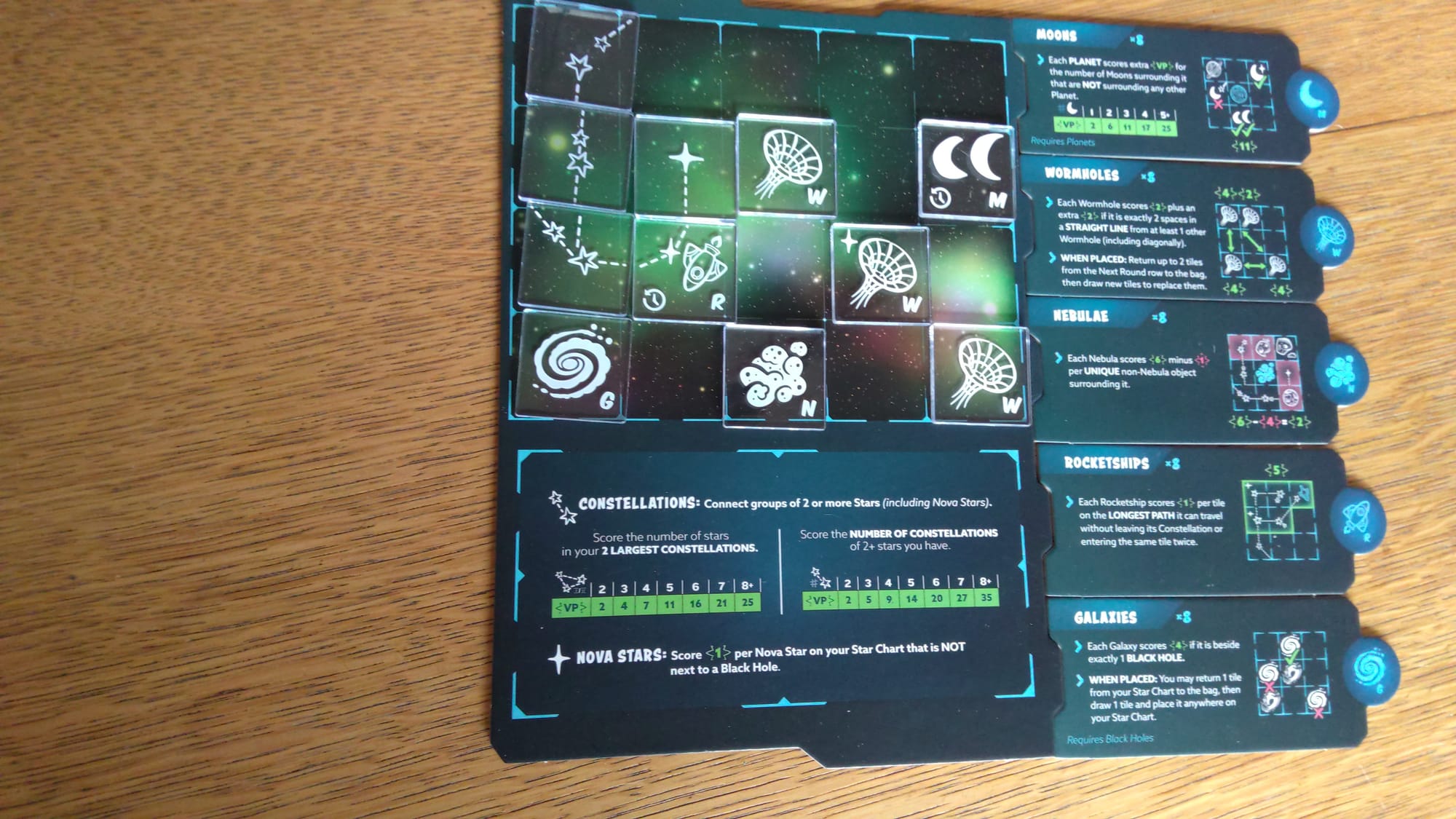
How I Wonder does what a full expansion for this sort of game should do: drops in 5 new objects that shake up how you build your chart and give you a little more control over the game. Wormholes let you reset two tiles in next round's market, and galaxies do the same for a tile on your board. Rockets and Nebulas re-emphasize stars, and moons do the same for planets. I like what's going on in here, but I would've liked a menu of recommended object sets. I know it's a nitpick, but after playing my fair share of random setups, some have felt underwhelming. Now that I've played with the expansion enough I can anticipate certain combinations not working and redraw, but I'm confused why there isn't a suggested setup or two to make sure y'all can acclimate without hitting the bumps in the road.
How I Wonder Expansion
Great
How I Wonder is what you're looking for in an expansion. I'm just confused why the rules don't nudge you in a direction for including the new objects in games.
Pros
- The 5 new objects sufficiently shake things up if you were getting bored with Twinkle Twinkle
- I like being able to interact with what's up next, or revise what I have on my board
Cons
- The expansion just sorta dumps the new stuff in your lap, which is odd for a game like this
This review is based on a retail copy provided by the publisher.