I won’t beat around the bush; I’m a huge fan of the world of Lord of the Rings and Middle Earth. From the novels to the original trilogy of films (extended editions), and everything in between, I have quite a bit of random trivia surrounding the Tokienverse in my head. Needless to say, I was excited about the Fate of the Fellowship game when it was announced and a little less so when I heard it was using the Pandemic system. Not every IP is great for all systems and there have been rampant cash grabs in recent years trying to cash in on nostalgia. So would a Lord of the Rings Pandemic measure up?
The Lord of the Rings: Fate of the Fellowship comes to us from publisher Z-Man Games and designer Matt Leacock. Matt Leacock is known for his work on the Pandemic series of games as well as other popular cooperative games in the same vein.
In The Lord of the Rings: Fate of the Fellowship, 1-5 players take control of characters from the stories in an effort to get Frodo to Mordor to destroy the one ring. Players work cooperatively to complete a series of challenges while trying to stem the flow of darkness from covering the lands of Middle Earth. Players will also recruit the free peoples from different kingdoms across the land to aid in their mission, all under the watchful eye of Sauron and his nazgul minions. Complete three challenges and get Frodo to Mount Doom to destroy the ring without losing hope and the players will take the day.
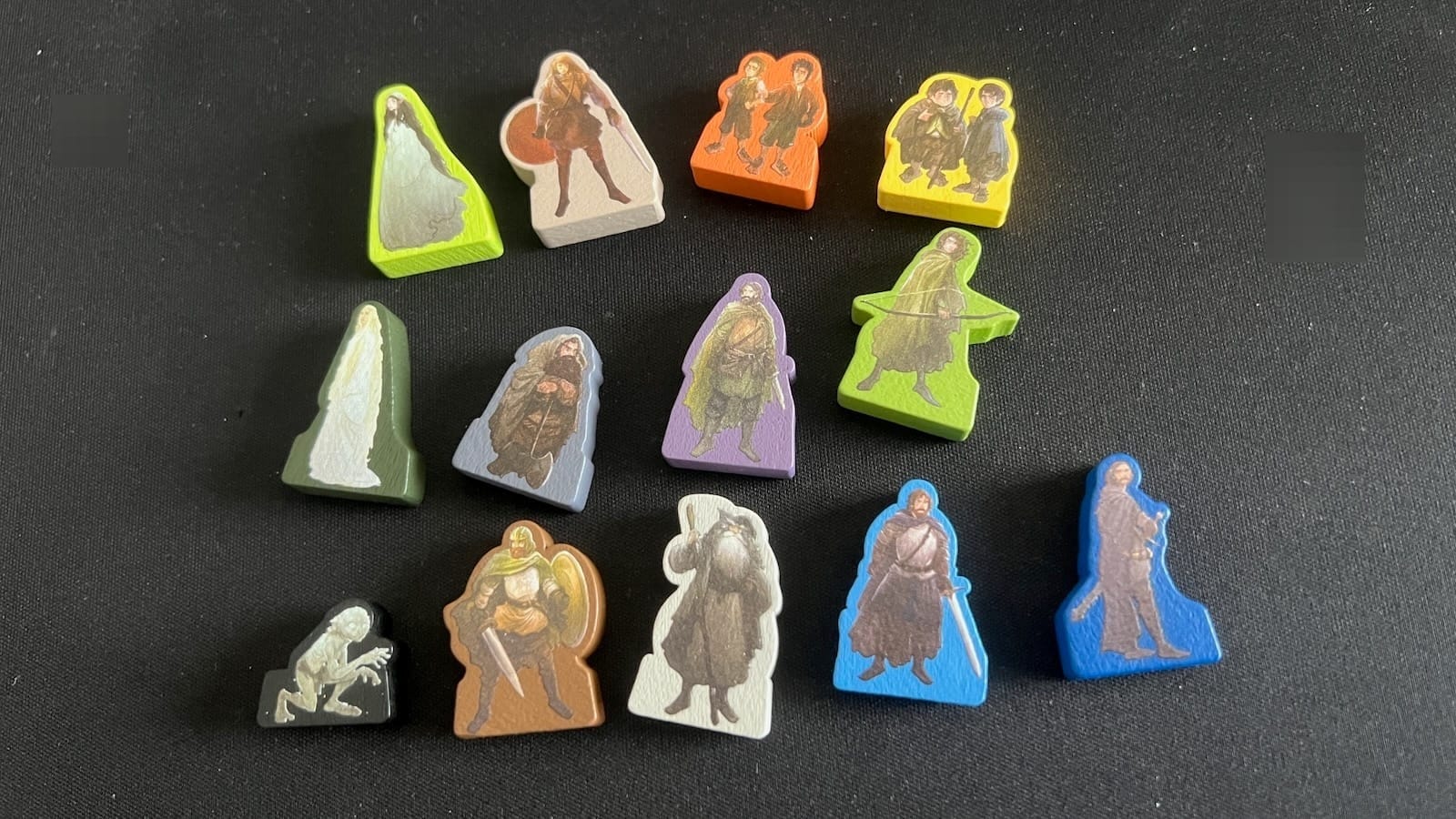
When setting up the game, each player will take control of two different characters each with special abilities and starting locations on the board. Players will also choose three random tasks in addition to the evergreen “Destroy the One Ring” objective. Players will have to complete these three objectives before destroying the ring. The game includes starter objectives and even some character options for beginner games. The board also has standard set up locations for the location of the friendly factions, shadow troops, Nazgul, and the Eye of Sauron. Players will also adjust the various tracks and decks based on the number of players and the desired difficulty level during set-up.
The game does a nice job of outlining the key concepts of the game in the rulebook. Players are working together to complete the objectives and not allowing the hope to reach zero. Hope can be lost by allowing special locations, called havens, to fall to dark troops, getting caught by the Eye of Sauron, and other in-game effects. Hope can also be gained through character abilities, playing various event cards, turning shadow strongholds into havens, and completing objectives.
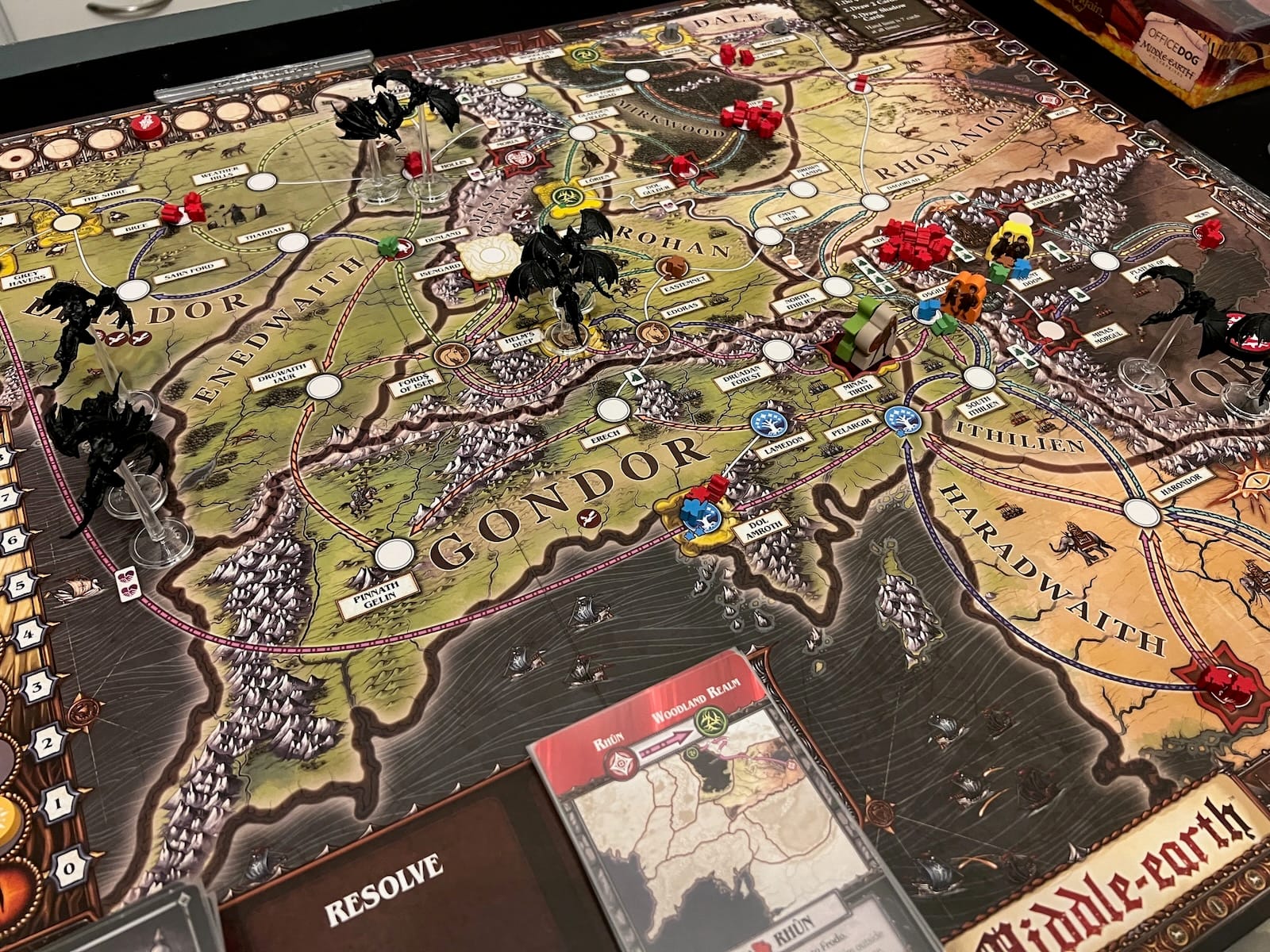
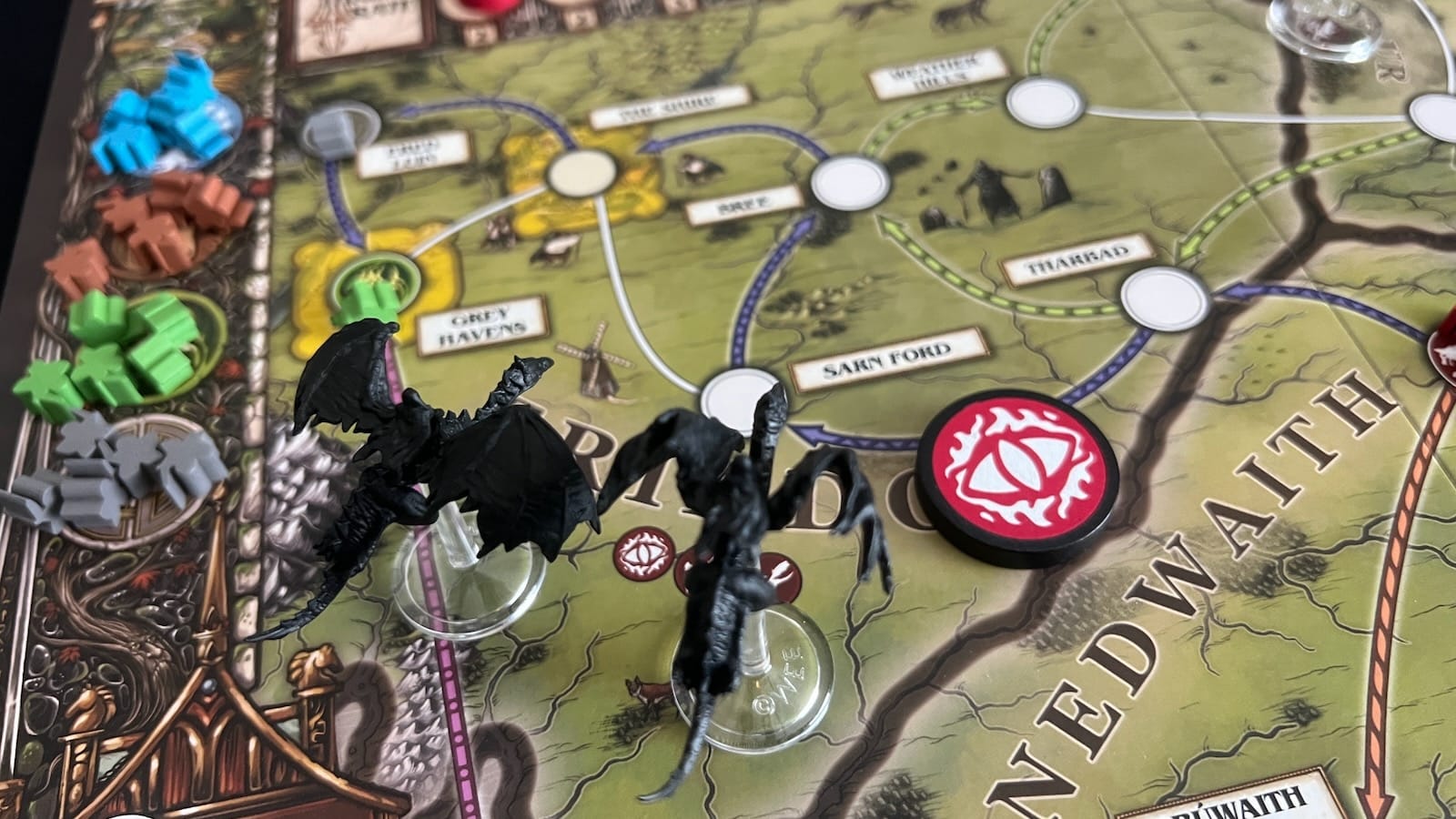
For those familiar with the Pandemic system, the gameplay flows pretty much the same. On their turn, players will take actions, draw two player cards, and then spread the infection. However, in this game, the infection comes in the form of the forces of evil spreading throughout Middle Earth. The infection spreads through shadow cards stored in a deck with two different images featured on their backs. When flipping cards at the end of a player turn, the image visible on the top of the draw pile determines which of the actions on the card to trigger. One action will advance troops along a specific line towards key locations on the map. If shadow troops meet friendly troops along the path they will battle, and if they arrive at an undefended haven, they will convert it into a dark stronghold losing the players hope. The other action involves adding shadow troops to different locations and redistributing the Nazgul and the Eye of Sauron around the map.
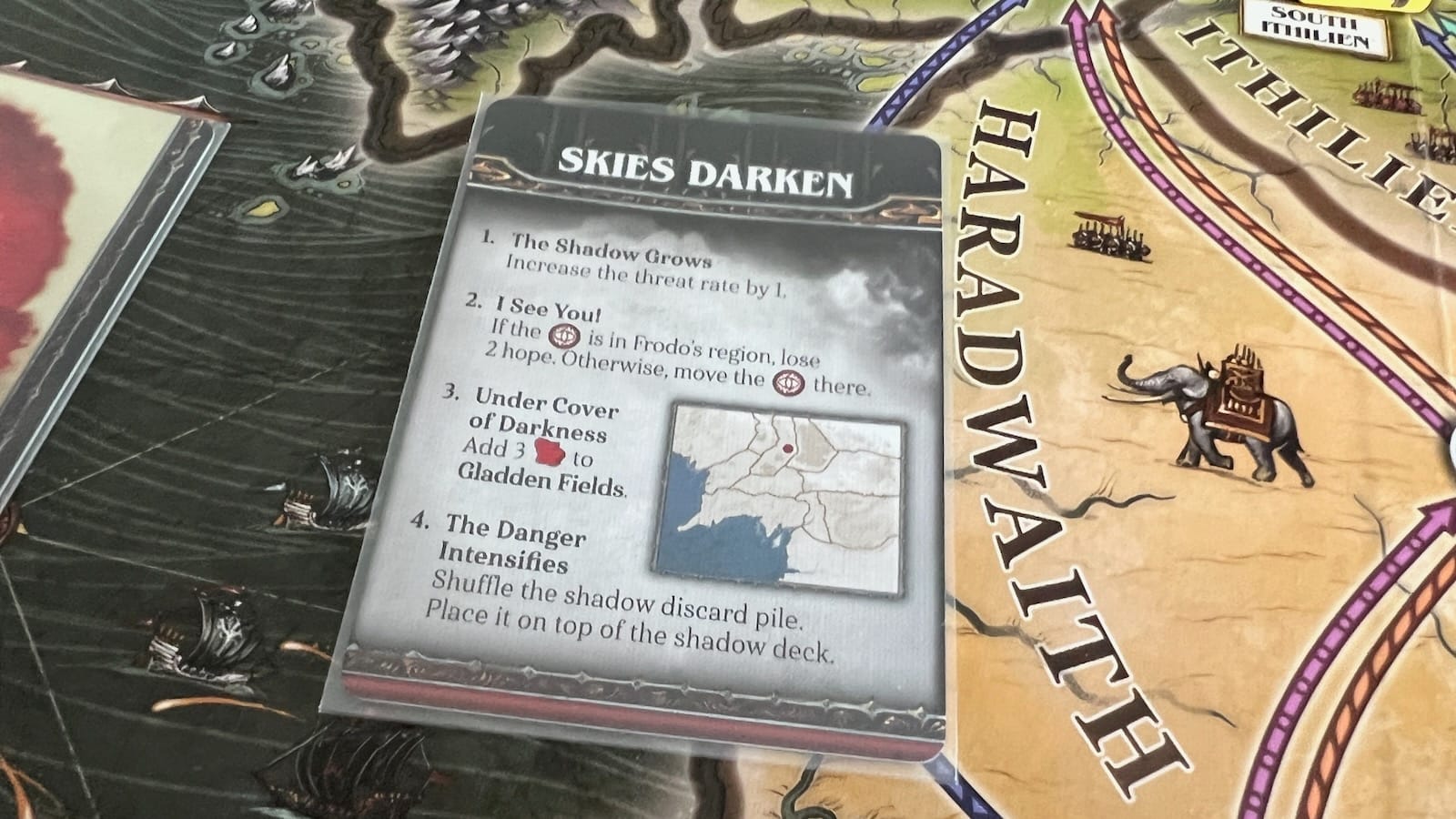
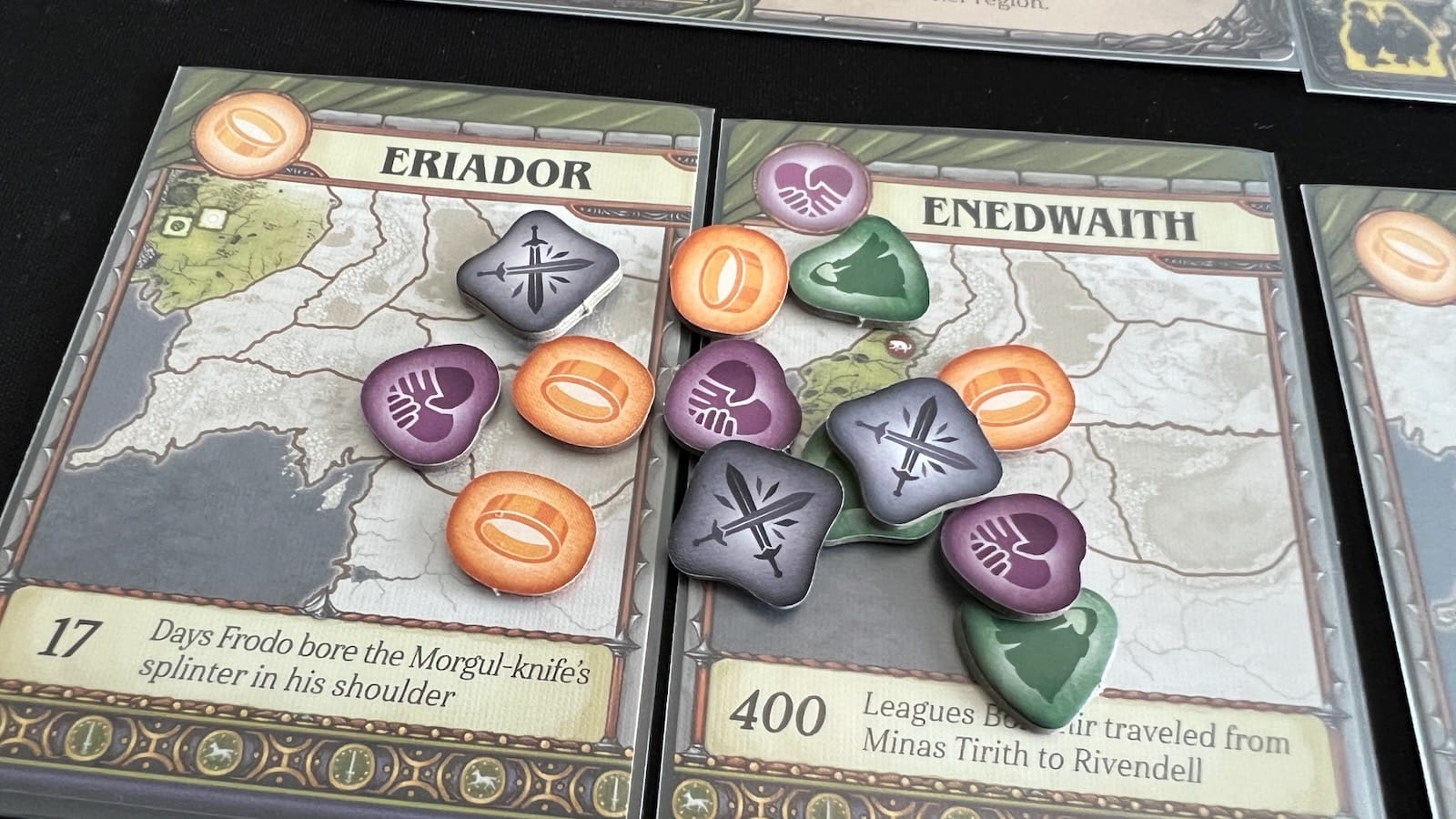
As in other iterations of the pandemic system, when drawing player cards, the player may trigger an event that ups the danger and resets the infection. In this game, the card that arrives is called “Skies Darken.” The threat level, corresponding to the number of shadow cards drawn each turn, is raised, shadow troops are added to the board, and the shadow discard pile is shuffled and added to the top of the deck. Also, if the Eye of Sauron is in the same region as Frodo, then the players lose two hope, otherwise the Eye is shifted to Frodo’s location. Player cards are also used for the symbols in the corner of the card. Players will discard cards to execute different actions such as mustering troops, flipping strongholds to havens, attacking enemy troops, and completing objectives. Players can also turn the cards into tokens of the same symbol when at havens to help with hand limit. One of the most important symbols is the sneak symbol which must be spent every time Frodo travels, otherwise a search can be triggered.
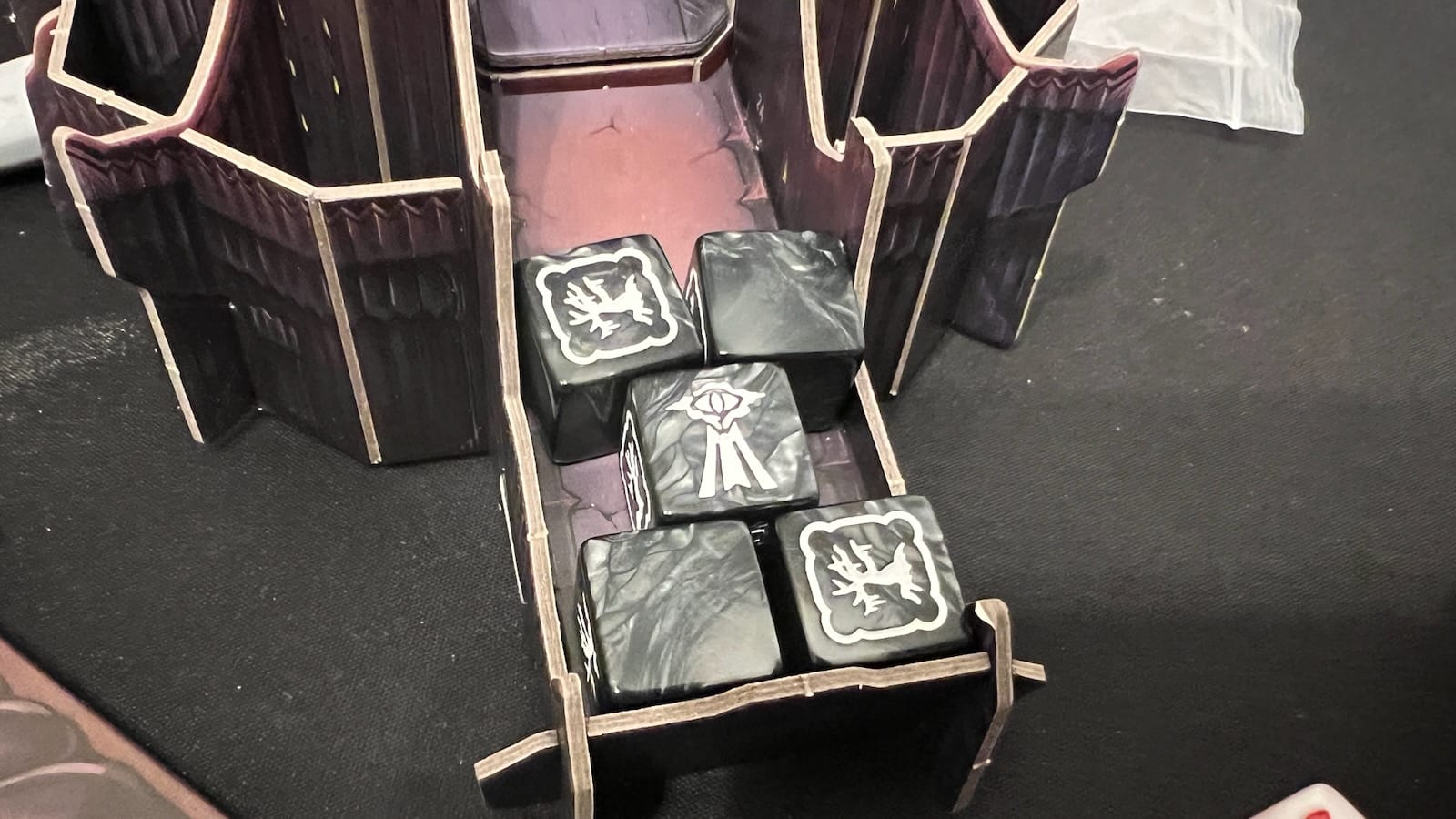
Searches are to be avoided at all costs, but when executed, the number of shadow troops in the travel destination and the number of Nazgul in a region are counted. The players will roll a number of special black dice corresponding to the number that can lose the party hope and potentially recall Nazgul back to Mordor. With all dice rolls, players can spend ring symbols to reroll dice.
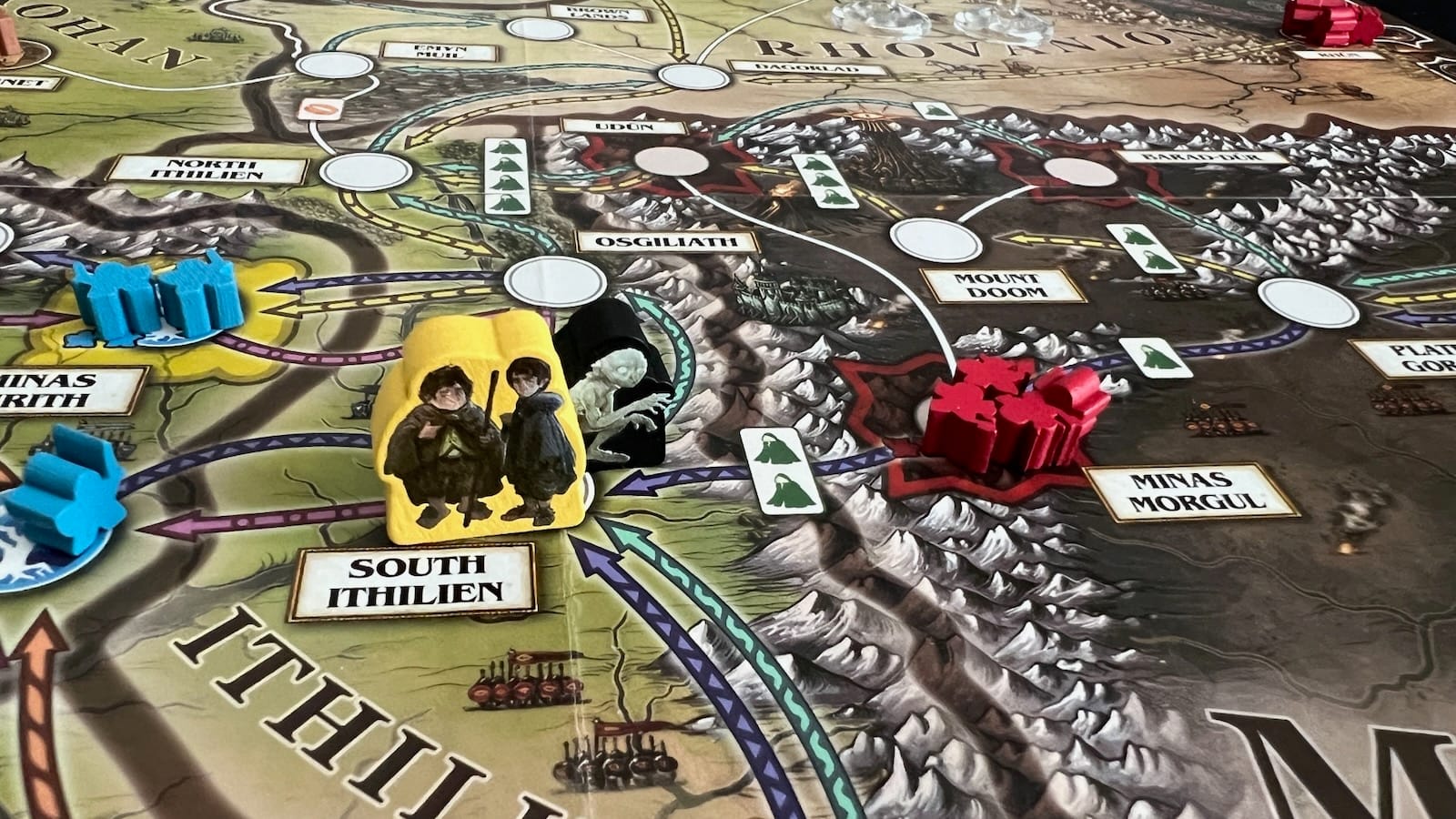
If players can get Frodo to Mordor and complete the other objectives, a brutal final roll is taken for the hope of Middle Earth. After turning in five ring symbols, the players will roll a final search, taking into account the Nazgul and shadow troops present and adding one die for each missing hope on the track up to a maximum of 7 dice. After the roll, if at least one hope remains, the players will win the game!
Overall Thoughts
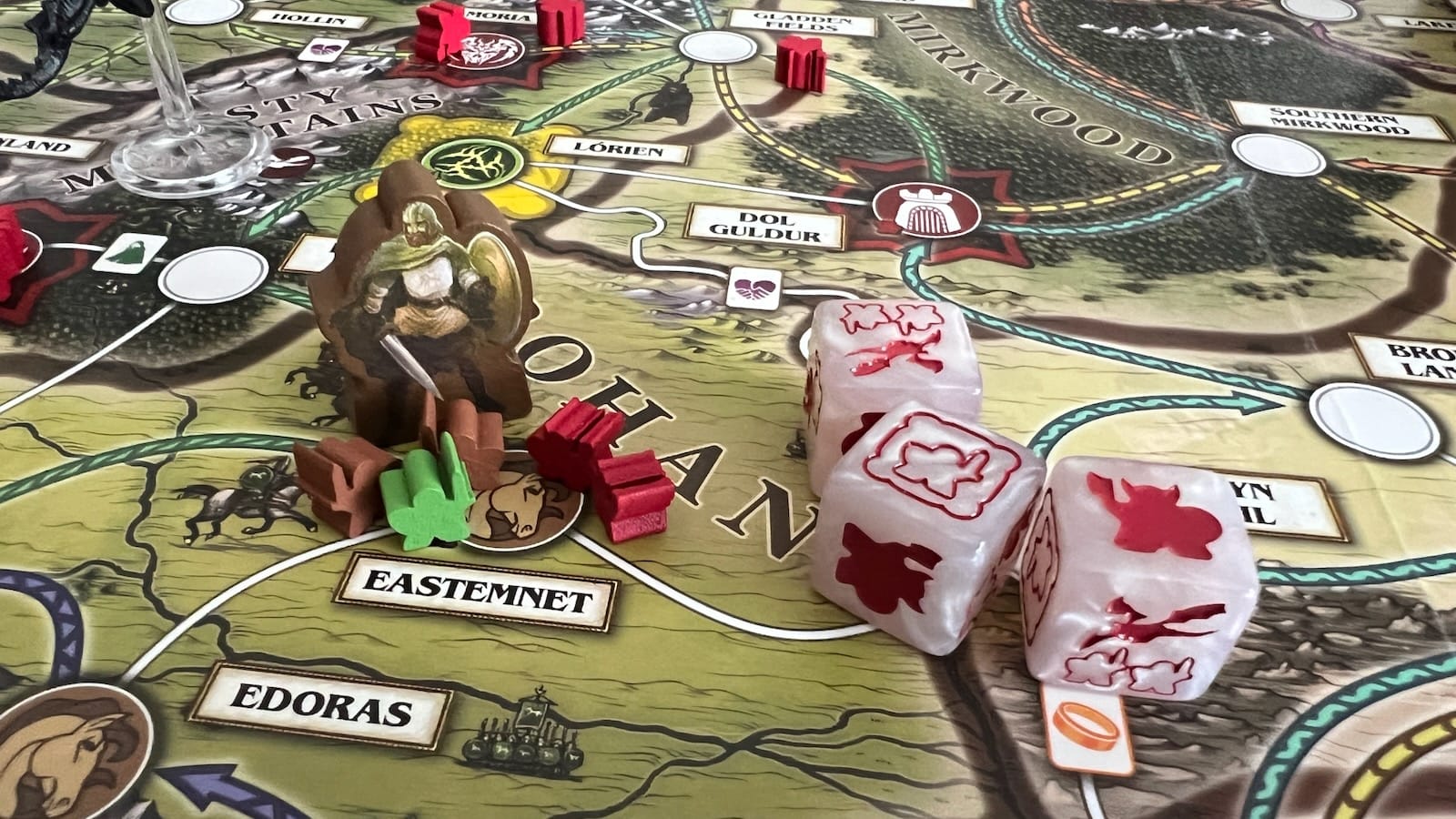
The production of this game is stunning. Since so much of the modern Lord of the Rings content is rooted in the movie trilogy, it was refreshing to see a new spin on the artwork and theming from artists Jared Blando and. Cory Godbey. Each of the characters has a unique spin and for a fan of the films, it was a little jarring to see a brunette Legolas. Throughout the main board, you will find small scenes integrated into the larger map of Middle Earth. For the uninitiated, it may be difficult to orient yourself to different regions and locations during the first playthrough, but newer players were able to pick it up after a game. To help combat this, each card, when referencing a location, has an image to help players orient themselves to the map. Another nice touch to the player cards is a numerical fact from the lore printed at the bottom of each card which is also used to determine the first player.
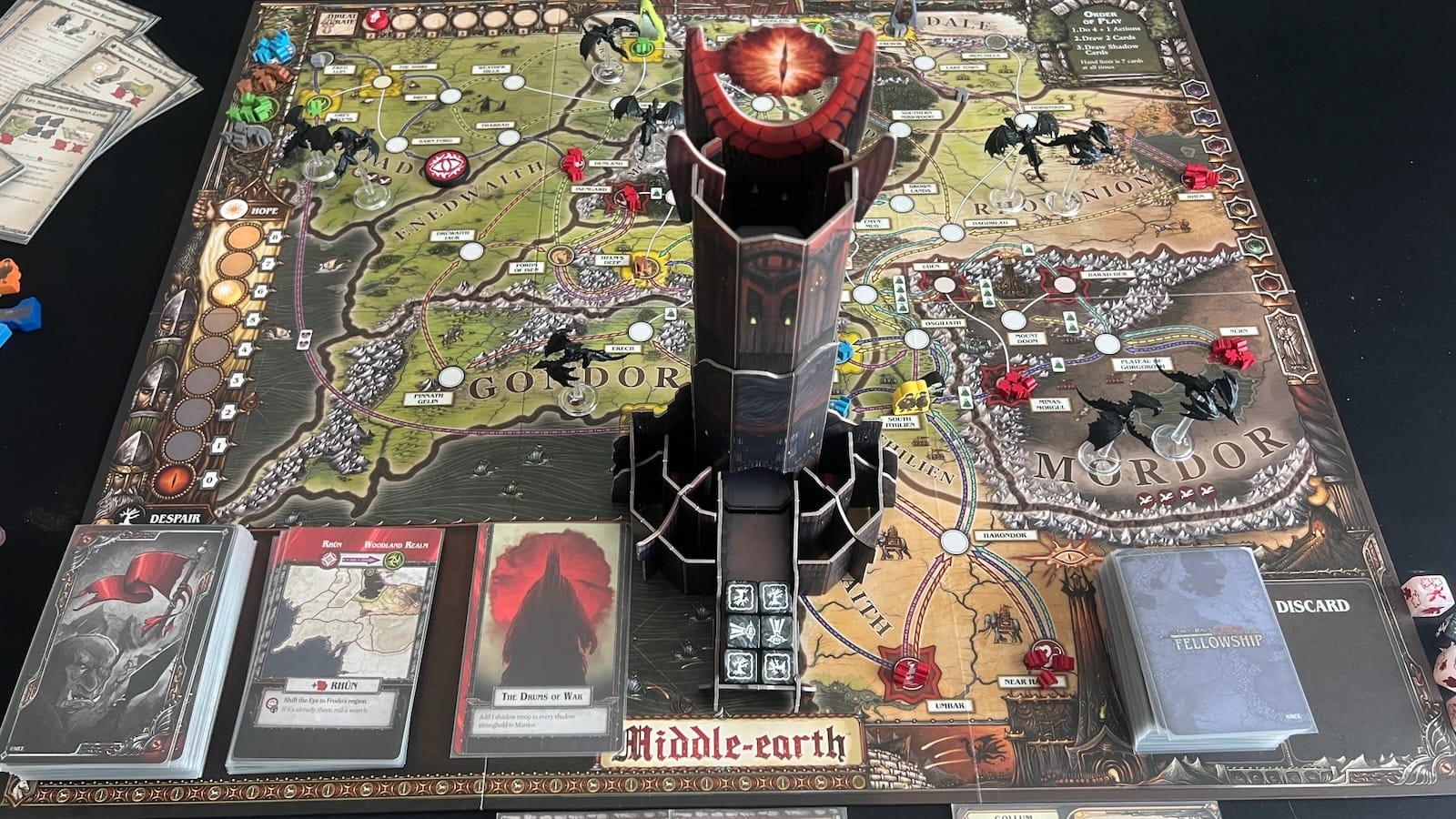
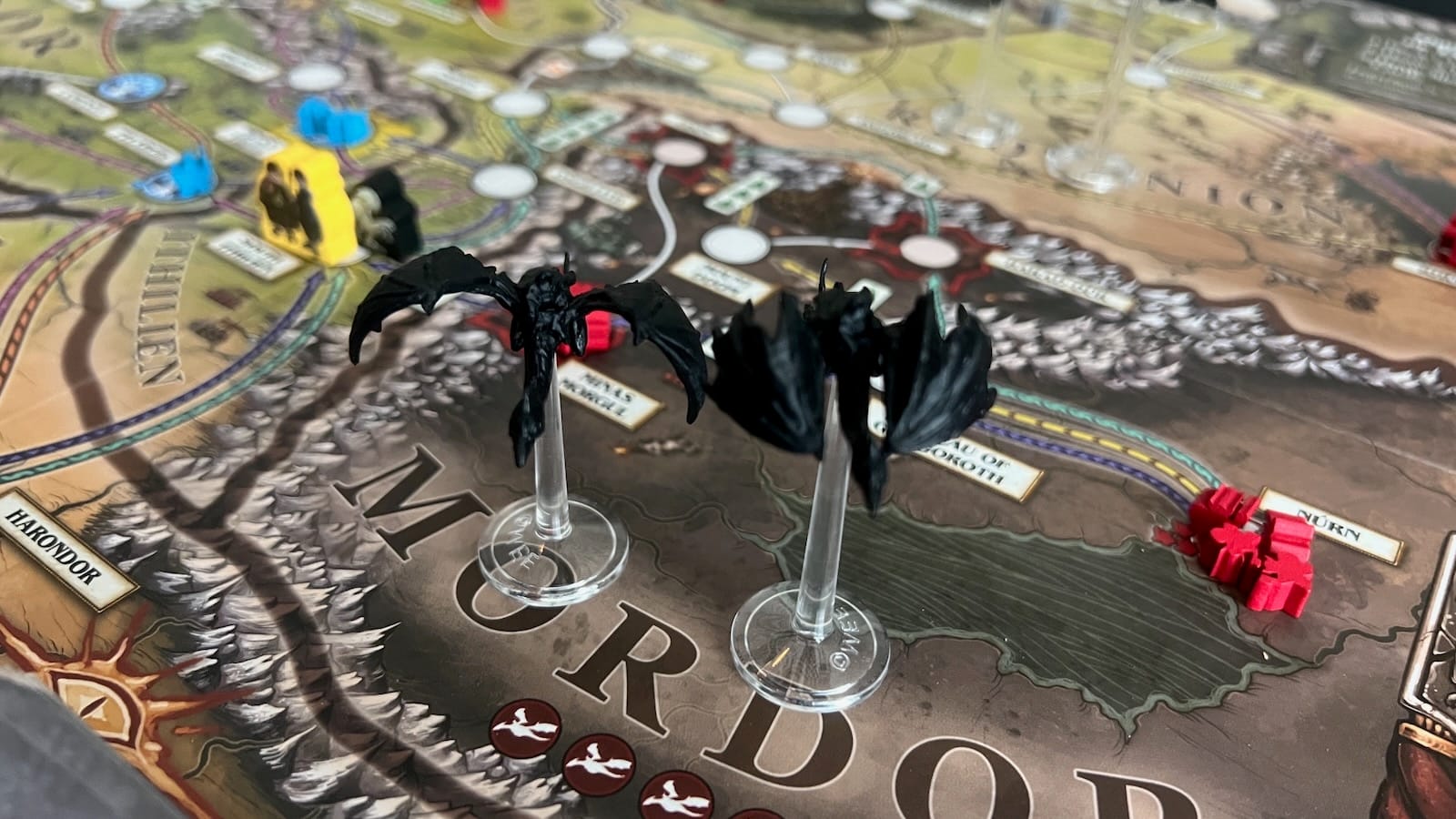
The game includes a dice tower in the style of one of the two main towers from the stories, Barad-Dûr. This imposing element sits off to the side of the table, with Sauron’s eye judging each move you make in the game. The rulebook and the reference cards are easy to use and helpful throughout the game. Each phase of the game is described with examples in the rulebook and the back page includes a symbol and icon glossary. My biggest gripe on the production side are the shadow and allied troop figures. They are just too dang small. I get that in a normal pandemic game you use cubes, but I almost would prefer the cubes over the tiny soldiers because of how fiddly they are. It almost seems like a dexterity game trying to get the figures on and off the board without losing one.
The gameplay of Fate of the Fellowship is also fantastic, but man is it difficult. However, the learning curve is steep and I had to play a few games on the easy level before upping the difficulty to the standard. The thought that there are three difficulty levels above the standard difficulty is mindboggling. I love this game. This has to be the best alternate version of Pandemic out there and the theme oozes in every turn and move the players take. Each of the objectives take storylines straight out of the source material and the events added to the player deck add more thematic flavor. This is a game you have to play multiple times in order to get the flow of everything, but the sheer volume of character and objective combinations make this game one that will be different every time you play.
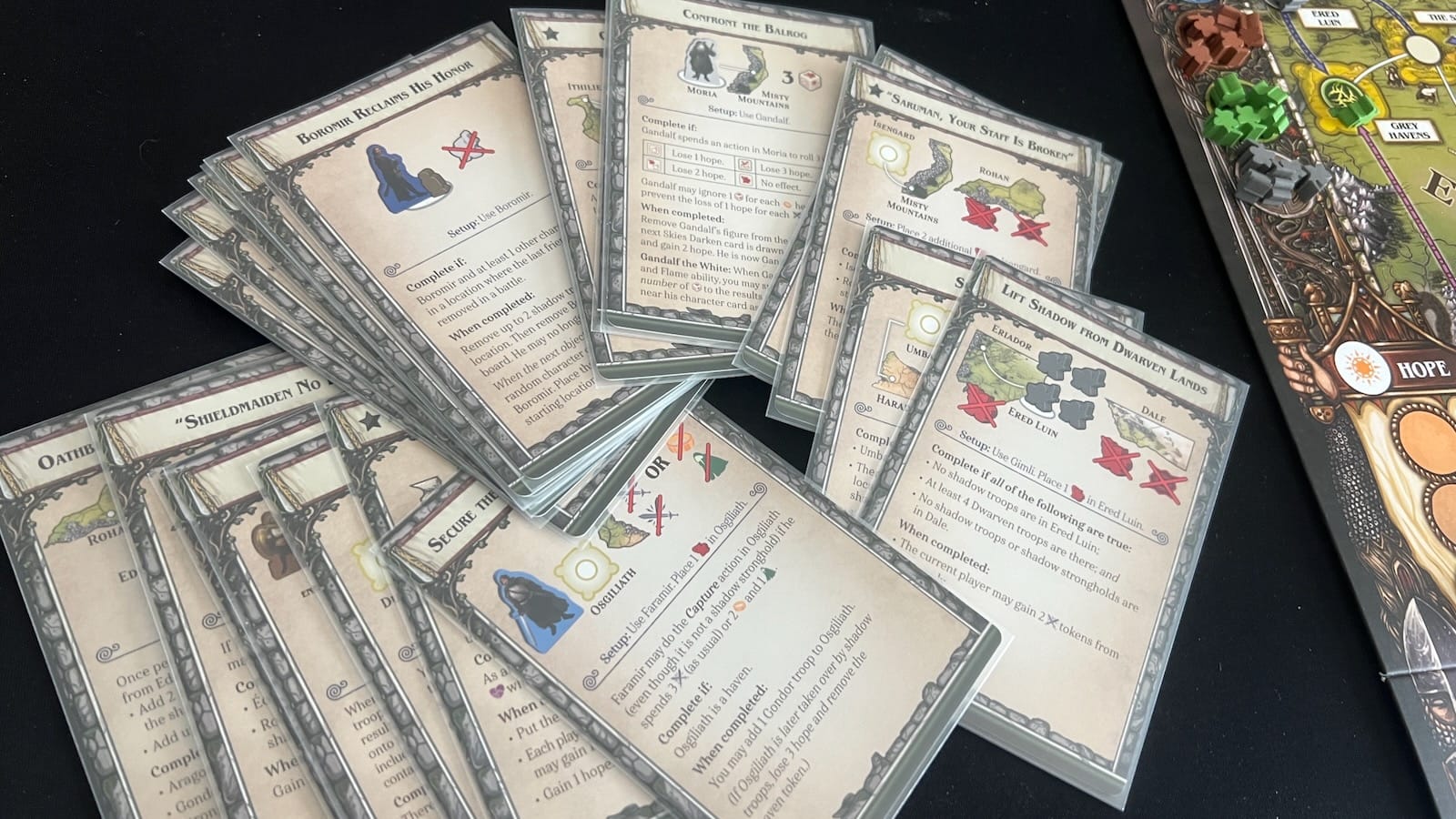
This game also plays differently depending on the number of players you have at the table. The solo rules have you controlling 4 characters in addition to Frodo/Sam, having players cycle through a different character each turn. I think the sweet spot lies at 2-3 players, giving you enough different characters and abilities without becoming overwhelming. A 5-player game becomes even more complicated with 10 different player cards to try and balance. Each game is a race to Mordor and will end dramatically, for the good or the bad, if you can make it to the final objective. The final dice roll will have everyone sitting on the edge of their seat!
The Lord of the Rings: Fate of the Fellowship
Excellent
Fate of the Fellowship is one of the best cooperative games out there. For fans of the Lord of the Rings, immerse yourself in a challenging puzzle that will throw some curveballs but bring you back to the table again and again.
Pros
- One of the most thematic Lord of the Rings games ever made
- Best iteration of Pandemic system
- So much replayability in the box
Cons
- Difficult to win
- Takes multiple plays to get the flow of the game
- Some turns feel wasted
This review is based on a retail copy provided by the publisher.