There is a popular saying to succinctly describe how I feel about the 15 hours I put into ROMEO IS A DEAD MAN: “It’s so over... We’re so back!… It’s so over…” So basically, mixed. There is a lot to enjoy in this time-hopping, science fiction romp. When all the stars of its foundational mechanics and level design align, it is an exhilarating blend of action and adventure. The key phrase here is "when all the stars align". Unfortunately, for every fantastic stage that brilliantly takes advantage of its gameplay systems, there is a tedious misfire of mediocrity to counter it. These frequent bumps bring this space-trotting roller coaster ride crashing down to Earth every time it is on the verge of soaring. In a similar vein, the story brims with bombastic style, but regrettably struggles to inject substance when conveying its thematic conceits.
Ultimately, despite feeling conflicted about the overall package, I am glad I gave this title a shot. As my first experience with a game by Suda51 and his team at Grasshopper Manufacture (No More Heroes, Lollipop Chainsaw, The Silver Case) I found myself enamored by the signature unhinged humor and creativity that has charmed fans over the decades. This ever present uniqueness and imaginative carnage means there are still diamonds buried within the roughest moments. Suda51’s distinctive voice allows each facet, good or bad, to sing with reverberations of individuality. In that regard, I do recommend ROMEO IS A DEAD MAN for those willing to put up with its shortcomings just to experience the highs of its over-the-top vision. Just be prepared for an ambitious, albeit uneven experience.
The story opens up with a bang. An incident in the fictional town of Deadford, Pennsylvania casually causes space-time to blow up, leaving protagonist Romeo Stargazer gasping his final breaths. As blood gushes and trickles down his missing right arm and half torn off face, his grandfather Benjamin zooms in, “Doc Brown” style, to resurrect the rookie deputy sheriff, both dying in the process. Aided by his grandpa’s tech, Romeo revives as DeadMan, rocking a dope looking space helmet, a cybernetic arm, and a spiffy new jacket that just so happens to have the spirit of Benjamin stitched onto the back of his attire. Shortly after, the FBI Space-Time Police shows up and recruits DeadMan as a trainee investigator to help them track down fugitives scattered across the shattered universe, mowing down zombies called Rotters along the way. Each fugitive just so happens to share the face of his missing girlfriend, Juliet.
So yeah, from the get go things aren’t afraid to get wacky, with this weirdness rarely letting up. It’s ultimately a bunch of nonsense, but awesome and thematically consistent nonsense. The main highlight of Suda51's scenario is seeing the various ways he depicts his signature storytelling theme of “kill the past”. Hunting down each space criminal across different dimensions and time periods results in a “villain of the week” narrative structure, allowing for each chapter’s self-contained story to illuminate this central story concept. Sadly, the stylish symbolism within the events and characters of each arc rarely dives past its surface level depth.
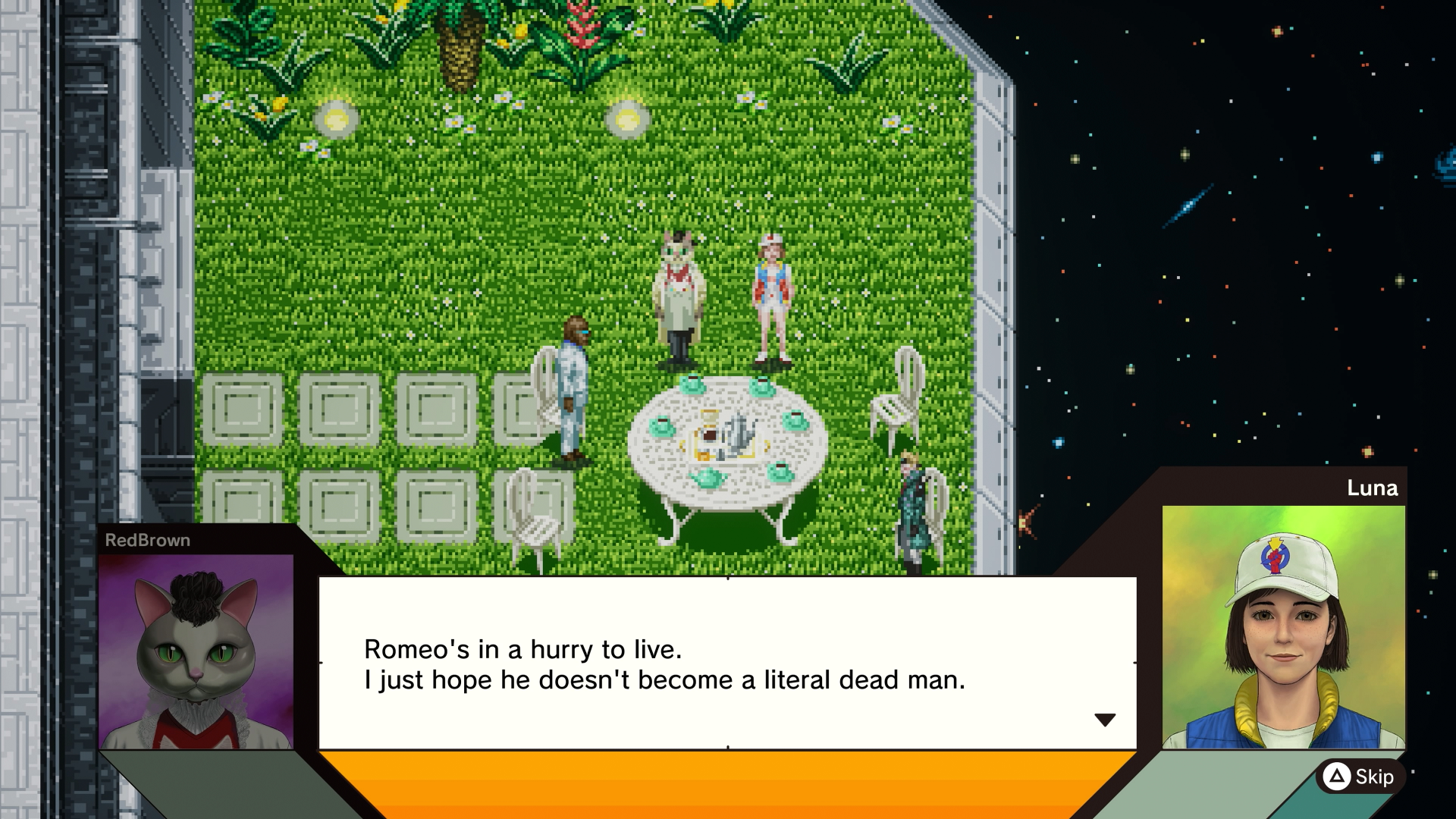
A consequence to this framework is how it causes the overall plot to feel sparse and disjointed. Details regarding Romeo’s past with Juliet and what led to the fragmentation of space-time are drip fed at an agonizingly slow pace. While I understand that Juliet is meant to be an enigmatic figure that drives the mystery forward, the excessive crypticism of her few onscreen appearances makes her an extremely nothing-burger character, compounded by the relatively predictable and underwhelming story reveals associated alongside her. To the game’s credit, Suda51 and the writing team do attempt to narratively and thematically tie each story beat to her character, but it overall comes off as half-baked.
Essentially, she is just a plot device to give personal stakes to Romeo’s space trotting adventure. Thankfully, on that front, Romeo is a decently compelling lead to follow. Stargazer’s arc through the story is often mediocre thanks to the plot structure, yet nonetheless, his characterization shines through. The rookie sheriff’s earnest and youthful hopefulness offers a compelling contrast against the bloody carnage he has to inflict in his quest to save space-time. Each swing of his blood soaked blade bleeds out his warm optimism, and replaces it with the jaded coldness of his iron mask. A dead man slowly getting the life sucked out of him as he chases the ghost of his past.
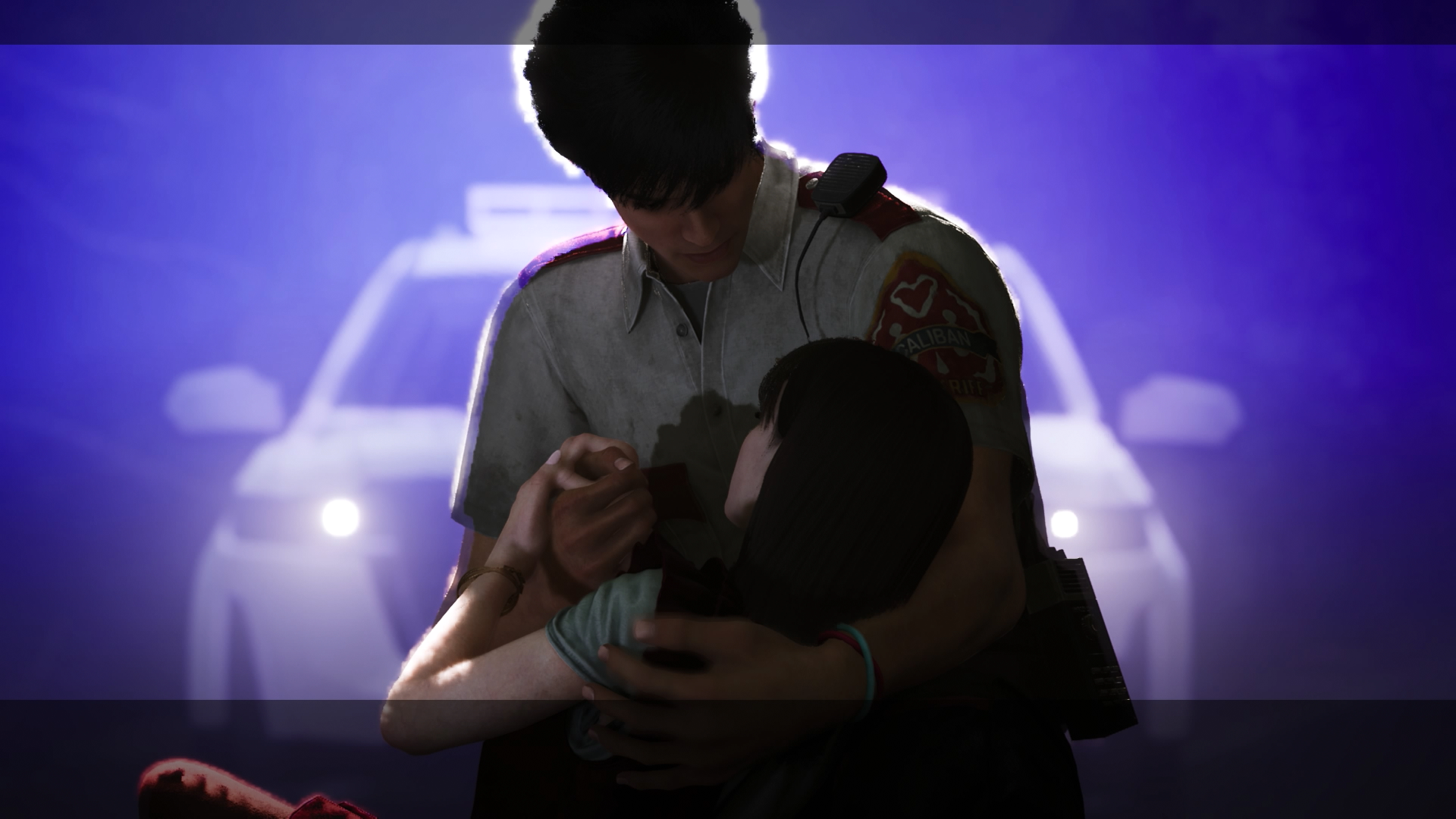
The shakiness of ROMEO IS A DEAD MAN’s narrative execution means it banks hard on its story presentation, substituting substance with flashy flair. Although it isn’t enough to completely mask the gripes I outlined, it is successful enough to effortlessly get me swept up in the chaos that unfolds on screen. A major proponent of this success owes itself to the game’s implementation of mixed media.
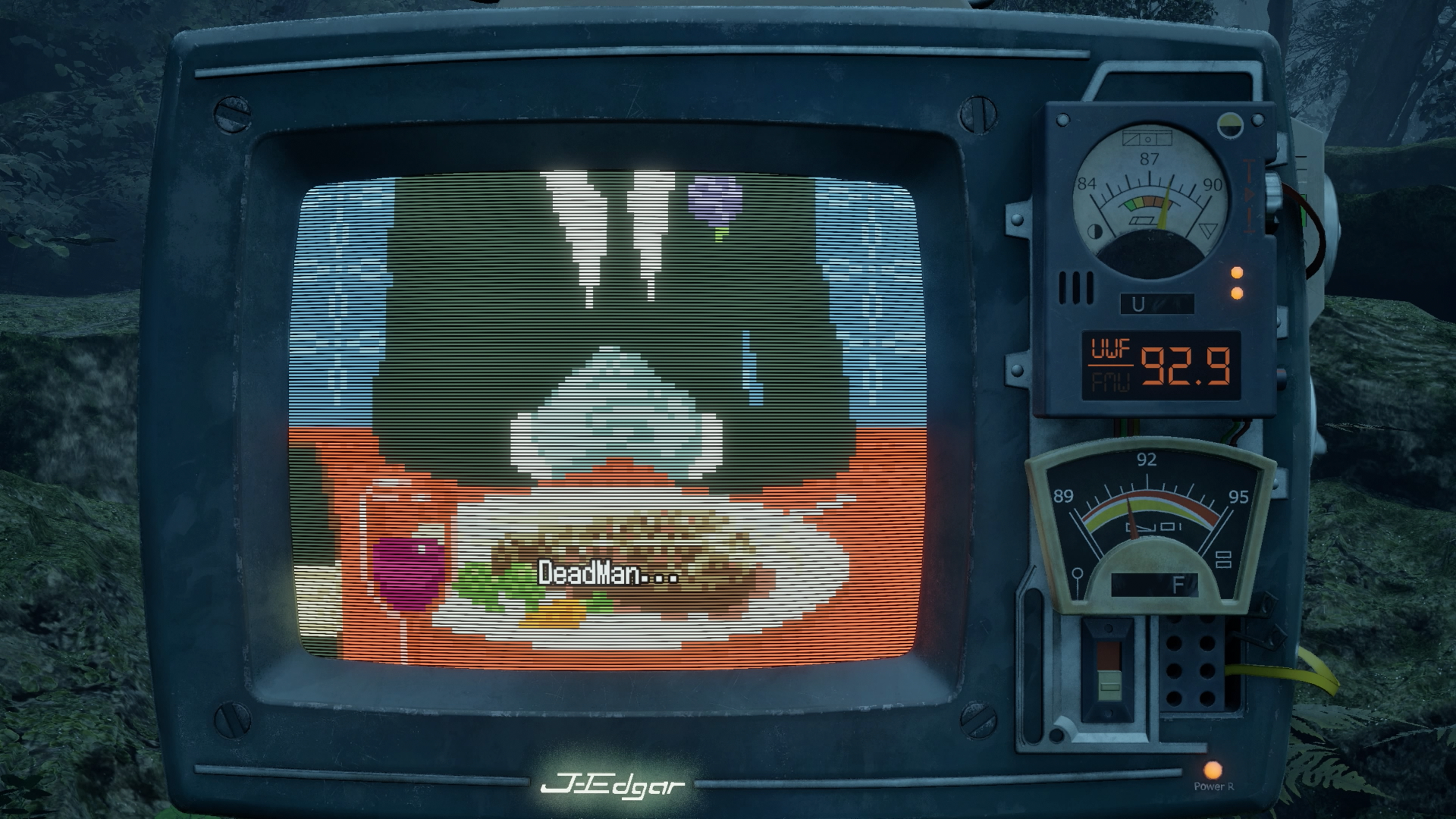
From the gorgeous, handmade diorama of Deadford shown in the opening minutes, cutscenes alternating between motion comics and the typical 3D animation, to the menus mimicking the style of retro games as well as the options of a CRT television, you’d be hard pressed to not find something new and experimental just around the corner. Heck, even the way the chapters are framed is reminiscent of an episode of anime, fit with title cards, credits, and sometimes even an eyecatcher in the middle.
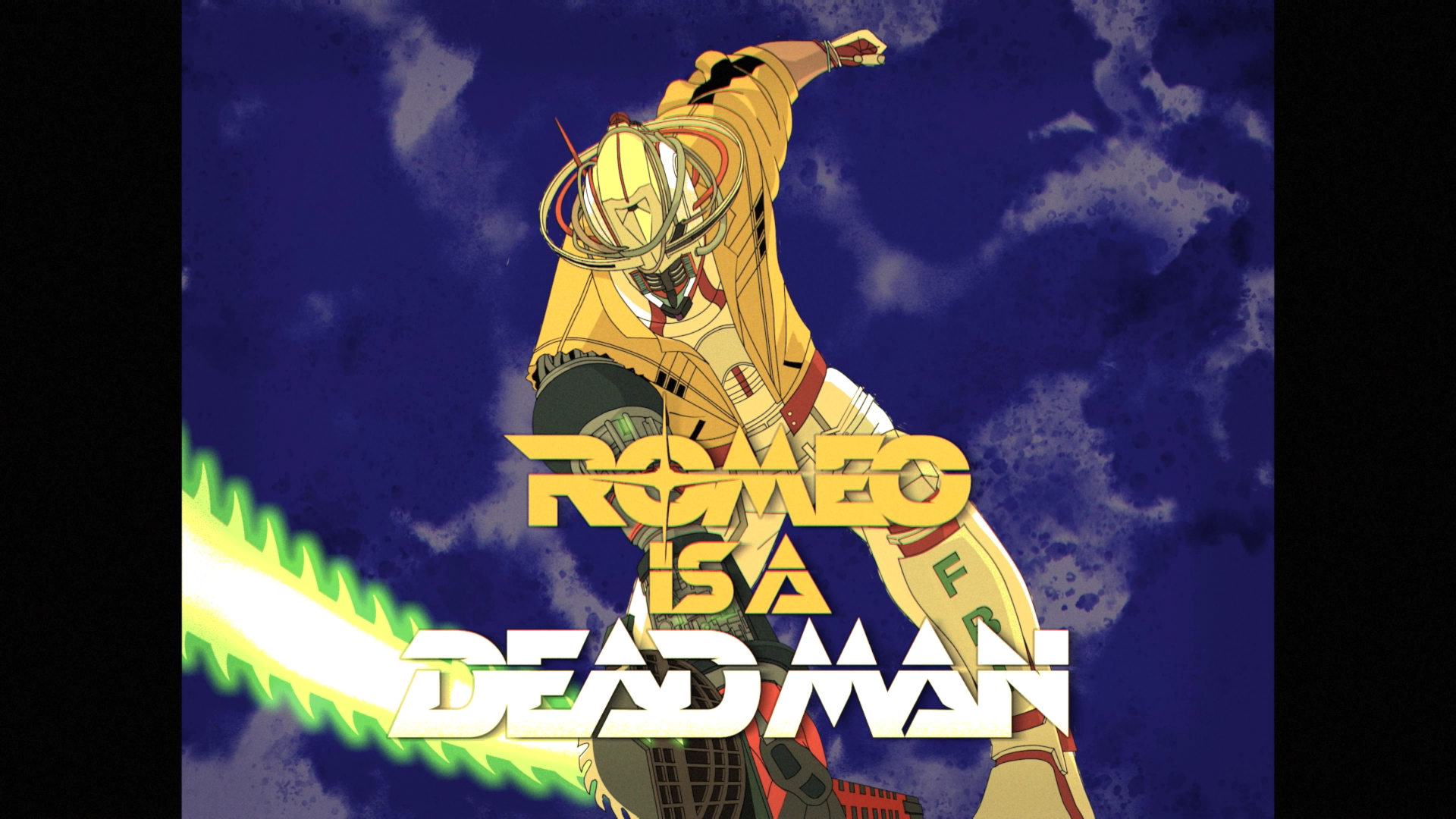
Easily the most upfront visual style pertains to the game’s hub: the FBI’s spaceship called The Last Night. The ship and its eccentric crew are depicted with gorgeous pixel art, with text boxes you’d find out of an old school RPG. I will dive more into the functionality of the hub later, but the most impressive aspect is how exploring the ship is done completely in this style. With how often you return here, this artistic choice provides an atmosphere of nostalgic comfort. Who knew coming home after a long day of slaughtering zombies to greet your shallowly written, but ultimately endearing shipmates, before leaping through space-time once more to find your missing girlfriend could feel this cozy?
From a gameplay standpoint, the different dimensions each fugitive resides in serve as the backdrop for each stage. I was pleasantly surprised by the semi-open nature of the level design. Almost every location feels expansive, possessing multiple intersecting rooms, floors, and hallways. Although the goal of every stage is to form the key to unlock the boss gate secluded in each stage, reaching that point requires exploring and completing sub-objectives. This is where the title’s time-hopping premise shines. Each locale offers various set pieces and creative gimmicks that set one another apart. Turning on generators in an abandoned mall has a completely different atmosphere and approach to progression compared to playing the Super Mario 64 face-pulling game with corpses in a hospital.
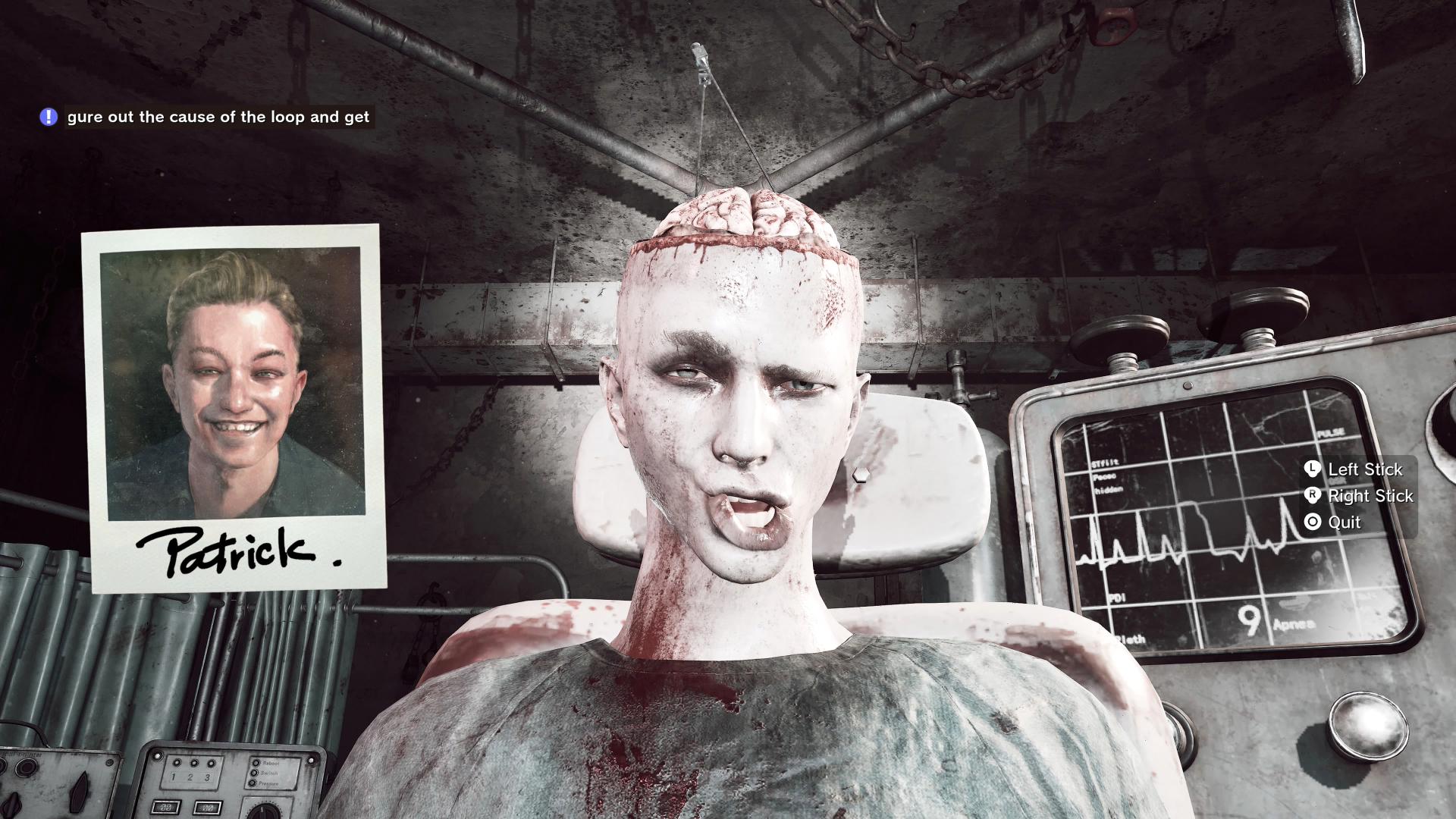
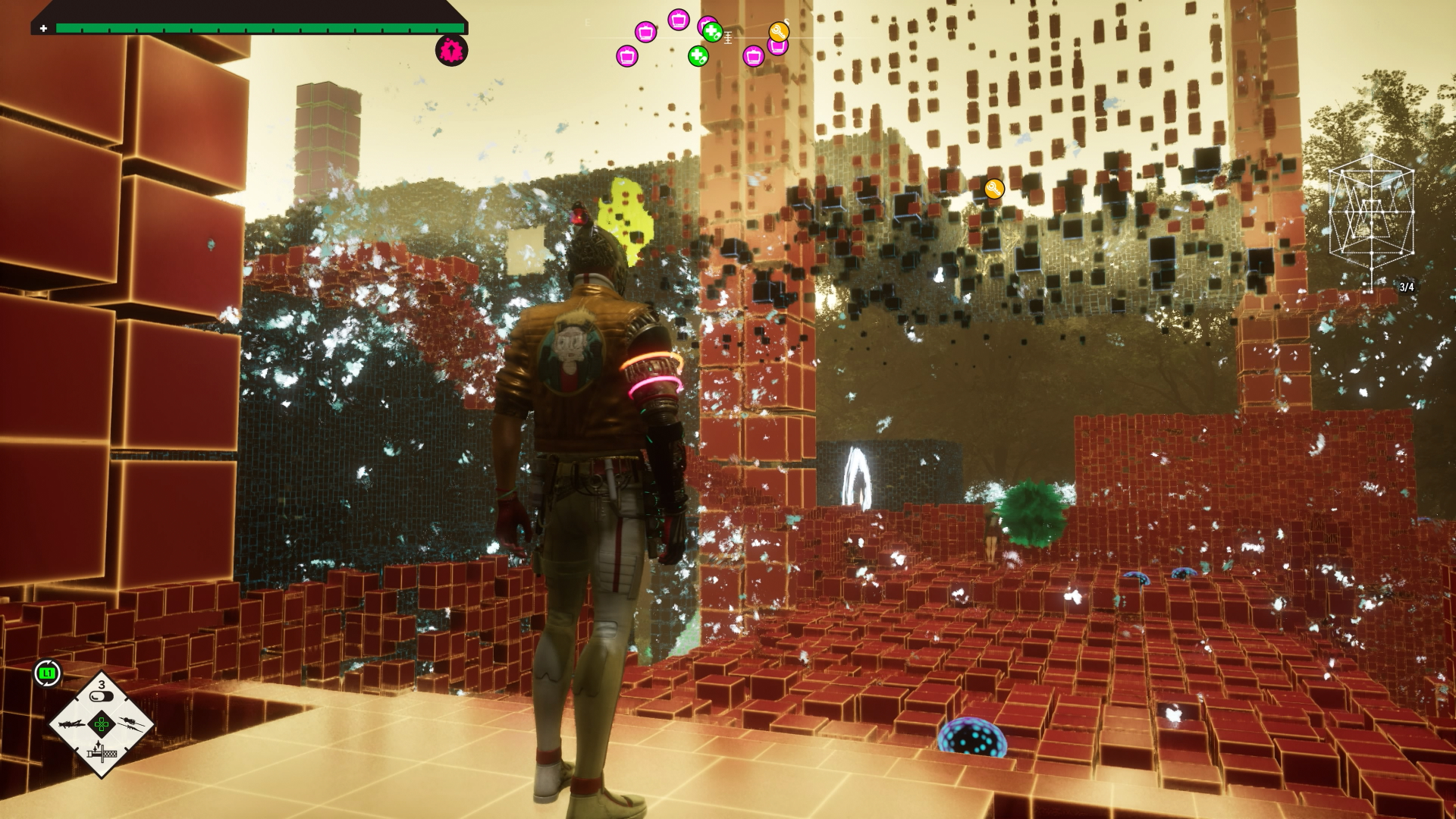
Furthermore, various televisions will be scattered across the premises, allowing Romeo to jump back and forth into a digital world called Subspace. The lack of enemies and emphasis on platforming makes this an excellent change of pace from the action. Beyond the exploration within the sub area itself, TVs in one realm are linked to a corresponding TV in the other. This conceptually makes for clever stage progression, turning navigation into a slight brain teaser on mentally mapping out the connections in both areas to access seemingly inaccessible places. For the first few times in execution, it does live up to its promise! As I stated before, Subspace excels when utilized as a pace breaker or as a vehicle to search for upgrades and collectibles.
However, when multiple stages over-rely on it as the main form of level progression, it causes them to drag considerably. I audibly groaned every time I opened the map and would see multiple televisions and locked rooms across the many different floors. The expansive nature of both realms makes navigation feel like a grueling test of trial and error that's easy to get lost in. To make matters worse, Subspace itself doesn’t have a map, only relying on a distance and directional bar at the top of the screen. But when an area has so many TVs that can be accessed, it becomes pretty much useless as a navigation aid.
Subspace existing as my only big issue with the gameplay makes it such a frustrating facet of criticism. It is just a singular gripe compared to the various systems the title excels at. What transforms this one fault into a critical issue is less related to the critique itself, and more the frequency of it. When it causes half the stages to become snooze worthy endurance tests, they stick out like a sore thumb in contrast to the other high octane levels. As such, the pacing issues occur often enough to sour my view on vast stretches of the package. Yet at the same time, it's infrequent enough that it doesn't tank the fun I had with the other sections. Again, the mixed “it’s so over… We’re so back!” dilemma.
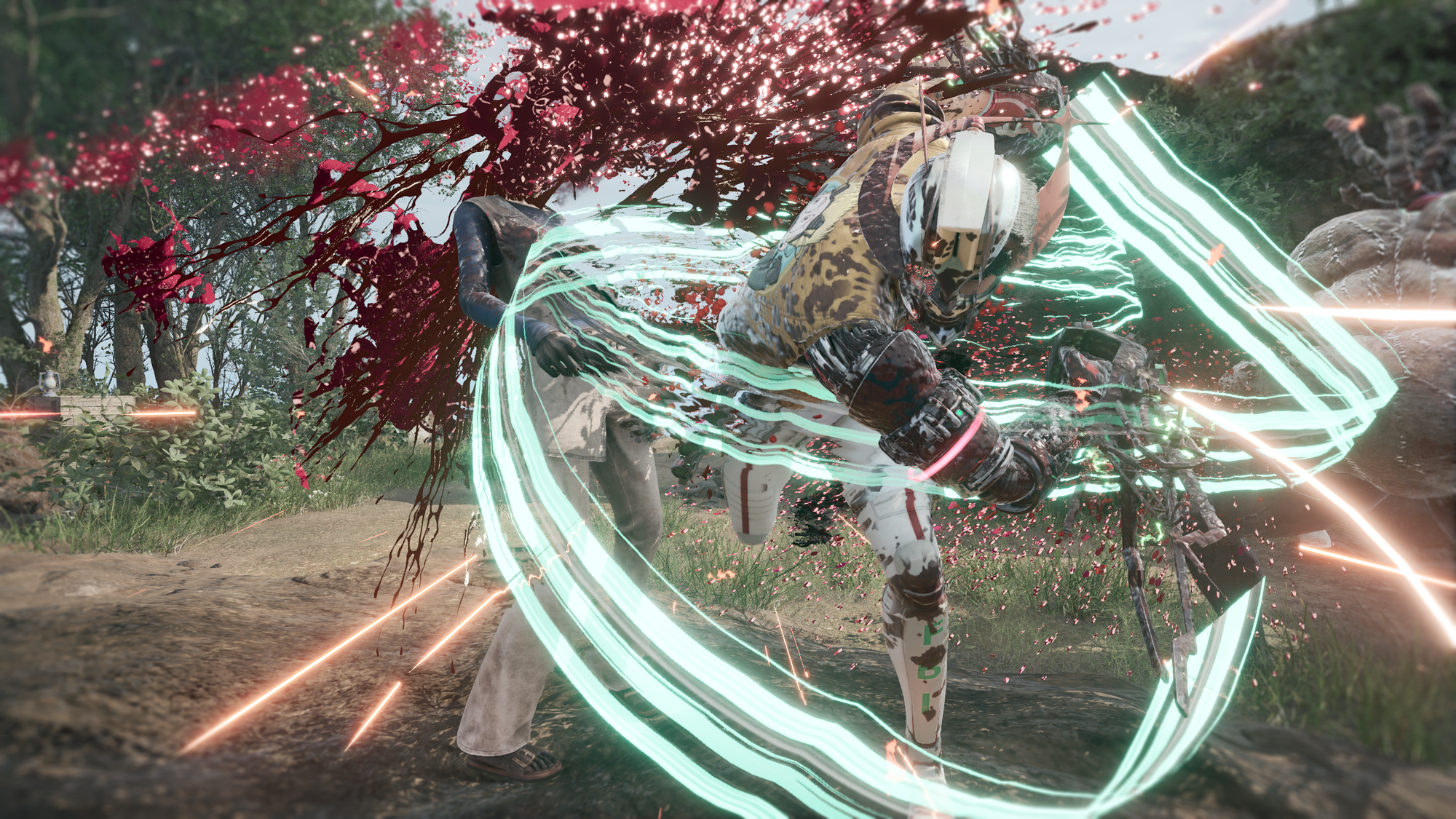
Fortunately, what brings the game back on an upswing is the combat. ROMEO IS A DEAD MAN prides itself as an ultra violent, gore filled action game, and it mostly soars in that department… barring some initial growing pains. To be blunt, my initial impressions of the battle system leaned towards the negative side. Melee weapons are operated by pressing light and heavy attack buttons, with the camera positioning and flow of fights being comparable to other character action titles such as Devil May Cry.
Unlike those works, each one of Romeo’s arsenal has only a limited number of combos they can perform. There are other subtle techniques, such as jump attacks being a snappy and powerful way to begin a string of attacks, but on the whole, the moves you use at the start of the game will be the ones you’ll use at the end. To make matters worse, outside of unlocking the other weapons, the upgrade systems primarily focus on stats and meter increases. These components focus on Romeo’s damage dealing power and frequency, rather than expanding the capabilities of his toolset.
Also in contrast to others of the genre, the act of switching between blades and guns feels slow and clunky. In general, trying to select a weapon, skill, or item on the fly feels like playing Twister with your fingers thanks to the sheer size of Stargazer’s arsenal. Muscle memory eventually takes over, but there is a learning curve trying to remember what button presses yields which result.
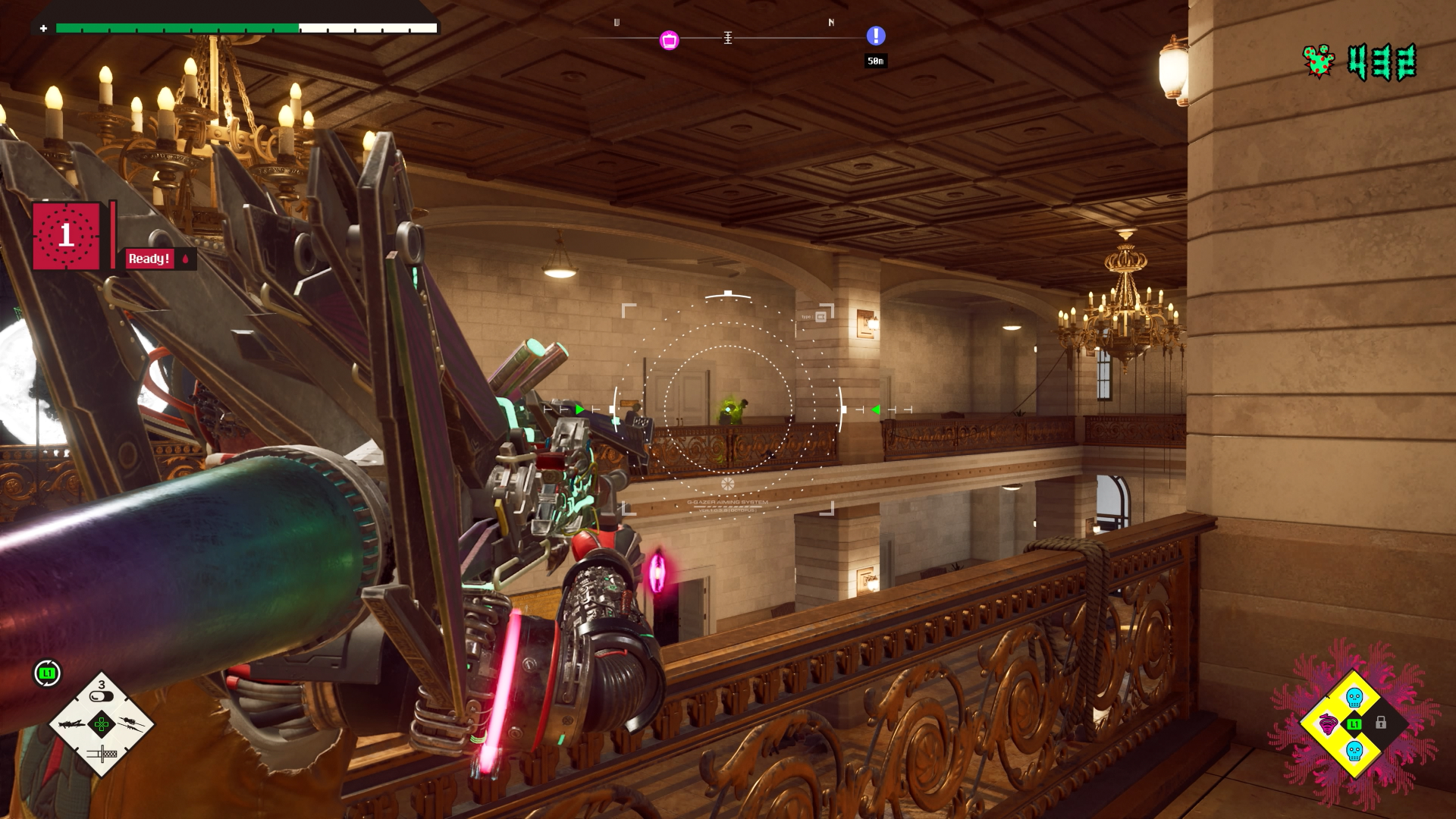
Gameplay wise, whipping out a firearm functions like a typical third person shooter, which leaves Romeo vulnerable during the transition period of weapon swapping. This drawn out awkwardness remains when utilizing the near useless quickfire option, which sacrifices aiming while retaining the drawbacks of weapon swapping. I understand the point of this from the perspective of balancing, but for a game that forms so much of its identity around rocking out with the rule of cool, isolating these two flashy modes of fighting felt like a missed opportunity. All in all, this makes for action that feels restrictive when solely examining the core framework.
As a result, it makes it all the more impressive how the game was able to completely turn me around on this battle system. Despite the simplistic foundation of the combat model left largely unchanged, the application within ROMEO IS A DEAD MAN’s encounter design is the strongest aspect of the gameplay package. For starters, numerous enemy types gradually get introduced across each stage.
There is the typical weak sauce Rotter fodder, ginormous brutes that pack a punch, and flying foes to gun down. In addition, the more surreal zombie types contribute a greater deal to the mayhem: scorpion-like creatures that spew out land mines and toxic spikes, chunky Rotters that can buff others by igniting them on fire, bladed undead that can block DeadMan’s attacks, ghosts that are impervious to gunfire, and so much more. The button presses and combos to deal with them remain near universal, but forming the best method to approach each monster is what gives every throwdown its variety. The thrill comes from planning and executing these strategies on the fly while being swarmed by often a dozen or more at a given time.
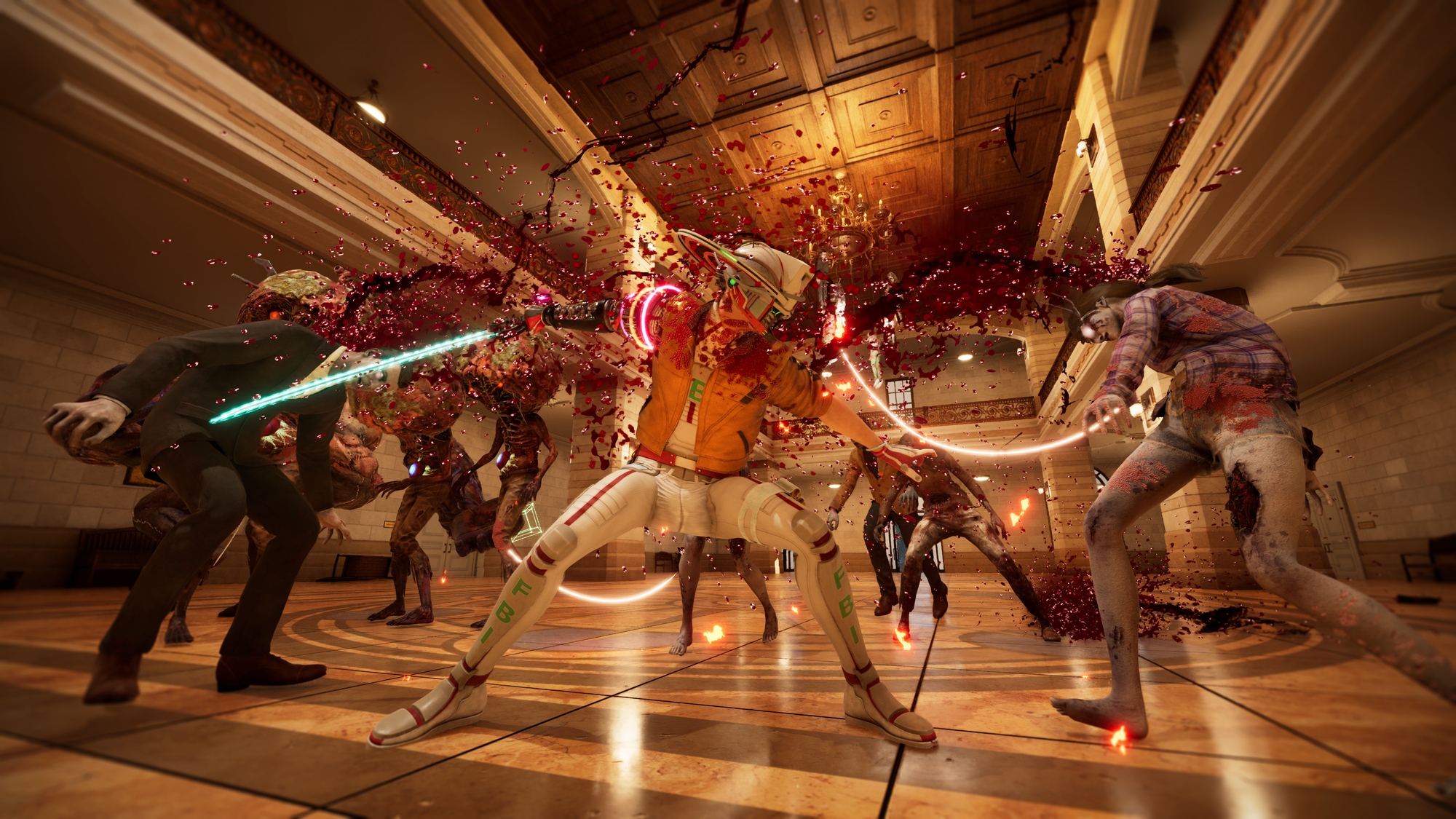
This is also where the deliberate vision making the melee and ranged arsenals isolated come into focus. The tankier foes have one or more glowing spots that explode when targeted, giving visual and auditory feedback when inflicting critical damage. Thus, the enemy types create synergy between two modes of combat that lack synergy on paper: melee strikes for rapid, up close crowd control, and firearms for precise, heavy hitting long distance shots. The actual layouts of the arenas further incentives this.
Per genre tradition, there are wide open spaces as well as tight corridors or stairwells where pathways easily become congested. Often these two types of spaces are blended together, creating for an exhilarating experience weaving in and out of both open and claustrophobic spaces, picking apart hordes to become a more manageable encounter size. Further contributing to this aggressive playstyle, Romeo has a super meter that builds up when landing strikes on foes. Activating it will have DeadMan unleash a Bloody Summer attack with his currently equipped weapon, dealing massive damage to zombies in a wide radius, all while recovering HP.
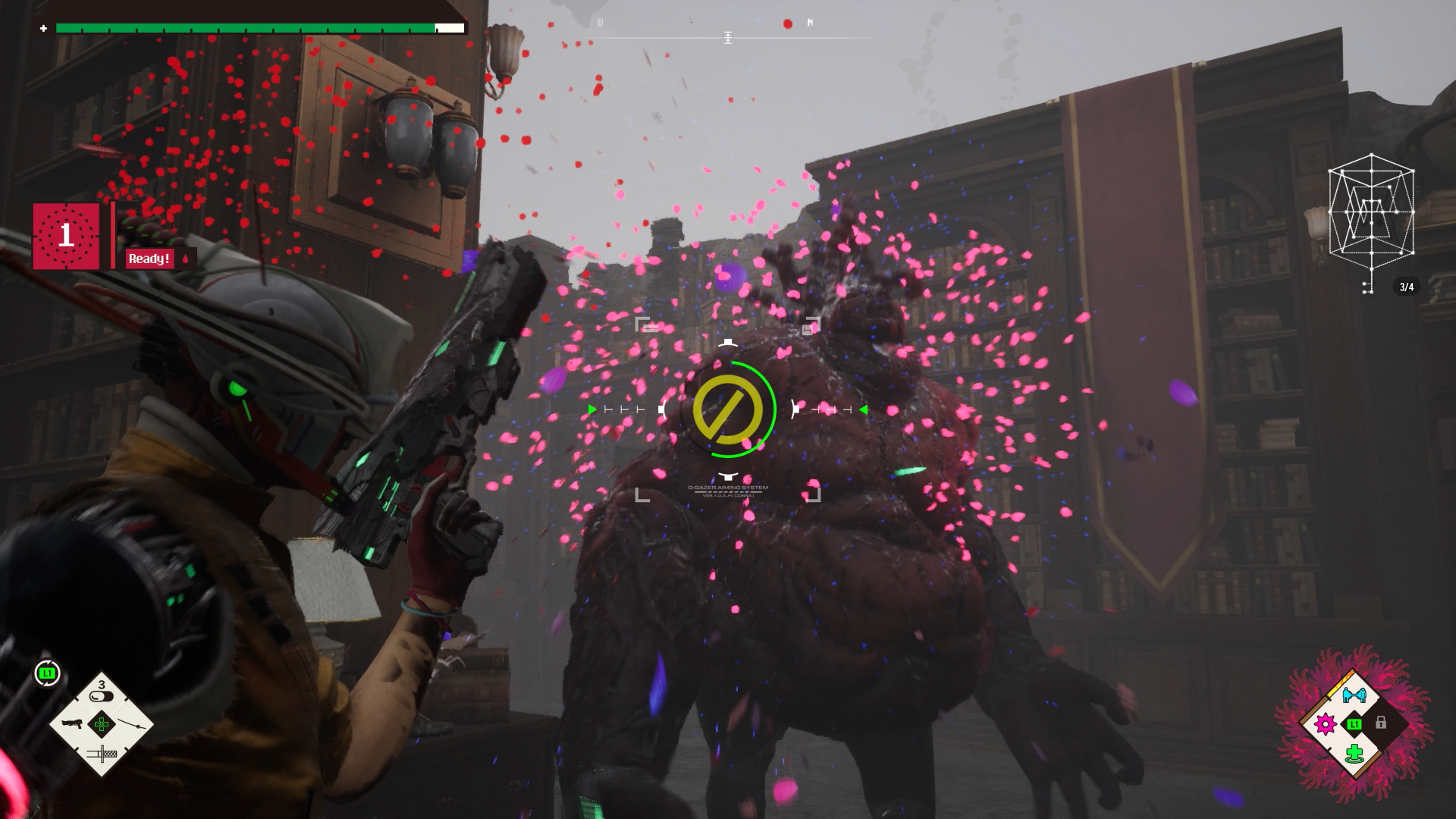
As epic as Mr. Romeo “DeadMan” Stargazer is mowing down swaths of zombies by his lonesome, he doesn’t have to be by himself in this intergalactic fight. In a reverse Plants vs. Zombies situation, eliminating Rotters will sometimes net seeds. These seeds can be planted and grown into your own Rotters called Bastards. Yes, ROMEO IS A DEAD MAN is part farming sim, which I will delve into later when discussing the side content. Functionally, this is where the deeper aspects of player expression comes from, serving as up to four equipable skills that can be triggered after a cooldown. Struggle dealing with the mobs of enemies? Equip an AOE damage dealing Bastard. Losing health too quickly? Go for one that provides a healing circle.
For me personally, I got immense use out of a Bastard that would freeze surrounding foes. My primary firearm was the bazooka, eviscerating most enemies in a single, well-placed shot. The big caveat is how it only has one round before having to endure an agonizingly slow reload. By erecting my crowd control Bastard that I grew myself, my massive gun can blow its load multiple times on the zippier and bulkier zombies with ease, all while having fewer swarms of fodder rushing me.
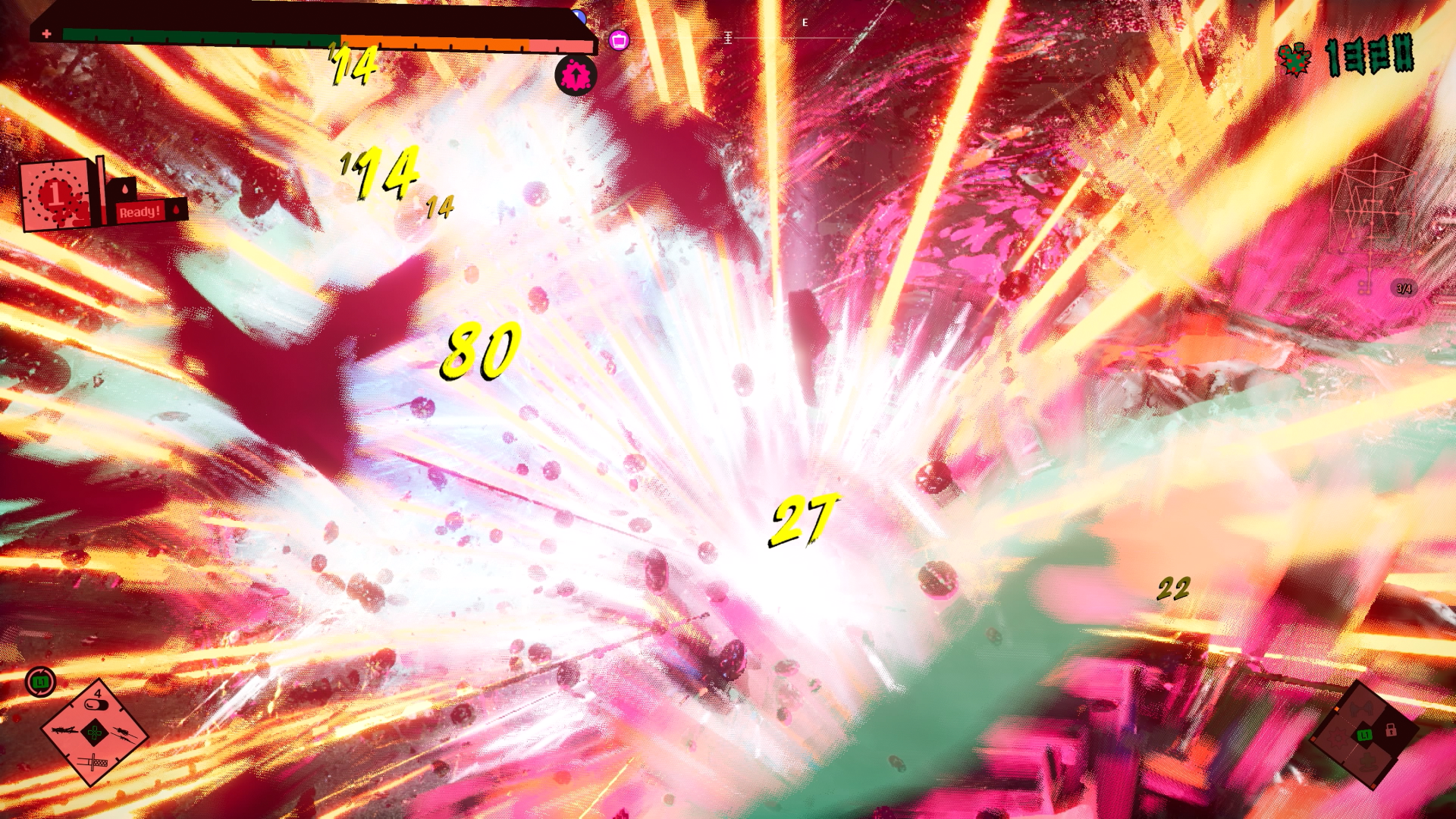
All that being said, the blood pumping and blood shedding carnage can get a bit too chaotic from a visual standpoint. Body parts and viscera explode from foes, causing the environment to rain blood and guts. Moreover, each slash of DeadMan’s blade emits cyan sparks whenever it connects with a Rotter. Since enemies love to rush down our protagonist, the screen will often be painted with an incomprehensible collage of red and cyan. Add in the multiple Bastards with flashy moves, and you pretty much have a cacophony of visual noise impossible to sift through. This issue is particularly dire the more cramped an arena is, worsened by a camera system that already struggles to track the action. And of course who can forget the iconic action game staple: the poor framerate tanking whenever the action heats up too much.
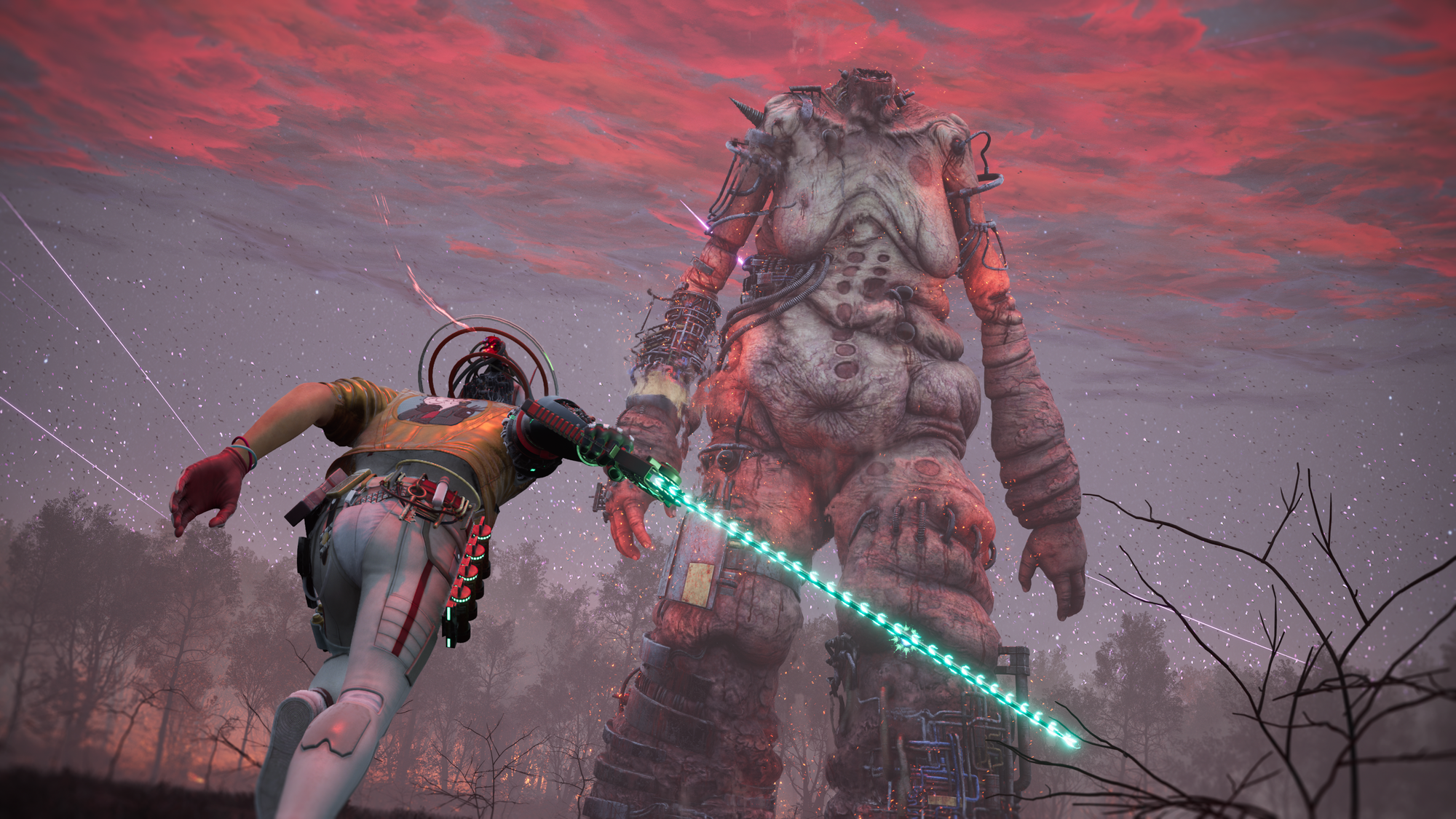
Visual clutter is less of an issue when shifting to the 1v1 throwdowns of boss fights, even if there is a slight loss of the chaotic fun that comes from taking down mobs of Rotters. Don't get me wrong, these bouts are still visually grotesque and dizzying in scope. More importantly, they are an utter blast to fight, offering a slew of diverse attacks and environmental effects to contend with. As someone who often struggles with dodging and blocking in action games, the standard difficulty made for a comfortably engaging experience. I died a few times to some of the more intense bosses, but each attempt yielded better results until I was able to best the mighty foes.
In between chapters, or when accessing the numerous save points scattered through each level, Romeo can return to The Last Night. This essentially serves as a hub to access multiple upgrade and crafting methods. These are represented by the various services and minigames each shipmate offers, providing opportunities to spend Emerald Flowsion, currency mainly obtained by slaying Rotters.
There are the usual suspects, such as an item shop and a training room where you can challenge past bosses by betting Flowsion. Then there are the quirkier additions, such as Romeo’s mom making curry via a deep fryer minigame. Generally, I found crafting consumables to be inconsequential in turning the tides of a fight. Conversely, the multiple upgrade methods are instrumental to keeping pace when the encounters ramp up.

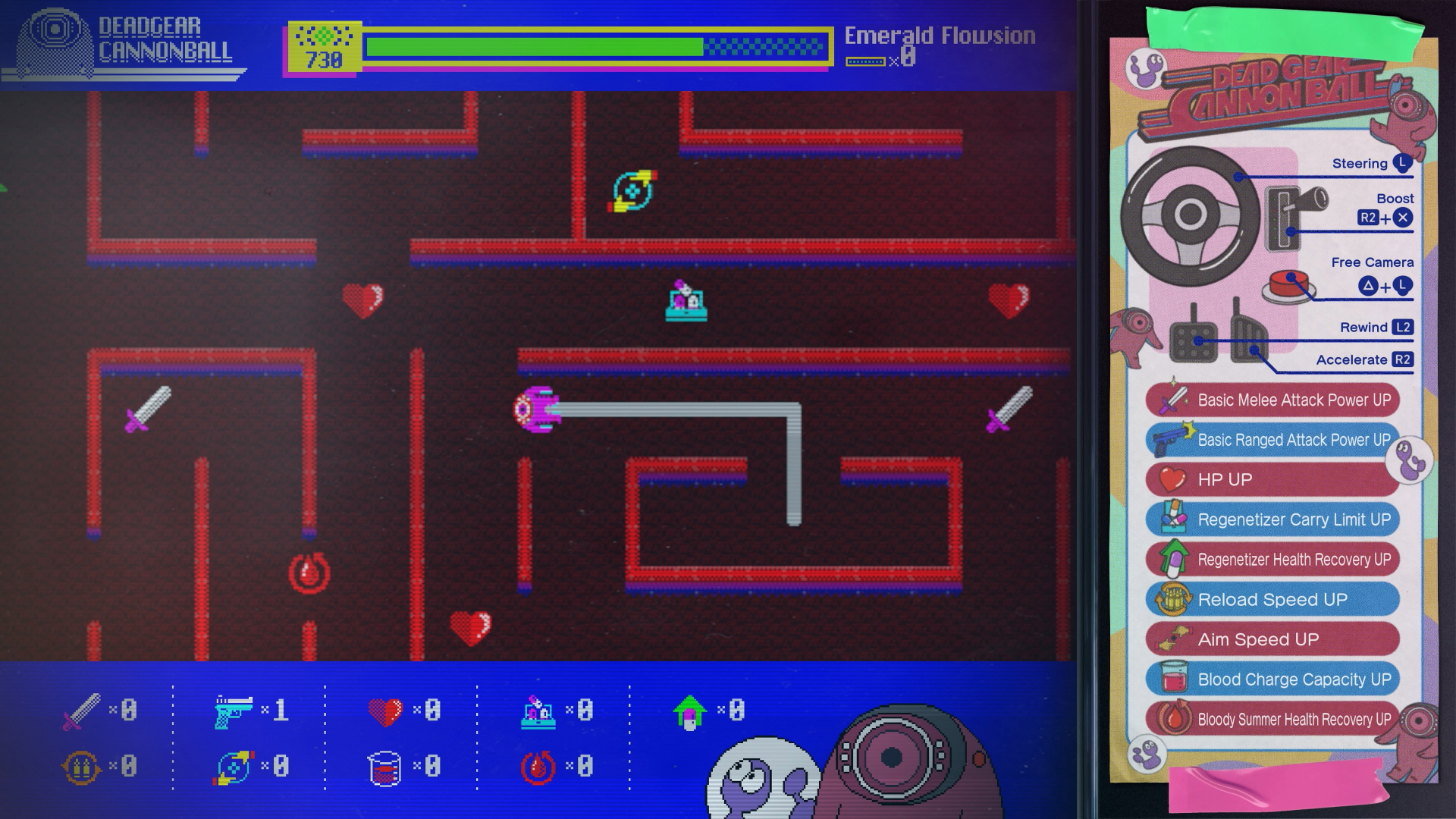
Keeping in line with Suda51’s zaniness, improving DeadMan’s stats isn’t as simple as selecting one from a menu. Instead, upgrading is handled via an arcade game within the game titled DeadGear Cannonball. Point drops are spread out across a maze, and it's up to you to navigate a nano-machine to acquire as many as possible. The catch? The amount of fuel the little robot has is dictated by the amount of Emerald Flowsion currently on hand. This system serves as a fun little brain teaser, incentivizing players to map out the best route that will net as many upgrades using as little fuel as possible.
Fortunately, mistakes can be undone with the push of a button, refunding the Emerald Flowsion used in the process. Also, progress made in the maze is retained across each visit, meaning the stakes of using fuel efficiently is relatively low. Because DeadGear Cannonball is the primary form of character progression, this is the only minigame from the ship that can be played outside of it, having its own dedicated option in save points to access it. Circling back to the level design, these spots are often placed close to groups of Rotters, which can respawn simply by entering and exiting the save menu. The “hop in, hop out” mode of grinding is a smart design choice that eliminates stewing in the mildly inconvenient situation of being just shy of a few fuel points to nab the next upgrade.
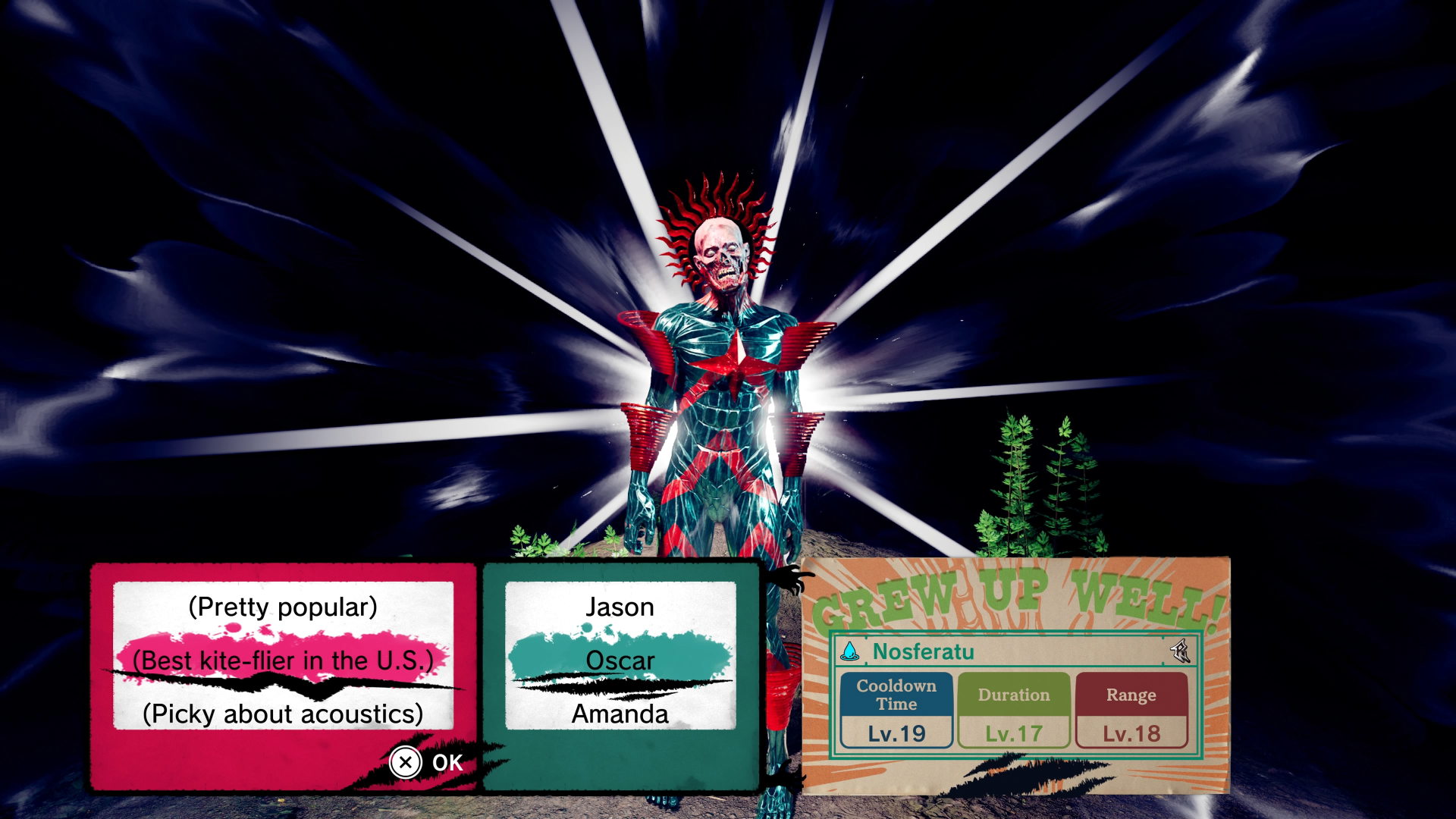
Another upgrade facility I previously touched on is the Bastard farm. I admit, I spent an embarrassing chunk of my playtime tending to my fields of undead. Although, some of this has to do with the lack of a mass harvested function, meaning each fully grown zombie must be uprooted one by one. Planting and growing Bastard seeds will yield relatively weak zombies.
This is where fusion comes in, a rudimentary version of other similar systems found within RPGs. As someone who tends to struggle with these mechanics in other games, I am glad that ROMEO IS A DEAD MAN’s is easy to grasp. The first Bastard selected is the one whose stats you want to improve, possessing a high likelihood of transferring its ability to the combined result. The second choice determines how much the stats will improve, with a low chance of transferring its ability to the fused outcome. To surmise crudely: combining Bastards makes the big numbers go up, and seeing numbers go up makes my brain happy.
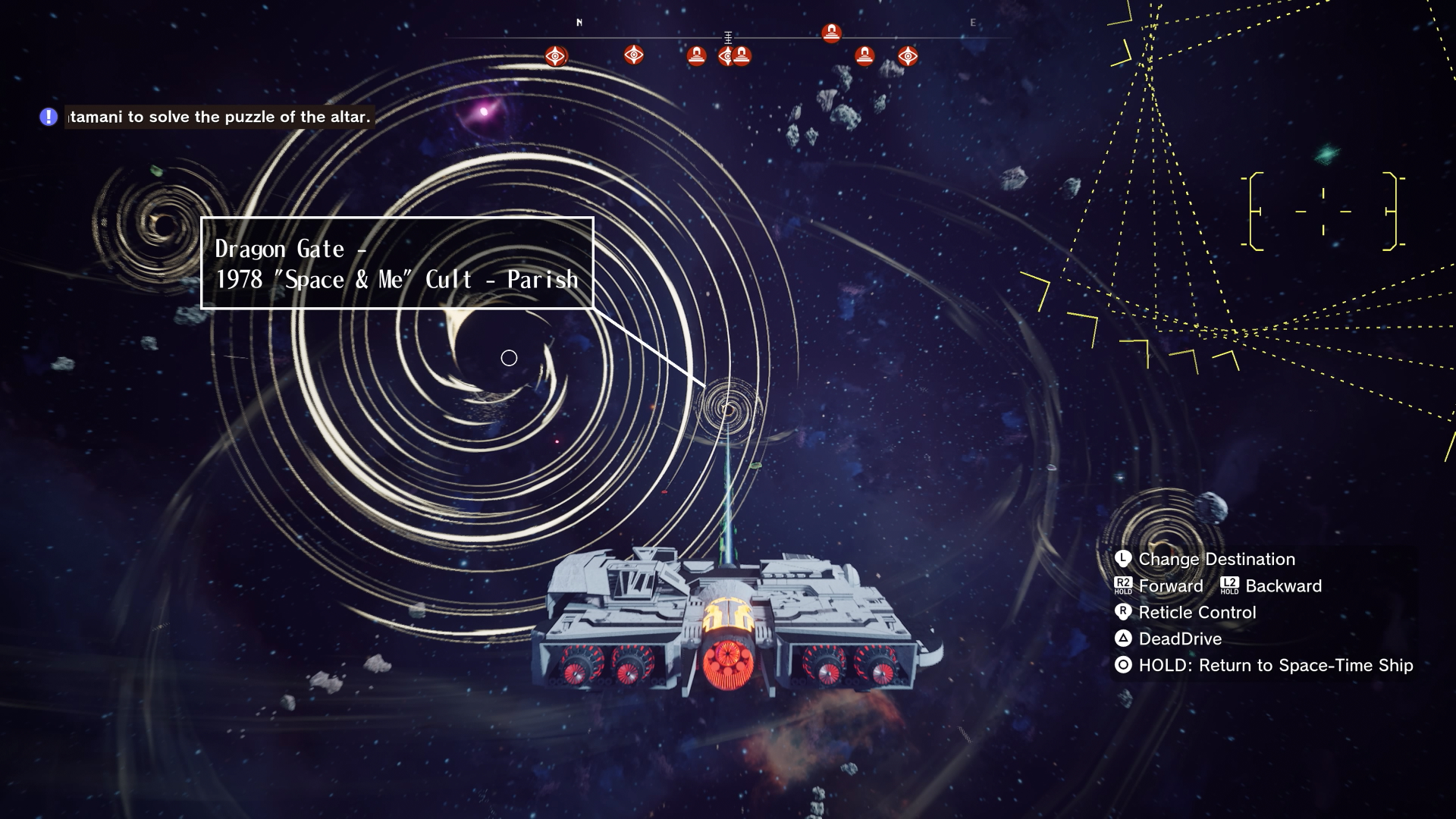
The final source of grinding is space travel. Mobility of the FBI’s ship is heavily restricted, only being able to move forward and backwards. Horizontal and vertical movement is solely reserved for selecting which dimension to fly towards. I actually don’t mind the limitations put on ship travel. This is essentially a glorified level select with an emphasis on visual flair and resource gathering. When rocketing towards a rift, a cursor can be moved to highlight space debris for the ship to collect automatically.
These rocks can be traded in to acquire Sentreys. Sentreys are another form of currency directly linked to upgrading the stats of Romeo’s weapon repertoire. Unlike Emerald Flowsion, these large red and green orbs cannot be directly obtained by tearing down Rotters, which results in them naturally being a much scarcer commodity. Acquisition methods include the aforementioned space debris trade, glowing tesseracts scattered across the levels, and using Flowsion to purchase them from the shop on The Last Night.
However, one of the more substantial ways is via the Palace Athena: a procedurally-generated side dungeon that can be accessed across various points on the space map, or rifts found within the main stage. Genuinely, the Palace might be my favorite part of the game. In contrast to how bloated a handful of the main locales feel thanks to Subspace, these bite-sized levels blend exploration with nonstop, frantic fighting in a more palatable manner. The procedural-generation gives the area a maze-like structure, forming corridors and empty rooms that I established to be one of the bedrocks to the game’s strong encounter design.
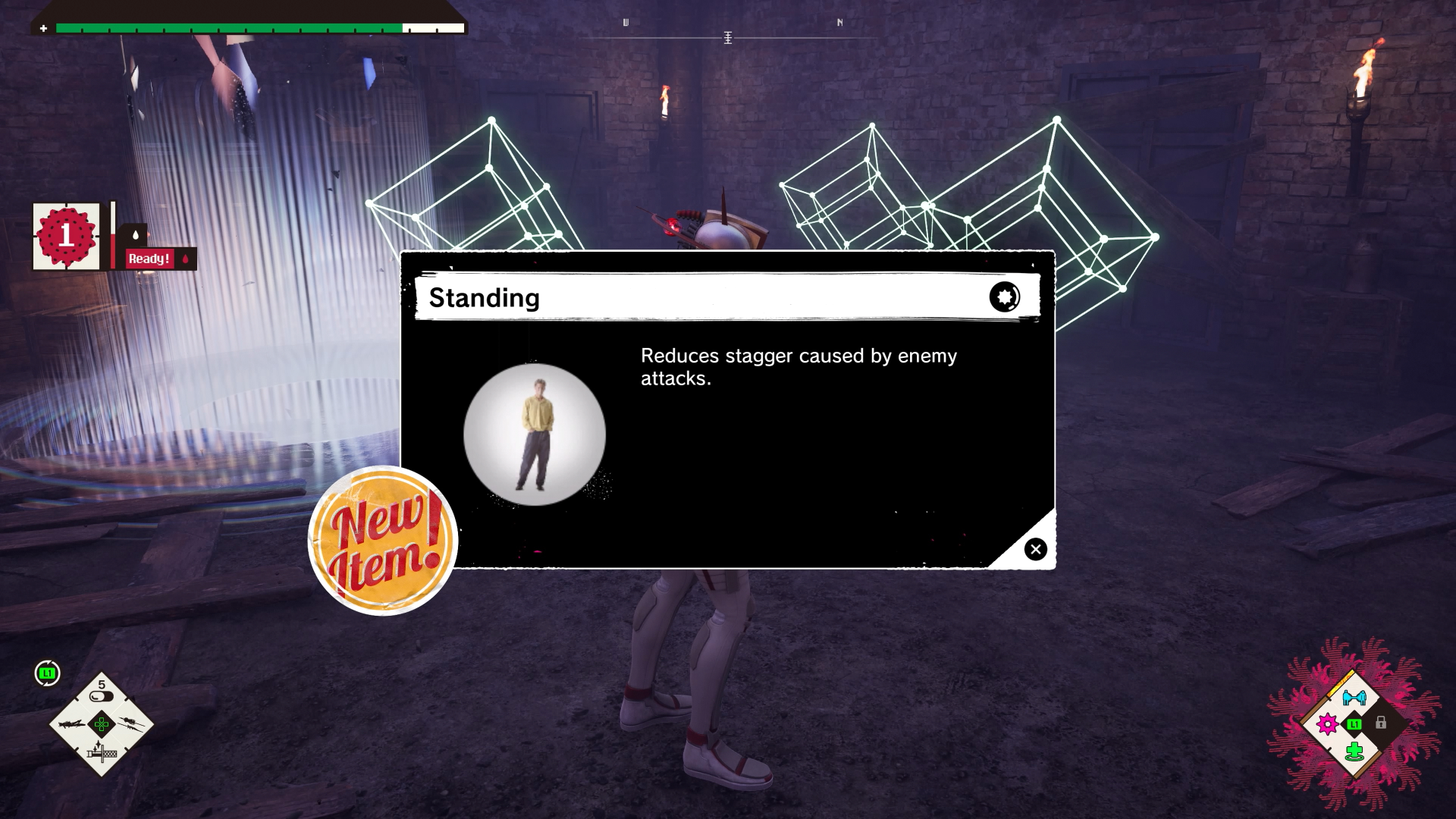
Since each Palace Athena run is a short stint, steamrolling through the undead in Romeo’s path to reach the end as quickly as possible is an absolute thrill. The rewards at the end are no slouch either, providing the previously mentioned Sentrys, as well as badges. These are accessories that can be equipped to give DeadMan positive and negative passive bonuses. While these can be acquired in the main stages as well as purchased from the shop, certain badges can be found exclusively in these mini-dungeons.
In terms of how ROMEO IS A DEAD MAN runs on a base PS5, there is some room for improvement. My playtime was primarily dedicated to Performance mode, and even then I already brought up the framerate issues whenever an abundance of enemies and particle effects douse the screen. Visually, the game looks mostly solid, with the main issue that consistently bothered me is how the lighting struggles when shining past objects with numerous gaps. Often the result is pixelated shadows that flicker constantly even when standing still in Quality mode.
This next gripe doesn’t really have anything to do with how the game runs, moreso an odd visual choice that slightly got on my nerves. Recent video games are no stranger to adding black bars at the top and bottom of the screen to create a cinematic vibe with their cutscenes. The 3D cutscenes here half committed to it, offering translucent gray bars that distractingly doesn’t obfuscate the movement and visual detail outside the main frame. At the end of the day, it’s not that big of a deal, just something I found annoying.
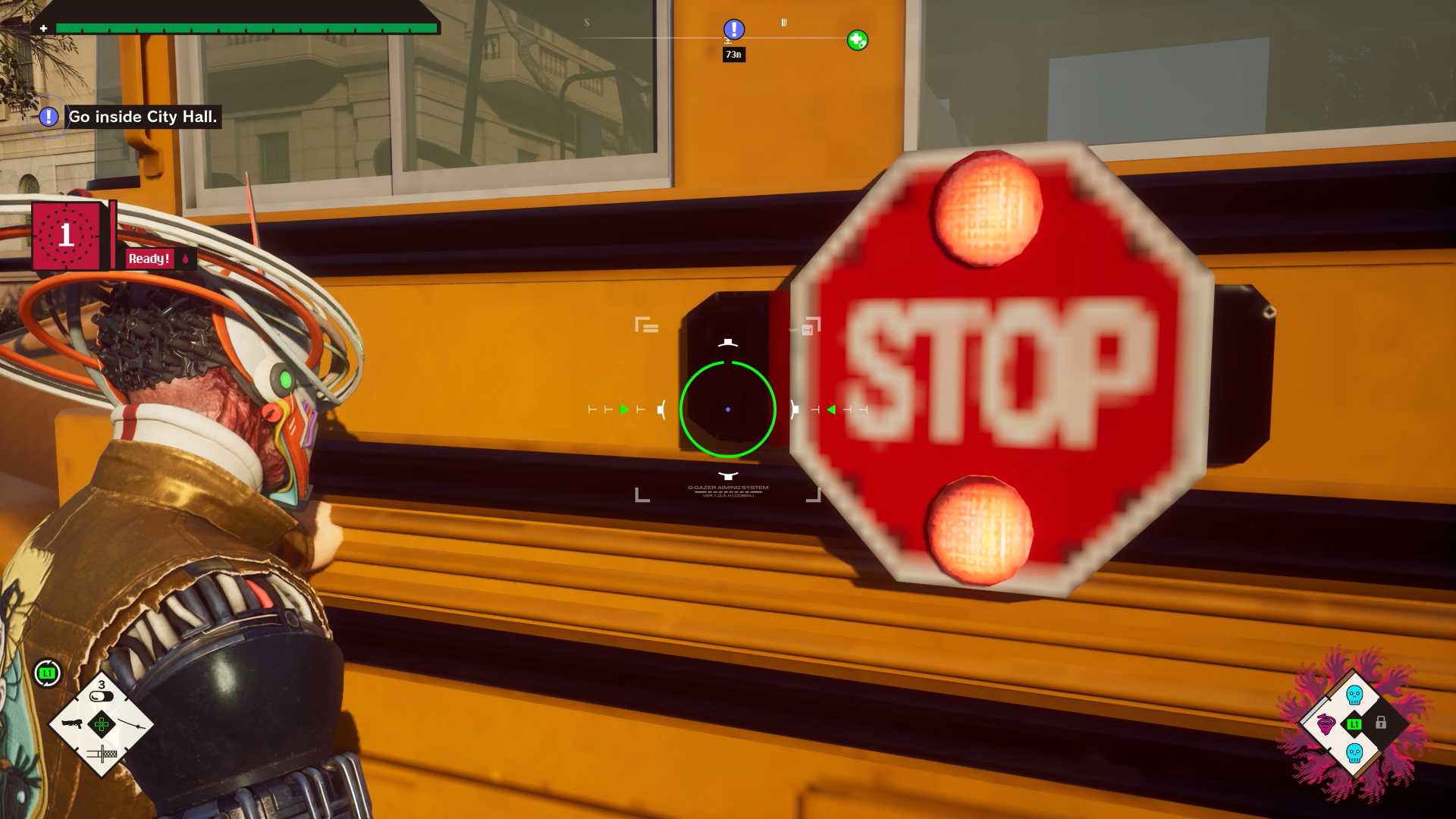
Audio is also a mixed bag. I played the game the way I always play PS5 games: headphones plugged into the headphone jack of the Dualsense, with the system’s built in 3D audio disabled. Even so, I found the sound quality to be extremely lacking, a slight tinniness permeating throughout the entire soundscape. On top of that, dialogue frequently contains sibilance (hissing “s” sounds), which becomes grating fast.
What saves the package on a sound-front is the fantastic voice acting and music. The entire cast does a solid job, with the stand out being the titular lead Romeo, voiced by Antony Del Rio. My familiarity with his distinctive voice comes from voicing Pit in Kid Icarus, which perfectly fits with Stargazer’s youthful earnestness. As for the soundtrack, the instrumental tunes spotlight a wonderful synth, with touch-ups to how it sounds to fit the various stages. The vocal tracks are easily the highlight. Every single piece feels distinctive, providing unique compositions that emphasize the endearing weirdness of the game. Simply put, you know an OST is good when I would find myself chanting “I’m a dead man!” alongside the vocalist whenever the standard battle theme would play.
ROMEO IS A DEAD MAN
Alright
Like a recently resurrected corpse, parts to ROMEO IS A DEAD MAN’s gameplay and story are cold to the touch, as it occasionally stumbles trying to grasp all of its ambitions. Yet there are just as many moments of genuine warmth, exuding confidence when expressing its boundless imagination. For my first foray into the unhinged mind of Suda51, the consistently bonkers creativity is the beating heart that gives this title strength. Creativity doesn’t automatically make for the smoothest experience. Nonetheless, this is a DeadMan I’ll look back on with both affectionate fondness, and conflicted frustration.
Pros
- Intelligently designed combat encounters
- Distinctive gimmicks in each stage
- Oozes with experimental imagination…
Cons
- …often as a replacement for narrative depth
- Subspace causes half the levels to drag
- Visual and audio quirks
This review is based on an early PS5 copy provided by the publisher. ROMEO IS A DEAD MAN comes out on February 11, 2026.