Years ago, I visited Italy after finishing Assassin's Creed II and Brotherhood. Thanks to those games, and Ubisoft's decision to include real landmarks, I had more appreciation for the landmarks I saw in Italy. Relooted has the same effect by including real ancient artifacts.
Relooted is about restoring ancient African artifacts to their rightful place. This 2D side-scrolling puzzle platformer is a dream—an idealized world where African countries own what is theirs and can tell their stories without dilution. But as you may suspect by the title, the dream is fulfilled by stealing the artifacts back.
A part of me wishes Nyamakop, the developers, didn't use a premise that easily encourages bad actors, dog whistlers, and racists. But I am Nyamakop's audience—they are not. I get what this is—a game meant to create awareness. I commend Nyamakop's resilience and I Give Zero Effs attitude. With everything else going on in America, and the many bad faith conversations I've seen and had online, I'm too tired to deal with it.
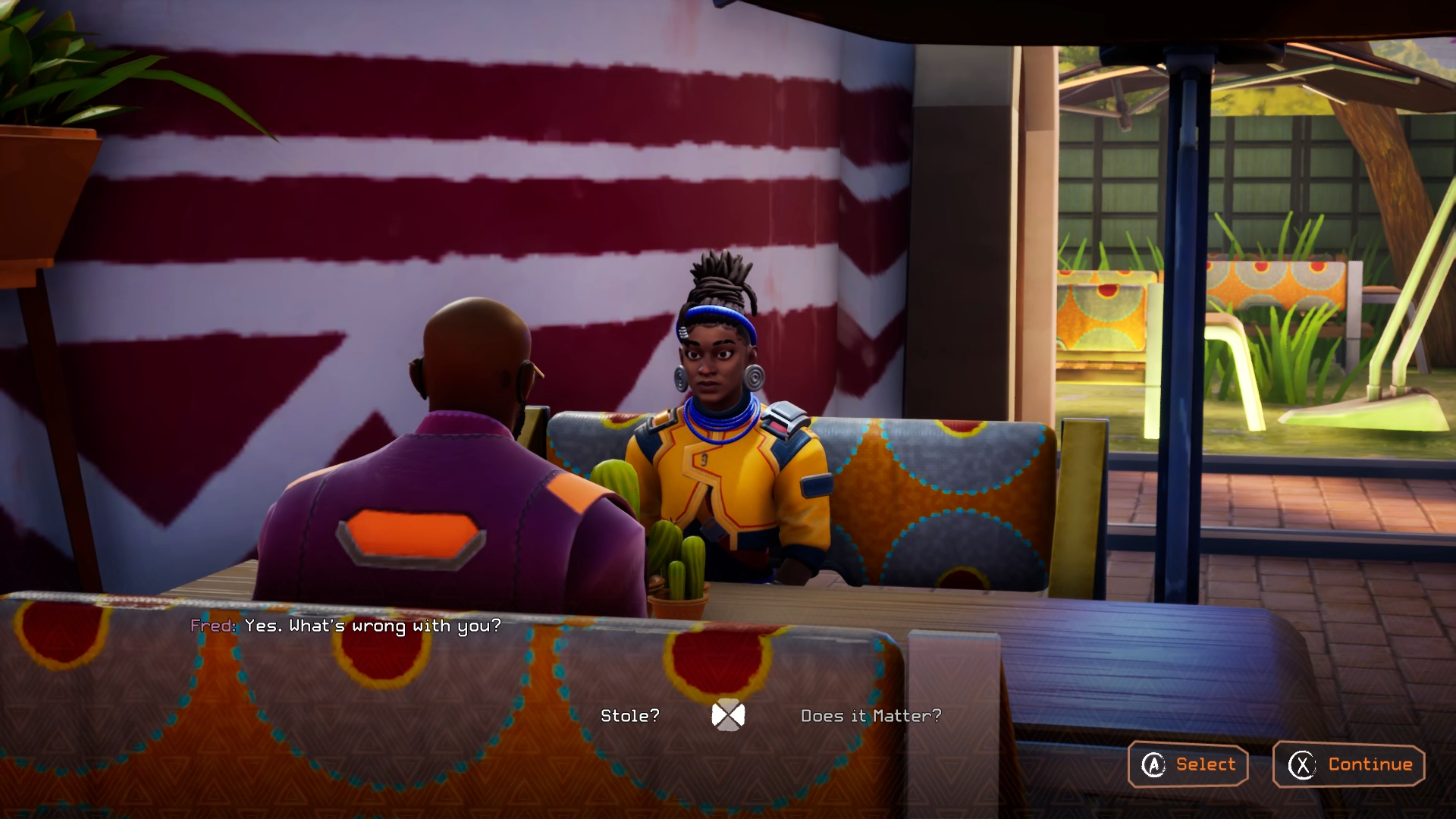
Besides, the morality of stealing back artifacts is questioned by the characters from the beginning and throughout the game. They respond with answers like any diverse array of minds would: absolutely, no way, how can we justify this, what other option do we have. It makes the story and its characters more believable.
You play as Nomali, a talented parkour athlete who lovingly bears the weight of her family on her shoulders. She's voice-acted well, and the love she shows her family feels real. I feel like I know Nomali, and I love seeing the subtle playful African jabs as she talks with friends, and the concern she shares for her reckless and overly confident brother, Trevor. Now, Trevor, he's annoying in a little brother kind of way. When Nomali gets exasperated, I feel that exasperation. I know that exasperation. Trevor has no redemption arc. He's always annoying. That's real life.
Other archetypes join the team, like Fred, the serious, tech-minded one; or Etienne, the scholarly one; or Professor Grace, the idealist and loving elder. All but one character felt like I connected with them in some way (even if Trevor was annoying), helping the relationships feel believable.
Unfortunately, the believability is betrayed during in-game dialogue. The performances feel stilted, slow, and unnatural. It sounds like the actors were reading their particular lines with no feedback from the other actor. In contrast, the voice acting is great during cutscenes. That's where I felt the emotional warmth and connection.
Dialogue choices also make the story and characters feel worse. During conversations, choices appear, and you must pick a response. But after the conversation bears itself out, the options reappear, and you're presented with the same choices. It makes conversations feel unreal. These choices are, ultimately, inconsequential. They don't impact the story or dialogue at all, and I wish, at the very least, I could live with the choices I made. That would be more interesting.
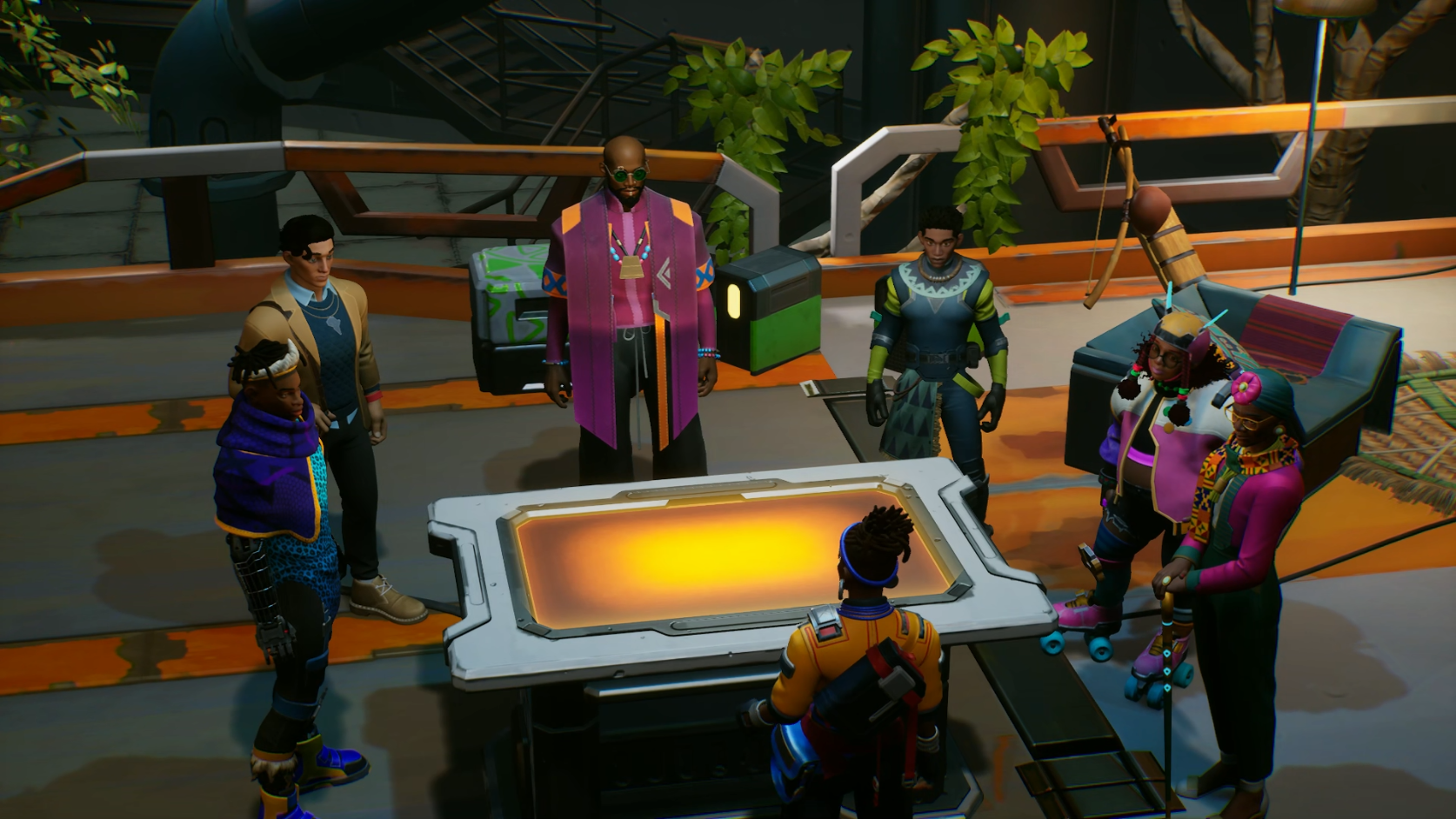
This problem is worse during pre-planning phases before heists. During pre-planning, everyone gathers around the VR table and discusses what they're after and how to do it—location, what artifact, and what kind of security. Whenever I chose to get details on the plan, I expected information on how to succeed. What I got was superfluous. The plans were explained in detail, but didn't match what I would do in the level.
For example, my team says I need to navigate to the garage as my entry point into the museum. But when the mission starts, I'm placed directly in front of the garage. In another instance, I'm told I have a couple of options to enter a building, but when I'm dropped into the level, there's only one. After the fourth mission, I skipped most of the planning conversations. It was a waste of time.
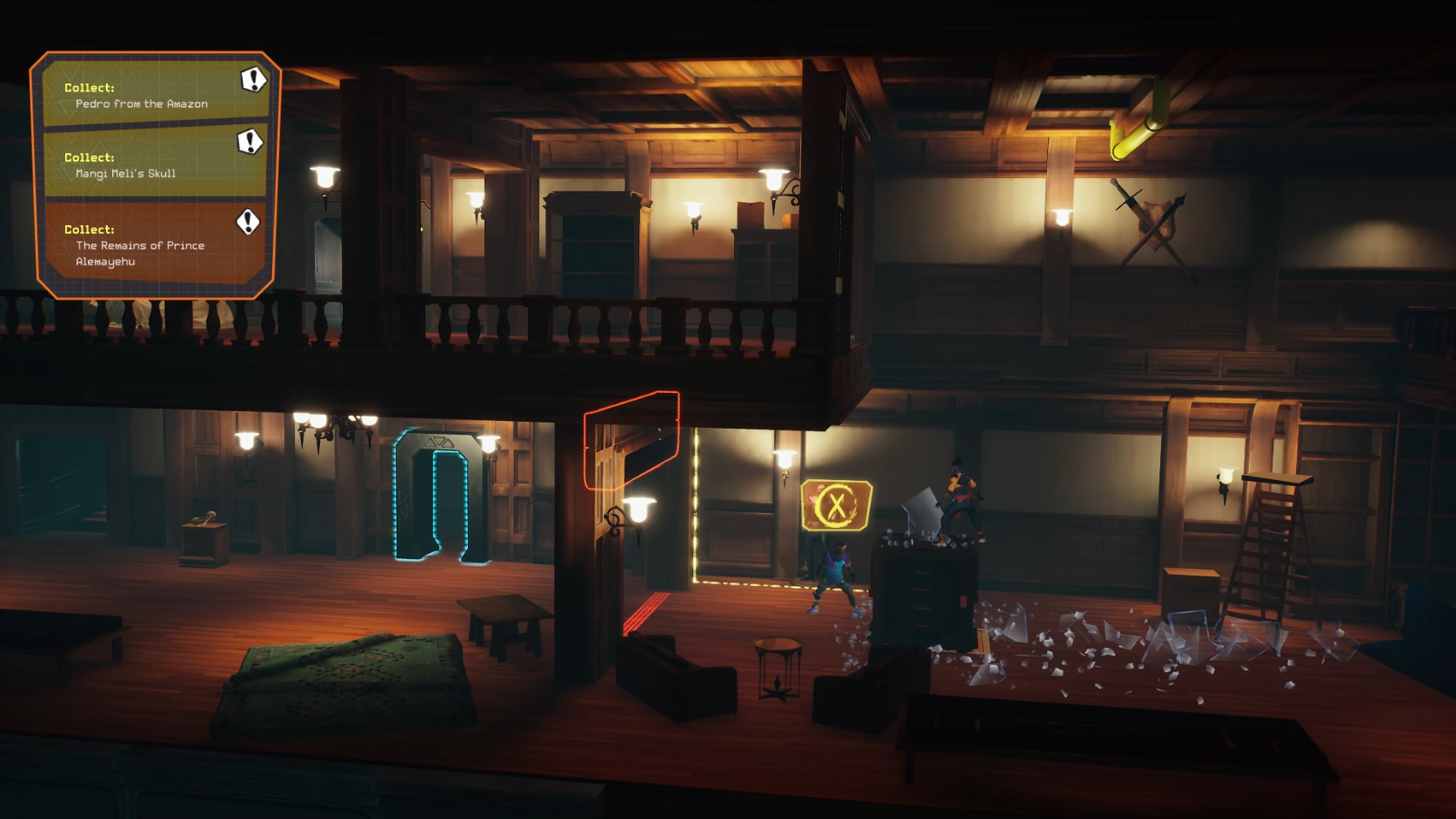
But heists are where the magic is. The game takes you through two different versions of performing heists, both of which I like. Relooted starts as a game without a planning phase. You're dropped into a 2D side-scrolling building. You move back and forth between rooms using your teammates to assist you by unlocking doors, giving access to unreachable heights, momentum to break reinforced glass, and other skills. Your goal is to steal as many artifacts as you can in one go. There are no time limits, just you and your mistakes. Once you grab any artifact protected by an alarm, then the time starts, and you have to sprint to the getaway van before time runs out.
Without the planning phase, I felt vulnerable. I wasn't sure how my actions were impacting the puzzle because I couldn't get a full view of what I was doing. It created tension and added to the thrill once the alarms went off.
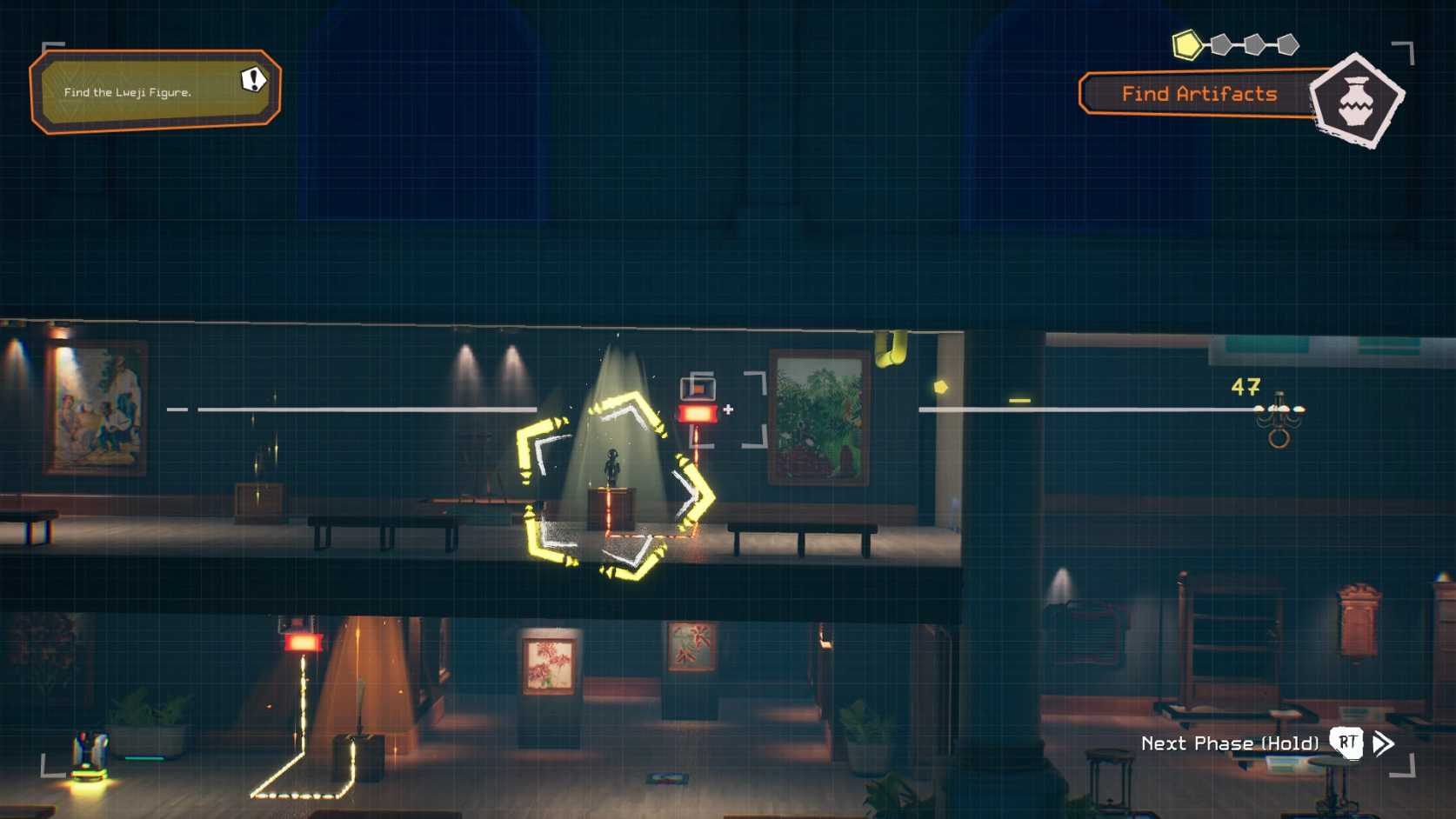
However, the planning phase feels slower, more deliberate, and precise. You have a drone that scans and reveals each room. It feels like cheating, but similarly to Mark of the Ninja, the ability to see everything doesn't automatically solve the puzzle. I couldn't predict every interaction, so a few times I set off the alarm and quickly realized I didn't have everything in place to accelerate my escape. Thankfully, false starts aren't heavily punished at all. If things go wrong, you can restart just before triggering the alarm. It's nice I'm not forced to redo puzzles I already did for the sake of an unrelated mistake.
Relooted could be more puzzling, but Nyamakop copies a maligned AAA concept and makes many of the puzzles simpler with spoilery comments. "You could move that table over there to reach that spot." Yes, I could. I also could have figured that out myself, thanks. I think Nyamakop does this because it feels real; you wouldn't have to figure everything out by yourself in real life. It's noble design, but I want to think for myself in a video game. It would be more fitting if these comments were optional.
Glitches soured puzzle solving. Sometimes, my teammates wouldn't respond to my calls for assistance, which happened mostly with Trevor (not his fault, but adds to his annoyance). I'd call for him, but he wouldn't budge. The only fix was starting over, which meant losing my puzzle progress. Obviously frustrating, but it was tapered since it was easy to complete the puzzles I just did to return to the moment I was at.
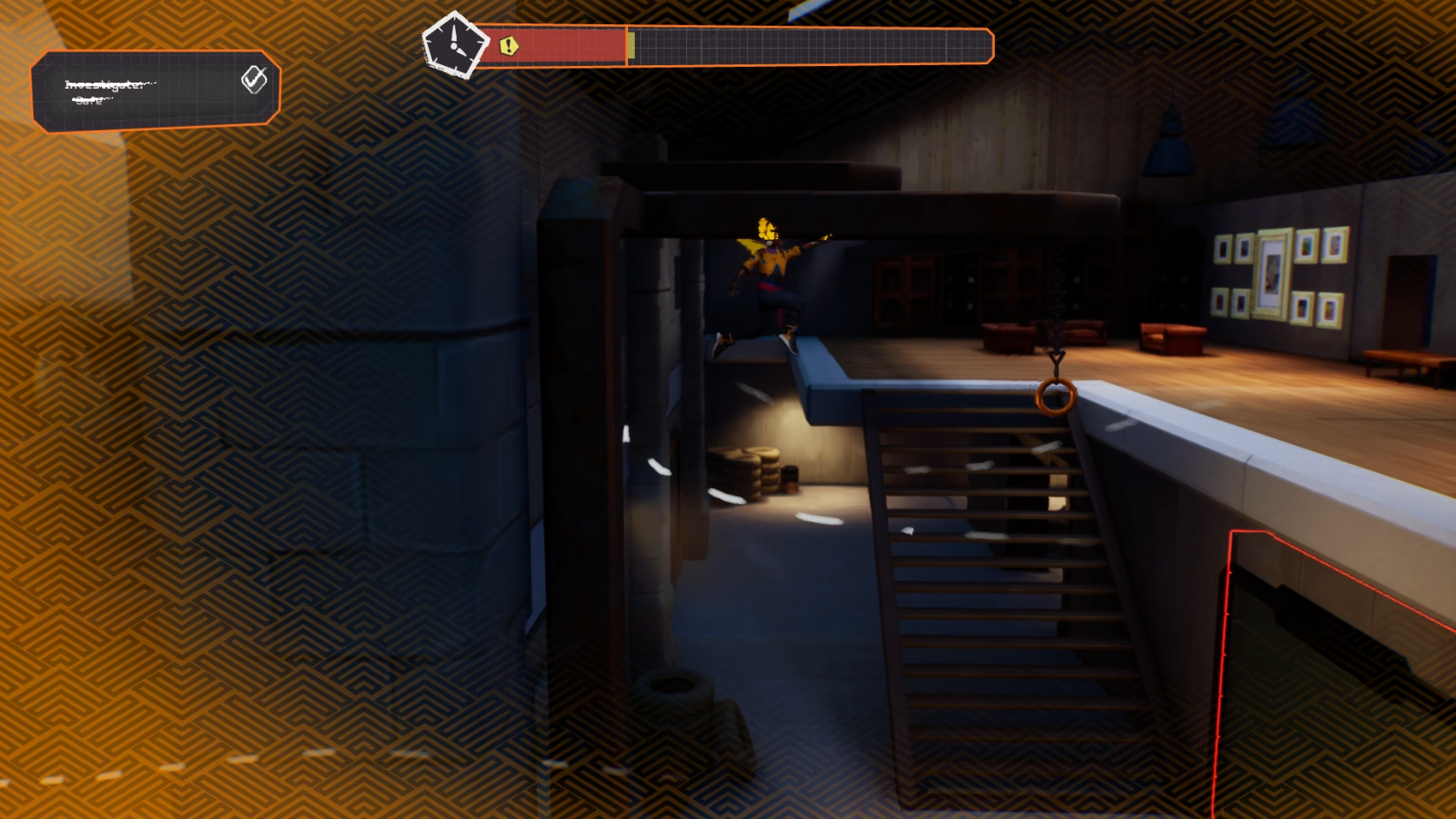
Tension built from planning my escape with as many artifacts as possible sets up for the thrill of execution. It feels like an Olympic sprint—once the gun pops, it's a race with no stopping or slowing down. When I was ready to take the first artifact in a level, I'd start in front of it, then pull it. Alarms blare, the screen fades red in and out, doors close; I'm jumping through windows, swinging from rings, diving over balconies, sliding down rooftops, using ziplines, and wall jumping. Escaping only lasts for a moment compared to planning, but it's certainly the best part.
But frustrations piled up by the end of the game, particularly with wall jumping. I couldn't figure out how to consistently wall jump for maximum height and distance. I'd flick in a direction and I'd have a shallow jump. I'd let the thumbstick sit in neutral and I'd get distance but not height. I botched a few of my escapes because of this. It's also dark in some areas, making it hard to see where I should go, and it doesn't feel that's by design.
Relooted
Alright
Relooted makes you feel like you're a mastermind, and escaping is thrilling, but there are just enough problems that drag the experience down to the point you can't ignore them.
Pros
- Relatable characters
- Heists are thrilling
- Learned history about real artifacts
Cons
- Wall jumping is inconsistent
- Command glitches
- Useless dialogue options
- Stilted in-game dialogue
This review is based on an early PC copy provided by the publisher. Relooted comes out on February 10, 2026.