Why did the chicken cross the road? To perch on their neighbors' tile and lose them five points! Perch, from Inside Up Games and designer Doug Hettrick, is here to test your friendships and how to read a game board. In Perch, 2-5 players will control recruited birds to score points from randomized tiles, exert the influence of powerful creatures, and gain position on a central fountain to win the game. Perch is a cutthroat birding game that plays differently every time it hits the table.
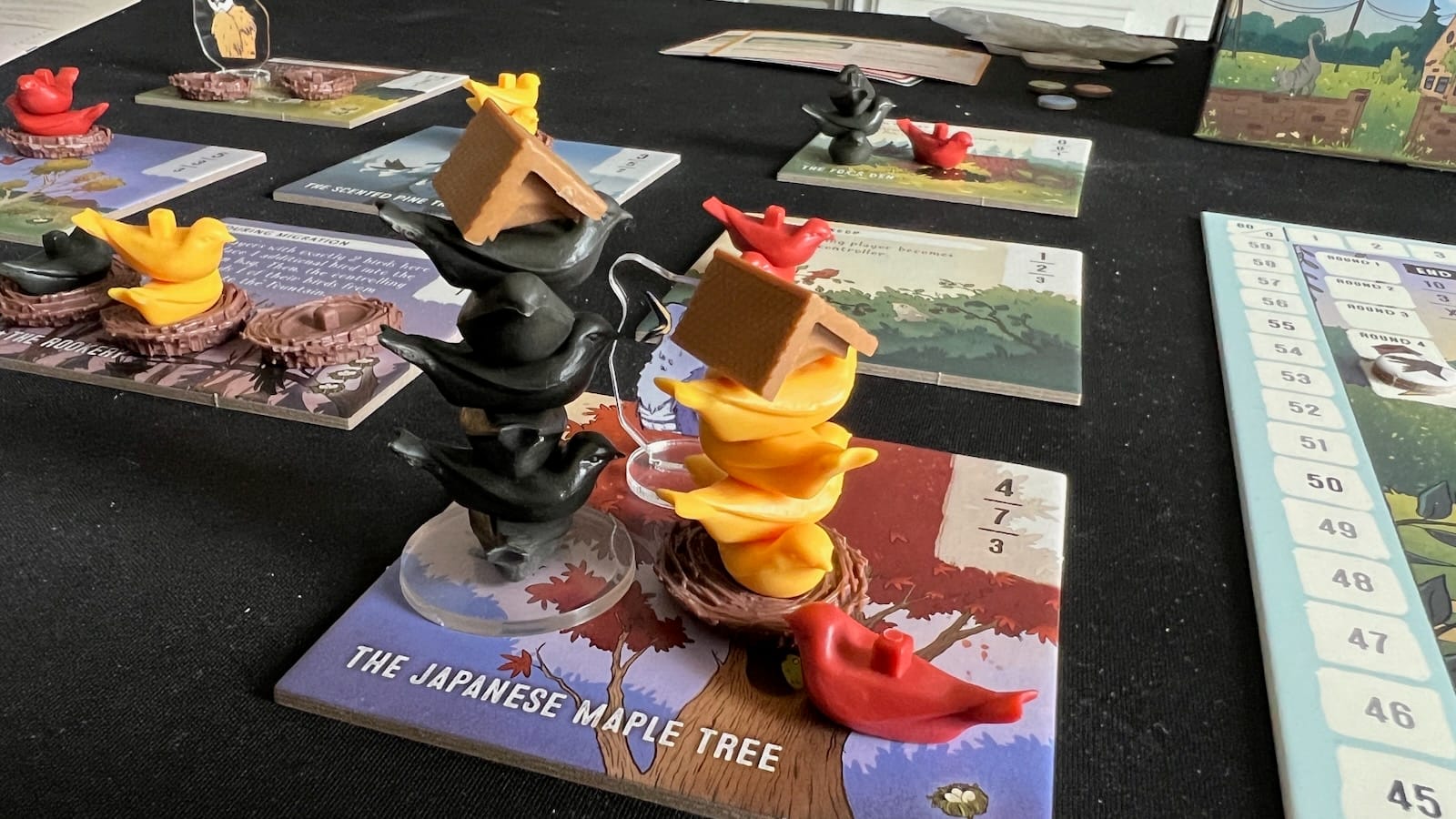
One of the best parts about Perch is the randomized set-up at the beginning of the game. Depending on your player count, you will take various basic, specialized, and creature tiles, shuffle them together, and create a central playing area of alternating two and three tile columns. Each of these tiles will be evaluated for the number of birds on them at the end of each round and will award points and potentially other advantages to the player with the majority. Some of the tiles will have nest bases placed on them, which count as an extra bird for the player that claims it.
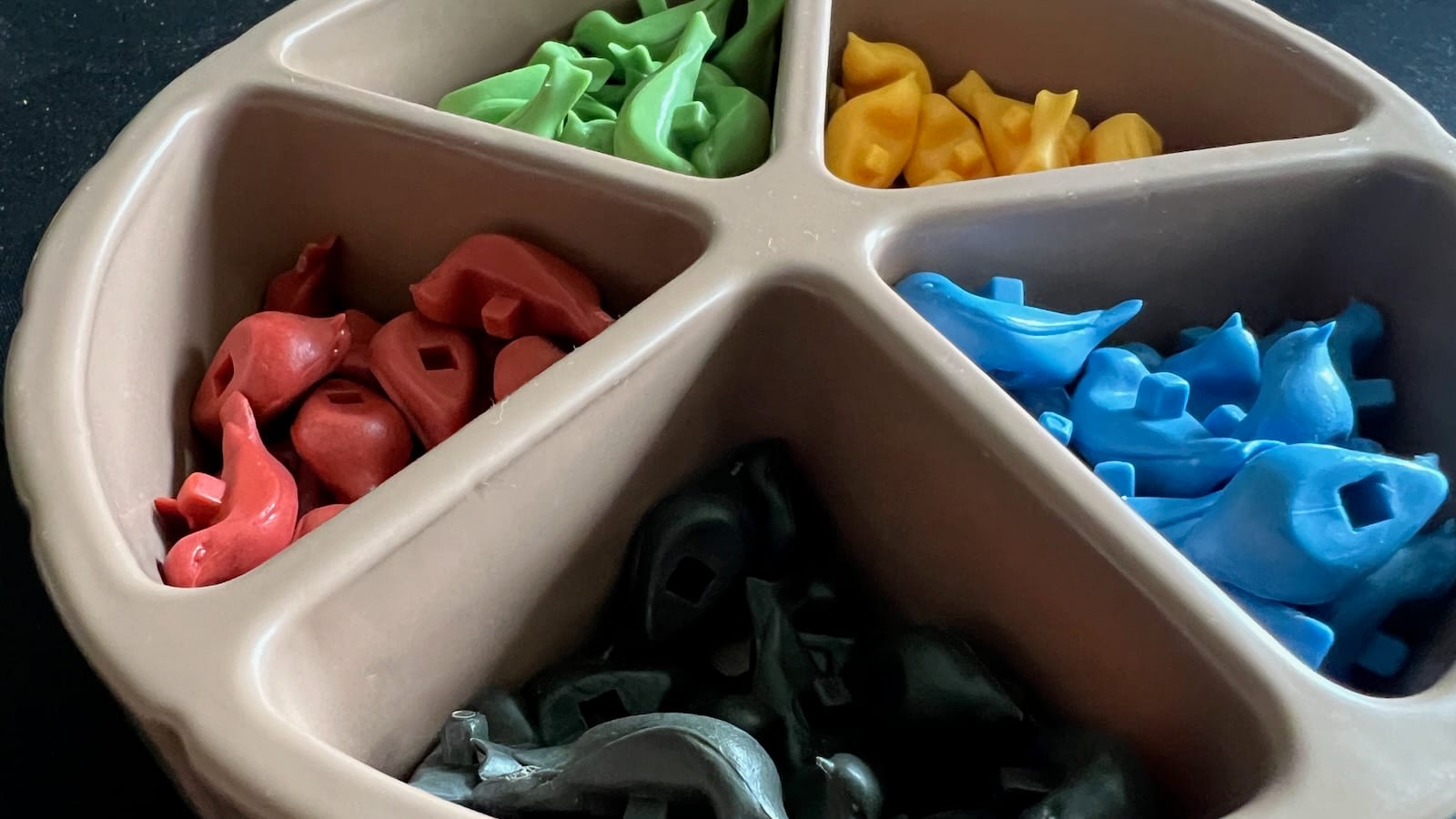
Each game, players will control a specific color of bird. In a 2-player game, a third dummy color will be used as well. Each round starts with the Migrate Phase, where players will add two of their colored bird tokens to a special Perch bag. Having control of certain tiles may allow players to add more birds to the bag. Turn order each round is determined by score, with the player in the lead going first, second place going second, and so on. In the Recruit Phase, players will draw four birds to work with each round, two of their own color from the supply and two drawn randomly from the Perch bag in turn order. This means that a player may end up with birds of other colors, making the next phase more exciting.
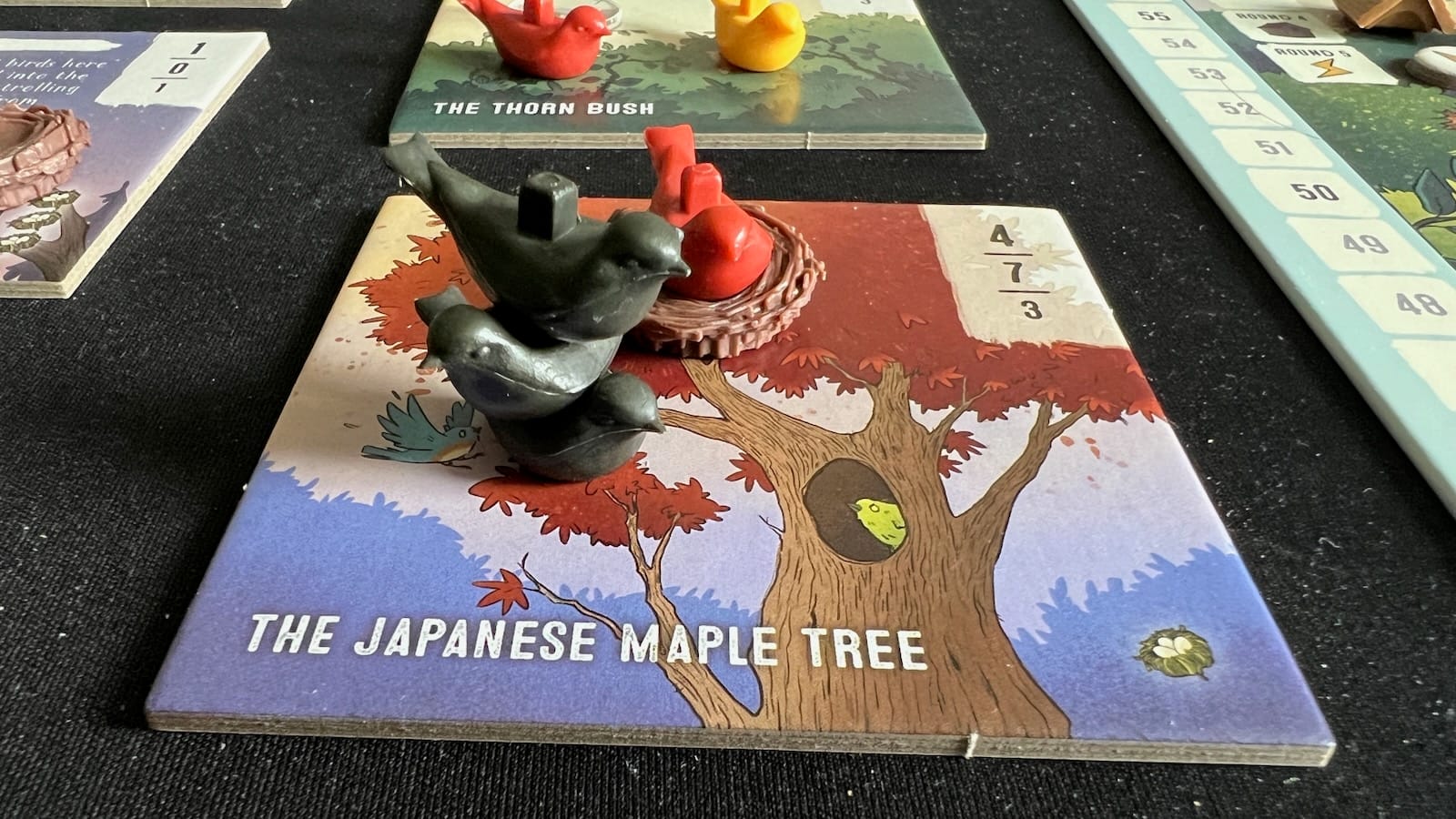
The Perch Phase is where most of the action happens. In turn order, players will place one of their recruited birds on any of the tiles, stacking birds of the same color with the anatomically correct pegs on each bird's back. Where to place birds is the meat of the gameplay. Each tile has three values that denote the points for the first, second, and third place color majorities at the end of the round. However, this game has no ties. For example, if there is a tie for first and second place, they will cancel each other out, and the third place color will score third place points. Another interesting aspect of the game is that sometimes the higher point values are awarded to the lower majorities, and some will only give points for one place holder. Some tiles also have special abilities that are evaluated in the last phase.
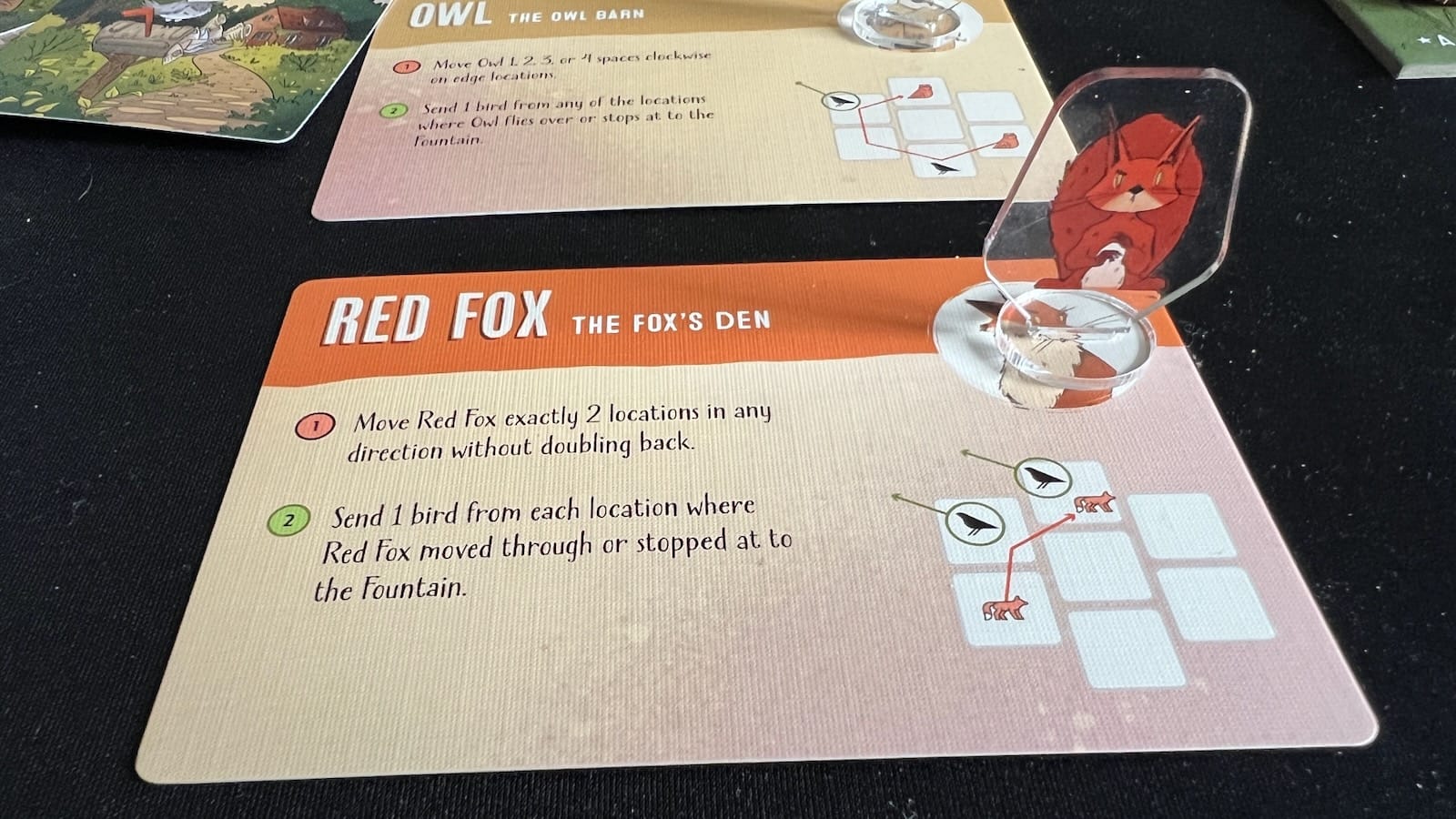
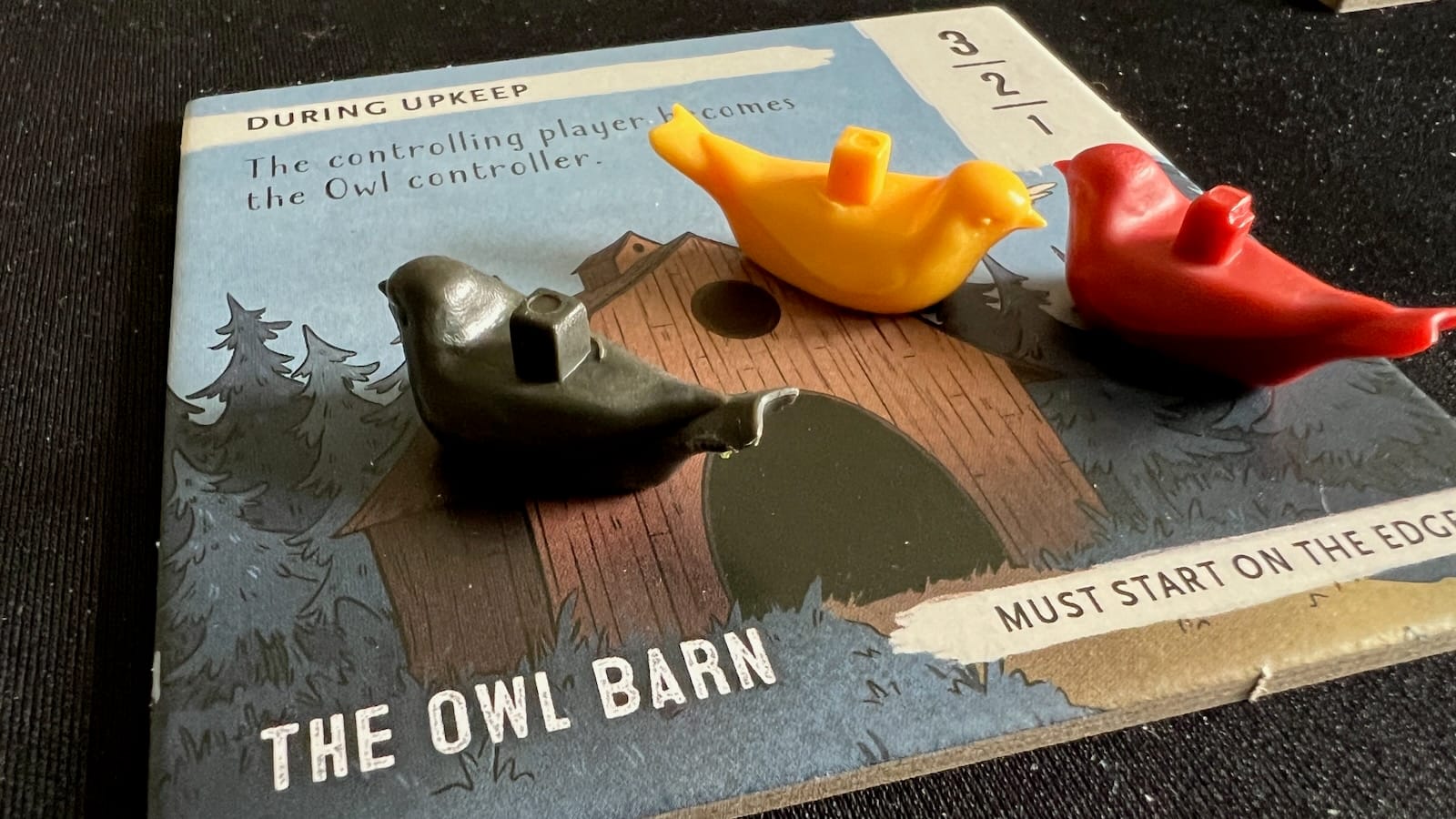
After all birds are placed, each tile will be evaluated for points and special bonuses. Some of these bonuses can add extra birds to the bag for the next round and add unique scoring conditions. Other tiles can send birds to another fountain board and some will gain players control of Homestead Creatures. The game comes with nine different creatures that have special abilities that can be activated once per round. These creatures can move birds to other tiles, scare them to the fountain tile, and even bounce them back to the supply. For example, the owl prowls around the edge tiles and sends a bird to the fountain from the tile they land on. Players can manipulate the creatures to help gain a majority by sending an opponent bird from a tile or secure a prime fountain spot by sending one of theirs off.
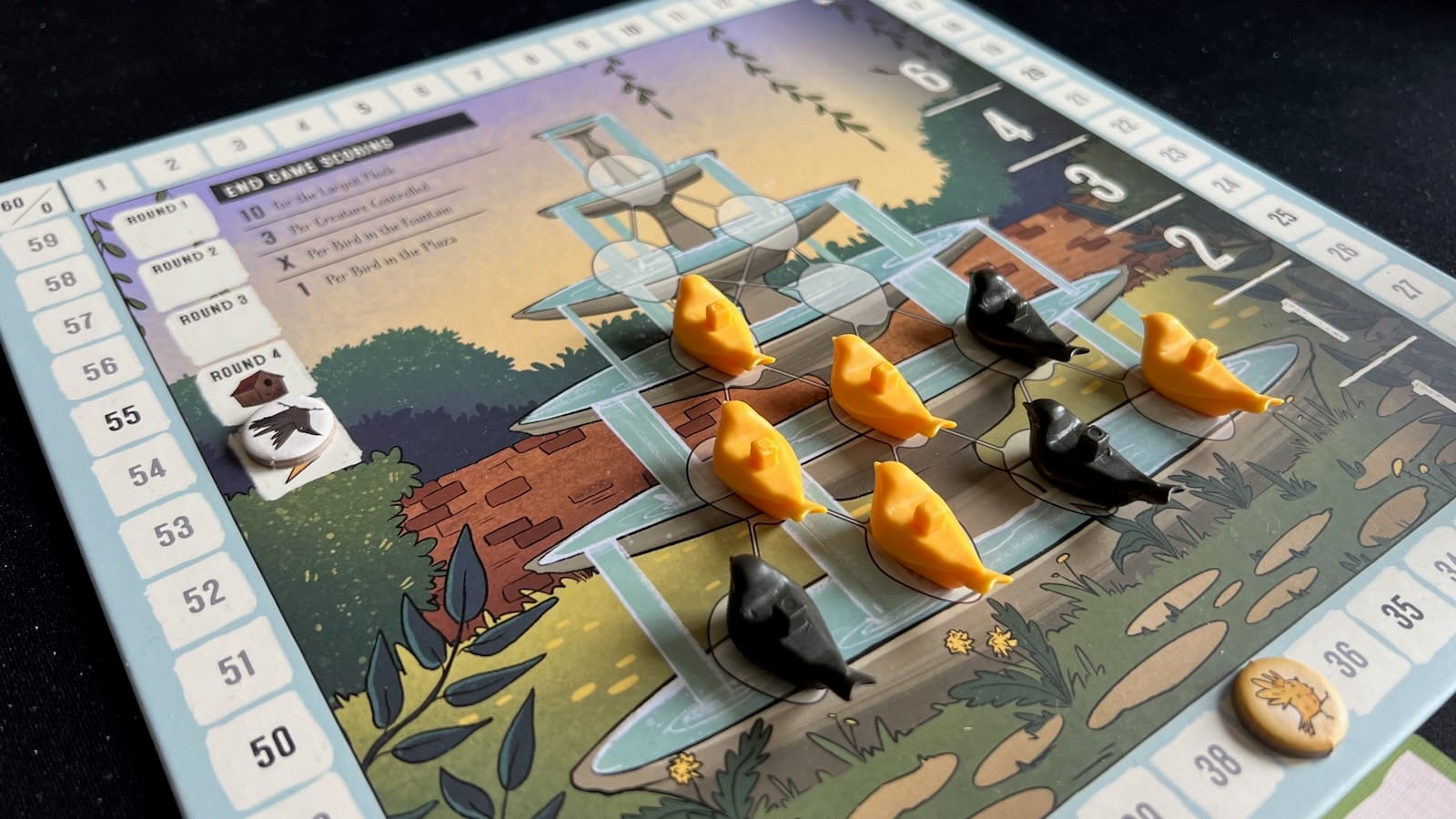
The fountain board serves as the scoring track, round tracker, a reminder of end game scoring, and the central place that birds knocked off the main tiles gather. The fountain allows birds to gain more points the higher they perch, but must be supported by birds below them. There are different sides for 2-3 and 4-5 player games. Below the fountain is the plaza, another place that birds may be sent, which all score a point per bird at the end of the game. At the beginning of rounds four and five, players get some extra bonuses. Round four gives each player a Birdhouse roof, which they can add to one stack of birds. This counts as another bird for majority scoring and makes that stack untouchable for the rest of the game. In round five, players gain a Zap token which when played allows players to send one bird from any tile to the fountain or remove an unoccupied nest.
After five rounds, final scores are tallied. The player with the biggest flock on the board gets 10 points. Players earn three points per creature they control, points from fountain and plaza birds, and any points from objective cards passed out at the beginning of the game. The player with the most points wins.
Overall Thoughts
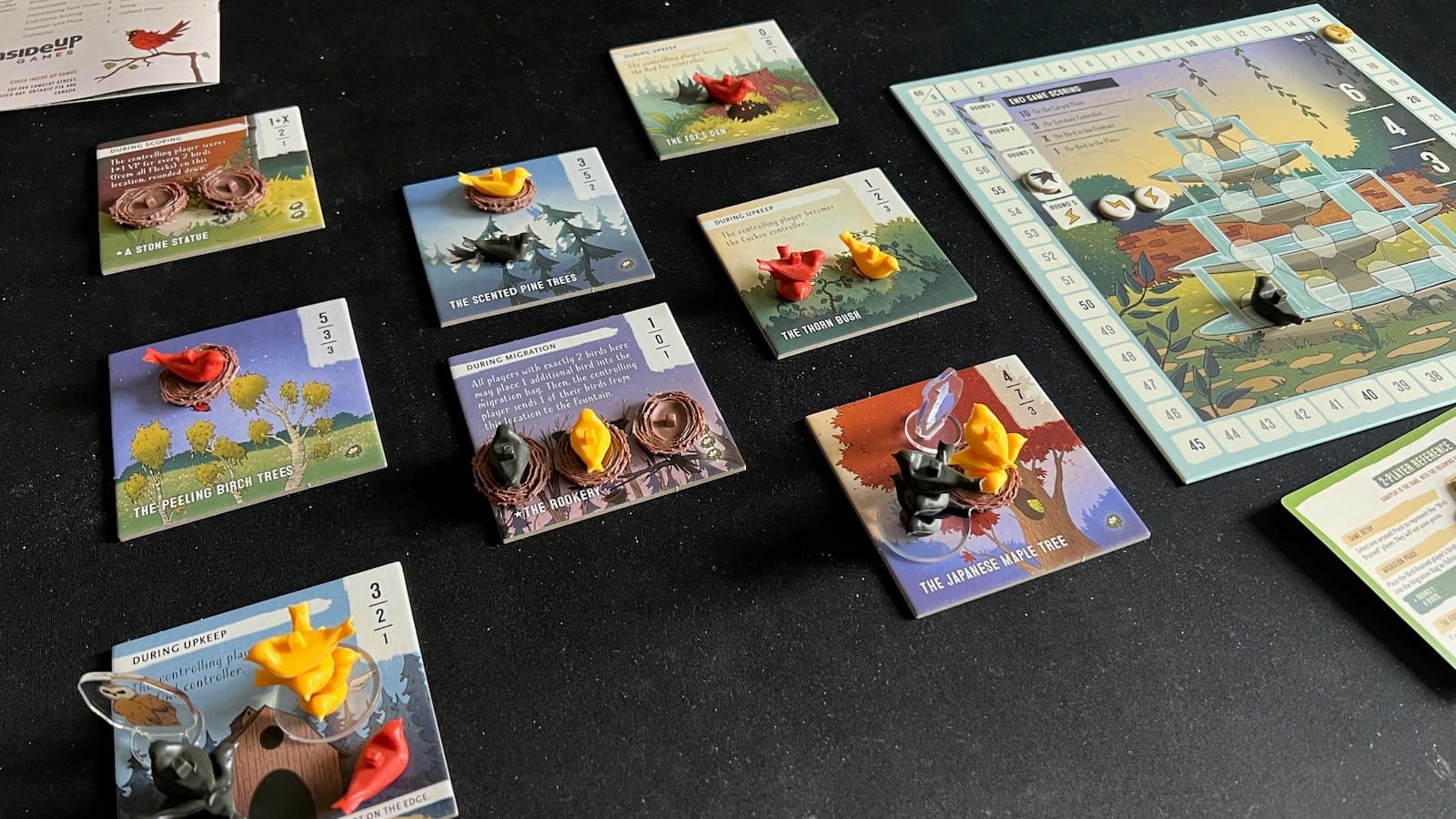
The production value of Perch is fantastic. The artwork is a little deceptive as to the type of game you are getting into, but I enjoyed every bit of it. The illustrations from Ari Oliver are unique and inviting. The design of the birds, bases, and nests allow for large stacks of birds, and the bird house toppers allow for intriguing stacks of birds towards the end of the game. Each of the included creatures comes with its own acrylic standee with its own unique artwork. The "roost" holds all the birds and is removable from the included insert for easy mobility on the table. My biggest gripes are the migration bag and the storage. The Migration Bag is just too small and it doesn't feel like a fella with large hands can easily mix the bag effectively. While the included storage does a great job of handling the roost, and has places for all the cards and tiles, there is no storage for the standees, nests, and other random tokens. I took to storing everything in the migration bag between games, but then had to dump out everything out, sort, and pull out what was needed in order to play.
The gameplay is downright ruthless, and players can't be afraid to mess with other flocks to advance their own gameplay. Players have to balance getting big points early and making decisions that will pay off later in the game. Controlling creatures, which can be activated before or after placing a bird on a turn, can also help players manipulate the game board in their favor. Players are always guaranteed to place two of their own birds a round, but the birds they pull from the bag can be any player's. The order in which you place your birds is also part of the strategy. Being the last in turn order can make it so no one can mess with you that round, but also means you may have no way to manipulate points in your favor. Another great strategic implementation is that ties cancel points. Placing a bird can negate another player's move by canceling out their majority, which can also be a great net move. With all of the tiles included in the game, there will never be the same tiles chosen and board placement from game to game. I will say that this game is made for higher player counts. While the 2-player experience is fine, the game really comes alive the more players you add to the table. More players also equals an expanded board for more options to place birds and more creatures to gain control of.
Interested in getting your own copy of Perch, check out the Inside Up Games Kickstarter campaign for a Perch reprint and their brand new modular expansion, Perch: Birds of Play through March 13, 2026.
Perch
Great
Perch is a ruthless game of area control packaged into a cut aesthetic. If you're looking for a cutthroat game for 4-5 players in a shorter timeframe, this is the game for you.
Pros
- Beautiful aesthetic throughout the game
- A lot of interchangeable content from game to game
- A quick playing, strategic game.
Cons
- The take-that nature of the game can turn off some
- Lower player counts are not as fun
This review is based on a retail copy provided by the publisher.