Don't skip Mega Man Star Force. I know you were planning to. Everyone always does. That has more or less been the story of Star Force in the public eye—the series that people skipped, and as a result, never really got its due.
Well, I'm not gonna take it anymore. With the release of Mega Man Star Force Legacy Collection, I simply can't. These are great games that deserve to be played. They deserve recognition. So whether you like it or not, I'm going to carefully explain to you why these games matter and how this new Legacy Collection provides the best way to play them. And I'm going to do all this the only way I know how: by portraying you, the reader, as combative, whiny, and indignant in my subheadings. It's nothing personal. I just need someone to beat on, and you happened to be here.
"Why the heck should I care about Mega Man Star Force!!!??"
Stop yelling! Star Force matters because it takes Battle Network’s internet-age premise and pushes it further by exploring how connectivity shapes society, relationships, and identity in a way few games attempt today. Most games treat the internet and social media as set dressing. Star Force makes them personal, relevant, and literal game mechanics. The games, their themes, and their stories all work together to show that the net can bring people together and make them stronger. Think of Star Force as a positive reflection where society could (or at least could have?) gone with all our modern wireless technologies and social medias.
No doubt, that Battle Network's vision of the internet-heavy future felt modern and captured many imaginations at the time, but by the end of its run, it was already becoming outdated as the internet of the real world evolved. Star Force updates things appropriately. Society no longer plugs cords into things like Battle Network thought we'd be doing. Instead, wireless waves hold the fabric of society together. People don't rely on external AI partners to express their individuality; they just make social media pages!
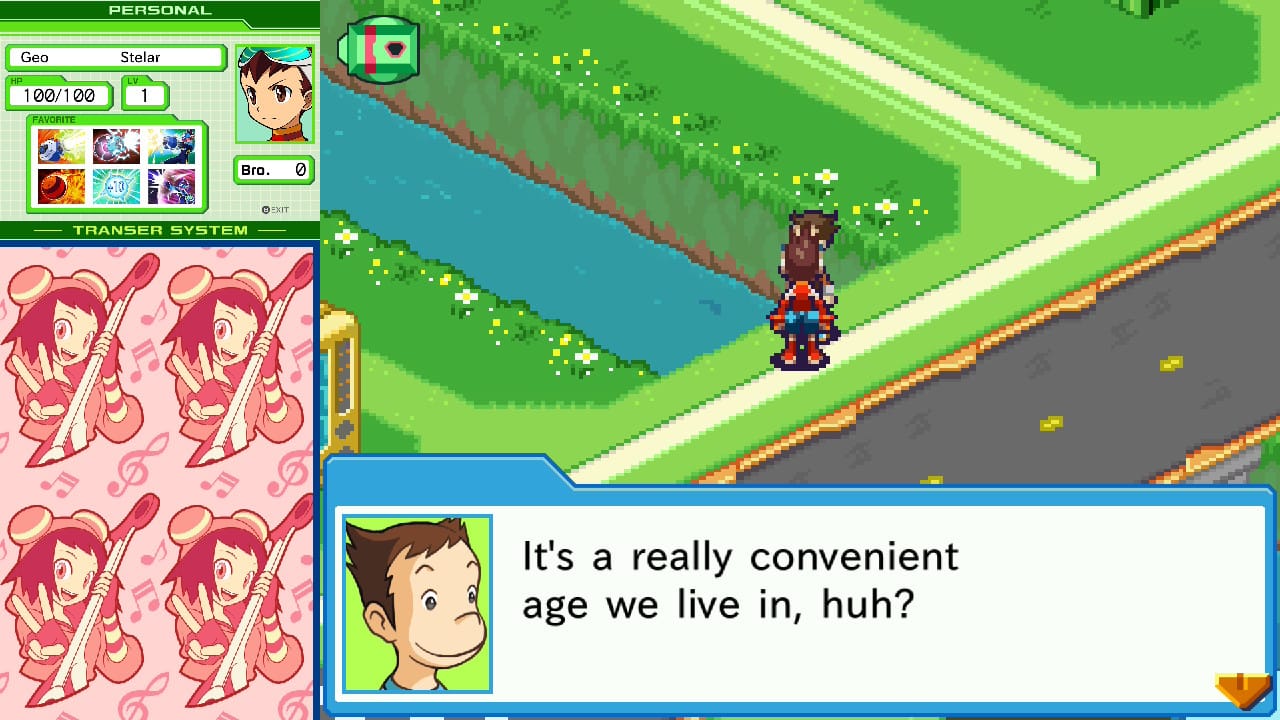
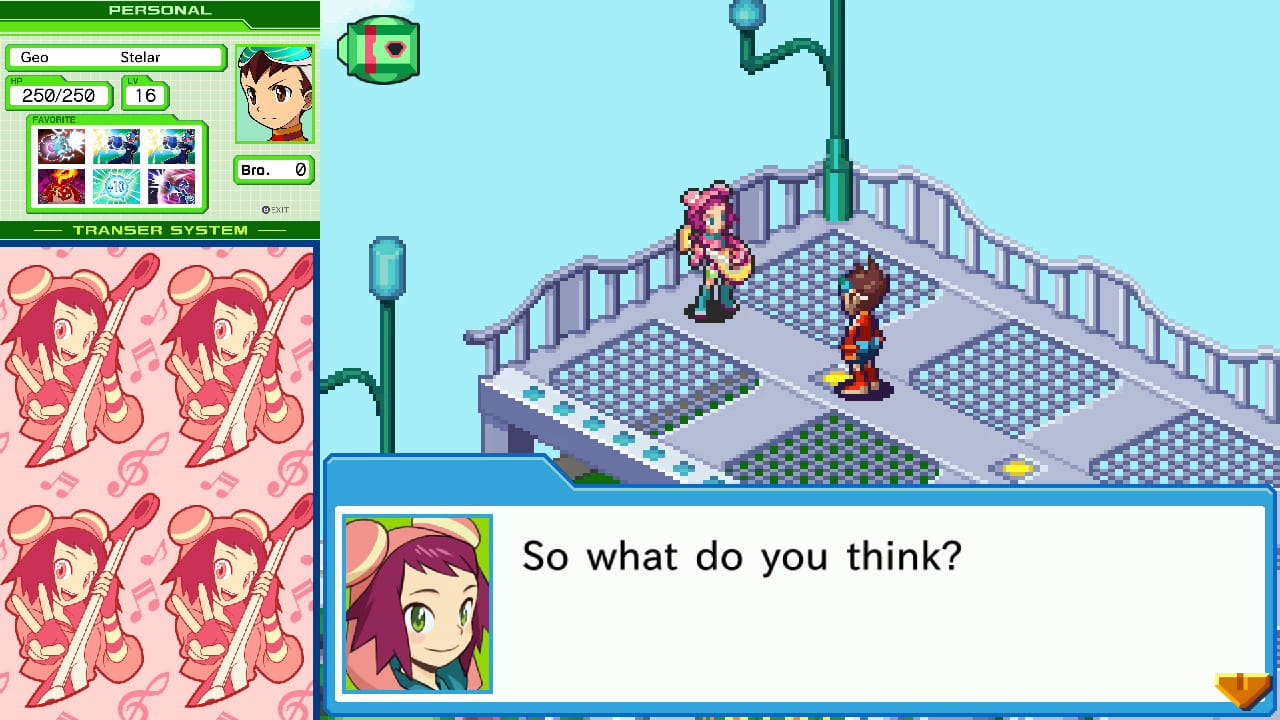
In Battle Network, the real world and the virtual felt clearly delineated. At the time, that felt true to how exploring the internet was when I was a kid—surfing the web was like exploring an entirely separate reality. But over time, the internet became more deeply integrated into our everyday lives. These days, I think it's fair to say that the internet and the real world are nearly inseparable. That's exactly how Star Force portrays things. At the press of a button, you can see the entire wireless internet layered over the real world on every screen of the game.
Star Force's melding of the real and virtual worlds adds an additional layer to the map design and creates interesting game mechanics. As Geo Stelar, you can talk to people, take on side quests, turn on computers to interact with, and map out how the virtual world connects without the threat of attack. As Mega Man, you can travel the skies, solve cybercrimes, and even peek on people's personal MySpace pages. That last thing adds a fun personal slant to the game—NPCs aren't just NPCs, they all have their own names and little personality quirks that can either bring a little smile to your face or even get you to connect a little more deeply to the game's world.
Connections are the core of Star Force's world. All 3 games emphasize this with their Brotherband mechanics. Throughout the game, important characters in the story and even your real life friends can form a Brotherband with you, which is essentially like adding someone as a close friend on a social media site. Except you get super powers, like powerups or access to your friend's cards in battles. The meaning behind the mechanic is clear: the internet connects people and those connections make you stronger. With this personal twist, the game not only uses a fake internet to connect people, but also the real one to connect you and your friends to the game.
Star Force goes to great lengths to connect with you. In the original versions of the game, you could directly name the protagonist after yourself. While he's just Geo Stelar in the Legacy Collection, the games still make several other decisions to place you in his shoes directly. The Battle Network games cleanly separated the protagonist roles between Lan Hikari in the real world and Mega Man in the virtual. Star Force makes Geo the protagonist in both worlds, allowing him to directly transform into Mega Man when he goes online. You're always Geo, or in other words, the player now spends the whole game in Geo's shoes.
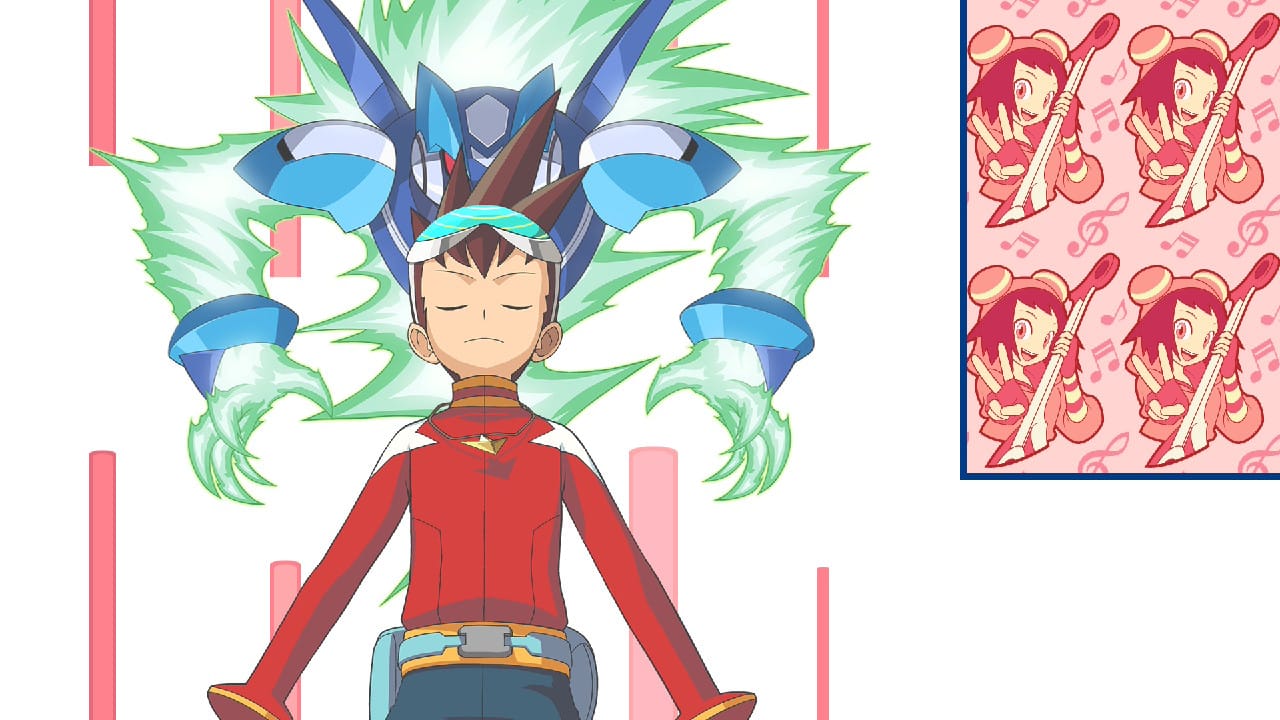
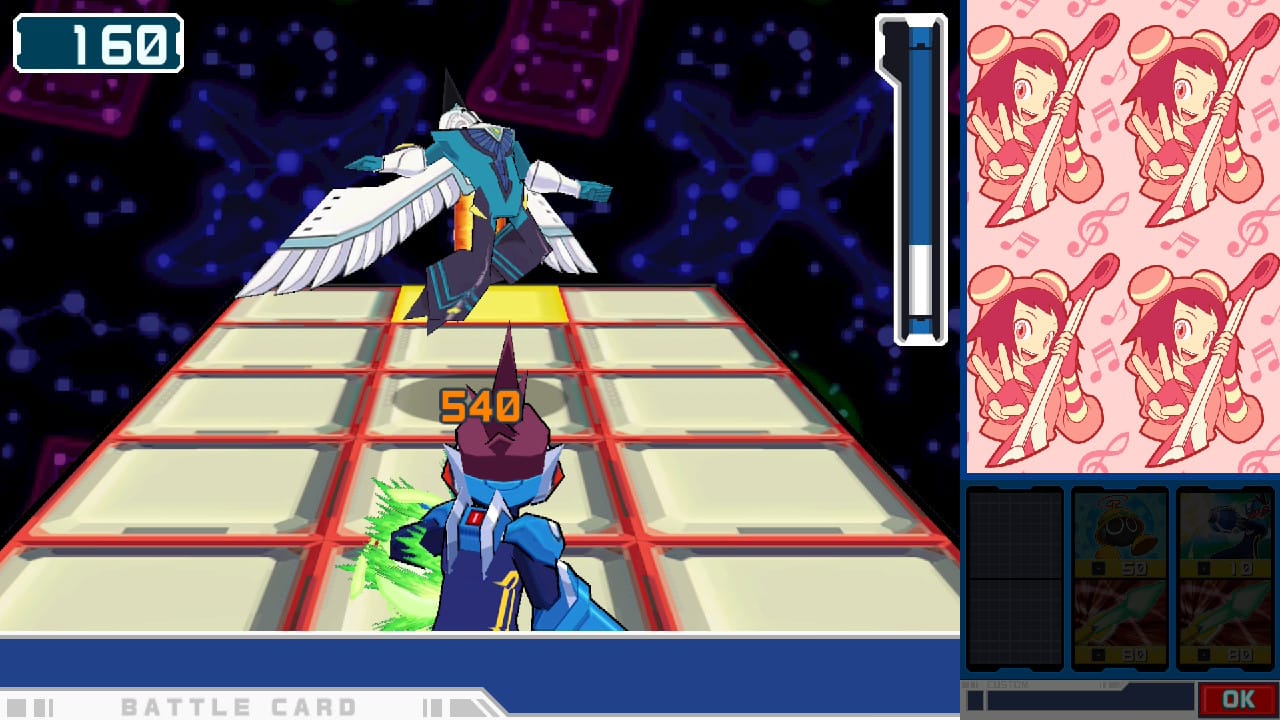
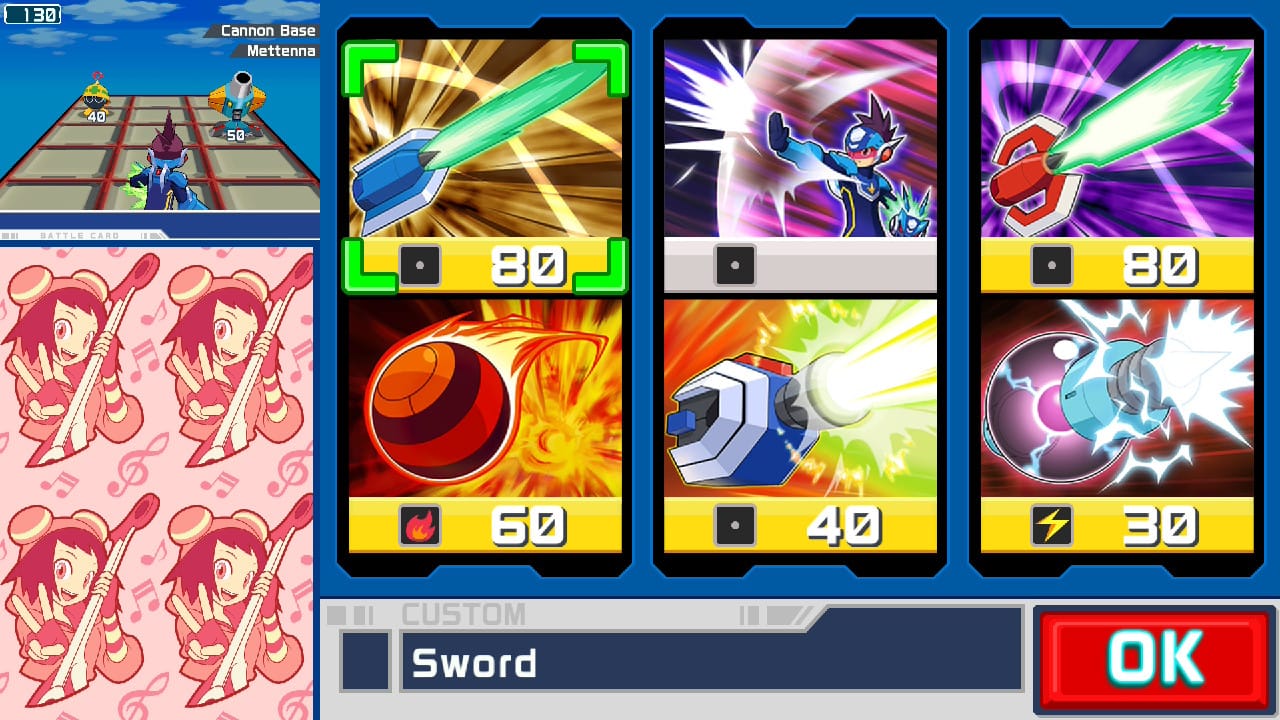
Although it may be more accurate to say you spend some of it looking at this back. The other major difference from Battle Network comes from the perspective of the battle system. Whereas Battle Network portrayed battles from a side view, Star Force places you directly into the action with a more immersive 3D over-the-shoulder view. While you technically have less spaces to move at any given moment, the additions of a guard button and the ability to warp over to enemies with a lock-on system keeps some depth intact. These games play a bit like a Mega Man-themed Punch-Out where the battles prioritize your reactions over the card-building system (which is still present, but streamlined compared to the Battle Network system). All of these choices add to the intensity and immersion of the fights, giving Star Force a familiar but distinct flavor from its predecessor series.
When I think about Star Force, I always think about how easy it is to connect to. Geo is a considerably more isolated and socially awkward character than Lan from the Battle Network series. His story, the updated portrayal of the internet, and how these games play make them easy to connect with in a way no other Mega Man series can match. They're fun, relevant, and optimistic takes on how the internet can add to our lives, and perhaps people could find some value in them now more than ever.
I guess it's good news then that they're getting rereleased!
"Oh yeah!? What makes this Legacy Collection so great?"
It looks really nice, for starters. The presentation immediately stood out to me. Like the Battle Network collection, you're greeted by Mega Man on the main menu, complete with voice lines from the original anime. I'm a much bigger fan of the Star Force anime's English cast than I was the Battle Network one, so I genuinely felt nostalgic hearing these characters again this time around. While Mega Man will often talk to you on his own, his friends will also occasionally cameo during some lines which adds a bit of extra fun surprise to the exchanges. Most importantly, though, everything just looks nice. The Mega Man model, the backgrounds, even the menu buttons, are clean and clearly evoke the Star Force feel, reimagined on a modern console.
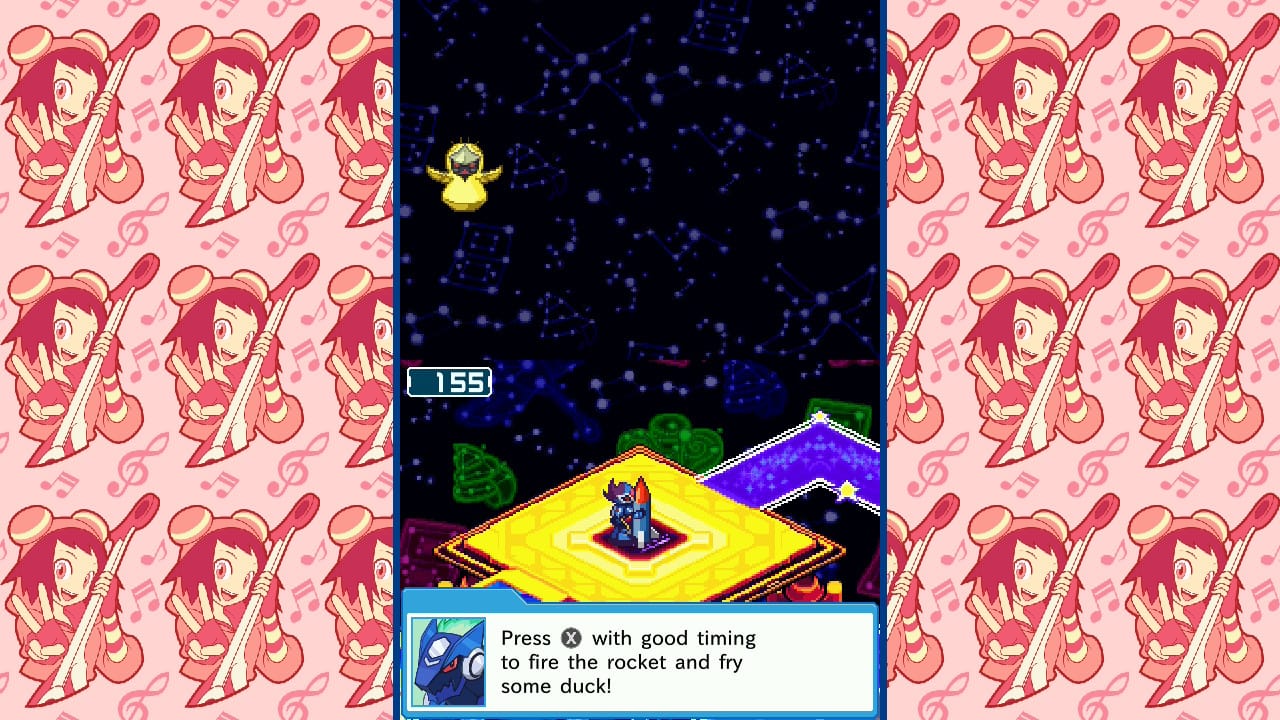
That goes for the games themselves, too. I wondered how eager Capcom would be to tackle these games, because unlike prior Mega Man collections, the Star Force games are uniquely inconvenient to bring to modern hardware. The Star Force games all released on the Nintendo DS and took full advantage of the dual screen layout. Between the screen positioning, touch controls, and online modes, doing these games justice required a lot more ambition than just dumping some roms into an emulator.
Unlike the previously ported ZX games (also DS releases), the dual screen layout is far more integral to Star Force so both screens need to available at all times. Unfortunately, this means that there's no perfect single screen solution. Capcom instead opted to give players the choice of several different layouts, much like how common DS emulators handle things. However, Capcom's integration goes a step further and can automatically swap layouts when relevant to the gameplay. For example, if you set the layout to have the "main" screen larger and the less relevant one stuffed into the corner, they will automatically swap in scenarios like picking cards on the bottom screen and battling on the top screen. These transitions can also happen during cut scenes and mini games where, for example, the screens would form one long vertical picture. This approach directly addresses some of the fiddling and headaches that might come from emulating these games on your own.
Outside of the screen layouts, Capcom has also gone to great lengths to touch up the visual presentation of the in-game graphics. The 3D graphics of the battles have been uprezzed into HD and look great. While I'm not a fan of smoothing filters or cleaning up 2D art generally (I wanna see the pixels!), I gravitated towards a cool half-measure this Legacy Collection provides. You can turn off the smoothing for the sprite-work, but keep the HD art of the character portraits for a neat hybrid remastering that looks pretty swell to me.
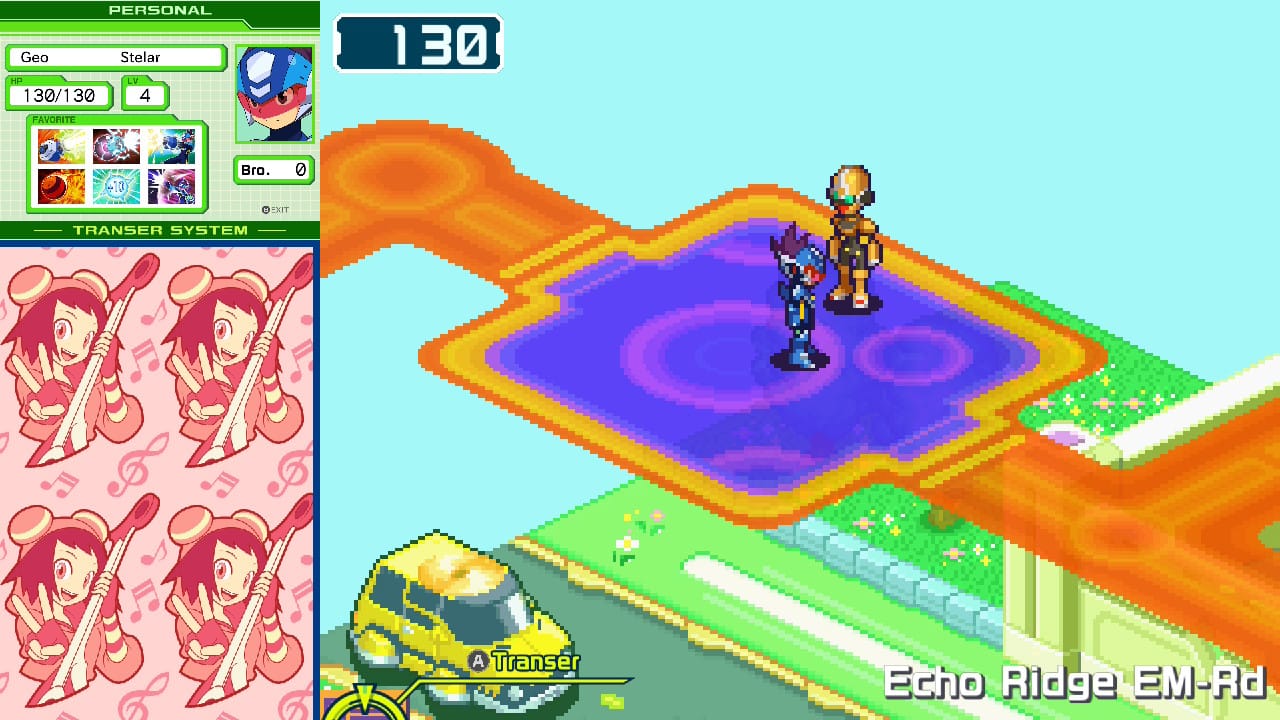
Perhaps the only noticeable hitch shows up when the games need to compensate for the lack of touch controls. In the original games, you'd use the touch screen to tap on people's social media profiles or enter into internet-connected devices. The Legacy Collection exchanges this system with a context-sensitive button press; if you're in the vicinity of an object you can enter, you just press A to enter it. If there are multiple things you can enter in the same vicinity, you can press another button to cycle through them. A reasonable enough solution, except you also use A to examine or talk to stuff in front of you. This can lead to situations where I accidentally warped into devices when I meant to talk to shopkeepers and vice versa. Although you're never typically messing this up in high stakes situations, it is an unfortunate bit of clunk in this porting process.
While Legacy Collection did create some wrongs, it righted some others. Capcom has added English voice acting to all 3 games during the battles and a few key moments, while previously only the third game had voices. When I was a kid, you always knew that portable games meant business when they had voice acting in them, so pretty cool in my book. While not technically new content, English localization casualties like the Wave Command Codes in Star Force 2 and the Noise System in Star Force 3 are also fully available. In turn, you can also get previously unobtainable cards that you could only get through cheating devices.
Of course, the Legacy Collection also delivers on most of the online features of the original games. PVP battles and Brotherbands remain intact. I mean they better, right? I wrote a whole bunch in the previous sections about how the online stuff was important. Like the Battle Network collection, Capcom has done a necessary and serviceable job with the online. Like the Battle Network collection, I don't expect the PVP to be too crowded given the time investment required to be a remotely competent battler and Star Force's aforementioned tendency to be skipped. I'm still happy to see these features anyway, of course. They're the kind of thing you expect to be included since they're so integral to the experience.
My favorite feature of the package was far less expected. For the first time since the Japanese Complete Works rereleases of the NES Mega Man games back on the PS1, the Star Force Legacy Collection includes optional remixes of the full soundtracks of every game in the collection. And more importantly, they're pretty great. Star Force's music certainly fits the games they're in, but the instrumentation is a bit of an acquired taste. Star Force music traditionally sounds a bit light, ethereal, and synthy. That sound gives these games a unique atmosphere, but they're not the catchy impactful tunes you'd expect from a franchise like Mega Man. The remixes put the "rock" back in Rockman, giving the soundtrack a welcome twist without sacrificing what made the soundtrack unique in the first place.
All in all, Star Force Legacy Collection might be my favorite of all the Legacy Collection packages so far in terms of the remastering job. Capcom clearly put a lot of work into getting these games right despite the hurdles. Fully remixing all the in-game soundtracks in particular seems like such a no-brainer concept that I'm surprised this is the first Legacy Collection to actually do it. Even if the world refuses to give Star Force its due, I'm glad that at least Capcom has with this collection.
"Yeah well, do these games even hold up!? Keep in mind that I'm a sophisticated modern gamer. I am currently enjoying titles like Crimson Desert and Marathon, games that surely no one will ask the same question about in 15-20 years."
Only if you like cool games.
I admit, I'm biased. Biased towards cool games. I was in on Star Force on Day 0. Thanks to the help of my older brother at the time, I imported a Japanese copy of Star Force 1 (Dragon version, of course) and played through the entire game months before it had a proper English release. I loved it then, even if I had to rely on GameFAQs translator notes and guides, and I love the game now.
Games like Battle Network and Star Force don't really get made anymore, and the closest parallels focus more on being like this game called "Rogue" more than anything I'd actually want to play. These are relatively short, focused RPGs that ride the line between addictive card battlers and Saturday Morning cartoons. (Translator's Note: I'm assuming everyone watches streaming or TikTok these days, so for context, back when people used to watch TV, kids would often watch cartoons that aired on Saturdays. Like, you actually had to watch them specifically on a Saturday, you couldn't just stream them whenever you want. I know, it's crazy.) They're cool, flashy, and fun games with a lot of heart.
But I get it; people are stuck in their ways and it's easy to dismiss things if they're not what's in vogue. On some level, Capcom seems to recognize this. Although I doubt difficulty will be turning anyone away from these games, those hesitant to give them a chance may appreciate that Capcom has made them more "accessible." (Translator's Note: "Accessible" in modern gaming speak means that they added a bunch of cheat codes you can turn on in a menu). The cheat options are pretty granular and let you use a sliding scale for the options rather than going full-on hack mode.
You may be wondering, though, what about the games individually? If you read a typical mid-2000s game review written by people who clearly didn't play these games for more than 5 minutes, you may be under the impression that they're all exactly the same in every way. That's actually not true; each game changes the battle mechanics, your transformations, the story, the levels, the bosses, and the enemies. It's kind of like you can have different games worth playing even if they use the same basic idea. Like perhaps having the same gameplay formula doesn't actually mean each game is exactly the same. If that were true, then that would be bad news for the majority of mechanically homogeneous big-budget games releasing these days!
So I feel it's necessary to at least touch on a little bit of what makes each game distinct from each other. It may in fact be my sacred duty, ordained by the stars.
Mega Man Star Force Dragon, Leo, and Pegasus
Fair or not, people tend to assume that the first entry in a longer series is the roughest one. Star Force 1, however, largely nails what it's going for on the first try. When I wrote all that stuff above about why Star Force matters, I was thinking primarily about the first game, even though all those concepts are present in the sequels. The original game firmly establishes its vision of the future, executes its new, streamlined take on card battling, and even manages to tell a surprisingly strong story on top of it. While I liked the characters of Battle Network, they also largely came out fully formed from the get-go. Star Force 1 highlights Geo's arc from a withdrawn kid whose life was ruined by tragedy to a genuine superhero. The entire game chronicles his journey of coming out of his shell due to his connections. While he turns into Mega Man early in the game, he doesn't truly become Mega Man until much later, and it's a satisfying journey to experience.
Mega Man Star Force 2 Zerker x Saurian x Ninja
Ok, you got me. I can't sugarcoat this one too much. Star Force 2 sits appropriately in the middle of the series because it's about as mid as a sequel can get. It doesn't expand on the formula in a particularly meaningful way. There are some refinements and adjustments to the battle and deck-building mechanics, but I consider them closer to a balance update than a revolution. The story leans into the wackier elements of a Saturday Morning Cartoon, and often feels like a filler plot than the next step forward. That said, it's still a fun game, and I do like a lot about it. The more globe-trotting nature of the plot drives home the power of the internet's ability to bring people together, Ninjas and Dinosaurs are the coolest themes possible for transformations, and this game even introduces the all-important edgy rival character with Solo.
Mega Man Star Force 3 Black Ace and Red Joker
Mega Man Star Force 3 represents the culmination of the Star Force series in more ways than it just being the final entry of the series. The story noticeably steps things up from 2, concluding things in a satisfying way and tying up loose ends from the first game. It pushes the battle system forward with the Noise Change and White Card systems, adding some of the depth back to Star Force's otherwise more streamlined battle system. Throw in a challenging post-game, and it's hard to argue against 3 being the peak of the series. Star Force 3 is a rare sequel that pretty much unanimously improves everything while sacrificing nothing. While they're all worth playing, and ideally you'd play the other two before this one, Star Force 3 best represents Star Force's unique appeal.
"Gosh, you've convinced me. I'm now a lifelong Mega Man Star Force fan and will definitely not skip the Mega Man Star Force Legacy Collection!"
What a completely reasonable and expected response to me spewing a roughly 3000 word essay at you. No need to yell, but great. Have a good day.
Mega Man Star Force Legacy Collection
Excellent
Don't skip Mega Man Star Force Legacy Collection or else I will take it personally.
Pros
- Relevant games full of heart
- Fun action-heavy battle system
- Great presentation
- Dragon and ninja forms
Cons
- Some of the touchscreen replacements are finicky
- Starforce 2 a little mid
This review is based on an early Nintendo Switch copy provided by the publisher. Mega Man Star Force Legacy Collection comes out on March 27, 2026.