As much as I want to call Life is Strange: Reunion the Star Wars: The Rise of Skywalker of Max Caulfield’s (supposedly) final outing in this adventure game series, that comparison is admittedly a bit mean. The game isn’t that bad, and even possesses fantastic aspects. However, they do share notable similarities in terms of their function within their respective franchises. Both follow up a divisive second entry, while also serving as a capper to their trilogies. Regrettably, Reunion falls into similar conceptual pitfalls that not only make for a middling narrative adventure game, but also diminishes the strengths of the prior titles in retrospect. Developer Deck Nine backtracks on story beats set up in the previous entry, Double Exposure, and in their place attempts to lure in jaded fans by casting one of the most blatant pieces of nostalgia bait I’ve seen in a while. Chloe Price, the secondary lead in the original game, is back. Max’s rewind powers? Also back, narrative logic and thematic integrity be damned.
Admittedly, I am not above being pandered to. Seeing the grown-up Max and Chloe being “more than just roommates" when rekindling their bond was as sweet as candy. However, candy is still junk food, their sickly sweetness being detrimental to offering a fulfilling experience filled with meaningful substance. To give credit where it’s due, Reunion does try to frame its derivative aspects around a thematic point, and even succeeds in some crucial aspects. But the spotty execution ultimately makes these sweet moments largely empty calories. By the time the credits rolled, my enjoyment and frustration towards Max’s final adventure all circled back to a singular question: what was even the point of this story?
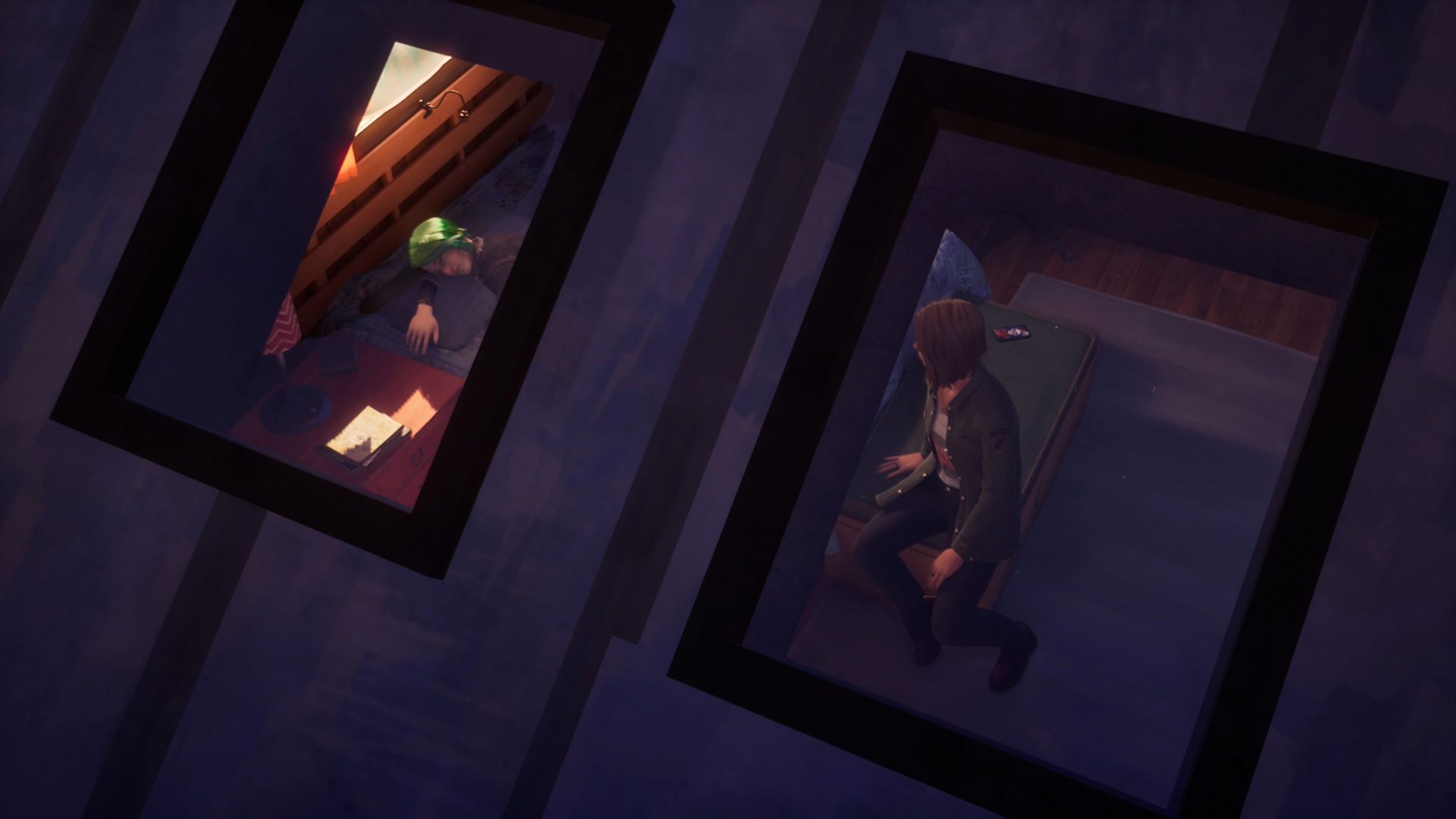
Life is Strange: Reunion is set a year after Double Exposure. Max’s life is on an upswing after breaking free from the shackles of guilt that chained her to the pivotal choice of the first game's climax. We get to see her pushing forward in her photography career, even taking up teaching at Caledon University. That is, until a fire breaks out on campus—its flames consuming the school grounds and killing her friends and colleagues in it. On instinct, she jumps back in time via a photo she took a few days earlier, with a newfound goal of finding the arsonist, and putting a stop to the embers. This being a finale to her trilogy, I am considering the events of LiS1 and DE fair game to bring up. Discussion on Reunion's story will remain spoiler free.
While we’re three for three on the games' inciting incident being someone(s) close to Max perishing, and subsequently using timey-wimey powers to undo it, the familiar premise doesn’t automatically make it bad. Double Exposure’s greatest strength was using this similar setup to bring Max’s trauma to the forefront—haunting scenarios paralleling the past preventing her from moving forward. Even with that game’s lackluster side cast and mystery, her growth was the beating heart and soul. Reunion aims to explore how a healthier Max would navigate the stitches on her mental wounds being reopened, a character direction that has merit despite its derivative elements. This is emphasized further with the return of Chloe Price, the source of the brunette’s guilt. Based on my choices in the first game, I had Max romance Chloe before accepting her wish to sacrifice herself to save their hometown of Arcadia Bay. It is a compelling foundation to cover topics of relapse when healing. A character finally picking up the pieces of her life, only to encounter a ghost from the past.
My fascination with the premise only elevated when examining this theme through a metatextual lens. Admittedly, these assumptions are the epitome of a “the curtain is blue” frame of analysis, but I can’t help but interpret how the fire that consumed Caledon and its people represents the rejection of the new setting and characters presented in Double Exposure. Chloe’s return largely acting as a fan favorite replacement to DE’s ashes further contributes to this notion, while also lending cadence to those questioning her existence in a post LiS1 world.
With themes this juicy, it is a shame that the actual execution radiates an air of insecurity. Deck Nine’s construction of Reunion’s narrative and cast leans more towards reactionary course correction than clever thematic subtext. For starters, the plot points established at the end of Double Exposure regarding Safi trying to pull a Nick Fury and assemble a team of supernatural individuals fizzles offscreen. On one hand, I wasn’t fond of that premise to begin with. LiS is at its best when the spectacle of the surreal takes a backseat to the character driven moments. On the other, the disposal of the story thread they themselves spun demonstrates a lack of confidence in committing to and improving upon their own vision. It renders Max’s final choice in her sophomore entry feeling pointless, sapping Safi’s relevance and agency within the current narrative.
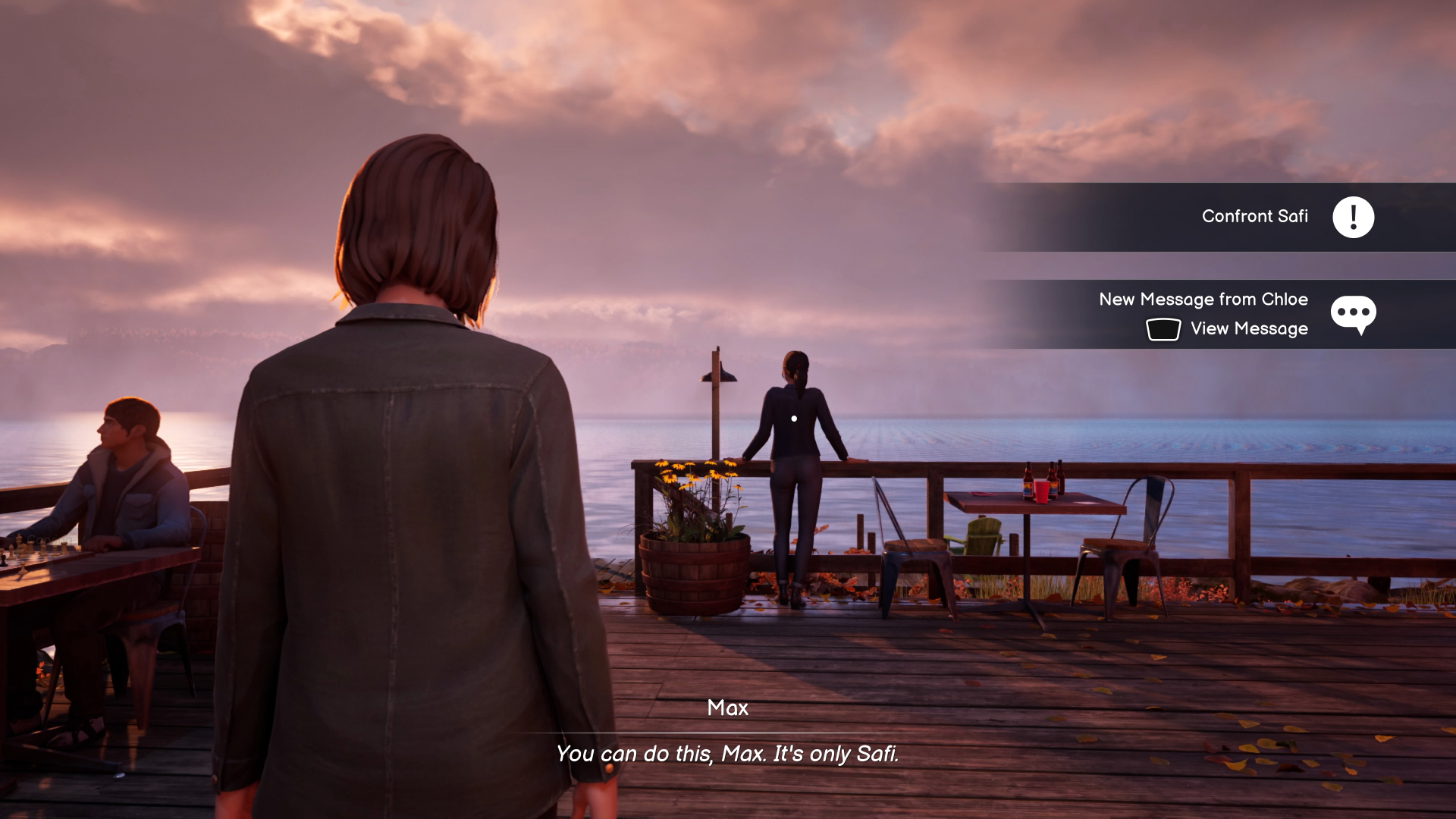
Even though I think the setup of the larger-than-life supernatural conflict was stupid, pivoting entirely also strips away the fascinating philosophical conflict between these two women. Max, who has had her life torn apart from the events of the first game because of her powers, is an excellent foil to someone who is going down a similar path as her past self. Does she help or shun someone at a similar crossroads? Throwing the entire storyline out means disposing the bits of emotional potential alongside the bad.
This storytelling insecurity is exacerbated with this entry’s fallback plot points: the return of Max’s rewind powers, and her reunion with Chloe Price. A major part of what made Life is Strange’s debut so impactful was how it powerfully weaved together these two narrative components to deliver a tale about living with the consequences of your actions. A final decision that has been talked about, analyzed, and debated for over a decade. Bringing back these iconic bits of nostalgia is a thin tightrope to navigate: trying not to tarnish a legacy with reactionary pandering in addition to utilizing these critical narrative components to move forward. If it wasn’t apparent by now, I don’t think Deck Nine succeeded in crossing it.
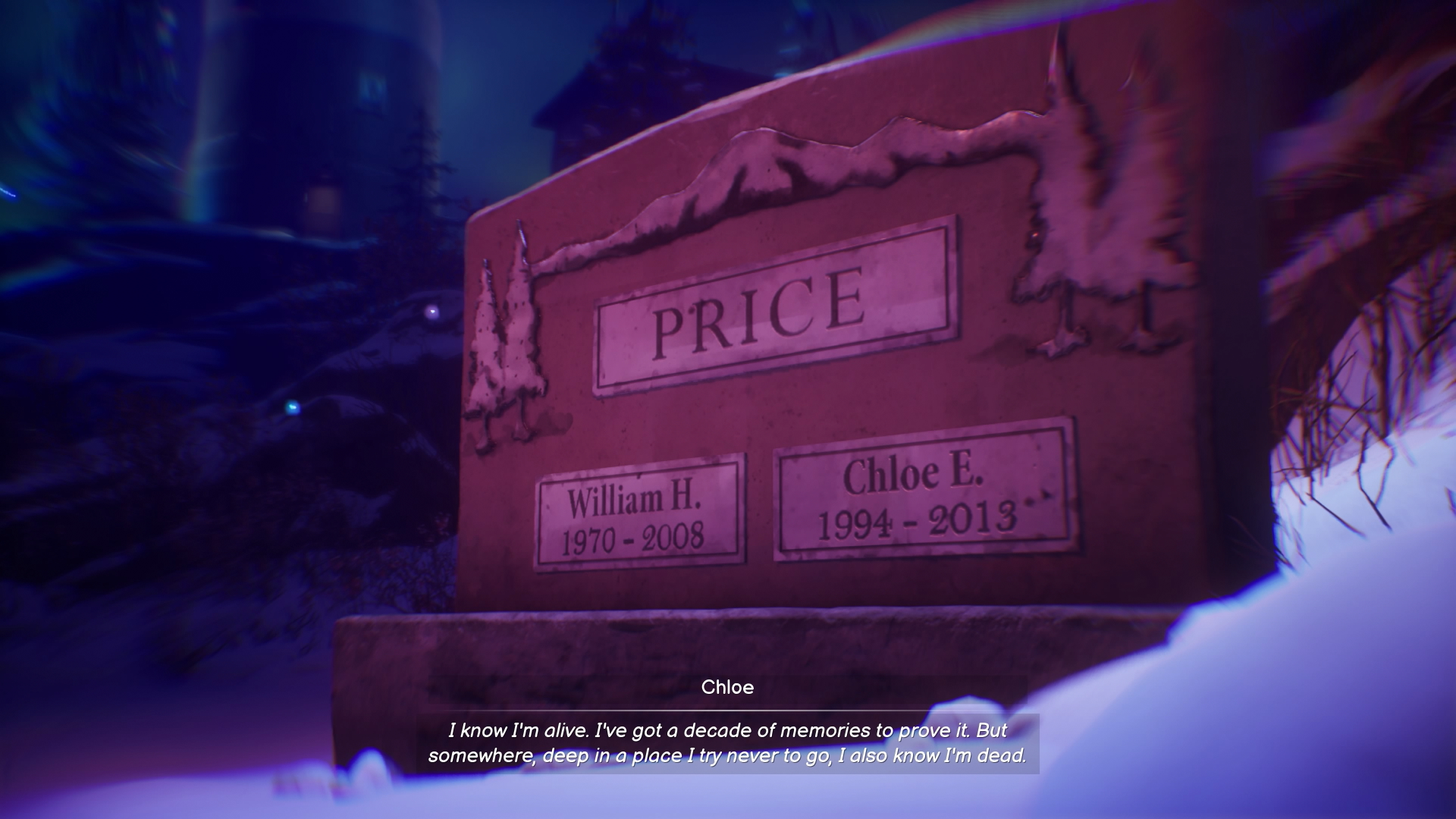
For starters, most of the explanations provided regarding Chloe’s existence and Max using her rewind powers boil down to timey-wimey nonsense. While unfortunate, this in itself wouldn’t have been a deal breaker for me. I am willing to stomach half-baked rationalizations as long as they serve as a jumping point to focus on the characters, especially for a series where the supernatural accentuates the overarching mystery and cast. Max randomly gaining brand new powers in Double Exposure made no sense, but it led to stellar and creative moments exploring her trauma. Even in this game, any spotlight given to Chloe is the story at its brightest, which I’ll dive into later.
Regrettably, the balance of narrative justification versus narrative impact is skewed heavily towards the former. The consistent streams of exposition regarding the inclusion of LiS’s nostalgic aspects result in numerous poorly paced scenes with awkward dialogue exchanges. Furthermore, the same foundational talking points are constantly reiterated, making for defensive writing that's insecure about the tale it is weaving. With my playtime barely reaching seven hours, the shortest in the trilogy, it is an adventure that’s some killer, mostly filler. The equivalent of watching the writer try to put a square peg in a round hole for hours on end.
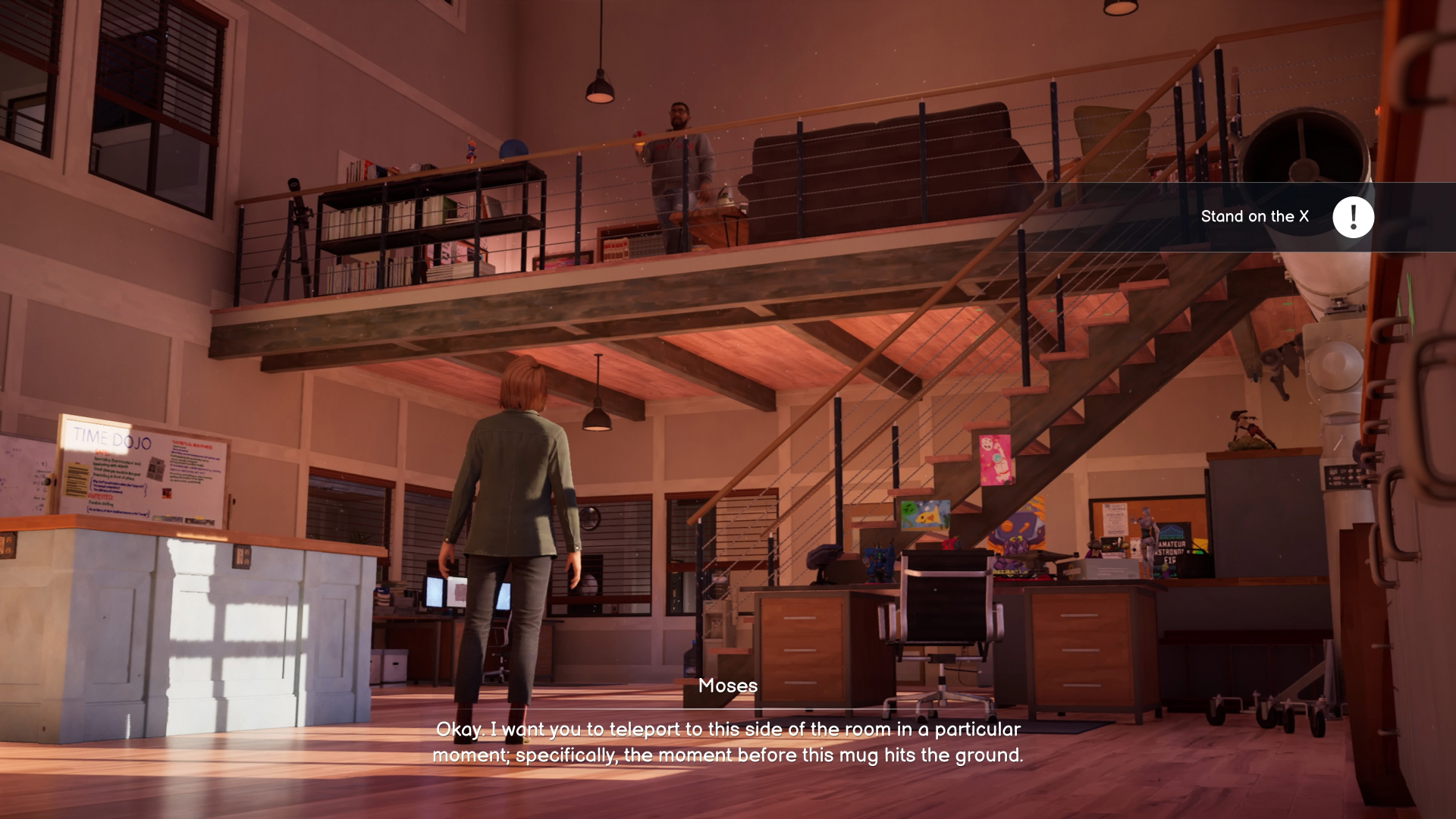
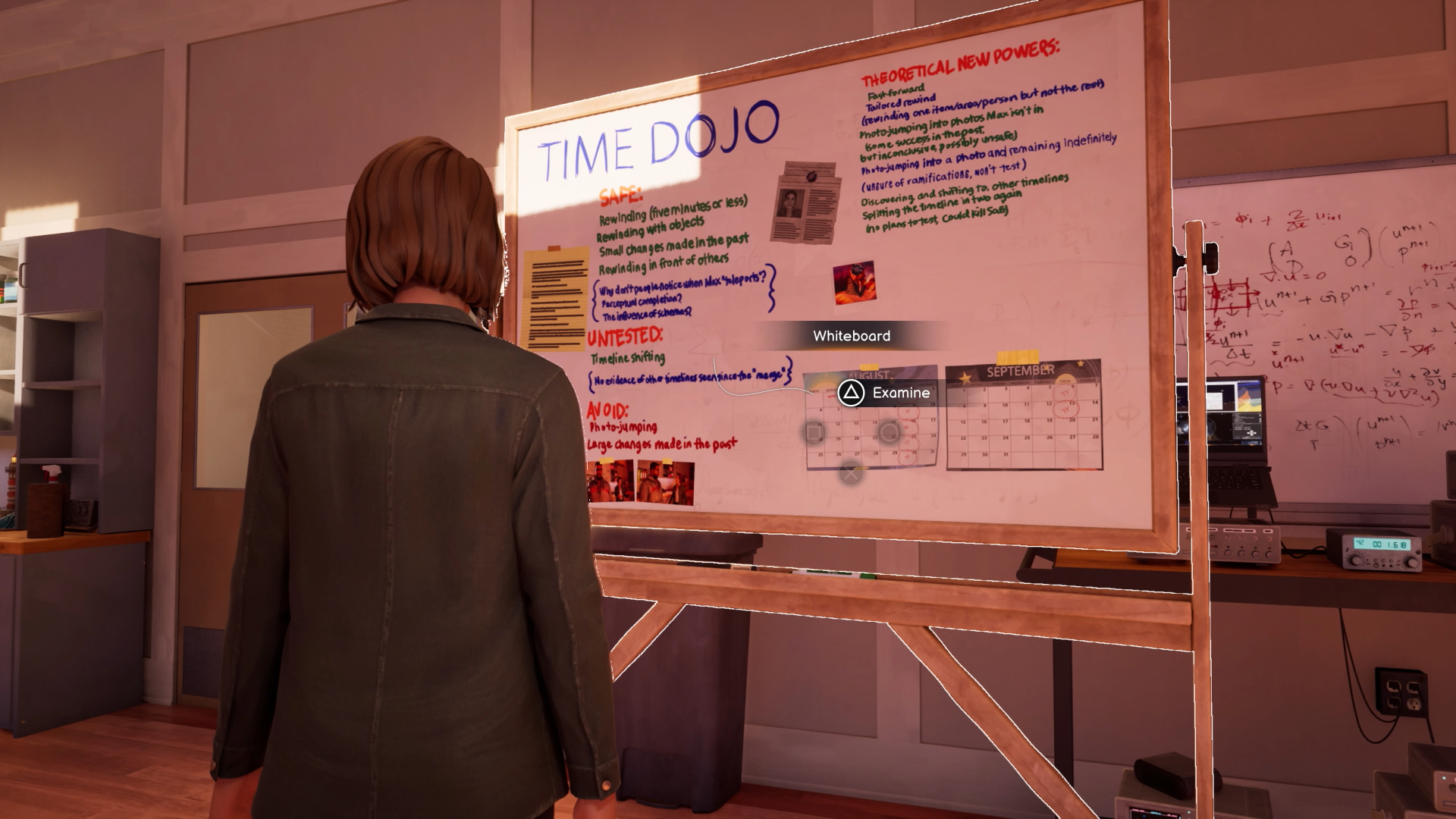
Brushing all of that baggage aside, how well are these plot points used to prop up the main cast? It’s a mixed bag of astronomical highs and infuriating lows. To put it bluntly, the return of Max’s ability to rewind time was a major blunder for her character, retroactively muddling the emotional and thematic struggles she endured in her debut title. From the get-go, Reunion attempts to dispel questions on how she's able to use her powers without destructive aftershocks, an explanation that can basically be boiled down to “she got good.” The near erasure of past repercussions and refusal to give this finale any meaningful ones is emblematic of why the back half of this game rubbed me the wrong way. It unintentionally spits in the face of the first entry and Double Exposure, victim blaming Max by implying that she could have avoided all of the traumatic consequences if she just “got good” with her rewind powers.
I concede that it remains compelling to watch our lead character struggle to change fate while holding together the stitches of her reopened wounds. Additionally, witnessing Max’s demeanor evolve through this trilogy is a heartwarming piece of character progression—blossoming from an insecure, socially awkward teen into a more confident adult that embraces her awkwardness as part of her charm. These glimmers are why I can’t say Deck Nine’s handling of the titular lead was completely a bust. However, these are still similar points of investment I got with her previous time-bending escapades, only done better.
Fortunately, the return of Chloe Price is handled much better, and is easily the best part of Reunion. Admittedly, it does fall into the same critical trappings as Max’s rewind with its defensive narrative exposition and a lack of repercussions. Thankfully, the execution of her inclusion doesn't just transcend its existence as a dose of nostalgia, but brilliantly weaves that concept into her inner turmoil. Chloe is enriched with emotional depth once she learns about her dual fates from the first game’s finale, contending with how her existence is a paradox.
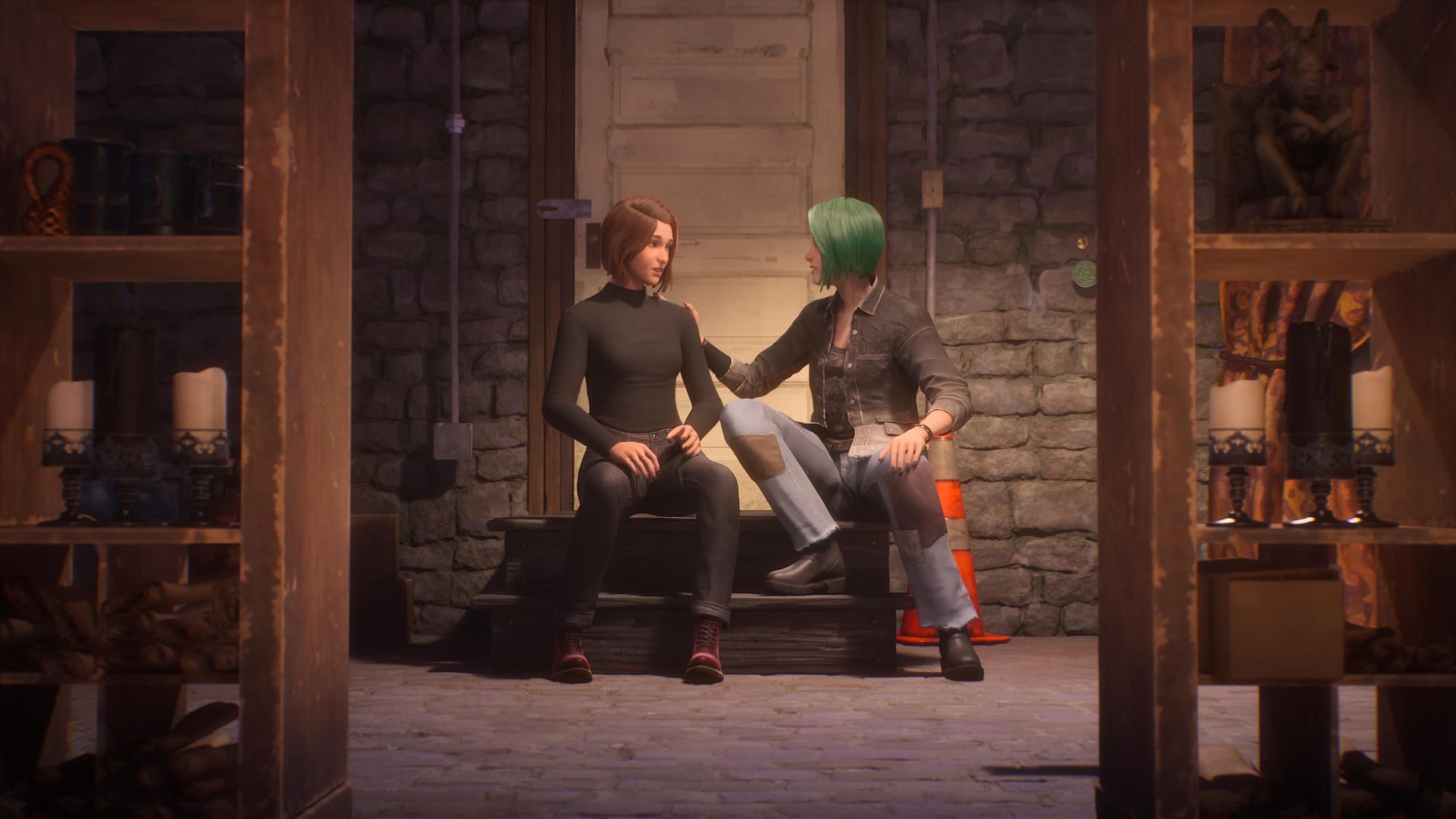
As someone who had Max sacrifice her, it offered the beautiful tension of two loved ones reuniting and rekindling the spark between them, clutching onto the second chance they have been given for fear of losing it. It provides the spunky blue haired woman with a layer of insecurity when aiding the gang with their quest to stop the arson incident, inversely fueling the meta flames of her anomaly of an existence. This is Reunion’s writing at its best: when it doesn't have to contend with bending over backwards to justify its decision to bring back prior plot points, instead letting the tender and personal struggles of the two leads breathe.
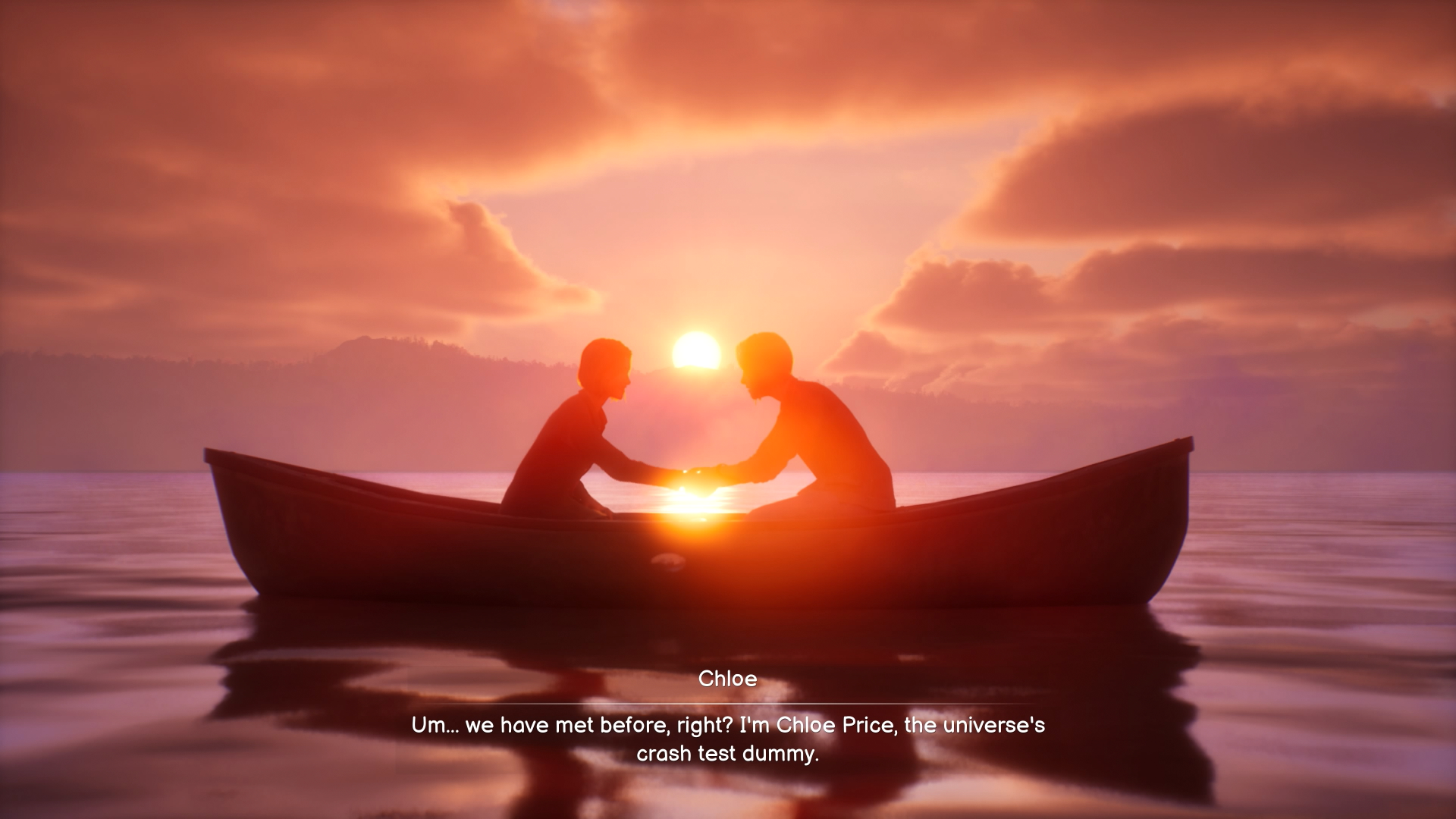
This is arguably the part I was most skeptical of, and Reunion crushes it. Watching these two fruity gal pals being fruity with each other filled my fruity soul with joy. What makes these familiar interactions fresh again is how it takes advantage of the passage of time to add layers of maturity. Their exchanges demonstrate a transition from adolescence to adulthood, while still embodying the core traits and chemistry that brought a warm smile to my face all those years ago. Again, I have issues with how the resolution absolves the emotional gut punches the trilogy has had for this duo, but it still gave me a journey to fondly look back on despite its poor destination.
That leaves the overarching mystery and supporting cast, and they are the most “just okay” parts of the game. Nothing superb on the level of Chloe’s characterization, but nothing frustrating like the handling of Max’s arc. The biggest boon is how the arson incident reframes its cast of mostly known quantities. Seeds of doubt are planted at the feet of these established heroes, providing intrigue with finding which one of Max’s colleagues and classmates would burn down their university. It doesn’t completely redeem Double Exposure’s lackluster cast, and this title still never got me invested in their individual plights, but the premise at the very least gives the gang a droplet more depth.
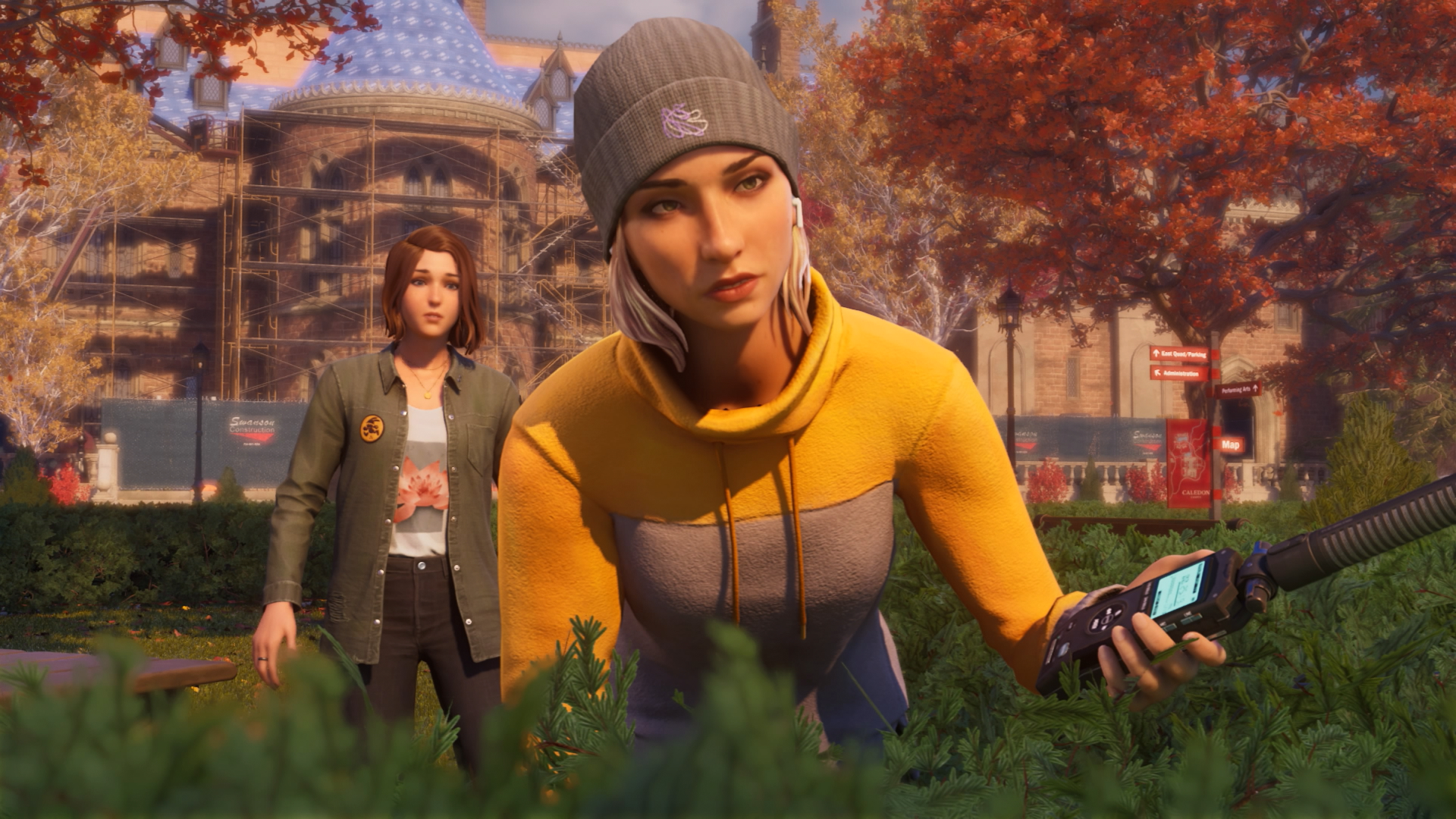
Similarly, the mystery starts out blazing with promise, only to settle into a tepid candlelight. Each puzzle piece provided does a decent job of forming a bigger picture, but the standard reveals and questions posed rarely progress beyond a comfortable stride. By the time things finally pick up, the climax is just around the corner, ending right when the mystery demonstrates strong pay offs. Circling back, I feel that the abundance of expository writing dedicated to the nostalgic aspects is the critical issue. It takes time away from fleshing out the mystery and cast, components that could have elevated the tale to be more than just above average.
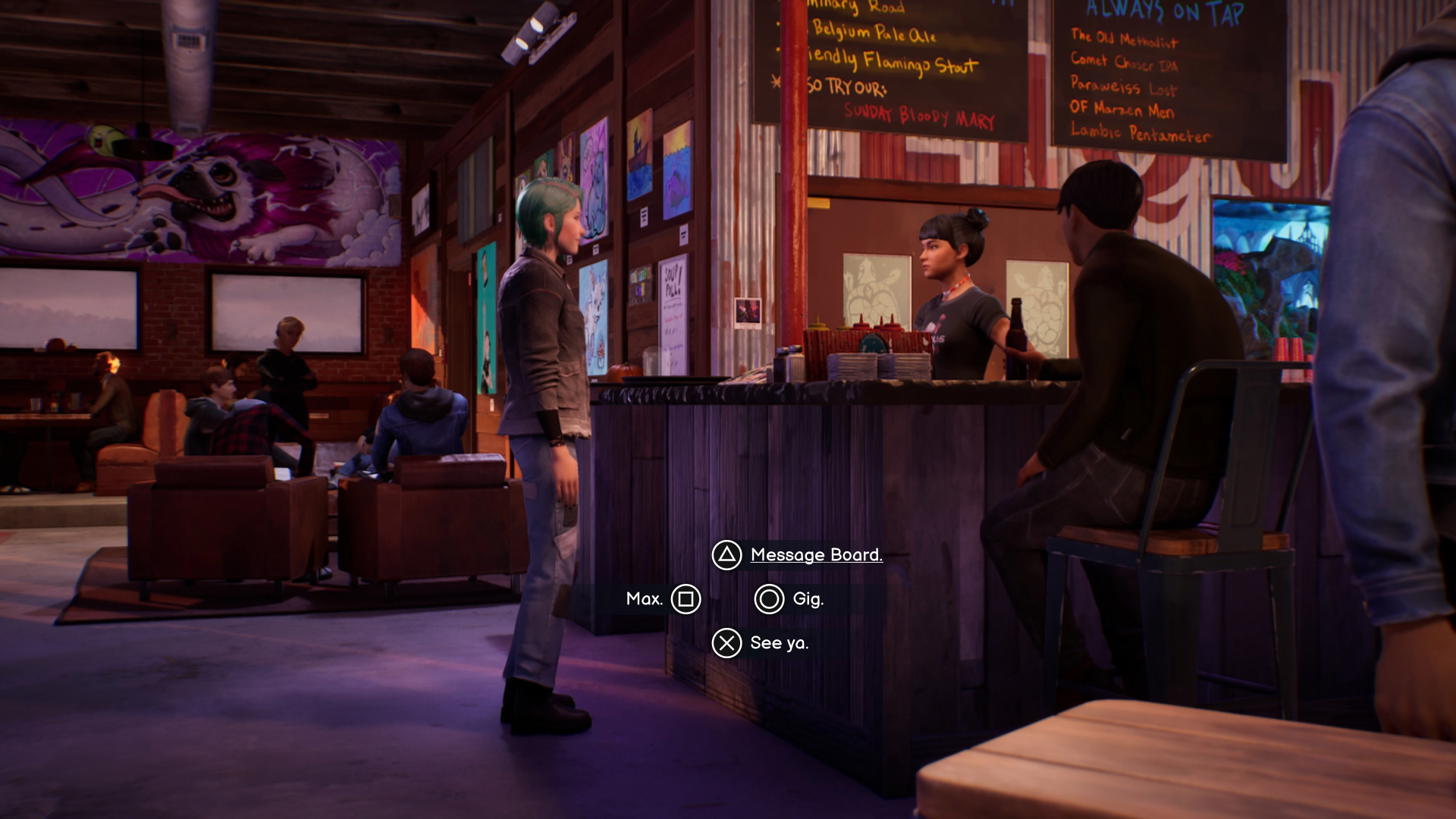
As with its prior entries and other mystery adventure games of this style, Life is Strange: Reunion is light in the gameplay department, arguably even lighter than its predecessor thanks to the shorter playtime and cheaper base price. Max and the now-playable Chloe navigate the insides, and surrounding locals, of Caledon University, sleuthing various suspects to gather clues. Interactivity comes in the form of pressing for information using dialogue prompts. Pivotal story decisions can occur that impact how future events play out in addition to shaping the duo’s relationships with the supporting cast. Much like the previous games, a good deal of these choices are performative. Most core story beats will play out nearly the same way, barring differences in flavor text.
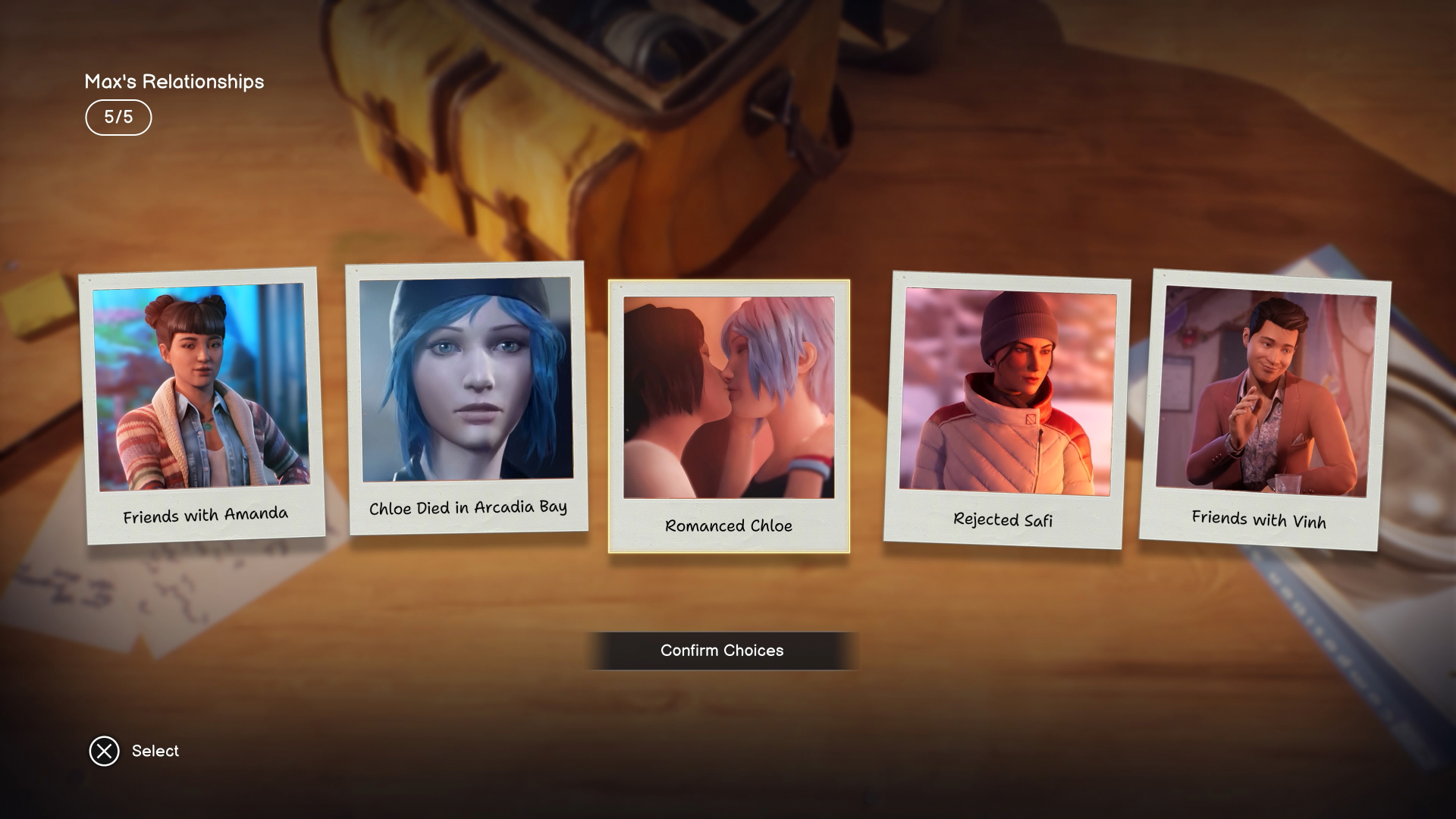
The main exception is what choice the player made at the end of the first game, which Reunion opens with by offering a selection of what decisions they made through the course of the series. As I’ve established, I played Reunion through the lens of sacrificing Chloe. In contrast, our very own Adam ventured through the game sacrificing Arcadia Bay for her playthrough.
Adam Moreno: I chose to follow the timeline where Max chose to save Chloe over Arcadia Bay, saved Safi, and didn’t romance anyone in the Double Exposure. The big moments were when Max was first freaking out that Arcadia Bay was “never destroyed” and Chloe had recently spoken to her mother. Throughout the story, the fact Arcadia Bay was back was brought up a few times, but the biggest was when Safi tried to get Max to do something by saying they could leave for her recently non-destroyed home for “closure.” After hearing how the reaction went with Chloe “coming back from the dead,” I think that choice seems to have more of an impact overall than letting Arcadia Bay be destroyed. I really enjoyed the relationships between Max, Chloe, Safi, and Moses.
Despite Double Exposure’s SHIFT powers being absent, rewind returns to offer a supernatural spin to the tried-and-true gameplay formula. The primary framing of these powers is witnessing how conversations and events will play out, and using future insight to change the past. With that being said, the implementation feels slightly limiting thanks to this entry’s smaller scope. There are barely any new locals to explore in Reunion, leaving a lack of compelling instances to use Max’s powers to stop the motion of fate’s Rube Goldberg machines. The height of gameplay creativity in each set piece boils down to finding an object and placing it in the correct location before the time limit ends. Even the lengthy tutorial segment showing the potential of the time bender’s powers has more unique situations absent from the rest of the game.
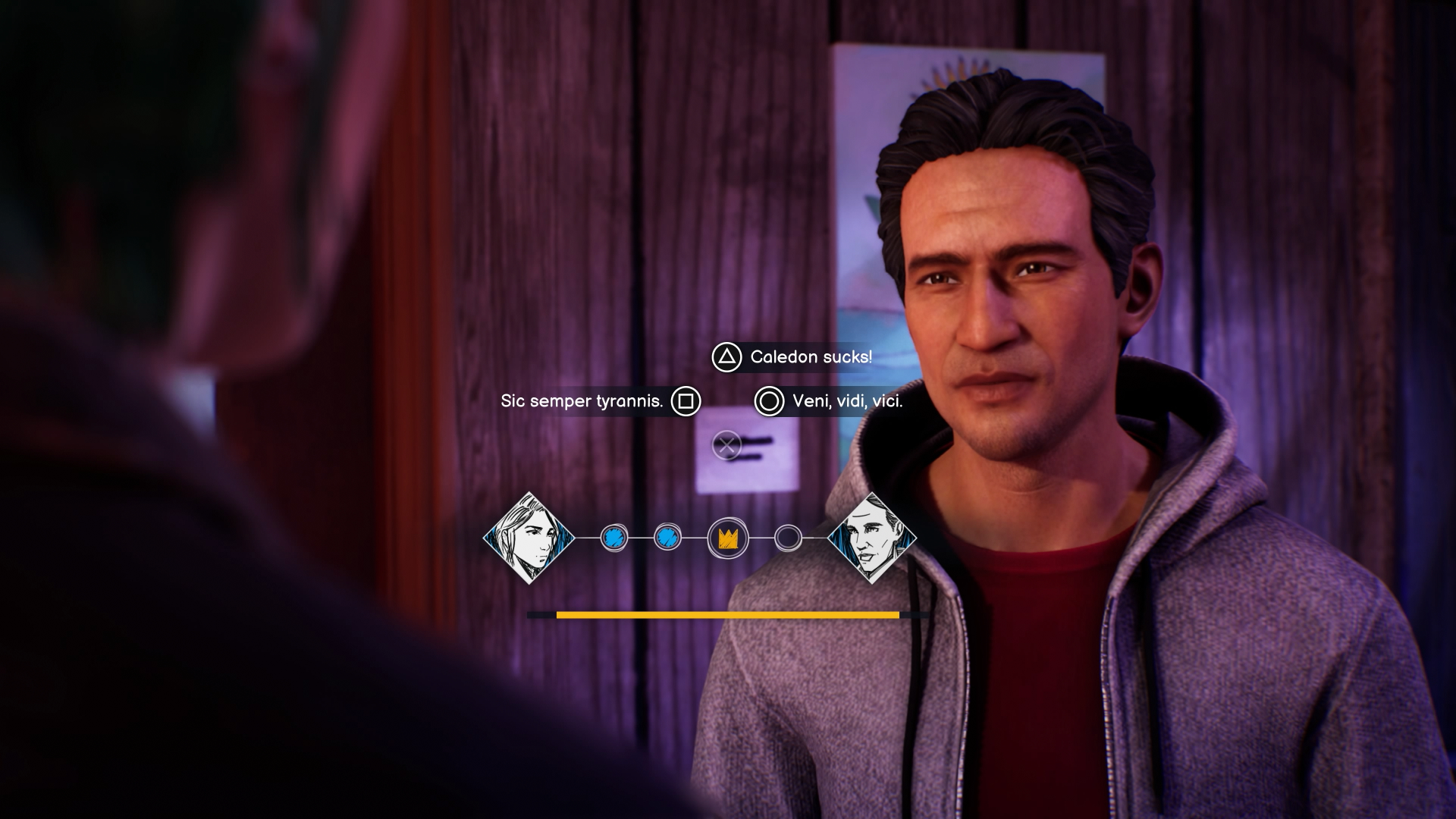
In contrast, Chloe’s lack of supernatural powers means she has her own unique gameplay gimmick called Backtalk. Although these occur once in a blue moon, I really dug when they did. This has the mischievous one of the duo engaged in heated discussion with an opponent, requiring her to correctly answer questions multiple times to succeed. These answers can be gauged by exploring the surrounding environment, or paying attention to current or prior dialogue exchanges. It is an awesome way to integrate the mild gameplay of the genre into the story, giving stakes through an interactive framework that tests the player’s comprehension skills.
So, with the story and gameplay being a mixed bag, it’s no surprise that Reunion’s aesthetic aspects are also a mixed bag. Both Adam and I encountered similar strengths and weaknesses playing on PS5. Starting with the positives, the audio presentation is superb across the board. Every voice actor does an excellent job, especially Hannah Telle as Max and Rhianna DeVries as Chloe. These two inject so much warmth and energy into their performances, inviting us into seeing their relationship get picked up after ten years. Even a week later, despite my criticisms of the title, I smile fondly thinking of the scenes they brought to life. My main gripe regarding the voices is the lack of different lines or takes when repeating similar information. The worst of it is an NPC protesting on campus that exclaims the same singular sentence ad nauseam. The music is also solid. While I don’t remember any tracks off the top of my head, the melancholic serenity sells the atmosphere of reflexive finality, simultaneously sad yet blissful.
Sadly, it’s the visuals where the presentation falls apart. On the whole, I don’t mind the art style lifted from Double Exposure. To me, the uniqueness of the original’s painted sheen translated into a realistic style well. Would I have preferred a more direct expansion of the first game’s visual identity? Yes. But for what it is, the current look still retains the vibe of its debut title. In particular, the fall season the game takes place in makes for gorgeous autumn scenery with rays of sunlight shining through the orange leaves. It provides a fresh look following the school’s winter wonderland of Max’s previous adventure.
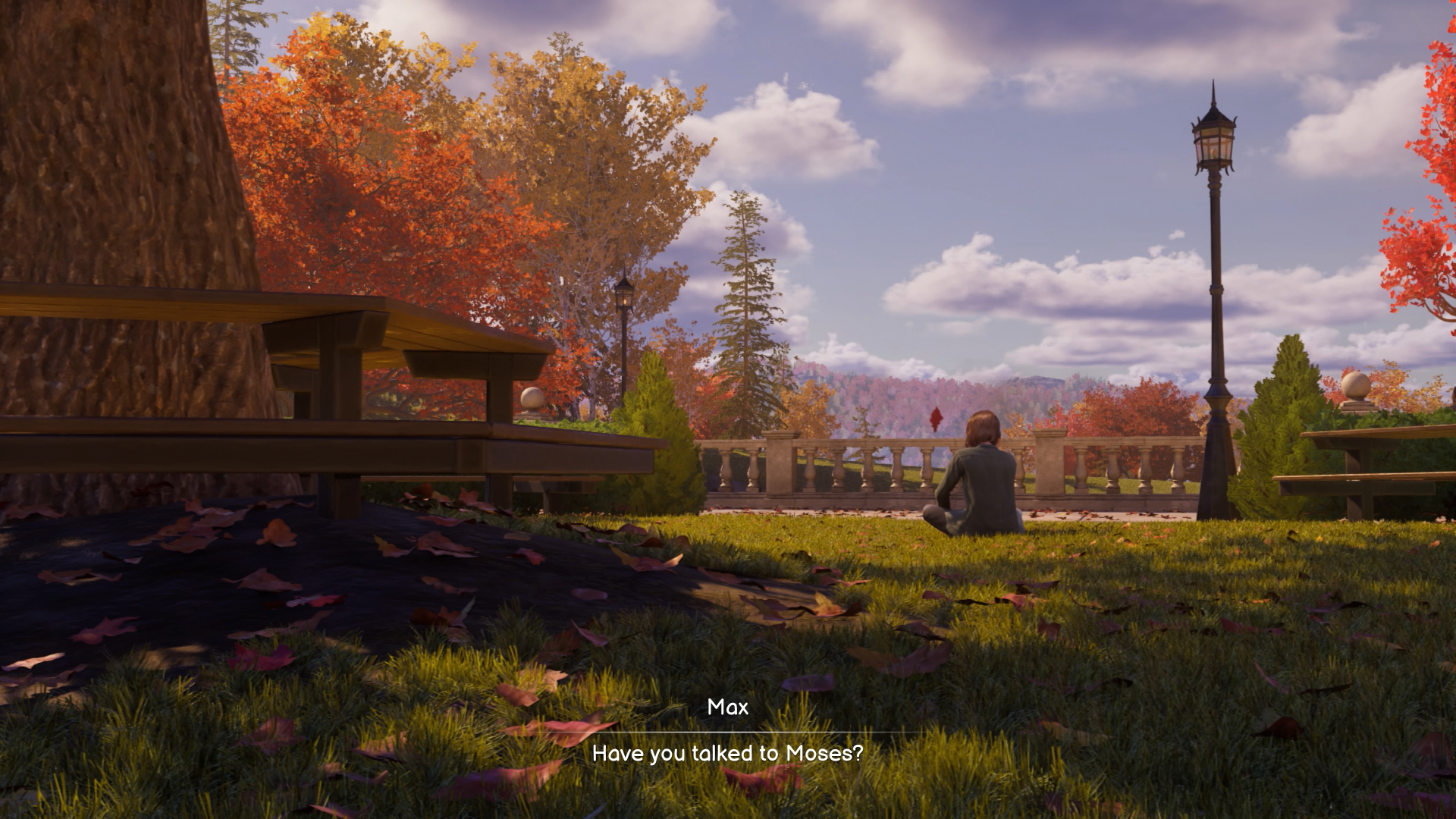
Yet, it is this reuse of Double Exposure’s engine and locations that make the visual bugs all the more baffling. Sure, it is nice that returning areas possess more environmental detail, but it's frustrating that it's at the expense of the game's performance. Texture pop-in is abundant when loading into a new area, even persisting when walking around them too. Clipping is also a noticeable. Shout out to that one NPC where half of their waist would clip into themselves when standing at a certain distance. Even when playing in the 60fps performance mode, I would get occasional framerate dips. Nothing as dire as the pop-in, but frequent enough to be noticeable.
Life is Strange: Reunion
Alright
Intentional or not, I can't help but read Life is Strange: Reunion as a metaphor for Deck Nine’s tenure with Max’s story. A reactionary and nostalgic finale that delights just as often as it frustrates. When viewing Reunion purely as a side adventure to see cute scenes of a duo we have grown to love, I can’t say this entry didn’t do its job. After all, I was smiling alongside them. But as a finale to a trilogy, it is a smile built upon tearing down any emotional weight that made these characters stick with us in the first place. Max’s quest to stop an arsonist isn't really a story with consistent escalation or character growth. Instead, it is a stream of moving, emotionally cathartic events that burns down the foundations propping up its bittersweet smile.
Pros
- Yummy yuri fan service between Max and Chloe
- Chloe’s shockingly great characterization
- Superb voice acting and art direction
Cons
- Narrative choices backtracks the series’ impact
- Abundant amount of unconfident exposition
- Underutilized gameplay mechanics
- Consistent visual snags
This review is based on a retail PS5 copy provided by the publisher.