High on Life 2 and its predecessor are games with so much fun and charm that their obvious flaws never manage to ruin the experience. This is the kind of series that we need more of, the dying breed of fun single-player shooters which derive all their enjoyment by leaning into their gimmicks, without bilking the audience or insulting their intelligence. All of the elements come together into something engaging and memorable, if not special in the way I want art to try to be. The bizarre comedy, the alien guns with their own personalities and quirks, the fast-paced movement, and the options to use your environment as a weapon all form an experience that I'm glad I didn't miss out on. Whatever complaints I have, and rest assured I have many, this is a series I can easily recommend to those who can tolerate its brand of humor.
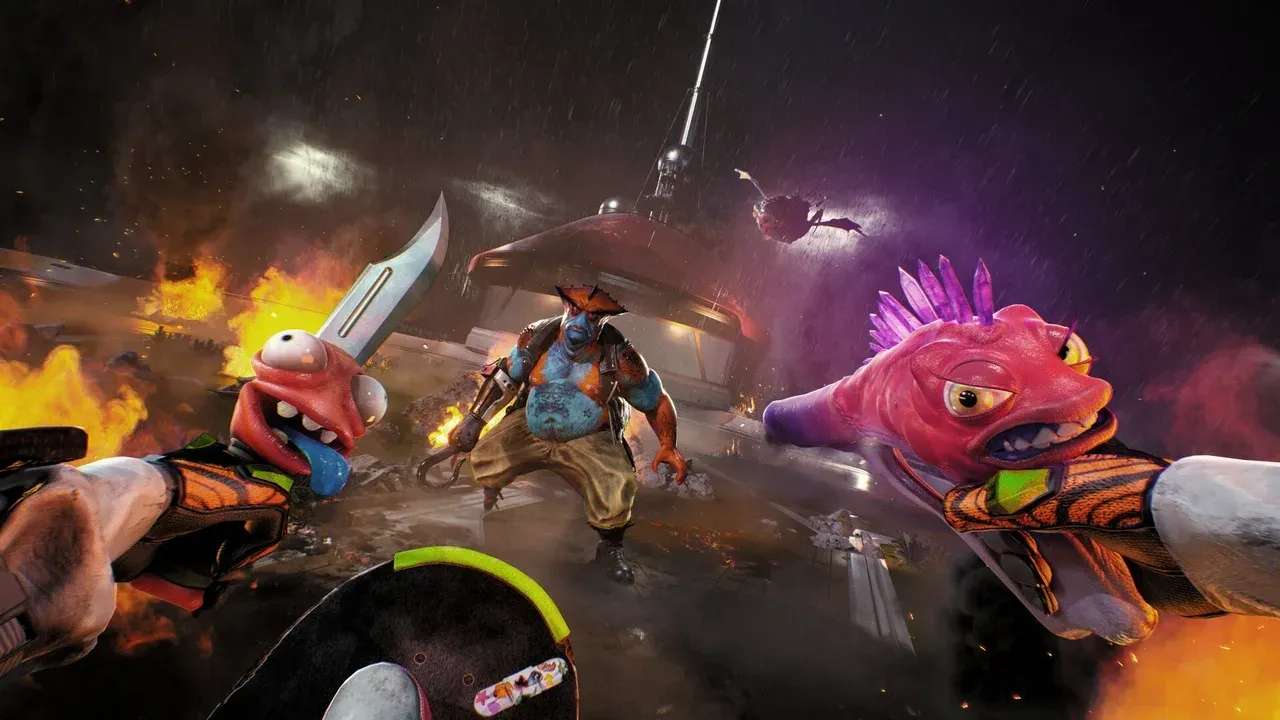
I did not review the prior game for GamingTrend, but I do generally agree with my learned colleague's opinion, though I ended up with more complimentary feelings overall. I suspect that's because he played it on launch, while I got it a few years later with all the DLC for a steep sale. That's where this kind of unpretentious shooter belongs, and frankly how I recommend playing the sequel. For full price on launch, this game, its predecessor, and especially the High on Knife DLC are not reasonable. But down the line, the outlandish adventures and sense of fun make it an extremely rewarding experience.
Even waiting a few weeks has been marvelous for High on Life 2. The fact that this review comes so late after launch is both to the game's detriment and benefit. For the first week or two after the game came out, I was convinced that it was not fit for release. Despite playing on the same PC and Steam Deck that ran the first game with no issues, this game's poor optimization made it nearly unplayable. Load times were unacceptable, and I'm still met with a few minutes of "Loading Shaders" every time I load up. Even at the lowest settings, the game chugged tremendously in minor combats, and one of the most important NPC's had a glitched face for a long section of the game. All that pales in comparison to the numerous soft-locks which forced me to restart the entire game after hours of playing. Thankfully, these issues have been resolved or are on their way. Performance is generally weaker than the first outing, but the game is far more playable than when it launched.
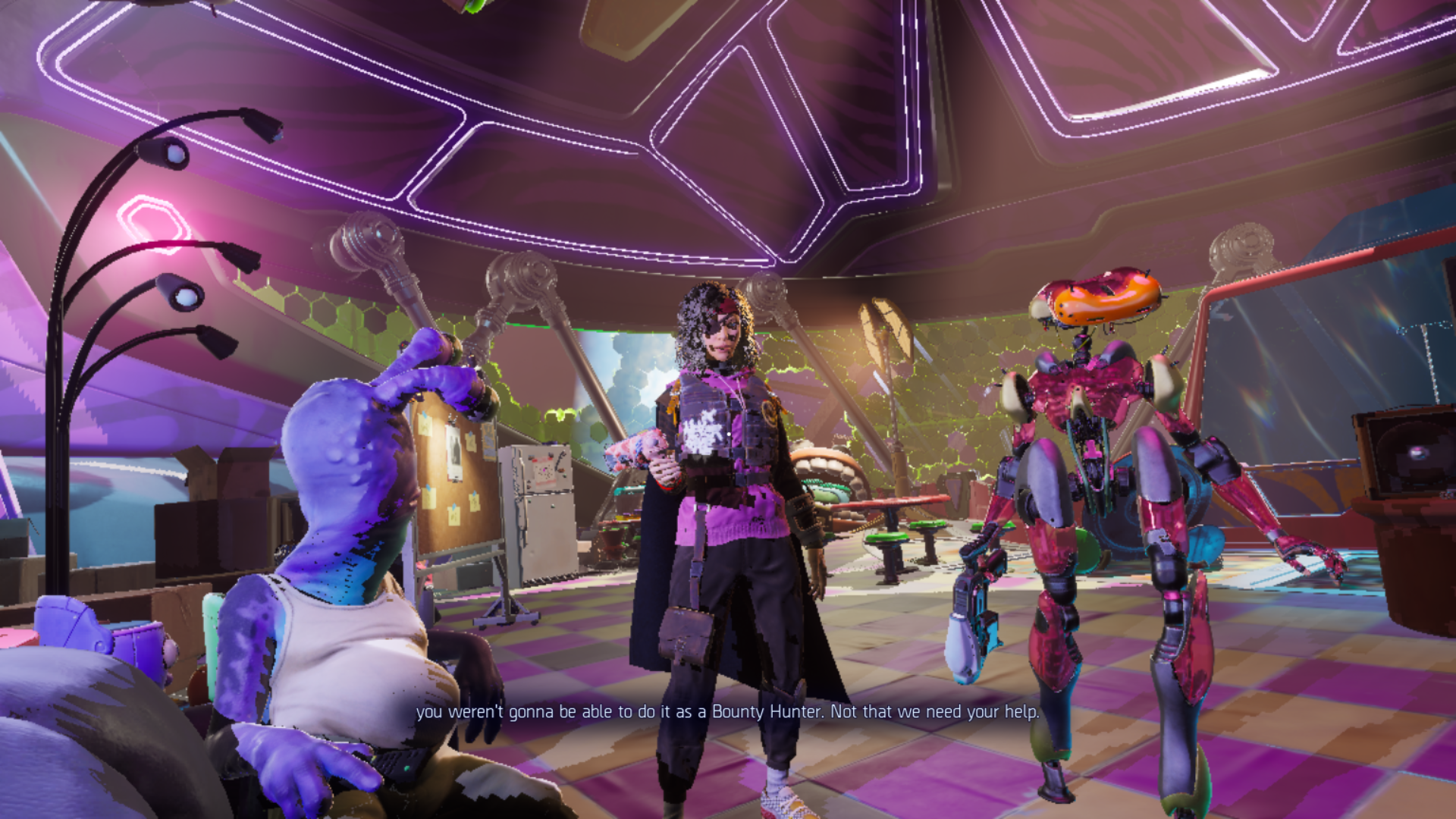
Both games are hampered by one weakness that sits at the core of the experience: the conflict between the humor and the gameplay. Don't worry, this isn't one of those interminable academic takes about "ludonarrative dissonance", I'm talking about something much more fundamental. While the jokes are happening, the gameplay usually has to stop. So much of the humor is in the strange, meandering stories of the NPCs you meet. Some of it happens while you're playing, but the vast majority asks you to stop what you're doing and wait for the speaker before you can move on.
In a game with so much momentum, this is painful. Most of the time, you're jumping off of platforms, zooming around the stage on your skateboard, and setting up shots with your colorful, inventive weapons. Then you get the opportunity for a joke, which makes you stop what you're doing, put down the controller, and wait. Because of the improvisational nature of the humor, it comes off as very hit or miss, encouraging you to ignore it. Are there great jokes in there, and some fun plays off of the interactive nature? Sure, but most of the time you won't bother to listen. I very much felt the same way with Control, where no matter the interesting cosmic horror in its game files, I couldn't be bothered to stop and read every 5 minutes when the rest of the game is flying around, shooting people, and tossing explosive objects to the beat of rock music. It just isn't a complimentary way to design the experience.
All that said, High on Life 2 does experiment with its interactivity, along with the visuals and written humor, in ways that let it stand apart from the first game. I won't spoil specific elements, but there are more than a few sequences where the designers show they were being thoughtful about how you can use humor in the context of a videogame. This sequel is generally more of the same, but there are enough new ideas and mechanics to keep things fresh.
Much of the new fun comes not only in the stable of Gatlians to fill your arsenal, but their utility in exploration. Early on you get a skateboard that lets you ride walls, grind rails, and kick at enemies. There are animals to pick up and use as weapons (if a bit too rare), but the grandest experience comes from your new guns. All of them have more features to interact with the environment. You could already slow time in the last game, but now your guns can activate remote switches, reveal hidden items, help enhance jump pads, and generally make you see the land in a different way.
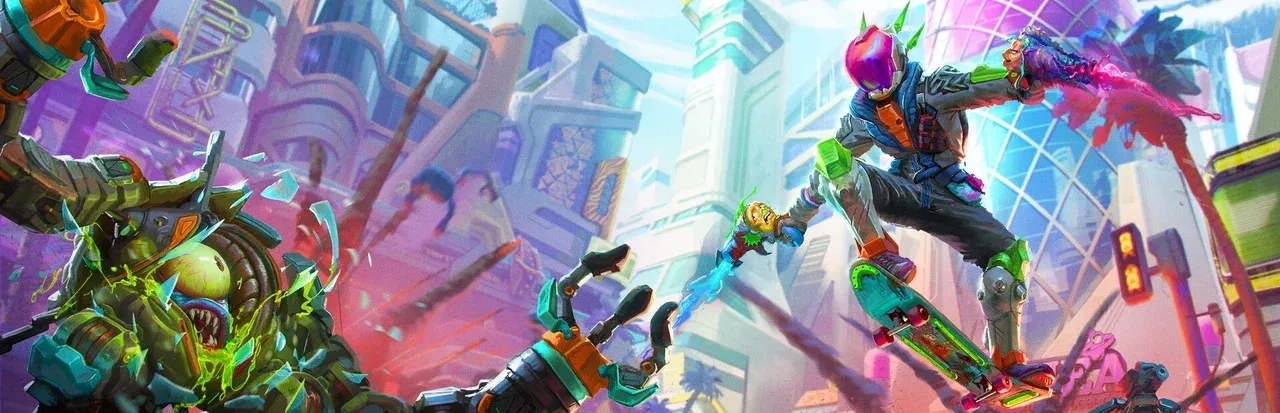
That land and the exploration therein is inconsistent. There is more to find and explore, but in a world with a hair less personality than for the first game. Because the hub world is generally larger, with more secrets and skateboard trials and chests to unlock, it loses some of the cohesion and memorability than that of the first game. This extends to most levels: less backtracking, more secrets, but also less to make it feel like a breathing place. Generally the colors are more muted, with more large similar buildings stacked together, but there are plenty of exceptions and zones that add their own flair to the game.
The skateboard does bring some jank to the experience. It's not as smooth or consistent as you would want it to be, and combined with minor bugs on some of the environmental ability, you'll find yourself not wanting to bother with all aspects of exploration. The game simply has too many collectables with not enough impact, at least for how I engaged with it. The jank makes it harder to know what you aren't skilled enough for vs. when you don't have the right upgrade yet.
The story tries to build on the prior game and take itself more seriously. This is partially successful, giving you more context for the setting, its conflicts, and their effect on the characters you've been getting to know. It fails in that this is a zany comedy game about alien drug dealers, and some of the magic is lost in trying to ground that. It could work, and the game's commentary on the pharmaceutical industry are certainly rife territory for pathos, but these are modern Rick & Morty writers we're talking about here. These are people that will insult their own audience for still giving them fame and success. Good writing is just not what they're up for.
Whatever the bulk of text may suggest, I actually enjoyed High on Life 2 quite a bit. This enjoyment got better and more consistent the deeper I got into the game. The longer it goes, the more it steps into its own. More guns, more ways to experience the world, and weirder ideas abounded the deeper I got into the game. By the end of it, I was as glad that I gave this a chance as I was with High on Life, and I'm certain that many people will feel the same way... provided you wait a year or so and pick this up on sale.
High on Life 2
Alright
A fun but flawed sequel that doubles down on the first game's quirky humor and inventive gunplay while adding new movement mechanics and environmental puzzles. However, technical issues and a core conflict between comedy and momentum hold it back from greatness. Best experienced on sale after patches.
Pros
- A variety of living weapons with unique personalities that double as exploration tools
- Skateboard adds satisfying movement options and environmental interaction
- Genuinely creative comedic sequences that leverage interactivity
Cons
- Humor frequently forces gameplay to a halt, killing momentum
- Technical issues (performance, bugs, soft-locks) persist post-launch
- Less cohesive world design and too many unsatisfying collectibles
This review is based on a retail PC copy provided by the publisher.