Nature games are all the rage these days. How can we take animals and their habitats and throw them into an interesting and marketable game? Throw them in a zoo? Build combo tableaus? What's going to be the gimmick?
Harmonies is a 2024 release from designer Johan Benvenuto and publisher Libellud. In Harmonies, players will draft tiles to add to their personal maps in order to fulfill common and personal goals. Each of these scoring goals will earn players points with the highest score winning in the end.
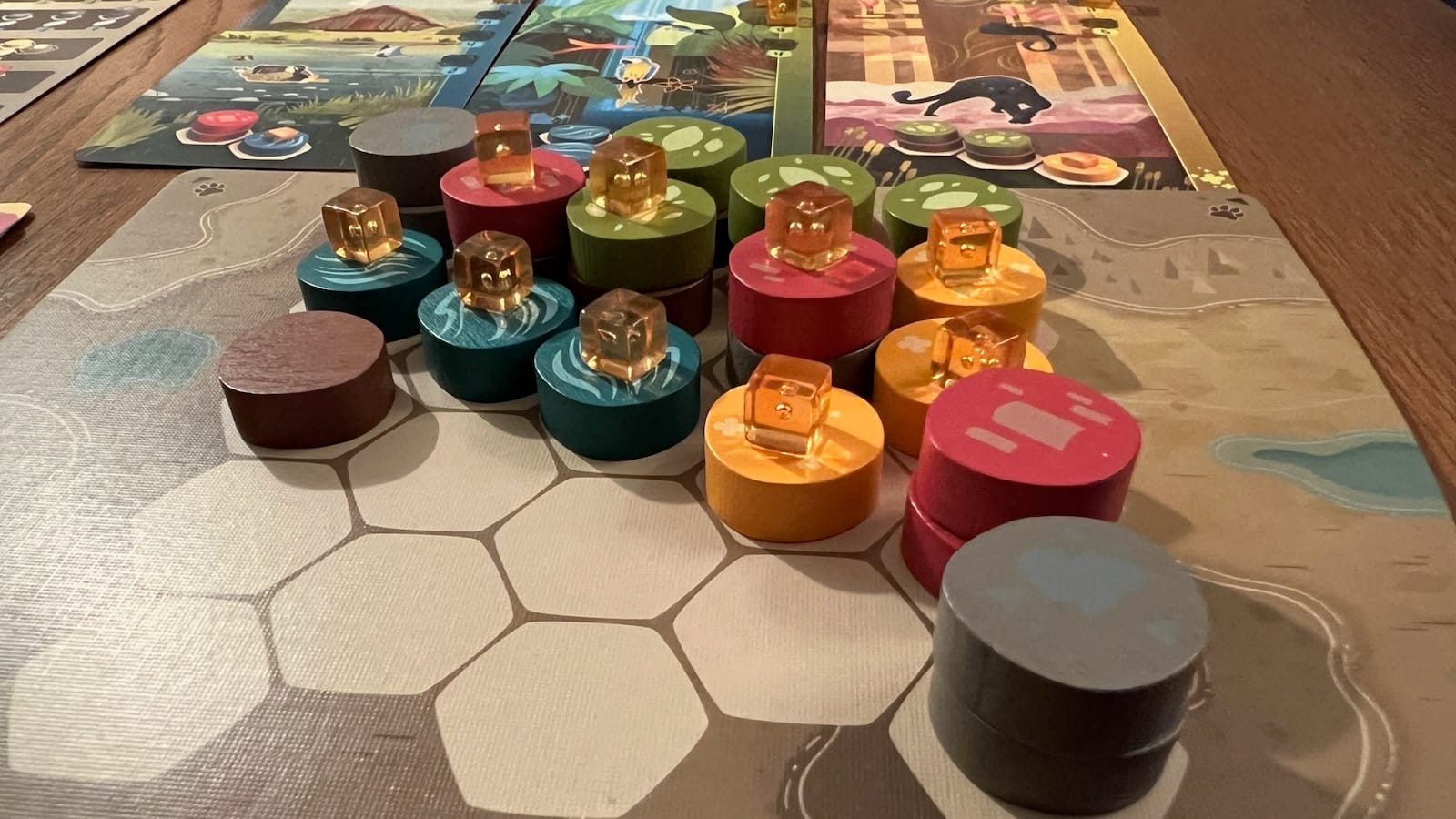
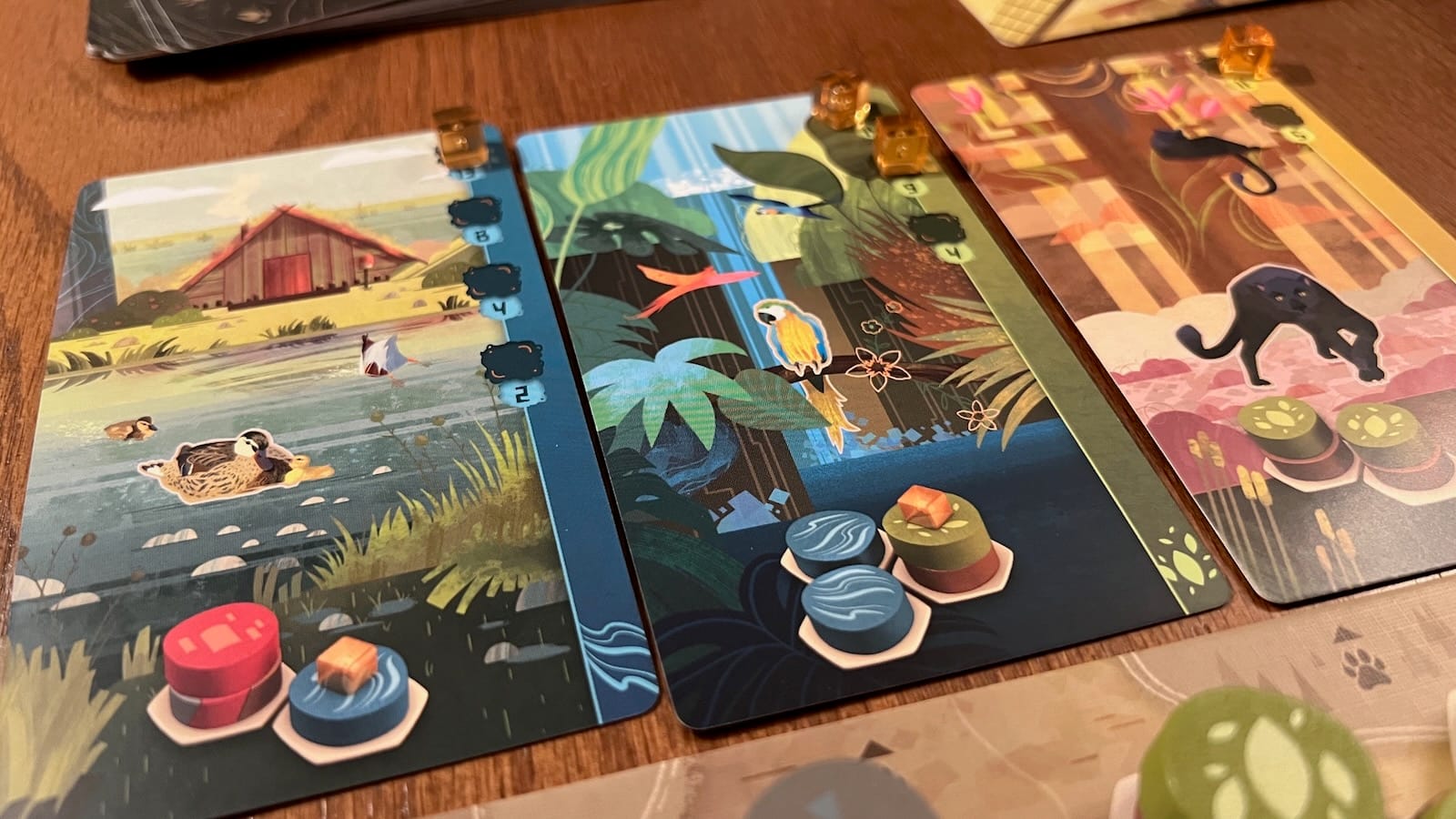
Turns in Harmonies are fairly simple. Every turn, players will choose a group of three colored tiles from a central board and arrange them on their personal board. These tiles can be placed anywhere on the board according to a few simple rules and can never stack higher than three tiles. Players may also choose one of the five face up scoring objective cards to add to their personal tableau. Each of these cards shows a unique pattern, that when present on a player board, will score points. When chosen, a number of orange cubes will be added to the corner. When a player fulfills the pattern shown, they will add one of these orange cubes to the tile denoted in the picture. The more times a player fulfills the pattern, the more points the card will score.
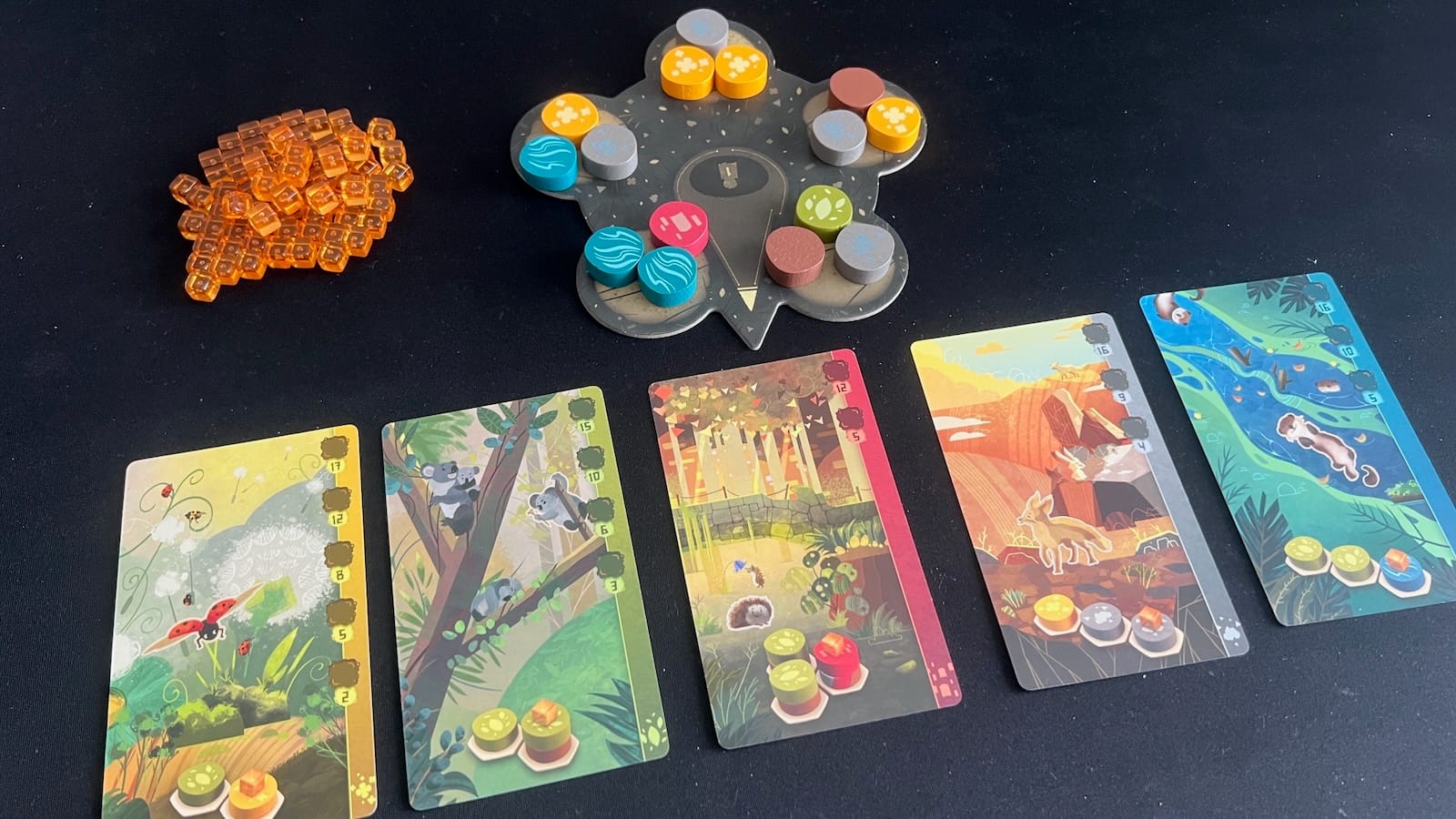
As players place their tiles, there are also common scoring goals for each of the colored tiles. Each color represents different landscapes and, for the purposes of scoring, each space on the board is an individual landscape. For example, the gray stone landscapes must connect to other gray tiles in order to score and the height of each stone progressively scores more points. Buildings will only score points if they have at least three unique tiles surrounding them. Trees will only score if they have green on top and the higher the tree, the more points they are worth. Depending on the side of the player board being used, water will score for the longest river or by creating islands. If an orange cube has been added to a tile, then other tiles can’t be stacked anymore.
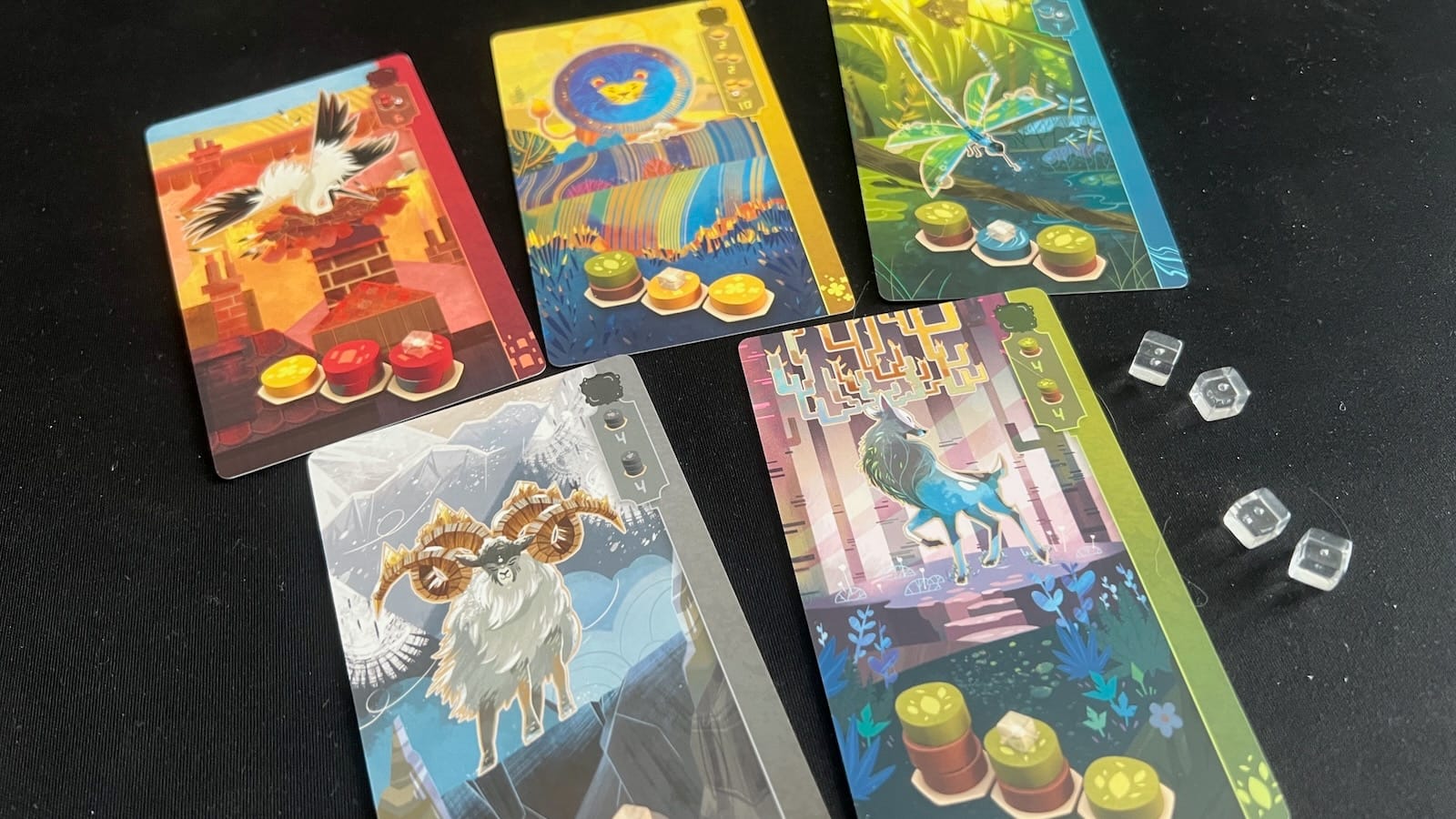
Once players have a game or two under their belt, they can add in the Nature’s Spirit cards into the game. Two special objective cards are dealt to each player and one is chosen. A special clear cube is used on this card. Once the pattern depicted on the card is fulfilled and the cube added to the player board, the card unlocks a unique end game scoring condition for the player. This can include extra points for specific landscapes or groups of connected landscapes.
After each player’s turn, the missing tiles and cards are replenished and play continues clockwise around the table. When the bag holding the tiles is empty or a player board only has two empty spaces remaining, the current round is finished and players score their boards.
Overall Thoughts
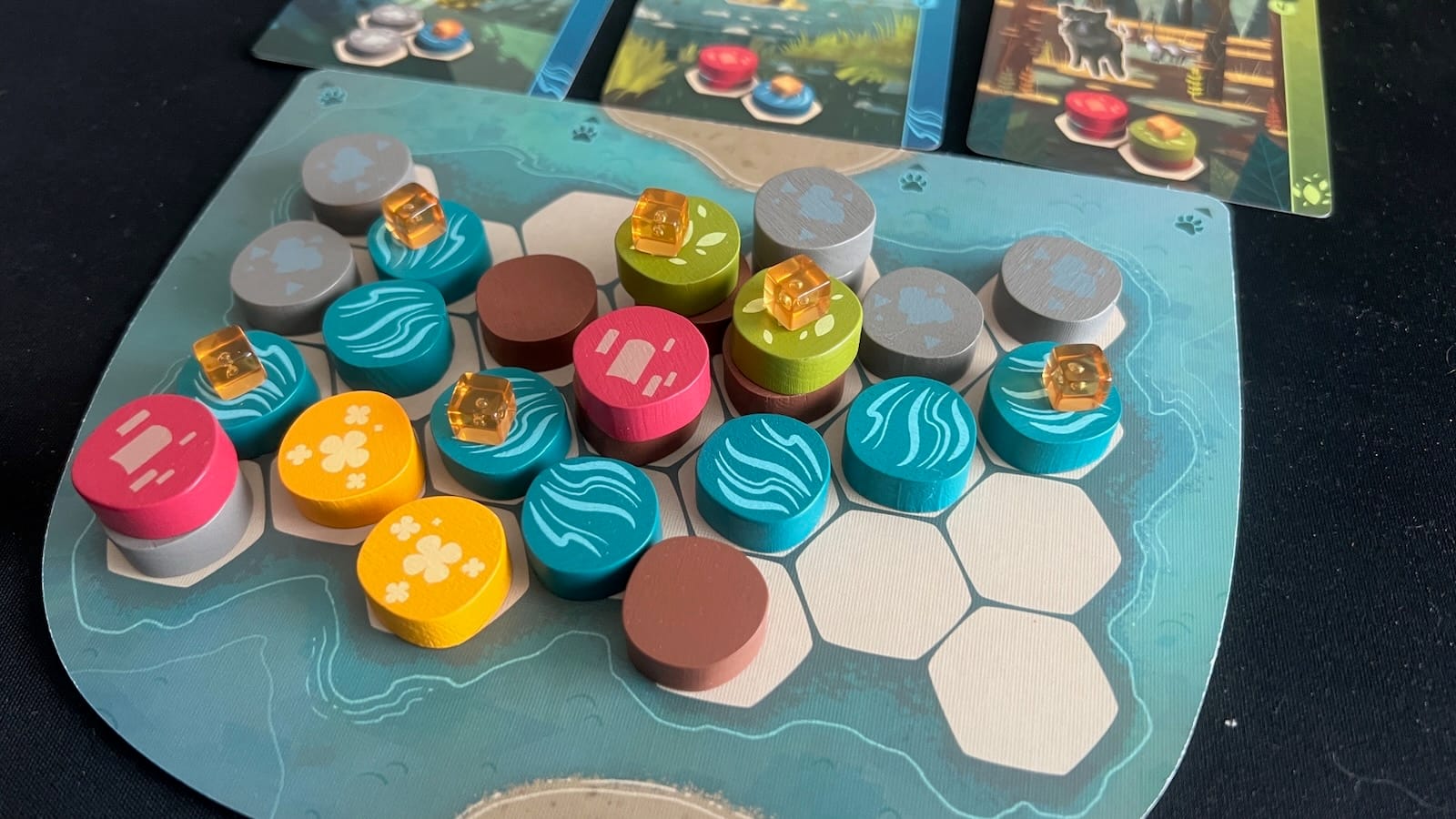
Simple rules and strategic gameplay are my sweet spot. I love it when I can teach a game in about 5 minutes, play in about 30, and instantly want to play again. Harmonies is a game that clicks after a play or two and shifts based on the tiles available and the cards you draft. The harmony comes into play by picking objective cards that can synergize with each other. Two cards may use water and building tiles to score, but one might take an orange cube on the water and the other on the building. Finding some of these synergies in combination with the common scoring can lead to some big points. Pair this with the spirit animal when using the module, and you can truly make some harmonious moves. It is also fun to play back and forth with the different sides of the player boards. The brown side is small and water is used to form long rivers, which presents a challenge when trying to optimize your other landscapes and not double back on yourself. The blue side of the board uses water to create islands, which makes smaller areas for landscapes but can score big points when paired with water cards. The game also comes with a solo mode, but it seems tacked on and is a beat your own score kind of module.
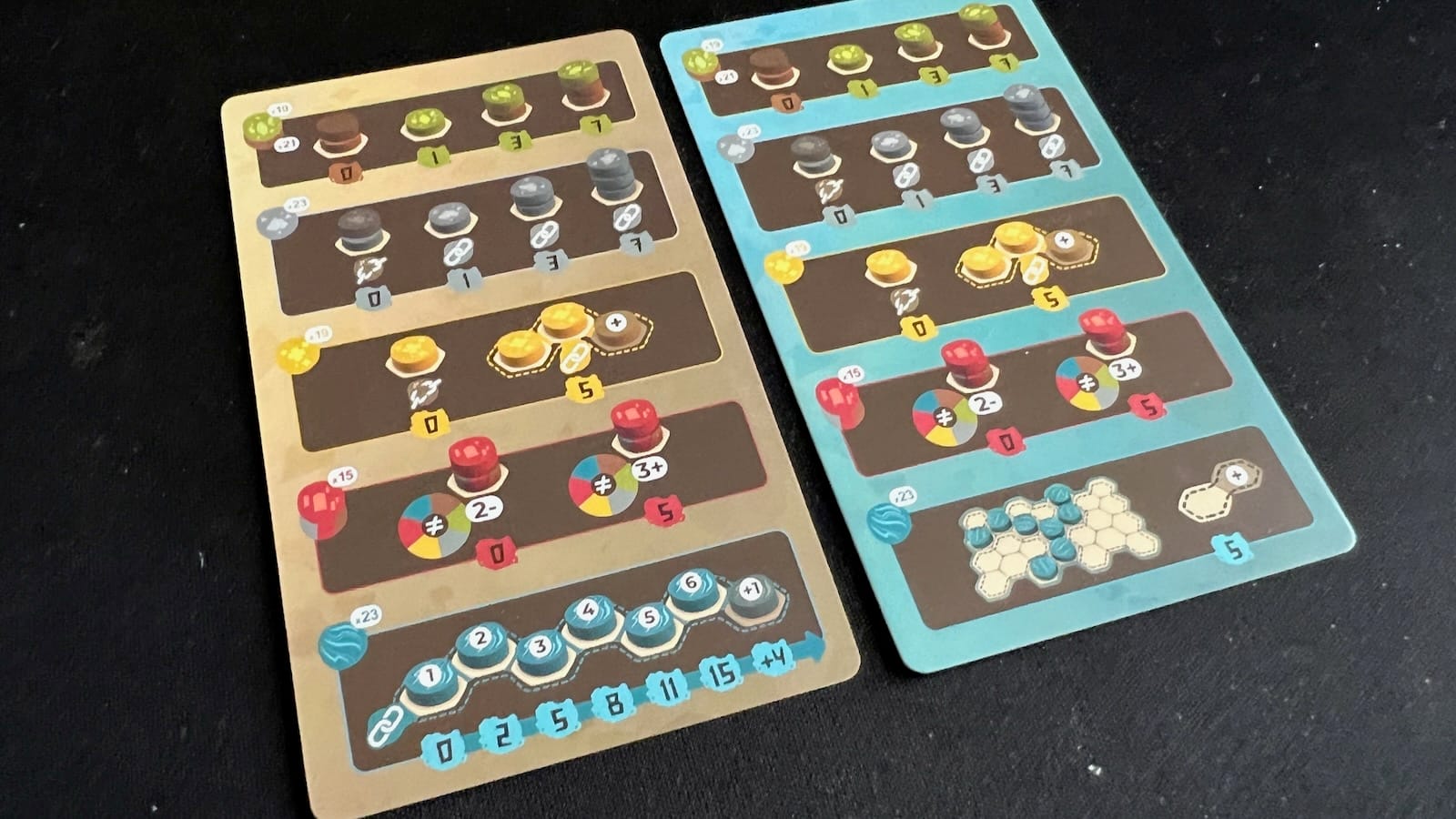
The production of the game is also fantastic. The smaller sized box has a built-in organizer to house the cubes and cards and the cloth bag easily fits all the tiles for the game. The tiles themselves are thick and colorful wood and are screen printed on both sides with symbols denoting the type in case of color-blindness. The artwork throughout the game, created by Maëva Da Silva, is whimsical and colorful and draws you into each scene. Each card is a miniature work of art and it’s fun to see a new and playful animal come out in the tableau.
Harmonies is a fantastic little game that takes you out of the 2D world into a 3D spatial puzzle. The aesthetic is light and playful and this a great game to teach up and coming gamers patterns and synergistic combinations. This is a great game for the family and someone needing a fun puzzle.
Harmonies
Great
Harmonies is a fantastic little game that takes you out of the 2D world into a 3D spatial puzzle. The aesthetic is light and playful and this a great game to teach up and coming gamers patterns and synergistic combinations. This is a great game for the family and someone needing a fun puzzle.
Pros
- Great 3D spacial puzzler
- Artwork and gameplay aesthetically pleasing
- Replayable with lots of objective cards and different boards
Cons
- Takes a game or two to get the puzzle synergies
- Solo game is a beat your own score
This review is based on a retail copy provided by the publisher.