When it comes to role-playing games, getting new players to the table can be challenging, even if there is an experienced player to introduce the game to them. I've certainly been the main instigator in introducing new players to a variety of roleplaying games, chief among them over the years being Dungeons & Dragons, and anything to help ease them into the game is welcome. Over the years, D&D has had such tools, starting with the Basic Edition in the 1980s (also known as the Reb Box), which provided a convenient entry point to the game. Fifth Edition D&D has produced various starter sets and essentials kits that serve the same function. Using a starter set, a group of people with no tabletop roleplaying or D&D experience can sit down and learn to play together. The newest starter set to hit the shelves is the Heroes of the Borderlands. As we'll see, this new set adds plenty of new tools for new players to use to get their feet wet.
I'll start out right off comparing this to the Dragons of Stormwreck Isle starter set, and I won't bury the lede: Heroes of the Borderlands is a vastly superior product. While more than double the price, Borderlands is a much better product. Inside the Borderland's box, players will find a quick-start guide, three adventures that highlight combat, exploration, and roleplaying, eight player boards for four different D&D classes, tons of cards and tokens, poster maps, and a set of dice. The box comes with a vacuum-shaped plastic insert with bins for the cards and tokens, and some storage bags for extra control over the tokens. The set of eleven dice is what I think many would agree is a complete set for standard play these days: one each of four, eight, and twelve-sided, four six-sided (common damage), two tens (one percentile), and two twenties (for advantage/disadvantage). This box is jammed full of stuff, a huge departure from the cardboard insert in Stormwreck that's just in there to take up space. For those that might not know, if you save your punched cardboard sheets and put them back in the box under the plastic insert, the packing remains tight and is less likely to get tossed around. Once you’ve punched out all the tokens and sorted through the cards, you are ready to dig in!
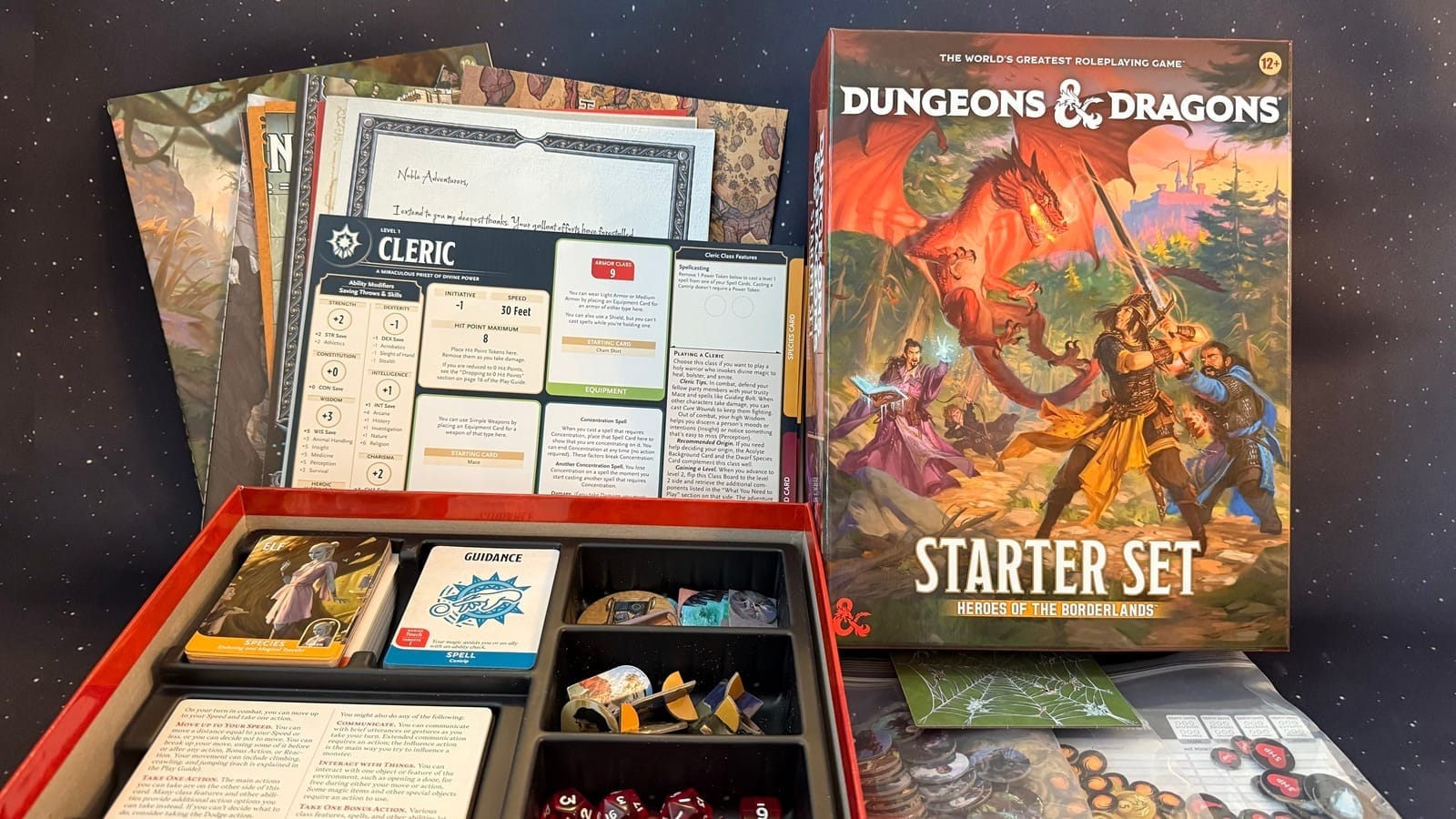
At the top of the box is a Read Me First quick-start guide that walks the players through the box’s contents and starting their first game. It explains to the players setting up their play space for their chosen character, tells the DM what to do to get started, and provides brief overviews of the three adventures. On the back, it has a convenient component breakdown with photos so you know what you're looking at in the box. Following the quick-start guide is the play guide. Both the DM and the players need to read through at least the first 20 pages of this 31-page book. It's not as cumbersome as a several-hundred-page Player's Handbook, but it's still a bit of a task. Then the DM will need to read on, but that's the way most RPGs work, and especially D&D signing up for DM is no small feat. The last ten pages of the rule guide are rules references just like in the 2025 Player's Handbook.
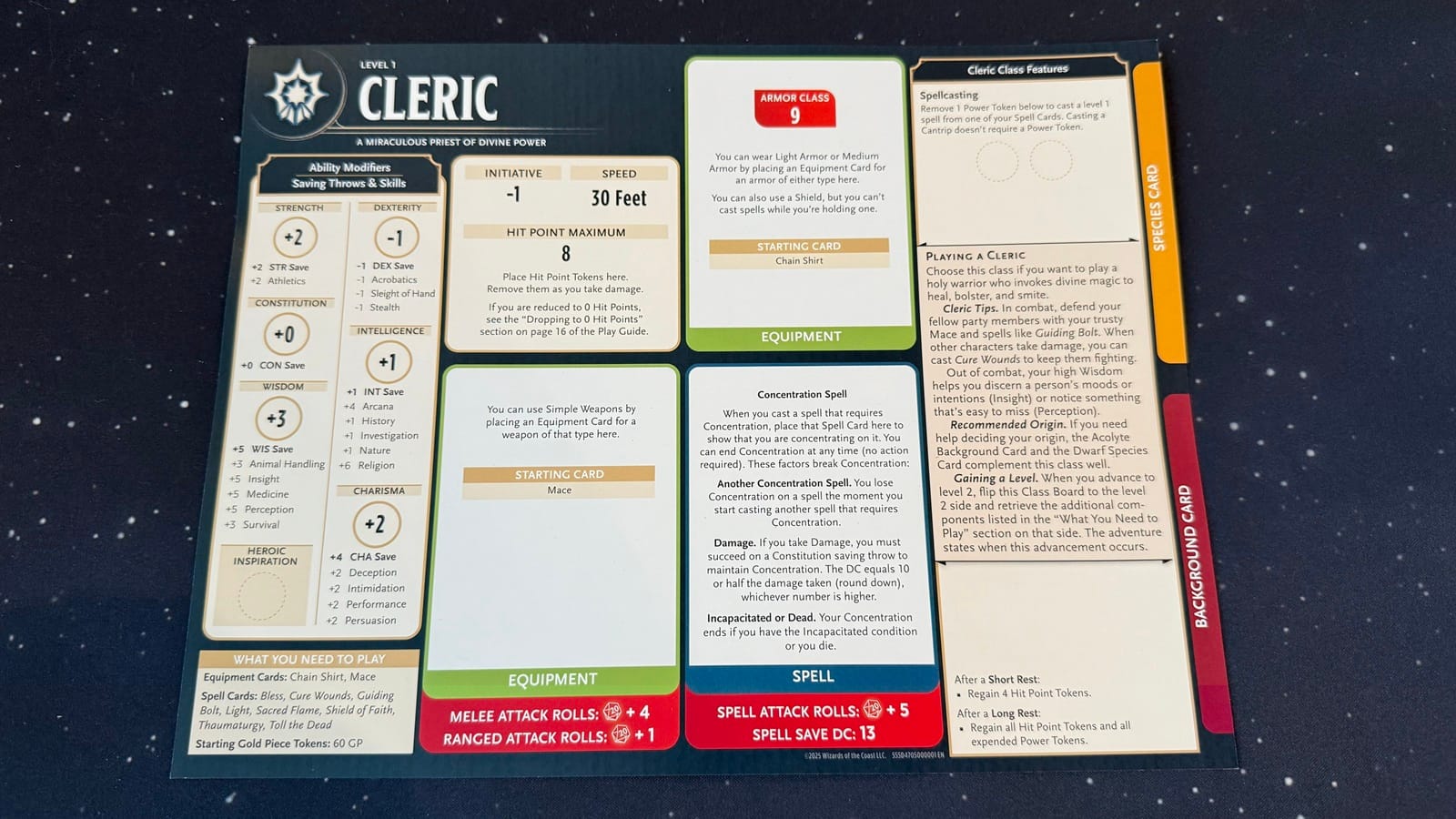
The players are given the choice between playing a cleric, wizard, fighter, or rogue. These four classes are the only options, and there is no discussion of sub-classes. Once players have determined what character they will play, they grab the appropriate class board. The two-sided class boards are slightly thicker than normal paper, two-sided, and there are two for each class. The premade characters on them cover 1st through 3rd level. They have the basic information players need for their characters, functionally serving as the players' character sheets. There are spaces on the boards for tokens (hit points and point tokens) and along the sides for placing cards for race and background. These are well designed with useful ideas, like a spot on the spellcasters' boards for a "concentration spell" where the spellcaster places any spell they are currently concentrating on. There are eight species cards with male and female versions of elf, dwarf, human, and halfling.
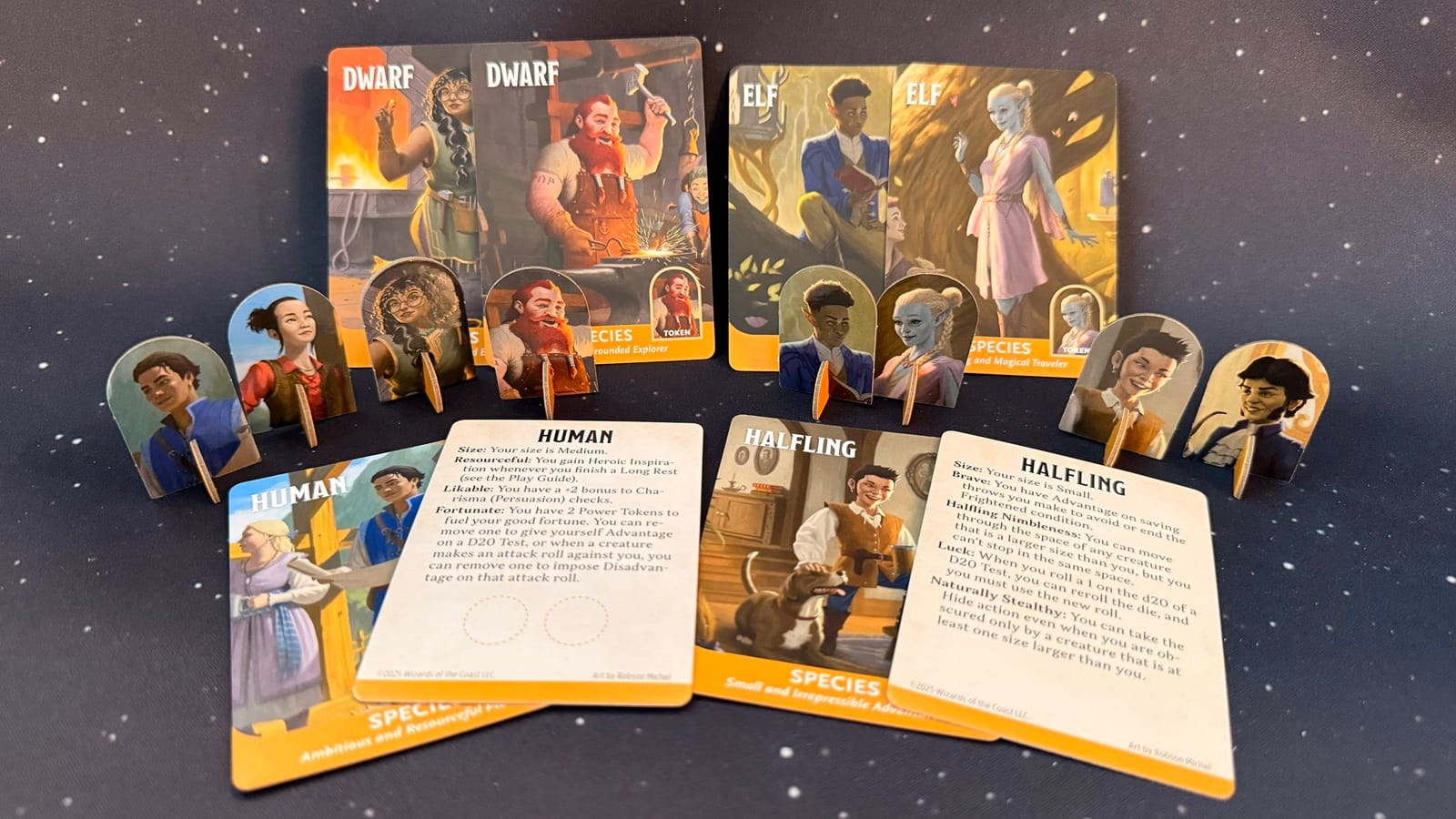
Unlike classes and species, players have more choices for backgrounds. They simply search through the cards and choose a species card, its accompanying token, and a background card. There is only one of each background card, so if two people absolutely have to play the same background, they'd have to share, but I imagine most people would be willing to compromise. Background cards have inspiring illustrations on the front, along with the name of the background, then gameplay information on the back, including listing additional spell cards the player may need if they take that background. Species cards have illustrations on the front along with an image of the associated player token for that species male or female. The reverse has relevant gameplay information, including relevant spell cards the player will need. I have a minor quibble with the class and species choices being so limited, but I'll acknowledge that including more of either would likely have had to include many more game cards, etc. My other nitpick is here with the player boards being such a departure from the way the game is regularly played. I think they are great, but I do wish they had included some basic player character sheets as options and for players to familiarize themselves with them - that's the only thing Stormwreck had that Borderlands doesn't.
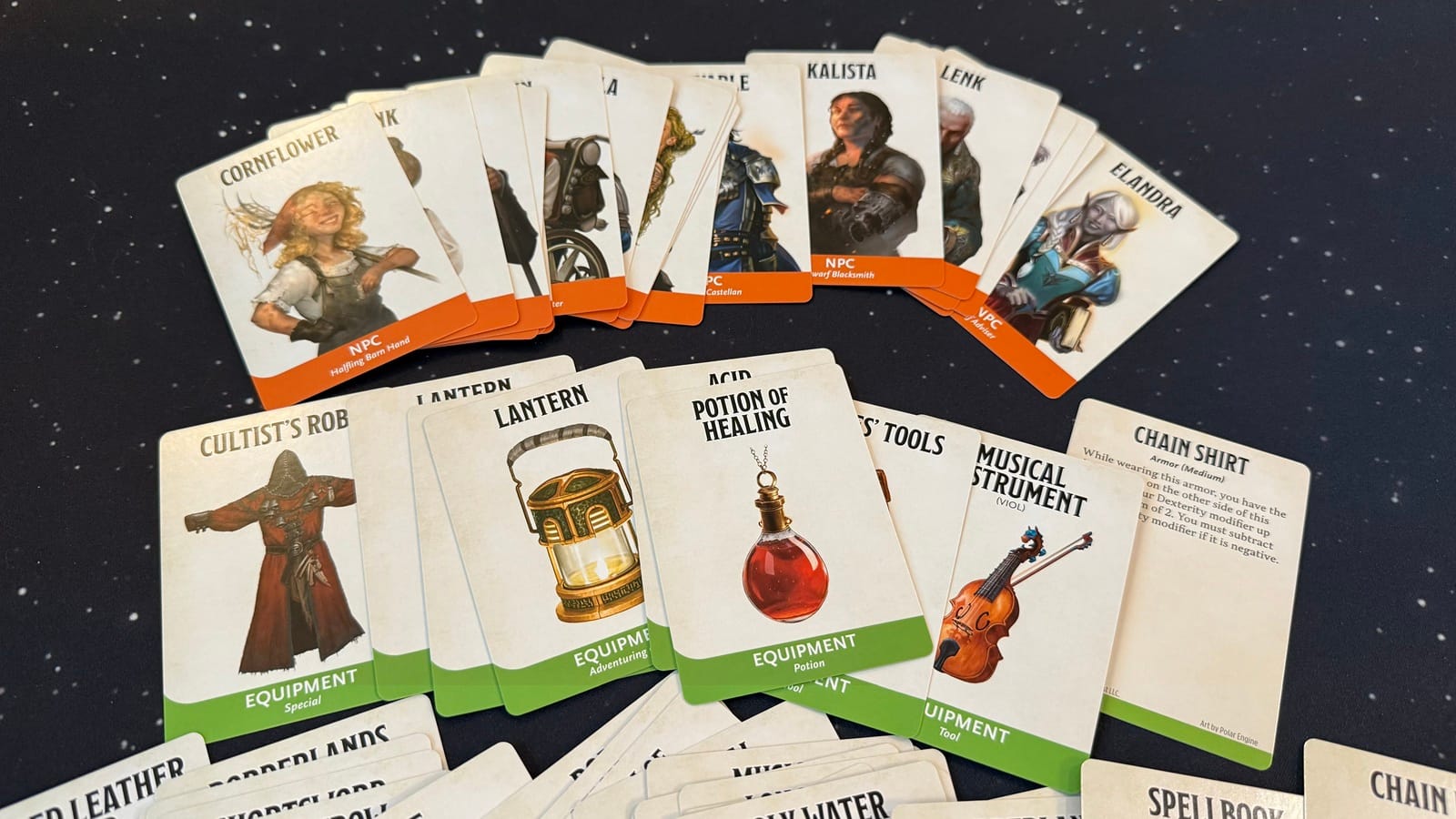
Players will have equipment and spells as well, which are not addressed in any tables in the rules reference; it's all handled with cards. Equipment cards and magic item cards have the name and an image of the item on the front and a description on the back. Descriptions include gameplay stats like range and weapon properties. Over fifty spell cards for the wizard and cleric, from cantrips up to second level. The spell cards have the name of the spell, an image depicting the spell's range on the front, and a breakdown of the details of the spell on the back. Finally, for the players, there are four reference cards for the players that break down available actions in a turn on one side and combat options on the other.
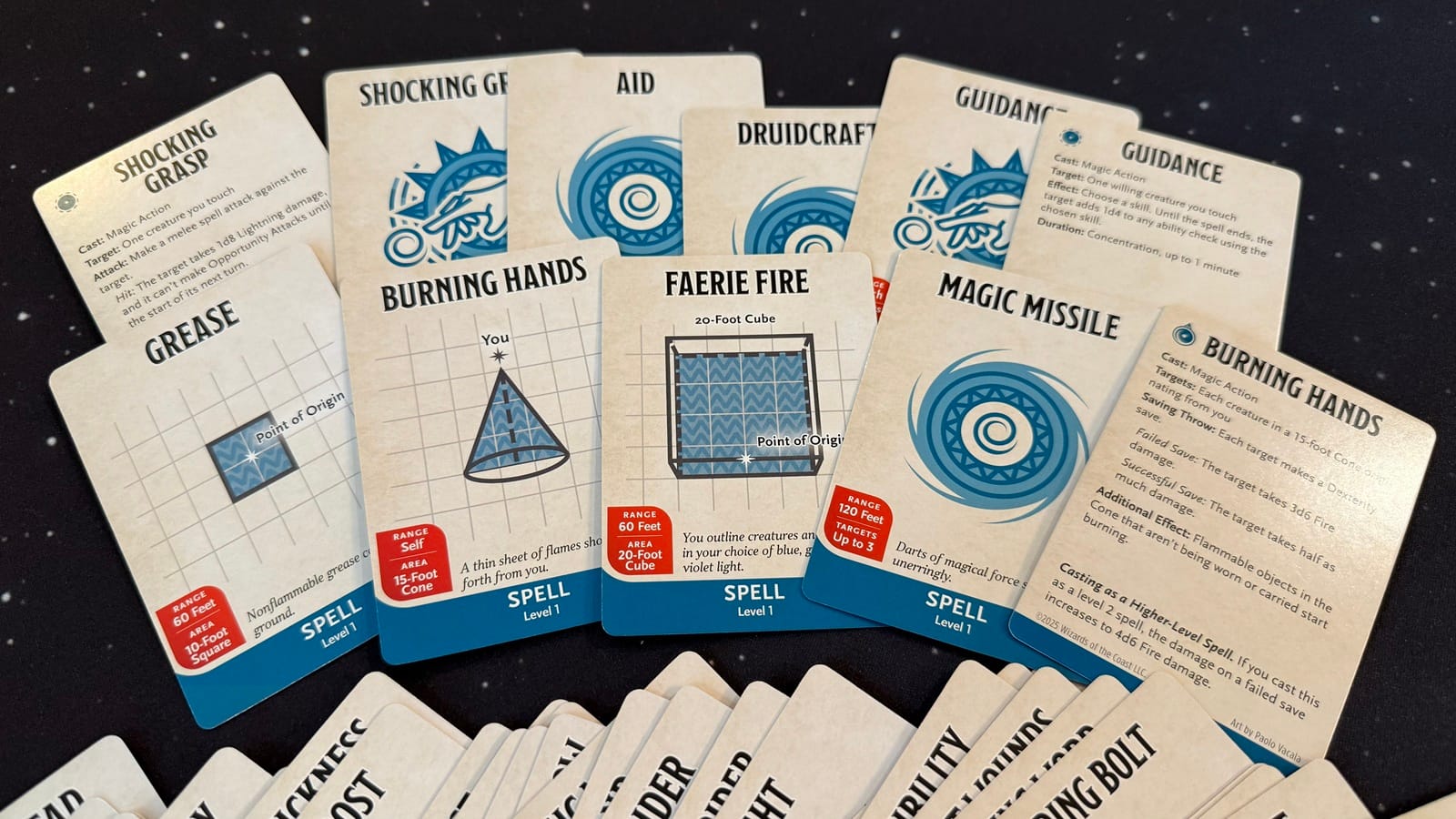
I like this departure from referencing tables for getting the concepts of the game. Of course, tables are useful, and the main books are full of them, but for getting started, this pure-card concept works. The players and DM aren't passing one book back and forth to reference what they are trying to do (I'm looking at you, Stormwreck Isle), yet the cards can be handed back and forth for quick reference between the players. Beyond the cards for just the players, there are cards for the DM, and they are very useful too. NPC cards have a name and portrait on the front and roleplaying information on the back. Each NPC card handily references which Monster Card the DM needs to run the NPC. They also provide personality traits and rumors that the NPC can provide. Monster cards also have names and images of the monsters on the front, along with a bit of descriptive text and an image of the creature's token. The back contains all of the relevant game stats the DM needs to run the monster. These cards make it easy for the DM to hold up a picture for the players and then use that as a reference for the monsters - keep track of the tokens associated with them, and not have to flip back and forth in a reference book while trying to run combat.
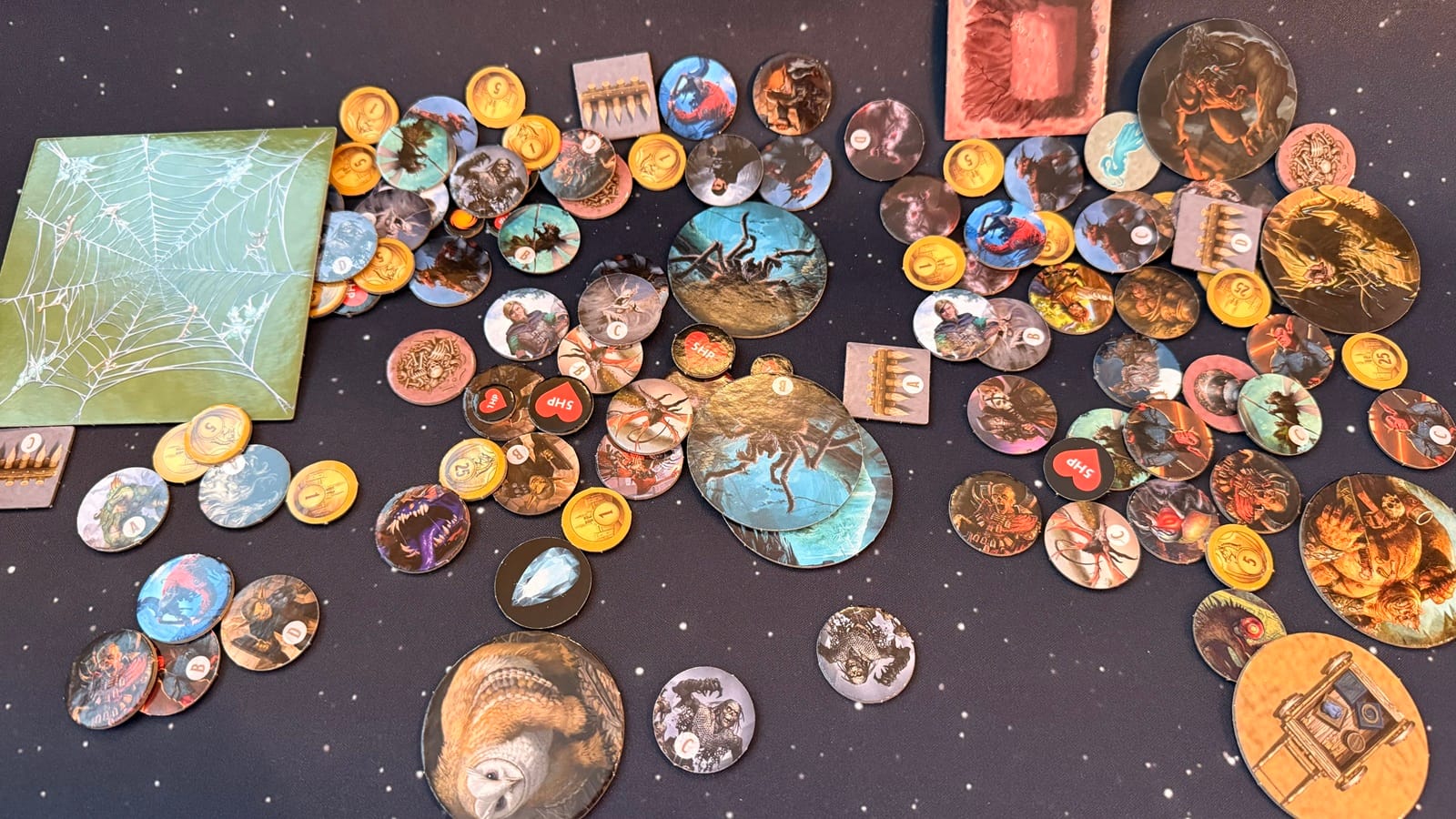
Turning to combat, there are tools in the box to make the DM's fighting life easier. There is a combat tracker pad that has about fifty sheets of paper that can be filled in to track combatants' hit points, conditions, and initiative order, along with the death saves of the four basic characters in the set. This is a handy tracker for a novice DM, and can give ideas for future trackers. Along with the combat tracker, there is a pile of tokens provided to keep track of the monsters in the accompanying adventures. There are plenty of them, and the PC's tokens are actually standees, so they literally stand out from the crowd. There are some treasure tokens and a couple of terrain tokens that can be thrown onto the battle maps as well.
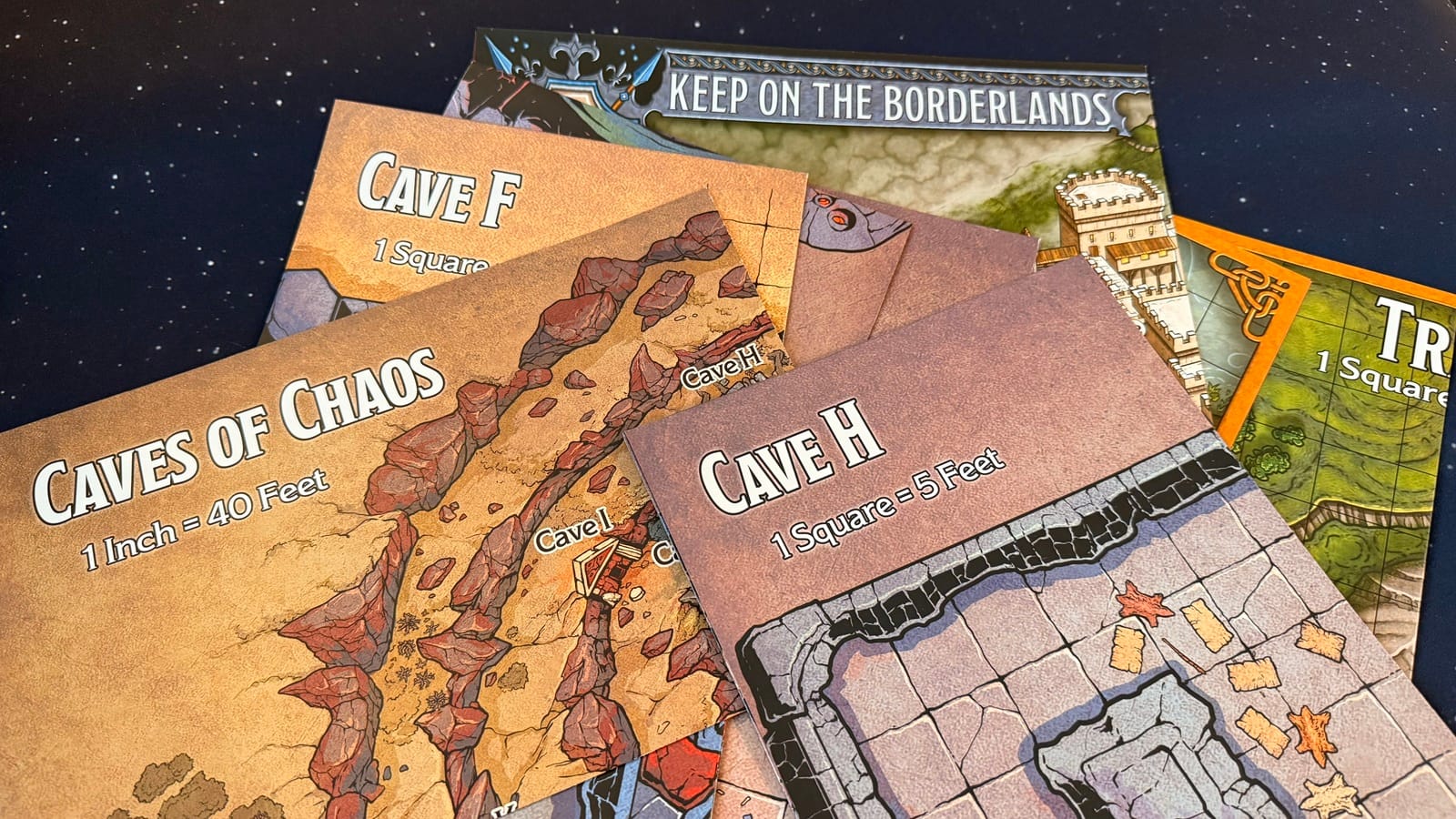
Speaking of maps, there are plenty in here. A set of four double-sided 14x21-inch maps includes a wilderness overview map, four gridded location maps (woods, trail, etc.), a Caves of Chaos overview map, and an overview of the Keep on the Borderlands. Then there are five double-sided 21x30-inch gridded playmats with maps of the various Caves of Chaos. All of the maps are of good quality and can be used again for other adventures in the future.
The three adventure books break into three flavors of adventure: dungeon crawls, wilderness exploration, and roleplaying in a civilized setting. The available adventures are more than enough to take the players from first to 3rd level, which is a pretty good introduction. There is no dealing with experience points; all character advancement is handled by the accomplishment of the various scenarios. The encounters are balanced and adjustable following the guidance built in. There are some creative scenes set up, for instance, there is an encounter with some enchanted scrolls that fold themselves into weapons and inflict "brutal paper cuts", which 1d4 damage is pretty freaking brutal for paper cuts. Overall, the adventures are uncomplicated and varied, really highlighting the variety of playing a D&D game can encompass. The DM also has five paper handouts (a letter, a menu, etc.) for the role-playing parts of the adventures.
A challenge with starter sets in many RPGs, including D&D, is making them useful after the initial start-up. Once the players have used the set to learn the game, they then need to move on to the regular books, and the starter set is left behind. But this new set, with its hundreds of cards, maps, and tokens, provides both new players and new dungeon masters with tools that they can carry forward to their future gaming. Making most of the components reusable as players move forward in their D&D experience is essential in making the purchase worthwhile. The increased price from Stormwreck to Borderlands is almost justified by this reusability alone.
Dungeons & Dragons Starter Set: Heroes of the Borderlands
Excellent
This is the best D&D starter set yet. With all of its impressive components, easy use, quick reference cards without heavy reliance on flipping through the book, and reusability going forward, this accomplishes the mission of starting players out in D&D. The player boards and all the cards and tokens streamline learning the game and the group to the game in short order… even though the DM still has to prepare more. Even as an experienced DM of many years and with bookshelves full of multiple editions of D&D and other games, I found the components in this set extremely useful in introducing my 12-year-old and her friends to the game.
Pros
- Easy to use and streamlined
- Lots of useful components
- Reusable for future gaming
Cons
- No player sheets
- Limited class and species choice
This review is based on a retail copy provided by the publisher.