Grass. These rustling blades of greenery have provided us precious gifts necessary for life: oxygen, being the bottom of the food chain, regulating water flow. But most recently, and arguably most importantly, it has given us the most precious gift of all. Looking at video games and going “Hey, that game is like Breath of the Wild!” Jokes aside, the open world action RPG Wuthering Waves (WuWu for short) has always been a game that piqued my interest.
Despite dropping WuWu after a few hours due to the first few lukewarm story quests, I found myself compelled with what the world had to offer aesthetically compared to the fantasy ruins that have infested the genre post Nintendo’s 2017 open world epic. While Wuthering Waves still leans heavily into those visuals, the larger emphasis on interspersing the map with technological iconography is a style more up my alley. As much as I love the cell-shaded greenery of grass, I’m more of a cell-shaded concrete gray person myself. Version 3.0 titled We Who See the Stars leans even harder into a sci-fi aesthetic with the new region of Lahai-Roi, further rekindling my interest. Luckily, being fresh off the heels of their nomination for Best Mobile Game at The Game Awards, I was flown out by Kuro Games to get two hours hands on with some of the content 3.0 has to offer before its December 25th release.
The session was split between two phases: an on rails first half introducing me to the central location and characters this story arc will revolve around, and secondly being set loose in the open world of Lahai-Roi to dabble with the patch’s new features. As someone diving almost completely blind into this new update, I approached this snapshot with the mental framework on whether 3.0 is worth keeping an eye on for curious players. The conclusion I reached is a “Yes!” so enthusiastic, that not even the usual baggage that comes with these types of live services could diminish it. I concede that the blemishes make Wuthering Waves a title not for everyone. Those looking for in depth open world objectives or a combat model not rooted in gacha best look elsewhere. Yet I think 3.0 has the potential to resonate with players looking for an atmospheric, sci-fi open world adventure. As someone who falls into that camp, it is something I am eager to dive into when the full patch releases.
On that note, don’t let the 3.0 moniker intimidate you. For those drawn in by the eyecatching locals and characters of Lahai-Roi, you are not forced to play through two years worth of content to reach the latest hook. Actually, upon mentioning that I had recently picked up the game again, it was suggested by the Kuro reps to jump straight into the content of 2.0. I found it refreshing how candid they were discussing their gameplay and narrative shortcomings of their initial launch, and their excitement of how much they have improved and hit their stride. More importantly for new players, this skip function will also apply to 3.0 once the game’s initial tutorial quests are completed. Previous missions will still be available, allowing players to freely return to older content at any time.
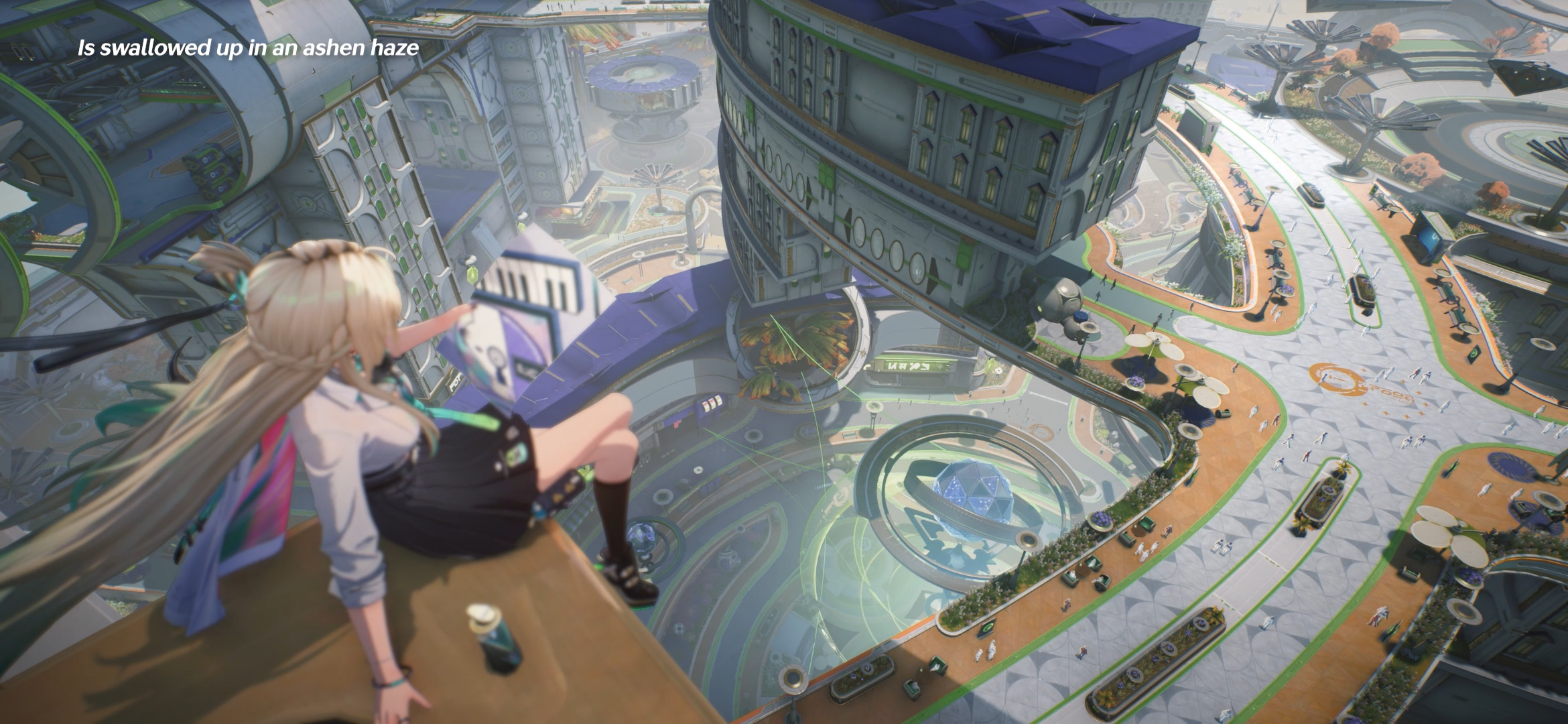
The start of the story immediately thrusts the player character, Rover, into the arc’s central hub, Startorch academy. For those who have played any JRPG with a high school setting, the set up will feel very familiar: a slow, methodical tour around campus, meeting a few of the potentially plot relevant students and faculty, and exposition dumps about campus life surrounding the region the school is centered in. With my only frame of story reference being 1.0's opening hours, I was pleasantly surprised at how much sharper the current writing is. The characters are livelier, with more concise exposition that contextualizes the students’ and academy’s role within a region that blends sci-fi, and grassy fantasy ruins. For comparisons to other gachas, Lahai-Roi so far is a fusion between the futuristic space fantasy of Honkai Star Rail, blended with the atmosphere of urban life in Zenless Zone Zero. Admittedly, the connective tissue of the overarching narrative beats flew over my head as someone who has missed two years worth of story build up. Despite this, the linear introductory segment passes my three rules of cool to hook me in absence of prior knowledge: Cool characters doing cool things in a cool world.
As for the moment to moment gameplay, let’s swallow the bitter medicine first: the gacha. Similar to other games with this form of monetization, the system is heavily entrenched within the combat framework. On a casual level, I enjoyed what the action RPG battle system has to offer. For comparison, it blends systems found in Final Fantasy VII Remake with the flow and pulled back camera of Devil May Cry. Three characters form a team, with one unit being on field at a time. Combos for each unit are easy to execute, in addition to timed cooldowns on various abilities, assists, and summons. Defensive plays are also rewarded with dodge counters, parries, and a stun meter for larger foes that can be whittled by interrupting their attacks with your own offense. Due to my limited playtime, I admit that I had trouble grasping the more complex elements of combat, but there is enough to chew on for those interested in the mechanical side of things. Moreover, 3.0 is adding new features such as an additional stagger-like mechanic called Tune Break, deepening an already strong foundation.
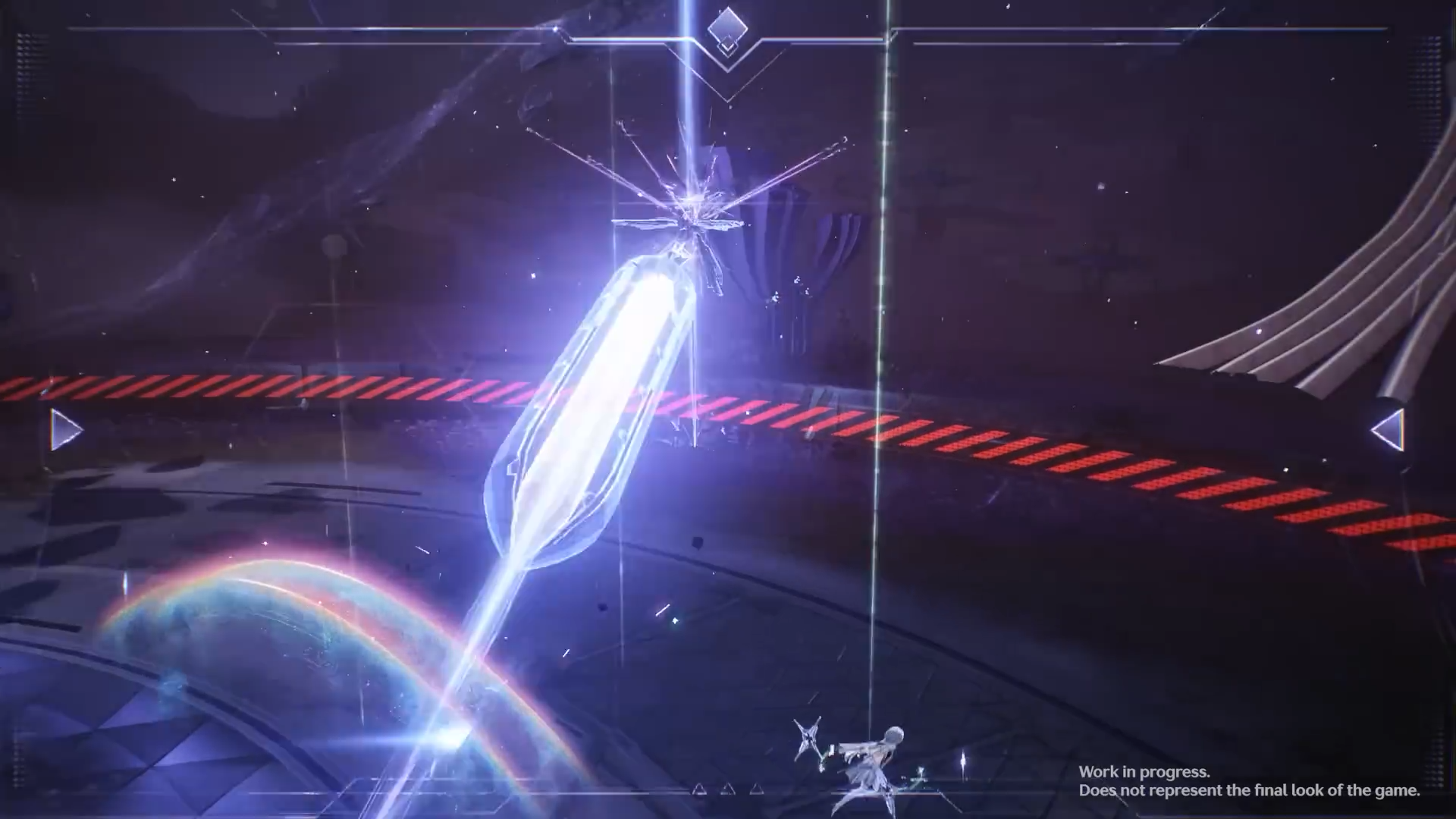
However, no matter how the battle system turned out, the skill ceiling and player expression within WuWu’s combat model is objectively constrained by its free-to-play gacha framework. Most characters are available for a limited time, and don’t rerun until months after their debut. Therefore team building and certain aspects of unit optimization is dependent on the monetization model. Sure, plenty of the content can be cleared by free to play, or low spenders, but the breadth of what combat has to offer is found within the endgame modes. It still remains that performing optimally requires gambling for new rungs on the gameplay ladder in an attempt to reach the ever rising ceiling.
While you can acquire the currency to roll on each banner daily and through completing content in game, the model still creates a sense of FOMO for those wanting to get more out of what combat has to offer. On top of that, even though every character can utilize 3.0’s Tune Break feature, new Resonators Lynae and Mornye have exclusive perks in their kits to efficiently take advantage of these new mechanics. To reiterate, these gripes I have with the F2P model are nothing new for the genre, with even more severe examples within other titles. Regrettably, it is still something to keep in mind for new players looking to get invested in fights.
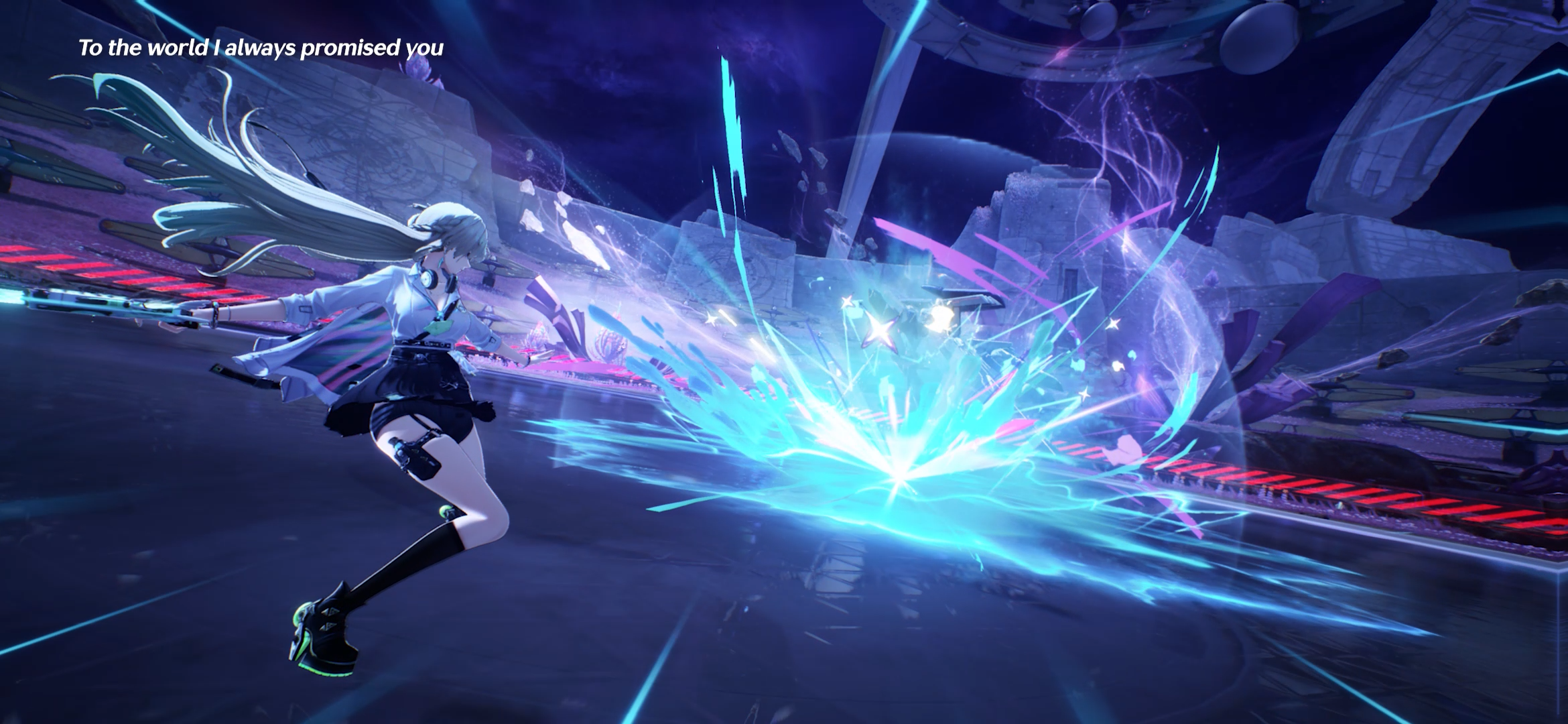
Synthesizing all of this, why exactly did I leave my glimpse into 3.0 extremely positive? Well, calling Wuthering Waves an action RPG is only half of the story. It is an open world action RPG where exploration is not only a major facet of gameplay, but one where its mechanical depth largely avoids needing to engage with the gacha in any capacity. What is on offer is your typical Breath of the Wild world faire mixed in with generic missions and quests. This latest update is more of the same, adding new tasks and minigames scattered around the map. Let’s just say those who played Bloxorz on Cool Math Games will be eating good this patch. Ultimately, these activities are not too dissimilar to the side content found within a Ubisoft open world title: boiling down to mildly entertaining busy work. For certain people, this description is an absolute turn off. For others, myself included, this formula leans towards old, reliable comfort. Simply put, checking the boxes off the quest list makes the brain go “Yippie!”.
The glue that binds the experience together is the mobility options. From being able to wall run on any surface, launching yourself to various vantage points with the grappling hook, to soaring through the skies with wings, WuWu is designed to have the player feel empowered through movement, with enough limitations to make skillful traversal feel rewarding. It brought me back to enjoying imperfect open games such as Sonic Frontiers and Pokemon Scarlet and Violet. Similar to those games’ receptions, the content I experienced in 1.0 and early Lahia-Roi are decent if derivative. But when the tools for exploration are this fun, the surface level side activities are destinations of diversions before hopping back to the journey of roaming the environments. 3.0’s headlining feature is no exception, providing players with an all-terrain motorcycle to explore the new region.
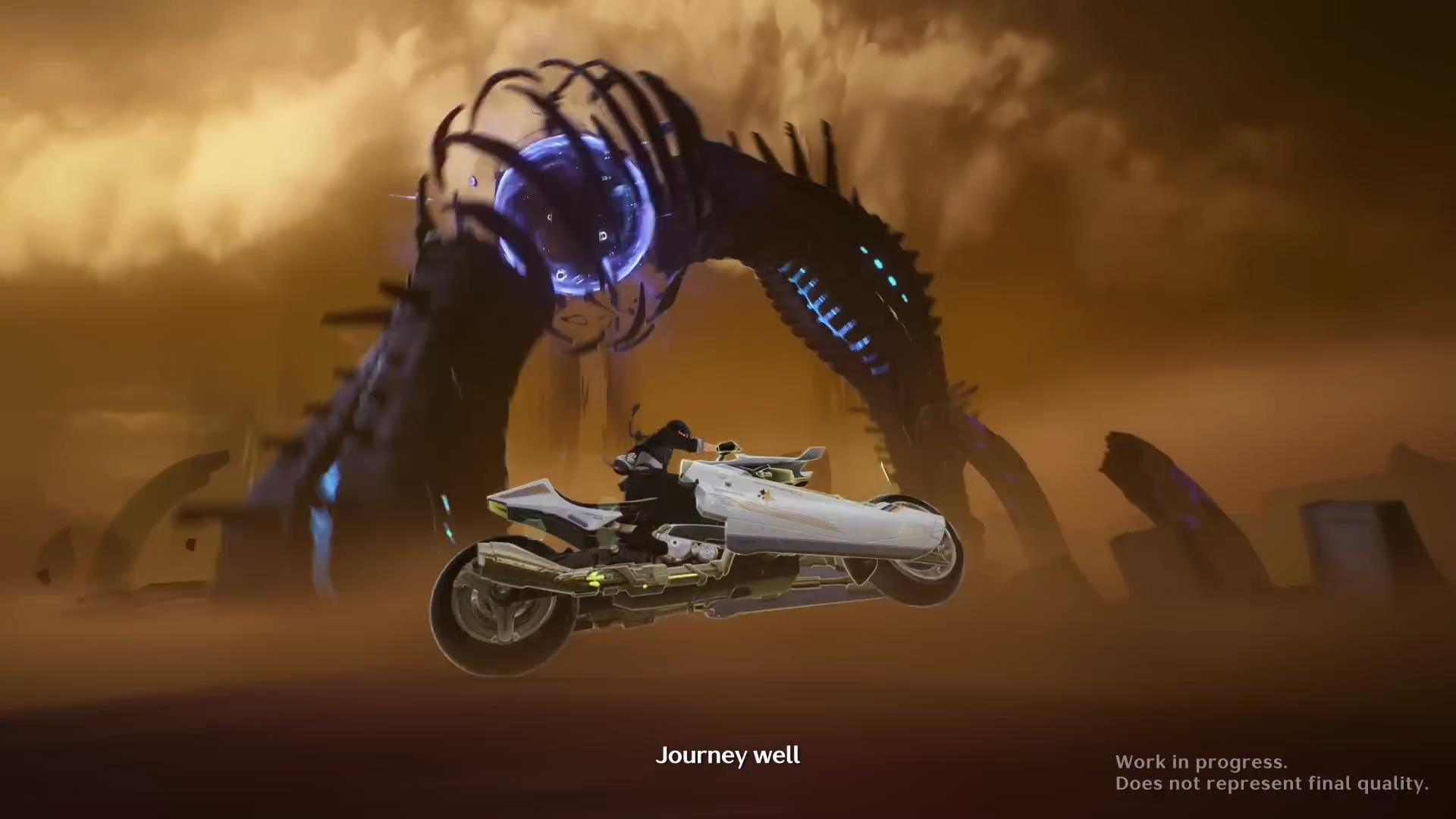
Despite my brief hands-on period with the open world, I found myself getting absorbed in the simplicity of speeding through the landscapes, often testing myself to see how far I could burn rubber before needing to hop off and readjust. Beyond the bike controlling well, I was impressed by the potential of verticality for what’s normally a grounded vehicle. Occasionally, ramps you can find scattered through the world to provide some air time. These are often followed by grapple points to further launch the motorcycle through the skies. And of course, there is the trusty jump button to clear small heights so players can keep blazing a path forward. In contrast to the exhilarating freedom riding through the open world, the few curated Motorbike Challenges I attempted were a bit hit or miss. Their objectives boiled down to completing a few laps around a track, or driving through a series of rings. The off road courses were enjoyable enough, however I found the tracks on the highways to be a slog due to the lack of complex terrain.
Shifting gears from player control to non-player control, Kuro has also implemented an Autopilot Mode. It is a neat function to sit back, relax, and take in the futuristic fantasy sights without having to keep an eye on the road. Further lending cadence to the rule of immersive cool, a Cinematic Mode can be toggled when in Autopilot. This changes the aspect ratio in addition to freeing the camera movement for the game to control. Moreover, with the ability to customize the motorbike alongside being able to ride with characters in your roster, I see myself spending hours in this mode taking screenshots. Beyond just the visuals, the bike provides access to a radio station filled with a mix of calming and energetic tunes. The few I listened to were incredible, and will definitely be on my playlist in real life whenever doing chores or going on walks. All in all, these hands on and hands off options means the bike can be as high octane or atmospheric as you want it to be.
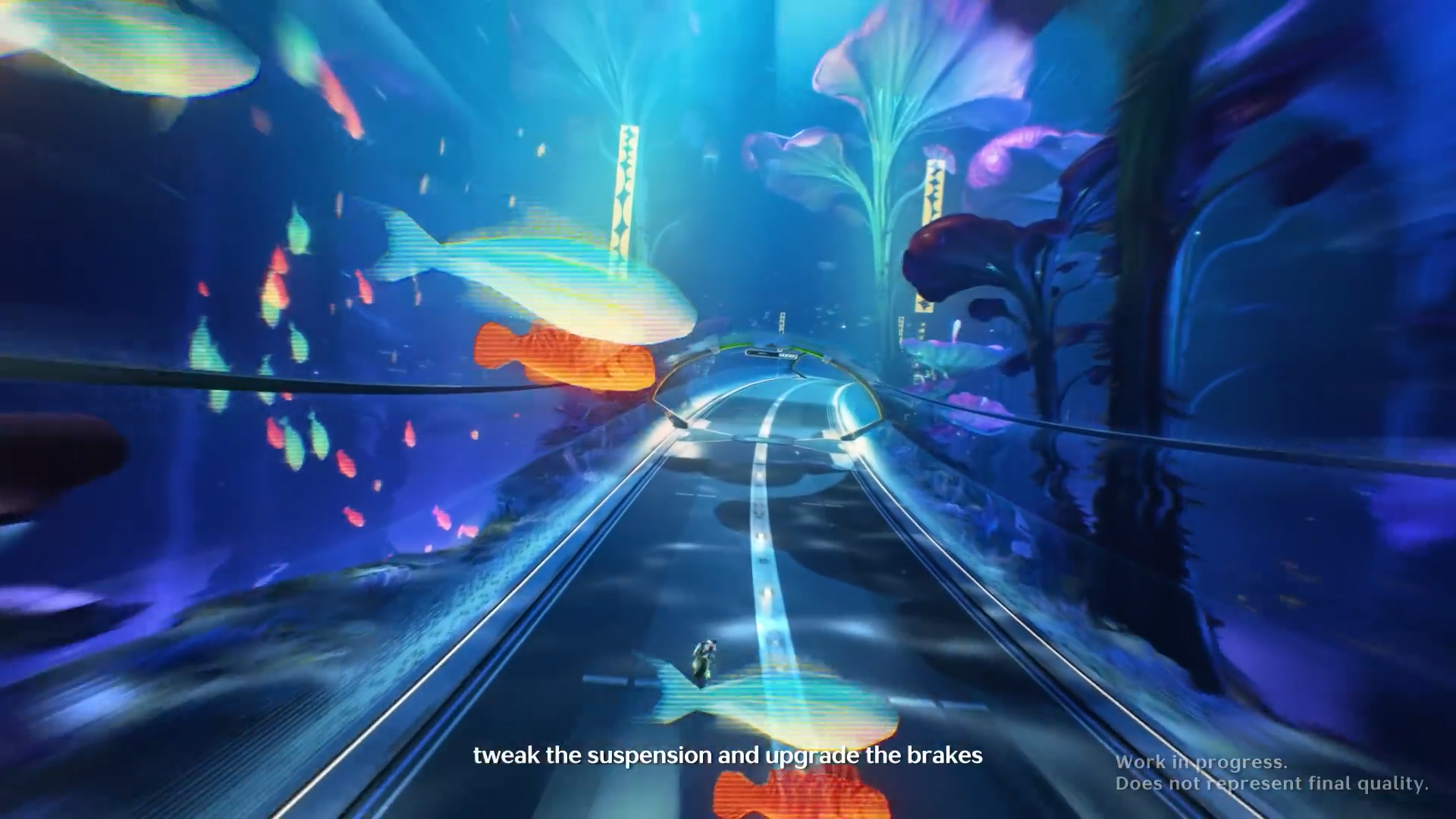
These strengths are what makes Wuthering Waves an enticing prospect for newcomers compared to its other F2P contemporaries. As much as I enjoy Honkai Star Rail and love Zenless Zone Zero, the only substantial focus for the player experience is with their combat models, the facet the gacha infects most of. Their dungeons and hubs are essentially half baked pace breakers before diving back into their exceptional battle systems. WuWu’s sufficient open world activities and radiant core of traversal shines as a major pillar of gameplay that can stand alongside or independent of its Sisyphus-esque combat framework.
Obviously there are enemy and monster encounters scattered around the region, in addition to designated combat zones to farm resources for character building. Even so, this is a free to play open world title where the tools to roam each region are uniform across every unit (barring one exception). Case in point, the motorbike I spent this preview gushing about. Initially I was concerned that this pivotal vehicle for travel would be locked behind 3.0’s debut five star character, Lynae. Her key art showing her graffiti stained ride did little to quell my assumption. Fortunately, one of the first objectives when starting this current arc is Rover getting a driver’s permit, which means all of your favorites can put pedal to the metal.

Wuthering Waves 3.0 thus far may not be for everyone, but for those craving a journey of sci-fi spectacle with some destination of gameplay substance, it has been scratching that itch immaculately. Ultimately, I left my hands-on session eagerly anticipating reuniting with the motorbike when the update to drop on December 25th.