Ah, the Virtual Boy: who doesn’t love its eye-bleeding monochrome, uncomfortable ergonomics, and paltry selection of one-and-done tech demos? One of Nintendo’s most infamous failures, the Virtual Boy’s use of stereoscopic 3D and parallax scrolling via headset promised to usher gamers into 1995’s coming age of 3D, although it wasn’t their first attempt at virtual reality—that’d be the Japan-only Famicom 3D System, a peripheral yours truly only learned about just five minutes ago. High prices and a small compatible library proved a commercial failure, but surely a dedicated game console would reel in the Nintendo faithful, right? Right?
Alas, not only did high prices impede Nintendo’s next VR attempt, but everything about it just didn’t, well, work. The crude red-and-black display was an immediate turn-off, commonly cited in inducing headaches and eye strain. Despite lifting the “Boy” moniker from the immensely successful Game Boy, market confusion stemmed from the headset’s lack of portability, and its awkward stand was prone to unwelcome bouts of neck pain. The library was largely unimpressive, its pitiful arguments for 3D falling flat in the face of Sony PlayStation and Sega Saturn’s polygons. Factor in a series of bad business decisions—from being rushed out to market for Nintendo 64 or de-emphasizing focus on familiar characters—and it was simply a train wreck waiting to happen, right down to the indecipherable boxart below.
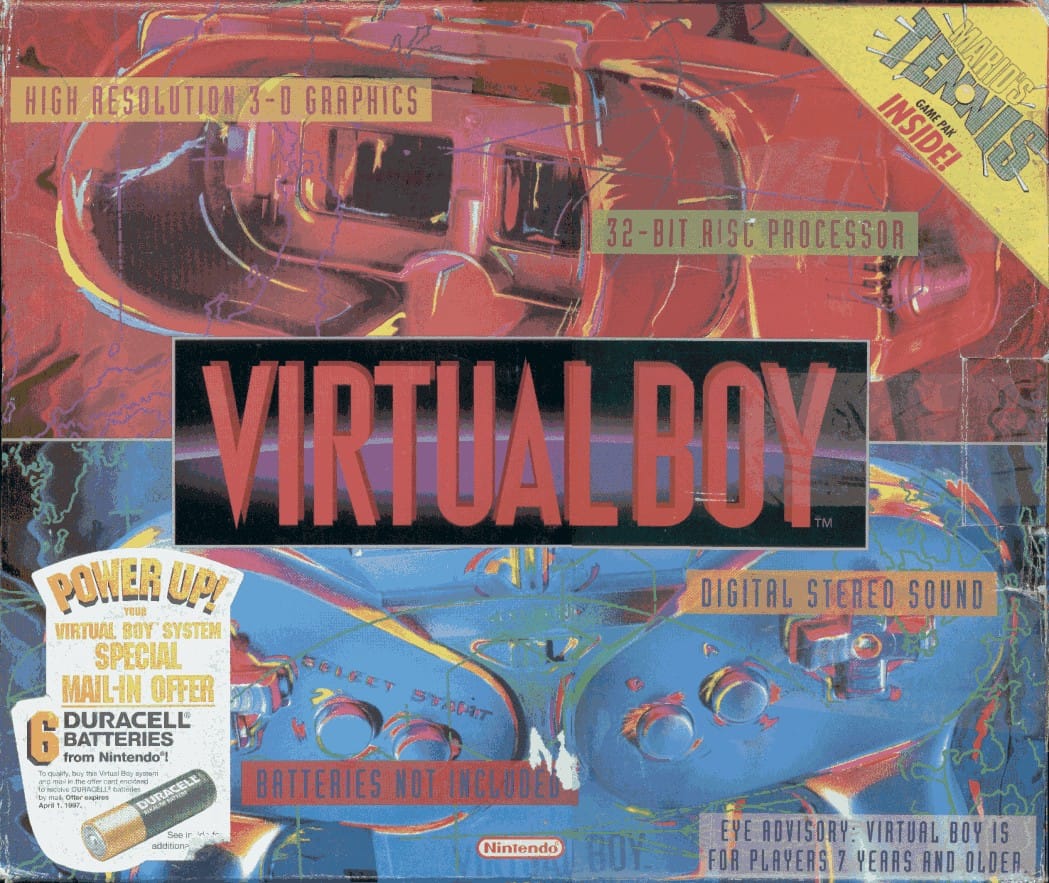
Bad press and poor sales had Nintendo quickly pull the plug following the ’95 holiday season, just in time for Super Mario 64 to wow the industry and pretend that little sales bomb didn’t just happen. Now a forgotten road bump in Nintendo’s history, whenever the Virtual Boy’s not making the obligatory cameo in Smash Bros. or WarioWare, the poor thing’s typically dredged up as a proverbial punching bag, sneered and jeered with incredulous dismissals in the vein of “Man, what were they thinking?”
A question that, in this economic collapse courtesy of inflation and AI-fueled chip shortages, Nintendo deigned fit to have us ask all over again in the modern age via Switch 2’s Nintendo Classics. With the red (and black) carpet rolled out for Virtual Boy’s grand return, players new and old can revisit this bizarre moment in time—right down to placing down a hundred smackaroos for a physical replica. Forget what Nintendo was thinking then—who would even want this now?
Naturally, Nintendo nerd enthusiasts like myself! Having never played the Virtual Boy prior, I wasn’t going to pass up on this historical curio. Sure, it’d be easier on my wallet with that $25 cardboard substitute, but this Nintendo historian wants nothing less than the real deal. Having spent some considerable time with it over the past week, I’ve approached the following analysis as a newcomer to Nintendo’s little failure that couldn’t. Does poor Virtual Boy finally vindicate itself after all these years, or did it deserve three decades’ worth of mudslinging? Let’s find out!
The Console
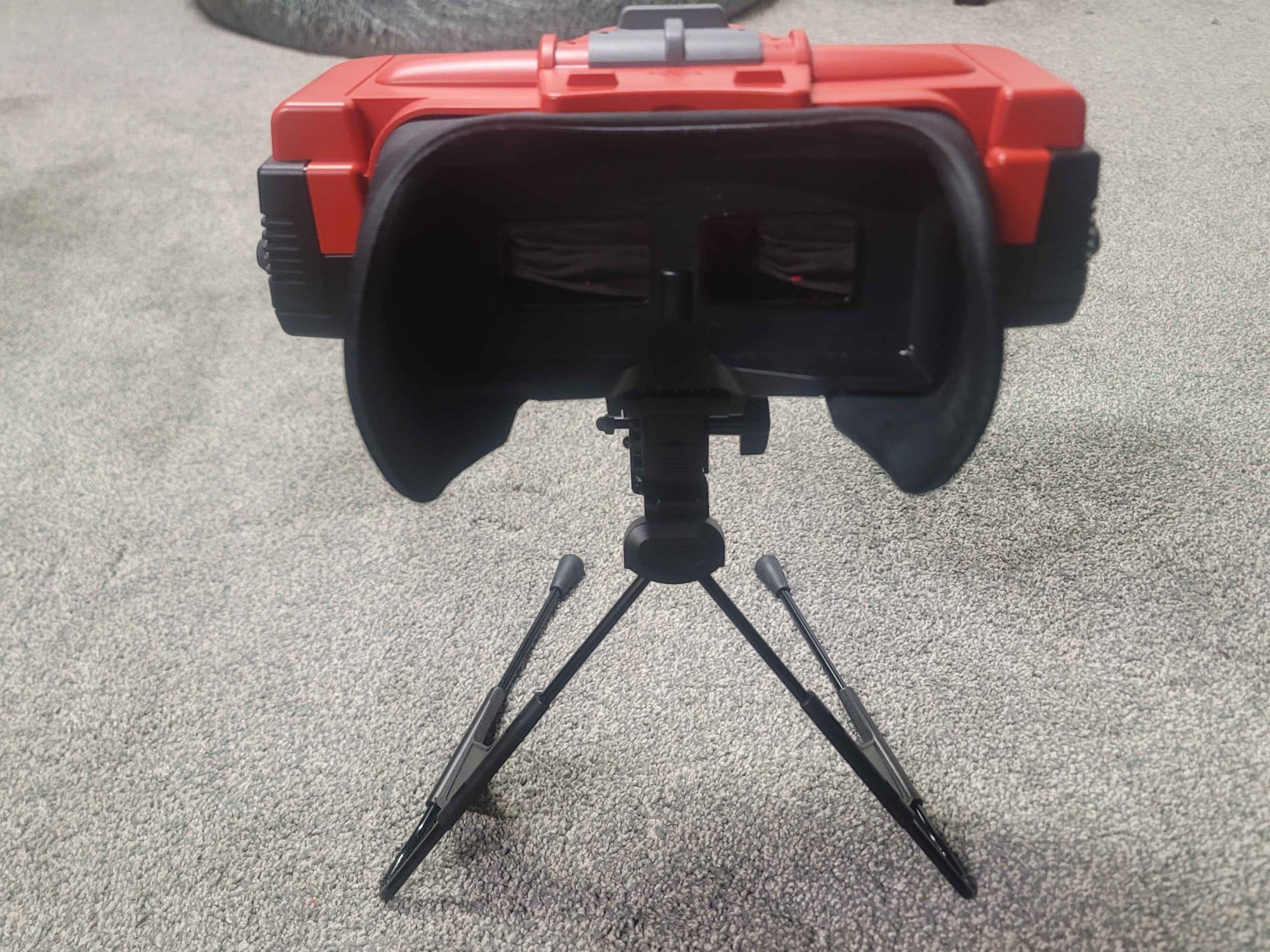
Like Nintendo’s designers time-traveled to 2815, sawed off Wall-E’s visors, spray-painted them neon red, and stuck ‘em on a pike, this new Virtual Boy’s a near-replica of the original. The tripod stand’s here; firmer, I’m told, and you can adjust the grip strength and positioning however you please via a little knob. Even the headset’s bits and bobs like the volume slider and controller/headphone outlets are carefully preserved...despite being completely useless. Actually, yours truly may have gotten confused attempting to adjust said slider. See, you have to open the headset itself and use the Switch 2’s volume buttons and…yeah, it’s a pain. Perhaps it’s a little too faithful, but I’m certain all five Virtual Boy fans will appreciate the attention to detail.
Speaking of opening the headset, that’s how you insert the Switch 2. The directions on the box aren’t exactly clear, but you’re supposed to lift these grooves just above the visor and slide the console inside its custom-made dock. (After selecting the Virtual Boy icon on your Switch 2, of course). In case you didn’t know, the original Switch’s compatible too, but you need to unscrew the Switch 2 attachment bracket beneath the Virtual Boy and install the included Switch component. Too much work for me, but hey, kudos to Nintendo for more options.
Contrary to Switch’s other emulated home consoles, there’s no Virtual Boy controller replica. While they likely took costs into consideration—it’s not like that many people are buying this thing—it’s a shame we lose some authenticity with the final product. And depending on who you ask, that one last piece may well be the most important of all! It’s not that the Joy-Cons aren’t fine substitutes in themselves, but there’s one particular game that was clearly designed around the original controller, and the experience suffers for it.
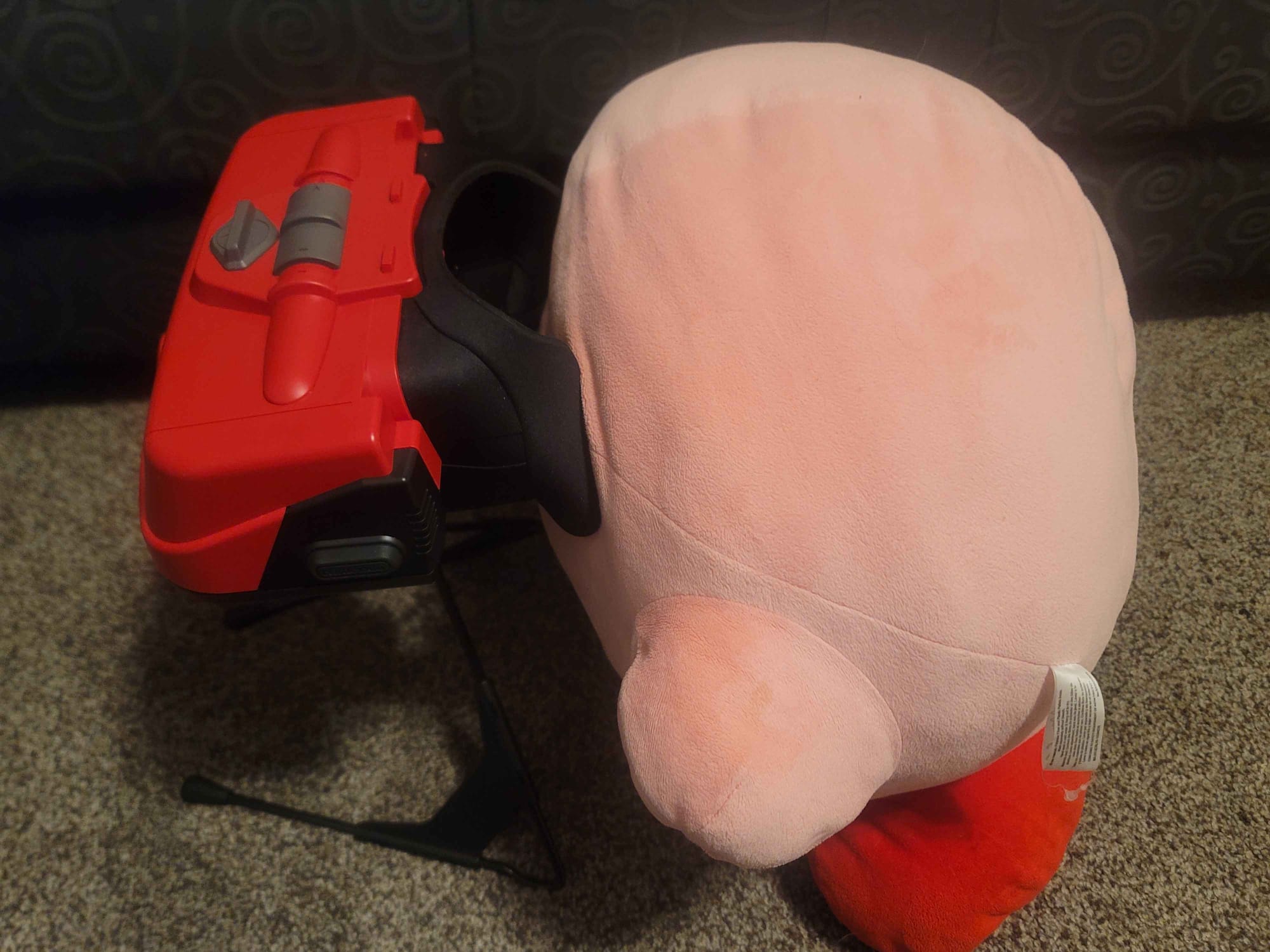
With all the ergonomic concerns, you’re probably asking: what’s the best position to play? While the original console advertised itself as being best suited for a table, I’ve found the best position is on your lap since you can shift your legroom accordingly to experiment. Unfortunately, no matter which way you sit, the Virtual Boy’s killer on your neck, so even if you find yourself immune to its nausea-inducing display, you’ll probably not want to play for too long. Thankfully, should you switch on the Extended Pause feature, whatever you’re playing will automatically “pause” to signal it’s time to stop. (Think of it like the “Would you like to take a break?” screens from the Wii/DS era.)
Piling onto the comfortability factor is that, much like finding the “sweet spot” on 3DS’s 3D, you’ll frequently adjust your line of sight to let the Virtual Boy work its “magic.” While you’ll settle into things quickly, Nintendo’s provided some options to speed things along: pressing the X button can adjust the screen size, for starters, and holding the right stick can adjust the IPD levels (That’s short for “Interpupillary Distance”—the millimeter-sized distance between your pupils’ centers; in other words, how the Virtual Boy completes its illusion via twin screens) Both are certainly appreciated, although I recommend setting the IPD levels as low as possible so you’re not seeing double. (And while I’m at it, there’s little benefit to removing the eye shades—just wait for the color filter update.)
Bear in mind there are some Switch-patented hurdles: if you leave your console alone, you’ll have to unlock the Switch 2 and re-select the Virtual Boy icon to keep playing. Moreover, no video-recording allowed, so we’re sadly unable to share our adventures in eye strain. In motion, anyway—at least Nintendo was kind enough to allow screenshots, but as the Switch 2 utilizes the clandestine twin screen display, that means they look like this:
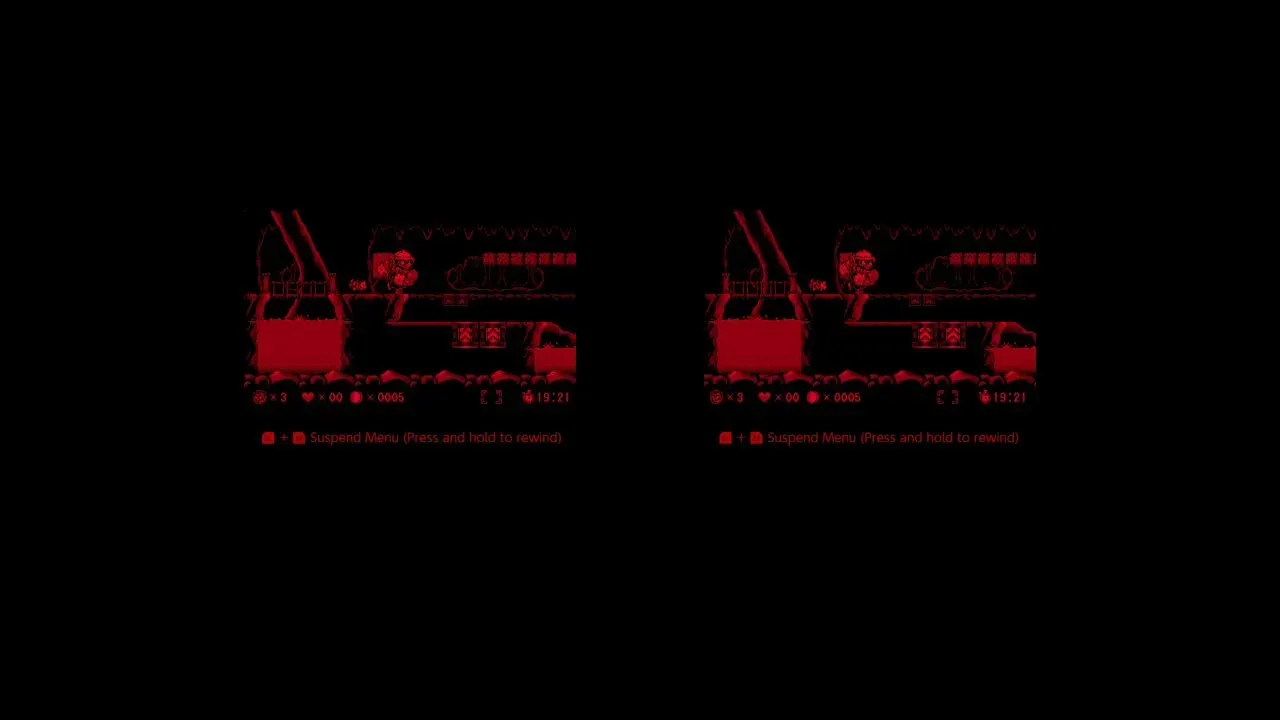
Yeah, not great. For accuracy’s sake, you're forgive me in sourcing screenshots elsewhere.
So, for better or worse, that’s the Virtual Boy itself. But how about the actual games? This Nintendo Classics library launched with seven games, and for the sake of science, gaming history, and all our site’s lovely readers, I braved the monochrome maelstrom to compile my thoughts on each one below.
Teleroboxer
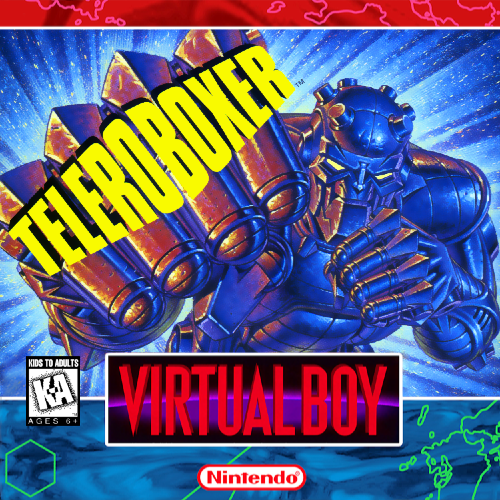
Oh my god, it’s talking; like, we’re talking arcade-quality voiceover here. An impressive feat for its time, but one quickly dulled by Teleroboxer’s, uh, everything else. The game’s a futuristic Punch-Out!! clone with giant robots punching each other to smithereens, but complicated controls hamper what should otherwise be a riveting bout of rhythmic boxing. Whereas Punch-Out!! keeps things simple with two buttons, Teleroboxer throws us for a loop by pairing punch inputs with unintuitive shoulder buttons, leaving us fumbling with remembering which combo does what while the opponent’s beating us senseless.
See, like Punch-Out!!, Teleroboxer has you observing the enemy’s attack patterns to slip past their defenses and unleash deadly combos, but the game expects you to apply both control pads with their respective shoulder buttons in everything from simple hooks to charging up special attacks. Tell me if this makes sense: I’m supposed to prep my Machine Gun combos by holding any one directional button on both pads, then press L and R before letting go?
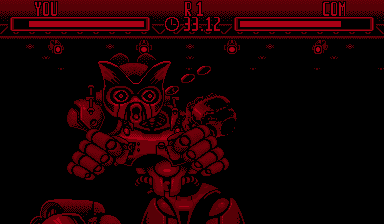
Forget being a pain to memorize—for what’s already an ergonomically-unfriendly console, I’m practically braiding my fingers in a fleshy rubber band ball. It’s a problem not even button remapping can fix, and with how Nintendo Classics’ digital manuals only offer basic summaries, you’ll have to scavenge the internet to deduce how to pull anything off. My kingdom for the days of Virtual Console’s detailed how-to’s!
In fairness, I’d say this stems from the game designed around the absent Virtual Boy controller—a quick follow-up on veterans’ impressions implies as much. But revisiting old reviews citing these very complaints render it just as likely we may well be dealing with a fundamentally flawed set-up. First-person boxing may be an appealing VR prospect, but you’re better off throwing hands in the Bronx with Little Mac.
Red Alarm
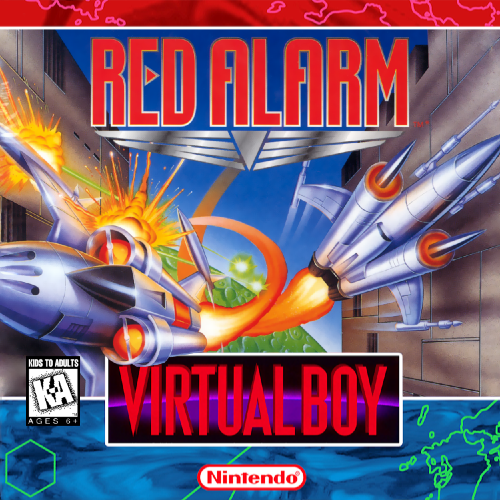
Put the two SNES Star Foxes in a blender, and you have Virtual Boy’s showpiece in Red Alarm. A surprisingly engaging shoot-‘em-up, its corridors of polygons and wireframes bend with literal ups and downs as enemy fire shoots past our fighter and right into our line of vision, immersing us unlike anything else on the system. it’s perhaps the one game under Virtual Boy’s belt that could’ve been marketed as “the thing of the future," like being given the keys to play a third-person take on those Star Tours Disney rides, (“Perhaps” being the keyword–let’s not forget what happened to poor Star Fox 2.)
Not that there aren’t caveats: while this varies from game to game, one thing you’re gonna realize real quick with Virtual Boy’s library is the limited color scheme overwhelms your eyes to the point where it's difficult to parse most anything, not least in Red Alarm’s constant deluge of red, rudimentary wireframes. Discerning what’s traversable airspace and what’s a wall will lead to more than a few crashes, and good luck deciphering that UI.
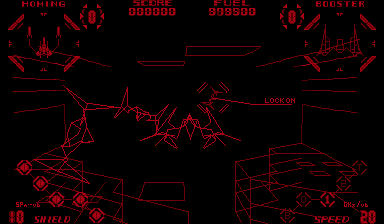
Putting it this way: Red Alarm is difficult, but not all for the right reasons. For instance, dying restarts the stage, so if you’re abstaining from save states, you’re in for a tough ride. The All-Range Mode for bosses is neat, but the small draw distance can render these fights an irritating game of hide-and-seek. Also, hey, did you know there's a dodging maneuver? Because I was too busy parsing all the visual busyness to notice. (And, y'know, trying not to die.)
Still, you get used to it; really, the game just looks too cool not to overlook its many missteps, right down to those tacky advertisements loading across the screen. (Yes, I know I’m playing the Nintendo Virtual Boy and that Red Alarm’s designed by T&E Software—no need to shove that in my face, game.) It’s not Virtual Boy’s best game, but it’s certainly the prime example of what it was trying to do. And that makes it worth a try as any.
Galactic Pinball
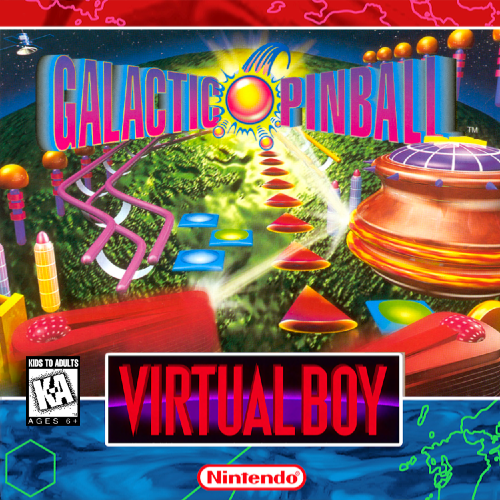
A virtual reality pinball game? How, uh, exciting. Brought to you by Intelligent Systems (Paper Mario, Fire Emblem), Galactic Pinball’s actually not too bad: as you’d expect from the name, it commits to the space theme in full, with spaceships, asteroids, and alien populating its four boards. (Actually, there’s a cool Metroid cameo if you prod around enough.) Again, all the bleeding crimson sands off its visuals—it took me a bit to go “oh, that’s where the puck plunger is”—but its moreso minor details rather than the core gameplay.
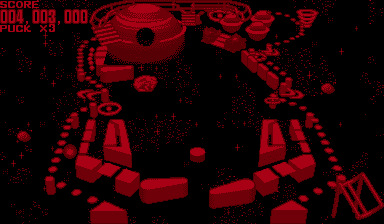
Thing is, said “minor details” frequently tripped me up. If it’s not already obvious, Virtual Boy games especially struggle with conveying concepts to the player; for instance, one bonus involves collecting letters on each board to spell out their respective names, yet the lack of readability blends them within the sea of monochrome, leaving us scratching our heads wondering why there’s a prolonged animation spelling out the “C” in “Colony”. Meanwhile, the introduction of mini-games blindside us with controls, such as one asteroid shmup suddenly handing us a reticule and expect us to go nuts.
It’s a problem I’ve never come across in any other Nintendo Classics library, and I suspect it has to do with Virtual Boy’s innate claustrophobia: its immersion is fragile, our eyes already busy navigating its graphical clutter and left vulnerable to anything that disrupts our focus. Galactic Pinball might be competent, sure, but it’s not just that it’s a poor concept for virtual reality—it exposes the fundamental design flaws of the Virtual Boy itself.
3D Tetris
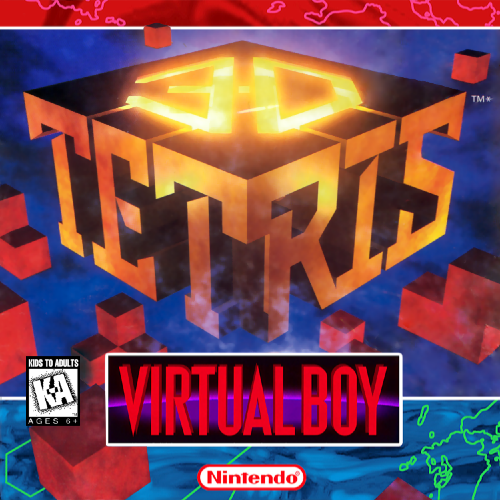
Look, there’s innovation, and then there’s innovation for the sake of it. The latter rarely works very well, and in the case of 3D Tetris, it’s just downright impenetrable. True to its name, you’re dropping three-dimensional Tetris blocks down from an eagle-eye view, meticulously situating them so you’re clearing one of five layers. Thing is, the monochrome meshes all the rudimentary polygons together, and while there’s a handy chart to the right displaying which layer/position it’ll fall, it’s nearly impossible to keep track of it all. Did I mention the camera sloooooooowly wobbles back and forth, ensuring you’ll never have a good view of the playing field? Yeah.
Really, nothing about it makes any sense. Just look at the Centerfill Mode: you’re supposed to place blocks in designated spots, but it’s never very clear what earns points, nor why I’m earning coins named “Heather”, scrambling the necessary wiring for well-earned dopamine rushes. (My first bonus, I kid you not, was “420.” If this was a drug trip, I would’ve believed you.) Meanwhile, the game retains Tetris’s handy signposting in displaying upcoming blocks, yet in a pitiful attempt to give the game character, it stylizes them all in painfully dated anthropomorphs that are just plain unpleasant to look at. (Enough, even, that it didn't even register they were supposed to be previews.)
It’s not all bad: Puzzle’s a decent take on the formula where you align blocks with each stage’s designated shapes, which takes some serious strategizing. Unfortunately, it’s not enough to salvage 3D Tetris—it’s one thing to experiment with a time-tested formula, but that something so incoherent was the very last Virtual Boy game speaks volumes.
Golf

As exciting as the name implies, Golf is exactly that: golf. No twists on the formula, no Mario characters shooting birdies, just…regular ol’ golf. A VR golf game certainly has promise, but you’re not achieving anything interesting with ’95 tech, and you certainly won’t make a compelling case with the typical third-person perspective, and you’re especially not going to break ground with limited draw distance and a monochrome color scheme. In a sport dependent on gauging shots, that’s already two bogeys.
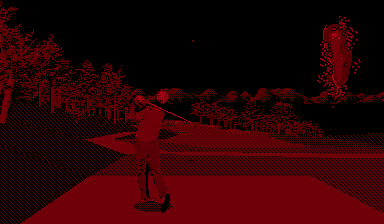
For me, though, Golf’s problems begin and end with its ham-fisted 3D. See, the game utilizes two meters to fire off shots: a loop-de-loop arrow measuring power (the higher you land, the stronger your shot; a little weird, but okay) and a 3D golf ball that measures spin by blocking the entire screen. Look, it’s bad enough that I’m already a golf illiterate and had to hit up a 2004 GameFAQs walkthrough to understand what I was looking at, but surely you don’t need to interfere with my play just to show off your not-so-groundbreaking tech?
A common Virtual Boy criticism was how the system rarely justified its VR gimmick, and nowhere is that more apparent than Golf. It’s one thing if your game doesn’t have the chops to exploit said gimmick—there’s nothing wrong with making a product stand on its own merits. Yet on top of presenting no case for Nintendo’s ill-fated experiment, Golf is a flavorless product making no effort to appeal to anybody but golf-heads, and ultimately renders itself a poor fit for burgeoning 3D.
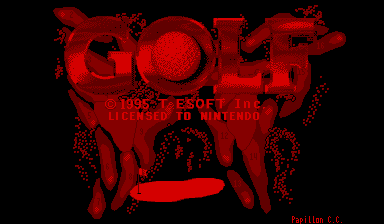
Also, check out how those bad graphics can make even the title screen bleed. OoOoooOOOooH! Wait, those’re just the golf courses? Oh. Um, well, it speaks to Golf’s lack of content that I can’t point to anything else to criticize. Really, the game’s just incomprehensible, boring, and...well, boring. See, even my adjectives are running dry. Moving on.
The Mansion of Innsmouth
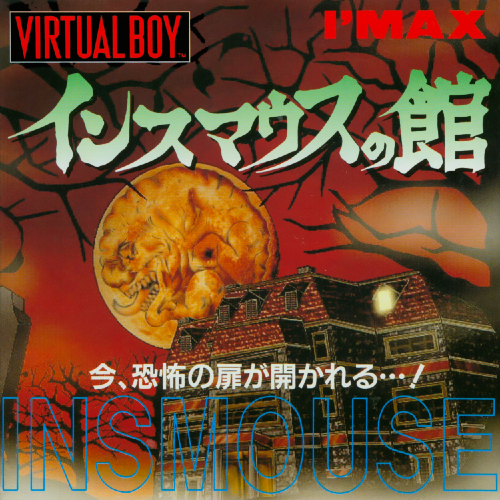
A Japan-only Virtual Boy horror game? Talk about the nichiest niche to ever niche. Loosely inspired by H.P. Lovecraft’s The Shadow over Innsmouth, this first-person maze game locks players in a haunted mansion, full of doors to unlock. Each floor has you scouting the premises for a dropped key, used to unlock doors to the next floor, and so on until you finally escape.
Not that you’re alone in your mystery mansion tour, what with all the fish monsters that want you dead. Thankfully, our detective protagonist packs some heat, but careful where you aim: every shot counts, and you’ll want to aim true with those headshots. Run out of bullets, and you’ll likely end up fish-food. You can run away, of course, but take care not to get sandwiched between two fish-beasts. (Faceless avatar barbecue, anyone?)
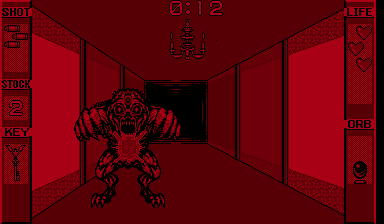
It’s a spooky set-up for some immersive atmosphere, but alas, The Mansion of Innsmouth is yet another appealing VR concept kneecapped by poor visual communication. For starters, the monochrome halls all look identical, and the limited map does little to distinguish their twists and turns. The game offers multiple paths for different endings, but we’re given no indicators on how they work. In what’s an egregious oversight of the Virtual Boy’s finite color scheme, there’s no distinction between any of the doors, leaving us scrambling to open any door in sight. Surely they could’ve signposted locked doors with a keyhole, yes?
Pair all that with a one-minute timer, and Innsmouth is simply too stressful to play. Through repeated failures of Game Design 101 fundamentals, you’re just a rat running in a maze. An interesting novelty, but one that quickly frustrates despite its ambitions.
Also, pro-tip: move with the Joy-Con buttons; the stick’s too sensitive and will have you spinning around like Crash Bandicoot on Red Bull.
Virtual Boy Wario Land

Now we’re talking! Often hailed as Virtual Boy’s finest, while that’s obviously no high bar Virtual Boy Wario Land is the system’s go-to example of successfully melding rock-solid gameplay with eye-catching 3D. Who would’ve thought it’d be Mario’s kooky doppelganger that’d come to the rescue? (Well, aside from Virtual Boy crashing and burning not even months later, but we imagine he’s just grateful for the treasure.)
Believe it or not, as opposed to the commonly cited Wario Land II, it’s Virtual Boy Wario Land that cements the series’ tradition of transplanting Wario’s chargin’-n’-throwin’ within arguably whole different genres of 2D platforming. Establishing a time attack format, Wario seeks out keys to escape a deadly underground maze while unearthing treasure in all ten levels, swiping coins and squashing bosses along the way. The game grades on clear time (over/under a two-hour limit) if you’ve collected all the treasures; failing that, you’re simply judged on how much gold you’ve accumulated.
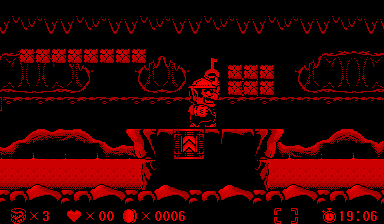
While considerably shorter than his other handheld ventures, Virtual Boy Wario Land’s maze-like design enthralls in its snappy gameplay. Equippable hats grant powers in everything from gliding to fire-breathing—thrilling to unleash and vital in hunting down all ten treasures. The stages take careful advantage of the Virtual Boy’s stereoscopic depth, enhancing Wario’s spelunking by bouncing between foreground and background. (Sound familiar? Yes, it turns out this game of all things was a key inspiration behind Donkey Kong Country Returns!) The game’s clear presentation is, believe it or not, the one example where Virtual Boy’s limited color palette works to its advantage, its cavernous use of black swallowing us whole like you’d expect from deep, dark caves. It’s an interactive diorama, operated by an expressive cast and engaging level design begging us to explore its replayable depths.
The game fumbles in places: certain mechanics drag (the watermelon launcher’s a bust), and the signposting’s bad (who came up with the clock key?!). But what’s key is that neither game nor gimmick interferes with the other, rendering what Virtual Boy needed all along: a true, blue video game. Wait, no, in this case it’d be…uh, “bled red”. Does that work? No? Well, I guess the upcoming color filters would render that idiom irrelevant, but…ah, yeah, I’ll shut up now.
By the way, this game contains Virtual Boy’s one-and-only instance of Totaka’s Song! Can you find it?
Verdict
The Wii U. The N64DD. Any Metroid game from the past decade-and-a-half without the words “Returns” and “Dread” in their names. Nintendo’s storied legacy is not without its failures, with everyone’s favorite disaster in Virtual Boy chief among them. Now that I've finally played it, it’s easier than ever to see why it failed: it makes surface-level arguments for 3D, the monochrome palette is as confusing as it is overwhelming, and it’s just plain uncomfortable to use. It’s an interesting curiosity, but nothing more, and I doubt similar novelties in unreleased games (Zero Racers/D-Hopper) or the very first Mario Tennis would change most anyone’s opinion.
Yet I think of this Iwata Asks conversation involving Shigeru Miyamoto, who opined the Virtual Boy had potential as a flashy toy rather than carrying the mantle of a home console or the Game Boy's namesake. I think he was right: an overlap was inevitable with the mid-90’s gaming industry shifting gears towards 3D graphics—just as Nintendo did with Nintendo 64—but capitalizing on that overlap with a novelty item showing off the potential of 3D depth perception could’ve turned some heads. The monochrome display would’ve been an obstacle, but as a toy for well-off children, careful marketing could’ve rendered it a hot Christmas item; as a full-fledged gaming console, it simply arrived too early.
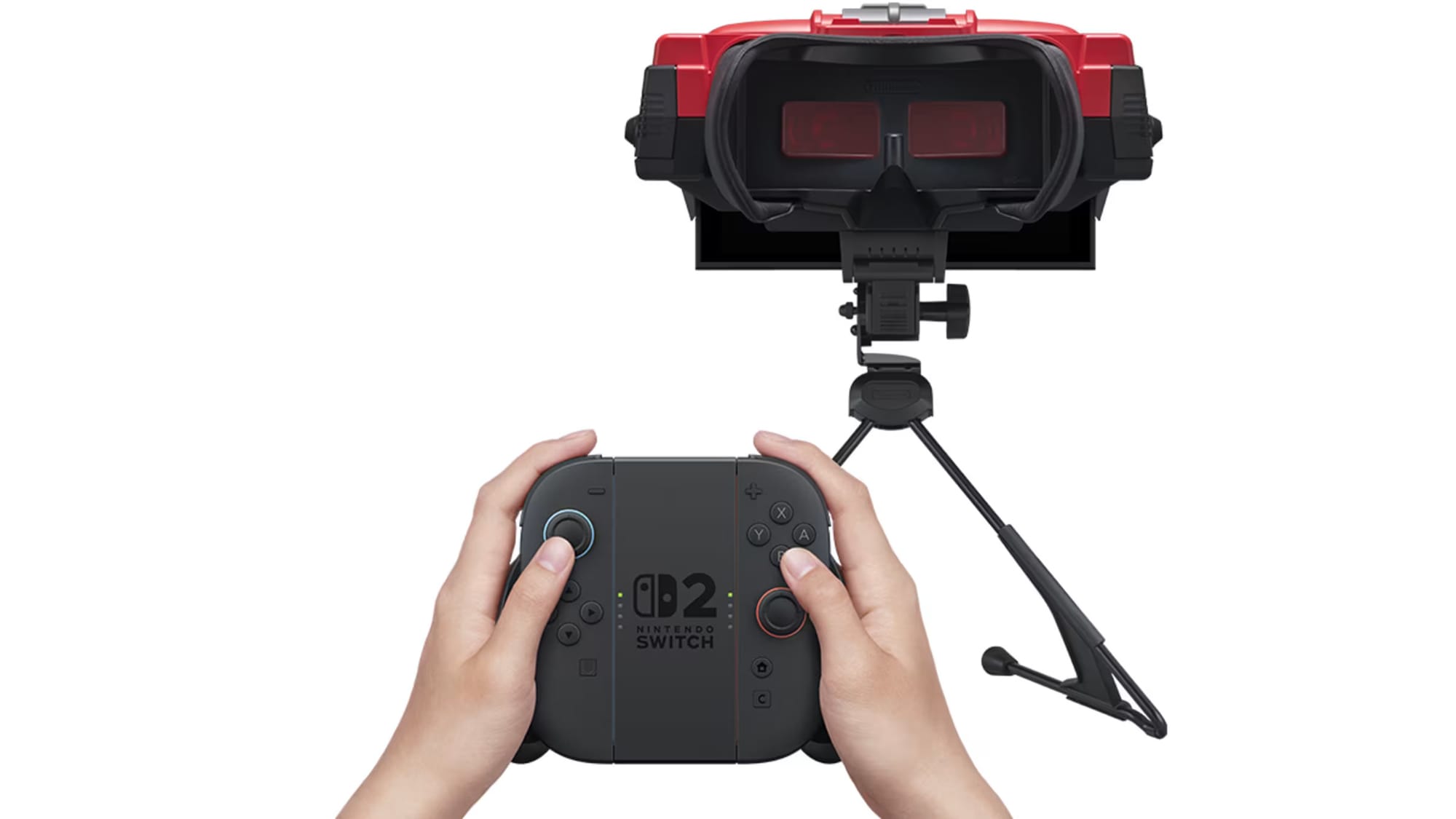
Funny I say that, because I wonder the same for its revival! With the absence of a 2D mode and color options saved for later, one wonders if this new Virtual Boy needed more time in the oven. It’s not the first time Nintendo’s slacked on accessibility options, and while it’s understandable portable, single-screen play likely isn’t in the cards (Nintendo’s gotta justify the costs for niche enthusiast items, especially in this digital age), it’s a shame those with more sensitive eyes might have to miss out on the fun.
Still, there’s ultimately no animosity towards the console itself. The Virtual Boy’s merely a reminder that even our favorite creatives and developers are capable of failure, and its re-rerelease is just Nintendo taking ownership of their most infamous misstep. Players interested in Nintendo’s legacy can more than satiate their curiosities with the rest of the Nintendo Classics line-up, but the alternative cardboard accessory at least makes this new Virtual Boy an economic reality—ironically or not. Just, uh, keep some Tylenol handy.