The Nintendo GameCube – the little purple prism that could...or couldn't. While the system's middling performance was a rough patch for The Big N, many young gamers grew up cherishing its library of games. But do they hold up today? Join Anthony on his quest to find out as he reviews every classic title offered on Switch 2's Nintendo Classics service.
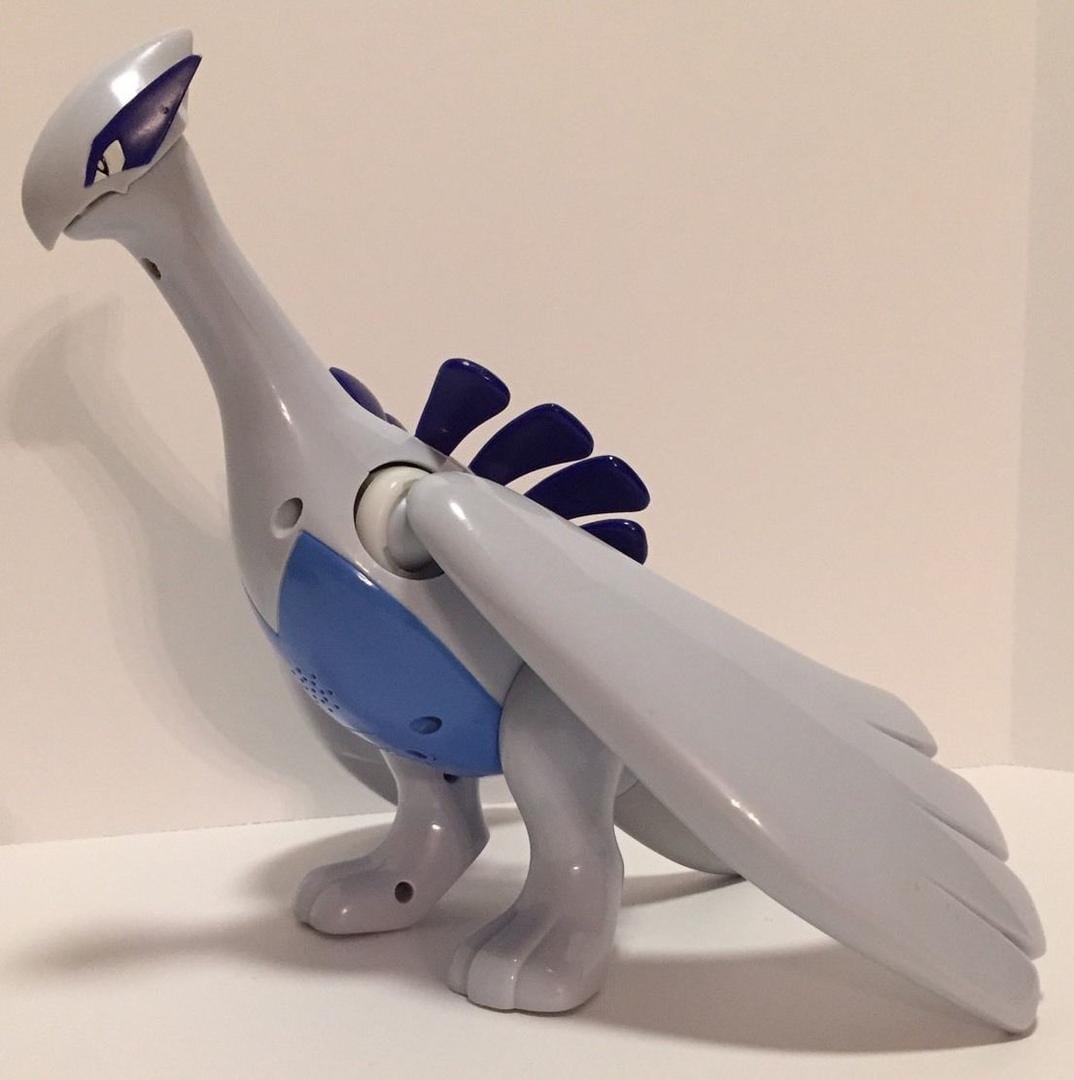
Growing up amidst the fever of Pokémania, one of my childhood holy grails was this larger-than-life Lugia toy: standing at a proud ten inches, complete with posable wing action and vocalized sounds. The eye-popping visual of Brock riding this mythical figure in a Pokémon magazine—the name long since lost to time—immediately captured my imagination, and it landed the top spot on my 2000 Christmas list. As luck would have it, my wish came true: after unwrapping the legendary Pokémon to much celebration, my Mom sat me down and told me it took upwards to thirty different toy stores to hunt down the elusive Lugia, as if she’d taken on the mantle of a Pokémon Trainer herself.
“You better be grateful,” she said.
I certainly was.
Lugia was an instant favorite in my grand pantheon of Pokémon toys: fond memories persist of posing it on my bed, having Lugia soar around the basement, and dispatching its foes with imaginary rounds of Aeroblast. Pushing one of the scale-like protrusions growing from its back would emit sounds from its starring role in the second Pokémon movie, not the least in its melancholic song serving as the film’s motif. Even now, I can still visualize closing my eyes in repose as Lugia sang me its ethereal lullaby, echoing from beneath the waves.
Lugia still lurks in its basement habitat, but alas, the tail’s since yellowed and, worse, one of its detachable wings went missing. I’ve looked up and down for it over the years, but to no avail. The thought of clipping this majestic beast’s wings still stings this day, and it’s been a perpetual source of guilt every time I gaze upon the Diving Pokémon. Through sheer carelessness, I’d grounded one of Pokémon’s most graceful beasts: no longer would it skid across the open seas of Pokémon Silver’s title screen, the joys of flight now robbed forever.
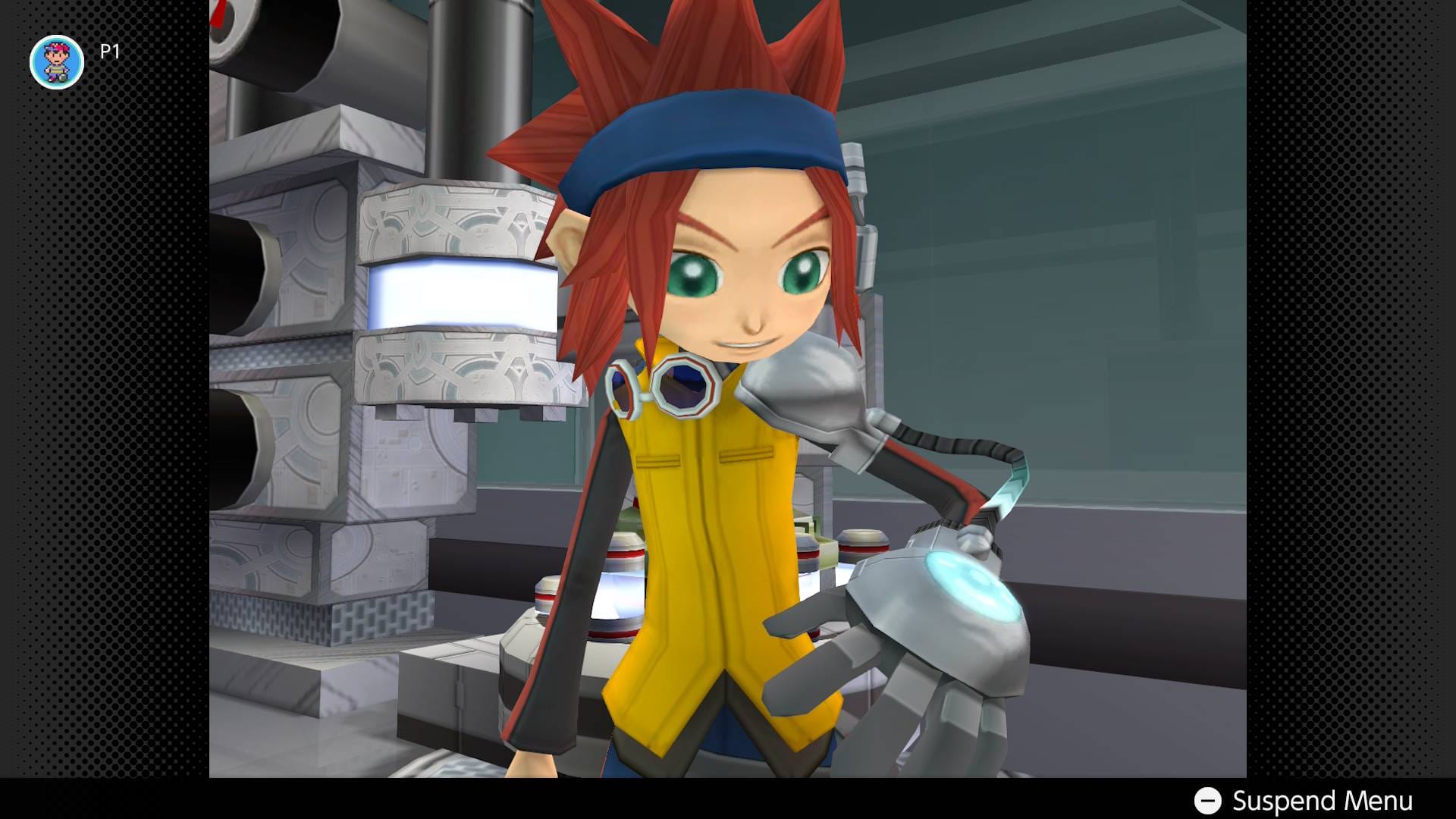
This is all a clumsy metaphor for my feelings on Pokémon XD: Gale of Darkness, a game also starring Lugia that I’d previously skipped on the basis it was following up the disappointing Pokémon Colosseum. Obviously, I wasn’t responsible for developer Genius Sonority’s mediocre attempts to meld both RPG monster raising and 3D battle simulation, but fumbling such an appealing lay-up for the flailing GameCube left as much a bitter aftertaste. Much as Reggie Fils-Aime assured Pokémon XD wasn’t a direct follow-up ("Pokémon XD is a brand new Pokémon game for GameCube. It's a true RPG Pokémon. It's isn't a sequel to Colosseum."), further coverage ensured that was the case, and I wasn’t about to experience that disappointment again.
But duty calls, and now we’re left with a particular predicament for this column. It’s not without precedent for a sequel arriving on Nintendo Classics before its predecessors—Super Mario Land 2 and Wario Land 3 come to mind—but I’m left in a particular predicament for this column. While it’s common consensus that Pokémon XD is, at the very least, a marginal improvement over Colosseum, I haven’t touched that spin-off since dropping it after its 2004 release, so I’m left ill-equipped to provide a direct comparison between the two. Left only to judge Pokémon XD on its own merits, can I trust fandom consensus and enjoy the game as is?
Yeah, it’s gonna be a process.
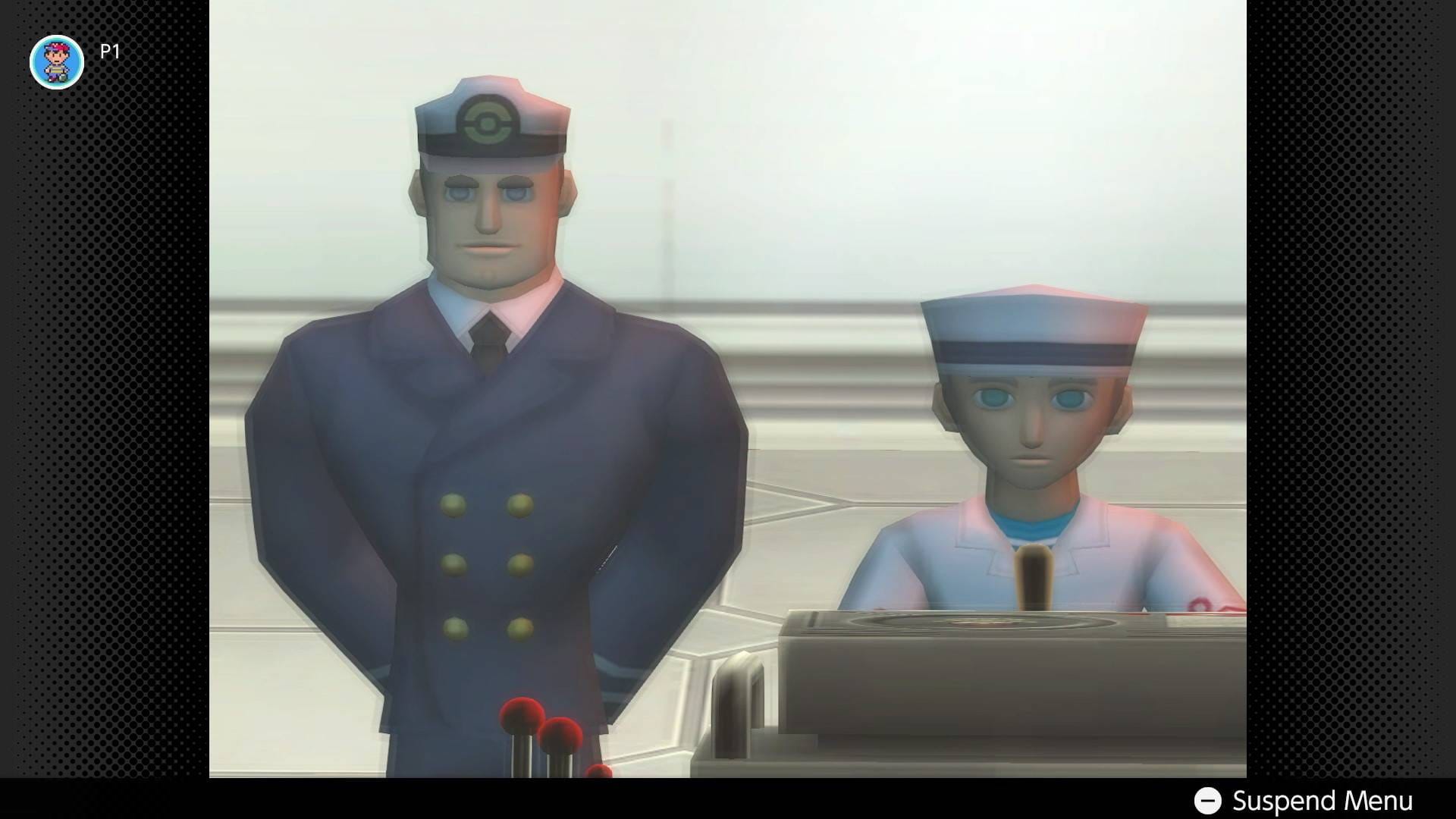
From the get-go, Pokémon XD befuddles: it confuses by suddenly throwing us into context-less Pokémon battles, it infuriates with a wretched game of hide-and-seek across a laboratory I could never memorize the layout of, and it diligently instills the fear of God with its humanoid cast’s vacant eyes staring into your soul. Things do pick up, as adherents are wont to say, yet ultimately we’re left with another half-baked RPG that skirts around the forbidden line of emulating the Game Boy games wholesale, forcing Pokémon XD into maintaining a separate niche that, frankly, doesn’t work as well.
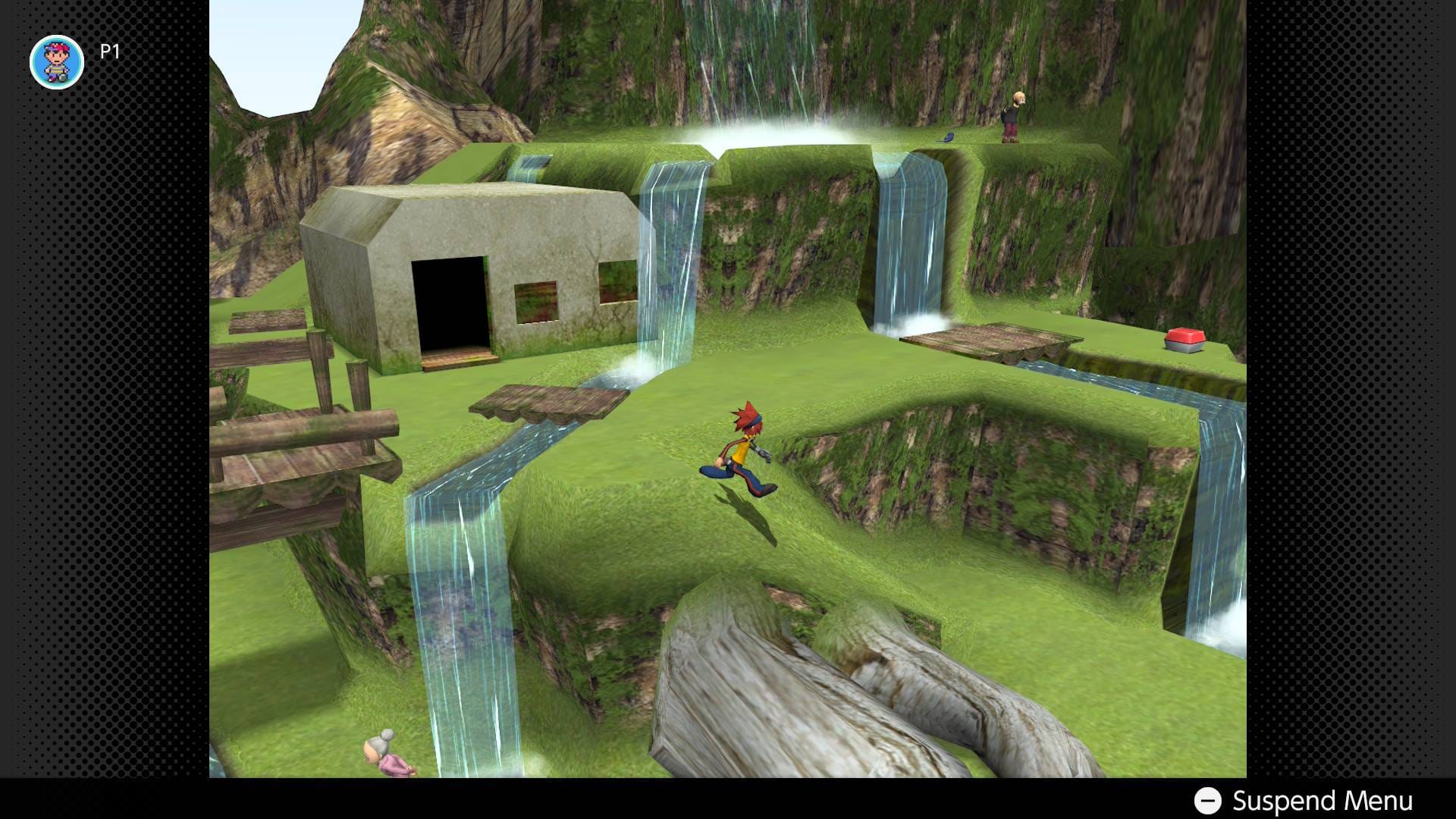
Like before, Pokémon XD tasks its young protagonist with capturing Shadow Pokémon: genetically-altered monsters that’ve had their hearts closed by the nefarious organization Cipher. Reduced to emotionless fighting machines, our hero sets out to “snag” them from ne’er-do-wells via specialized Poke Balls and restore them to their lovable, more marketable selves. (Not that you’d ever notice their notice their alleged anguish: the Pokémon never signify distress with their lively, repurposed Nintendo 64 animations, purple miasma and all.)
Indeed, recycling is the name of Pokémon XD: the Wild West setting in Orre returns, moving not an inch from its point-and-click overworld of familiar towns and new dungeons rather than an interconnected one. Pokémon battles are almost all two-on-two affairs, demanding a more mindful strategy than the default one-on-ones. (Can’t just use the wide-ranging Earthquake willy-nilly, lest you send Gulpin to an early grave.) Rather than catching wild Pokémon, only a limited selection of “Shadow Pokémon” can be caught and selected for your party. The game even starts you out with an Eevee, as per Colosseum’s Umbreon and Espeon before it.
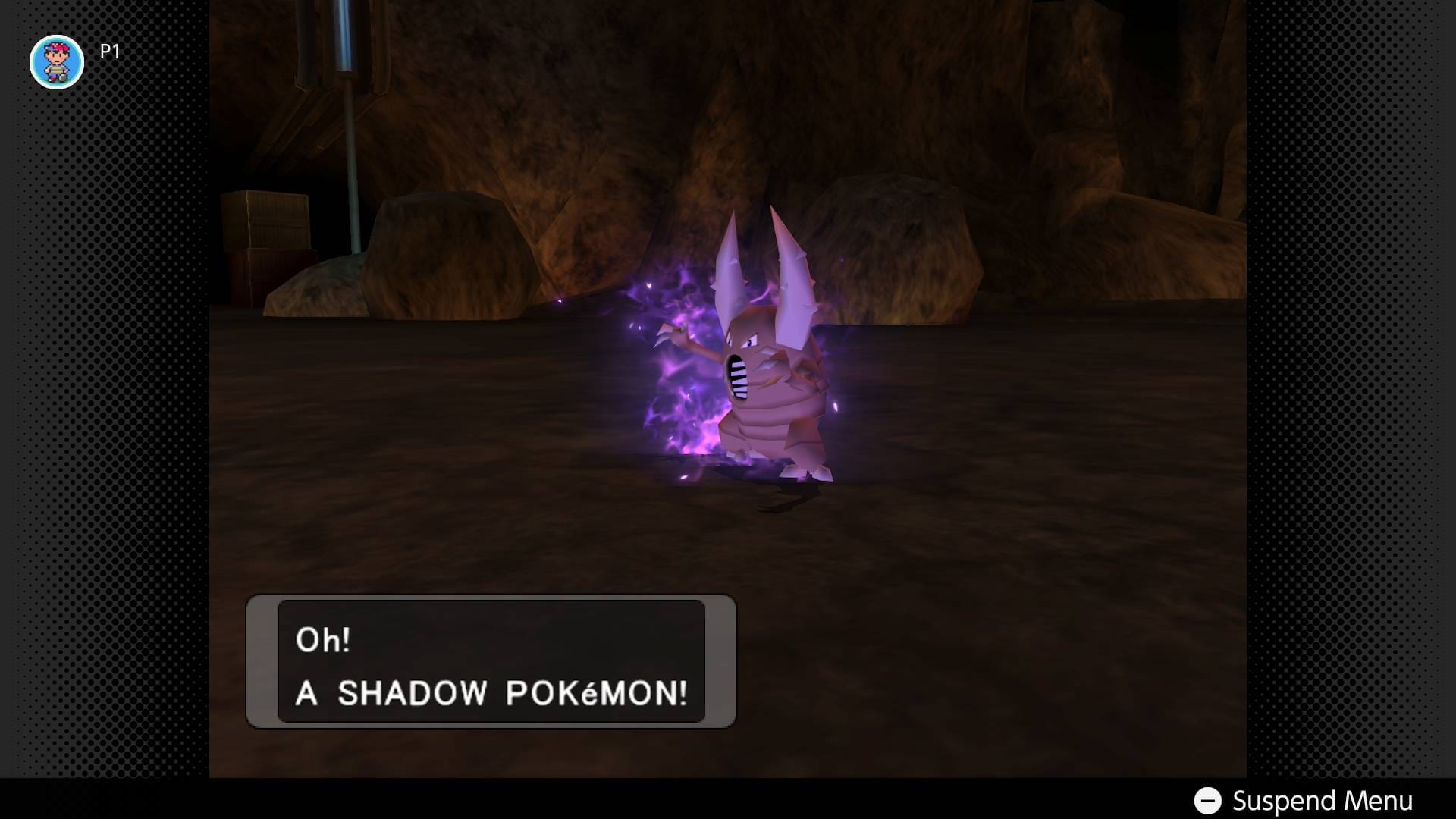
It’s all too easy to write off as a disposable sequel, but to Pokémon XD’s credit, it does strive for improvement. The Eeevelutions, for instance: this time, you can select from any of the then-five Eeveelutions right off the bat. With my Eevee’s defensive Lax nature and Pokémon XD’s not-so-dark edge, I naturally went with Umbreon—known for its defensive prowess, and apparently the worst pick for this game. For much as Eevee’s dark side serves as a wall, its offense leaves much to be desired, and it quickly became redundant when accompanied with the Dark/Fire Houndoom. Whoops.
Shadow Pokémon themselves serve as double-edged swords. Their Shadow moves are super effective against any non-Shadow Pokémon and vice-versa for fellow Shadows, yet careless overuse sends them into Reverse Mode: a frenzied, self-damaging state calmed only by calling them back to reality. The more their Heart Gauges gradually deplete through battling and traveling, the higher the chance they’ll go berserk, instilling a push-and-pull for trainers navigating the rigors of battle. I only wish certain specifics were clearer: I didn’t catch the super effective detail until I looked it up, for instance, having initially assumed certain moves held an advantage against certain types.
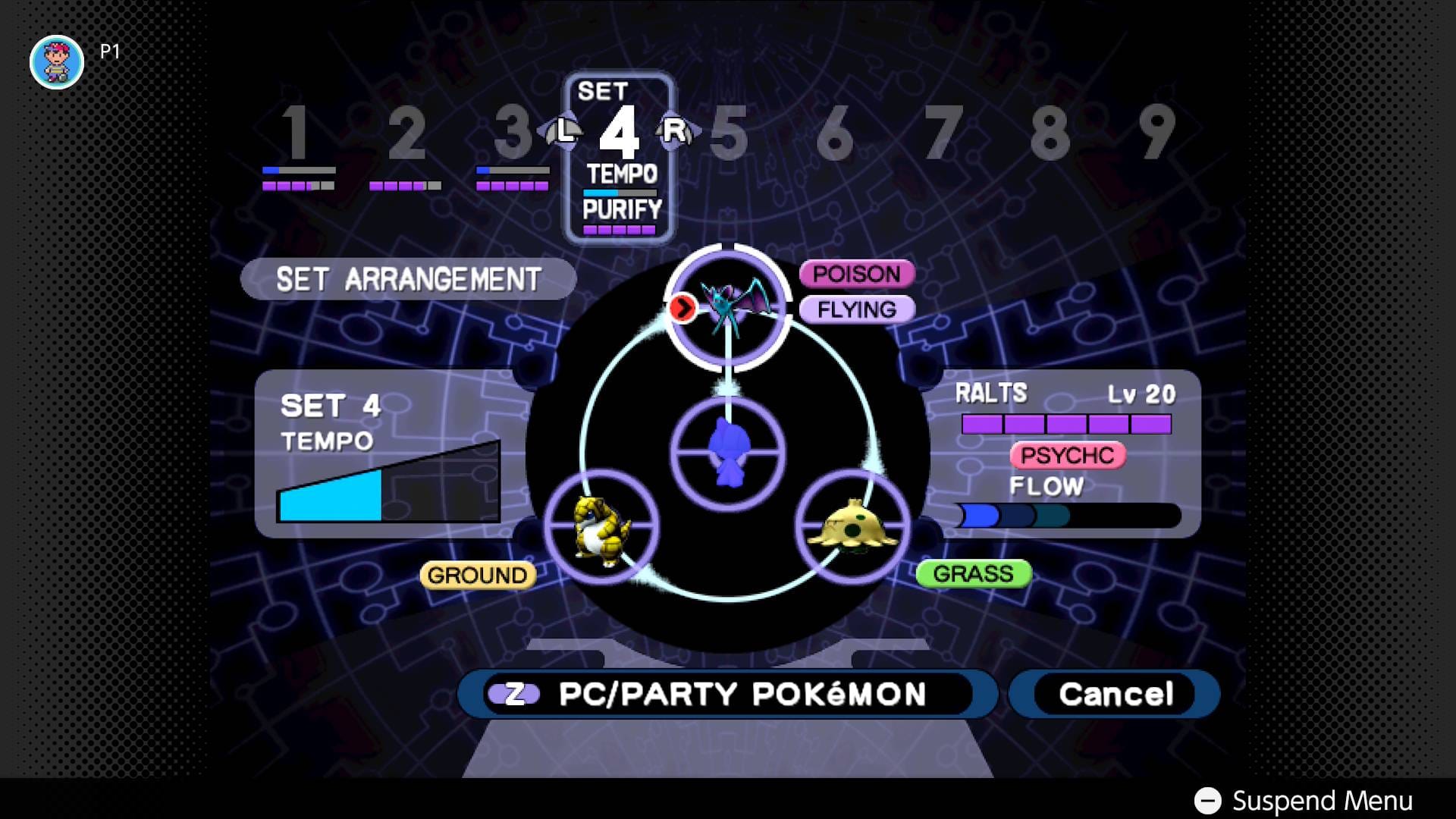
As leveling and move-learning’s locked behind Purification, you’ll want to restore these rescued Pokémon as soon as possible. Thankfully, purifying Pokémon’s an easier deal than in Colosseum. As opposed to simply grinding away, Pokémon XD’s Purification Chamber allows you to passively purify monsters in the background while raising prospective Pokémon in your party. It takes its sweet time opening up, but I admit a fondness for the “Flow” system: it’s visually impenetrable, but basically you’re establishing this weakness-based flowchart with Shadow and non-Shadow Pokémon, banding your monsters together through their respective vulnerabilities to save their fellow ‘Mon. (Beautiful metaphor, ain’t it?) The more Pokémon you save, the more pieces you have to click, clack, and combo together.
Alas, for all of Pokémon XD’s goodwill, I simply can’t get past being locked into a fixed set of Pokémon. It’s not that the set-up doesn’t provide its own intrigue—there’s a certain satisfaction to having each critter step into the light—but the dozens-strong collection of unique Pokémon soon wanes in the face of pacing. By the time I’ve caught a Golduck or Electabuzz, I’ve already built a full-fledged team to tackle the campaign, so why waste time purifying them when I can just simply blitz ahead? The campaign’s too short, too confined, to fully explore the idea, and the near-absence of wild Pokémon leaves us with nobody but random trainers to rematch—a repetition not even the post-game tournaments and 100-man marathons can halt.
Like Colosseum before it, it’s like The Pokémon Company didn’t want Genius Sonority to steal the Game Boy Advance’s Pokémon spotlight with flashy 3D, and they were forced to come up with some real annoying concessions to navigate. Case in point: Pokéspots, where you place down food to lure an even more limited selection of wild Pokémon. Did I mention it’s a time-sensitive process that could activate at any time, anywhere? No, I don’t wanna run out of the dungeon I’m clearing just to catch a rare Aron in time. Who thought this was a good idea?
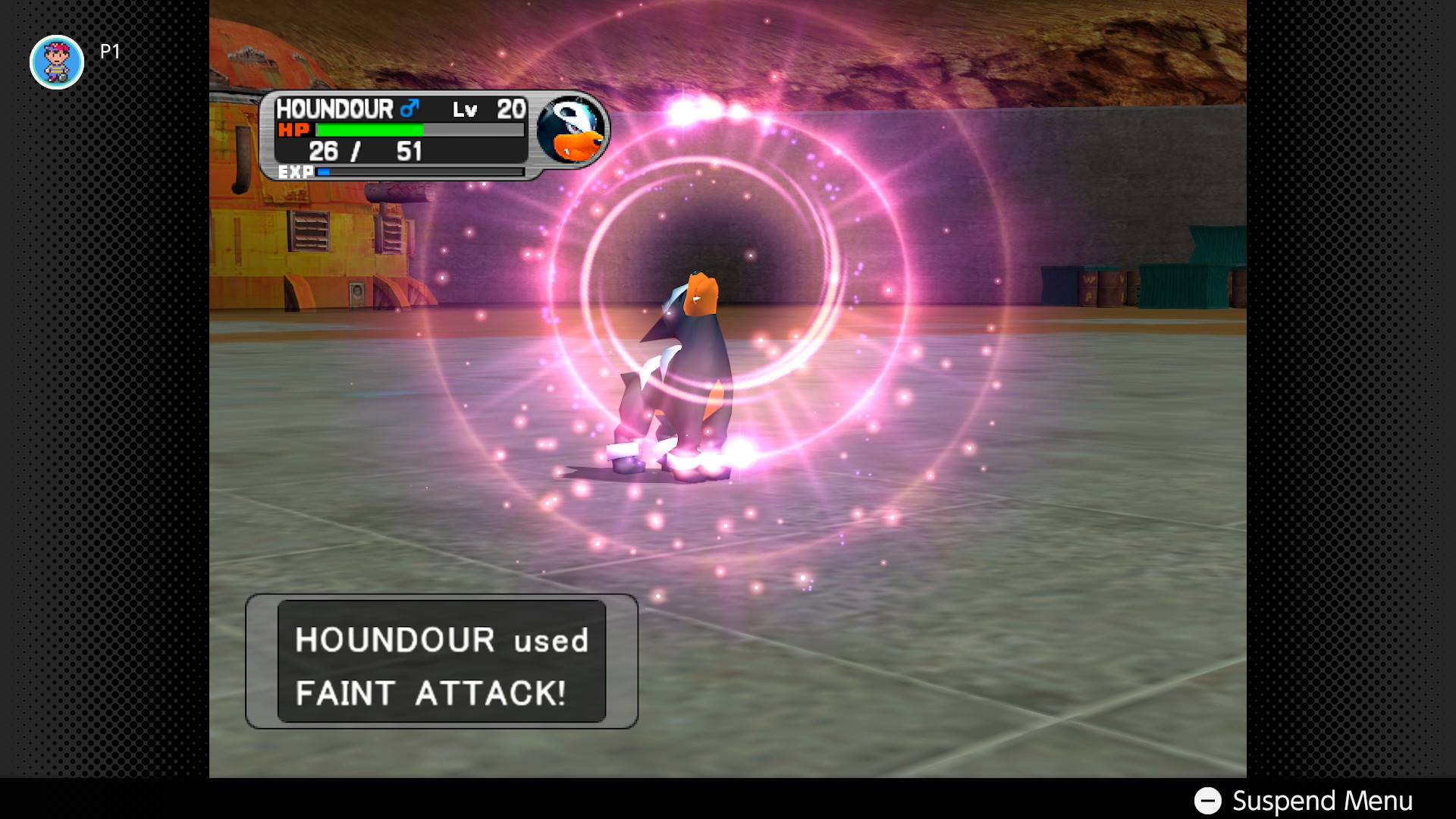
Simply put, Pokémon XD and its predecessor can’t match the depth of its progenitors by virtue of their own design. The stat-influencing Natures introduced in Ruby and Sapphire are present, but they’re ultimately disposable for a single-player campaign. Trainers ingrained with the “trained Pokémon are stronger than wild Pokémon” rule will balk at utilizing freshly-caught evolved monsters. And no wild Pokémon means it’ll never offer the limitless teambuilding and approach so fundamental to the mainline games’ appeal, instead confining us into this awkward box no one wants to play in. Pokemon XD wants us to believe in its niche, throwing us collectible TMs and sidequests of all sorts to keep us engaged, but no matter how you approach it, vital pieces of the Pokémon puzzle are missing.
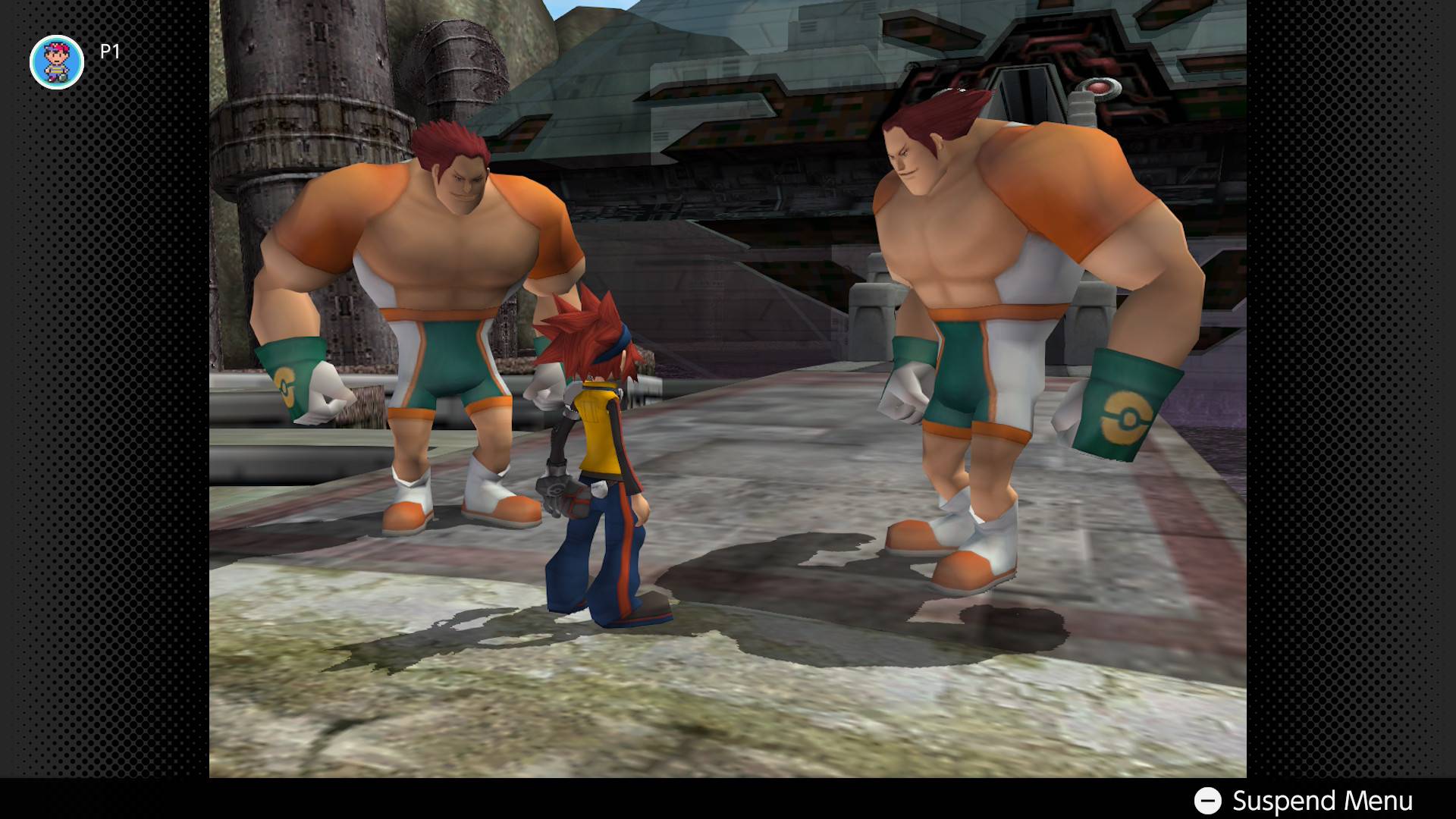
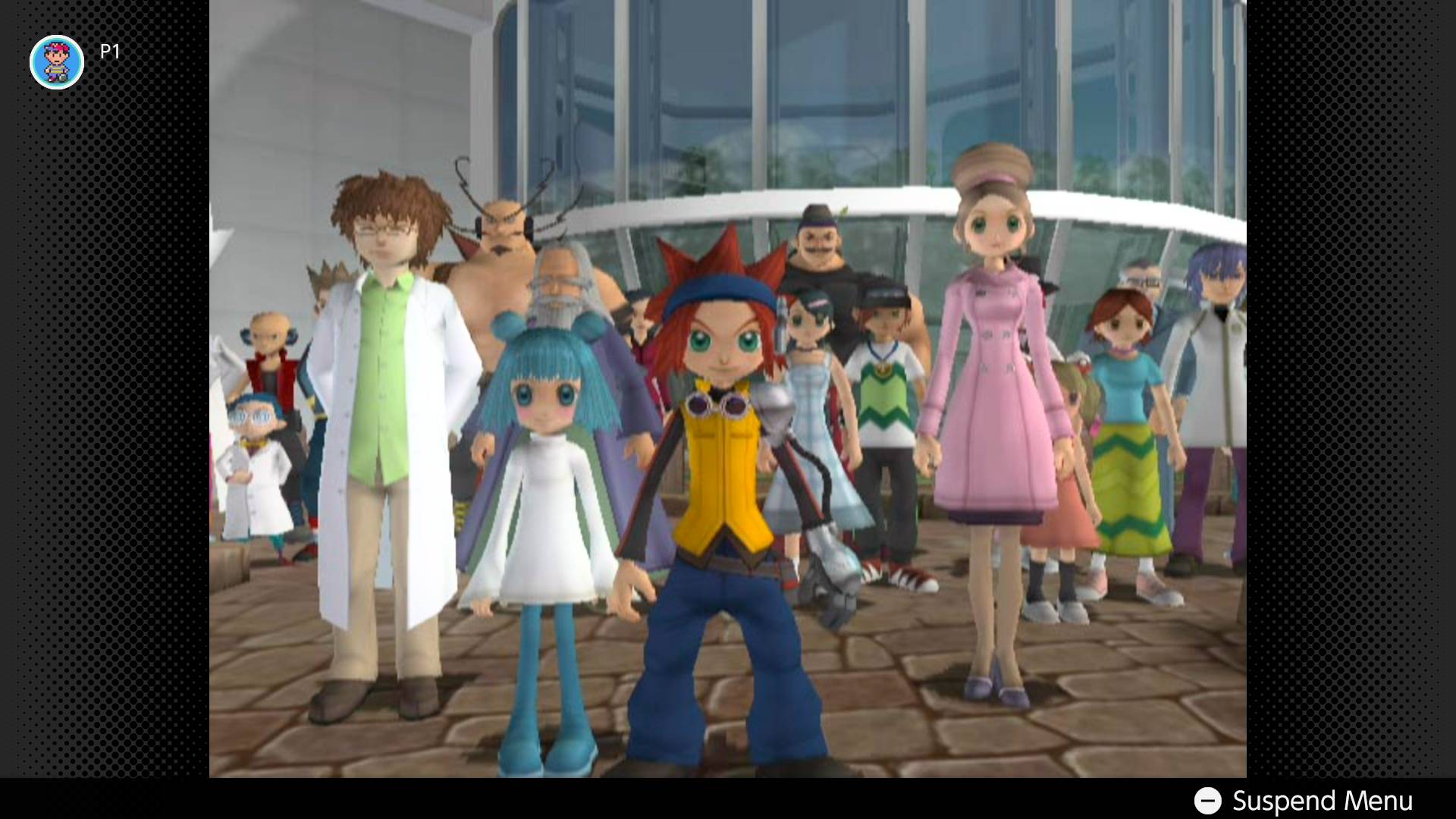
And that’s not even getting into the really goofy stuff. Like Colosseum again, Pokémon XD’s caught in this weird Twilight Zone of franchise puberty—an alternate reality where the Pokémon brand’s universal look hadn’t yet crystalized— and so we’re left with something that looks, reads, and sounds like some kooky knock-off. This isn’t all terrible, but it’s enough to immediately pull a double-take with the aforementioned human designs: their fluctuating body shapes presenting a harsh juxtaposition with the standard established by Ken Sugimori.
As Pokémon XD hails from the earlier days of Pokémon localizations, newcomers and veterans will run into peculiar quirks courtesy of the series’ old stylization guide: for instance, all proper nouns are capitalized, and while it might’ve made sense to highlight vital terminology on teeny-tiny Game Boy screens, their discordance with wide, open text boxes plastered on our CRT screens instantly distracts, framing Orre as an open-air old folks’ home where everyone’s hard of hearing. (“ADAM, this is the DIRECTOR’s OFFICE. Did you want to pay a visit to PROF. KRANE?”) Meanwhile, any and all Japanese laughter is retained, no matter how alien or unnatural they sound upon the American tongue. (“Fwofwofwofwo”) And while localized script captures the eccentricities of Orre well enough, awkward lines slip through more than once. (“No need to be so stiffly official!”)
More than anything, though, I’m endlessly amused by the trainer names: every single one is blatantly made up, with such howlers in “Cooltrainer Gorps” and “Cipher Peon Ezoor” proudly strutting out upon Pokémon XD's localized catwalk. If I didn’t know any better, I’d say these were written offhand by some pre-teen who hadn’t yet cracked the linguistic relationship between consonants and vowels—and I would know, as I was that pre-teen, once upon a more aspirational time—yet cursory research reveals these are localized inventions. I can’t speak to why they didn’t just simply use regular names like the mainline games did, but for better or worse, I can’t deny they grant the game an endearingly off-beat character. Really, just observe the greatest hits:
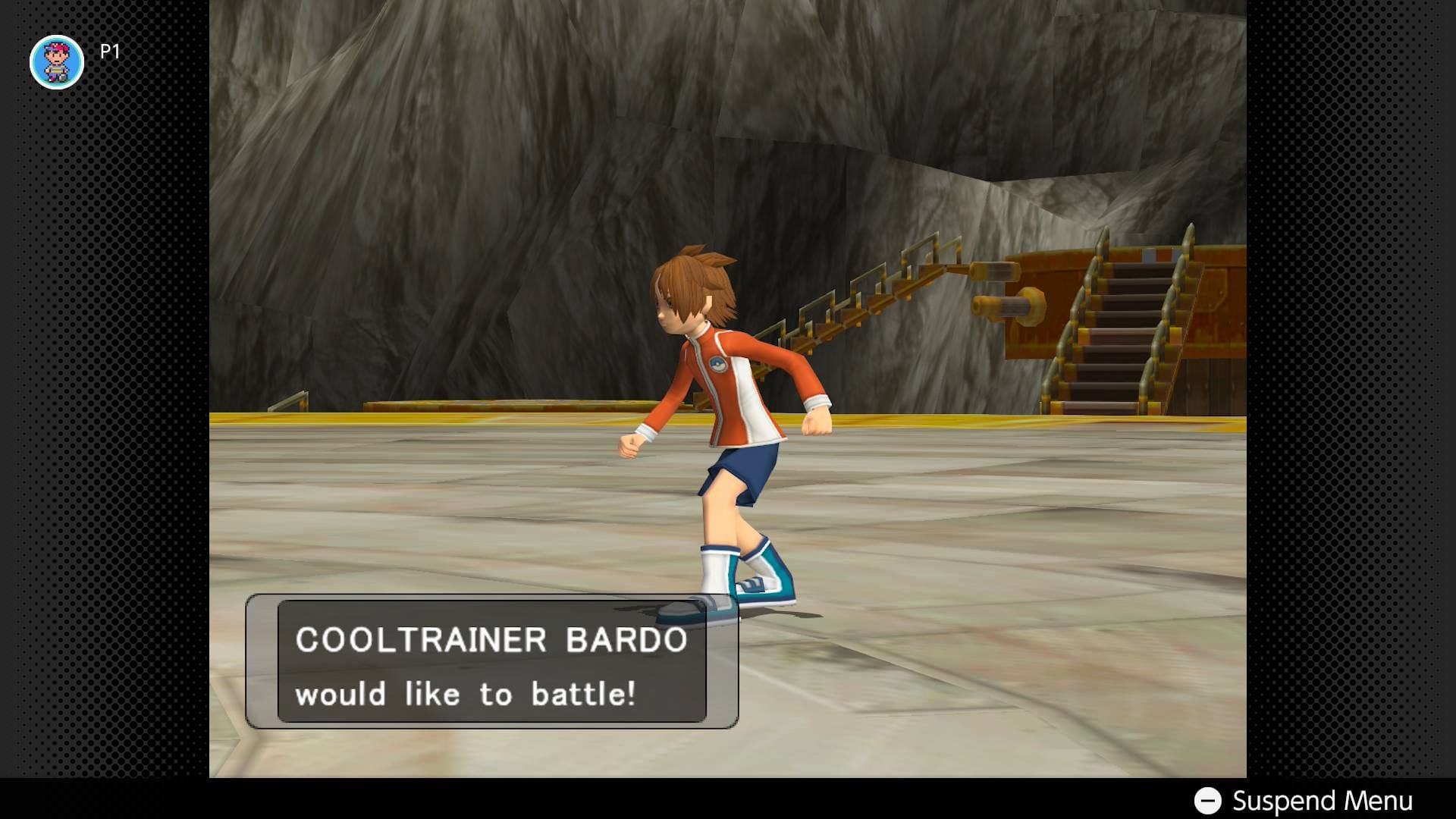
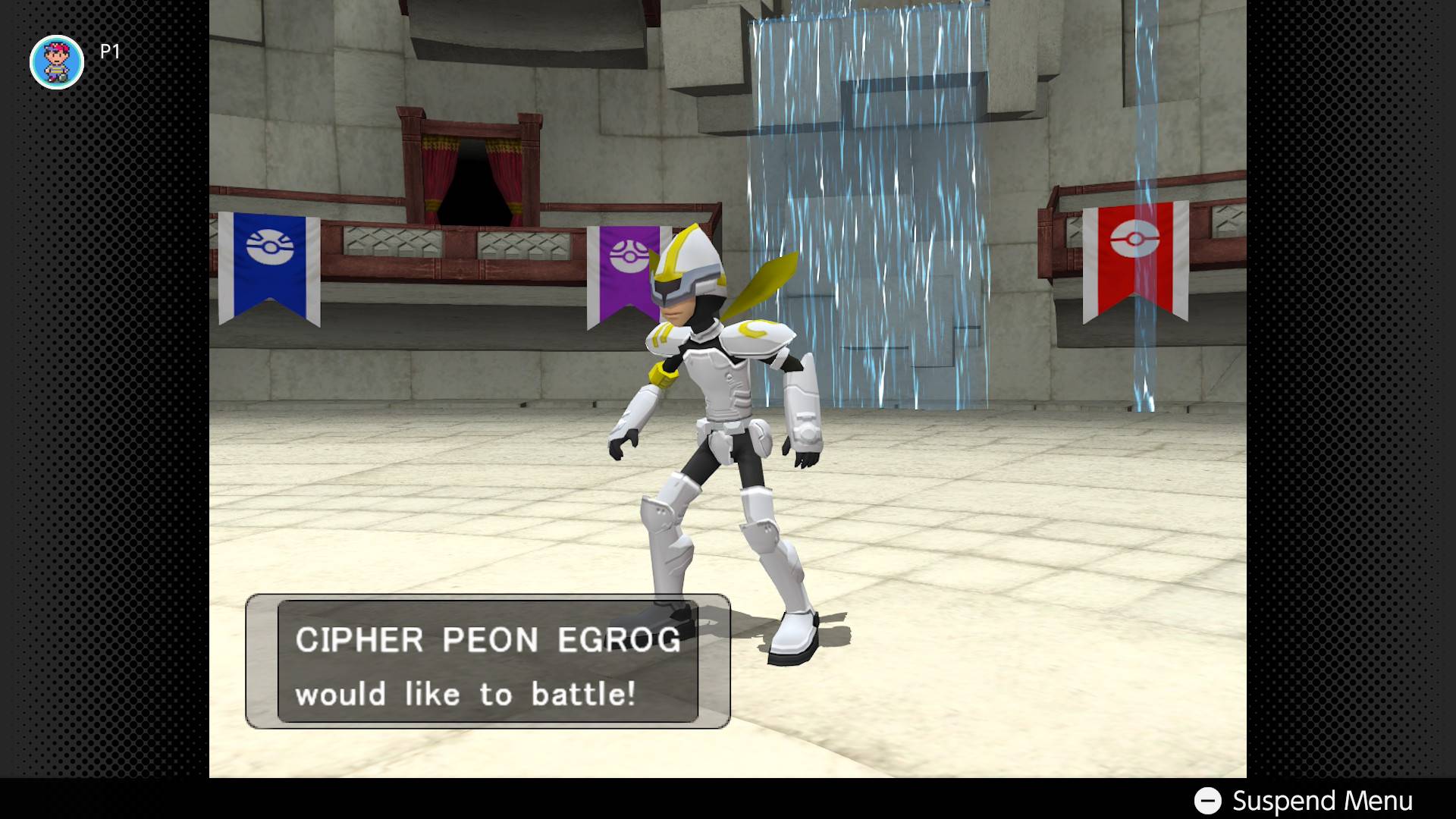
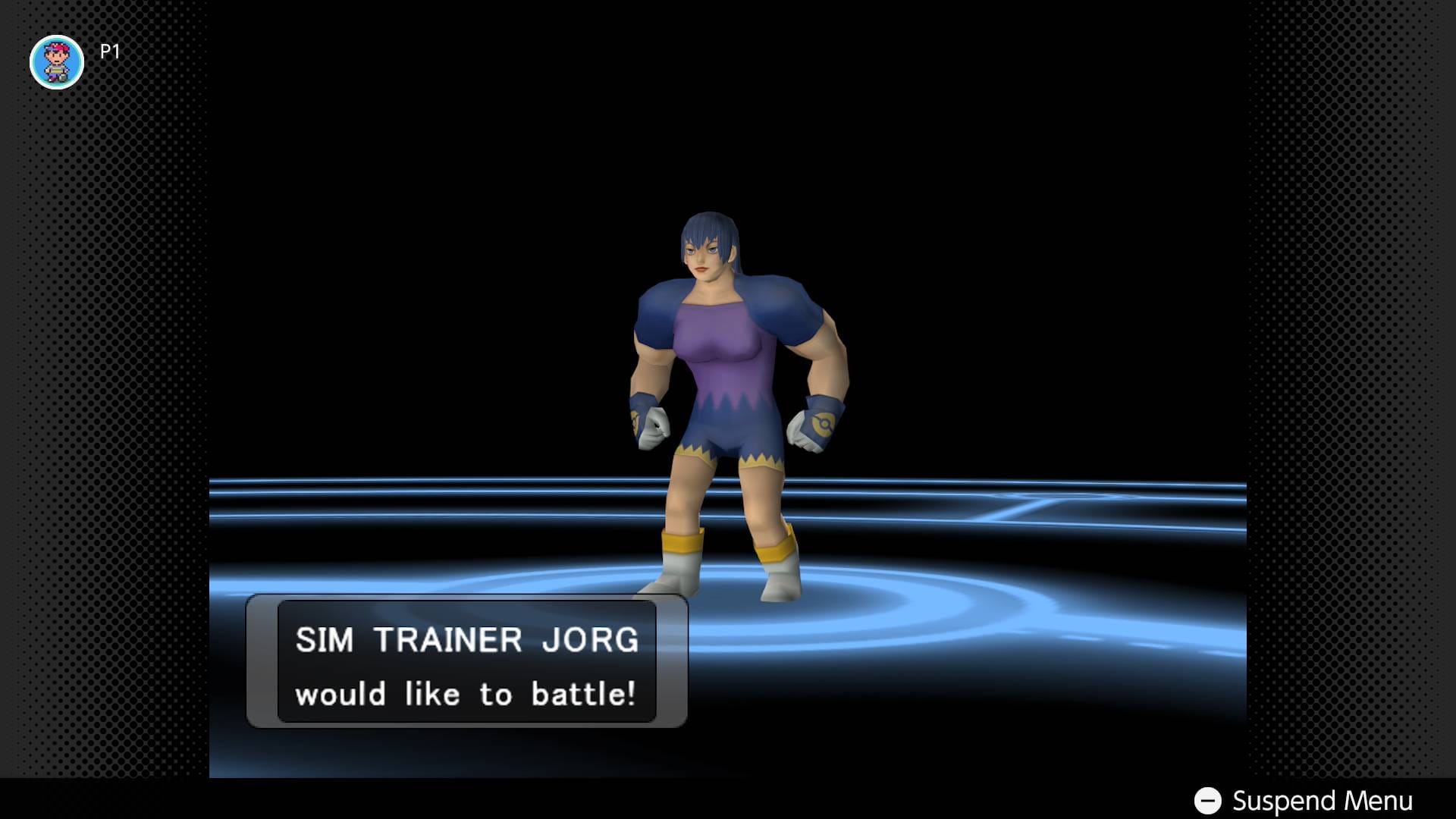
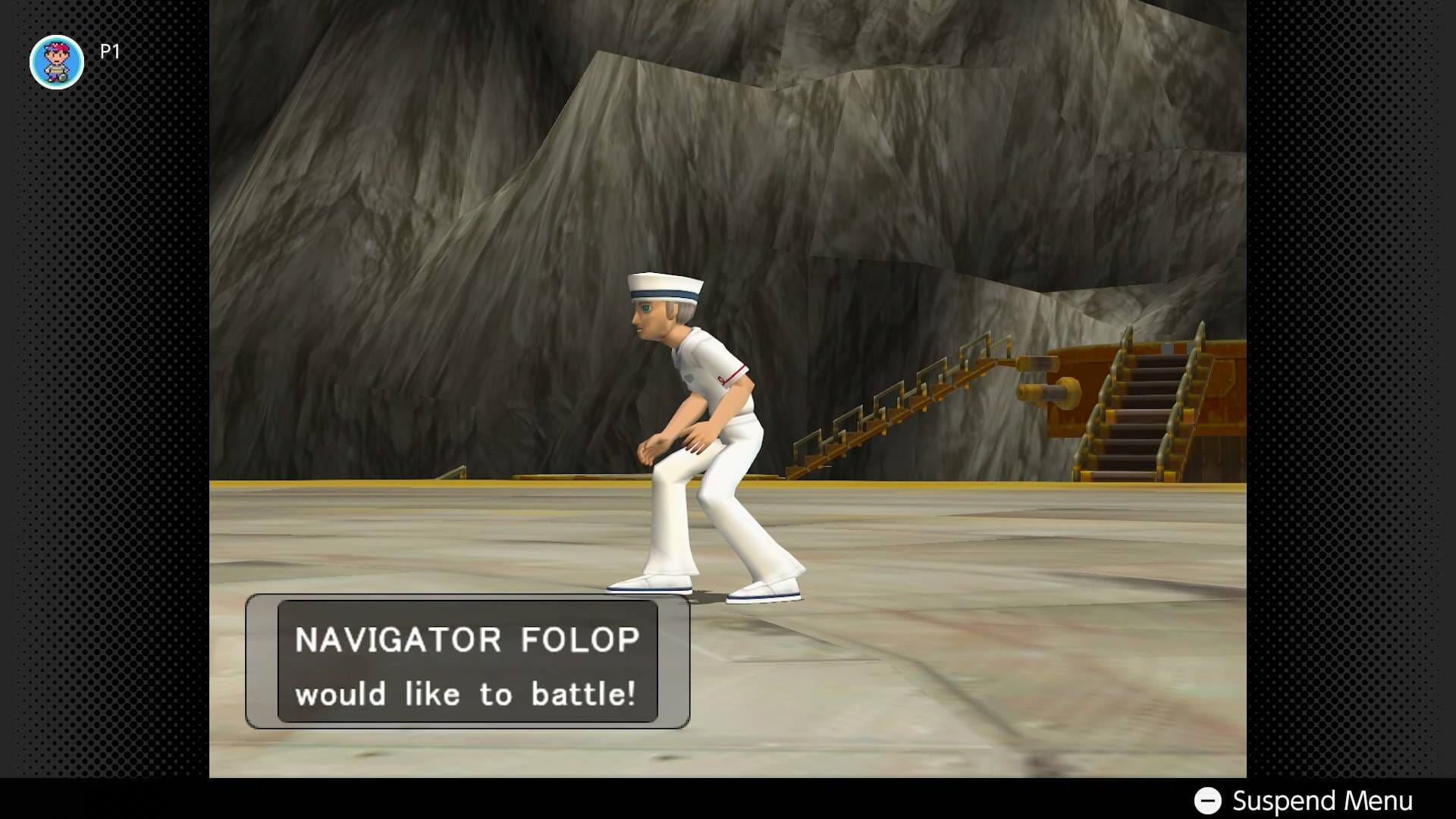
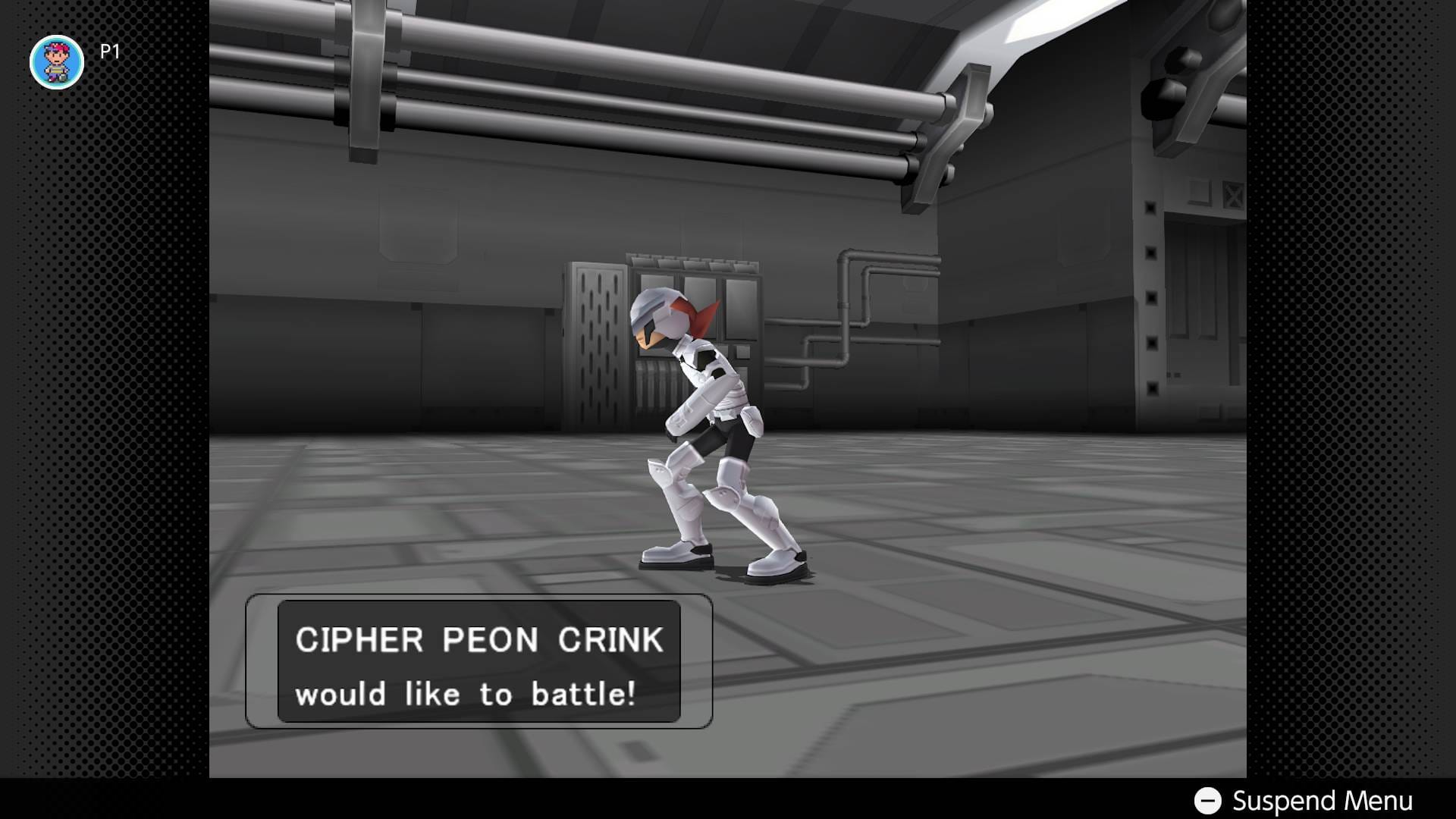
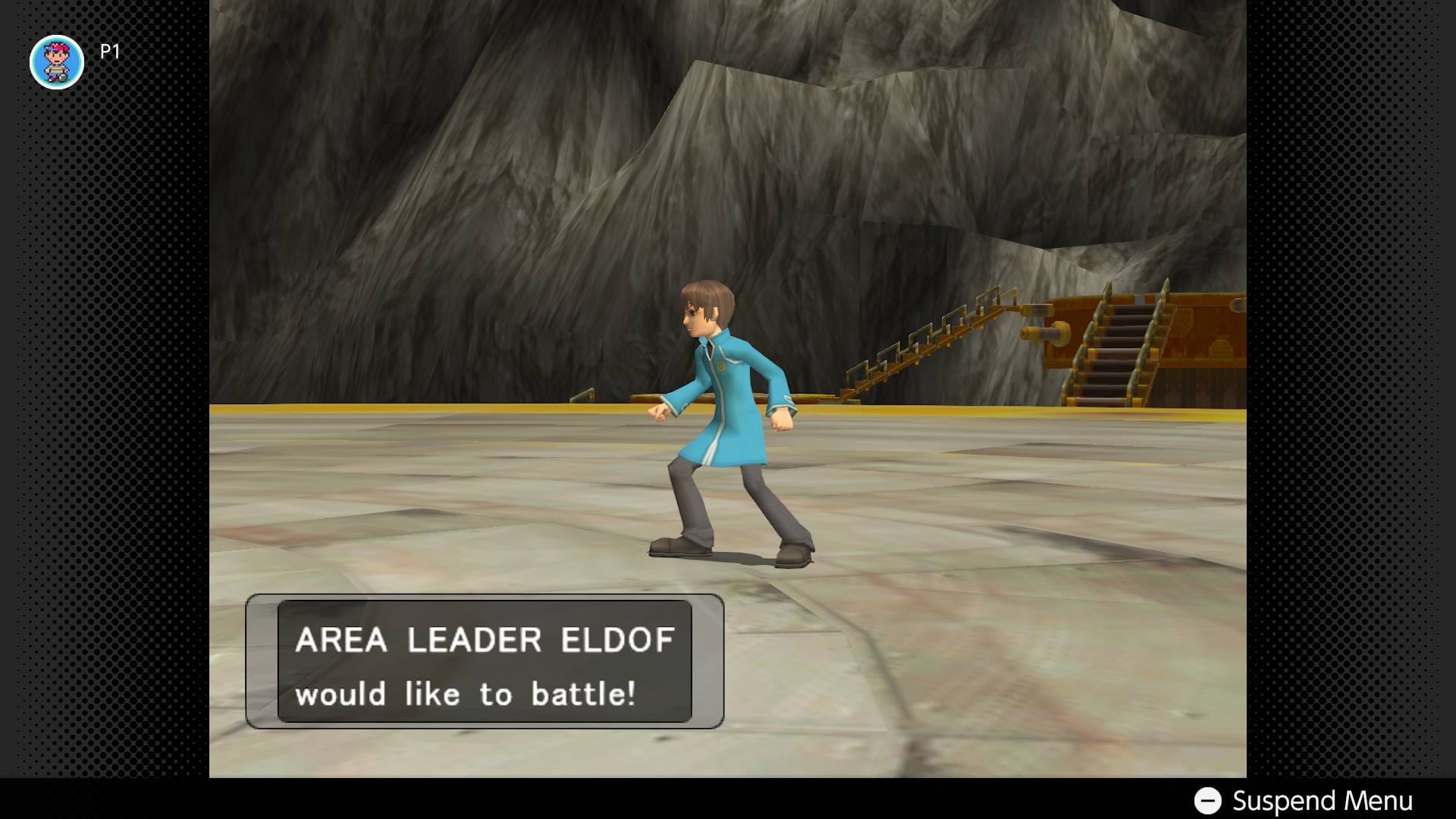
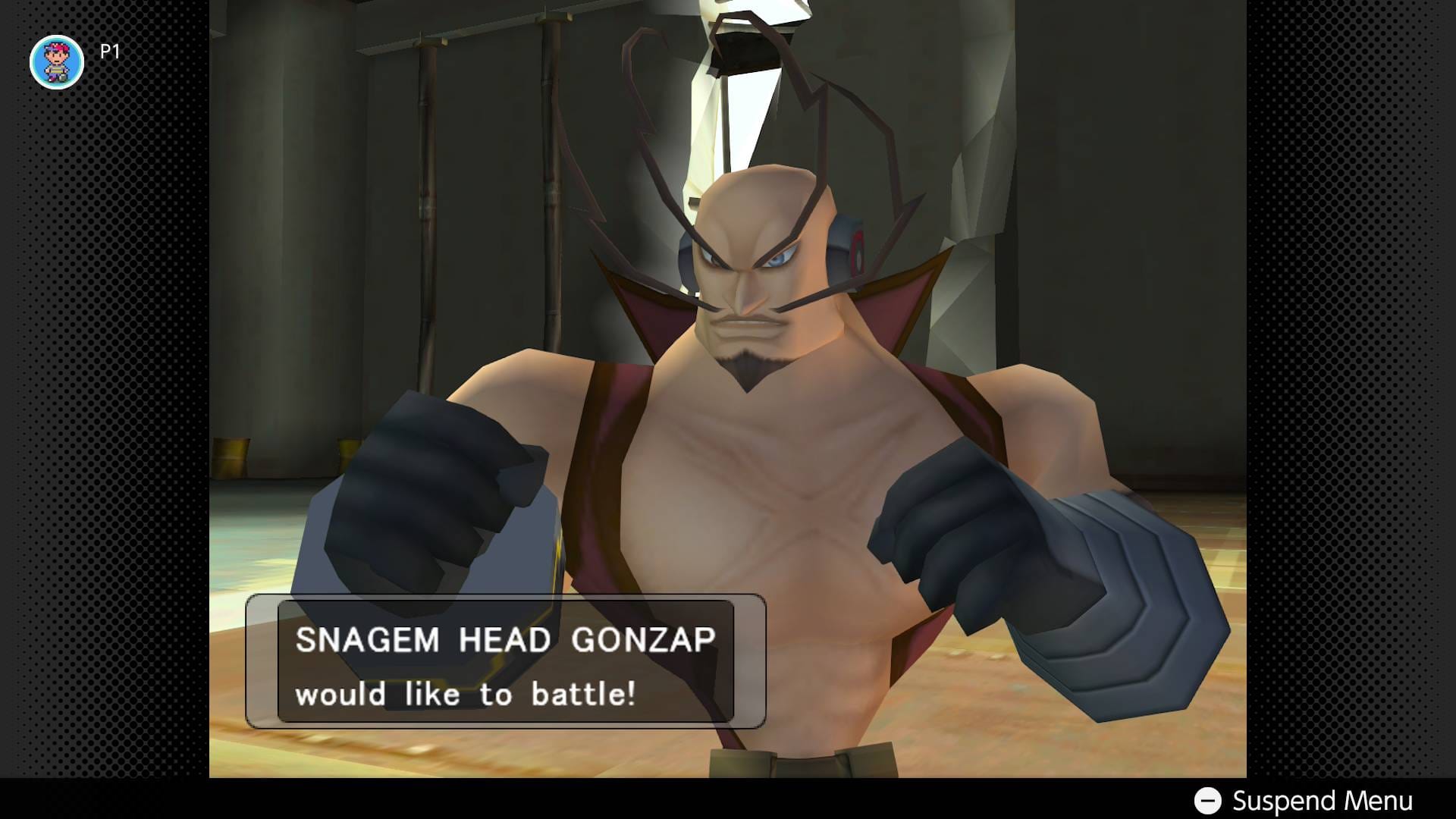
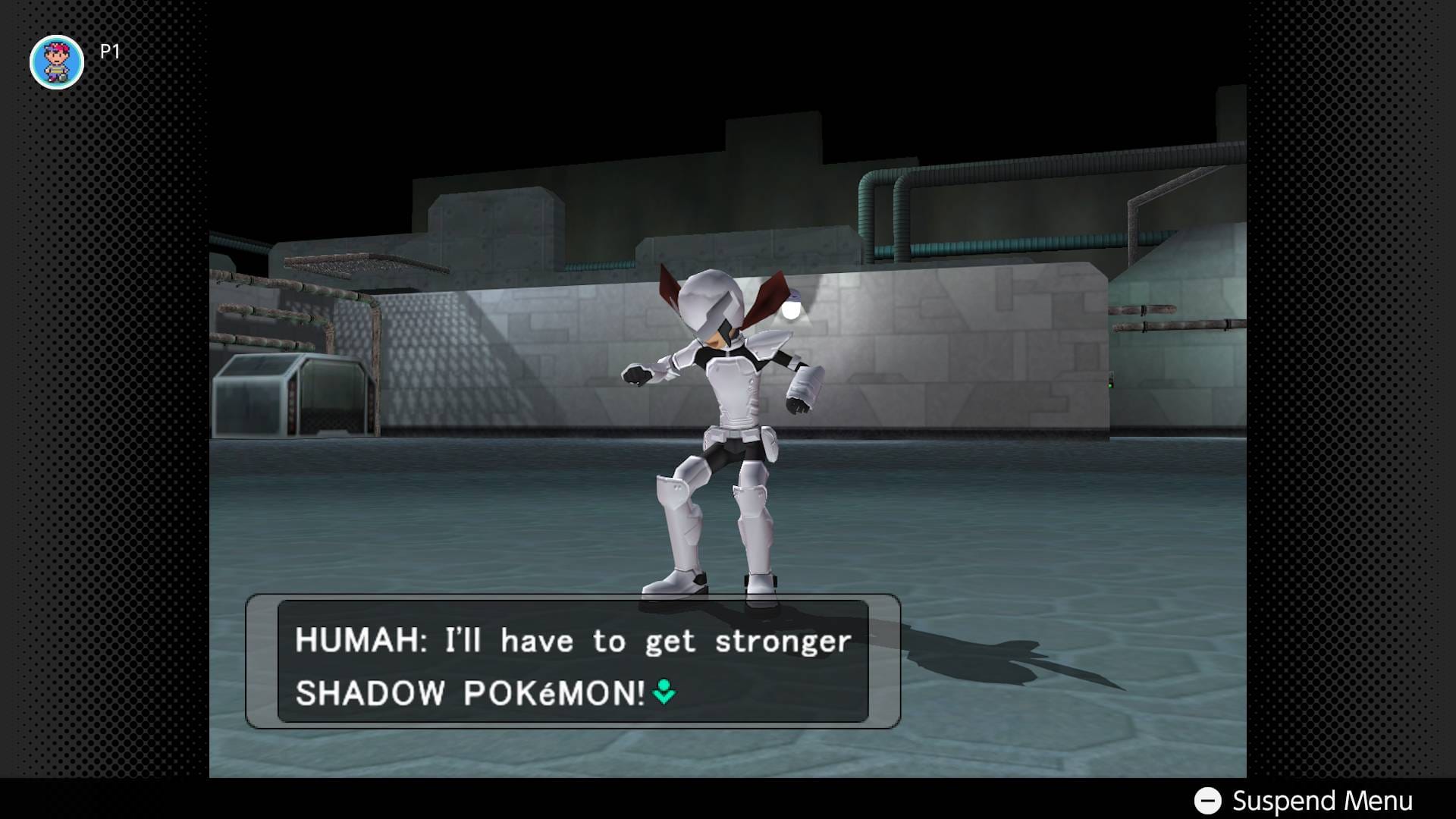
And the story? Yeah, uh, “dark Pokémon” this ain’t. Applying logistics to Pokémon is a fool’s errand, so I won’t comment on the inanity that’s “Orre somehow has no Pokémon but Pokémon are still all over the place anyway”. While I don’t play Pokémon for complex themes, Pokémon XD’s Saturday morning cartoon vibes and children’s power fantasies frequently undermine any so-called “darkness”, and I was left wanting for how the Pokémon Black and White games engaged on the ethics of Pokémon ownership. (Which, coincidentally, marked the first time Pokémon sincerely tackled thematic storytelling.) At any rate, do remember to act surprised at the least shocking villain reveal this side of Pokémon X and Y. (Really on the nose with “Greevil,” guys.)
Still, it’s not all bad. The soundtrack courtesy of legacy composer Tsukasa Tawada fluctuates from the deviant (Western harmonicas and finger-snapping in my Pokémon?) to echoing the series’ typical fare with his own stylization (the two recurring battle themes present something of a lyrical quality—a fitting novelty for the Cipher member theme, methinks). And then there’s just the outright wild: for all my fuss over discordant character design, recurring villain Miror B. boldly embraces that discordance with his larger-than-life afro and show-stealing love of disco. I might prefer his peppier samba in Colosseum, but said disco remains so delightfully unlike anything else in Pokémon; enough, even, that it makes me wish he wasn’t relegated to sidequest material this time.
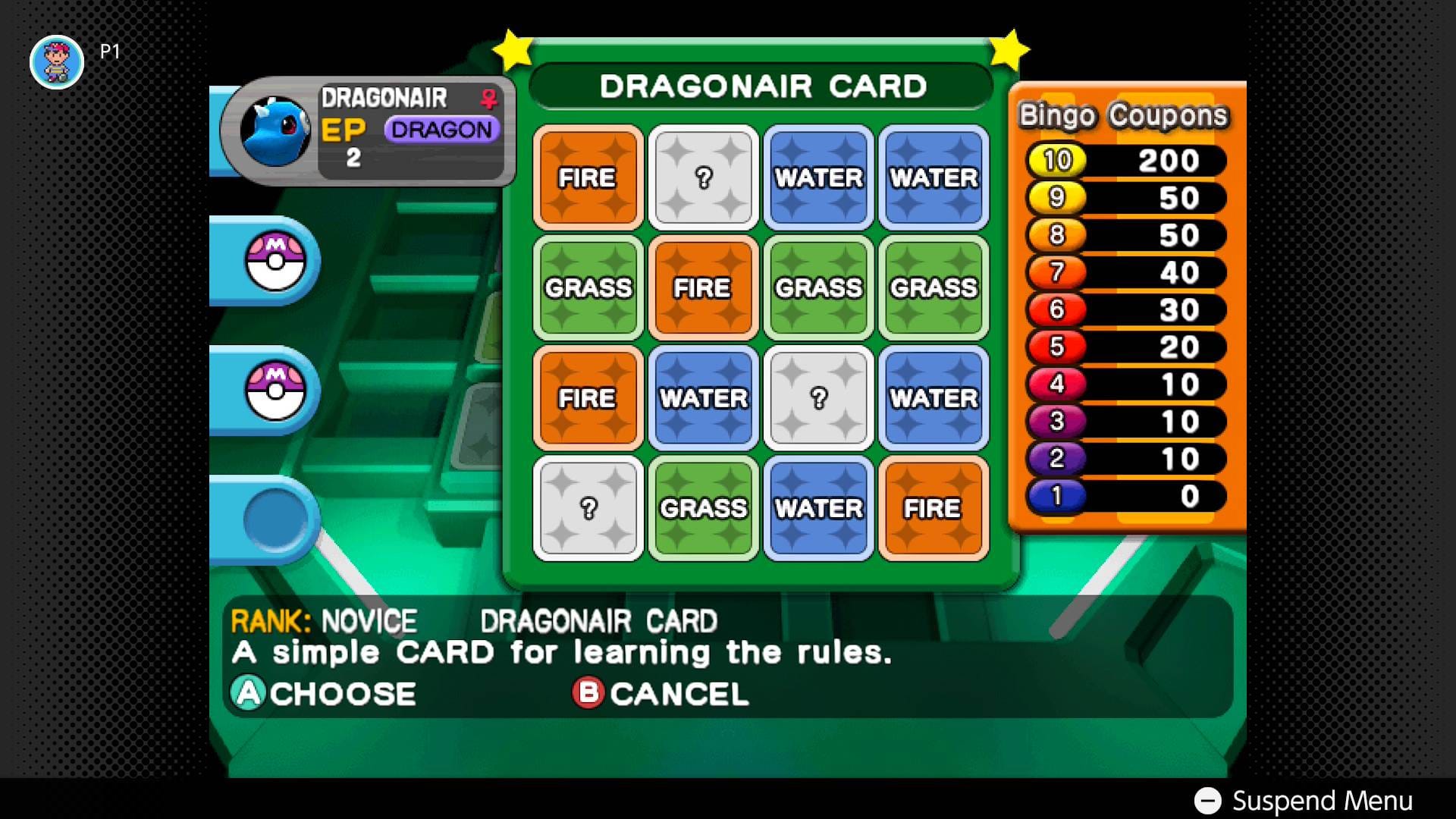
As opposed to the more anemic Colosseum, Pokémon XD remembers to buff up its package with more side offerings. The visual business of Battle Bingo as seen above turned me off a tad, which gives me more time to evangelize Battle CDs: battle-centric puzzles tasking us to solve improbable odds, from defeating the enemy team in two turns to pitting a Jumpluff against Groudon. These brainteasers are confounding riddles much as they are subtle teaching tools, showcasing the ins-and-outs of advanced Pokémon battling. (Did you know Gust can hit a Pokémon during Fly?) In heeding their lessons, we learn that even Legendary Pokémon can be defeated with nothing more than careful strategizing: a cathartic moment for any aspiring Pokémon Master. I might still miss Stadium’s mini-games, but these are worthy substitutes—I daresay that I’d like to see Game Freak tackle something similar in the mainline games!
Naturally, the absence of GBA link cables means you can’t transfer Pokémon back and forth. This kneecaps the game somewhat—perhaps even moreso than the Stadium games—but it’s not nearly as dependent as your GBA ‘mons. Save states can prove themselves useful if you accidentally knock out a Shadow Pokémon. (And, in light of a nasty save glitch, are essential.) With input lag being a non-factor, Switch 2’s quality of life may prove a worthy trade-off for fans.
Sadly, I don’t count myself among their number. If you already didn’t care for Orre’s Wild West, Pokémon XD will do little to change your mind. The game’s simply too kneecapped to realize the dream of a home console Pokémon—a product that we ultimately wouldn’t see for many years, leaving us with another offbeat GameCube experiment that only approaches its audience halfway. It might try its darnedest to make a broken concept work, but like a wingless Lugia, it’s unable to truly take flight.
(Also, just gonna address the elephant in the room: I can’t look at this game’s stupid name without thinking of the XD emoji. Really, how did no one catch that in development? What does that even mean? According to Japanese sources, it’s “Extra Dimension”—a term never once uttered in-game and bears no context on the game itself. This wasn’t the 90’s anymore, Pokémon—adding “X” to your product doesn’t automatically make it cool!)