Skate Story review — Poetry in motion
Look out, a late GOTY contender is here to eat the Moon

Look out, a late GOTY contender is here to eat the Moon
To misquote Janelle Monáe misquoting a quote frequently misattributed to Oscar Wilde: “Everything is skateboarding, except skateboarding, which is poetry.” Skate Story, created by self-taught developer Sam Eng and published by Devolver Digital, is a skateboarding game that can be as easily compared to Kentucky Route Zero as it could the Tony Hawk’s Pro Skater series. For context on your reviewer: I believe Kentucky Route Zero to be one of the greatest pieces of art of the 21st century. Having Skate Story in the same sentence as KRZ is a testament to this game’s cleverness, its insightfulness, its dry humour, and its layers of metaphorical strangeness. I have a near-endless amount of praise to heap upon this game. Dare I say, in a year populated with generationally incredible games like Hollow Knight: Silksong, Clair Obscur: Expedition 33, and Blue Prince, Skate Story may be the game I’ll find myself thinking about and returning to the most.
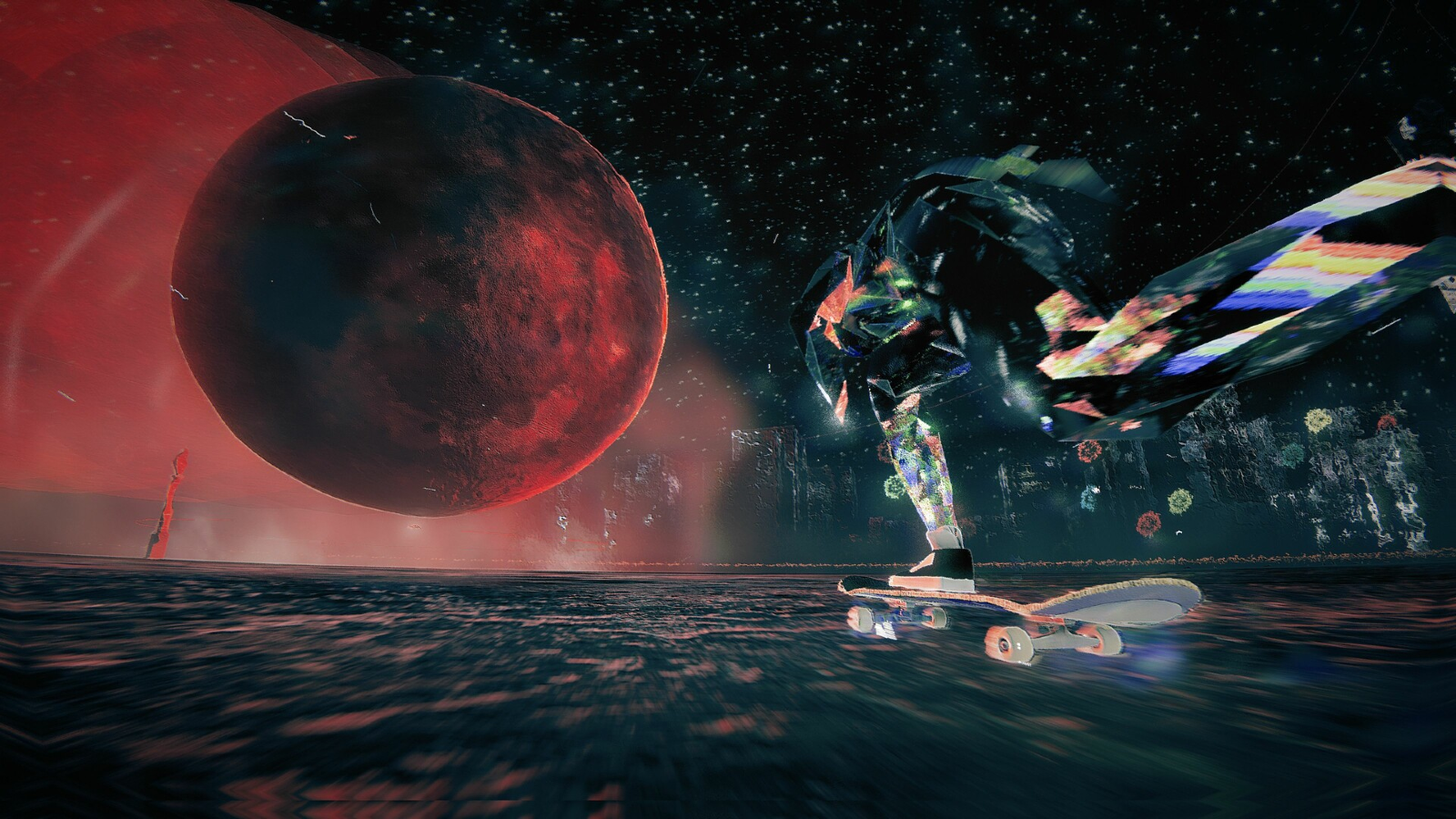
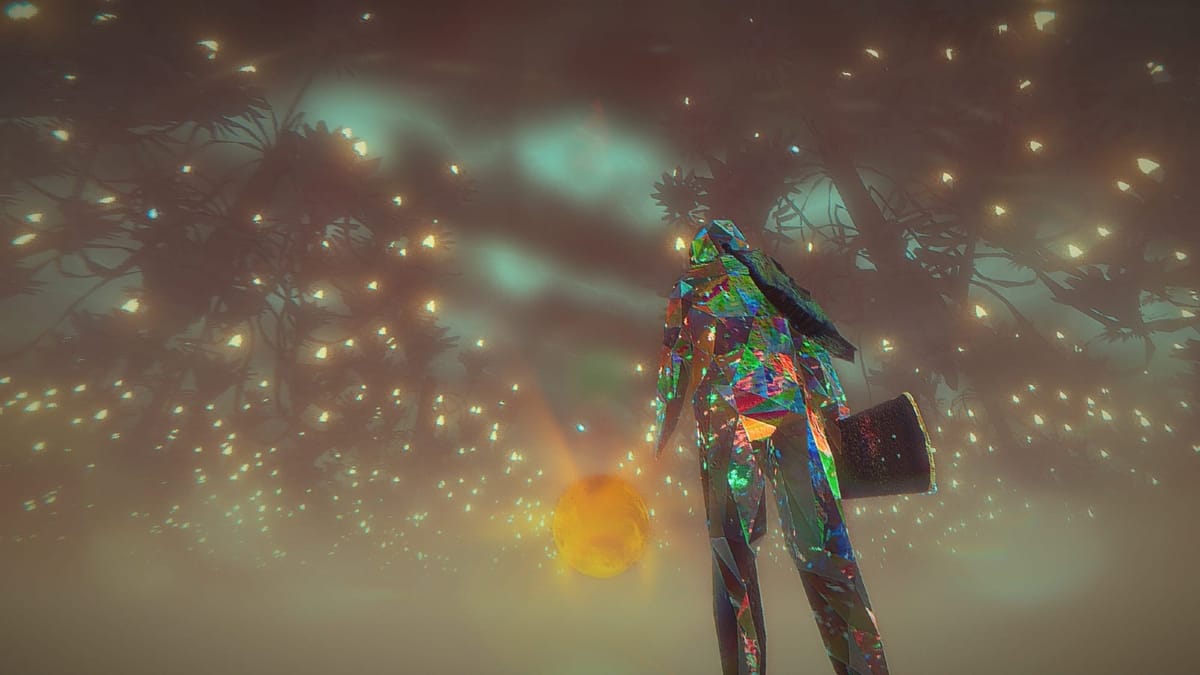
Here’s the short version: you’re a skateboarding demon made of glass and pain. The long version, if you insist: you’re a skateboarding demon made of glass and pain residing in the Underworld (which is located below New York City); you’ve made a four-part contract with the devil who will supposedly return your soul so long as you devour the moon (which has been split into seven separate moons, each with their own objections to being eaten); meanwhile an infinitely-long centipede is poised to devour the entire Underworld and all its bizarre inhabitants and you must skateboard to save the Underworld from this primordial eternal god. You’ll also meet a pigeon sitting at a coffee shop, struggling to write a masterpiece.
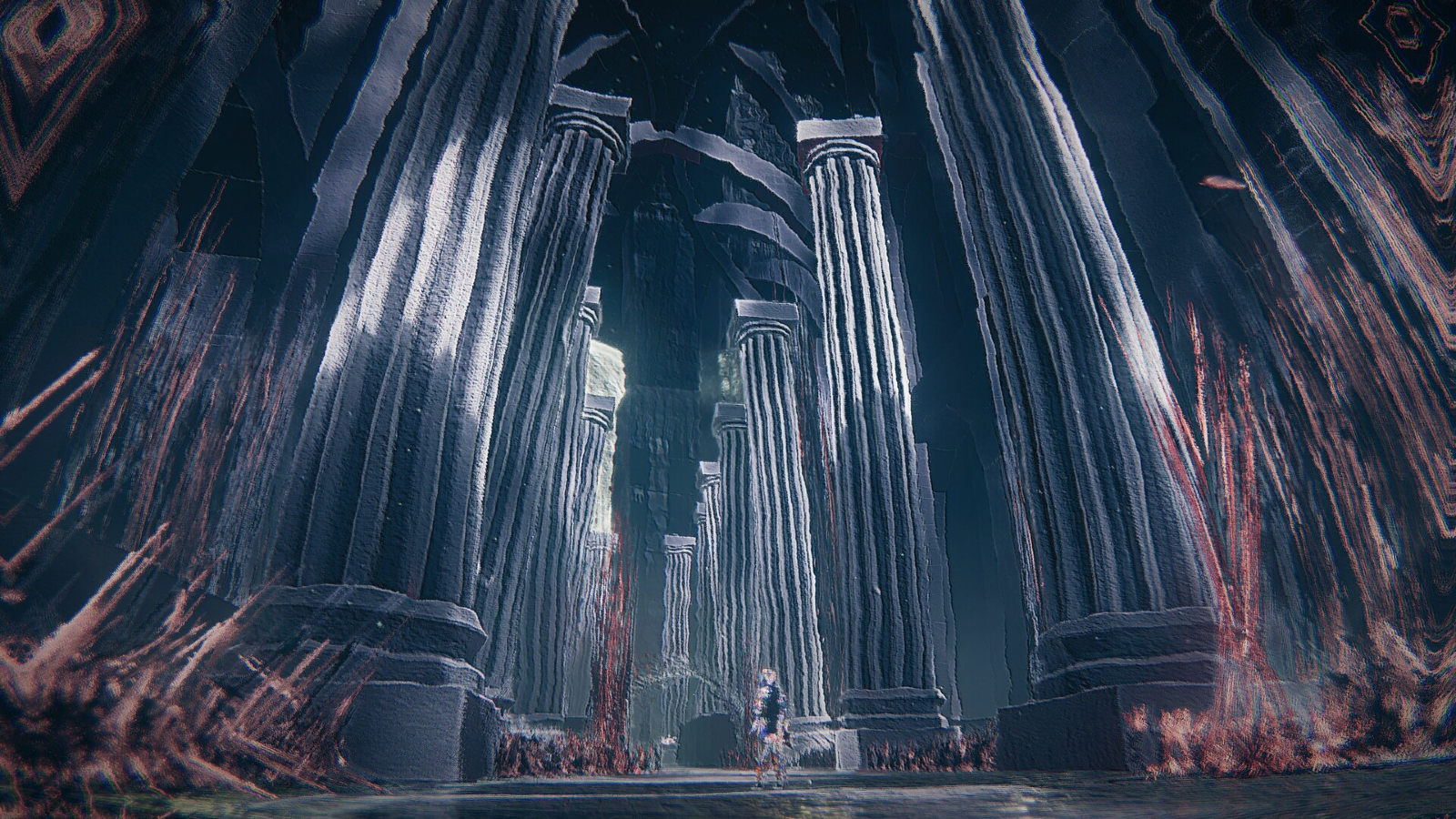
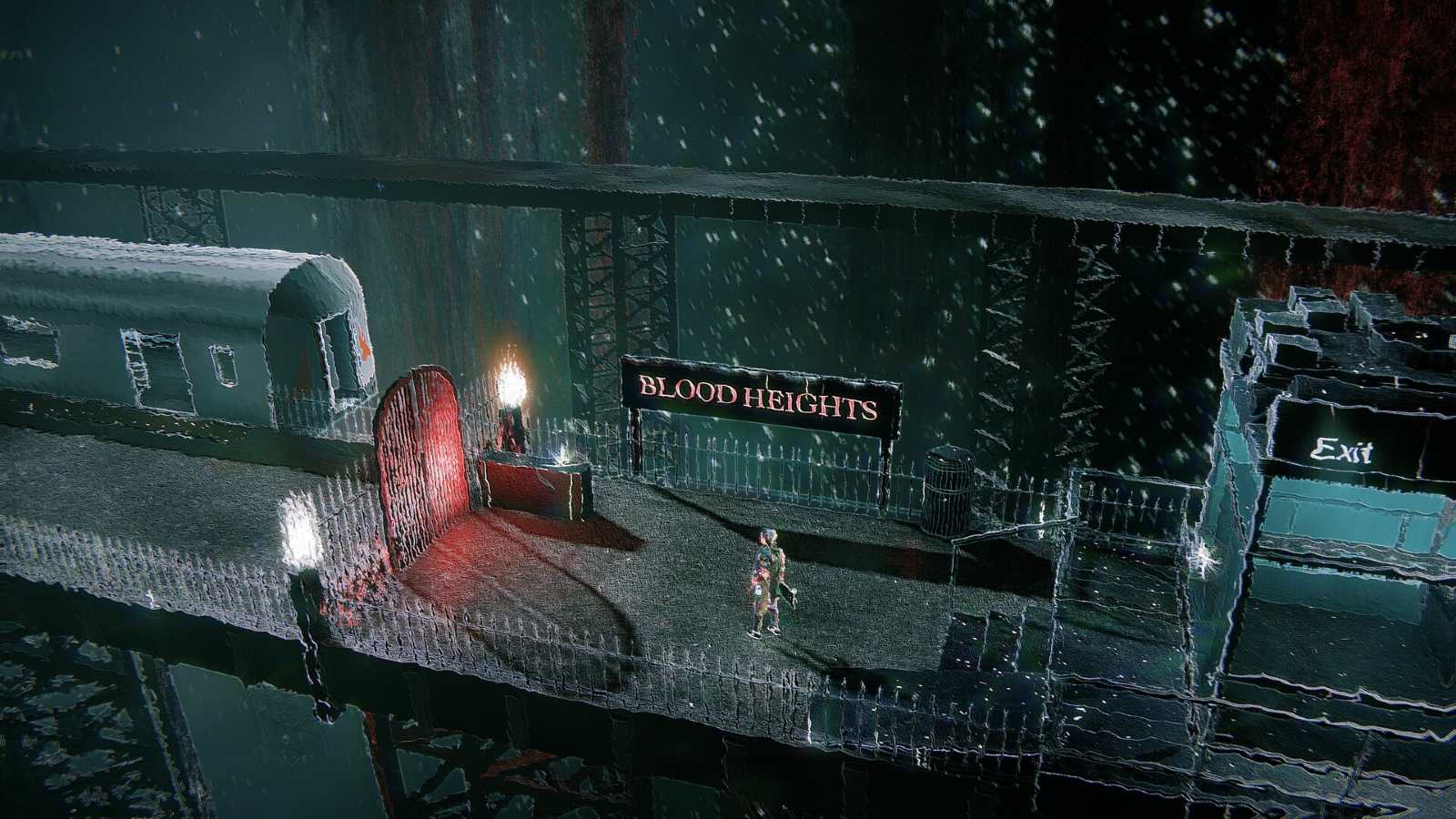
For all of this chaos to coalesce and make sense, you need to see the game in action. Describing the visual style is difficult when there is next to nothing it can be compared to; maybe the works of Tetsuya Mizuguchi like Rez, or even Tetris Effect if you squint? The world of Skate Story is grainy and not-quite-pixelated, taking on a strange dark-neon ethereality. Your character is very literally made of glass - meaning that when you inevitably crash, you shatter into a million pieces, sending the camera comically floundering as if you’re watching Go-Pro footage from hell’s sickest Red Bull event. The surreality of the Underworld is often hilariously contrasted with the mundanity of New York; an early level takes you to a bagel shop run by an adorable frog, and each area appears to be a demonic interpretation of a different part of the Big Apple.
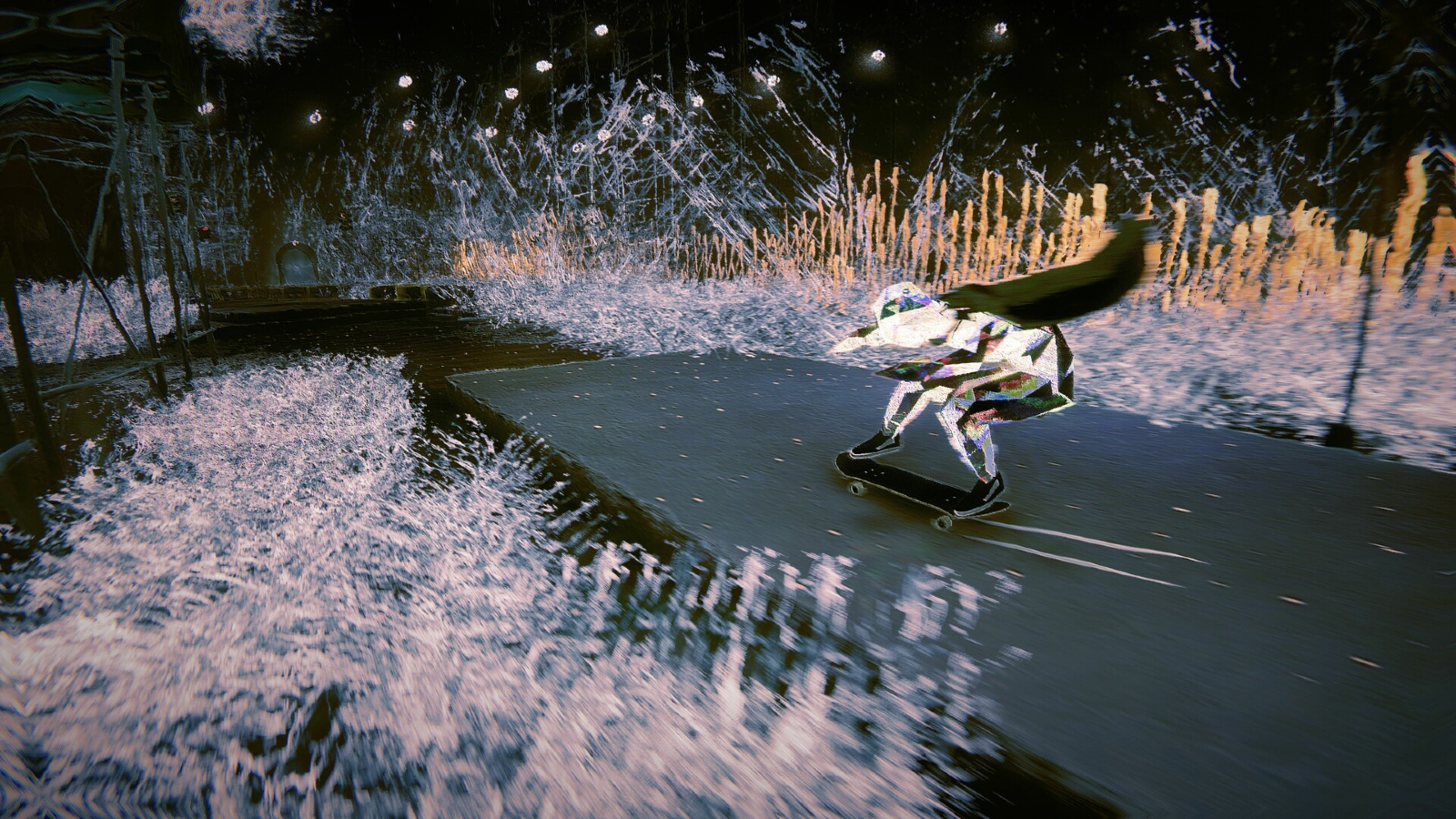
The game is split into ten chapters, most of which are divided into three different styles of skateboarding gameplay. You’ll spend most of your time in each chapter skating around a different modestly-sized open area, each serving as a playground for doing tricks and housing a variety of NPCs. These areas could do with some more structural diversity (there’s somehow nary a half-pipe in sight), but function more as practice areas for newly learned trick mechanics and opportunities to gain points to be put towards board customization.
The second form of gameplay is precisely the opposite of the laid-back, mostly undemanding areas. At some point during each chapter, you’ll be whisked away to a series of corridors that require speed and precision rather than stylishness (though pulling off unnecessary tricks often felt irresistible, getting me killed repeatedly for my intrinsic need for bad-assery).
These heart rate-increasing sequences are where Blood Cultures’ gorgeous vocal tracks kick in, punctuating every grind, ollie, and revert with impeccable vaporwave-adjacent indie synth-pop and the occasional dance breakdown thrown in for an extra burst of adrenaline. Think Tame Impala meets Vampire Weekend meets a strobe-lit rave. I’m using all these obnoxious labels because Blood Cultures refuses to confine themselves to a singular genre, instead linking all of its tracks through a hypnotic shared feeling. I'll call that feeling hopeful melancholy, an apparent oxymoron that nonetheless remains the only descriptor that makes any sense to my ears.
Pardon the detour, but I’ve interrupted my praise of the gameplay to discuss the music for a darn good reason. To talk about one without the other would be a disservice to them both; the two are the yin and yang that keep the game’s tone blissfully consistent. Well, that and the poetry. A yin, yang, and their long-lost but equally important brother yoink, if you will. Eng has even pulled tracks from Blood Cultures’ 2021 album LUNO, which I’ve had on repeat since the moment I finished the game (and I eagerly await the full Skate Story soundtrack releasing the same day the game does). I’d hazard a guess that some sequences were designed from the jump around these already existing songs, allowing Eng to time every moment to elicit maximum tension and hype.
The third and most absurd head on this strange skateboarding Cerberus is a boss fight that concludes each chapter. These are generally similar to the corridors, with the added pressure of a (mostly generous) time limit and the requirement that you perform lengthy combos and finish them within a certain area. The concept of boss fights in a skateboarding game seems preposterous, but they somehow end up containing some of the game's most thrilling moments. There’s nothing like pulling off a stomp finisher with mere seconds on the clock as the music blasts you from all sides. And then, at last, you’re rewarded with the consumption of a moon, a serene act that leaves you satisfied and your character sleepy.
The skateboarding itself is tight, speedy, and rewarding. Tricks require precise timing to pull off perfectly, but poorly-timed tricks aren’t punished with much more than a lower score and slightly neutered height. This makes the game largely easy; some sections have score requirements that feel tuned to be a little too achievable without much friction.
It’s worth mentioning that I’m rather inexperienced with the skateboarding game genre. I logged a fair amount of hours in the Olli Olli games (especially Olli Olli World, no game has ever destroyed my poor fingers like that one), but haven’t picked up a 3D skater in over a decade. I imagine Skate Story will be regarded as slightly shallow if you’re looking for a Tony Hawk-style game, but it was perfect for someone (a casual, I suppose) like me. My only real complaint would be grinding: while not entirely broken, I found myself frequently clipping through geometry and dying when attempting a grind, especially on anything that isn’t a proper rail. It’s too bad, since grinds are one of the most enjoyably tactile moves you can pull off, especially with a DualSense controller.
The boarding is all well and good, but it’s the story - particularly the way in which it’s told - that skyrockets Skate Story to brilliance. Much like the game’s visual presentation, the narrative is presented with an abstract eccentricity that’s grounded with moments of stark reality. The unvoiced narrator (who is, of course, the Devil himself) poetically but matter-of-factly offers you their account of the game’s events, in the way a parent would tell a child a fairytale they’ve heard a hundred times over. This is a fable, a moral tale of failure begetting success, of being ground down by the harshness of the world and rising from your own ashes, stronger than before. Really, it’s about the artist.
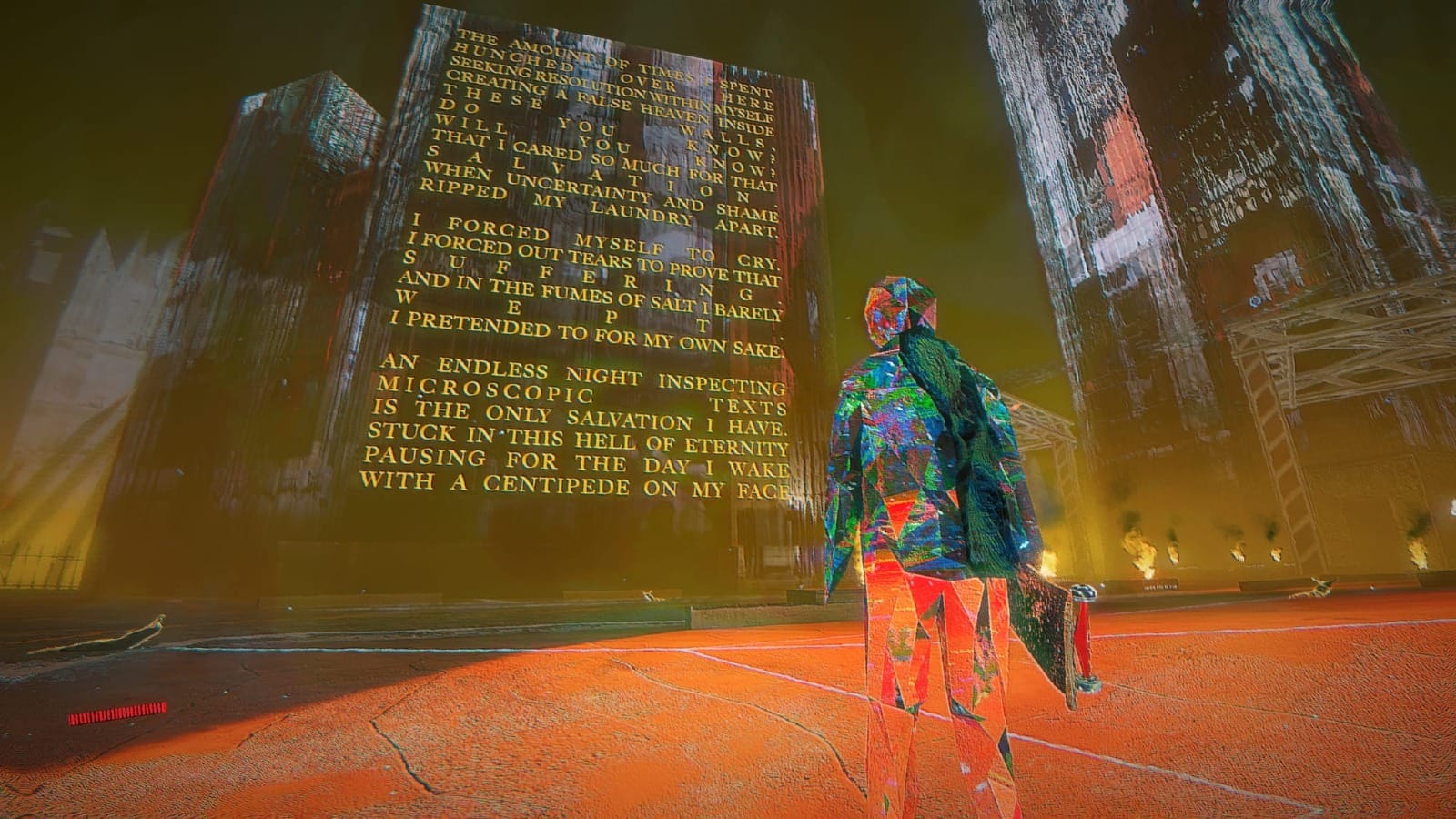
Let’s play a game: is the following line from Homer’s The Iliad, Dante Alighieri’s Inferno, or Sam Eng’s Skate Story? “Land lorded by a Moon of feigned turns and irregular truths, fumed tombs by a golden river of melted bone.” I’d forgive you for mistakenly thinking it may have been the first two (although it would have been a strange non-sequitur to put in this review). Poetry is on display everywhere in the Underworld: plastered on concrete blocks, scrawled on the sides of buildings; hell, even some customizable skateboard stickers have dry, nihilistically funny passages on them. Each chapter ends with a poem summarizing the strange things that you’ve just accomplished - it has the effect of making you feel like you haven’t just skateboarded well enough to get to the next level, you’ve taken part in the construction of a piece of art.
This is a game about losing inspiration and finding it again, everywhere. You find the process, and the process becomes the poetry. That pigeon I mentioned earlier, the one trying fruitlessly to write their opus? That New York fowl sends you out to collect letters strewn about the area to formulate words (yes, just like in the Tony Hawk games). These words are obvious things, things that the pigeon would notice immediately if they were to step outside (with, perhaps, the exception of the word CHEESE). To complete a piece of art, you have to start it, and sometimes you have no idea where to begin. Sometimes, you just have to trust that you’ll find your inspiration along the way. I’m dancing around it as best I can, but there is a moment in this game - a brief series of corridors - that brings everything together on a thematic and meta level in a uniquely ingenious way. I dare not spoil it here; just know that it would be difficult not to find yourself contemplating Sam, the artist behind the game, while also reflecting upon you, the artist behind the controller.
Each minor NPC you share a brief interaction with imparts some kind of wisdom, even when they’re silly. These demons, some lost, some content, give these otherwise liminal spaces a sense of belonging - liminality made cozy again. Even the most mundane moments are delightfully captured: for one, a skeleton eagerly awaits an unseen enemy’s realization that he has purposely left the pickles off of his burger. When you later find the fooled skeleton, he’s predictably livid. Another skeleton can be found listing their life’s regrets, stuck in a loop of sorrow. One of your main companions says, not a minute after meeting you: “I’m made of starlight, concrete dust, and childhood abandonment.” The character acts like they’re a cop. Make of that what you will. In these brief interactions, you can sense that the Underworld is a veritable place filled with pedestrian moments, those moments just happen to occur between giant skeletons and sentient pylons. Parsing the madness and the poetic language proves surprisingly easy, owing to the warm familiarity of each character’s internal conflicts.
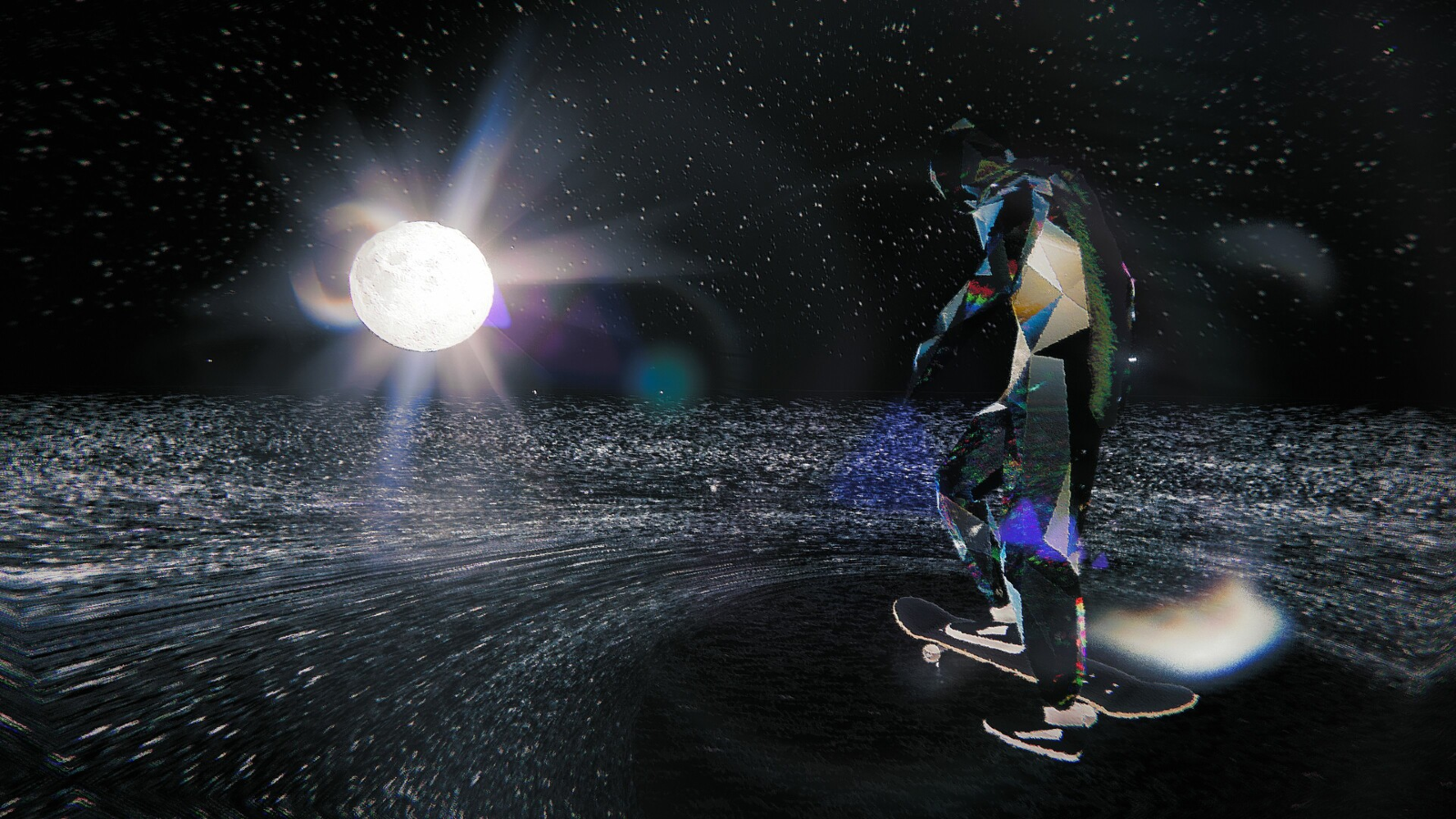
Skate Story is a reminder that you can do everything right and still fail. Oblivion sets in. You might even succumb to it. It can feel easier to resign yourself to oblivion than it is to stand up and conquer it, bit by bit by bit by bit, but oblivion doesn’t have to obliterate. You can pick up the skateboard, go for a skate. Remember what got you here, regardless of whether it seems futile now. Remember the friends who helped you get here. Remember that it was you who got you here. “Vomit seven moons? Then devour eight.” Pick up the pieces of your soul and reclaim inspiration from the void. You’ll know then: skateboarding will set you free.
Skate Story is the perfect skateboarding game for your friend who always says they’re working on a screenplay but never actually gets around to finishing it. Or maybe that’s you. Or maybe that’s me. Or maybe it’s just perfect for everyone. You’ll be moved, you’ll bump to the incredible music, and most importantly: you’ll shred.
This review is based on a retail PS5 copy provided by the publisher.
