As the eastern half of Zemuria continues to decay and desertify, the Republic of Calvard looks to the stars for a solution. Alongside the Marduk corporation, the government hastily developed a space program, and with its first two test launches a success, Major Emilia Harring will soon be the first person to leave the planet's atmosphere. However, all of this just seems a little too... convenient to discerning individuals like Van Arkride, Rean Schwarzer, and Father Kevin Grahm, and when something stinks in Zemuria it's probably Ouroboros.
The Legend of Heroes: Trails Beyond the Horizon is, depending on how you count, the 18th, 20th, or 12th game in its series. The larger The Legend of Heroes franchise began in 1989, with the Trails sub-series (which really doesn't have much to do with its parent aside from brand recognition) beginning in 2004. Trails has been telling a single, ongoing story for 20 years as of Horizon's Japanese release in 2024, and it's finally drawing to a conclusion. Trails Beyond the Horizon is touted as the beginning of the end for Trails, while not the ending itself the game puts pieces in place to close the curtain on Zemuria. That might be disappointing to some fans, but there's something to be said for ending a story on your own terms. Especially since with this latest entry, I'm really starting to feel just how massive this plot has become.
Despite most of the game being cutscenes, dialogue, and walking around towns, Horizon throws you right into dungeon crawling and combat. Pretty much all of the systems and abilities from Daybreak II return here; you can fight normal enemies in action combat (Field Battles) then, with the press of a button, instantly transition to turn-based Command Battles. You can defeat most foes in action combat, but with tougher enemies you'll want to stun them using normal attacks, build up a charge attack for more damage and stun, and use quick arts for some ranged damage. Stunning a monster before swapping to turn-based will give your party the advantage, meaning you act first and also deal a decent chunk of damage to all nearby mobs right off the bat. Sometimes that free damage can even kill every enemy before you can take your first turn, which is incredibly satisfying.
Those are just the basics, and you actually have even more tools at your disposal in action combat. First is ZOC, which allows you to briefly slow down time while keeping up the assault. ZOC is on a surprisingly short cooldown, so there's no reason not to use it constantly. Some characters will also learn a unique Awakening skill, which massively increases their damage output along with healing them over time at the cost of the Boost gauge. Awakening can't be canceled in action combat and will continuously drain Boost while active, but entering turn-based will instantly apply a plethora of buffs to the user and stop Boost consumption. Awakening is super powerful, but so is each segment of your Boost gauge, so you need to weigh the pros and cons a bit more before breaking it out. On the flip side, it's SO powerful and boost is easy enough to build back up, so you'll only hesitate to use if if you know a boss is right around the corner.
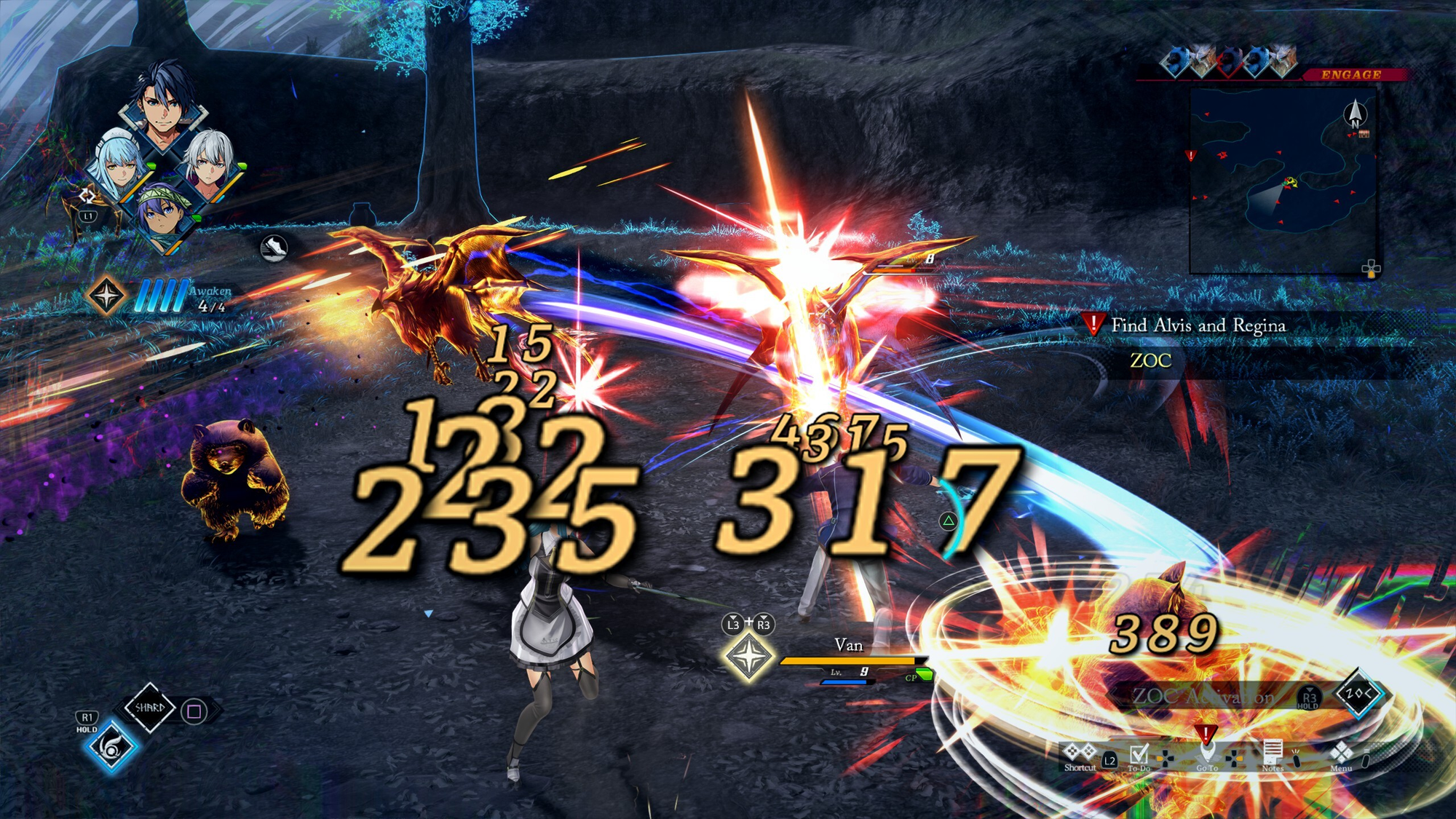
Finally, perfectly dodging an attack in action combat will prompt a Shard Circular Linked Metafield (SCLM) Chain attack from one of your party members, essentially letting them perform their charge attack for free. While your controlled character will still be doing the majority of the fighting in action combat, this is a nice way to make your party composition still matter outside of turn-based battles.
All of that is just for field battles. The game gives you so many overpowered tools at your disposal that combat becomes trivial in most cases. In my 30 hours with the game so far, I was only ever forced into the turn-based command battles by going down to half HP with my controlled character a single time. As fun as the action combat is, this does feel like normal enemies exist solely to give you enough EXP to fight the next boss — more of a formality than anything else.
Command battles are a bit better about this, but still very easily broken over your knee. The basics of every Trails game remain here: special attacks unique to each character called Crafts that draw on CP, spells called Arts determined by the equipped Holo Core that draw from EP, items the whole party can use, random turn buffs like guaranteed crits or free Art casts, etc. Mechanics like SCLM and S-Boost also return here, with the former allowing another party member to follow up your attack as long as you're within range of them, and the latter letting you consume a segment of boost to either power up your next action, or use a powerful super move called an S-Craft. Boosting has changed a bit, as you no longer need two Boosts to activate an S-Craft. Instead, using two Boosts will let you act twice in a row with ZOC. If you're wondering, yes, this allows you to completely eliminate cast time for Arts, making them a whole lot more worthwhile even if Crafts are still better in every way.
S-Crafts also don't consume all of your CP upon use anymore, just the 100 points needed to activate them. This makes it way easier to spam them during boss fights or even just normal encounters. While you do still need a character to be boosted to use one, and you can't use it again until that boost runs out after a few turns, you can spend that time building your boost and CP back up or just casting buffs for even more power. If you can't keep the CP flowing, you will admittedly face some actual resistance from bosses, but it's so easy to keep your party topped off that this doesn't happen very often. I don't think I could keep the spam going forever, but usually it lasts long enough to kill anything that moves.
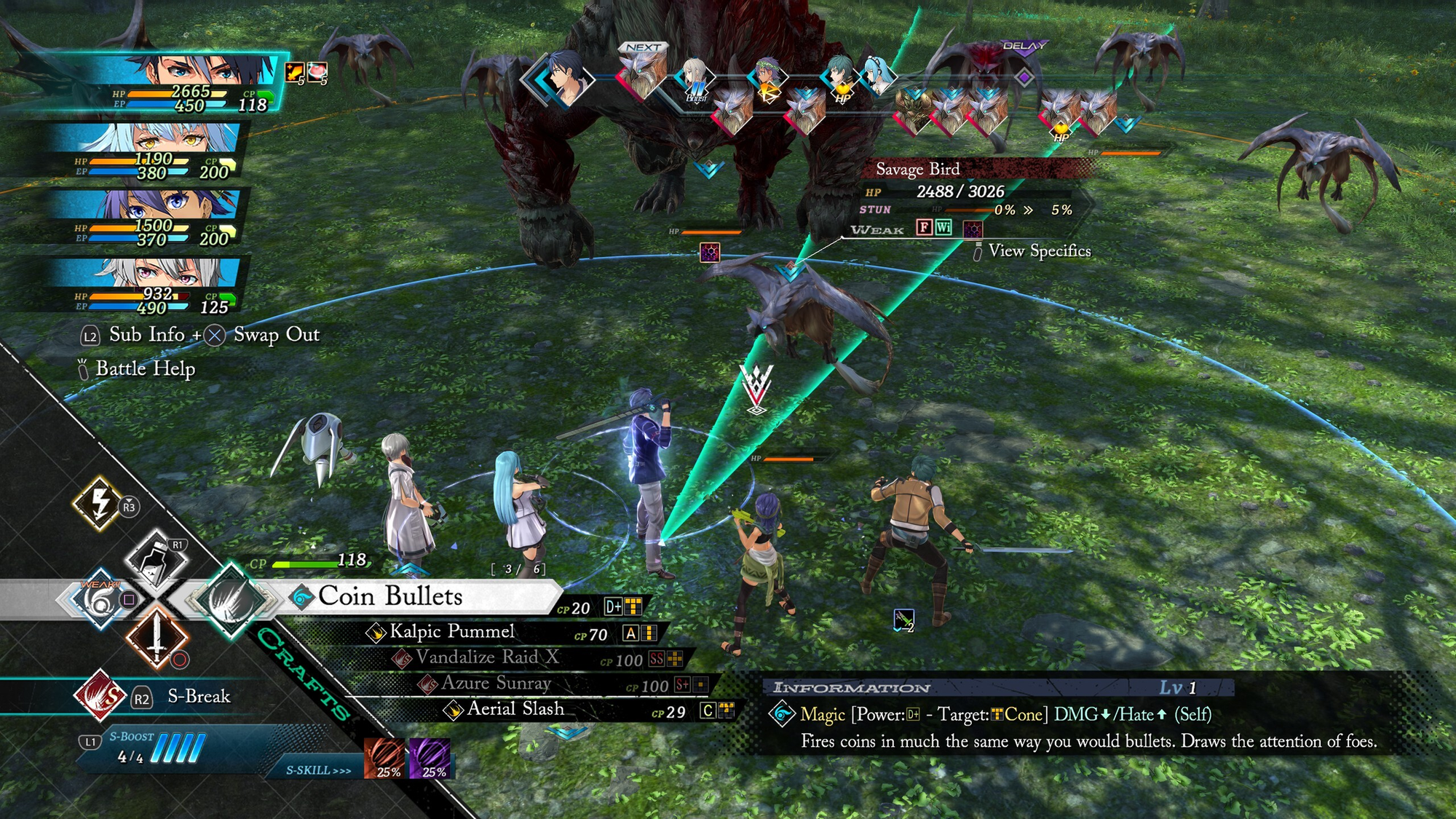
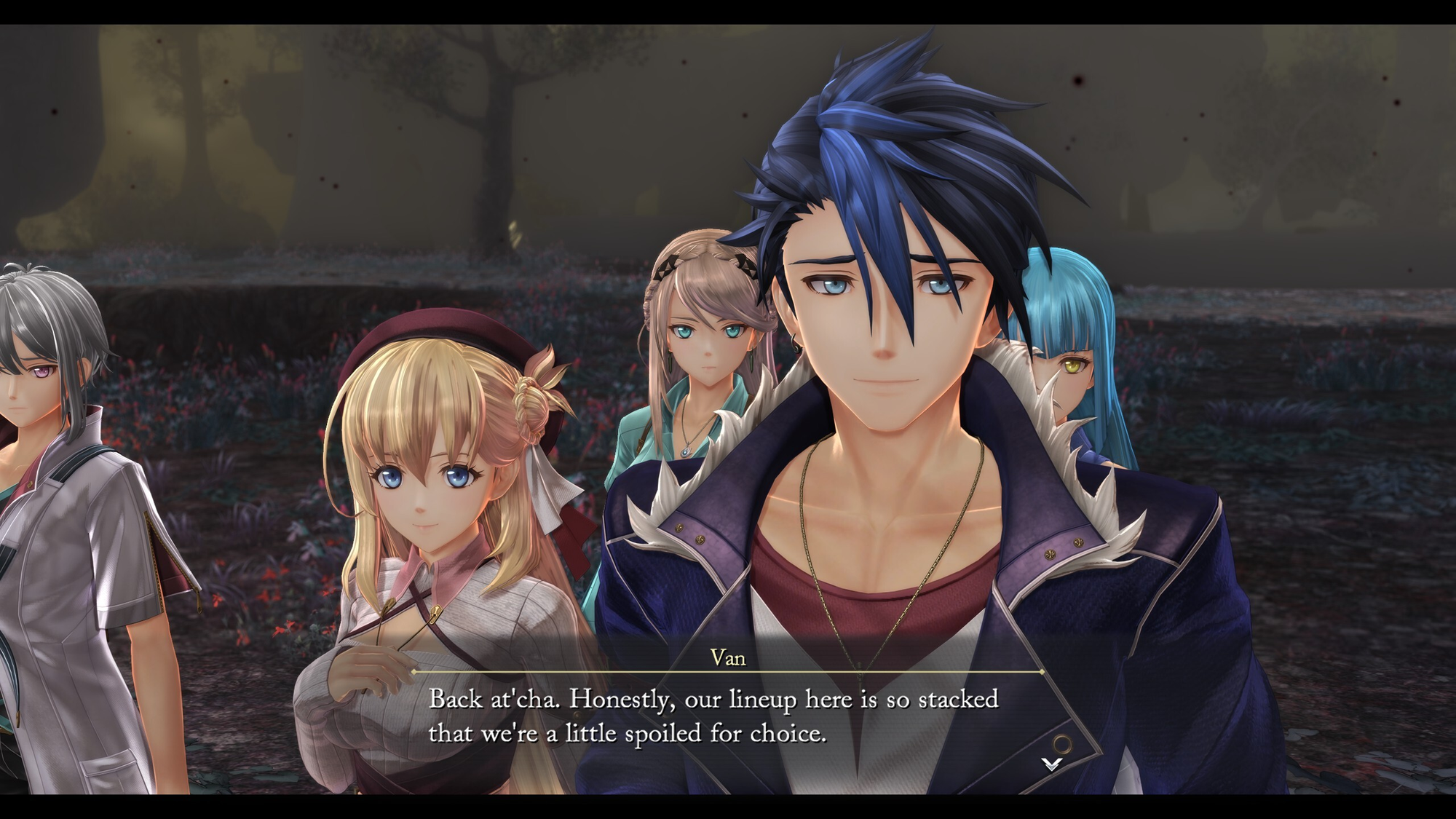
As an example, my go-to party for Van's route was Van for physical damage and tanking, Risette for buffing the party before going ham on physical or magical Crafts, Quatre for more buffs and healing, and Feri for her CP regenerating Crafts. After the party was buffed up, I'd just break the turn order with everyone's S-Breaks (which let you instantly activate a character's S-Craft and temporarily adds another segment to the Boost Gauge) for massive damage, ending with Feri's Ishtar's Blessing S-Craft, which splits her remaining CP amongst the rest of the party, allowing them all to S-Break again even faster. It can be genuinely ridiculous how overpowered you are right from the start of the game, and that's not even factoring in characters like Rean, Renne, and Shizuna who feel exponentially stronger than all the other characters. When I was able to freely form a party from any characters in the Grim Garten, the pseduo rogue-lite dungeon crawl that comprises most of this game's combat, I added all of those powerhouses to my party and steamrolled through everything. Renne can buff all stats for the entire party while healing, Shizuna can reduce all stats for an enemy while also dealing damage, and Rean will cut through anything his sword touches like butter.
If that wasn't enough, you also have BLTZ, which are essentially turn bonuses that allow non-active party members (or non-combatants like Towa) to SCLM with you for free. That's on top of an SCLM with an active party member if you meet the conditions for that too. EX Chains also return from Daybreak II, making that SCLM move much more powerful, though requiring the use of a Boost and for an enemy to be stunned.
The last tool in your massive toolbox are Shard Commands, which apply a blanket buff to the entire party at the cost of 1-2 segments of Boost. These can be anything from standard attack power boosts to restoring HP and CP over time. Honestly, I forgot these existed most of the time as everything else at my disposal was more than enough to destroy anything in my path. These are pretty interesting in concept, at least, as only one can be active at any time, including those that the enemy uses. It's always a good idea to break the enemy's Shard Command with one of your own, because those buffs may actually cause them to pose a challenge.
I am slightly exaggerating, as Trails Beyond the Horizon isn't entirely without teeth. While Van's and Rean's routes are cakewalks with so many powerhouses to choose from, Kevin's party feels positively normal by comparison. I struggled with the bosses on his route, and while I never died, there were more than a few times where I was down to one party member using ZOC to quickly revive everyone. You're still working with the same S-Craft spam strategy, but you do have to try a bit harder for it.
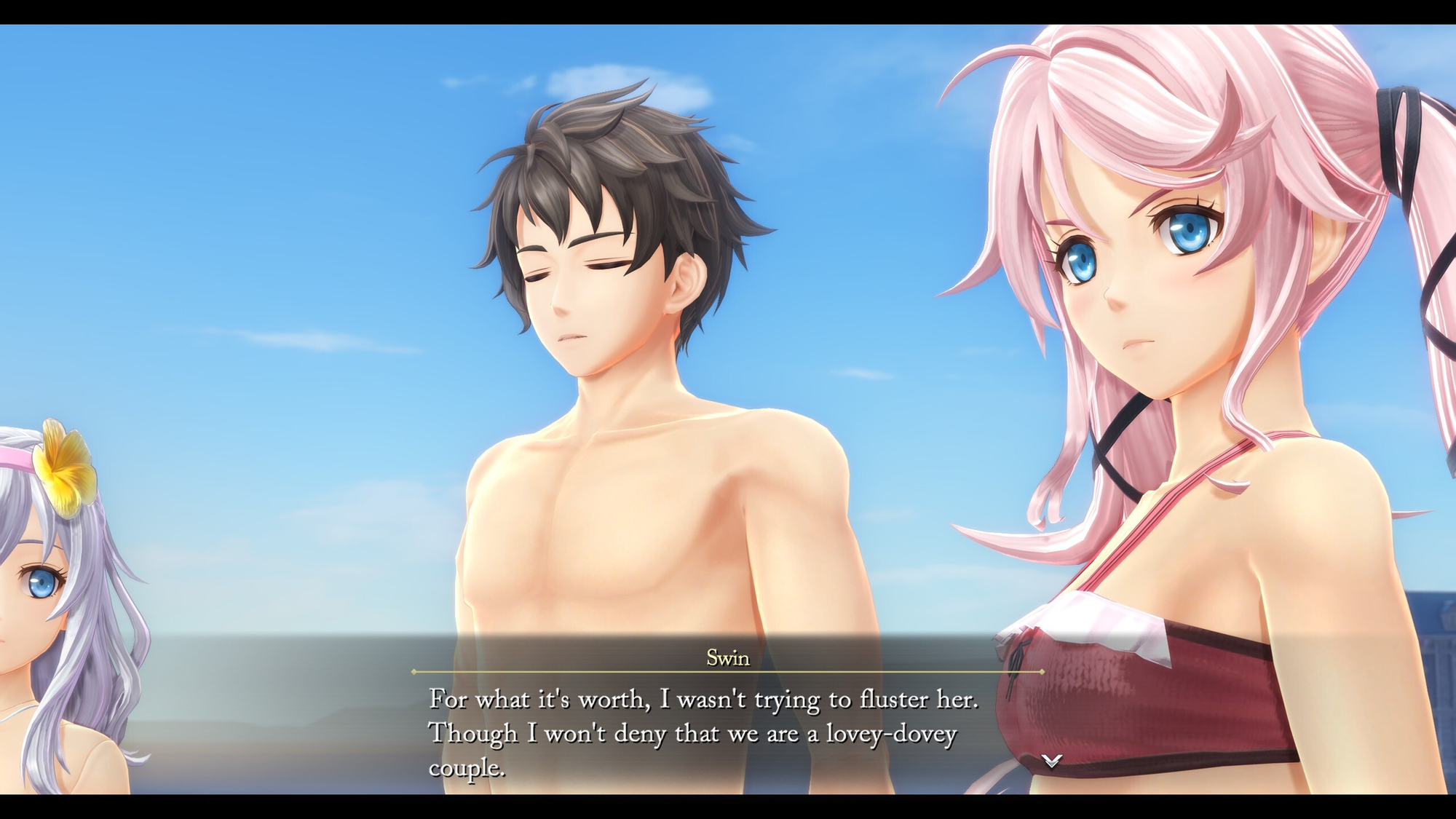
The problem with the difference in difficulty is that I just don't like anyone in Kevin's party as characters aside from the Heretic Hunter himself. Arkride Solutions and Rean's Class VII allies are both well established, while it feels like Kevin just gets whoever was leftover from the Daybreak arc. I'm sure someone out there is a fan of Swin and Nadia, but I don't really care for their gameplay styles or their straight man/hyperactive girl shtick. They have a few good scenes, and you can tell they genuinely care about each other, but something about them just never clicked with me. It felt like I was working harder for snippets of the story I didn't really care about, while the easier parts of the game were much more rewarding plot-wise.
That brings me to my larger thoughts about Beyond the Horizon. With the Trails series having gone on for so long, you can really feel the bloat both in gameplay and in the story. Constantly building on the same battle system has given me so many ways to break the game, I barely have to try anymore. Being overpowered is part of the series' appeal at this point, but I'm not a fan of having it handed to me on a silver platter in 15 different flavors.
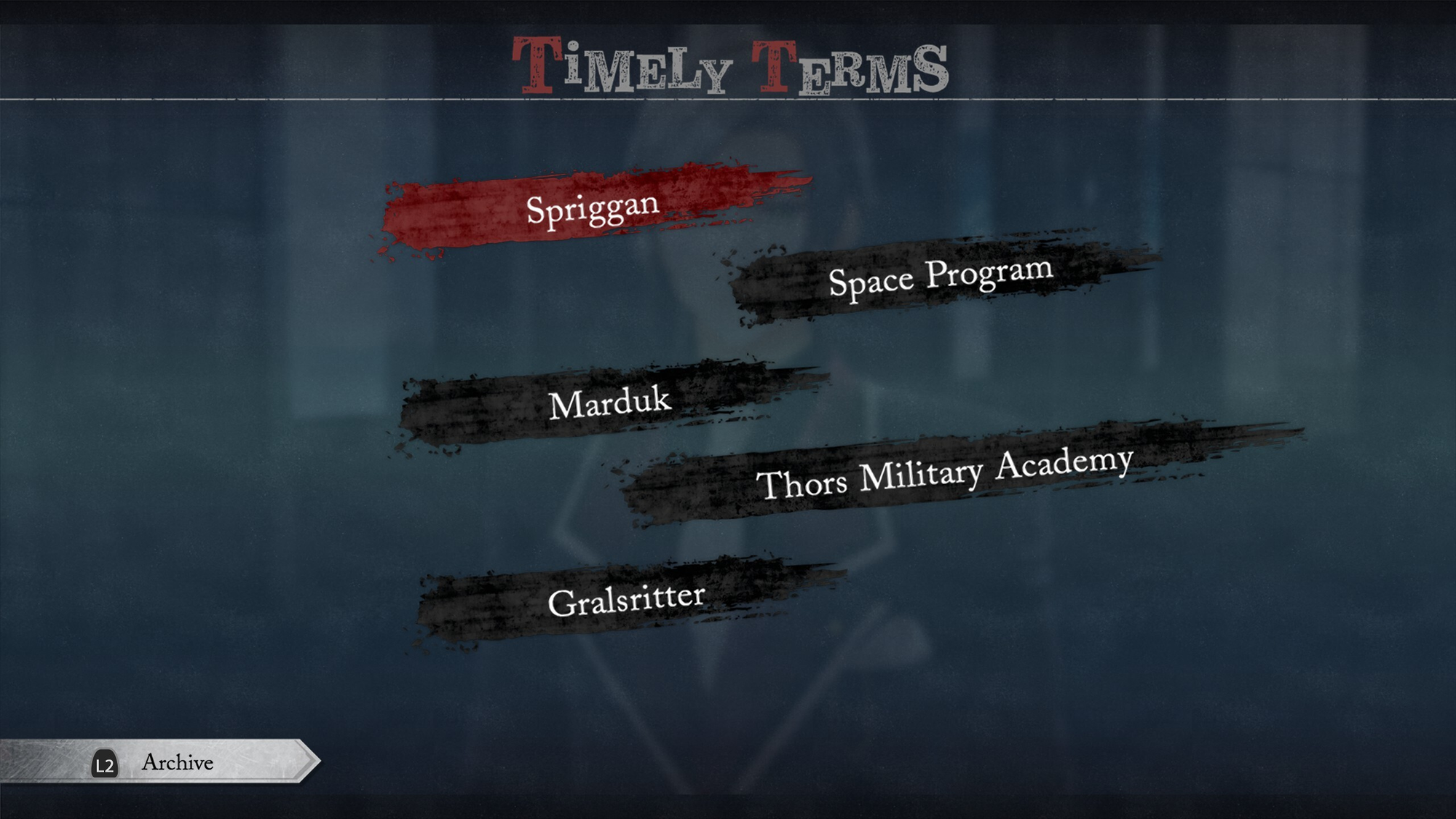
Horizon takes a page from Final Fantasy XVI's book and introduces an in-game glossary you can peruse at any time, with any entries relevant to the current scene being front and center. It's super helpful, but also emblematic of the fact that there's just too many characters and proper nouns at this point. I'm not sure it's possible for any one person to keep all of this information in their head, so having a quick way to refresh your memory (or learn the gist of who someone is, if you never played the game they appear in) is great. But when I'm 30 hours in and the barrage of "long time no see"s still hasn't stopped, I find it difficult to really care about everyone's activities and character arcs. Even in a series known for detailed world building, there is such a thing as information overload, and none of that world building really matters if you're not using it to tell interesting stories.
Thankfully the main plot of Trails Beyond the Horizon is pretty interesting. While what I've played so far hasn't really affected any of the major characters in a significant way, trying to piece together these seemingly disparate events of the Space Program and what Ouroboros is up to has kept me engaged. I hope the game's story can grow beyond just being engaging, so check back here in the near future for my full thoughts once I've finished the game.