There are some games that invent a genre. Arguably, Thief: The Dark Project did exactly that in 1998, giving us a fantastic steampunk-powered game that emphasized stealth, sticking to the shadows, sound-based reactivity in the environment, audio cues, eavesdropping, and so much more. Getting in a fight was often fatal, and folks like me fell in love with a new type of gameplay. Thief Gold added some new maps and refinements, and both Thief II: The Metal Age and Thief: Deadly Shadows pushed the stealth genre to an apex, but afterwards it was a long while before we got an attempt to reboot the franchise—Thief in 2014. The latter wasn’t nearly as well received, with improved graphics and stealth mechanics, but a weaker story, a pointless open world stuffed with loading screens, and swapping veteran voice actor Stephen Russel with Romano Orzari for the main role of Garrett turned long-loyal fans away. The series sat in the shadows, dormant… until now. An unlikely platform to revive the series, VR, may be precisely what it needs, perhaps has always needed. Is Thief VR: Legacy of Shadow a worthy successor, or a fatal misstep to close the ledger on the series once more?
If there is one thing that VR does extraordinarily well, it’s putting the player into the shoes of its protagonists. Combined with self-explanatory mechanics, VR is immersion at a level flat screens could never accomplish. It turns out, it’s also incredibly suited to a game like Thief. But I’m getting ahead of myself—let’s catch up to where we are in the story, as this surprisingly isn’t a reboot.
There’s a choice you’ll get to make before you kick off the game that’ll really change the way it plays. A setting for your microphone can be set to ignore it completely, “blow only”, or “Immersive Mode”. You see, you can snuff out candles by either blowing them out (which makes a little bit of noise, but you can hit all three at once) or by reaching out and gripping them with the controller in a pinching motion to put them out one at a time. Guards will not hesitate to re-light them, as well as any torches you might put out, so know that it’s far from permanent. Immersive mode, on the other hand, is a whole different thing, asking the player to be perfectly silent in the real world. Any noise picked up by your microphone will translate to the game, and the guards will hear you and come to investigate. It’s a cool inclusion if you’re feeling brave. Like the lockpicking mechanic UI we’ll talk about later, this is an optional choice that can really punch up the overall immersion for the game.
The Thief games have always taken place in a place simply called “The City” – a dark, Victorian Gothic steampunk-inspired place that resembles 14th-century London in a great many ways. Split into districts like Stonemarket, the Docks, South Quarter, The Leeches, and worse, it’s a sprawling metropolis filled with opportunities, danger, and enough dark corners to exploit both. As this happens after The Metal Age, The City has gotten a bit of an upgrade with steam engines, gaslamp lighting that can’t be snuffed out with a water arrow, and worst of all, rudimentary electro-mechanical security systems. It’s always been hard to be a thief who doesn’t dirty their hands, made all the more challenging through the technology of the age.
In Thief VR: Legacy of Shadow, you play Magpie, a thief in her own right who survives with careful steps and sticky fingers. Working with the local fence, Magpie breaks into a home to lift some goods when she stumbles on a mysterious box that seems to be whispering to her. Opening it, a mechanical eye floats up briefly, embedding itself in her skull. Her new hitchhiker is none other than the master thief Garret himself. How did he end up in the eye, how does it tie to the sinister plot being fomented by the iron-fisted ruler of the city, Baron Ulysses Northcrest, and how can Magpie ultimately get him out of her skull once it’s all over? That is, if they both live long enough for that to matter…
I’m going to answer the initial question I posed up front—yes, Thief VR: Legacy of Shadow is the absolute best version of Thief, including the originals, at least as far as gameplay is concerned. There’s something incredibly rewarding about stretching out your arm and carefully snatching a guard’s coin pack or key off his belt without his notice, and then vanishing without a trace.
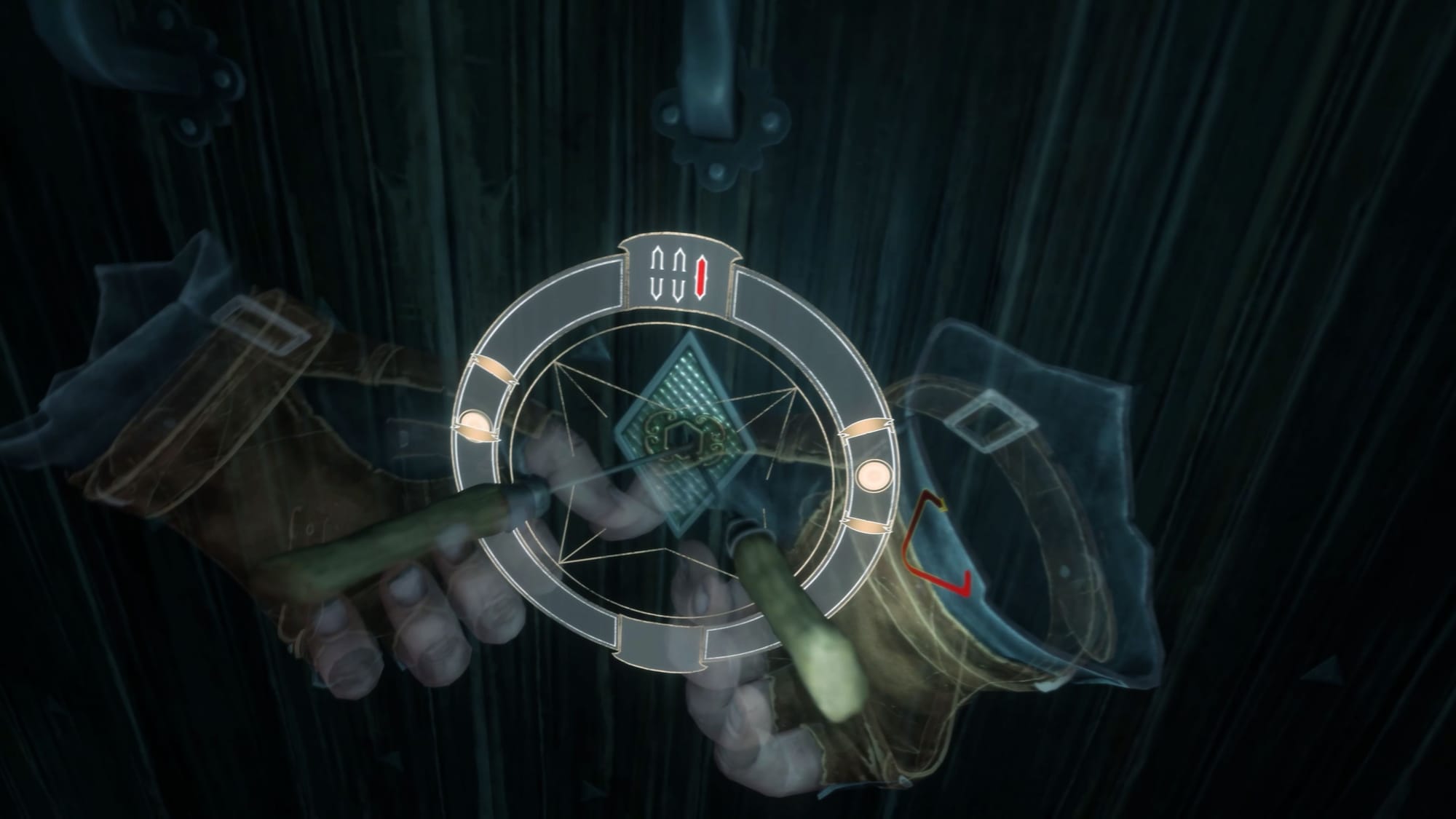
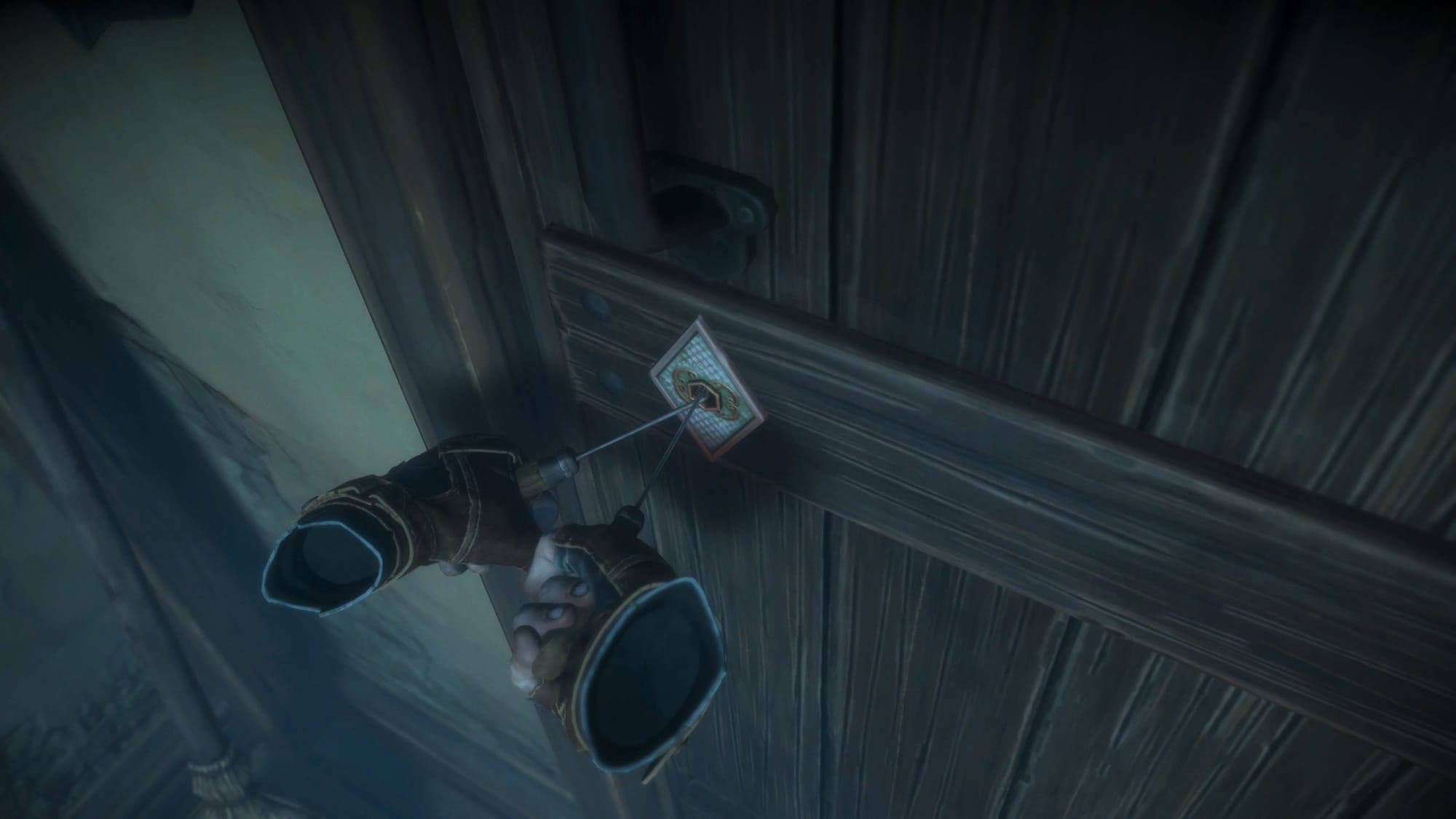
Opening locks is a huge part of the Thief series, as you’ll need to carefully break the tumblers while guards continue to patrol the hallways. Time doesn’t stop while you fight with the lock, so you’re always in danger. With the default UI enabled, you’ll see a small circle appear around the lock, with a small pair of sections somewhere on the circle. You’ll twist your hands to rotate the picks into position, leaving them in position long enough for the tumbler to drop into position before you move onto the next. Turning the UI off makes you do this purely by feel, and I recommend you do that the moment you finish the tutorial—it’s a game-changer that adds a great deal of danger to every lock thereafter.
There is another mechanical piece that translated nicely from a simple button press to something far more tactile—finding hidden storage. Every once in a while, you’ll encounter a painting that could hold something more than it seems. Rather than just the “press X because you found it” we got with previous games, this time around you’ll need to solve the mystery for yourself. Placing your hand on the edge of the painting, you’ll drag your fingertips along the edge until you feel a small click. You’ll then hold that button pressed while you use your other hand to find a button on another edge. Some might require more than that, but I’ll leave you and your fingertips to figure that out for yourself.
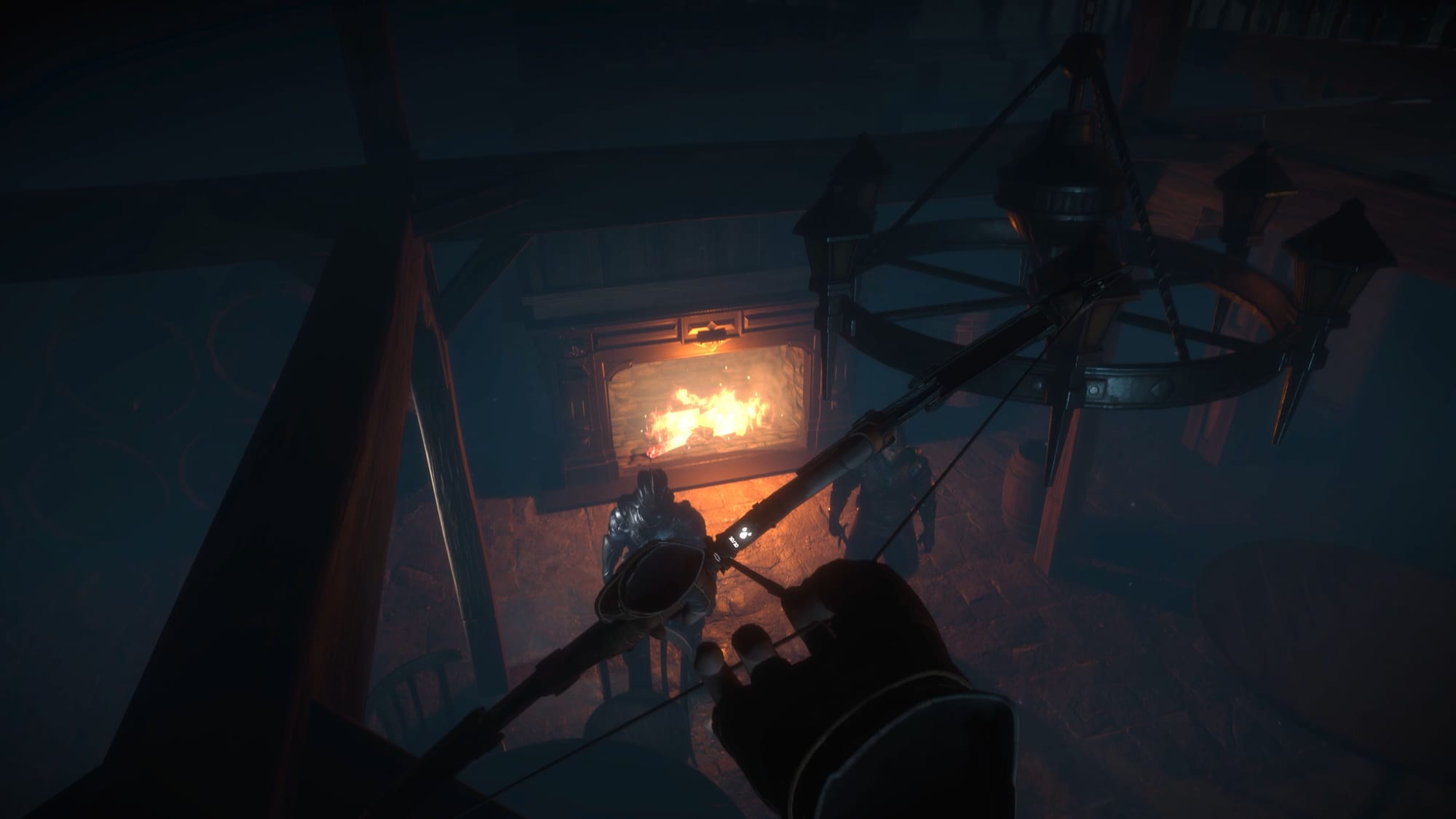
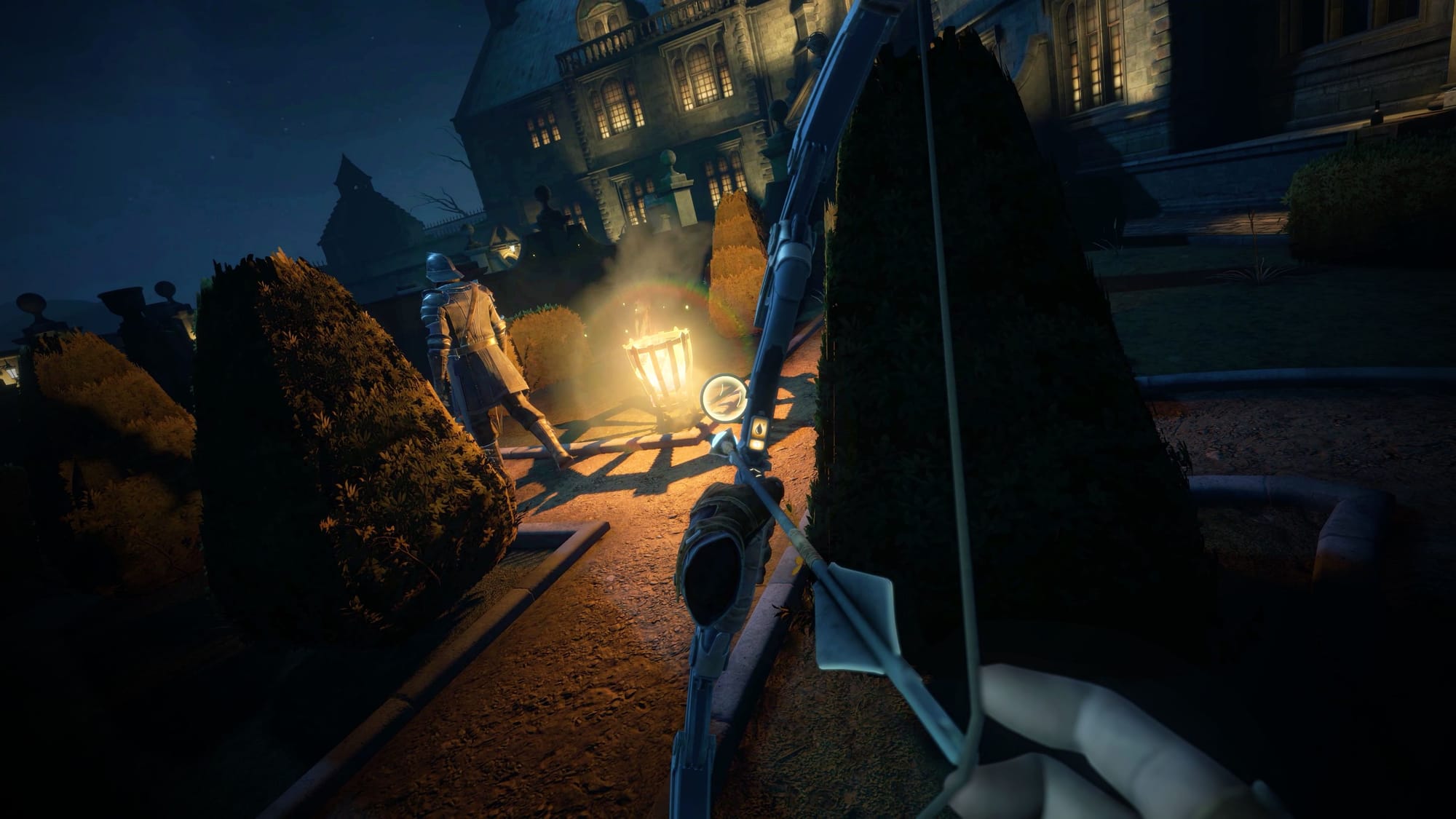
Another major staple of Thief is an array of arrows that are more utility than lethality. To that end, some familiar friends will appear—broadheads, water arrows, fire arrows, blunted tip arrows, and rope arrows. As you work your way through the various floors of a manor, the dank sewer, or a well-patrolled courtyard, take a moment and look up. The answer to the challenge in front of you might be above you. That’s really the part of Thief VR that resonates most—it feels like you’re there.
As you traverse the various parts of The City, you’ll encounter guards of all sorts, of course. Some are brave enough to walk around without a helmet, and they go down with a solid thwap on the head with the blackjack on your hip. Those with a more solid Kettle hat style can still be knocked out, though it’ll take one hit to scramble their brain a bit, and a second hit to put them to sleep. The sturdiest of foes wear more of a Sallet or Beurgones style helm, with a small slit for eyes and the chin exposed, but thick enough to withstand anything you can muster and then some. These guys are unfazed by your little blackjack and will likely cut you in half instantly if they catch you. Thankfully, the first two types of foes are more frequent. When you do put them to sleep, you can grab their hands, feet, or double up on one limb to drag them back into the safety of darkness. Just keep an eye out for archers—they’ll do some serious damage from a distance if you are too obvious or loud.
At some point, every thief's luck runs out. If you can’t flee, you’ll be forced to fight. As the guard swings his weapon from the left, you’ll need to turn your blackjack and thrust it at the weapon to deflect it. If it comes from the other side, you’ll need to defend that side. Do it three times, and the guard will become stunned. A solid knock on the dome as before, and they’ll go down in a snoring heap. Just be mindful, if another guard finds them, they’ll rouse them awake and likely set off an alarm.
Speaking of alarms, you’ll face a few in the course of the campaign. Or more accurately, you might. Not much in the game is scripted, beyond guard patrol routes. If you screw up, you might set off an alarm, but if you take your time, trace it out, and disable it, then you’ll get out without so much as a sound. That’s where I ran into an issue with Thief VR —holding onto overhead pipes. I’m using a Pimax Crystal Lite, and I’m not sure if it’s anything to do with the headset, but occasionally I’d be doing hand-over-hand pipe climbing only to suddenly find myself falling to either my death or right smack in the middle of a group of guards. The headset or the game lost tracking, and I fell through no fault of my own. It made me far more cautious and slow when doing any sort of climbing like this. It’s a minor thing, and as long as you see the hand lock onto the pipe, you’ll likely be fine, but it’s frustrating when it does happen.

So much of your environment is interactive. During one sequence, I could climb a nearby pipe and avail myself of a second-floor window. I could also lift a window on the first floor and worry about more guards. There’s always the front door, provided you’ve pilfered the key or can pick the lock quickly. You’ll find that you can crawl underneath desks and tables to hide or traverse a room in an obtuse way. Maybe you’ll find a drain you can climb to a nearby perch, or perhaps you can find a hidden switch that will snap open a trapdoor underneath a nearby sewer grating? There are quite a few options available to infiltrate your targets, and very few have less than two. Similarly, almost every desk, dresser, many cabinets, some bookshelves, and more have some sort of interactive element. Sometimes it’s a puzzle, sometimes it’s hidden loot, but it keeps you looking around and searching your environment. Pick up enough loot and your fence/guide friend will reward you with additional skills that can help with your overall health, faster dragging speeds, quieter touchdown sounds on a drop, and more—14 in all. If you happen to find a hidden artifact, she’ll reward you with an additional goodie to help you with your next mission. Sadly, there’s a missed opportunity here.
As you pick up loot, you’ll pull it to your chest and release it to drop it into your pack. At the end, you’ll tally up what you’ve found, and as I just mentioned, be rewarded with new skills for your efforts. Unfortunately, that’s all the loot is for—it serves no purpose other than a high score ticker. You don’t buy gear to take with you on your next mission, and you don’t buy those skills; instead, you pick from three pre-selected options. It could have given you more reason to push the risk/reward a bit. Maybe you sneak back into the lion’s den to find more goodies because your next upgrade is just out of reach. Instead, loot is just for fun, or for those chasing achievements.
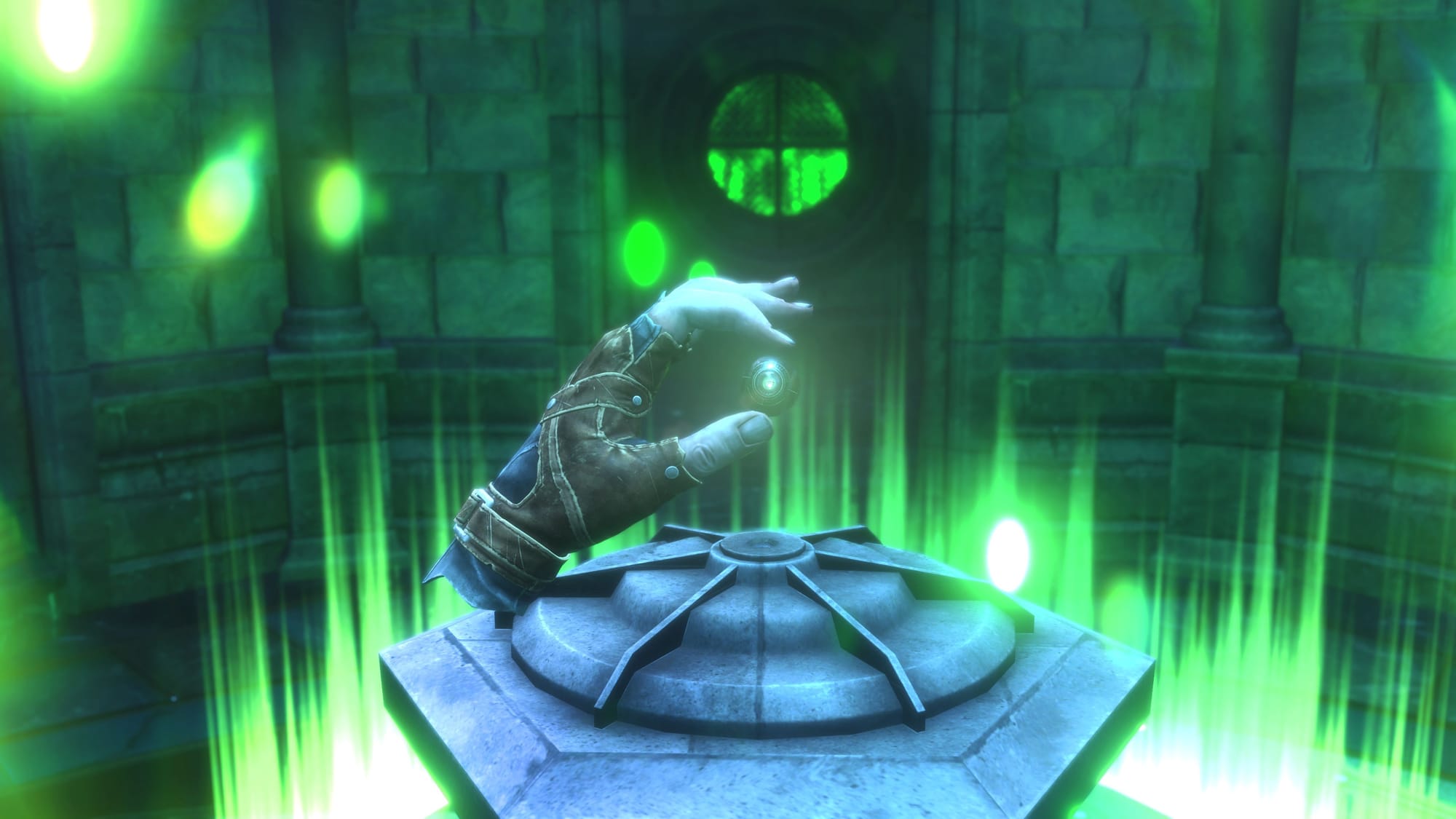
I won’t ruin the storyline, but what’s here is actually fun if a touch predictable. I am sad to see that the unique pencil sketch style of previous games’ briefings has been replaced by in-game characters telling you what’s coming up using the engine instead. It’s all well acted and solid, though it does lack some of the same flair in favor of something more modern. Given that we have the return of Garrett’s grumbly sarcasm, it would have been great to see it return. In all, there are seven missions and a tutorial to tackle, each taking… well, they take as long as you take with them. You can get through them in 45 minutes in some cases, and in others, I can see you spending two hours scouring the place slowly and methodically to find everything. Given that there is an objective for finding every bit of loot in the level for every mission, that’s probably going to be for second playthroughs.
Garrett’s sarcastic guidance isn’t as pervasive as it could have been. Thankfully, some restraint was paid, so you won’t have to worry about the most recent trend of developers giving you two seconds of space to think before remarking “WHAT IF YOU JUST CLICKED THAT THING OVER THERE?!” loudly over and over till you did it just to shut them up. The game is remarkably willing to let you suffer and figure it out—precisely as it should. As before, the guards are all too happy to run their mouths about every secret in the level, gossip about their benefactors and security elements, and other various things. Yes, they tend to repeat themselves frequently, but a bit of guidance is better than the alternative of an overly-guided experience. I’ll take “Don’t wind me up!” on repeat rather than the alternative. Beyond eavesdropping, that’s where the eye comes in.
Garrett’s eye has an additional power beyond housing the master thief. Tapping your finger to your temple will activate the eye’s power, allowing you to see otherwise unseen elements. You will see where you might find a hidden latch or where a guard with greasy hands might have handled the edge of a painting to hide a silver box. You might also see a hidden lever, an electrical trace you could follow to the source to disable it, or other hidden elements. It’s enough of a hint to keep things moving without being an outright cheat.
VR can be a somewhat chunky and overall lacking affair, visually. Thankfully, Thief VR: Legacy of Shadow is nothing short of stunning. The art direction is stylized in a gothic style that packs in detail. The environments are extremely detailed, with fantastic blends of light and dark contrast that let the shadows be functional. The torches and braziers send shafts of light to cast ominous shadows, flicker across the cobblestones, and deliver atmosphere in spaces. Looking out over The City, you can see a massive clock tower that serves as headquarters for the game, jutting into the sky in the distance. Everywhere you look, the game is pushing the visual envelope. Interiors are equally as richly detailed, with soft, opulent couches and beds, plush chairs and well-stocked bookshelves, and riveted doors that feel heavy and detailed. It helps raise the immersion level of the game with a level of detail very few VR games manage to reach.
It’s an odd choice to bring Thief back to life using a VR title, and it would have been very easy to pump out some sort of nostalgia-bait, low-effort game that’s Thief in name only. Instead, developer Maze Theory embraced this series wholeheartedly. They’ve instead delivered a game that preserves precisely what makes Thief special, while upgrading those same mechanics in a way that makes it entirely new. I just know it’s been far, far too long since somebody called me a “Taffer”, but with Garrett as my witness, this is Thief at its very best.
Thief VR: Legacy of Shadow
Excellent
Thief VR: Legacy of Shadow fully embraces the power of virtual reality while staying true to the core elements that made the original series so beloved in the first place. Immersive in a way only VR can bring, this game is a must-play for stealth fans and a magical love letter for returning fans. The original may have defined a genre, but Thief VR: Legacy of Shadow raises it to a whole new level.
Pros
- Wildly immersive in a way only VR can be
- Captures the soul of the originals
- Delivers a thief experience in a whole new way
- Level design is challenging and fun
- Immersive doesn’t even begin to cover it
- A dozen hours of gameplay, plus replayability
Cons
- Voice repetition
- Money doesn’t have a purpose - a missed opportunity
- I miss the signature cutscene art style
This review is based on a retail PC copy provided by the publisher.