Every so often, I come across a game series I wish I’d discovered sooner. The story of the goblin Styx is one such tale. Instead of playing the "knight in shining armor", we get to take on the role of the anti-hero, one whose objective is purely greed but somehow he gets roped into a world-saving adventure. Styx: Blades of Greed by Cyanide Studio is the third installment in his story. With a unique and riveting narrative and gameplay that tests your adaptability, it’s easy to see how these games have developed a cult following.
Styx: Blades of Greed is a stealth action-adventure game that picks up shortly after the events of Styx: Shards of Darkness, with Styx narrowly escaping the ruined city of Korrangar aboard a zeppelin. He then begrudgingly assembles a crew to start hunting down the super powerful Quartz scattered across the land in order to keep it out of the hands of the Inquisition, and not at all because Styx likes the power that it gives him. After all, the world is safer if there's less Quartz just lying around. The crew consists of some familiar faces and new allies, although their own motives for the venture may differ. Aboard a new zeppelin that also acts as their home base, the team sets out to find Quartz.
There isn't much detail to the story aside from Styx's goal of absorbing as much Quartz as his little goblin body can handle. There also isn't much actual dialogue between Styx and his companions outside of a few cutscenes. We're given just enough to understand the premise, and that's really it. You can learn more about the crew by completing crew missions, but they are a bit hard to follow because you can't focus on them to bring up helpful indicators. Even so, Styx's story, as well as his whole demeanor, is unique and a lot of fun.
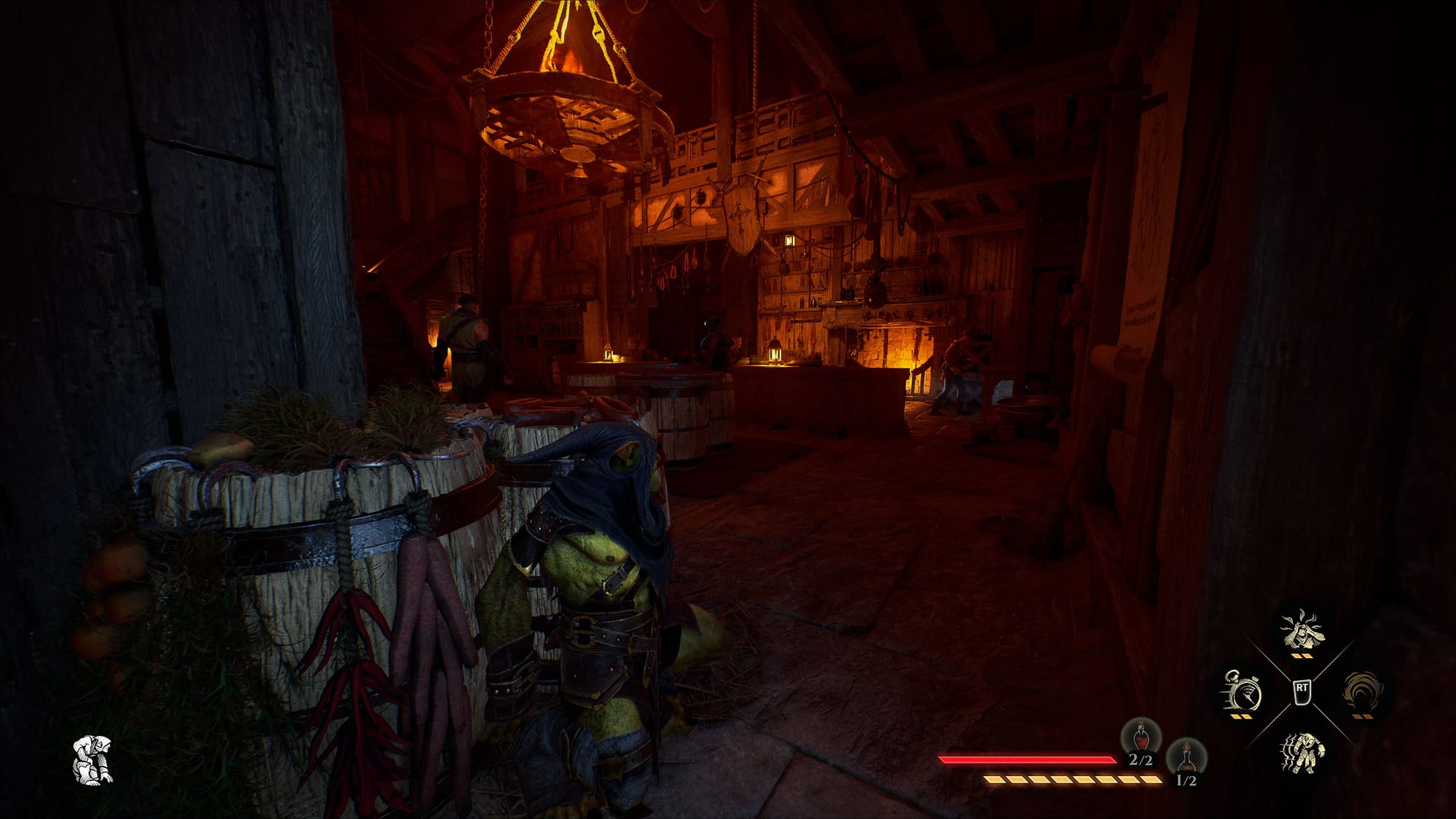
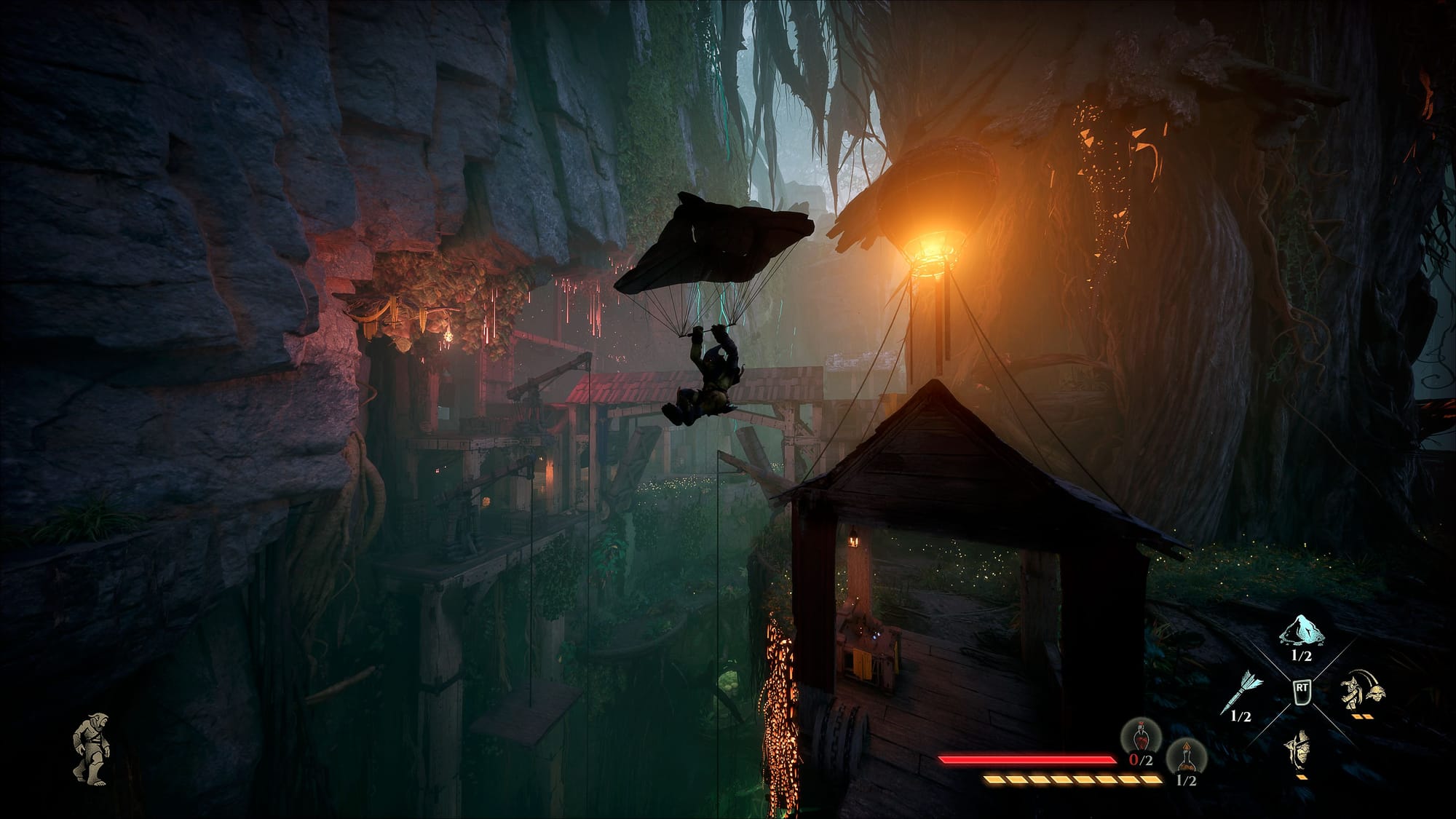
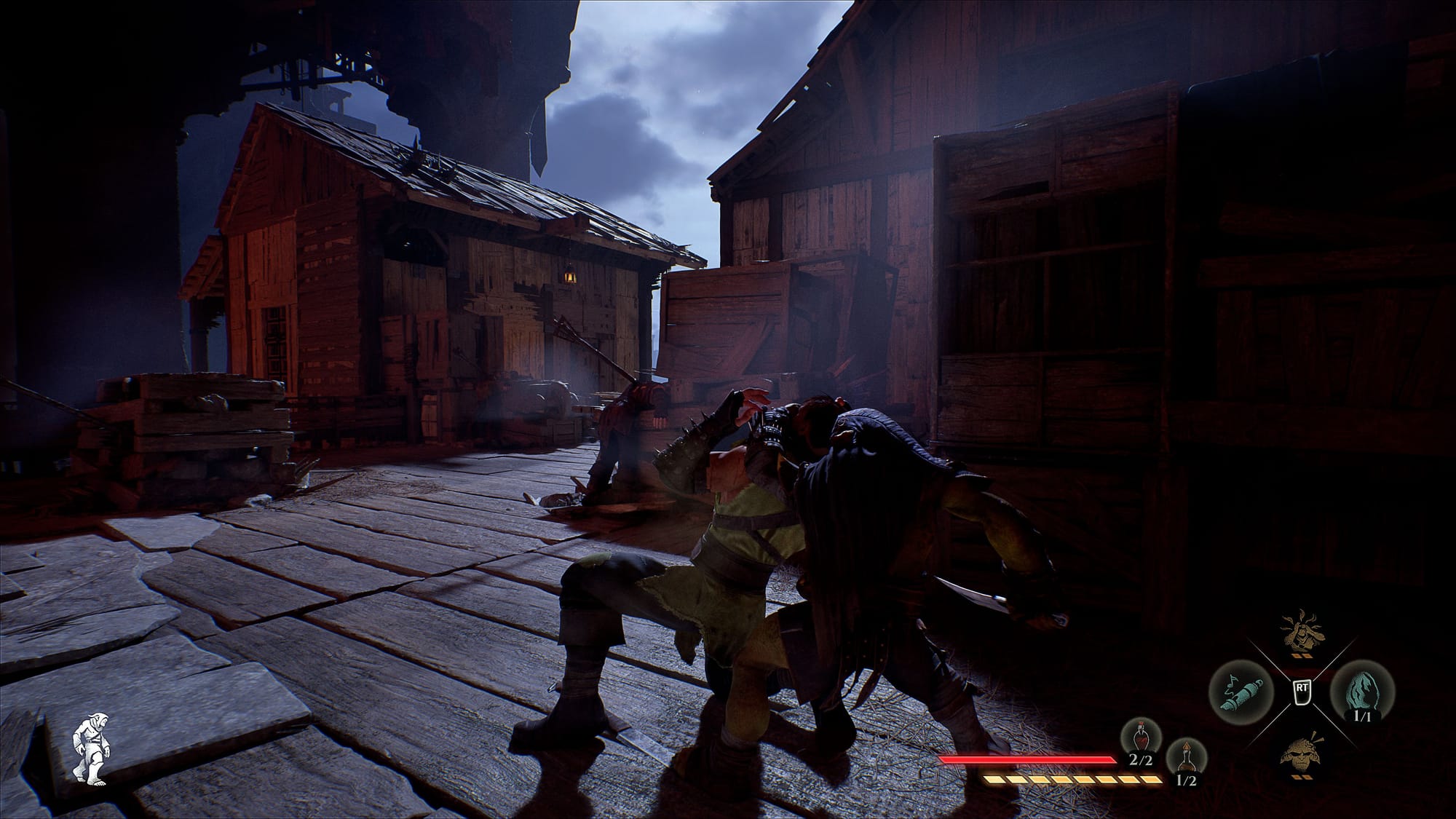
Styx sneak. Styx glide. Styx attack.
The story is fleshed out more when you eavesdrop on the conversations of the other people you encounter, with some even referencing the events of the previous game. The Dark Elves are struggling with the loss of their home and constantly grappling with what to believe and who to trust, and one man asks another to take over his guard duty so he can get to the market in time to get stuff for an ailing family member. These insights into the daily lives of the residents of Akenash, including the day-to-day struggles of soldiers manning The Wall and man's oppression of the orcs and goblins, breathe life into the world, sometimes almost making you sympathize with the enemy. You also start to see the shape of the landscape for what's to come and the war ahead. Cyanide really thought through their game launches, as the Styx trilogy details the events leading up to Of Orcs and Men, which was released in 2012, featuring Styx as one of two playable characters.
In Blades of Greed, the player is given full freedom to approach their objective however they choose. There are three maps that will be revisited multiple times throughout the game, with new areas unlocked via newly obtained abilities and gadgets. Each map is entirely open with many avenues for exploration, including a lot of vertical play options since Styx is easily able to scale most walls, dangle and drop off ledges, and hide in the ceiling. Stealth will be your greatest ally as enemy attacks are unforgiving, but you have traps, poison, throwable decoys, and more at your disposal to either distract or dispose of enemies easily. My favorite thing was poisoning food or drink and then mind-controlling multiple foes to give them a serious case of the rumbly tummy, at one point collecting five unfortunate souls at the end of a single table. Going at them head-on is also an option, however, you better get stocked up on supplies ahead of time.
Resource management quickly becomes crucial to survival. Since a single hit tanks about a third of Styx's health, keeping a stash of health potions on hand, as well as the ingredients to craft more, will make all the difference, as well as staying stocked on amber potions for abilities and other things needed to make the various traps, gadgets, and tools that you'll need. Even minor slip-ups will cost you dearly as resources are scarce. Oftentimes I'd have to choose between crafting another health potion and amber potion, or a lockpick and a dart when crafting simply because I didn't have the materials needed to make both. You can spot resources around the area with amber vision, which highlights them in yellow, as well as marking enemies and other items of interest, but in the end, playing smart will save you a lot of hassle.
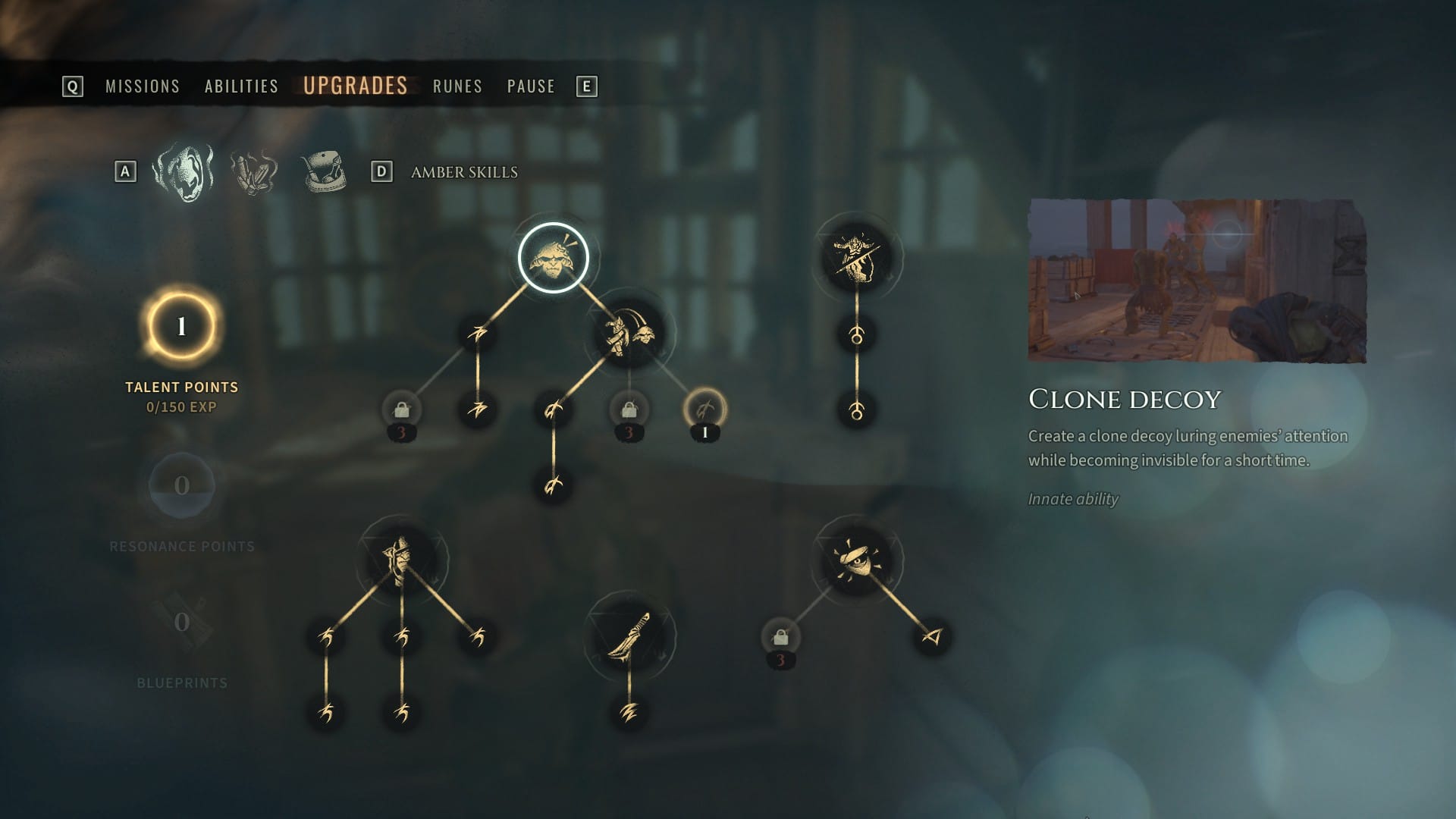
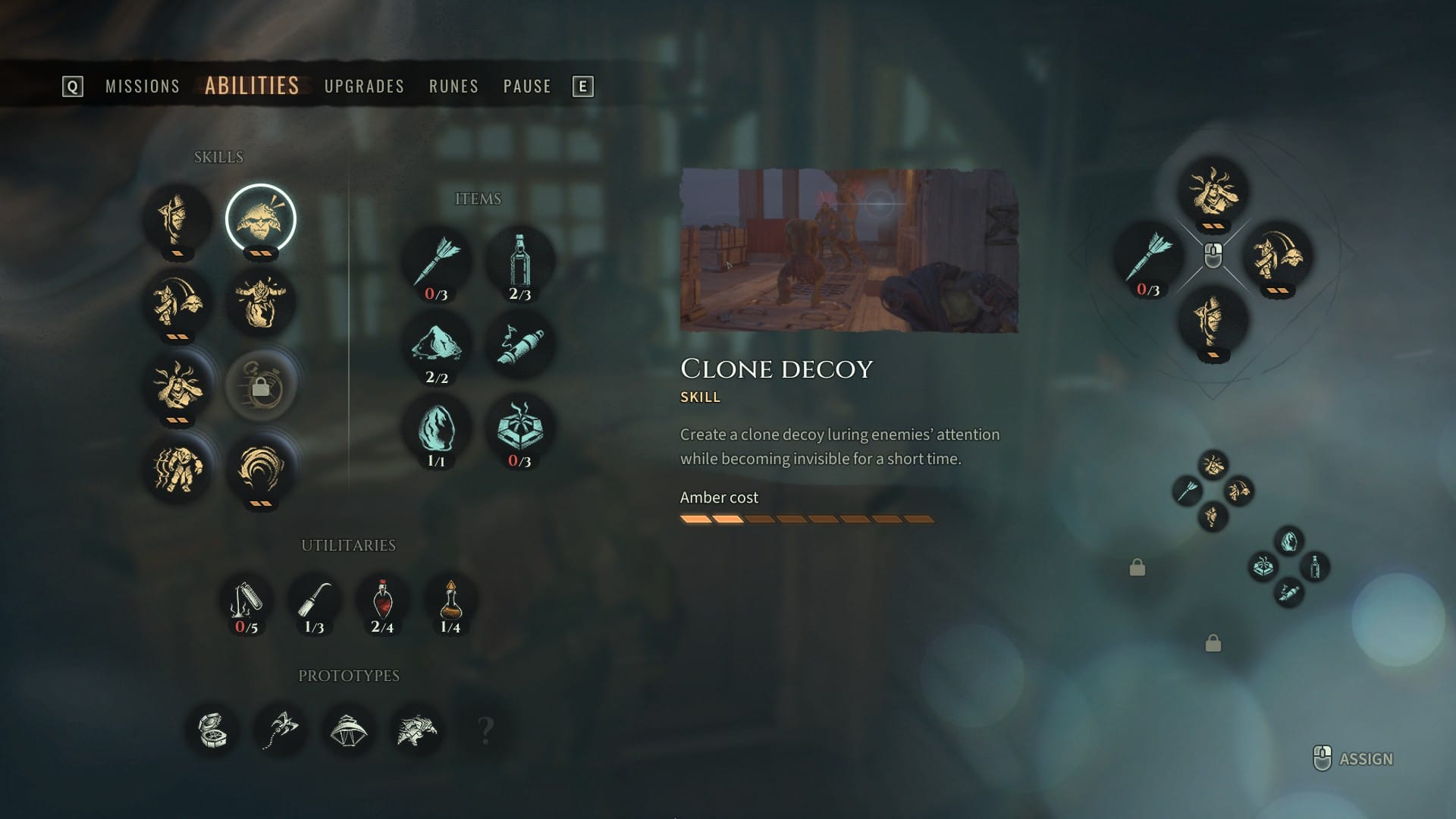
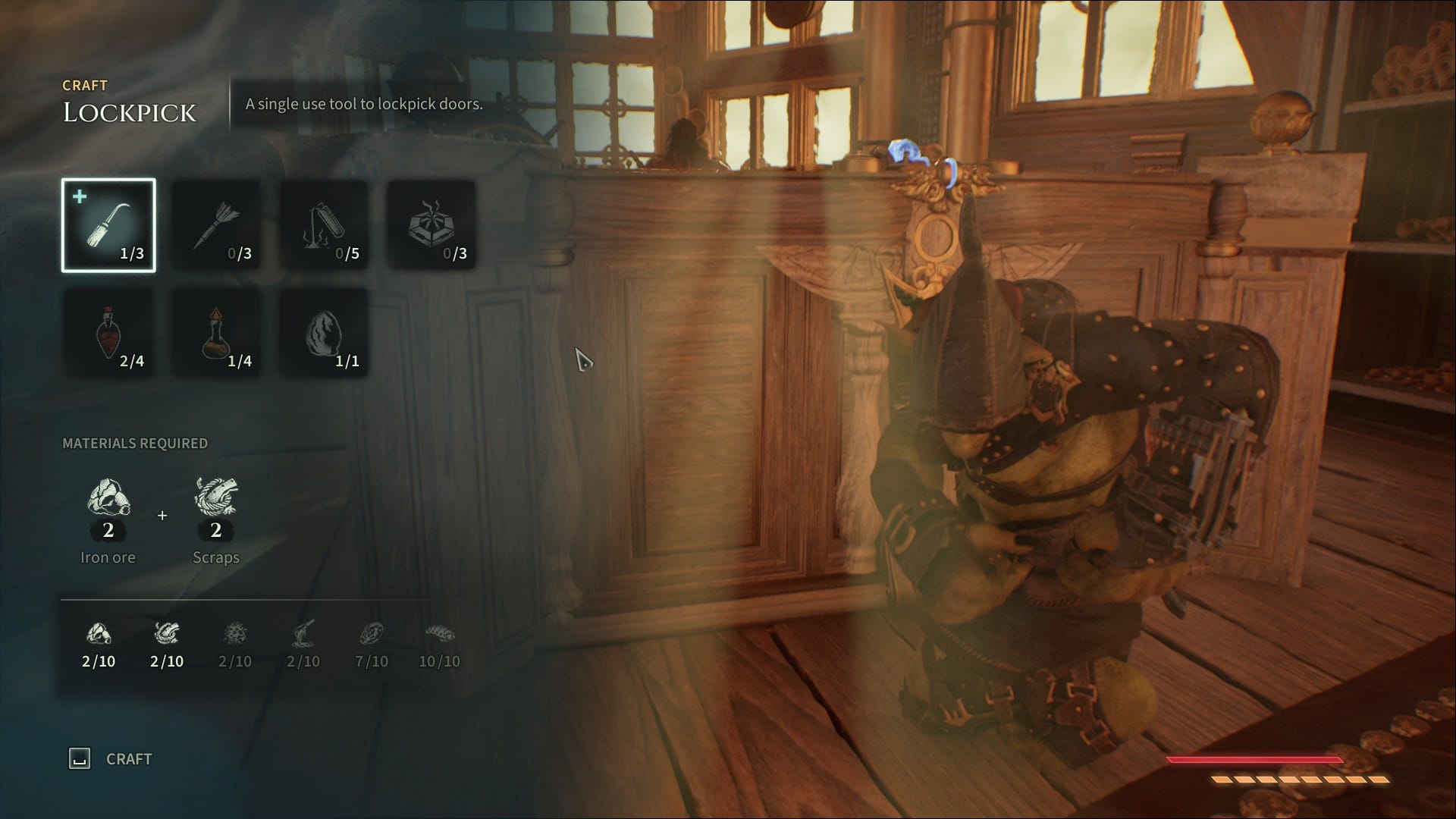
Crafting, Abilities, & Upgrades menus
There are many ways Styx can avoid having to go head-to-head with enemies. If fighting is the only option, locking onto a target allows Styx to start slashing away, and a perfectly timed dodge allows Styx to go for the kill shot. Styx can easily take out lightly armored foes and then hide their bodies in chests or closets or drop them into the abyss if he hasn't been spotted. Larger and stronger enemies will take some creativity, either requiring a melee strike to remove their armor first, putting Styx at risk, which can then be followed up with attacks. Styx can also use traps, decoys, or mind control to dispose of them. I found myself playing the more passive route, especially with larger targets, sticking to the shadows as much as I could, using environmental clues and whatever else I could.
After a while, the gameplay can get a little repetitive; head out to each of the three maps, figure out how to access and absorb Quartz, open a zeppelin station or two, regroup with the crew, big thing happens between expeditions, and repeat. What kept the game from getting stale was being able to access new areas after acquiring a new gadget or ability, like being able to grapple.
The game can be completed in 20-25 hours, depending on how much side content you do or how often you die, especially if you aren't frequently saving your progress. The game's lack of autosaves became a major pain point as I'd sometimes lose an hour's worth of progress upon death. Sure, manually saving is a good habit to get into for any game, however it breaks the immersion and flow of the game when the player has to stop every 10-15 minutes just to make sure the game is saved. Even completing main objectives didn't always spare me the hassle, even though one would think that would be a given.
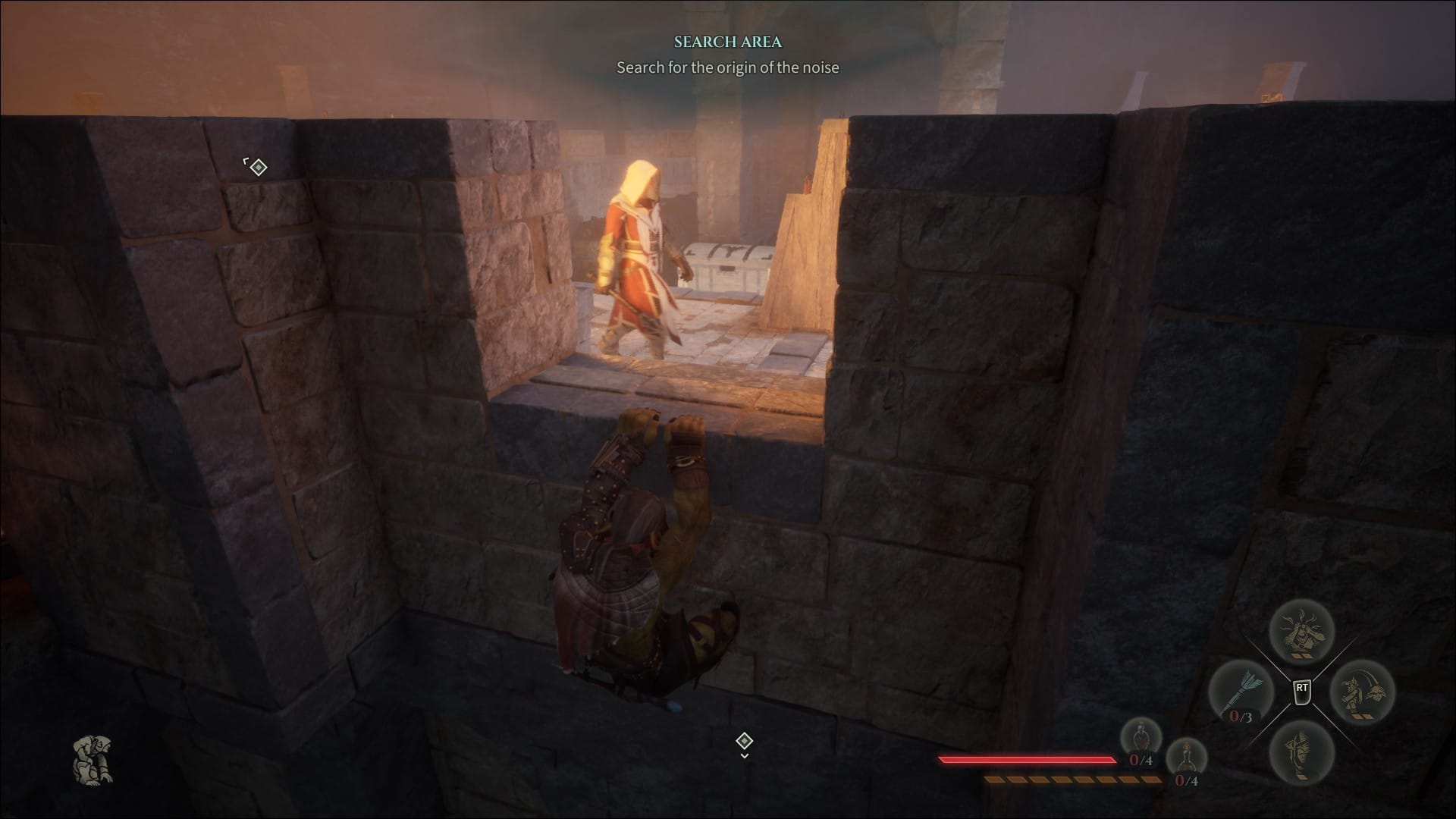
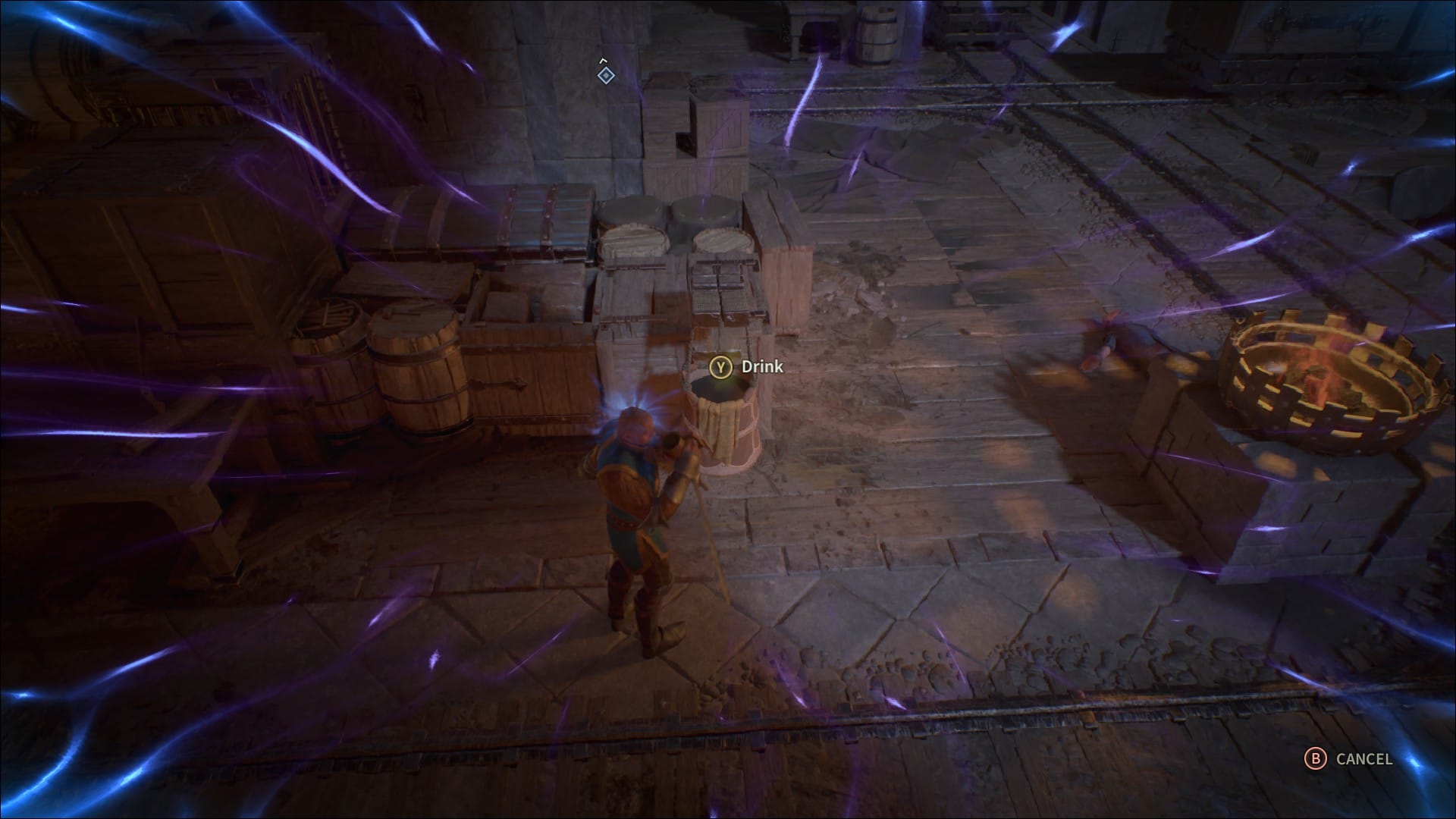
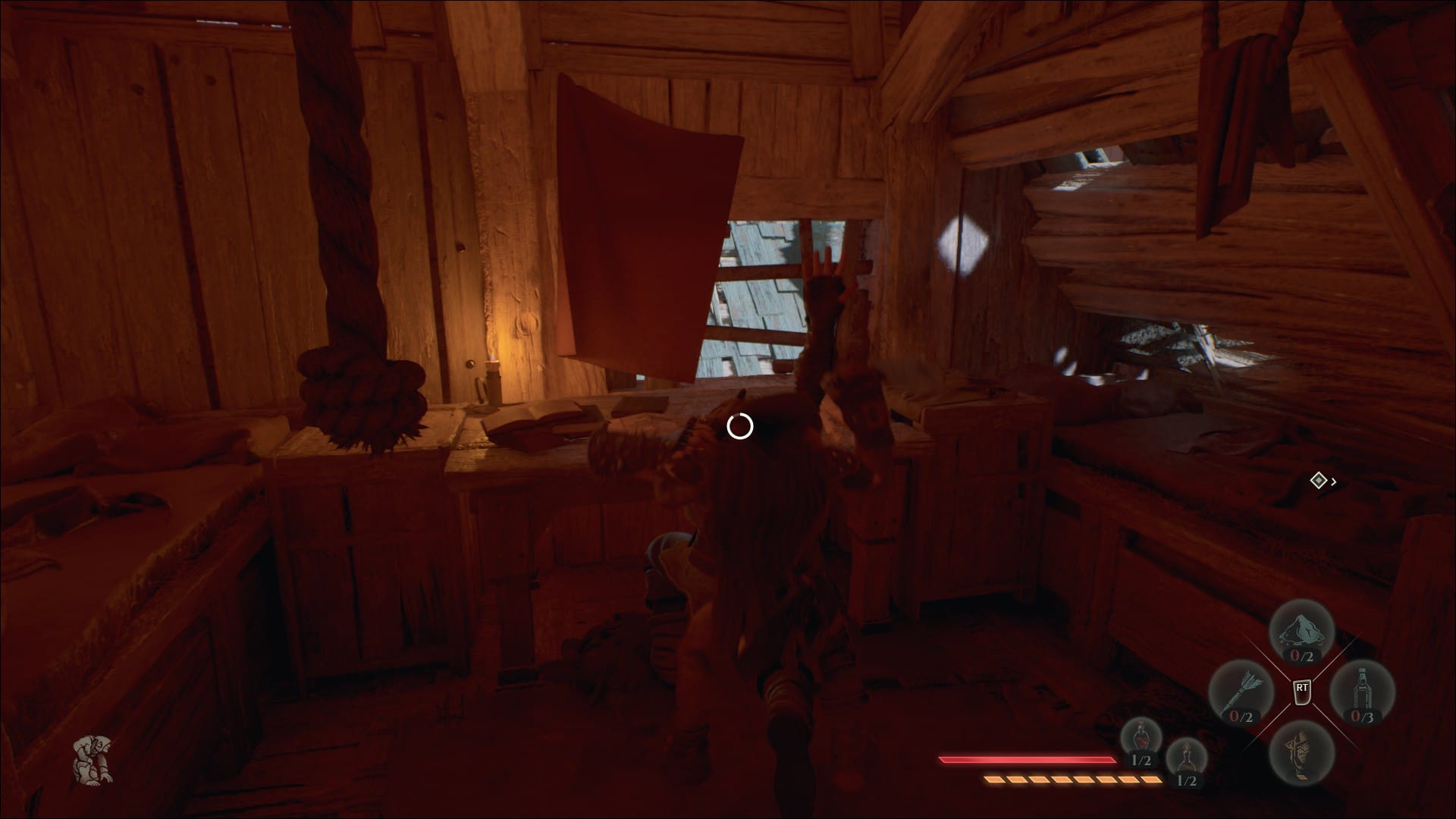
Styx can use various methods to evade or incapacitate enemies, including mind control.
I did encounter some framerate drops throughout the game, however, dropping my graphics settings to High instead of Max fell more in line with my hardware capabilities and helped keep the stutters to a minimum. The difference was negligible, with virtually no difference to visual quality, load times, or rendering. As a matter of fact, moving between maps was a breeze, with the traveling cutscene even being skippable. The only sizable wait was when shaders were being loaded when visiting a map for the first time, but even that was only measured in seconds.
Fans of Styx: Master of Shadows and Styx: Shards of Darkness should feel right at home in Styx: Blades of Greed. The stage has also been set nicely for Of Orcs and Men for those looking to get that full Styx experience.
Styx: Blades of Greed
Great
Styx: Blades of Greed is the epic conclusion to the Styx trilogy, setting the stage nicely for the war between men and orcs in Of Orcs and Men. The gameplay may feel a little repetitive, but it's also fun and satisfying when you master a new skill.
Pros
- Fun and unique story, playing as the antihero
- Little to no loading time
- Freedom and creativity to play how you want
Cons
- Somewhat repetitive
- Having to manually save frequently costs progress and immersion
This review is based on a retail PC copy provided by the publisher.