Resident Evil has reinvented itself so many times over the last few decades that having a massive identity crisis is basically its brand. But that isn’t necessarily a bad thing. This year marks the 30th anniversary of the franchise that put the survival horror genre on the map, and Capcom decided the best way to celebrate was to stop choosing between its two distinct eras. With Resident Evil Requiem, they’ve blended two completely different games together: the pant-soiling, hide-under-a-desk traditional horror, and the glorious, B-movie action where you're parrying chainsaws and suplexing zombies. Two protagonists, two gameplay styles, all in what might just become one of Resident Evil’s greatest hits.
You can read David Flynn's impressions on the Nintendo Switch 2 version of the game here, as the main review was done on the PlayStation 5 version of the game.

Set roughly 30 years after the destruction of Raccoon City, the game follows Grace Ashcroft, an FBI intelligence agent sent to investigate a string of mysterious deaths at the Wrenwood Hotel. There's a catch, though. That same hotel is where Grace's mother, Alyssa Ashcroft, was murdered eight years earlier. If Alyssa's name rings a bell, it’s because she was one of the playable survivors in 2003’s Resident Evil Outbreak, and tying Grace's origin back to that overlooked corner of the franchise is definitely a nice nod.
On the flip side, we have fan favorite Leon S. Kennedy, returning to a mainline game for the first time since 2012’s Resident Evil 6. He's older now, more weathered, carrying what director Koshi Nakanishi described as the cumulative weight of decades spent fighting bioterrorism. He’s hunting former Umbrella scientist Victor Gideon while investigating the deaths of Raccoon City survivors, putting him on a parallel track with Grace.

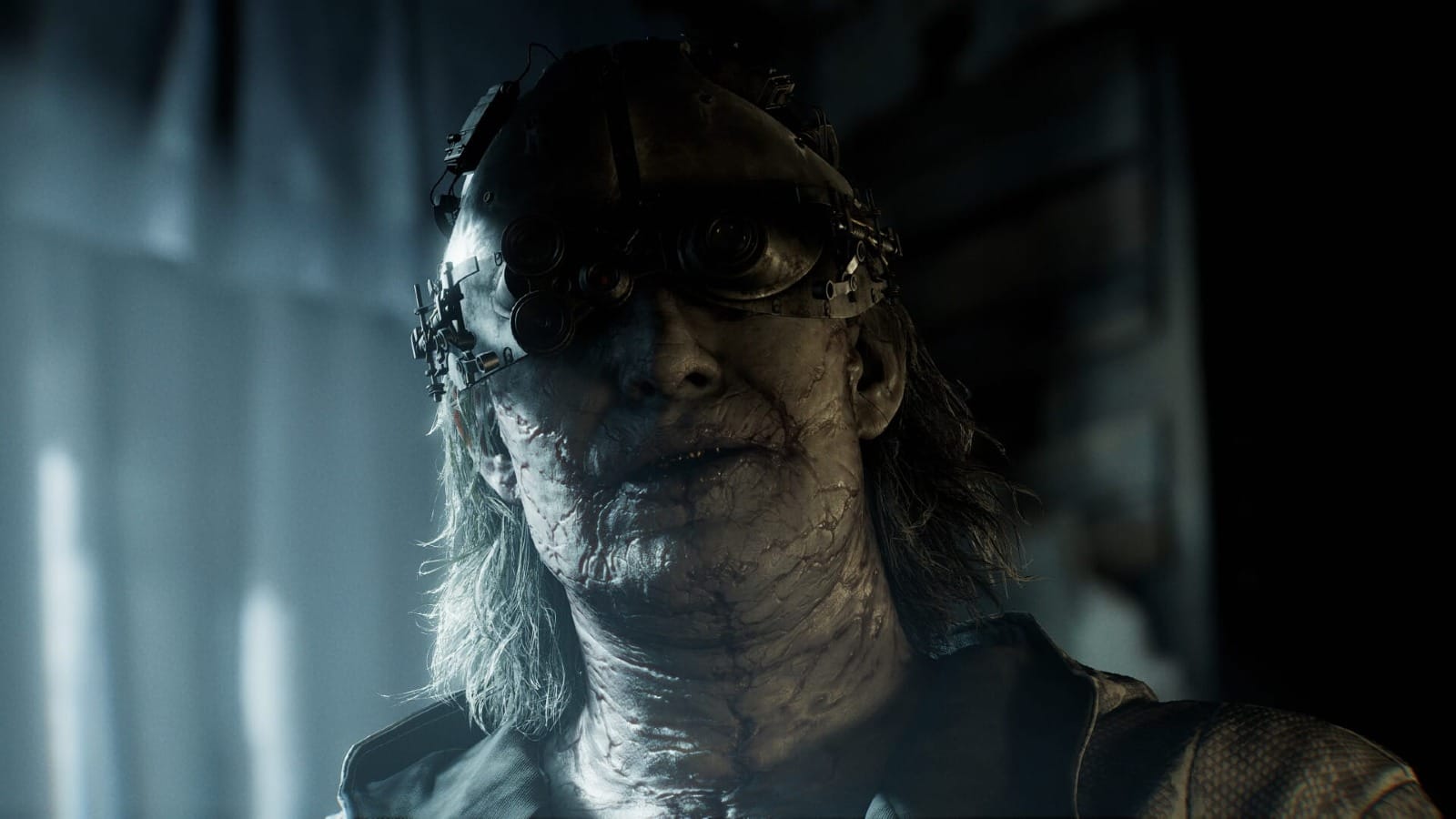
What sells the narrative setup along with the difference in gameplay styles is the tonal gap between these two characters. Grace is an introvert, a desk analyst thrown headfirst into a nightmare she's not equipped for. Leon, meanwhile, has been doing this for 30 years and greets a chainsaw-wielding zombie doctor with a parry and roundhouse kick. He’s simply checking another box off his bingo card.
That being said, the narrative as a whole is still quite nonsensical and all over the place. It throws in some legacy lore and returning faces, but it’s largely standalone. There are some big reveals though that are bound to divide the fanbase. Don't go in expecting a massive, Avengers-style reunion of legacy characters. But on the bright side, Leon still drops his trademark cheesy one-liners, so all is right in the world.
Gameplay is where things get interesting, since Requiem is basically two different games sharing one body. Grace's half plays like a slow burn psychological horror experience in the tradition of Resident Evil 7. Leon's chapters, by contrast, lean hard into the action-forward design of Resident Evil 4 Remake.
Playing as Grace, the emphasis is on evasion, stealth, and resource scarcity. She begins the game with almost nothing and has to scrape together whatever she can find. Her inventory is a cramped eight-slot bag reminiscent of classic Resident Evil, which means every item pickup becomes a strategic decision. She's not helpless, as Leon eventually hands her a massive revolver called "Requiem," but the ammunition for it is so scarce that firing it should be a last resort. Instead, she’s crouching, hiding under furniture, and chucking glass bottles to distract enemies.
Then there’s the stalker. Previews have already shown off the massive, Mr. X-style creature hunting her, whom I will affectionately call "Big Mama." She is unkillable and tracks you through the walls and ceilings. Having absolutely no firepower against her induces the kind of pure anxiety that only top-tier horror can deliver. Thankfully, she hates the light, giving you a slim margin to outrun her.

Leon's chapters are the polar opposite, in the best possible way. He arrives loaded with firearms, a hatchet that replaces his classic knife, and the roundhouse kicks that made RE4 legendary. He can parry incoming attacks, grab enemy weapons, and chain together melee moves that border on stylish action. His inventory uses a 7x10 grid similar to RE4's attache case, and his crafting is more traditional, combining gunpowder and scrap materials. Kills earn points used to buy guns, upgrades, and meds. The only weird quirk? Leon doesn't get access to the classic item storage boxes, while Grace does.
The perspective toggle is another major addition. You can freely switch between first-person and third-person at any point during both campaigns. First-person is the default for Grace, and it intensifies the claustrophobia considerably. Third-person is the default for Leon, which suits his more action-focused playstyle. Unlike a lot of AAA games that bolt on alternative camera angles as a clunky afterthought, both perspectives here play incredibly well.

Progression in Requiem is split between each character as well. For Grace, there’s a new blood-crafting system that allows her to collect infected blood from enemies and the environment, which can then be used to synthesize ammunition, healing items, shivs, and specialized injectors. These injectors serve a dual purpose: they can perform one-hit stealth kills and also prevent downed enemies from mutating into something worse. The tension this creates is excellent and presents a tradeoff between engaging an enemy to harvest their blood versus avoiding combat entirely.
Leon's progression is more familiar, especially coming from RE4 Remake. He collects scrap, gunpowder, and other materials to craft ammunition and items, and his weapons can be upgraded with customizable parts. His hatchet requires sharpening to maintain durability, but will never break. He can also pick up enemy weapons mid-fight, including chainsaws, spears, and hatchets that make for some diverse combat scenarios.
The game offers three difficulty settings: Casual, Standard, and Standard (Classic). Casual includes heavy aim assist and relaxed resource placement for those who want to focus on the story. Standard (Classic) is the one that'll make veterans smile, as it requires Grace to find ink ribbons to save at typewriters, a callback to the original games' save system. There are a number of additional modes that unlock post-game, as well as some additional functionality that'll change things up, but I'll leave those surprises for you to uncover yourself.
But here’s my biggest gripe: Capcom gutted the scoring system. You used to have to sweat bullets for an S-rank on the hardest difficulty to earn the game's best post-game bonuses. Unfortunately, I'm not allowed to say what due to review restrictions, but if you know, you know. It was a badge of honor. In Requiem, they lowered the barrier to entry completely. You just grind out Challenge Points (CP) and buy the stuff directly in the shop. You also can’t check your in-game timer anywhere. As someone who appreciated the dedication required to master these games, this feels incredibly unearned.
There's also the issue of length. I know Resident Evil games are usually relatively short as they are meant to be replayed several times on different difficulties, but I was definitely expecting Requiem to be similar in length to RE4 Remake at least, which was around 15 hours for a first playthrough. I beat Requiem on Standard with a playtime of around 8 hours, which in actuality is closer to 10 hours if you count all the in-game cutscenes. There’s literally an in-game achievement to complete the game within 4 hours, so you know this isn’t a long game by any means. The back half feels noticeably rushed, and a few side characters desperately needed more screen time.
On the technical front, Resident Evil Requiem is one of the strongest showpieces for the PlayStation 5. The RE Engine has been an absolute powerhouse for Capcom since it debuted alongside RE7 in 2017, and this is also the first mainline Resident Evil title built exclusively for current-gen hardware, with no PS4 version holding things back. The game runs at an optimized 4K 60 FPS and load times are near instantaneous, taking only 3 seconds from the main menu and less than 1 second if you’re already in-game.
The DualSense integration is also top-tier. Haptic feedback is used to simulate zombie bites and grabs, while the adaptive triggers add resistance when firing weapons. The controller's built-in microphone even emits sound effects during weapon reloads and puzzle interactions, alongside radio communication. Why isn't every PS5 game doing this?
RE Engine games have always been pretty, and Requiem takes this a step further. The lighting, shadows, and geometric detail are a massive upgrade over the previous games. Capcom even imported the strand-based hair tech originally built for Pragmata for Grace’s character model. Light realistically passes through individual strands, and the physics react naturally to movement. Most players probably won't notice this level of detail, but it contributes to the overall sense of realism.
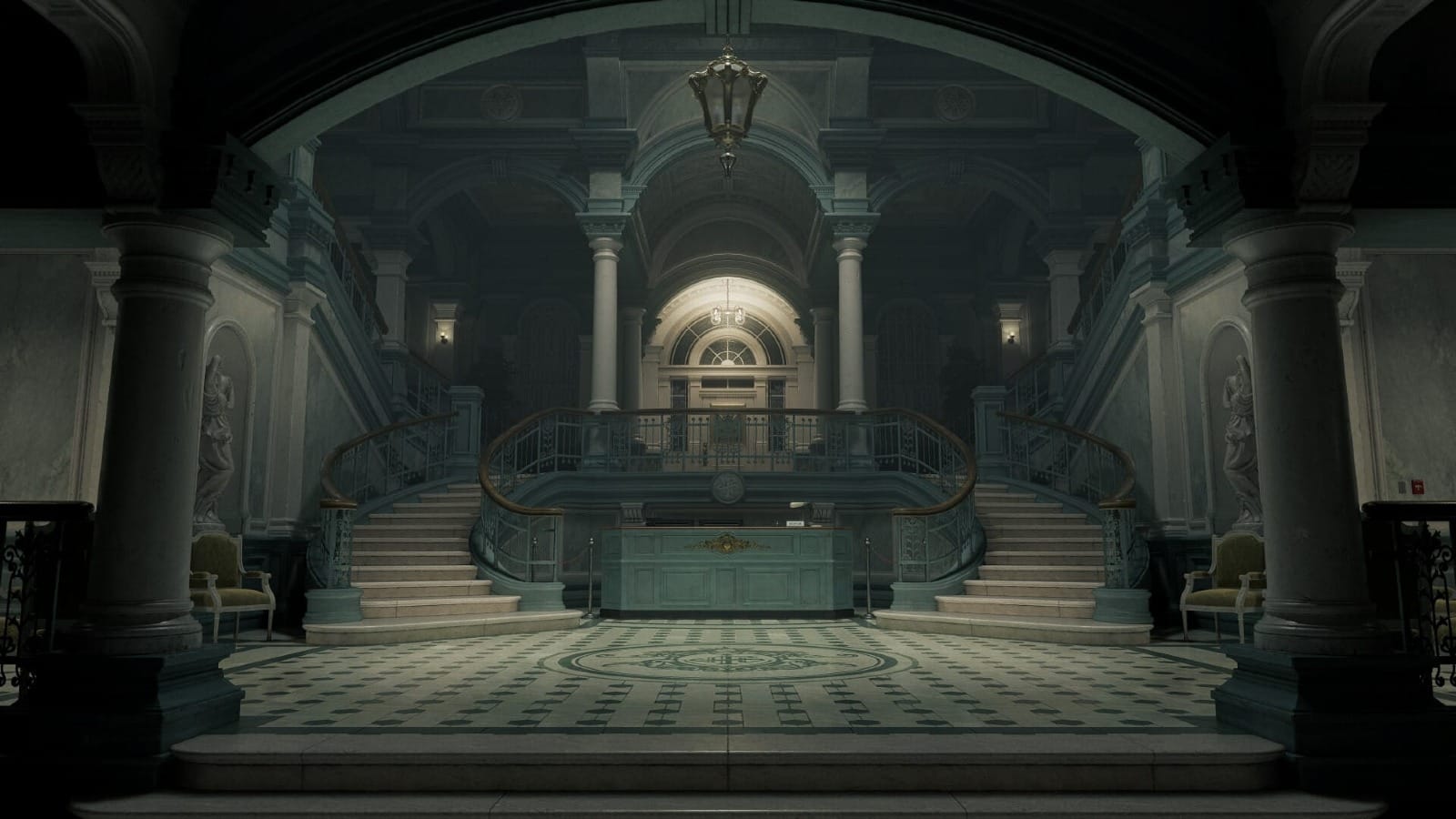
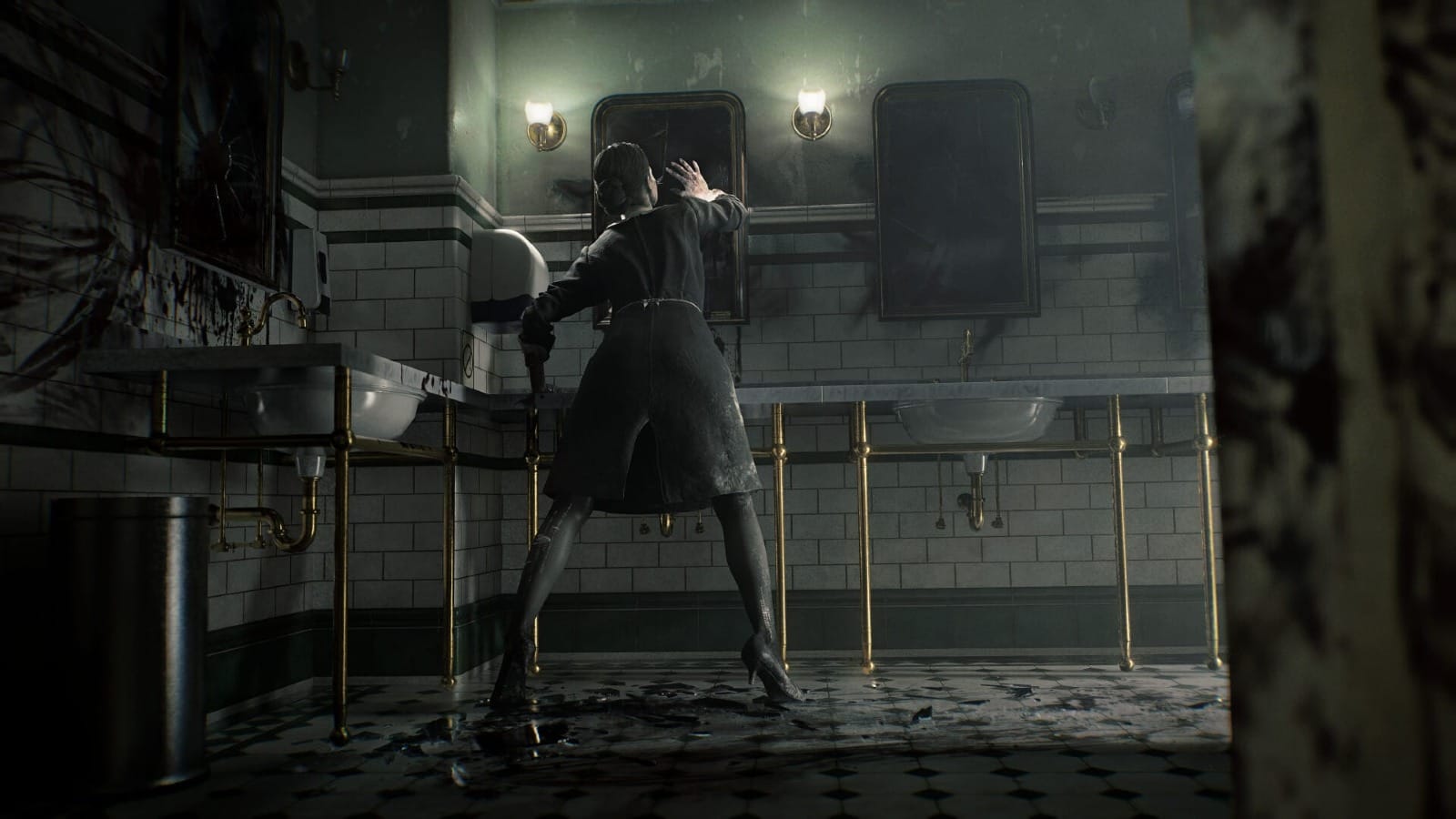
Environmental design deserves its own praise. The Wrenwood Hotel and Rhodes Hill Chronic Care Center are both dripping with atmosphere: peeling wallpaper, flickering lights, corridors thick with shadow, and wet surfaces that catch reflections from Grace's lighter. Seeing the overgrown ruins of post-destruction Raccoon City along with RPD is sure to be a visual treat for longtime fans. Infected monsters retain behavioral traits from their former lives: a cook still wields a carving knife, a maid attacks with broken glass, a singer's vocalizations disrupt your aim.
Audio is often the unsung hero of horror games, and the sound design here operates on two distinct wavelengths that mirror the gameplay split between Grace and Leon. Grace’s soundscape is pure dread: faint moans, ventilation hums, and spatial audio that lets you track Big Mama crawling above you before she ever breaks through a wall. Leon’s stretches are cinematic aggression, backed by heavy drums, sharp brass hits, and the visceral crunch of melee attacks. It’s pure cinema.

What impresses me most is how Requiem respects different types of Resident Evil fans without pandering to any single camp. If you fell in love with the series through RE7's suffocating first-person horror, Grace's campaign looks tailor-made for you. If RE4's roundhouse-kick energy is more your speed, Leon's got you covered.
Resident Evil Requiem
Excellent
Resident Evil Requiem proves that there is still plenty of infected blood left in this franchise's veins. Requiem manages to balance horror and action in a way that enhances both. While its second half is a bit messier than it should be, it's still a fun ride that only Resident Evil can deliver.
Pros
- Brilliantly balances slow-burn survival horror with stylish action
- Stunning PS5 tech showcase with top-tier DualSense integration
- Seamless toggling between first and third-person perspectives
- Replayability with post-game content
Cons
- Gutting of the ranked scoring system
- Surprisingly short runtime
- Rushed back half and underdeveloped characters
This review is based on an early PS5 copy provided by the publisher. Resident Evil Requiem comes out on February 27, 2026.