On its 5th release anniversary this year, we wanted to do a retrospective review of Steamforged Games' Resident Evil 3: The Board Game (2021), the dungeon-crawler co-op board game based on the original 1999 survivor horror video game (which got remade/remastered in 2020—how's that for a timeline!) Even though Resident Evil 3: The Board Game is out of print currently, you can still find it on various online marketplaces, or perhaps tucked away on a shelf at your friendly local game store. There have been so many dungeon-crawler and/or co-operative and/or zombie board games released since then, so... is it even worth it?
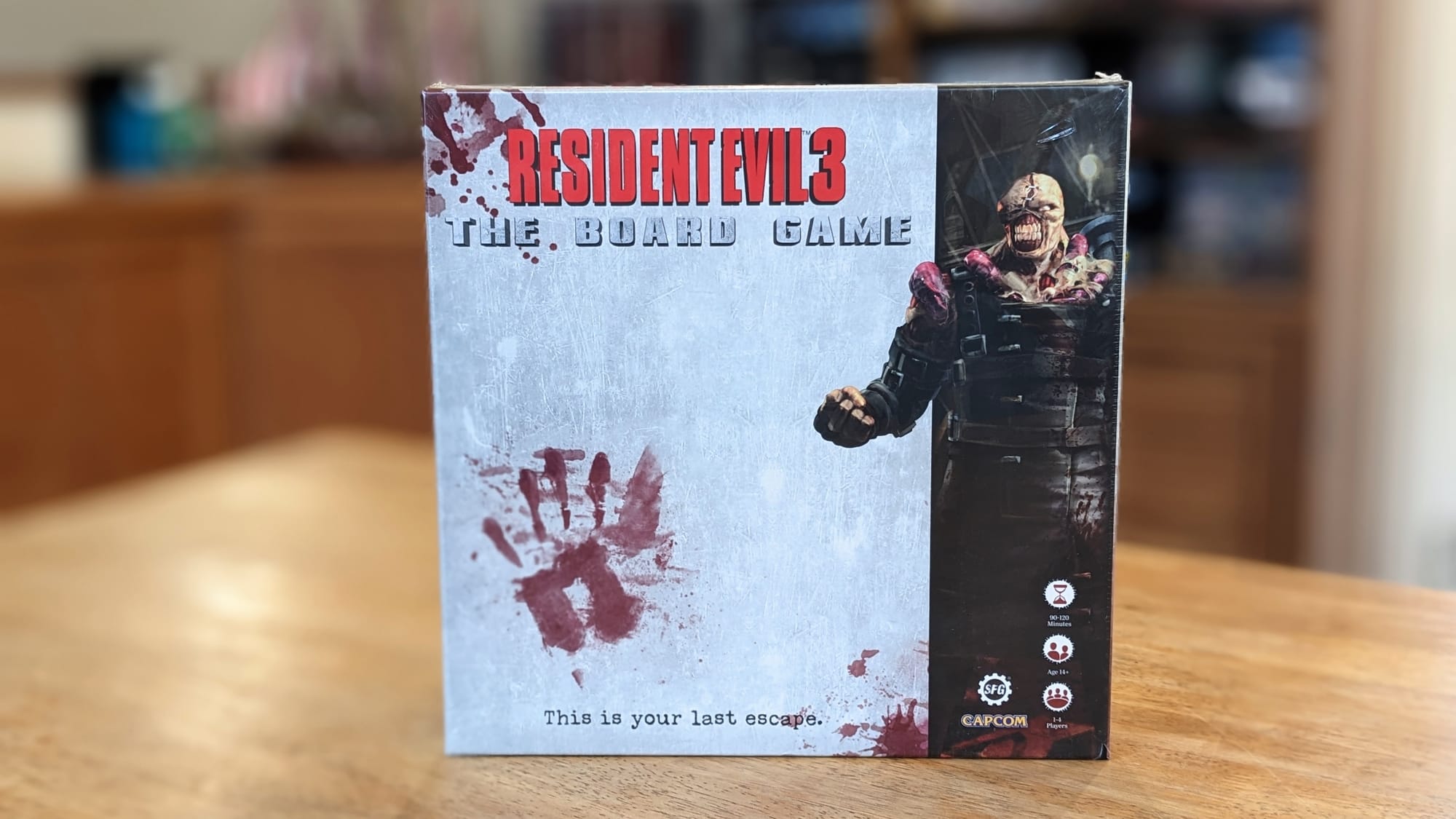
Whether you're a die-hard fan of Resident Evil or just looking to kill some time rolling dice and double-tapping zombies with friends, the Resident Evil 3: The Board Game corpse still shambles on all these years later. Here's why:
Unboxing & Contents
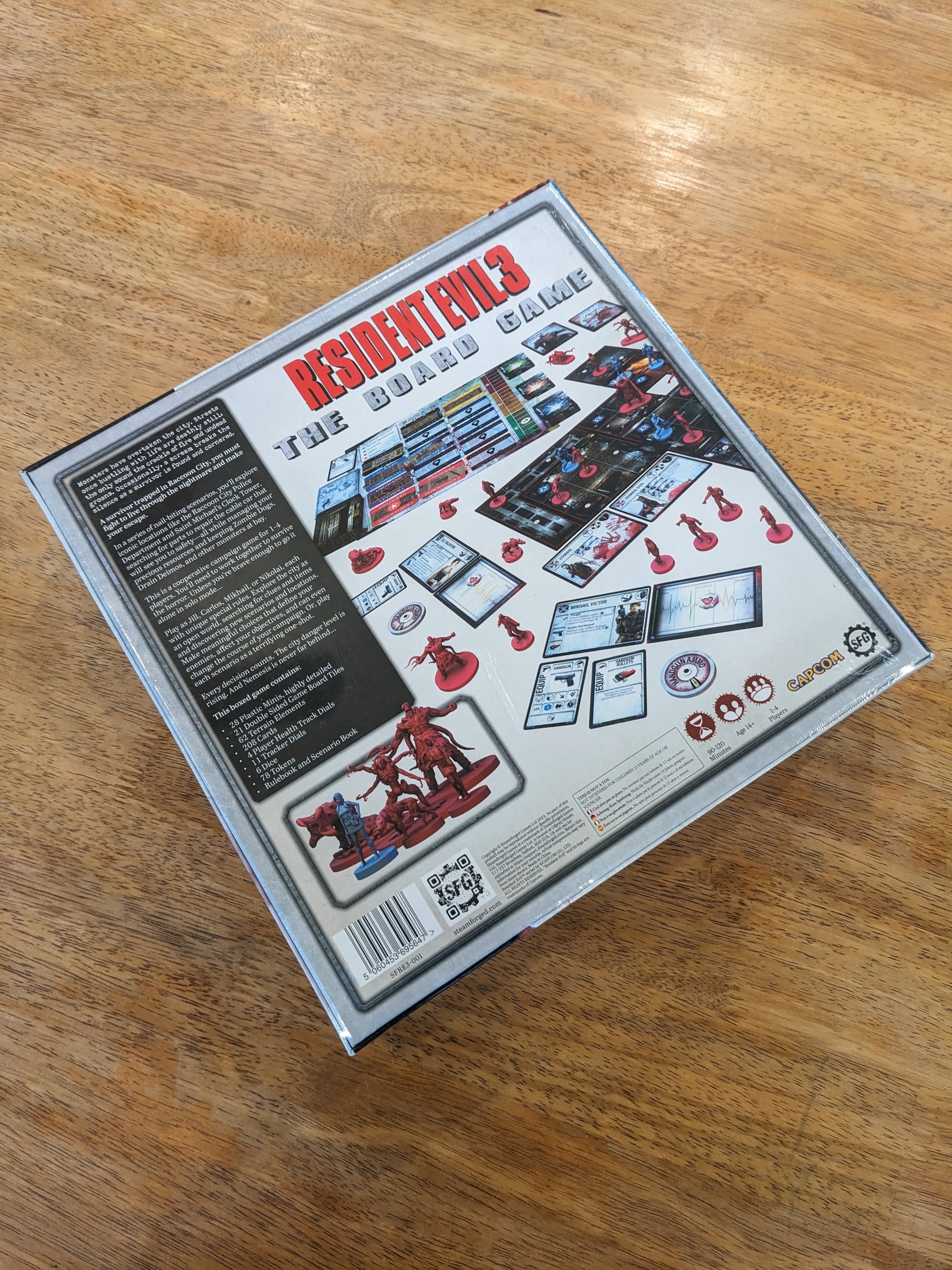
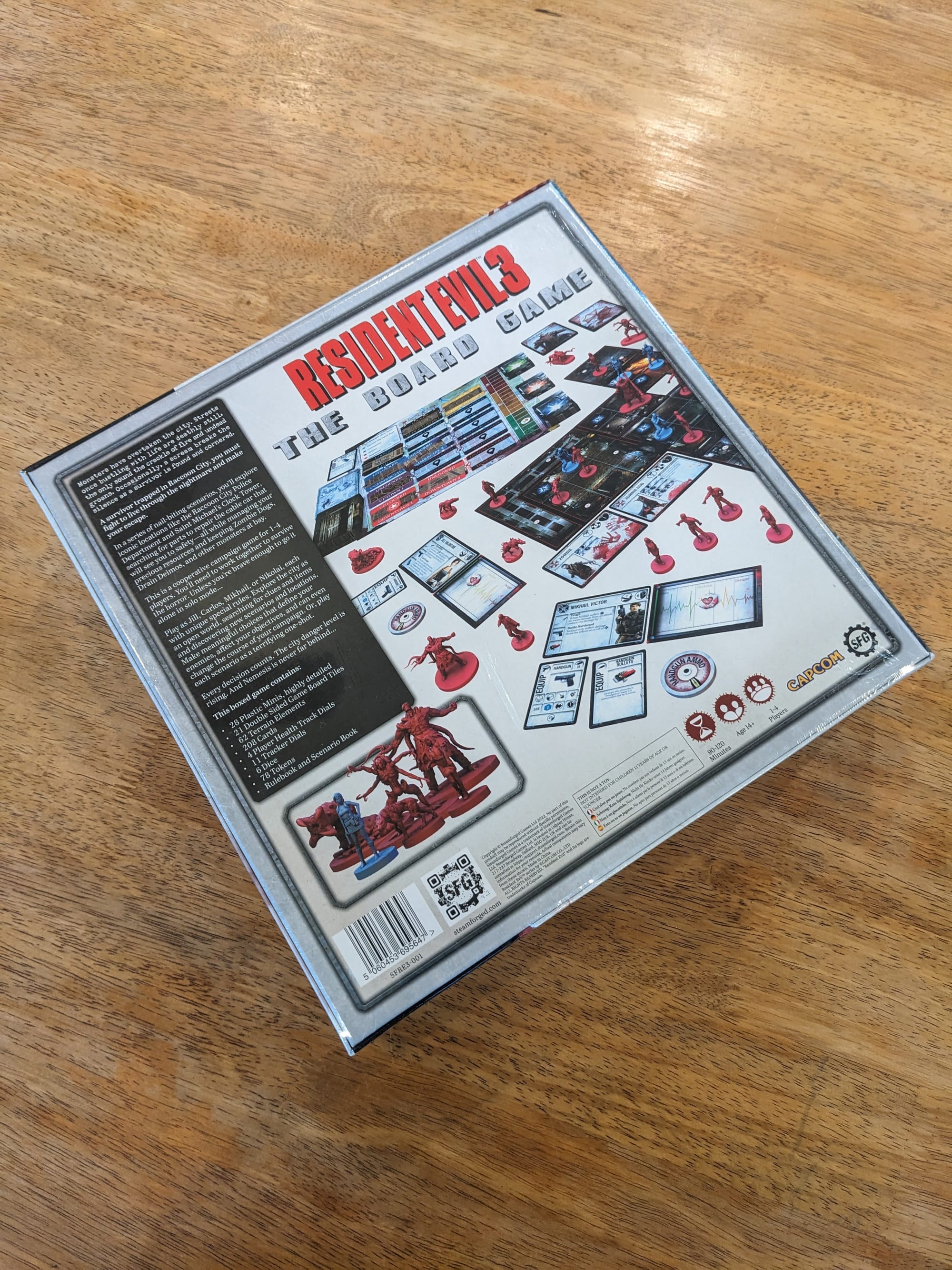
For its original MSRP of just over USD $100, you get a lot, not just in pieces and tokens, but in game time too (more on that later). Included in the box are 28 soft-plastic minis (true 28mm scale), 21 double-sided game board tiles with 62 terrain element tokens, 208 cards, health and ammo tracker dials, 6 dice, and over 70 tokens.
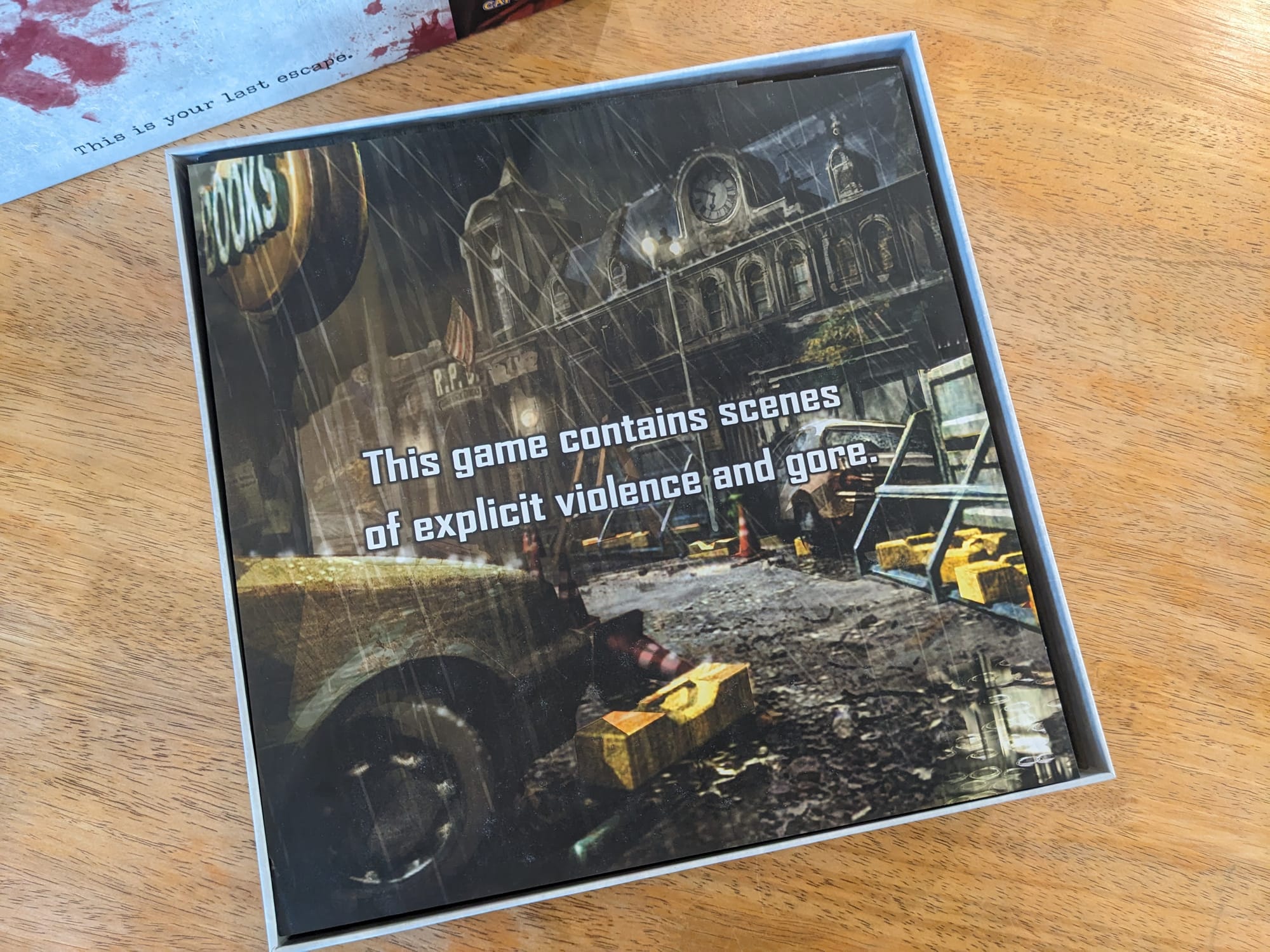
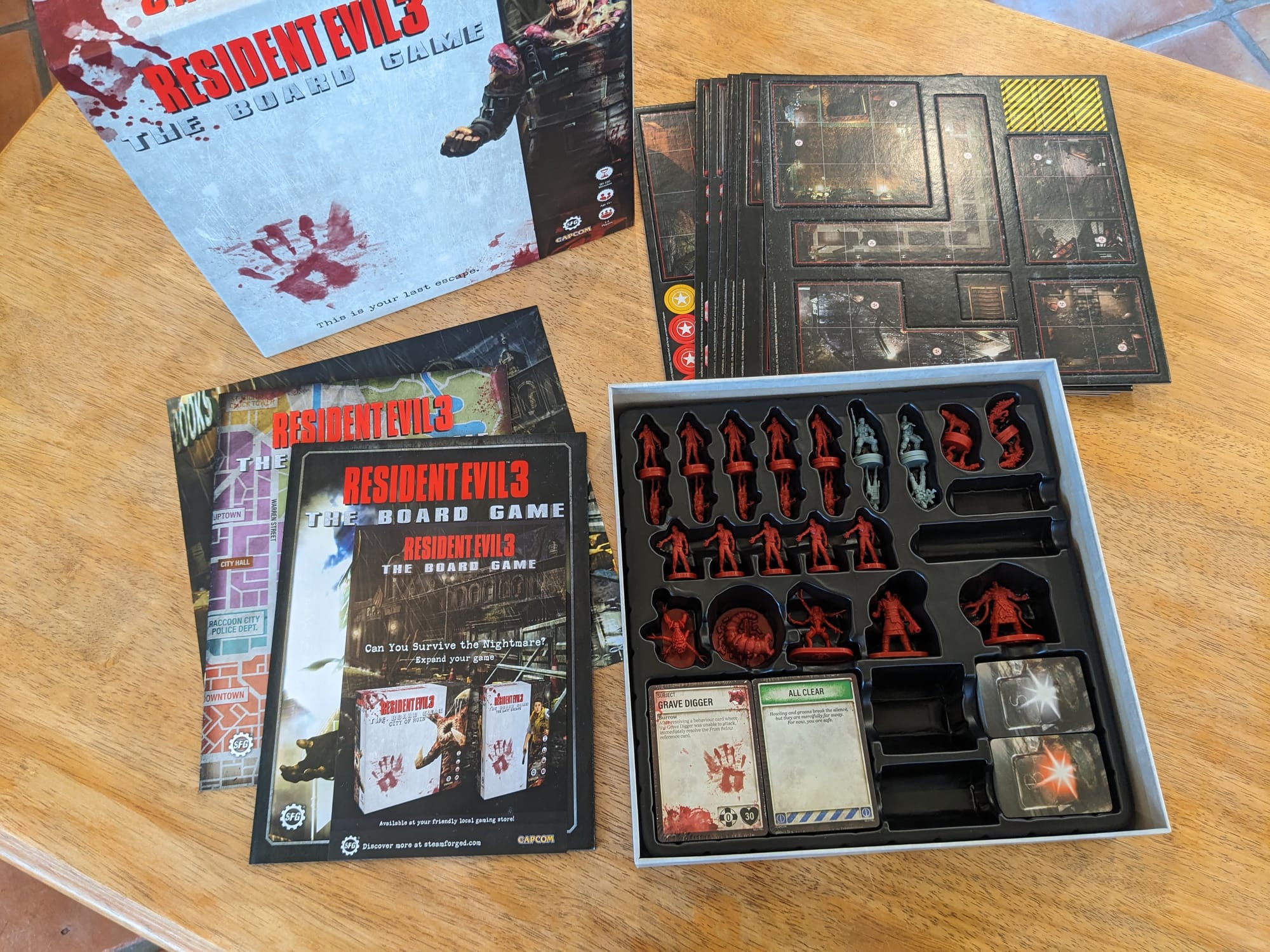
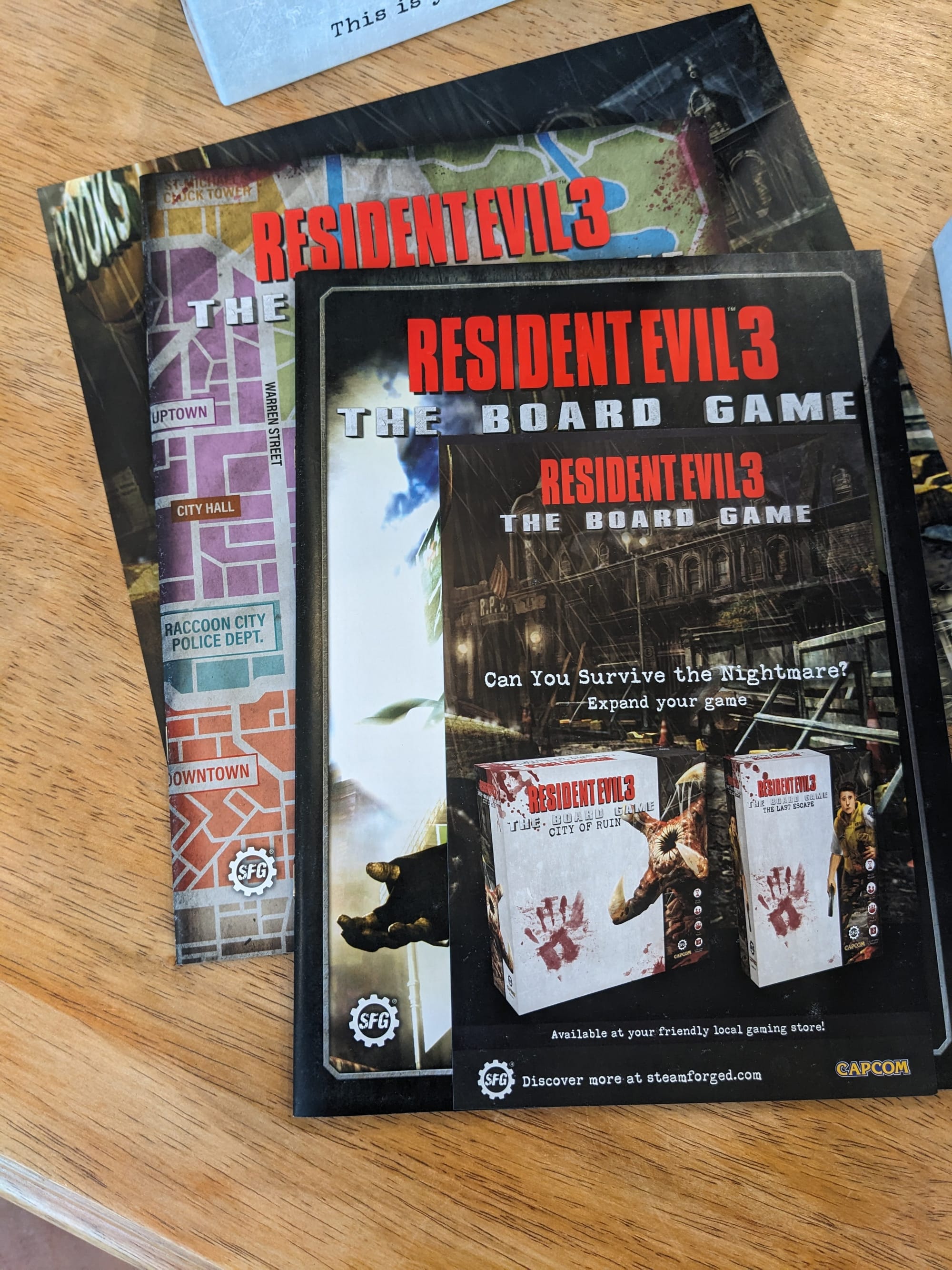
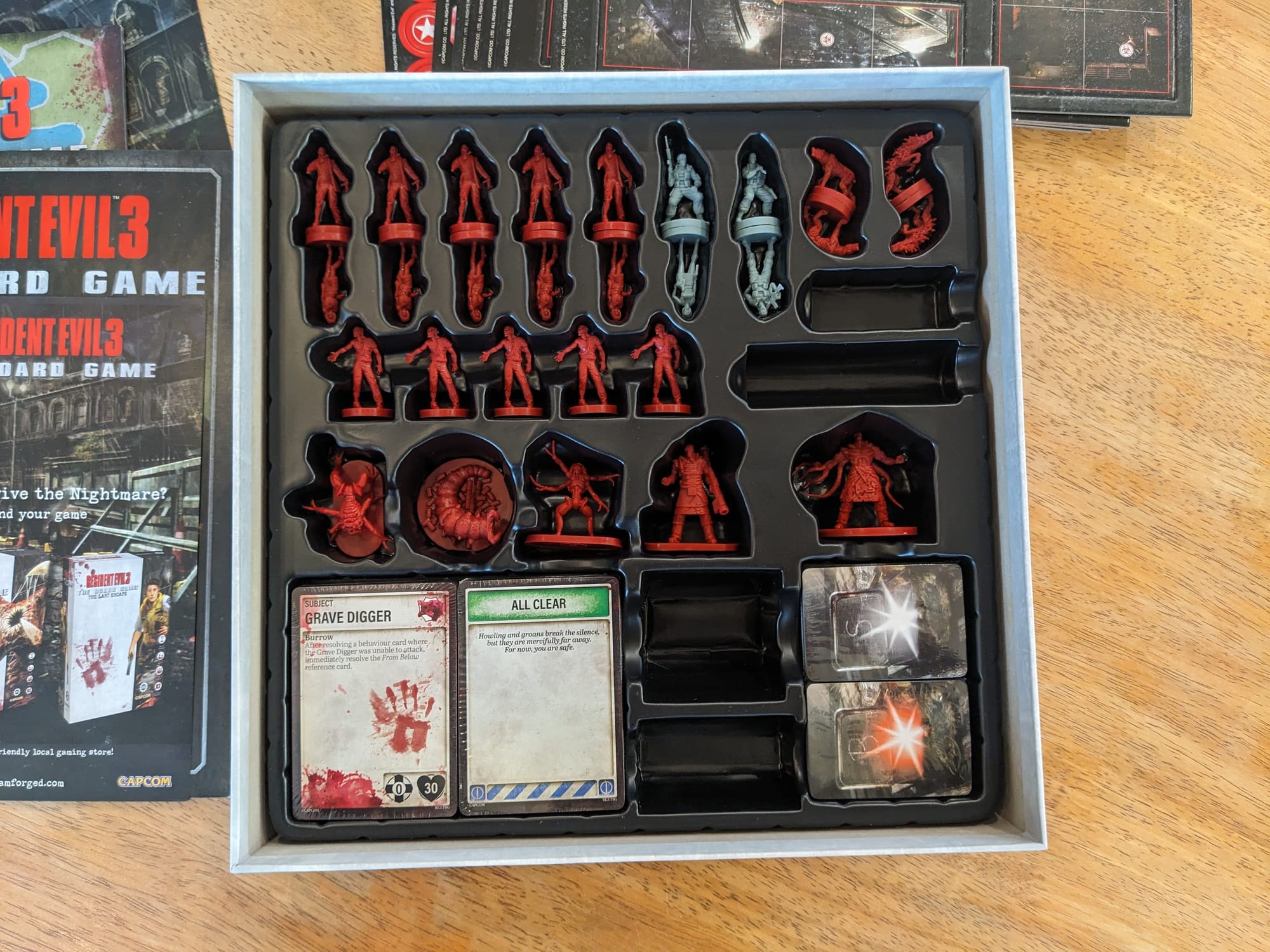
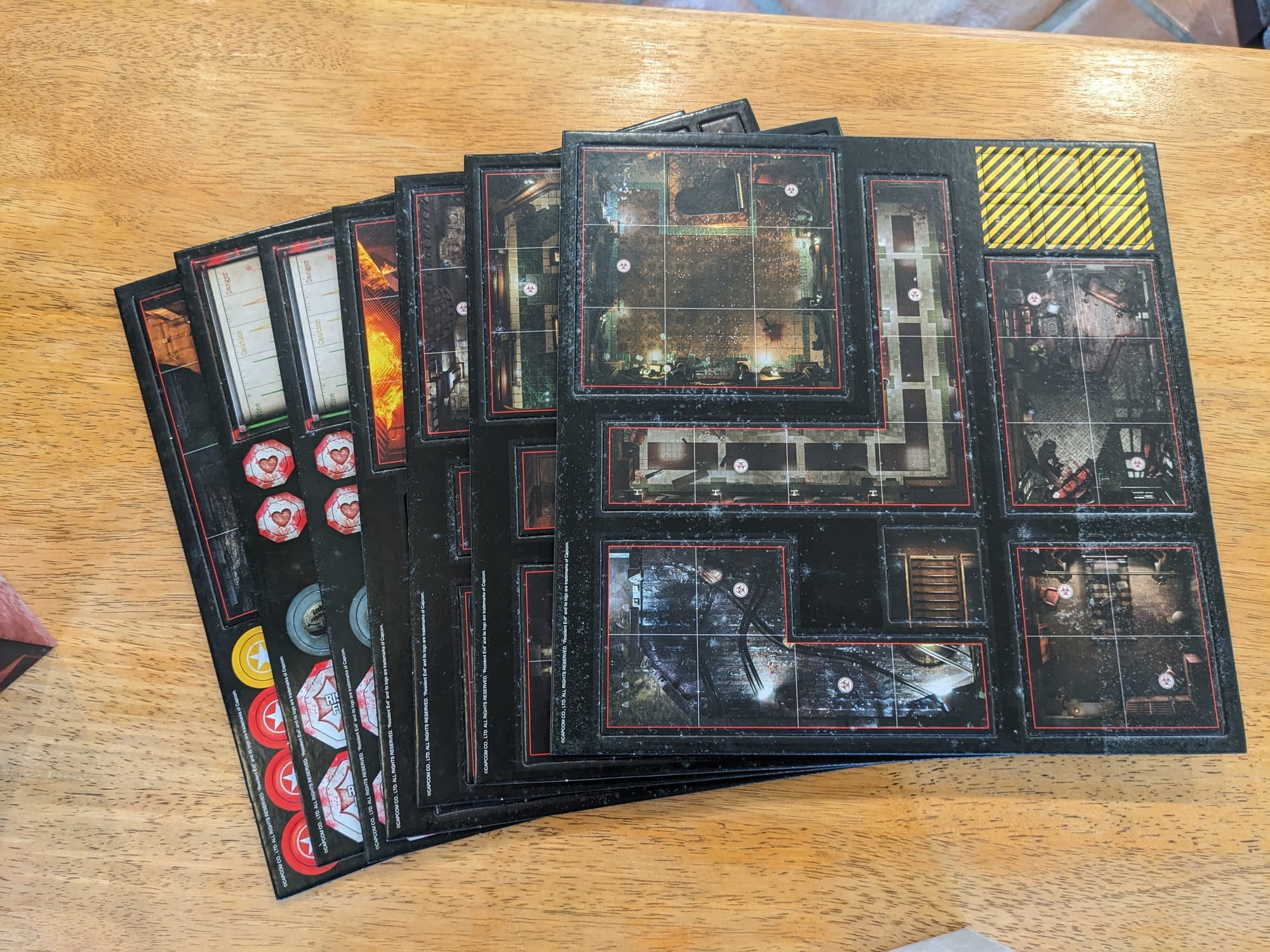
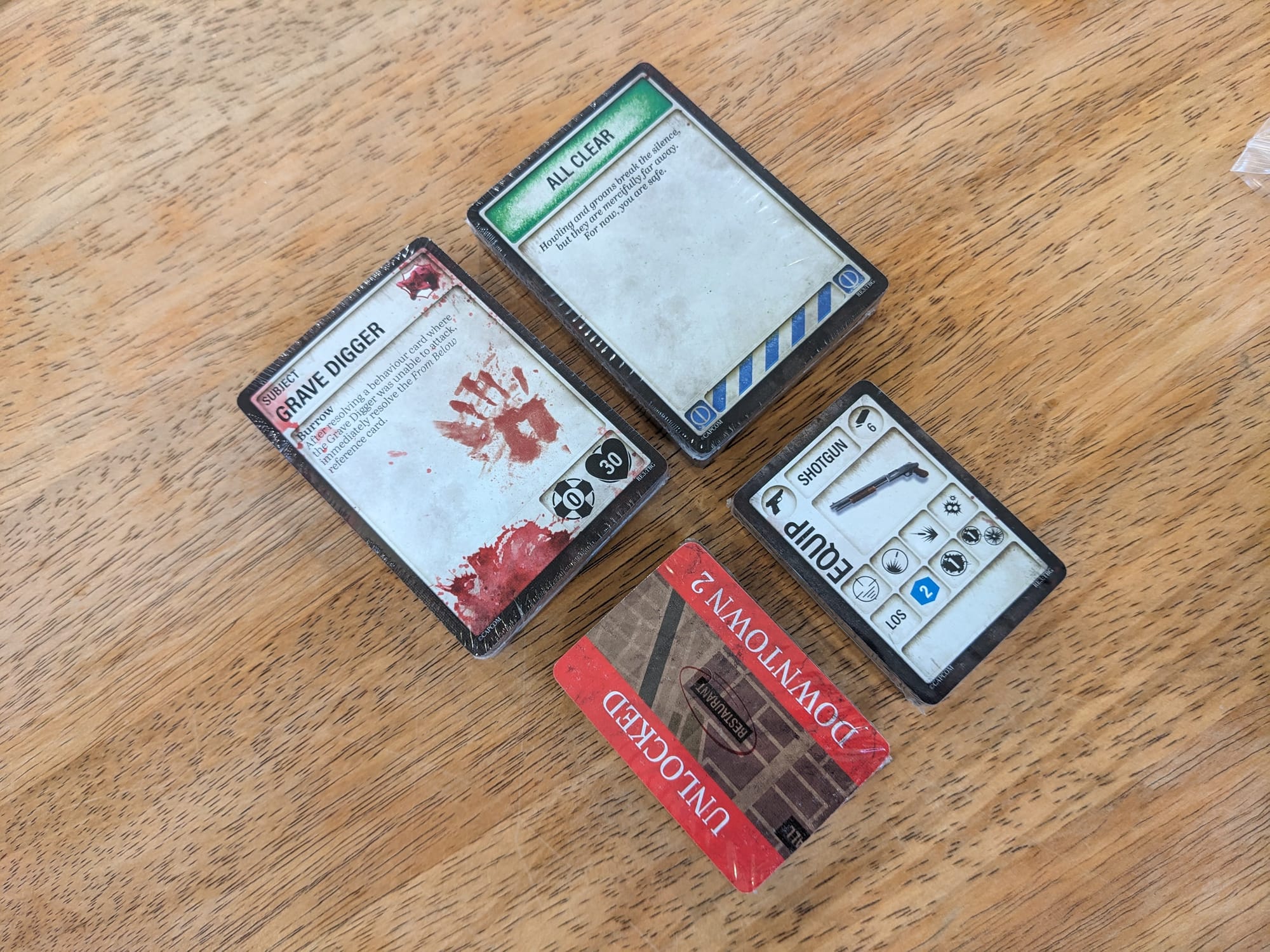
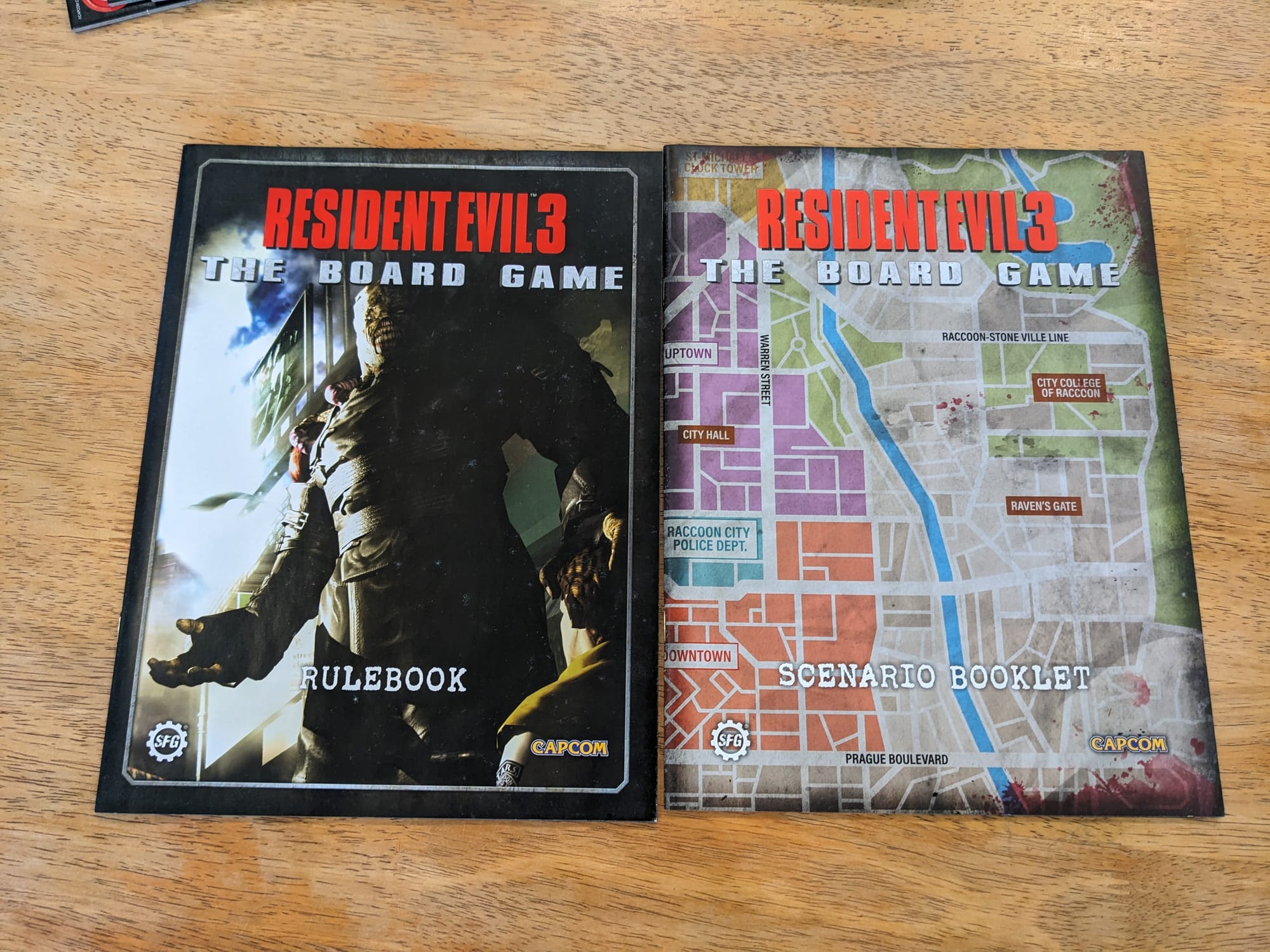
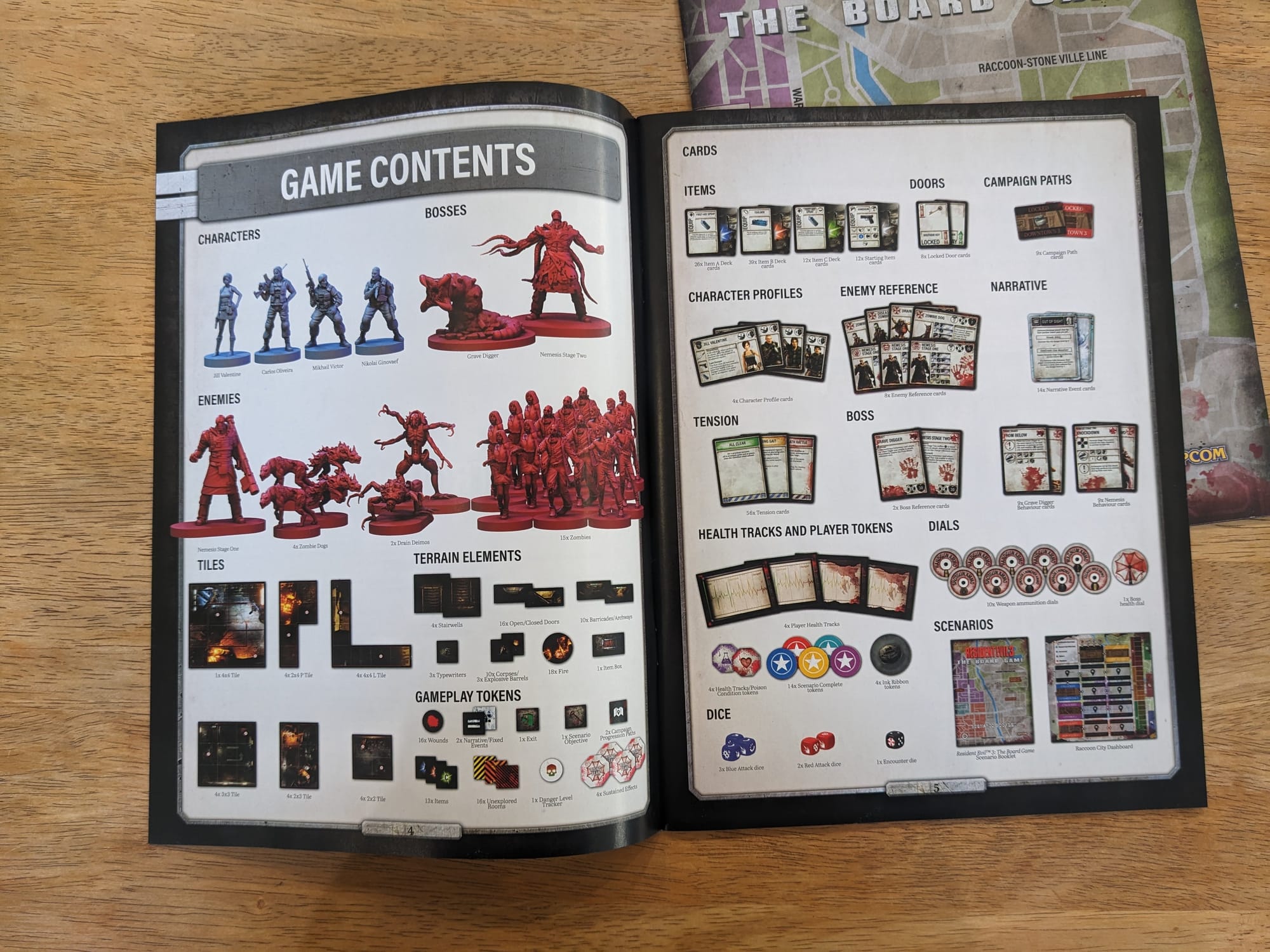
Everything fits nicely within the box... mostly. If you're like me, and you like to keep token groups separated for easy set up and take down, there isn't enough space within the box to do that easily, so I would recommend like a small plastic divider box. You will have to be a little organized with the tiles, and arrange them to the fit like Tetris pieces in the box itself. We ended up putting them at the bottom, underneath the tray, to prevent sliding. The plastic tray does not accommodate sleeved cards, which use Standard size and Mini European size.
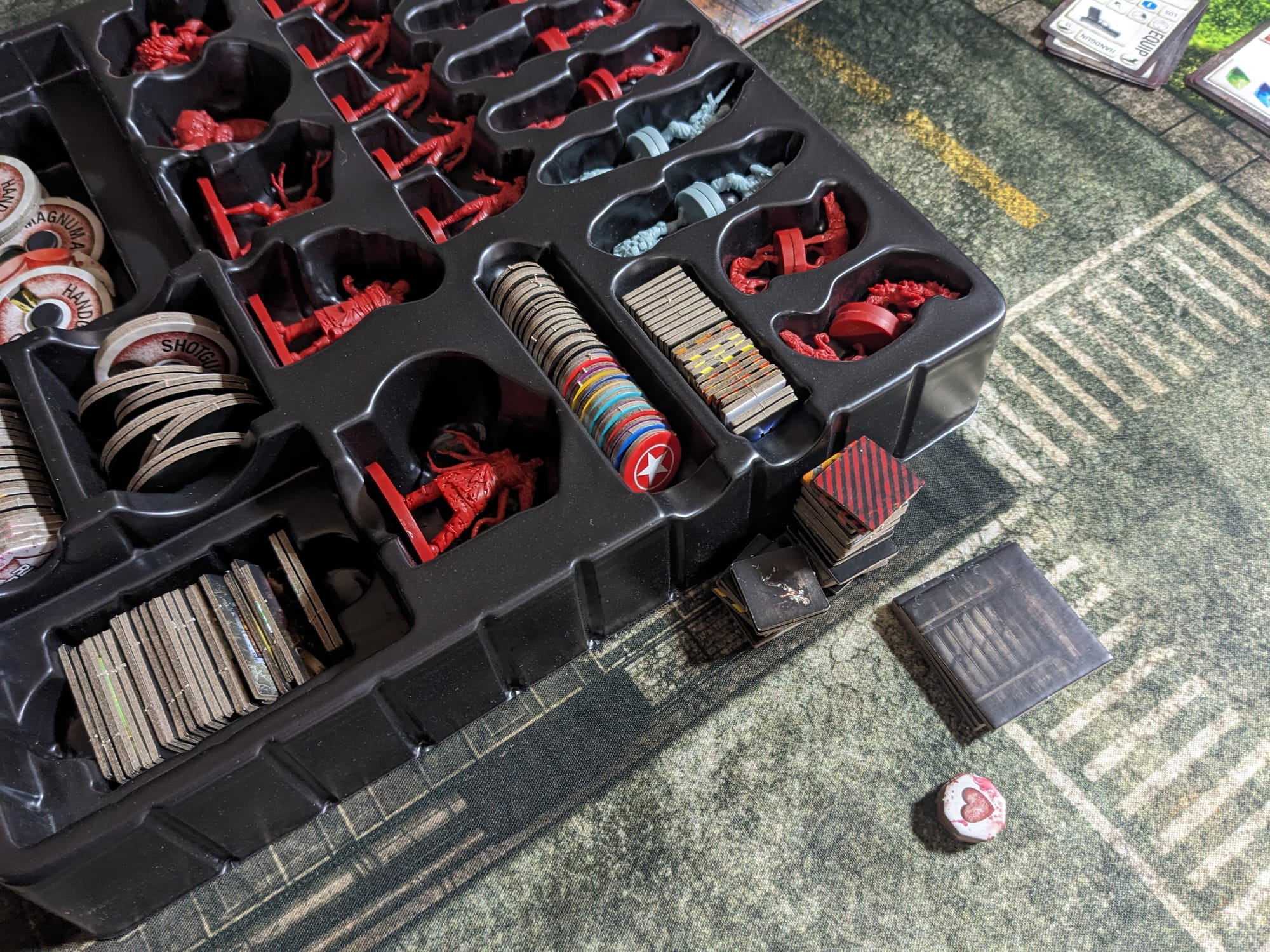
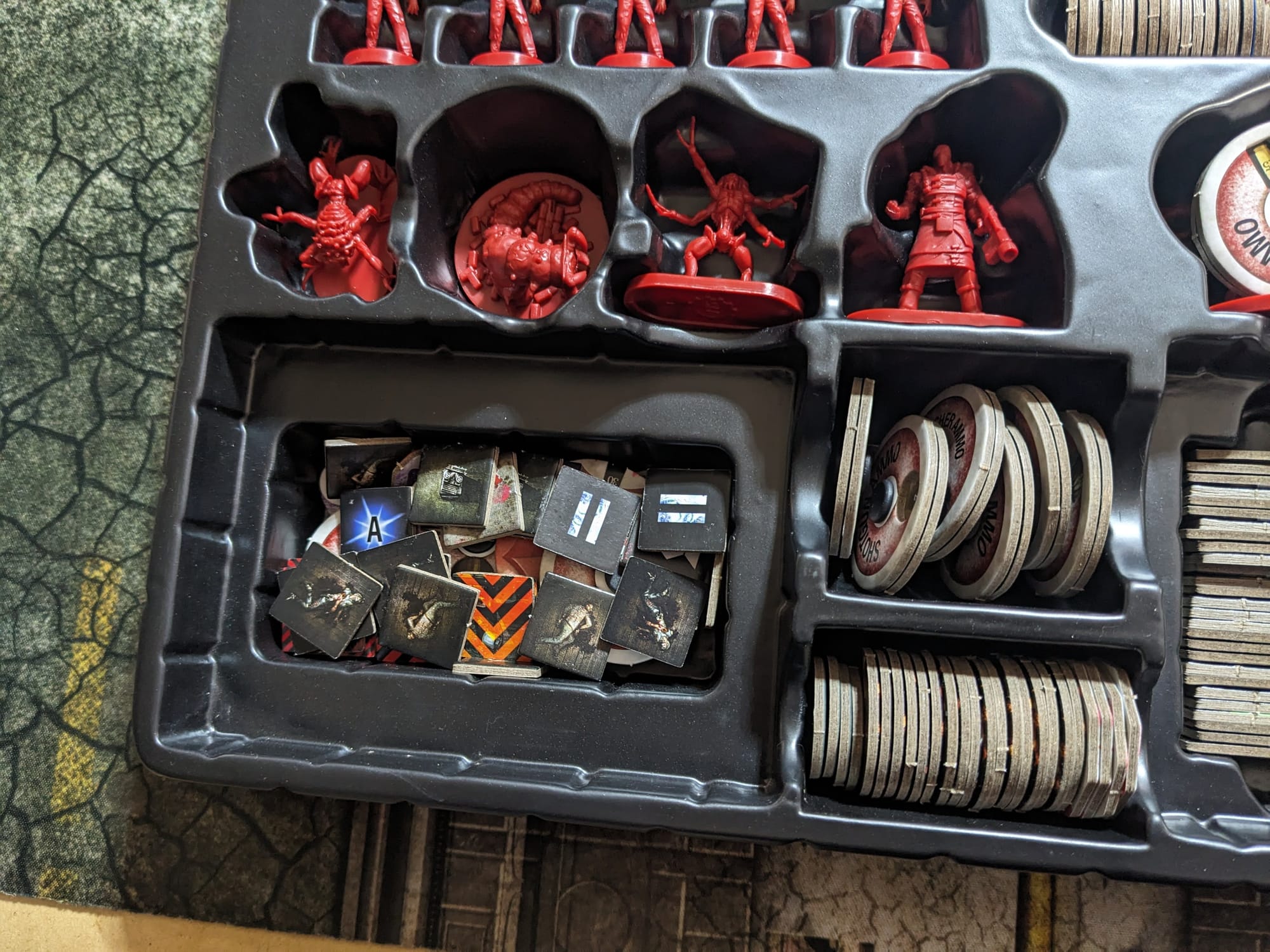
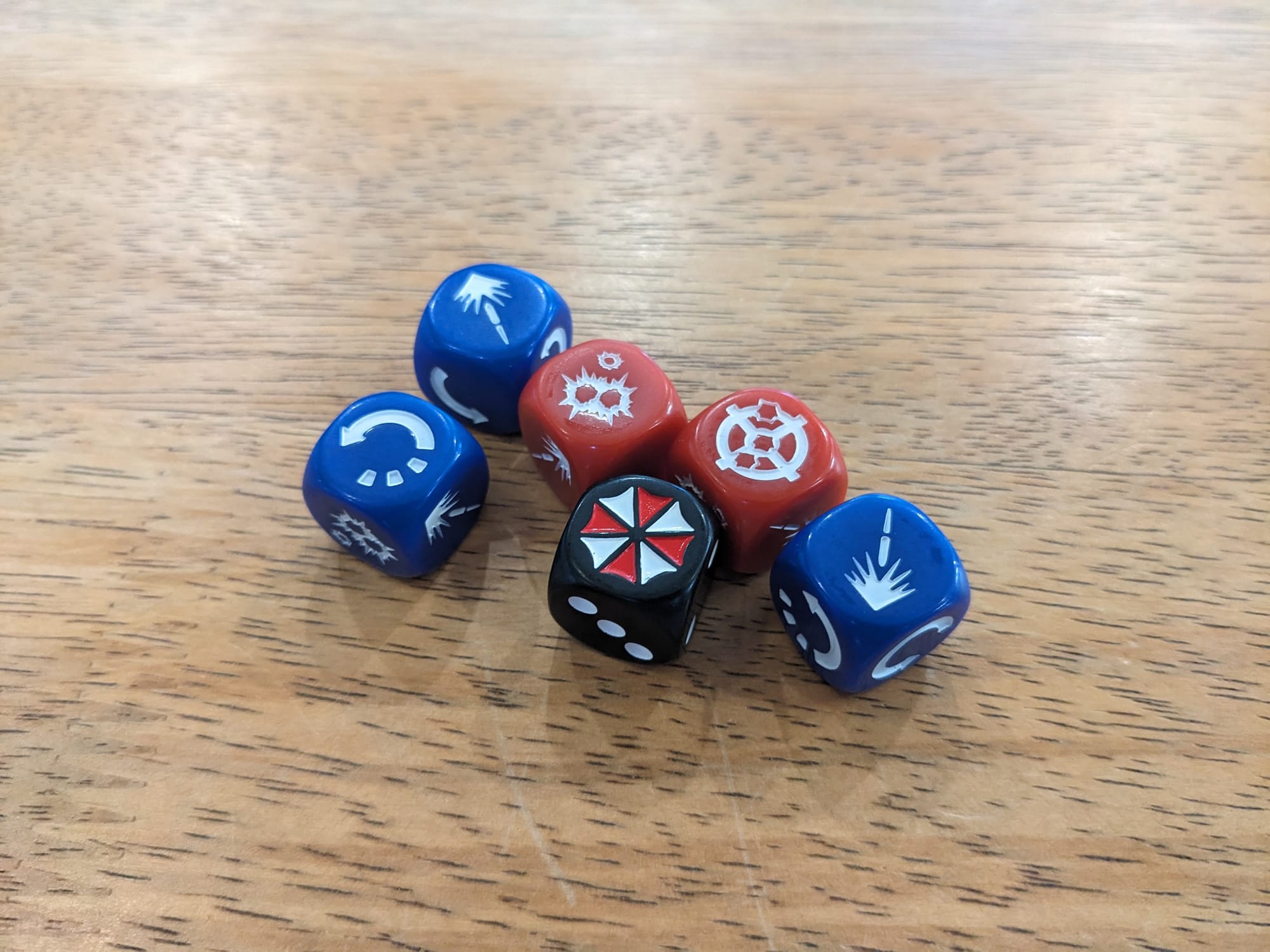
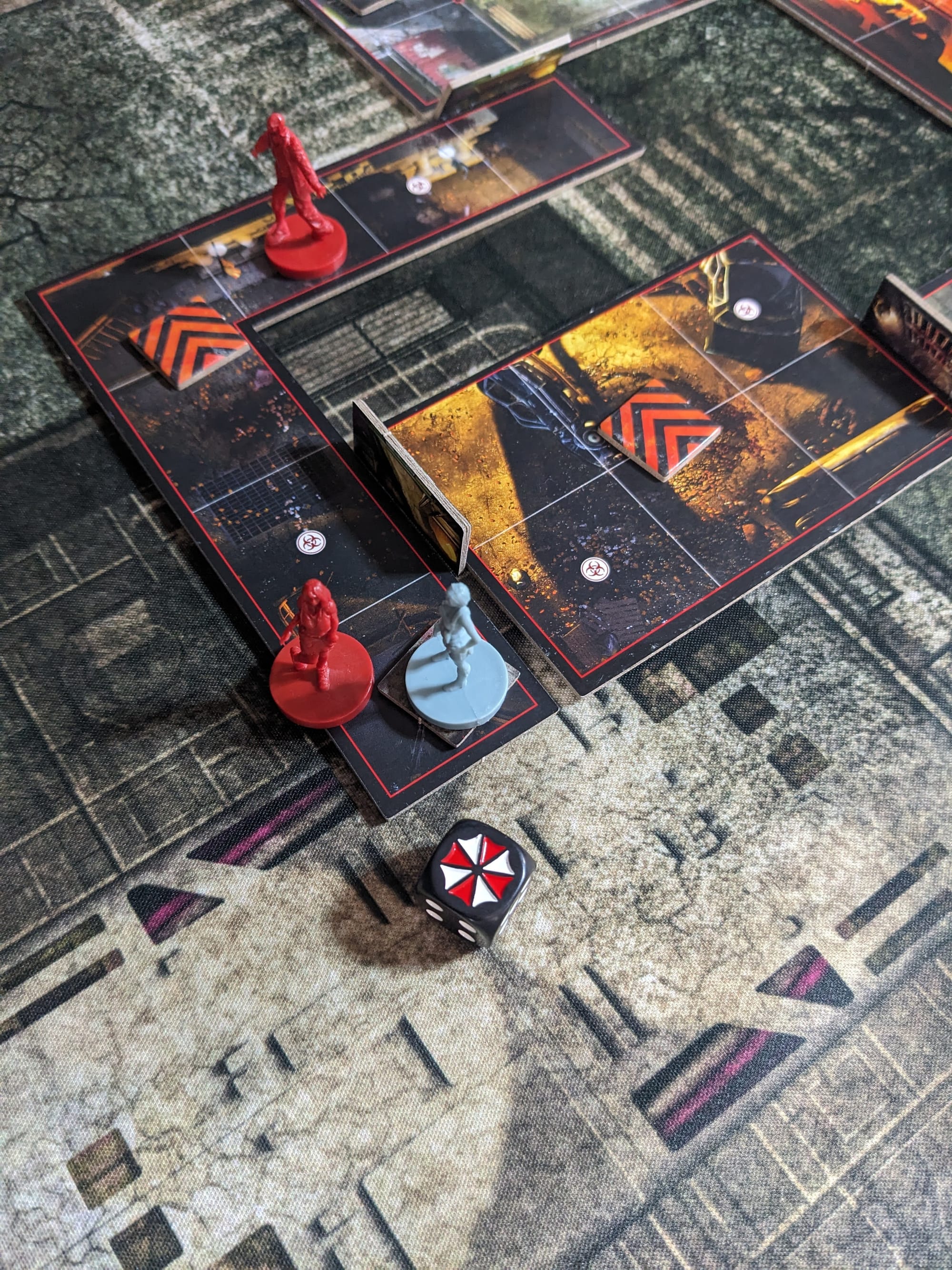
The dice are great, and the Umbrella Corporation d6 is definitely worth a spot in your collection, if nothing else.
The models themselves are cast really well, and have a nice quality for the soft plastic they were produced in. These are definitely something that can be painted up, and you don't have to worry about painting details because, well, they're not that detailed... and they're zombies.
... T-Virus Residue?
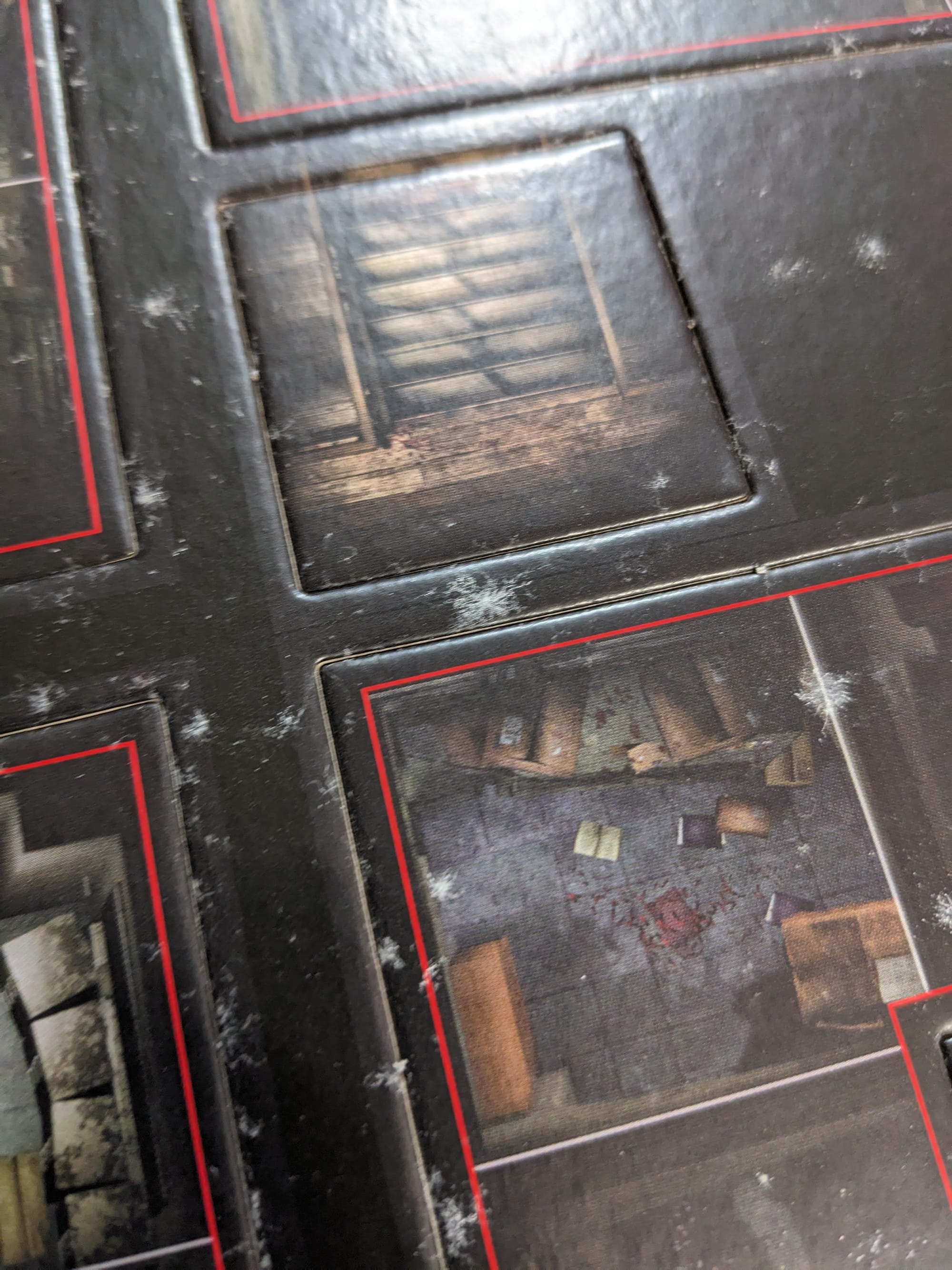
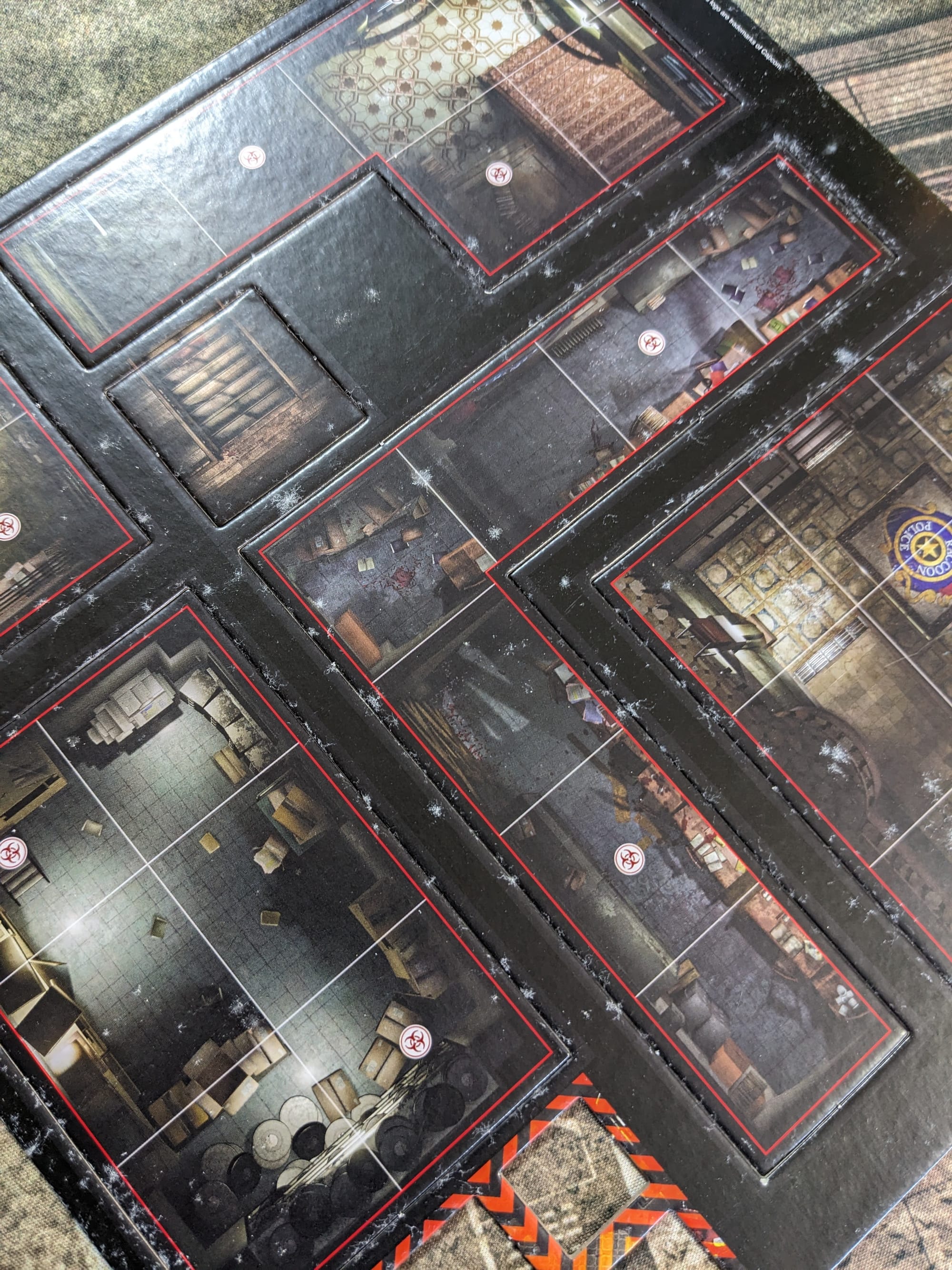
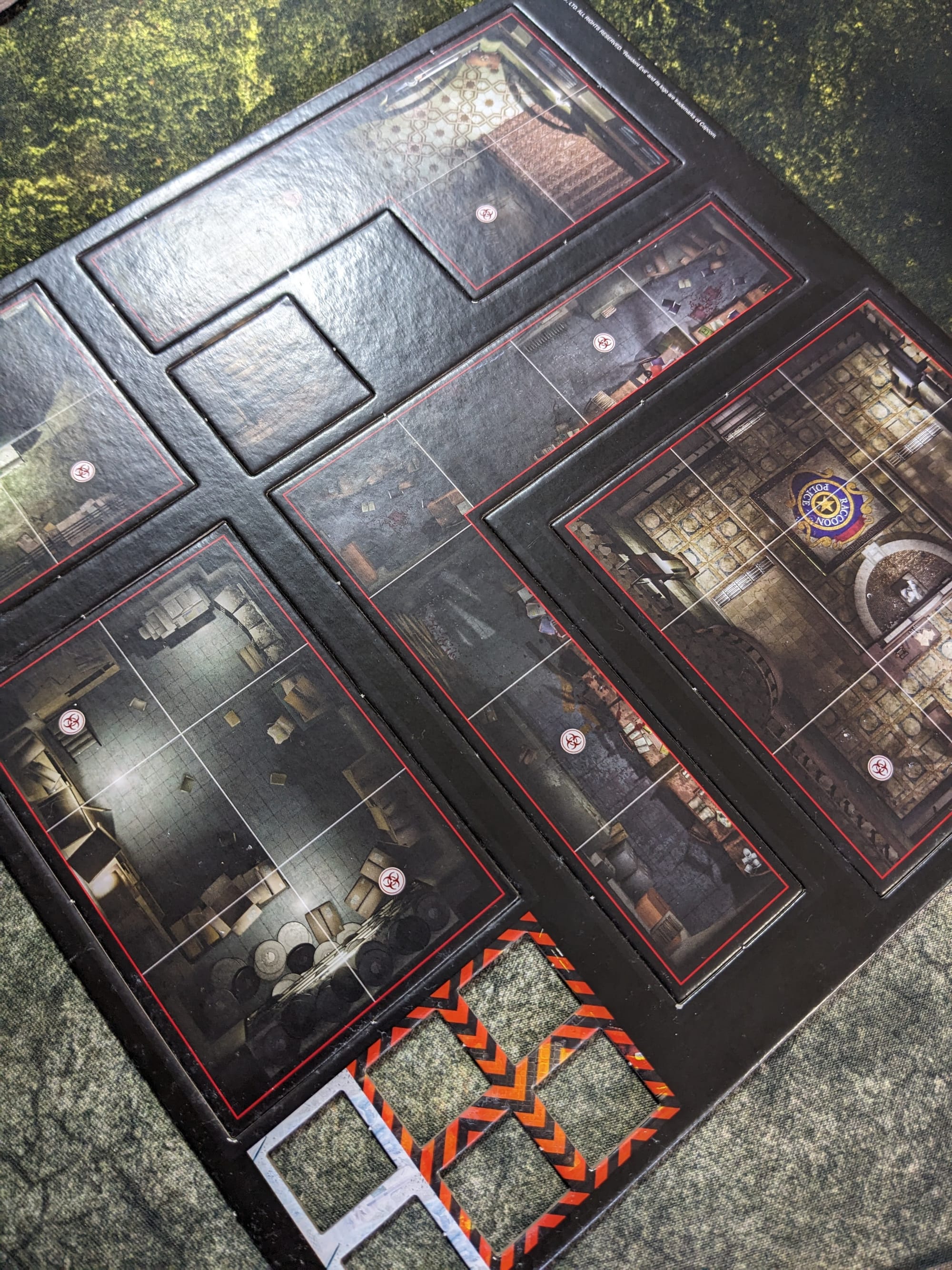
Residue (left and center), and cleaned up (right)
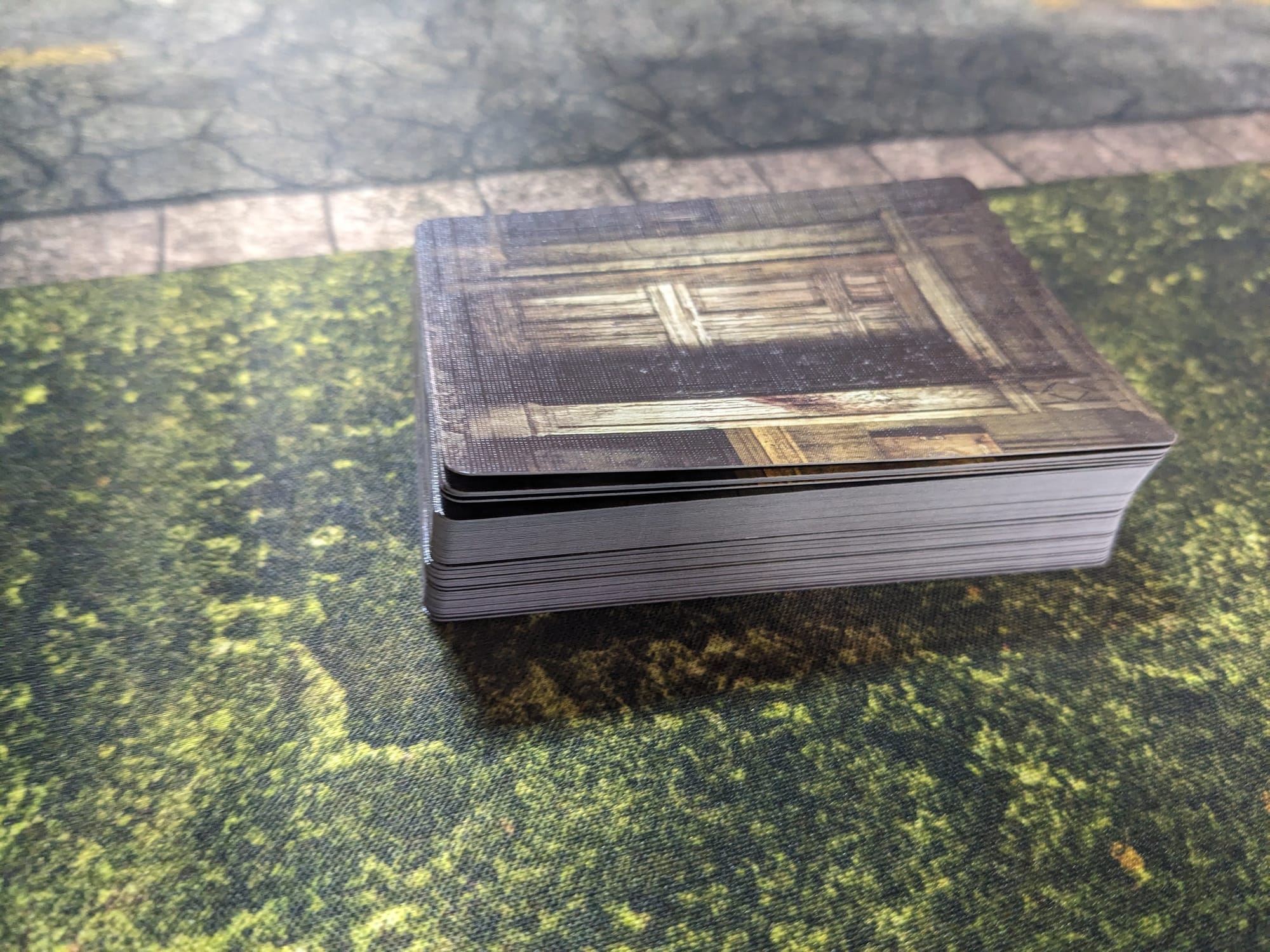
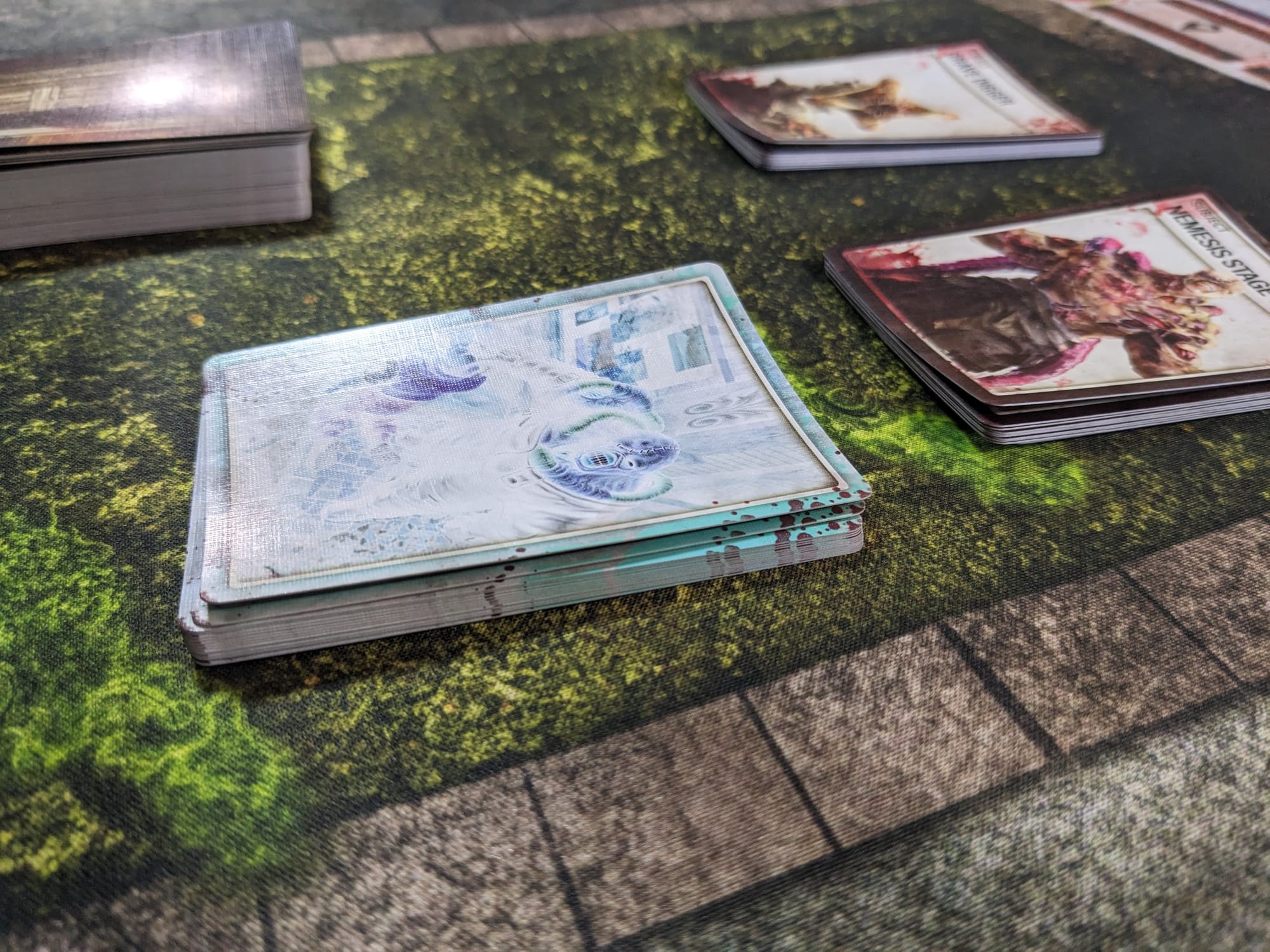
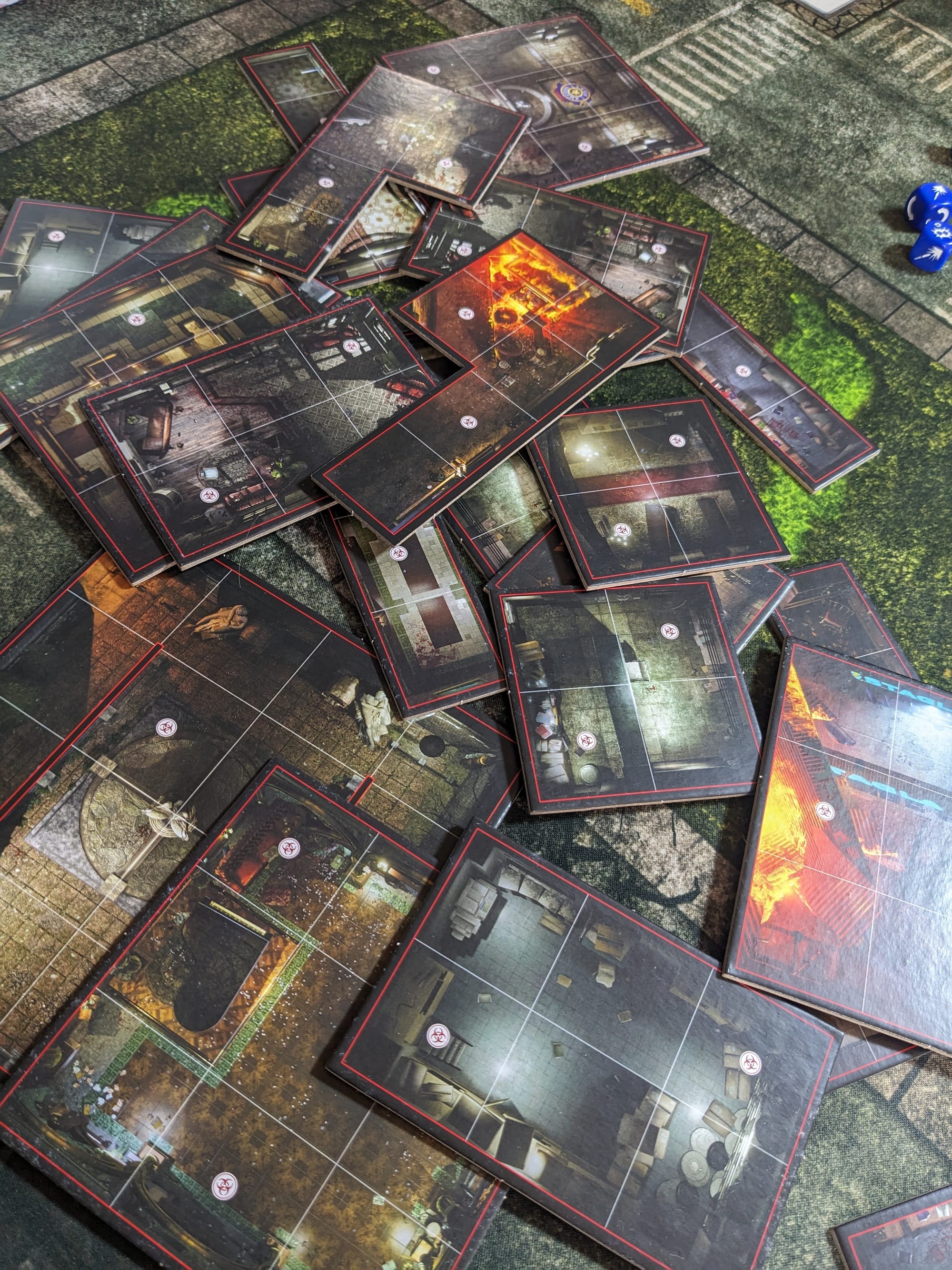
When we were setting up the game, there was a strange white dried residue on each of the cardboard sheets. The box was sealed with the cellophane, so this dried gunk would have had to have been sealed in at the factory level, likely some kind of water-based residue. To avoid damaging the cardboard tiles, I used an alcohol-based cleaner (Windex) to wipe them down. It removed like 95% of the stuff, which was fine. The other reason why we think it was a water-based residue is that the cards were quite warped, likely due to heat and moisture from wherever it was packaged and/or stored. Sleeves can help flatten them out, but that's a lot of effort to fix something that should have been ready to go out of the box to begin with.
Rules & Setup
The rulebook was laid out pretty cleanly and it was pretty decently organized. The scenario booklet is separate, which is great for setup while reading the rules (to prevent flipping back and forth within one book). We separated out the tokens into piles near the table, organized the cards, and set up for the introduction scenario, which I highly recommend. If you're not used to dungeon-crawler games, the introduction scenario is a great way to get used to the mechanics of turn-taking, movement, combat, action-economy, enemy response phase, etc. Plus, it's fun to shoot zombies.
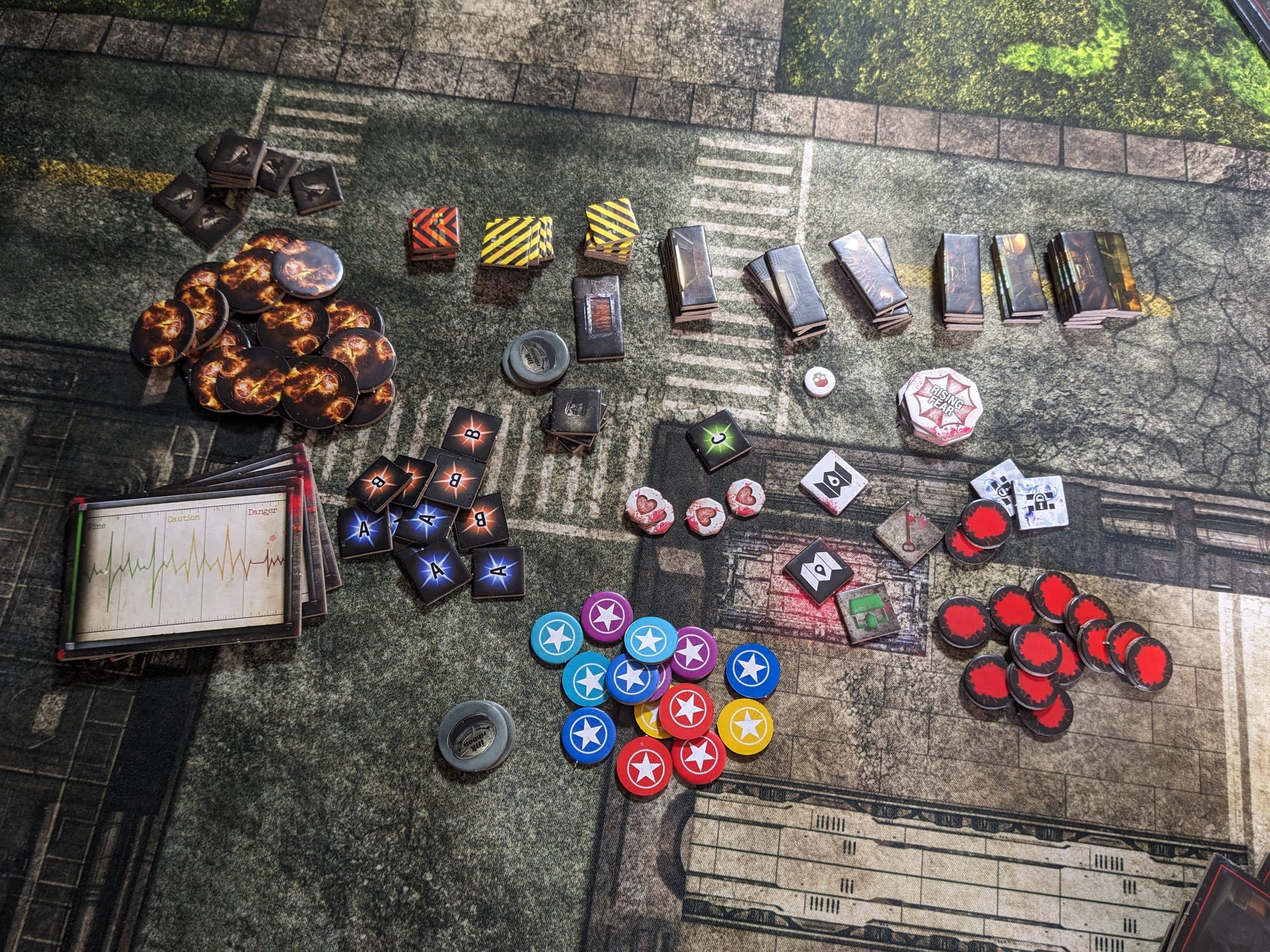
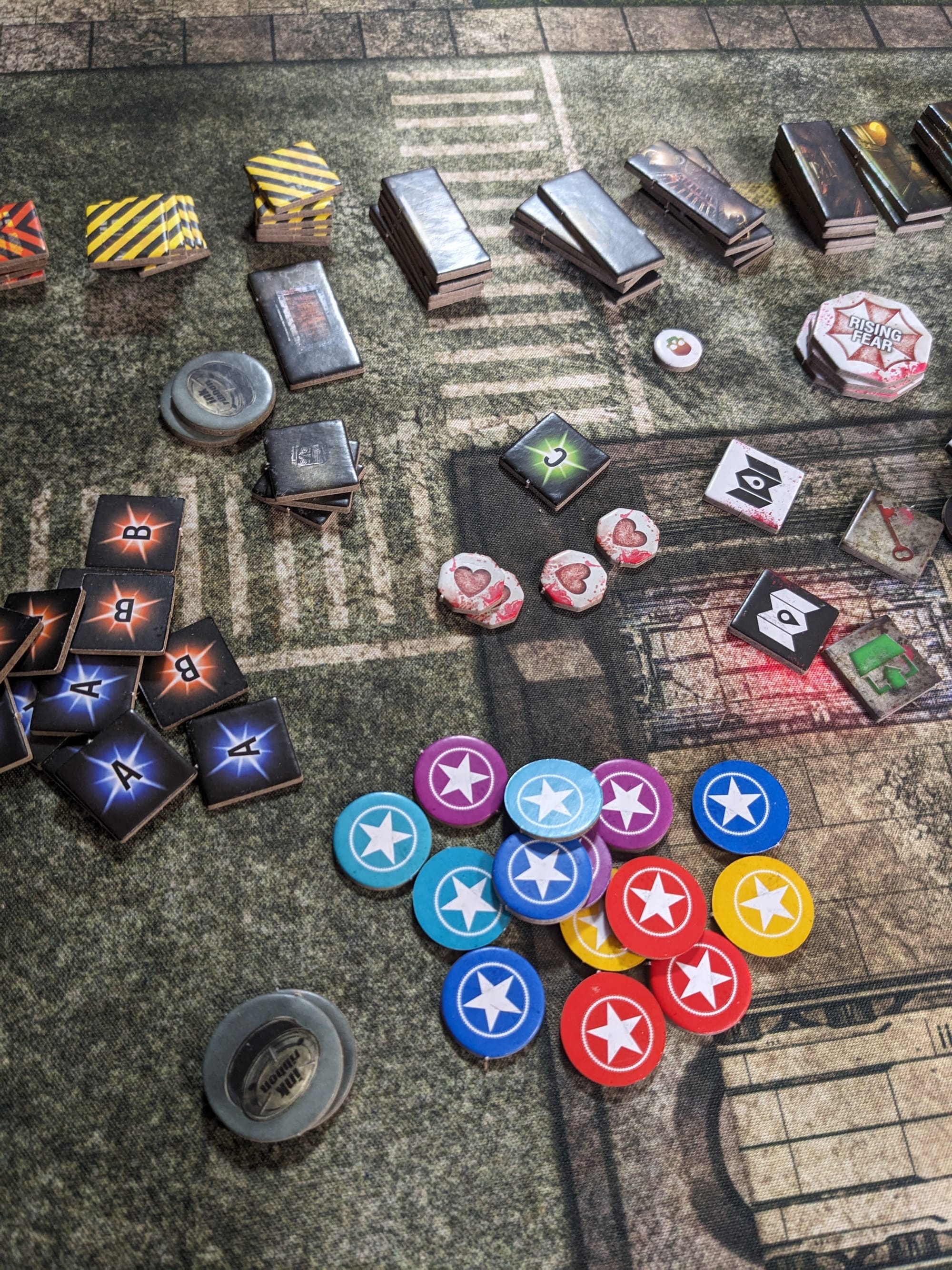
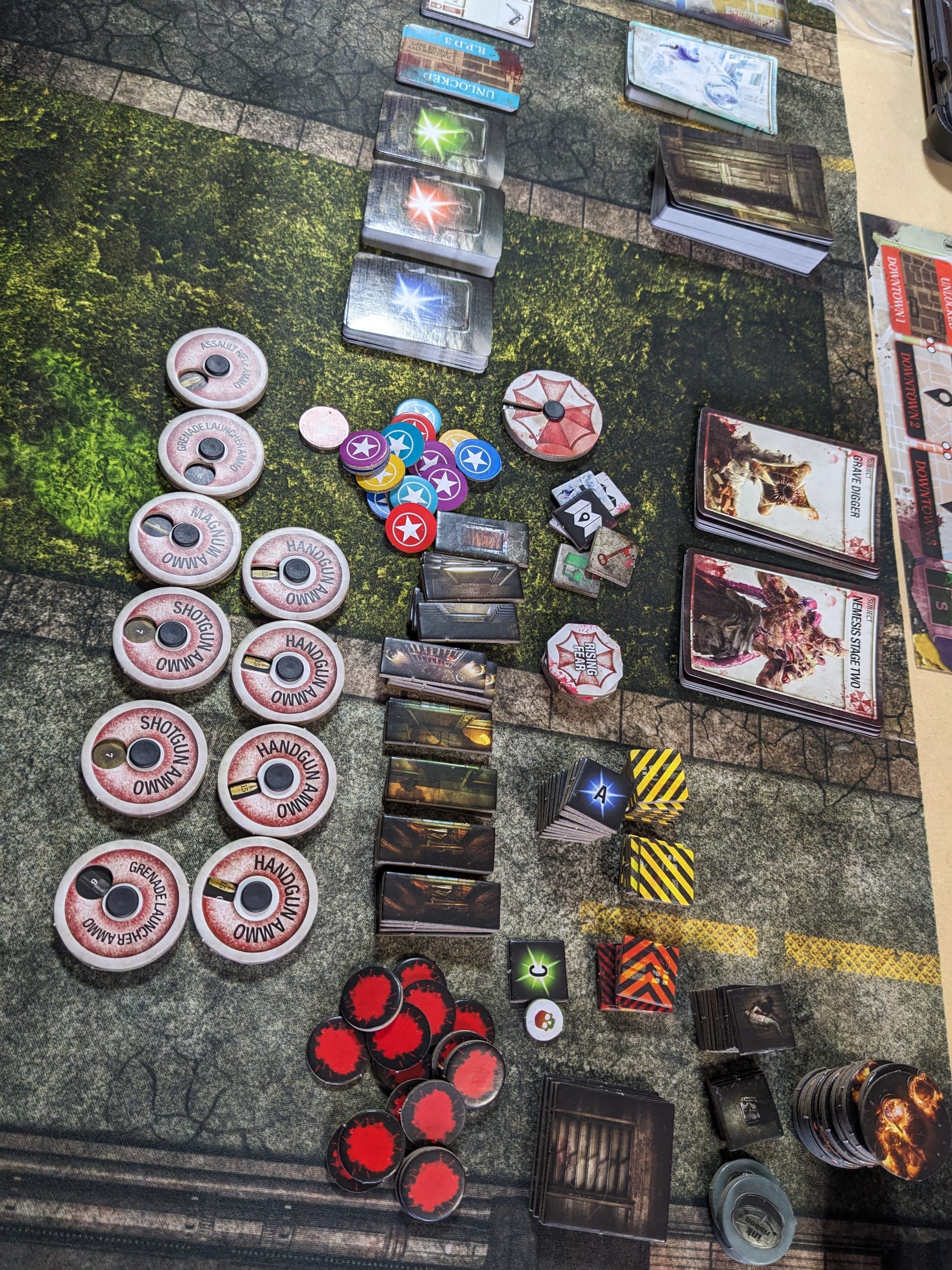
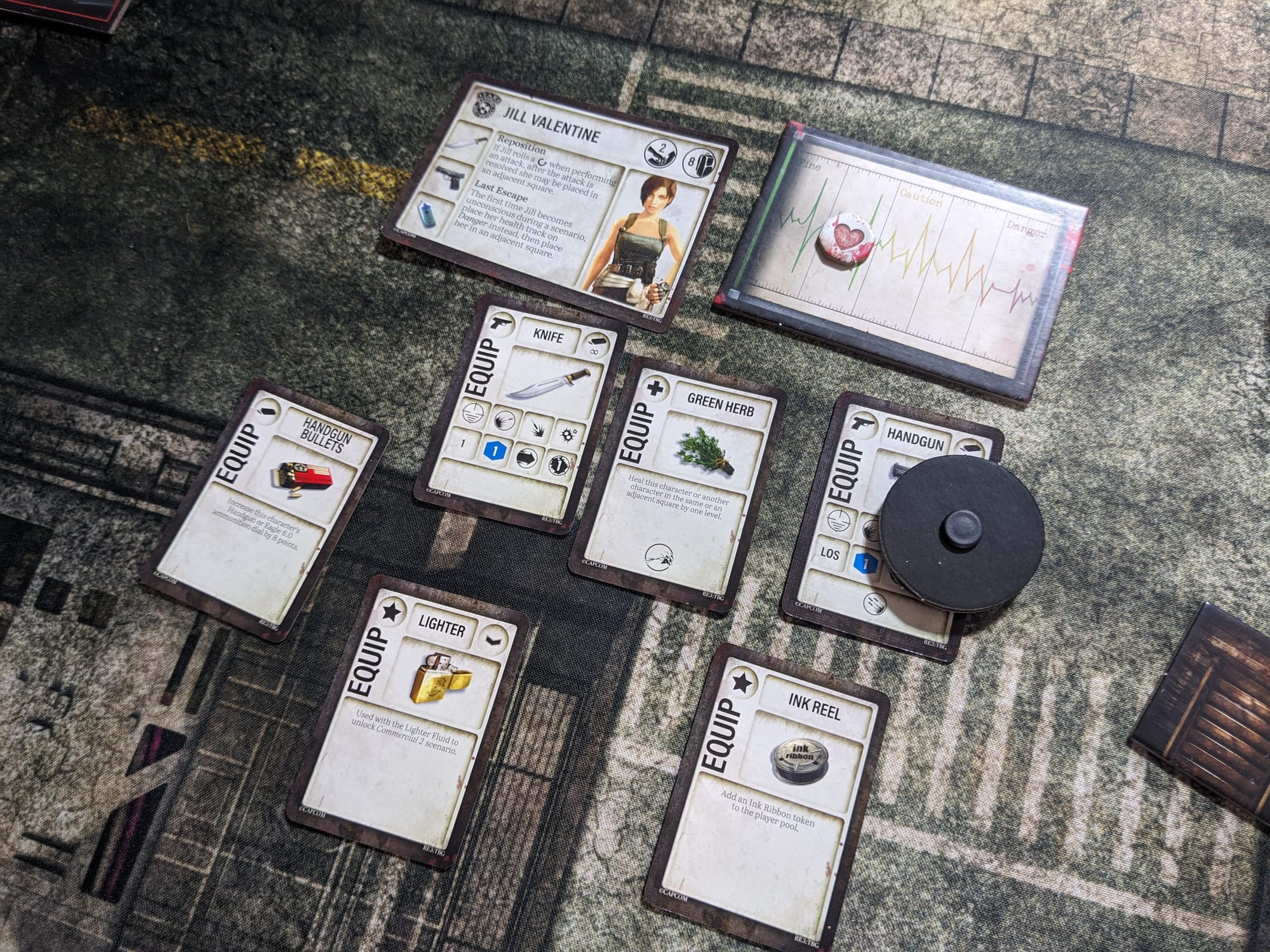
Each player chooses one of the hero characters. We chose Jill and Carlos and set up their loadout per their character card. Scenarios don't always have the players starting next to each other, so keep that in mind as you move into the map. You're better off fighting alongside friends if you can.
Health & Ammo
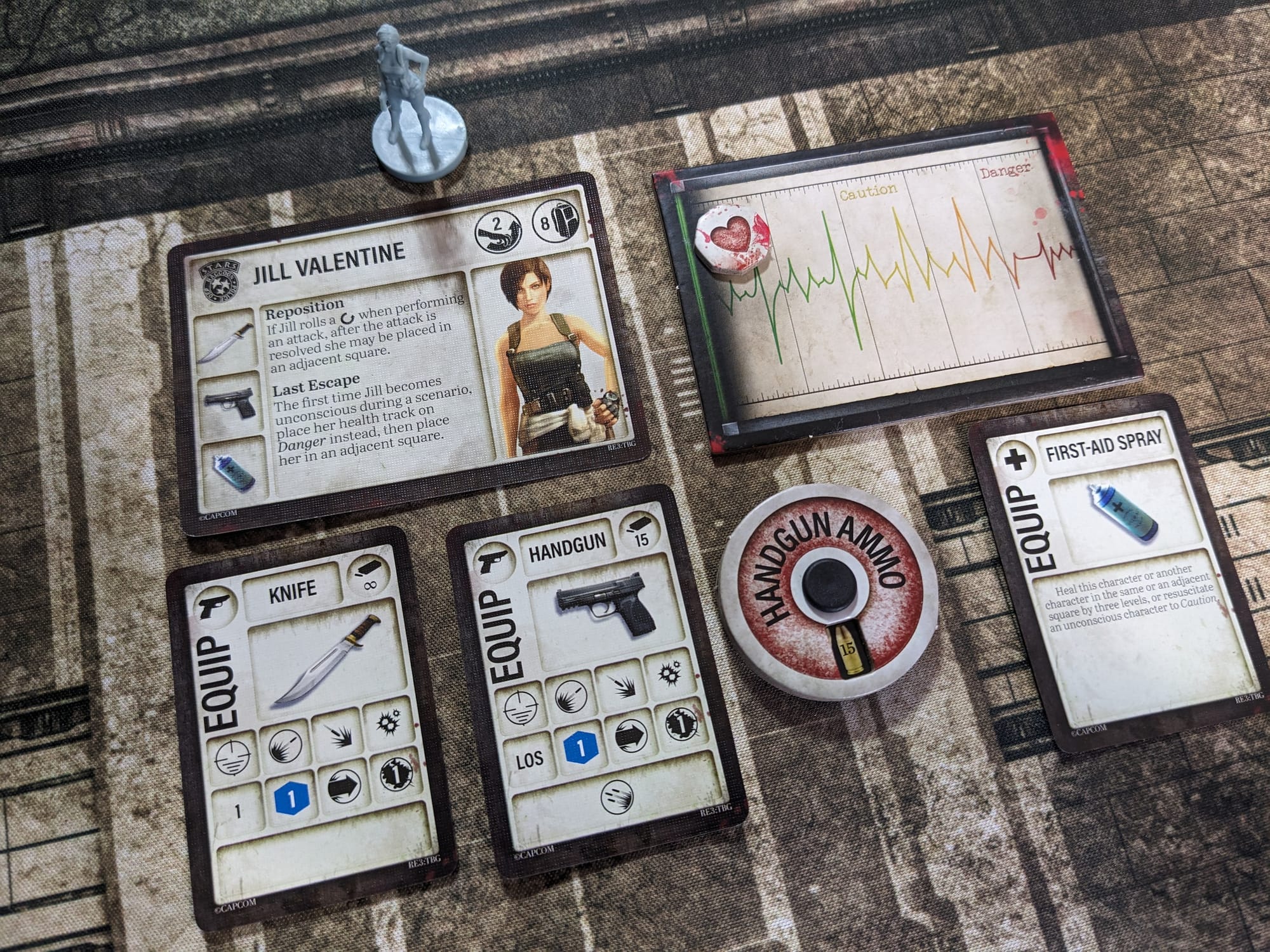
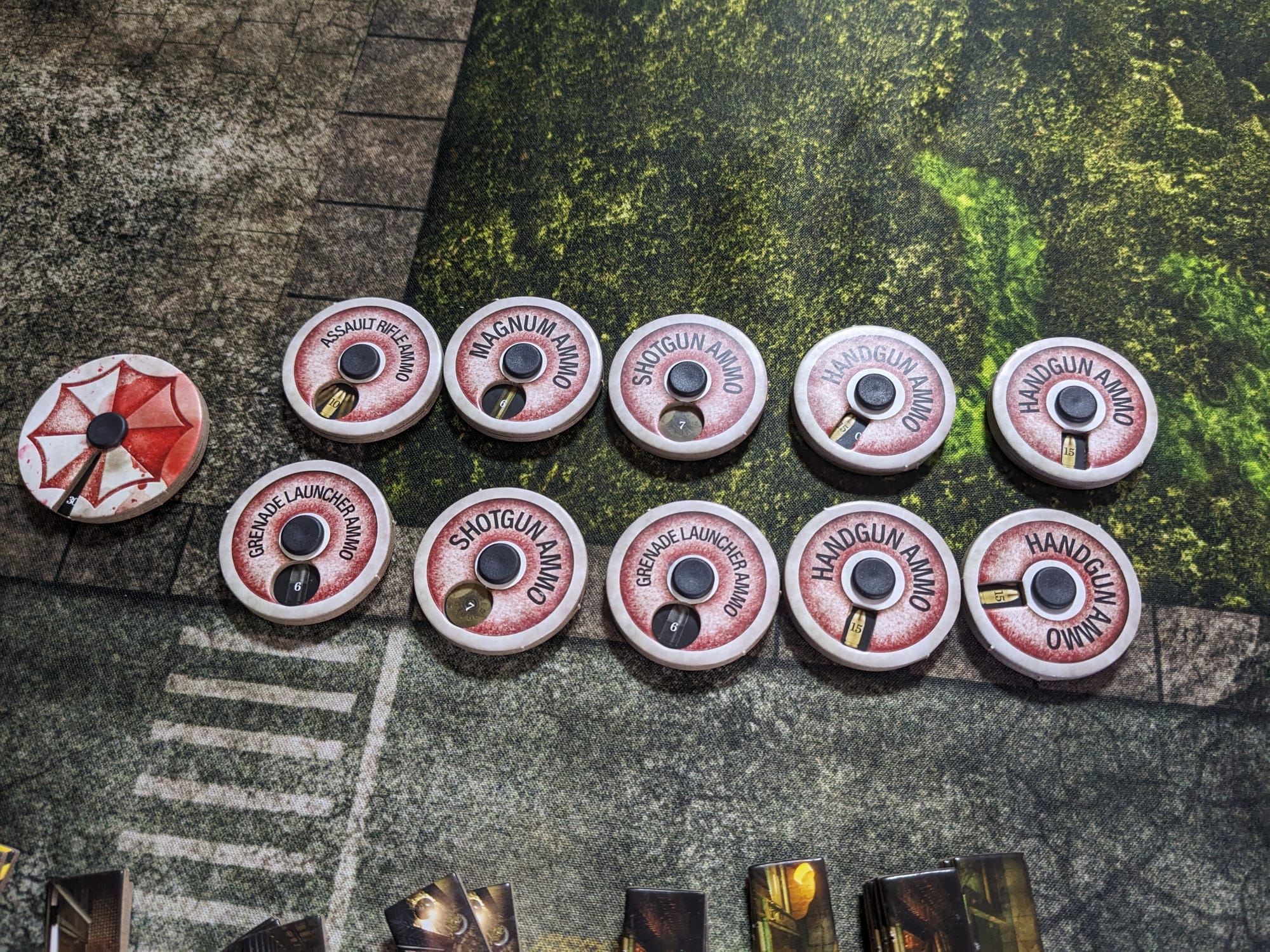
One feature I really like is the ammo dial and the wound threshold. Unlike other games that have one token per bullet/health, you employ the use of an ammo dial that counts down as you use bullets and an EKG readout for your health. This really helps keep your side of the board decluttered from tokens. Also, using an ammo dial does give a pseudo tactile feel to holding the weapon as you mow down zombies.
Raccoon City Map
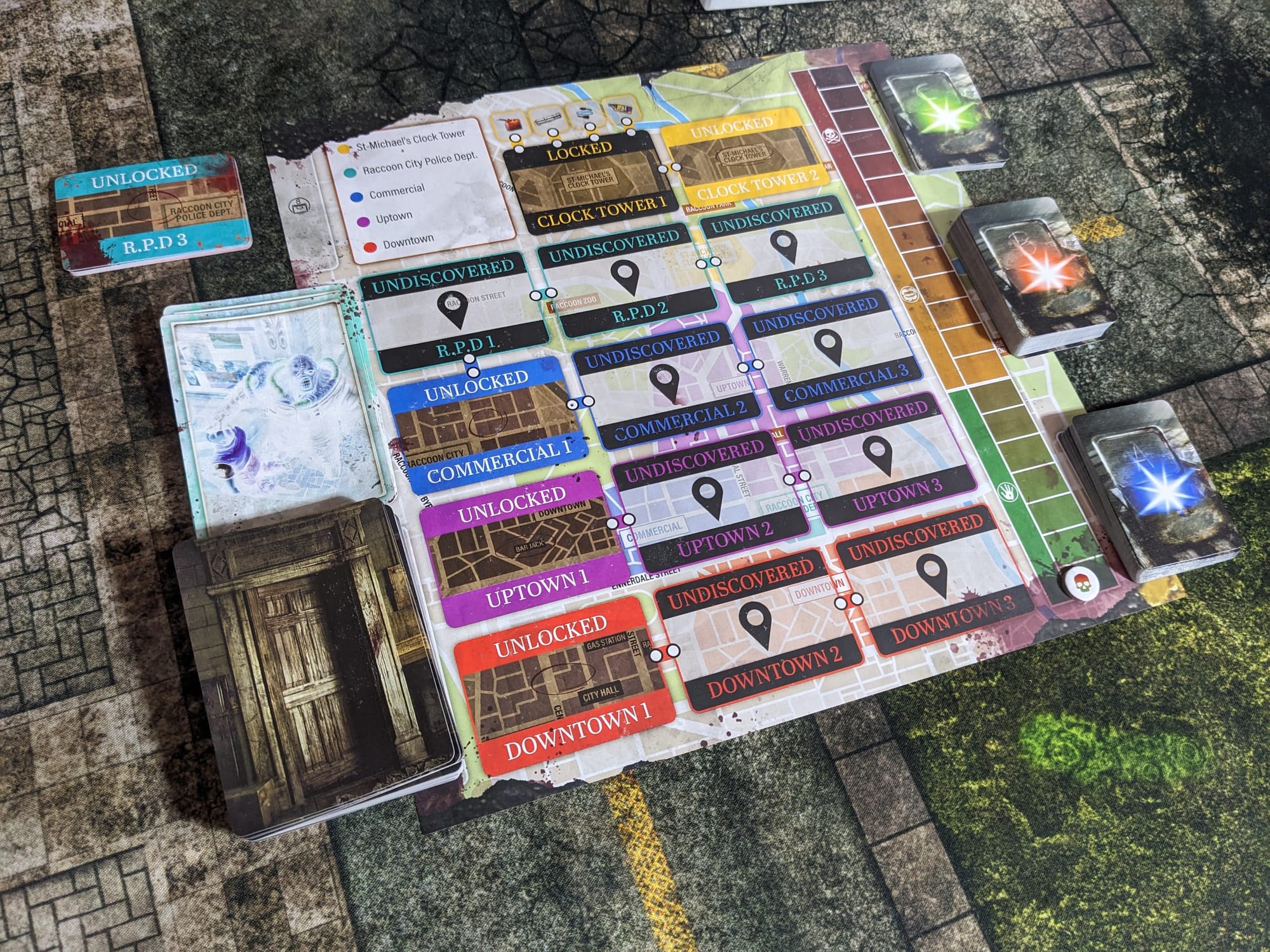
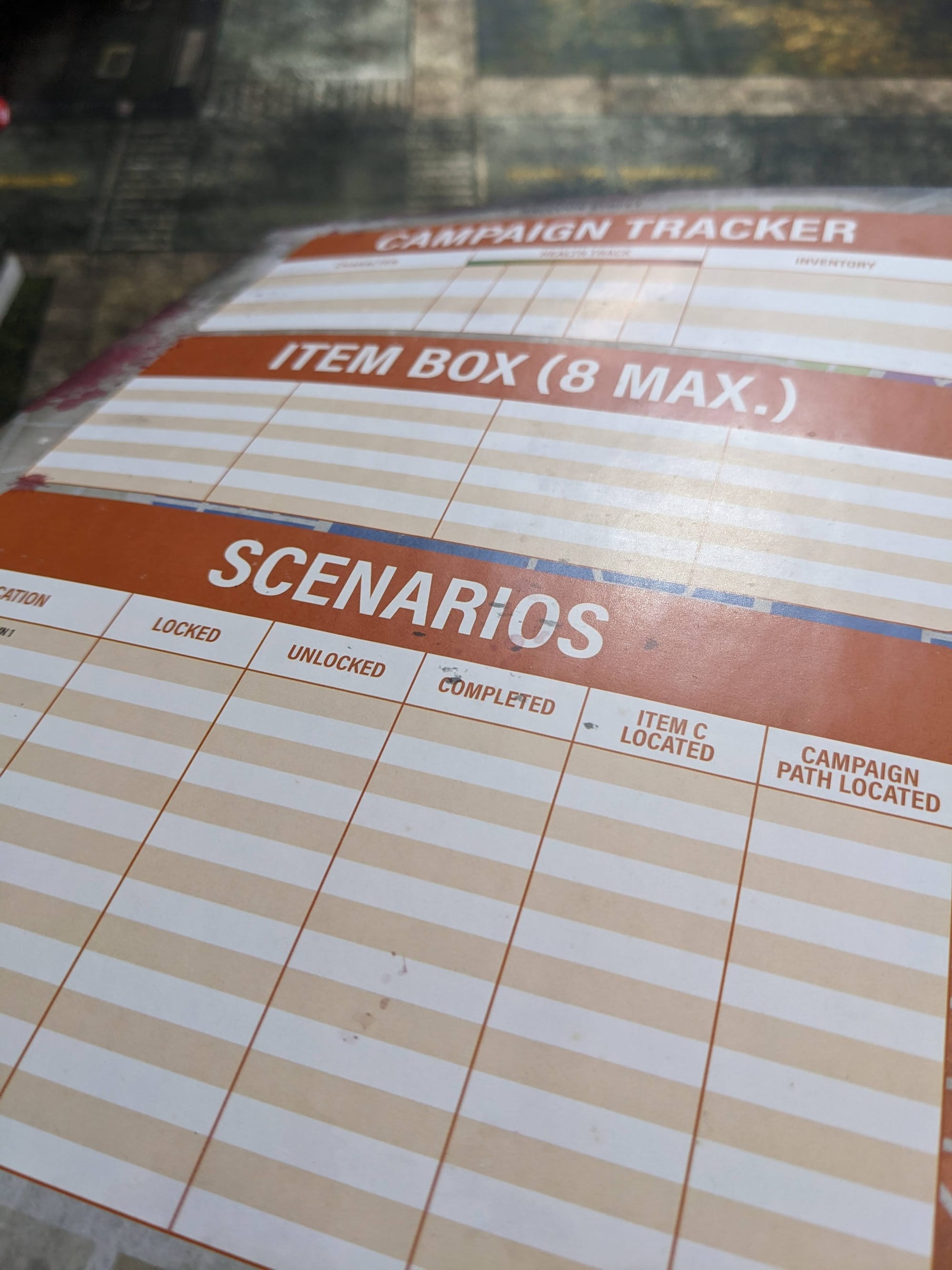
After completing the intro level, you're ready to take on the hordes in Raccoon City. Exactly like the game, there are different districts (levels) you have to play through to find all the pieces to the Clock Tower. You can start in any of the unlocked areas, and so we chose to start in Downtown 1. Each scenario has an object the players need to find to unlock a new area and/or a part for the Clock Tower. Don't worry, if you die during the scenario or don't find the item, you just replay it... like the video game. It's a very forgiving campaign, which is honestly a strength because nothing ruins a good co-op game like infighting from blaming each other for failing a scenario. That being said, it's also a zombie-infested city, so there is a Danger Level on the city dashboard to be aware of. Effects from the game will move the Danger Marker, adding more tension cards (more on that later). Players should push forward as much as they can during the campaign and not dawdle. This is quite literally the opposite of a walk in the park.
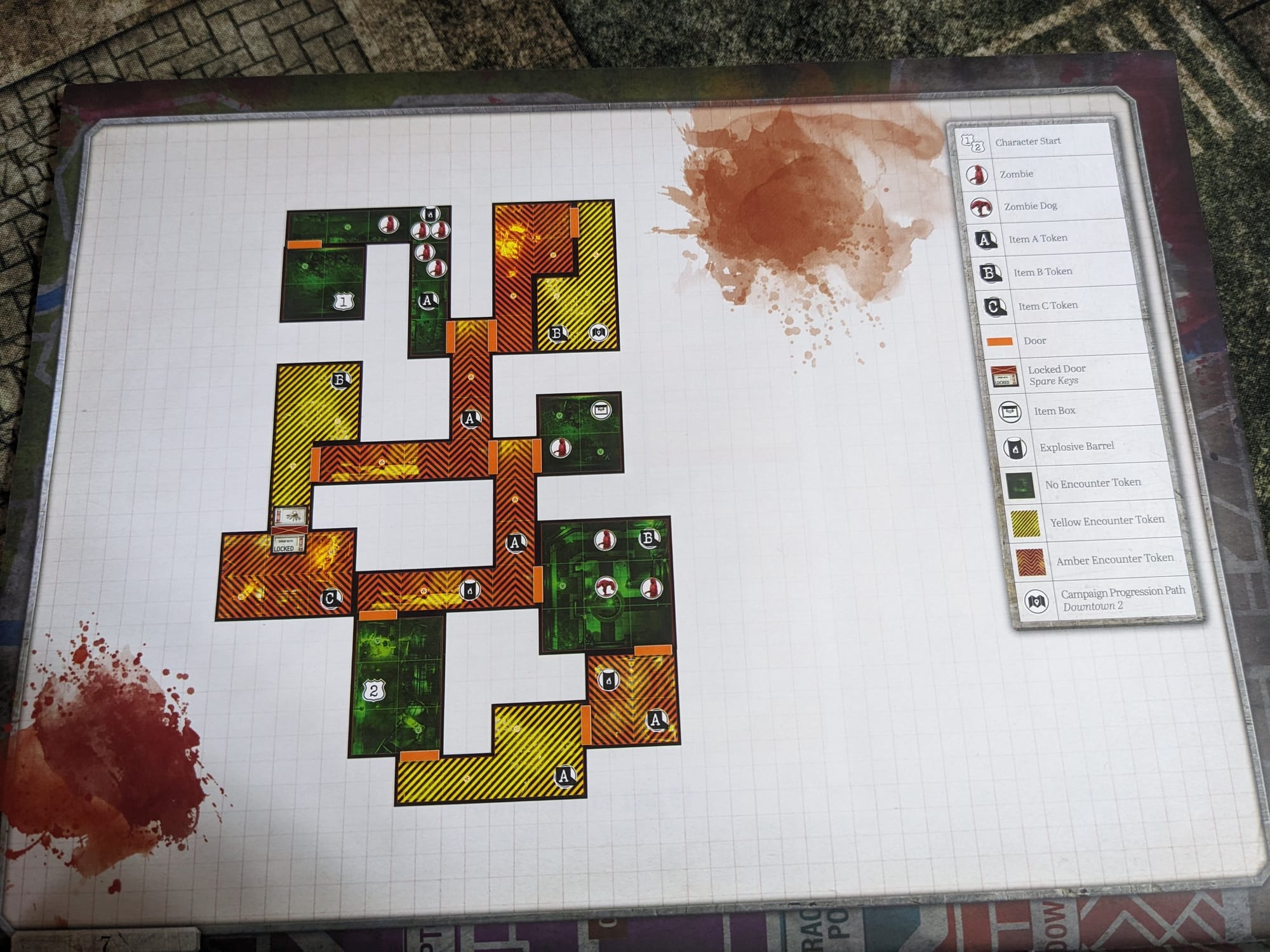
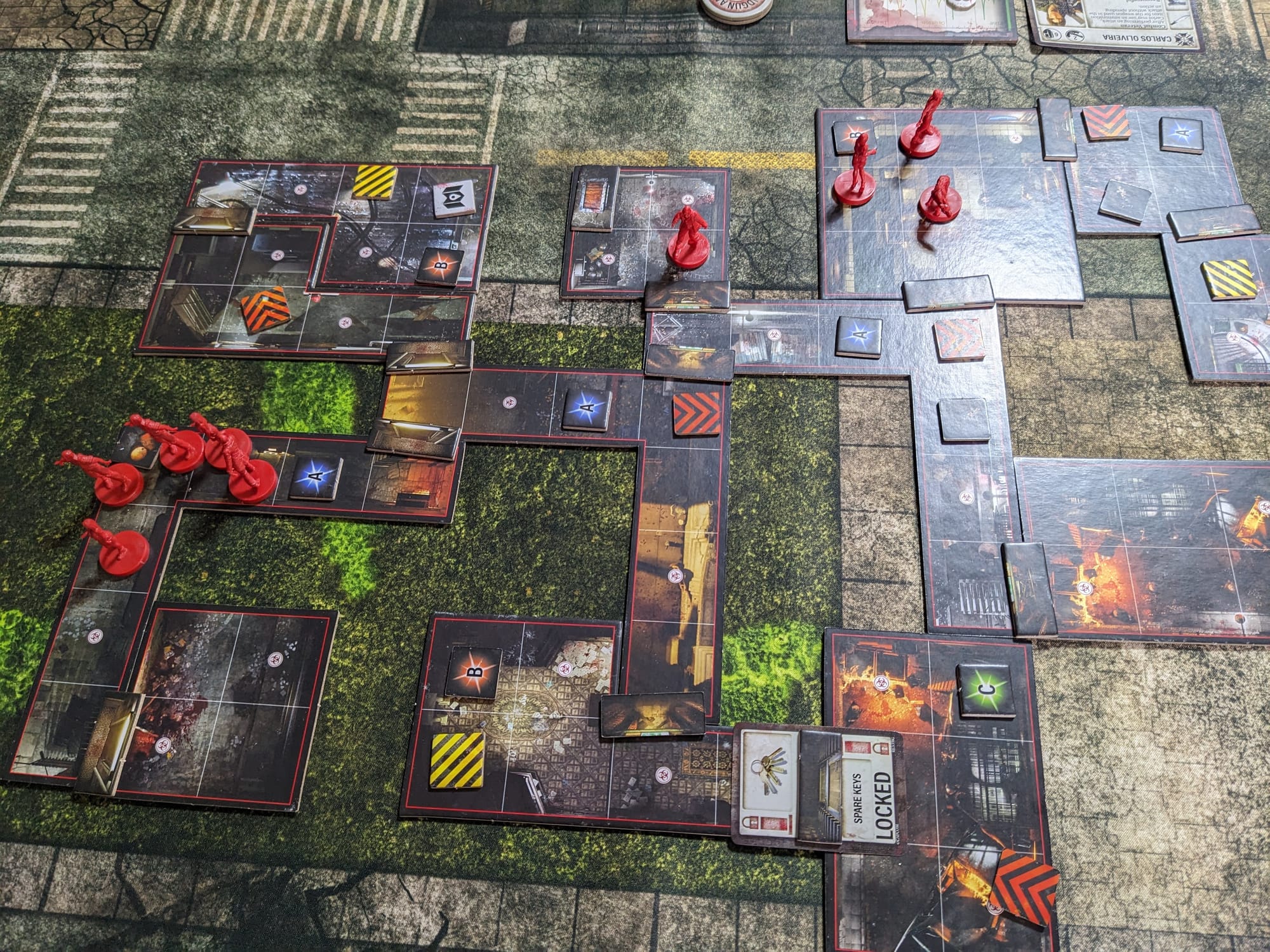
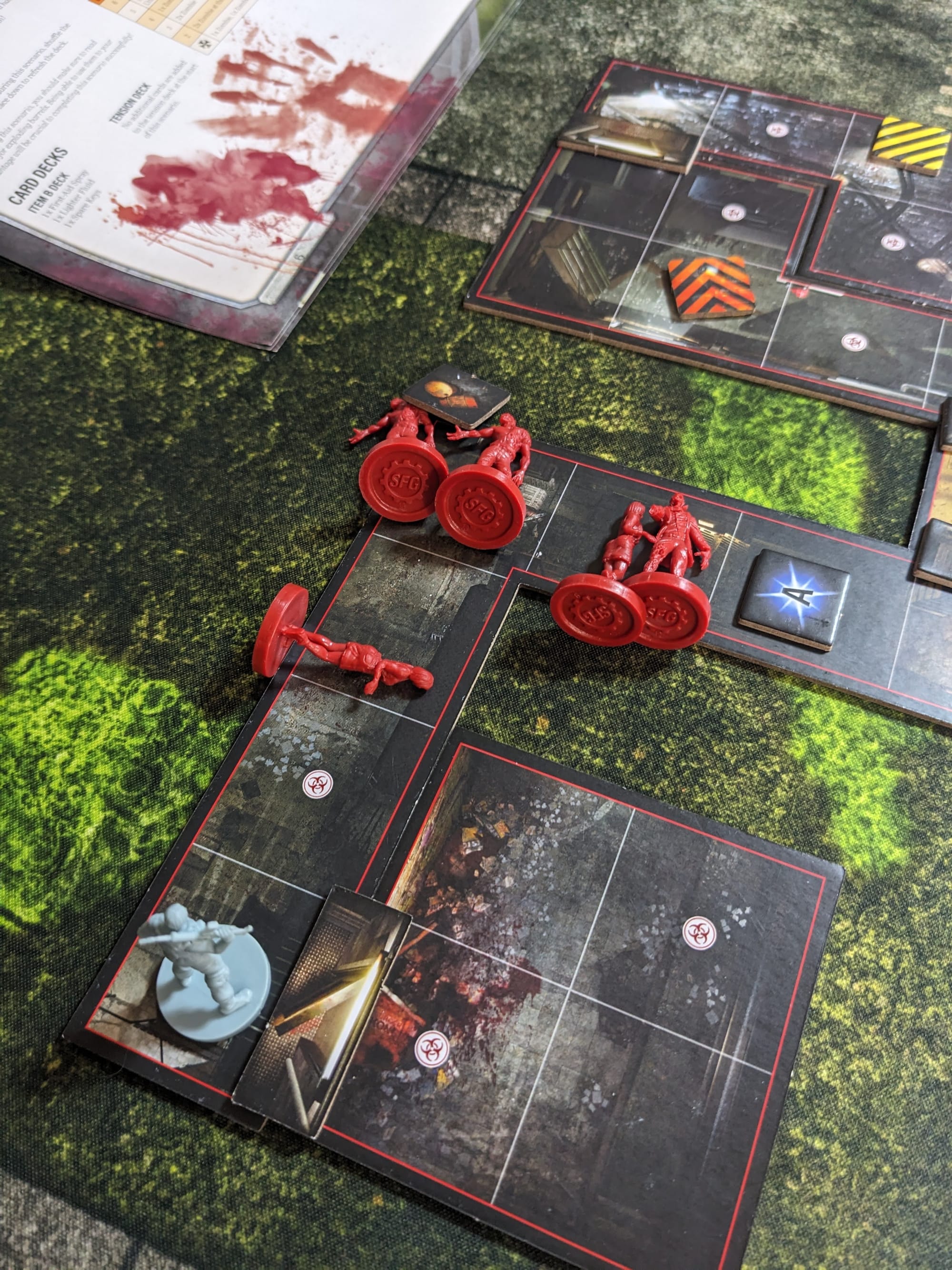
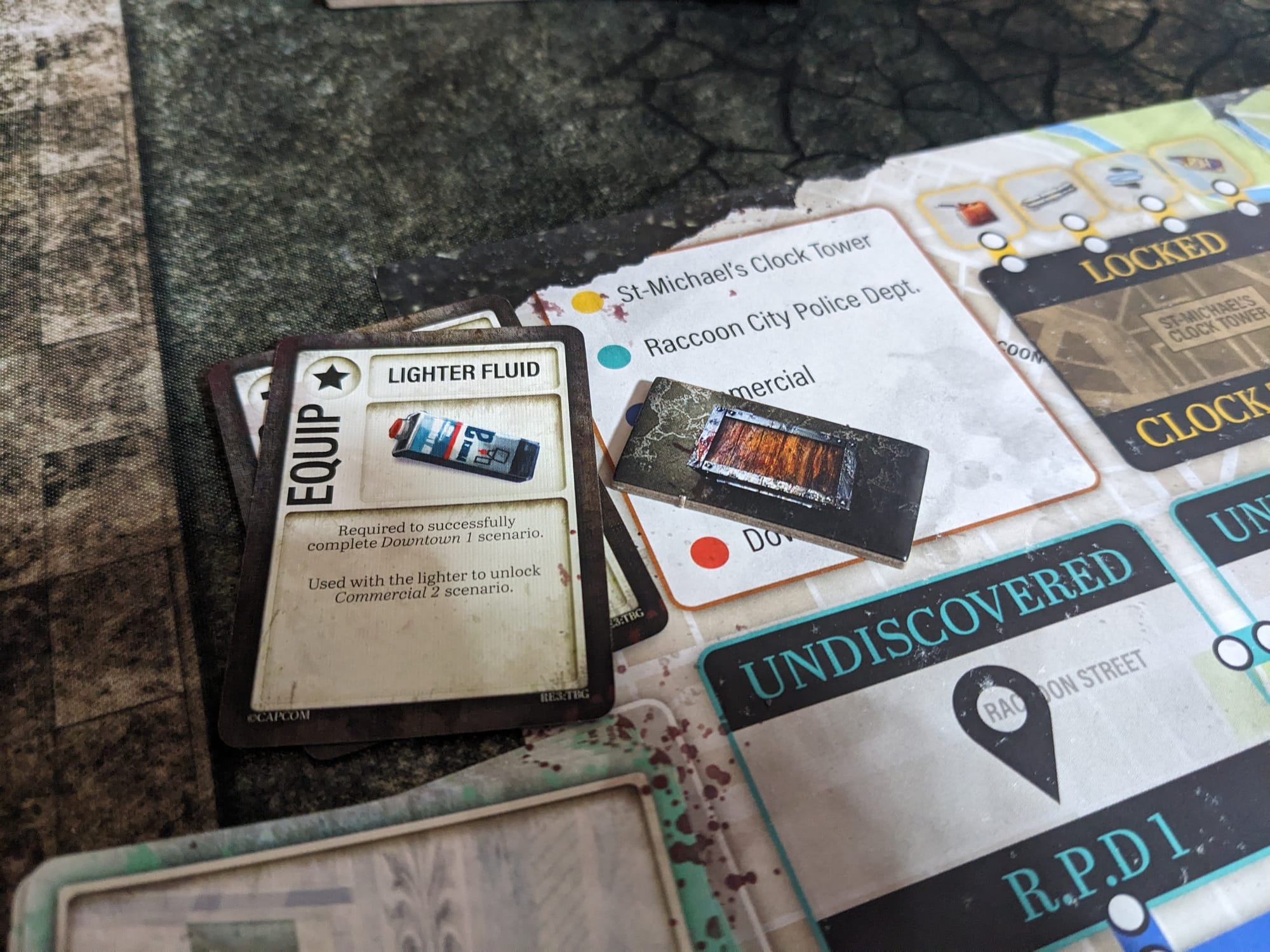
Each scenario has its own win condition. Once that win condition is met, the scenario ends, unlocking a new section of Raccoon City. Players can choose what section of the city they want to go to next. As they decide where to go next, players reload their weapons, heal, and can trade items.
Gameplay
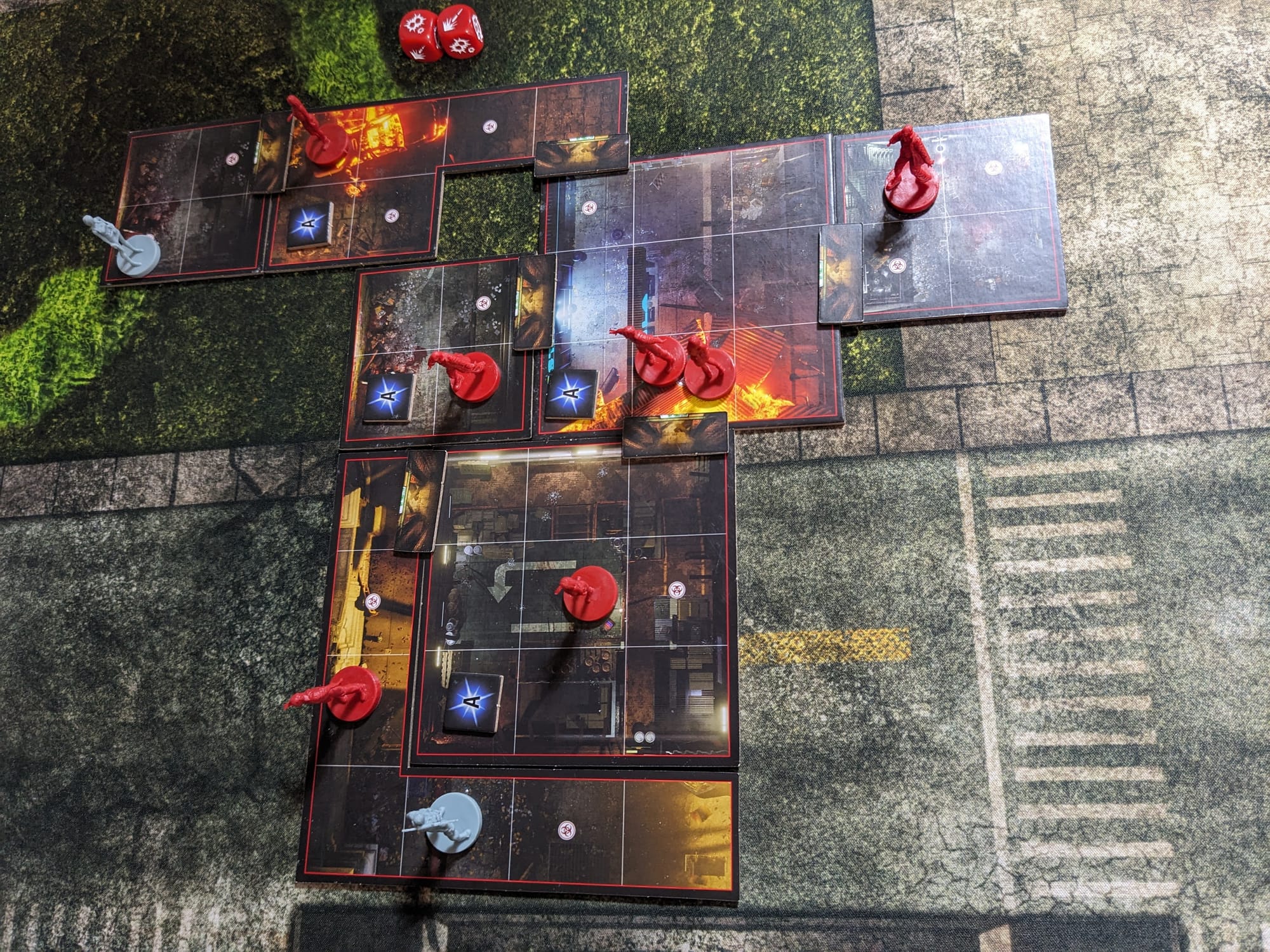
Gameplay is divided into player turns, moving clockwise around the table. A Player's turn is made up of three phases: The Action Phase, the Reaction Phase, and the Tension Phase. Each player completes each of these phases before the next player takes their turn.
Action Phase
This is when the player moves around, attacks enemies, searches for items, and interacts with game elements on the board. Players get four actions, so it's important to strategize with your friends and discuss what actions should be done to allow the greatest chance of success for future player turns.
Action economy is always crucial in these kinds of games. Because of the Tension Deck, which creates chaos and conflict through random events (or sometimes a moment of calm), it's best not to waste any actions and to play to complete the objective.
Reaction Phase
In the game, enemies don't have a normal turn per say. Once a player has completed their four actions, the player must perform a reaction for all enemies on the same tile as them (and tiles vary in size). Resolving each enemy one at a time, the enemy will either attack them, if they can make an attack, or they will move towards to player to attack them. This keeps the pressure on the player to push forward and either try and defeat the enemy or move out of the way.
Tension Phase
The last part of a player's turn is to draw the top card from the Tension Deck and resolve any effects. Sometimes multiple cards get drawn, which can really escalate the situation. More difficult scenarios add some really "fun" Tension Deck cards. The randomness of the deck can allow for a scenario to proceed as normal as possible, or make it go sideways early on, possibly before players are ready. If you're not used to that kind of chaos, it can be really frustrating for new players to have the added pressure of the Tension Deck. Of course, that's why it's called the Tension Deck and not the "Everything is Ok in a Zombie Apocalypse" Deck. In later scenarios, if you run out of cards in the tension deck, you can use Ink Ribbons (items found in scenarios while looting) on a nearby typewriter to refresh the deck. This is akin to the game where you save your progress at typewriters. It's a clever use of the in-game feature, translated to the board game itself.
Combat & Enemies
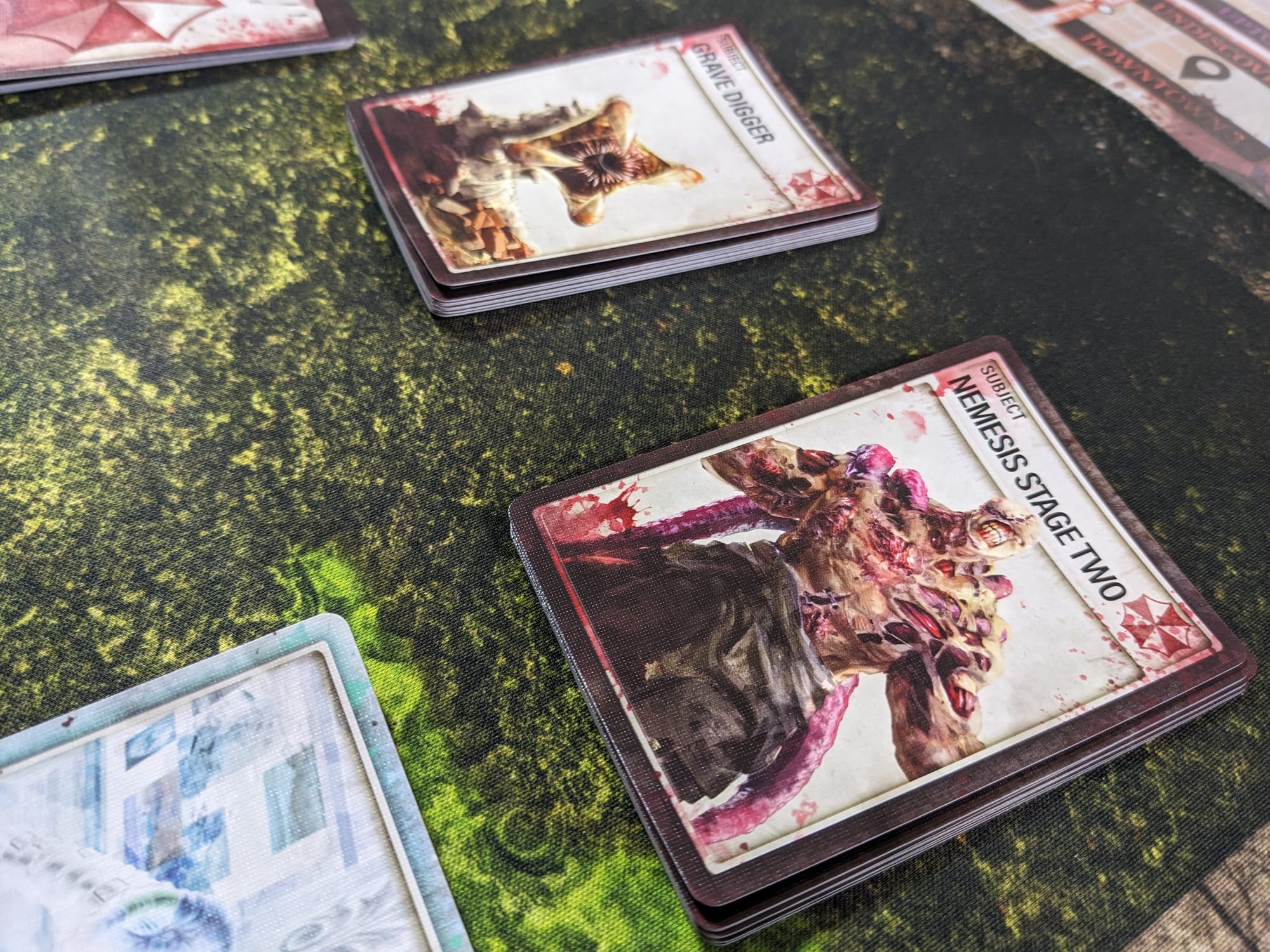
There are several different enemies in the game, ranging from generic shambling zombies all the way up to Nemesis — both stages, oh joy!. The earlier scenarios have less difficult enemies, but it can get pretty hectic very quickly if you don't deal with the horde. You can run around and stabby-stab your way to victory, but the Tension Deck can really ruin the best laid plans.
Naturally, there are better weapons to acquire throughout the scenarios, so it is worth looting as much as you can (but not at the expense of winning the scenario). Looting also helps you find those required items you need to advance further along the map. So you will benefit from looting as much as possible because, like the video game, you don't want to be trying to fight through higher levels with starting weapons.
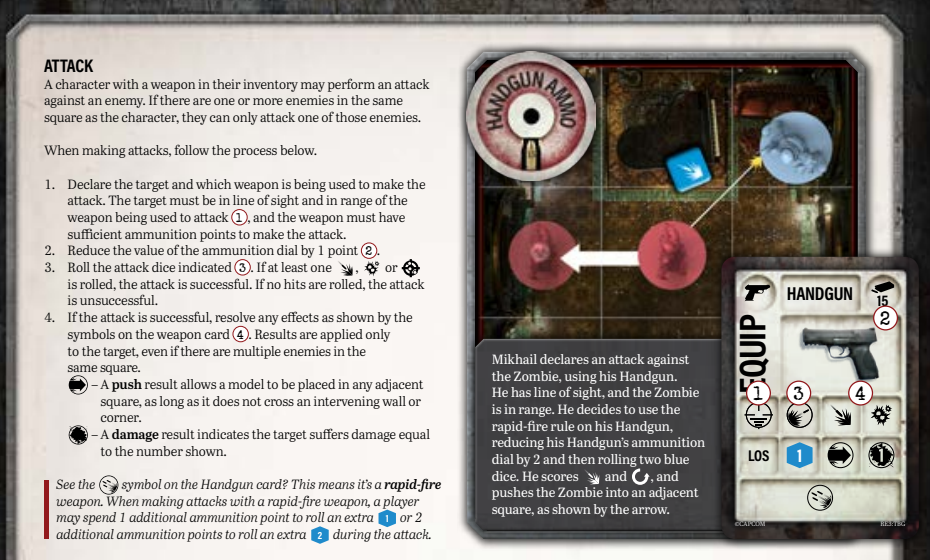
The damage, both attacking and reacting, is important to follow the step by step process. You roll the die matching the weapon you're using (in this case the blue die) to see if the weapon hits in the first place. If it does hit, you then refer to the weapon card to check the matching result, and then apply the effect underneath. So, for the Handgun, even though the 'crosshair' symbol means the attack was successful, it doesn't apply any effect. Different weapons have different effects, so it's important to upgrade your arsenal as you go.
Generic zombies only take one damage before they are taken out, but the special zombies and enemies require more damage to take down. They also may have special abilities that make them harder to hit or have additional effects occur, so make sure you refer to their enemy card when attacking and defending against them.
Strategies & Continued Play
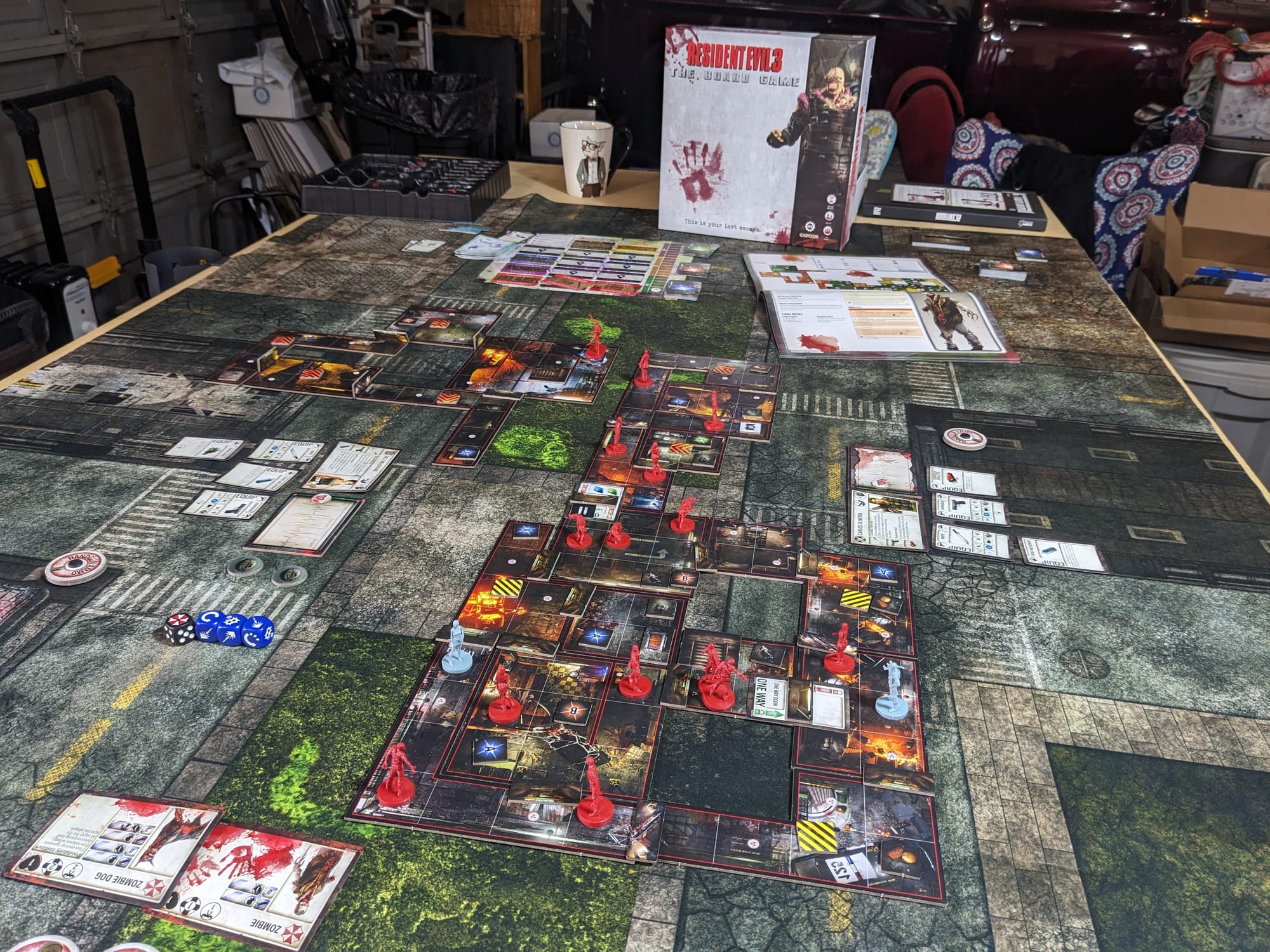
While most co-operative dungeon crawlers have the same basic core structure, one of the things that this game offers that I really enjoyed is that you're not really rewarded for killing all of the zombies. More than likely, you're not going to have enough bullets to kill all the zombies anyway. Even if you do have hot rolls, you're not really benefiting from purging the map, so it's better to just focus on finding the goodies in the map, completing the objective, and, the obvious one, not dying.
Don't be a hero. If it at all possible, avoid being by yourself. Attacking and putting down enemies is not easy, and can take up a lot of bullets. So, it's really best to stabby-stab-stab your way around the zombies, evade them, and push to the objective.
The structure of the campaign scenarios is really well done and very clever. It closely mirrors the game, instantly transporting the player to the game, as if you were in front of the console. By no means is playing the board game shorter than the video game: you're not going to replace the video game with the board game. The point is to leave you with an impression of playing the game, where you get to strategize with your friends, move your pieces around the board, roll some dice, and make it through some tense moments together.
There are some game interactions and rules that can get confusing and complicated the more you play. Steamforged Games released an FAQ for the game to help clear up some of the game interactions and provide some errata for the maps. I always appreciate when companies provide an FAQ, especially if you play the game a lot and these unique interactions come up. It just helps cut out wasted time sifting through the rulebook.
Impressions
In spite of its age, and as far as a board game based on a video game IP goes, Resident Evil 3: The Board Game still provides a great time to hang out with friends, shoot some zombies, and play through Resident Evil 3 in tabletop form. It's got some minor flaws and quirks for sure, especially since more contemporary games have come out since then with streamlined rules or simpler mechanics. Those flaws help create a memorable experience, though, and so if you're a fan of Resident Evil, it is worth playing through the campaign together with friends
Resident Evil 3: The Board Game
Good
Despite some clunky rules and small manufacturing issues, Resident Evil 3: The Board Game is a solid, dungeon crawler board game that is best played co-operatively. The campaign helps create a strong narrative-driven play-through to bring the zombie horde battling through Raccoon City into tabletop form.
Pros
- Clever campaign design
- Quick turns for players
- Looting and upgrading gear
- Immersive art and graphic design
- Great 28mm figures
- Good catch-up mechanics and leeway for failing.
Cons
- Production issues with the cardboard elements
- Box storage is not great for cleanup
- Setup can take a while
- Not ideal for new players to this game type
This review is based on a retail copy provided by the publisher.
Resident Evil Requiem
Have you checked out our Resident Evil Requiem coverage yet? If you're a fan of the franchise, be sure to check it out! Follow GamingTrend for more Resident Evil content, including everything you need to know about upcoming Resident Evil games