You might look at StarRupture and say "Yeah, but we have Satisfactory at home", but that'd be selling this new game from Creepy Jar short. As it enters Early Access we see a game that has hints of other survival-automation games, but after playing the game for a few dozen hours, let me tell you – despite being early in its journey, it already has an identity all its own.
StarRupture casts you as a prisoner, one of four archetypes, that has landed on a hostile alien planet with the task of setting up resource gathering systems to ultimately work off their sentence. That'd be well and good, if not for the spider-like alien creatures and the planetary purge that happens every few days. Yes – on a planet as lush and green as Arcadia 7, it may be surprising to know that it also faces an environmental cataclysmic fire that washes across the entire surface periodically, burning everything but the most resilient of structures to ash. All plant life is eradicated and all living creatures are destroyed in a pyroclastic destructive fire wave. It's a blend of automation, first person shooting, and mixed with a dash of unpredictability straight from the developer's own title, Green Hell. Welcome to a world that clearly doesn't want to be transformed into a factory, and will fight back to stop it.
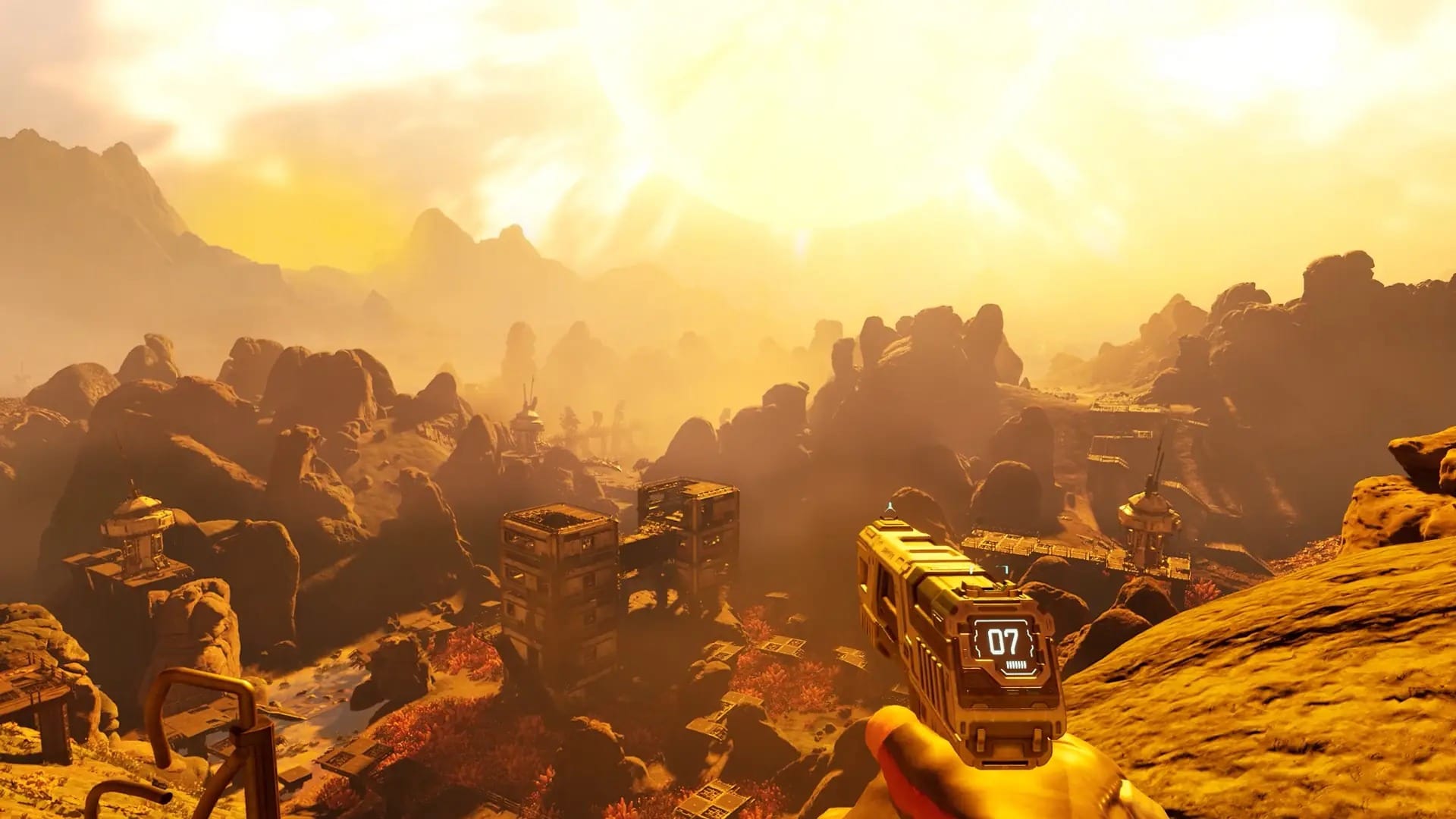
The standout feature of StarRupture is the planet itself. The draw distances are infinite — if you can see it on the horizon, you'll be visiting it eventually. The dynamic and hostile system is beautiful, and it has a remarkable effect on your plans. Heading out for a stroll sounds like a plan until you have 60 seconds to get underneath something that'll survive a firestorm. These elemental cataclysms roll through the landscape, altering terrain, stopping all production as everything overheats, and forcing you to rethink your excursions. There's always a ticking clock, meaning you aren't always building and optimizing; you also need to think about surviving.
The production loop is already fairly deep, but since it's Early Access it doesn't exactly lead anywhere quite yet. That is to say, you aren't building anything specific, but a collection of random parts that lead to other parts. That doesn't stop it from being fun to run the Skinner Box.
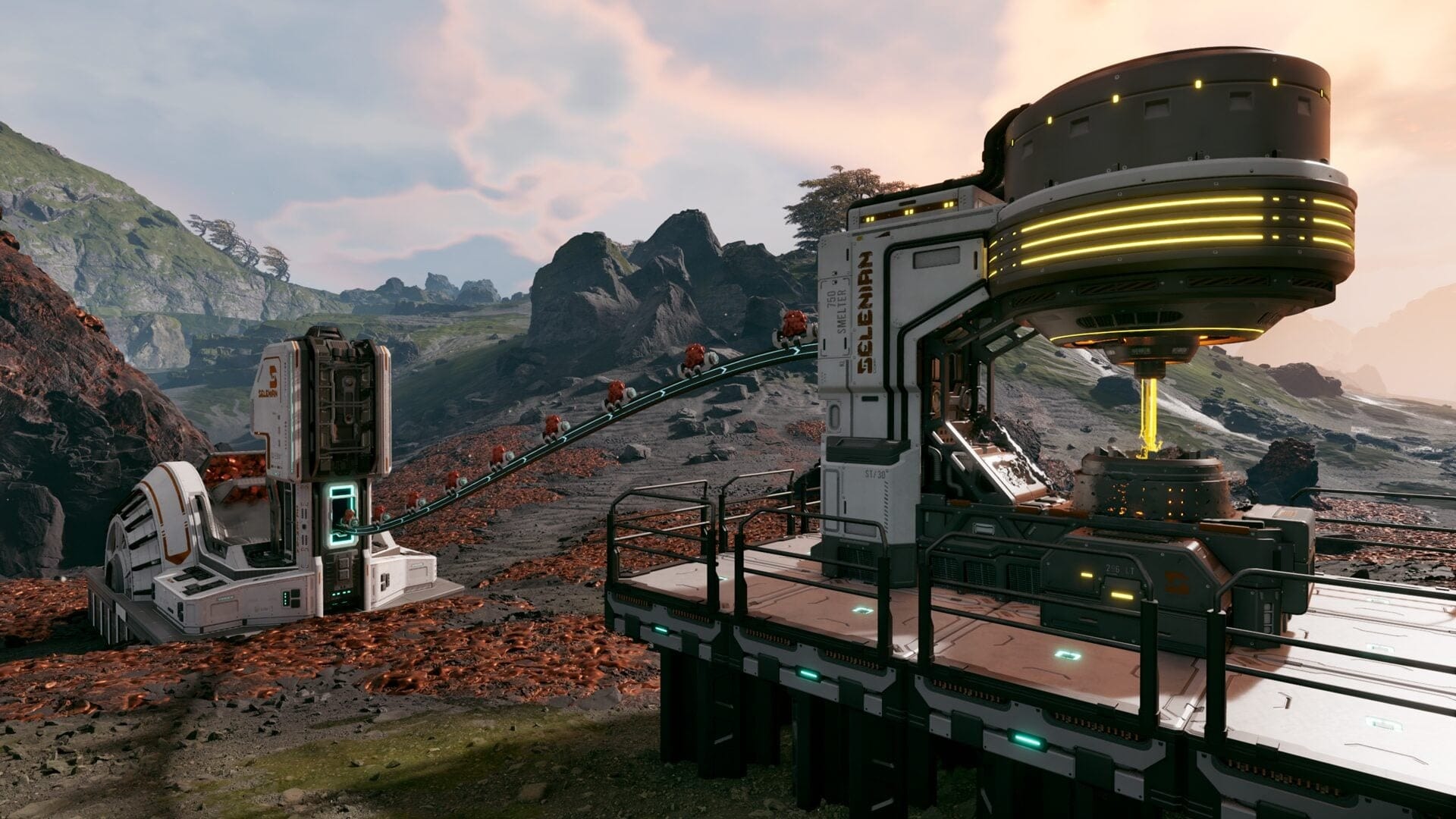
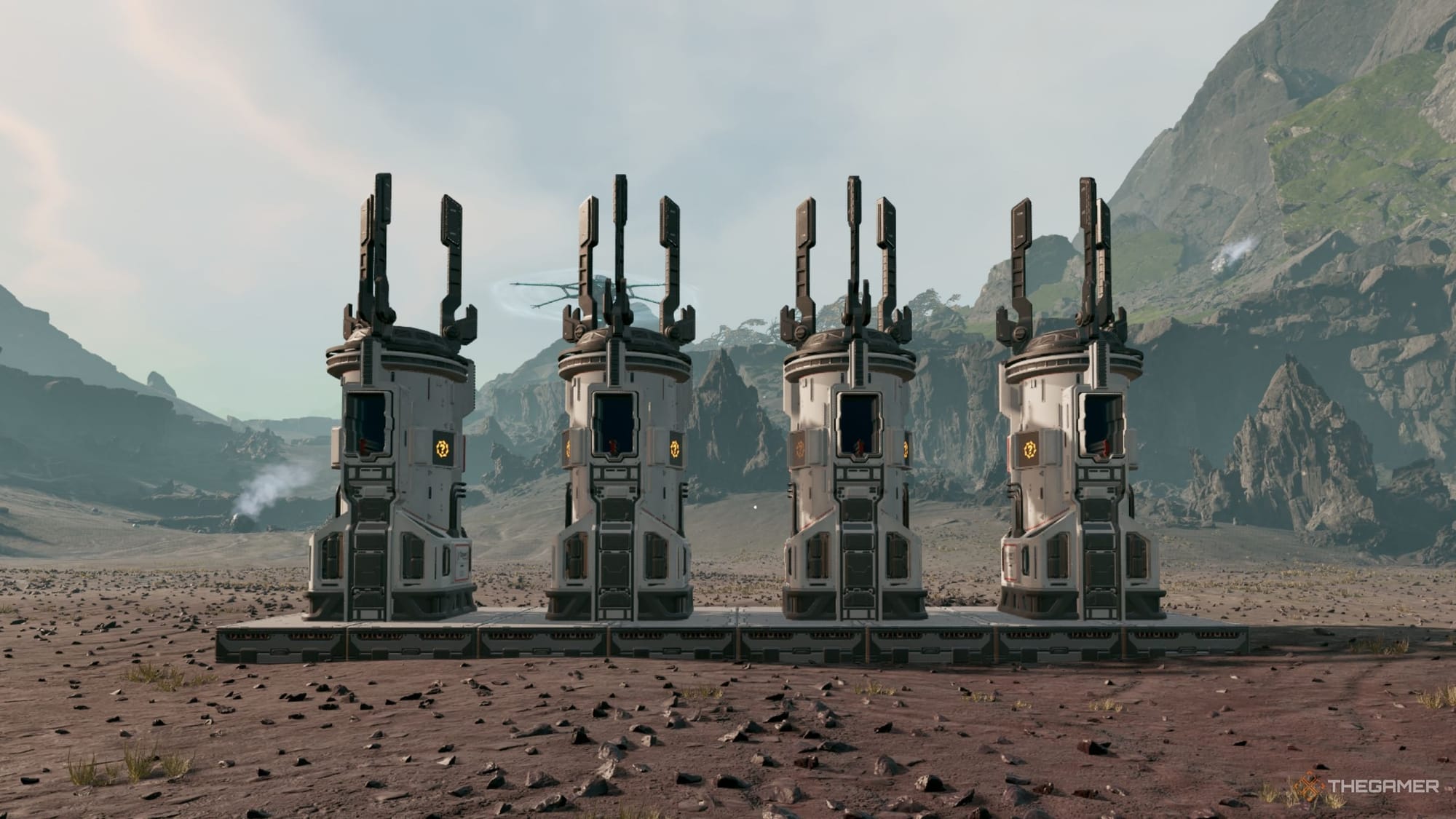
Resource extraction is accomplished by finding the various nodes and placing extraction devices on them. From there, you'll use a railing system to connect it to a secondary processing device of some sort. If it's metal, you'll probably connect it to a device to forge it into ingots for use elsewhere. If it's gas, you'll probably be carrying it to use as an additive to some other part manufacturer to create a more complex object. It's the rails that are different.
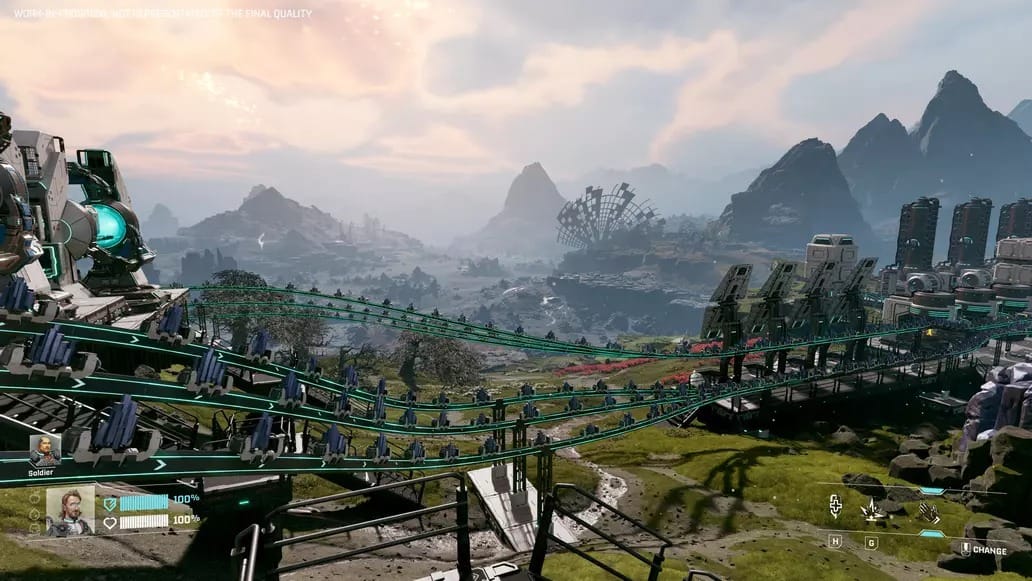
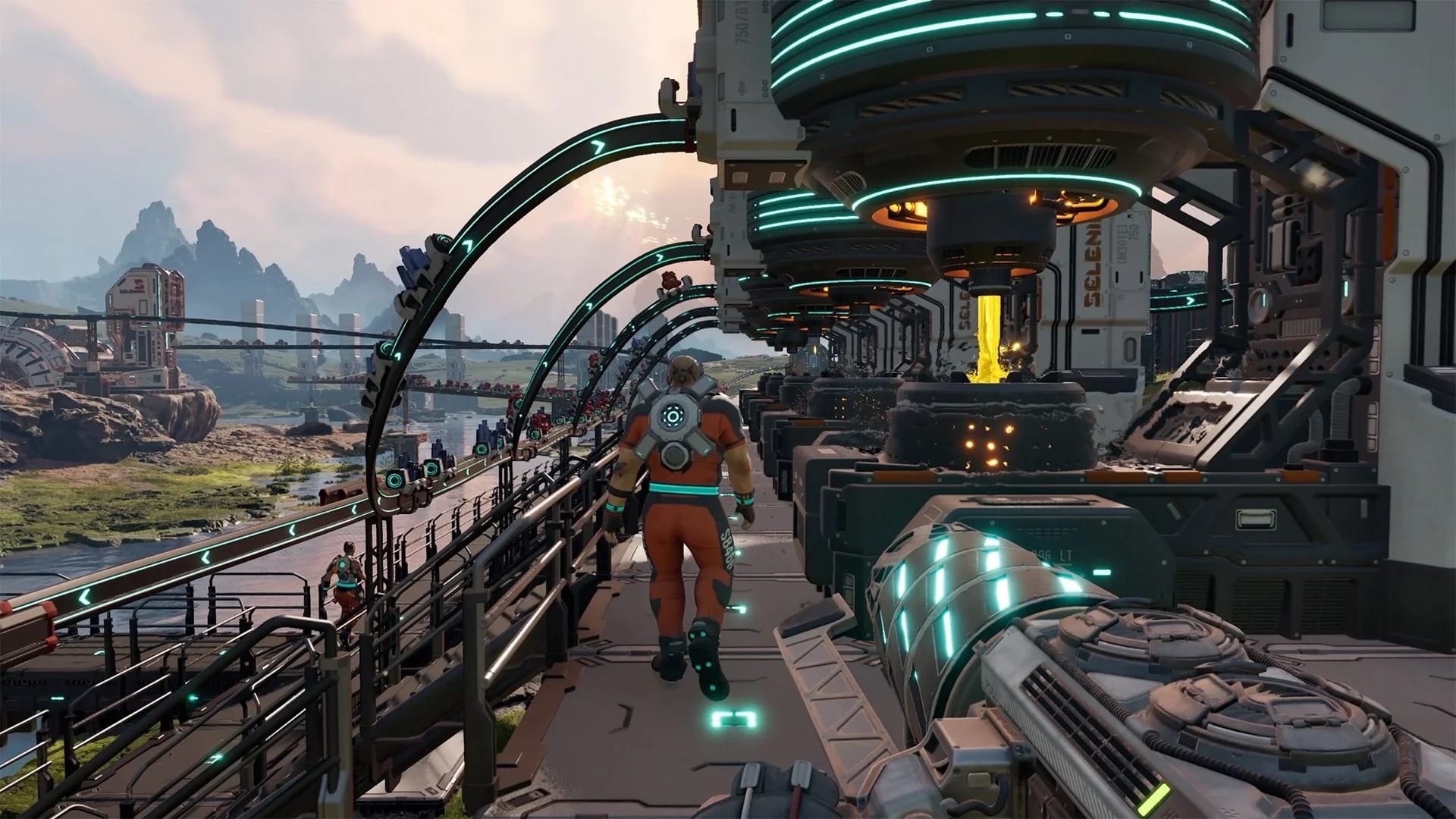
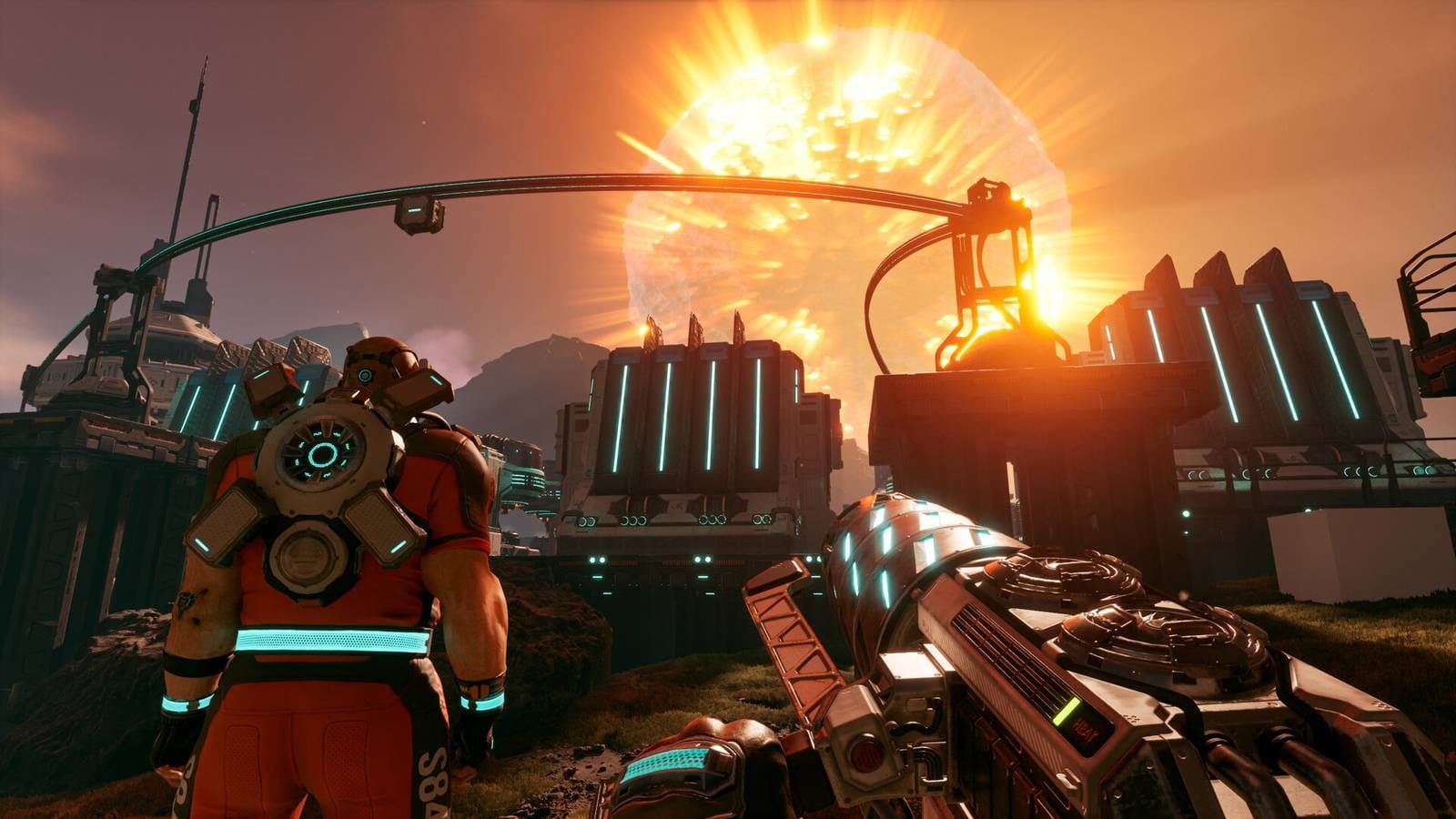
Rather than conveyor belts carrying materials everywhere, you'll be using a railing system to move your goods. These rails have little carts that move the objects from one place to another, but act as power conduits as well. It means you aren't fighting with running wiring from here to there, instead focusing on solar panels and then connecting things up with flooring that can carry power or the rail system to connect it all together. That's not the only thing that's different about the railing, though.
There are a few base materials you'll carry around your factory, and a handful of different ways to store, delay, and route them for efficiency. The rails carry them to their destination, and naturally, you can upgrade their speed and capacity, but later unlocks allow you to split, divert, and reroute items around your base. Embracing verticality, you can run an entire highway of railing above your head without disrupting the walking space. It reminds me of a futuristic city with cars zipping every direction. Because of the versatility of the railing system, it's easy to reconfigure your outputs. Let's talk about where those output objects end up.
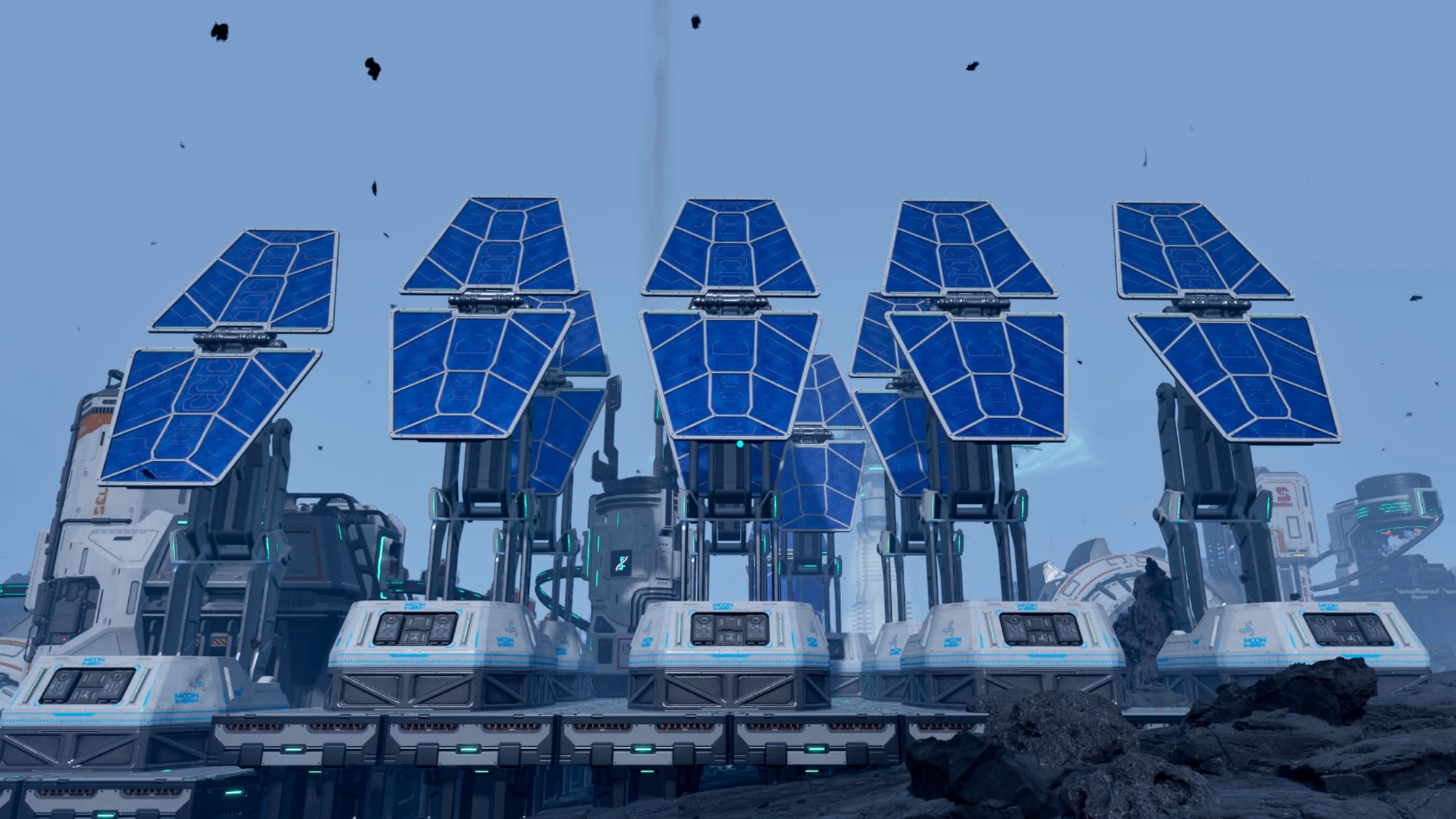
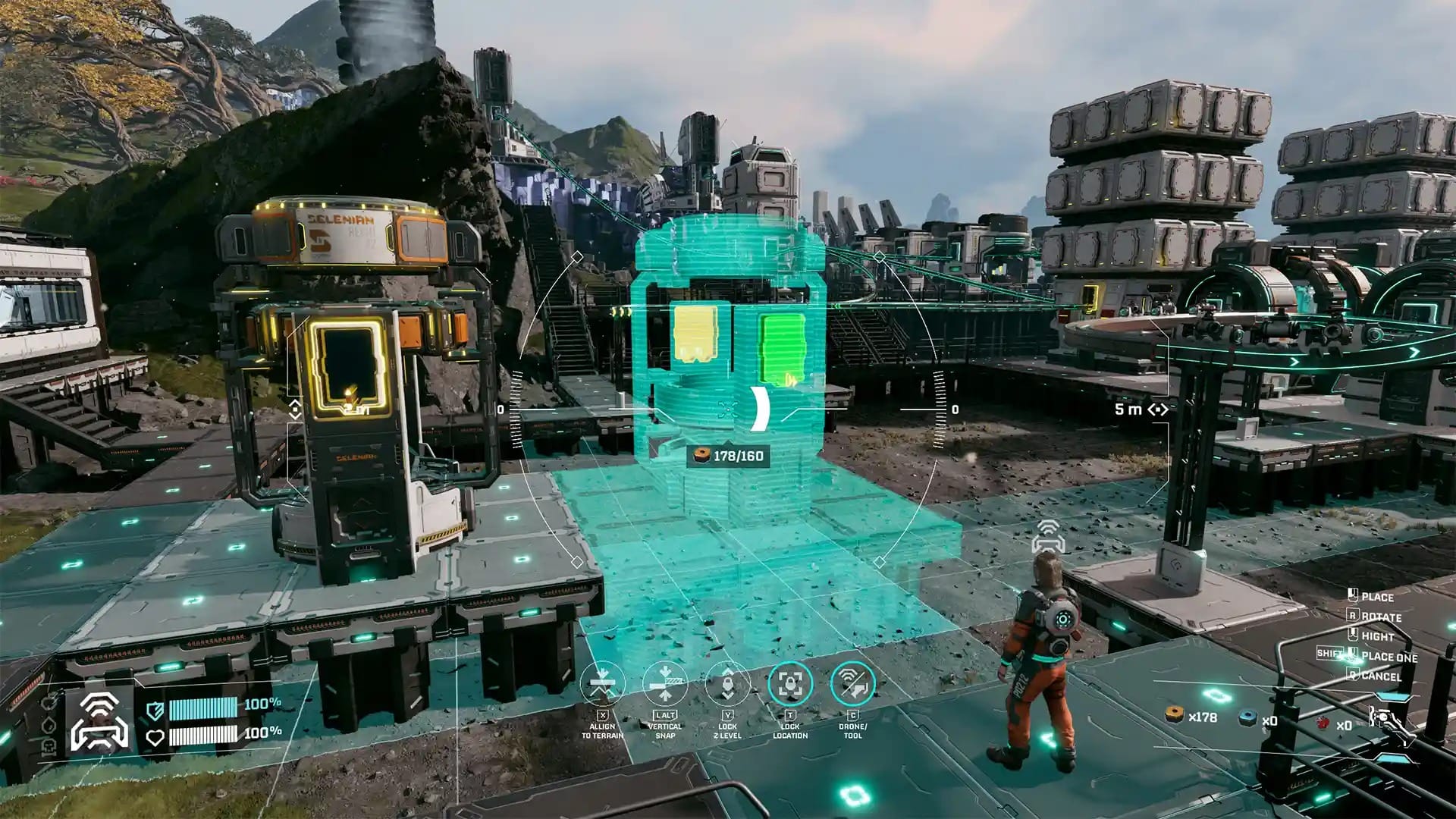
Your materials need to be transported off the surface, and you have a structure specifically for that. The Orbital Cargo Launcher carries a finished good into the sky in little rocket drones, and they can be placed anywhere you'd like. You can even use splitters to run multiple cargo launchers simultaneously, which I recommend. While you'll likely be running a shockingly long rail across the landscape in the beginning of the game, eventually you'll tap into the same tech as the Orbital Cargo Launcher to build the Cargo Dispatcher / Receiver. The Dispatcher takes in goods, launches them into the sky with drones, and then brings them down at a matching Receiver structure anywhere you'd like. It makes it easier to move goods long distances without worrying about what happens next...
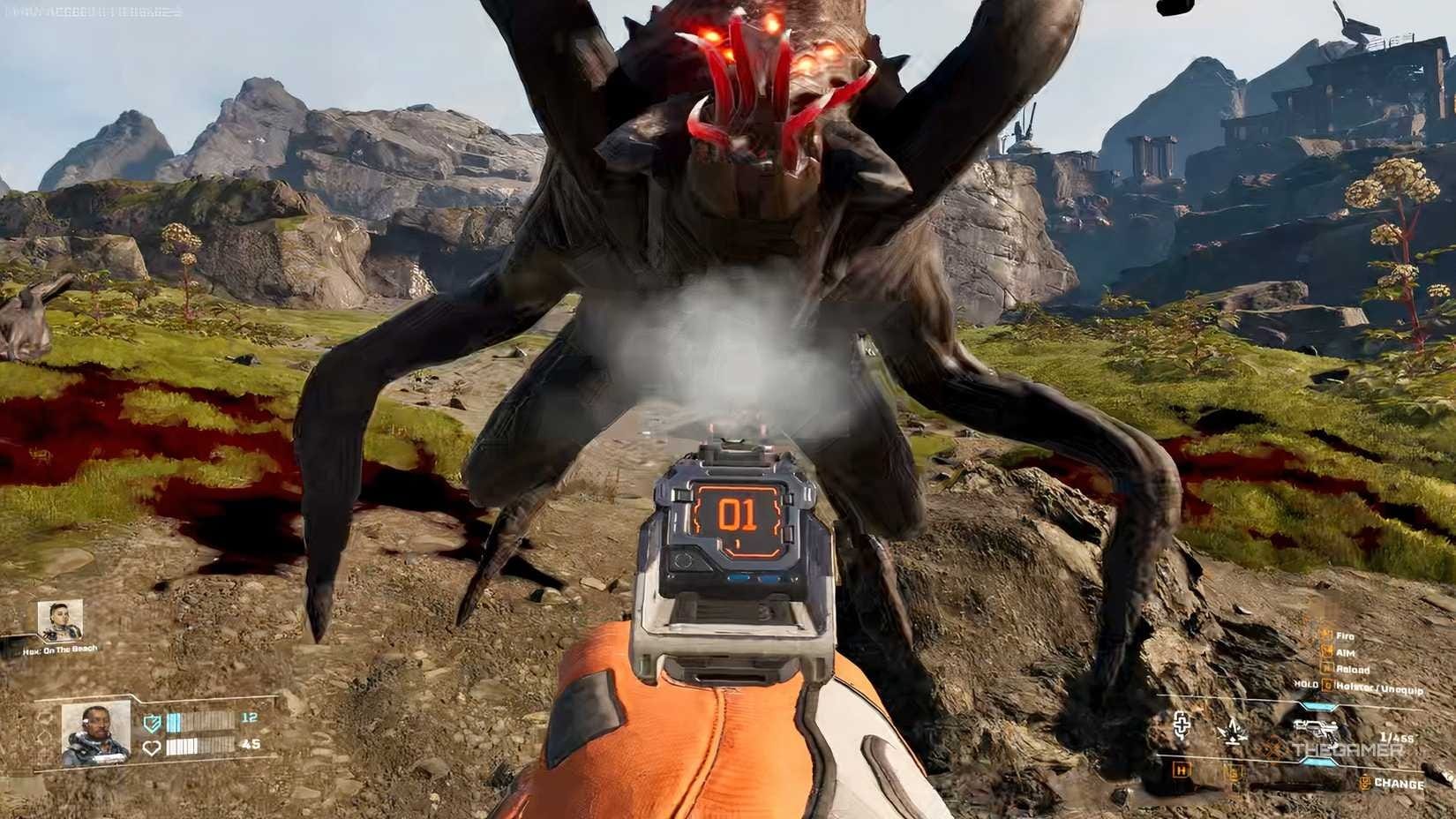
As you explore this world, you'll eventually run into its inhabitants – spider-like creatures that are wildly aggressive and innumerable. There are small ones that use their needle-like arms to stab at you, swarming you as you try to escape. Another variant carries a blue bulbous soft sack on the back. It spits a cloud of infectious particles that disable shields but also powers up another larger variant of the little needle-armed guys. A third version of these creatures like to hang out at a distance, spitting green gunk at you. As if all of those weren't bad enough, there's also a much rarer creature that you'll encounter as you really dig into this world. It has massive armored plates and will knock your teeth out.
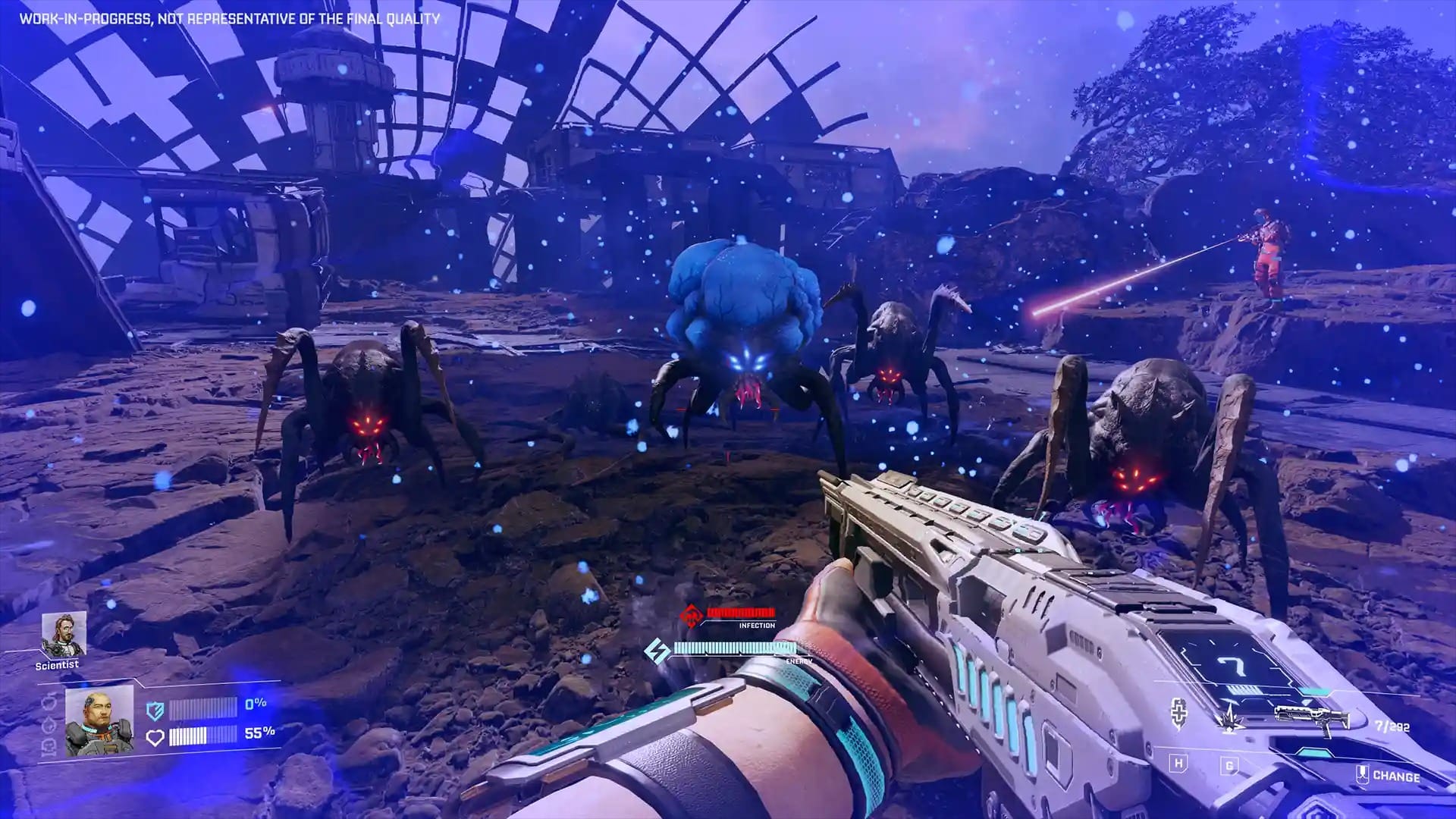
All of these creatures are certainly a threat to you, but unless you get near them, they tend to leave you alone. That said, when you do disturb them, they'll chase you until you die or they do — there is no outrunning them. If you run back to your base, you officially have two problems. When these creatures find your base, they'll get to work destroying it. The blue-sacked creatures will coat the structure in those infectious particles, which will disable the structure entirely. I do hope that the Creepy Jar team kicks this up a notch and makes it disable the shields like they do to me, allowing the next star rupture to destroy these structures, but in the current state, they are just unusable. These unusable structures don't produce or process anything, remaining in the cocoon until you find the disgusting blister you'll need to pop on the surface to return it to normal.
To help keep your base safe, you have a pair of weapons (so far) to sling some lead. The creatures attack in numbers, so your pistol won't do the job for long. You can upgrade to a machine gun, and you can unlock various attachments like scopes and extended mags. It's not going to blow your mind quite yet, but it gets the job done. The real force multiplier, however, is when you bring a friend.
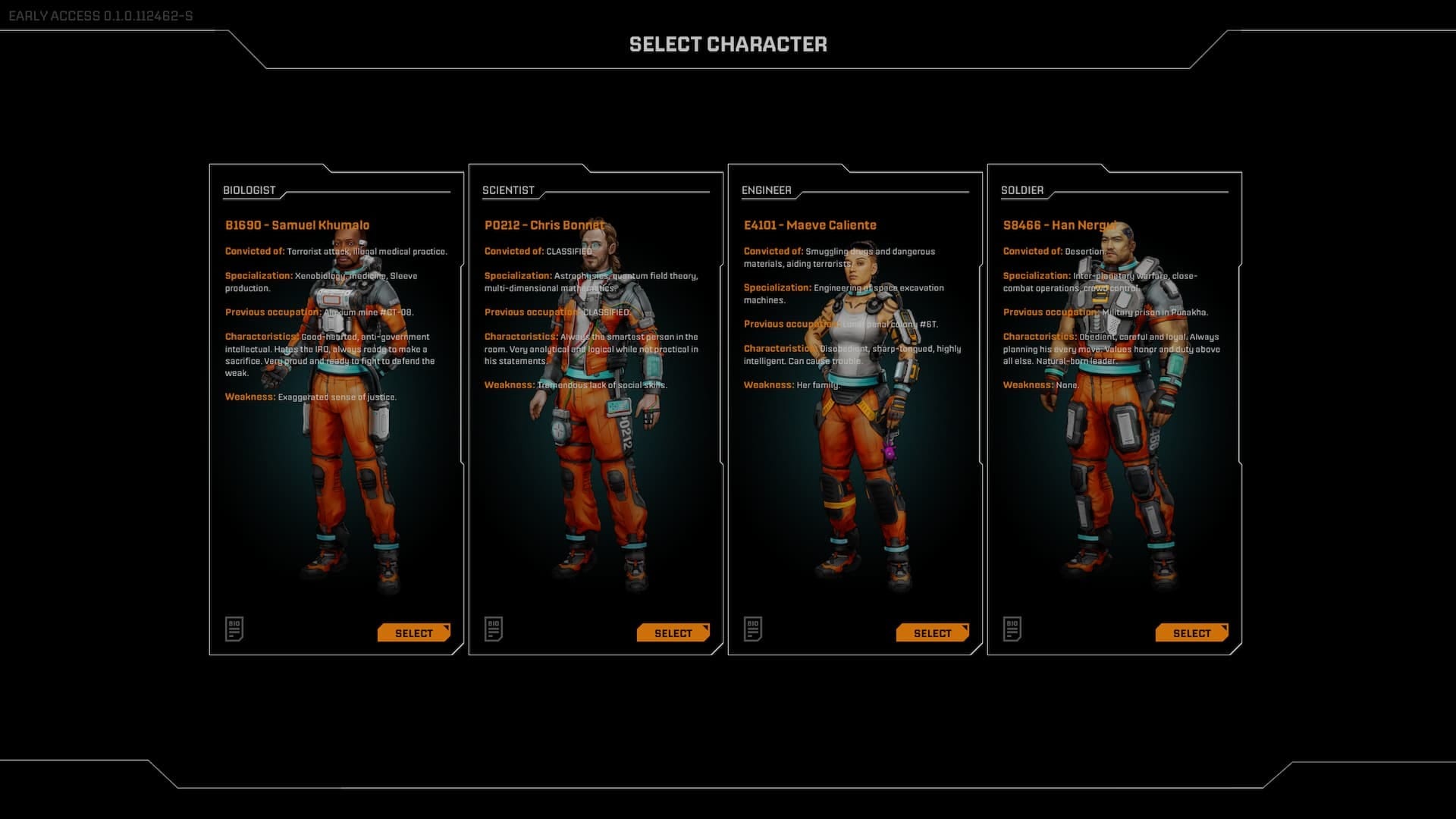
StarRupture supports four player cooperative play. This helps as you can have one person building defenses while the others tend to the production systems. Two folks can tend to the base while the other two explore together. There are four characters with a bit of personality and at least an assigned job function, though there are no real differentiators other than their voice so far.
One of the things I appreciate most was just how clean this all is, even in this early state. The UI is clear and easy to understand. It's obvious what you need to create the next object in a chain, and there always feels like an option to progress. Research is mostly a "gather a bunch of them and dump em in the hopper" sort of thing. Research unlocks the next thing in the list, and so it goes down the line. It keeps things easy to figure out, but it doesn't feel quite as linear as other games as there are five tracks you can purchase individually, or even up to all five simultaneously. When you have four people playing, they can each take a thread and run in a different direction, essentially creating their own little mini-base purpose built for their outcome, which is pretty cool as it makes it feel like everyone has a job.
StarRupture wears its influences on its sleeve, but isn't directly derivative of them. You'll see themes and elements from similar games, but with Creepy Jar's own spin. Sure, there are rough edges here and there, but with frequent patches and a very clear roadmap, this looks to be Creepy Jar's most ambitious title yet. The construction systems are solid, and the rail system makes more of a difference than I expected. It's easy to see that this is going to be a great one — the team at Creepy Jar have a knack for making fantastic games with compelling gameplay loops. Keep an eye on this one – even in this early state, it's already got a solid footing, and I suspect it's going to end up a great new iteration to the genre.
StarRupture is available on PC in Early Access right now!