Highguard has me the most excited for the release of a new IP in the shooter genre since Overwatch back in 2016. It’s a crazy thing to say, kicking off 2026 this way, but like many of you, I too watched last year’s Game Awards and was curious about the show's final presentation. An action-packed shooter showcasing magic, guns, and unique character designs made from a debut studio in Wildlight Entertainment? It’s certainly a lot to take in.
The game’s first reveal trailer did exactly as was intended, however, and sparked people’s interest. Founded by seasoned and experienced devs known from their time working on icons of the shooter genre, Titanfall 2 and Apex Legends, I was already on board for their next grand endeavor. When I was invited to Los Angeles to check out and play Highguard early, I had to dive in and see what Wildlight has been brewing up the last 4 years.
Before diving into my experience and impressions of Highguard, let’s talk about Wildlight Entertainment and why I feel it is not only the perfect studio, but also the perfect group of people to bring a new challenger into the vast pool of free-to-play shooters. Spawned from veterans in the industry, Wildlight is a remote-first company, grown to roughly one hundred employees across the US, UK, and Canada. Within that estimated one hundred, sixty have come from Respawn Entertainment, which is why the gameplay will feel familiar to lots of players.
So, why does this matter? After a lovely chat with Jason McCord (Creative Designer), Carlos Pineda (Lead Game Designer), Jason Torfin (Vice President), and Mohhammad Alavi (Lead Designer), it’s evident that these developers not only love working on video games but also love working with one another. These are humans who love playing video games together, drawing inspiration and ideas from each other, and collaborating to turn their aspirations into actual components of the game. That genuine love of the game and chemistry among the team is shown and felt as you play, and you begin to understand why they’ve been around for so long.
Now to answer the biggest question everyone has been asking since the reveal trailer: What is Highguard? Well, the answer is simple yet complex at the same time. The identity of Highguard isn’t a battle royale or hero shooter like initially thought, but rather an evolution and combination of many gaming genres we’re all familiar with. At its core, Highguard is a three-versus-three, PVP raid-shooter, but evolved. The general gameplay consists of four phases: Reinforce, Gear-up, Intercept, and finally Raid. Let’s break those down a bit further now.
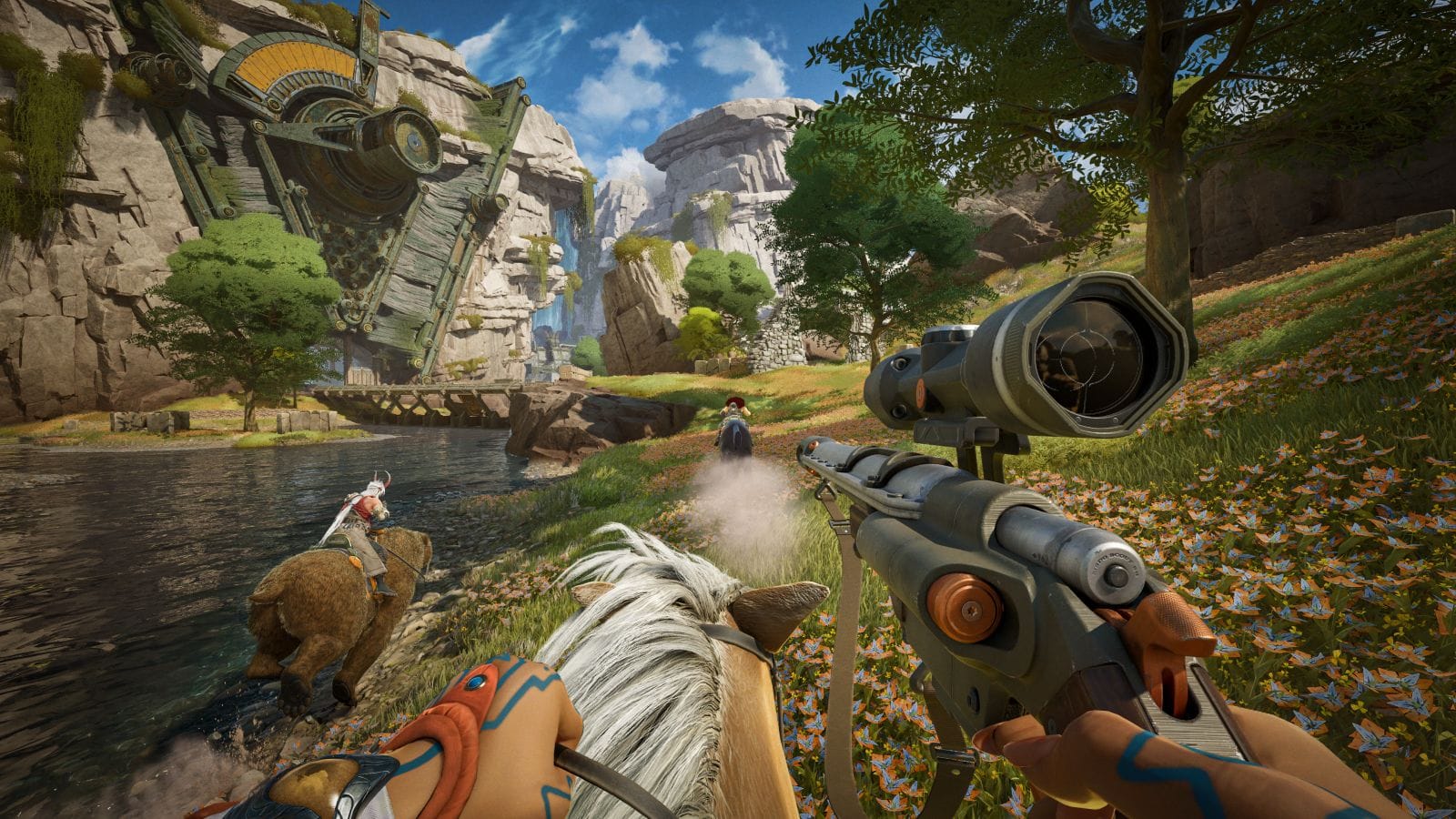
Before the start of each match, two teams of three players select which Warden they want to play and which unique base they want to defend (we’ll talk about Wardens later). After spawning into their selected base, players can choose up to five walls amongst their base to “reinforce.” Although it’s not exactly the same, think being on defense in Rainbow Six: Siege. These reinforcement walls are harder to break, meaning the enemy team will be slower to break into that section of your base. This is vital as there are two small generators and one bigger generator located in your base that will be targeted by the enemy team. While not the most exciting of phases, don’t underestimate how impactful reinforced walls can be when placed in the right spots. A few of the games during the event were won because of the intended choke points intentionally made.
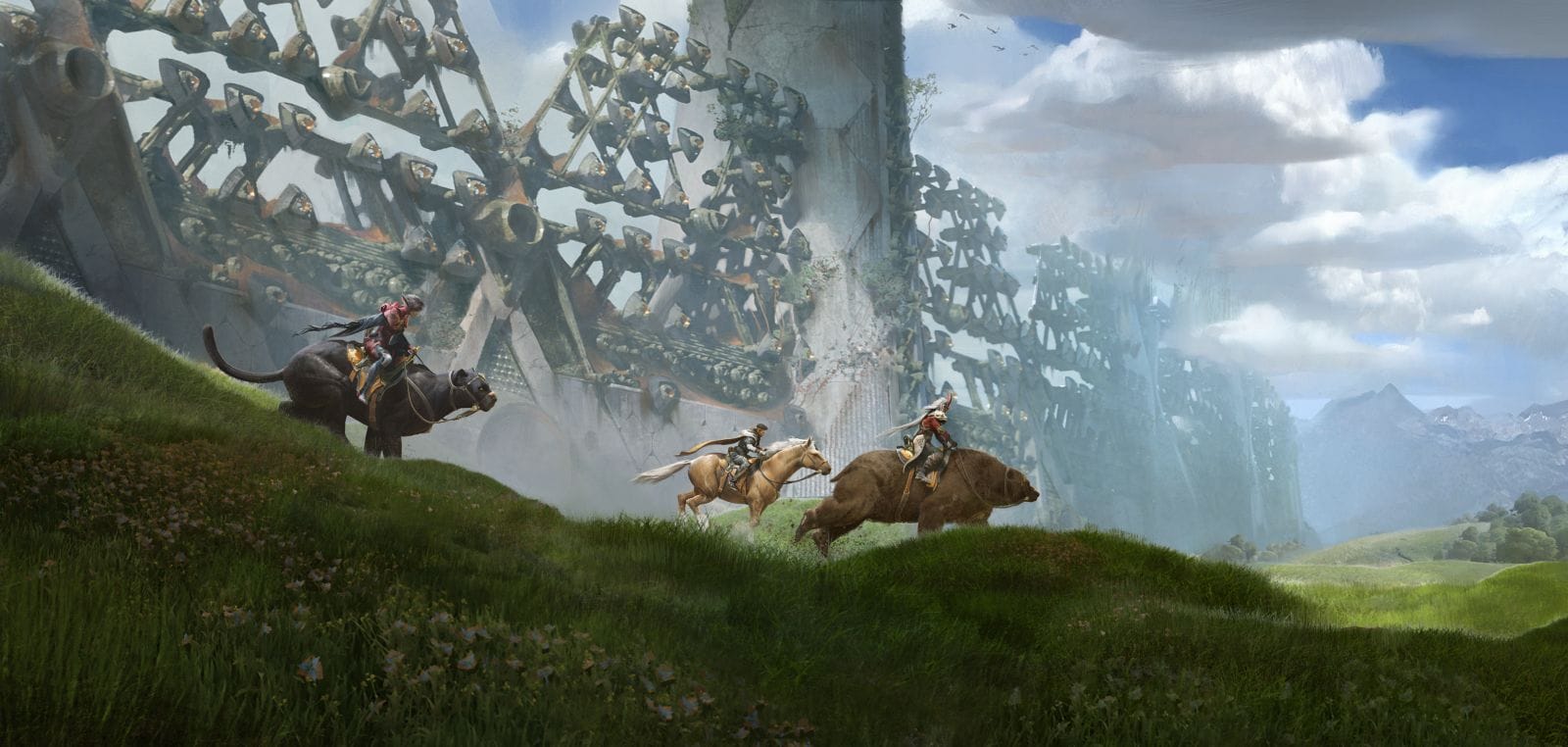
The Gear-up and Intercept phases, while distinct from each other, go hand-in-hand. Gearing up is self-explanatory. Upon leaving your base with a basic loadout you choose, you hop onto your mount and begin searching for upgraded supplies and gear. These can be obtained by harvesting resources and opening chests similar to battle royale games. The phase lasts around a minute and a half, then the Shieldbreaker forms at one of three points on the map as gearing up ends and intercept begins. The Shieldbreaker is one of the most important mechanics in the game, because it’s a giant sword your team uses to break down the enemy team’s shield, which is protecting their base.
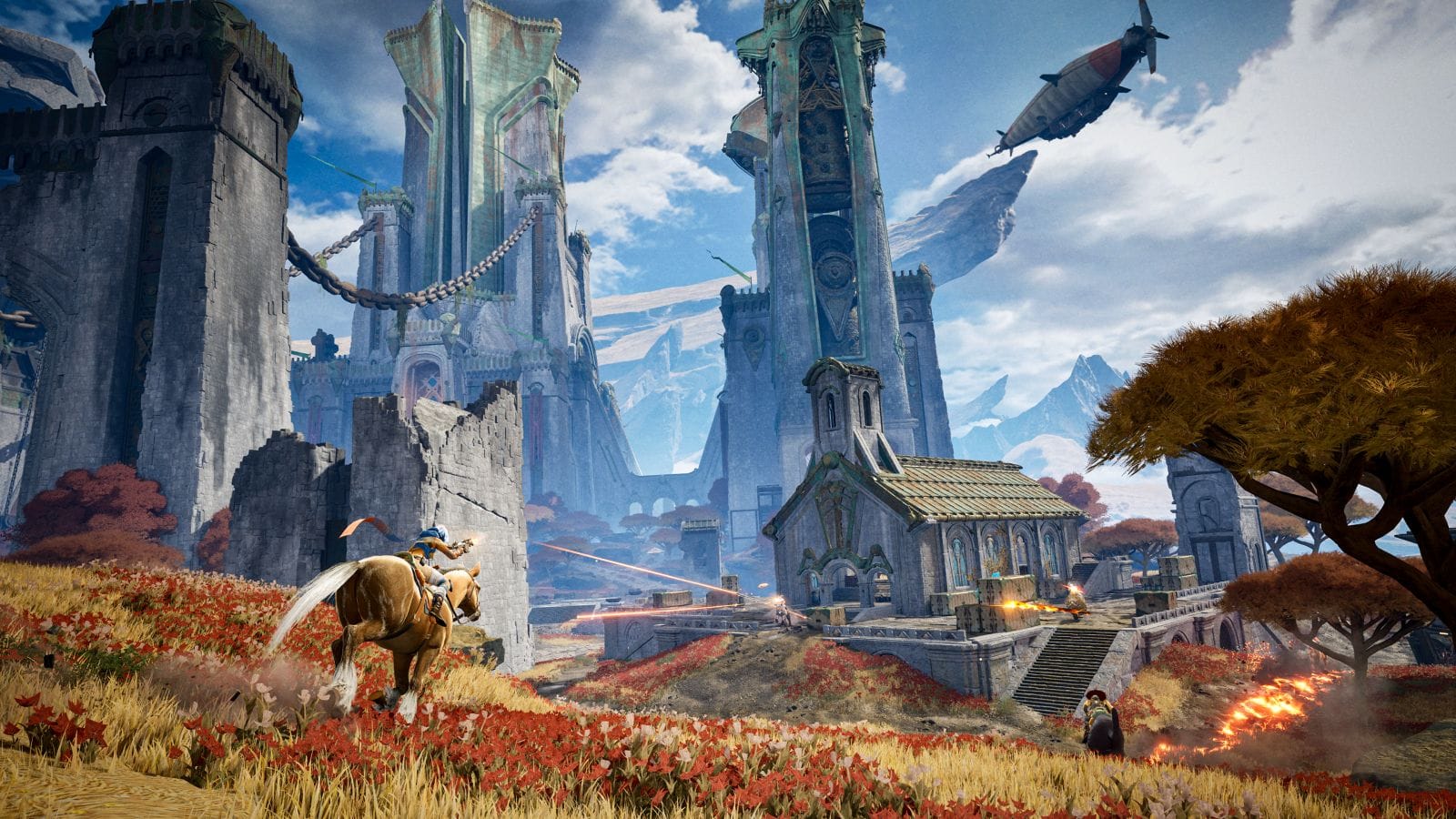
Intercept gets its name from your attempting to procure the enemy-wielded Shieldbreaker and vice versa. On a scale of one to ten, the combat intensity during these phases is from three to 7 or eight, depending on how aggressive teams are, which is a breath of fresh air. After all, constantly peeking over your shoulder to keep from getting third-partied in games or shot while looting can get tiring. Learning when to go for the Shieldbreaker, when to bait out the other team to pick up easy kills, knowing when to loot and prepare, or when to sneak up on an unsuspecting enemy are all different choices players must make during this phase, which allows for some strategy.
Saving the most fun phase for last: Raid. This is the whole point of Highguard – either successfully taking down an enemy base or defending your own until the last one standing or with the most health left over remains. Whether your team has successfully acquired and used the Shieldbreaker will decide whether you are attacking or defending during this phase. If you were able to successfully break the shield, get ready for a fight, as the combat intensity is cranked up to eleven! As a gigantic siege tower (reminiscent of the Lord of the Rings siege tower) rolls forth, you and your team invade the enemy base, attempting to plant bombs on three different generators and defend them until they blow up.
You’ll have to work quickly, as this window is also about a minute and a half long. Each base has 100 health, and by detonating generators, you damage the base. Defending works the same way, with the enemy team invading and protecting your base's health, with the opportunity to get damage in (and even win a match) if you successfully defend your base. If the base’s health doesn’t go down to zero by the end of the attack window, teams teleport back to their respective bases and repeat the entire process until one team’s base health goes to zero. By the way, there are respawns; you don’t get one limited life to get into the action except for a specific instance during the Intercept and Raid phase.
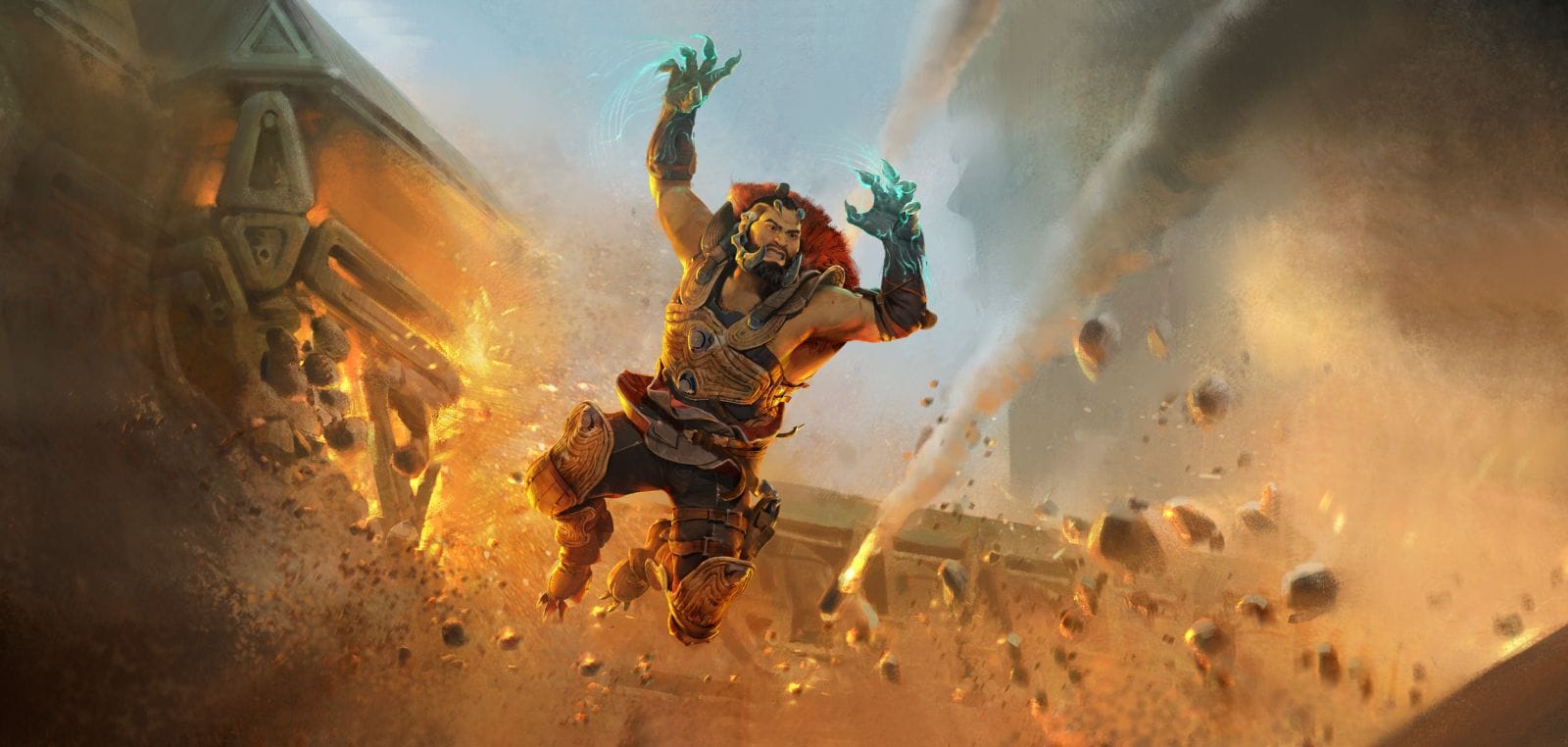
Now that you know how to play, let’s talk about who you’re playing as. I mentioned earlier how you choose a Warden to play as before each match. Each warden comes equipped with a unique kit featuring a tactical ability that refreshes on cooldown, an ever-constant passive ability, and an ultimate, which is the most impactful part of your arsenal, offering devastating attacks or game-saving support.
My favorite Warden to play turned out to be the most mobile one, Redmane. His tactical propels you forward a short distance, allowing for a small burst of quick movement or quickly tearing down a reinforced wall. Complimenting that is his passive, which grants a slight speed and reload boost on kill, and his ultimate, which decimates any walls in a small radius around him. It’s a blast zipping around the bases, creating space and providing an easy path for teammates to run toward.
Balancing out the arcane aspect of your loadout, you’ll also choose two starting weapons and one raid-busting weapon. Every Warden can wield every weapon, so the hero-shooter genre limitations are not present. Highguard contains a variety of guns that are classified into the usual range of options like shotguns, snipers, marksman, close-range, etc. I know the idea of magic-wielding and gunplay are a slippery slope of one side taking a back seat to another, but the blend is perfect in Highguard. Both are equally complementary to each other. I didn’t want to stop playing any of the characters because I wanted to dive more into learning various ways to use their kit in gunfights.
So much can be said about how fantastic the weapons are to use. The team knows how to make an FPS, and it’s evident in how comfortable the guns feel to move around and shoot. It’s hard to pick an early favorite, but the Dynasty (Highguard’s AK variation) packs a punch! Rounding out your loadout, Raid-busters are an underrated addition, where you can pick specific power or support type weaponry like a rocket launcher or zipline. Making use of those – in coordination with your team, of course – is vital to winning.
Simply put, Highguard scratches a gaming itch I didn’t know I had. The gunplay is already stellar, smooth, and receptive. The bases, characters, and overall presentation of the game are intriguing and representative of all the different ideas and inspirations the dev teams have drawn from. One of the smallest instances is a harvesting mini-game where, if you successfully do a quick time like event when harvesting, it can empower the ax to do massive damage when thrown for a specific Warden, or could make harvesting the next resource only take one hit. Then, if that thrown ax gets left behind, you can summon it to your hand, similar to Kratos from the newer God of War games. Highguard is a game that truly feels as though it was created by a group of people who genuinely brought to life THE game they wanted to play.
Of course, this preview is only tipping the surface into the grounded fantasy meets World War 1 ++ (Jason McCord's favorite description of Highguard) world that the team at Wildlight Entertainment has created. I left my gameplay session profoundly stunned at how much fun there is to be found in Highguard, and I’ll be playing it the second it releases for a long time. With so much depth left to explore, be sure to keep an eye out for our full review coming out sometime after the game fully launches on January 26th (TODAY!) for PC, PlayStation 5, and Xbox Series consoles!