If you’re like me, you’ve been looking for a new FPS game to sink your teeth into. Battlefield was my go-to, but the most recent entry left me disappointed. It seems like most of the FPS games dropping on Steam aren’t my kind of genre, either. That’s why I was so excited when I ran into Gallipoli at Pax East, the latest installment of the WWI game series by BlackMill Games. I was drawn in by the large banner depicting the Ottoman front, and I stayed for the compelling gameplay, which is fueled by a brilliant combination of new and familiar mechanics.
I hopped into a bot match and played a few different classes on the main gamemode, Expedition, which pits attackers against defenders. It’s like Breakthrough from Battlefield, but with some twists. For those uninitiated, defenders have around three sectors to protect while attackers try to take them, with the latter limited by a set number of respawns. Each sector has objectives within it, and attackers can’t move on to the next sector until they’re dealt with. The win conditions are straightforward: defenders whittle down attackers’ respawn tickets until they’re out, and attackers try to take all sectors. The smaller moments are what add spice to the matches and make one round stand out from another, like individual pushes, flanks and counter flanks, or a sniper taking position to take out a machine gun nest. Great moments fuel great matches, and great mechanics fuel great moments—Gallipoli has those mechanics.
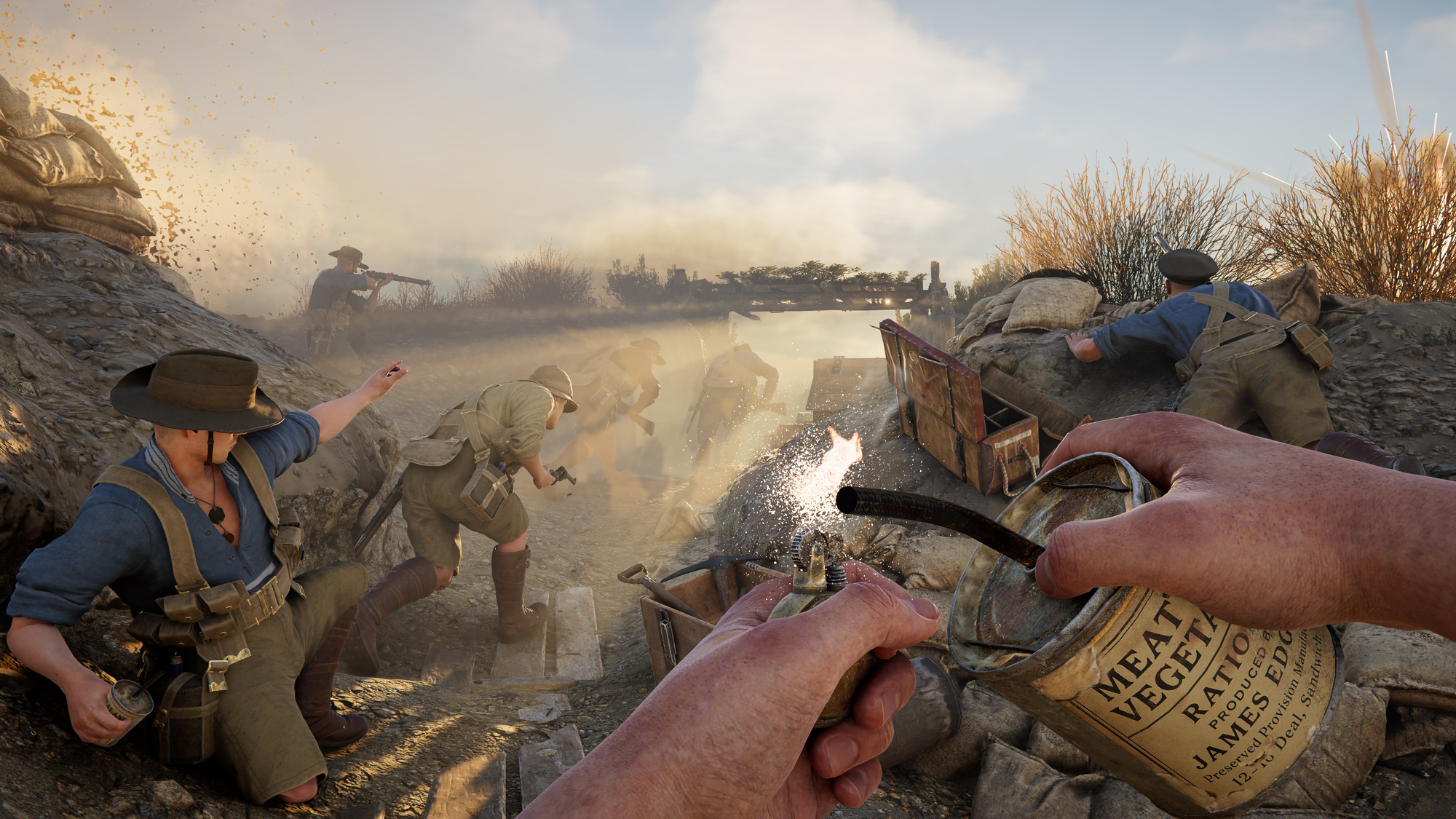
This game is thoughtful with its additions and changes to the genre and main mode. Instead of needing to take both objectives in a sector to move on, attackers only need to take one of them, the HQ. However, taking the other objective is usually beneficial, giving attackers a spawn closer to the HQ and preventing the defenders from taking advantage of the strategic objective, like machine gun nests and slingshot artillery. This game also adds an additional step to capturing objectives. Usually, in these kinds of game modes, attackers just need to stand on the objective in greater numbers than the enemy to start capturing, but in Gallipoli, objectives also need to be secured as well. Securing an objective takes the form of either detonating explosives or a building, which takes some time to set up. You can speed up the process through a little interactive mini-game, much like the Fortnite whack-a-mole, hit a specific spot when it pops up, type of interaction. Another feature that sets Expedition apart from similar modes is that attackers have ways of getting tickets back beyond completing a sector. If attackers kill 50 defenders or destroy a defender spawn, they get more tickets to stay in the fight longer. I like this change, as it gives highly skilled players and defenders in general a little more impact.
The gameplay within Expedition is fast and brutal. On the scale of COD to ARMA, this game falls somewhere in the middle with fast TTKs and rapid respawns, dedicated class roles with limited slots, and deeply immersive mechanics. Almost everyone is armed with a bolt-action or slow-firing weapon. From what I can tell from my playtime, only the machine gunner and heavy machine gunner classes have the option to go full auto, and they have to physically smack their weapon down using a build menu. Your reward for the higher time commitment and risk of staying stationary is a terrifyingly effective Maxim spitting out bullets and mowing down waves of enemies. For the most part, it’s one shot one kill unless the enemy you’re firing at is a great distance away from you. It’s important to note that some hits will down enemies but aren’t lethal, thus allowing teammates to revive each other. Any class can revive, but the medic role excels at it.
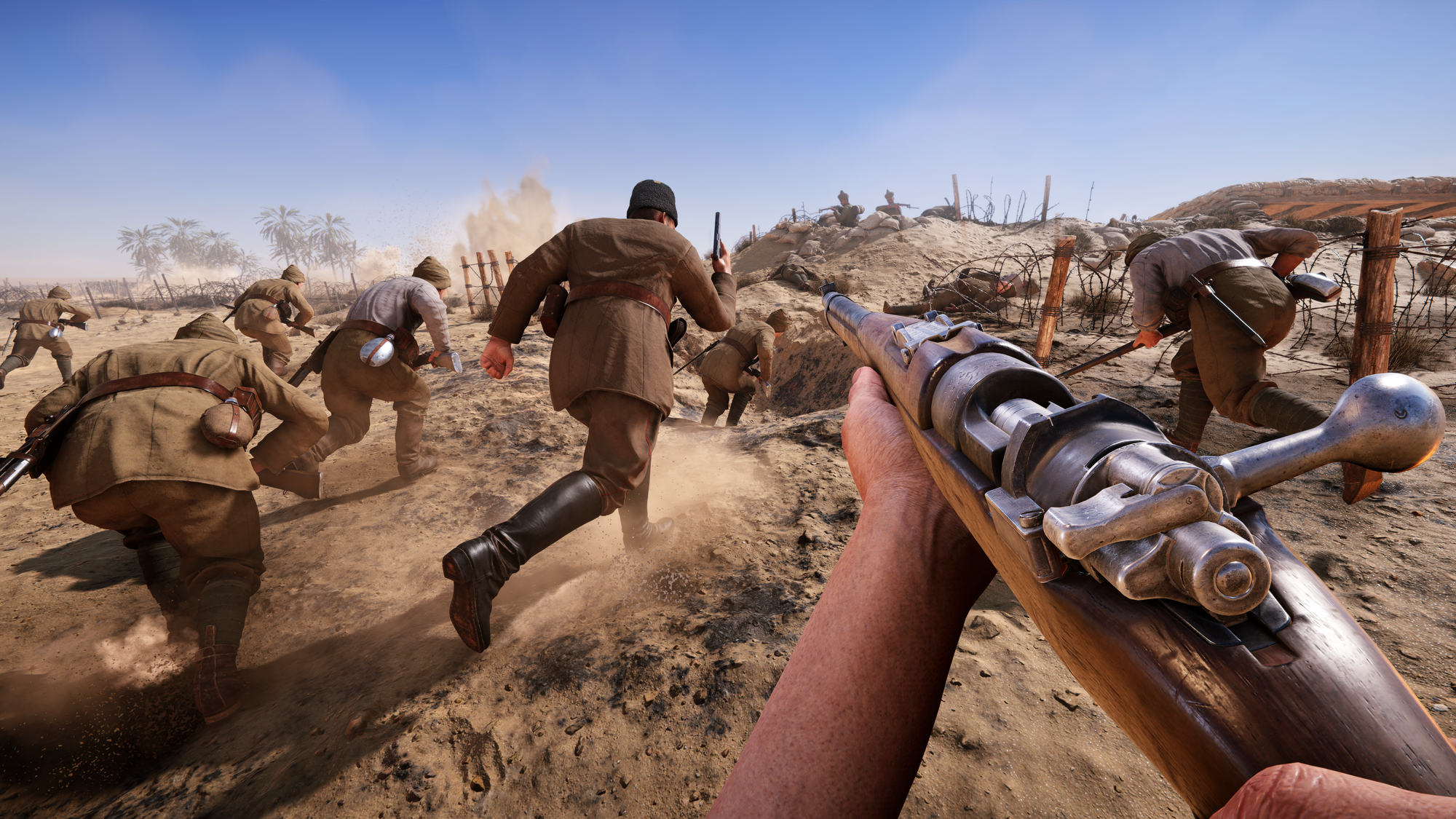
Even if your bullets fail to kill or down a player, they’re still having some effect thanks to the suppression system. If a player is suppressed, their reload animations may take longer or their gun could jam. This is part of the dynamic weapon system, where reloads change depending on what’s going on and each gun brings unique animations to the table. Combine this with the stellar audio design, and you have a deeply immersive experience. Fumbling with your rifle while reloading as bullets fly by you with a sharp whizzing sound is peak grunt fantasy. What’s equally satisfying is dishing out damage yourself and hearing that glorious, thumpy hit sound effect. Gallipoli also has toggleable gore, which I would recommend keeping on. I remember standing in a relatively quiet part of the battlefield, when an ally beside me randomly took a hit from some kind of artillery, sending his limbs rocketing away. Explosions also cause a visual shock effect and rock aim; I had my sights lined up on an approaching enemy when an exploding objective rocked the screen and threw my aim to the right, causing me to miss the shot. I wasn't upset at the miss; I was excited. Cool moments like that are what I crave in FPS games.
Zooming in on Gallipoli’s guns, beyond just looking and sounding great, they’re a staple of progression. The weapons you play with will level up over time, and hitting certain milestones will reward you with stacking bonuses, like reduced recoil or sway. There are even more immersive buffs like “Muscle Memory,” which reduces how much you look at your gun while reloading. On top of guns, players have access to character customization and cosmetics like outfits, facial hair, glasses, and more. They’re all authentic to the time period, and the developer told me, “We don't do crazy skins,” which was very refreshing to hear.
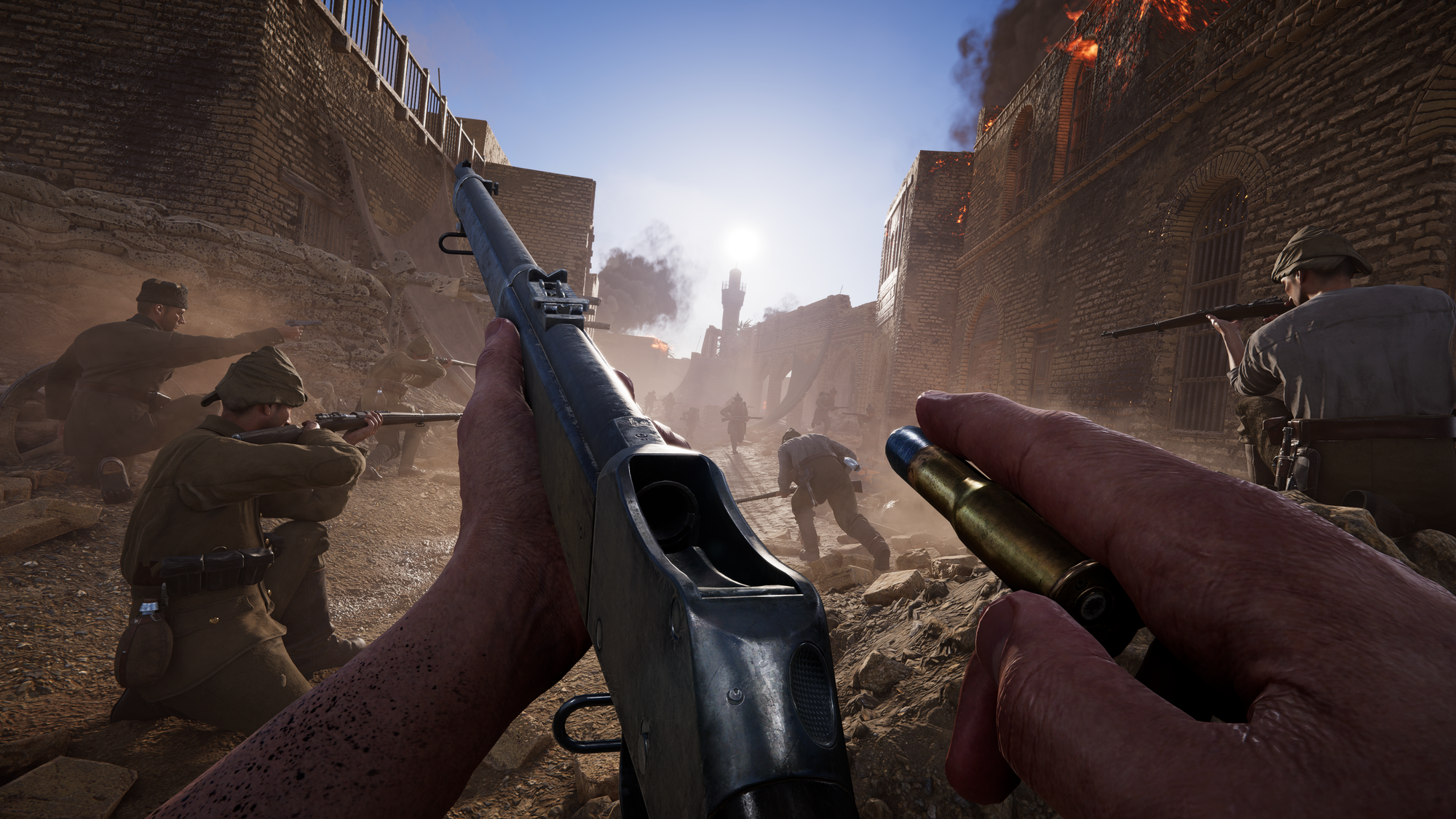
Gallipoli will probably be my go-to FPS when it’s released. It just nails so much of what I love in these kinds of games, from the deep, subtle, immersive mechanics to the flashy and brutal gore and explosions to the customization options that only add to the immersion. It’s clear a lot of thought and love went into this game.