There's been a mysterious cataclysmic event. The Atlantic Ocean is gone, leaving an arid desert between North America and Europe. No one knows how it happened. But we know who did it. Australia.
That's the premise for Rami Ismail's latest game, Australia Did It. I laughed when he explained how he landed on the ridiculous title. Instead of putting the blame on the same tired antagonists—Arabs or Latin Americans are examples he gave—Australia seemed like the right choice; they're powerful, wealthy, and could engage in such an experiment without it affecting them.
It's one of the examples of how Rami wants to do something different in a games industry that's reluctant to take risks and try new concepts.
Another example of doing things differently? Australia Did It is described as a turn-based tower defense and reverse bullet hell. What the bullet hell is that? It's the first I've heard of such a genre, and it's intriguing.
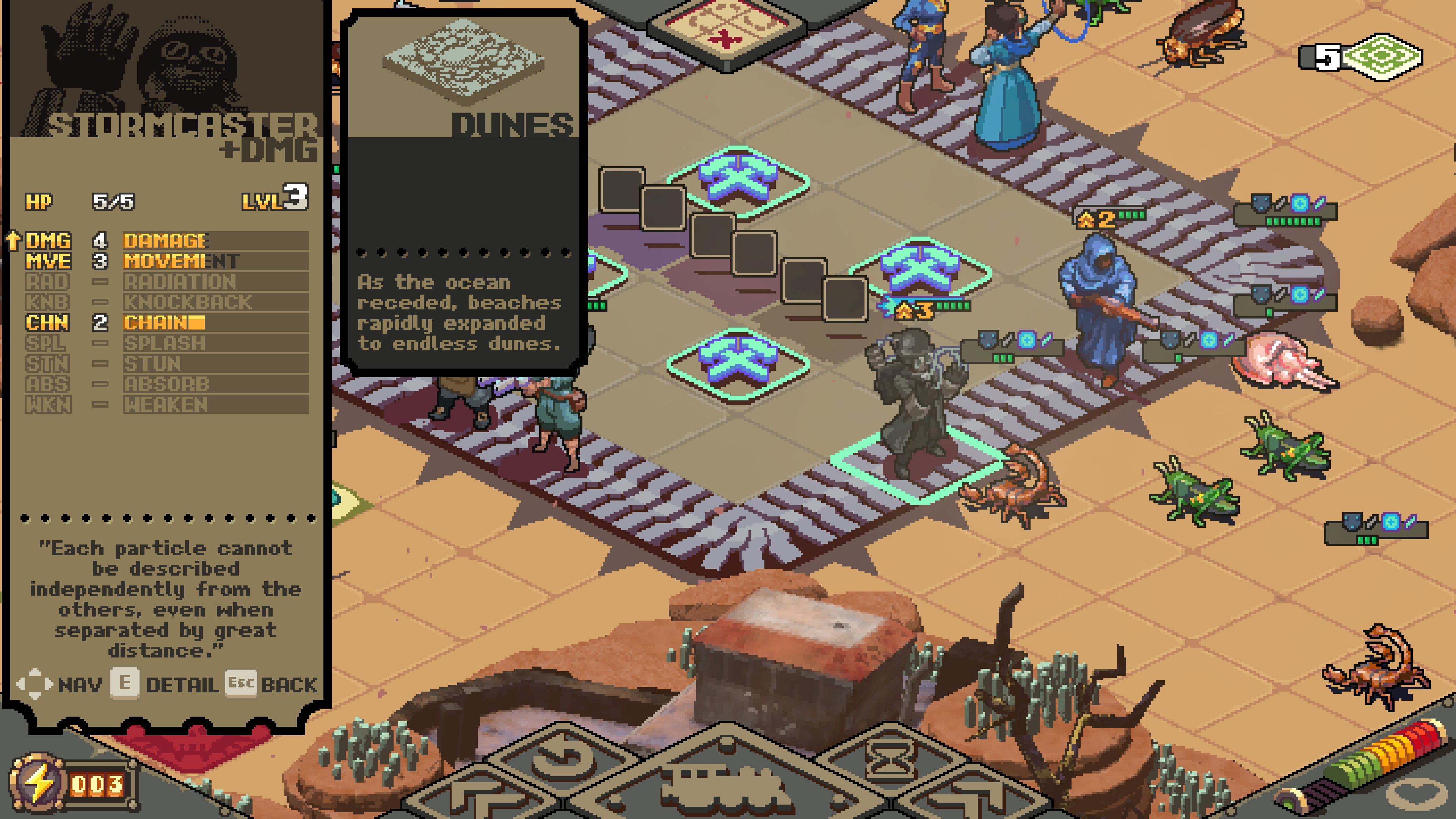
Australia Did It gives you control of mercenaries with a variety of abilities. Each unit starts basic. They get a gun. But after leveling them up, two units can merge, creating a more powerful unit. For example, a nomad and gunslinger combine to make a rocketeer. As you level up these fused units (if they survive), you can keep merging them, creating more powerful and absurd combinations.
According to Rami, experimentation is a big part of Australia Did It. Finding an optimal strategy is possible, but the most fun is discovering wild combinations, and from my perspective, it seems that you don't have control over the kind of units you'll start with, forcing you to merge what's available.
The goal of Australia Did It is survival. The mercenaries must defend a cargo train that's making its way across the evaporated ocean. This objective presents two modes: station mode and journey mode.
Station mode is the turn-based tower defense portion. You place mercenaries on a square conveyor belt that you can rotate while enemies approach the station from any side of the square.
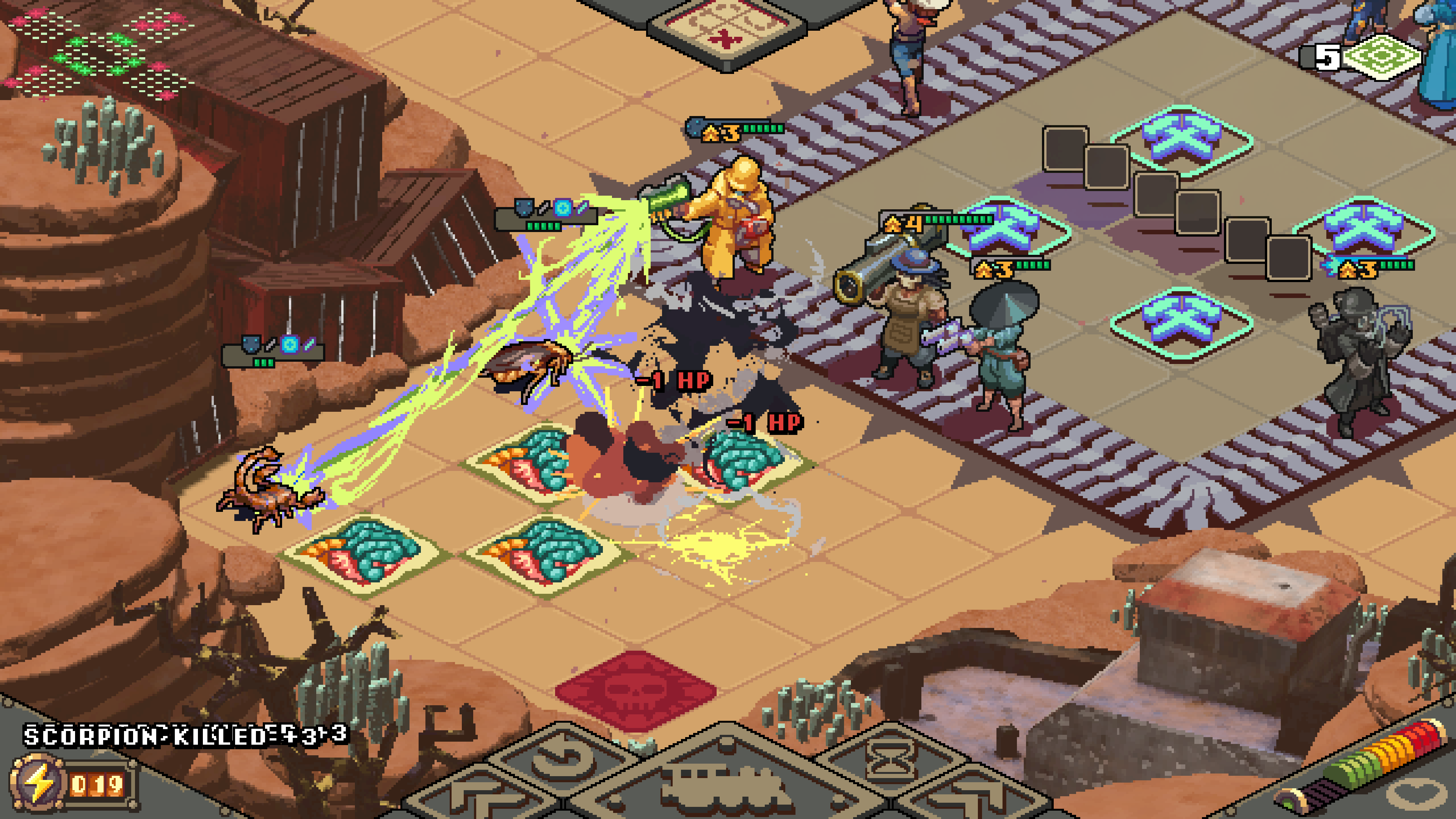
As Rami puts it, you can't beat station mode. You only survive until the recommended turn to depart the station. If you stay longer, enemies become significantly stronger.
From the little I saw, it's clear things can get overwhelming fast. It seems like it has rougelike vibes because you don't have total control over all scenarios, but you can make the best of what you're given. But if you fail, it's okay.
There's no indication this is a roguelike, but Rami wants players to know early in a round if they're going to fail or succeed, likely by how easily overrun players get. He doesn't want players to feel like they have to endure a run they know isn't going anywhere.
There are brainy tactical considerations: where you put your units on the conveyor belt, when to rotate the belt and by how much, which unit should take what shot, what turn should you merge your unit, should you sacrifice a unit for the sake of protecting the train, and many more considerations I'm sure I didn't pick up on.
I'm glad it's turn-based; the action is very condensed, and, similar to Fire Emblem, there are chess-like levels of thinking you have to do. If this were real-time, it would be very overwhelming.
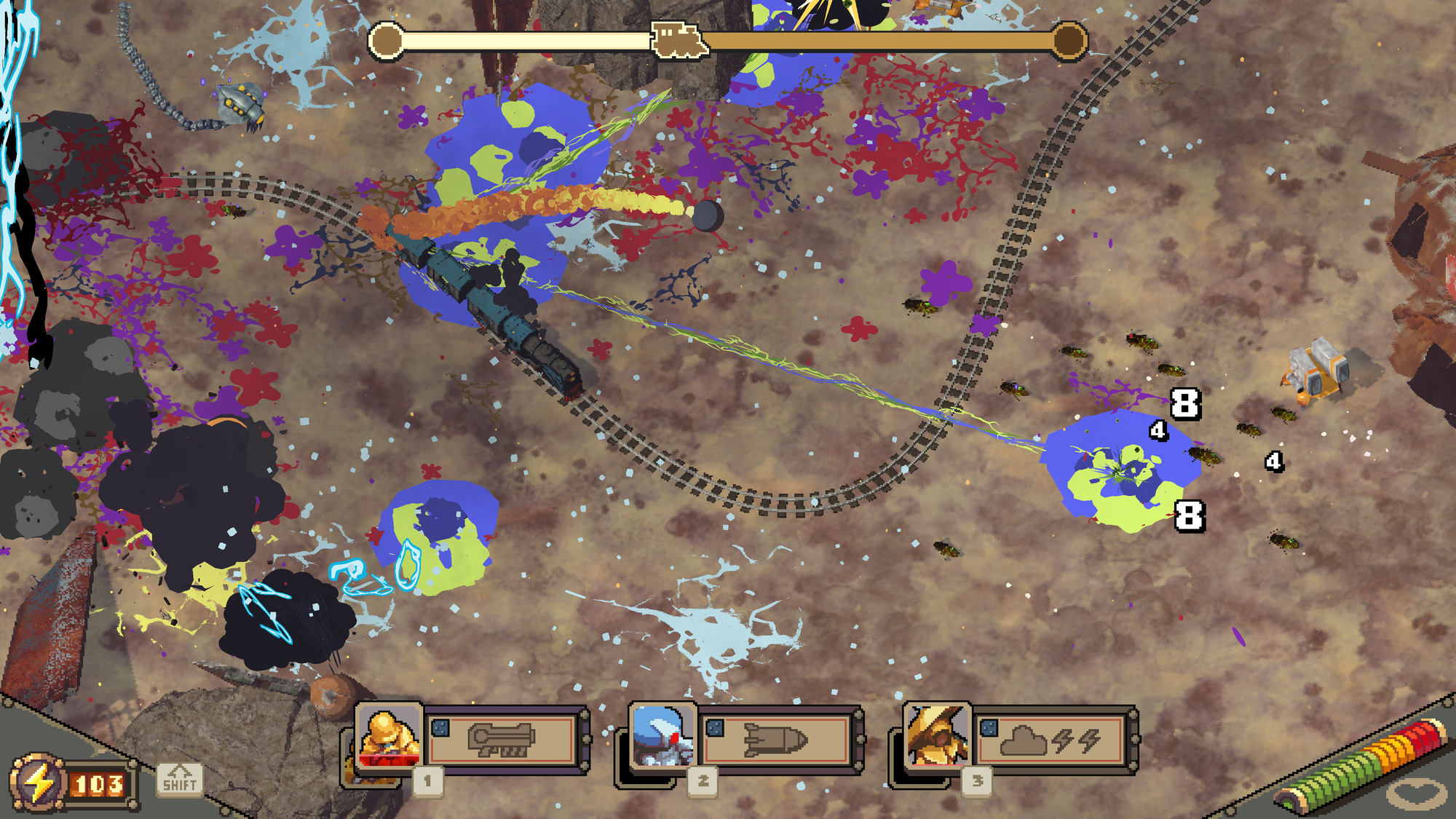
If you survive station mode, you board the train and enter journey mode—crossing the seabed of the Atlantic Ocean. This is where the reverse bullet hell comes in. What's a reverse bullet hell? As the developers describe it: you become the bullet hell.
As you travel, you're looking down from above at the train on the tracks, while bugs and creatures swarm. The mercenaries you've made in station mode are on the train, and you're shooting everything in your path. It's a lot of explosions and guts plastered everywhere. Again, your goal is to survive. The damage you take here continues forward into the next station, which compounds over time.
Journey mode looks like a nice break from the tactics of station mode, allowing you to just blow stuff up. There are still tactical considerations; for example, if you don't have the right mercenaries to deal area-of-effect damage to remove large groups of enemies, you might have a short run.
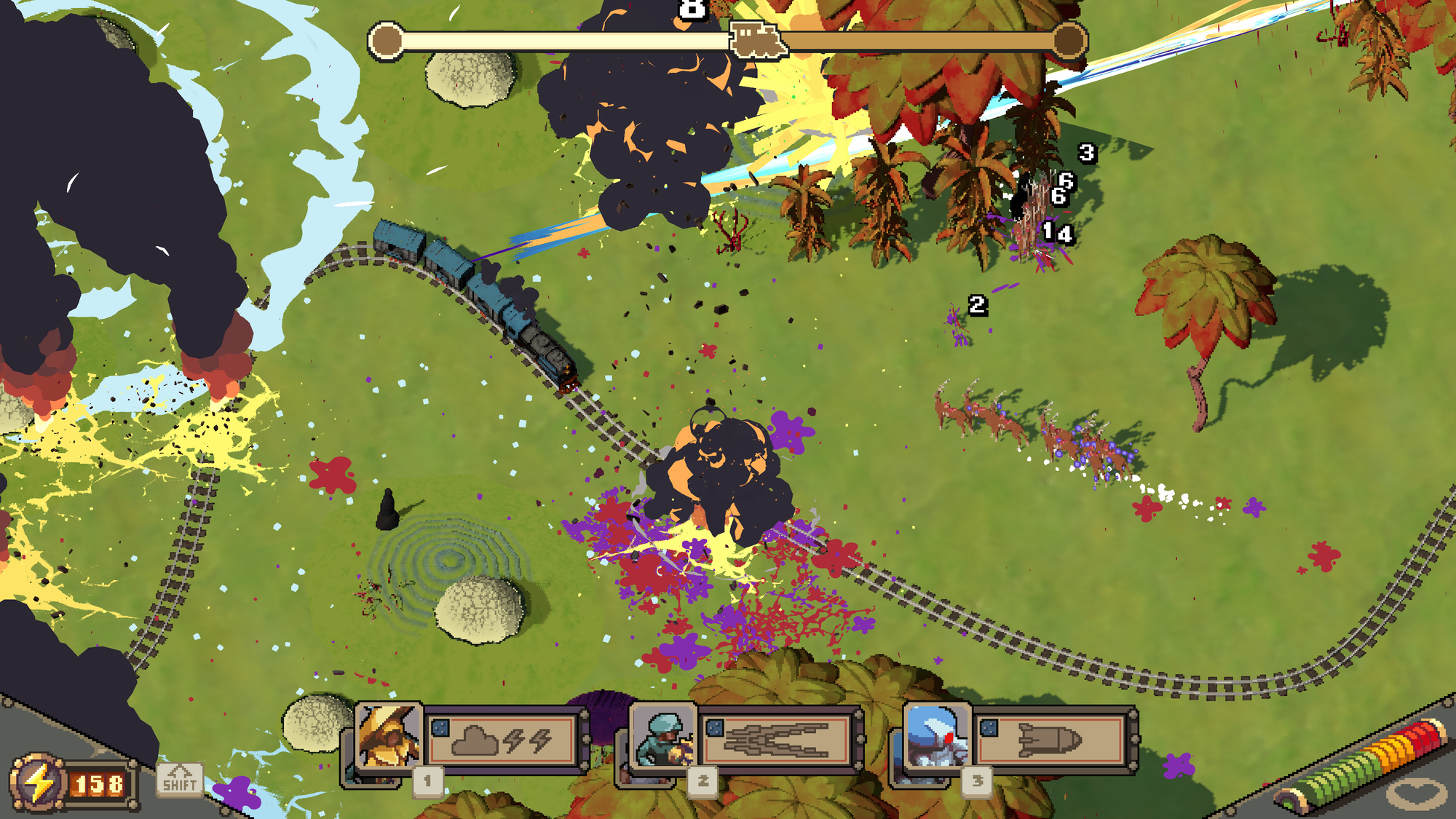
Australia Did It is nothing like I've seen before. It's a well-thought out experiment that's simple in presentation but looks tactical and outrageous.
A demo will be available during the February Steam Next Fest, and Australia Did It is planned for release sometime in Q2.