Over the holiday break, three of us got together to try out the custom faction gameplay mode in the new Twilight Imperium expansion, Thunder's Edge. What transpired was chaotic, compelling, and wildly unbalanced, and while it isn't a mode we're likely to table very often (or frankly, ever) in lieu of standard TI4, the experience was an interesting glimpse at how an incredibly complex game might cater to it's most die-hard fans.
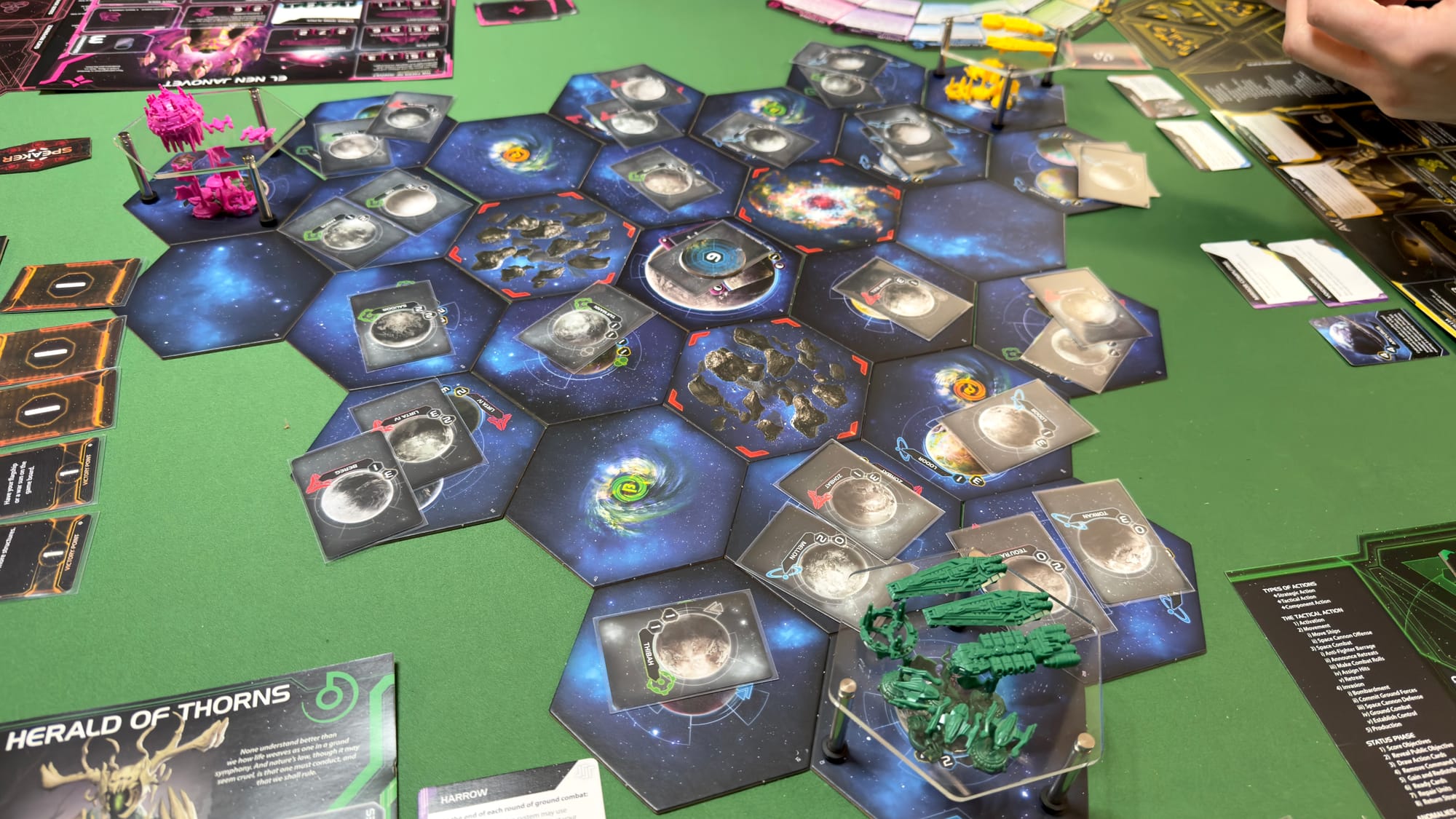
Twilight's Fall is a new game mode in the second expansion for Twilight Imperium Fourth Edition. Roughly half of the components in the expansion box are reserved for this modular alternate method of play, with the rest comprising of new factions, new tiles and components related to new gameplay elements much like the previous expansion (we'll talk more about that in a full review of Thunder's Edge on a later date). Twilight's Fall effectively jettisons all of the lore previously established, putting players in the role of one of the Mahact Gene Sorcerers (a faction introduced in the previous expansion, Prophecy of Kings. Gone are the lion headed space traders and insectoid warlords, only the Mahact remain. From the Twilight's Fall rulebook:
"Twilight's Fall is a new game mode aimed at advanced players, set in a possible dark future of the galaxy. The great civilizations have fallen, and the Mahact Kings war against one another, their wild gene-sorcery tearing the universe apart at its seams. Each player controls one of these Kings, and throughout the game splices together a unique set of abilities to create a customized and rapidly changing faction."
Now, how does this translate into gameplay? Before the game starts, players do a draft of faction cards to gather their starting units, homeworld, and starting speaker bid. In speaker order, they pick a king (Essentially a bare-bones faction and player color), and finally hold the final pre-game draft for starting abilities and upgrades. From then on, players will have the option to build on that faction even more through 'splicing', essentially building a custom unique faction during gameplay. These are presented as options on the eight strategy cards that replace the ones from the base game. Pretty much every other aspect of the game is unchanged.
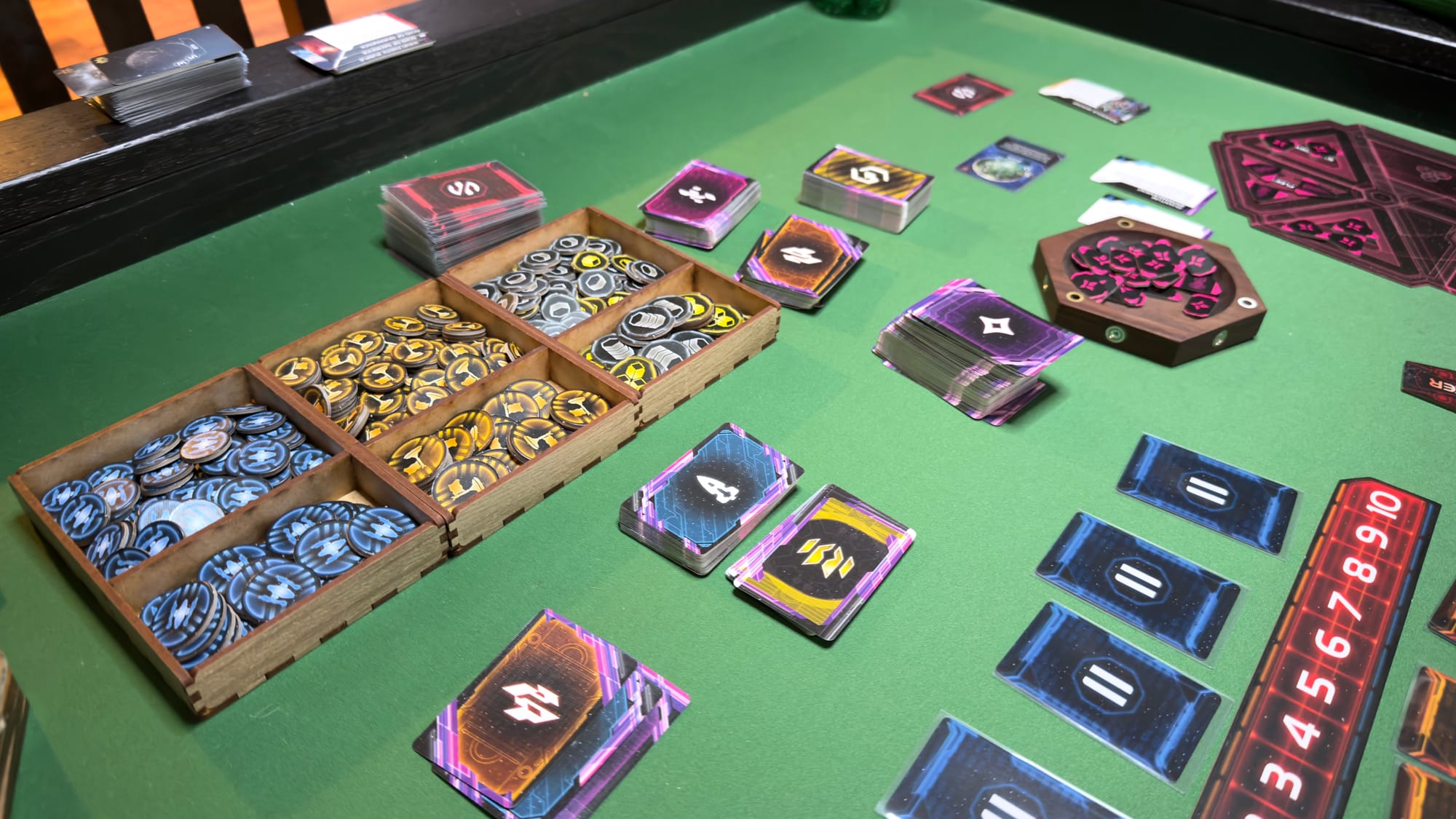
When we heard about this gameplay mode, we were intrigued at the thought of such a modular approach to the factions; How does it work? How does it play? How does this effect my go-to strategies? Let's check in with our players and find out how the session went:
Nick Dubs, Senior Tabletop Editor
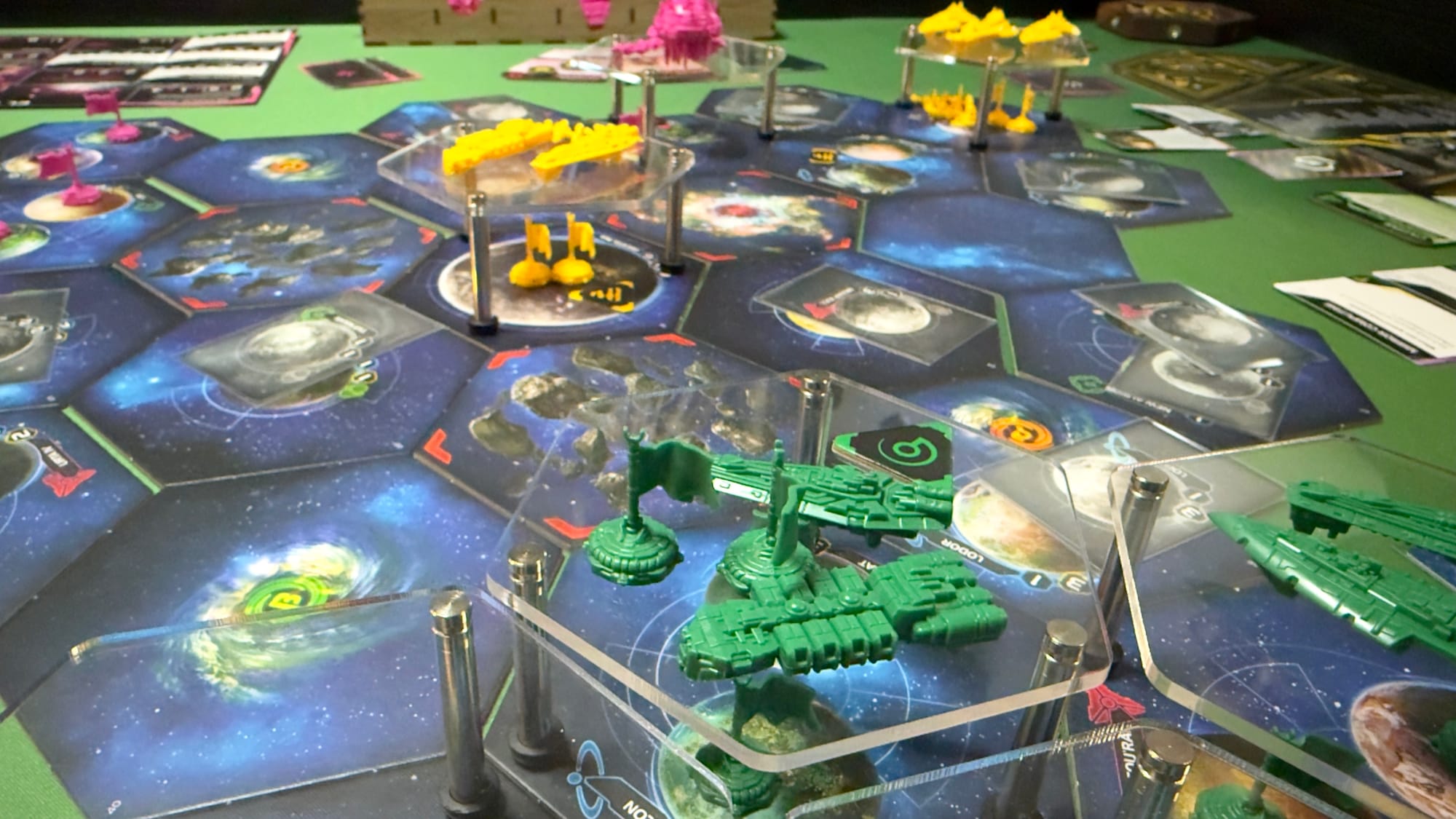
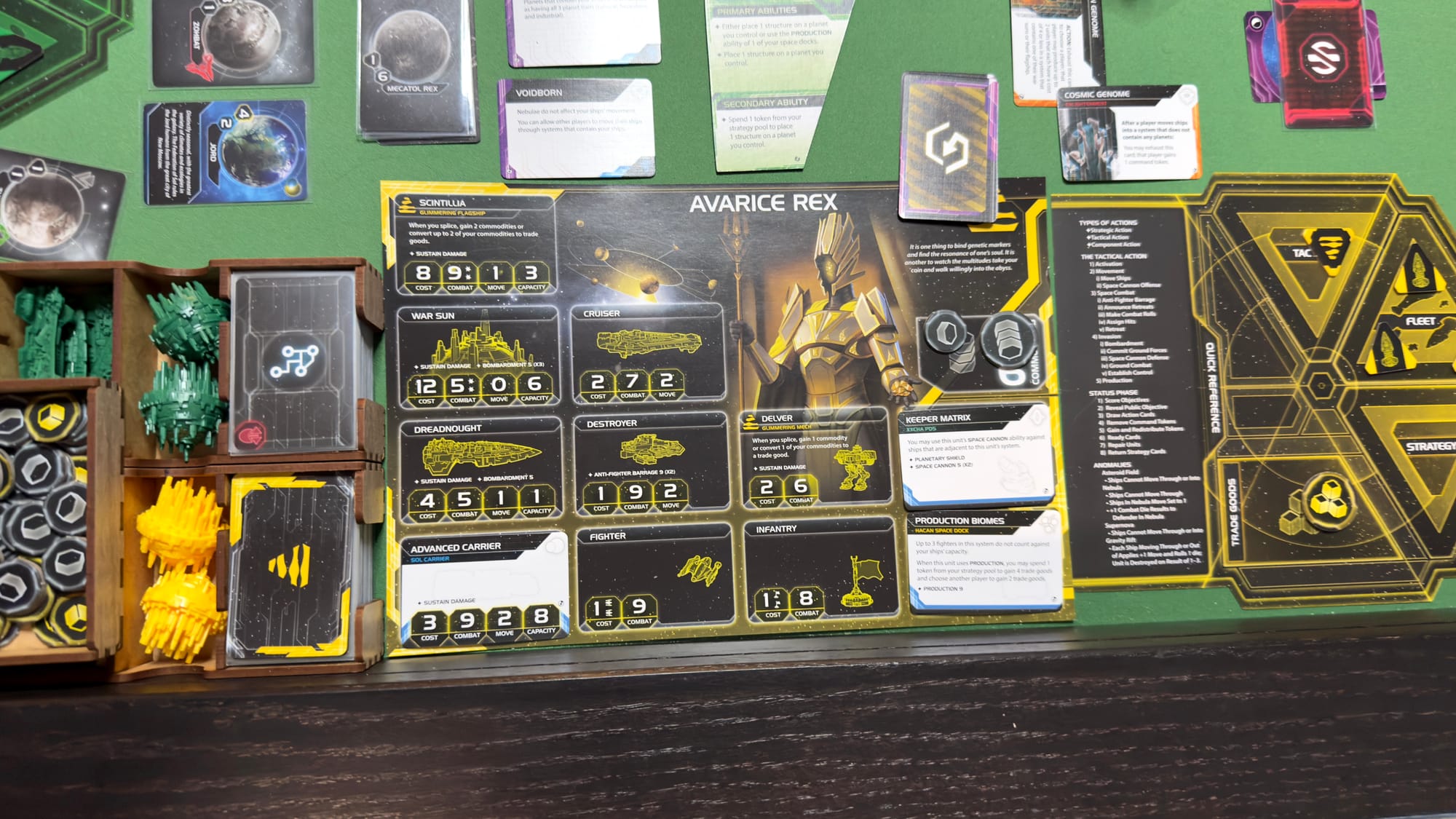
Given the best thing you can do in TI4 is be so strong that you can gobble all the planets you want that the table can't do anything about it but hurt you in the agenda phase (and Twilight's Fall eliminates agendas), I decided to see how hard I could go in that direction. I entered the first round with a war sun, L1 super dreadnaught tech, the ability to shoot out a free dread for the low price of converting Dick's trade goods into commodities, and ghosts' ability to make all the wormholes interconnected. Since Dick refused my kind offer of protection, I started gobbling up his planets. He tried to set up a PDS network to fight back, but again given the module's lack of GLS, I was able to just fighter screen whatever hits he threw my way before they even had a chance to hit anything important (Since I had the flagship that copies all your non-war sun ship techs, I was able to sustain damage without worrying about direct hits anyway). In the second and third rounds, I was able to give all my space docks a gravity rift I didn't have to roll for, upgraded my war suns to one that bombarded an entire wedge, and picked up Argent's destroyer to deal with anyone else's fighter screens. I used my side fleet to wipe out Dick's main one over Mecatol Rex while losing a fighter or two and used a strategy secondary to pump out a third fleet to drop into Mike's backyard. Ultimately, by the time we called it, I had put myself in the lead despite spending my time on conquest. None of this is a brag, just pointing out that Fall warps our beloved TI to a point that violence is a viable strategy.
The rulebook for Twilight's Fall has a disclaimer saying it's an advanced variant, and it definitely feels like something for people who have played so much TI4 that they can easily parse everything getting tossed in a blender. It's an interesting concept, but the removal of Agendas as a reactionary lever puts the onus on the table to proactively keep a snowball from starting because by the time it's in your face, you've got a galactic threat that may not be stoppable. I'm overjoyed that this exists and would love to get a full game in sometime, just understand that it's less variant and more entirely different game using a lot of the same ruleset, like if Brass: Birmingham was marketed as a variant of Lancashire.
Dick Marshall, Tabletop Editor
I don’t dislike this mode of play. However, I don’t think I’d ever choose to play this mode over playing Twilight Imperium without this mode or playing a different game, and I have to wonder who this mode is really made for. Presumably, this game mod is for groups that basically only play Twilight Imperium, and have played it into the ground.
This game mode is long, complex, highly random, and unbalanced. I love highly random and unbalanced games - but I don’t necessarily want my long, complex 4X games to be highly random and unbalanced. The entire time I was playing this mode, all I could keep thinking about was that I’d rather be playing Twilight Imperium without this mode for a 4X game or playing Cosmic Encounter for a more random and chaotic game.
Of particular note, it is entirely possible for one or two people to draft powerful and unexpected synergies during the initial drafting while the others get a grab-bag of non-synergistic powers leading to situations where someone might clearly dominate the table from the start in a game while the rest of the players have to sit and watch in a game that might run several hours. If Twilight Imperium were a short game, I think this level of swing and unfairness could well work, but Twilight Imperium isn’t a short game.
Mike Dunn, Editor-in-Chief, Tabletop
So, technically I have only played Twilight Imperium once? Sure, I enjoyed it, and it felt a lot like the aggressively pvp area control games that took all day to play that I cut my teeth on in the eighties, but I had no pretensions as to whether or not I stood a chance against two much more experienced players. I held on to a sliver of optimism that the subversion of the core rules in Twilight's Fall might act as something of an equalizer between myself and my opponents, that the constantly evolving nature of the faction building during the course of the game might give me a path towards, well, towards at least not coming in last place...
I think it was around turn 3 or 4 that I was disabused of that notion.
Twilight's Fall is basically a Twilight Imperium mechanics blender that gets progressively more chaotic and unstable as the game goes on. Abilities and upgrades once synergistically grouped and distributed among 30 factions in the standard mode of play are separated and shuffled into three decks of cards, picked over by players both before and as 'splice' actions during the game. The resulting combinations range from game-breakingly good to utterly ineffectual, it really just depends on what cards you get to chose from. Let me be clear- this is not a balanced game, there are no forced handicaps to offset a particularly powerful ability, or worse, nothing to stop a totally overpowered combo. That you can, as an action add a new ability on your turn, with your opponents also following with the secondary action, choosing from your castoffs, thus potentially changing the entire game's dynamic in a single player's turn, is just insane in a game like TI4.
As someone who analyzes and deconstructs the games I play, I found this experience fascinating in how it laid bare all of the building blocks of Twilight Imperium. I will never play the standard game enough to intentionally maximize the effects of my faction building or efficiently adapt my gameplay to a random new ability draw, but just sifting my fingers through the raw material of the game and recognizing the potential was like breathing in pure oxygen. As an aside, the potential for using the decks and components to homebrew your own variant or buildouts is IMMENSE.
Twilight's Fall by all appearances appears to be a gift to the most die-hard players of the game. Fourth Edition at this point is likely not getting another expansion after Thunder's Edge, so the team at Fantasy Flight gave the keys of the game to their players. It is unclear how much this game mode will ever get played, but frankly, it is kind of amazing it even exists at all. Stay tuned to GamingTrend for more coverage of TI4 and Thunder's Edge!