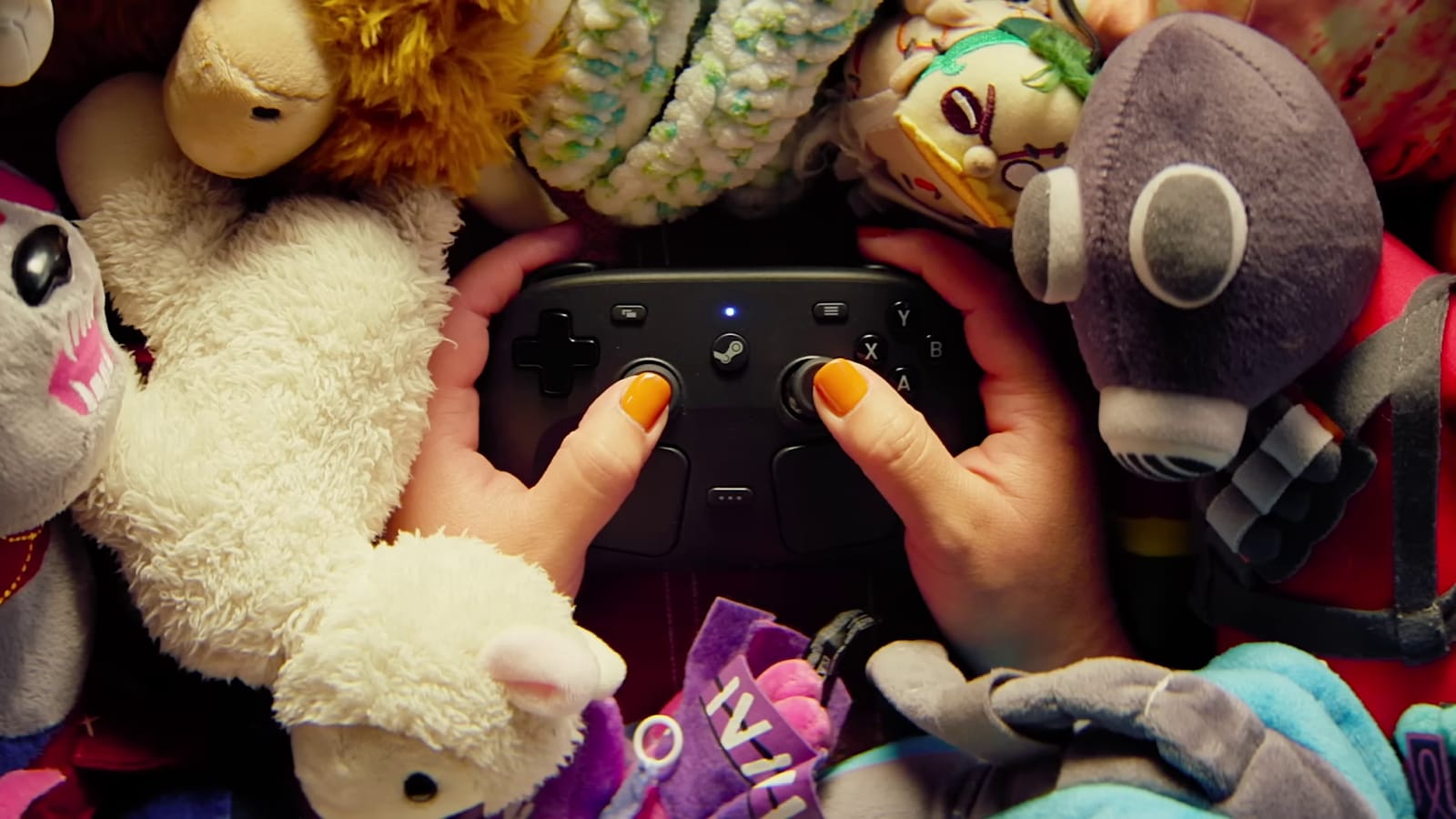
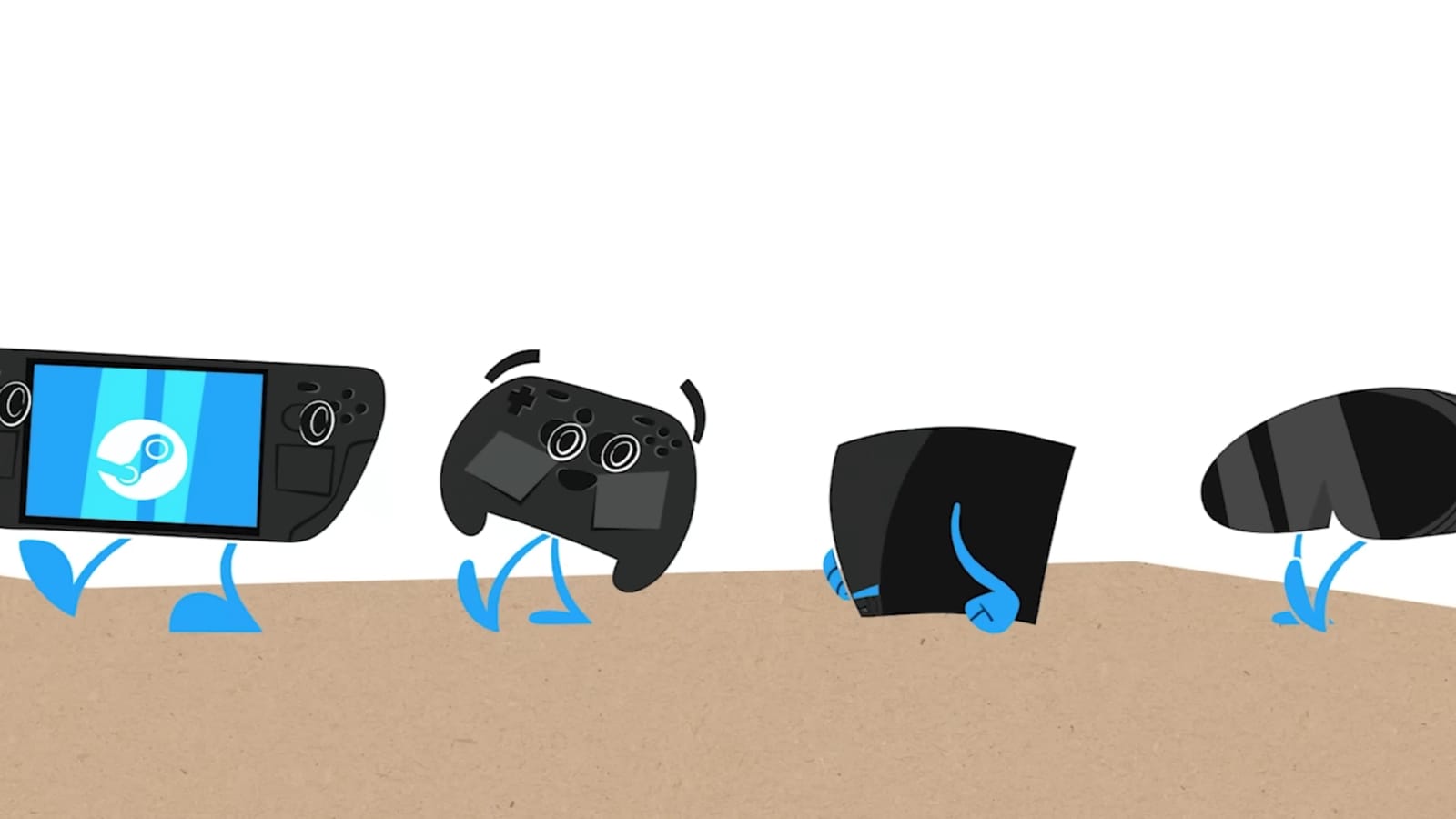
Out of nowhere, as they are wont to do, Valve recently announced three new pieces of hardware: the Steam Machine, the Steam Frame, and the Steam Controller. The Steam Controller, not to be confused with the Steam Controller from 10 years ago, takes the button layout of the Steam Deck and puts it into a controller. You get a full suite of buttons along with two trackpads to make gaming with a mouse cursor a bit easier. It looks a bit bulky, but as we haven’t gotten our hands on it yet, I’ll reserve judgement for now; I initially thought the Steam Deck looked a tad uncomfortable, but it actually feels great in the hands. The Steam Frame is a VR headset with a twist. It’s streaming focused, communicating with your PC wirelessly to play your entire Steam library. It uses a USB dongle to stably stream over dual radios, with one radio dedicated to audio and visuals while the other connects to Wi-Fi. As someone with terrible Wi-Fi, this sounds like an amazing solution to my lack of space near my desktop PC. It also uses something called Foveated Streaming to dynamically adjust the detail of the streamed image using eye tracking data, meaning it’ll only fully render where your eyes are focused. Again, we need to see it to believe it, but the concepts are very promising.
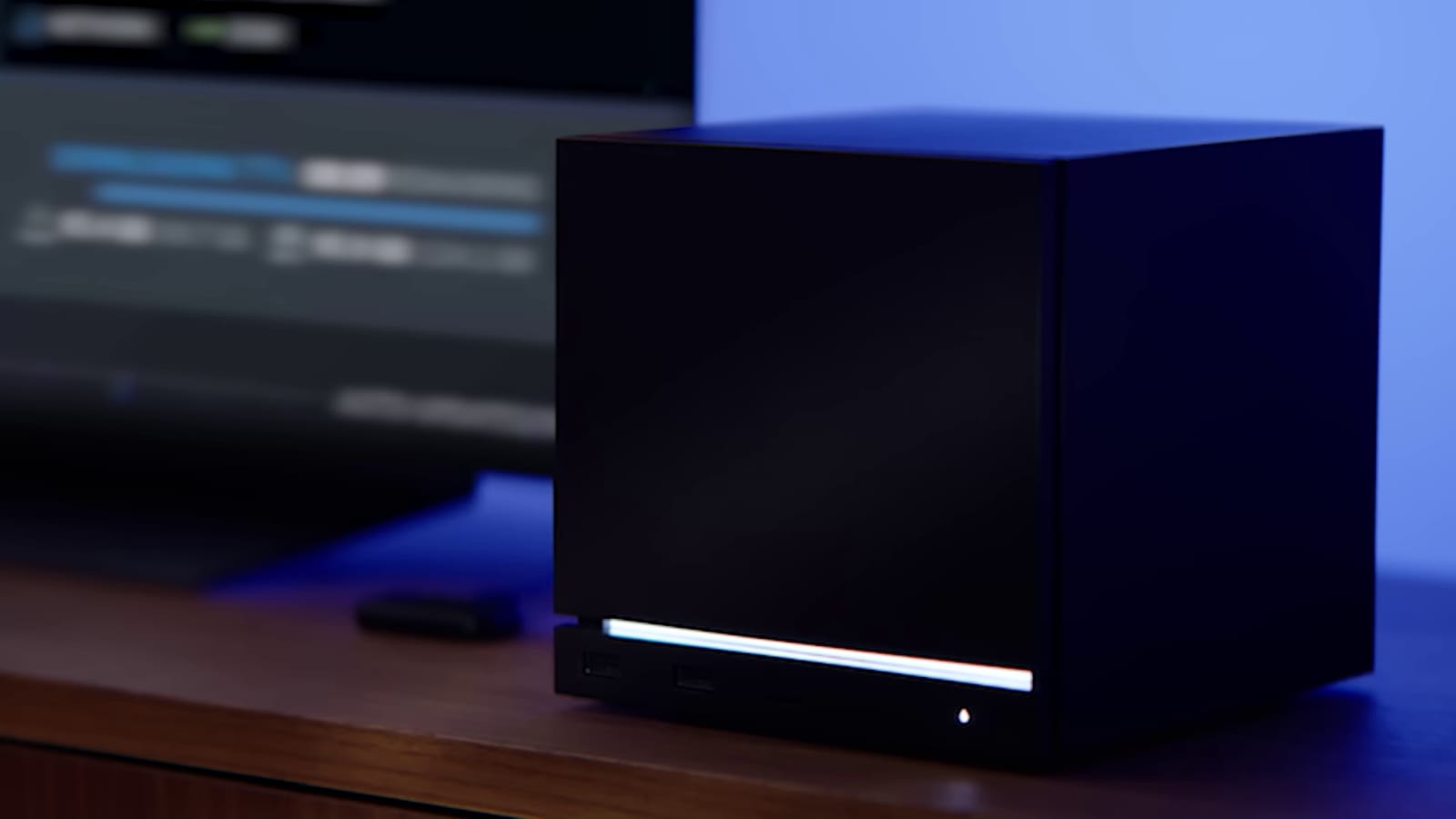
The most exciting announcement, and the subject of this article, is the Steam Machine (not to be confused with the Steam Machine also from 10 years ago). The Steam Machine is a PC. That’s it. It’s shaped like a cube (which people have taken to affectionately calling the GabeCube), has a replaceable front panel for decoration, and runs SteamOS like the Steam Deck, but it’s just a PC. Just hook up your Steam Deck to a TV and imagine your games are running and looking much better, and you can essentially get the same experience before it releases early next year.
And yet, that simplicity is what’s so exciting about this cute lil’ square. If you’re like me, your PC serves two purposes: work and gaming. My big desktop computer is set up below a desk with two monitors, so, for example, I can write this on one monitor while I have the Steam Machine’s store page on the other to get all my facts straight. When playing a game, my 2K 170hz monitor displays the game while I have Discord open on the other. It’s a great setup for both modes, but sometimes I just want to sit on the couch instead of my desk chair and play a big, fancy new game on a TV. It’s not exactly something I can do since my Wi-Fi is terrible for streaming and my PC is too far from a TV to reasonably connect.
Lately I’ve been playing Kingdom Come Deliverance II in my free time, after getting it and all the DLC in a recent sale, and it’s been a blast. It looks gorgeous on my computer, and the Steam Deck can run it reasonably well at ~30 fps on the lowest settings with FSR in Quality mode. It’s super blurry and the text is barely legible, but the fact that I can play it for about an hour or so away from my desktop is a worthwhile trade. The battery life is certainly not ideal, but I’ve been plugging my Deck into my TV to get that consolized experience. It’s still 30 fps, super blurry, and fans scream bloody murder, but I can get that console experience.

The goal of the Steam Machine, it seems to me, is to deliver that same console experience totally uncompromised. With a semi-custom CPU and GPU, the Steam Machine claims to be able to achieve 4K at 240hz or even 8K at 60hz. Again, we haven’t experienced this for ourselves, but assuming this is true for the latest AAA games, that’s pretty dang impressive. It’s all up to the cost whether that’s worth it or not, and Valve has stated the price will be comparable to a modern, pre-built PC (so anywhere from $500 to well over $1000), but the idea of having a small PC that’s as easy to use as my PS5 is a very tempting prospect. With the Steam Deck, you also get portability, so long as the game supports Steam Cloud and Steam Cloud decides to work properly. So long as you don’t want to fiddle with Linux too much, SteamOS is extremely user friendly too, so you can just wake up the Steam Machine with your Steam Controller, pick a game, and go. If you do want to fiddle with Linux, you open up the whole world of PC gaming, including other launchers like GoG and Epic, emulation if you want to rip your own games (Dragon Quest VIII in 4K here I come), or, heck, even old physical games. I for one can’t wait to attach a CD Drive to this thing and play 1998’s Detective Barbie from the comfort of my couch (Barbie has some killer games, you’re just mean).
I imagine my use case isn’t all that common, however. Especially the part about Detective Barbie. But, the Steam Machine seems like the perfect entry point for PC titles into the console market. The biggest appeal of a console is the ease of use and the guarantee that games you buy for it will work (CERT is there for a reason). You can’t exactly get the latter consistently, as even Valve’s verification badges for Steam Deck aren’t fully reliable, but can we really say the same about consoles? Cyberpunk 2077 may have gone on to be one of the best games ever made, but when it launched it was barely playable on anything but Google Stadia for some reason. I’m not saying it’s a good thing you never know if a game will actually run well when it launches, but at least it’s… consistent? Regardless, the Steam Machine looks to have all the benefits of a PC with the convenience of a console, and if it can break out of the niche market the Steam Deck and other contemporary handheld PCs live in, it could become another pillar of the console market.
Despite being the most popular handheld PC of the bunch, the Steam Deck has only barely outsold the Nokia N-Gage, according to IDC, at around 3.7 million units shipped as of February, 2025. The handheld PC market as a whole has yet to outperform the PS Vita, at 6 million units combined vs. 10-15 million units. The Switch 2, which launched in June of this year, has already sold over 10 million units, while the PS5 has sold more than 56 million units as of April 30th, 2024. These PCs are very, very niche products compared to the rest of gaming. Valve simply isn’t going to capture the massive audiences of Nintendo, PlayStation, or people who buy a console just to play the latest sports game then return it when they’re done. Make no mistake, the Steam Machine will still live its life within a niche.
But there’s no reason Valve can’t make that niche bigger. If priced competitively, maybe with the 512GB model at $500, I could see the Steam Machine appealing to the average consumer, so long as marketing makes the product easy to understand. That would also necessitate expanding sales outside of the Steam Store. Right now, the only official way to buy a Steam Deck is from the Steam Store, though there are resellers on Amazon as well as used/refurbished models in brick and mortar stores. If Valve wants to compete with the console market (they may not, which would make this a pointless exercise, but hey you do you), they’d need to start selling this thing on non-Steam storefronts and maybe even big box stores. It would also need to come with everything it needs to set up and play quickly, including the Steam Controller and an HDMI cable. If everyone is already annoyed when their new phone doesn’t come with a charger, people buying what they see as a game console would be furious if they open up the box and don’t find a way to interface with the thing or plug it into their TV. If Valve wants to be a step above the competition, throw a game into the bundle. This could be something big and popular like Battlefield 6, or just having Aperture Desk Job pre-installed. The point is: any Joe, Jane, or Jackie Shmoe buying a Steam Machine needs to understand what it is immediately and be able to start using it easily. PC gamers who are already interested in the Steam Machine are the only ones who will want to fiddle around with all the settings and stuff, most people just want to play their games with as little friction as possible.
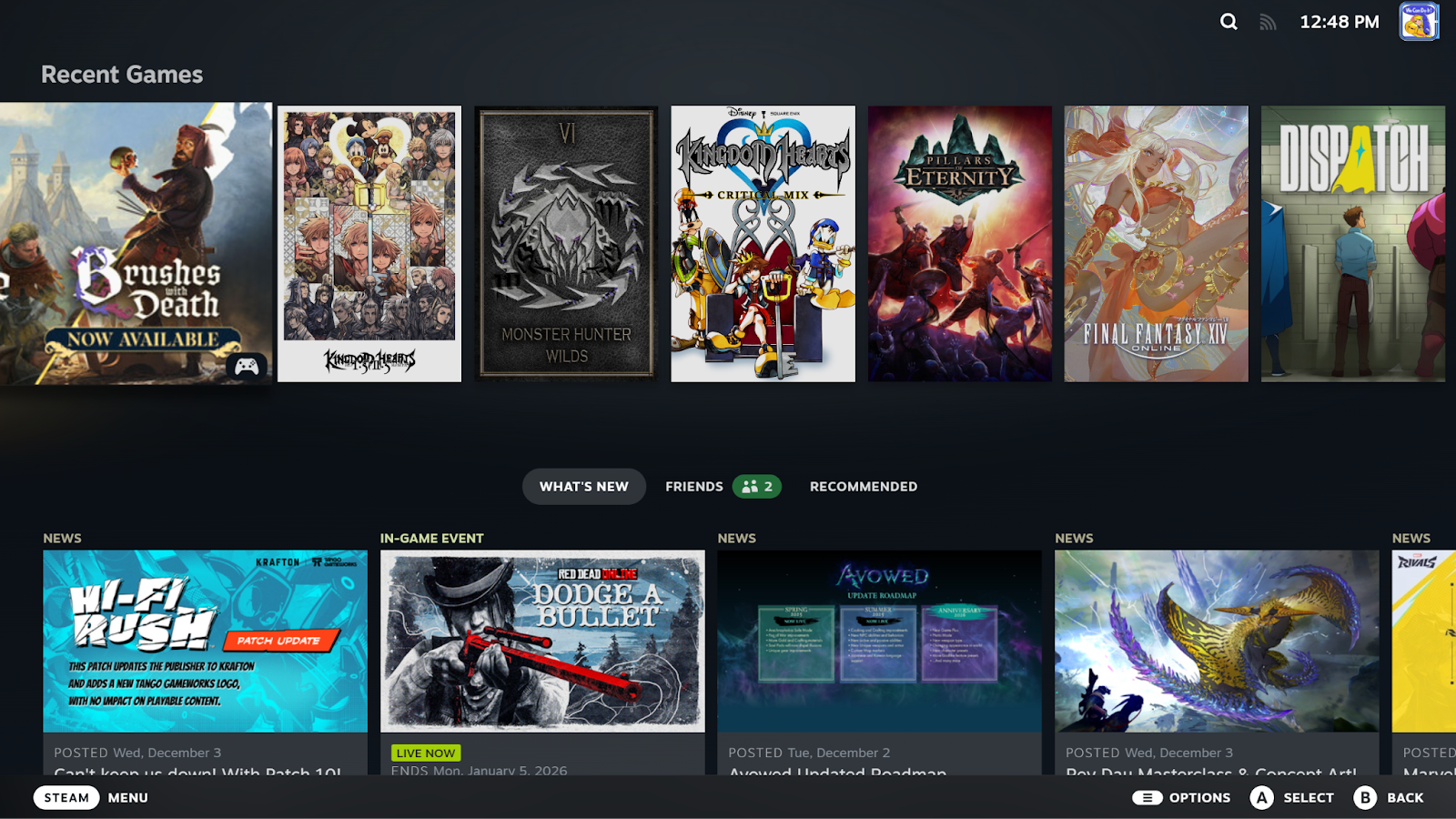
The good thing is that a lot of that user-friendly work is already done and built into SteamOS and Big Picture Mode. Everyone I have ever shown my Steam Deck to has immediately known what they’re looking at with regards to the menus and interface. It has a bit more going on than the Switch or PS5, but that’s a non-issue as everything critical is displayed front and center. The greater library is also well organized, easy to navigate, and looks great on a TV (though I do wish each game’s hero art was more visible on the home screen, like how the PS5 does it). It can even download games with the display off now!
Getting someone to understand verification badges, Steam Input, and other such features is a bit more tricky. I can see someone thinking what they bought is just a console and then being frustrated when a game doesn’t run on Linux or restricts them from playing multiplayer modes due to anti-cheat. That particular pain point isn’t exactly something Valve themselves have control over, and it would be up to developers to build with Linux and the Steam Machine in mind.

That said, many developers have already shown that they’re willing to go the extra mile for Steam Deck verification. Like the Can You Pet the Dog phenomenon but slightly less asinine, being Steam Deck verified seems to be a high priority for AAA and Indie developers alike. Again, these aren’t always super reliable, I’ve booted plenty of verified games that ran like garbage on Steam Deck, but they can be a helpful guide as to what your hardware will play. Having the default store tab on Deck be only verified games is annoying to me, but for the average person using a Steam Machine it subtly nudges them towards things that they’ll probably be able to play.
Steam Input and something like Desktop Mode are a different story, and I would put those features firmly in the power user camp. Rebindable controls and being able to add gyro to everything is fantastic, but I think the average user would be pretty intimidated by the idea. Desktop mode might get a bit more use by people, but again this is more of a power user thing since it’s Linux. Maybe someone could stream Netflix from the included internet browser or something, just don’t count on most people engaging with desktop mode more than that.
This all begs the question: why do any of this at all? Valve essentially holds a monopoly on the PC gaming market, so why try to muscle in on consoles other than capitalism’s mandated search for ever increasing amounts of money? Nintendo and Sony pretty much have it locked down, so much so that Xbox has moved to a more ephemeral “everything is an Xbox” model. (They’re like the Borg - like it or not, everything you own WILL become an Xbox. Resistance is not futile in this case though.) Well, for one, this would be great for consumers. Competition begets innovation, which would mean better, more interesting games at (hopefully) lower prices. Maybe Valve would start making games again too, Half-Life 3 being a PC and Steam Hardware exclusive would certainly be a massive selling point.
The GabeCube could theoretically compete with both Nintendo and Sony at the same time. While I and many others are fans of the games both companies put out, that part of their venn diagram is, realistically, miniscule. A proper consolized PC would have charming indies and AA titles in addition to massive AAA releases. Heck, if someone wants to wait a while they could mostly replace their PS5 with a Steam Machine given that most first party PlayStation games make their way to PC after a year or so. Not all of them, we’re missing notable games like Bloodborne, Gravity Rush 1 and 2, Ghost of Yotei, Death Stranding 2: On the Beach, and Demon’s Souls, but it’s still a good chunk. This hypothetical player would have to wait a while for these latest releases and would never get Nintendo’s games, but PC has so many titles they’d likely be able to find something similar. Indies have tended to release on PC first and come to consoles later, so no worries on missing out there.
The Steam Machine could very well change the gaming landscape as we know it, establishing a hardware target for PC developers to build around, introducing tons of people to the Steam ecosystem, and fostering healthy competition in an industry that has largely grown complacent in their success. We won’t know if it can or will do any of these things until it releases early next year, but, like PC gaming itself, the possibilities are endless.